Massachusetts Title 5 inspection report (310 CMR 15.301)
Most Massachusetts homes with a septic system need a Title 5 inspection before they’re sold. A DEP-approved System Inspector fills out the state System Inspection Form, and the buyer gets the complete report.
At a glance
- Rule
- 310 CMR 15.301 and 15.302
- Timing
- Within 2 years before sale
- Who inspects
- DEP-approved System Inspector
- Sent to
- Board of health within 30 days
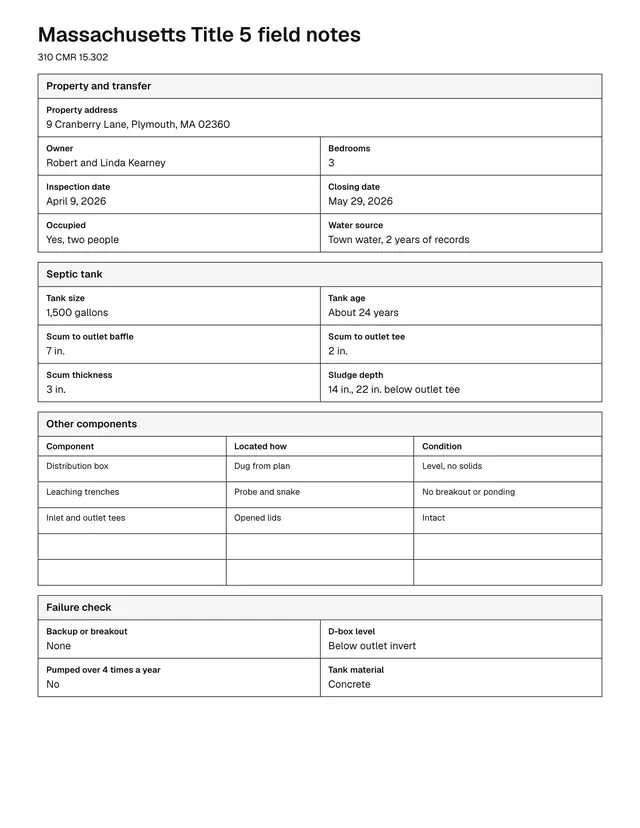
Completed example
Download PDFWhen does a Title 5 inspection have to happen?
Before the deed changes hands. 310 CMR 15.301 says a system “shall be inspected at or within two years prior to the time of transfer of title.” An inspection up to three years old still works if pumping records show the system was pumped at least once a year since.
Winter is the usual snag. If weather makes it impossible at closing, the inspection can wait until it’s possible, “but in no event later than six months after the transfer.” The seller has to tell the buyer about the Title 5 rules in writing.
Not every deed change counts. Refinancing, putting the house in a spouse’s name, and some trust changes aren’t transfers. Condos with five or more units follow a different schedule, inspected every three years instead of at each sale.
Some sales skip the inspection. A brand new system with a Certificate of Compliance issued within three years, and pumped at least once in the third year, doesn’t need one. Neither do some homes where the owner has agreed to upgrade or tie into sewer within two years.
Who inspects, and what form
Only a DEP-approved System Inspector. 310 CMR 15.340 lists who can apply: certain engineers, registered sanitarians, board of health members and agents, licensed home inspectors, and others who complete the training and pass the exam. A home inspector license alone isn’t enough.
The state form is the System Inspection Form, and the rule says you complete it “in its entirety.” Blank lines are a violation. The results go to the local board of health (the Approving Authority) within 30 days of the inspection, and “a copy of the complete inspection report shall be submitted to the buyer.”
What you measure on site
Open the tank and the D-box. 310 CMR 15.302 sets the floor: “the septic tank and distribution box, if present, or cesspool, if present, shall be located, uncovered and inspected.” The rest of the system gets “reasonable professional efforts.”
Measure the layers. The form wants the distance from the bottom of the scum to the bottom of the outlet baffle, from the top of the scum to the top of the outlet tee, the scum’s thickness, and the sludge depth and its distance to the outlet tee. Write all four, not just “pumped recently.”
Pull the water records. For homes on town water, get two years of use records if the supplier has them. A three bedroom Cape using twice what you’d expect is a clue about a leak or a lot of people.
Estimate the groundwater. You don’t dig a deep hole for this. 15.302 says “a deep hole observation test is not required,” and you estimate high groundwater with your best judgment from local maps and records and what you see on site. Write down how you got your number.
Explain what you couldn’t find. If a component can’t be located or inspected, the rule says to write “the reasons and the steps taken.” A probe line, a metal detector, and a hand sketch of where you looked all count.
Pass, fail, and what comes next
310 CMR 15.303 lists what fails a system. A backup into the house. Sewage breaking out on the ground. A D-box with the liquid level above the outlet. A cesspool with liquid less than six inches below the inlet. Pumping more than four times a year. A cracked tank, or a metal one without a recent Certificate of Compliance. And cesspools too close to a well or water supply.
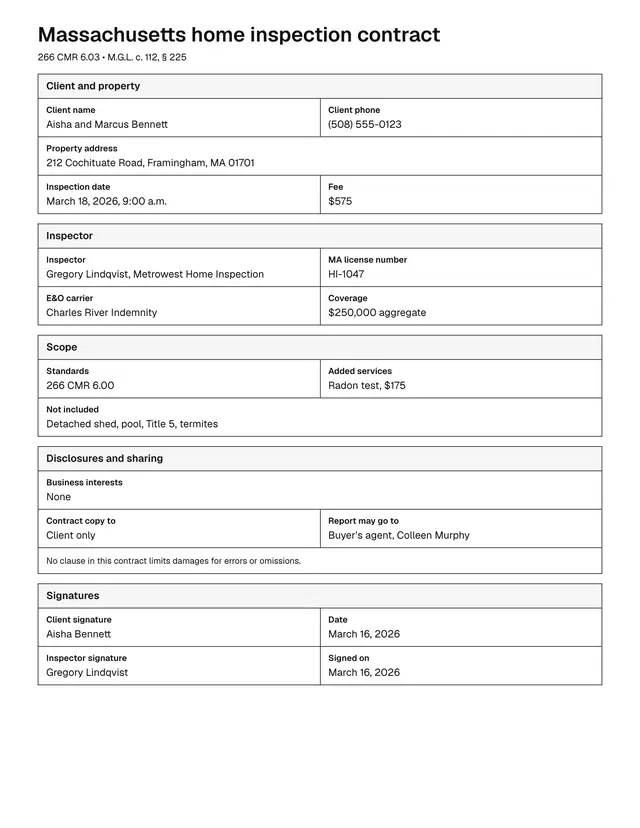
A failed system has to be upgraded, usually within two years. The buyer and seller sort out who pays. Either way, the Title 5 isn’t part of a regular home inspection, so the Massachusetts home inspection contract should say whether it’s included.
A pass isn’t a promise. 15.302 says the inspection “is not designed to provide information to demonstrate that the system will adequately serve the use” the new owner has in mind. If the buyer plans to add a bedroom, that’s a separate design question for the board of health.
How do you keep Title 5 jobs on track in the spring rush?
Every listing that sat through winter needs one in April. You’re booking digs, pumpers, and board of health filings at once.
Noma specializes in the Massachusetts Title 5 Inspection Report (310 CMR 15.301). Sellers book and pay online, you schedule the dig, and the field notes for the tank, D-box, and soil absorption system live in your report on the phone. See how Noma runs septic inspections.
Frequentlyaskedquestions
Send this document in minutes, not an afternoon.
Other states
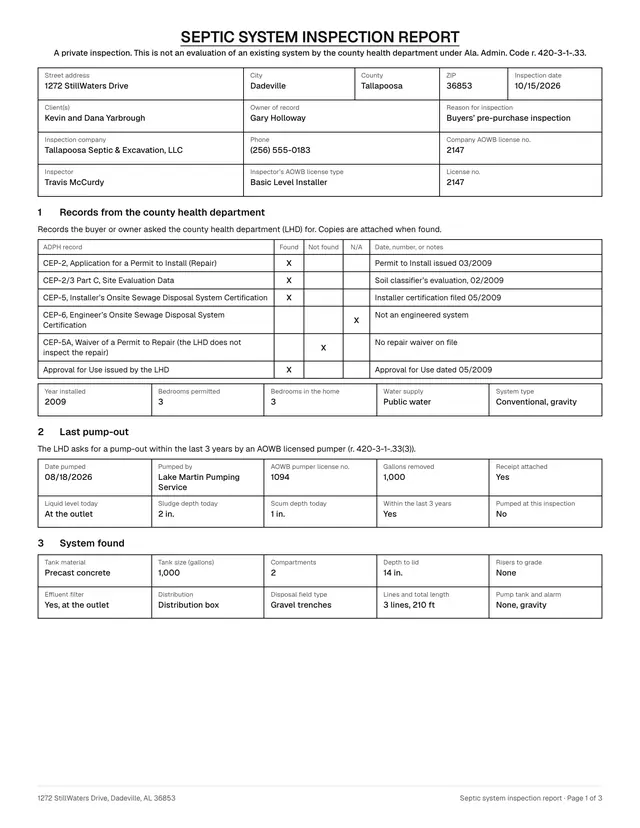
Septic inspection report templates- Alabama
Septic System Inspection Report
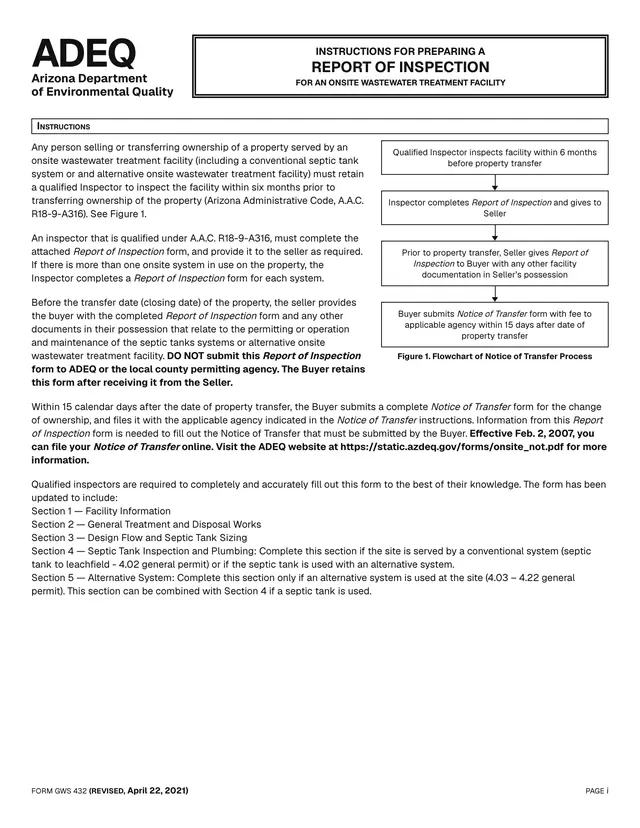
Record the tank or cesspool and what was checked. - ArizonaGWS 432
Report of Inspection for an Onsite Wastewater Treatment Facility
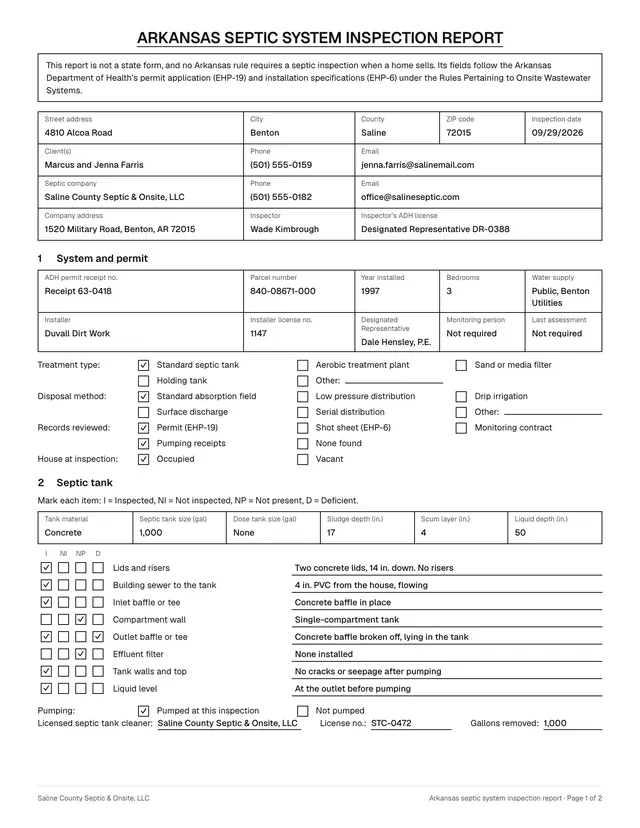
Record the tank or cesspool and what was checked. - Arkansas
Arkansas Septic System Inspection Report
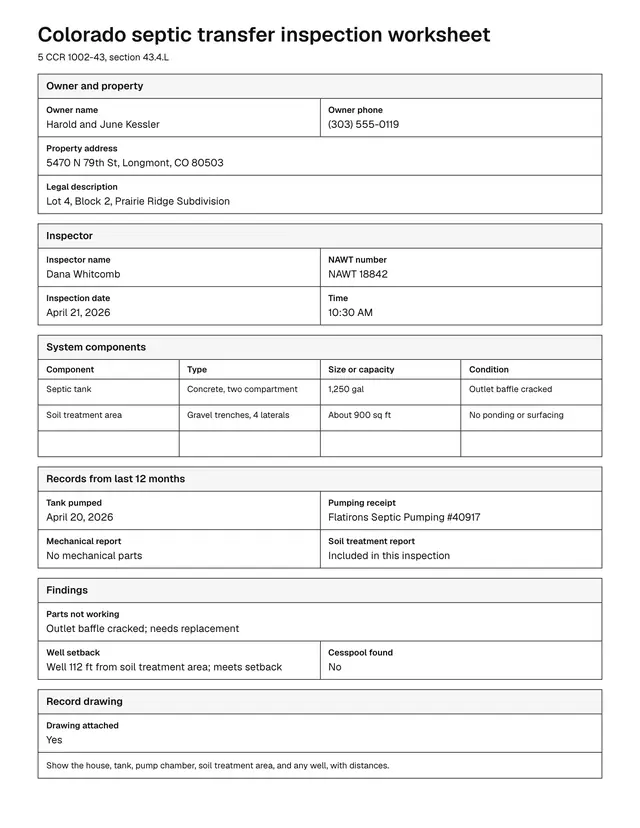
Record the tank or cesspool and what was checked. - Colorado
Colorado septic transfer of title inspection report (Regulation 43)
Record the tank or cesspool and what was checked. - Delaware
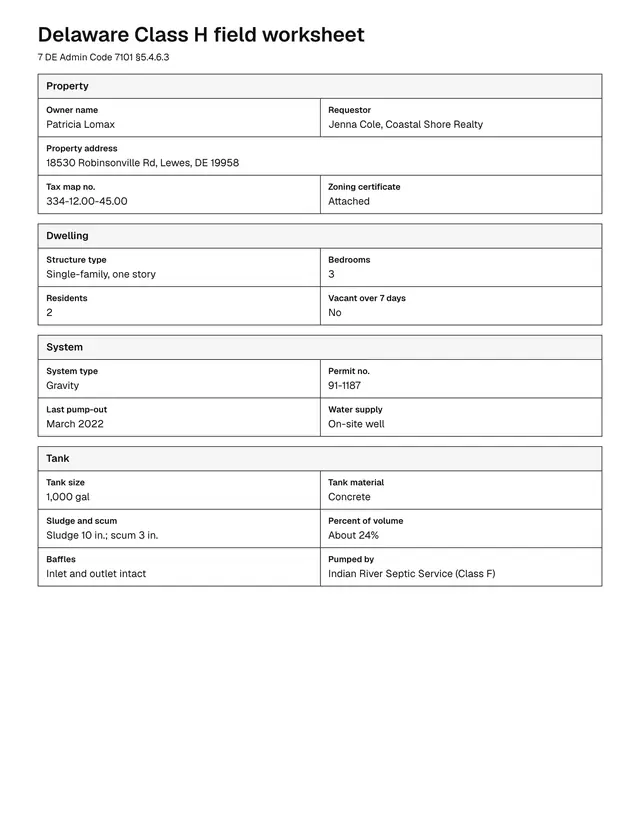
Delaware Class H septic inspection report
Record the tank or cesspool and what was checked. - Florida
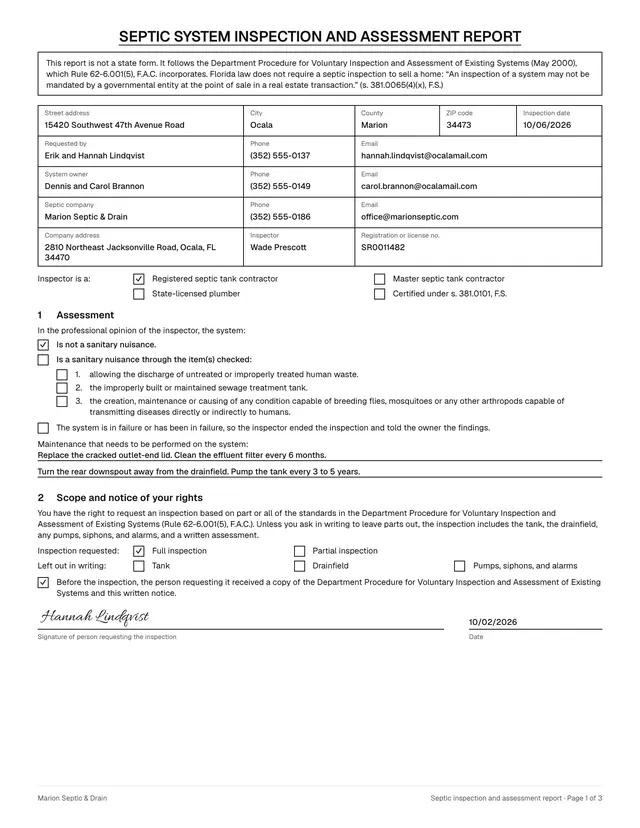
Septic System Inspection and Assessment Report
Record the tank or cesspool and what was checked. - Georgia
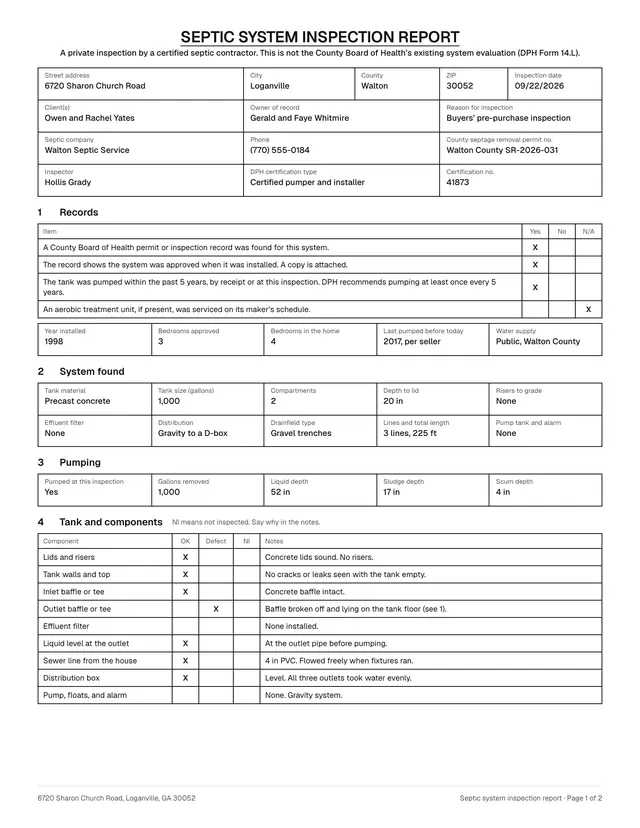
Septic System Inspection Report
Record the tank or cesspool and what was checked. - Hawaii
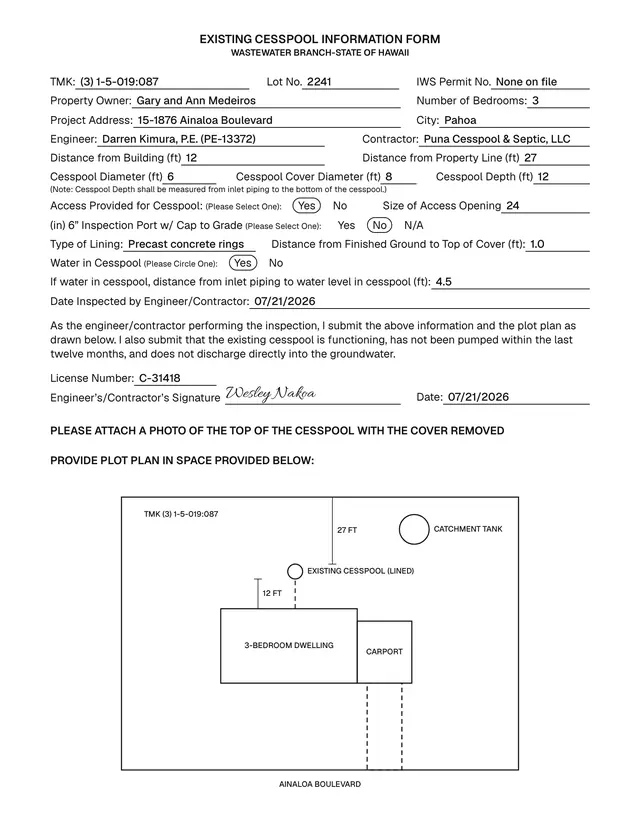
Existing Cesspool Information Form
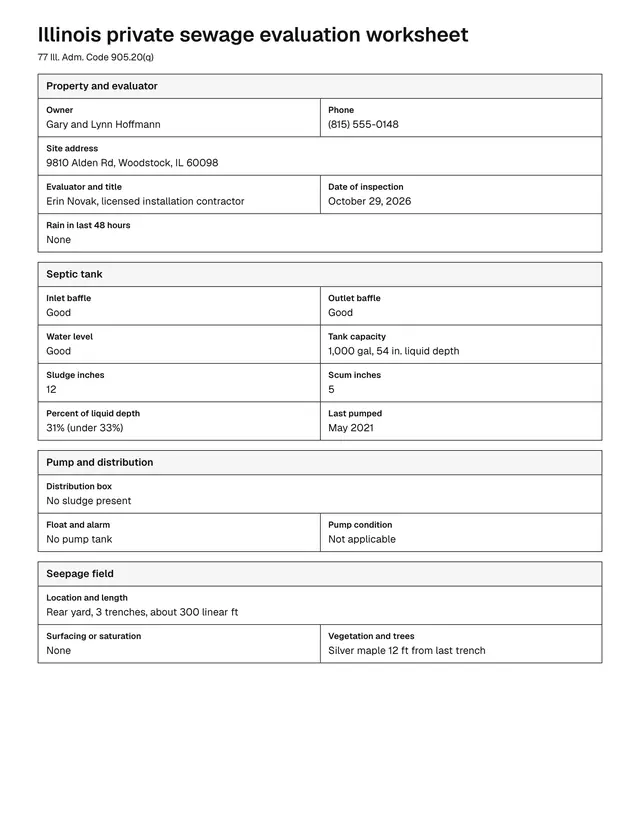
Record the tank or cesspool and what was checked. - Illinois
Illinois private sewage disposal system evaluation
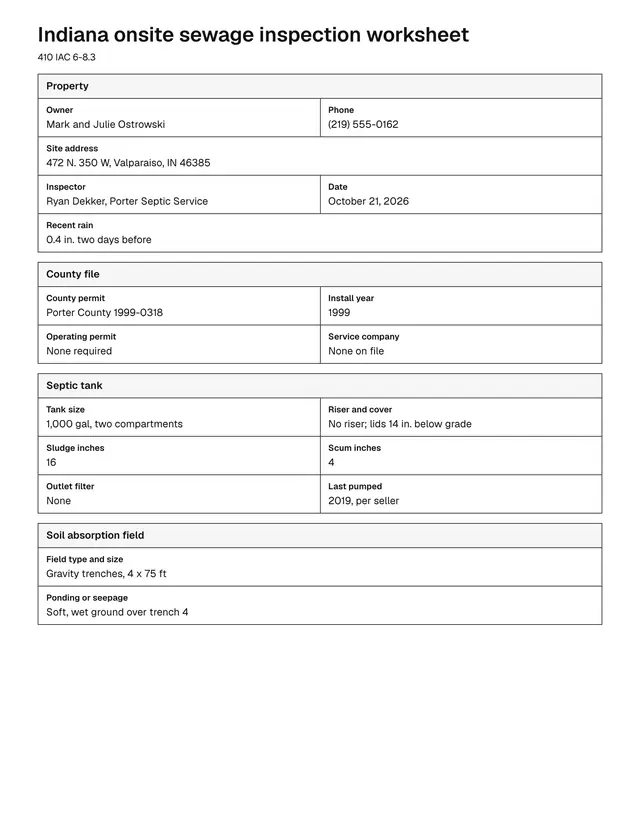
Record the tank or cesspool and what was checked. - Indiana
Indiana onsite sewage system inspection report
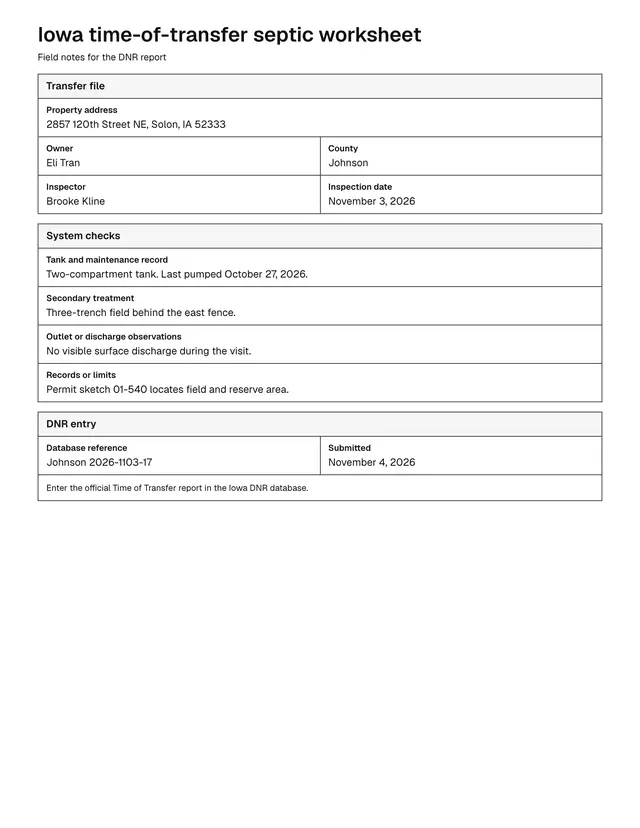
Record the tank or cesspool and what was checked. - Iowa
Iowa time-of-transfer septic worksheet
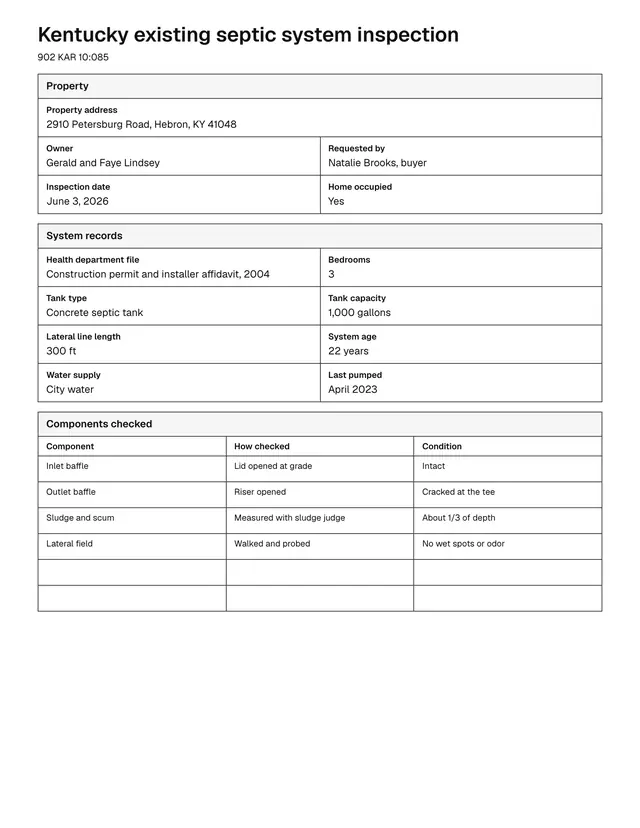
Record the tank or cesspool and what was checked. - Kentucky
Kentucky existing septic system inspection
Record the tank or cesspool and what was checked. - Louisiana
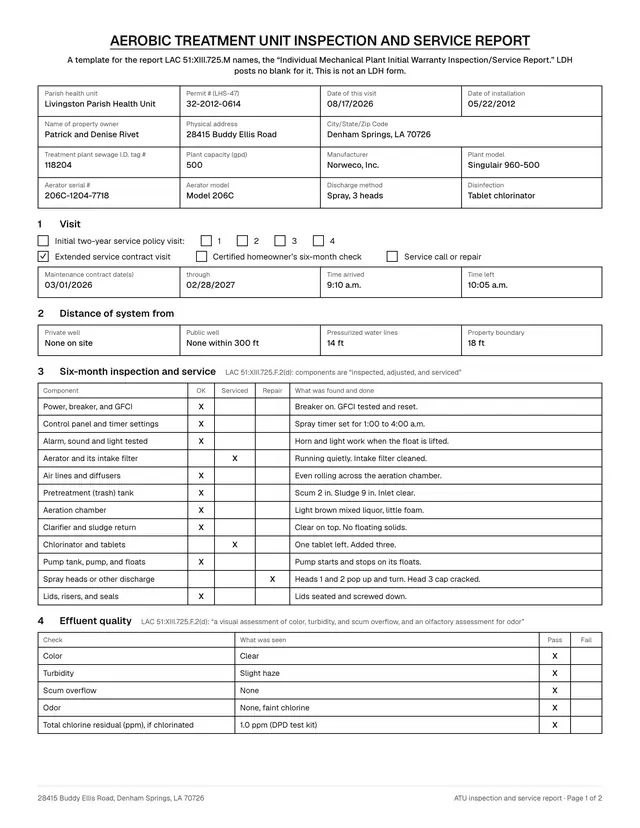
Aerobic Treatment Unit Inspection and Service Report
Record the tank or cesspool and what was checked. - Maryland
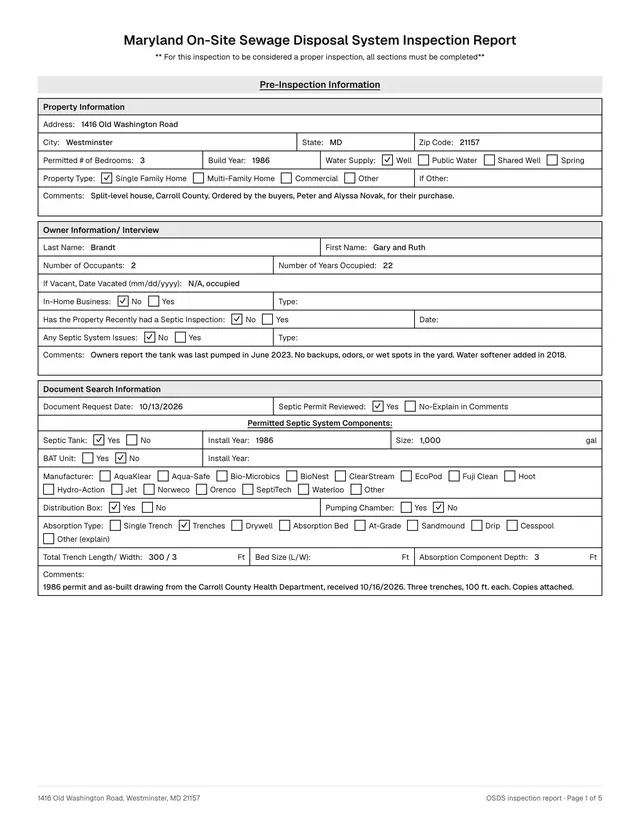
Maryland On-Site Sewage Disposal System Inspection Report
Record the tank or cesspool and what was checked. - Michigan
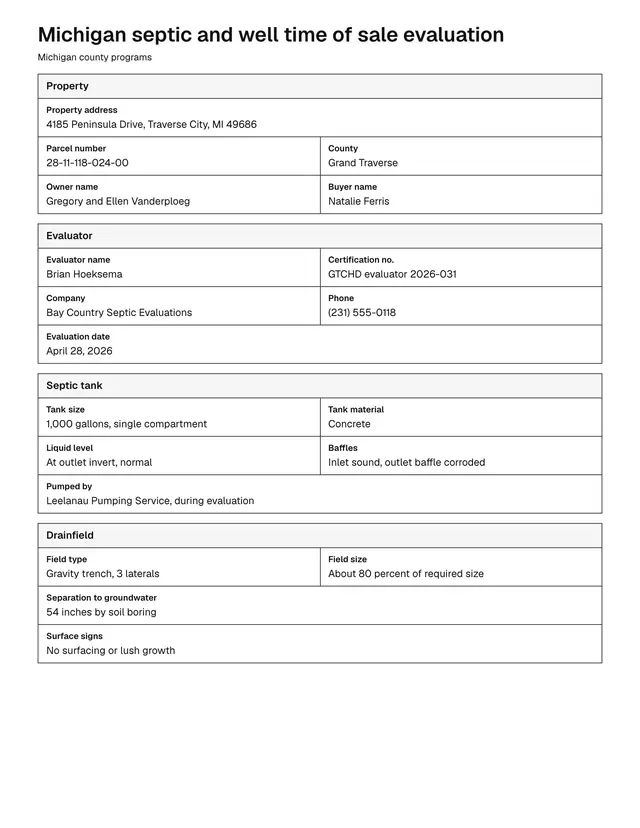
Michigan septic time of sale evaluation
Record the tank or cesspool and what was checked. - Minnesota
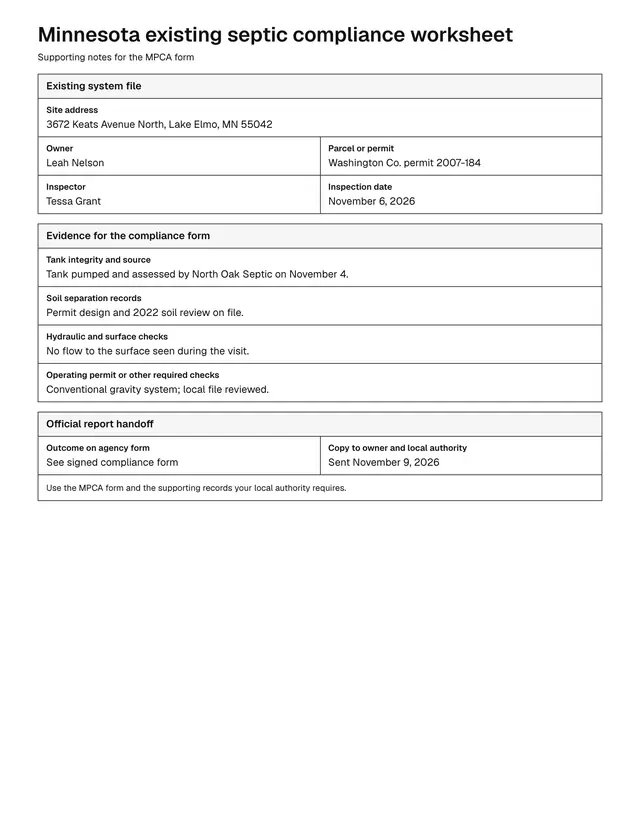
Minnesota existing septic compliance worksheet
Record the tank or cesspool and what was checked. - Mississippi
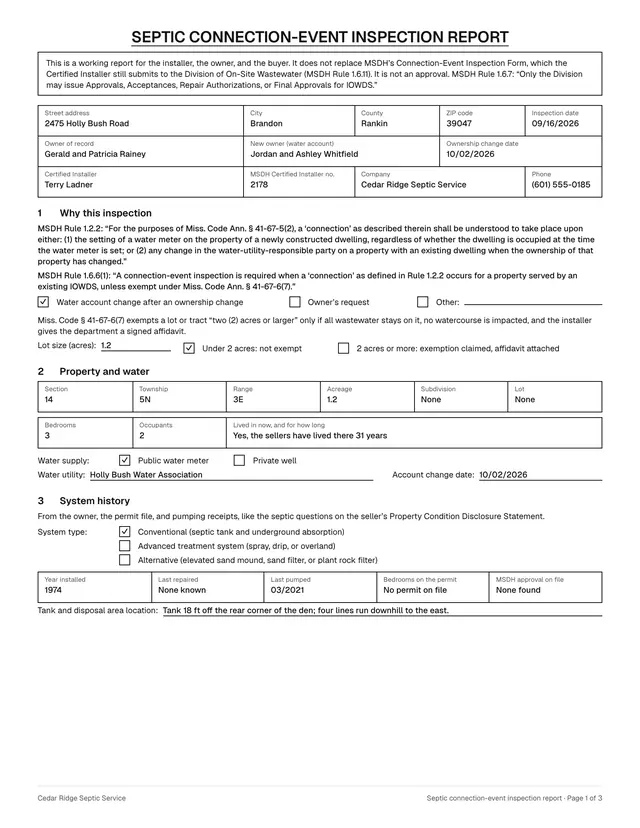
Septic Connection-Event Inspection Report
Record the tank or cesspool and what was checked. - Missouri
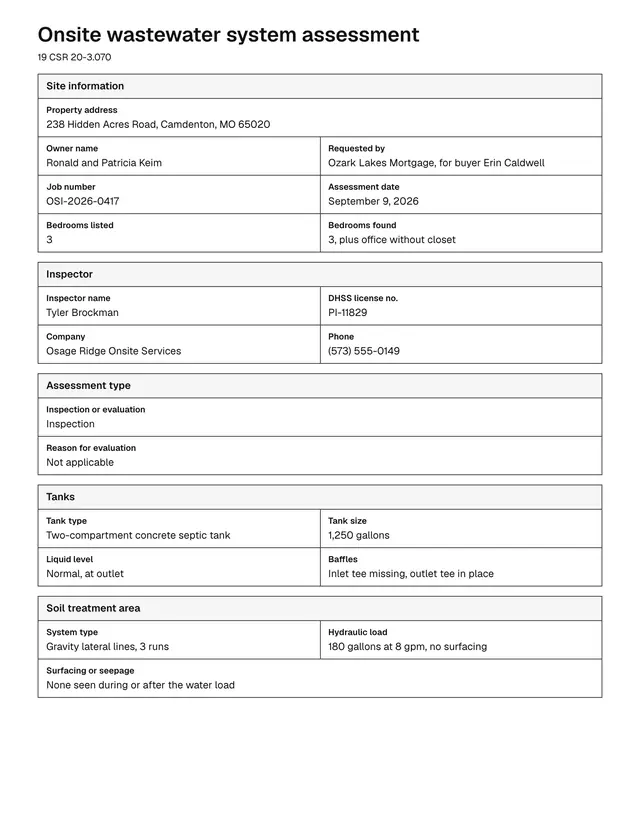
Missouri onsite wastewater inspection and evaluation report
Record the tank or cesspool and what was checked. - Nevada
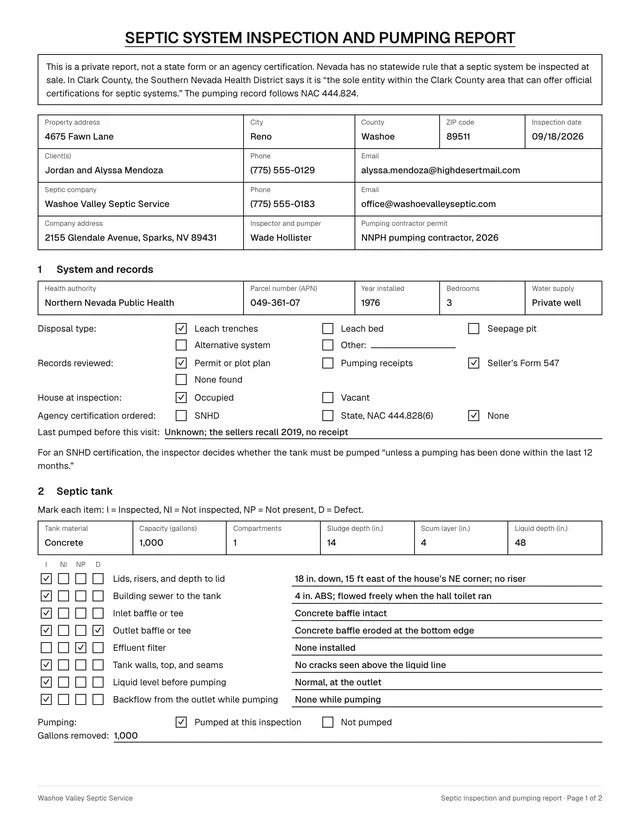
Septic System Inspection and Pumping Report
Record the tank or cesspool and what was checked. - New JerseyN.J.A.C. 7:9A Appendix F
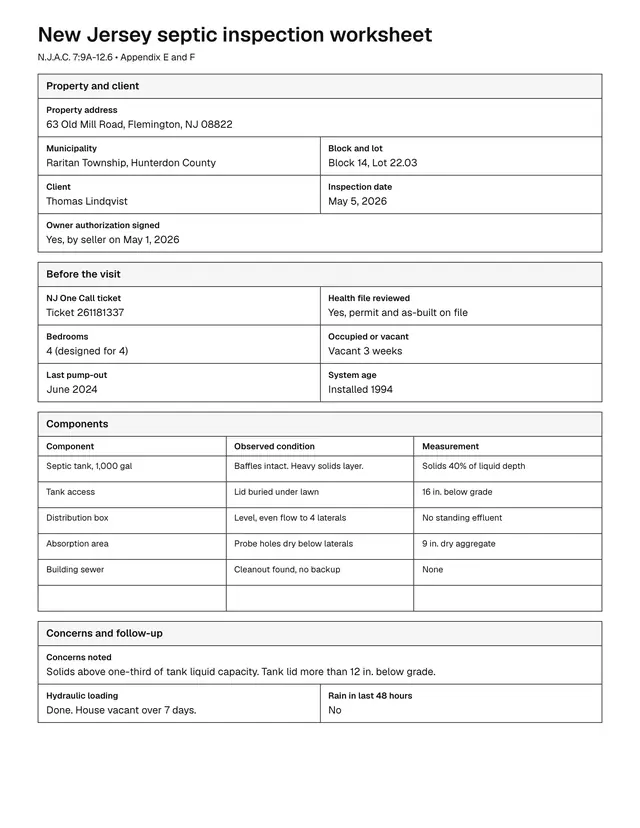
New Jersey septic inspection report (Appendix F Onsite System Inspection Form)
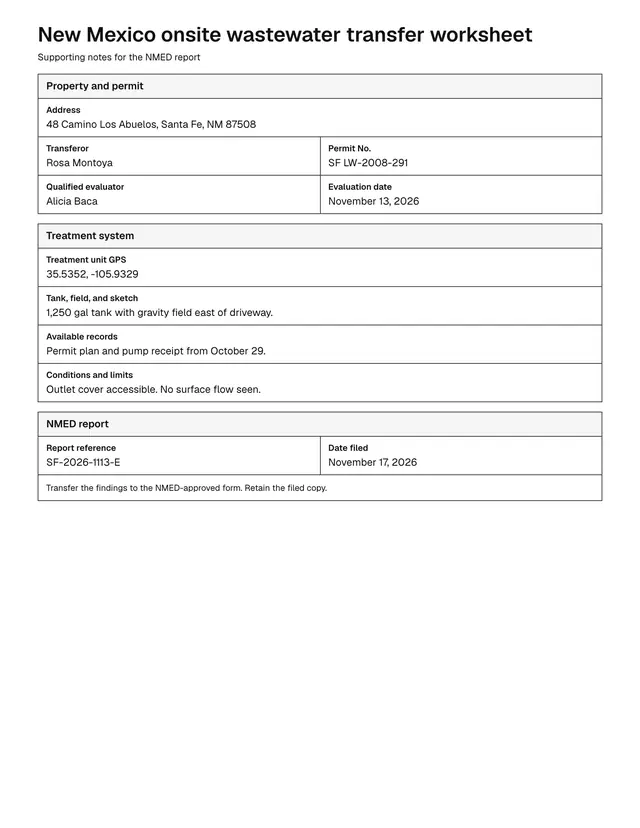
Record the tank or cesspool and what was checked. - New Mexico
New Mexico onsite wastewater transfer worksheet
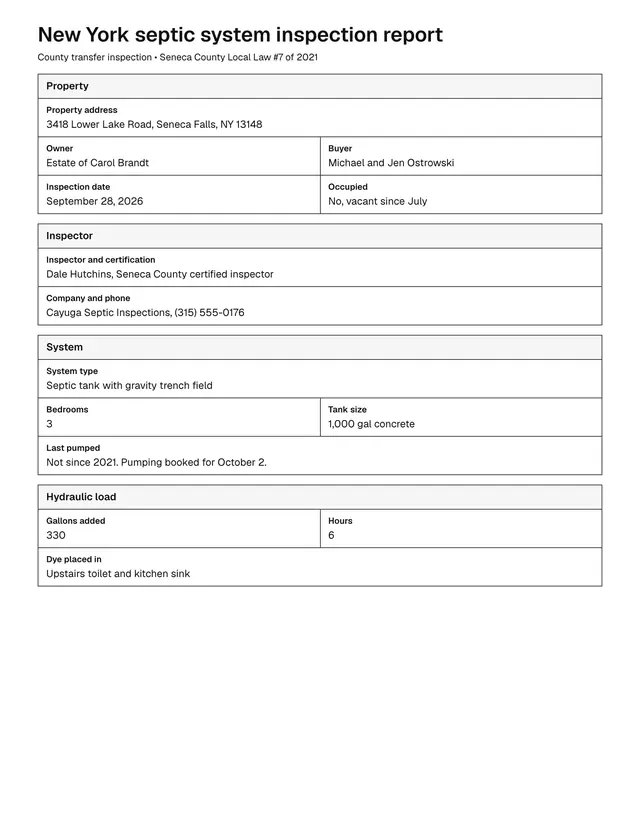
Record the tank or cesspool and what was checked. - New York
New York septic system inspection report (county transfer inspections)
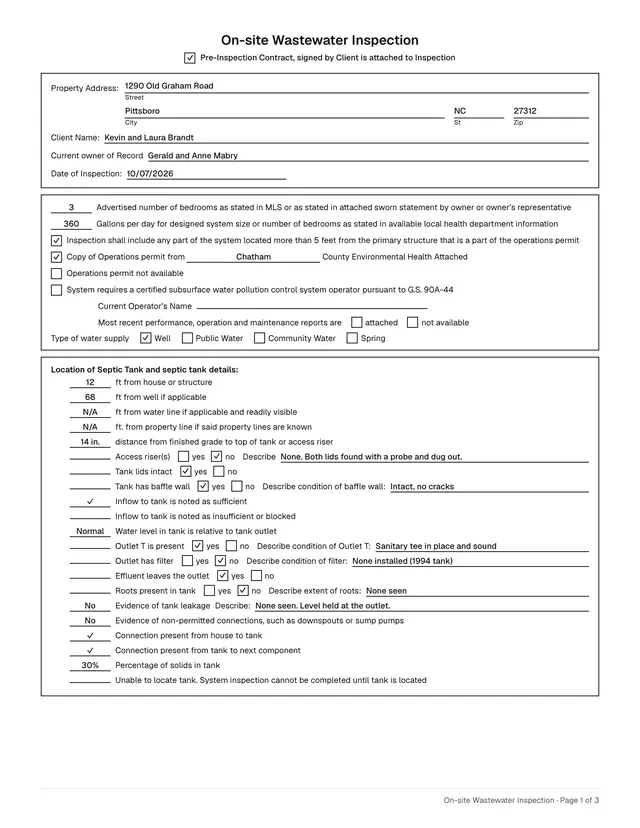
Record the tank or cesspool and what was checked. - North Carolina
On-site Wastewater Inspection
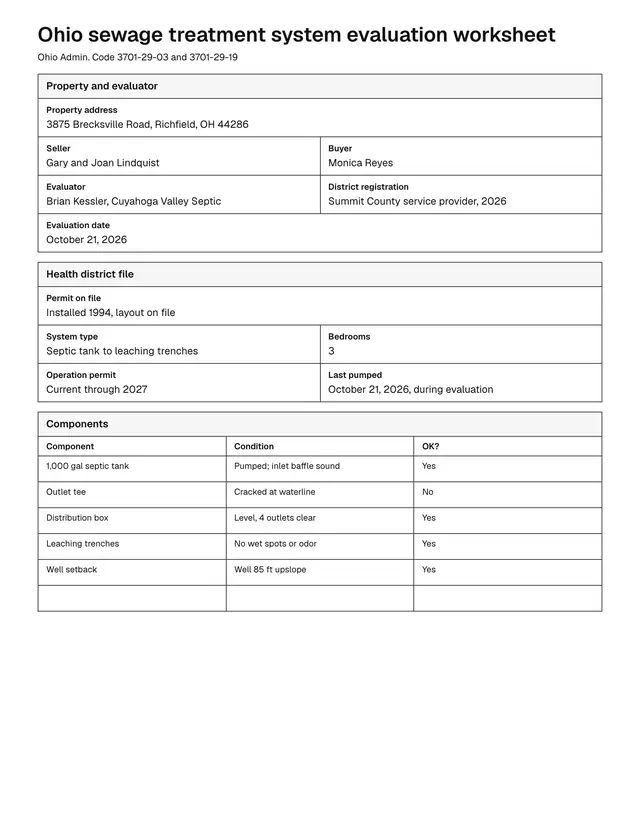
Record the tank or cesspool and what was checked. - Ohio
Ohio sewage treatment system evaluation for property transfer
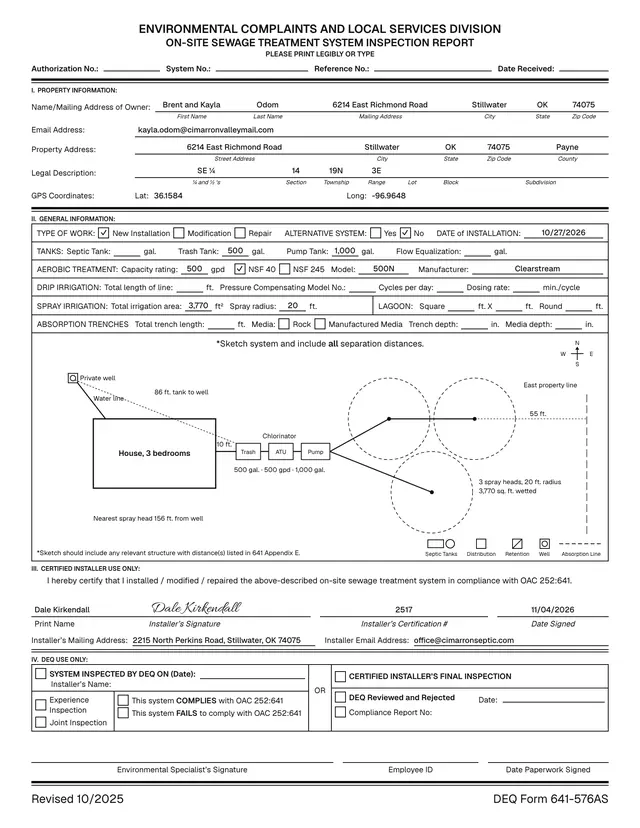
Record the tank or cesspool and what was checked. - OklahomaDEQ Form 641-576AS
On-Site Sewage Treatment System Inspection Report
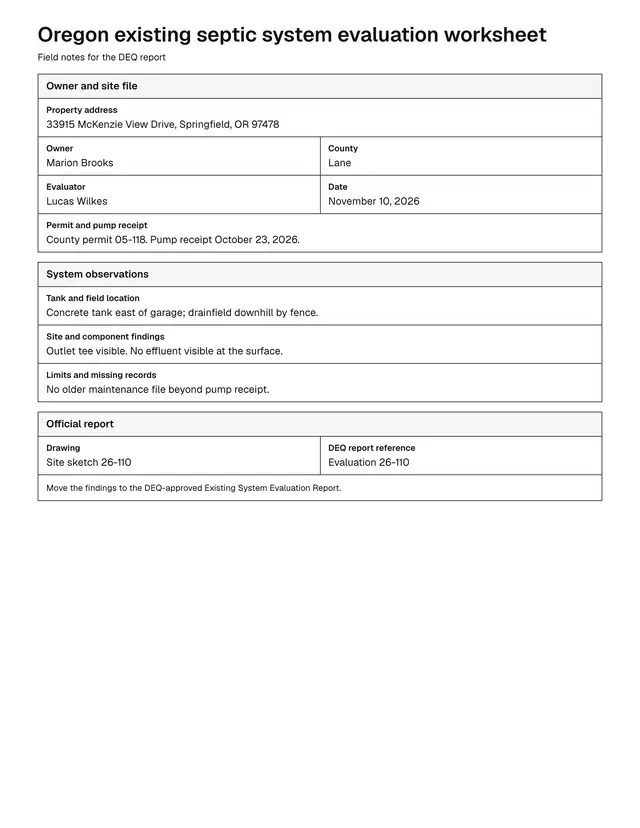
Record the tank or cesspool and what was checked. - Oregon
Oregon existing septic system evaluation worksheet
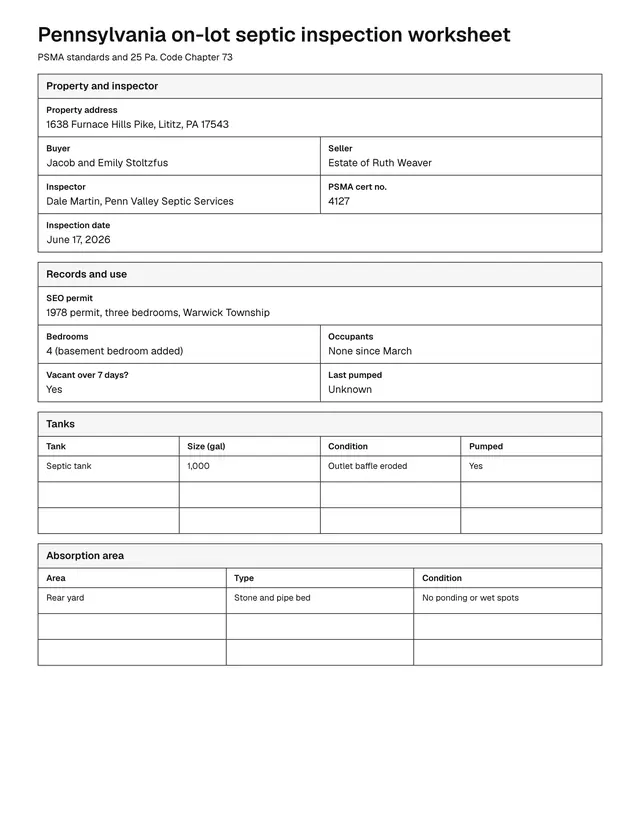
Record the tank or cesspool and what was checked. - Pennsylvania
Pennsylvania on-lot septic system inspection (PSMA)
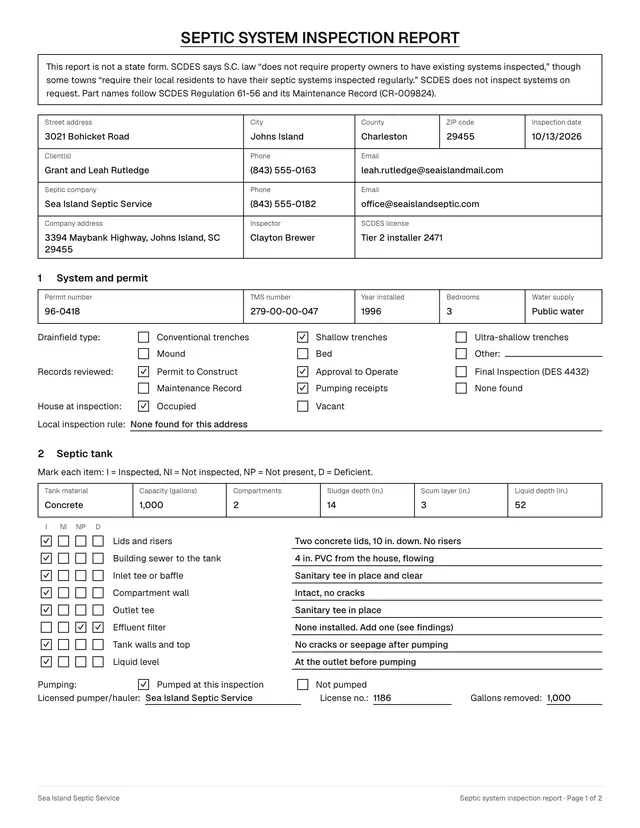
Record the tank or cesspool and what was checked. - South Carolina
Septic System Inspection Report
Record the tank or cesspool and what was checked. - Tennessee
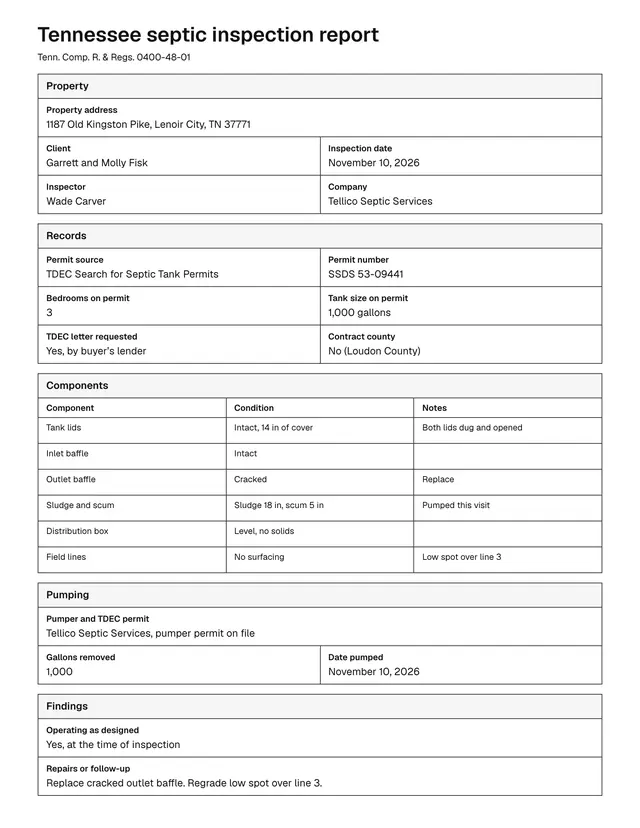
Tennessee septic inspection report
Record the tank or cesspool and what was checked. - Texas
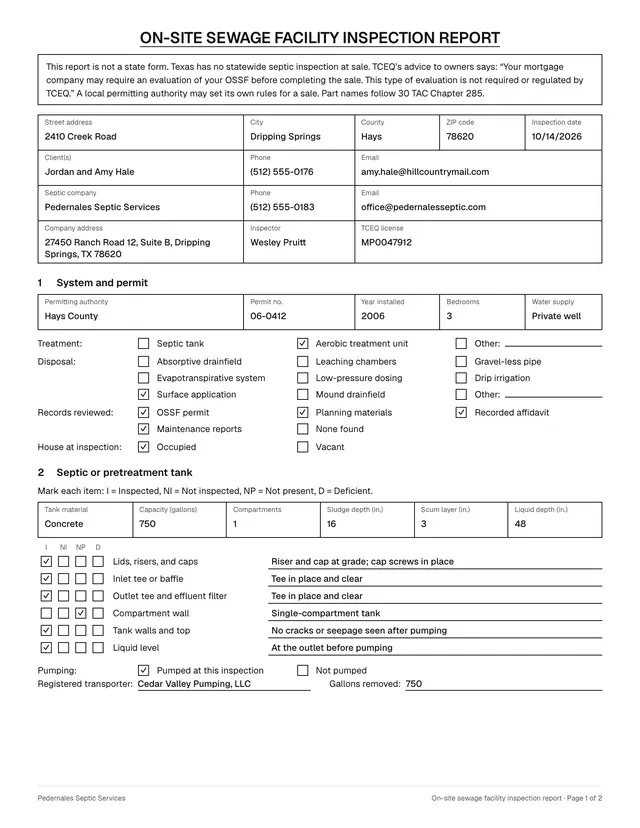
On-Site Sewage Facility Inspection Report
Record the tank or cesspool and what was checked. - Virginia
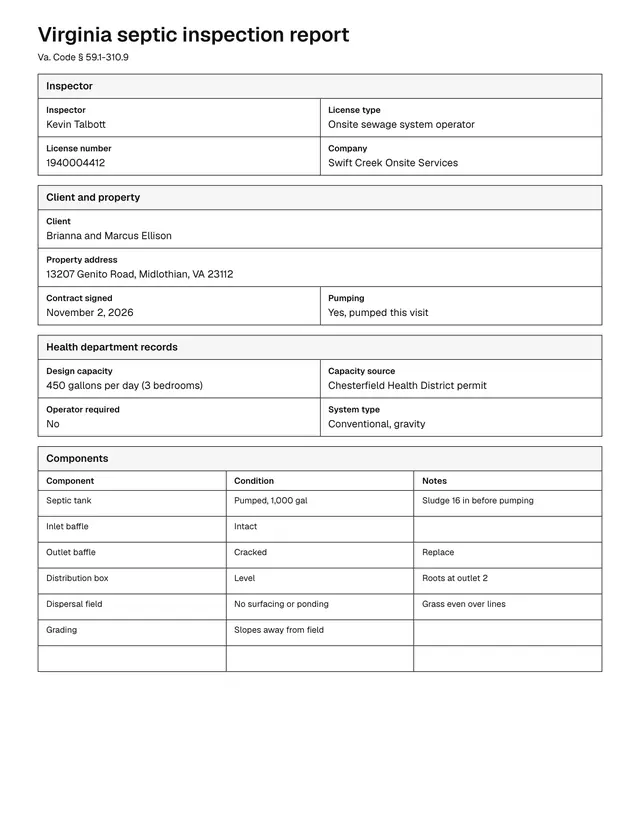
Virginia septic inspection report
Record the tank or cesspool and what was checked. - Washington
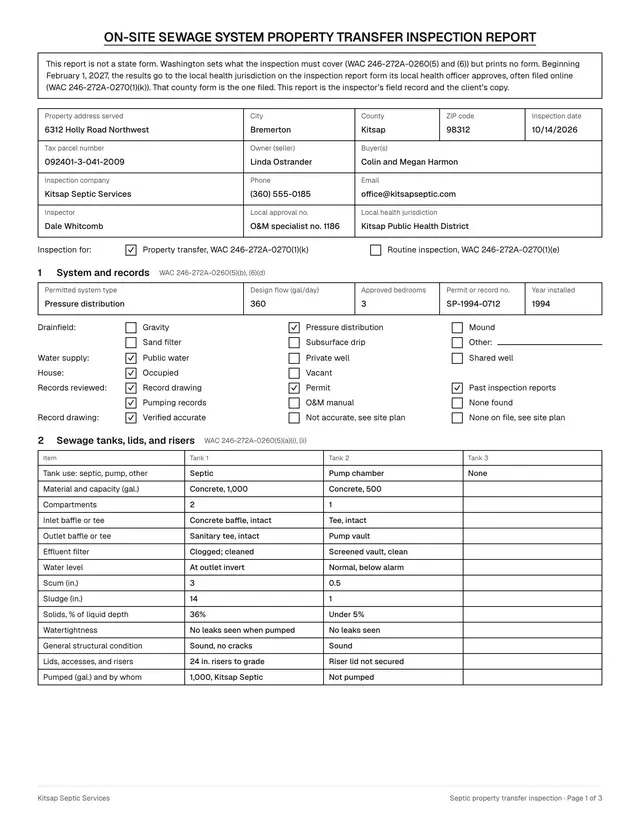
On-Site Sewage System Property Transfer Inspection Report
Record the tank or cesspool and what was checked. - Wisconsin
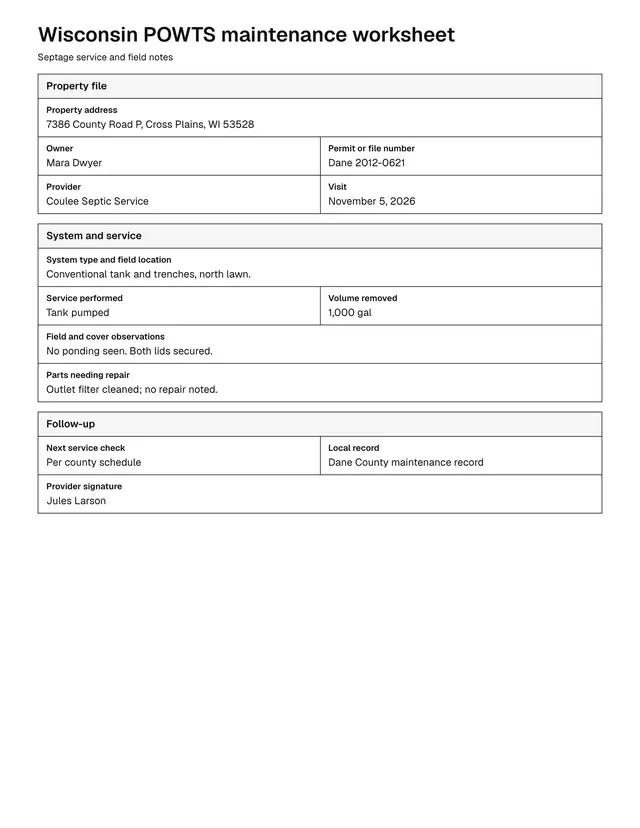
Wisconsin POWTS maintenance worksheet
Record the tank or cesspool and what was checked.