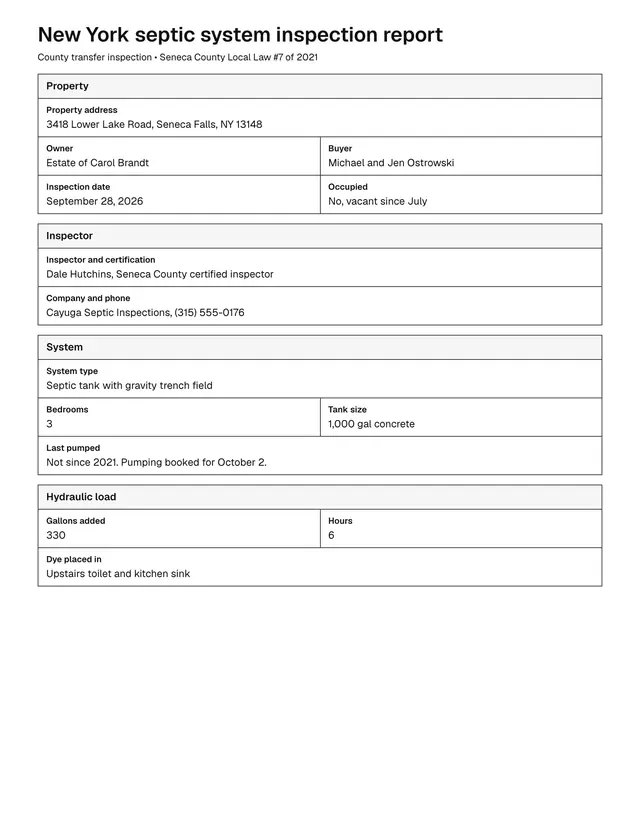
New York septic system inspection report (county transfer inspections)
New York has no statewide septic inspection at sale, so the rules come from counties and watershed laws. Seneca County’s transfer inspection shows what a full local program asks for.
At a glance
- State rule at sale
- None statewide
- Design standards
- 10 NYCRR Appendix 75-A
- Example local law
- Seneca County Local Law #7 of 2021
- Seneca transfer report
- Good for 1 year
Completed example
Download PDFIs there a New York septic inspection law?
Not at the state level. New York sets design and construction standards for household septic systems in 10 NYCRR Appendix 75-A, and the Department of Health backs it with a residential onsite design handbook. Neither one requires an inspection when a house is sold.
That job falls to local government. Counties and towns pass their own laws, often to protect a lake or a drinking water source. Seneca County’s health department says its law was meant to bring the county “in-line with other municipalities in the region and across NYS that have enacted septic system inspection laws.” So before you quote a job, call the county health department and ask what applies to that address.
Where there’s no local law, the buyer’s lender or contract usually drives the inspection. Then your report follows the client’s scope, and it helps to borrow from a strong local program like Seneca’s.
Seneca County, start to finish
In 2021 the county passed Local Law #7, the Seneca County Watershed Protection Law. Before any property changes hands, the septic system needs a property transfer inspection and the tank needs pumping. Homes within 250 feet of Seneca Lake, Cayuga Lake, the Seneca Cayuga Canal, the Erie Canal, or the Clyde River also need a routine inspection every five years.
The county’s inspection instructions spell out the visit. A Seneca County certified inspector does it. The inspector adds dye to some fixtures, like a toilet. If the home is occupied, they run 55 gallons of water per bedroom. If it’s empty, they add 110 gallons per bedroom over six hours.
Order matters. Inspect first, then pump. If the tank gets pumped first, you wait 30 days before you can inspect. After the visit, the inspector turns the paperwork in to the health department. The seller also sends proof the tank was pumped.
A pass plus the pump receipt gets a discharge permit. A fail means the owner has to repair or modify the system. The transfer inspection is good for a year and counts as the routine inspection, so a lakeside seller who’s due for both only pays once.
What a solid septic report records
The water load. Write how many gallons went in and over how long, plus where the dye went. On a three-bedroom vacant camp in Seneca County, that’s 330 gallons over six hours. Note the start and stop times too.
Each part, by name. Tank size and material, inlet and outlet baffles, sludge and scum, the distribution box, and each lateral or bed. Say what you saw at each, and where dye or wet ground showed up.
What you couldn’t reach. A buried lid under a new patio or a field under a parked boat trailer is a limit, not a pass. Note it.
The paperwork you were handed. List any permits, old pump receipts, or repair invoices the seller gave you, with dates. On older lake camps, the county file is often thin, and your list may be the best record the buyer gets.
Where things are. Measure from the house to the tank and from the tank to the field, and note how far the field sits from the shoreline or a well. A sketch with those numbers lets the next person find the lid without a probe bar.
What happens when it fails two weeks before closing?
The deal doesn’t have to die, but the paperwork gets heavier. The owner needs a repair or a modified system, which usually means a design and approval through the county. Your report is what the buyer, the seller, and the health department will all work from, so a clear layout and a plain list of failed parts saves days.
In Seneca County, the health department also keeps a list of registered contractors for the repair work, and its Environmental Health staff take questions at (315) 539-1945. Point the seller there on the day you call in the result. Elsewhere in New York, the county or district health office is still the first call.
Noma specializes in the New York septic system inspection report (local transfer laws such as Seneca County Local Law #7 of 2021). Write it with your own sections, mark how serious each problem is so the worst ones lead the summary, and sketch the tank and field on site. See how Noma builds septic reports.
Frequentlyaskedquestions
Send this document in minutes, not an afternoon.
Other states
Septic inspection report templates- Alabama
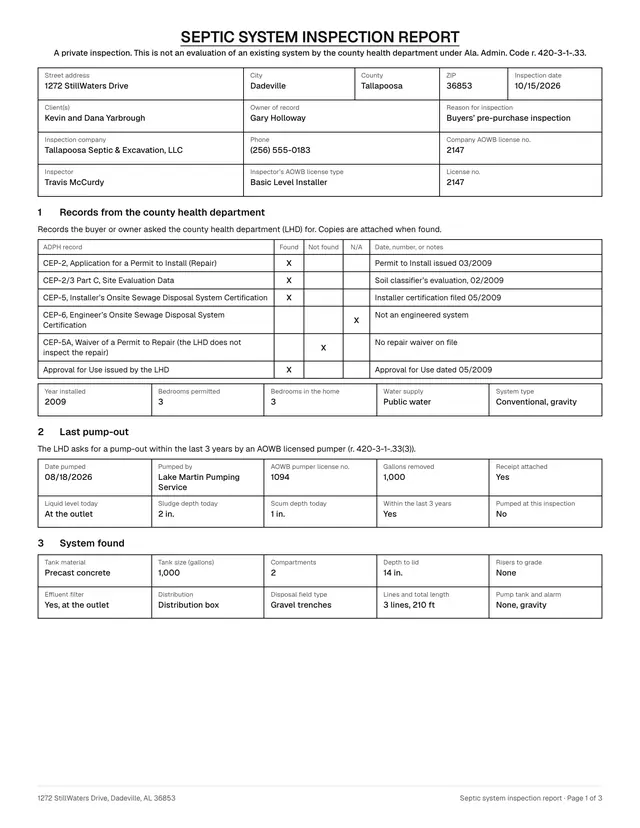
Septic System Inspection Report
Record the tank or cesspool and what was checked. - ArizonaGWS 432
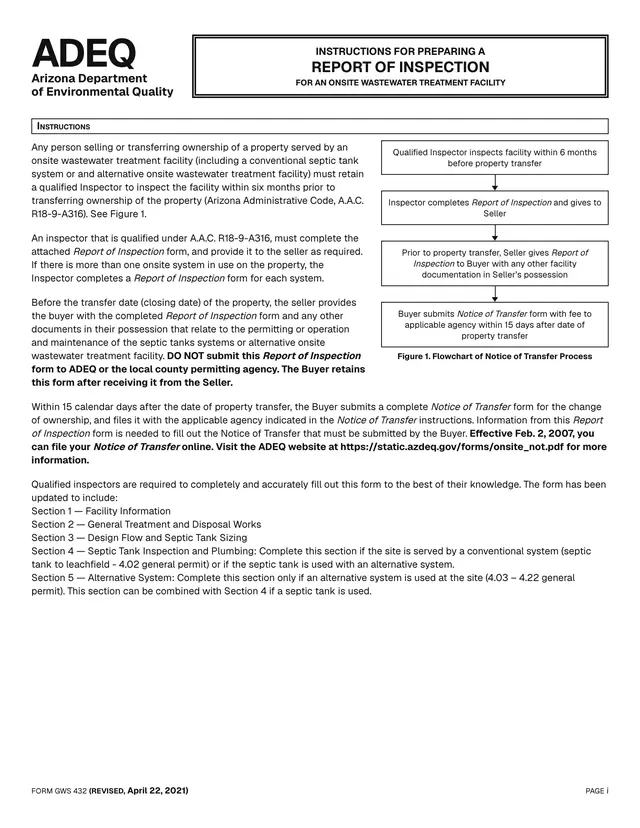
Report of Inspection for an Onsite Wastewater Treatment Facility
Record the tank or cesspool and what was checked. - Arkansas
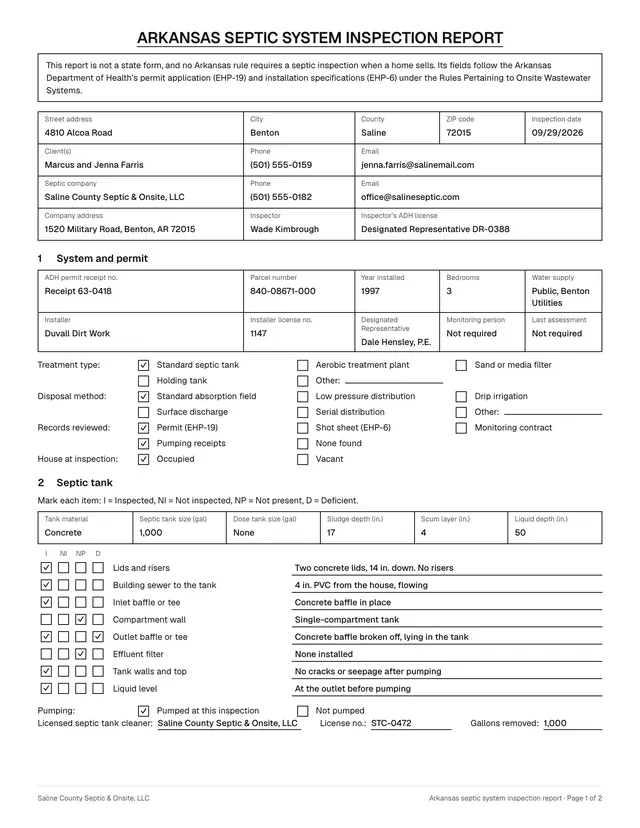
Arkansas Septic System Inspection Report
Record the tank or cesspool and what was checked. - Colorado
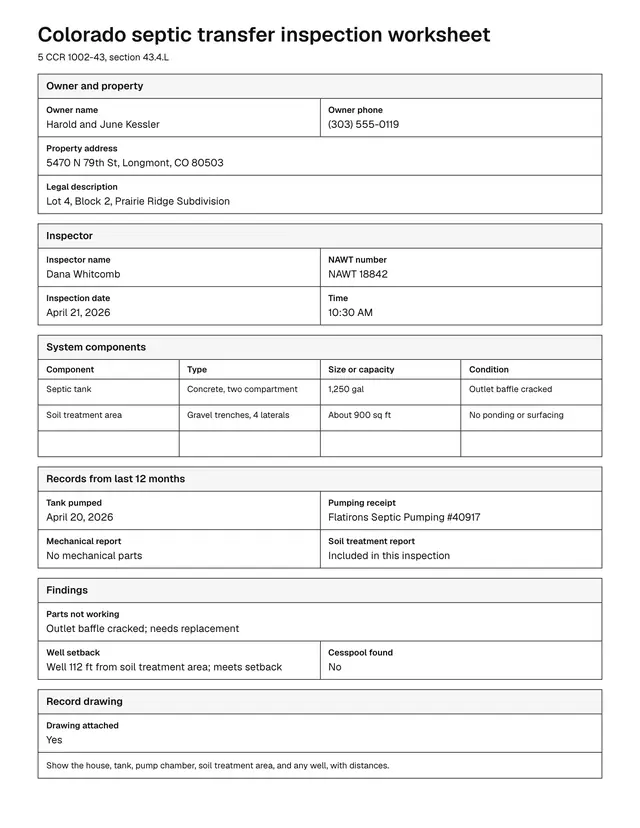
Colorado septic transfer of title inspection report (Regulation 43)
Record the tank or cesspool and what was checked. - Delaware
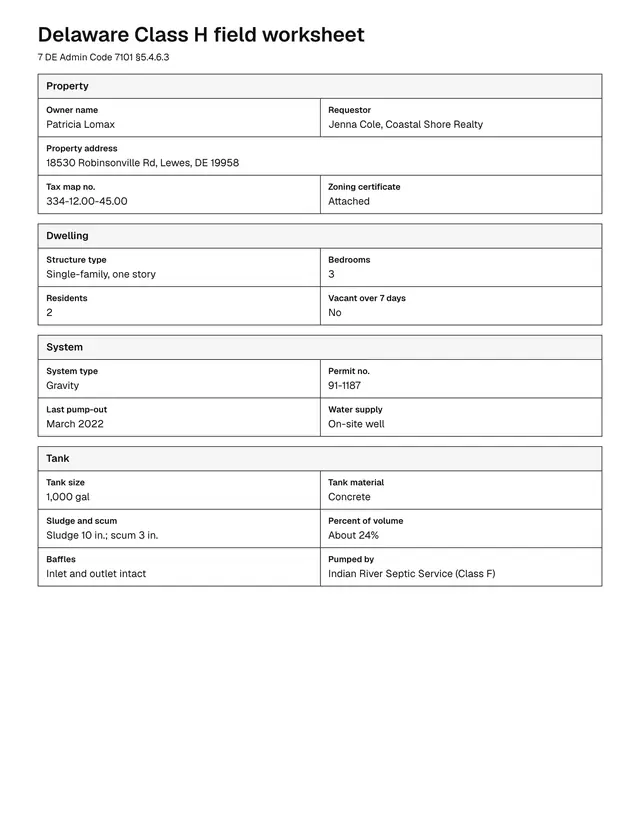
Delaware Class H septic inspection report
Record the tank or cesspool and what was checked. - Florida
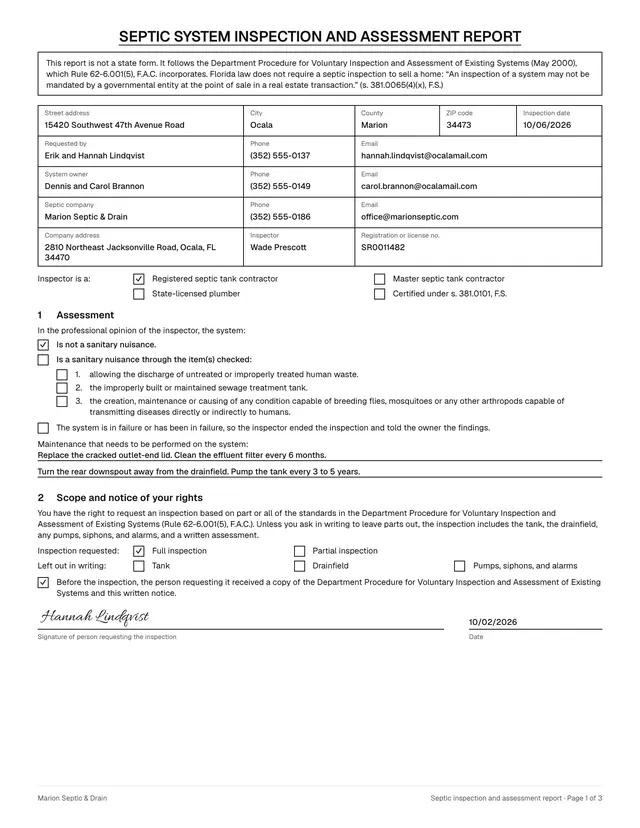
Septic System Inspection and Assessment Report
Record the tank or cesspool and what was checked. - Georgia
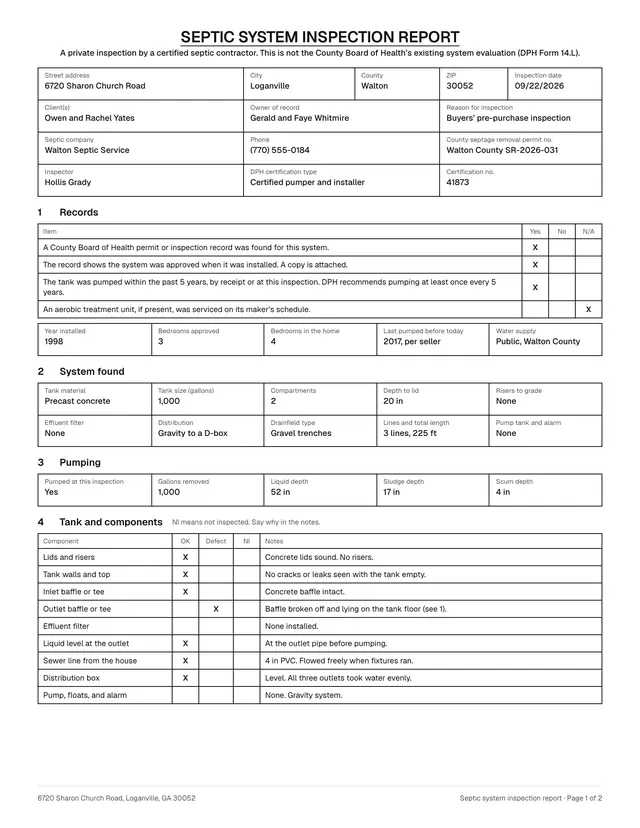
Septic System Inspection Report
Record the tank or cesspool and what was checked. - Hawaii
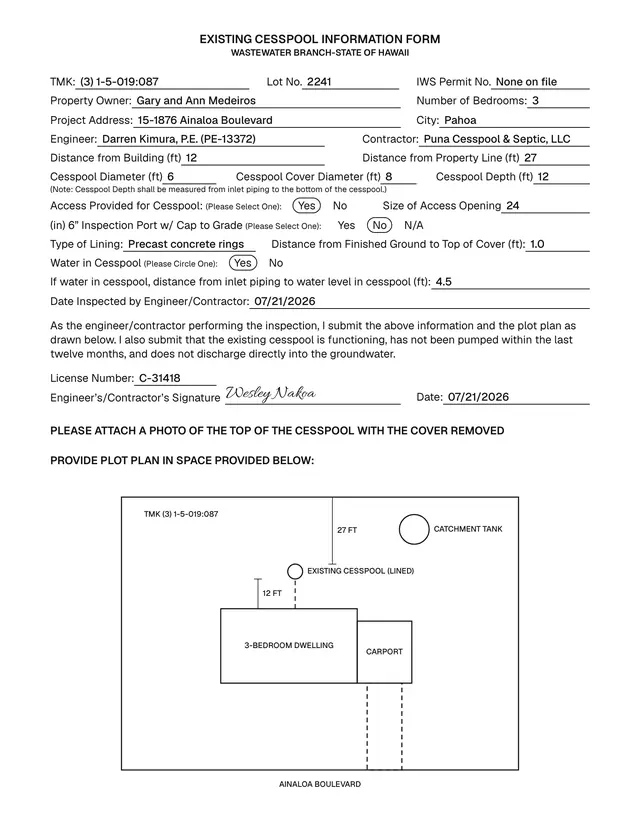
Existing Cesspool Information Form
Record the tank or cesspool and what was checked. - Illinois
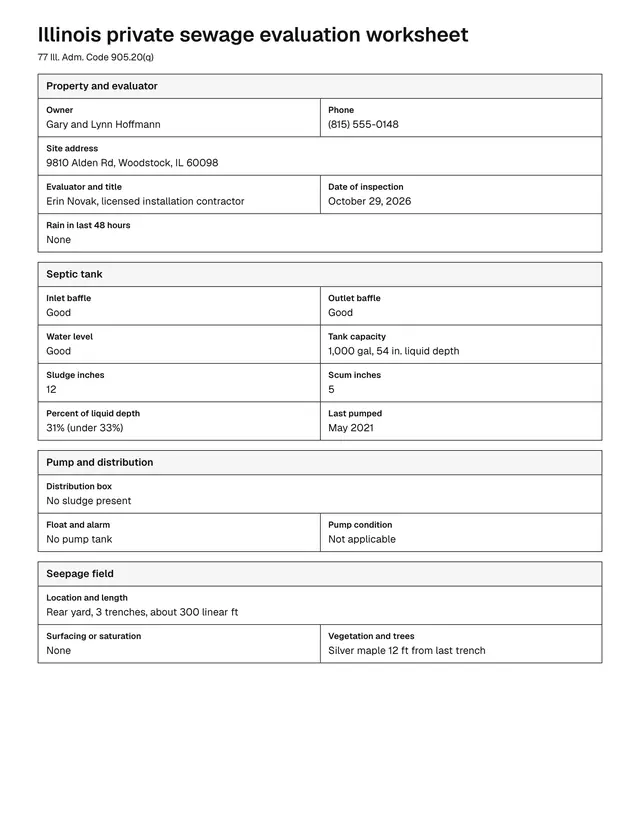
Illinois private sewage disposal system evaluation
Record the tank or cesspool and what was checked. - Indiana
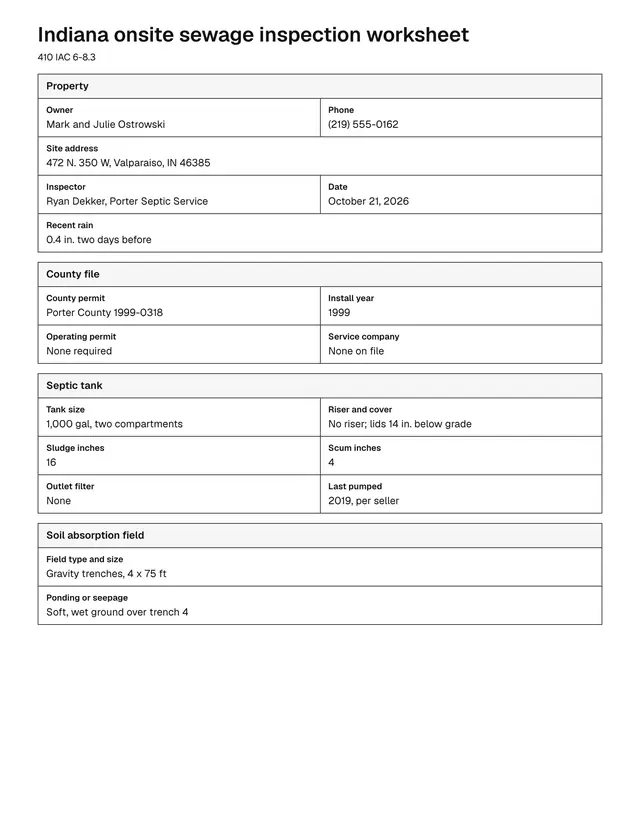
Indiana onsite sewage system inspection report
Record the tank or cesspool and what was checked. - Iowa
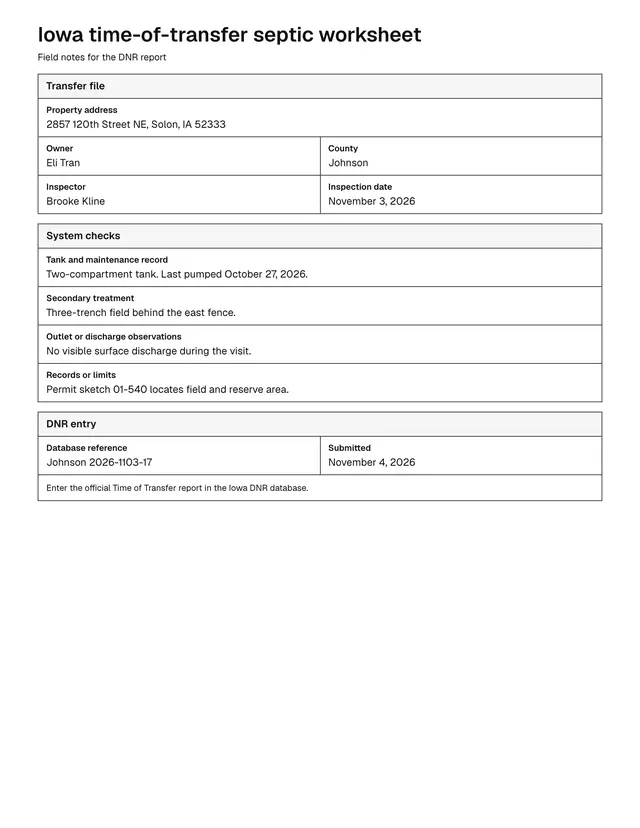
Iowa time-of-transfer septic worksheet
Record the tank or cesspool and what was checked. - Kentucky
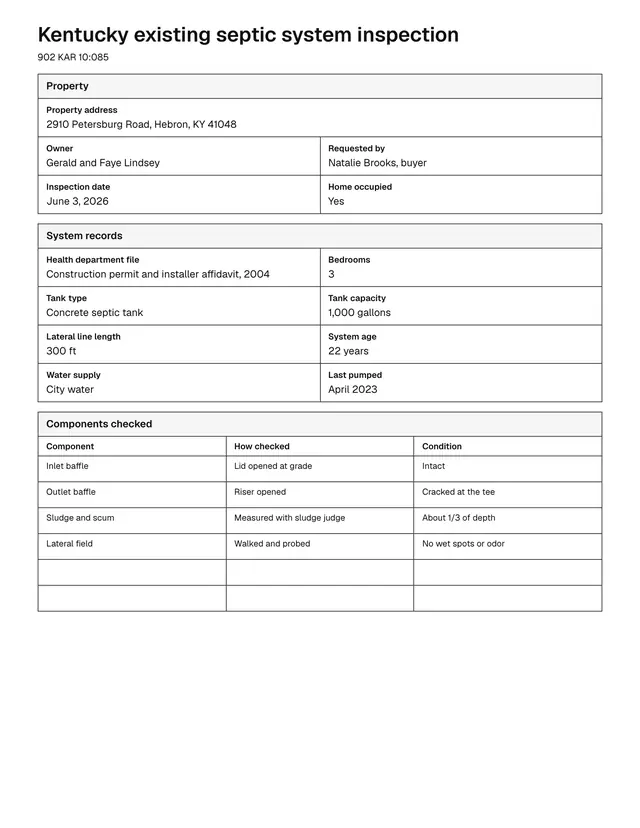
Kentucky existing septic system inspection
Record the tank or cesspool and what was checked. - Louisiana
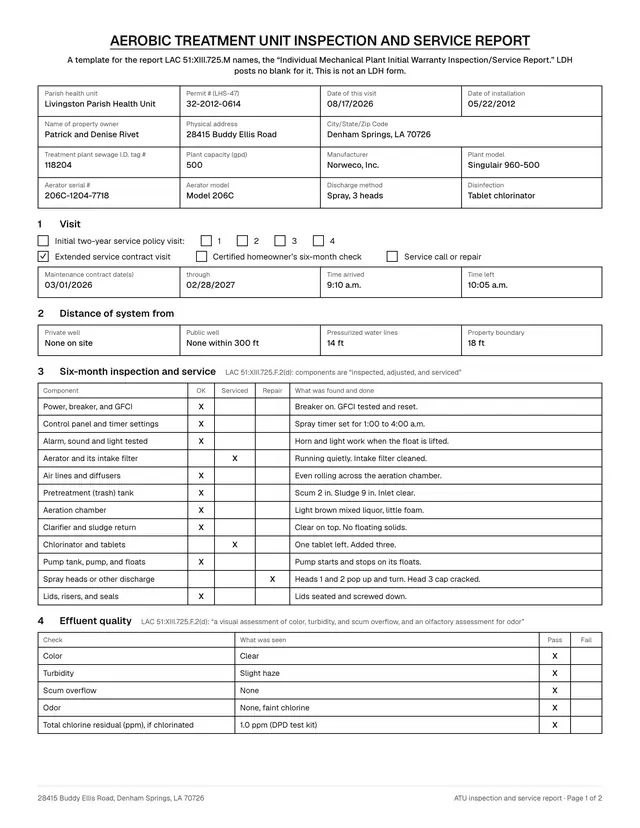
Aerobic Treatment Unit Inspection and Service Report
Record the tank or cesspool and what was checked. - Maryland
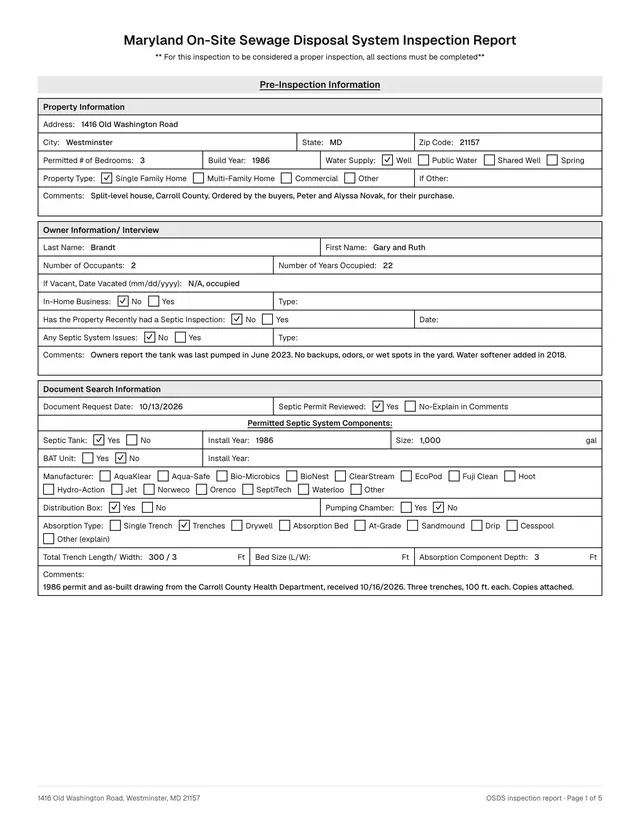
Maryland On-Site Sewage Disposal System Inspection Report
Record the tank or cesspool and what was checked. - Massachusetts
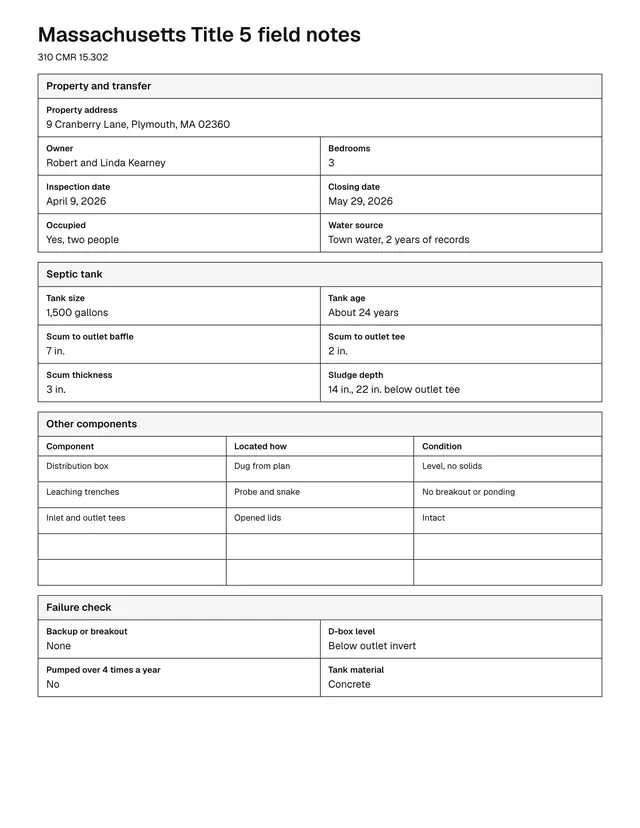
Massachusetts Title 5 inspection report (310 CMR 15.301)
Record the tank or cesspool and what was checked. - Michigan
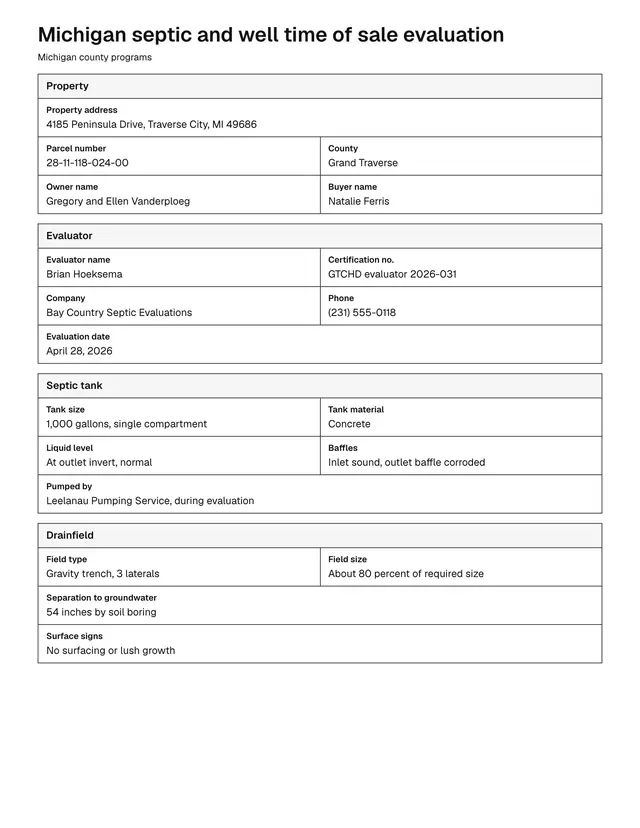
Michigan septic time of sale evaluation
Record the tank or cesspool and what was checked. - Minnesota
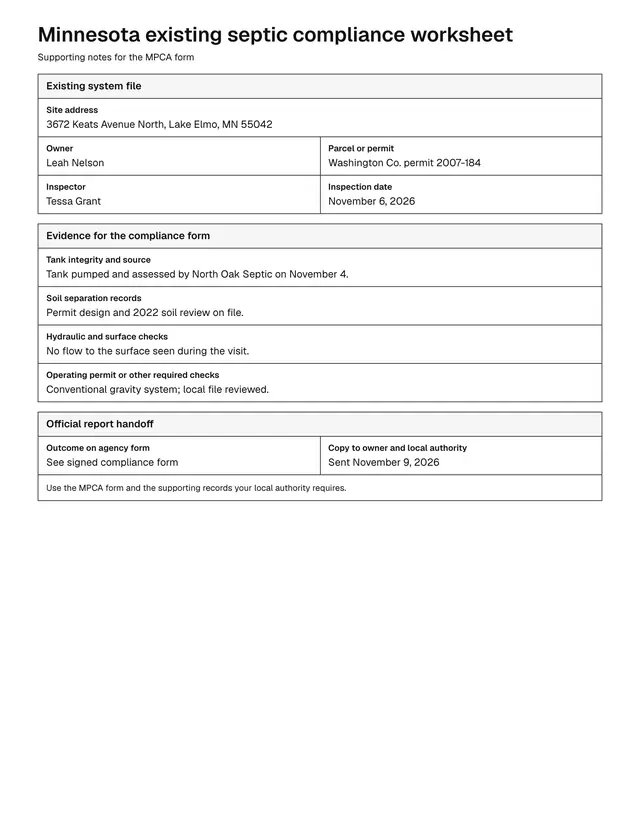
Minnesota existing septic compliance worksheet
Record the tank or cesspool and what was checked. - Mississippi
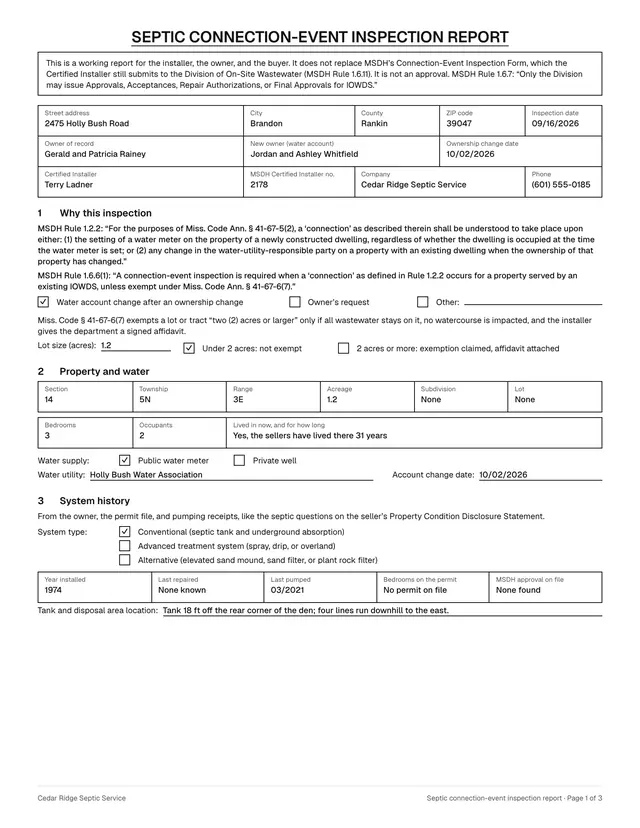
Septic Connection-Event Inspection Report
Record the tank or cesspool and what was checked. - Missouri
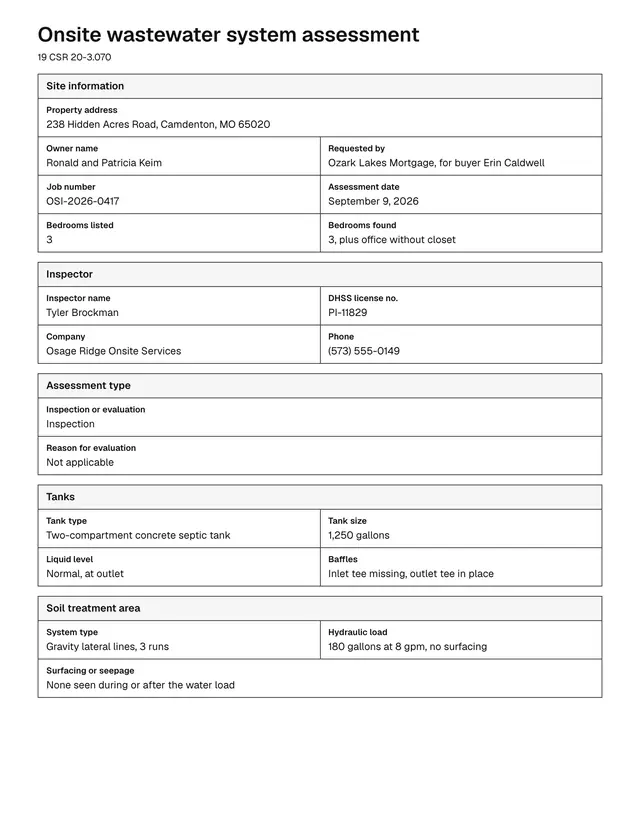
Missouri onsite wastewater inspection and evaluation report
Record the tank or cesspool and what was checked. - Nevada
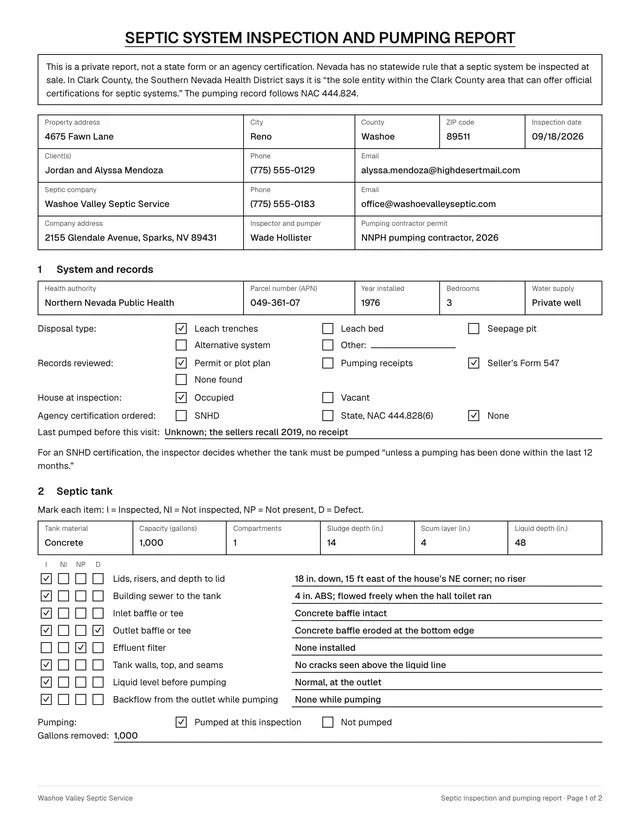
Septic System Inspection and Pumping Report
Record the tank or cesspool and what was checked. - New JerseyN.J.A.C. 7:9A Appendix F
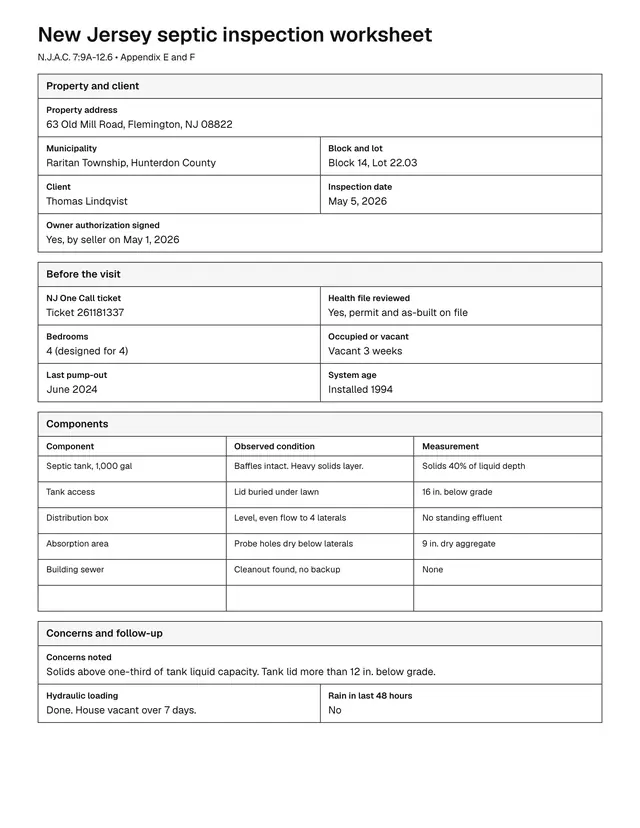
New Jersey septic inspection report (Appendix F Onsite System Inspection Form)
Record the tank or cesspool and what was checked. - New Mexico
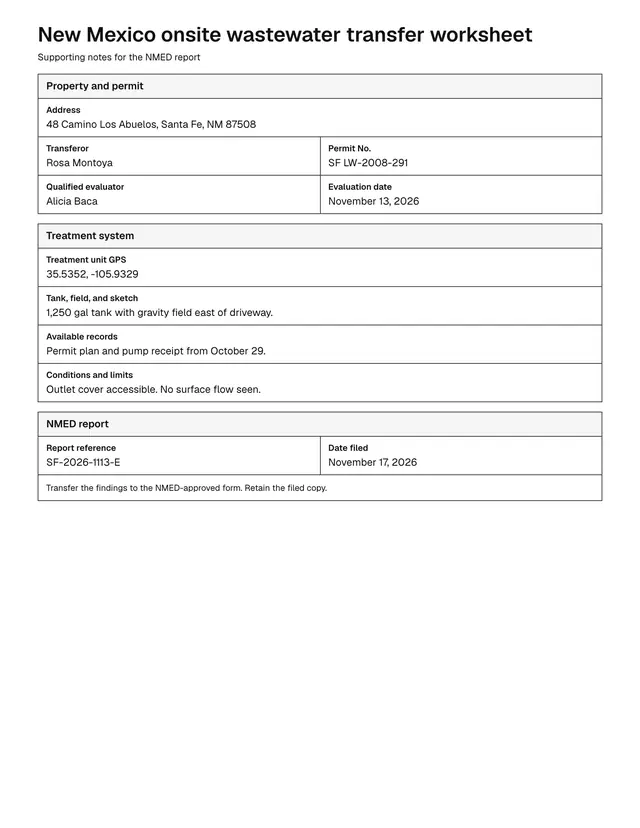
New Mexico onsite wastewater transfer worksheet
Record the tank or cesspool and what was checked. - North Carolina
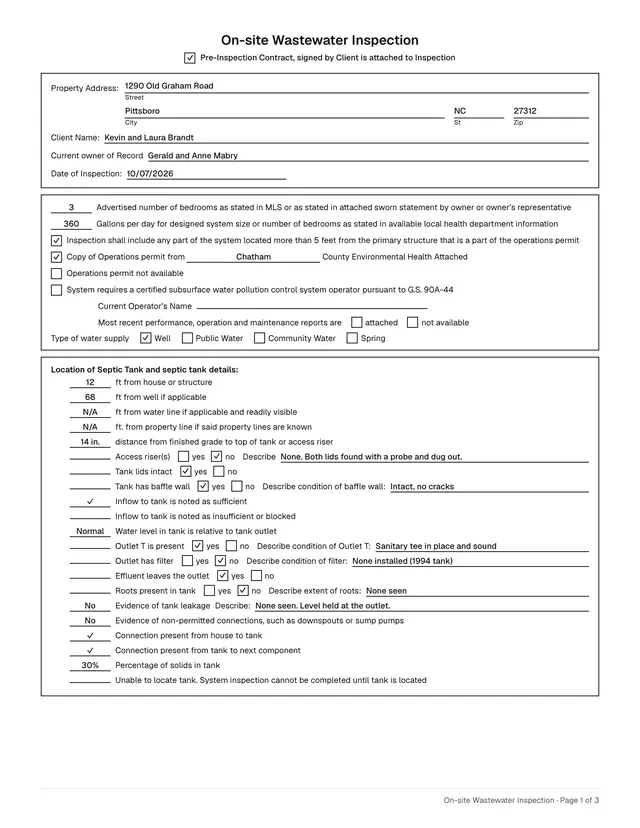
On-site Wastewater Inspection
Record the tank or cesspool and what was checked. - Ohio
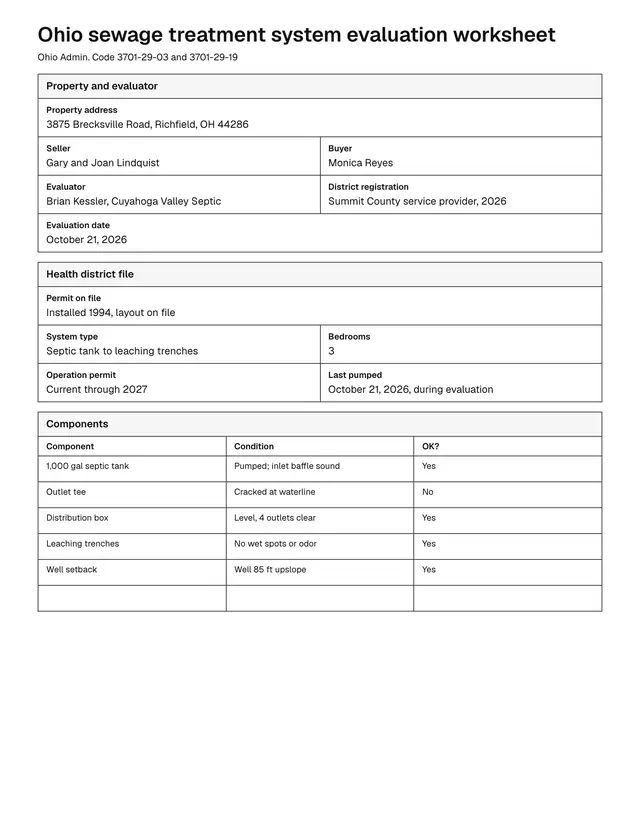
Ohio sewage treatment system evaluation for property transfer
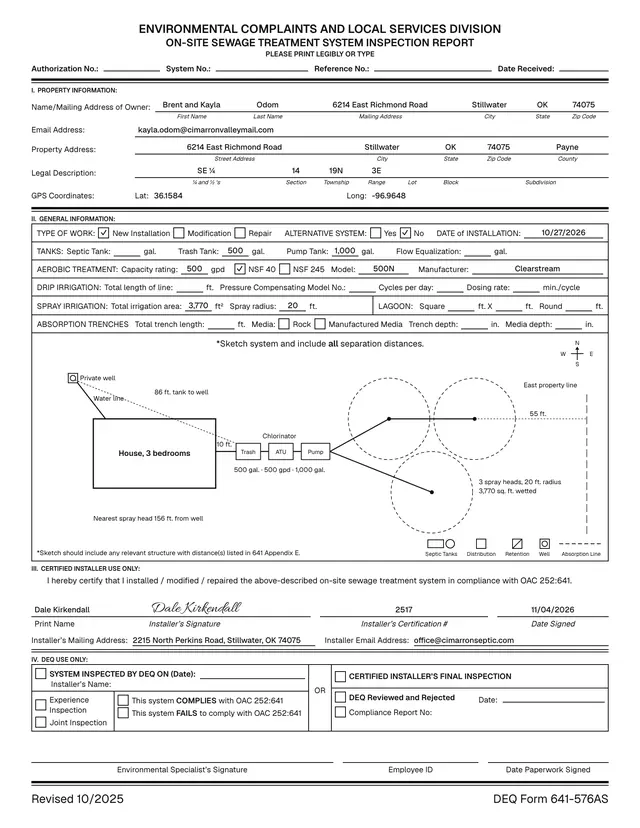
Record the tank or cesspool and what was checked. - OklahomaDEQ Form 641-576AS
On-Site Sewage Treatment System Inspection Report
Record the tank or cesspool and what was checked. - Oregon
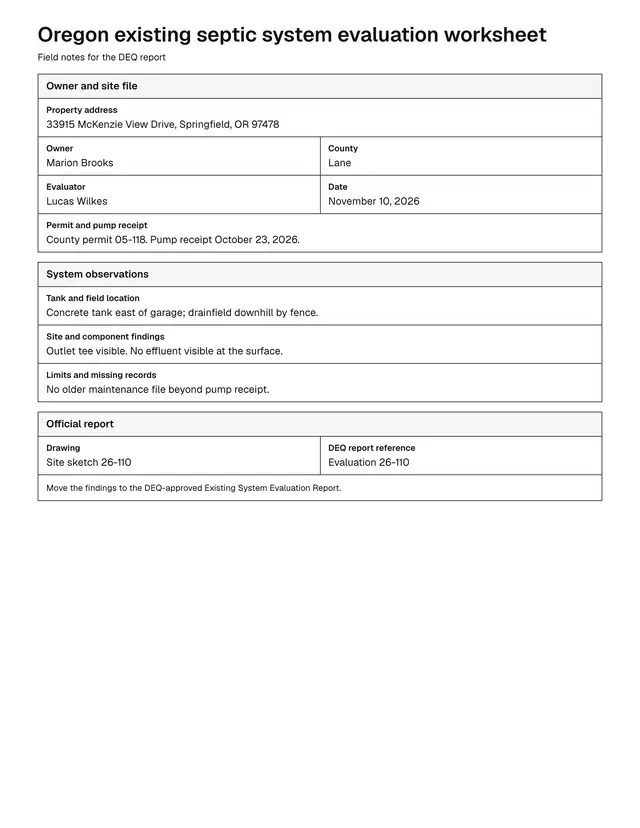
Oregon existing septic system evaluation worksheet
Record the tank or cesspool and what was checked. - Pennsylvania
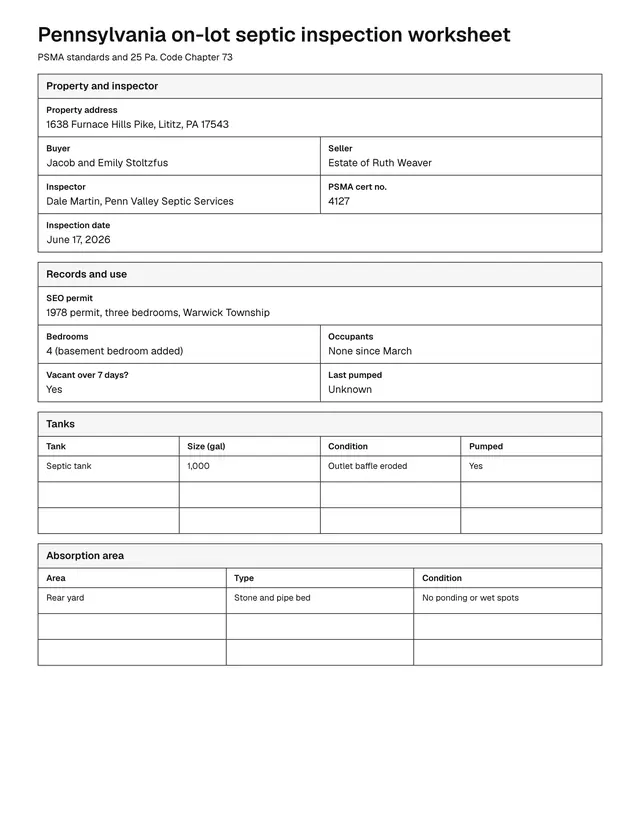
Pennsylvania on-lot septic system inspection (PSMA)
Record the tank or cesspool and what was checked. - South Carolina
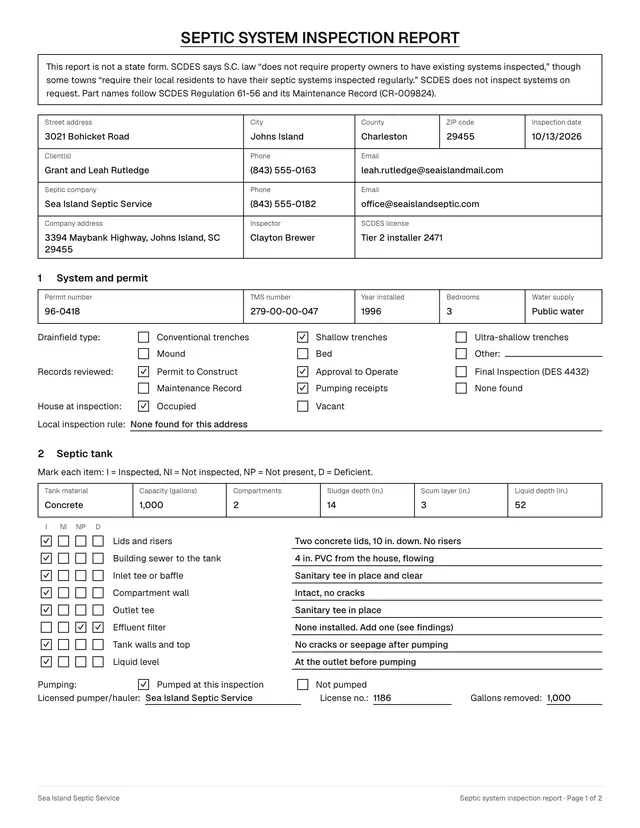
Septic System Inspection Report
Record the tank or cesspool and what was checked. - Tennessee
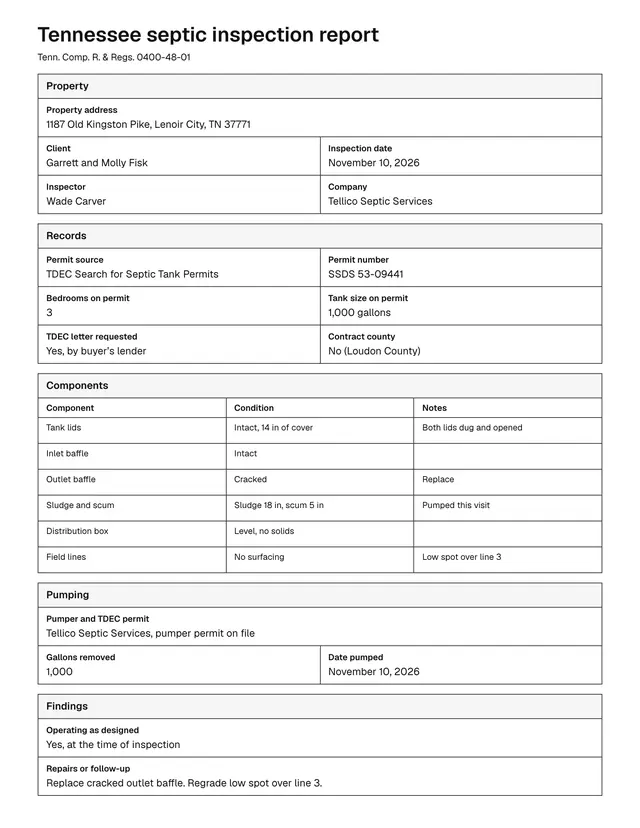
Tennessee septic inspection report
Record the tank or cesspool and what was checked. - Texas
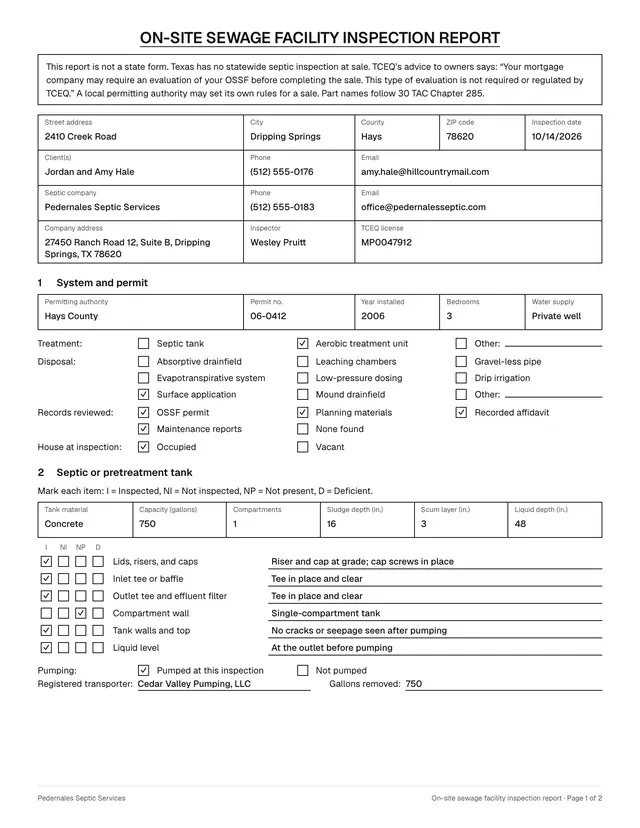
On-Site Sewage Facility Inspection Report
Record the tank or cesspool and what was checked. - Virginia
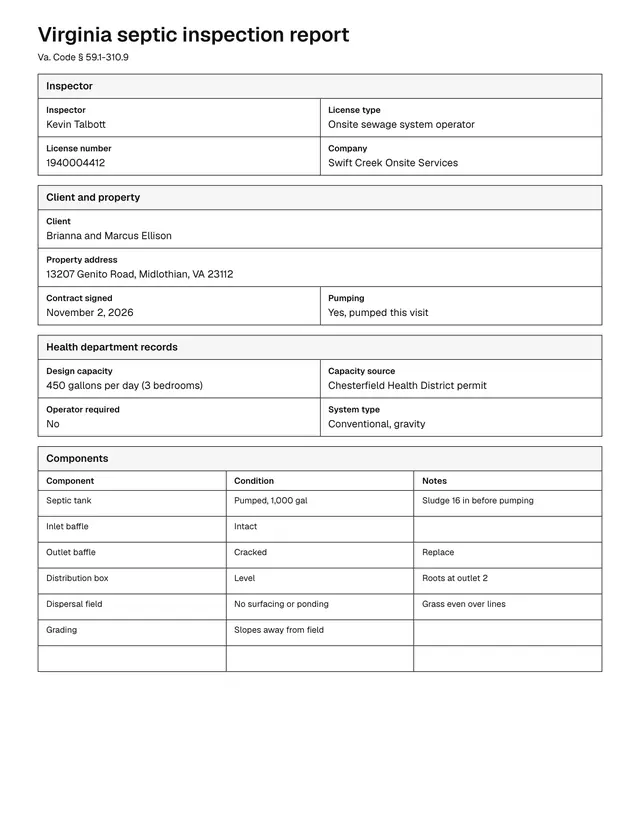
Virginia septic inspection report
Record the tank or cesspool and what was checked. - Washington
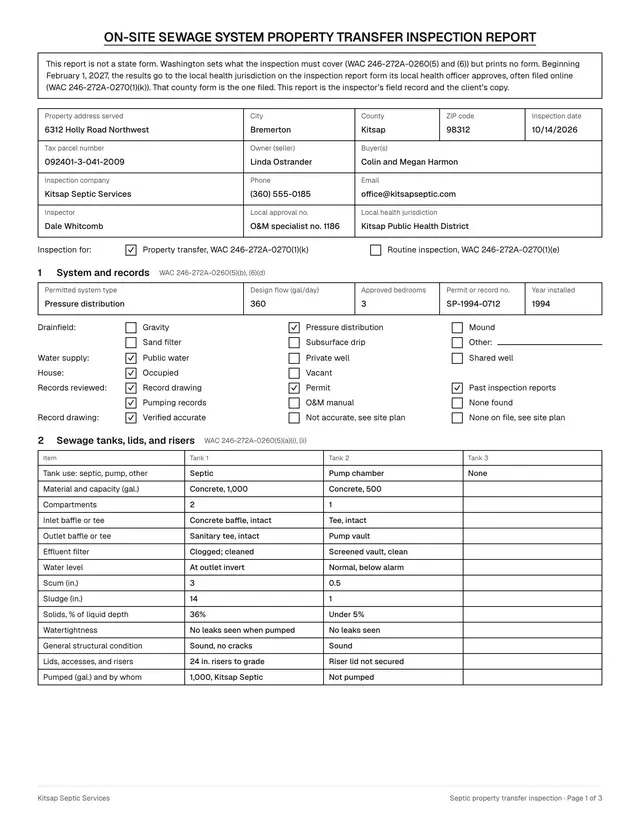
On-Site Sewage System Property Transfer Inspection Report
Record the tank or cesspool and what was checked. - Wisconsin
Wisconsin POWTS maintenance worksheet
Record the tank or cesspool and what was checked.