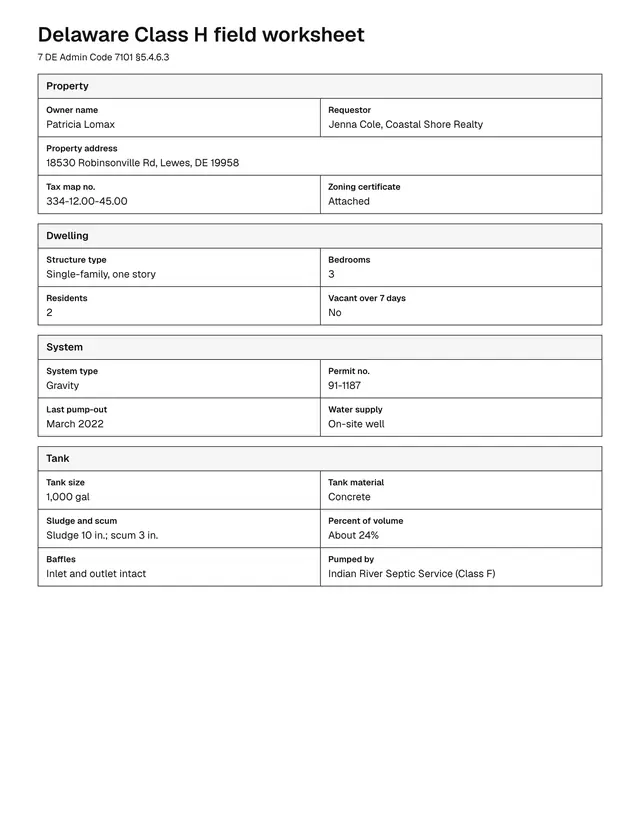
Delaware Class H septic inspection report
Selling a Delaware home on septic means a pump-out and a Class H inspection before settlement. The report goes to DNREC on the state’s form within 72 hours.
At a glance
- Rule
- 7 DE Admin Code 7101 §5.4.6.3
- Who
- Class F pumper and Class H inspector
- To DNREC
- Within 72 hours of the inspection
- Reuse
- A report from the last 36 months, with paperwork
Completed example
Download PDFWhen Delaware requires one
Delaware’s septic rule is 7 DE Admin Code 7101. Section 5.4.6.3.1 says that for any property using an on-site system that’s “sold or otherwise transferred,” the system must be pumped by a Class F licensee and inspected by a Class H licensee “prior to the completion of sale.” Sheriff sales, short sales, cash sales, and auctions get up to 90 days after the sale.
There are ways around a fresh one. A pump-out and inspection from the previous 36 months counts if the owner has the paperwork. A new home’s certificate of completion counts if it was issued in the last 24 months. So does proof of a licensed operator or an annual service contract with a certified provider.
Before you quote, check whether a recent report exists. DNREC has a search tool for Class H reports by owner name, address, parcel number, or Class H number.
Before you dig
Pull the records. The rule says to research DNREC’s permits and site evaluations using tax map numbers and past owners. A current zoning certificate is also required. The DNREC form prints “ZONING CERTIFICATE MANDATORY” right on it.
Use the state form. Reports go on the Department’s form, the Existing On-Site Wastewater System Field Inspection Report, and the rule says they can’t be altered without DNREC’s okay.
Talk to whoever lives there. Interview the owner or tenants if you can. They know about backups, recent repairs, and how many people really live in the house.
Look under the house. Check for greywater lines or a separate system. If you can’t get under the dwelling, say so on the report.
Run every fixture. Flow test each fixture in the house, if you can get inside.
At the tank, the box, and the field
The tank. Locate it and dig up both the inlet and outlet lids if there are no risers. Note the effluent level and the filter, if there is one. Measure sludge and scum. The rule says “the combined total should not exceed 30% of tank volume.” Then pump. Section 5.4.6.3.10.7 says a pump-out “is required for all inspections.” While it’s pumping, check the tank walls, the pipes, the baffles, and any flow back from the field.
The distribution box. Dig it up and check for cracks, the seals around pipes, and the water level. The rule points out that water above the outlet pipe can mean the field is ponding.
The dosing chamber. If there is one, check the floats, the pump and alarm, the timer, and that effluent actually leaves when the pump runs.
The drainfield. Look for wet or sunken spots with lush grass. The rule says to probe the field “in all cases” to find its size and location. If the house has been empty more than seven days, a flow or slug test is recommended.
Fancy systems. Advanced treatment units and alternative fields need DNREC-approved training for that system. The rule says a Class H license alone “is not adequate enough for this task.”
The scale drawing
Section 5.4.6.3.19 is strict about the site drawing. Use a straight edge, no freehand lines. Show at least two fixed reference points, like a numbered utility pole, a property corner, or GPS coordinates. Use a whole-number scale: 1 inch equals 10, 20, 30, 40, 50, 60, or 100 feet. Add a north arrow, the well or water line, every system part, and distances from fixed points. Measure an on-site well from two reference points.
If an approved permit drawing exists, you can use it, but you must write “no changes were found” or mark every change.
Two findings start a clock for the owner. Cesspools and seepage pits are prohibited and must be replaced within one year. Metal tanks and metal distribution boxes are prohibited and must be replaced too.
What happens after you send it to DNREC?
The report is due to DNREC within 72 hours of finishing the inspection. DNREC then reviews it. If something isn’t right, you’re notified and have 72 hours to send corrections to both the Department and the owner. If the system failed and the owner makes repairs, either another Class H inspection happens or paperwork goes in showing the work that brought it back to satisfactory.
Noma specializes in the Delaware Class H inspection report (7 DE Admin Code 7101 §5.4.6.3). Agents and sellers book online, you draw the site sketch on the job in the app, and the invoice goes out so it’s paid before settlement. See how Noma books septic inspections.
Frequentlyaskedquestions
Send this document in minutes, not an afternoon.
Other states
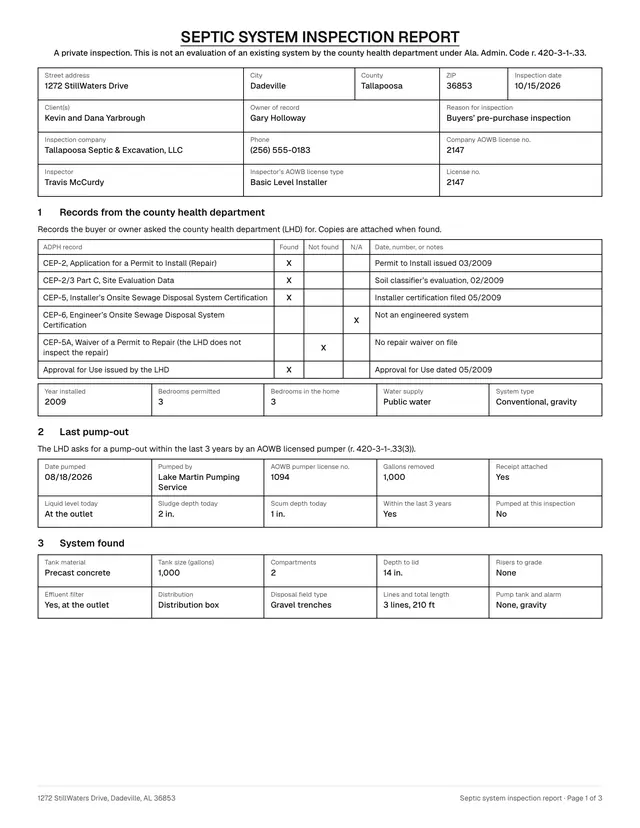
Septic inspection report templates- Alabama
Septic System Inspection Report
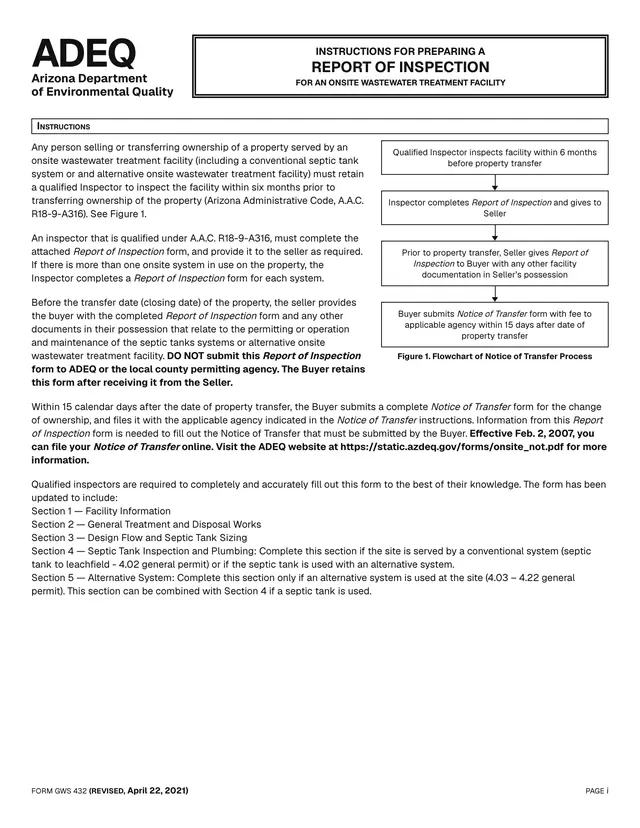
Record the tank or cesspool and what was checked. - ArizonaGWS 432
Report of Inspection for an Onsite Wastewater Treatment Facility
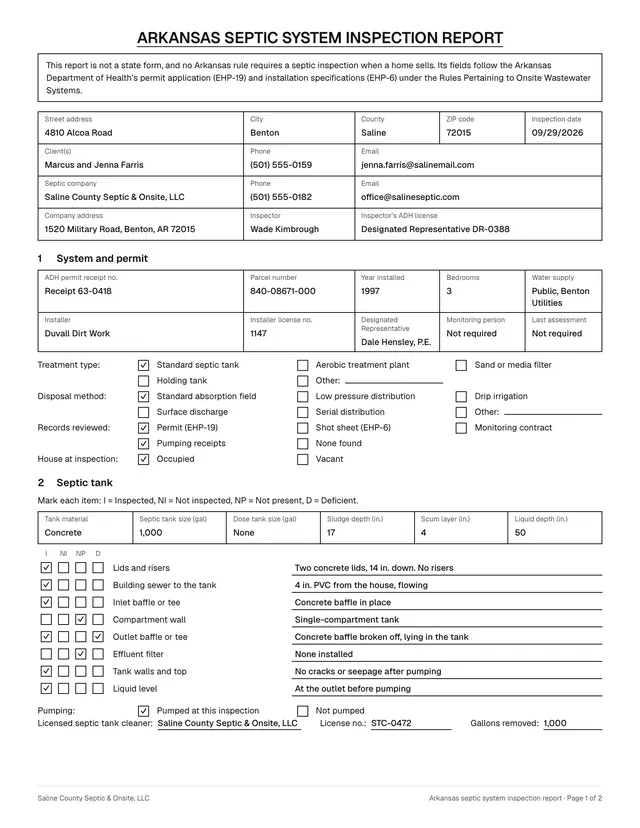
Record the tank or cesspool and what was checked. - Arkansas
Arkansas Septic System Inspection Report
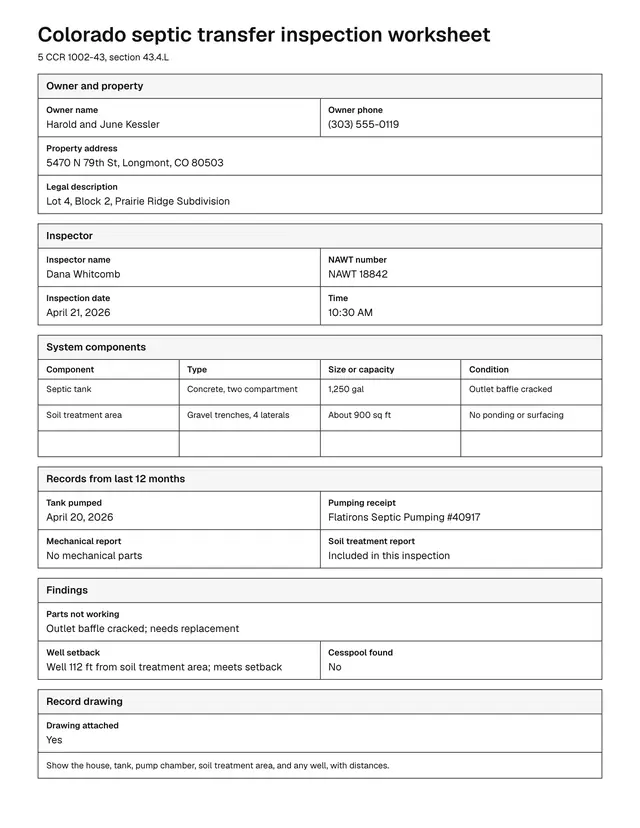
Record the tank or cesspool and what was checked. - Colorado
Colorado septic transfer of title inspection report (Regulation 43)
Record the tank or cesspool and what was checked. - Florida
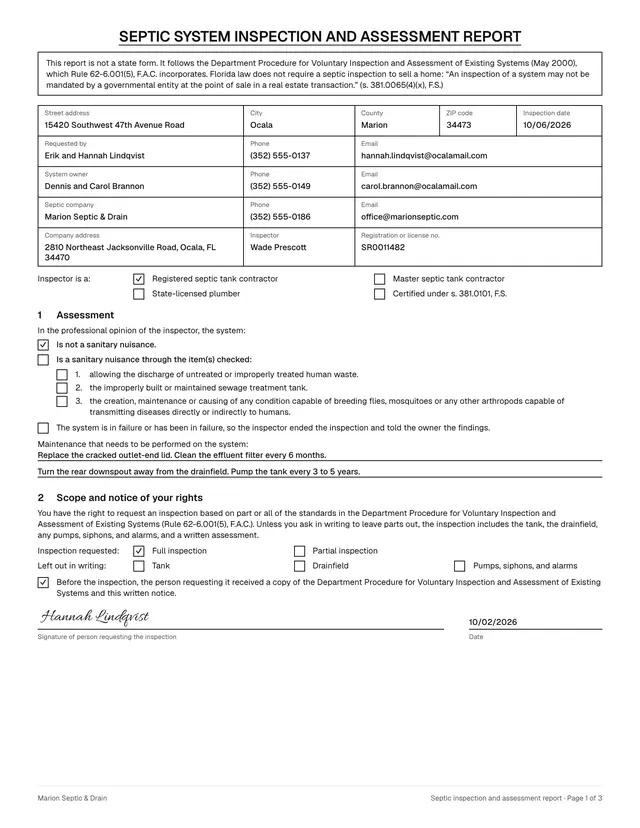
Septic System Inspection and Assessment Report
Record the tank or cesspool and what was checked. - Georgia
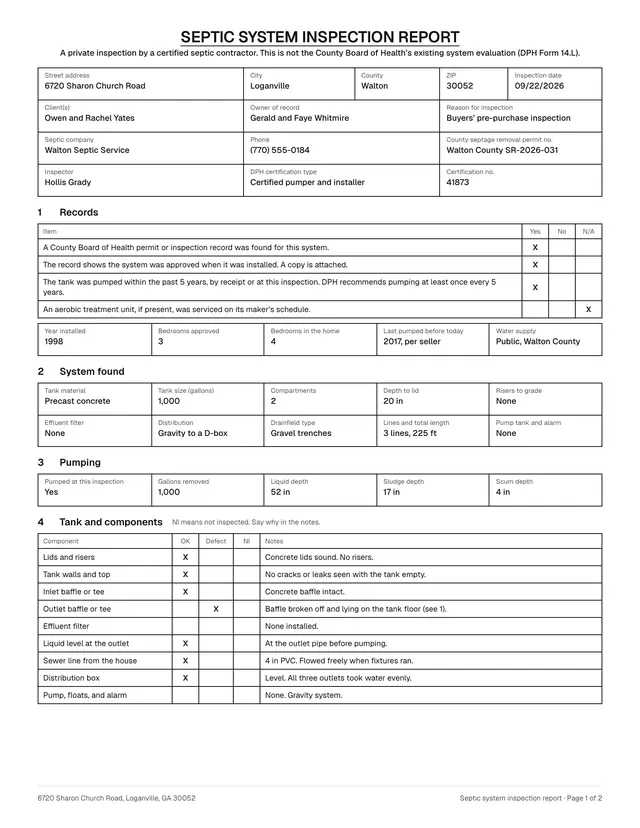
Septic System Inspection Report
Record the tank or cesspool and what was checked. - Hawaii
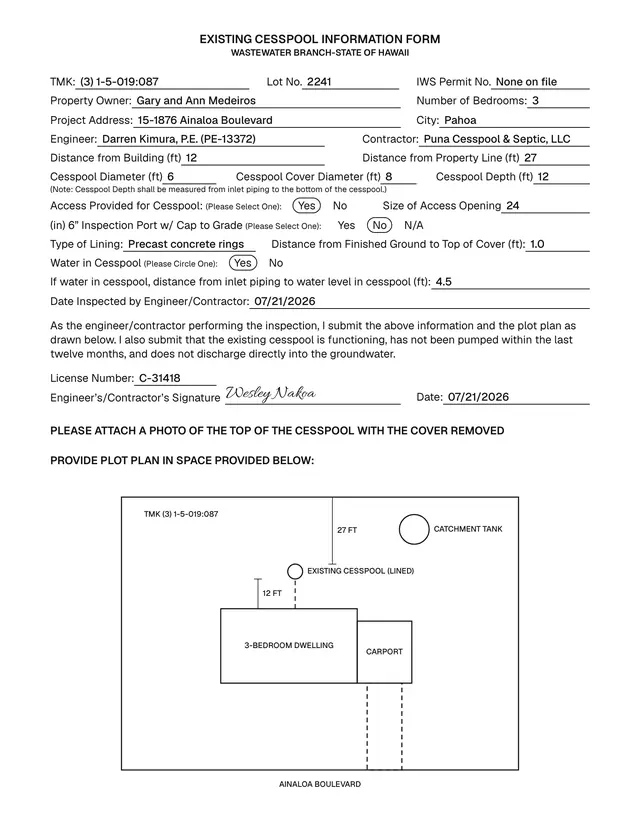
Existing Cesspool Information Form
Record the tank or cesspool and what was checked. - Illinois
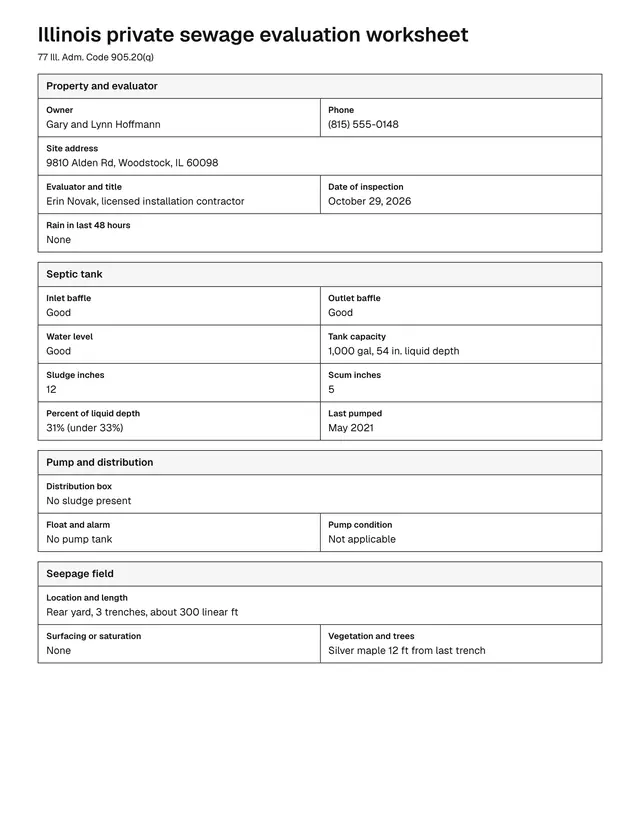
Illinois private sewage disposal system evaluation
Record the tank or cesspool and what was checked. - Indiana
Indiana onsite sewage system inspection report
Record the tank or cesspool and what was checked. - Iowa
Iowa time-of-transfer septic worksheet
Record the tank or cesspool and what was checked. - Kentucky
Kentucky existing septic system inspection
Record the tank or cesspool and what was checked. - Louisiana
Aerobic Treatment Unit Inspection and Service Report
Record the tank or cesspool and what was checked. - Maryland
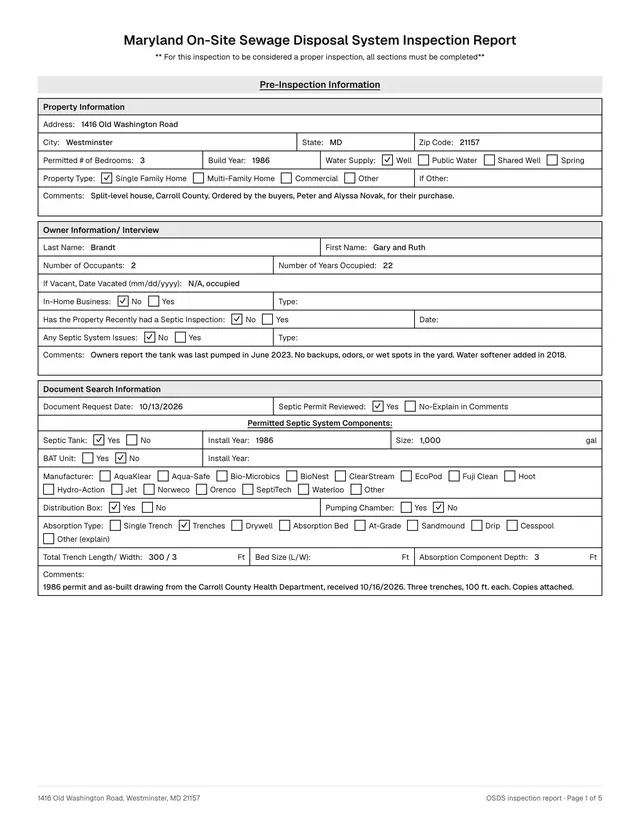
Maryland On-Site Sewage Disposal System Inspection Report
Record the tank or cesspool and what was checked. - Massachusetts
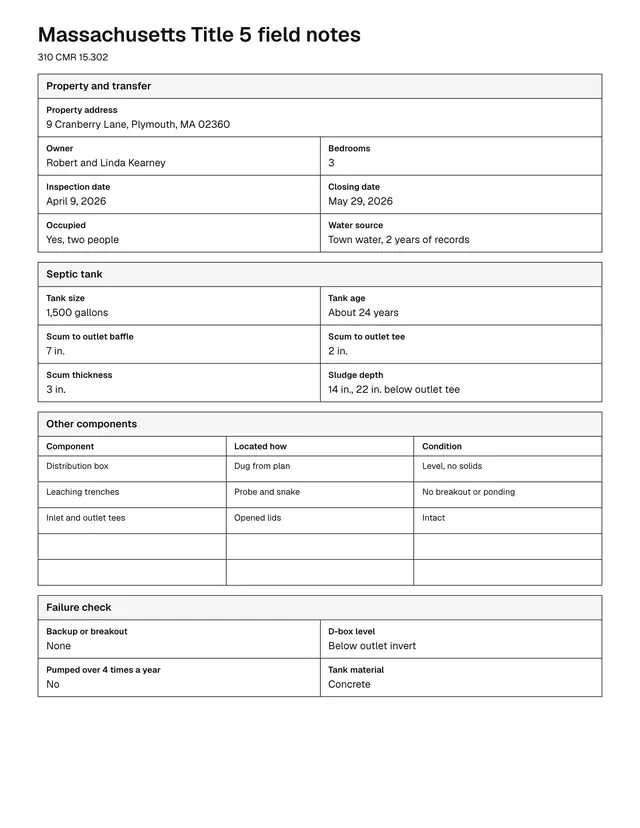
Massachusetts Title 5 inspection report (310 CMR 15.301)
Record the tank or cesspool and what was checked. - Michigan
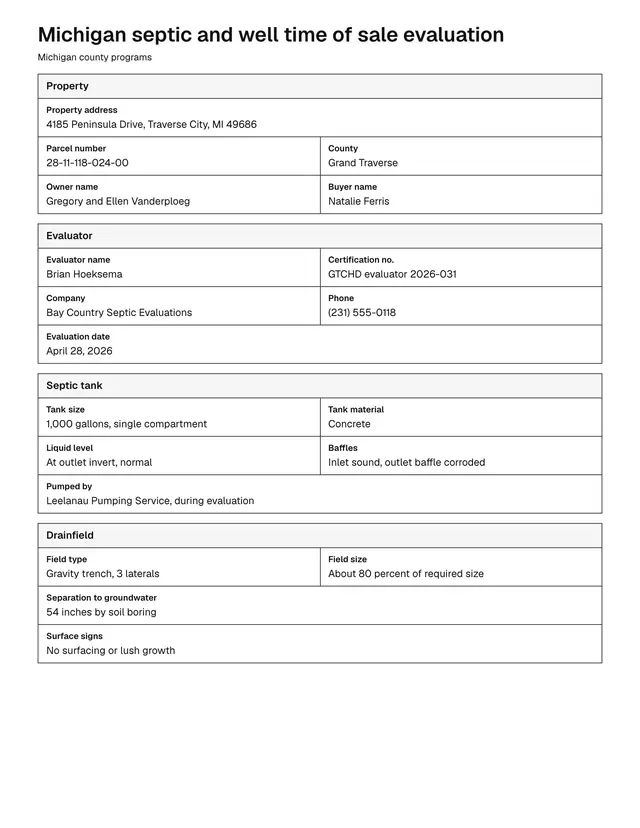
Michigan septic time of sale evaluation
Record the tank or cesspool and what was checked. - Minnesota
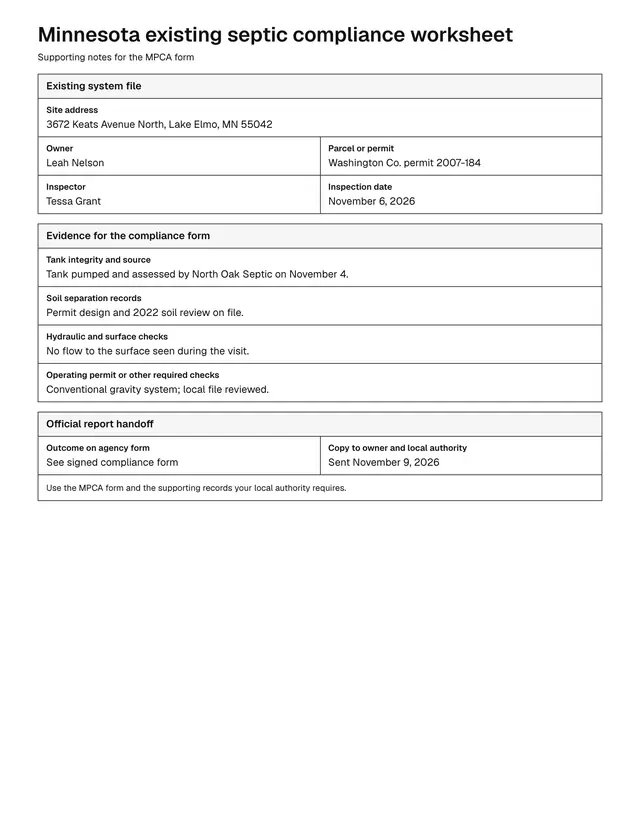
Minnesota existing septic compliance worksheet
Record the tank or cesspool and what was checked. - Mississippi
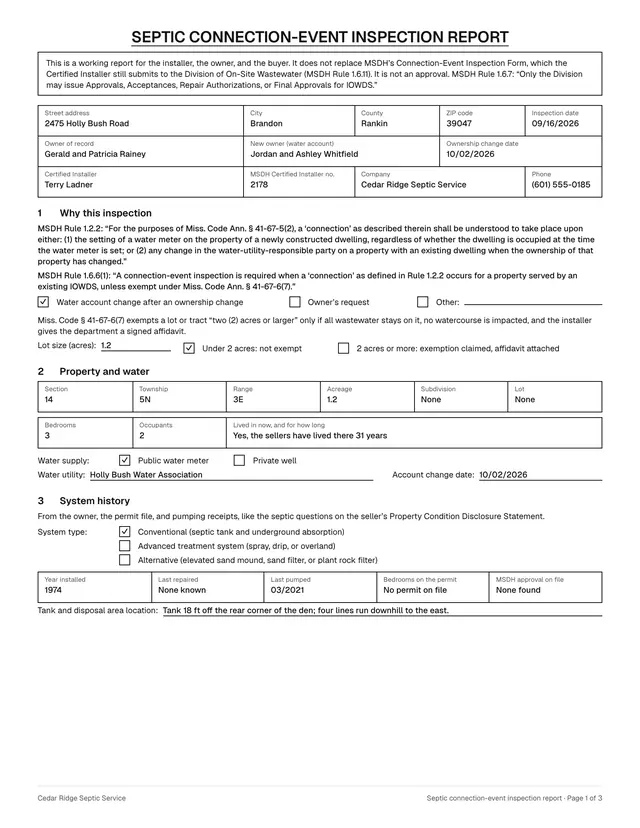
Septic Connection-Event Inspection Report
Record the tank or cesspool and what was checked. - Missouri
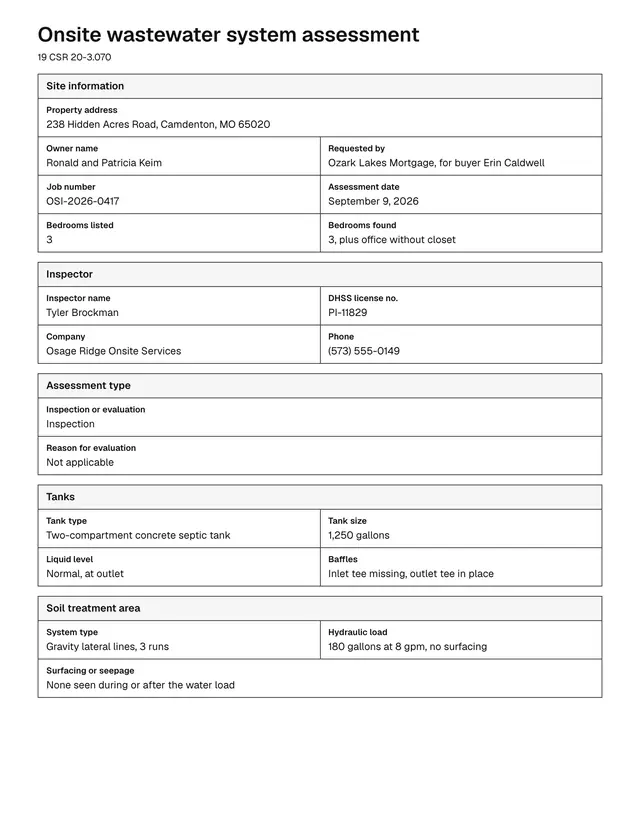
Missouri onsite wastewater inspection and evaluation report
Record the tank or cesspool and what was checked. - Nevada
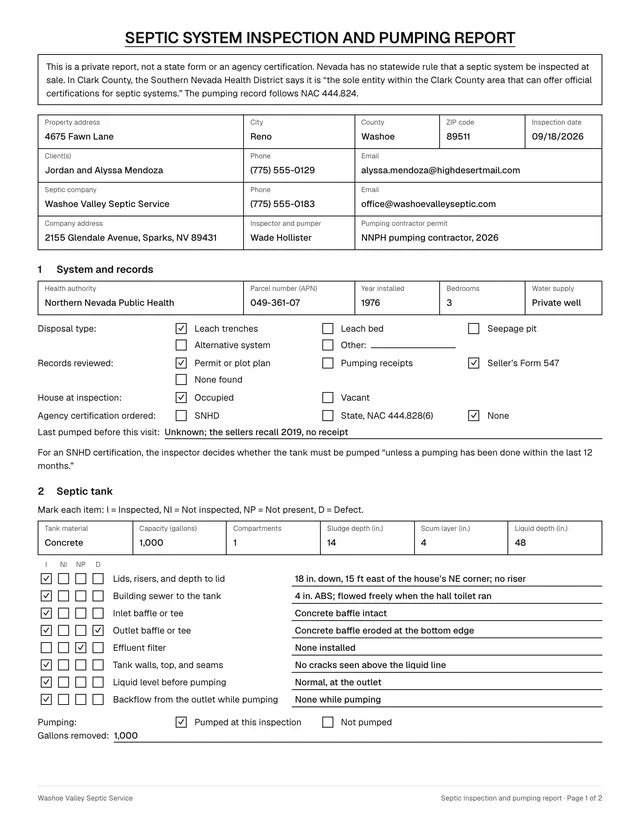
Septic System Inspection and Pumping Report
Record the tank or cesspool and what was checked. - New JerseyN.J.A.C. 7:9A Appendix F
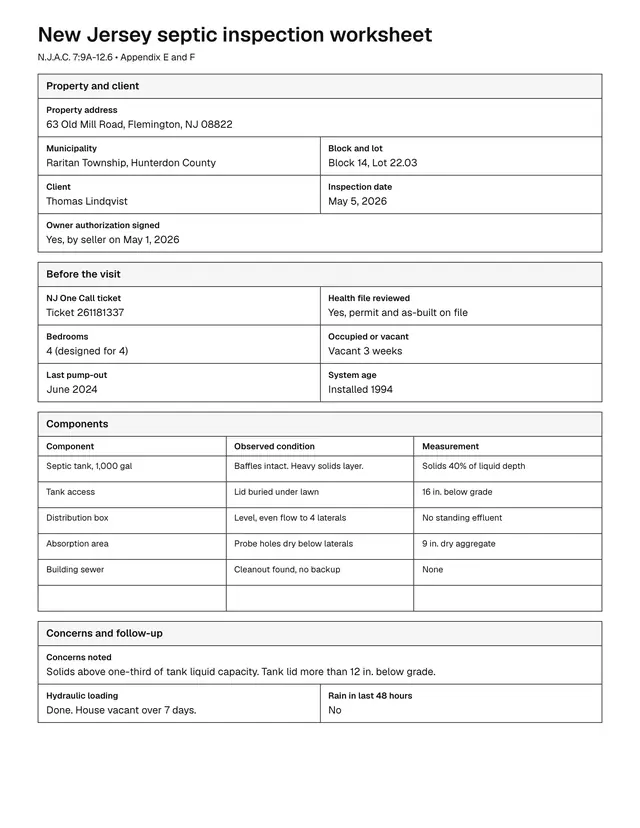
New Jersey septic inspection report (Appendix F Onsite System Inspection Form)
Record the tank or cesspool and what was checked. - New Mexico
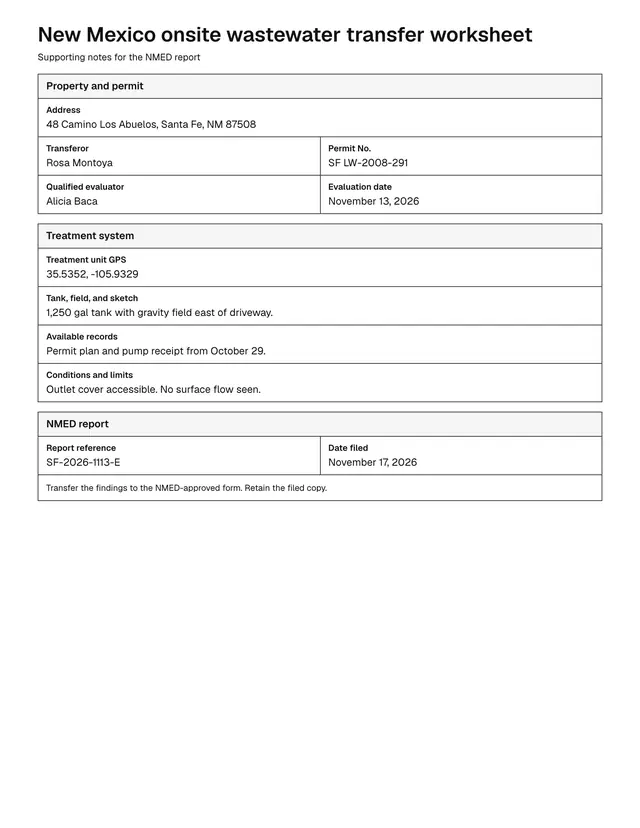
New Mexico onsite wastewater transfer worksheet
Record the tank or cesspool and what was checked. - New York
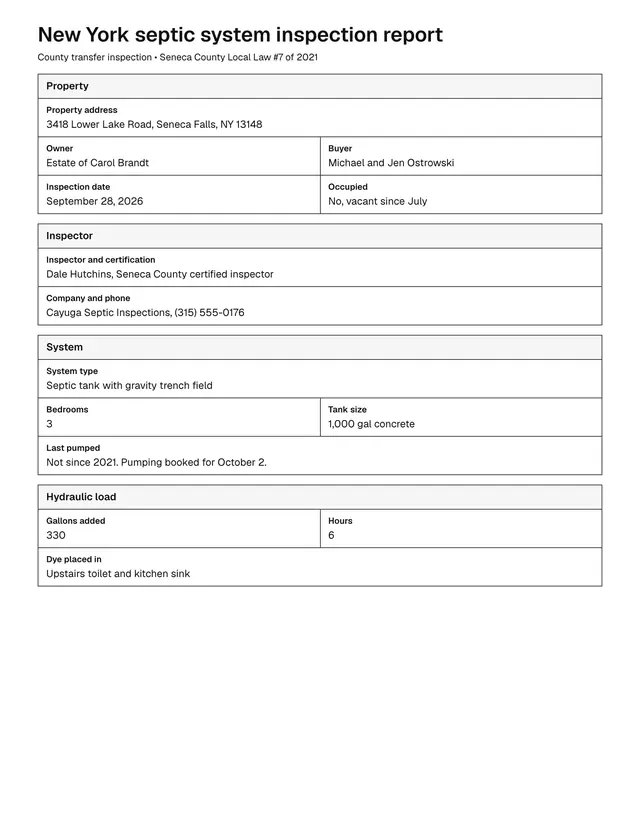
New York septic system inspection report (county transfer inspections)
Record the tank or cesspool and what was checked. - North Carolina
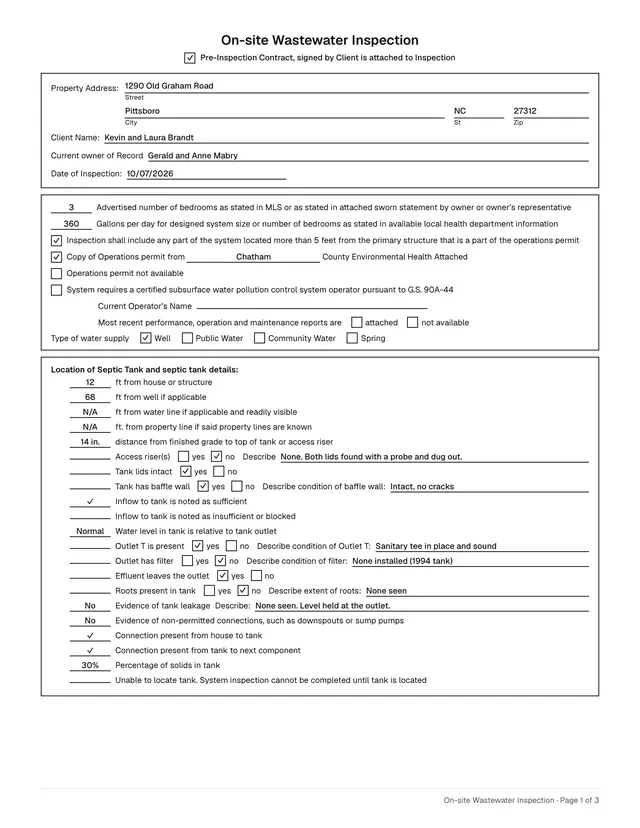
On-site Wastewater Inspection
Record the tank or cesspool and what was checked. - Ohio
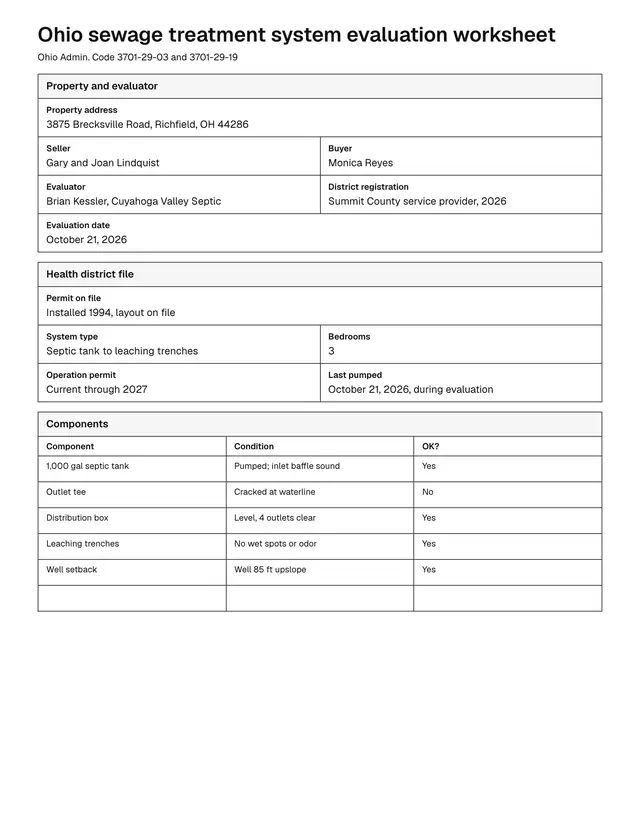
Ohio sewage treatment system evaluation for property transfer
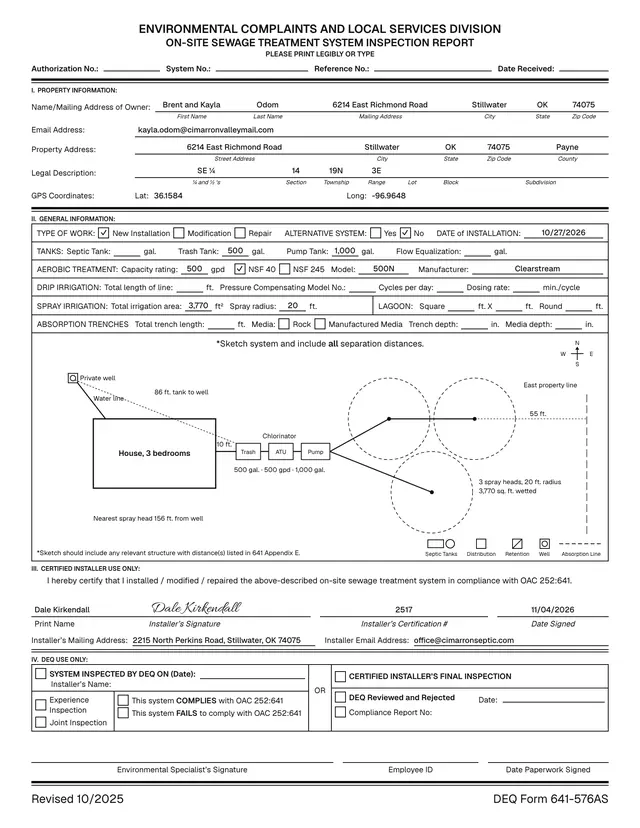
Record the tank or cesspool and what was checked. - OklahomaDEQ Form 641-576AS
On-Site Sewage Treatment System Inspection Report
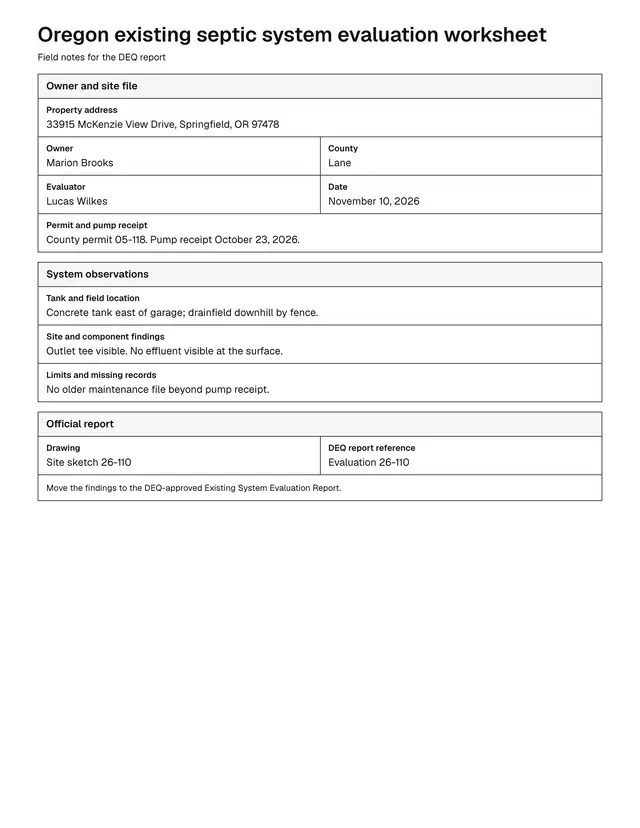
Record the tank or cesspool and what was checked. - Oregon
Oregon existing septic system evaluation worksheet
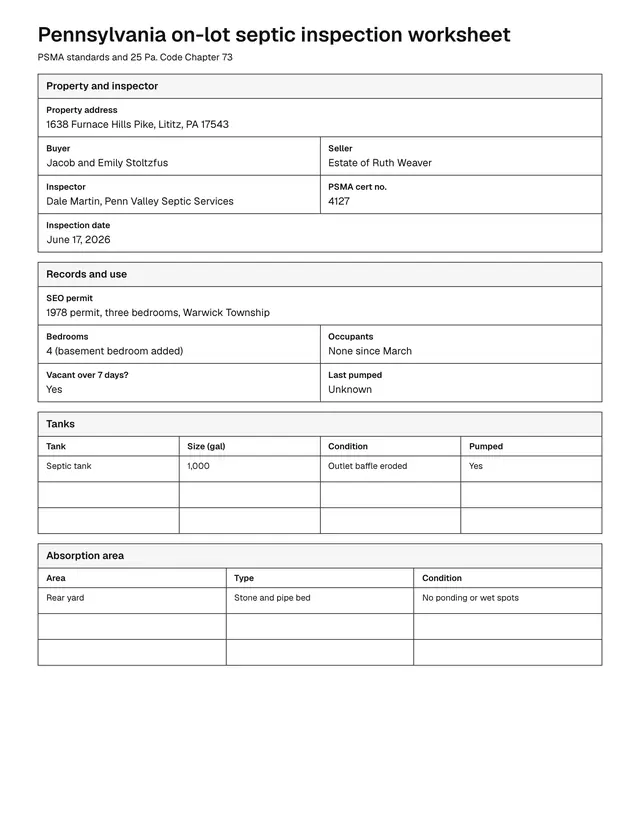
Record the tank or cesspool and what was checked. - Pennsylvania
Pennsylvania on-lot septic system inspection (PSMA)
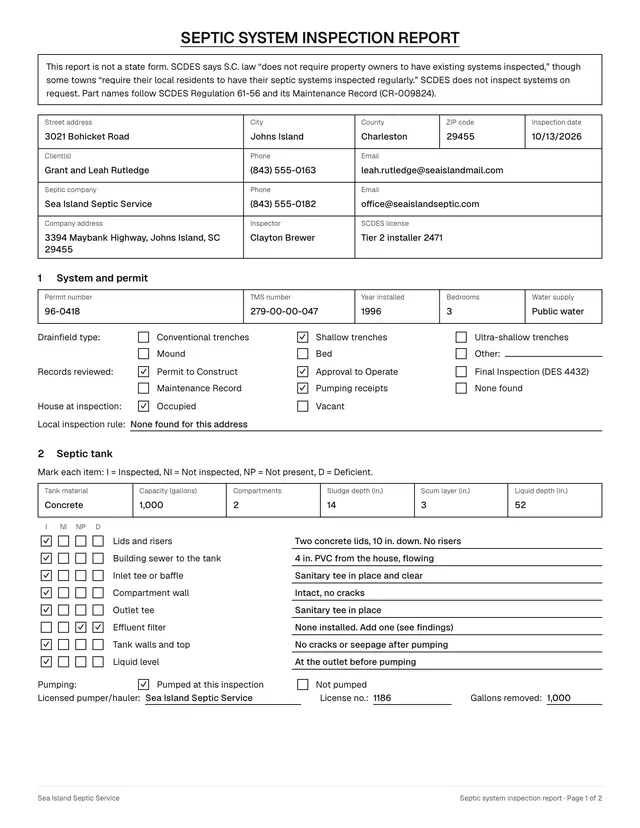
Record the tank or cesspool and what was checked. - South Carolina
Septic System Inspection Report
Record the tank or cesspool and what was checked. - Tennessee
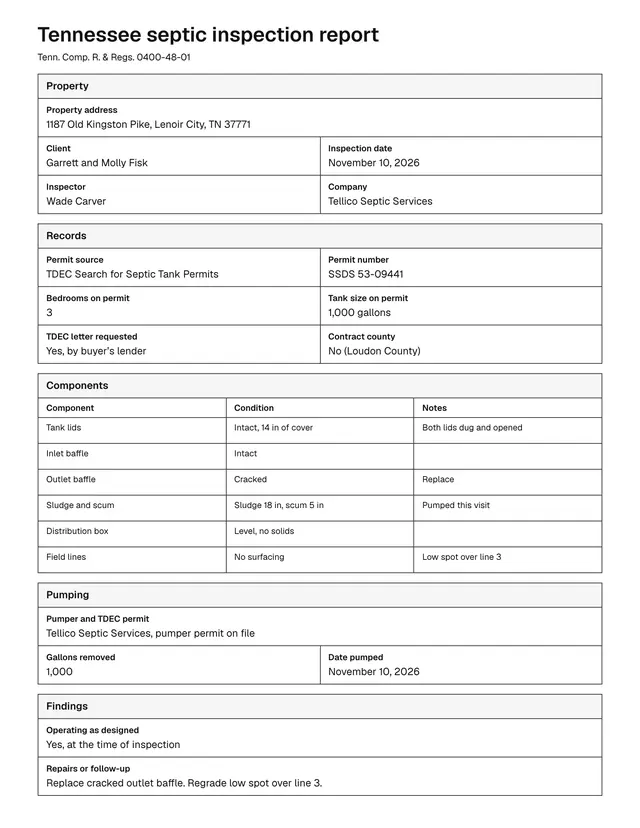
Tennessee septic inspection report
Record the tank or cesspool and what was checked. - Texas
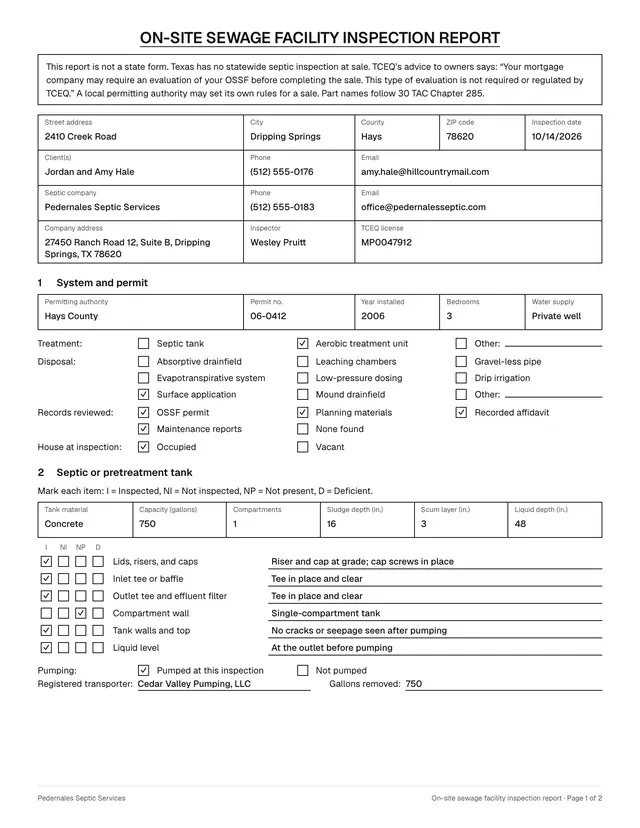
On-Site Sewage Facility Inspection Report
Record the tank or cesspool and what was checked. - Virginia
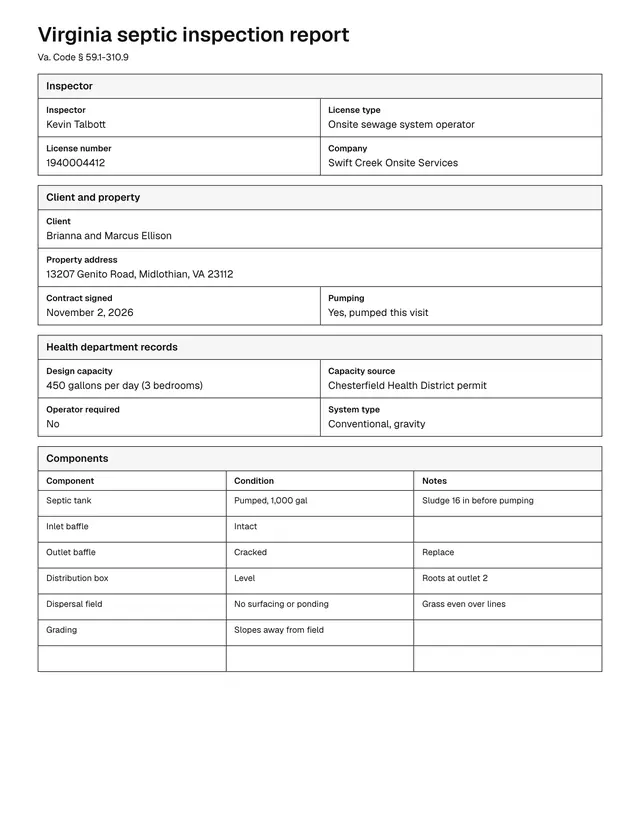
Virginia septic inspection report
Record the tank or cesspool and what was checked. - Washington
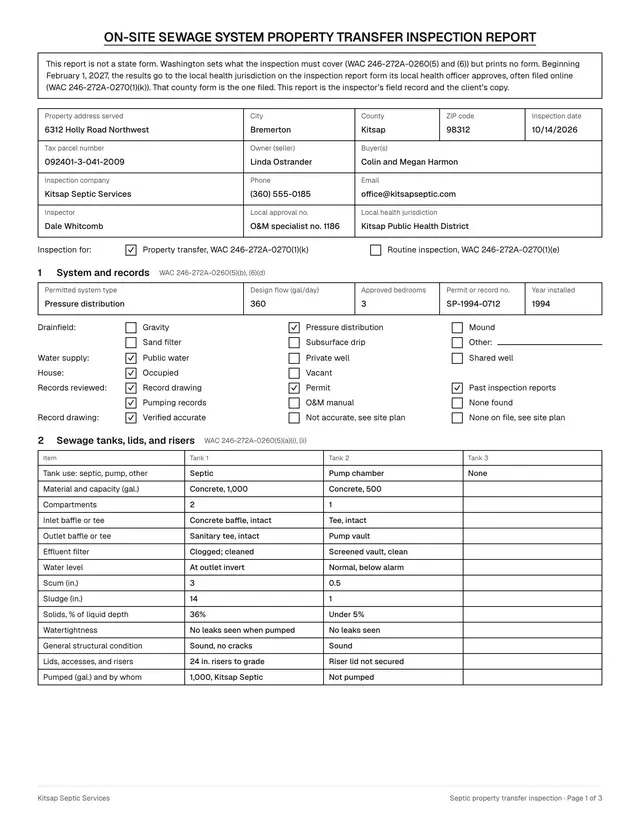
On-Site Sewage System Property Transfer Inspection Report
Record the tank or cesspool and what was checked. - Wisconsin
Wisconsin POWTS maintenance worksheet
Record the tank or cesspool and what was checked.