Kentucky existing septic system inspection
Kentucky has no statewide septic inspection at sale. Local health departments inspect existing systems on request, and 902 KAR 10:085 sets the standards a system was built to.
At a glance
- Rule
- 902 KAR 10:085
- Sale inspection
- Not required statewide
- Who inspects
- Local health department
- Example fee
- $200 in Northern Kentucky
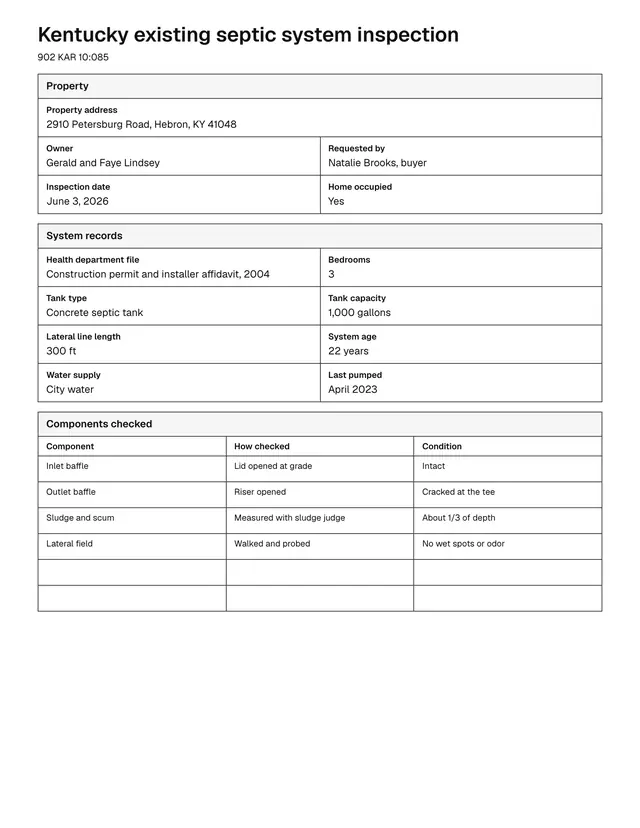
Completed example
Download PDFDoes Kentucky require a septic inspection to sell?
No. Kentucky’s septic rule, 902 KAR 10:085, covers how systems are sited, permitted, built, and repaired. It doesn’t call for an inspection when a house changes hands, and there’s no state form for one.
That doesn’t mean nobody looks. The state onsite sewage program says “local health department onsite septic system inspectors perform site evaluations and inspections in Kentucky.” Some of them take requests from buyers and sellers. Lenders, especially on rural loans, may ask for one too. And a private inspector can be hired to dig up the lids and look.
So a septic check in Kentucky is usually a buyer’s choice. Rural buyers on a private well and an old tank are the ones who ask most.
How a health department inspection works
The Northern Kentucky Health Department, which covers Boone, Campbell, Grant, and Kenton counties, is a good example. It says existing systems “may need to be inspected due to sale of the home, building addition, or rebuild” after a disaster. Local building offices there need one before a building or remodeling permit.
Its request form lists a $200 fee and asks for the number of bedrooms, lot size, whether the home is lived in, the tank type and capacity, the feet of lateral line, the system’s age, any changes, and the water source. The owner or agent signs a statement that the system works, or that it doesn’t. If it’s failing, the form says to request a site evaluation instead, which is a different form and fee.
Other counties run their own process and prices. Call the county health department before you promise a buyer a date.
The form also asks the owner to draw the lot showing the house and the system, and to keep the yard mowed so the inspector can see the field. It warns that parts of the system may need to be uncovered. Tell sellers that up front, since a fresh dig in the side yard surprises people.
What to look at on site
Find the paperwork first. The health department that issued the permit may have the site evaluation and the installer’s affidavit, which show the tank size and the lateral layout. Under 902 KAR 10:085, every new or repaired system gets inspected by a certified inspector before it’s covered, so a file often exists.
Open the tank at the outlet end. Newer Kentucky systems should have a riser at grade over the outlet manhole. The rule calls for risers at least 18 inches across, with lids that are tamper-resistant. A missing riser on a newer system is worth a note. Check the outlet baffle and any effluent filter.
Check the filter if there is one. When a system uses an effluent filter to meet 902 KAR 10:085, the rule caps the screen at 1/16 inch. A filter packed solid is a common reason a newer system backs up, and it’s an easy fix to recommend.
Walk the lateral field. Look for wet spots, lush stripes of grass, and odors over the lines. Note what you could and couldn’t find, like a distribution box you didn’t locate.
Write it as a condition report. Without a state form, your report sets the terms. Say what you opened, what you saw, and what you didn’t check.
What if something needs repair?
A repair that changes the system is an alteration under 902 KAR 10:085, and that means a permit. The rule says a permit “shall be issued only by a certified inspector and only to a certified installer or homeowner.” Point the client to the county health department, not straight to a contractor.
If the buyer also ordered a home inspection, note that septic systems are usually outside its scope. The Kentucky home inspection report should list it as an exclusion so nobody thinks it was covered.
Repair permits have a clock too. Under 902 KAR 10:085, a permit to build or alter a system expires one year after it’s issued. If the closing slips, the repair can still happen, but nobody should wait a year to start.
How do you fit septic work into a closing timeline?
Mostly by booking early. Digging up lids takes time, a health department visit can take longer, and closing dates rarely move.
Noma specializes in the Kentucky Existing Septic System Inspection (902 KAR 10:085). Buyers book and pay online, you schedule the dig, and your report has its own sections for the tank, the field, and what you couldn’t reach. See how Noma runs septic inspections.
Frequentlyaskedquestions
Send this document in minutes, not an afternoon.
Other states
Septic inspection report templates- Alabama
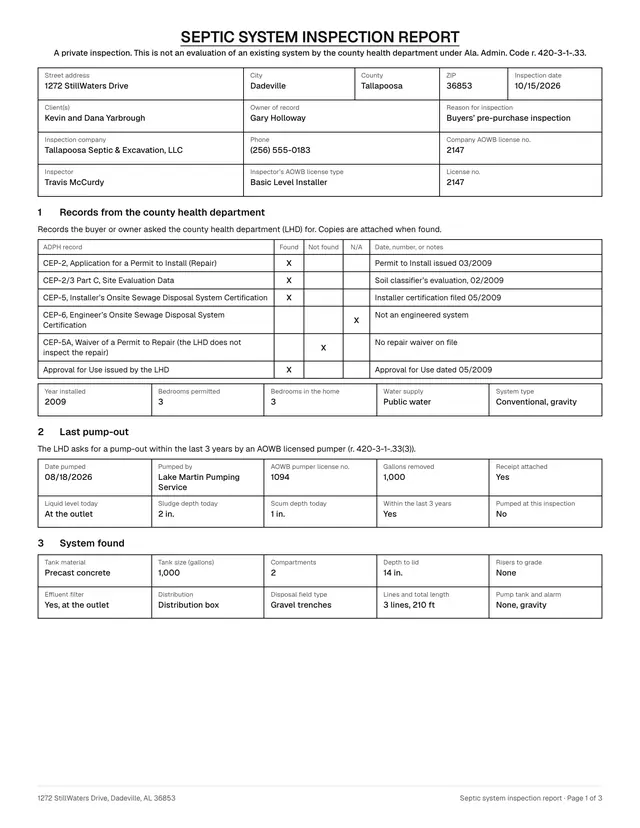
Septic System Inspection Report
Record the tank or cesspool and what was checked. - ArizonaGWS 432
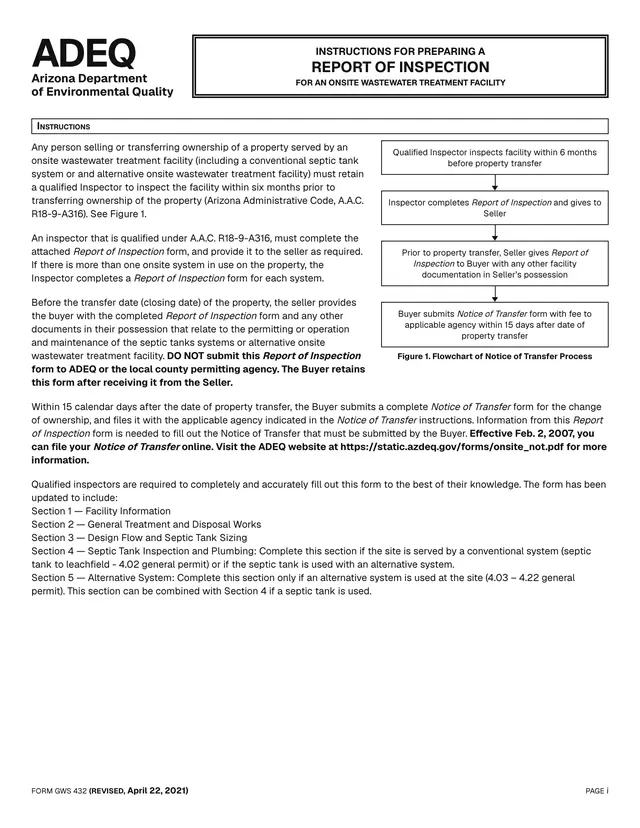
Report of Inspection for an Onsite Wastewater Treatment Facility
Record the tank or cesspool and what was checked. - Arkansas
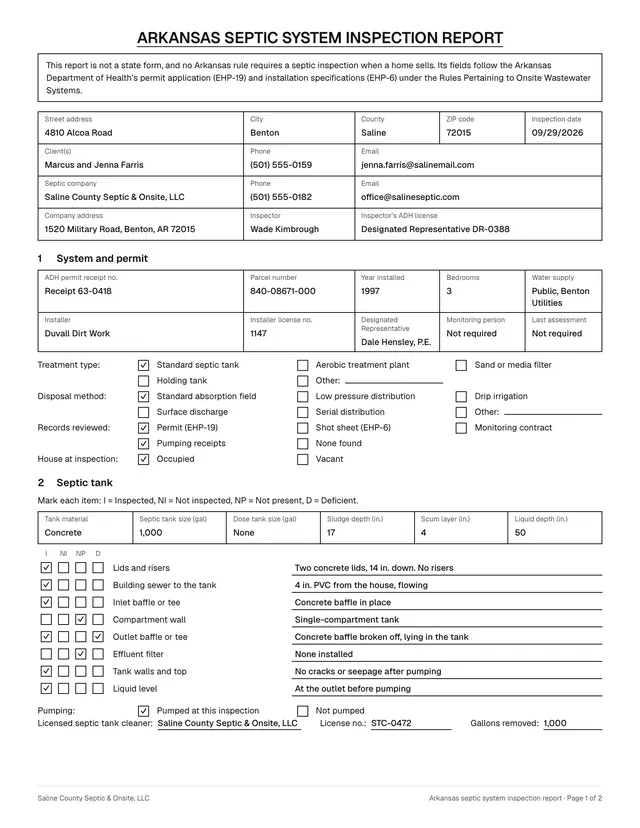
Arkansas Septic System Inspection Report
Record the tank or cesspool and what was checked. - Colorado
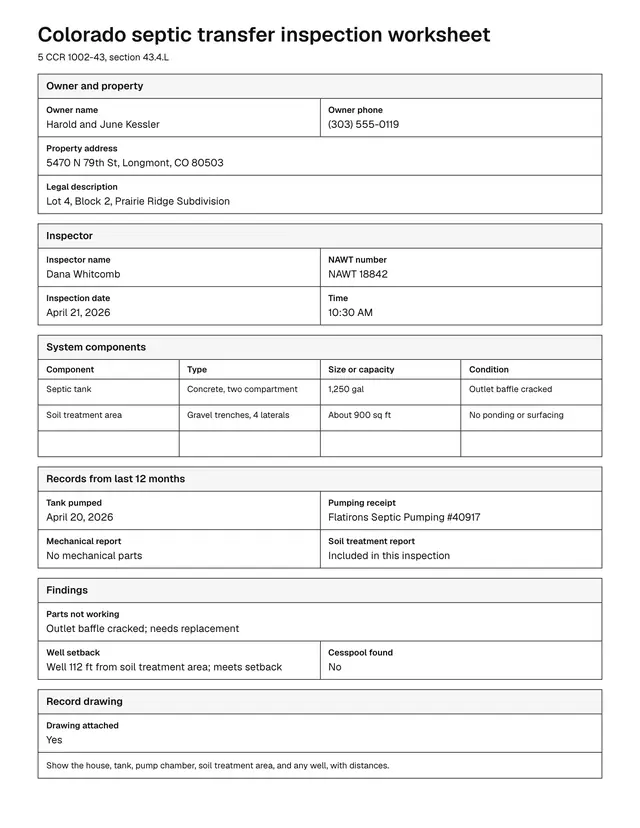
Colorado septic transfer of title inspection report (Regulation 43)
Record the tank or cesspool and what was checked. - Delaware
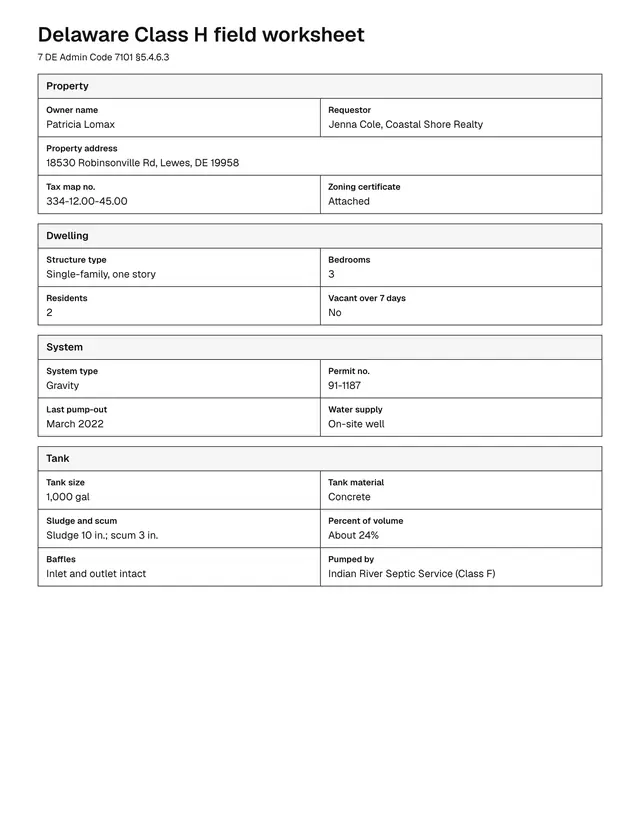
Delaware Class H septic inspection report
Record the tank or cesspool and what was checked. - Florida
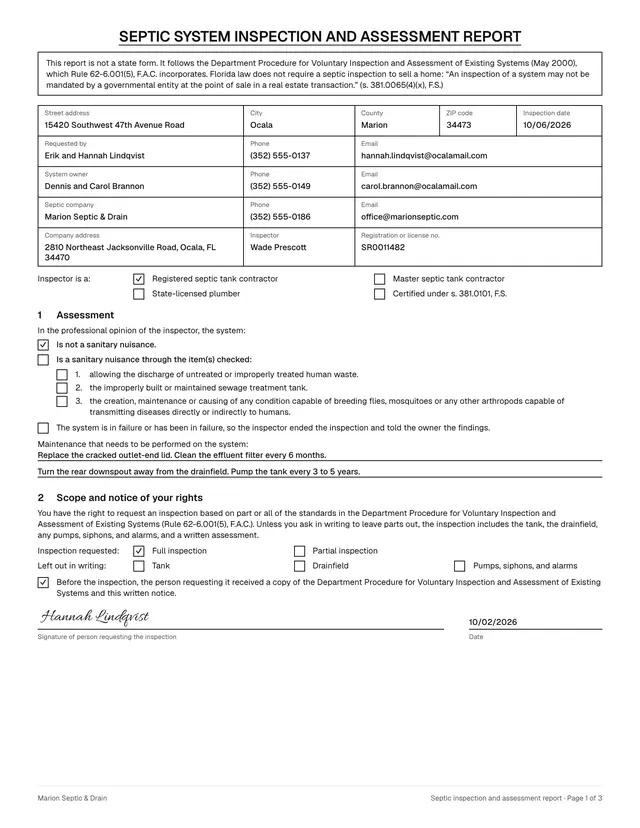
Septic System Inspection and Assessment Report
Record the tank or cesspool and what was checked. - Georgia
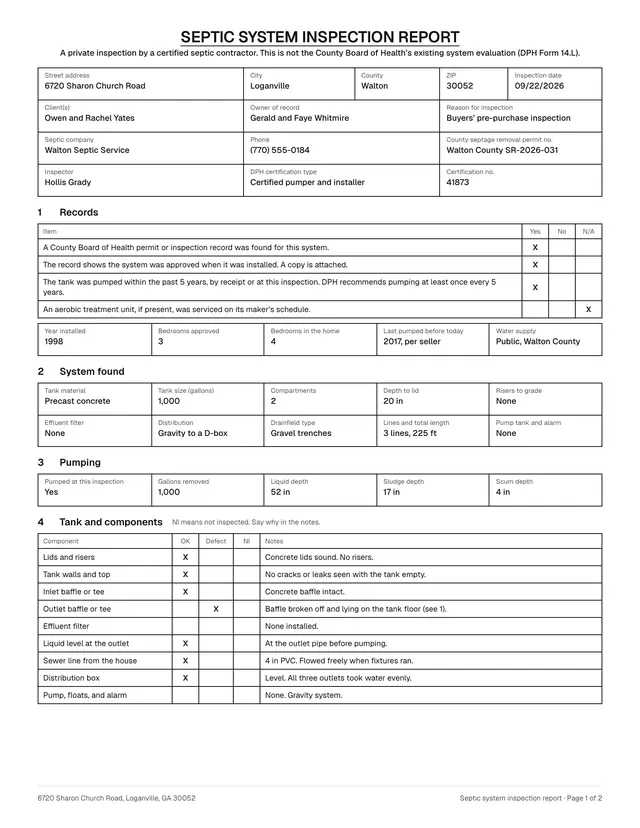
Septic System Inspection Report
Record the tank or cesspool and what was checked. - Hawaii
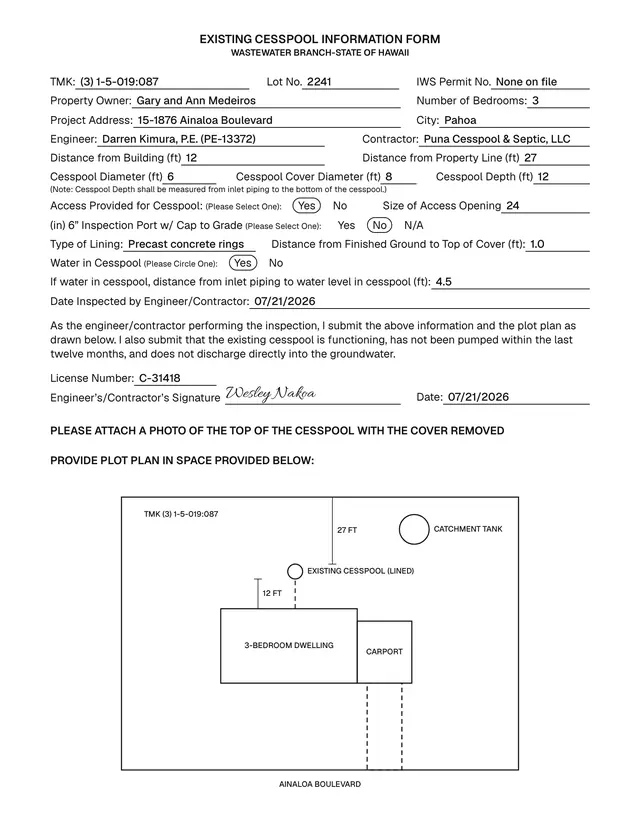
Existing Cesspool Information Form
Record the tank or cesspool and what was checked. - Illinois
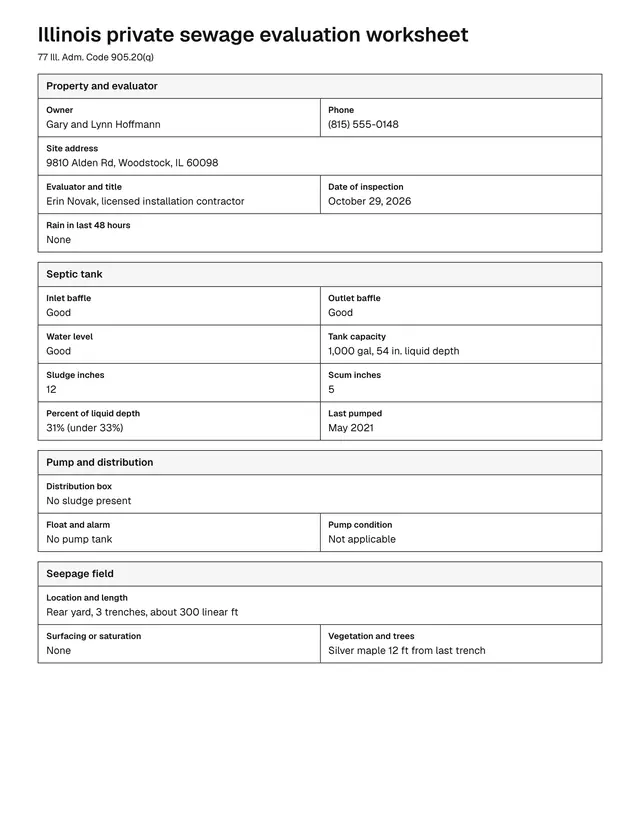
Illinois private sewage disposal system evaluation
Record the tank or cesspool and what was checked. - Indiana
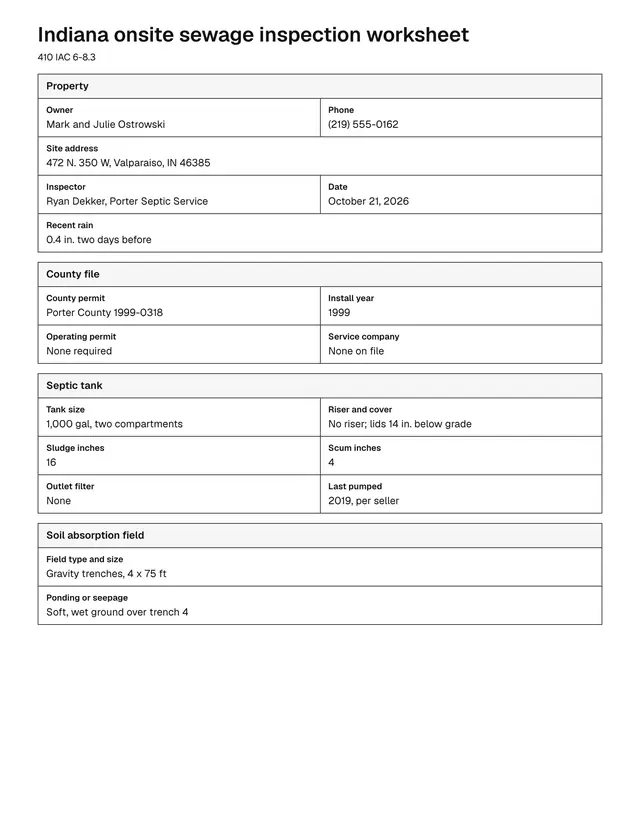
Indiana onsite sewage system inspection report
Record the tank or cesspool and what was checked. - Iowa
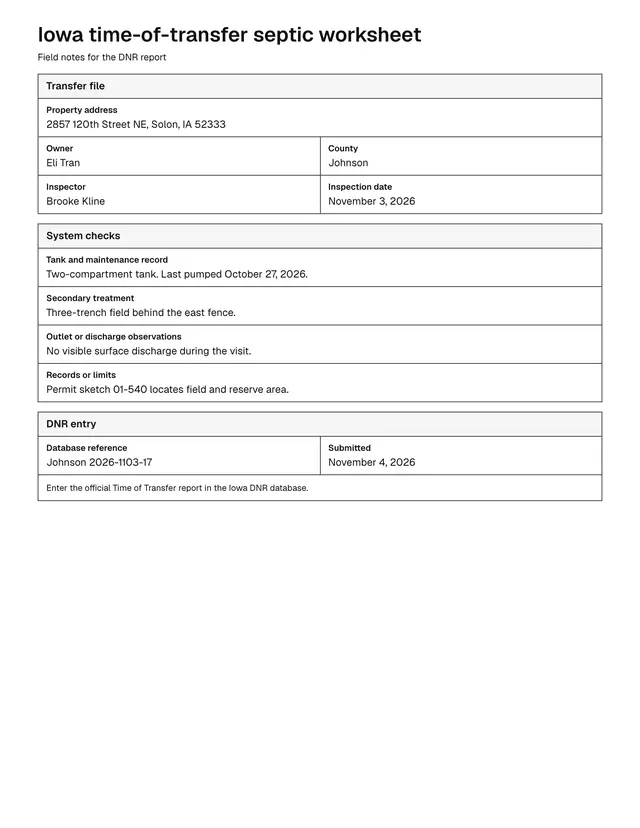
Iowa time-of-transfer septic worksheet
Record the tank or cesspool and what was checked. - Louisiana
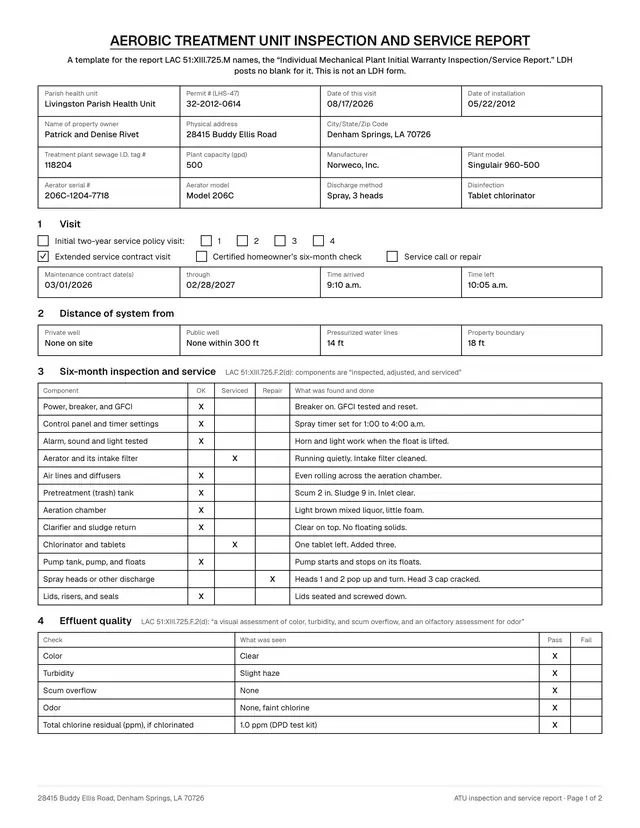
Aerobic Treatment Unit Inspection and Service Report
Record the tank or cesspool and what was checked. - Maryland
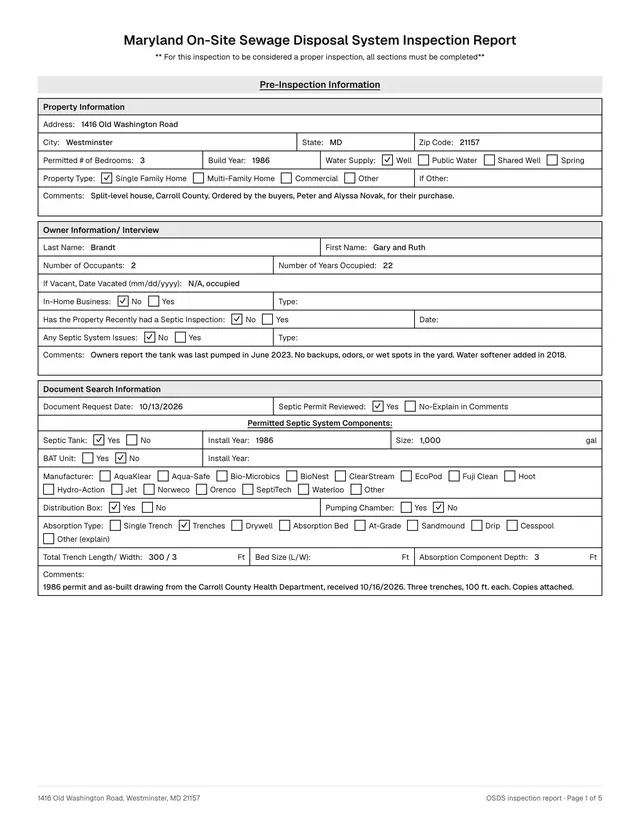
Maryland On-Site Sewage Disposal System Inspection Report
Record the tank or cesspool and what was checked. - Massachusetts
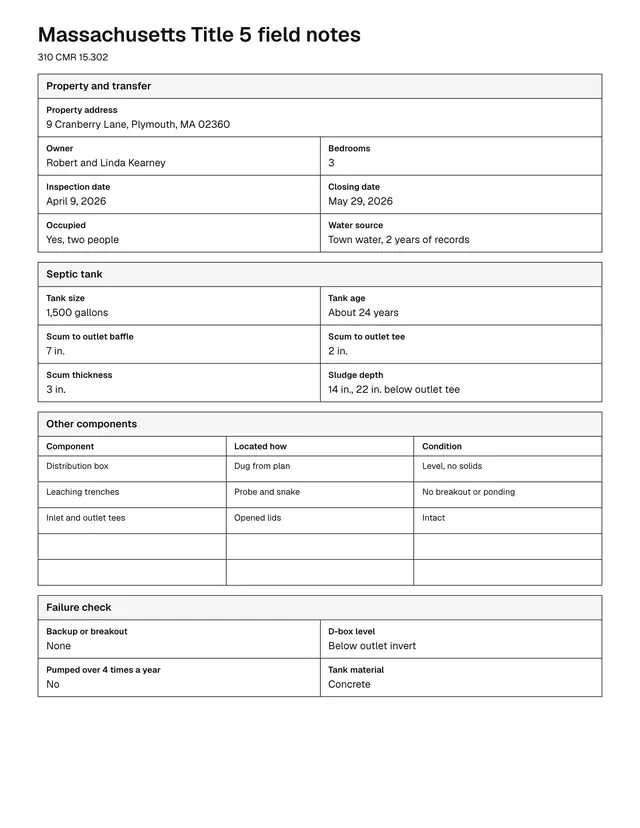
Massachusetts Title 5 inspection report (310 CMR 15.301)
Record the tank or cesspool and what was checked. - Michigan
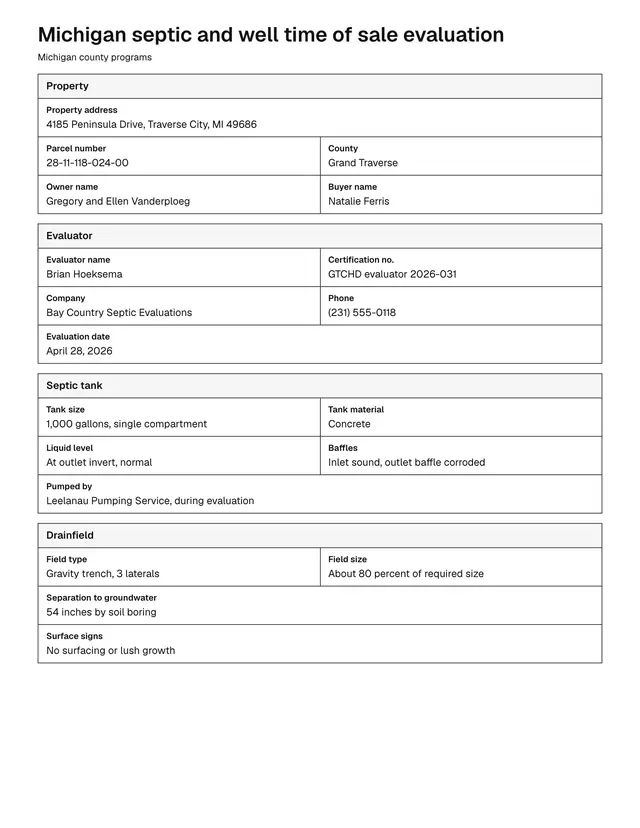
Michigan septic time of sale evaluation
Record the tank or cesspool and what was checked. - Minnesota
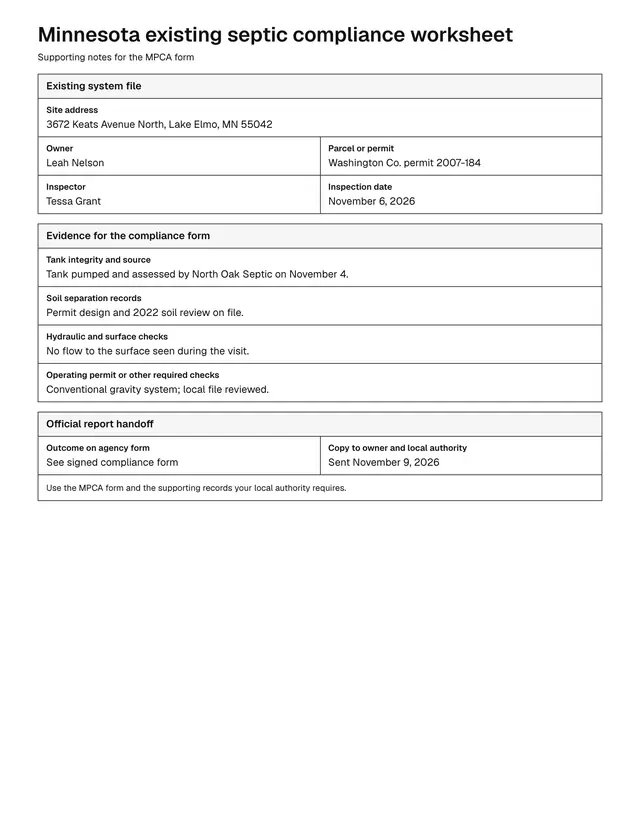
Minnesota existing septic compliance worksheet
Record the tank or cesspool and what was checked. - Mississippi
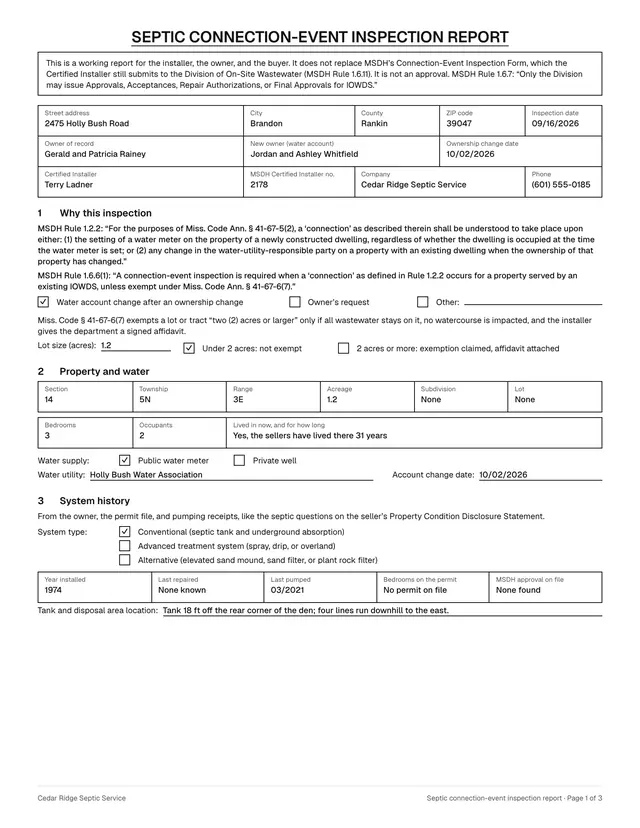
Septic Connection-Event Inspection Report
Record the tank or cesspool and what was checked. - Missouri
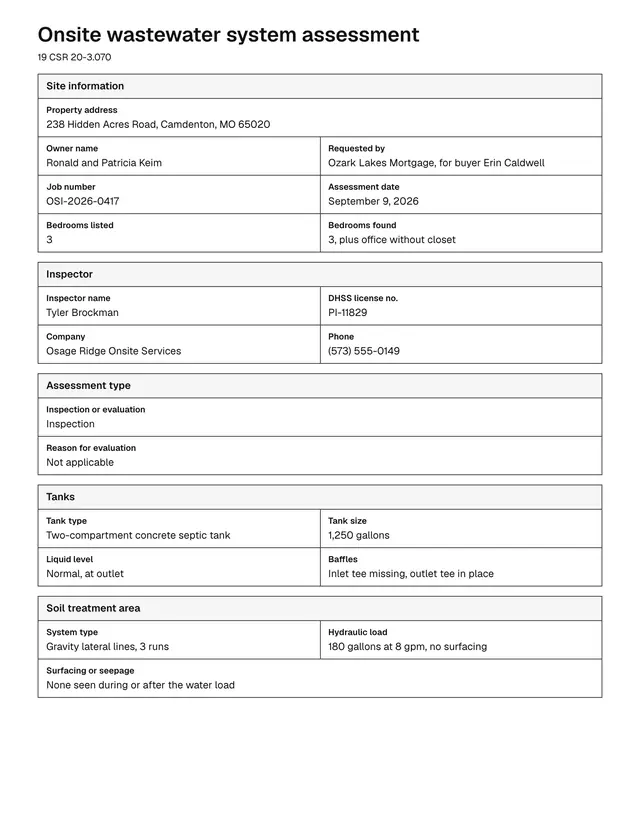
Missouri onsite wastewater inspection and evaluation report
Record the tank or cesspool and what was checked. - Nevada
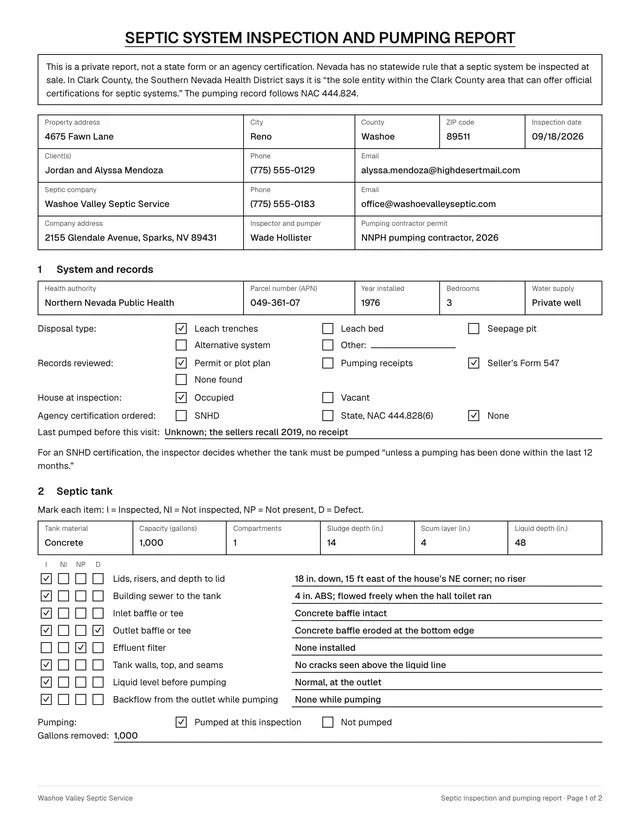
Septic System Inspection and Pumping Report
Record the tank or cesspool and what was checked. - New JerseyN.J.A.C. 7:9A Appendix F
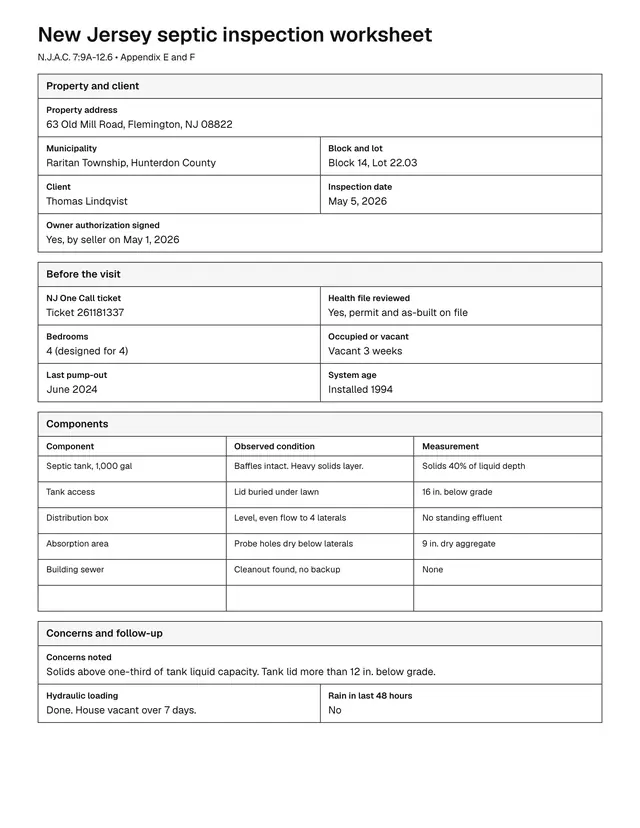
New Jersey septic inspection report (Appendix F Onsite System Inspection Form)
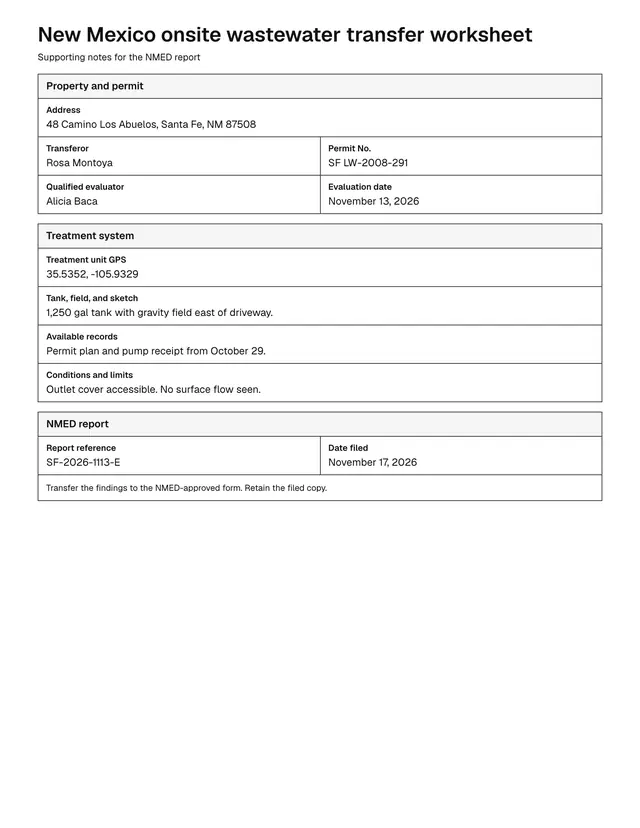
Record the tank or cesspool and what was checked. - New Mexico
New Mexico onsite wastewater transfer worksheet
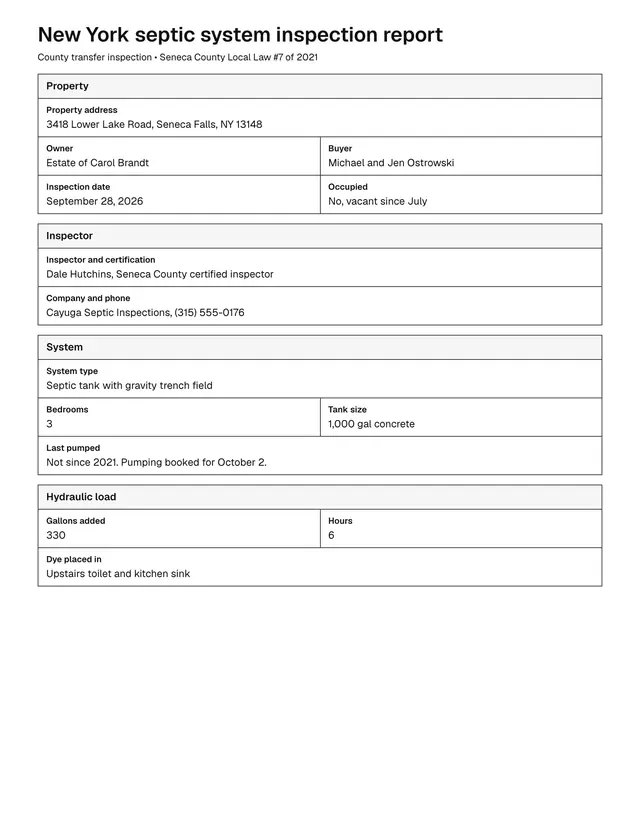
Record the tank or cesspool and what was checked. - New York
New York septic system inspection report (county transfer inspections)
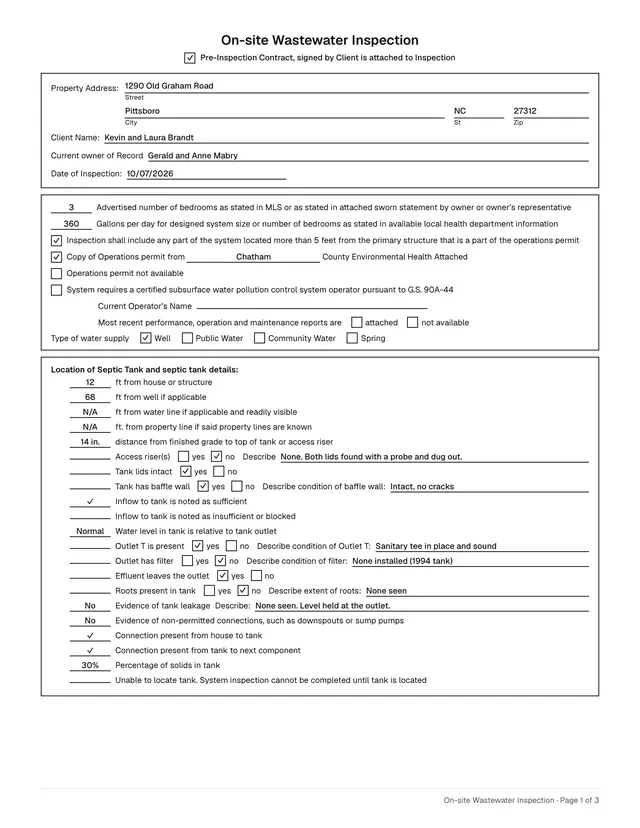
Record the tank or cesspool and what was checked. - North Carolina
On-site Wastewater Inspection
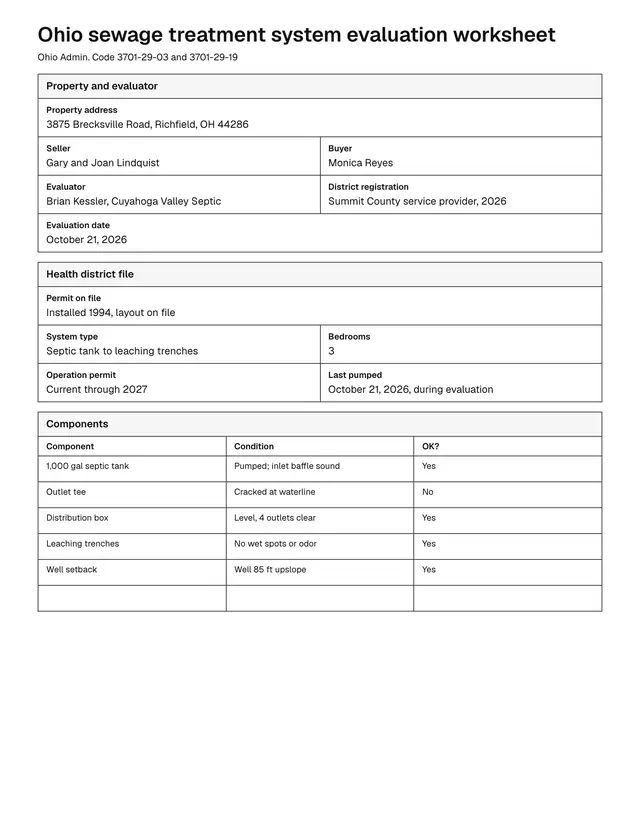
Record the tank or cesspool and what was checked. - Ohio
Ohio sewage treatment system evaluation for property transfer
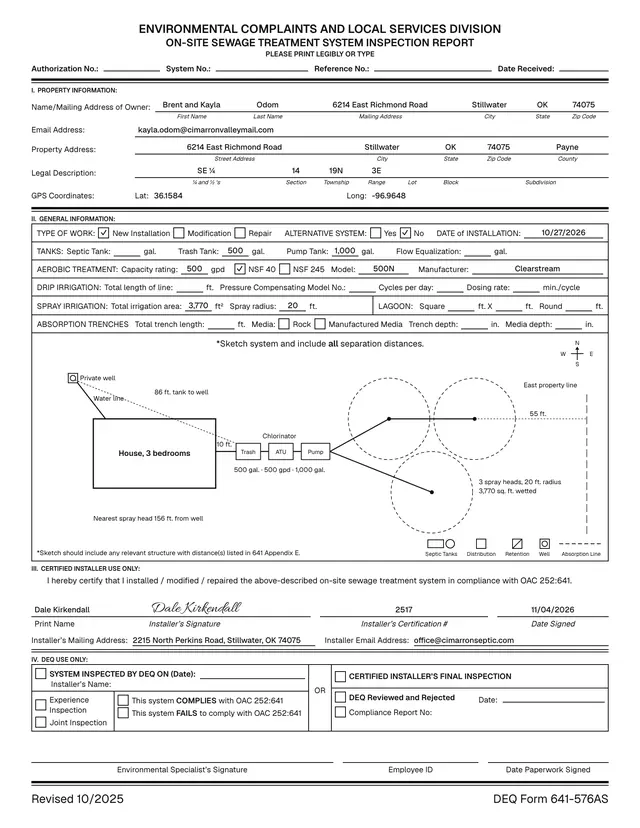
Record the tank or cesspool and what was checked. - OklahomaDEQ Form 641-576AS
On-Site Sewage Treatment System Inspection Report
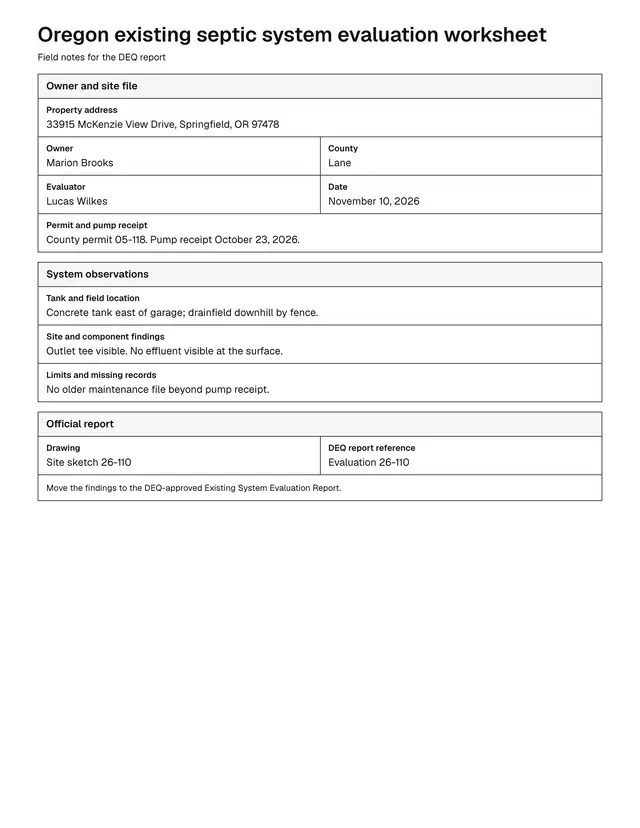
Record the tank or cesspool and what was checked. - Oregon
Oregon existing septic system evaluation worksheet
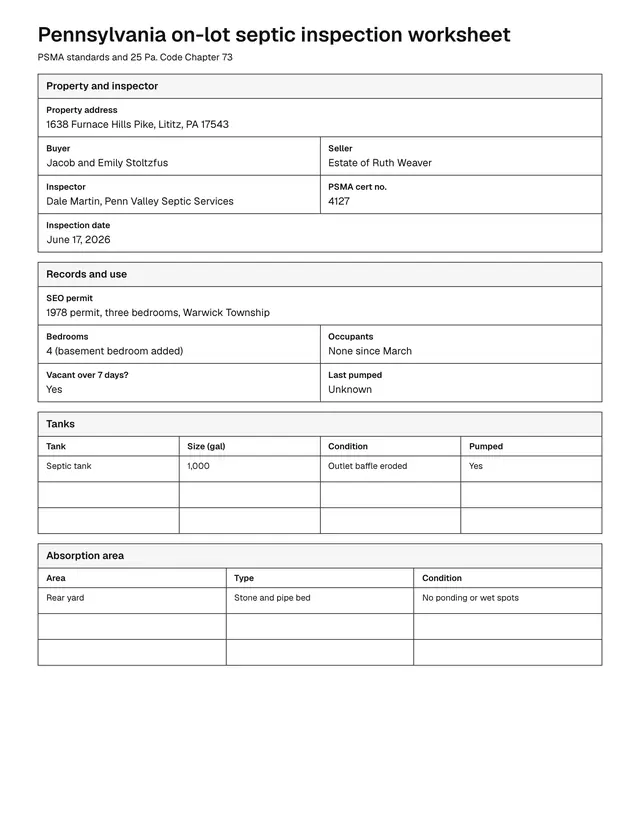
Record the tank or cesspool and what was checked. - Pennsylvania
Pennsylvania on-lot septic system inspection (PSMA)
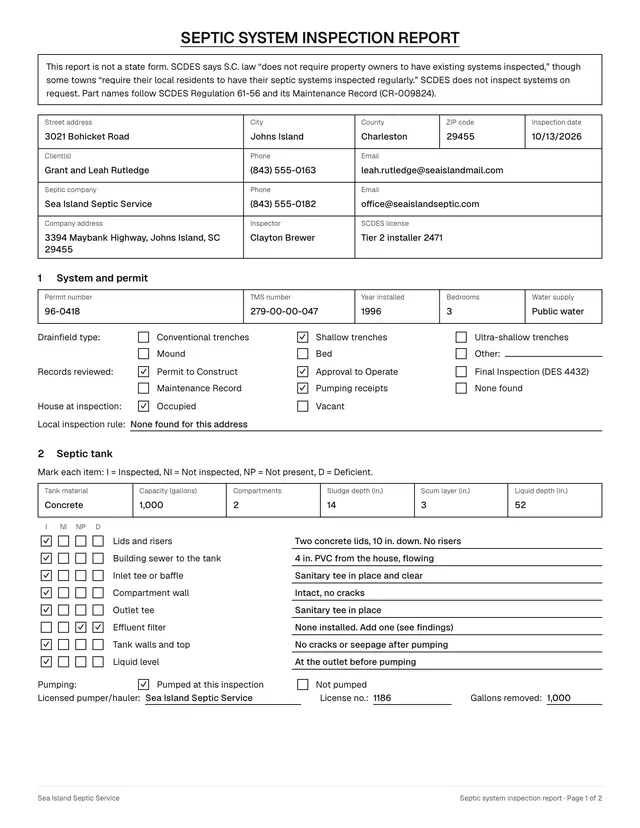
Record the tank or cesspool and what was checked. - South Carolina
Septic System Inspection Report
Record the tank or cesspool and what was checked. - Tennessee
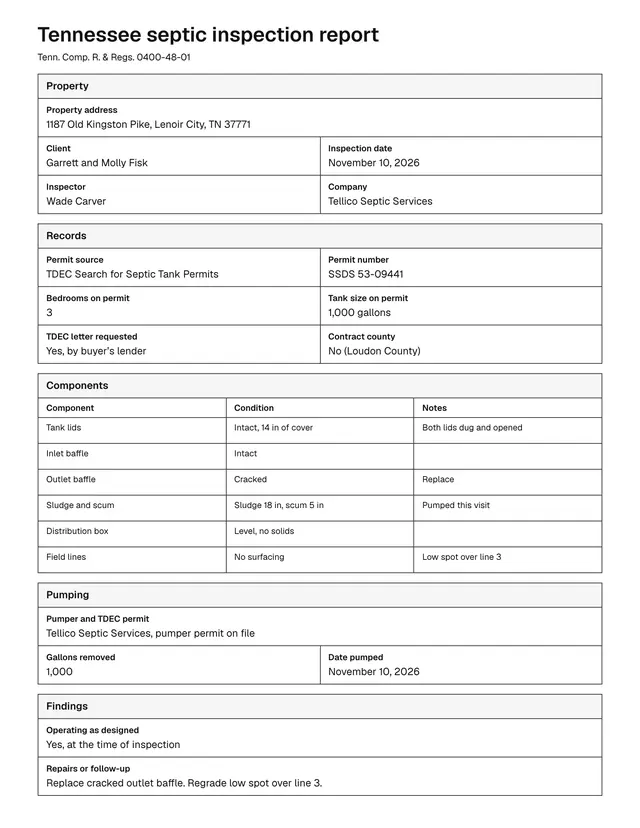
Tennessee septic inspection report
Record the tank or cesspool and what was checked. - Texas
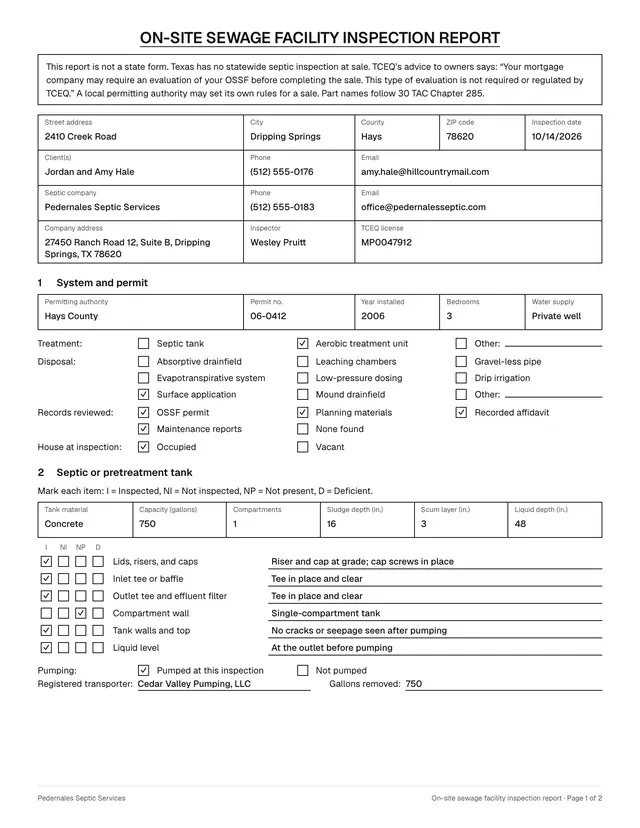
On-Site Sewage Facility Inspection Report
Record the tank or cesspool and what was checked. - Virginia
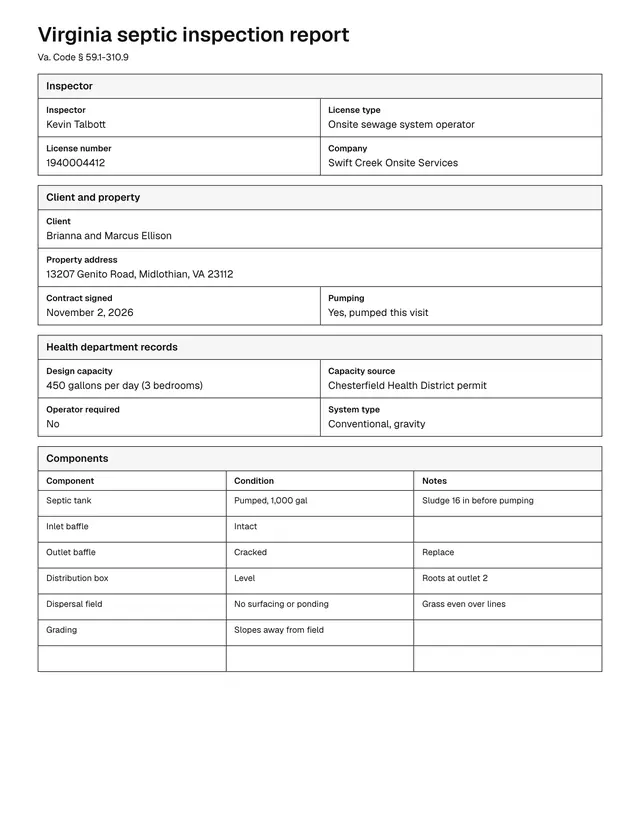
Virginia septic inspection report
Record the tank or cesspool and what was checked. - Washington
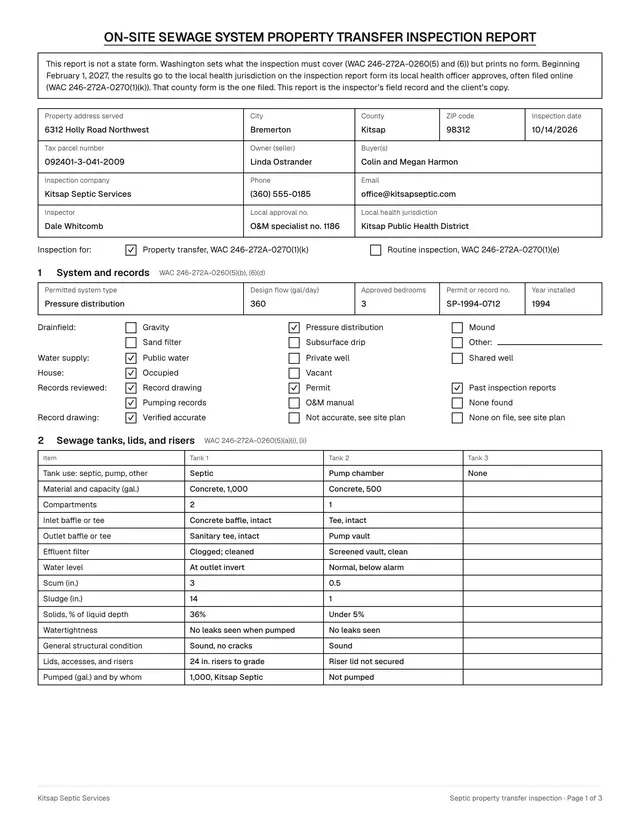
On-Site Sewage System Property Transfer Inspection Report
Record the tank or cesspool and what was checked. - Wisconsin
Wisconsin POWTS maintenance worksheet
Record the tank or cesspool and what was checked.