Maryland On-Site Sewage Disposal System Inspection Report
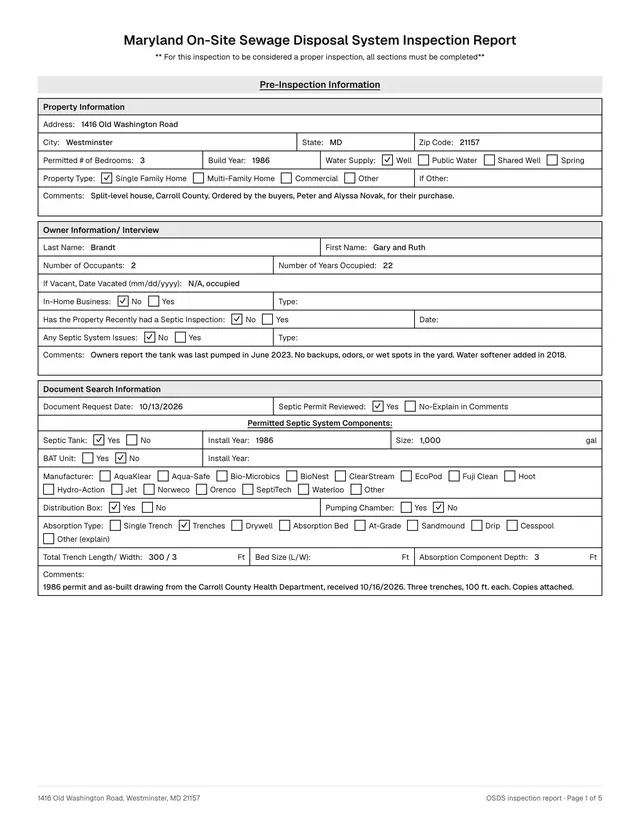
MDE’s Standard Inspection Form, the Maryland On-Site Sewage Disposal System Inspection Report, which a licensed property transfer inspector completes for every septic inspection done for a sale.
At a glance
- Required by
- MDE, for every sale inspection
- Filled out by
- Licensed property transfer inspector
- Load test
- Required
- Keep it
- 5 years (COMAR 26.31.01.03)
Completed example
Download PDFWhat is the Maryland septic inspection report?
It’s MDE’s Standard Inspection Form, titled “Maryland On-Site Sewage Disposal System Inspection Report.” A licensed property transfer inspector fills it out for every septic inspection done for a sale, from the permit records to the drainfield. The PTI page says extra reports are fine, but they don’t replace it.
MDE posts it only as an Excel file with drop-down lists. This page’s copy is reformatted for print and Word: same sections, labels, ratings, and statements, in the same order, with each drop-down as check boxes. MDE’s Excel file is the copy of record.
When do you need one?
Whenever you inspect a septic for a sale. Maryland has no statewide rule that a septic be inspected before a sale, but buyers and lenders often ask. When it’s done, you need a PTI license, which the State Board of On-Site Wastewater Professionals has issued since November 2025 under COMAR 26.31.01. That chapter is an emergency rule, extended to November 28, 2026.
The well is a separate job. Under Real Property § 10-713, a sale of a home on a private well needs a water quality test unless the buyer waives it in writing, and a State-certified lab reports it on MDE’s own form. The home inspection report leaves out both.
How to fill it out
Start with the permit file. Ask the Approving Authority, usually the county health department, for the septic permit and as-built before the visit, and ask how long it takes. If there’s no file, say so in the comments. Attach everything they send, as the form’s last section asks.
Follow the wastewater. The on-site section runs from the house drain to the soil absorption system. Mark a part N/A only when the system doesn’t have it. If you find a BAT unit you aren’t certified to service, MDE’s guidance says to call the vendor or a certified contractor.
Run the hydraulic load test. The guidance says it shall be performed, based on current occupancy. Call the BAT vendor first if there is one. Add a dye test if something looks off, and pump the tank when you need to see that it’s watertight.
Rate each part, then sign. Satisfactory with Concerns means the part matches the permit but is near the end of its service life, like an old distribution box. Check the bedroom question against the listing. MDE wants the finished report signed, and you keep it 5 years under COMAR 26.31.01.03.
Do your field notes have to live in Excel?
No, and a spreadsheet’s drop-downs are hard to work on a phone standing over an open tank. Most inspectors take notes and photos in the yard and fill in MDE’s form back at the desk.
Noma specializes in the Maryland On-Site Sewage Disposal System Inspection Report (COMAR 26.31.01). Noma’s property inspection reports let you set your own sections and titles, so your notes can follow the form from the sewer line to the soil absorption system, and you mark how serious each defect is. Jobs, scheduling, invoices, and online payments live in the same place. See how Noma runs inspection jobs.
Frequentlyaskedquestions
Send this document in minutes, not an afternoon.
Other states
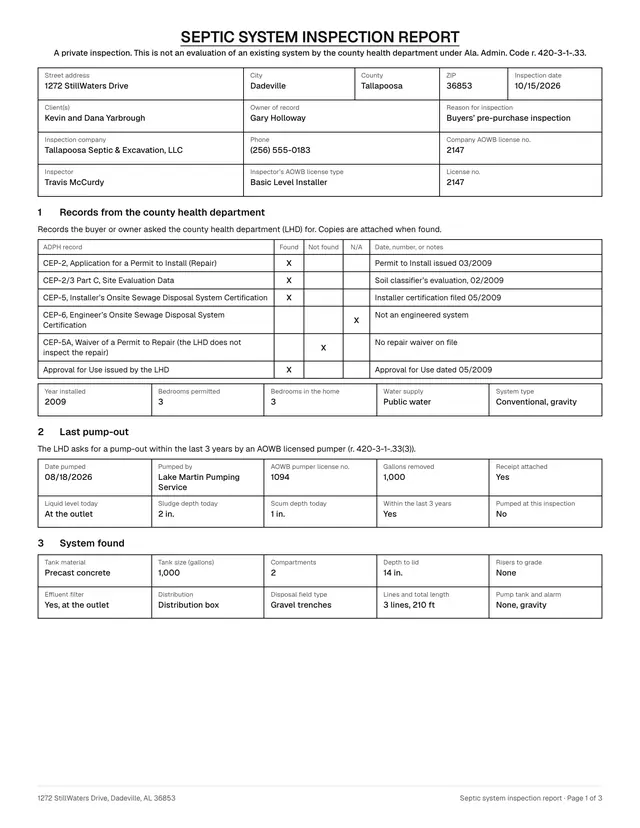
Septic inspection report templates- Alabama
Septic System Inspection Report
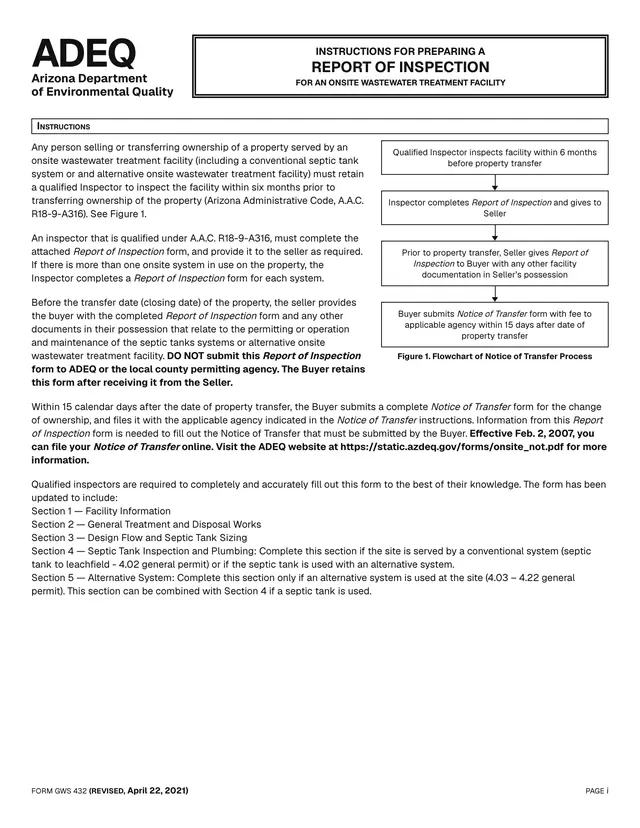
Record the tank or cesspool and what was checked. - ArizonaGWS 432
Report of Inspection for an Onsite Wastewater Treatment Facility
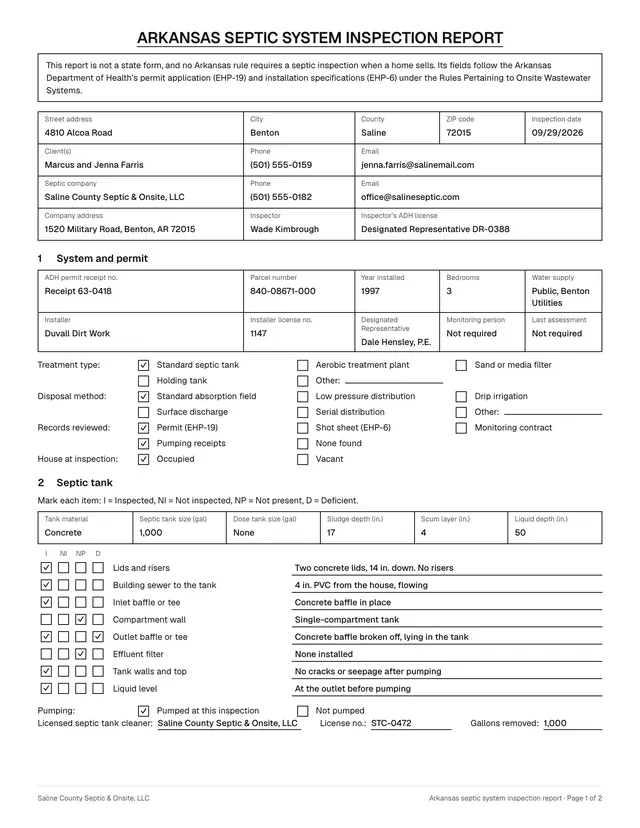
Record the tank or cesspool and what was checked. - Arkansas
Arkansas Septic System Inspection Report
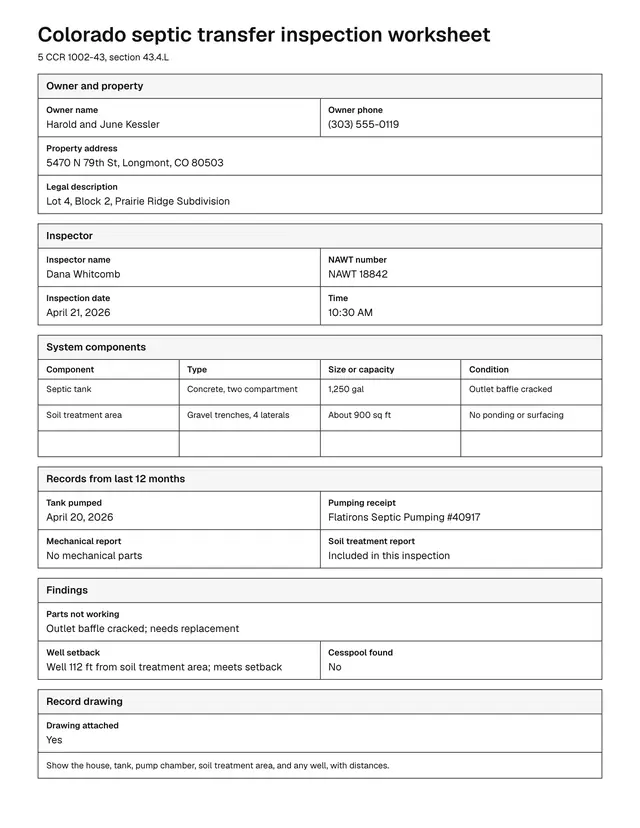
Record the tank or cesspool and what was checked. - Colorado
Colorado septic transfer of title inspection report (Regulation 43)
Record the tank or cesspool and what was checked. - Delaware
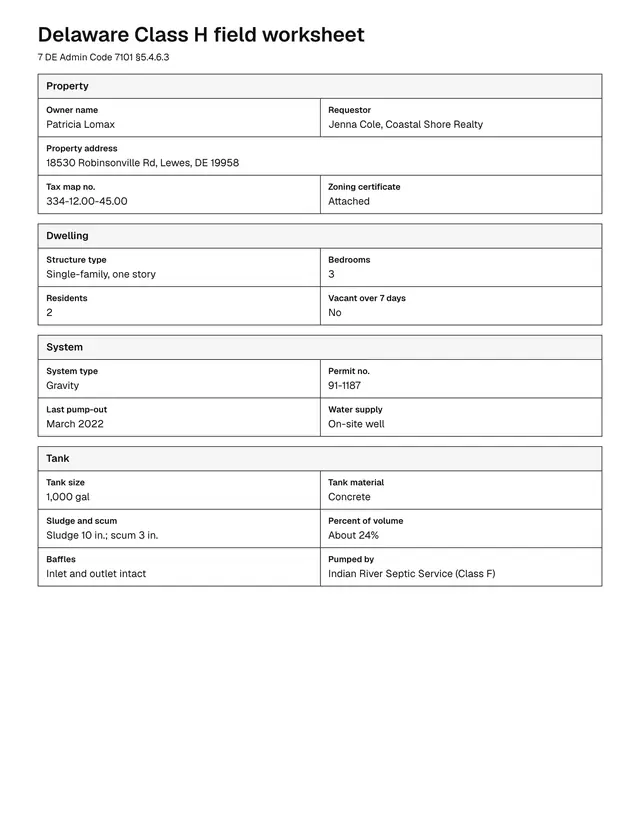
Delaware Class H septic inspection report
Record the tank or cesspool and what was checked. - Florida
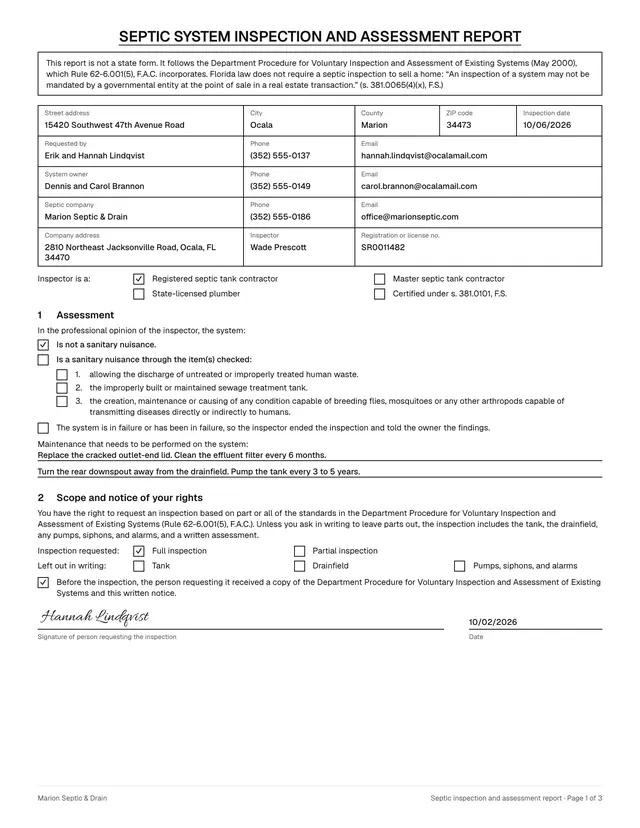
Septic System Inspection and Assessment Report
Record the tank or cesspool and what was checked. - Georgia
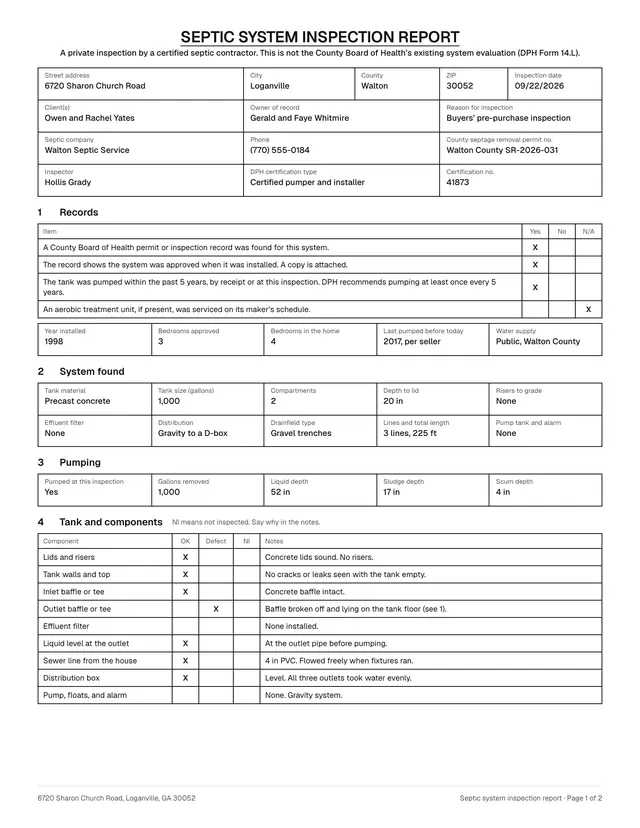
Septic System Inspection Report
Record the tank or cesspool and what was checked. - Hawaii
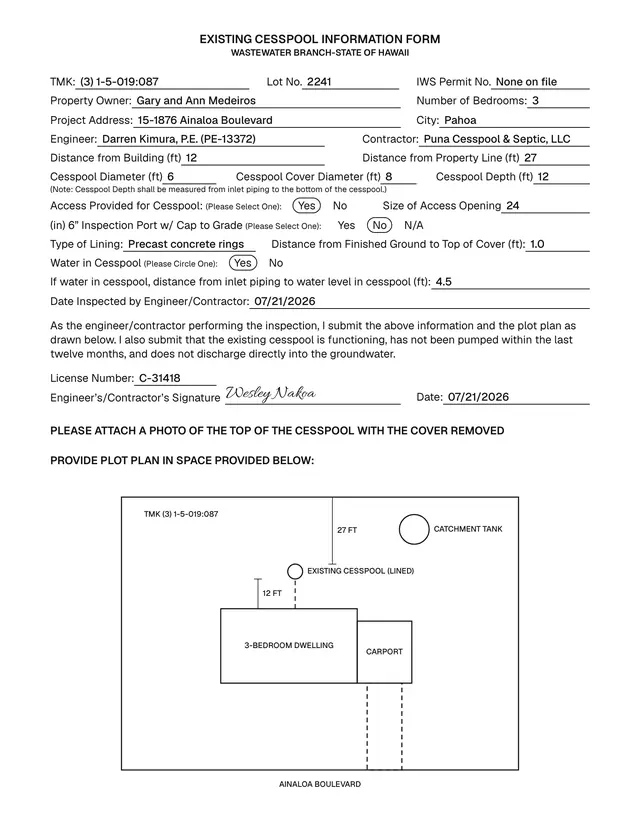
Existing Cesspool Information Form
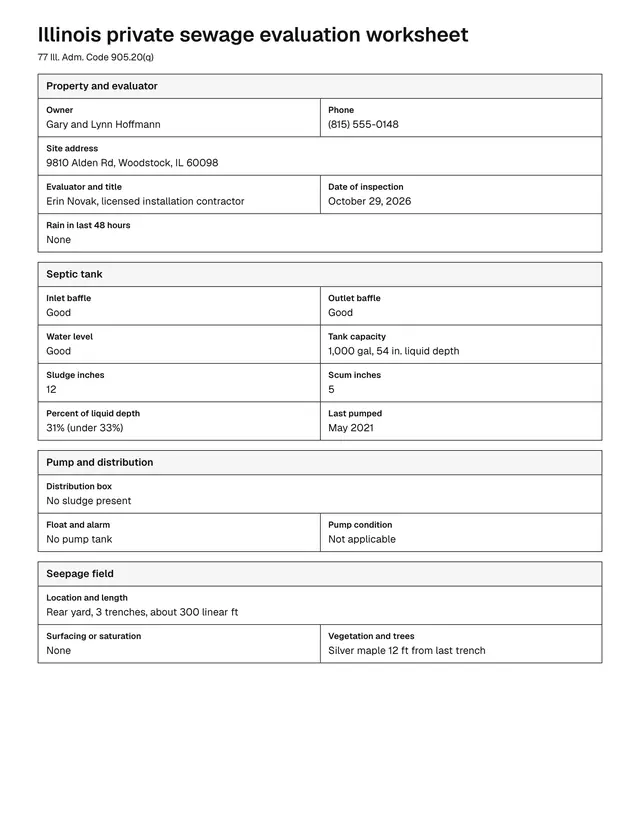
Record the tank or cesspool and what was checked. - Illinois
Illinois private sewage disposal system evaluation
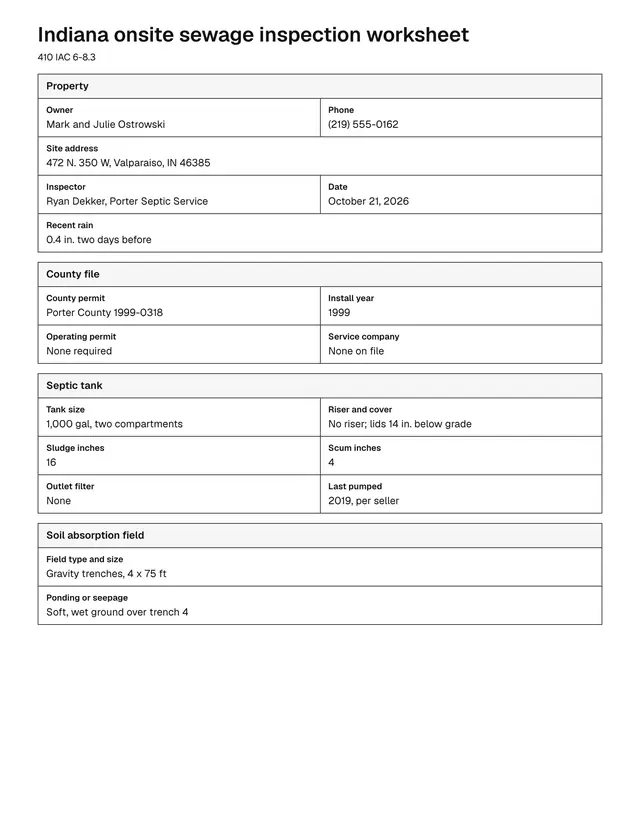
Record the tank or cesspool and what was checked. - Indiana
Indiana onsite sewage system inspection report
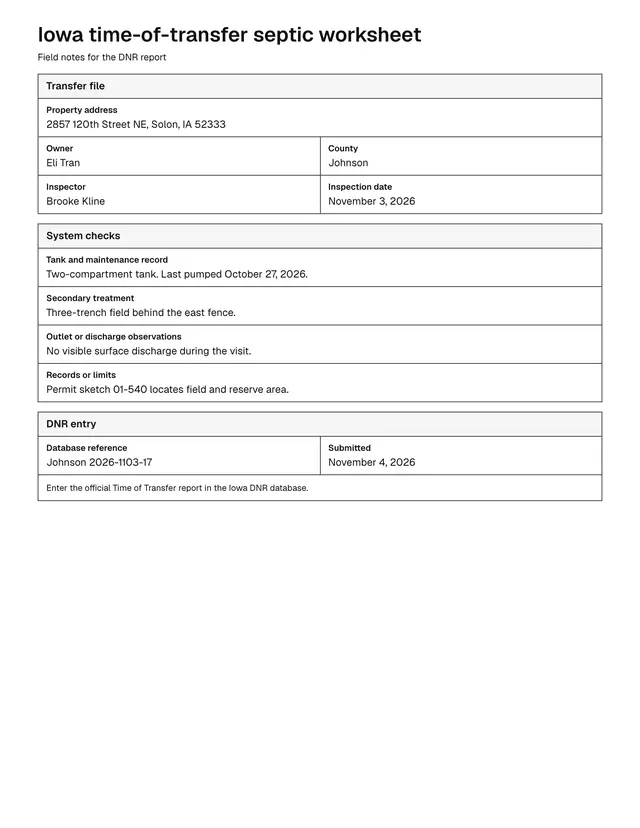
Record the tank or cesspool and what was checked. - Iowa
Iowa time-of-transfer septic worksheet
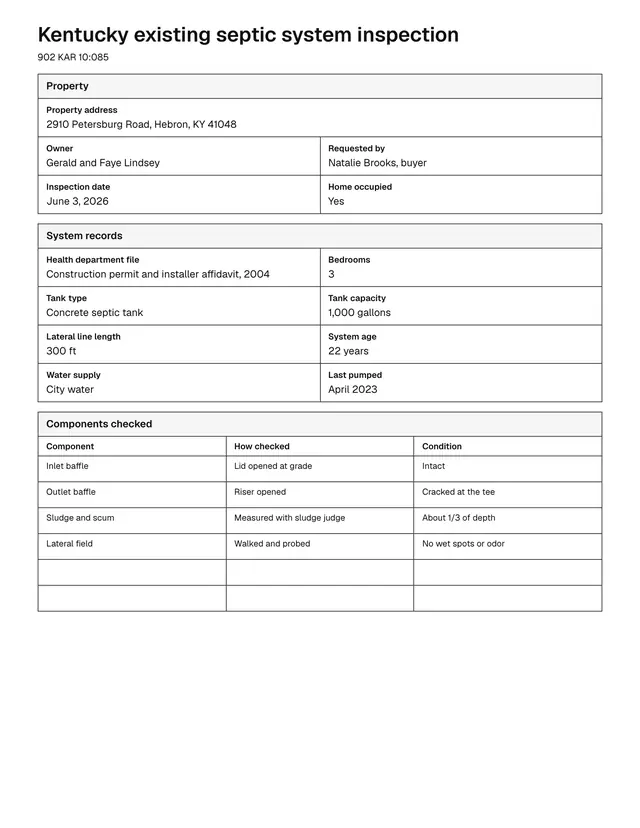
Record the tank or cesspool and what was checked. - Kentucky
Kentucky existing septic system inspection
Record the tank or cesspool and what was checked. - Louisiana
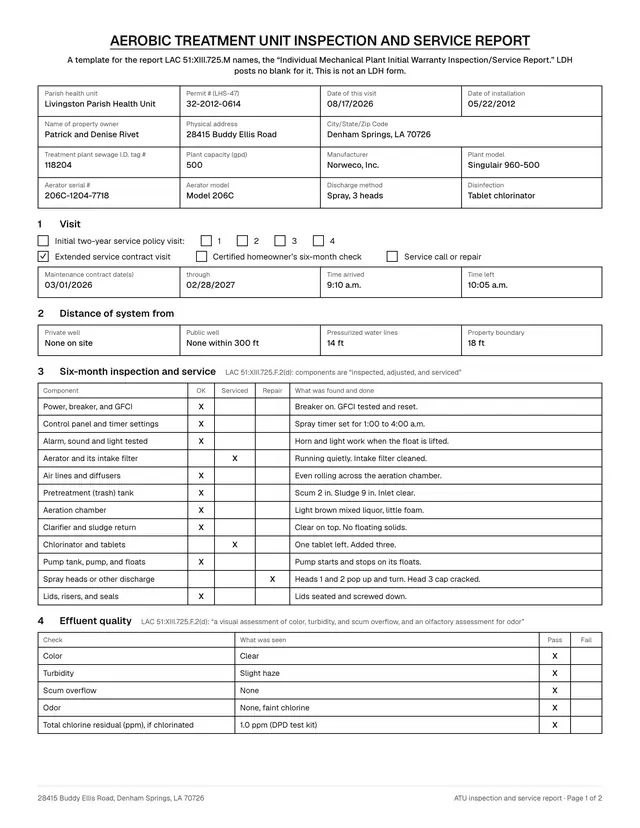
Aerobic Treatment Unit Inspection and Service Report
Record the tank or cesspool and what was checked. - Massachusetts
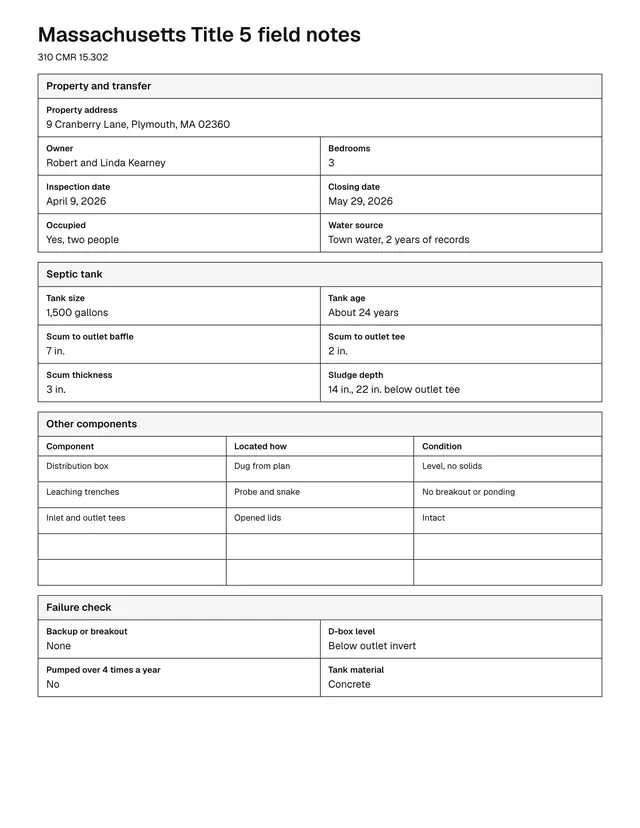
Massachusetts Title 5 inspection report (310 CMR 15.301)
Record the tank or cesspool and what was checked. - Michigan
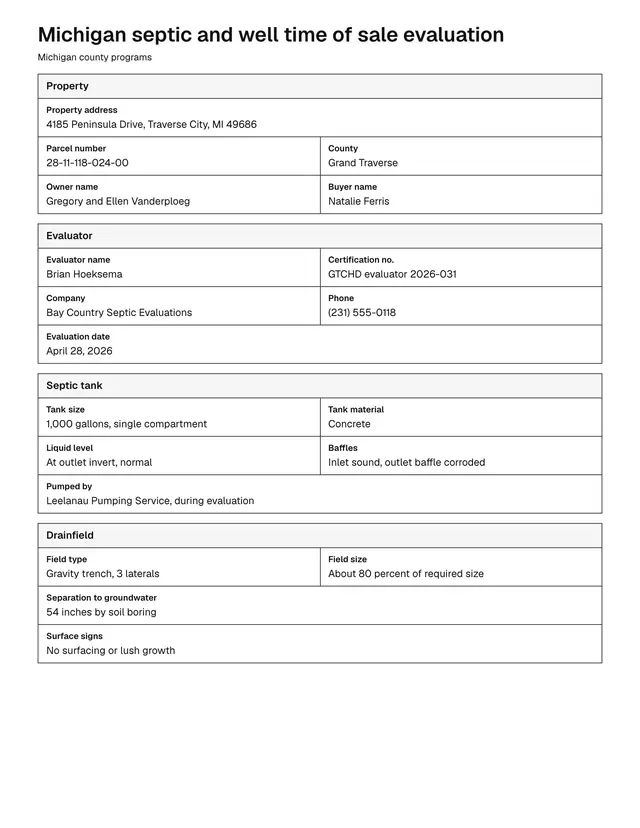
Michigan septic time of sale evaluation
Record the tank or cesspool and what was checked. - Minnesota
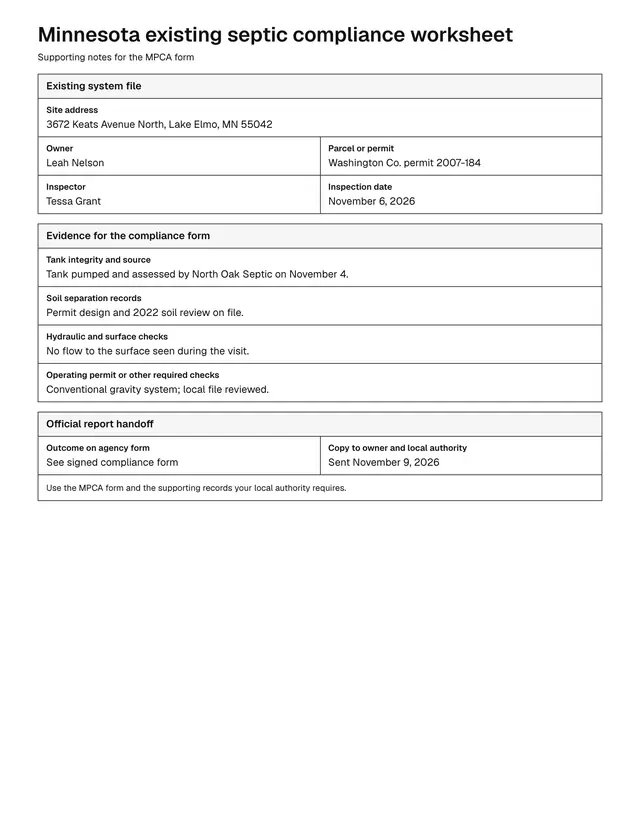
Minnesota existing septic compliance worksheet
Record the tank or cesspool and what was checked. - Mississippi
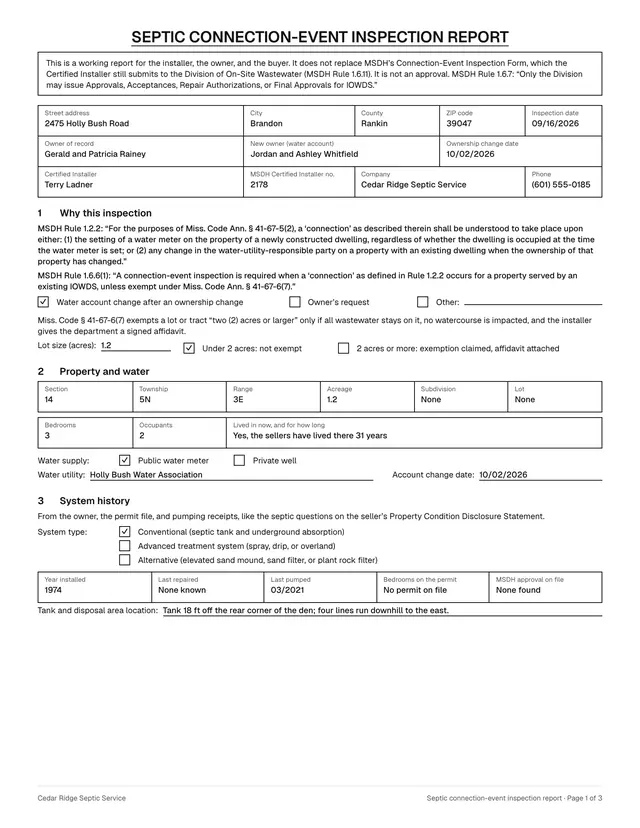
Septic Connection-Event Inspection Report
Record the tank or cesspool and what was checked. - Missouri
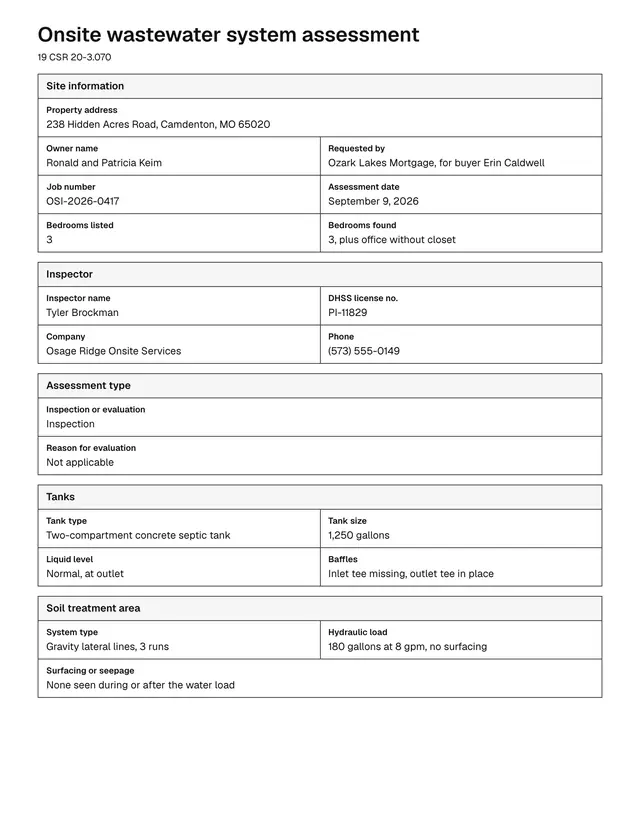
Missouri onsite wastewater inspection and evaluation report
Record the tank or cesspool and what was checked. - Nevada
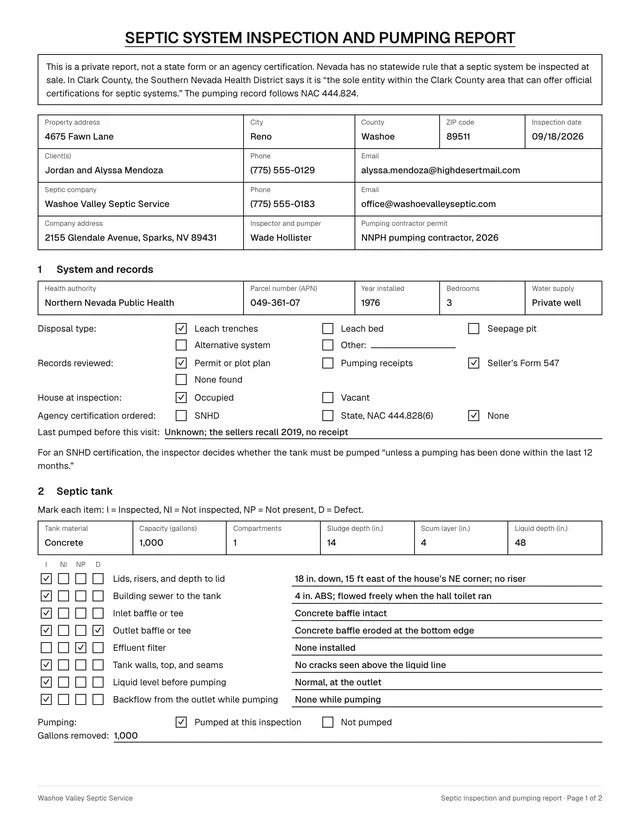
Septic System Inspection and Pumping Report
Record the tank or cesspool and what was checked. - New JerseyN.J.A.C. 7:9A Appendix F
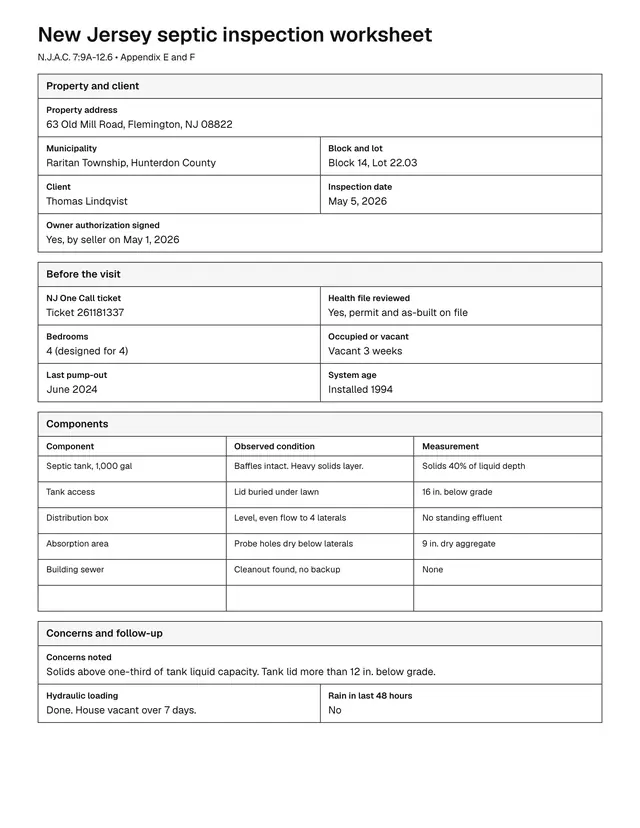
New Jersey septic inspection report (Appendix F Onsite System Inspection Form)
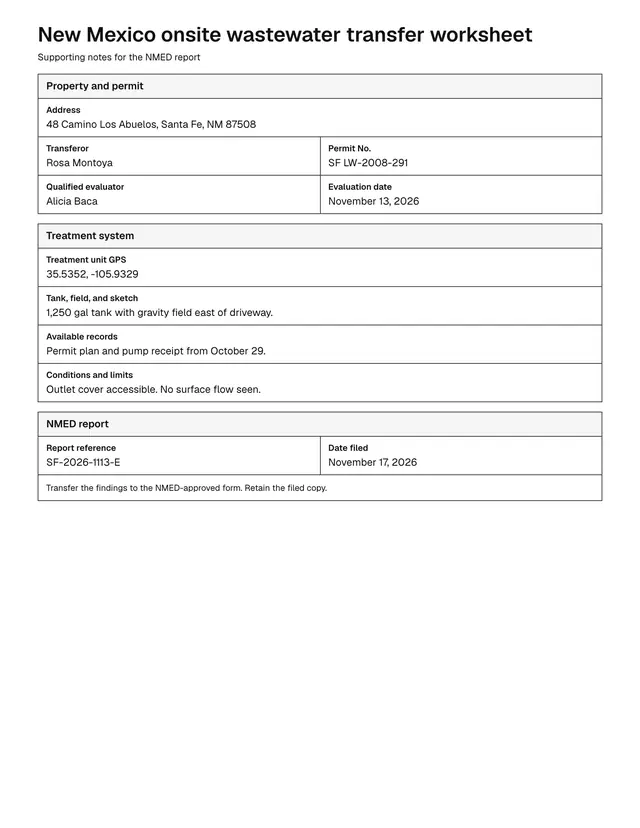
Record the tank or cesspool and what was checked. - New Mexico
New Mexico onsite wastewater transfer worksheet
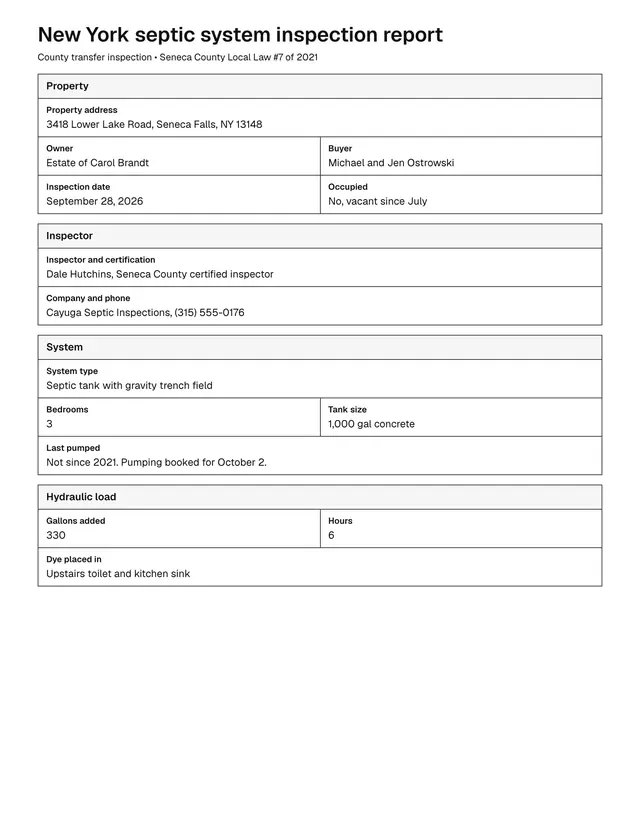
Record the tank or cesspool and what was checked. - New York
New York septic system inspection report (county transfer inspections)
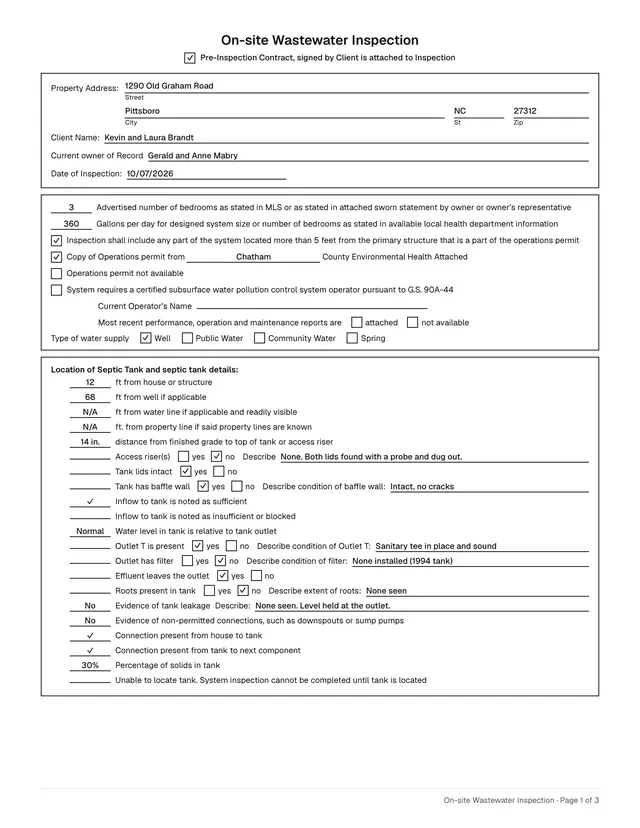
Record the tank or cesspool and what was checked. - North Carolina
On-site Wastewater Inspection
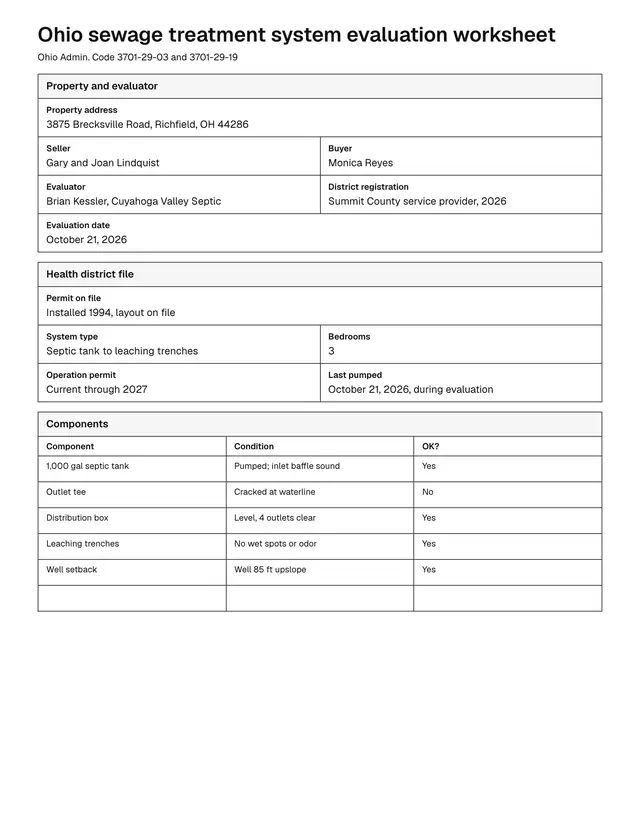
Record the tank or cesspool and what was checked. - Ohio
Ohio sewage treatment system evaluation for property transfer
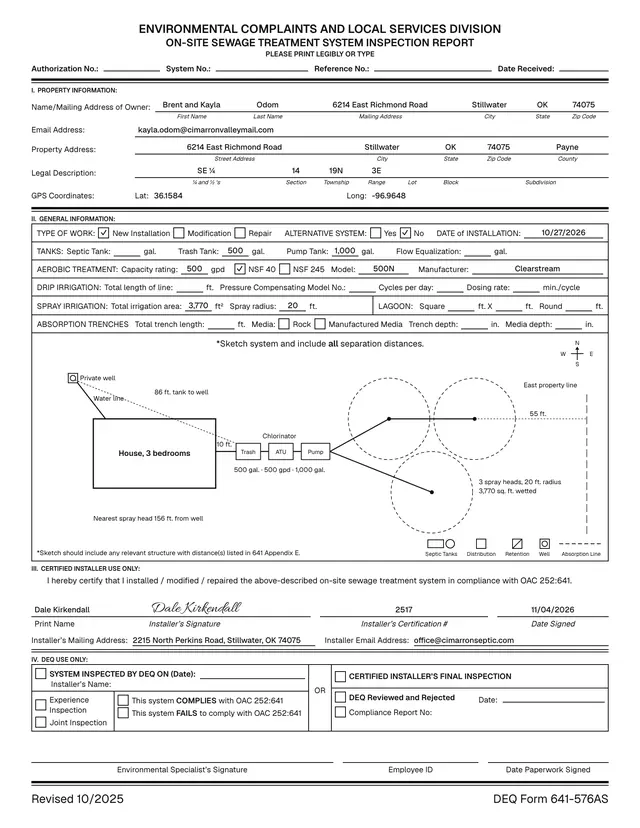
Record the tank or cesspool and what was checked. - OklahomaDEQ Form 641-576AS
On-Site Sewage Treatment System Inspection Report
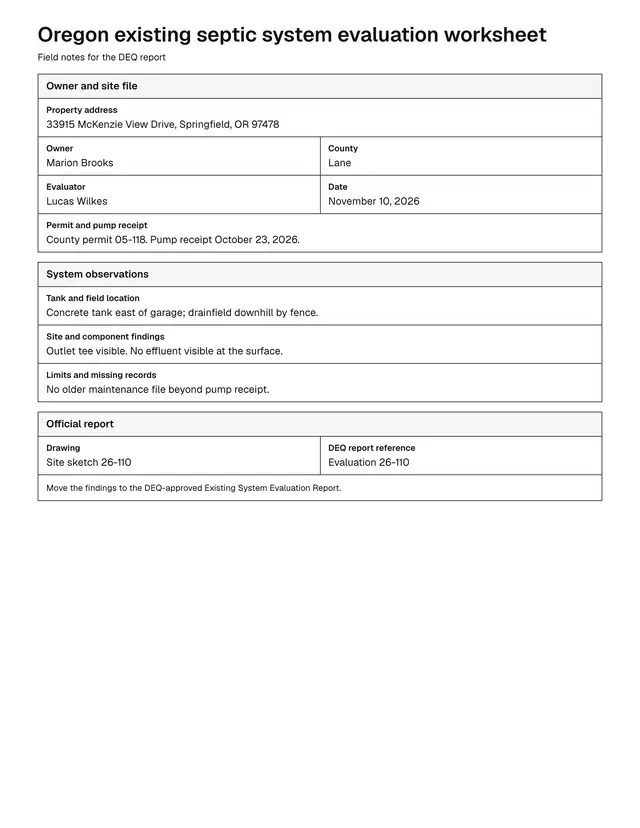
Record the tank or cesspool and what was checked. - Oregon
Oregon existing septic system evaluation worksheet
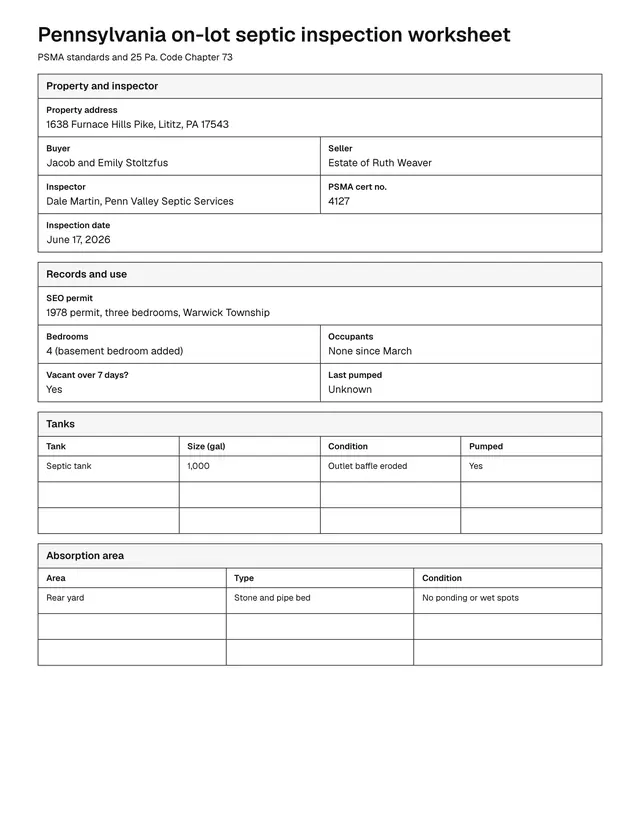
Record the tank or cesspool and what was checked. - Pennsylvania
Pennsylvania on-lot septic system inspection (PSMA)
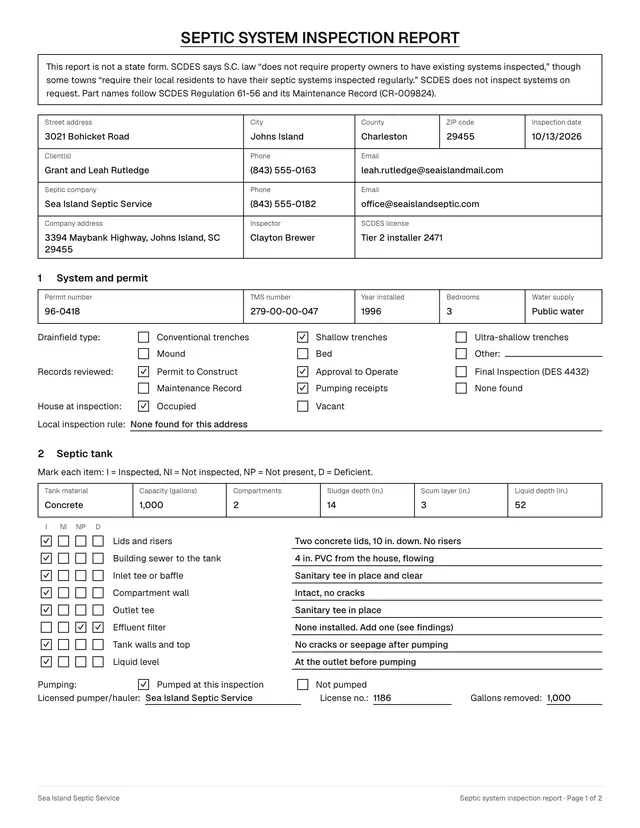
Record the tank or cesspool and what was checked. - South Carolina
Septic System Inspection Report
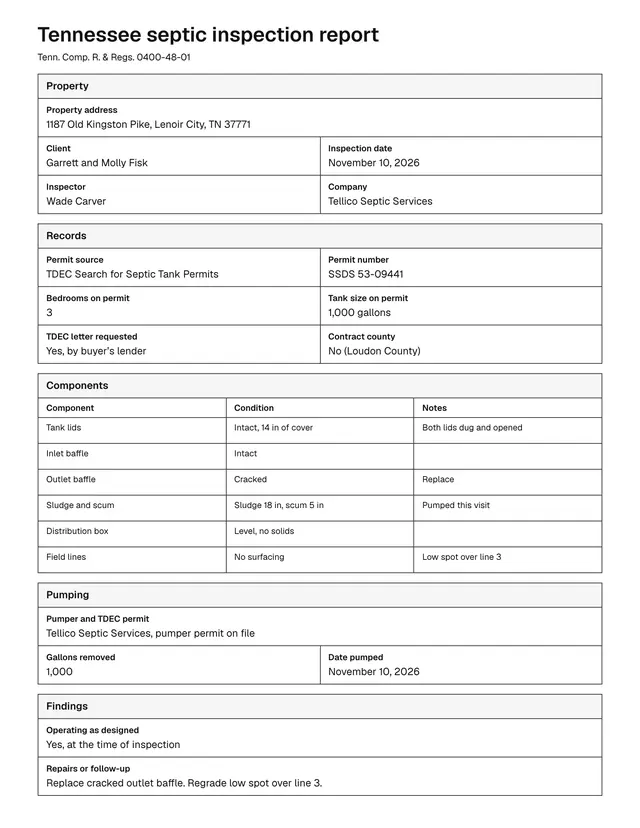
Record the tank or cesspool and what was checked. - Tennessee
Tennessee septic inspection report
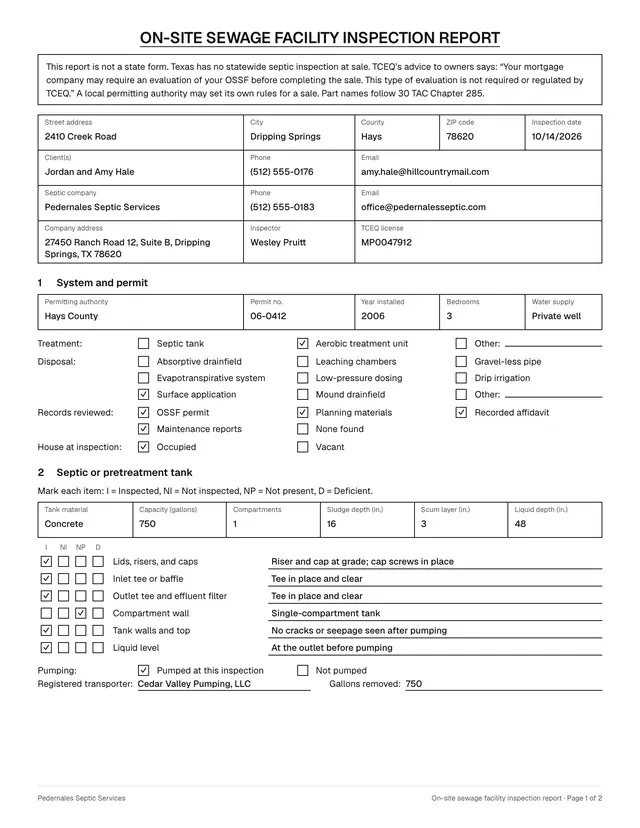
Record the tank or cesspool and what was checked. - Texas
On-Site Sewage Facility Inspection Report
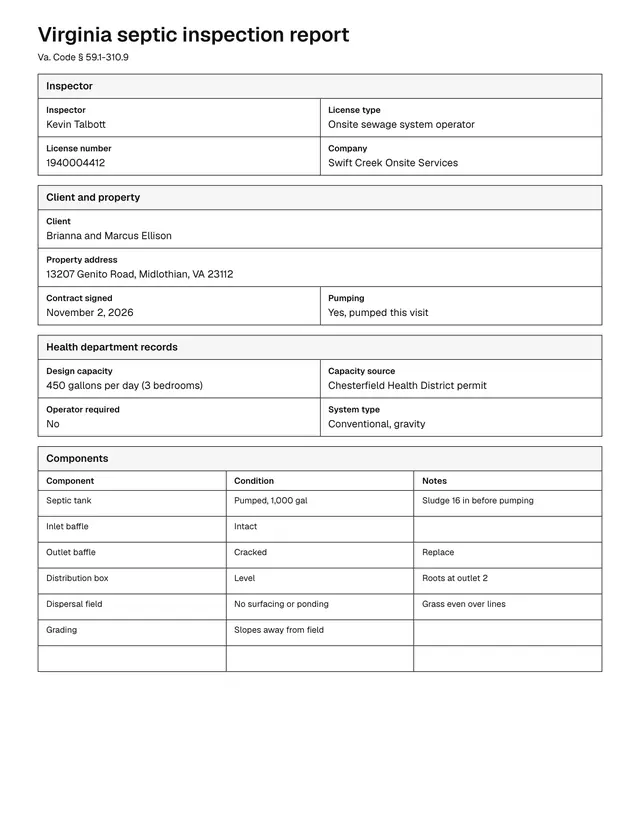
Record the tank or cesspool and what was checked. - Virginia
Virginia septic inspection report
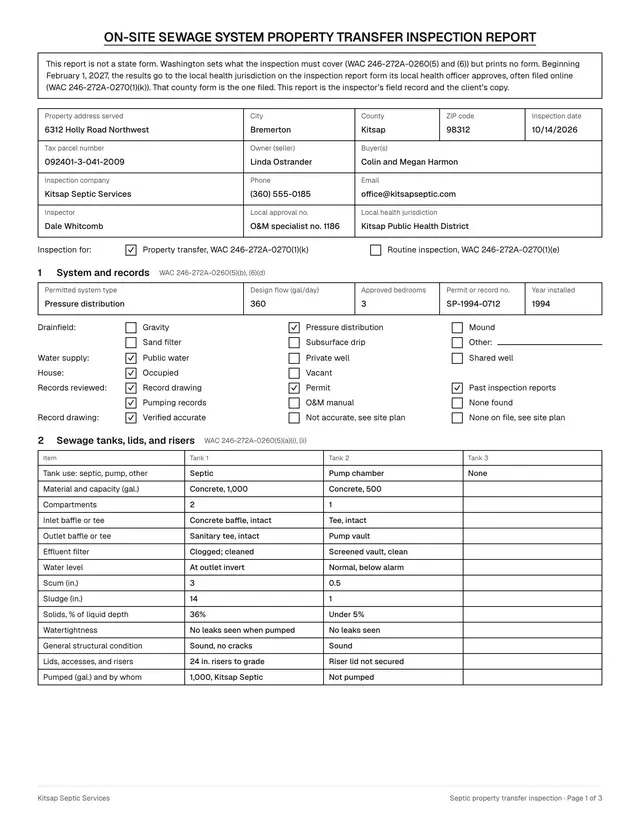
Record the tank or cesspool and what was checked. - Washington
On-Site Sewage System Property Transfer Inspection Report
Record the tank or cesspool and what was checked. - Wisconsin
Wisconsin POWTS maintenance worksheet
Record the tank or cesspool and what was checked.