Indiana onsite sewage system inspection report
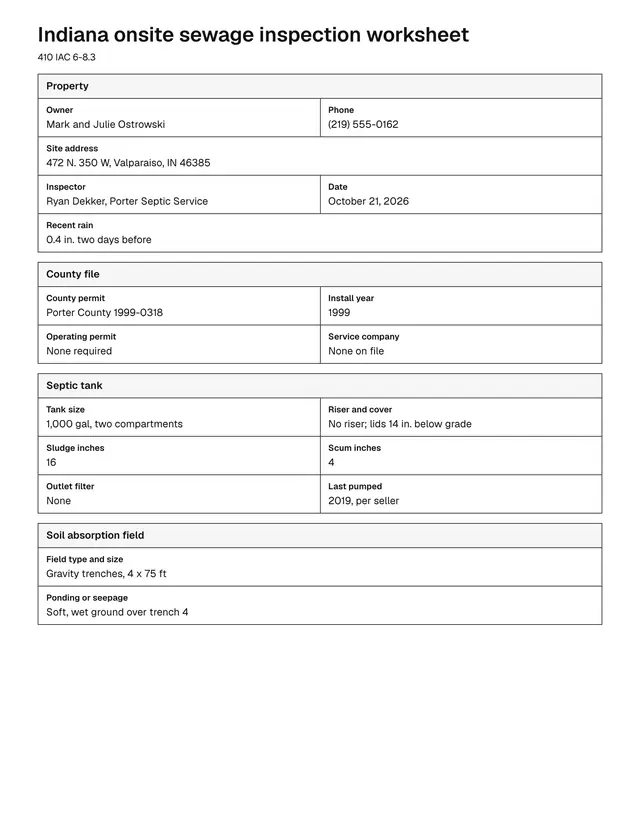
Indiana has no statewide septic form for home sales. Your report should measure the system against the state’s definition of failure in 410 IAC 6-8.3-33 and against the county’s file.
At a glance
- Rule
- 410 IAC 6-8.3
- Failure defined
- 410 IAC 6-8.3-33
- Permits
- County health department
- Home inspectors
- Not required to inspect septic
Completed example
Download PDFWhy buyers order one
No state law makes an Indiana seller get a septic inspection. Indiana’s rule for home systems, 410 IAC 6-8.3, covers design, installation, permits, and failure, but not property transfers. The request usually comes from a lender, a purchase contract, or a county with its own rule.
The Indiana Department of Health runs the state’s onsite sewage systems program, and local health departments issue the permits and do most of the work on the ground.
It also doesn’t come from the home inspection. Indiana’s home inspection standards say private waste disposal systems aren’t required. Some home inspectors add septic as an extra service in their inspection agreement. Many buyers hire a septic installer or pumper instead.
Start at the county. Local health departments issue the permits and keep the files. Ask for the permit, the as-built drawing if there is one, and any operating permit records. Then you know what should be in the ground before you open a lid.
The three signs of failure
The most useful part of the rule for an inspector is section 33. It defines a failed system with three signs. If you see any one of them, write it down plainly.
It won’t take sewage. The system “refuses to accept sewage at the rate of design application,” and that interferes with normal plumbing. Slow drains through the whole house and gurgling toilets are the field signs.
It surfaces. Effluent goes beyond what the soil can absorb, “resulting in ponding, seepage, or other discharge” to the ground surface or surface waters. On a Valparaiso lot with heavy clay, that’s often a soggy, smelly strip over the last trench in spring.
It contaminates water. Effluent contaminates a drinking water supply, ground water, or surface water.
The rule then says, “A failed residential on-site sewage system is a health hazard.” Under section 55, the owner has to fix a failure within the time the health officer sets. That’s why your words matter. “Possible failure” and “failure under 410 IAC 6-8.3-33(2)” lead to very different phone calls.
Write which sign you saw and exactly what it looked like. Photos of wet ground, the date, and how much it rained in the past few days help a health officer decide.
Reading the county file and the tank
Some counties use operating permits under section 54. When they do, permits for systems with parts that need scheduled maintenance, like pumps or treatment units, renew at least every three years. Others renew at least every five. The records list the service company and its contract. If the house has one, ask the seller for the latest service report.
Where a county uses operating permits, the owner has to send the health department written proof of all inspection and maintenance within one month, plus a copy of the maintenance contract. Section 55 also lets the health officer order repair of any part that’s defective, malfunctioning, or in need of service, not just a full failure.
At the tank, check what newer rules expect. Section 63 says tanks buried below grade get risers over the access openings, with covers that are watertight and fastened down. Section 64 requires an outlet filter in new systems and in old ones that need a new tank. A 1985 tank with no riser and no filter isn’t a violation by itself, but it’s worth noting, and a buyer may want to add both.
Measure the tank. Indiana’s rule doesn’t set a percentage for when to pump. Write the sludge and scum depths in inches, the tank size, and when it was last pumped, and give your recommendation in plain words.
As a rough check, a tank with 54 inches of liquid depth that holds 16 inches of sludge and 4 of scum is more than a third solids. That’s a fair time to recommend pumping.
Who needs your report before closing?
The buyer, both agents, the lender, and sometimes the county. If you found a failure, the county is the one that sets the repair deadline, so the clearer your notes, the faster everyone moves.
Put the county permit number and install year at the top of the report.
Noma specializes in the Indiana onsite sewage system inspection report (410 IAC 6-8.3). Write the report with your own sections on your phone, draw the tank and field on site, and send the invoice with an online payment link. See how Noma runs septic inspections.
Frequentlyaskedquestions
Send this document in minutes, not an afternoon.
Other states
Septic inspection report templates- Alabama
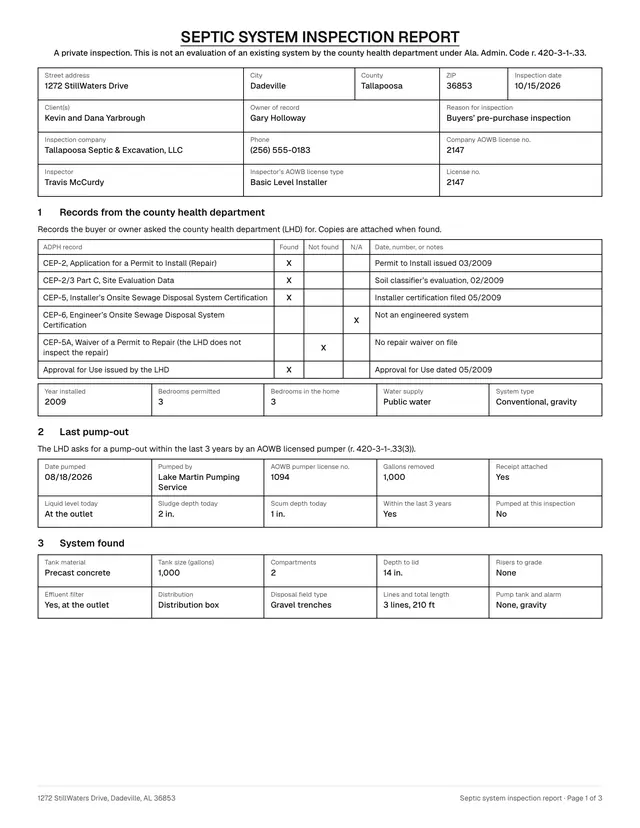
Septic System Inspection Report
Record the tank or cesspool and what was checked. - ArizonaGWS 432
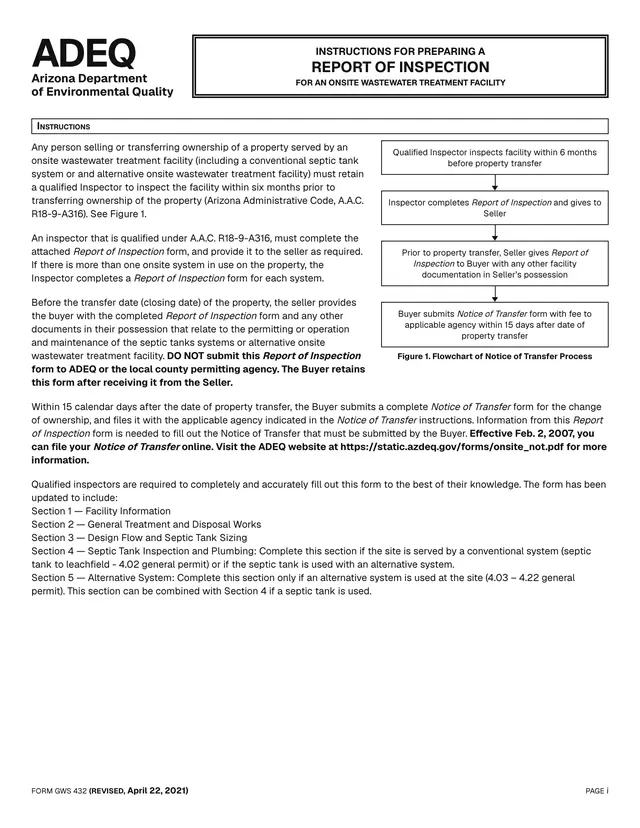
Report of Inspection for an Onsite Wastewater Treatment Facility
Record the tank or cesspool and what was checked. - Arkansas
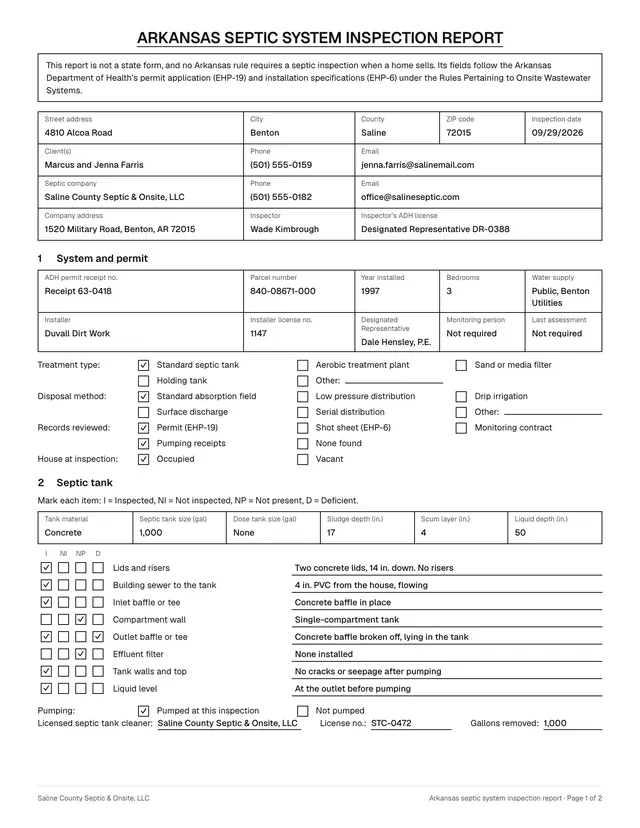
Arkansas Septic System Inspection Report
Record the tank or cesspool and what was checked. - Colorado
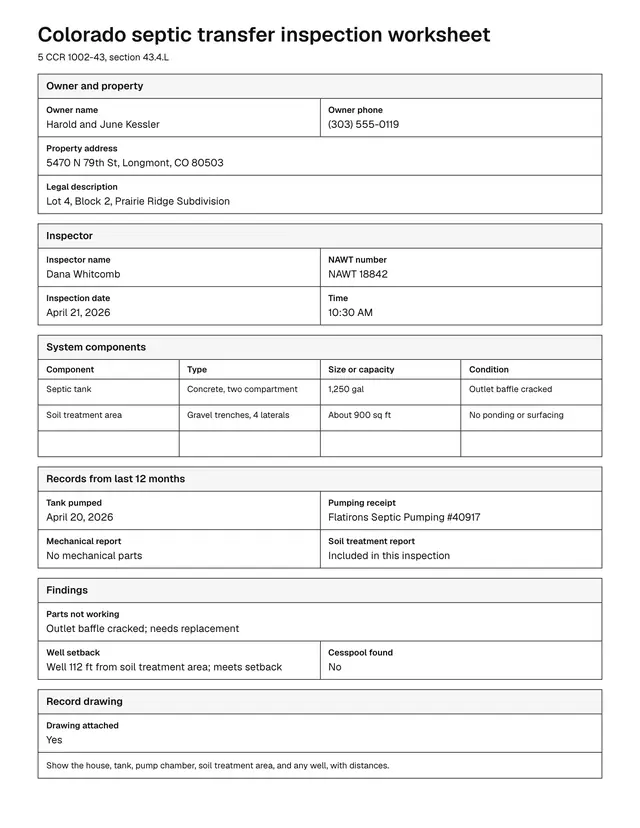
Colorado septic transfer of title inspection report (Regulation 43)
Record the tank or cesspool and what was checked. - Delaware
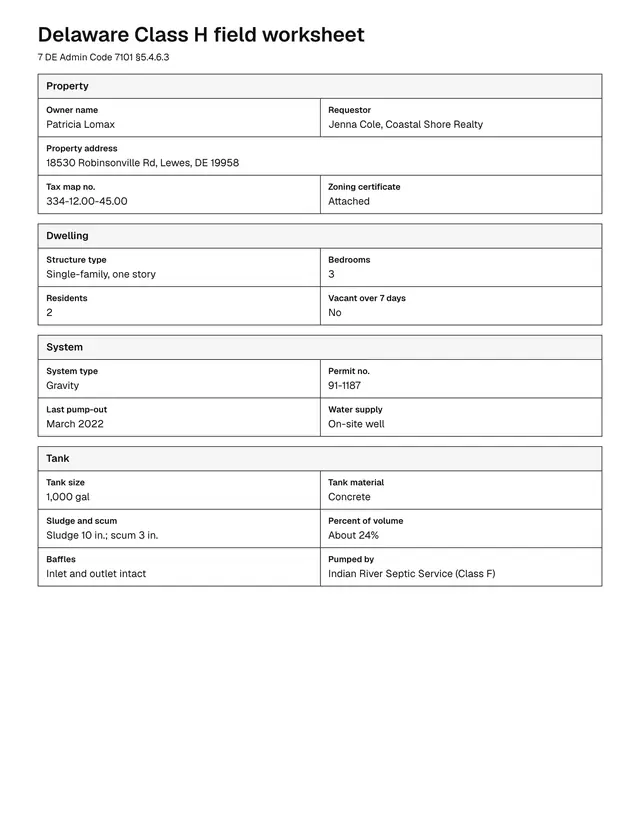
Delaware Class H septic inspection report
Record the tank or cesspool and what was checked. - Florida
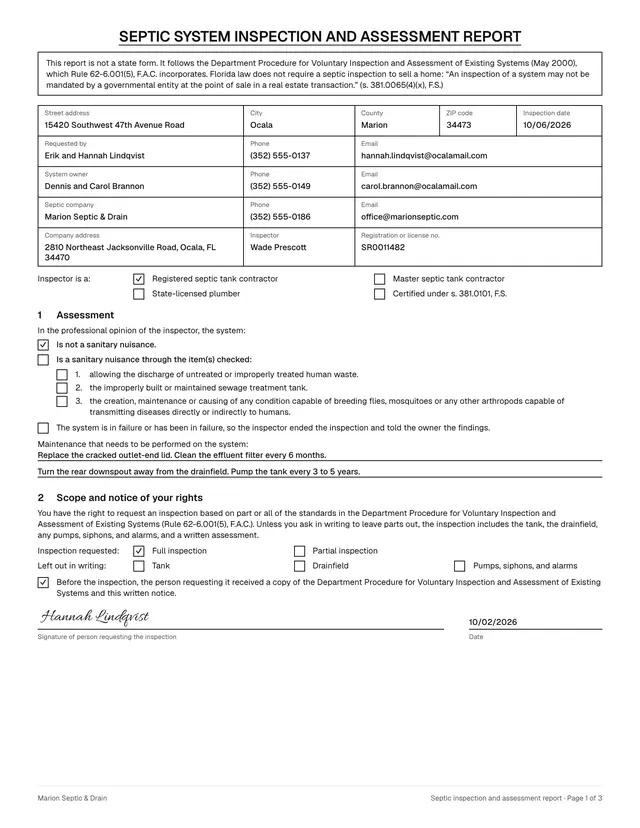
Septic System Inspection and Assessment Report
Record the tank or cesspool and what was checked. - Georgia
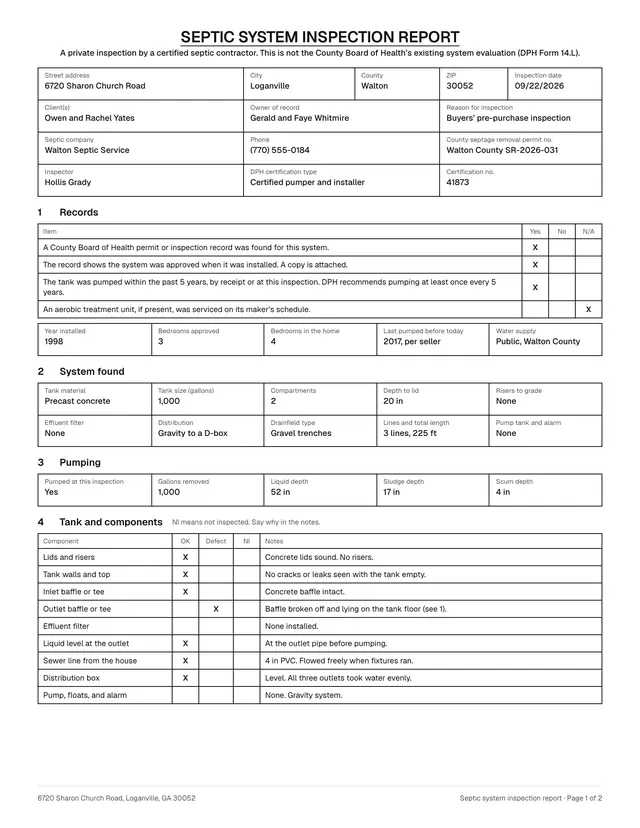
Septic System Inspection Report
Record the tank or cesspool and what was checked. - Hawaii
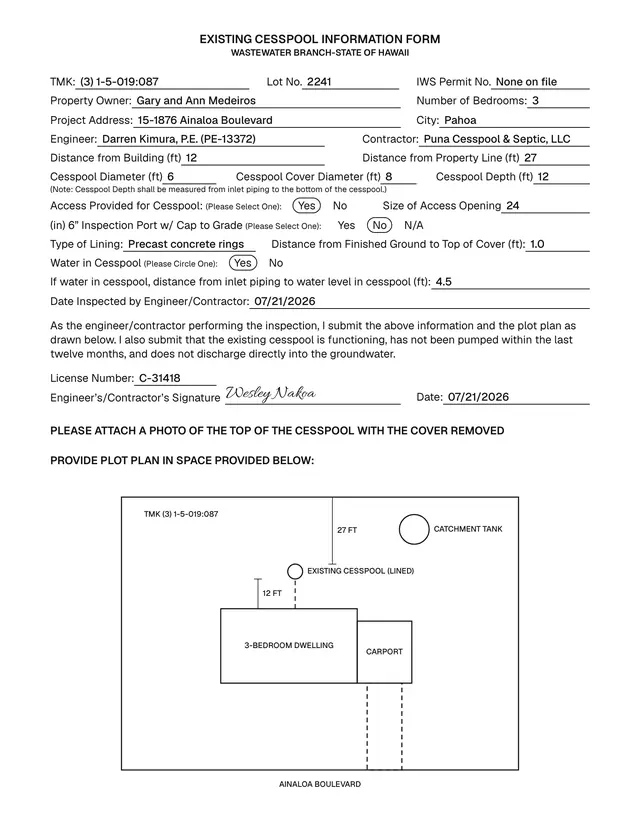
Existing Cesspool Information Form
Record the tank or cesspool and what was checked. - Illinois
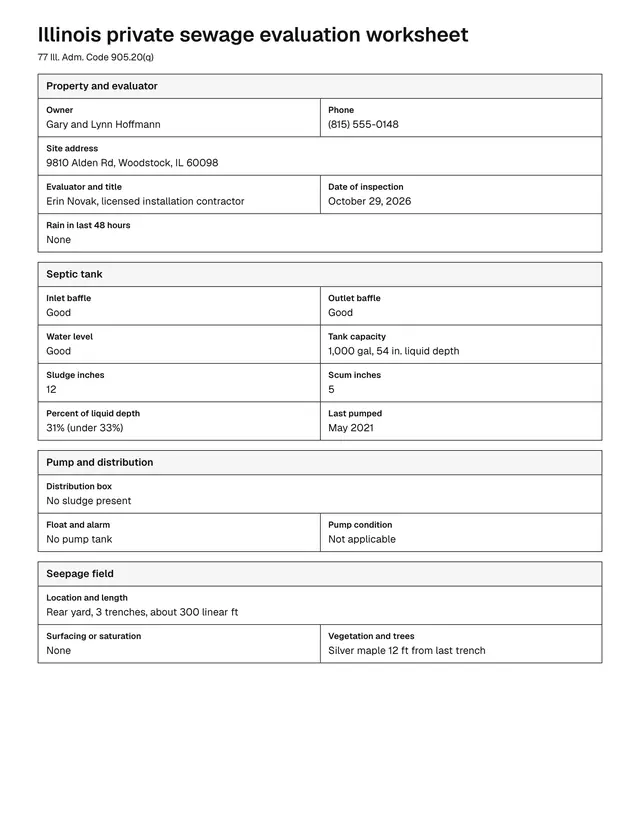
Illinois private sewage disposal system evaluation
Record the tank or cesspool and what was checked. - Iowa
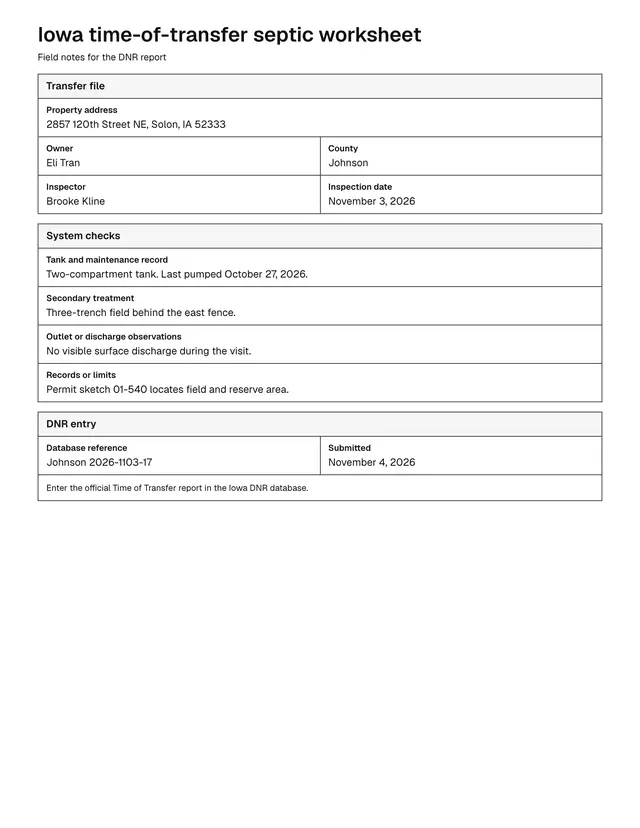
Iowa time-of-transfer septic worksheet
Record the tank or cesspool and what was checked. - Kentucky
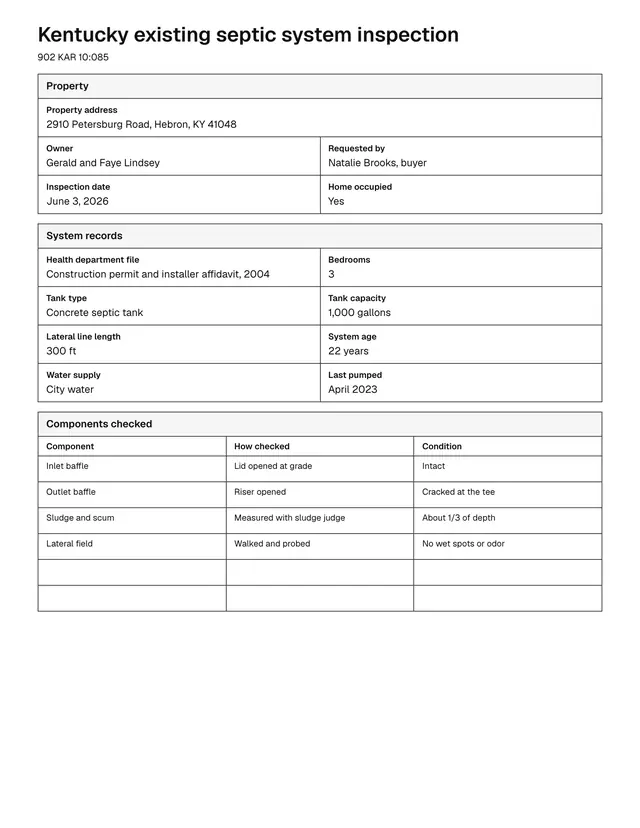
Kentucky existing septic system inspection
Record the tank or cesspool and what was checked. - Louisiana
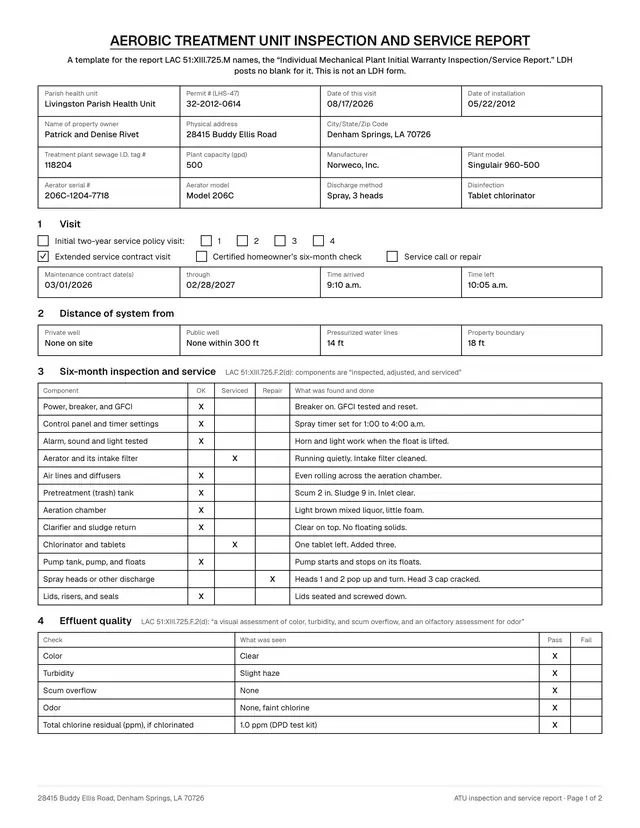
Aerobic Treatment Unit Inspection and Service Report
Record the tank or cesspool and what was checked. - Maryland
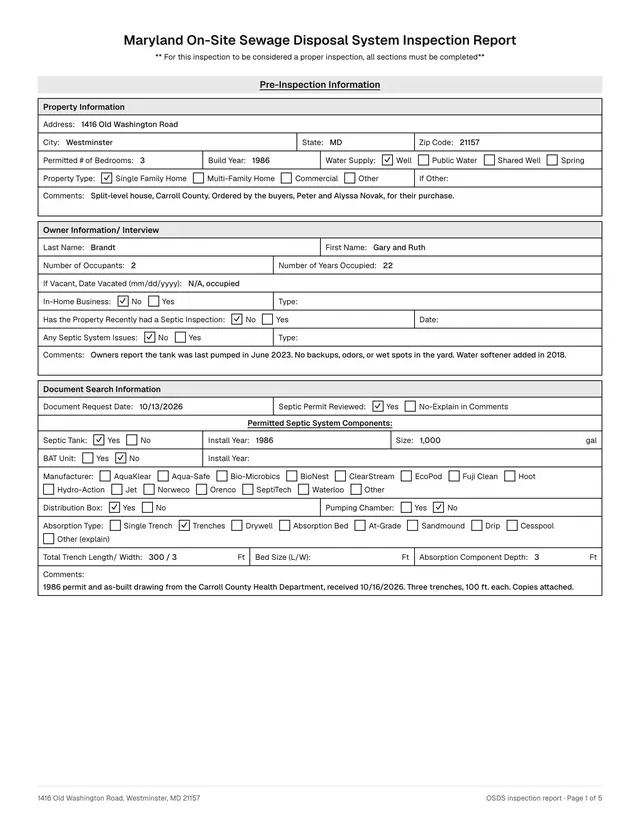
Maryland On-Site Sewage Disposal System Inspection Report
Record the tank or cesspool and what was checked. - Massachusetts
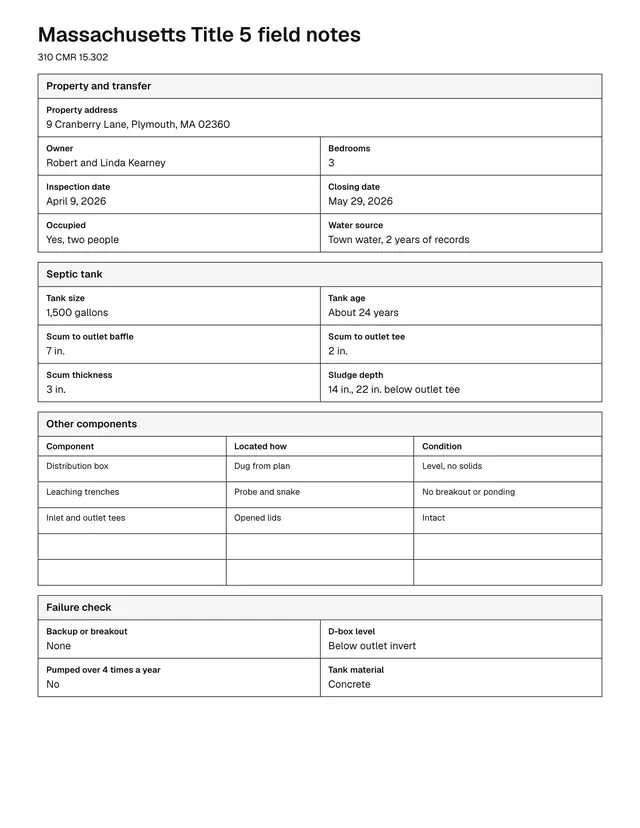
Massachusetts Title 5 inspection report (310 CMR 15.301)
Record the tank or cesspool and what was checked. - Michigan
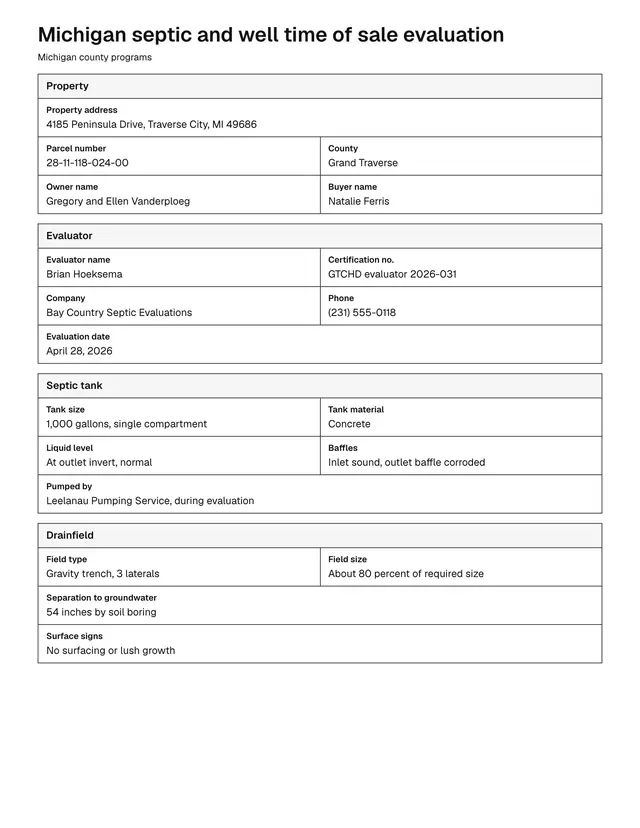
Michigan septic time of sale evaluation
Record the tank or cesspool and what was checked. - Minnesota
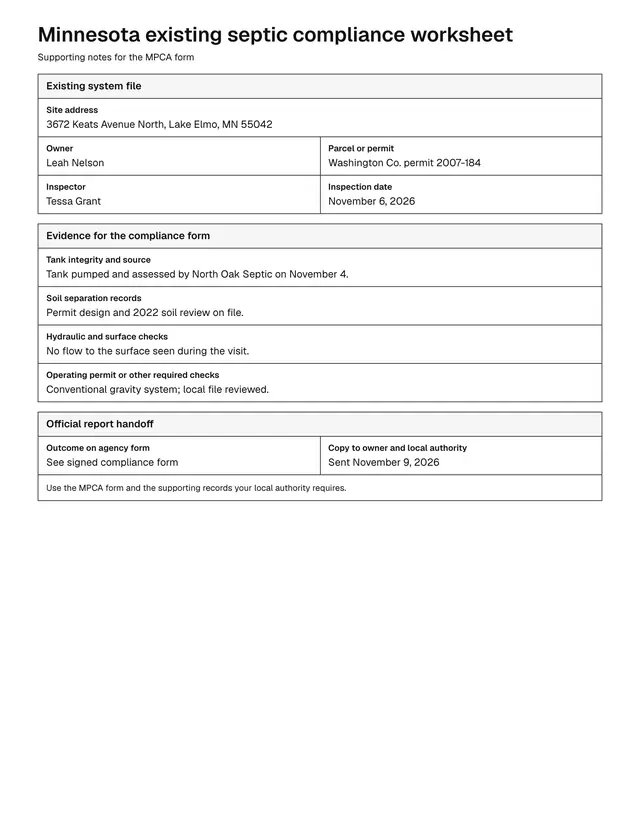
Minnesota existing septic compliance worksheet
Record the tank or cesspool and what was checked. - Mississippi
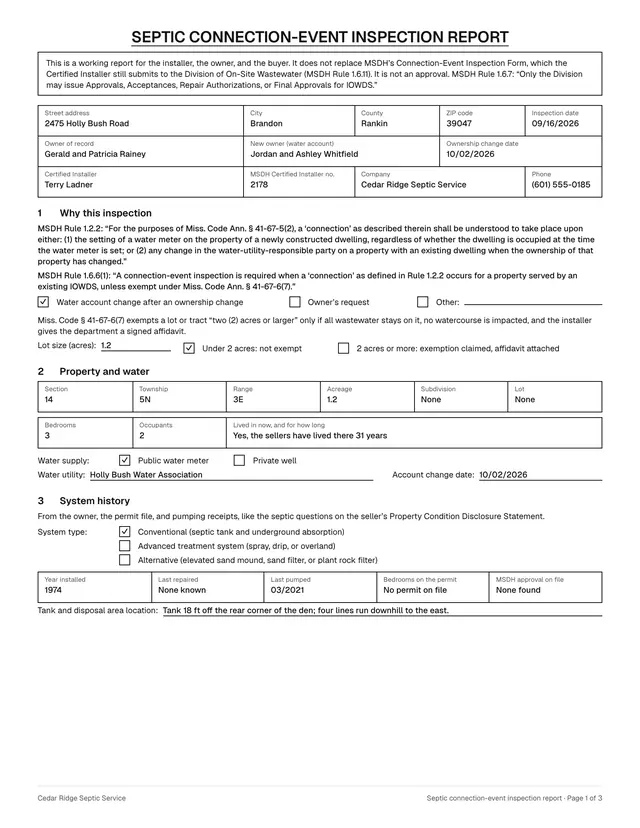
Septic Connection-Event Inspection Report
Record the tank or cesspool and what was checked. - Missouri
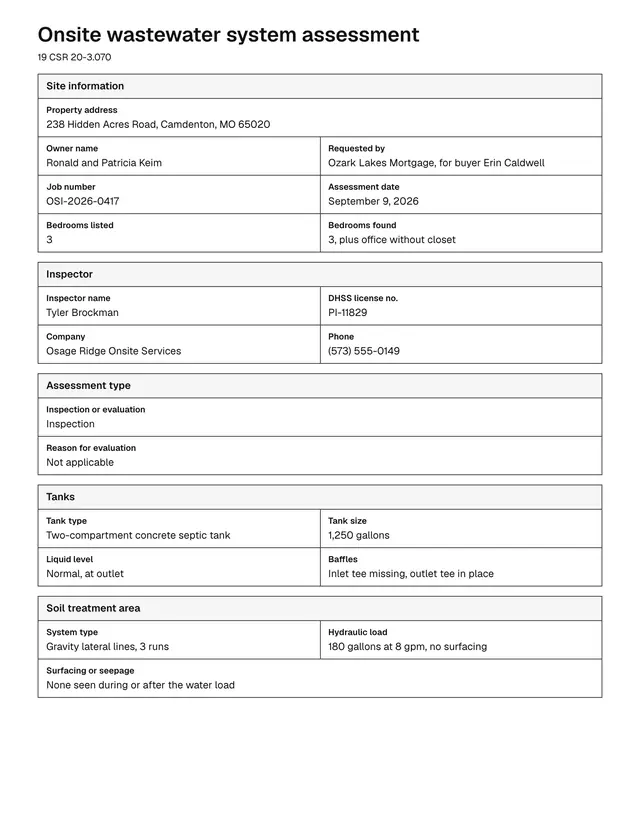
Missouri onsite wastewater inspection and evaluation report
Record the tank or cesspool and what was checked. - Nevada
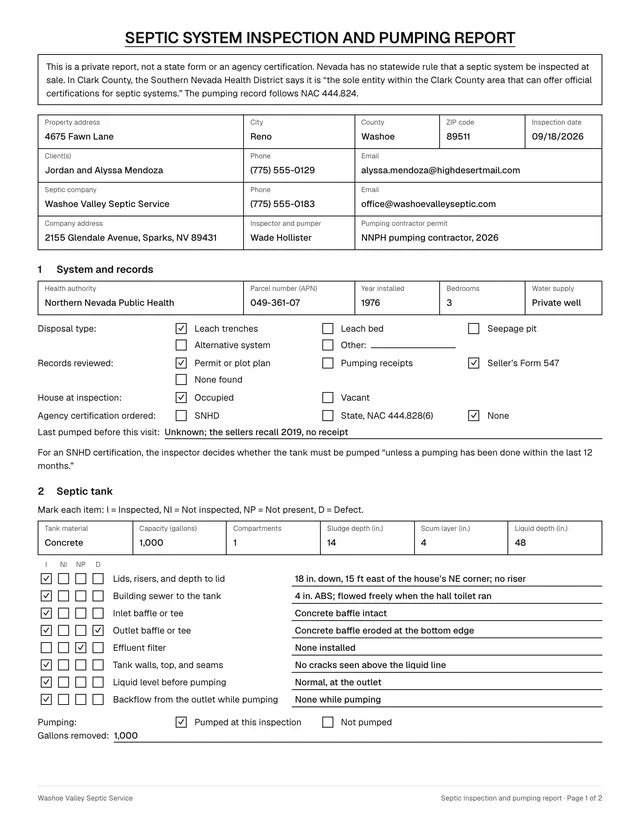
Septic System Inspection and Pumping Report
Record the tank or cesspool and what was checked. - New JerseyN.J.A.C. 7:9A Appendix F
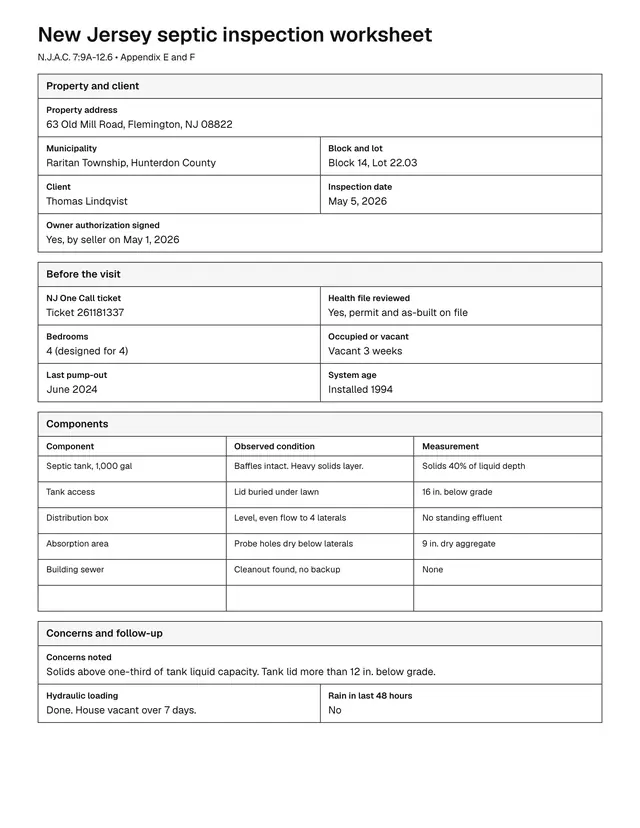
New Jersey septic inspection report (Appendix F Onsite System Inspection Form)
Record the tank or cesspool and what was checked. - New Mexico
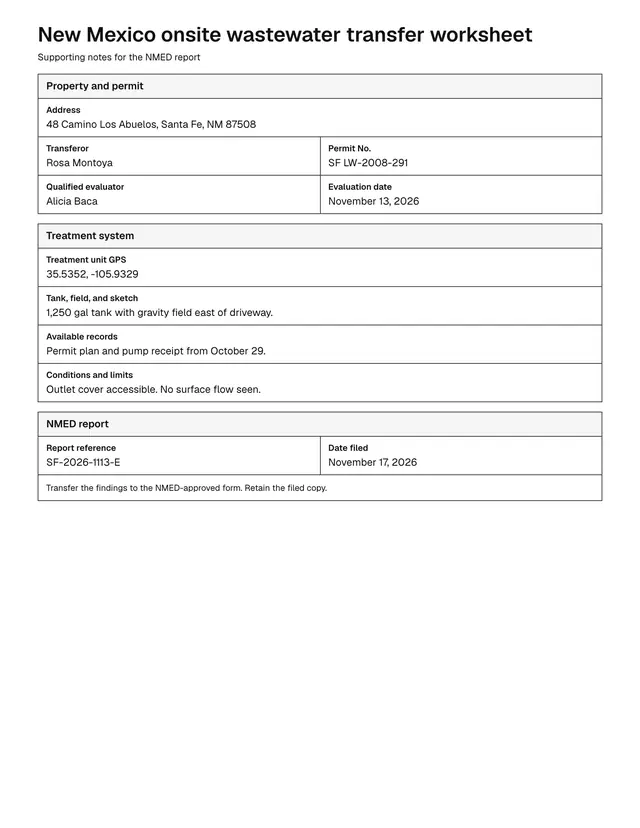
New Mexico onsite wastewater transfer worksheet
Record the tank or cesspool and what was checked. - New York
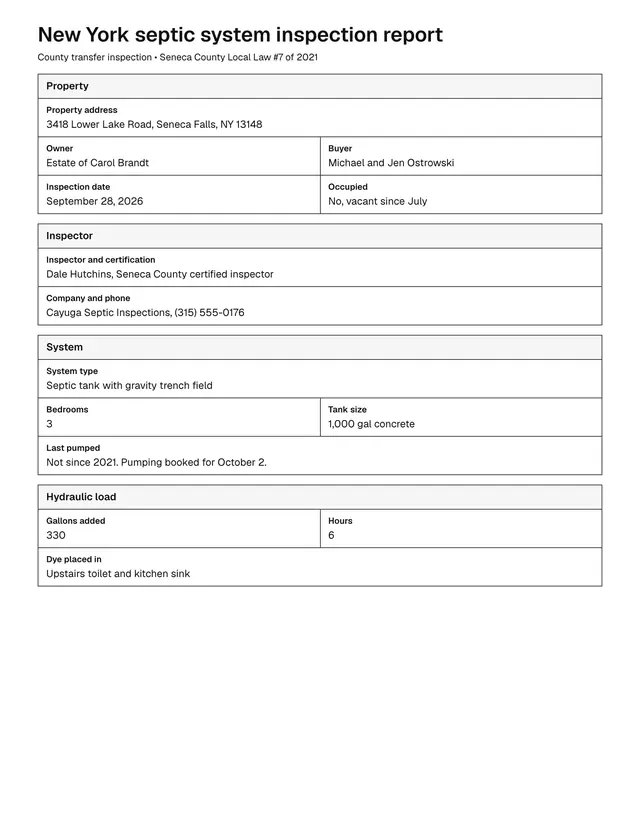
New York septic system inspection report (county transfer inspections)
Record the tank or cesspool and what was checked. - North Carolina
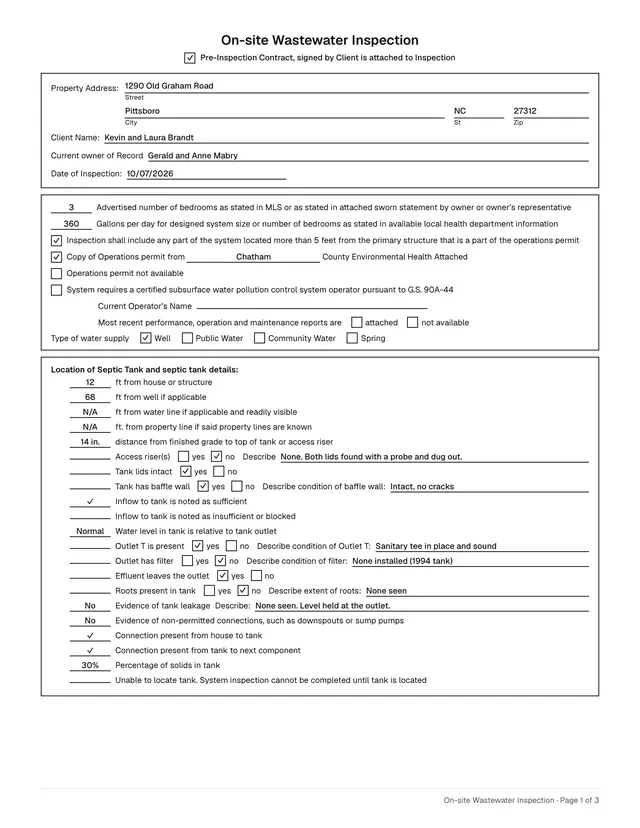
On-site Wastewater Inspection
Record the tank or cesspool and what was checked. - Ohio
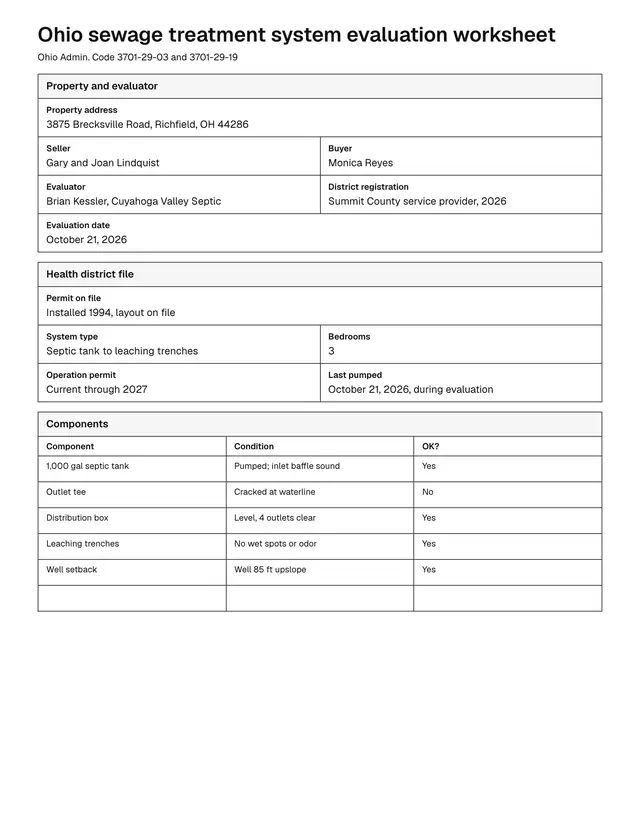
Ohio sewage treatment system evaluation for property transfer
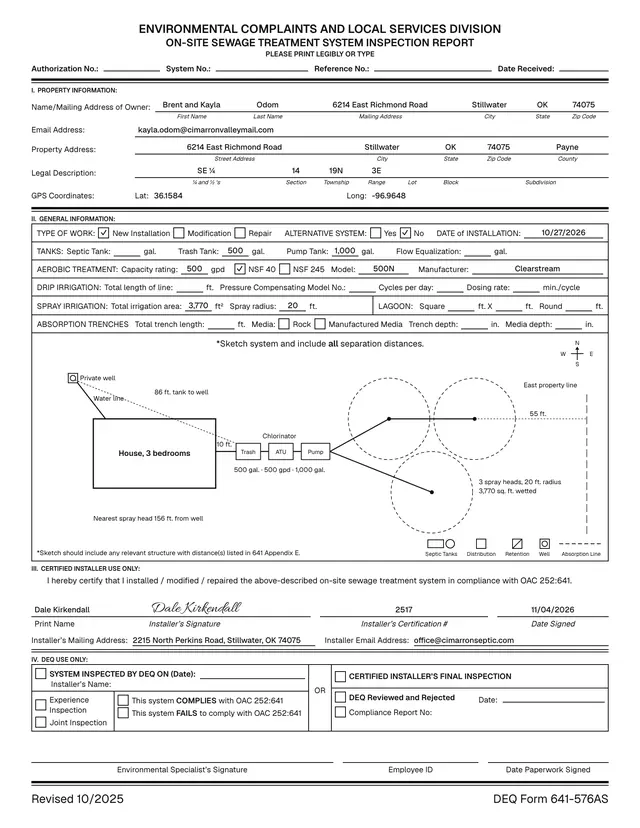
Record the tank or cesspool and what was checked. - OklahomaDEQ Form 641-576AS
On-Site Sewage Treatment System Inspection Report
Record the tank or cesspool and what was checked. - Oregon
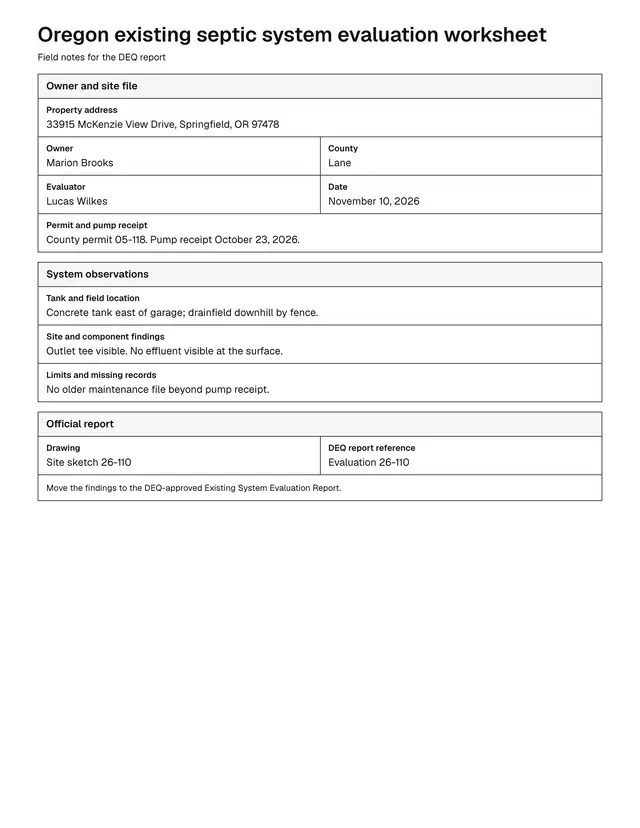
Oregon existing septic system evaluation worksheet
Record the tank or cesspool and what was checked. - Pennsylvania
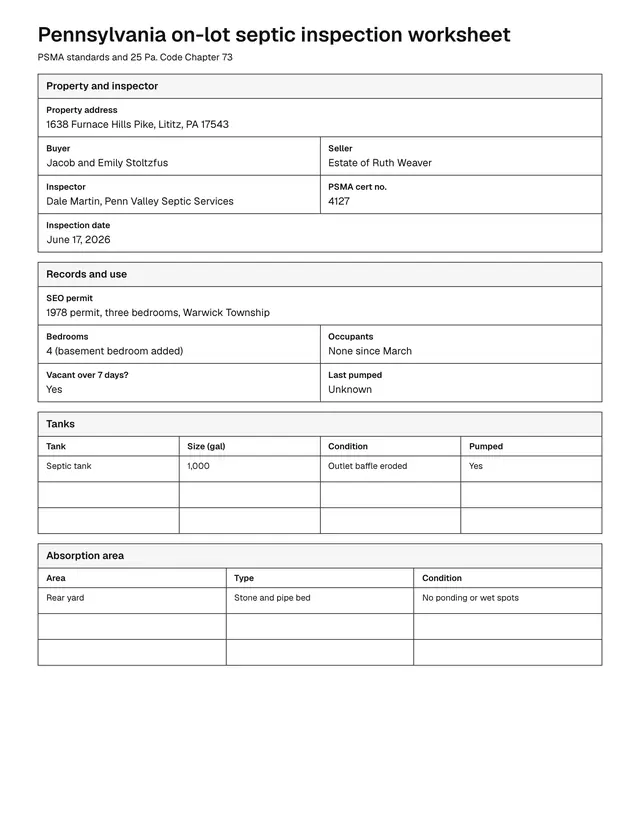
Pennsylvania on-lot septic system inspection (PSMA)
Record the tank or cesspool and what was checked. - South Carolina
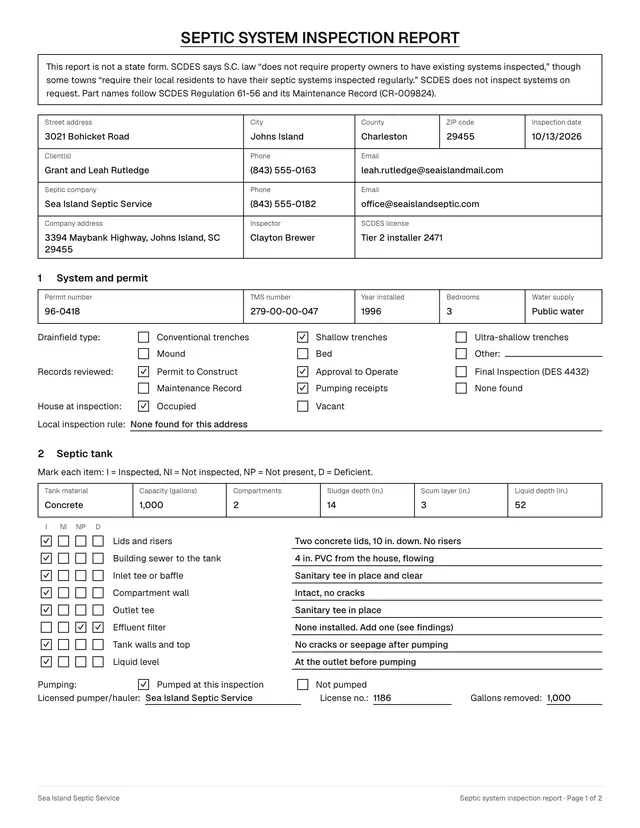
Septic System Inspection Report
Record the tank or cesspool and what was checked. - Tennessee
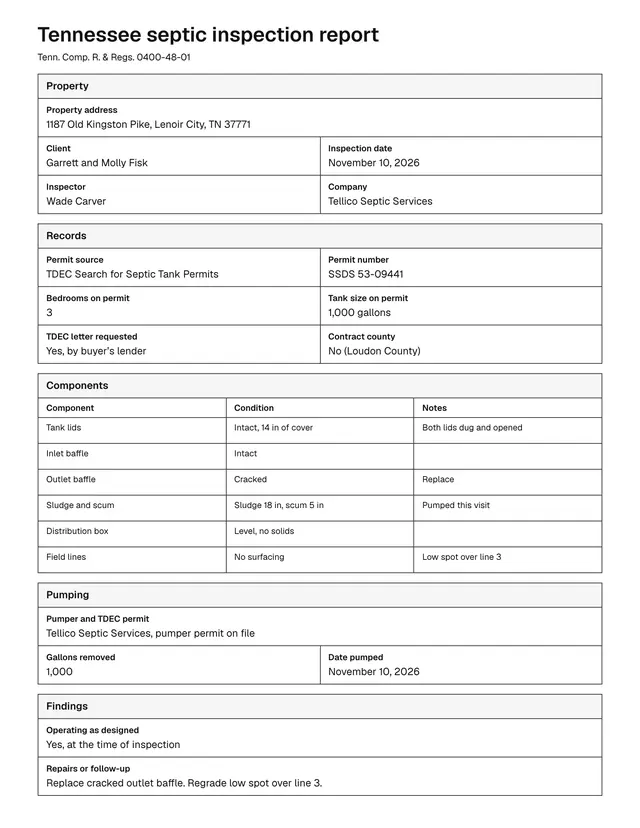
Tennessee septic inspection report
Record the tank or cesspool and what was checked. - Texas
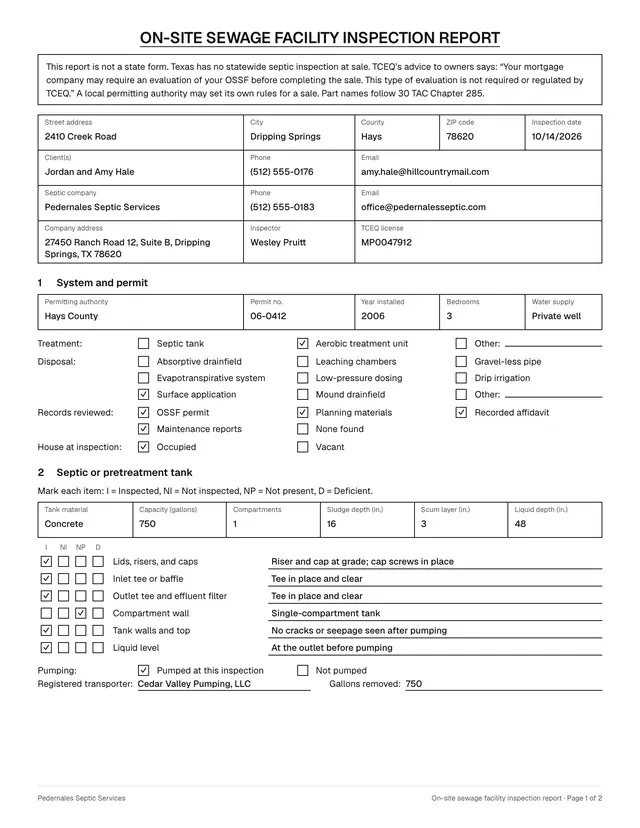
On-Site Sewage Facility Inspection Report
Record the tank or cesspool and what was checked. - Virginia
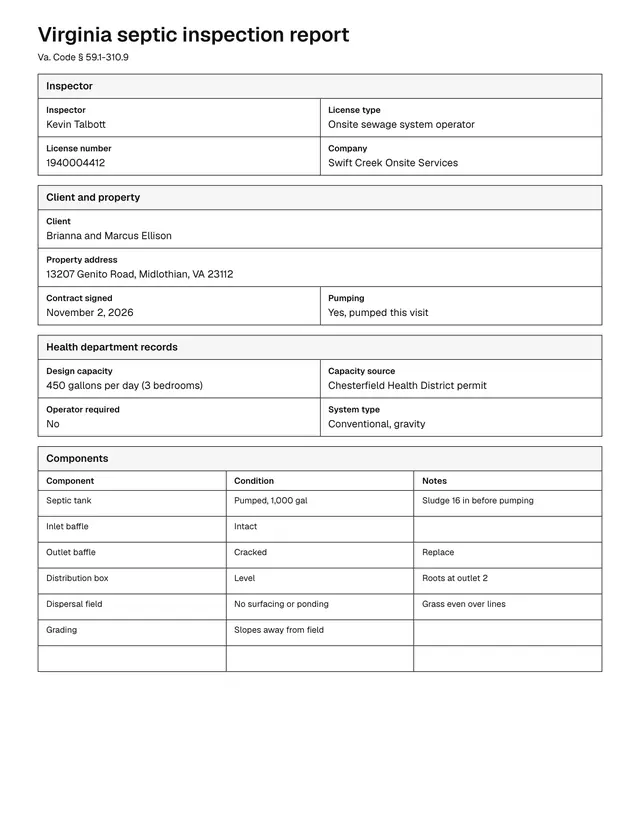
Virginia septic inspection report
Record the tank or cesspool and what was checked. - Washington
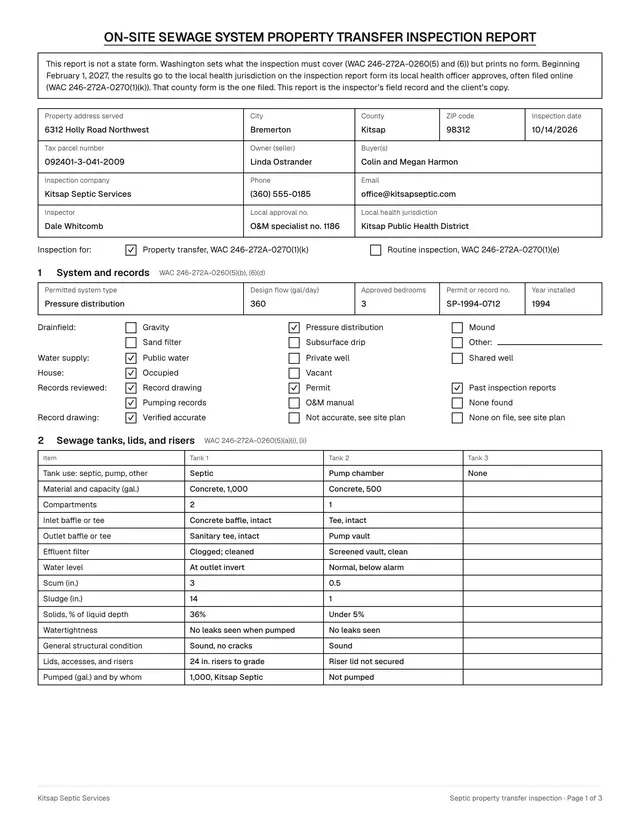
On-Site Sewage System Property Transfer Inspection Report
Record the tank or cesspool and what was checked. - Wisconsin
Wisconsin POWTS maintenance worksheet
Record the tank or cesspool and what was checked.