Pennsylvania on-lot septic system inspection (PSMA)
Pennsylvania has no state septic inspection for home sales. Buyers use the PSMA standards instead, which pump the tanks, check the drainfield, and sometimes add a hydraulic load test.
At a glance
- Standard
- PSMA, not a state program
- State rules
- 25 Pa. Code Chapters 71 to 73
- Tanks
- Pumped during the inspection
- 2026 cost
- About $625 to $1,200
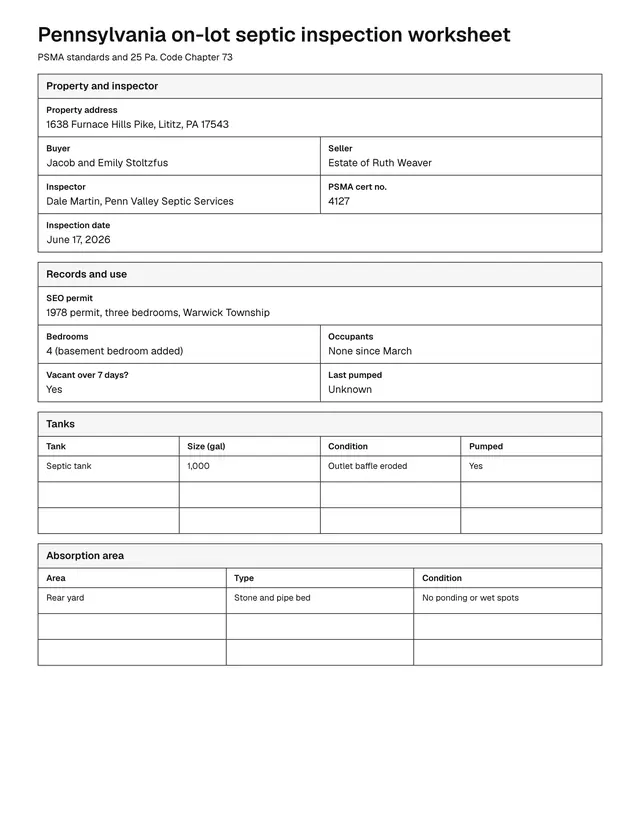
Completed example
Download PDFIt starts in the agreement of sale
Pennsylvania doesn’t send an inspector out when a house with a septic system sells. The buyer has to ask. Penn State Extension tells buyers to put a contingency clause in the agreement of sale that calls for an inspection using the Pennsylvania Septage Management Association standards.
PSMA is a trade group, not an agency. Penn State is clear that its inspection is “not… endorsed by the Commonwealth.” But it’s the standard lenders, agents, and buyers know, and it’s what most of the state means by “septic inspection.”
Get it on the calendar the day the agreement is signed. Pumping takes a truck, a load test takes hours, and contingency windows don’t stretch for a busy pumper. You can reach PSMA at 717-763-7762.
Where the SEO fits
The sewage enforcement officer is a different person with a different job. Each township or borough hires one to permit, inspect, and enforce under 25 Pa. Code Chapters 71, 72, and 73. The SEO approves a new system or a repair. They aren’t the buyer’s inspector.
They are your best source of records, though. Ask the township for the permit file before you go. The permit shows the system type, the tank size, the number of bedrooms it was designed for, and a drawing of the absorption area. If there’s no permit, that’s a finding on its own, especially on older farmhouses.
What the inspection really includes
The tanks get pumped. A PSMA inspection pumps the treatment tanks so you can see the walls, baffles, and floor. That’s why the price has two parts. Penn State’s 2026 numbers for south-central Pennsylvania put the inspection at $350 to $700 and the pumping at $275 to $500, so about $625 to $1,200 total.
The absorption area gets walked and probed. Look for wet spots, odors, lush grass stripes, and effluent ponding in the bed or trench.
Sometimes, a hydraulic load test. If you can’t confirm the house has been used normally, the test runs a measured amount of water into the system and watches how it handles it. Penn State says it’s used when a home has been vacant more than a week, when the drainfield isn’t taking water, or when things are unclear. It adds $500 to $1,000, so the full job can reach $1,125 to $2,200.
Occupancy matters. Ask how many people live there and when the house was last lived in. An estate sale that’s sat empty since spring is exactly the case where a load test earns its cost.
Comparing the old tank to today’s rule
Buyers often add bedrooms after closing, or the seller already did. 25 Pa. Code § 73.31 sets the size for new tanks. The minimum is 900 gallons, and a single-family home is figured at 400 gallons a day, plus 100 for each bedroom over three.
Here’s how that plays out. A 1978 system near Lititz has a 1,000-gallon tank, permitted for three bedrooms. The house now has four, after a basement finish. By today’s numbers, four bedrooms means 500 gallons a day, and that calls for a 1,250-gallon tank.
That isn’t a violation. The system was approved under the rules of its day, and Chapter 73 governs new and repaired systems. But it’s worth a sentence in the report, because the system is now carrying more than it was designed for, and a repair permit would be sized for four bedrooms.
Write both numbers in the report: the bedrooms on the SEO permit and the bedrooms you counted. If they don’t match, the buyer should know before they sign, not when they apply for a repair permit.
Will the buyer know where the tank is in five years?
Most buyers have never owned a septic system. They’ll want to know where the lids are, where the bed is, and when to pump again. A good report answers that with a picture, not just a pass or fail.
Noma specializes in the Pennsylvania on-lot septic system inspection (PSMA standards). Draw the tanks and absorption area on a diagram at the job, build the report with your own sections and mark how serious each finding is, and book, invoice, and get paid online. See how Noma builds septic inspection reports.
Frequentlyaskedquestions
Send this document in minutes, not an afternoon.
Other states
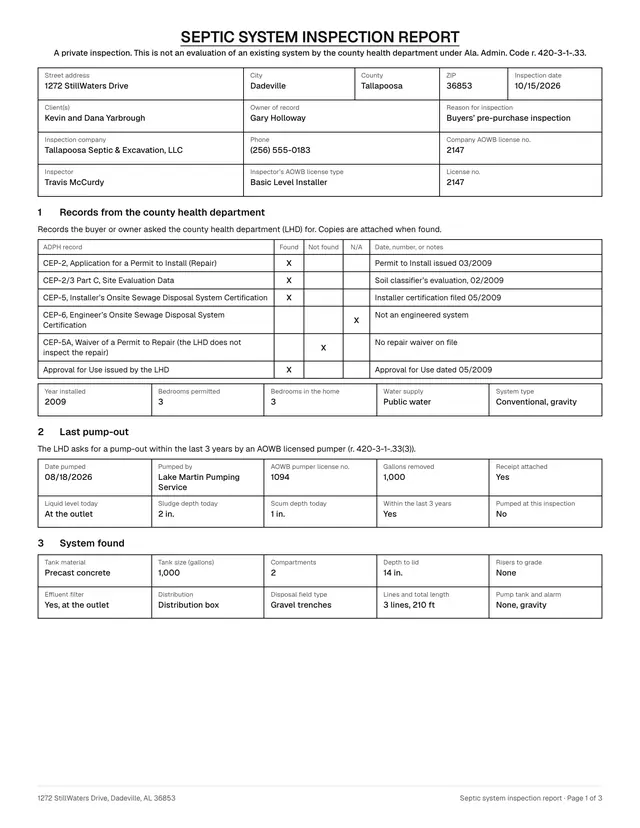
Septic inspection report templates- Alabama
Septic System Inspection Report
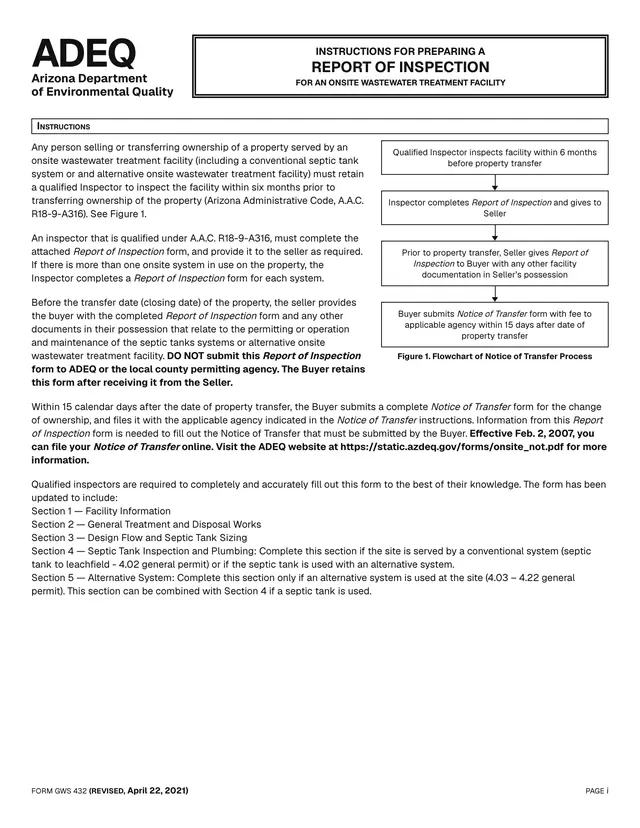
Record the tank or cesspool and what was checked. - ArizonaGWS 432
Report of Inspection for an Onsite Wastewater Treatment Facility
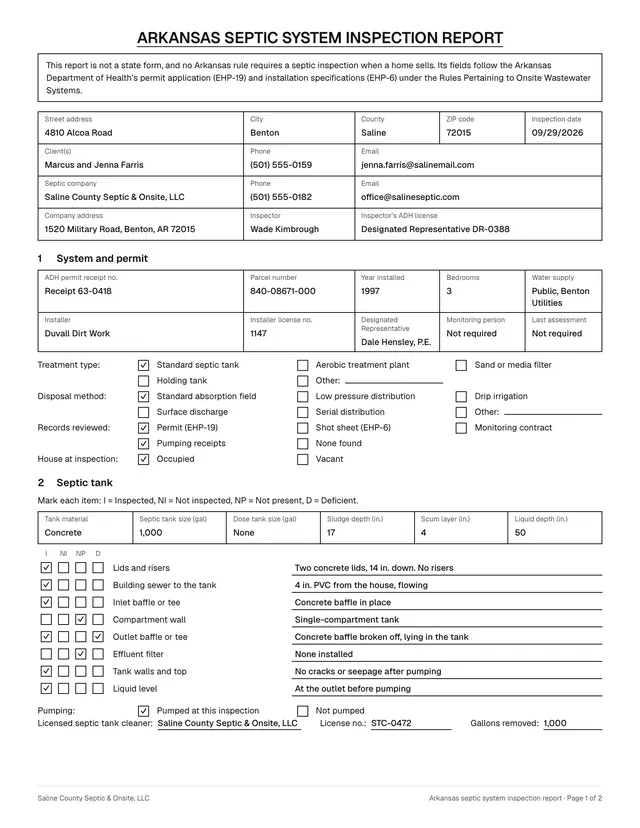
Record the tank or cesspool and what was checked. - Arkansas
Arkansas Septic System Inspection Report
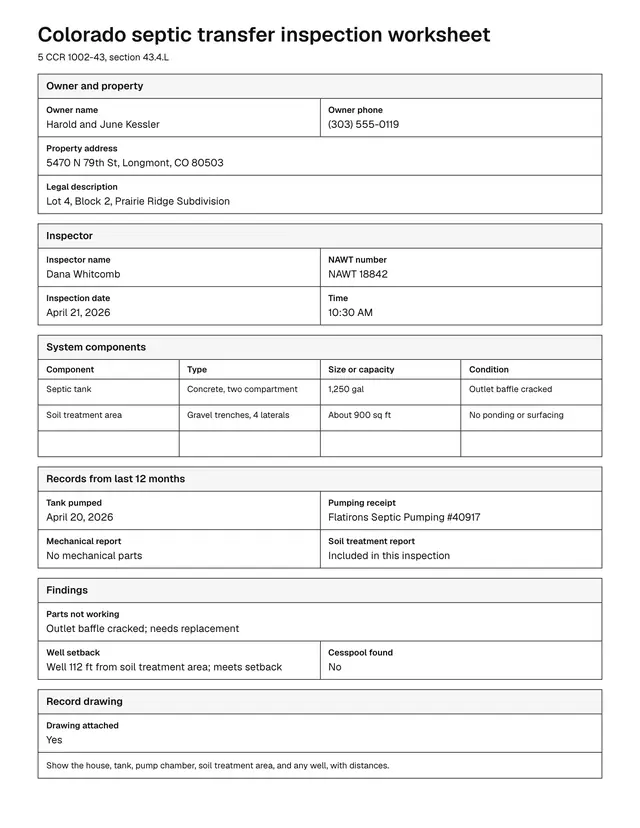
Record the tank or cesspool and what was checked. - Colorado
Colorado septic transfer of title inspection report (Regulation 43)
Record the tank or cesspool and what was checked. - Delaware
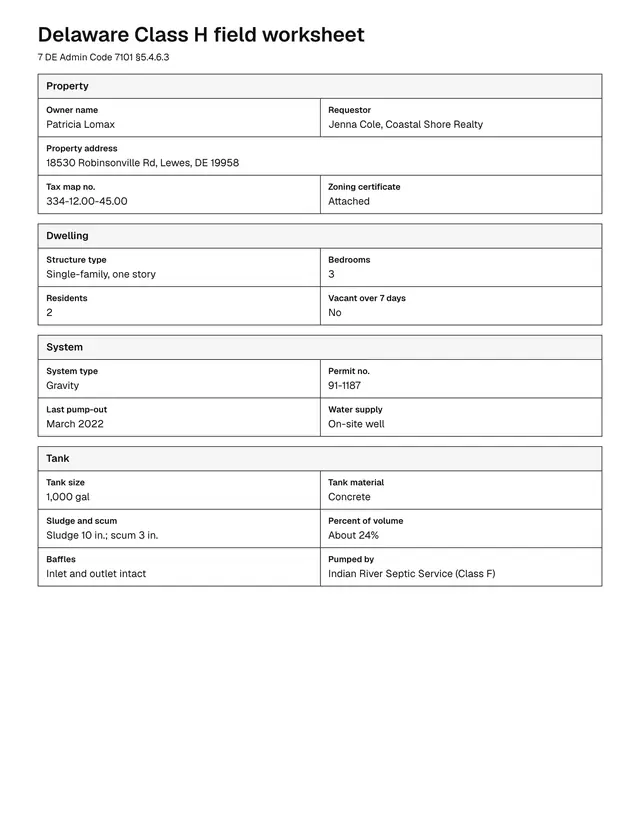
Delaware Class H septic inspection report
Record the tank or cesspool and what was checked. - Florida
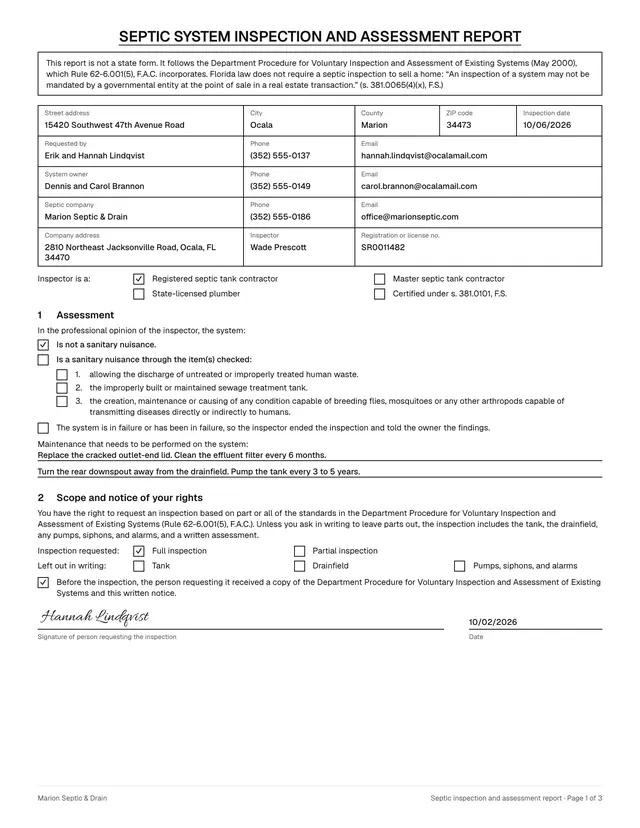
Septic System Inspection and Assessment Report
Record the tank or cesspool and what was checked. - Georgia
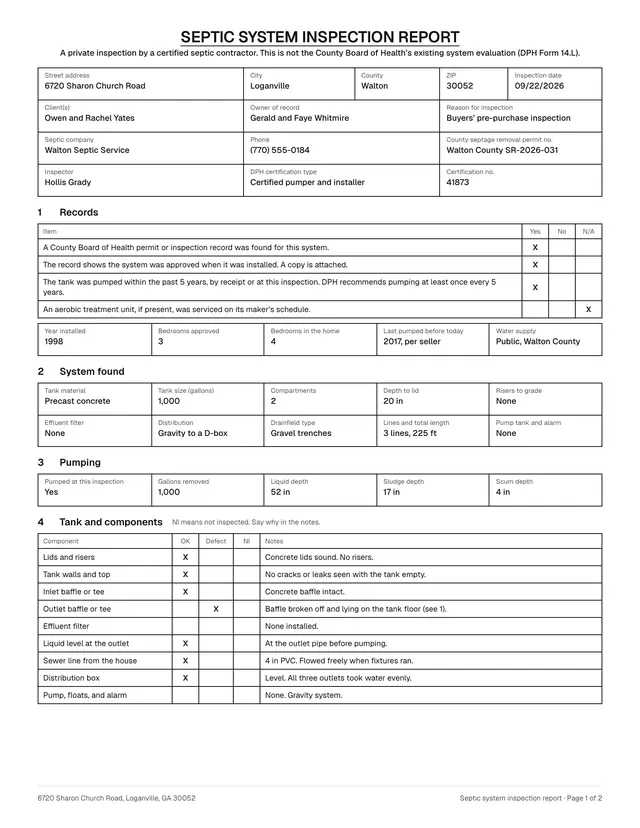
Septic System Inspection Report
Record the tank or cesspool and what was checked. - Hawaii
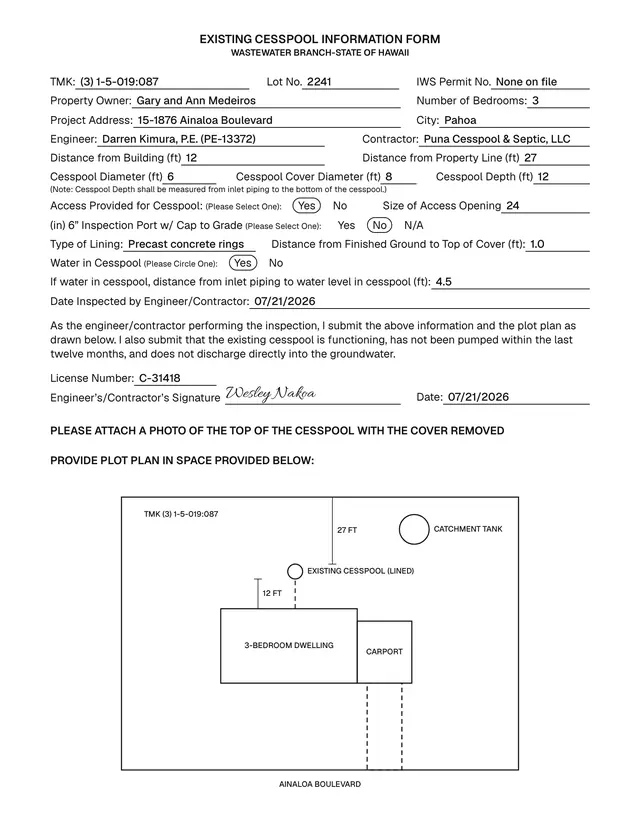
Existing Cesspool Information Form
Record the tank or cesspool and what was checked. - Illinois
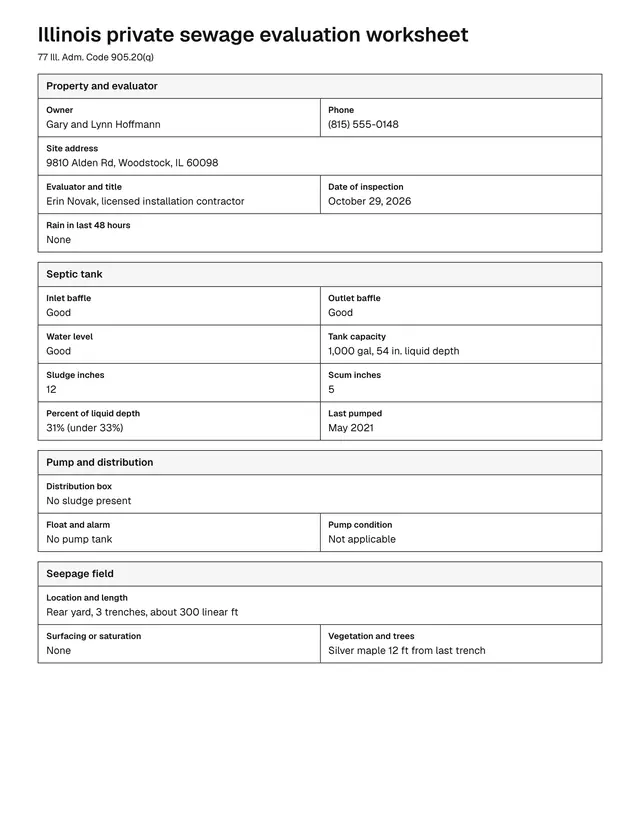
Illinois private sewage disposal system evaluation
Record the tank or cesspool and what was checked. - Indiana
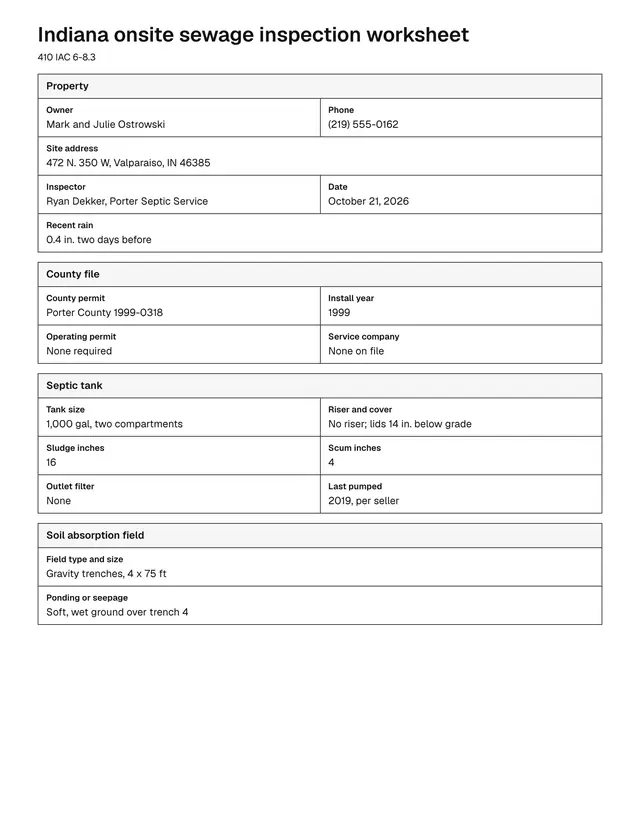
Indiana onsite sewage system inspection report
Record the tank or cesspool and what was checked. - Iowa
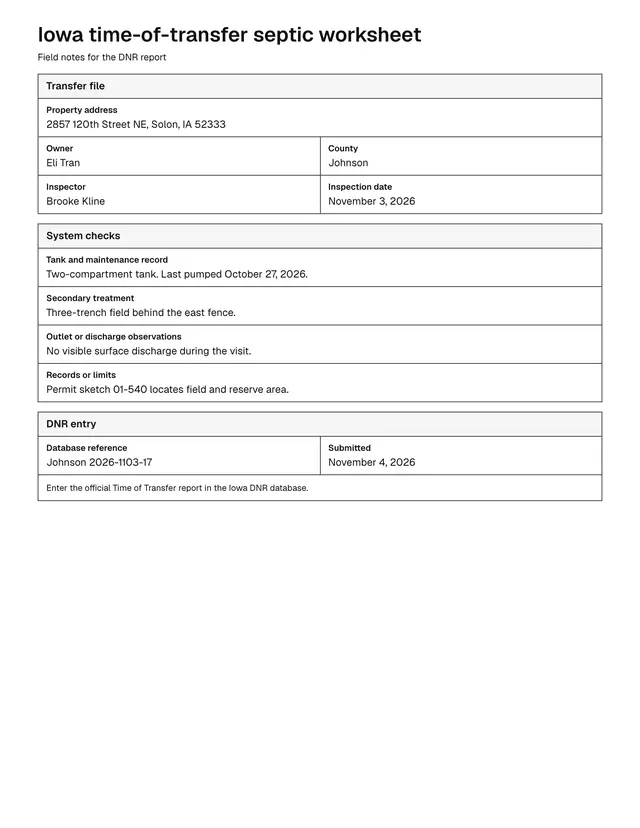
Iowa time-of-transfer septic worksheet
Record the tank or cesspool and what was checked. - Kentucky
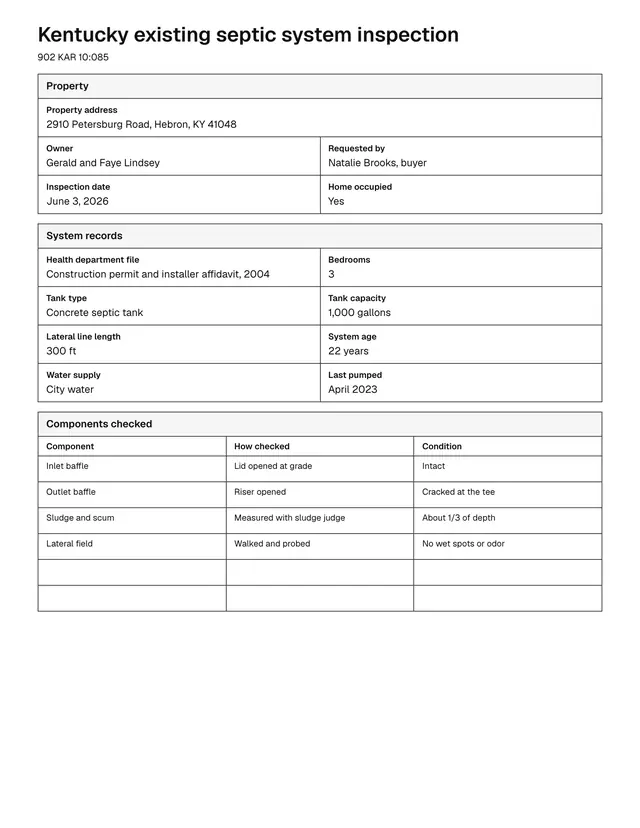
Kentucky existing septic system inspection
Record the tank or cesspool and what was checked. - Louisiana
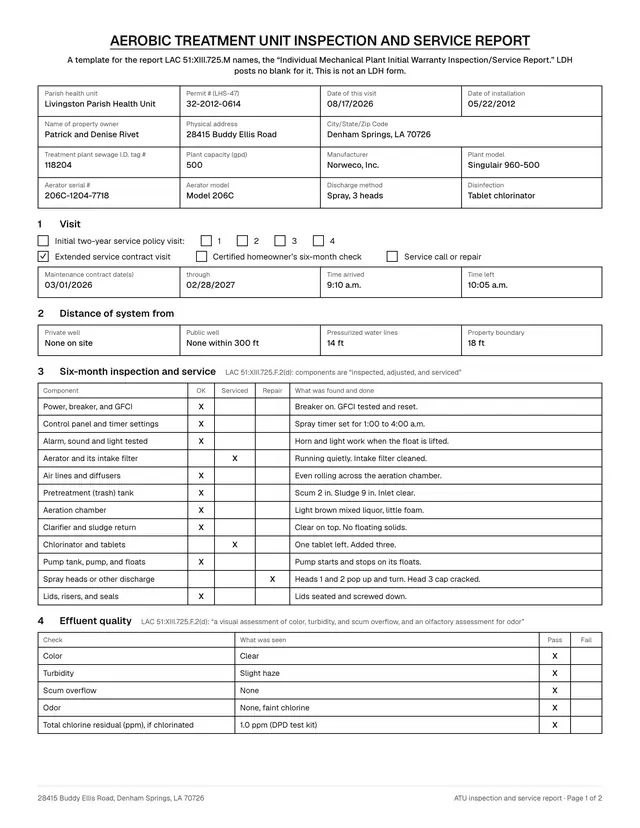
Aerobic Treatment Unit Inspection and Service Report
Record the tank or cesspool and what was checked. - Maryland
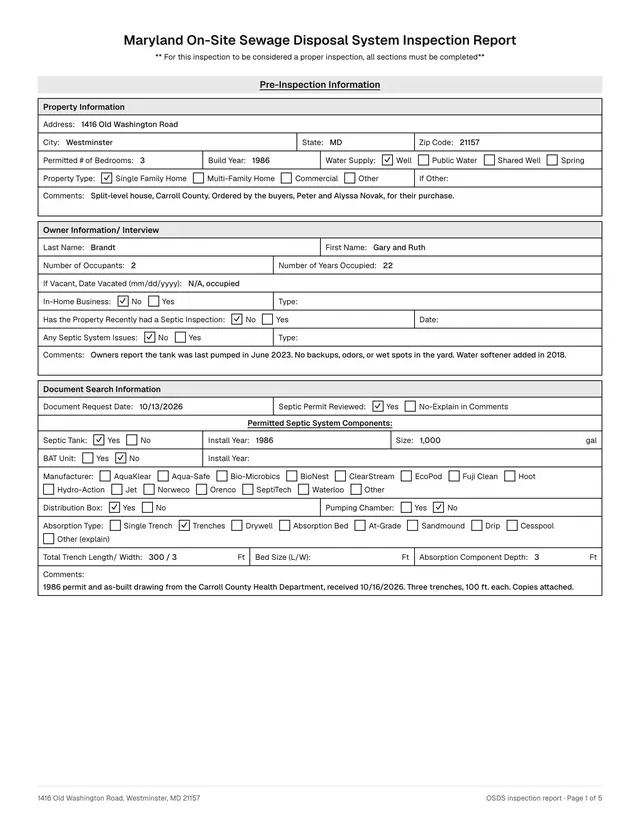
Maryland On-Site Sewage Disposal System Inspection Report
Record the tank or cesspool and what was checked. - Massachusetts
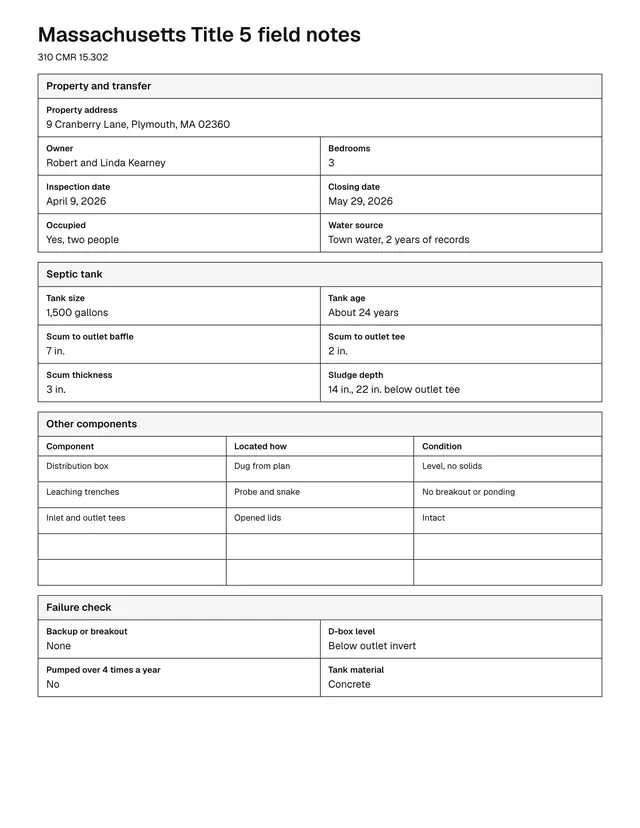
Massachusetts Title 5 inspection report (310 CMR 15.301)
Record the tank or cesspool and what was checked. - Michigan
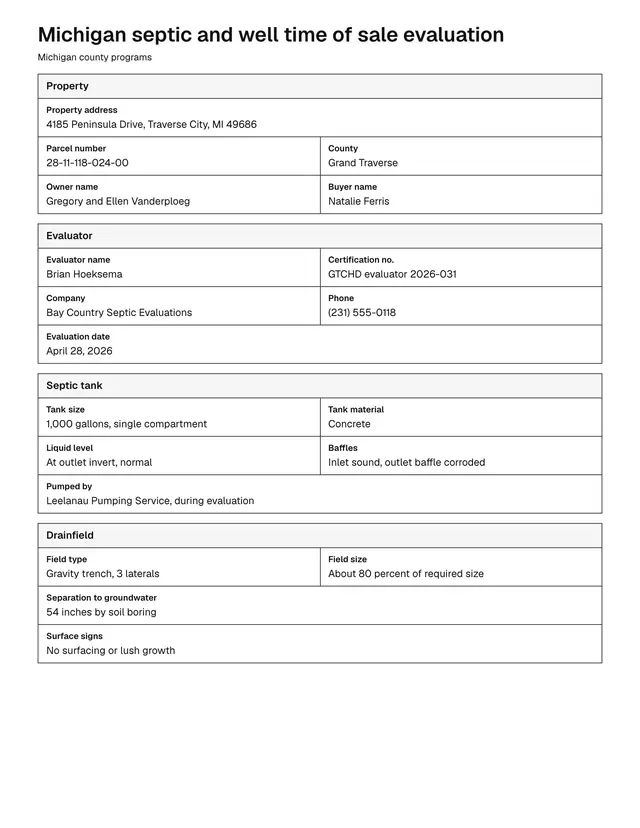
Michigan septic time of sale evaluation
Record the tank or cesspool and what was checked. - Minnesota
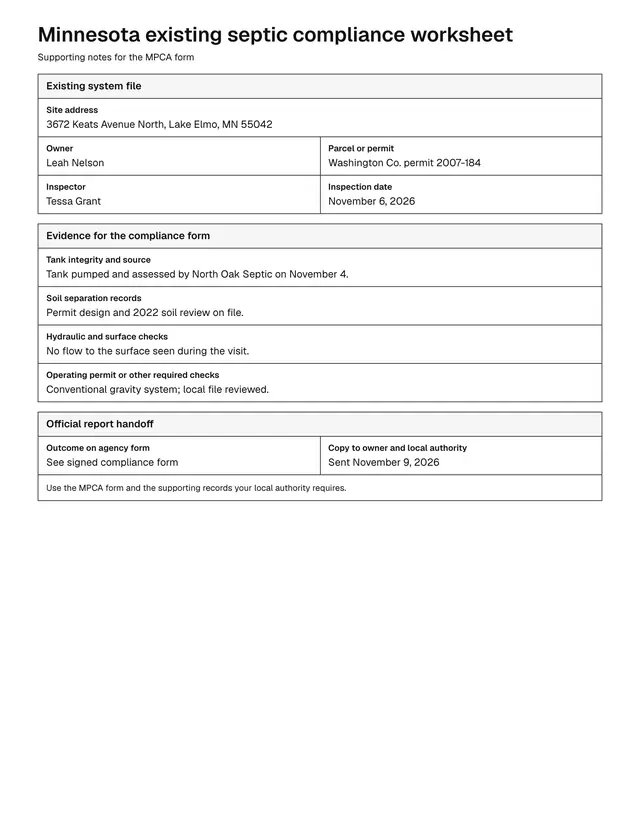
Minnesota existing septic compliance worksheet
Record the tank or cesspool and what was checked. - Mississippi
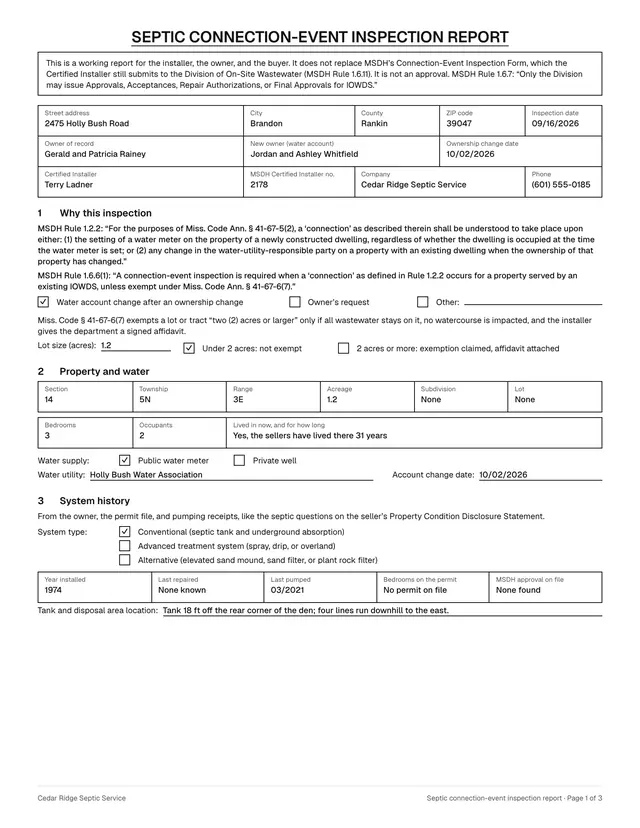
Septic Connection-Event Inspection Report
Record the tank or cesspool and what was checked. - Missouri
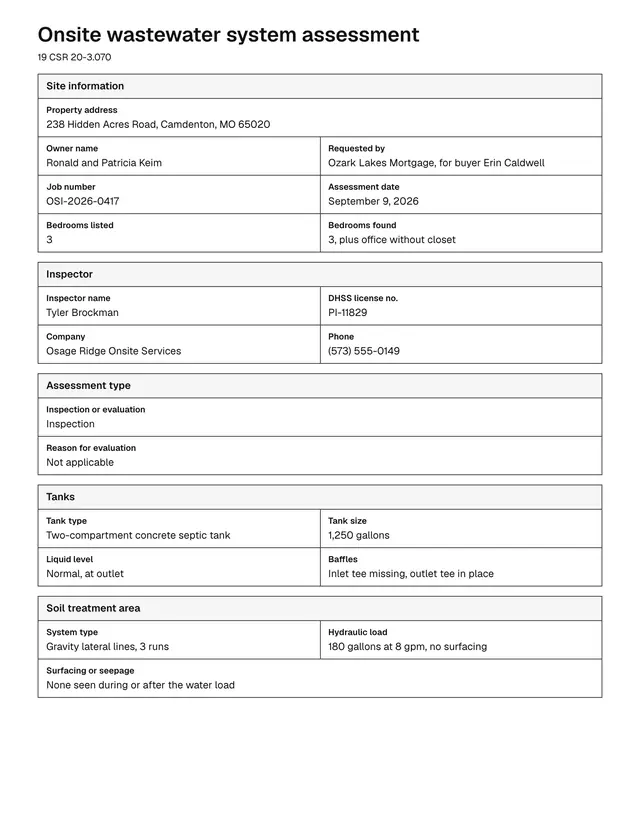
Missouri onsite wastewater inspection and evaluation report
Record the tank or cesspool and what was checked. - Nevada
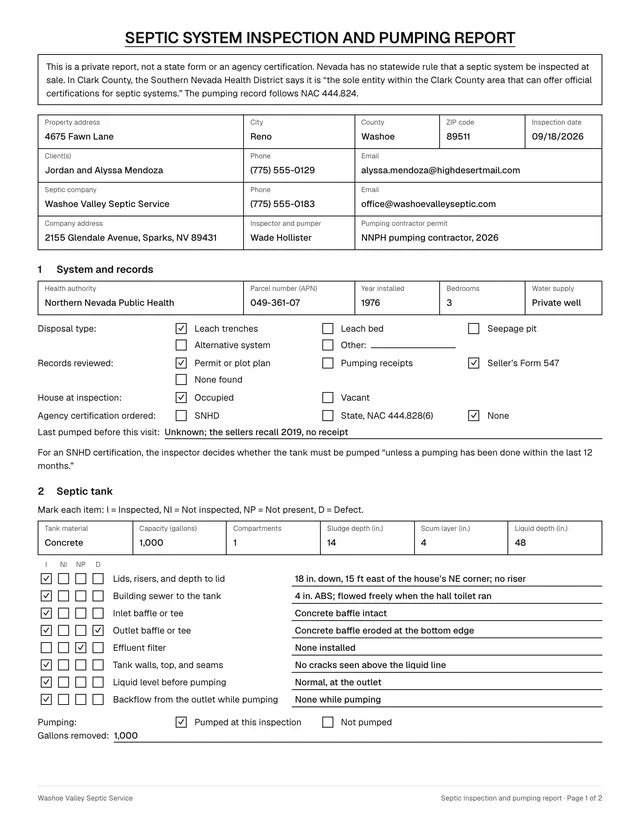
Septic System Inspection and Pumping Report
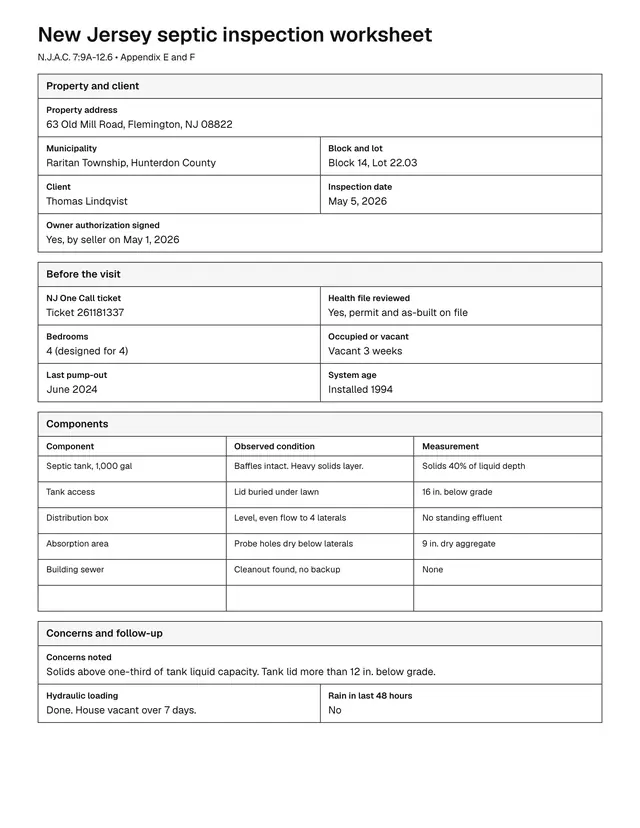
Record the tank or cesspool and what was checked. - New JerseyN.J.A.C. 7:9A Appendix F
New Jersey septic inspection report (Appendix F Onsite System Inspection Form)
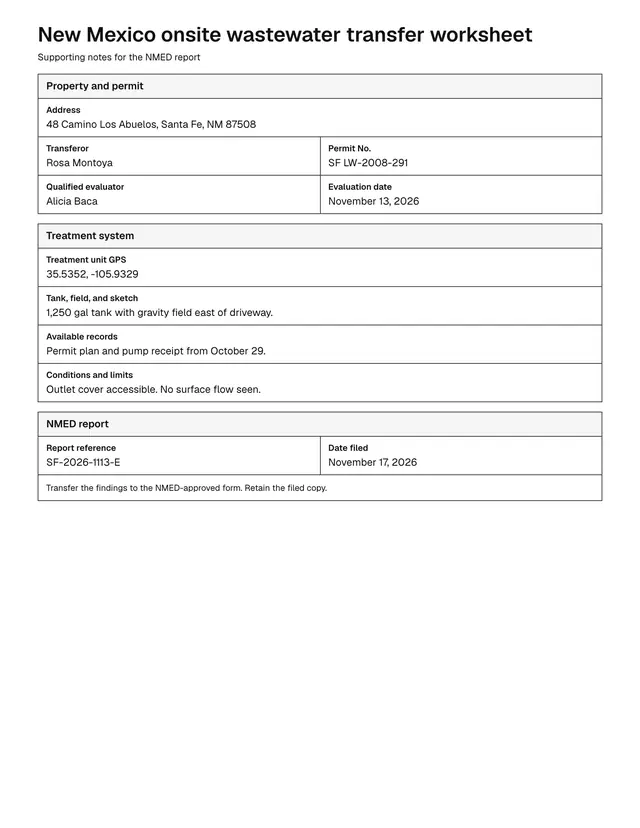
Record the tank or cesspool and what was checked. - New Mexico
New Mexico onsite wastewater transfer worksheet
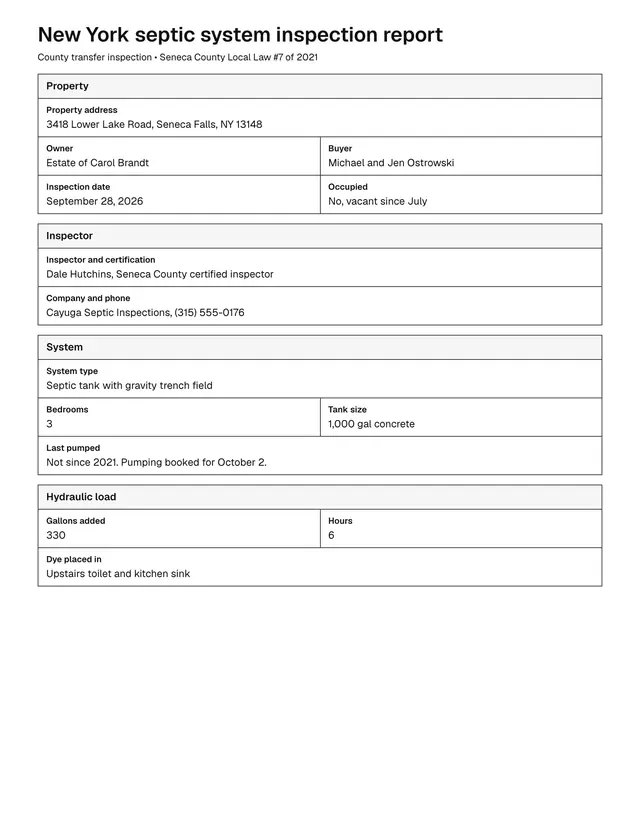
Record the tank or cesspool and what was checked. - New York
New York septic system inspection report (county transfer inspections)
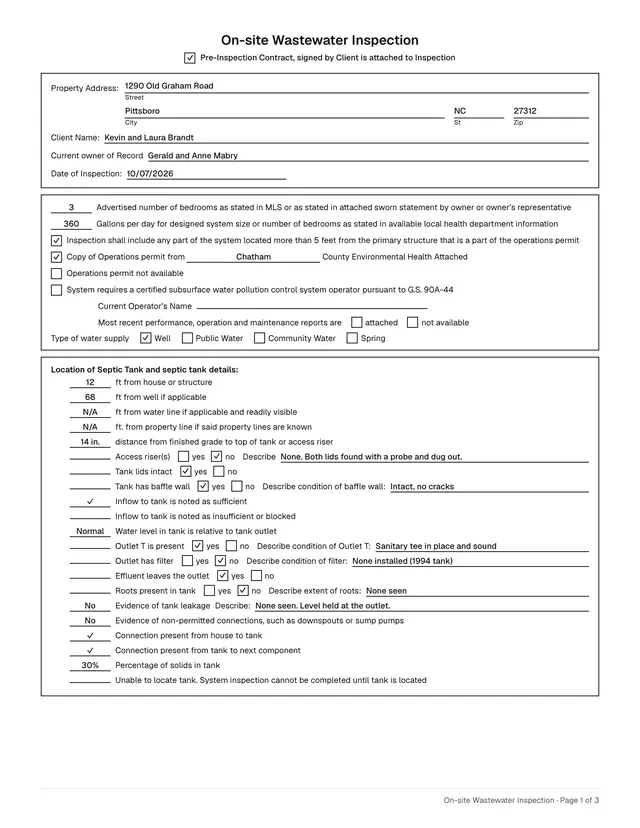
Record the tank or cesspool and what was checked. - North Carolina
On-site Wastewater Inspection
Record the tank or cesspool and what was checked. - Ohio
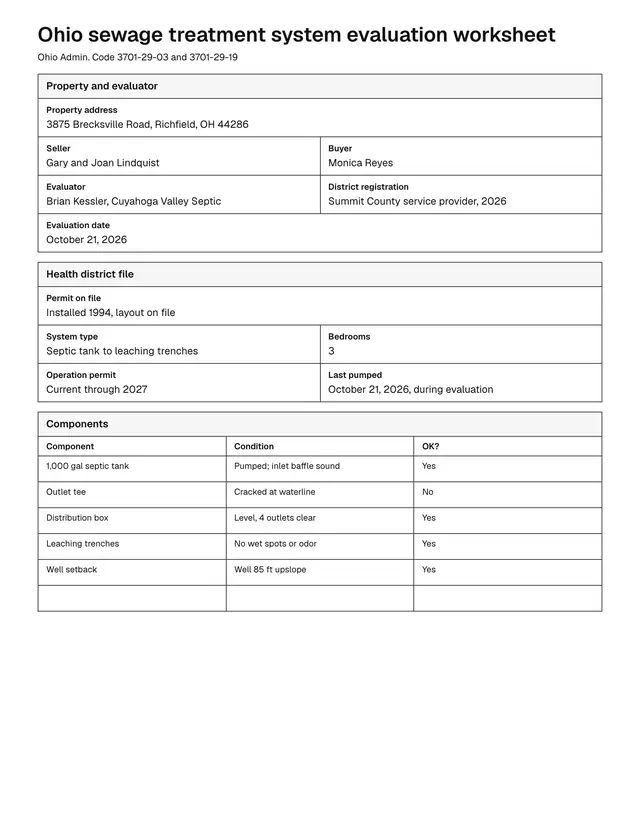
Ohio sewage treatment system evaluation for property transfer
Record the tank or cesspool and what was checked. - OklahomaDEQ Form 641-576AS
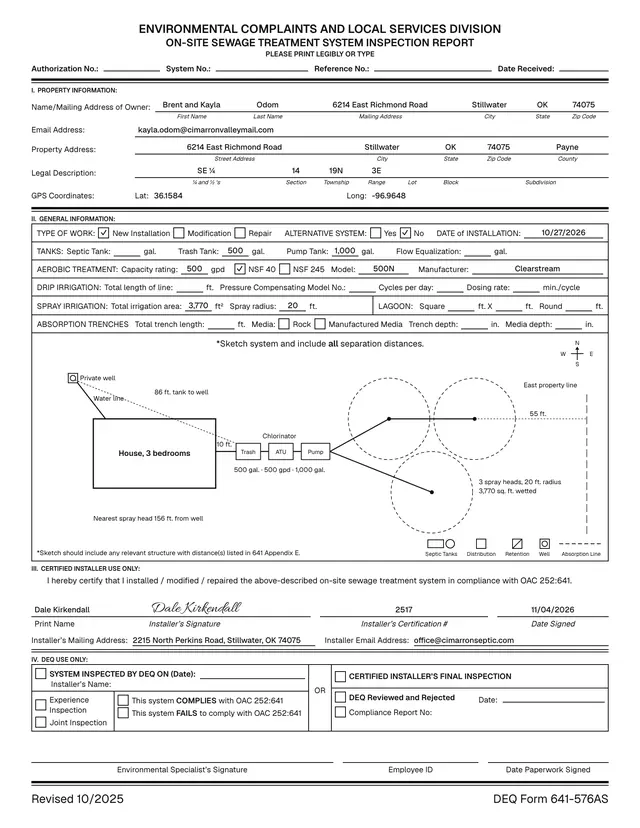
On-Site Sewage Treatment System Inspection Report
Record the tank or cesspool and what was checked. - Oregon
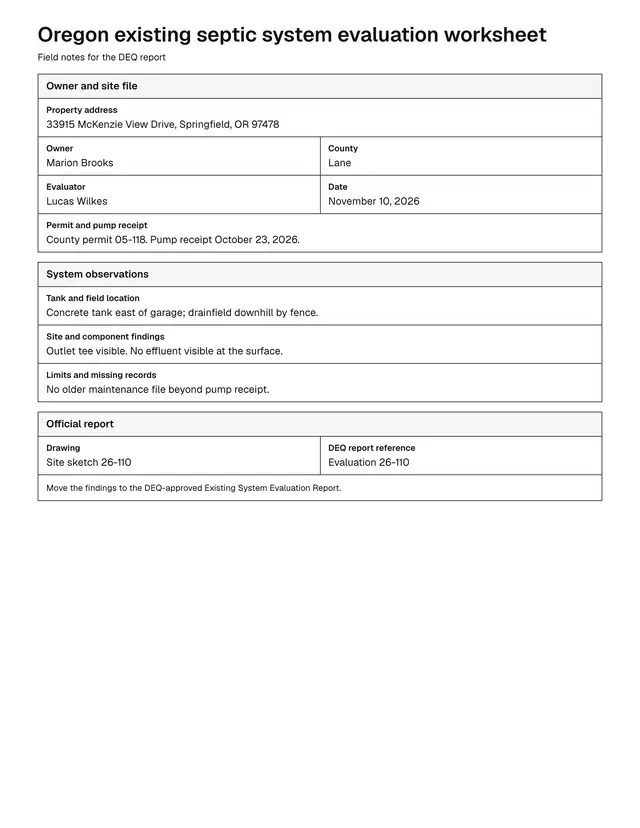
Oregon existing septic system evaluation worksheet
Record the tank or cesspool and what was checked. - South Carolina
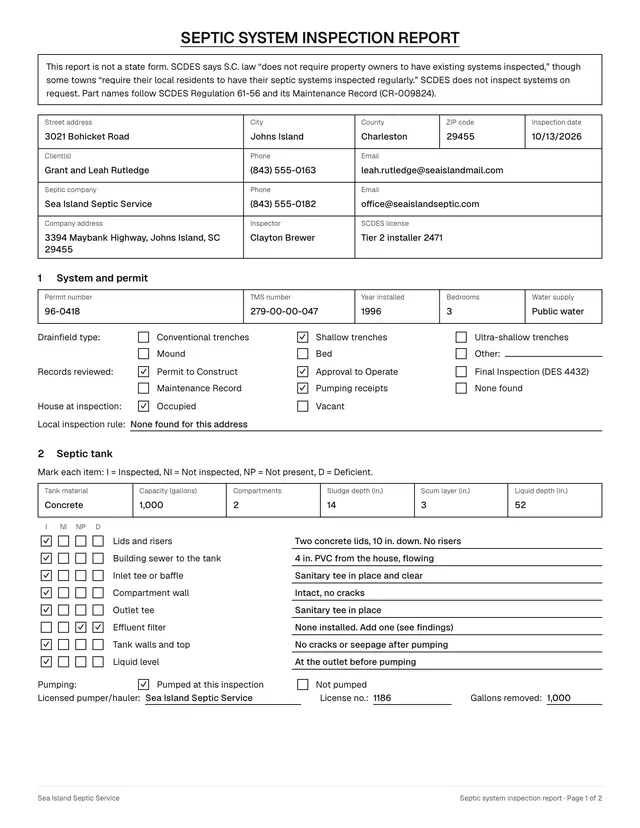
Septic System Inspection Report
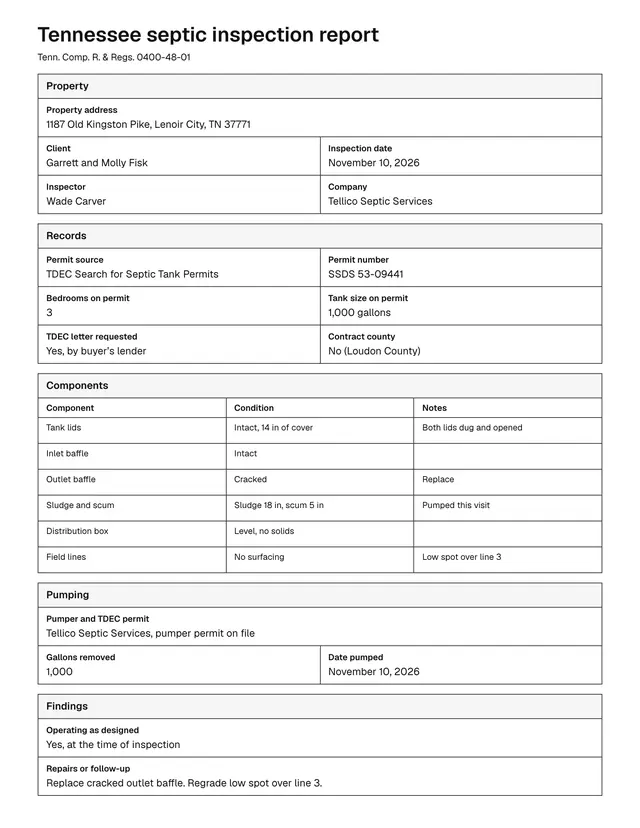
Record the tank or cesspool and what was checked. - Tennessee
Tennessee septic inspection report
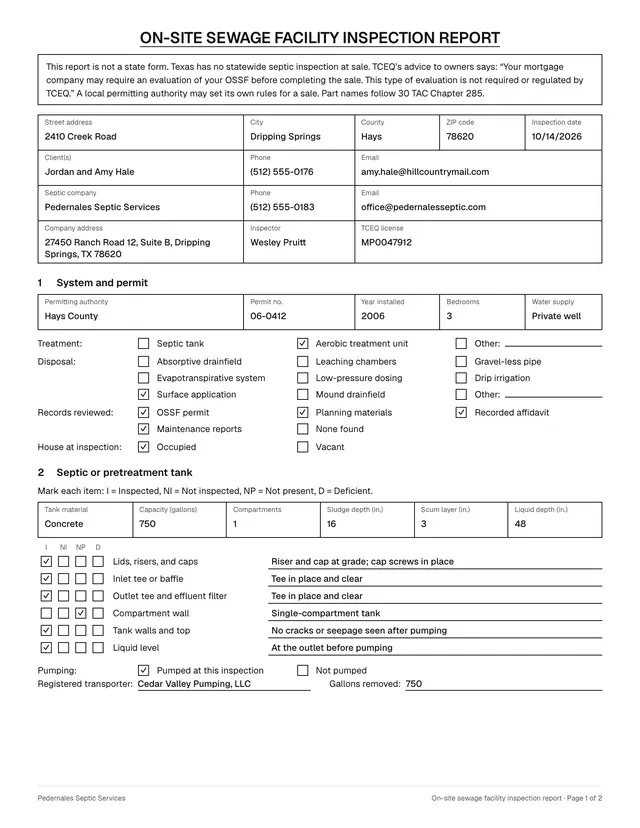
Record the tank or cesspool and what was checked. - Texas
On-Site Sewage Facility Inspection Report
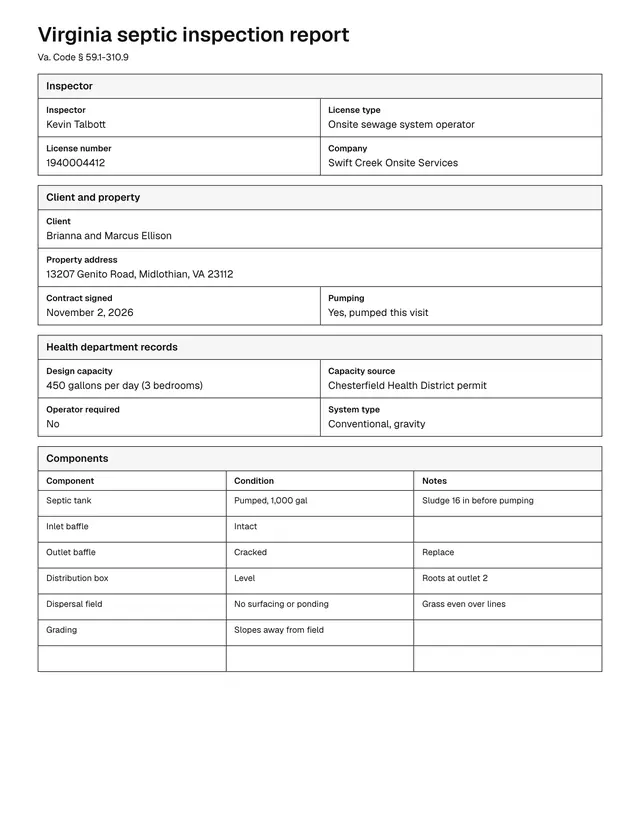
Record the tank or cesspool and what was checked. - Virginia
Virginia septic inspection report
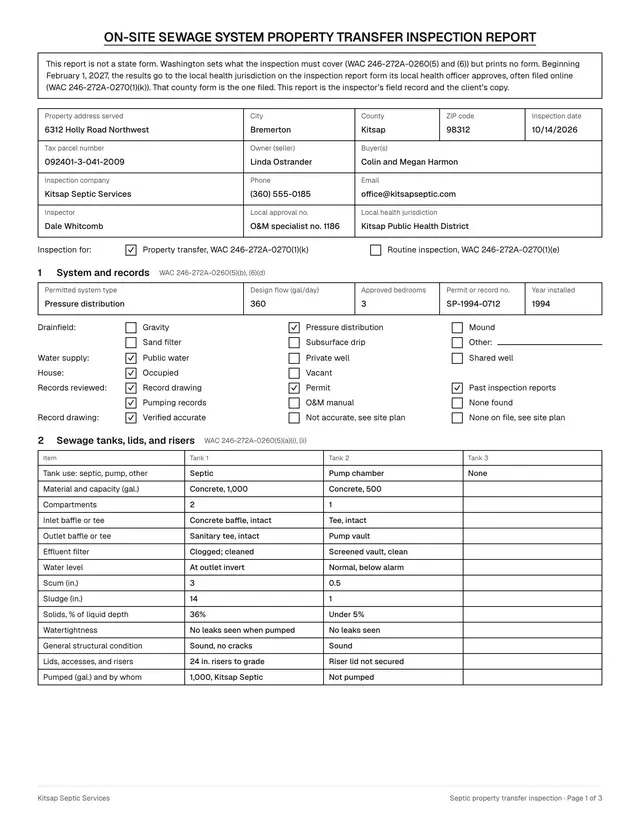
Record the tank or cesspool and what was checked. - Washington
On-Site Sewage System Property Transfer Inspection Report
Record the tank or cesspool and what was checked. - Wisconsin
Wisconsin POWTS maintenance worksheet
Record the tank or cesspool and what was checked.