Pennsylvania home inspection report
Pennsylvania’s Home Inspection Law spells out the report: scope, material defects, four statements printed word for word, and safety risks marked so nobody misses them.
At a glance
- Law
- 68 Pa.C.S. § 7508
- Statements
- 4, set out conspicuously
- Penalty
- Up to $500 per § 7511
- Time to sue
- 1 year from delivery
Completed example
Download PDFSection 7508, line by line
68 Pa.C.S. § 7508 is the whole recipe. The report “must be in writing,” and it has three required parts.
Scope. Describe what you inspected, “including without limitation an identification of the structural elements, systems and subsystems covered by the report.” A list of headings isn’t enough if it doesn’t say what was in and out.
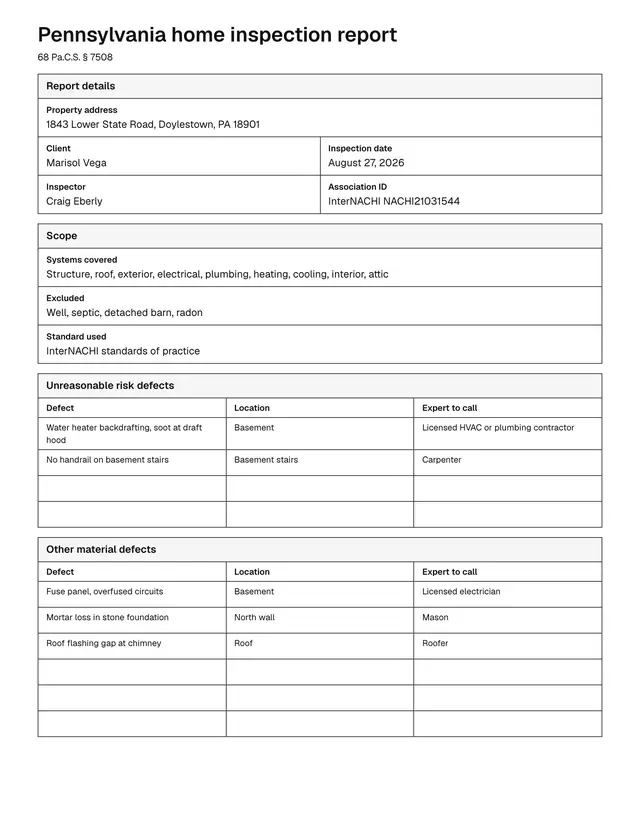
For a stone house on Lower State Road in Doylestown, the scope might say: structure, roof, exterior, electrical, plumbing, heating, cooling, interior, and attic, inspected to the InterNACHI standards. Not included: the well, the septic system, the bank barn, and radon. The buyer can order those as separate services.
Material defects. Describe each one, and say when an expert should be brought in to figure out how bad it is and what to do. Then the line that sets Pennsylvania apart: a material defect “that poses an unreasonable risk to people on the property shall be conspicuously identified as such.” Not just listed. Marked so it stands out.
Four statements, set out conspicuously. The law gives the exact words. One says the inspection is based on the visible condition “on the date of inspection.” One says it makes no representation about “latent or concealed defects” and that “No warranty or guaranty is expressed or implied.” One tells the client to get a professional opinion on structural concerns if you aren’t licensed to give one. And one says the report “is not to be construed as an appraisal.” Copy them word for word from the statute and put them near the front.
How to make it conspicuous. The law doesn’t say how. Most inspectors use a safety label, a color, or a short list at the top of the summary. Pick one and use it on every report so clients learn where to look.
Section 7511 makes a § 7508 violation punishable by a fine of up to $500. Small, but it’s also evidence in a lawsuit that the report fell short.
Repair prices, who gets it, and the one-year clock
Buyers always ask “what will that cost?” Section 7508(c) says you can’t tell them, “either orally or in writing,” unless three things are true. The report names where the estimate came from. It gives a range, not one number. And it says the parties should get an estimate from a contractor who does that kind of repair. So “$1,800 to $2,600 to replace the 100 A panel, based on recent Bucks County electrician bids; get a quote from a licensed electrician” works. “About $2K” doesn’t.
Delivery is limited too. Under (b), the report goes only to your client unless they consent. The seller has a right to a free copy from the buyer on request, which matters when the buyer uses it to ask for repairs.
That includes the buyer’s agent and the lender. If the client wants them to have it, get that consent in writing. The Pennsylvania home inspection agreement is the easiest place, with a line naming who gets the report.
Then there’s the clock. Section 7512 says a lawsuit over the report “must be commenced within one year after the date the report is delivered.” Write down the delivery date and how you sent it. That date starts the year.
The yardstick for the inspection itself is § 7504, the “reasonably prudent home inspector.” Courts look at national association standards to decide what that means, so most Pennsylvania inspectors write to a published standard, like the InterNACHI standards of practice, and say so in the scope.
Can the buyer find the safety risks in ten seconds?
Picture a 1950s stone house outside Doylestown with 60 findings. Two of them, a backdrafting water heater and a missing stair rail, are the “unreasonable risk” items the law says must be conspicuous. If they sit on page 31 next to a loose cabinet hinge, the report is weaker than it looks.
Noma specializes in the Pennsylvania home inspection report (68 Pa.C.S. § 7508). Build reports with your own sections and titles, mark how serious each defect is, and the summary puts the worst ones on top, all from the phone during the walk-through. See how Noma builds home inspection reports.
Frequentlyaskedquestions
Send this document in minutes, not an afternoon.
Other states
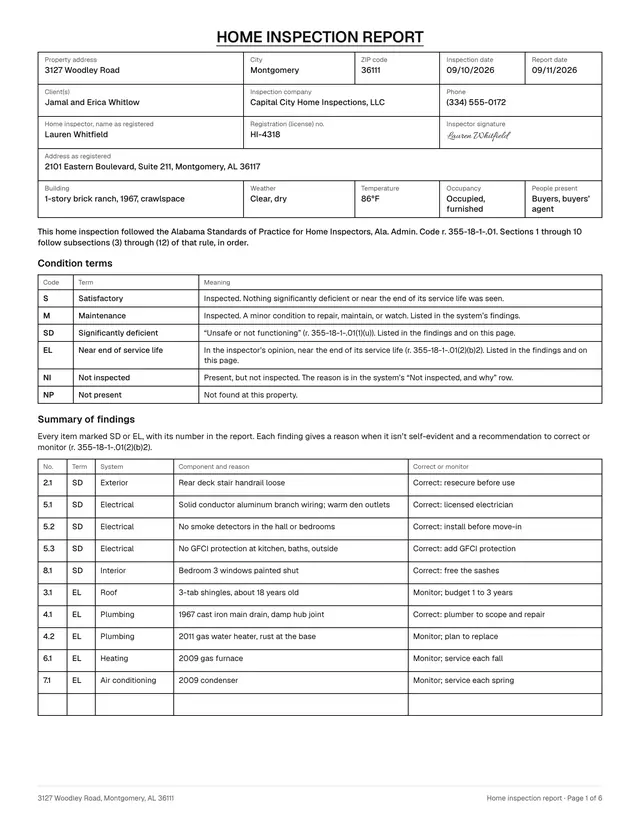
Home inspection report templates- Alabama
Home Inspection Report
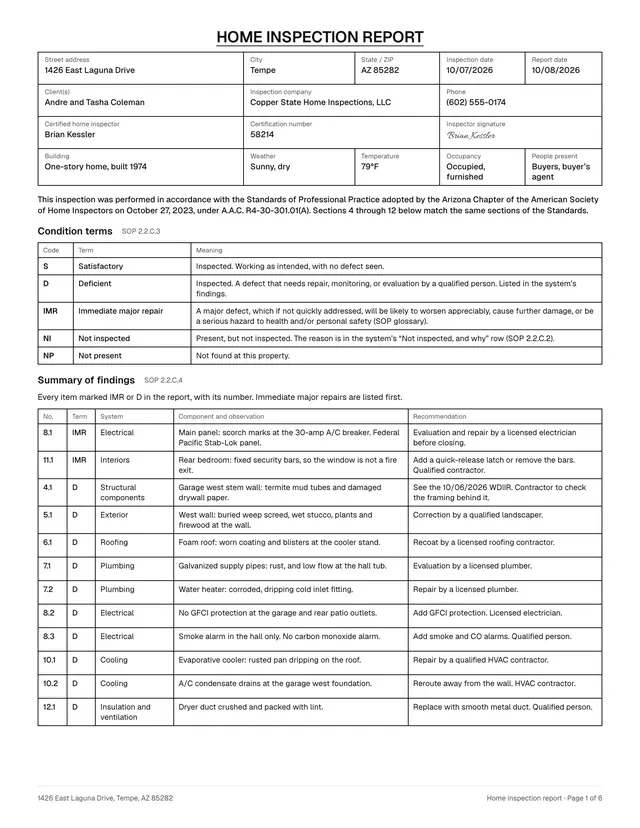
Findings by system, with each defect noted. - Arizona
Home Inspection Report
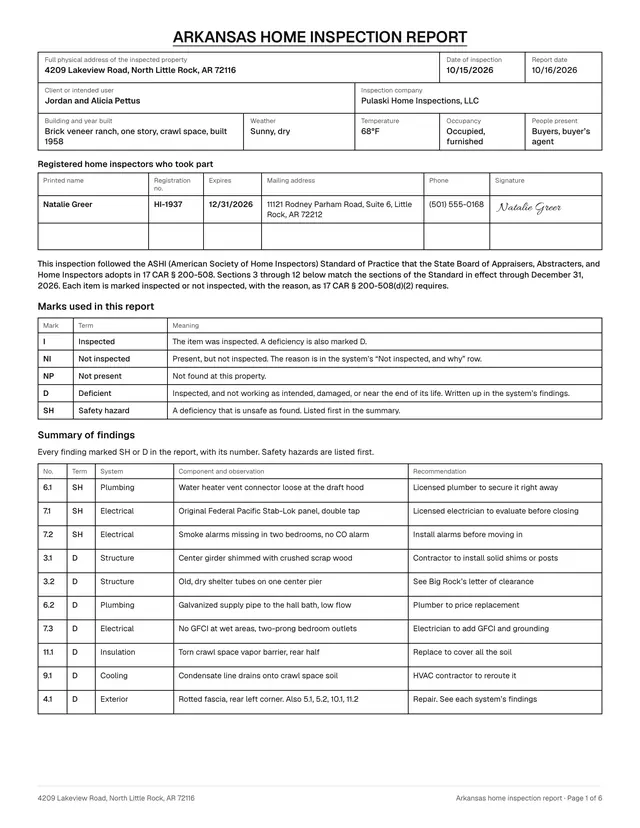
Findings by system, with each defect noted. - Arkansas
Arkansas Home Inspection Report
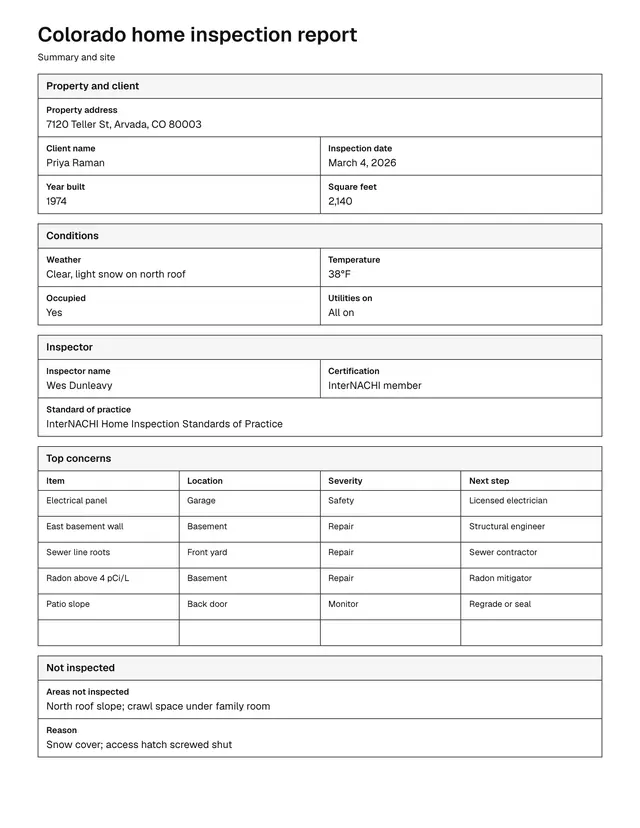
Findings by system, with each defect noted. - Colorado
Colorado home inspection report
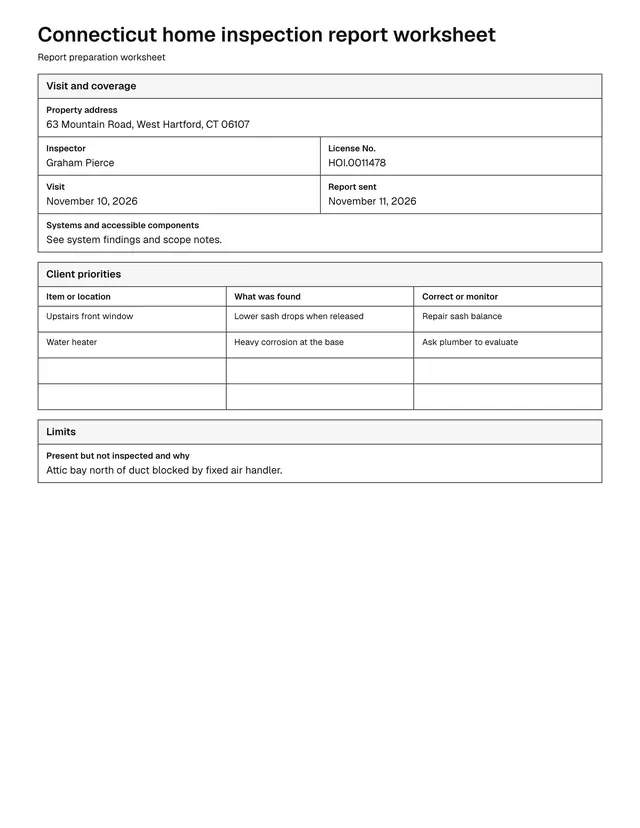
Findings by system, with each defect noted. - Connecticut
Connecticut home inspection report worksheet
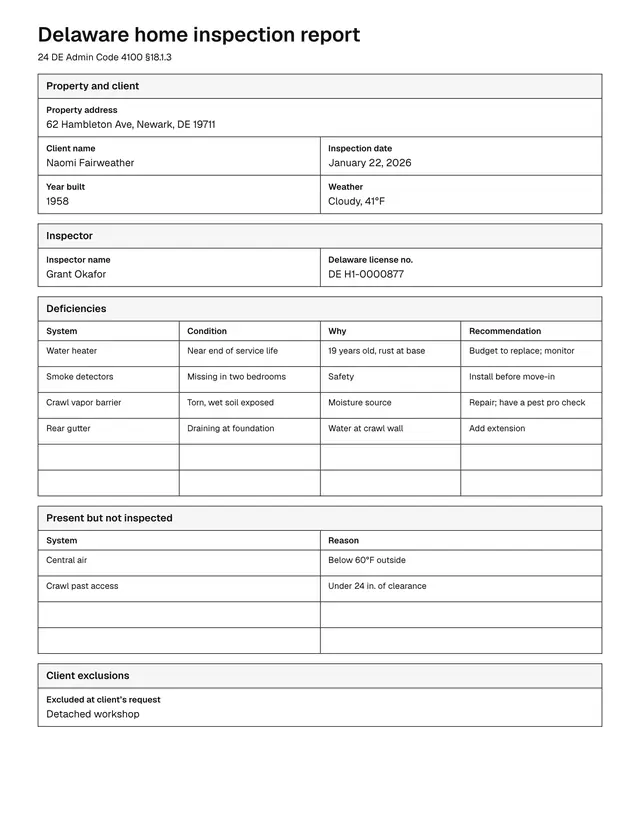
Findings by system, with each defect noted. - Delaware
Delaware home inspection report (24 DE Admin Code 4100 §18)
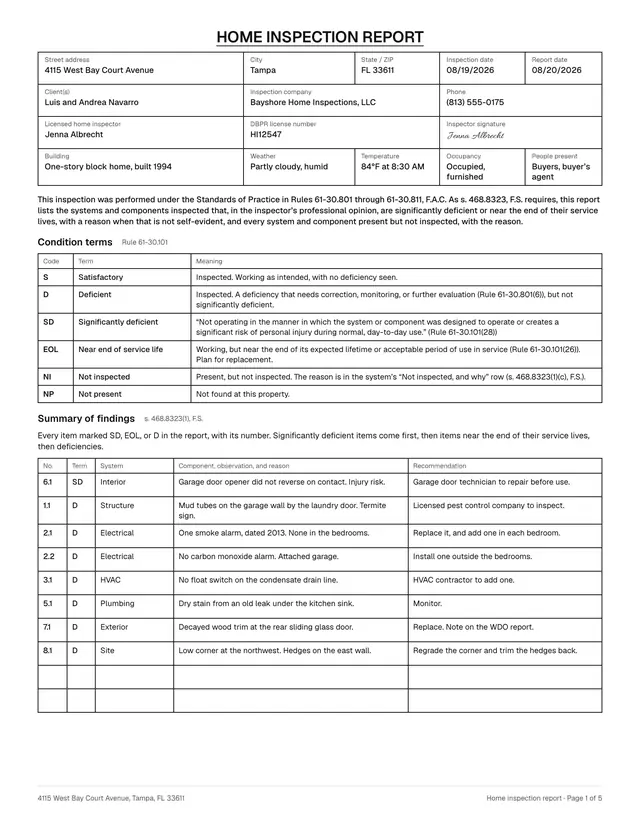
Findings by system, with each defect noted. - Florida
Home Inspection Report
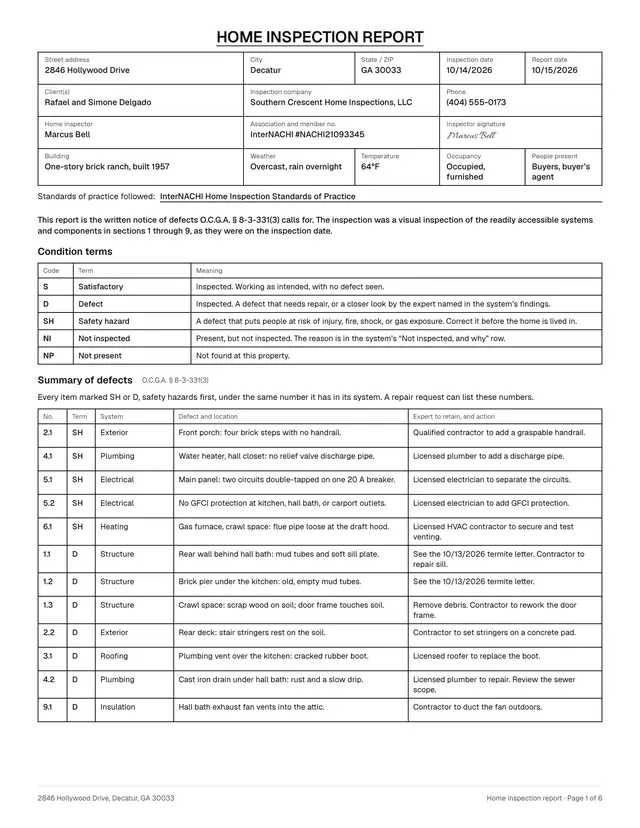
Findings by system, with each defect noted. - Georgia
Home Inspection Report
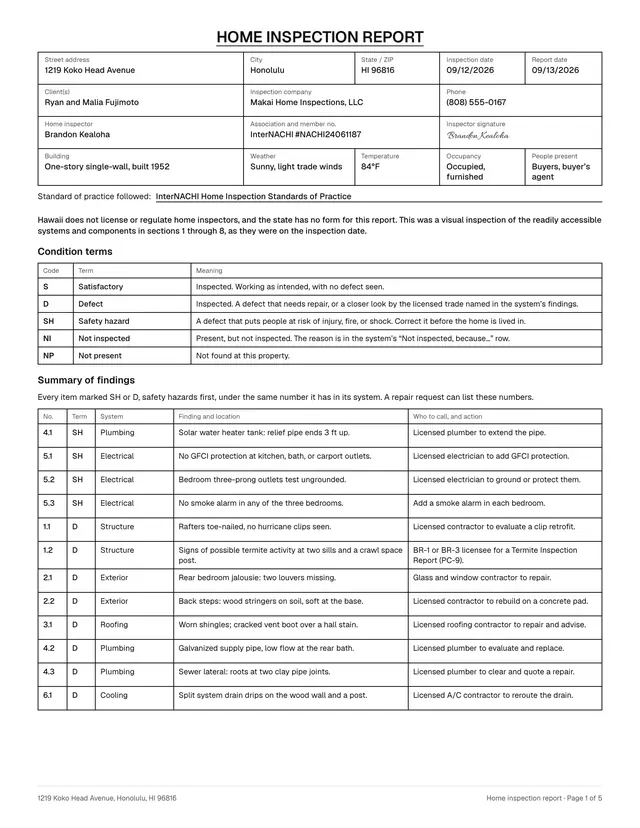
Findings by system, with each defect noted. - Hawaii
Home Inspection Report
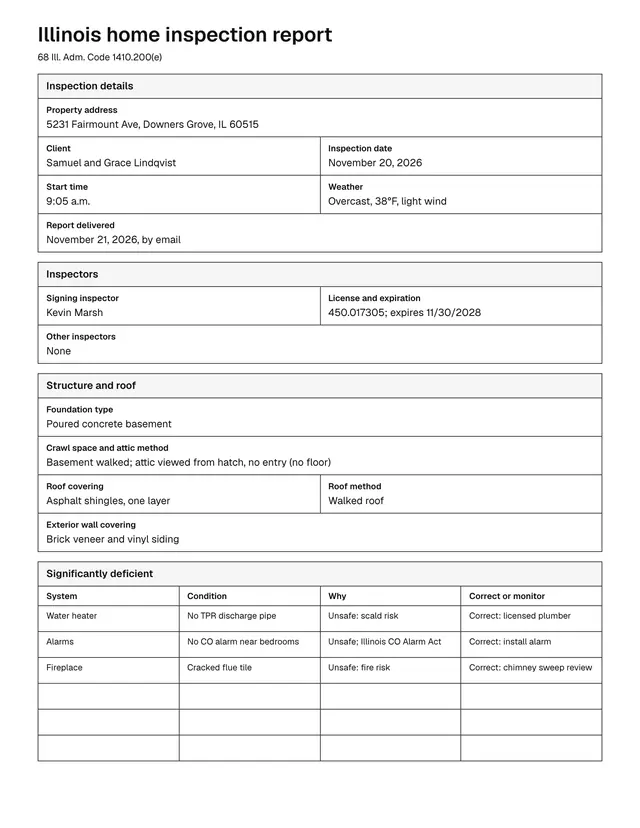
Findings by system, with each defect noted. - Illinois
Illinois home inspection report
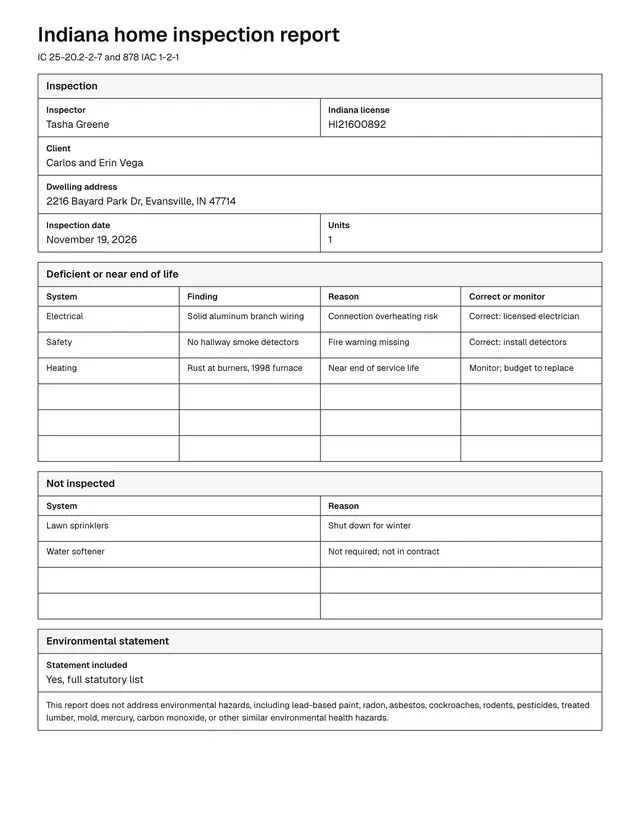
Findings by system, with each defect noted. - Indiana
Indiana home inspection report
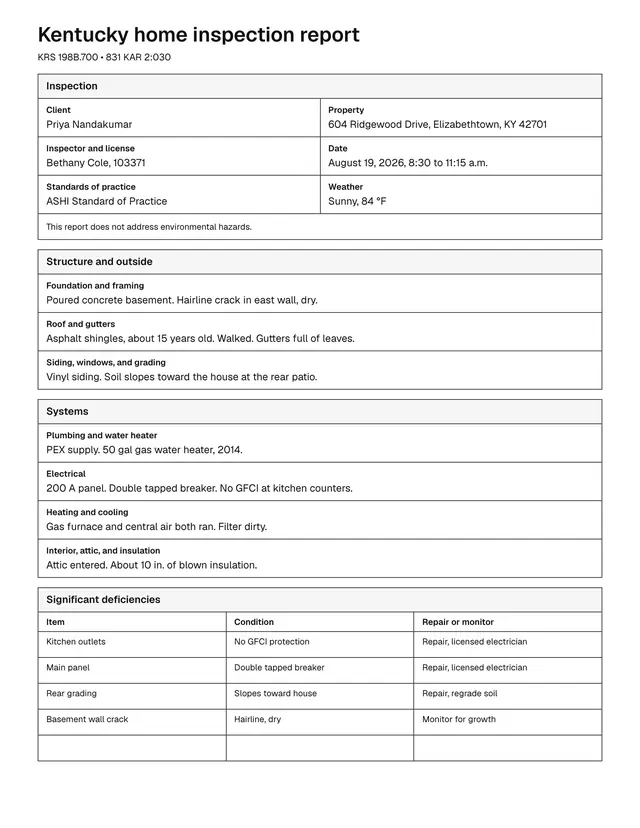
Findings by system, with each defect noted. - Kentucky
Kentucky home inspection report
Findings by system, with each defect noted. - Louisiana
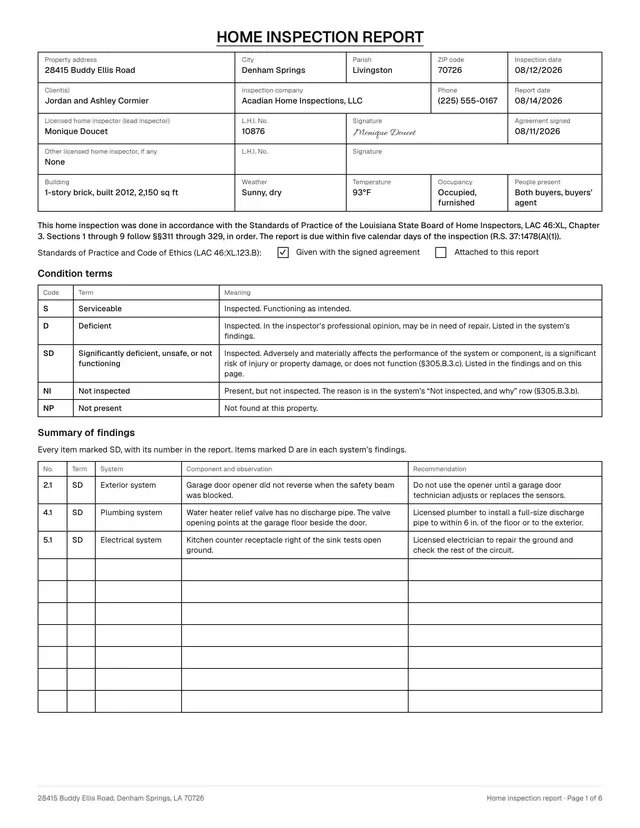
Home Inspection Report
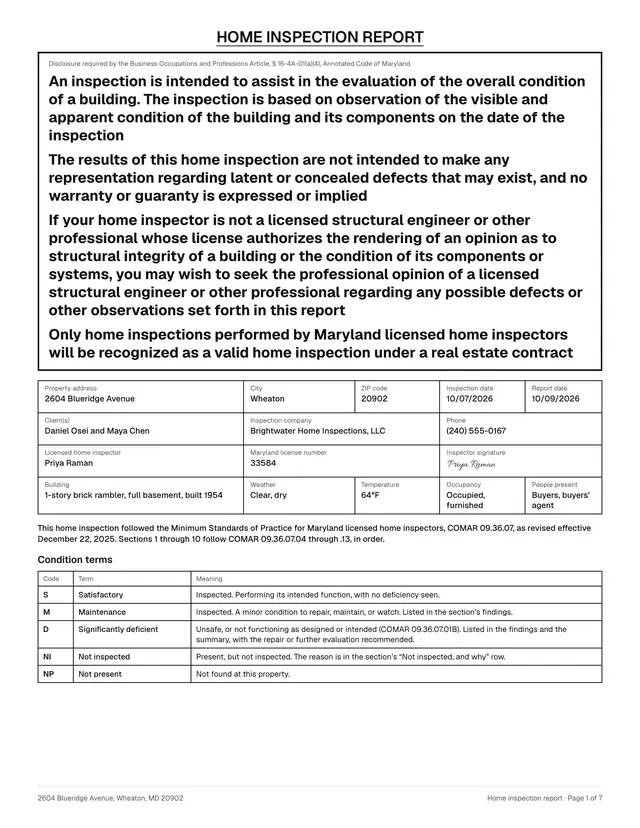
Findings by system, with each defect noted. - Maryland
Home Inspection Report
Findings by system, with each defect noted. - Massachusetts
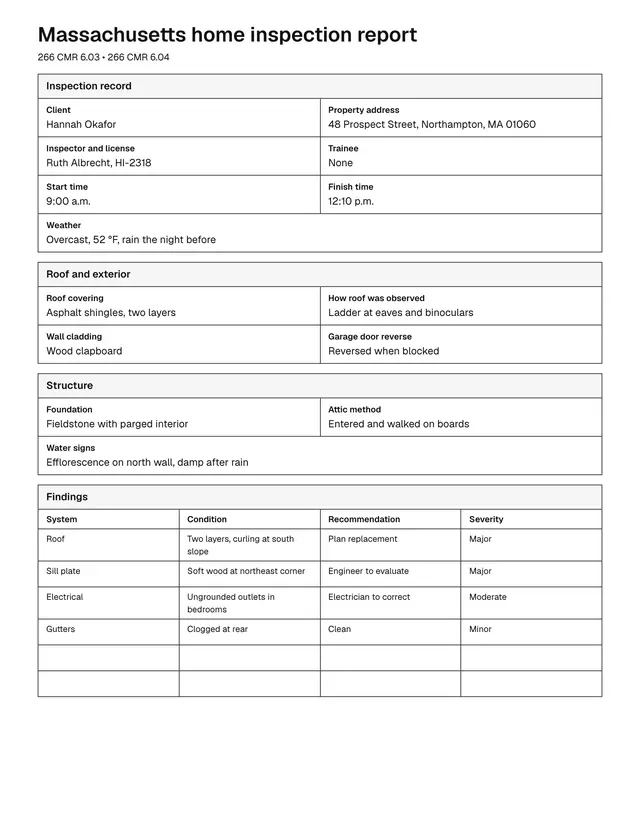
Massachusetts home inspection report (266 CMR 6.03)
Findings by system, with each defect noted. - Michigan
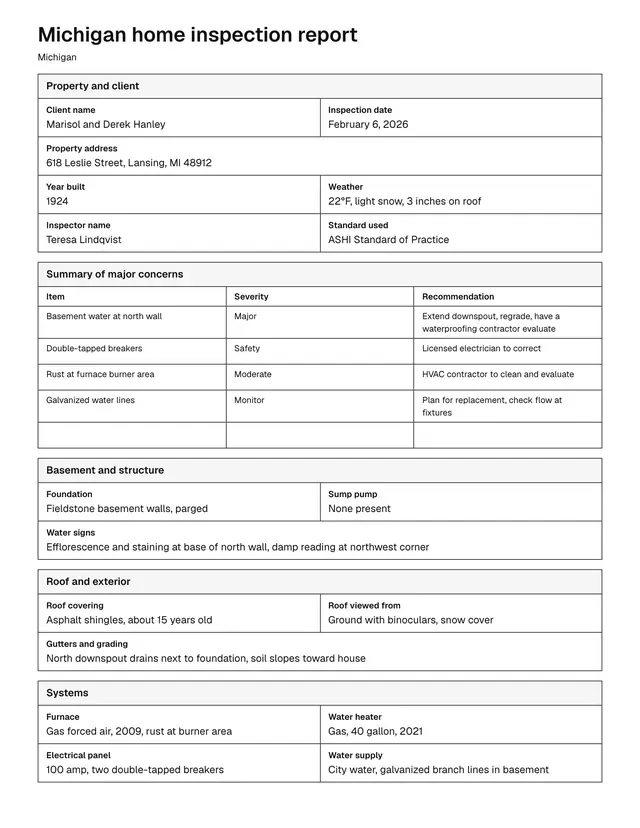
Michigan home inspection report
Findings by system, with each defect noted. - Mississippi
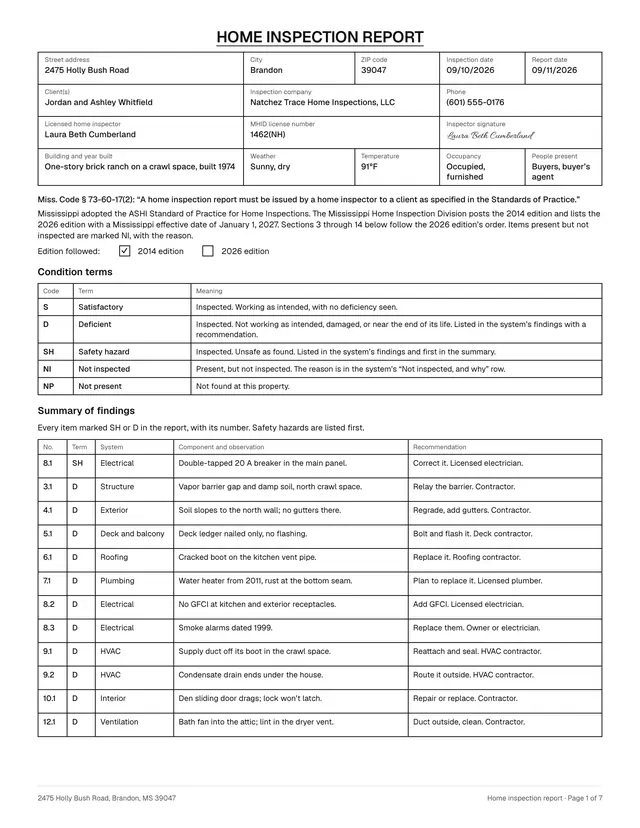
Home Inspection Report
Findings by system, with each defect noted. - Missouri
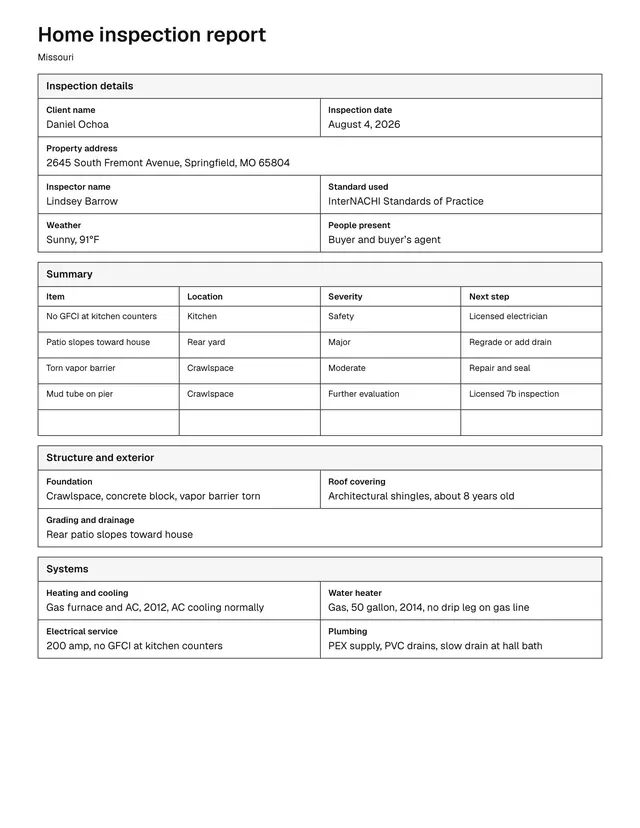
Missouri home inspection report
Findings by system, with each defect noted. - Nevada
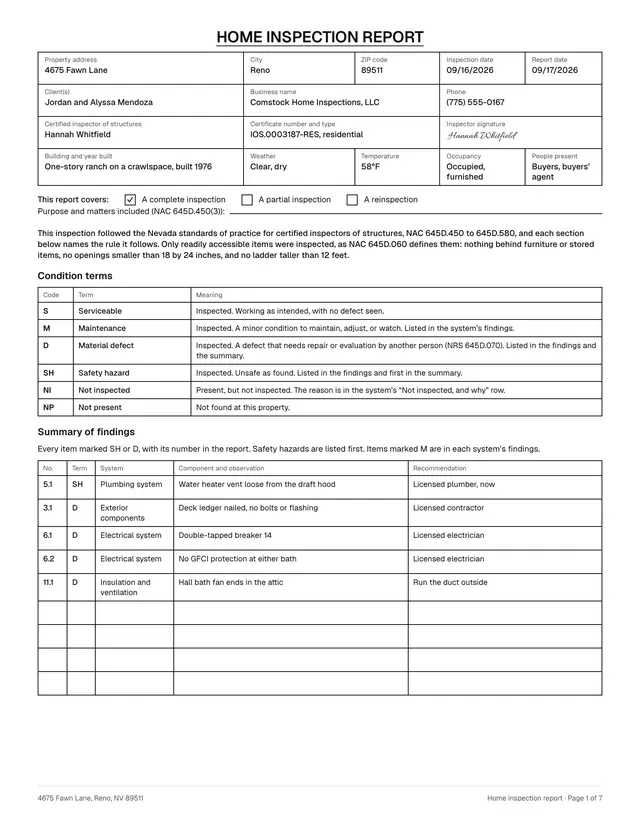
Home Inspection Report
Findings by system, with each defect noted. - New Jersey
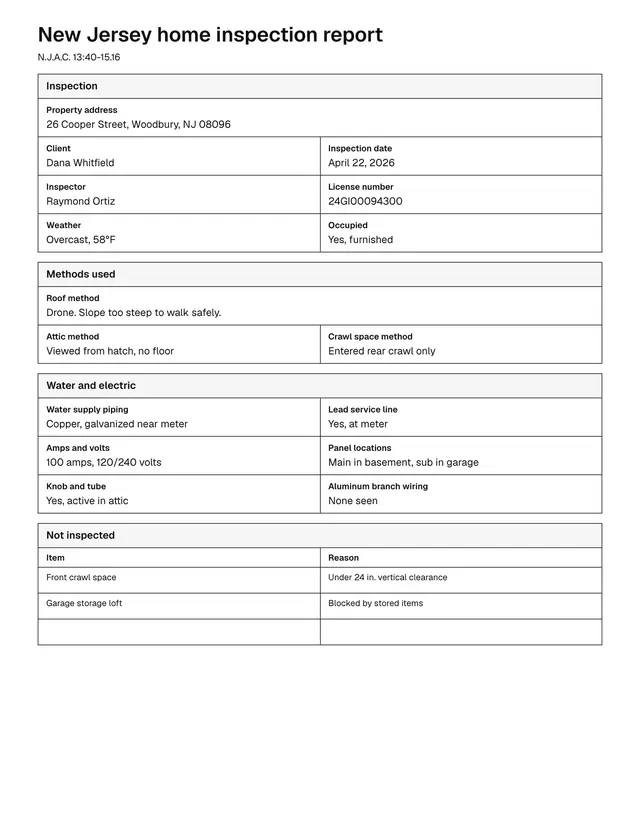
New Jersey home inspection report (N.J.A.C. 13:40-15.16)
Findings by system, with each defect noted. - New Mexico
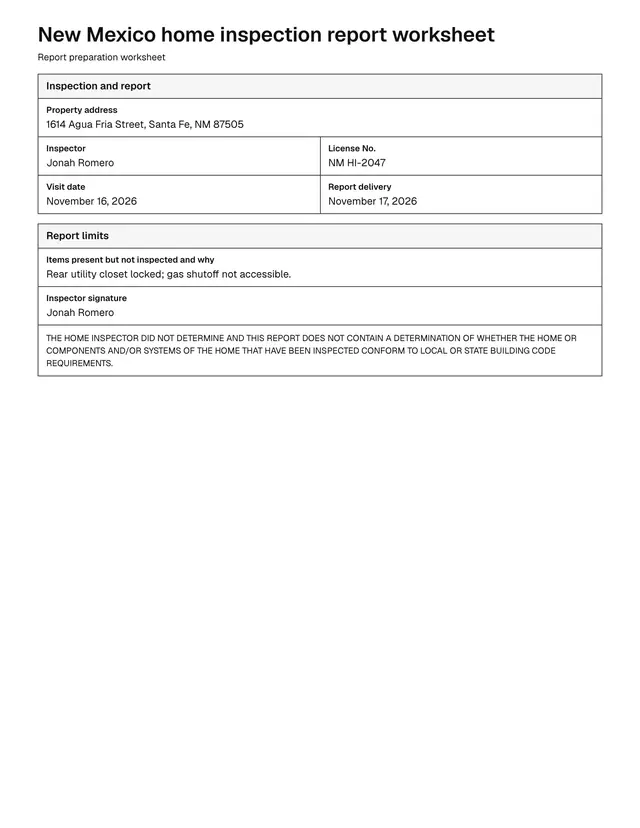
New Mexico home inspection report worksheet
Findings by system, with each defect noted. - New York
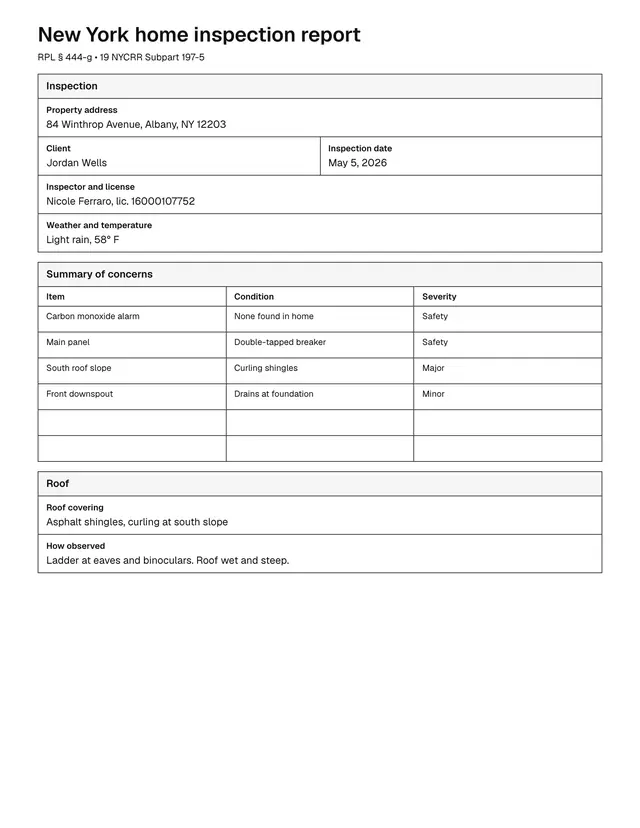
New York home inspection report (19 NYCRR Subpart 197-5)
Findings by system, with each defect noted. - North Carolina
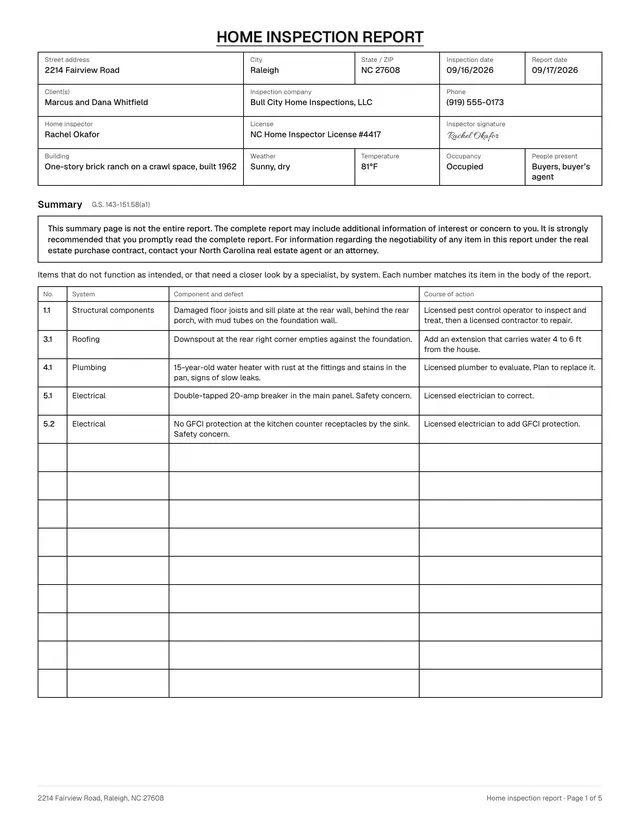
Home Inspection Report
Findings by system, with each defect noted. - Ohio
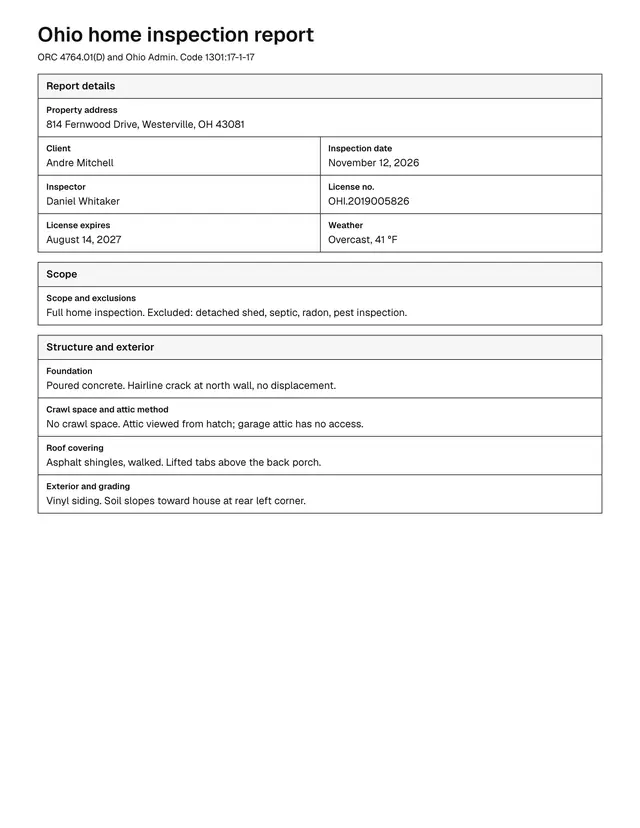
Ohio home inspection report
Findings by system, with each defect noted. - Oklahoma
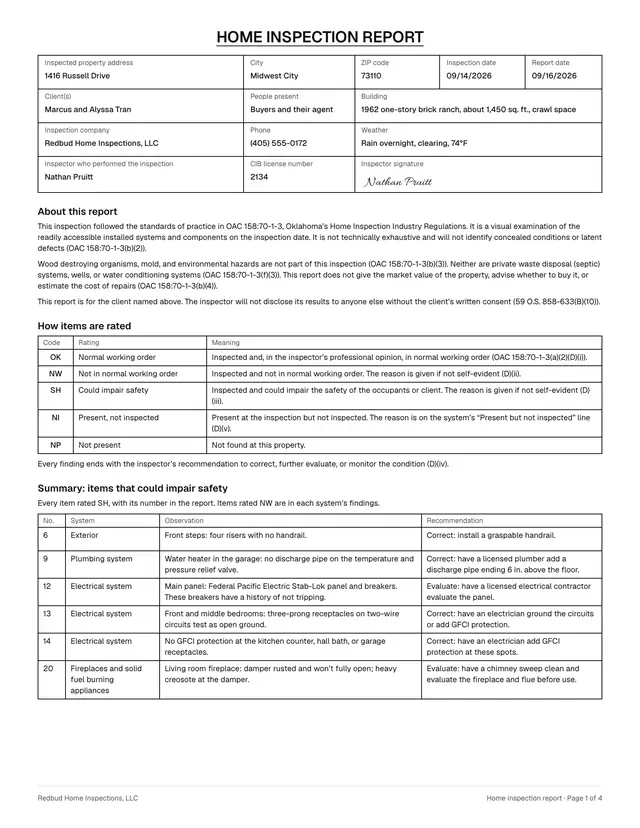
Home Inspection Report
Findings by system, with each defect noted. - Oregon
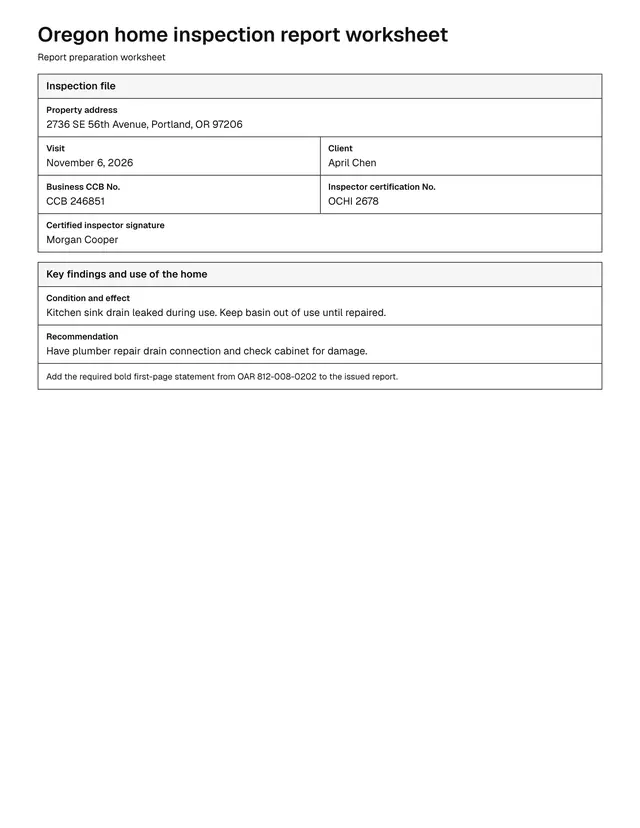
Oregon home inspection report worksheet
Findings by system, with each defect noted. - South Carolina
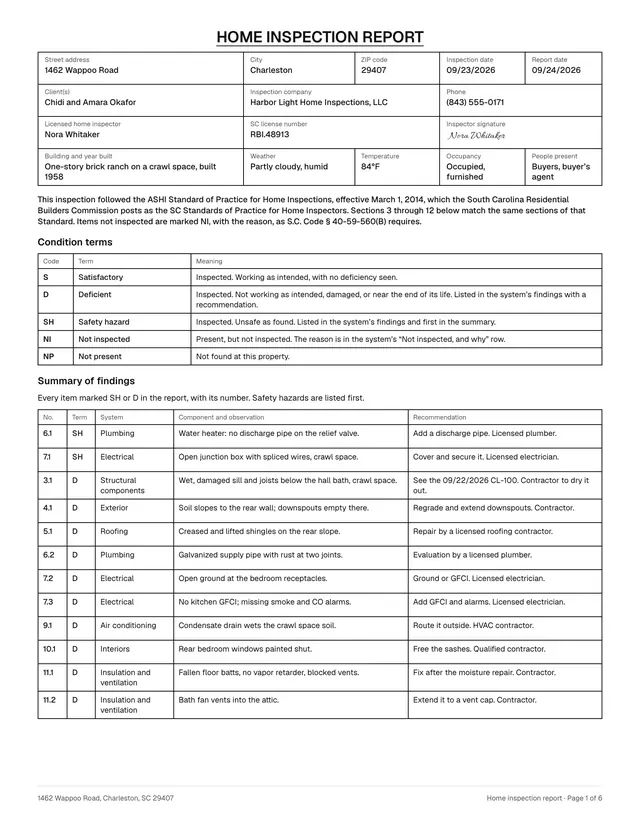
Home Inspection Report
Findings by system, with each defect noted. - Tennessee
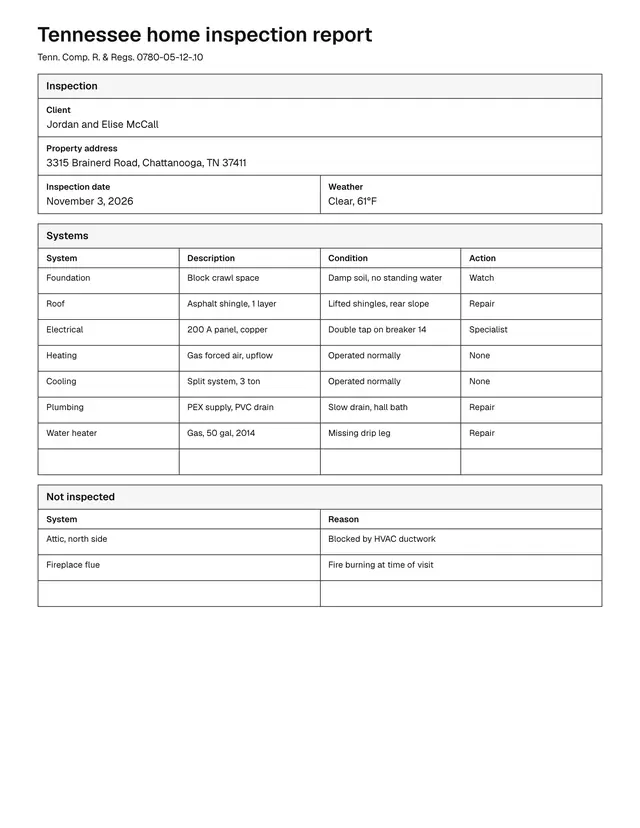
Tennessee home inspection report
Findings by system, with each defect noted. - TexasREI 7-6
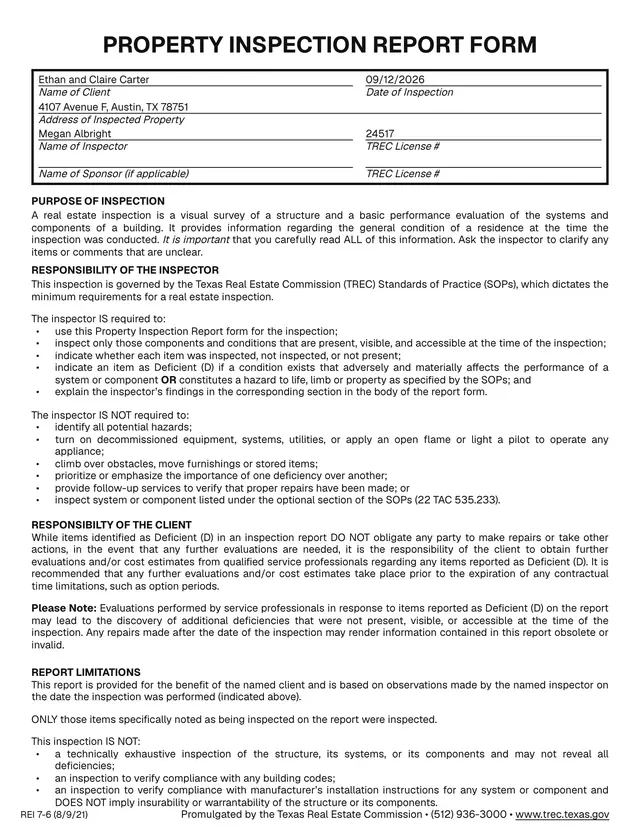
Property Inspection Report Form
Findings by system, with each defect noted. - Virginia
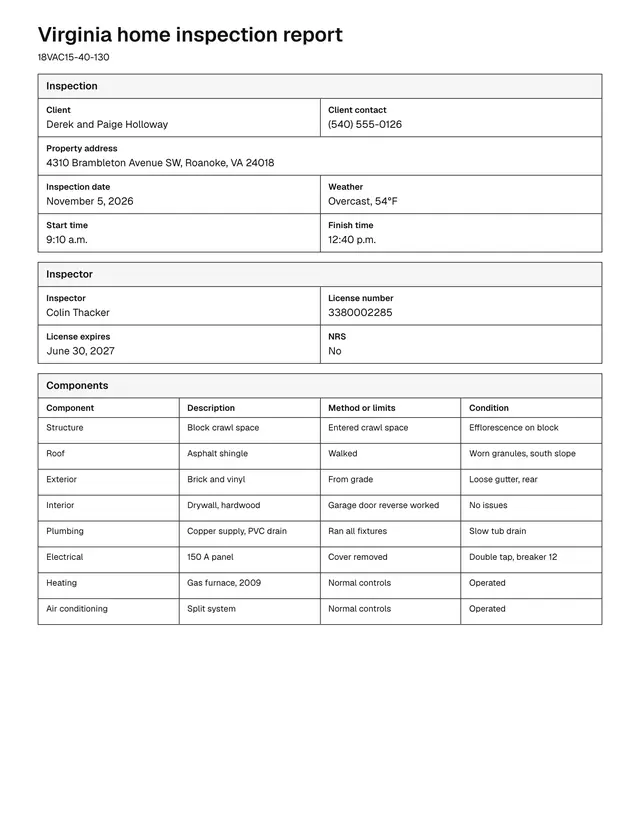
Virginia home inspection report
Findings by system, with each defect noted. - Washington
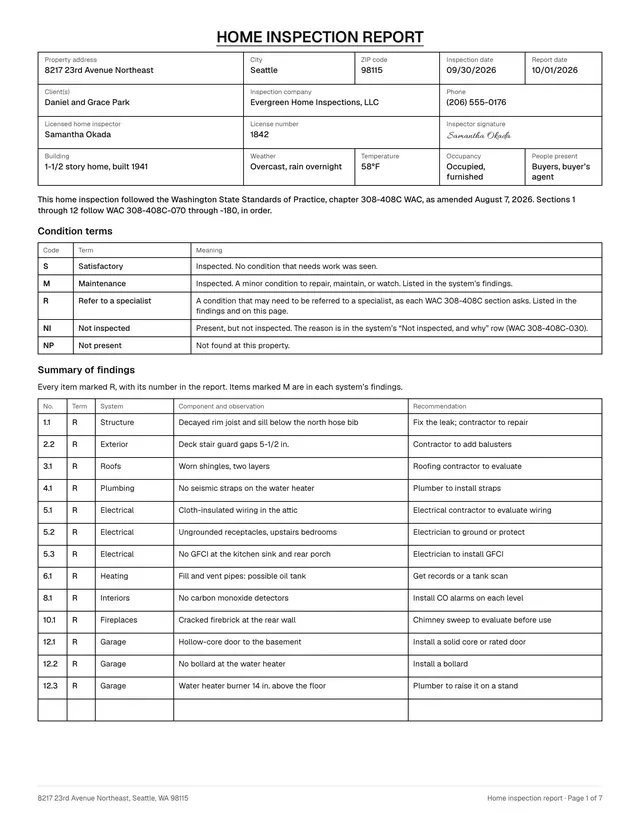
Home Inspection Report
Findings by system, with each defect noted. - Wisconsin
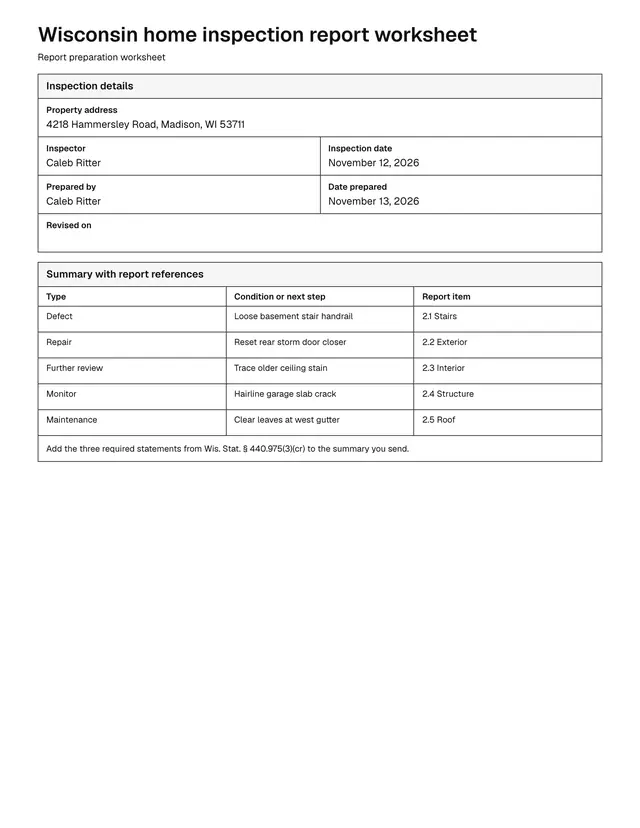
Wisconsin home inspection report worksheet
Findings by system, with each defect noted.