Pennsylvania home inspection agreement
Pennsylvania doesn’t license home inspectors, but its Home Inspection Law still shapes the contract. Some terms are void, some conflicts must be disclosed in writing first, and the inspector has to meet the membership test.
At a glance
- Law
- 68 Pa.C.S. Chapter 75
- State license
- None
- Void terms
- § 7507(a)
- Insurance
- $100,000 / $500,000 minimum
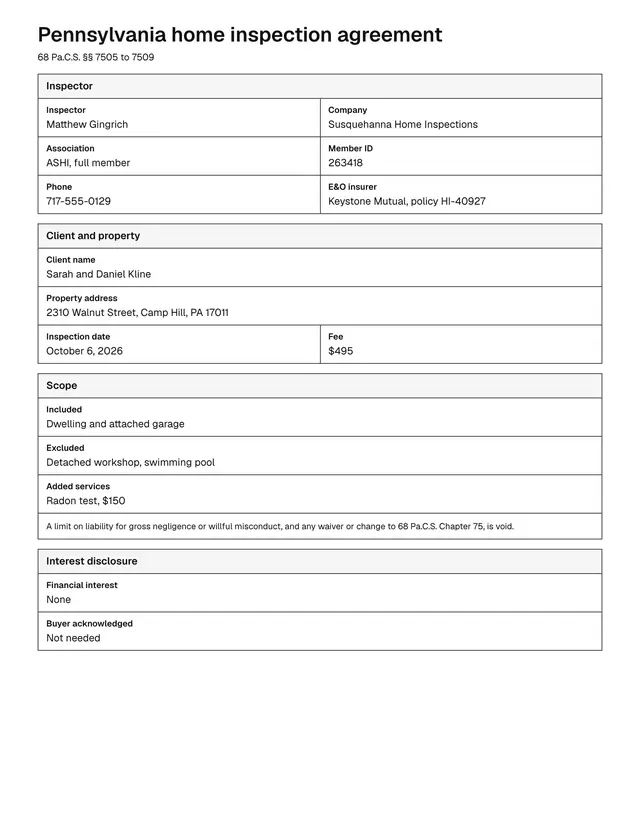
Completed example
Download PDFA law with no license
Pennsylvania never set up a home inspector license board. What it has is the Home Inspection Law, 68 Pa.C.S. Chapter 75, passed in 2000. It decides who can do the inspection a buyer relies on, what the contract can’t say, and what the report has to say.
The “who” lives in § 7506. When an agreement of sale gives the buyer a home inspection, the inspection has to be done by a full member in good standing of a national home inspection association. A full member must have done more than 100 inspections and passed a recognized exam. Licensed engineers and architects also qualify, and so does someone supervised by a full member who “agrees to be responsible” and signs the report.
So your contract should say where you stand. Name your association and member number, or name the full member who supervises and signs. A buyer’s agent in Camp Hill will ask, and the agreement of sale already assumed it.
Section 7509 adds insurance: errors and omissions and general liability, each at least $100,000 per occurrence and $500,000 total, with deductibles no higher than $2,500. Putting the carrier in the contract answers the question before it comes up.
Terms the law throws out
Section 7507(a) is short. Two kinds of contract terms are “contrary to public policy and shall be void”: a limit on your liability “for gross negligence or willful misconduct,” and “a waiver or modification of any provision of this chapter.”
That second one catches more than people think. The law already gives the buyer one year after the report is delivered to sue (§ 7512). It already says who gets the report and what it must contain. A clause that tries to change any of that is a modification of the chapter, and it’s void.
What the contract can do is set the scope. Section 7507(b) says the scope, the services, and “the systems and conditions to be inspected or excluded” may be defined by contract. Use it. List the outbuildings, the pool, the septic, and the well, and mark each one in or out.
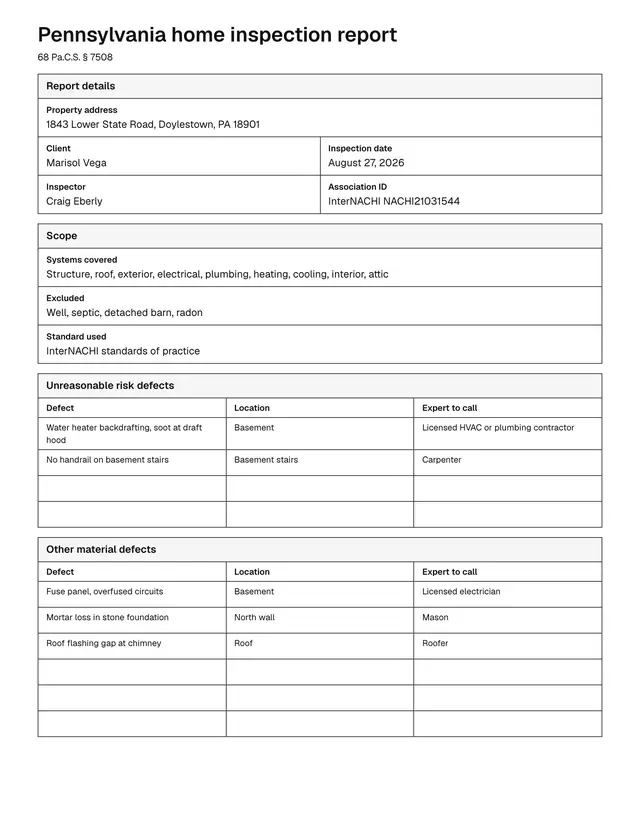
For a 1930s brick colonial on Walnut Street in Camp Hill, that might read: dwelling and attached garage in, detached workshop and in-ground pool out, radon added for $150. Short, specific, and it matches the report.
Keep the add-ons separate. Under § 7502, a home inspection doesn’t include a single-system exam or one limited to wood destroying insects, wells, septic, pools, or air and water quality. If the buyer adds radon or a termite report, those are their own services with their own lines and prices.
Conflicts go in writing before you start
Section 7505 makes certain acts unfair trade practices under Pennsylvania’s consumer protection law. That means a buyer can bring a consumer claim, not just a contract claim.
Financial interest. If you, your employer, or anyone with a stake in your employer has a financial interest in the property or the sale, it has to be disclosed in writing before the inspection, and the buyer signs an acknowledgment. A real estate commission counts. The contract is a natural place for that acknowledgment.
Repairs. You can’t offer to do paid repairs on a house you reported on in the past 12 months. Radon and wood destroying insect remediation are the exceptions.
Kickbacks and contingent fees. No paying for referrals, and no fee that depends on what you find or whether the deal closes.
If there’s a disclosure, give it its own signed page instead of burying it in the fine print. The law wants the buyer to acknowledge it, and a separate signature shows they saw it.
Will the buyer sign before you get there?
Pennsylvania deals move fast once the agreement of sale is signed, and inspection windows can be short. A contract that shows up at the front door is one more thing the buyer reads in a hurry.
Noma specializes in the Pennsylvania home inspection agreement (68 Pa.C.S. Chapter 75). Upload your agreement once as a reusable document, and every booked job can send it for e-signature right away. The Pennsylvania home inspection report is built in the same app after the walk-through. See how Noma sends inspection agreements.
Frequentlyaskedquestions
Send this document in minutes, not an afternoon.
Other states
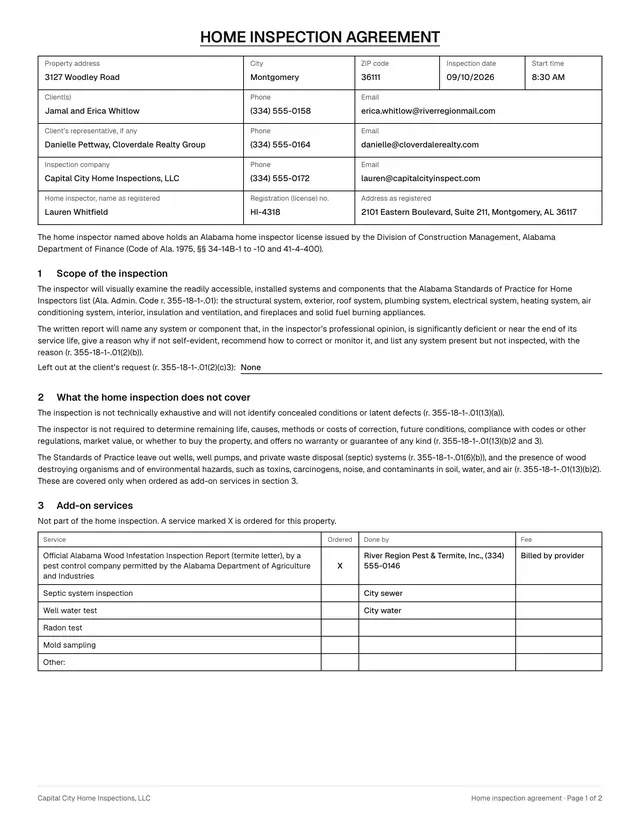
Home inspection agreement templates- Alabama
Home Inspection Agreement
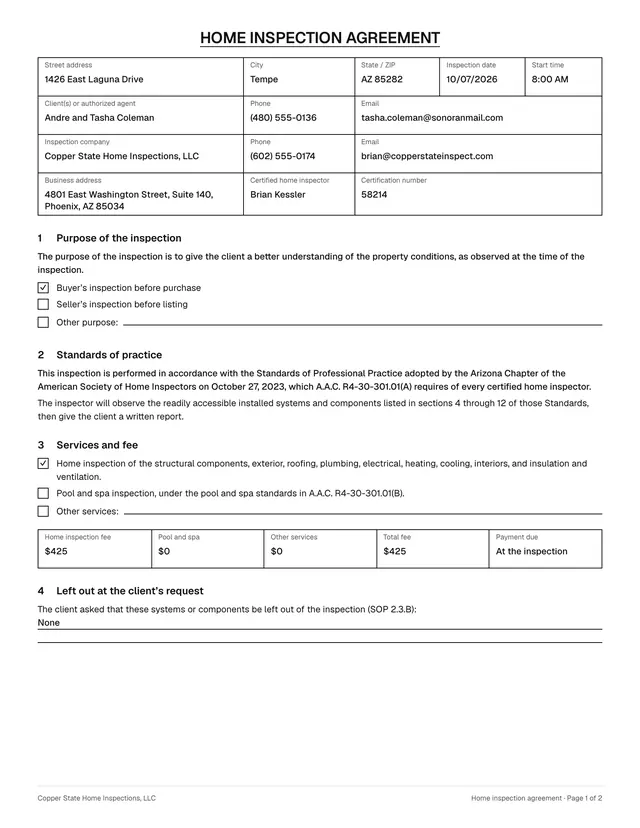
The contract a client signs for a home inspection. - Arizona
Home Inspection Agreement
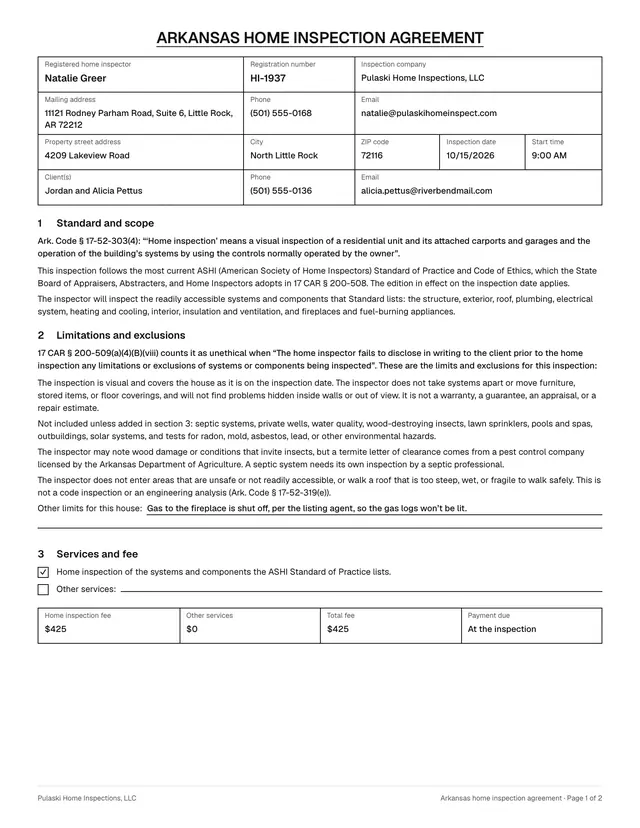
The contract a client signs for a home inspection. - Arkansas
Arkansas Home Inspection Agreement
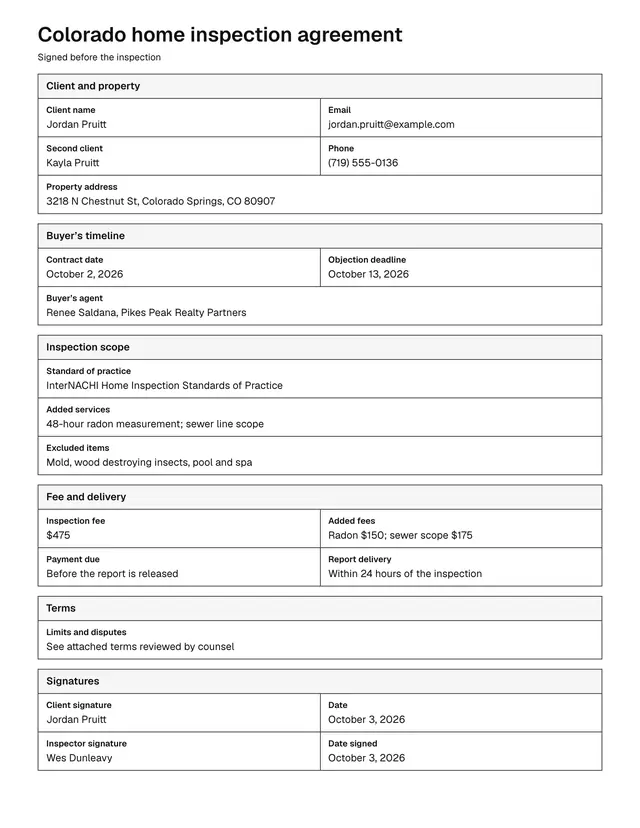
The contract a client signs for a home inspection. - Colorado
Colorado home inspection agreement
The contract a client signs for a home inspection. - Connecticut
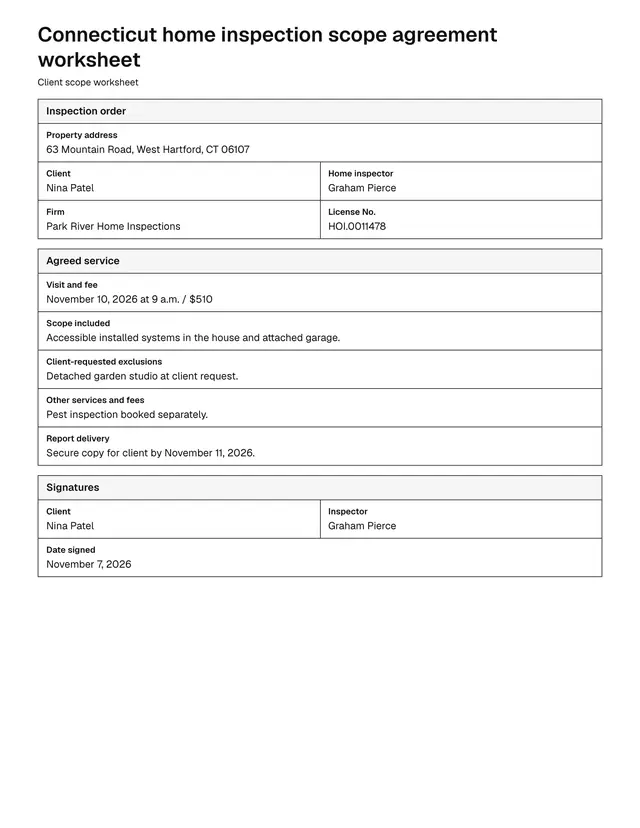
Connecticut home inspection scope agreement worksheet
The contract a client signs for a home inspection. - Delaware
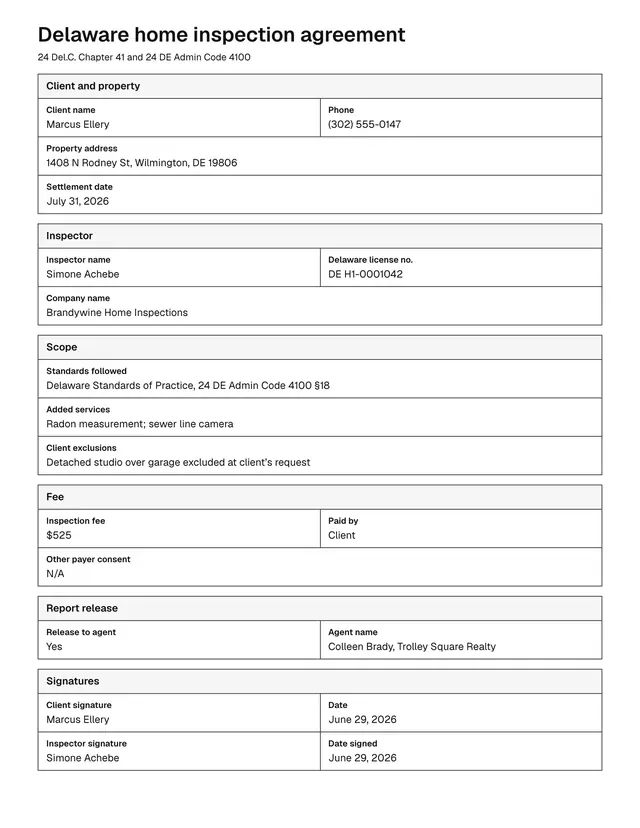
Delaware home inspection agreement
The contract a client signs for a home inspection. - Florida
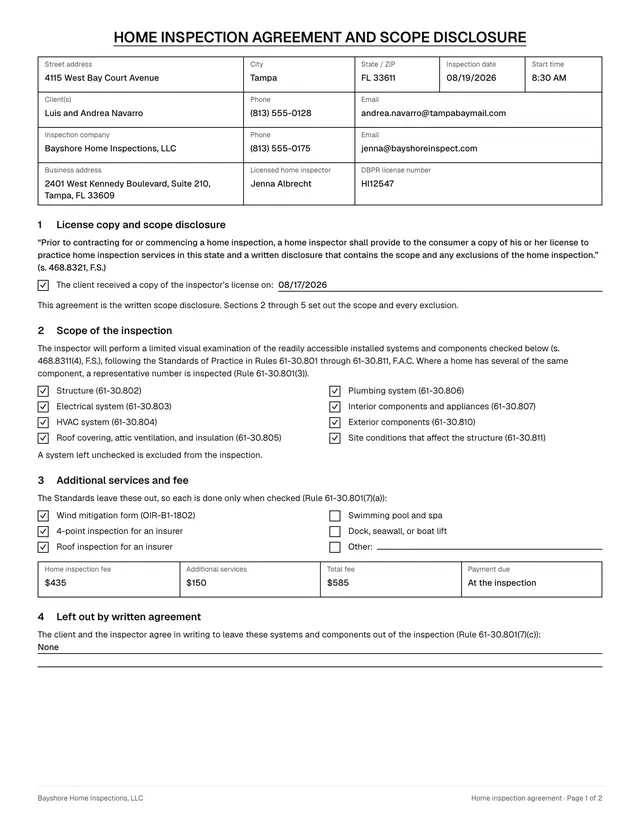
Home Inspection Agreement and Scope Disclosure
The contract a client signs for a home inspection. - Georgia
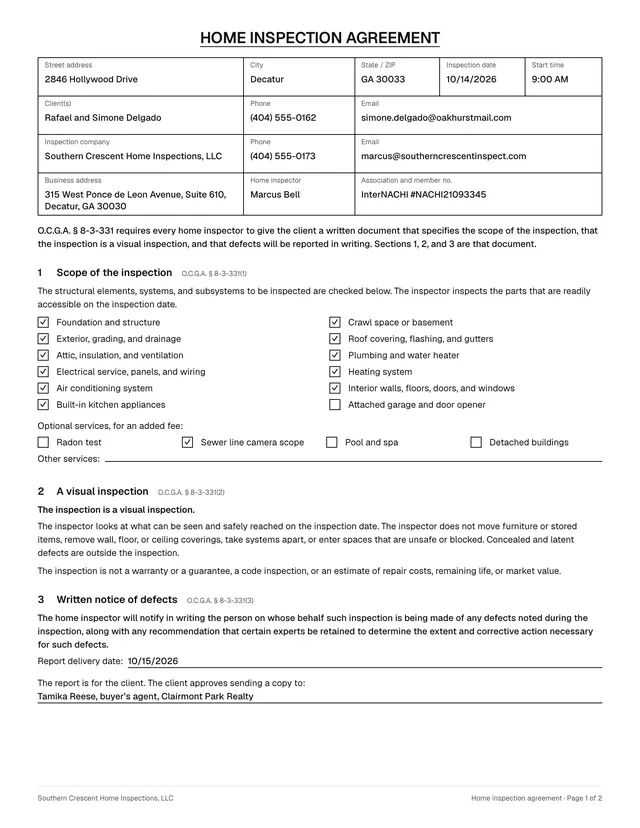
Home Inspection Agreement
The contract a client signs for a home inspection. - Hawaii
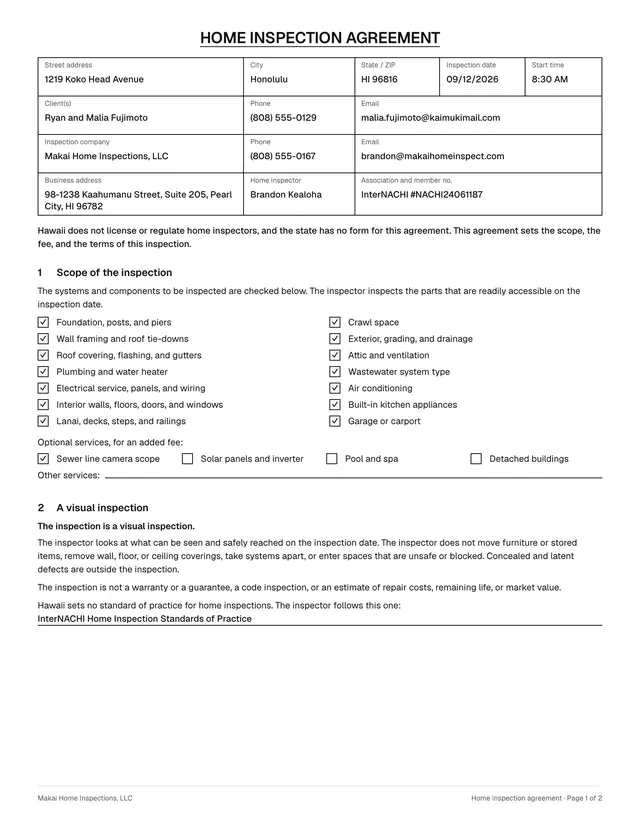
Home Inspection Agreement
The contract a client signs for a home inspection. - Illinois
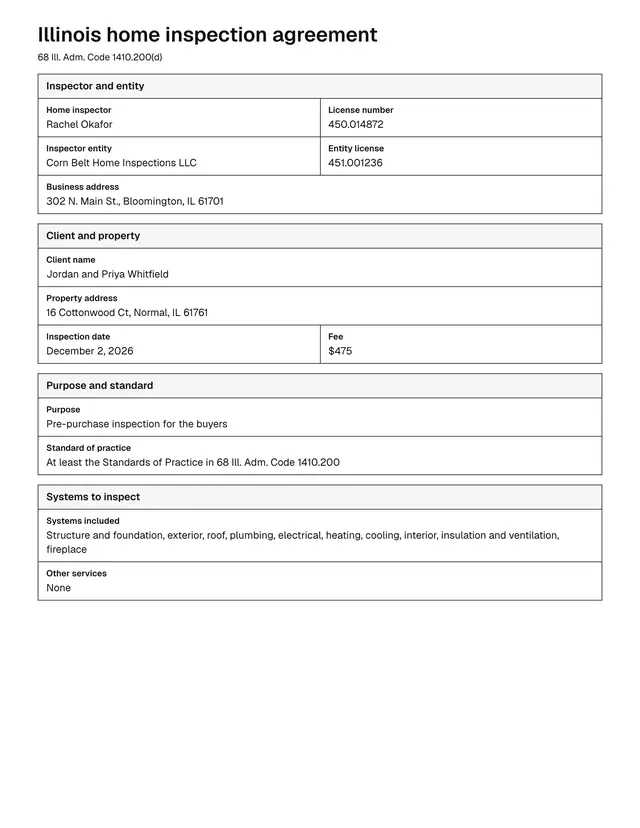
Illinois home inspection agreement
The contract a client signs for a home inspection. - Indiana
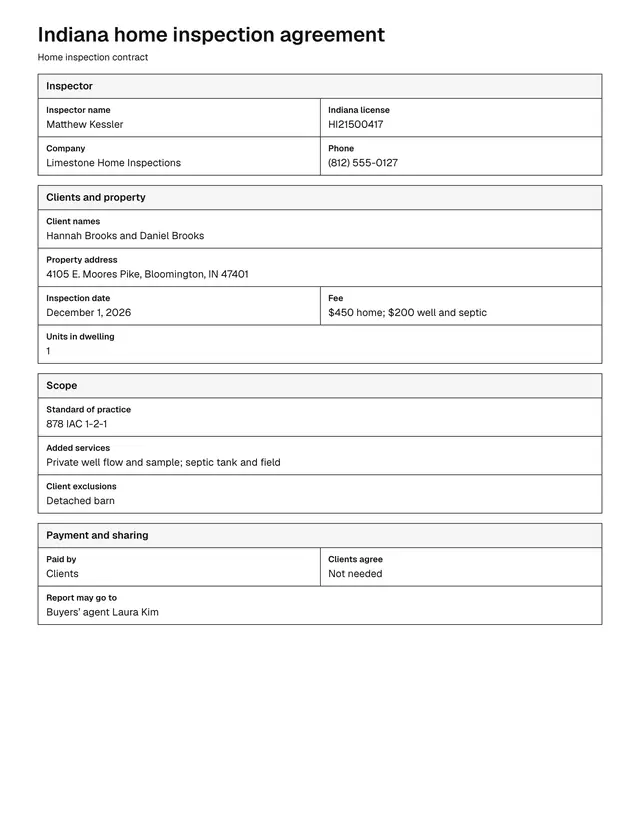
Indiana home inspection agreement
The contract a client signs for a home inspection. - Kentucky
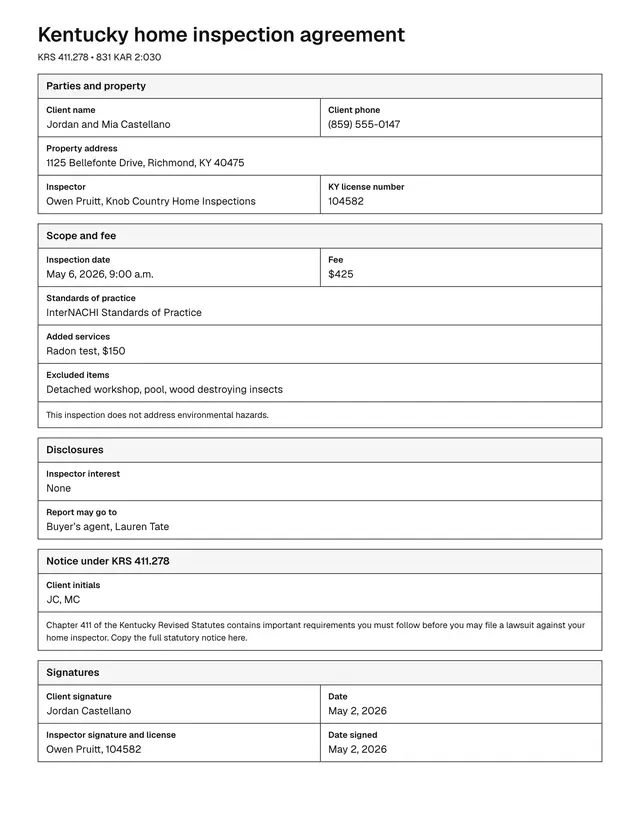
Kentucky home inspection agreement
The contract a client signs for a home inspection. - Louisiana
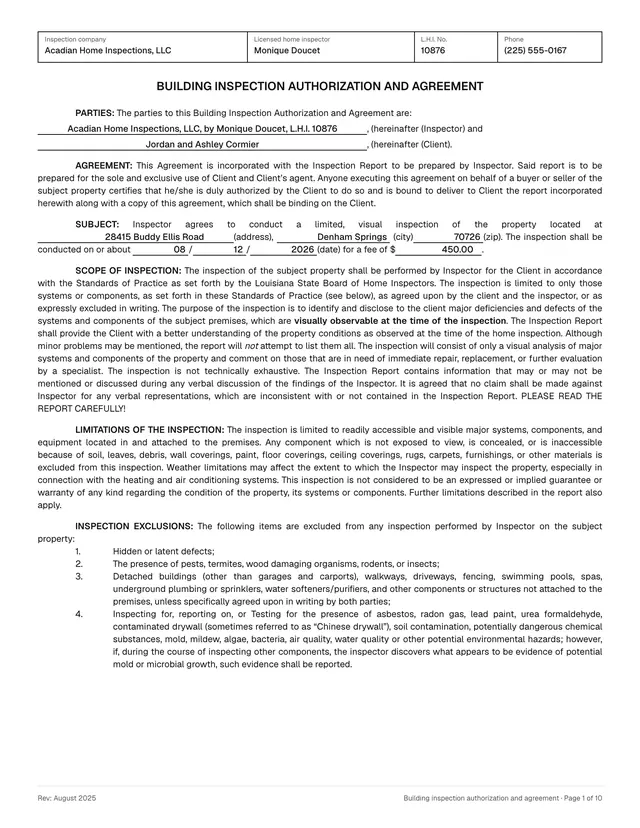
Building Inspection Authorization and Agreement
The contract a client signs for a home inspection. - Maryland
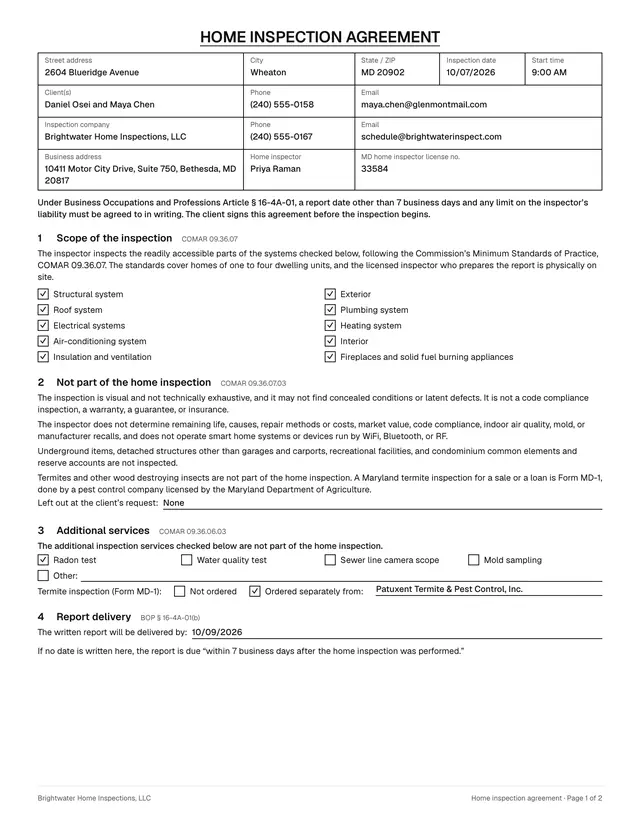
Home Inspection Agreement
The contract a client signs for a home inspection. - Massachusetts
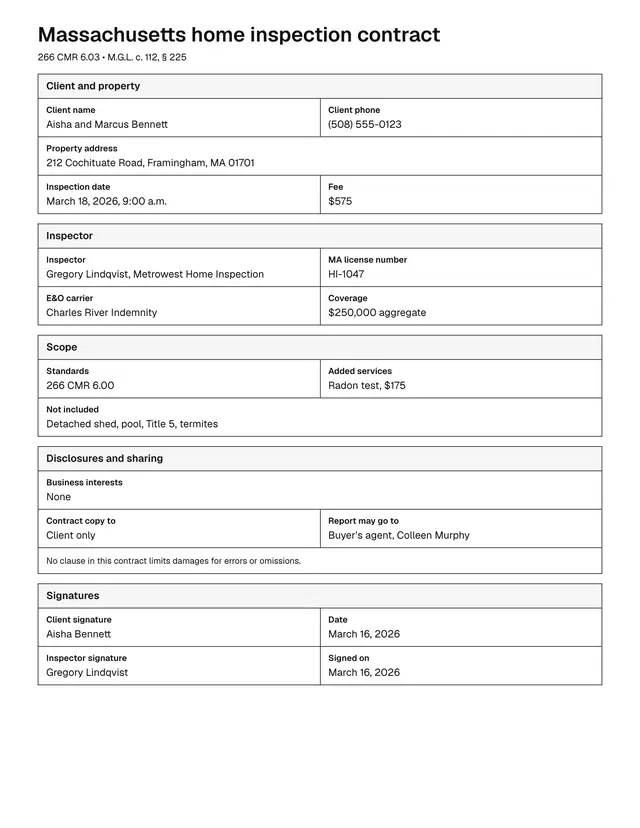
Massachusetts home inspection contract (266 CMR 6.03)
The contract a client signs for a home inspection. - Michigan
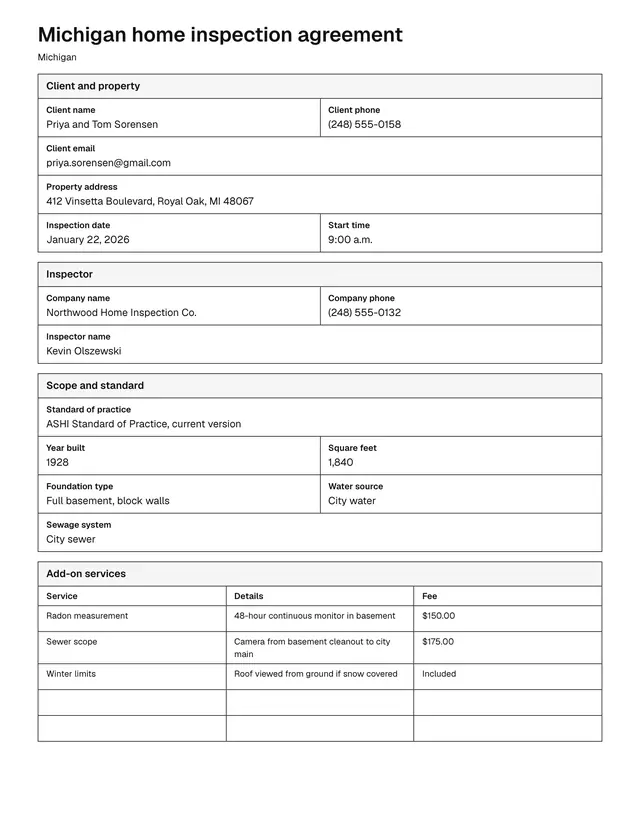
Michigan home inspection agreement
The contract a client signs for a home inspection. - Mississippi
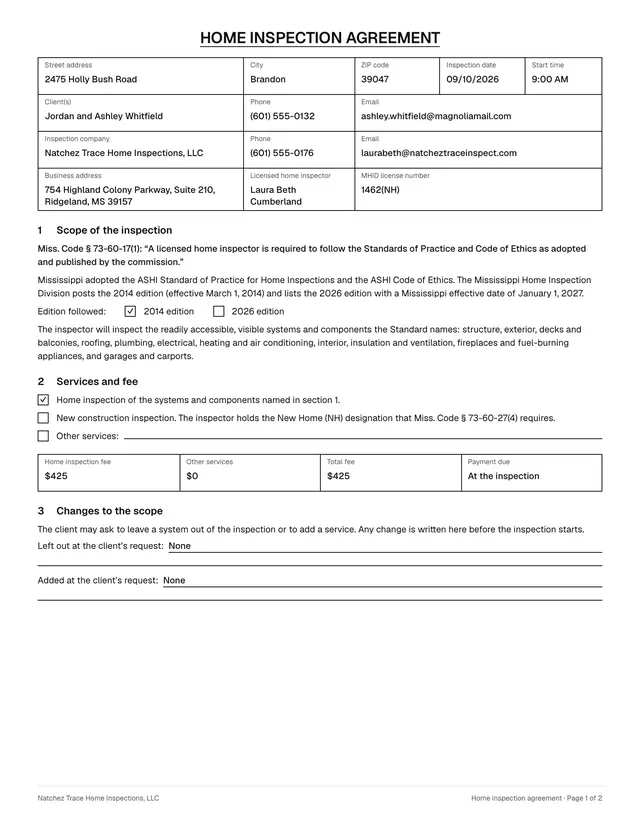
Home Inspection Agreement
The contract a client signs for a home inspection. - Missouri
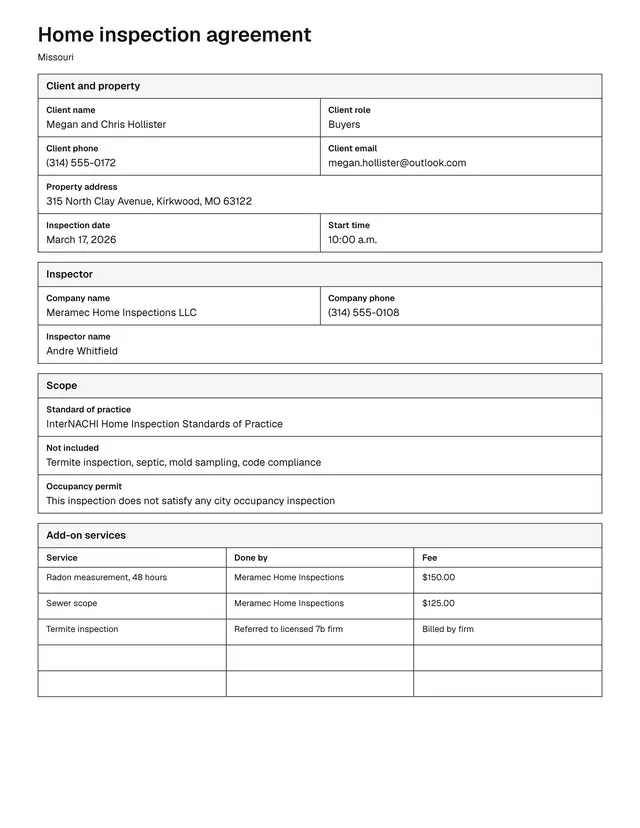
Missouri home inspection agreement
The contract a client signs for a home inspection. - Nevada
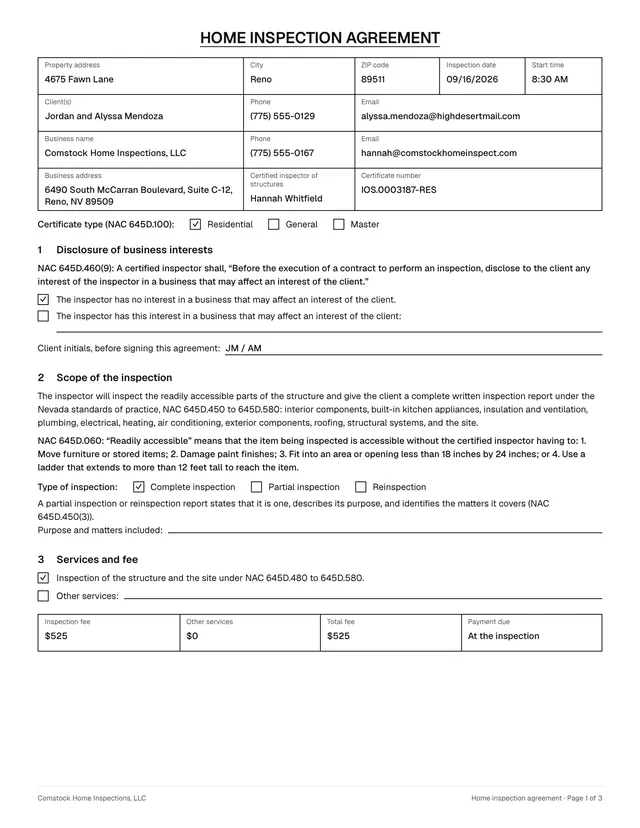
Home Inspection Agreement
The contract a client signs for a home inspection. - New Jersey
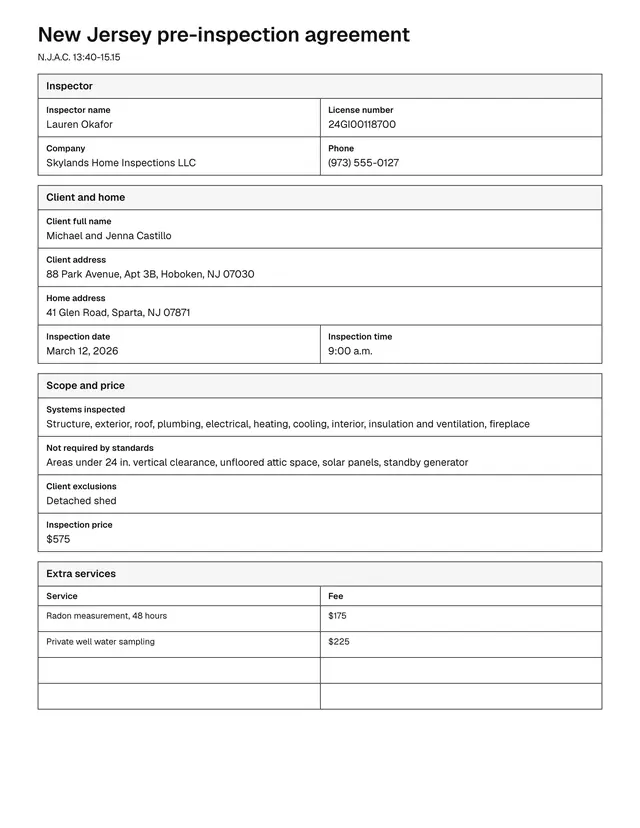
New Jersey pre-inspection agreement (N.J.A.C. 13:40-15.15)
The contract a client signs for a home inspection. - New Mexico
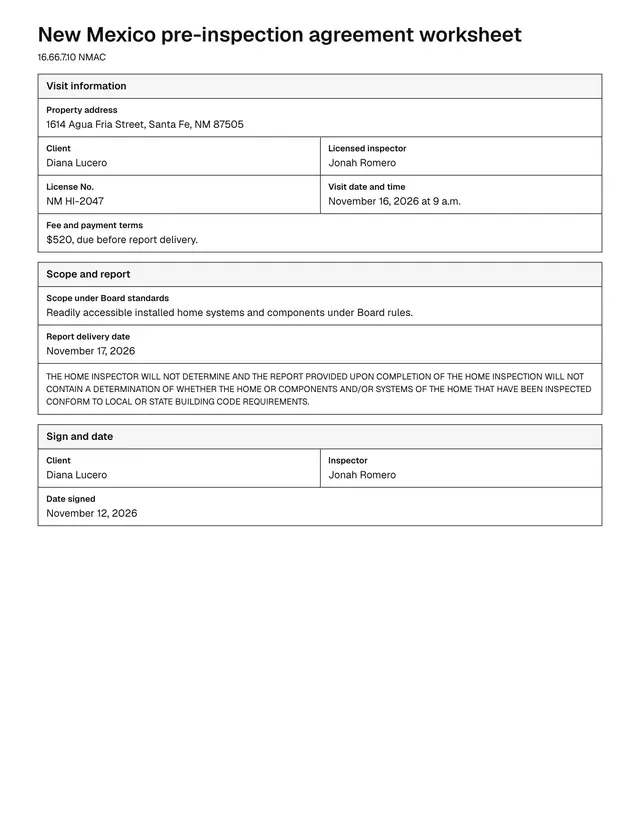
New Mexico pre-inspection agreement worksheet
The contract a client signs for a home inspection. - New York
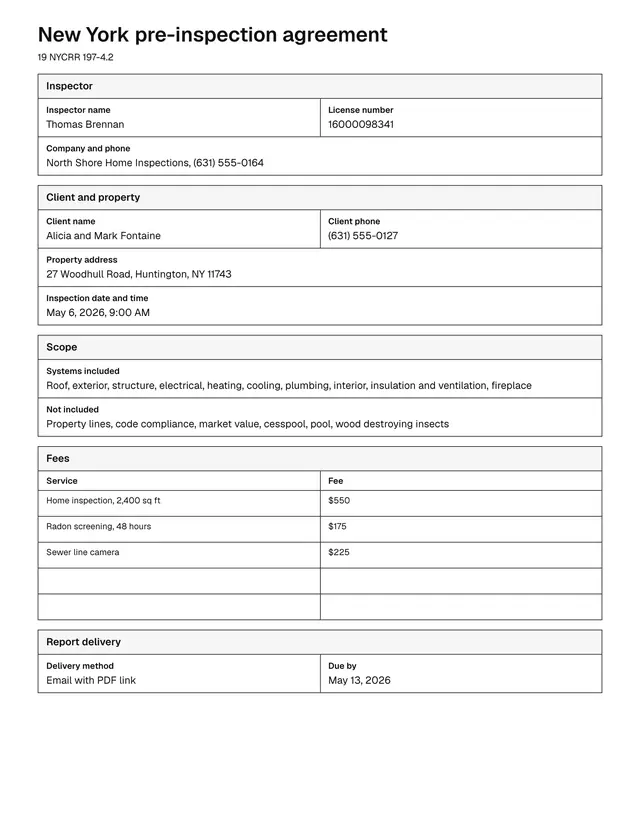
New York pre-inspection agreement (19 NYCRR 197-4.2)
The contract a client signs for a home inspection. - North Carolina
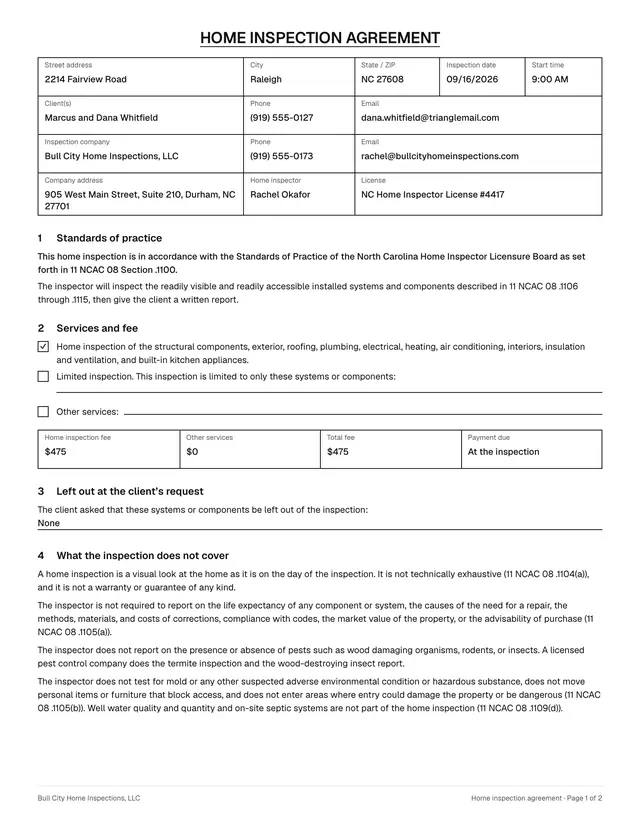
Home Inspection Agreement
The contract a client signs for a home inspection. - Ohio
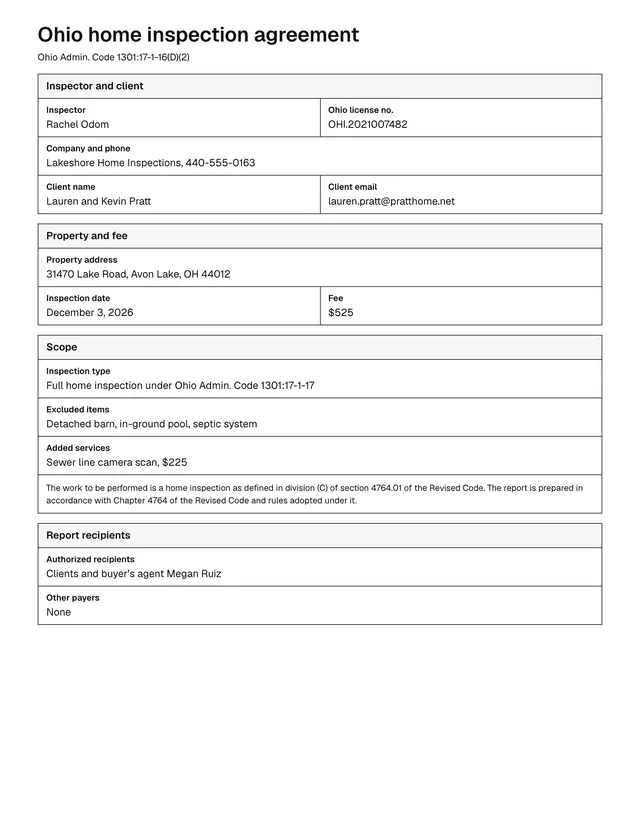
Ohio home inspection agreement
The contract a client signs for a home inspection. - Oklahoma
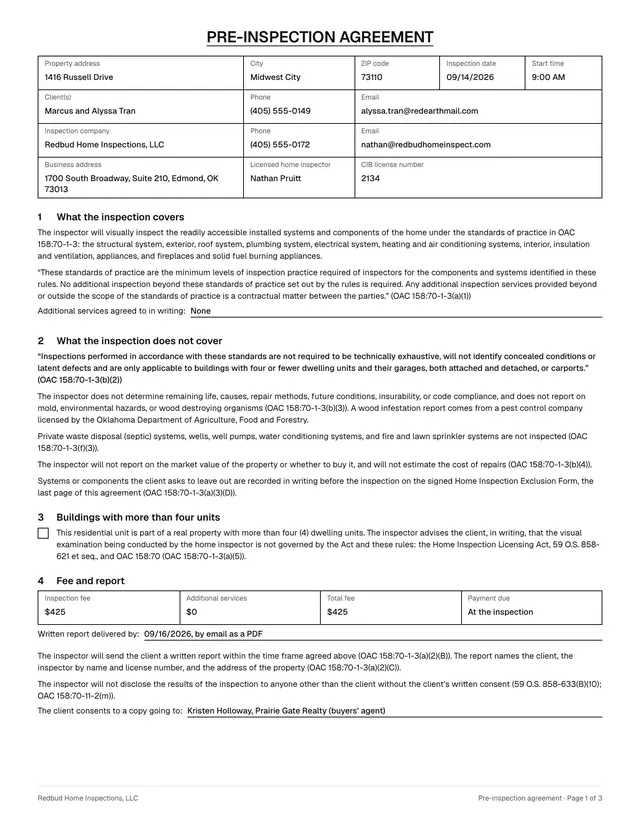
Pre-Inspection Agreement
The contract a client signs for a home inspection. - Oregon
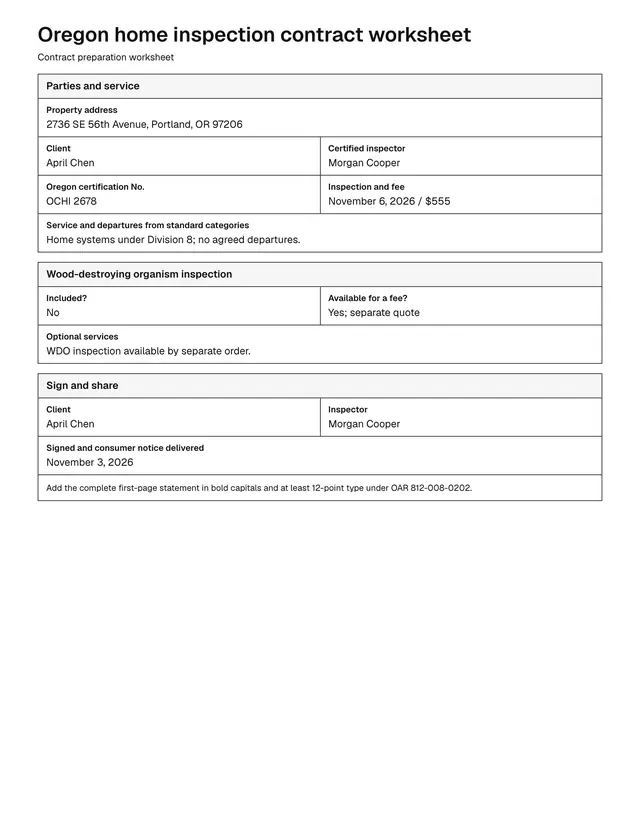
Oregon home inspection contract worksheet
The contract a client signs for a home inspection. - South Carolina
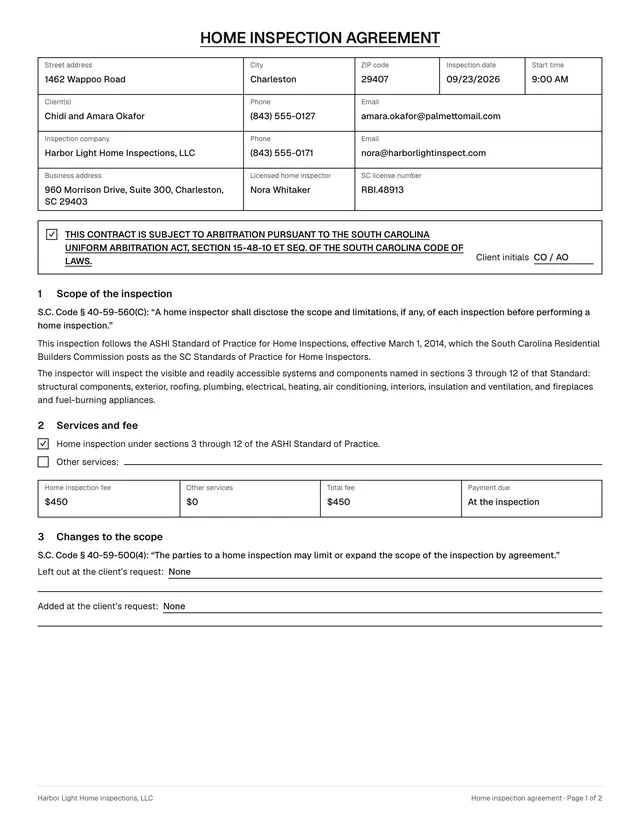
Home Inspection Agreement
The contract a client signs for a home inspection. - Tennessee
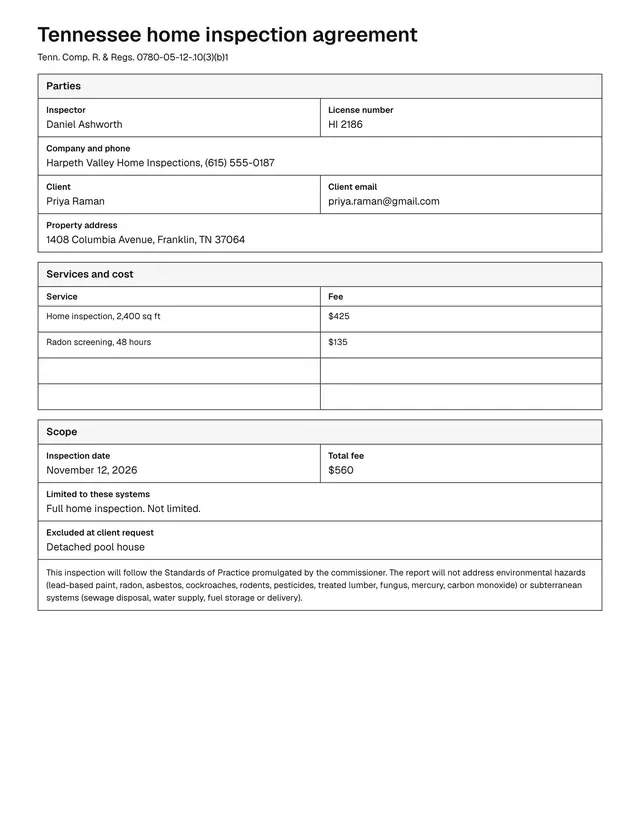
Tennessee home inspection agreement
The contract a client signs for a home inspection. - Texas
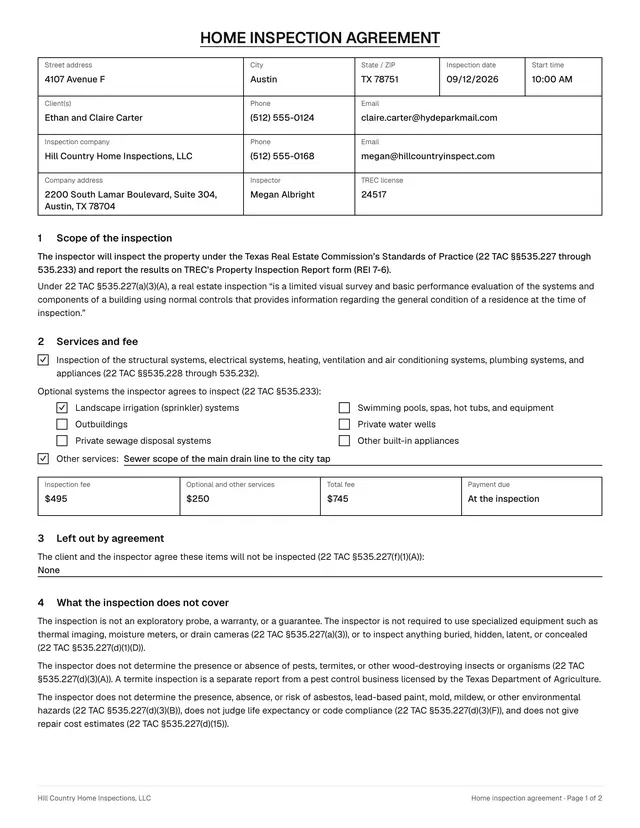
Home Inspection Agreement
The contract a client signs for a home inspection. - Virginia
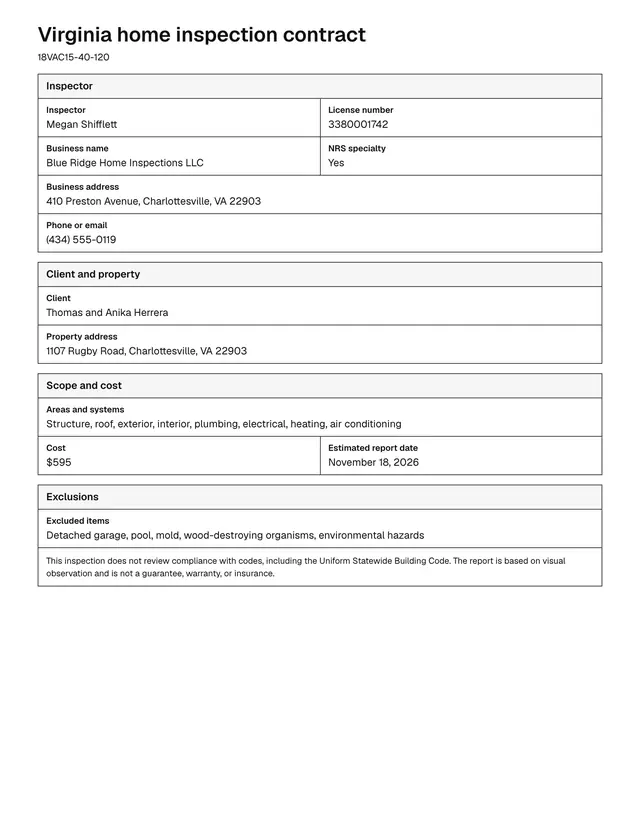
Virginia home inspection contract
The contract a client signs for a home inspection. - Washington
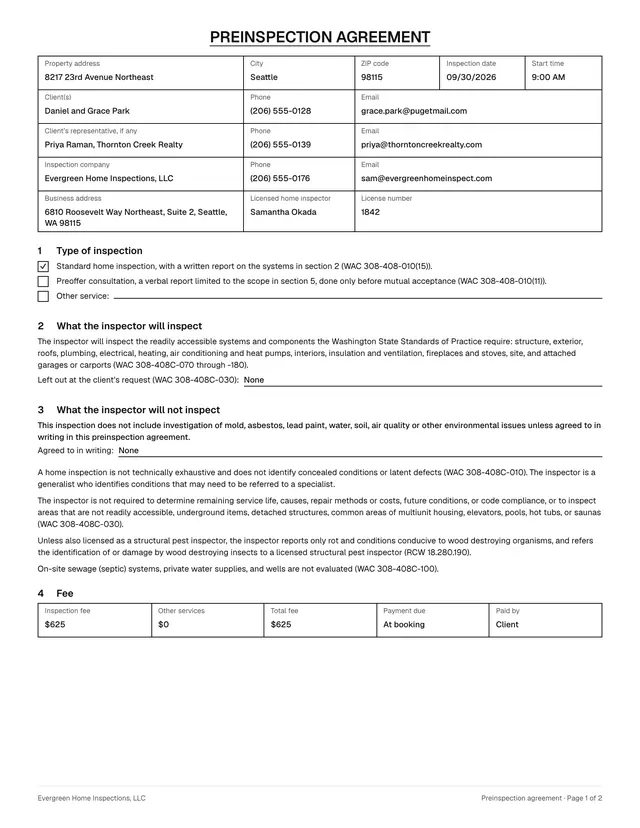
Preinspection Agreement
The contract a client signs for a home inspection. - Wisconsin
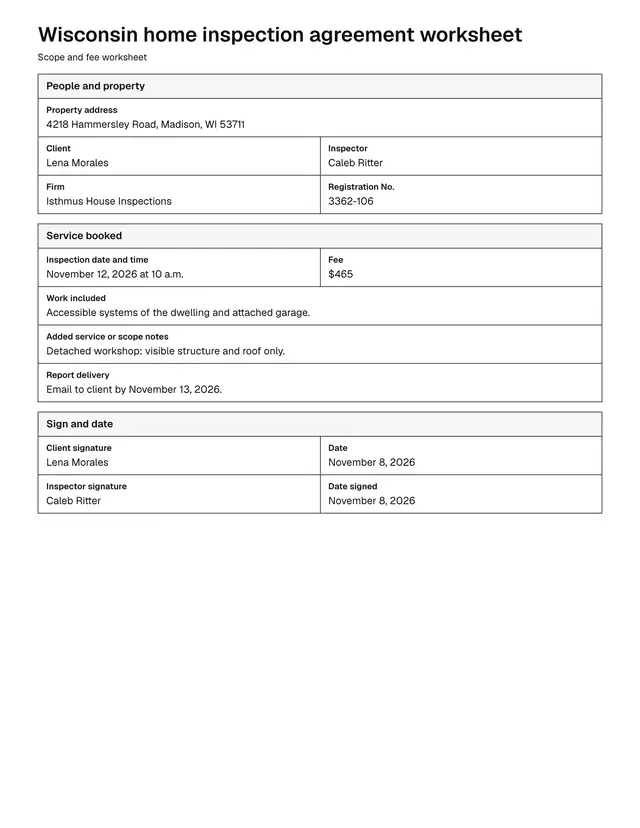
Wisconsin home inspection agreement worksheet
The contract a client signs for a home inspection.