Massachusetts home inspection contract (266 CMR 6.03)
Massachusetts requires a written or digital contract for every home inspection, and it bans the damage cap clause found in many national templates.
At a glance
- Rule
- 266 CMR 6.03(1)(a)
- Copy goes to
- The client only
- Banned clause
- Limit on damages
- Lawsuit window
- 2 years from the report
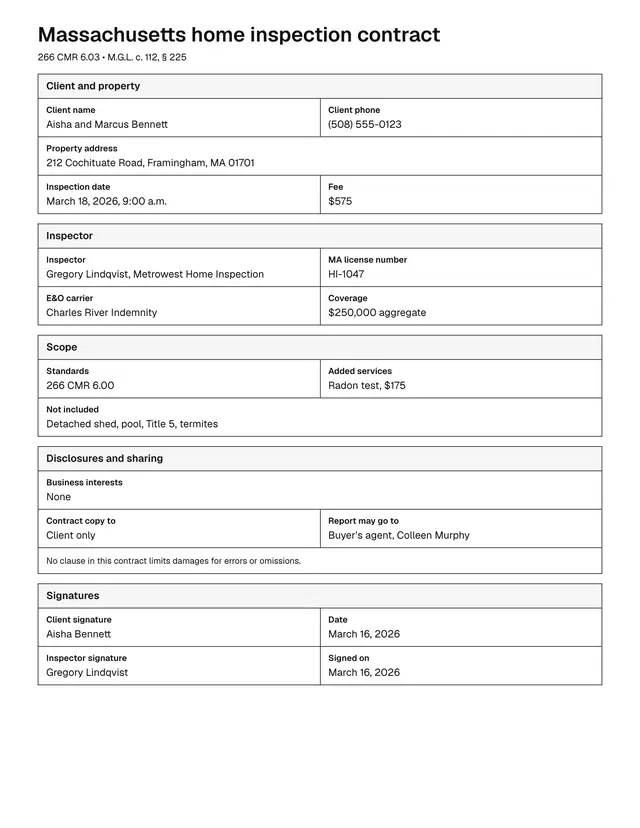
Completed example
Download PDFMassachusetts says you need one
Not every state does, but Massachusetts writes it right into the standards of practice. 266 CMR 6.03 says inspectors shall “use a written or digital contract and provide only the Client with a copy of the contract unless expressly authorized in writing by the Client.”
That second half matters on a busy deal. The buyer’s agent will ask for a copy. Unless the client has OK’d it in writing, you send it to the client and let them forward it. A checkbox in the agreement (“send a copy to my agent”) takes care of it.
The rule applies to inspections of residential buildings, which the law defines as “one to four dwelling units.” A Worcester triple-decker is in. A twelve-unit building isn’t covered by the home inspector law, but a written contract is still smart.
The clause you have to cut
Many national templates include a line that caps your liability at the fee. In Massachusetts, that line can cost you your license. M.G.L. c. 112, § 225 lists, as an ethics violation, “attempting to limit liability for negligent or wrongful errors or omissions by use of a clause within a performance contract that limits the cost of damages.”
The same statute already gives you some protection. Any lawsuit from a home inspection “shall be commenced only within 2 years after the date of a completed written report.” You can restate that in the agreement, but you can’t shorten it or put a dollar cap on damages.
The statute also has you “promptly report” a lawsuit to your insurance carrier when the claim is bigger than your deductible. Failing to report one is its own ground for discipline, so keep your carrier’s claims contact handy.
If you bought a template from a national group, read the limitations section line by line. Fee caps hide under other headings too, like “limitation of remedies.”
Other lines worth having
Insurance. Section 225 makes every licensed inspector carry errors and omissions coverage of at least $250,000 in the aggregate, and it’s a violation to inspect without it. Naming your carrier in the contract heads off the question.
Business interests. You must “promptly disclose” any business interest that could affect the client. If your brother-in-law’s company does radon mitigation and you’ll recommend it, say so.
Who pays, who gets the report. You can’t take pay from more than one party for the same inspection without everyone’s consent, or take commissions from anyone but the client. Results go out only with the client’s approval, so list who may receive the report.
What it won’t cover. Your scope should match 266 CMR 6.04. It says inspectors aren’t required to report on things like fences, pools, outbuildings, and detached garages. If the client wants those, add them as paid extras.
Standards. Name 266 CMR 6.00 as the standard you follow. It lists the systems you observe, from the roof and exterior to the structure, and it sets the exclusions. Saying so in the contract keeps scope questions short.
Termite and septic add-ons
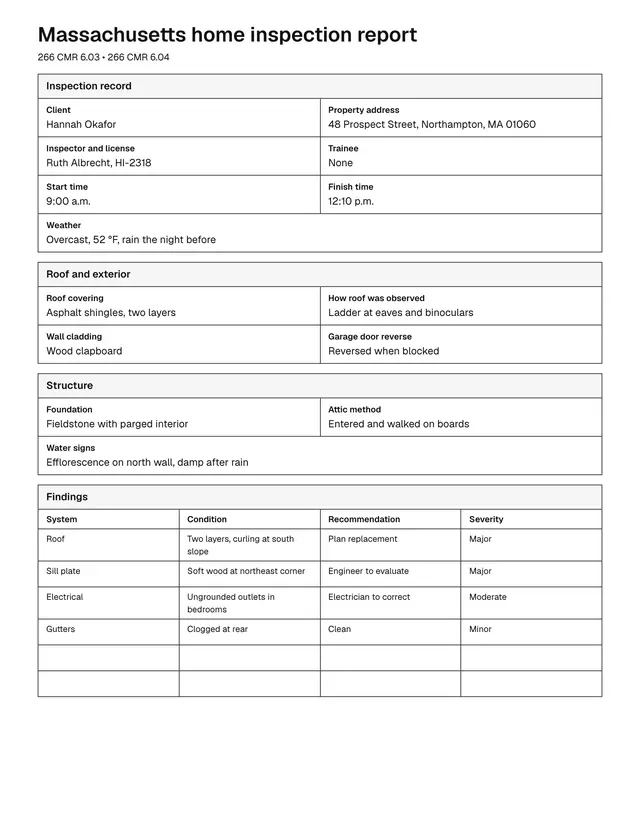
Buyers often ask for more than the house. A termite inspection is outside the home inspector license entirely, and many inspectors refer it to a pest company. If you do offer it, list it as its own service tied to the Massachusetts termite inspection report.
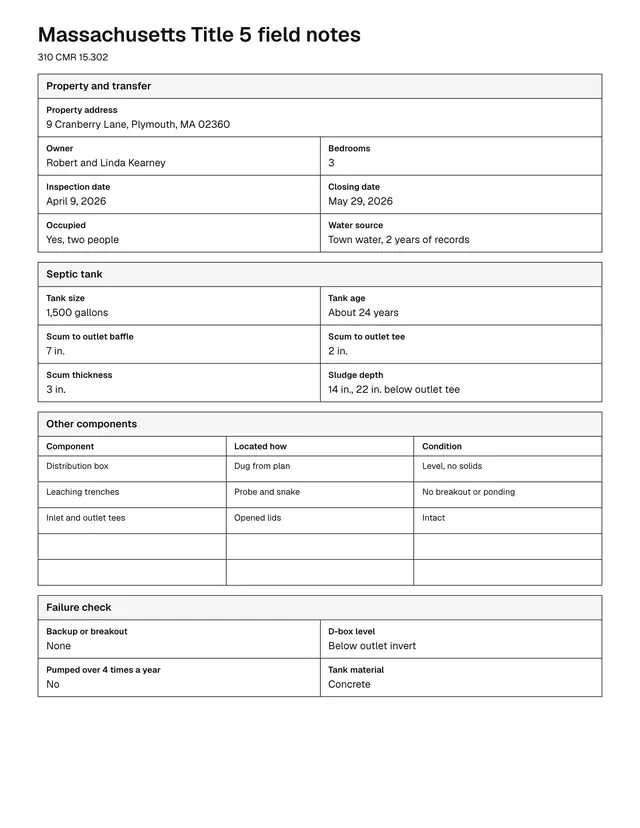
Septic is the same way. A Title 5 inspection has to be done by a DEP-approved System Inspector on the state form, so it isn’t part of a standard home inspection. If you hold that approval, the job uses the Massachusetts Title 5 inspection report. If not, say so in the agreement so nobody assumes it was covered.
Radon and lead paint testing are other common extras. Give each one its own line and fee, and say what the client gets back, like a lab report, so nobody assumes a test came with the base price.
Can the buyer sign before inspection day?
They should. Massachusetts offers often carry short inspection windows, and a contract signed on the porch at 8 a.m. is one nobody read.
Noma specializes in the Massachusetts Home Inspection Contract (266 CMR 6.03). Upload your agreement once as a reusable document, and each booked job can send it for e-signature right away, so the buyer signs before you get there. See how Noma gets agreements signed.
Frequentlyaskedquestions
Send this document in minutes, not an afternoon.
Other states
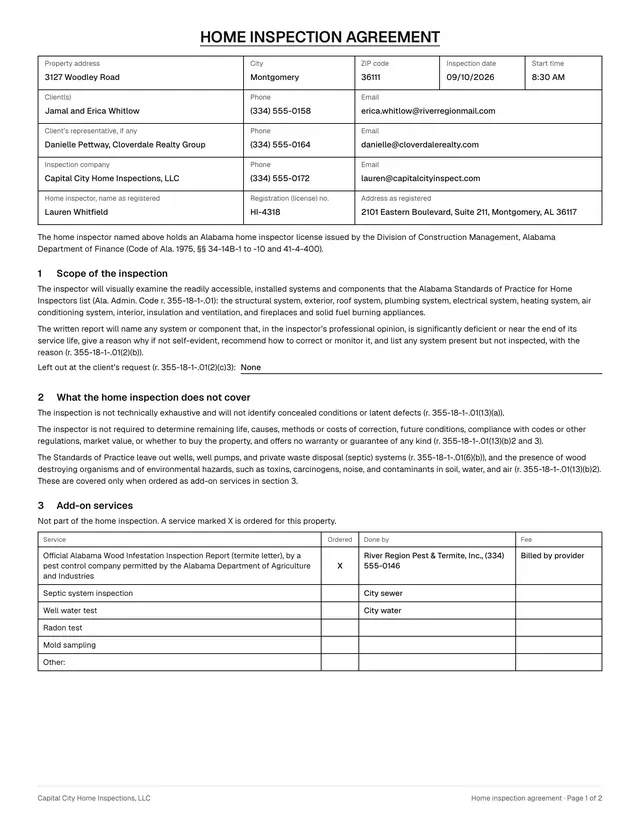
Home inspection agreement templates- Alabama
Home Inspection Agreement
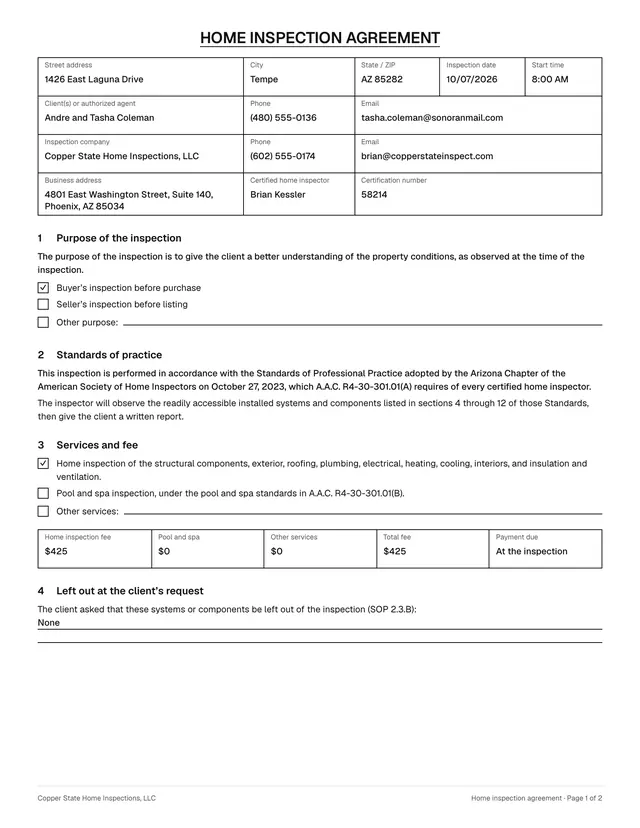
The contract a client signs for a home inspection. - Arizona
Home Inspection Agreement
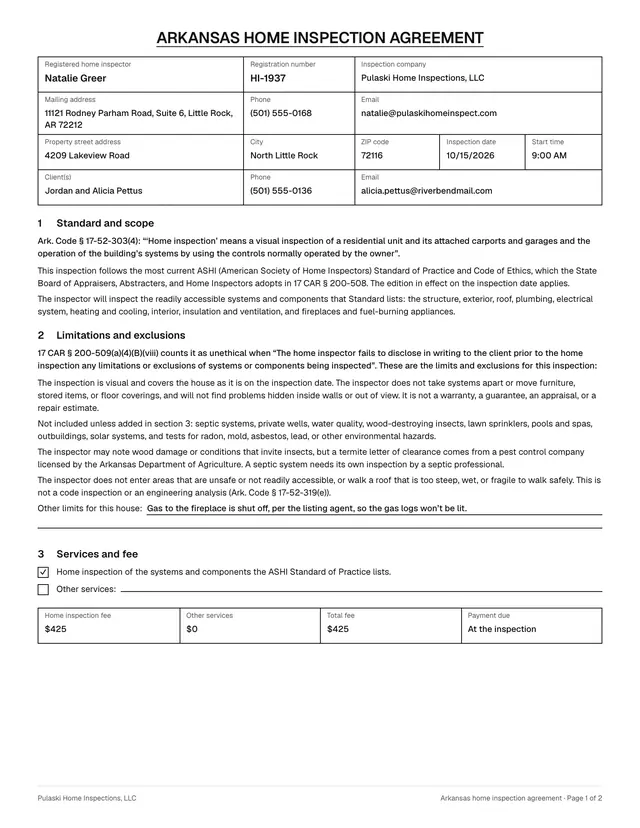
The contract a client signs for a home inspection. - Arkansas
Arkansas Home Inspection Agreement
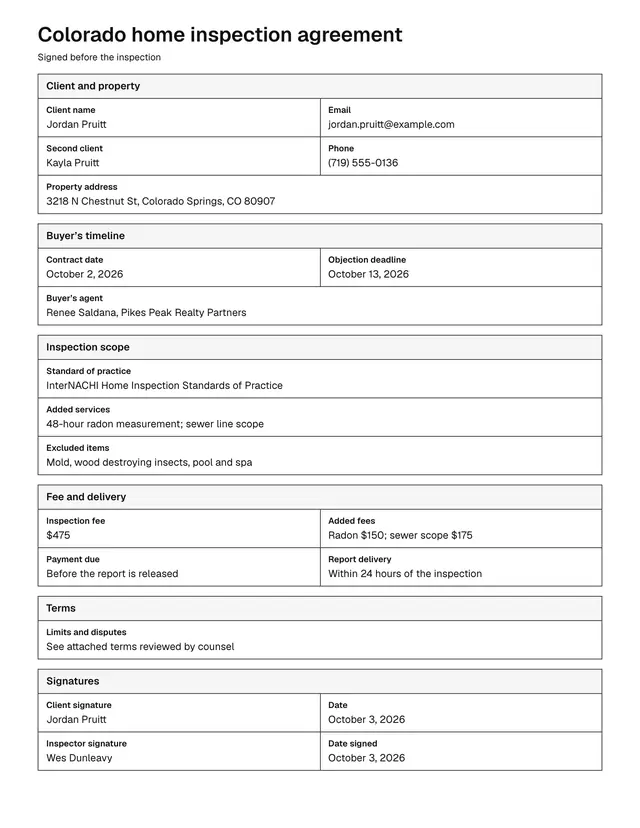
The contract a client signs for a home inspection. - Colorado
Colorado home inspection agreement
The contract a client signs for a home inspection. - Connecticut
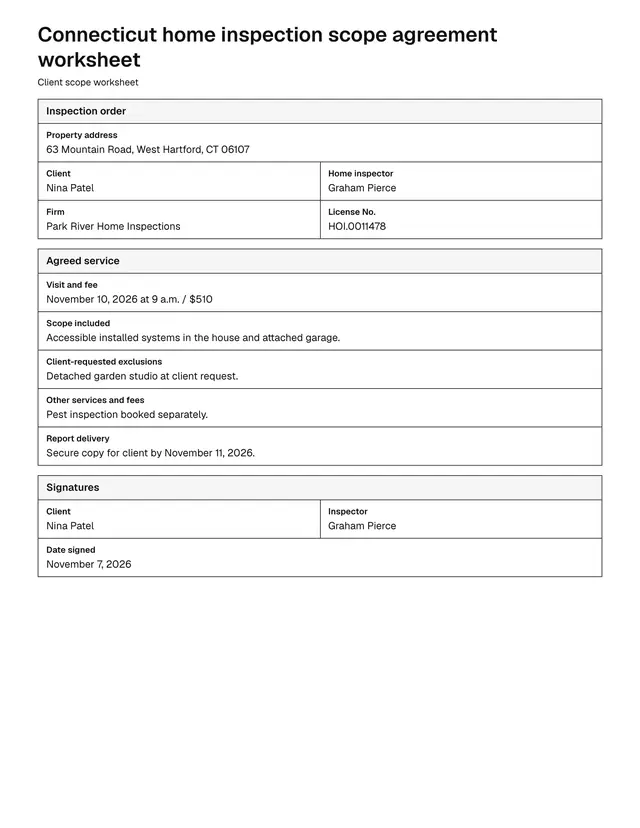
Connecticut home inspection scope agreement worksheet
The contract a client signs for a home inspection. - Delaware
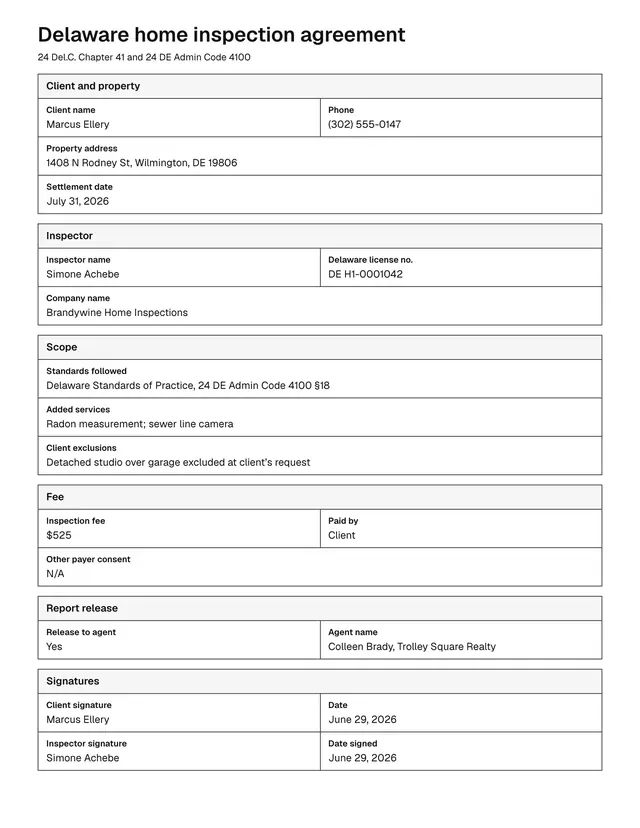
Delaware home inspection agreement
The contract a client signs for a home inspection. - Florida
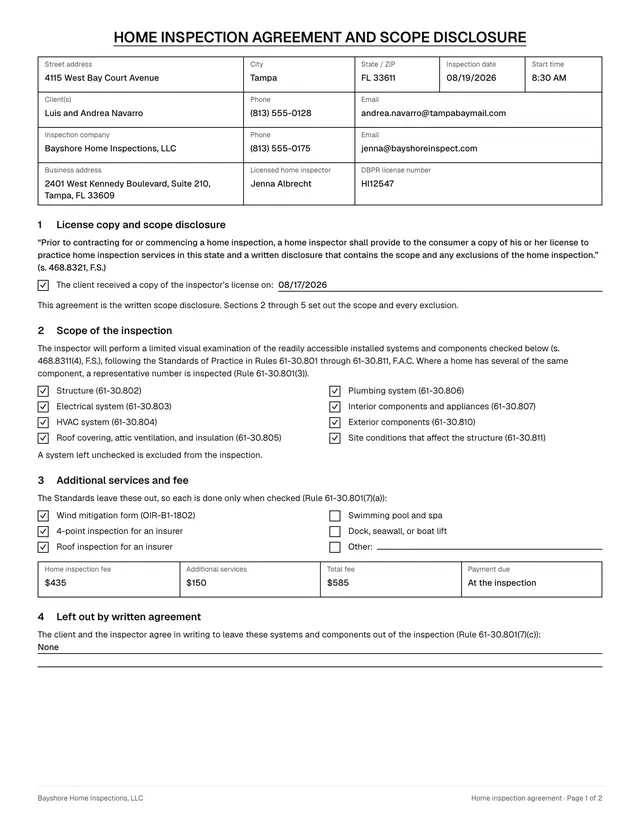
Home Inspection Agreement and Scope Disclosure
The contract a client signs for a home inspection. - Georgia
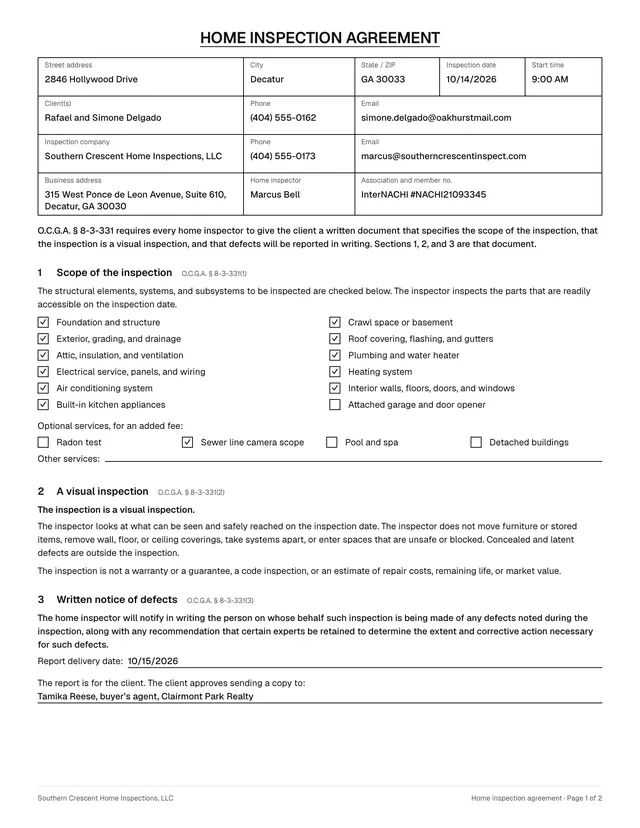
Home Inspection Agreement
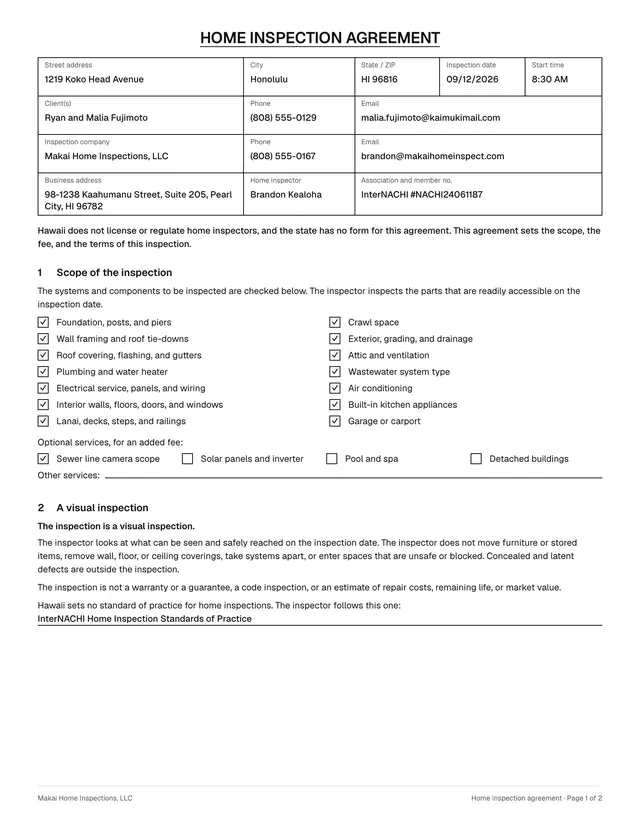
The contract a client signs for a home inspection. - Hawaii
Home Inspection Agreement
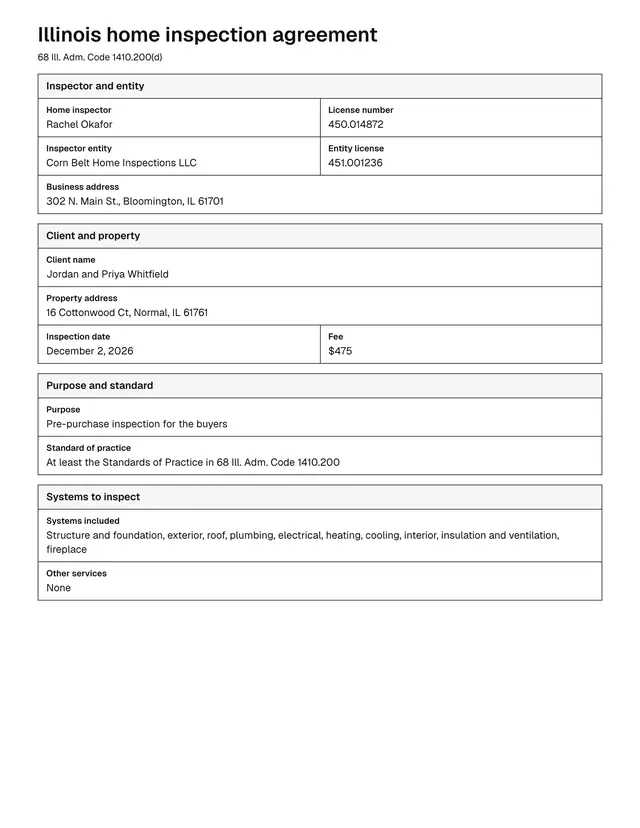
The contract a client signs for a home inspection. - Illinois
Illinois home inspection agreement
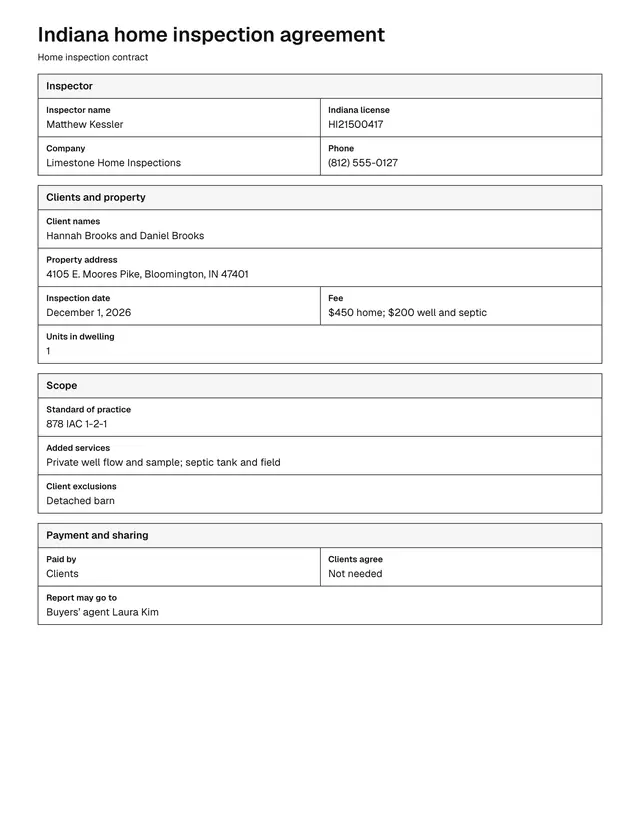
The contract a client signs for a home inspection. - Indiana
Indiana home inspection agreement
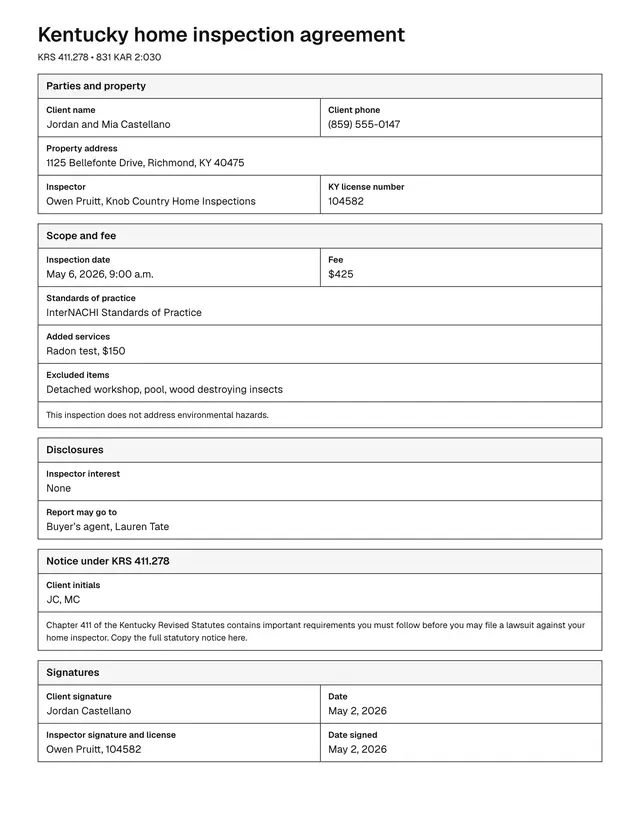
The contract a client signs for a home inspection. - Kentucky
Kentucky home inspection agreement
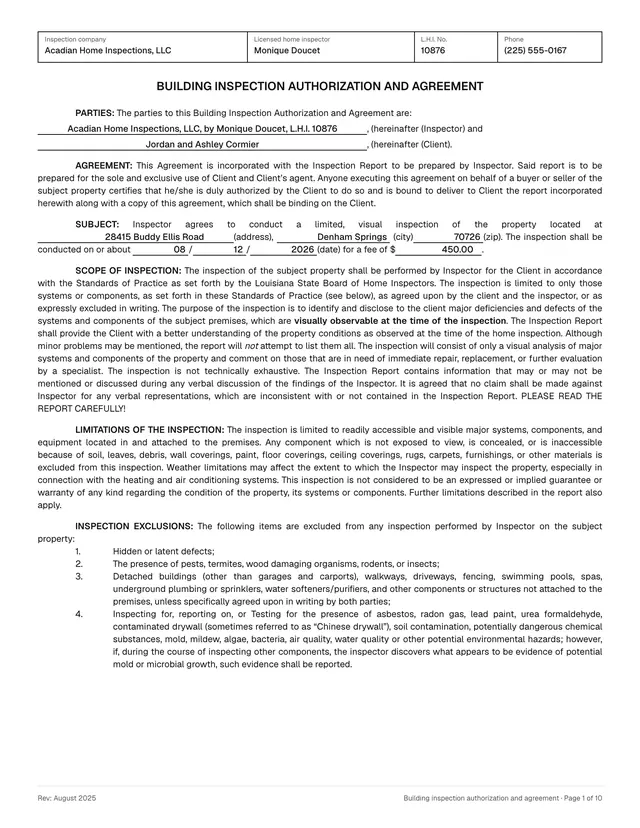
The contract a client signs for a home inspection. - Louisiana
Building Inspection Authorization and Agreement
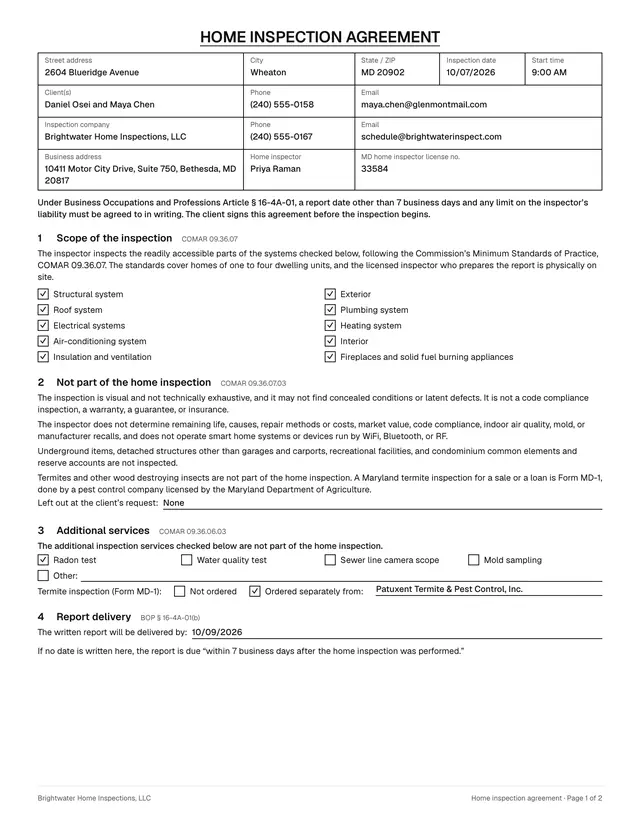
The contract a client signs for a home inspection. - Maryland
Home Inspection Agreement
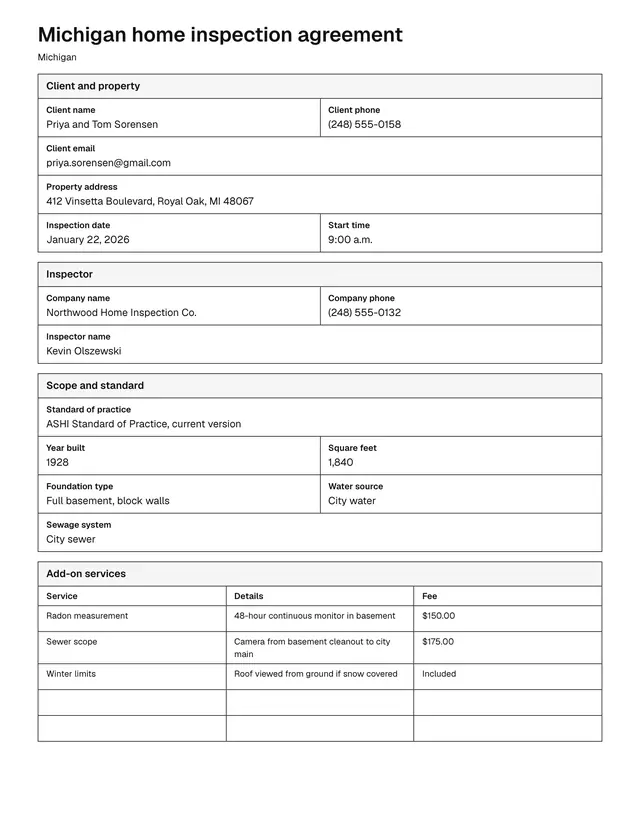
The contract a client signs for a home inspection. - Michigan
Michigan home inspection agreement
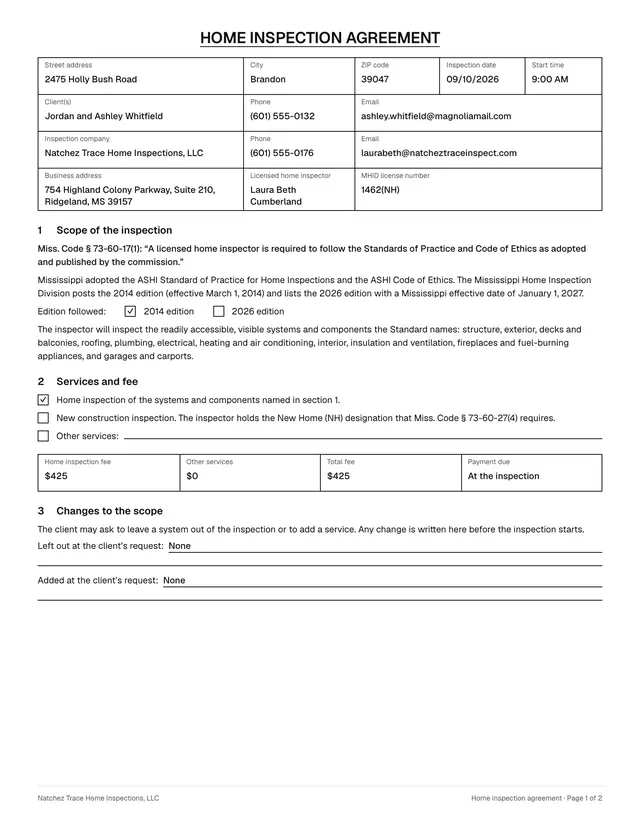
The contract a client signs for a home inspection. - Mississippi
Home Inspection Agreement
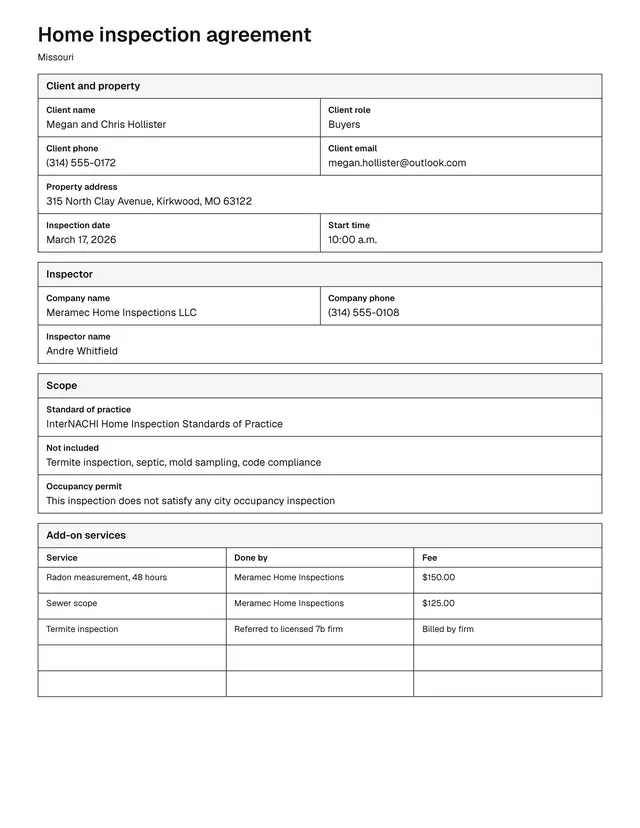
The contract a client signs for a home inspection. - Missouri
Missouri home inspection agreement
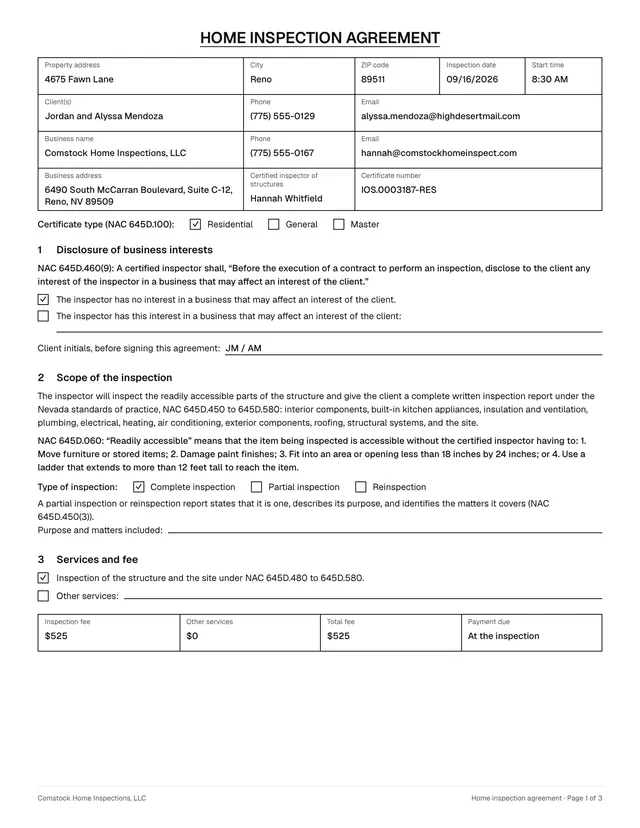
The contract a client signs for a home inspection. - Nevada
Home Inspection Agreement
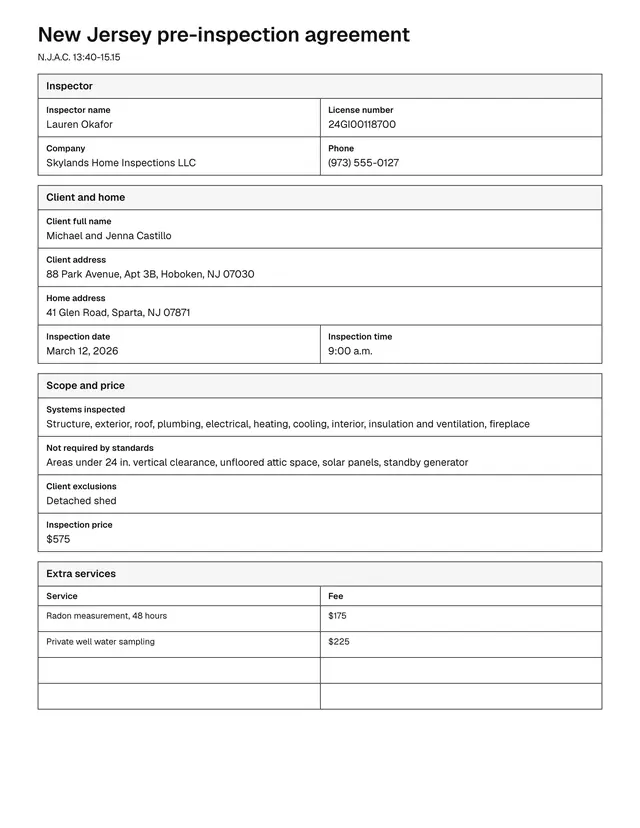
The contract a client signs for a home inspection. - New Jersey
New Jersey pre-inspection agreement (N.J.A.C. 13:40-15.15)
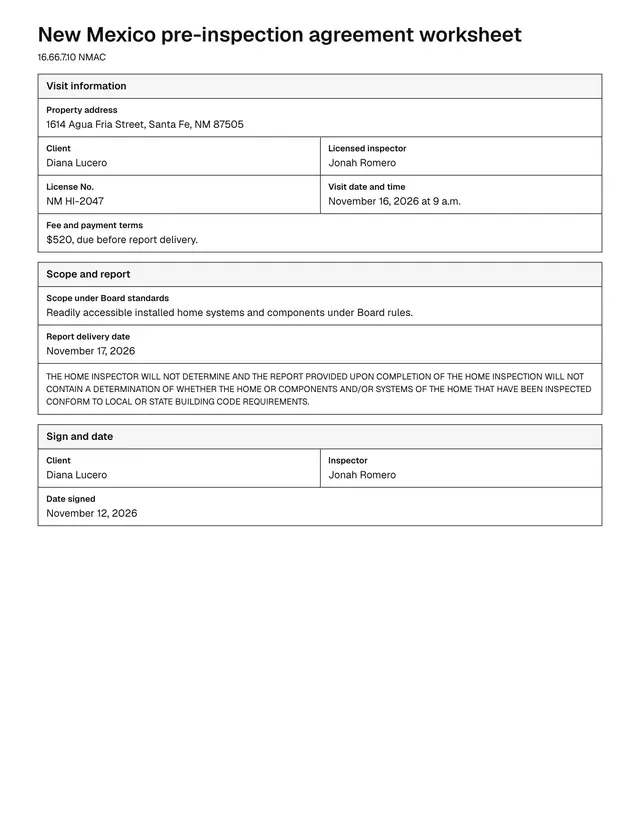
The contract a client signs for a home inspection. - New Mexico
New Mexico pre-inspection agreement worksheet
The contract a client signs for a home inspection. - New York
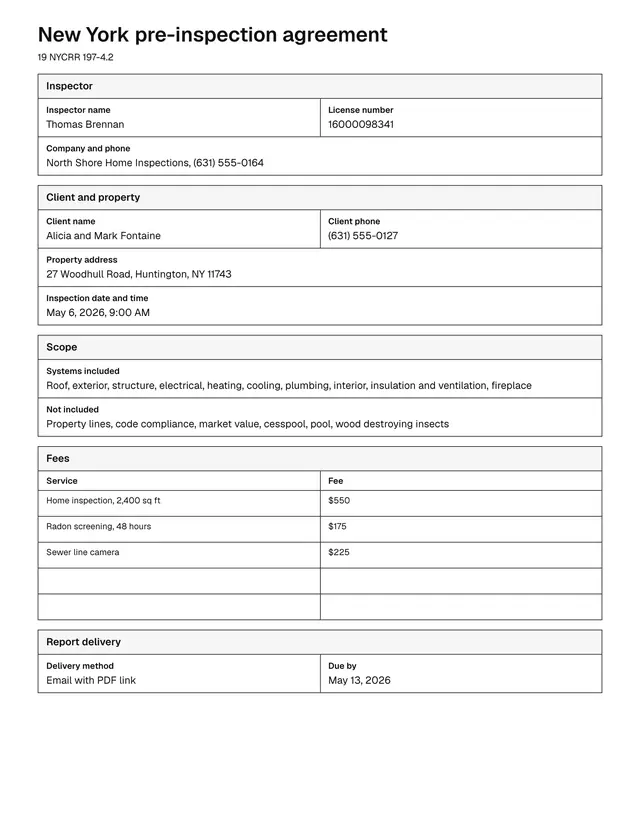
New York pre-inspection agreement (19 NYCRR 197-4.2)
The contract a client signs for a home inspection. - North Carolina
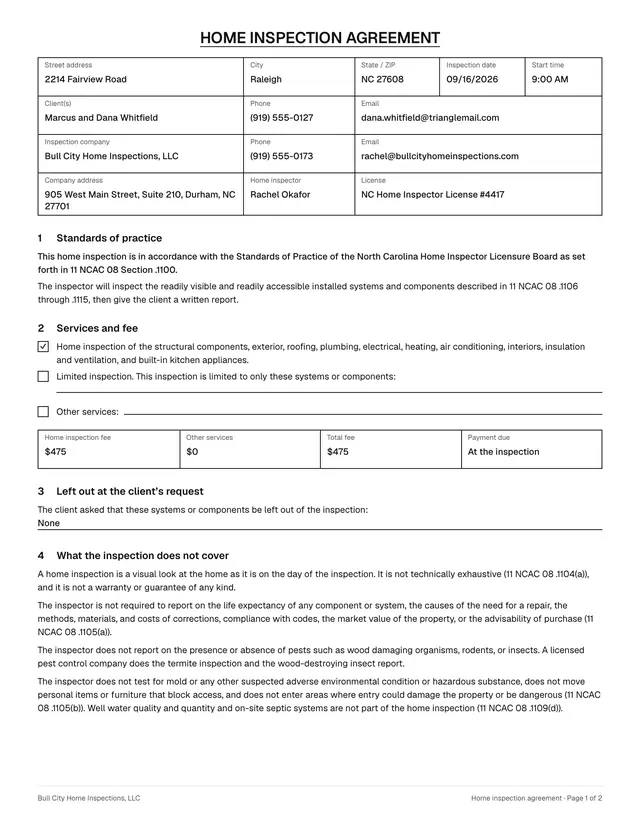
Home Inspection Agreement
The contract a client signs for a home inspection. - Ohio
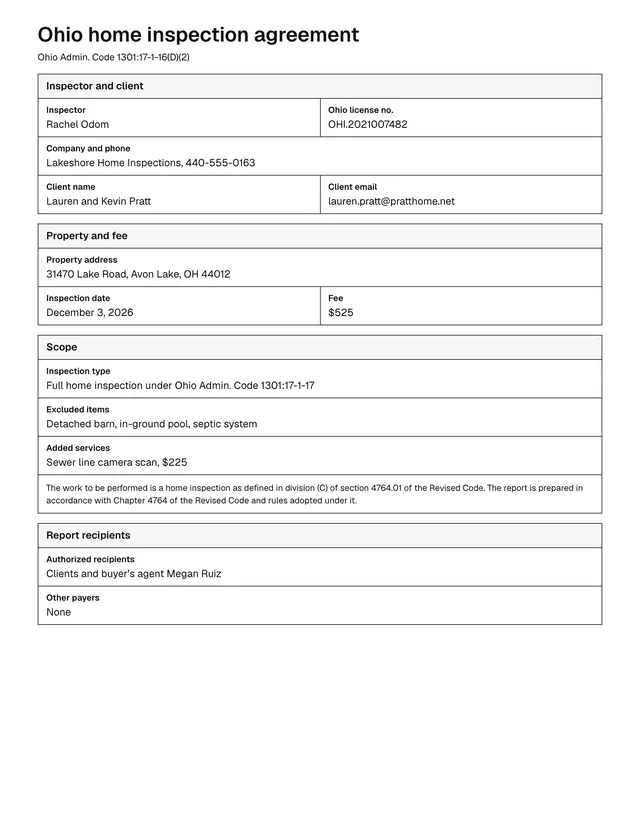
Ohio home inspection agreement
The contract a client signs for a home inspection. - Oklahoma
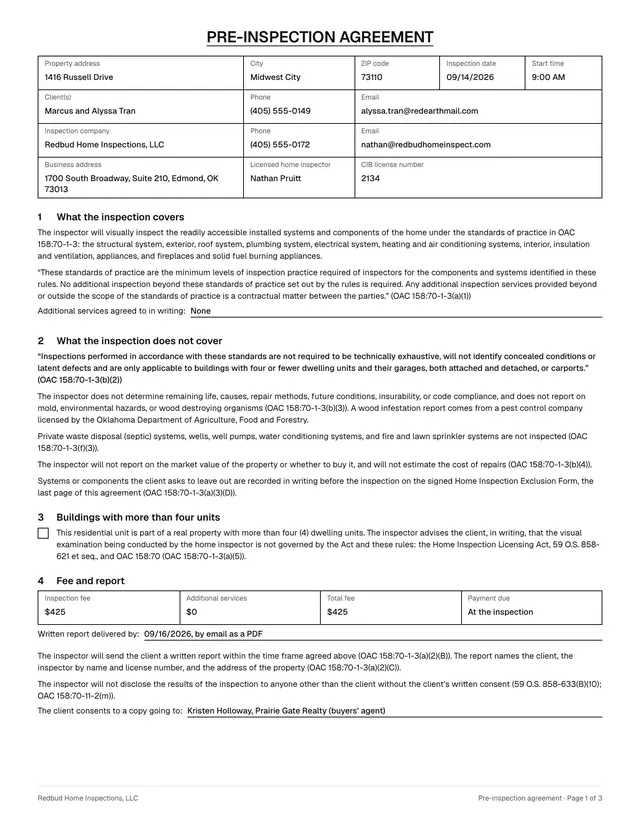
Pre-Inspection Agreement
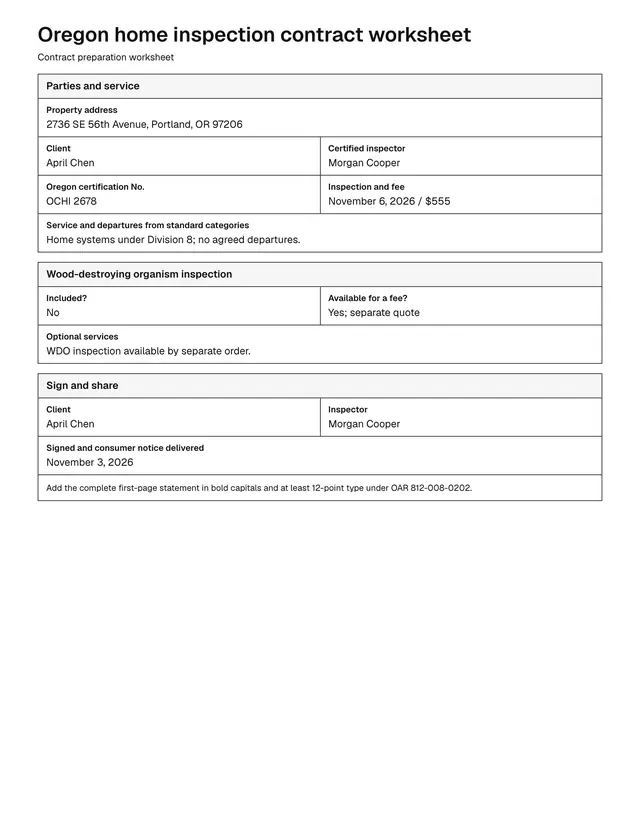
The contract a client signs for a home inspection. - Oregon
Oregon home inspection contract worksheet
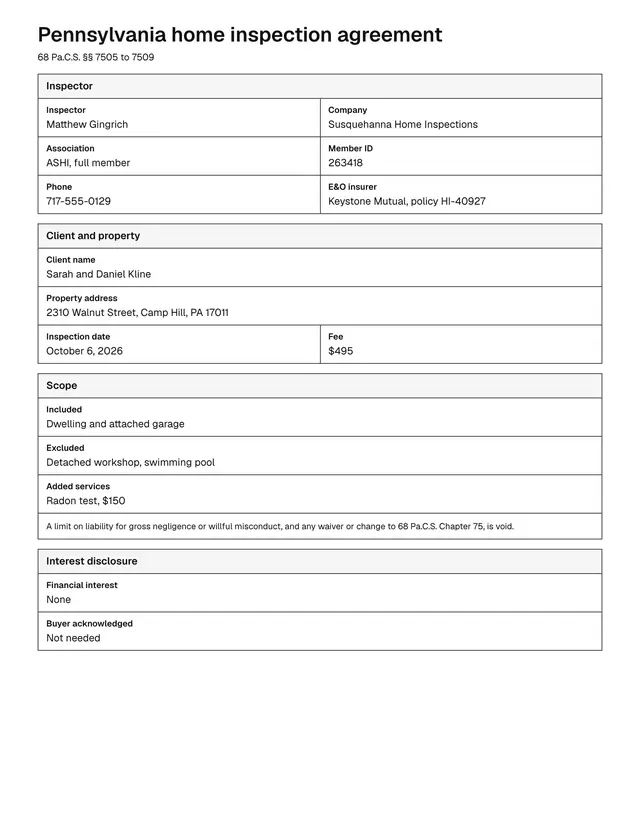
The contract a client signs for a home inspection. - Pennsylvania
Pennsylvania home inspection agreement
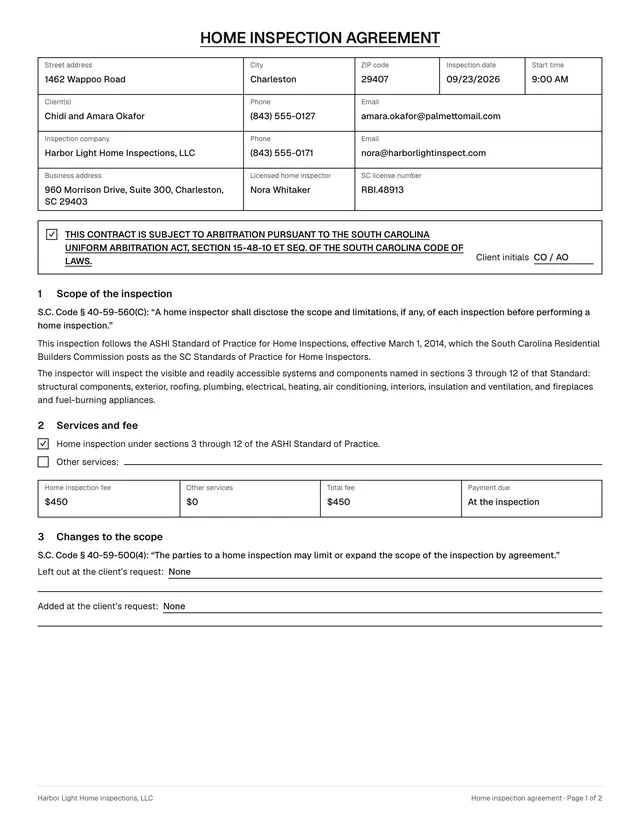
The contract a client signs for a home inspection. - South Carolina
Home Inspection Agreement
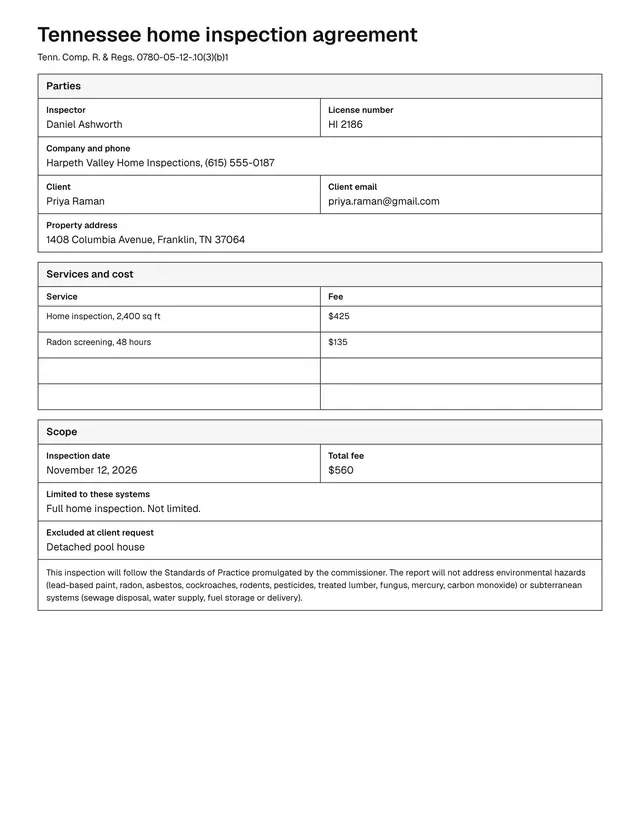
The contract a client signs for a home inspection. - Tennessee
Tennessee home inspection agreement
The contract a client signs for a home inspection. - Texas
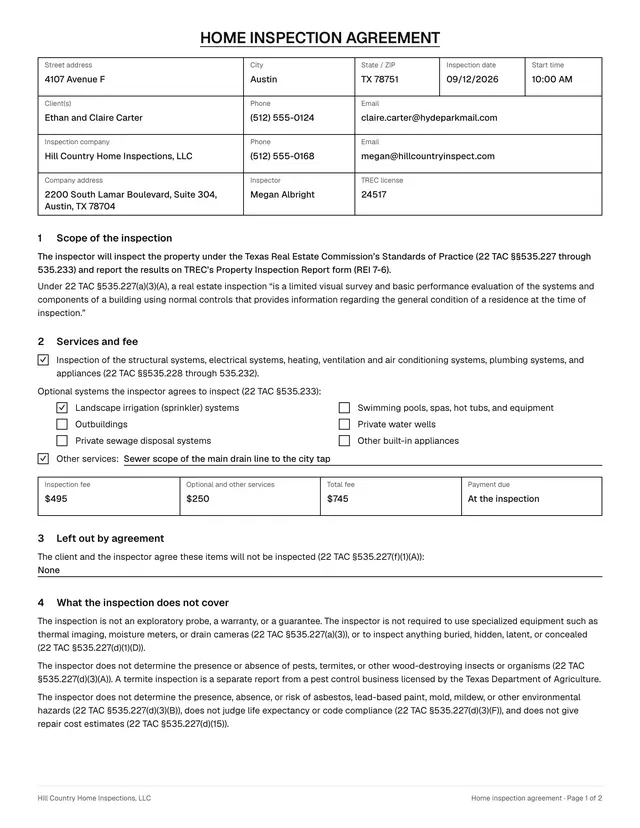
Home Inspection Agreement
The contract a client signs for a home inspection. - Virginia
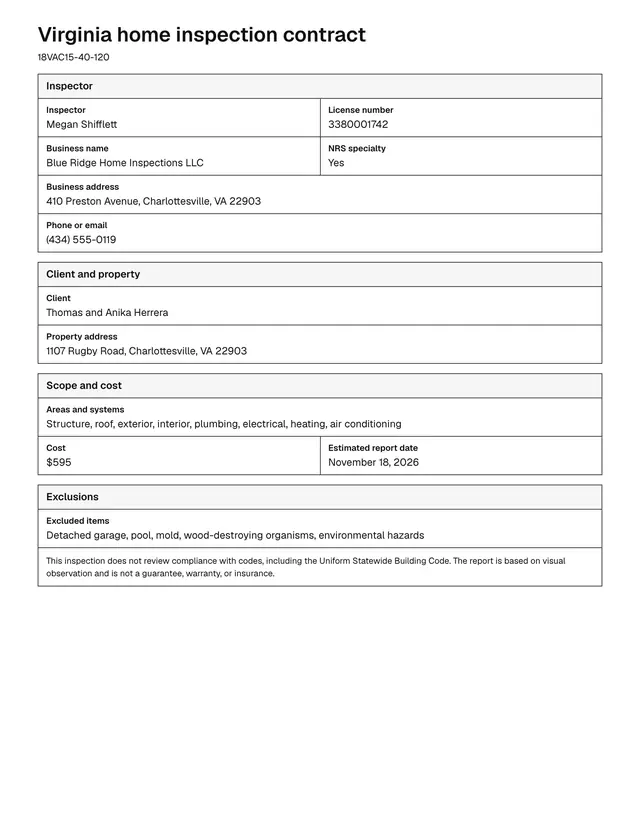
Virginia home inspection contract
The contract a client signs for a home inspection. - Washington
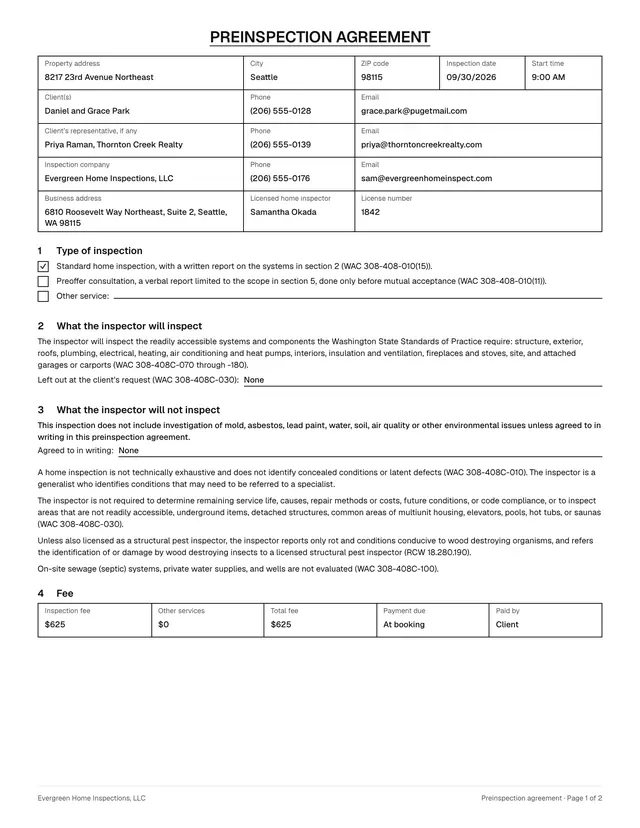
Preinspection Agreement
The contract a client signs for a home inspection. - Wisconsin
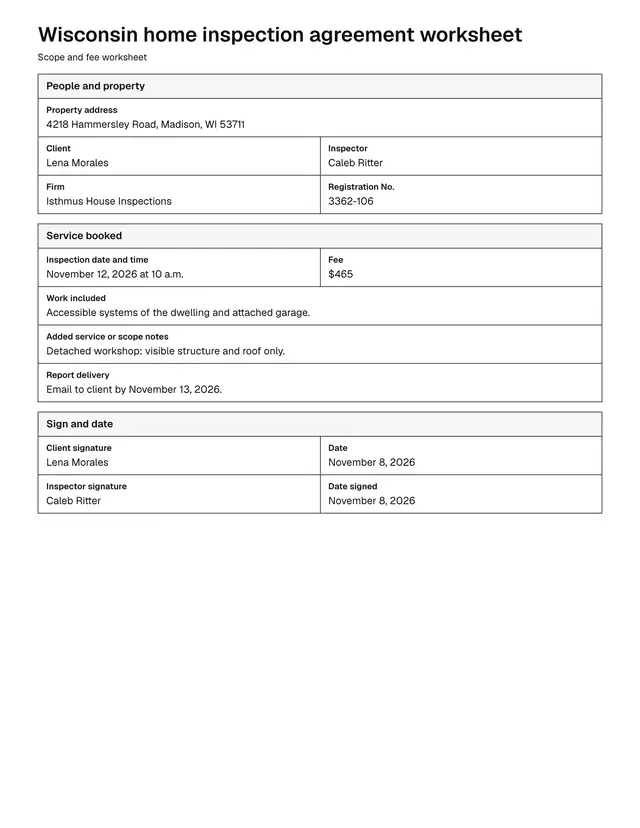
Wisconsin home inspection agreement worksheet
The contract a client signs for a home inspection.