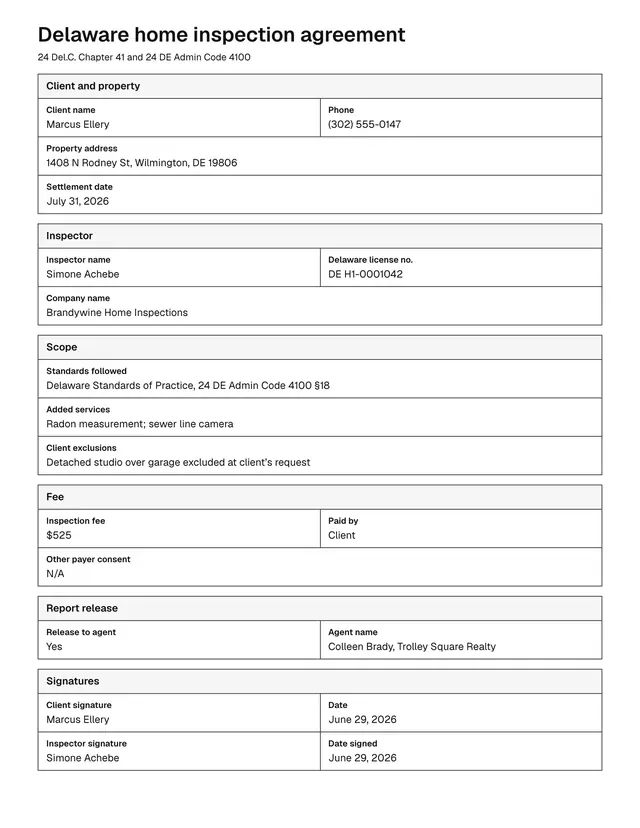
Delaware home inspection agreement
Delaware licenses home inspectors, and its Code of Ethics shapes what your pre-inspection agreement can say about pay, referrals, and who sees the report.
At a glance
- License
- Required (24 Del.C. §4107)
- Rules
- 24 DE Admin Code 4100
- Insurance
- $50,000 E&O and $250,000 liability
- Report
- Written only; oral reports prohibited
Completed example
Download PDFDelaware’s rules come first
Delaware is one of the states that licenses home inspectors. 24 Del.C. Chapter 41 requires the license, and the Board of Home Inspectors sets the details in 24 DE Admin Code 4100. That includes insurance: errors and omissions coverage of at least $50,000 and liability coverage of at least $250,000.
It also means you don’t pick a standard of practice the way inspectors do in unlicensed states. Section 18 of the Board’s rules is the standard. Your agreement should say you follow the Delaware Standards of Practice, then add anything you do beyond them.
Ethics rules your agreement should match
Section 17 is the Board’s Code of Ethics. It has teeth: section 17.3.3 even says inspectors must report willful ethics violations by others to the Division of Professional Regulation. A few parts of it belong right in the agreement, so the client sees them before they sign.
Who pays you. Section 17.1.4 says you can’t take pay for an inspection from more than one party “unless agreed to by the client(s).” If a relocation company or the seller is covering part of the fee, add a line where the buyer agrees to it.
When you get paid. Section 17.1.2 bars fees that depend “on reported findings or on the sale of the property.” Collecting at settlement is fine. A fee that’s only owed if settlement happens is not. Word your payment terms with that in mind. Something like “fee due at settlement or 30 days after the inspection, whichever comes first” keeps the fee owed no matter how the deal ends.
Who sees the report. Under section 17.2.3, you can’t share results or client information without the client’s approval. The one exception: you may warn people living in a home about an immediate safety hazard. Most buyers want their agent to get a copy, so include a release line they can check.
No repair work. Section 17.1.6 says you can’t repair, replace, or upgrade covered systems for pay for one year after the inspection. If you also run a handyman business, the agreement is a good place to say so plainly.
No referral fees. Section 17.1.3 bars paying agents for referrals or for a spot on a preferred list.
Scope, exclusions, and the written report
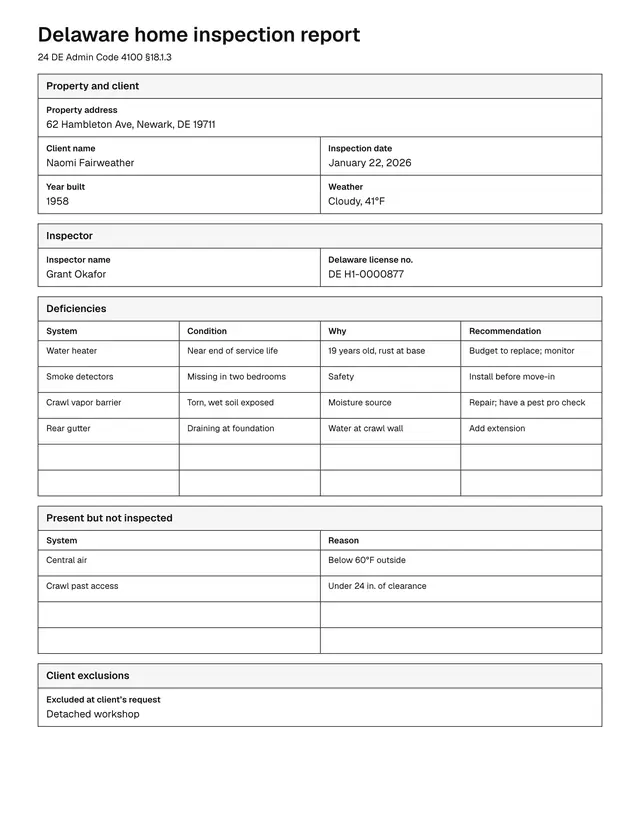
Exclusions the client asks for. Section 18.1.4.3 lets you exclude systems if the client requests it. Write each one down, like “pool excluded at client’s request,” so it doesn’t look like a miss later.
Things the standards leave out. You aren’t required to check for wood destroying insects or mold, or to inspect detached buildings other than garages and carports, or condo common areas. Name them as exclusions or as paid add-ons. Termites are usually a separate NPMA-33 report.
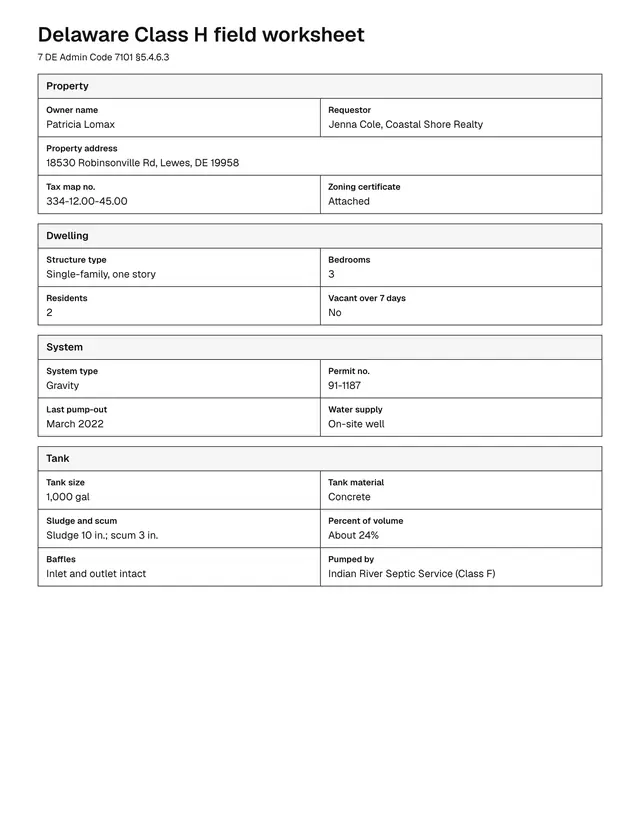
Septic. Delaware requires a Class H septic inspection before a home on septic is sold, and that takes a DNREC Class H license. If you don’t hold one, exclude the septic system and point the buyer to the Class H report.
Written report only. Section 17.3.2 says inspectors “shall not provide oral reports.” Say when the written report will be delivered, and don’t let a walkthrough chat stand in for it.
Add-ons. Section 18.1.4.1 lets you go beyond the standards with other services. Radon tests, sewer line cameras, and well water samples are common. List each one with its own fee so it’s clear the client ordered it.
Cancellations and reinspections. Deals fall apart and settlement dates move. Say what notice you need to cancel or reschedule, and what a return trip to check repairs costs.
How do you get it signed before inspection day?
Buyers in a hurry sign whatever’s on the clipboard. That’s a problem when your agreement has consent lines about who pays and who gets the report. Send it right after booking so they read it at home, check the right boxes, and sign before you arrive.
Noma specializes in the Delaware home inspection agreement (24 DE Admin Code 4100). Upload your agreement once as a reusable document, and each booked job can send it for e-signature right away, so the consent lines are signed before you pull into the driveway. See how Noma sends agreements for e-signature.
Frequentlyaskedquestions
Send this document in minutes, not an afternoon.
Other states
Home inspection agreement templates- Alabama
Home Inspection Agreement
The contract a client signs for a home inspection. - Arizona
Home Inspection Agreement
The contract a client signs for a home inspection. - Arkansas
Arkansas Home Inspection Agreement
The contract a client signs for a home inspection. - Colorado
Colorado home inspection agreement
The contract a client signs for a home inspection. - Connecticut
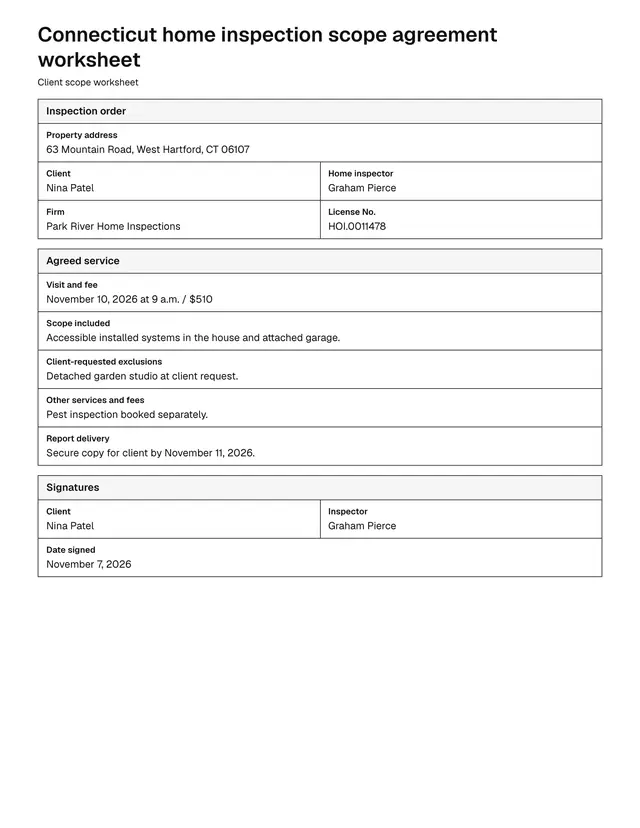
Connecticut home inspection scope agreement worksheet
The contract a client signs for a home inspection. - Florida
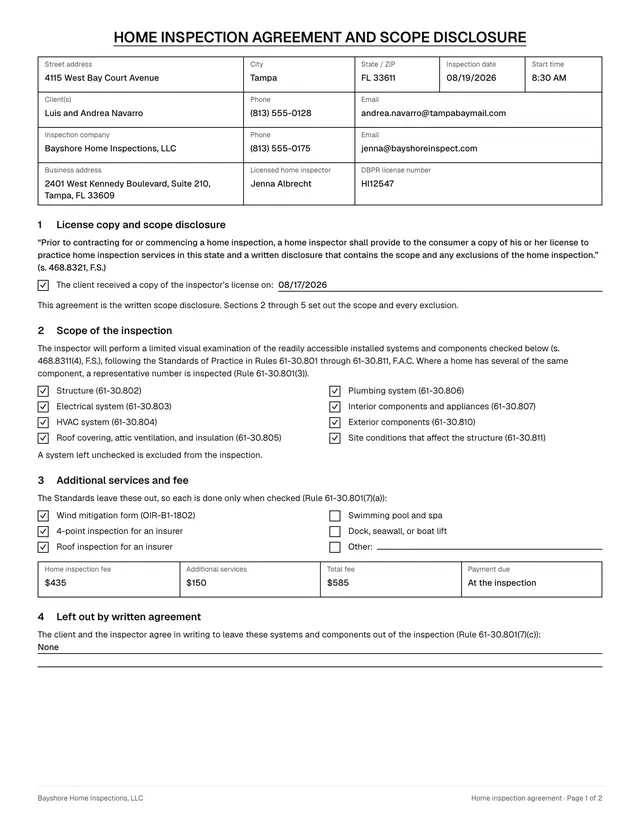
Home Inspection Agreement and Scope Disclosure
The contract a client signs for a home inspection. - Georgia
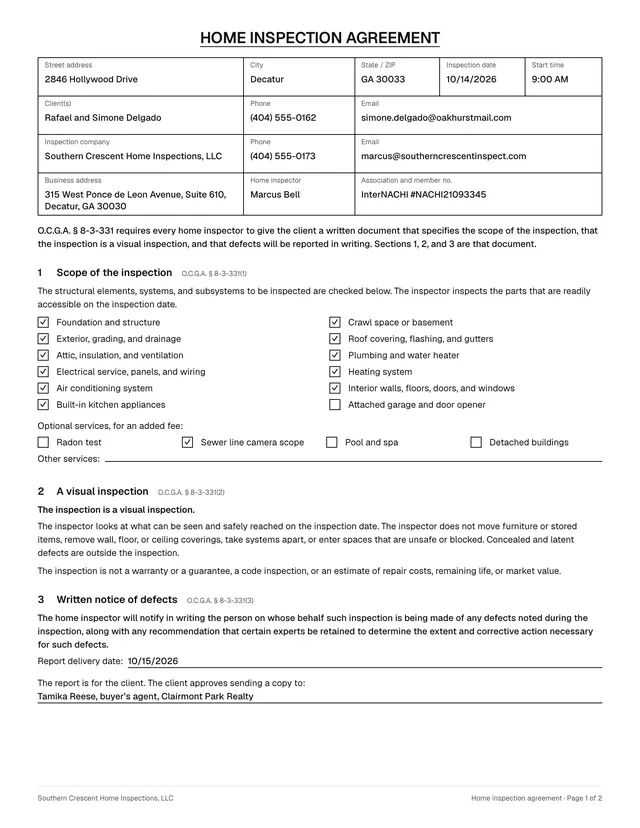
Home Inspection Agreement
The contract a client signs for a home inspection. - Hawaii
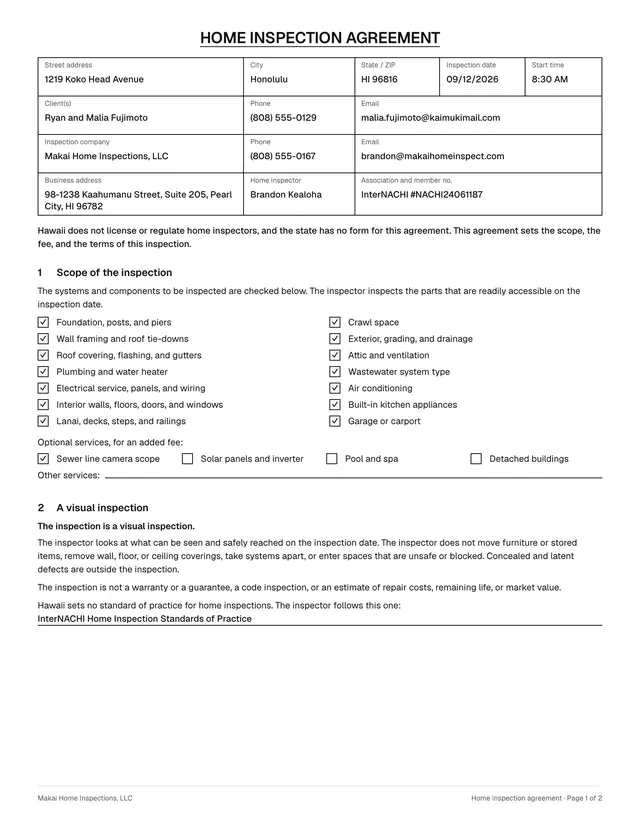
Home Inspection Agreement
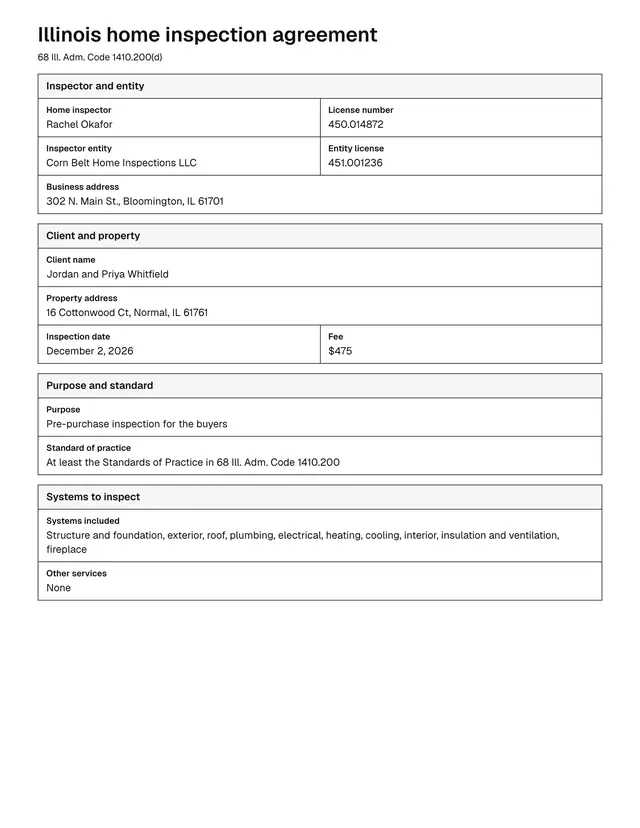
The contract a client signs for a home inspection. - Illinois
Illinois home inspection agreement
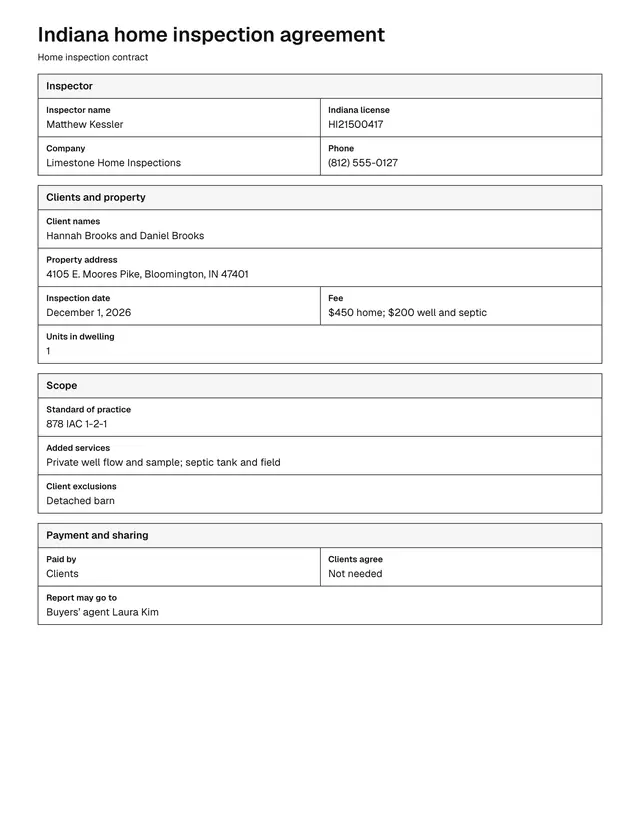
The contract a client signs for a home inspection. - Indiana
Indiana home inspection agreement
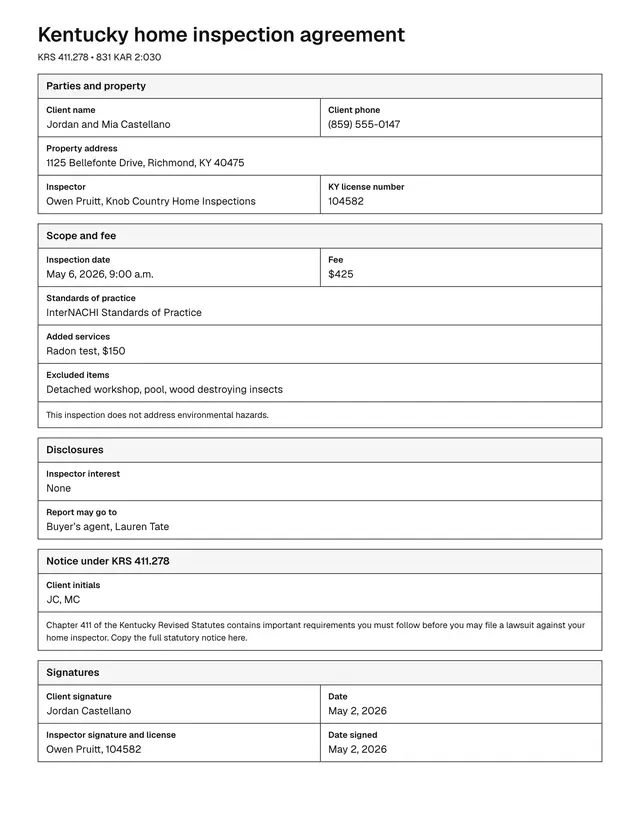
The contract a client signs for a home inspection. - Kentucky
Kentucky home inspection agreement
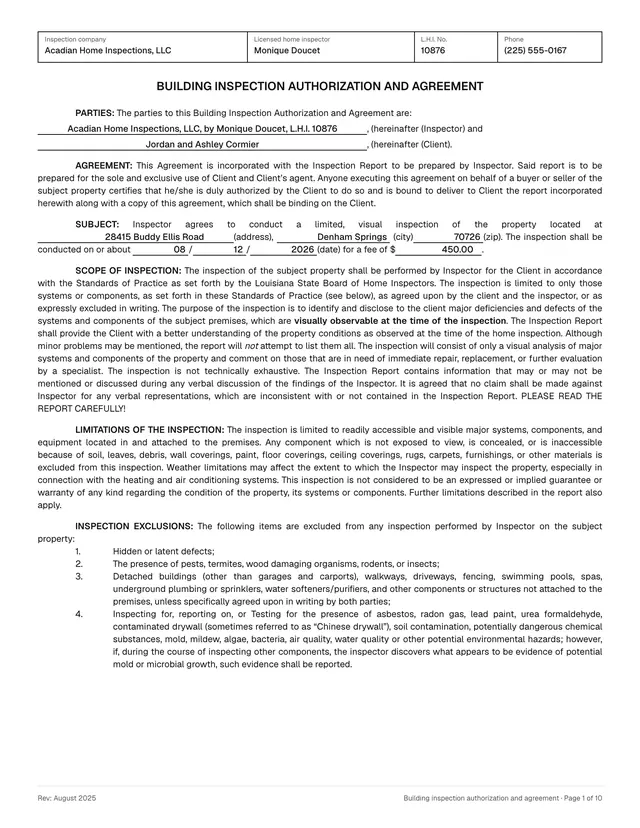
The contract a client signs for a home inspection. - Louisiana
Building Inspection Authorization and Agreement
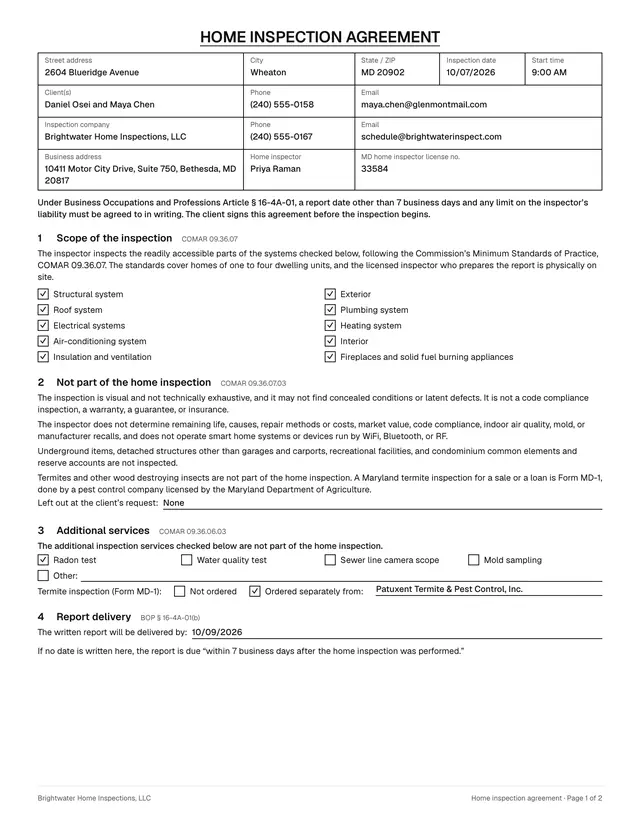
The contract a client signs for a home inspection. - Maryland
Home Inspection Agreement
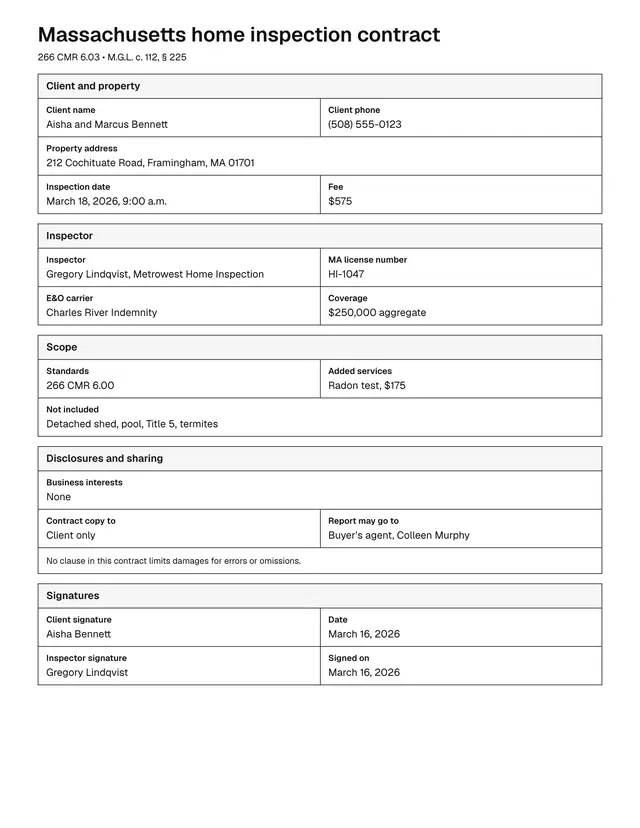
The contract a client signs for a home inspection. - Massachusetts
Massachusetts home inspection contract (266 CMR 6.03)
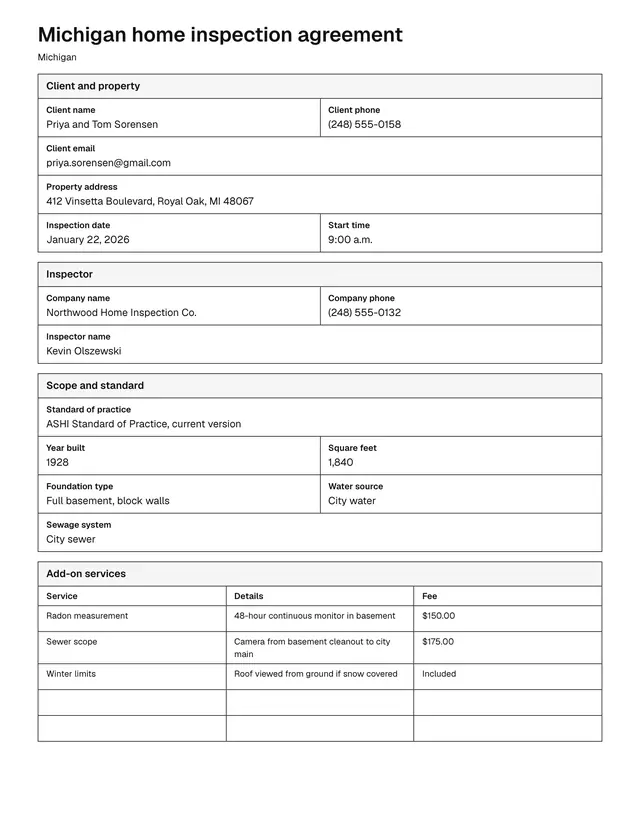
The contract a client signs for a home inspection. - Michigan
Michigan home inspection agreement
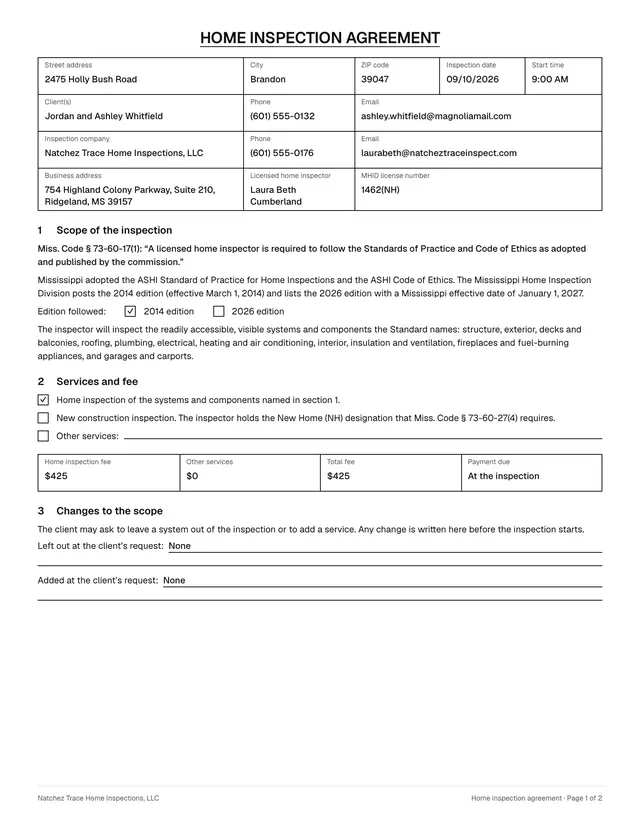
The contract a client signs for a home inspection. - Mississippi
Home Inspection Agreement
The contract a client signs for a home inspection. - Missouri
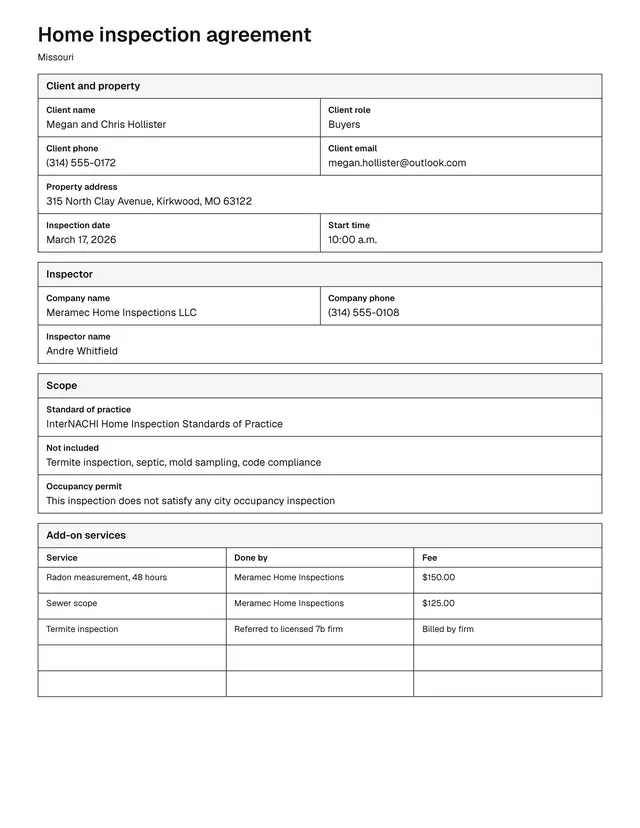
Missouri home inspection agreement
The contract a client signs for a home inspection. - Nevada
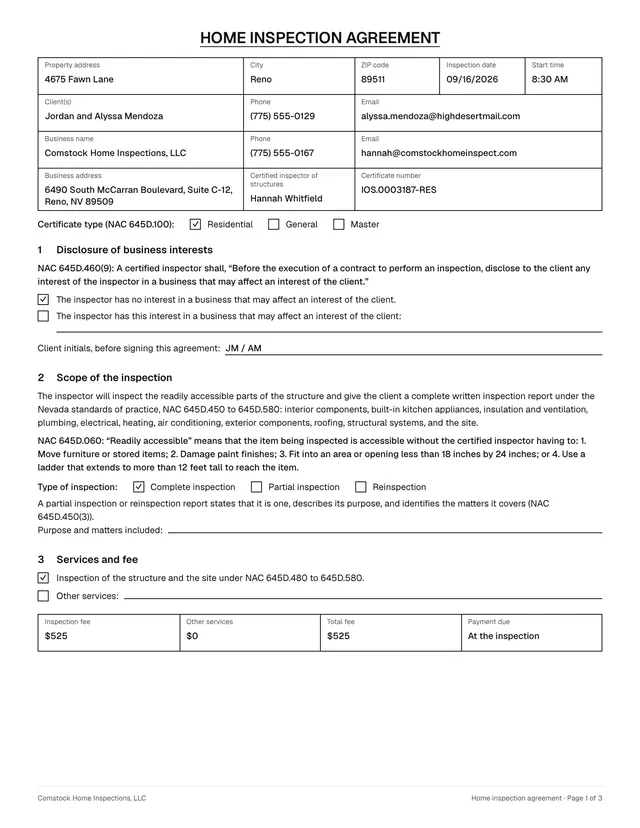
Home Inspection Agreement
The contract a client signs for a home inspection. - New Jersey
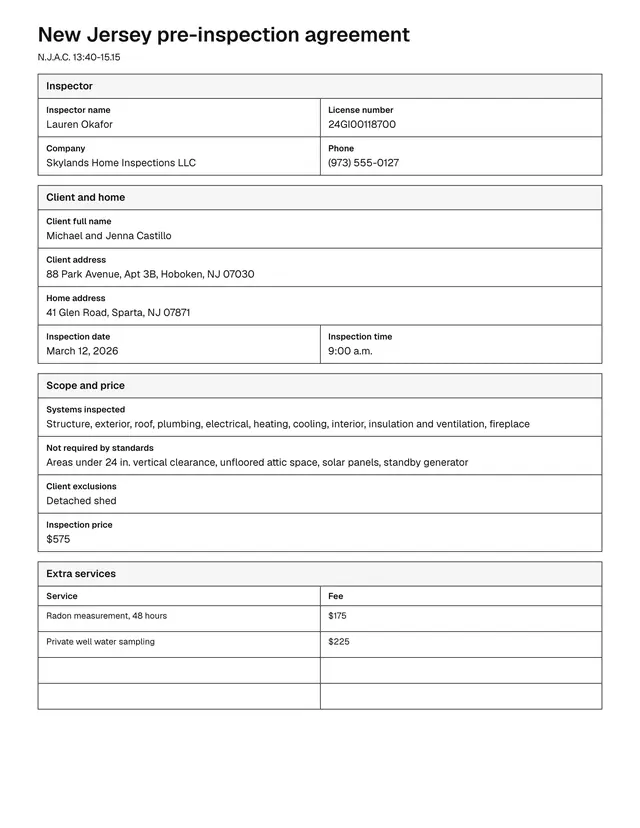
New Jersey pre-inspection agreement (N.J.A.C. 13:40-15.15)
The contract a client signs for a home inspection. - New Mexico
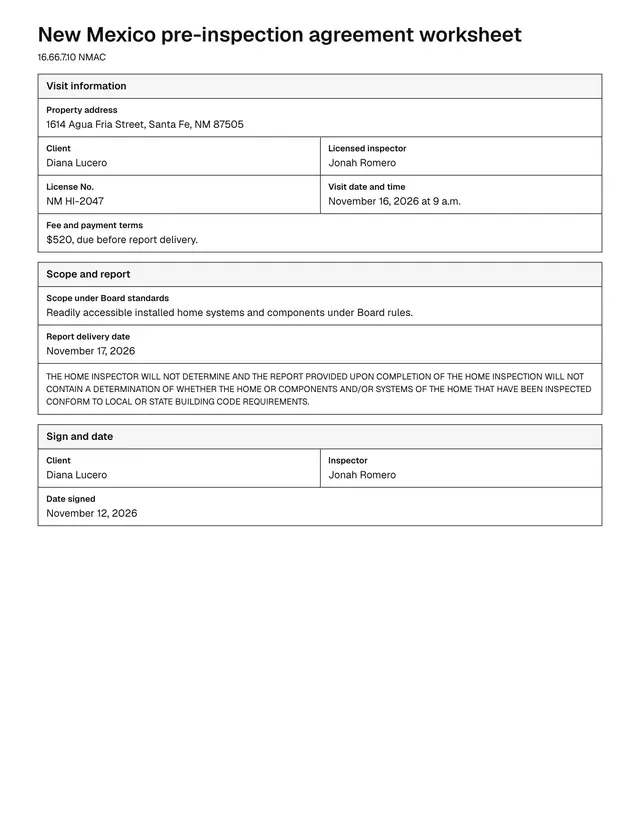
New Mexico pre-inspection agreement worksheet
The contract a client signs for a home inspection. - New York
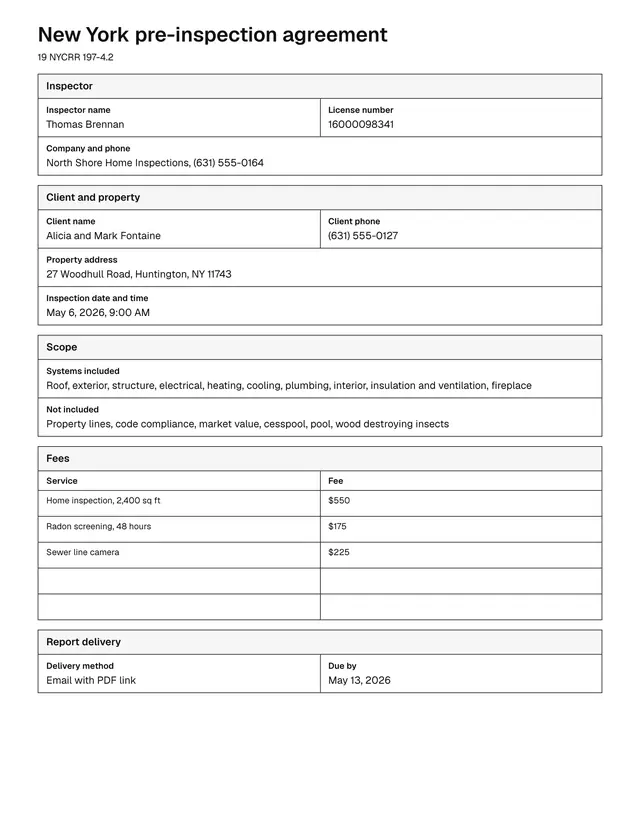
New York pre-inspection agreement (19 NYCRR 197-4.2)
The contract a client signs for a home inspection. - North Carolina
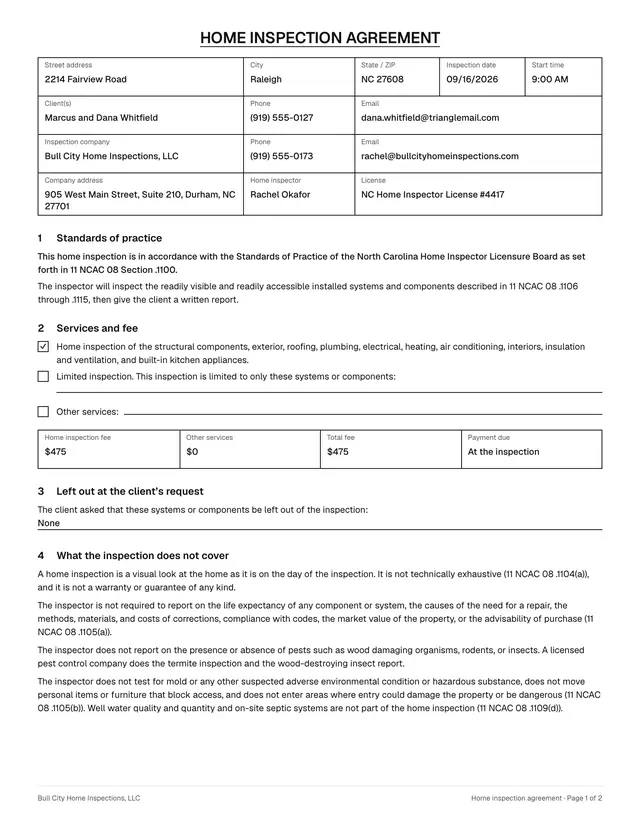
Home Inspection Agreement
The contract a client signs for a home inspection. - Ohio
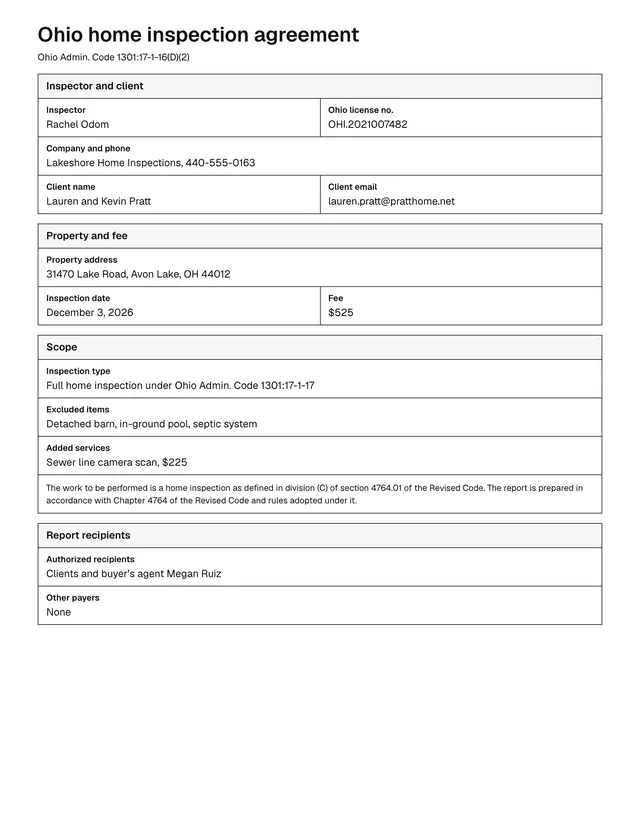
Ohio home inspection agreement
The contract a client signs for a home inspection. - Oklahoma
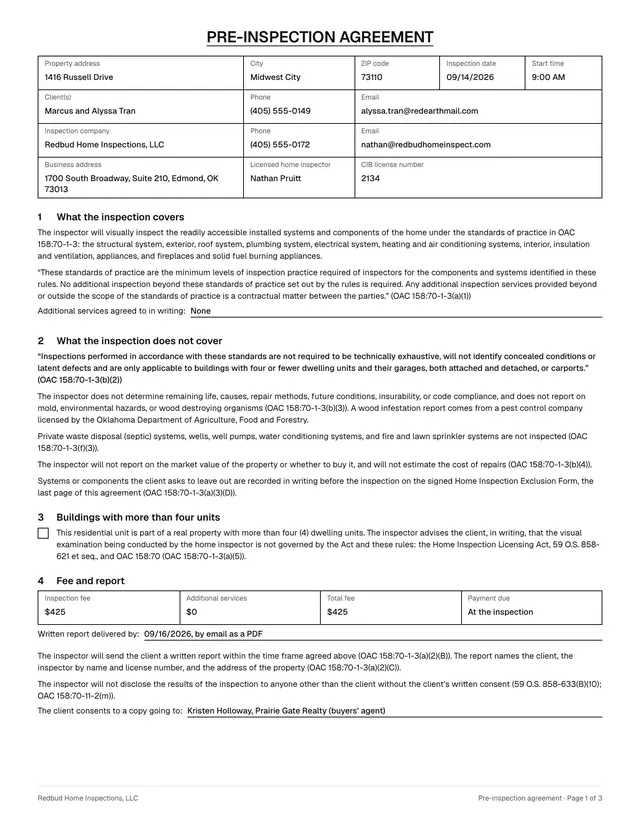
Pre-Inspection Agreement
The contract a client signs for a home inspection. - Oregon
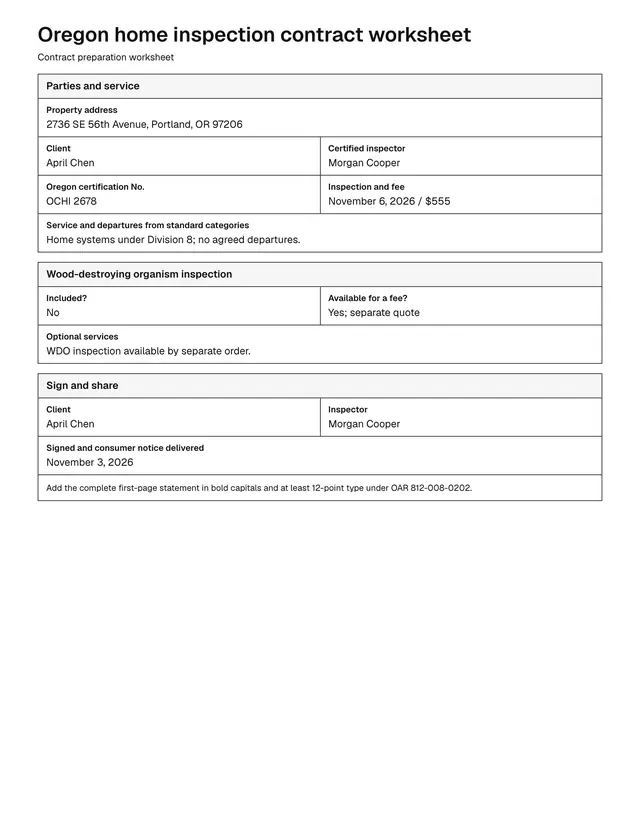
Oregon home inspection contract worksheet
The contract a client signs for a home inspection. - Pennsylvania
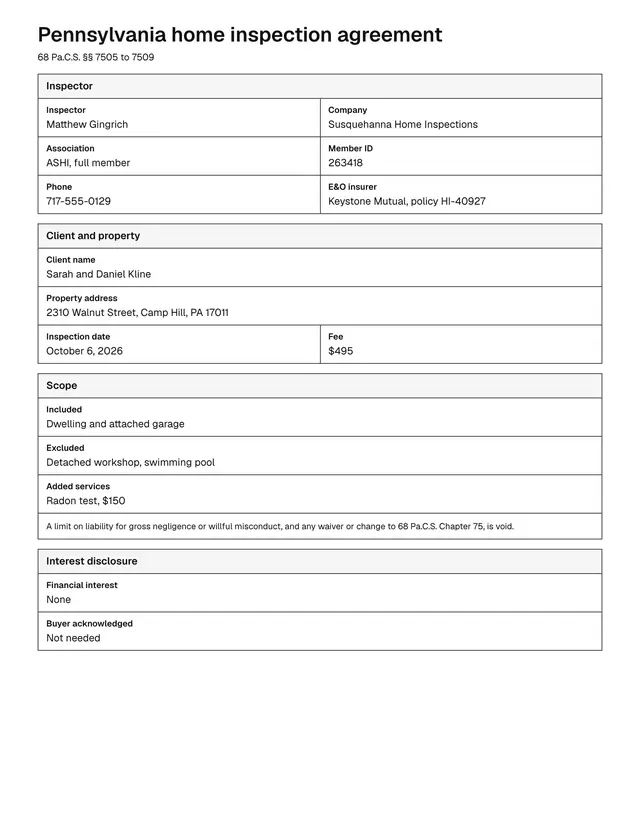
Pennsylvania home inspection agreement
The contract a client signs for a home inspection. - South Carolina
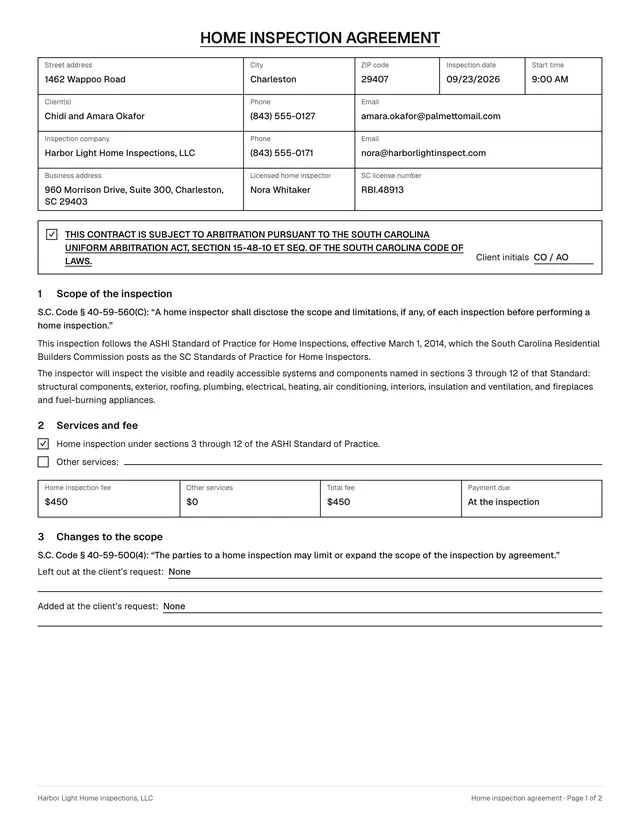
Home Inspection Agreement
The contract a client signs for a home inspection. - Tennessee
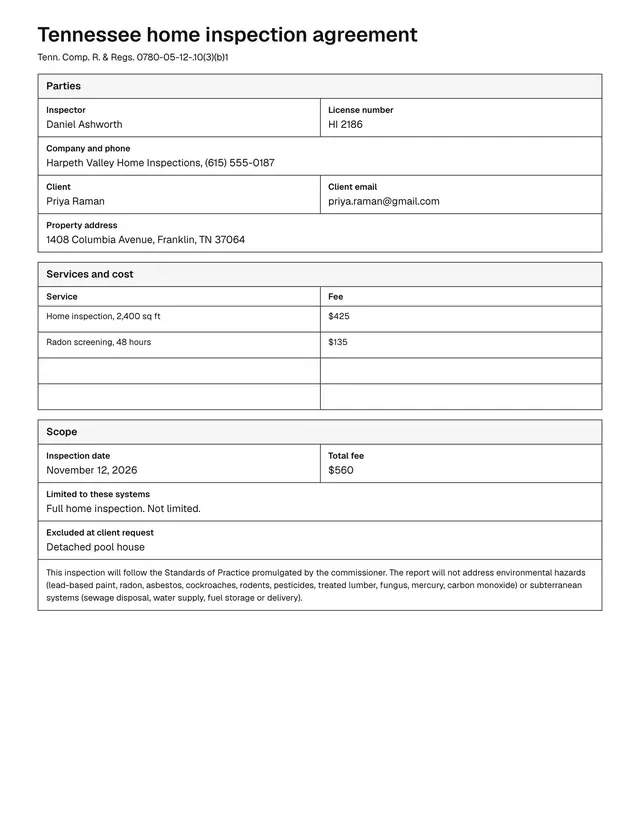
Tennessee home inspection agreement
The contract a client signs for a home inspection. - Texas
Home Inspection Agreement
The contract a client signs for a home inspection. - Virginia
Virginia home inspection contract
The contract a client signs for a home inspection. - Washington
Preinspection Agreement
The contract a client signs for a home inspection. - Wisconsin
Wisconsin home inspection agreement worksheet
The contract a client signs for a home inspection.