Tennessee home inspection agreement
Tennessee’s standards of practice, Rule 0780-05-12-.10, require a written contract signed by the client that says four specific things before you inspect.
At a glance
- Rule
- 0780-05-12-.10(3)(b)1
- Signed by
- Client or legal representative
- Disclose first
- Business interests (.11(7))
- Keep for
- 3 years
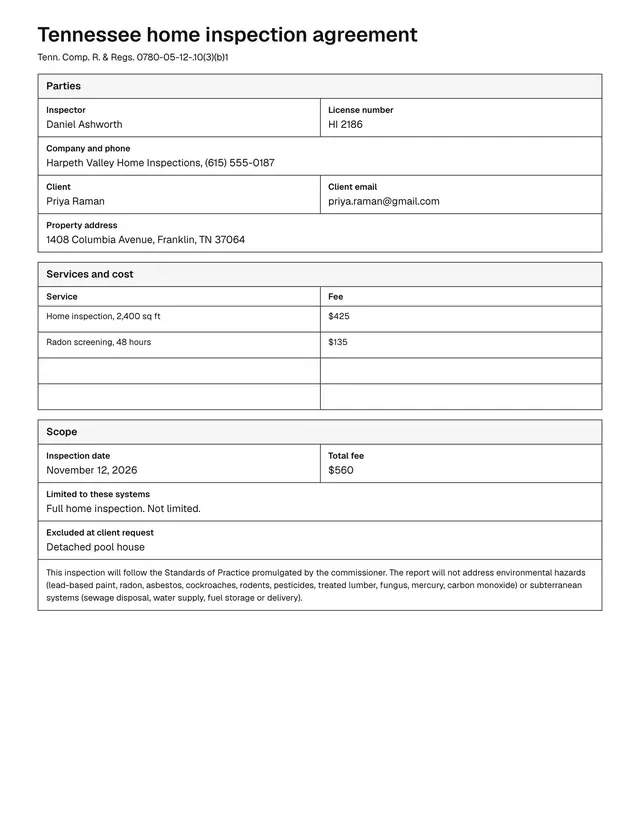
Completed example
Download PDFThe four statements every Tennessee contract needs
Tennessee keeps its contract rule short, which makes it easy to miss a piece. Under rule 0780-05-12-.10(3)(b)1, you must “provide a written contract, signed by the client or the client’s legal representative.” Then the rule lists four things the contract shall do.
Name the standard. State that the inspection “will be in accordance with the Standards of Practice promulgated by the commissioner.” Don’t just name ASHI or InterNACHI. You can follow those too, but the state standard has to be in there.
List services and cost. Describe what you’ll do and what it costs. If radon testing or a sewer scope is an add-on, give it its own line and price.
Carve out the exclusions. Say the report won’t address the items in parts (5)(a)4 and 5. Then, if the client hired you for only one or a few systems, like a roof-only job, say the inspection is limited to those systems.
That’s the whole state list. Tennessee doesn’t require a cancellation clause, a liability cap, or an arbitration clause. Many inspectors add them, but they’re your choice, not the state’s.
What those two exclusion lists cover
Part (5)(a)4 is environmental hazards. The rule names lead-based paint, radon, asbestos, cockroaches, rodents, pesticides, treated lumber, fungus, mercury, and carbon monoxide, plus “other similar environmental hazards.” Part (5)(a)5 is anything underground: sewage disposal, water supply, and fuel storage or delivery.
Spell both lists out in the contract instead of just citing the rule. A buyer in Franklin won’t look up 0780-05-12-.10, and they’ll read “radon” and “septic” far faster than a rule number. The same statement has to show up again in the written report, so use the same words in both.
A client can still order radon. The exclusion only means the standard report won’t cover it. Add radon as its own service with its own price, and the contract stays accurate about what the client bought.
Since septic systems fall under that underground exclusion, a rural job often needs a second contract for a septic inspection. Price it as its own service so nobody thinks it was part of the base fee.
The ethics rules that touch the contract
Before the contract is signed, rule 0780-05-12-.11(7) says you “shall disclose to the client any interest in a business that may affect the client.” If you also own a pest control company or refer roofing work to a cousin, say so in writing before the signature, not after.
The same rule bars taking pay from more than one party for the same inspection without everyone’s consent, and taking commissions from people dealing with the client. It also bars giving an opinion on market value. If an agent pays for the inspection as a gift, note who paid and get the client’s okay in the agreement.
Keep the signed copy. Rule 0780-05-12-.14 says licensees keep “all written contracts and agreements” and reports for at least three years from the inspection date. A PDF with an e-signature counts as an electronic copy.
Dropping a system or doing just one
Clients can drop part of the job. Part (3)(c) says you may exclude systems or components at the client’s request, as long as the written contract says so. Write the exact item, like “detached pool house” or “lawn sprinklers,” not “some outbuildings.”
A roof-only or HVAC-only job goes further. The contract has to say the inspection is limited to those systems. That one line keeps a client from expecting a full report for a one-system fee.
The standards cover one to four family homes, plus attached garages and carports. A detached garage or barn sits outside them. If you’ll look at it anyway, list it as its own service and price.
How do you get it signed before you pull into the driveway?
Closings in Middle Tennessee move fast, and buyers often book an inspection two days out. The contract has to be signed before you start, so chasing a signature on the porch eats the first half hour.
If the buyer adds radon or a sewer scope after signing, send an updated agreement with the new line and fee. The cost section has to match what you actually did.
Noma specializes in the Tennessee Home Inspection Agreement (Tenn. Comp. R. & Regs. 0780-05-12-.10). Upload your agreement once as a reusable document, and Noma sends it for e-signature with every booked inspection, right when the client books online. See how Noma handles inspection agreements.
Frequentlyaskedquestions
Send this document in minutes, not an afternoon.
Other states
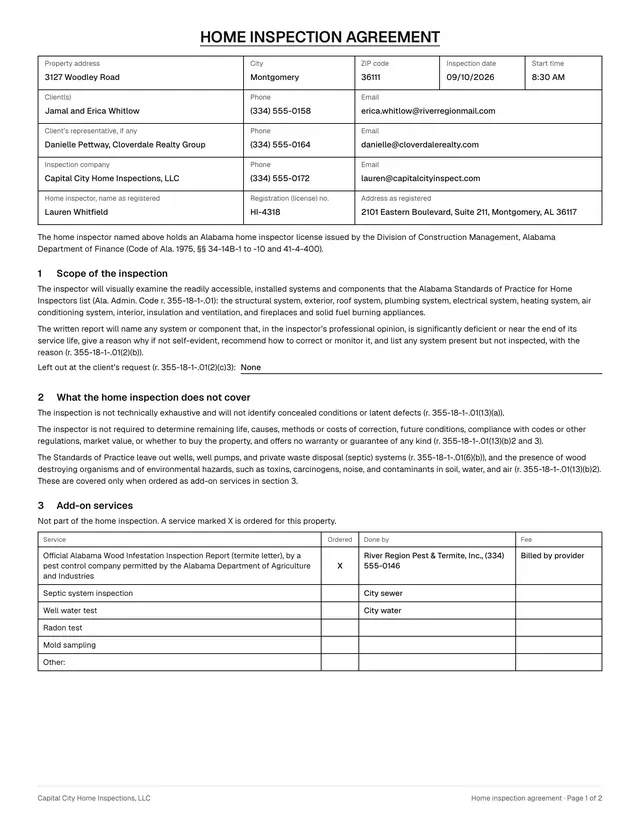
Home inspection agreement templates- Alabama
Home Inspection Agreement
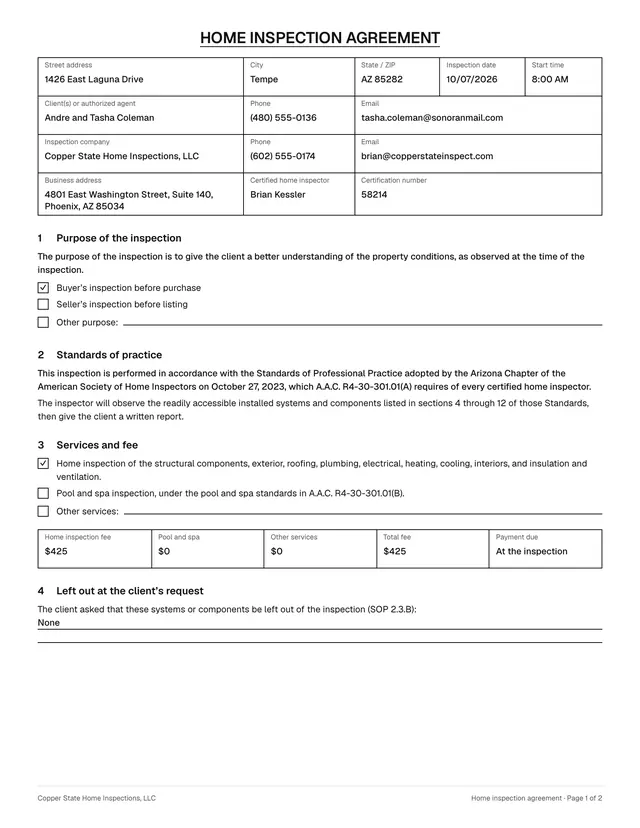
The contract a client signs for a home inspection. - Arizona
Home Inspection Agreement
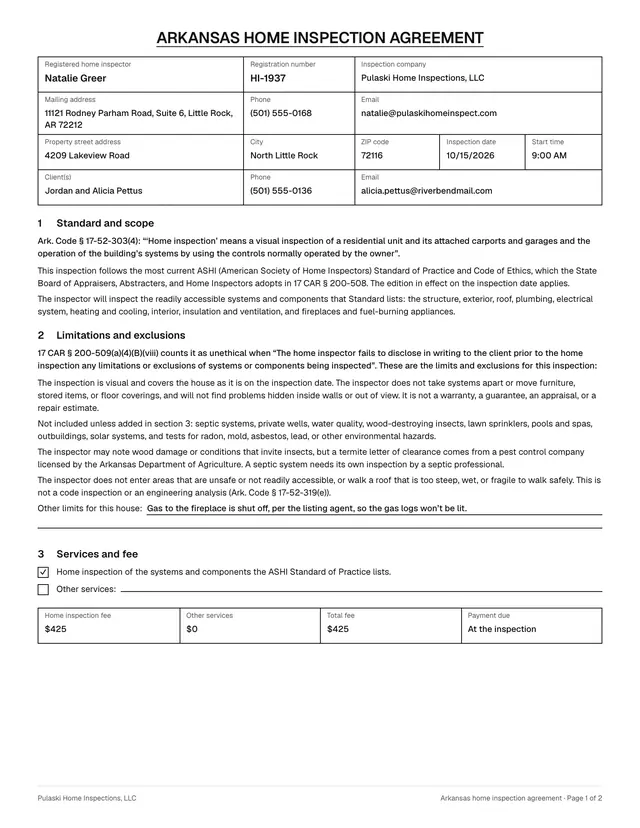
The contract a client signs for a home inspection. - Arkansas
Arkansas Home Inspection Agreement
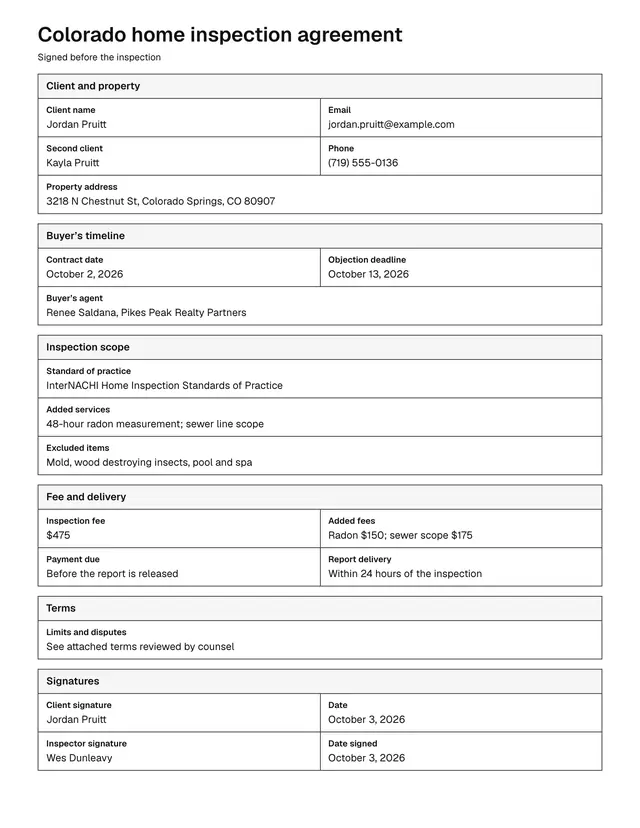
The contract a client signs for a home inspection. - Colorado
Colorado home inspection agreement
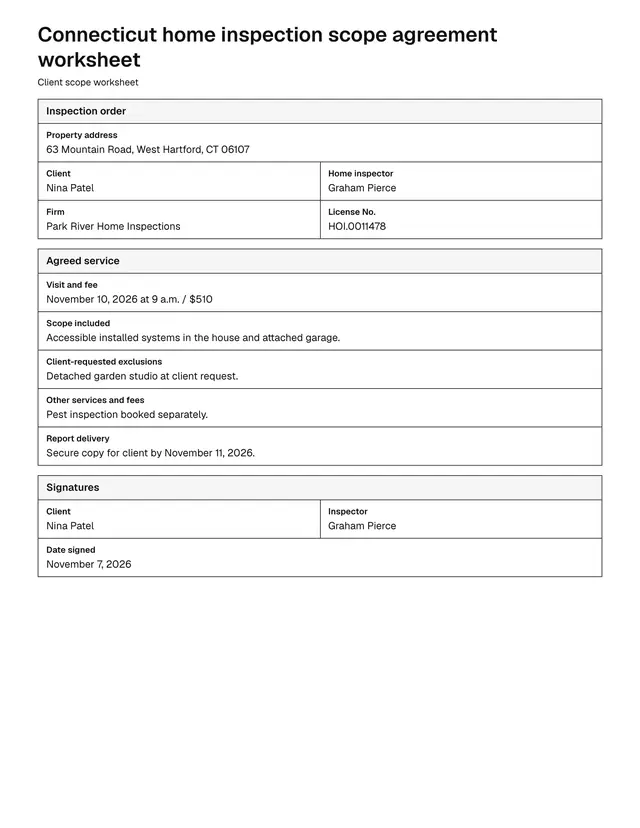
The contract a client signs for a home inspection. - Connecticut
Connecticut home inspection scope agreement worksheet
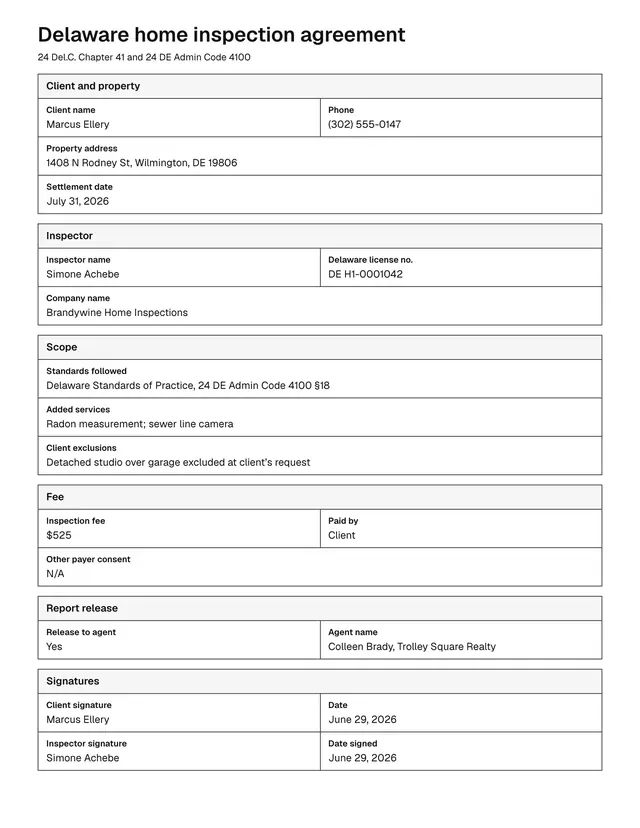
The contract a client signs for a home inspection. - Delaware
Delaware home inspection agreement
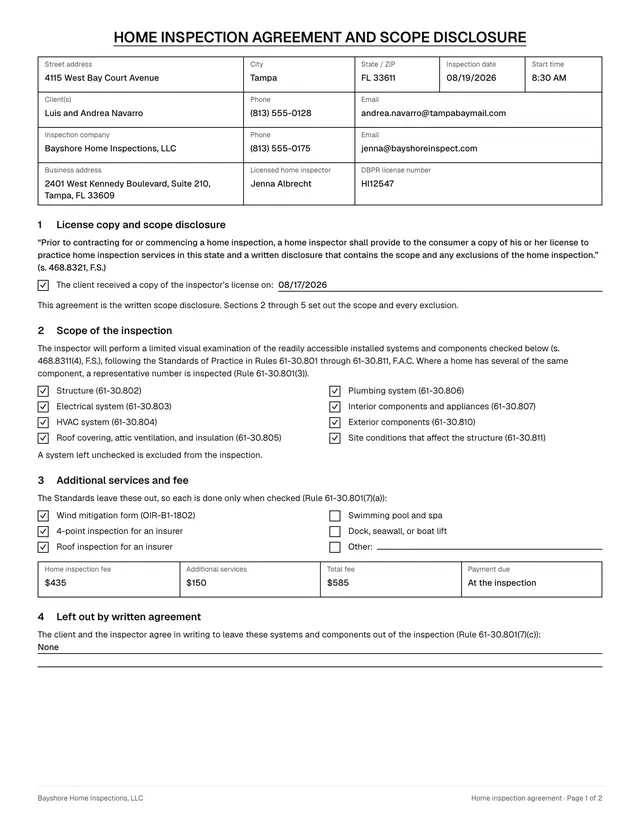
The contract a client signs for a home inspection. - Florida
Home Inspection Agreement and Scope Disclosure
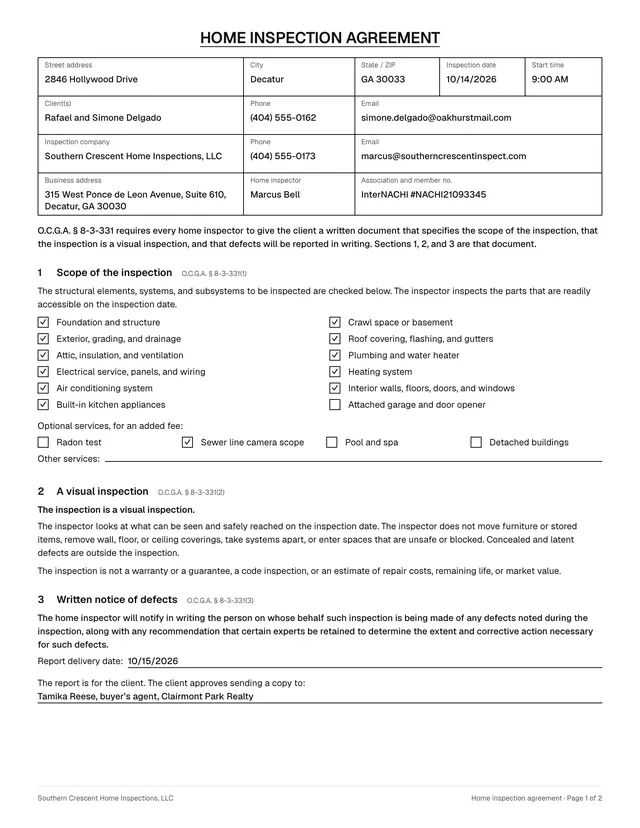
The contract a client signs for a home inspection. - Georgia
Home Inspection Agreement
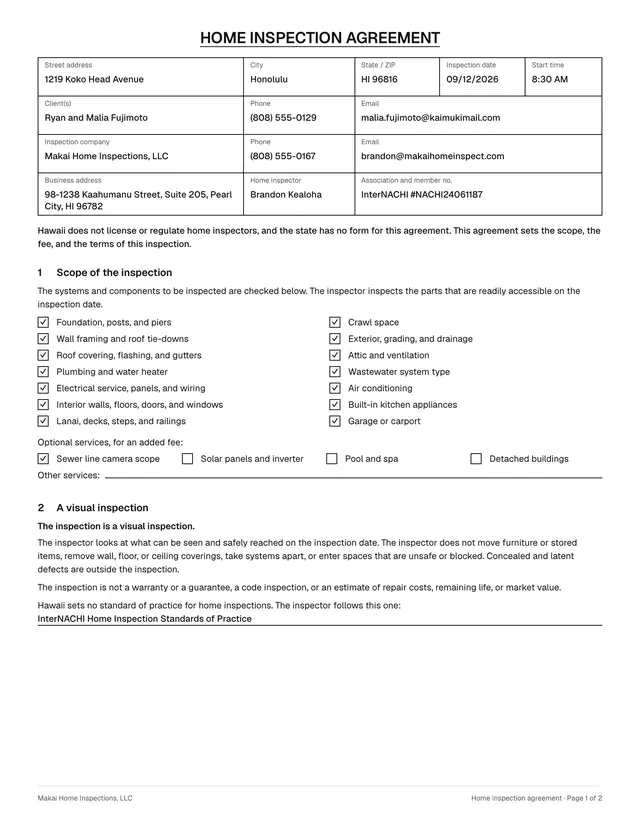
The contract a client signs for a home inspection. - Hawaii
Home Inspection Agreement
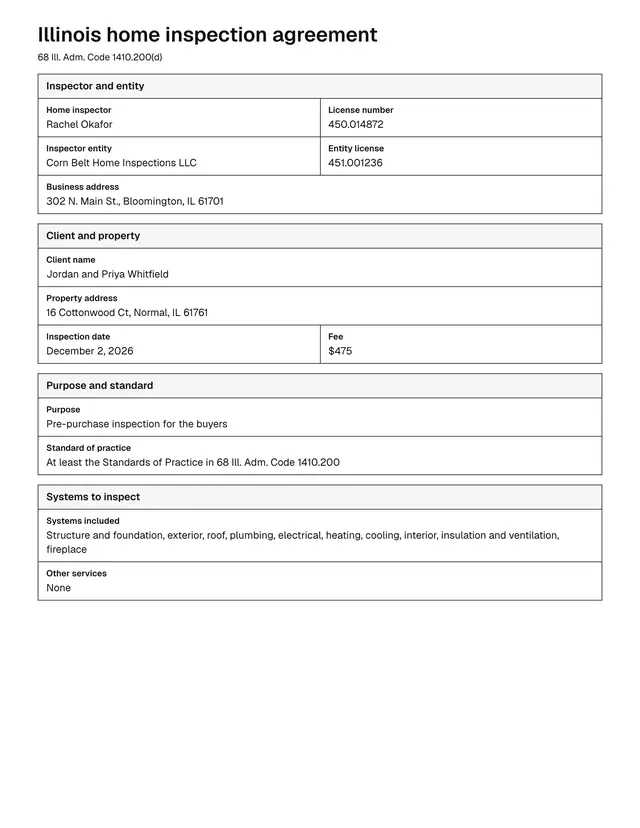
The contract a client signs for a home inspection. - Illinois
Illinois home inspection agreement
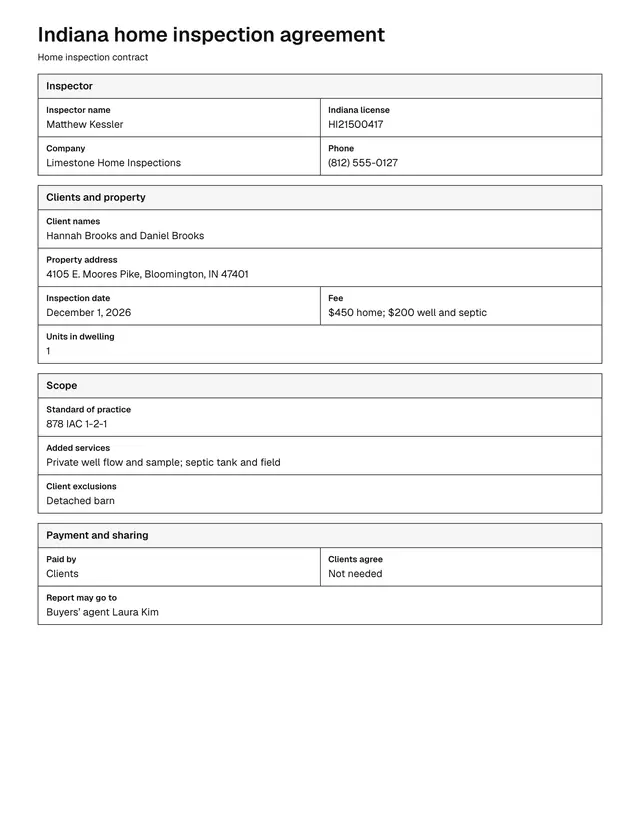
The contract a client signs for a home inspection. - Indiana
Indiana home inspection agreement
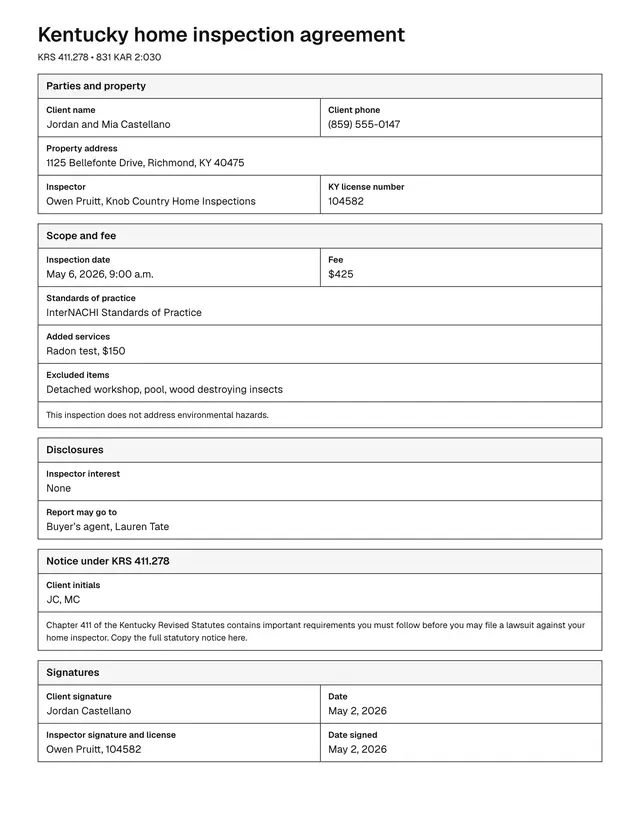
The contract a client signs for a home inspection. - Kentucky
Kentucky home inspection agreement
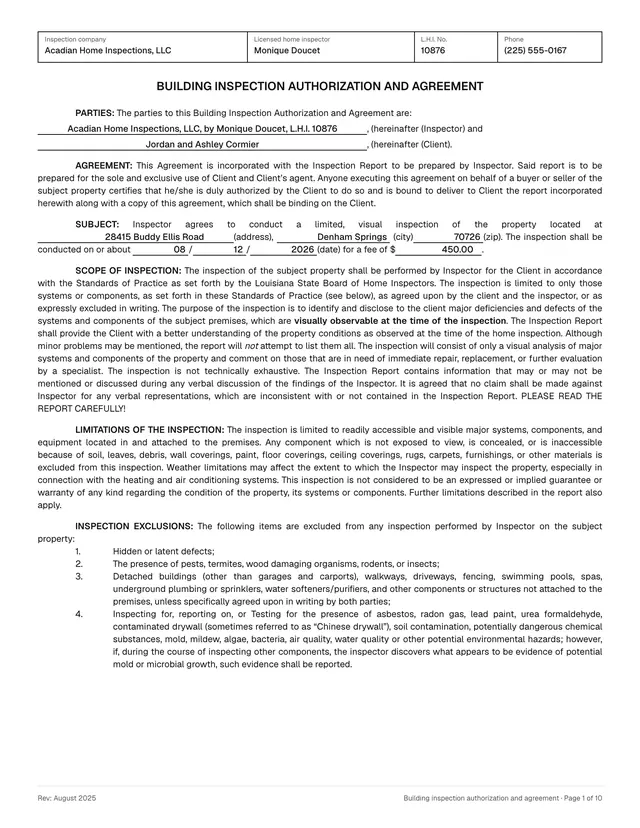
The contract a client signs for a home inspection. - Louisiana
Building Inspection Authorization and Agreement
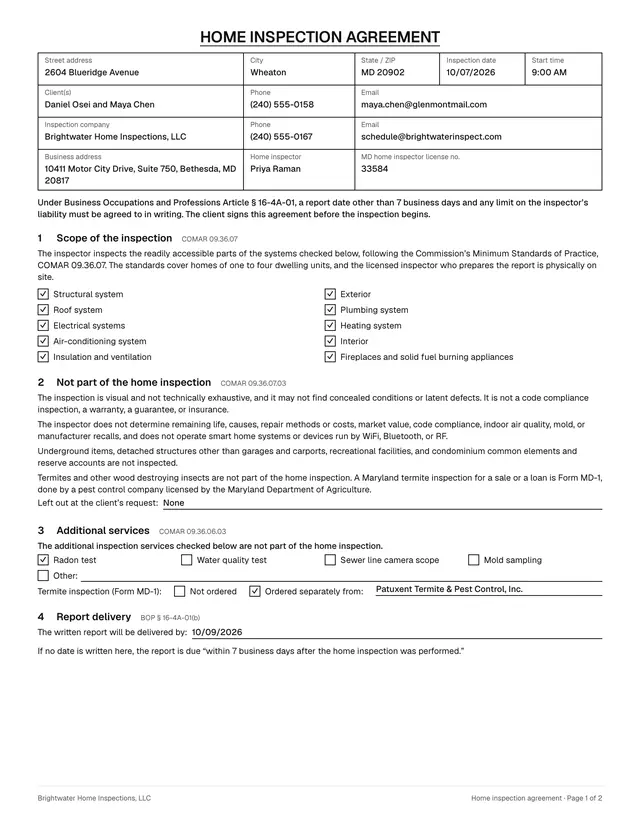
The contract a client signs for a home inspection. - Maryland
Home Inspection Agreement
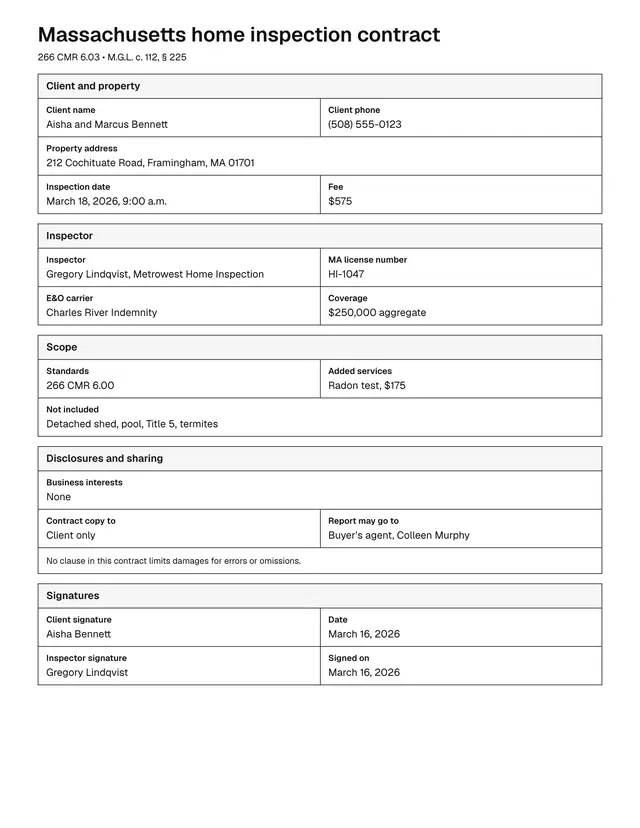
The contract a client signs for a home inspection. - Massachusetts
Massachusetts home inspection contract (266 CMR 6.03)
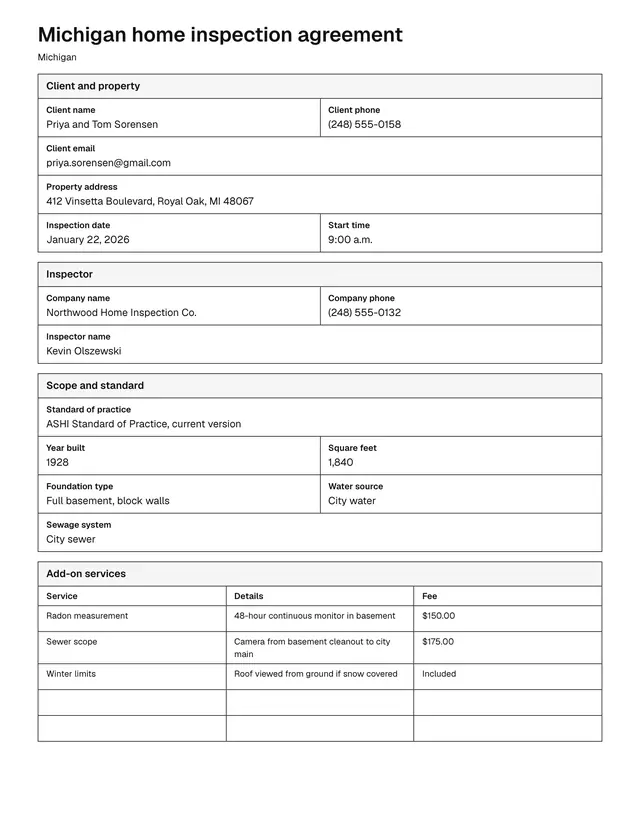
The contract a client signs for a home inspection. - Michigan
Michigan home inspection agreement
The contract a client signs for a home inspection. - Mississippi
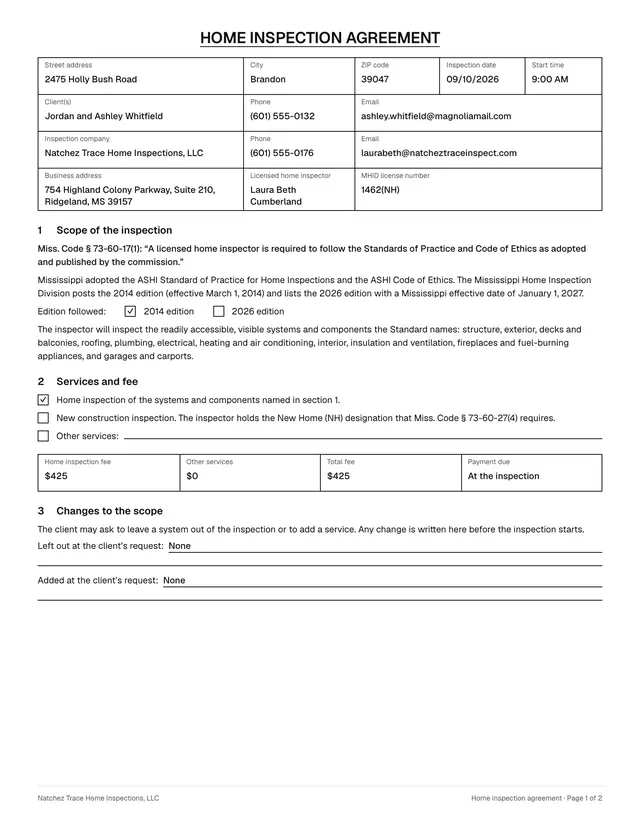
Home Inspection Agreement
The contract a client signs for a home inspection. - Missouri
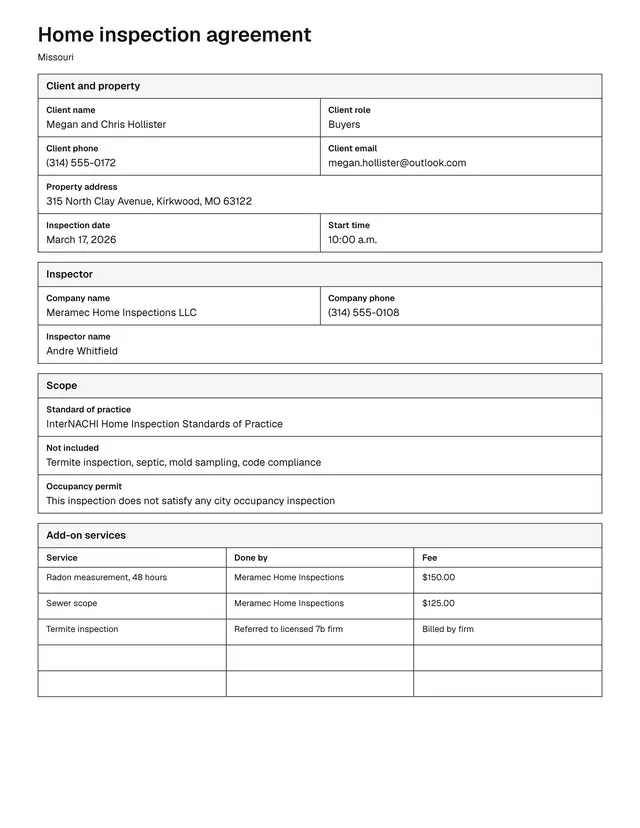
Missouri home inspection agreement
The contract a client signs for a home inspection. - Nevada
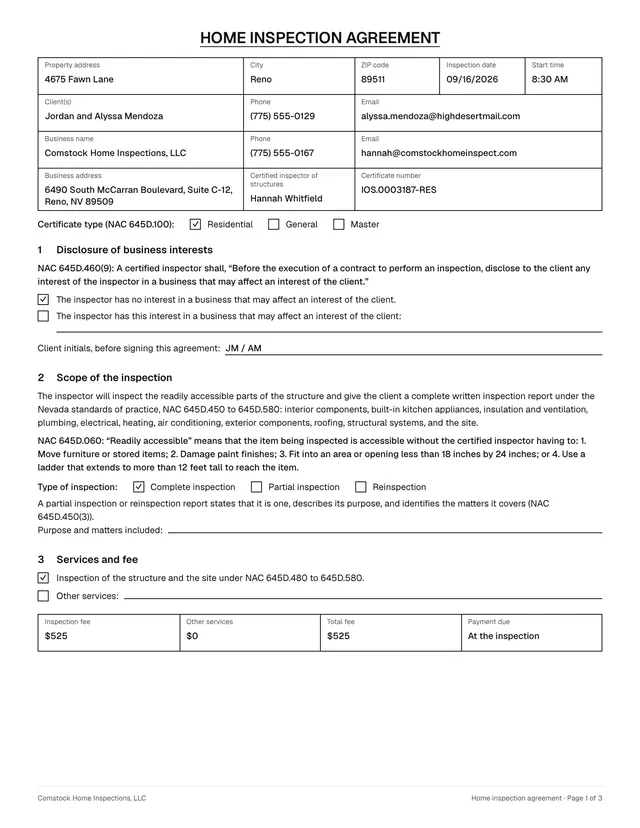
Home Inspection Agreement
The contract a client signs for a home inspection. - New Jersey
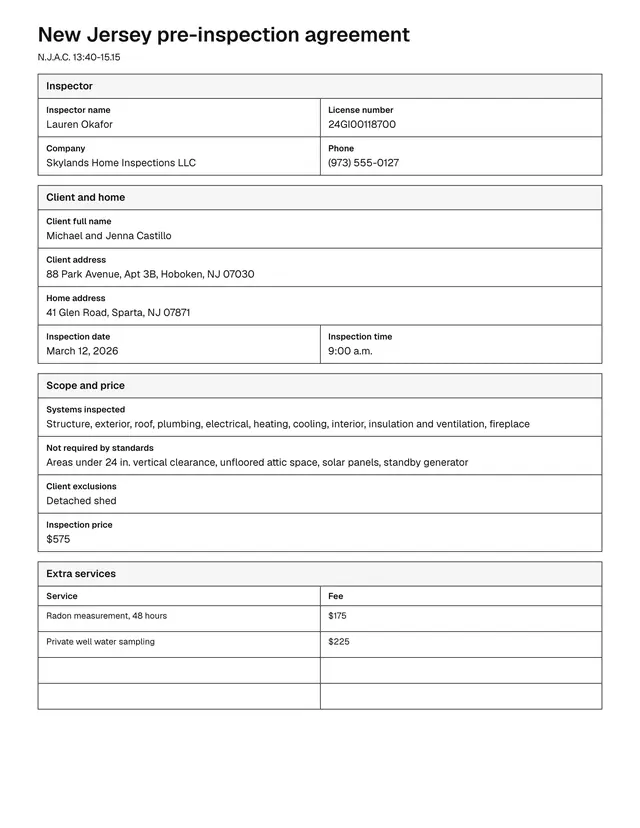
New Jersey pre-inspection agreement (N.J.A.C. 13:40-15.15)
The contract a client signs for a home inspection. - New Mexico
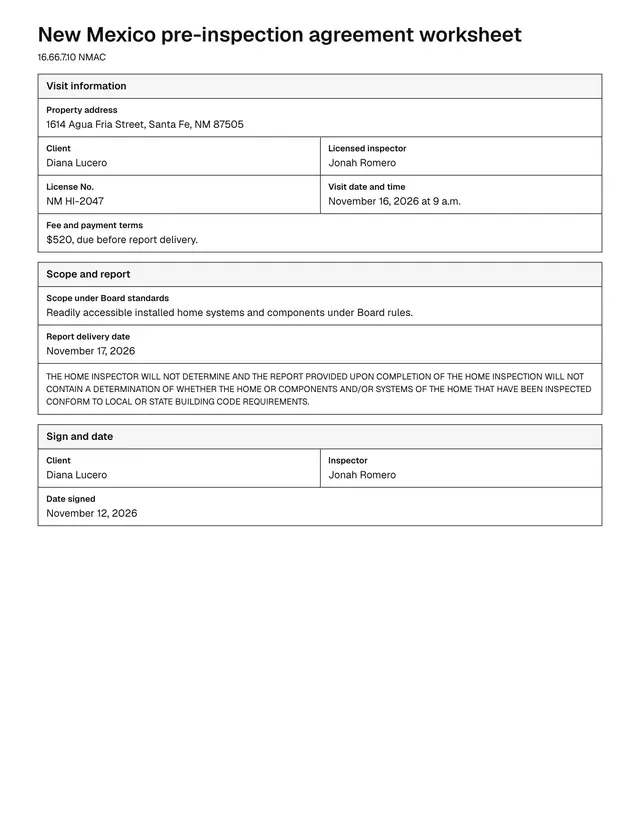
New Mexico pre-inspection agreement worksheet
The contract a client signs for a home inspection. - New York
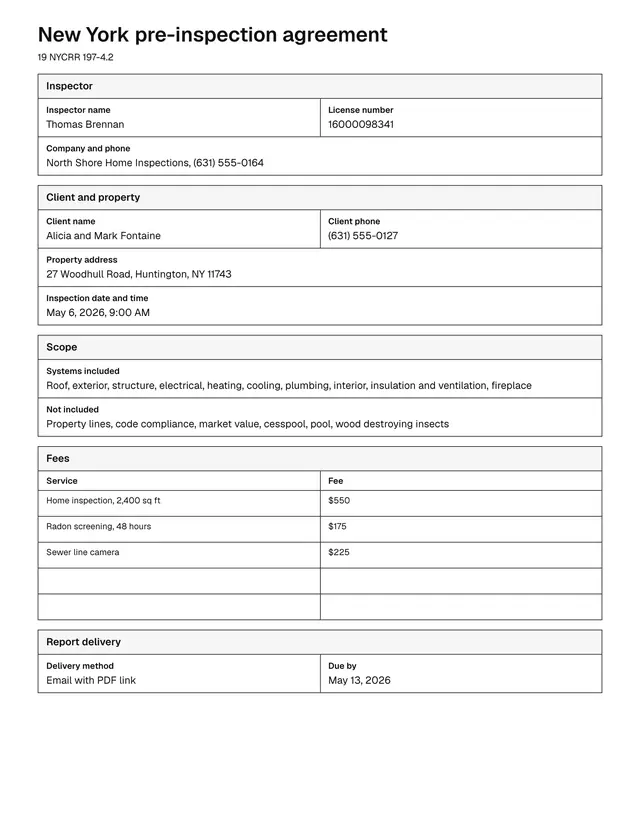
New York pre-inspection agreement (19 NYCRR 197-4.2)
The contract a client signs for a home inspection. - North Carolina
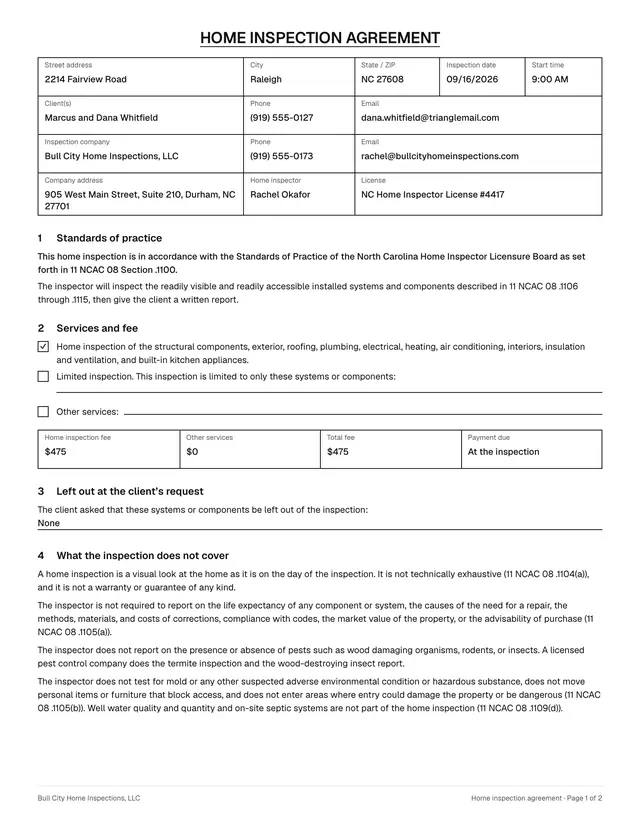
Home Inspection Agreement
The contract a client signs for a home inspection. - Ohio
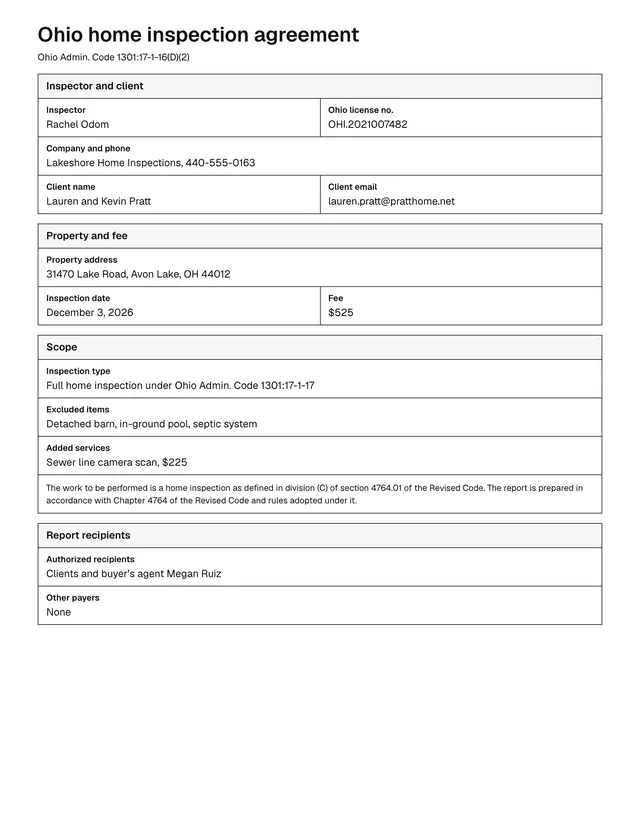
Ohio home inspection agreement
The contract a client signs for a home inspection. - Oklahoma
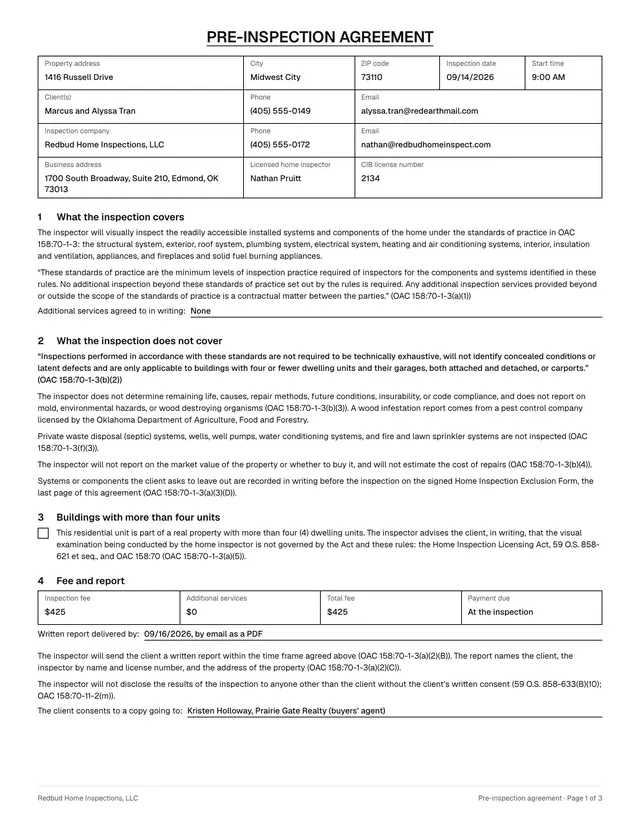
Pre-Inspection Agreement
The contract a client signs for a home inspection. - Oregon
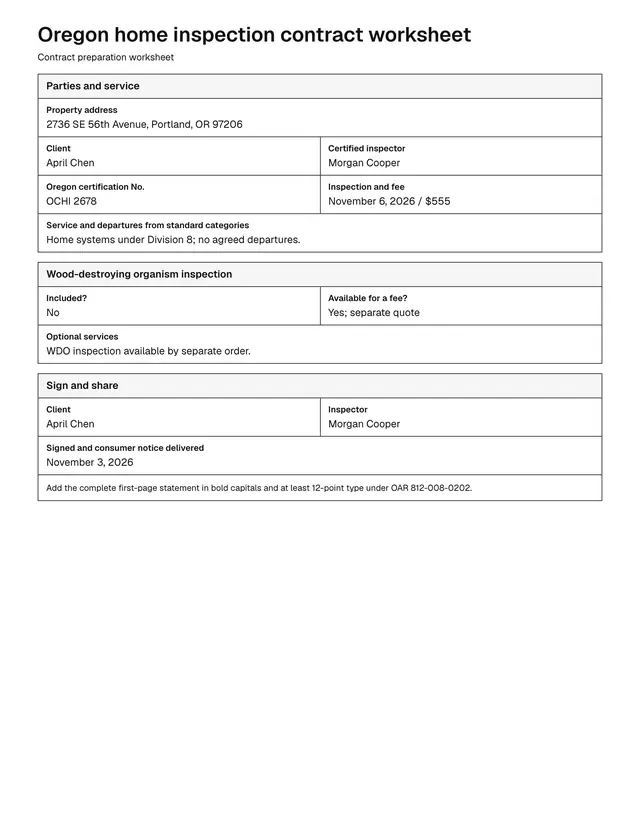
Oregon home inspection contract worksheet
The contract a client signs for a home inspection. - Pennsylvania
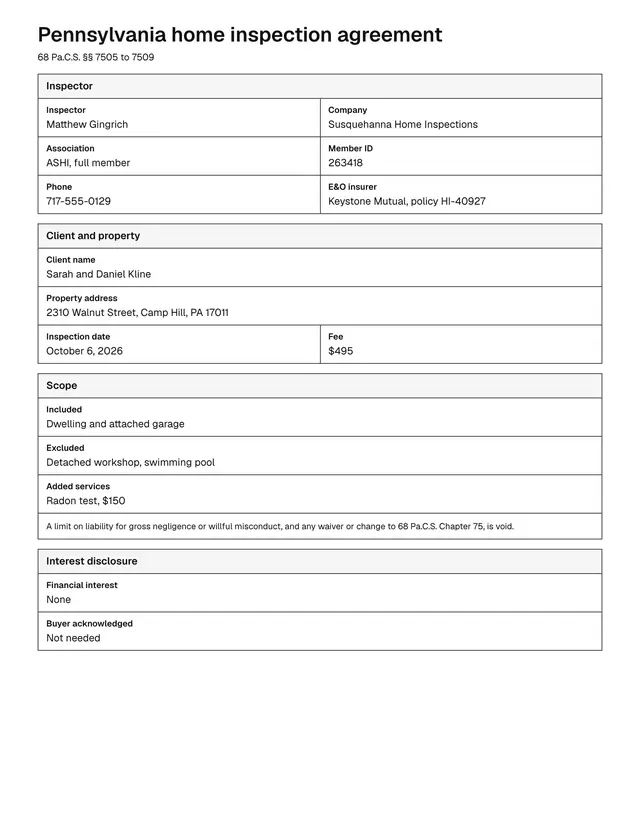
Pennsylvania home inspection agreement
The contract a client signs for a home inspection. - South Carolina
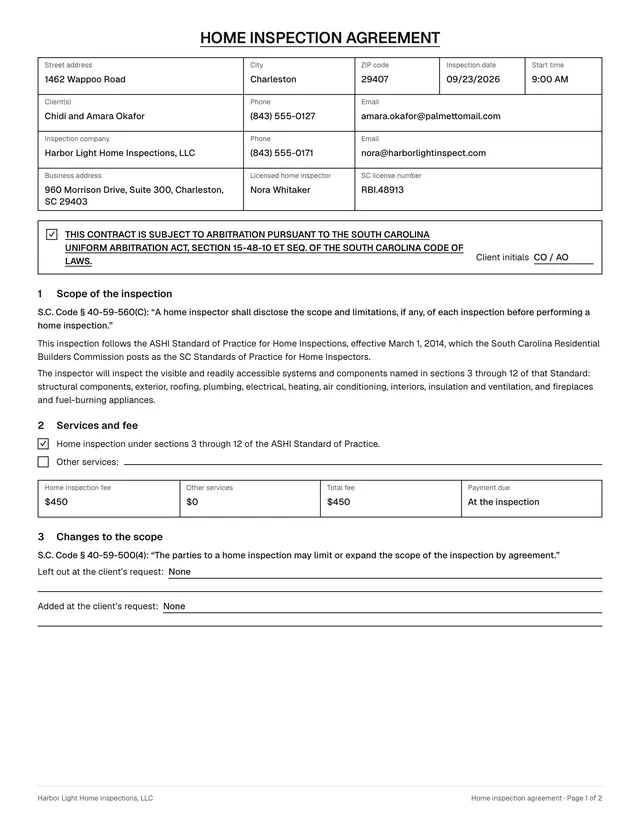
Home Inspection Agreement
The contract a client signs for a home inspection. - Texas
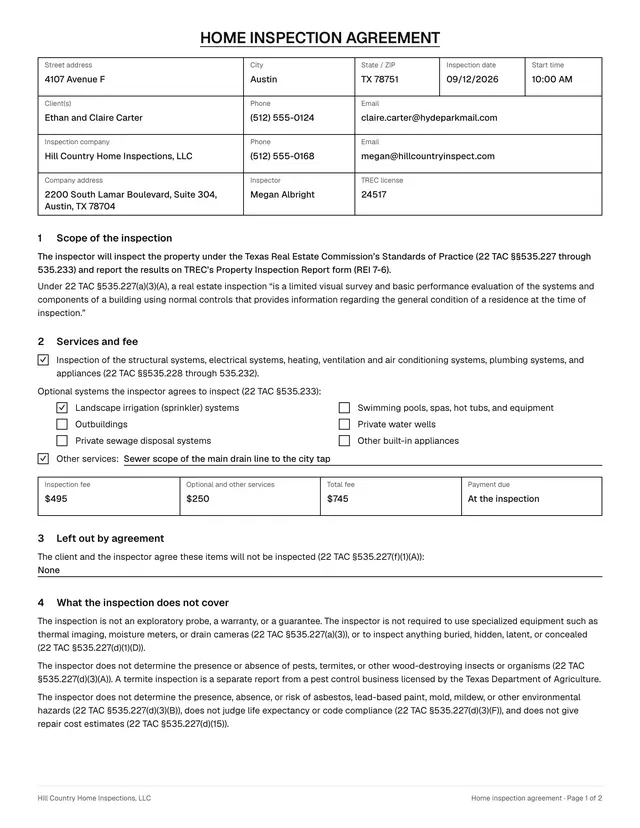
Home Inspection Agreement
The contract a client signs for a home inspection. - Virginia
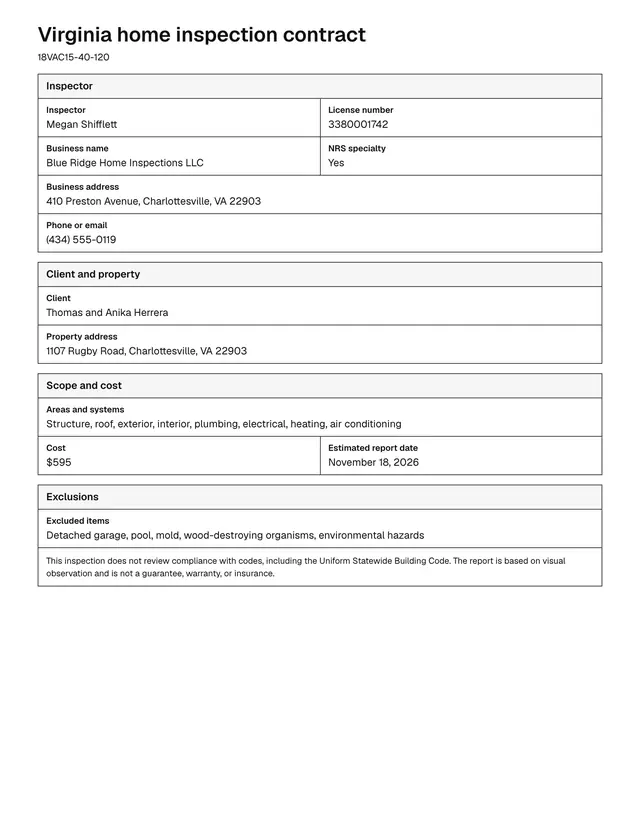
Virginia home inspection contract
The contract a client signs for a home inspection. - Washington
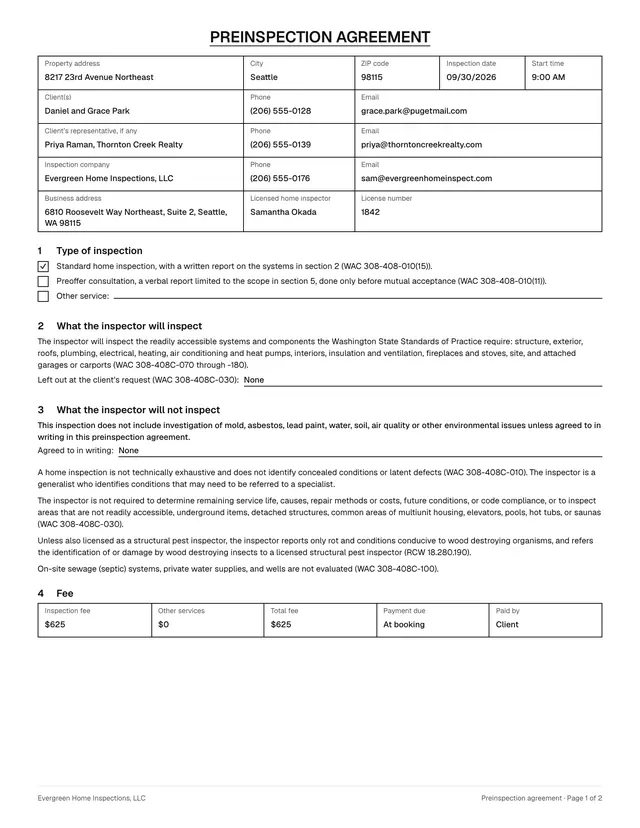
Preinspection Agreement
The contract a client signs for a home inspection. - Wisconsin
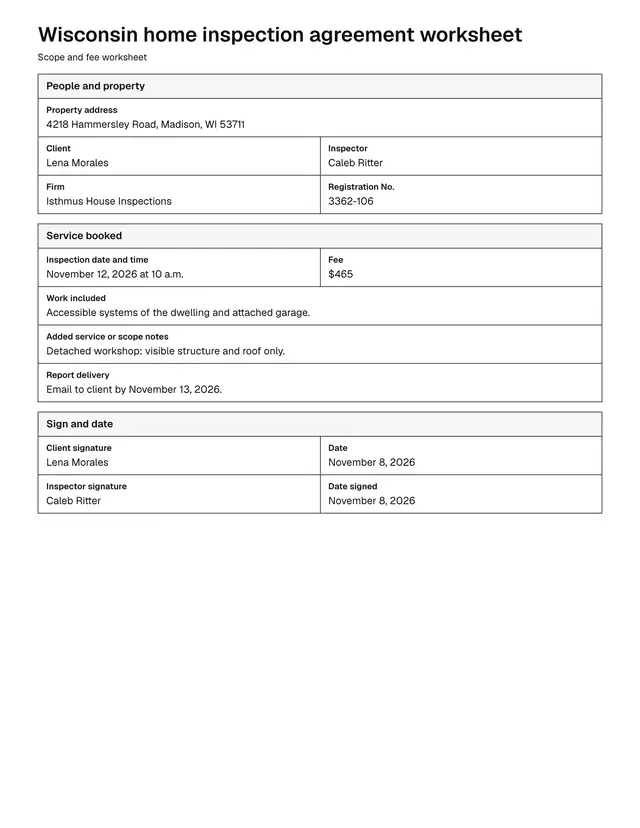
Wisconsin home inspection agreement worksheet
The contract a client signs for a home inspection.