Indiana home inspection agreement
Indiana doesn’t list what a pre-inspection agreement must say, but the law makes it count. A licensed inspector isn’t liable to anyone who isn’t a party to the contract.
At a glance
- Key law
- IC 25-20.2-9-2
- Scope floor
- 878 IAC 1-2-1
- Suit deadline
- 2 years (IC 25-20.2-9-1)
- Board
- Indiana Home Inspectors Licensing Board
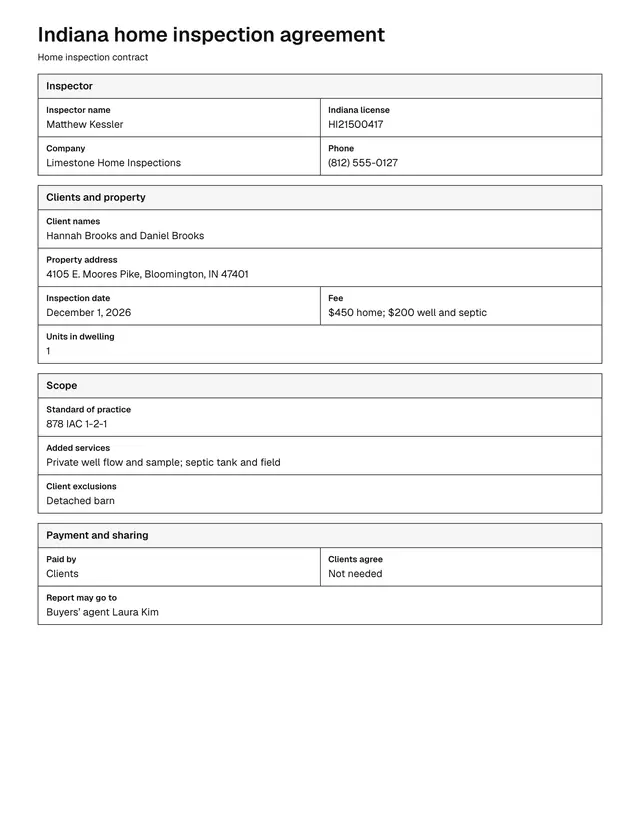
Completed example
Download PDFWhy the contract does so much work here
Indiana licenses home inspectors through the Home Inspectors Licensing Board, and its rules sit in Title 878 of the Indiana Administrative Code.
Some states write the contract for you. Indiana doesn’t. We couldn’t find a statute or board rule that lists required items for a pre-inspection agreement. What Indiana has instead is a law that makes the contract the edge of your liability.
IC 25-20.2-9-2 says a licensed home inspector “is not liable to a person for damages” from an inspection “if the person is not a party to the contract under which the home inspection is conducted.” Read that with a buyer couple in mind. If only one spouse signs, the other may not be a party. If the buyer’s parents are paying and want to rely on the report, they aren’t either, unless they sign.
So name every client and get every signature. Then the contract does its job.
The second rule to know is the clock. Under IC 25-20.2-9-1, a lawsuit over a home inspection has to be filed within two years after the cause of action accrues. Keep your signed agreements and reports at least that long. The Indiana statutes and rules booklet from the licensing board has both sections.
Your insurance is part of the picture too. Indiana requires at least $100,000 in general liability coverage, and a cancellation doesn’t take effect until the board gets 10 days’ written notice.
Set the scope against the standards
Indiana’s standards of practice, 878 IAC 1-2-1, are your minimum. They apply to dwellings with five or fewer units. The agreement is where you say what’s in and out on top of that.
If the building has more than five units, these standards don’t apply, so write the scope out in full.
Some things are already out unless you add them. The standard says you aren’t required to inspect private waste disposal systems, wells, water conditioning systems, or lawn sprinklers. Interior paint and carpet aren’t required, and neither are household appliances. General exclusions include remaining life, wood destroying organisms, environmental hazards, code compliance, market value, and whether the client should buy.
If you do offer some of those, put them in the agreement as extra services with their own fees. A Bloomington buyer with a well and septic will ask. If you don’t offer termite inspections, say so, and point them to a licensed wood destroying insect inspector.
Client-requested exclusions belong here too. The standard lets you leave systems out “if requested by the client.” Write which ones and initial them.
Ethics lines to put in writing
Indiana’s code of ethics gives you a few clauses worth spelling out in the agreement.
Who pays. You can take pay from more than one party only if your client or clients agree. If the seller is paying for a pre-listing inspection that the buyer will rely on, say so. Who sees the report. You can’t share results without the client’s approval, though you may tell occupants about an immediate safety hazard. List who gets a copy. No repair work. You can’t do repairs for pay on systems you inspected for one year after the inspection. No referral money. You can’t pay agents for referrals or take pay for recommending contractors.
No conflicts. You can’t inspect a property you have a financial interest in, or take a job where your fee depends on what you find.
Give each of these its own short clause, so the client actually reads it.
Promise a delivery date
Indiana’s rules don’t set a deadline for delivering the report. That leaves it to you. Put a date in the agreement, like “within 24 hours” or “by the next business day,” and keep it. Agents will hold you to whatever you write.
Say how you’ll deliver it too: email, a link, or paper. If the agent should get a copy, name the agent in the sharing section so the client’s approval is in writing.
What if only one buyer signs?
This is the gap that matters most in Indiana. The out-of-town partner never opens the email, you inspect anyway, and now one of your two clients isn’t a party to the contract.
Send it the day the job is booked, to each client’s own email.
Noma specializes in the Indiana home inspection agreement (IC 25-20.2-9-2). Upload your agreement once as a reusable document, and every booked job sends it for e-signature right away, to each client on the job. See how Noma sends inspection agreements.
Frequentlyaskedquestions
Send this document in minutes, not an afternoon.
Other states
Home inspection agreement templates- Alabama
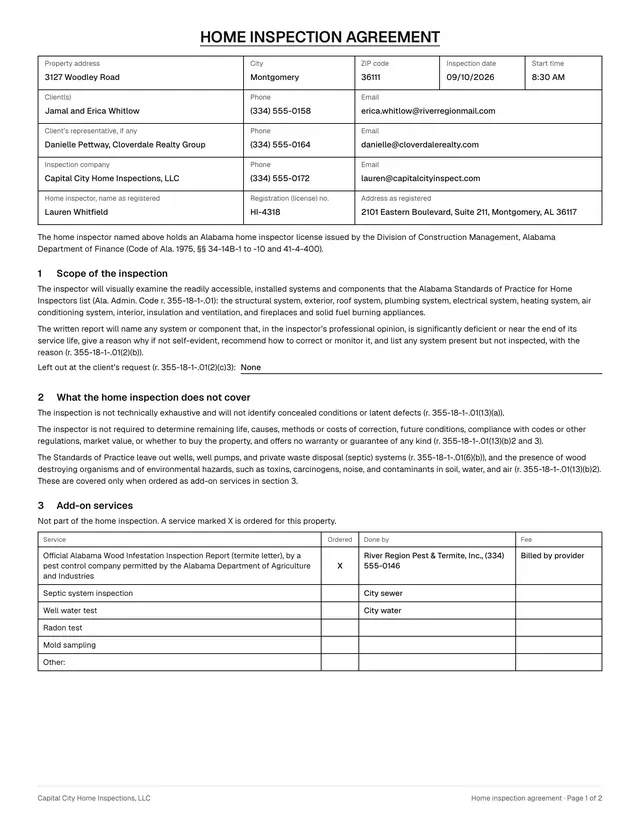
Home Inspection Agreement
The contract a client signs for a home inspection. - Arizona
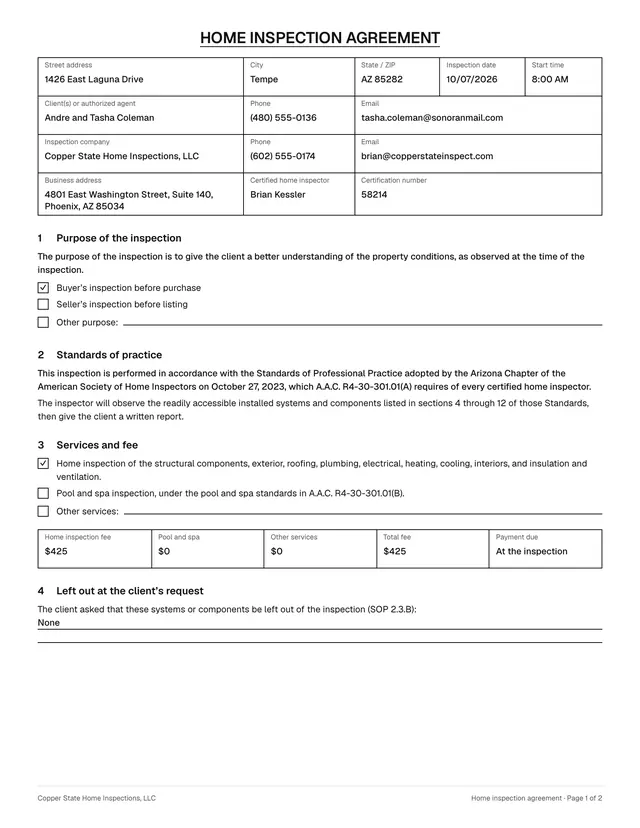
Home Inspection Agreement
The contract a client signs for a home inspection. - Arkansas
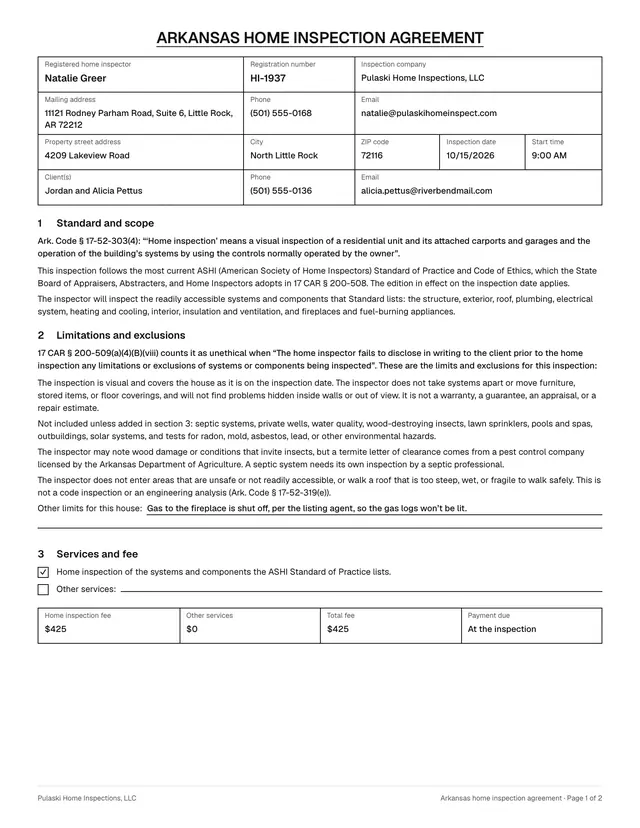
Arkansas Home Inspection Agreement
The contract a client signs for a home inspection. - Colorado
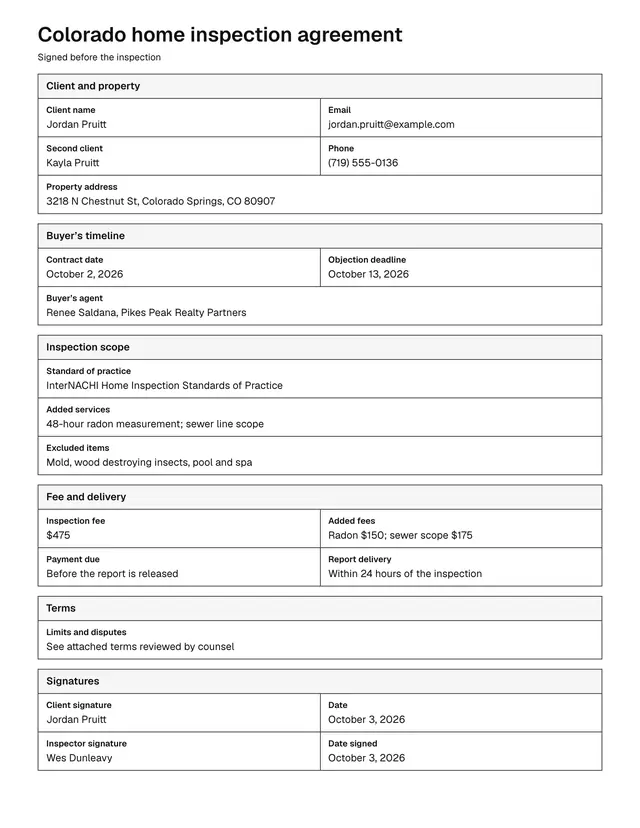
Colorado home inspection agreement
The contract a client signs for a home inspection. - Connecticut
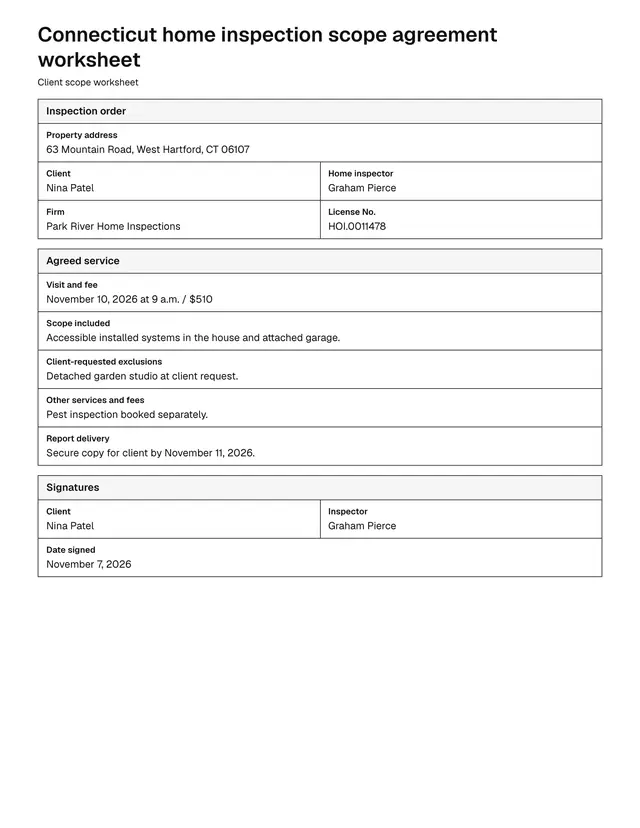
Connecticut home inspection scope agreement worksheet
The contract a client signs for a home inspection. - Delaware
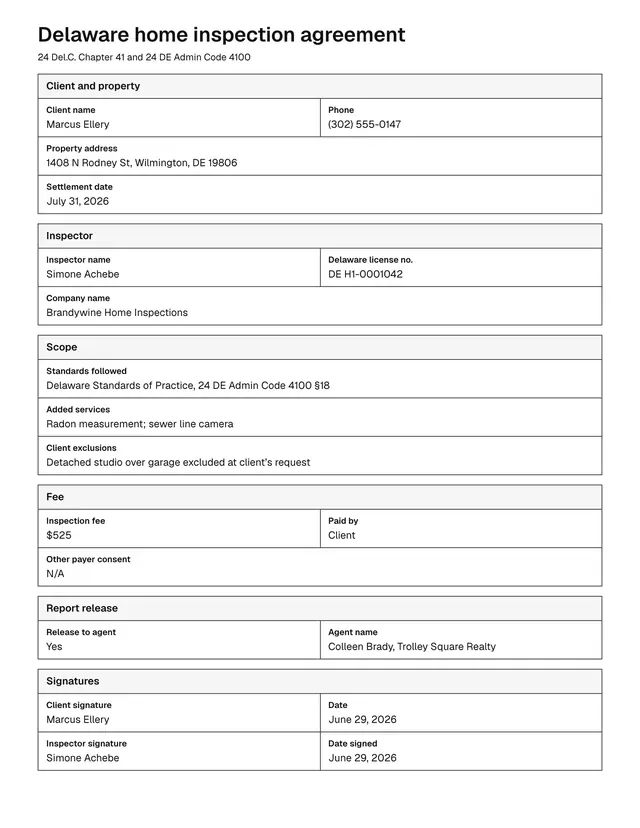
Delaware home inspection agreement
The contract a client signs for a home inspection. - Florida
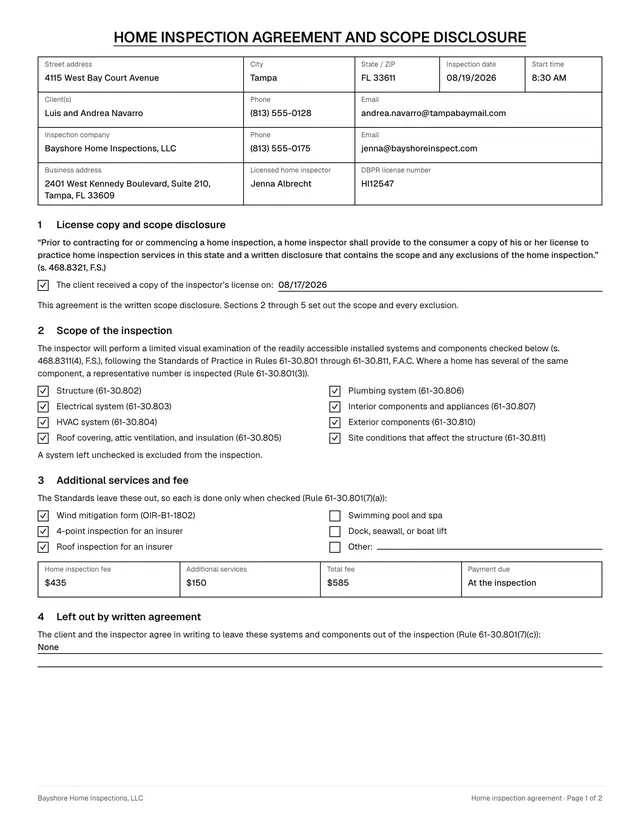
Home Inspection Agreement and Scope Disclosure
The contract a client signs for a home inspection. - Georgia
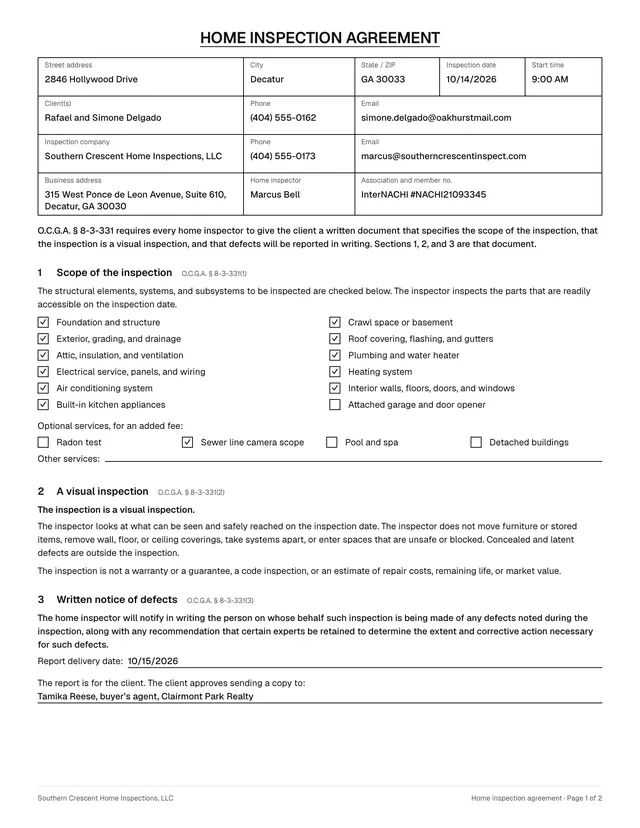
Home Inspection Agreement
The contract a client signs for a home inspection. - Hawaii
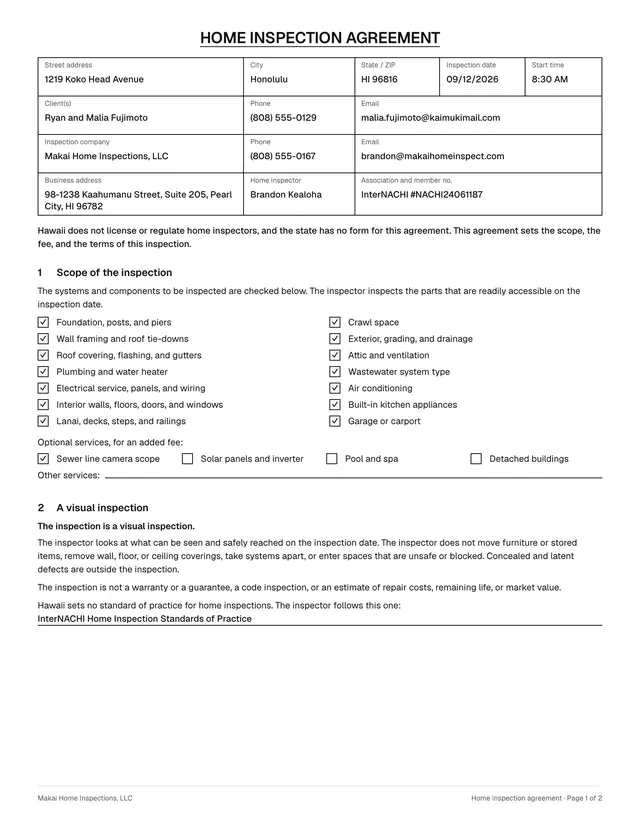
Home Inspection Agreement
The contract a client signs for a home inspection. - Illinois
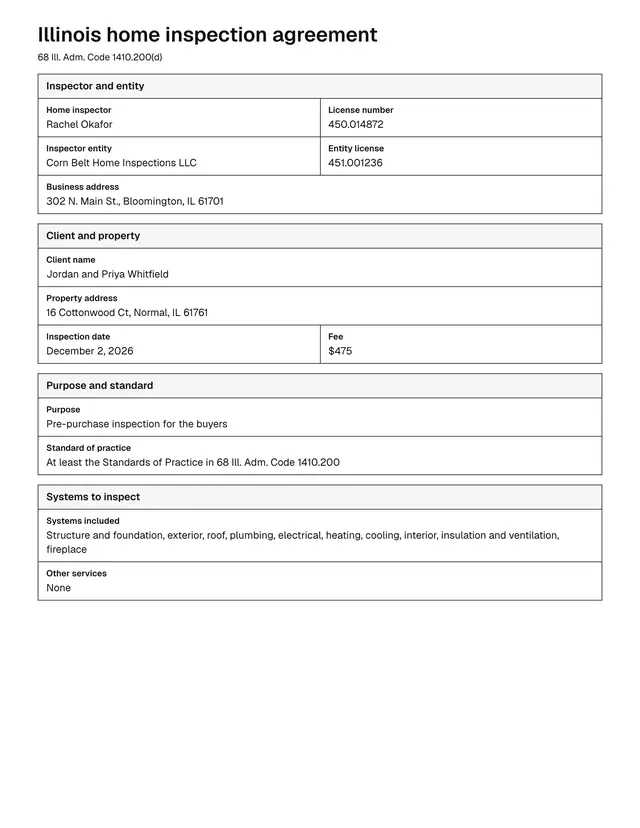
Illinois home inspection agreement
The contract a client signs for a home inspection. - Kentucky
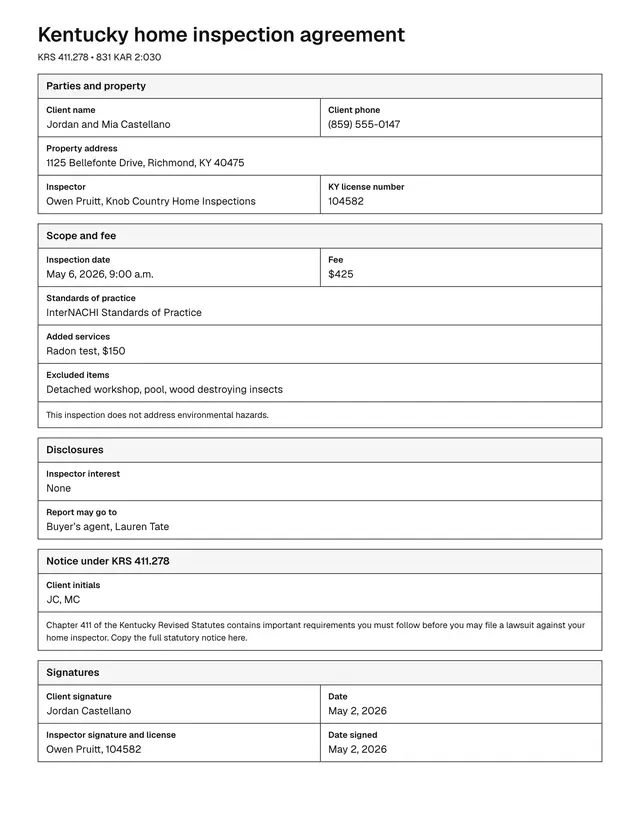
Kentucky home inspection agreement
The contract a client signs for a home inspection. - Louisiana
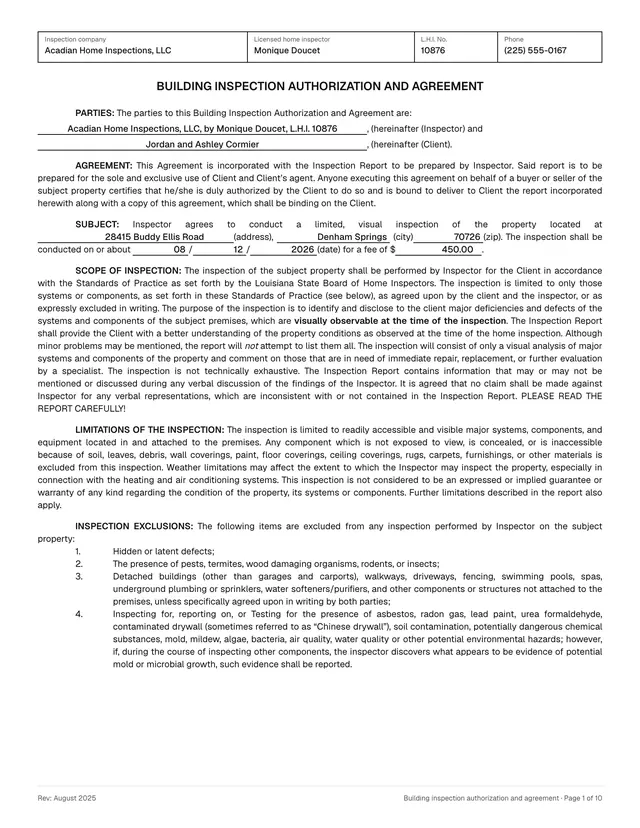
Building Inspection Authorization and Agreement
The contract a client signs for a home inspection. - Maryland
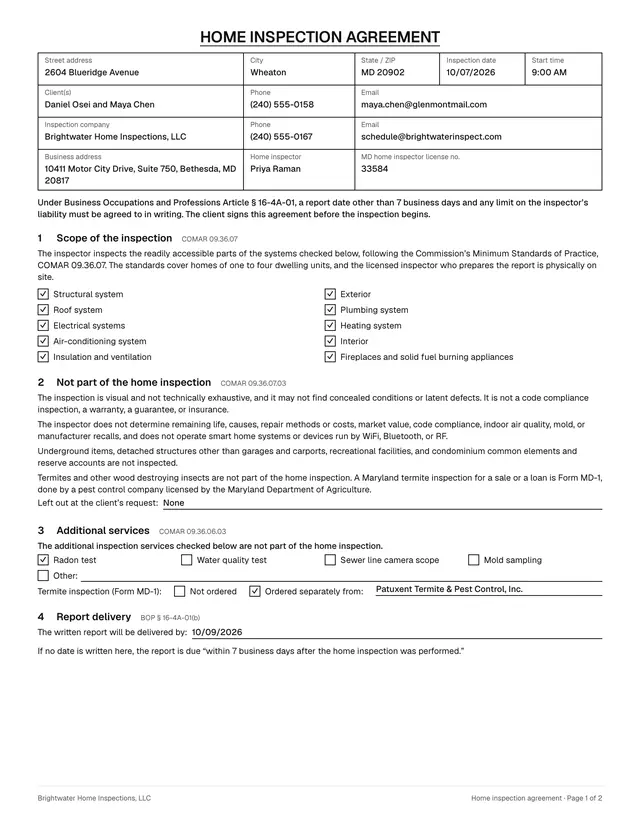
Home Inspection Agreement
The contract a client signs for a home inspection. - Massachusetts
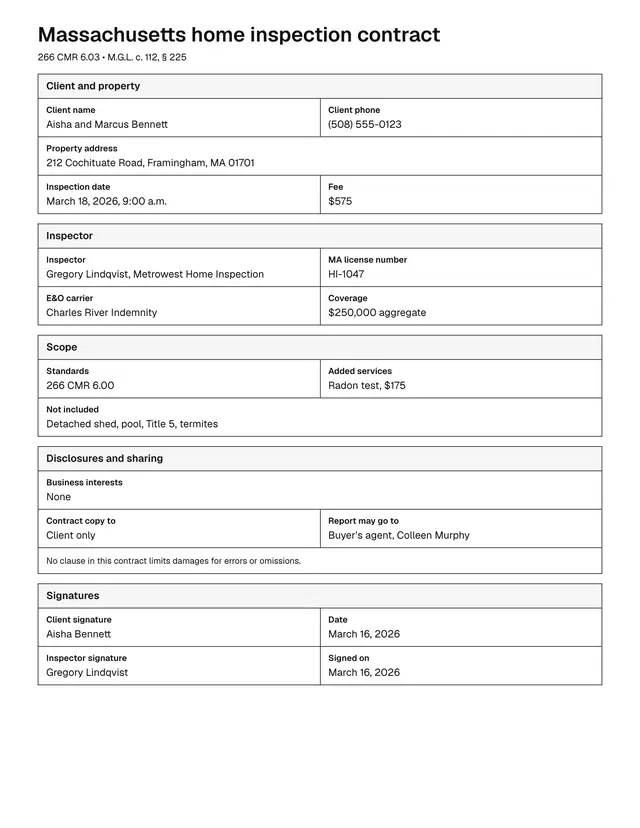
Massachusetts home inspection contract (266 CMR 6.03)
The contract a client signs for a home inspection. - Michigan
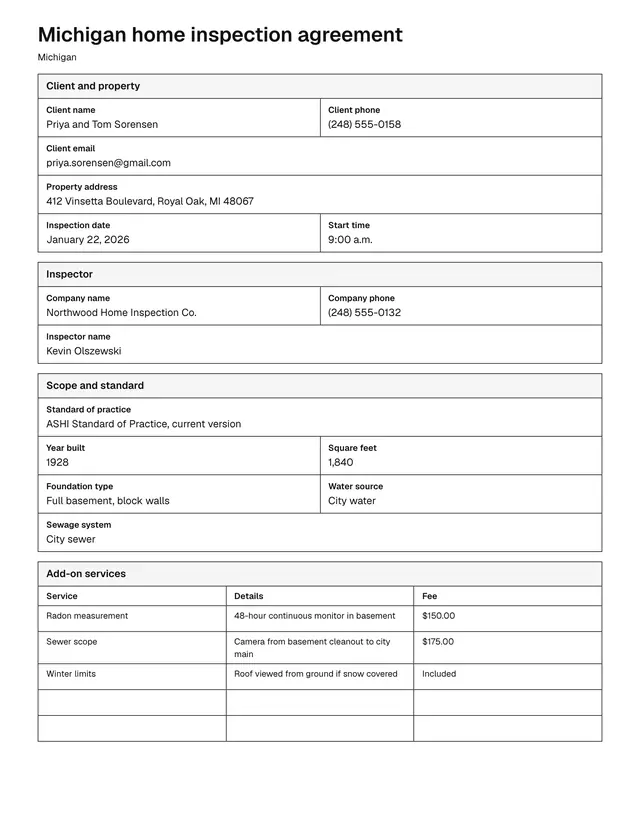
Michigan home inspection agreement
The contract a client signs for a home inspection. - Mississippi
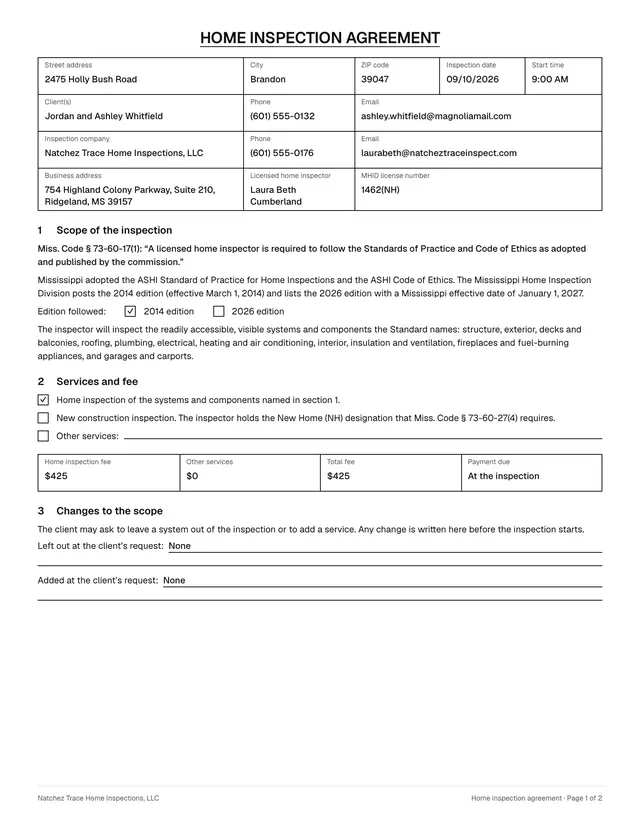
Home Inspection Agreement
The contract a client signs for a home inspection. - Missouri
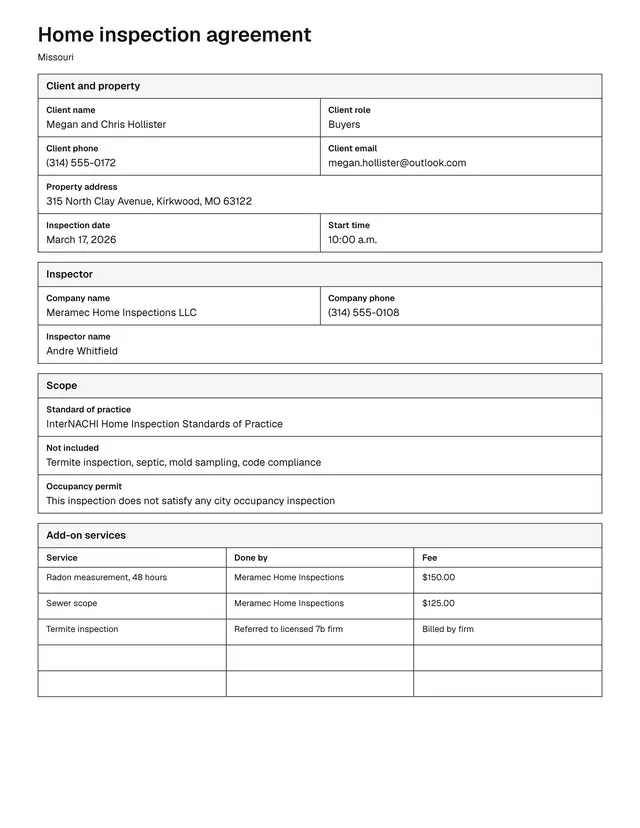
Missouri home inspection agreement
The contract a client signs for a home inspection. - Nevada
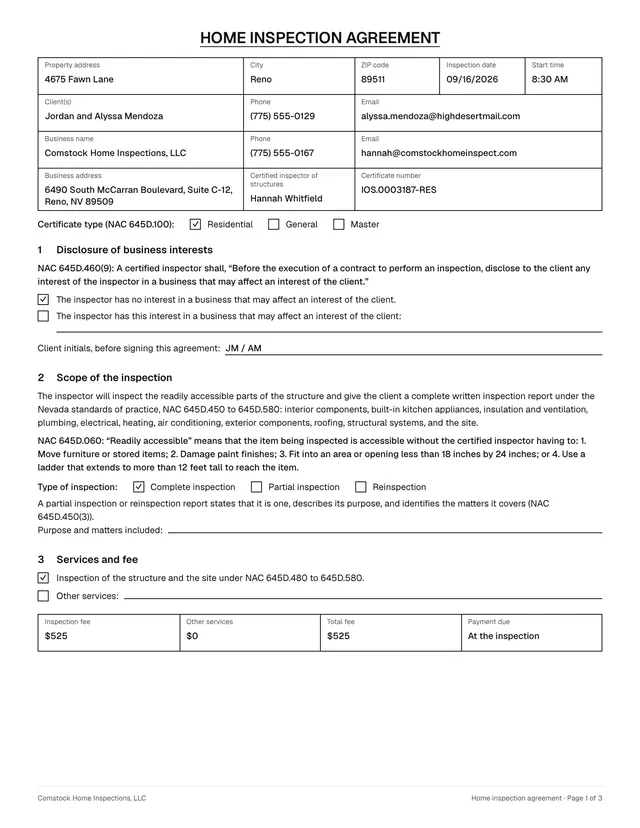
Home Inspection Agreement
The contract a client signs for a home inspection. - New Jersey
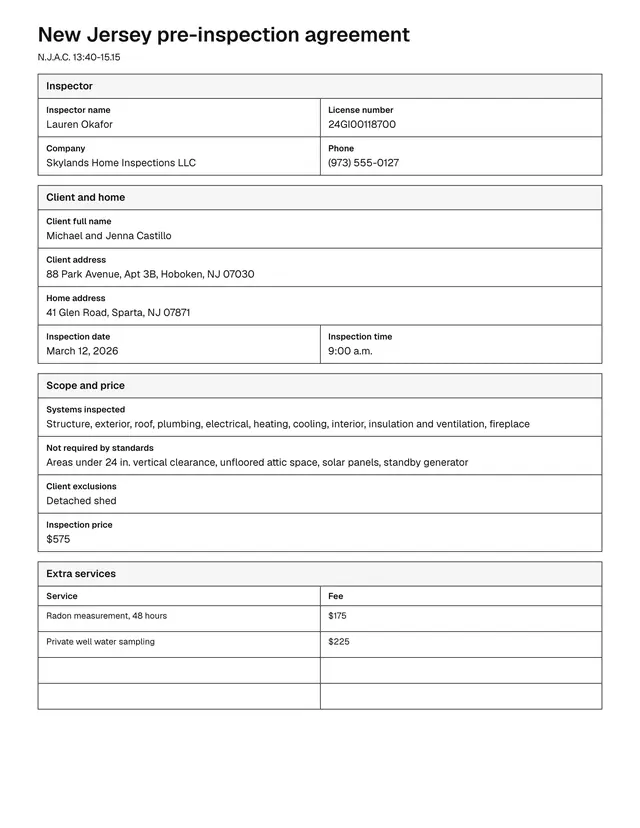
New Jersey pre-inspection agreement (N.J.A.C. 13:40-15.15)
The contract a client signs for a home inspection. - New Mexico
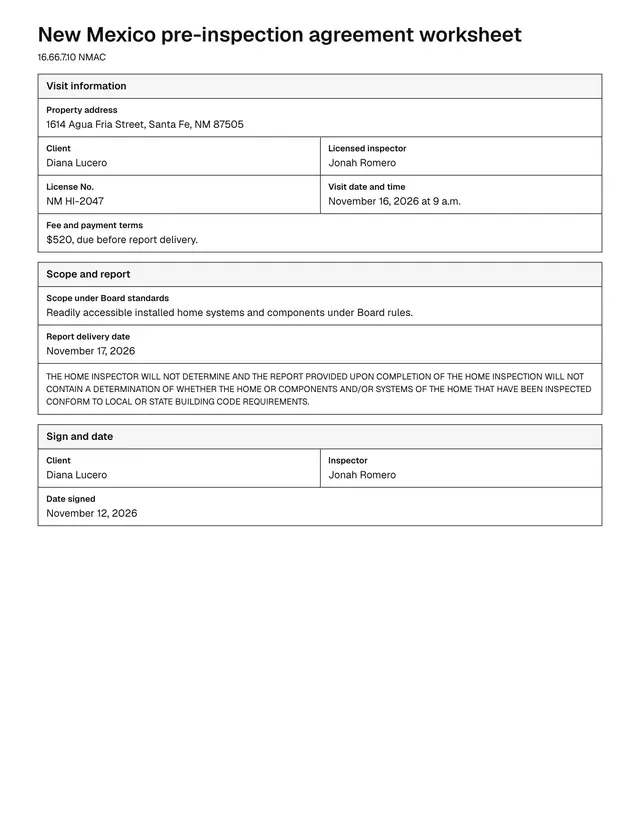
New Mexico pre-inspection agreement worksheet
The contract a client signs for a home inspection. - New York
New York pre-inspection agreement (19 NYCRR 197-4.2)
The contract a client signs for a home inspection. - North Carolina
Home Inspection Agreement
The contract a client signs for a home inspection. - Ohio
Ohio home inspection agreement
The contract a client signs for a home inspection. - Oklahoma
Pre-Inspection Agreement
The contract a client signs for a home inspection. - Oregon
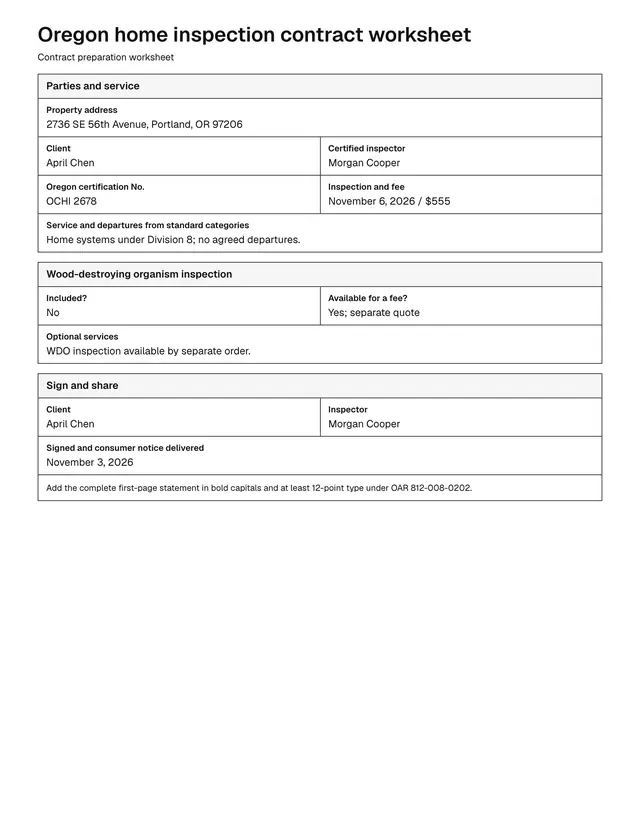
Oregon home inspection contract worksheet
The contract a client signs for a home inspection. - Pennsylvania
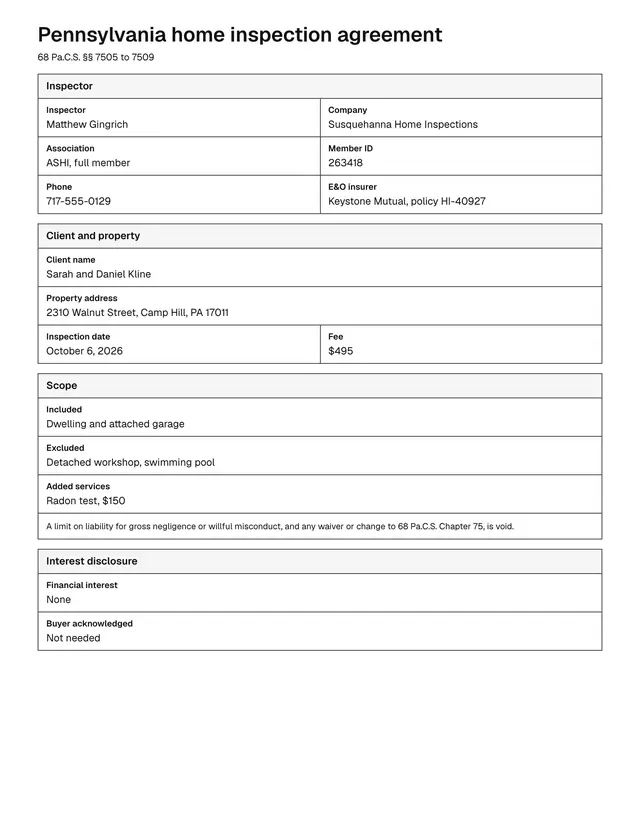
Pennsylvania home inspection agreement
The contract a client signs for a home inspection. - South Carolina
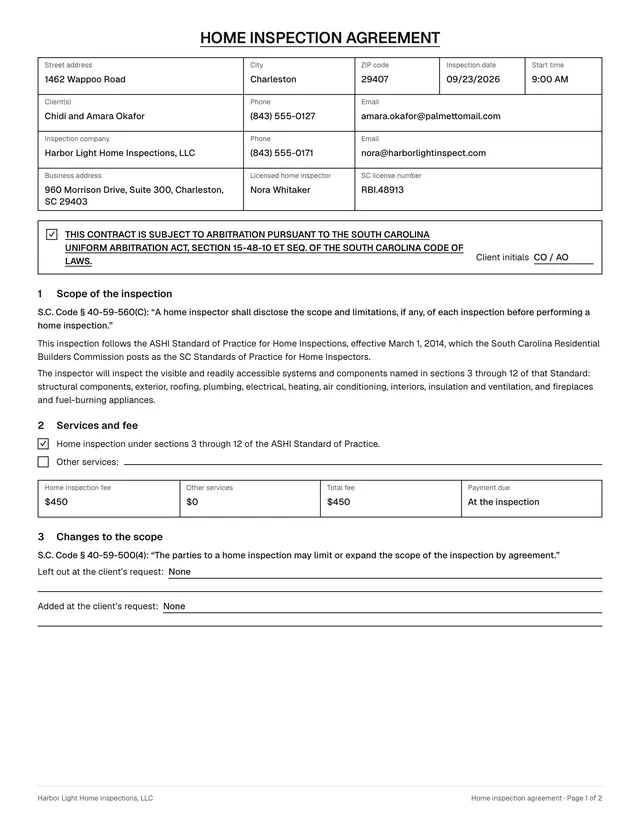
Home Inspection Agreement
The contract a client signs for a home inspection. - Tennessee
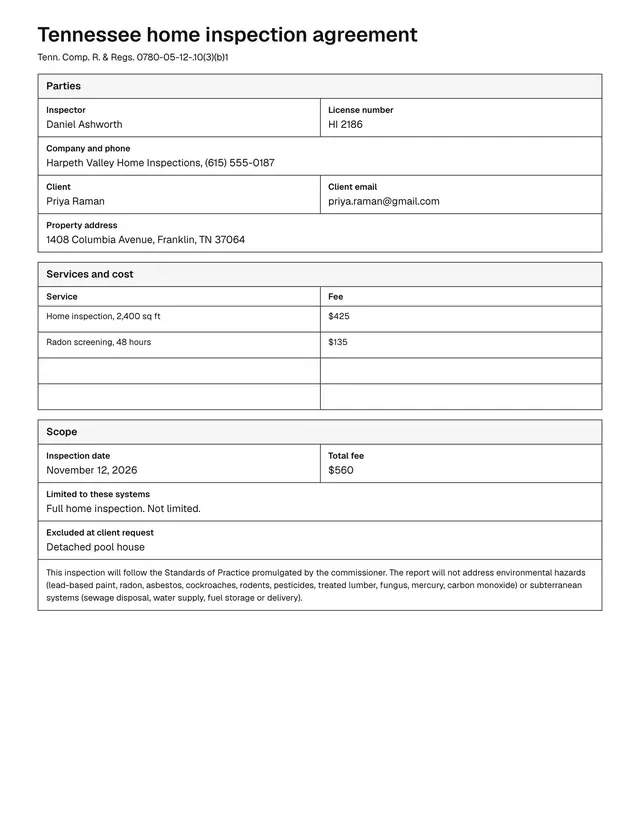
Tennessee home inspection agreement
The contract a client signs for a home inspection. - Texas
Home Inspection Agreement
The contract a client signs for a home inspection. - Virginia
Virginia home inspection contract
The contract a client signs for a home inspection. - Washington
Preinspection Agreement
The contract a client signs for a home inspection. - Wisconsin
Wisconsin home inspection agreement worksheet
The contract a client signs for a home inspection.