Indiana wood destroying insect inspection report (NPMA-33)
In Indiana, only someone licensed through the Office of Indiana State Chemist can write a termite inspection report for hire. The report itself is the national NPMA-33.
At a glance
- Form
- NPMA-33 (national)
- License
- Category 7b or Category 12
- Insurance
- $300,000 general liability
- Regulator
- Office of Indiana State Chemist
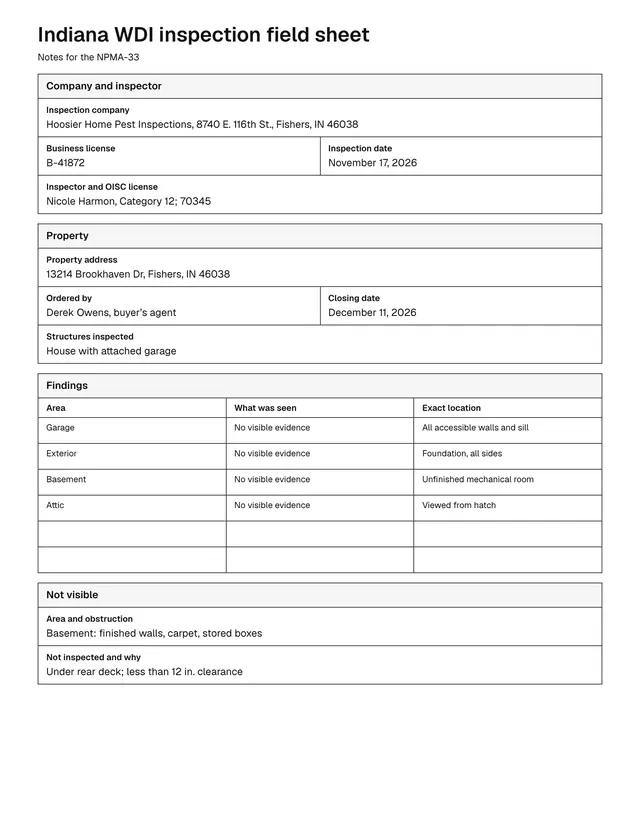
Completed example
Download PDFWho can sign one in Indiana
Indiana is stricter than most states about who writes a termite letter. Under 355 IAC 4-1-1.1, you need a commercial applicator license to “make a diagnostic inspection or report to determine infestations of a wood destroying pest” for hire. That’s true even if you never touch a sprayer.
There are two ways in. Category 7b termite control already covers inspections. Category 12, wood destroying pest inspection, is for people who only inspect. OISC’s WDI inspector page explains the path. You take the training at the Purdue Structural Pest Control Training Facility, pass the WDI exam with 75% or better through Metro Institute, and then get licensed under a Category 12 business. That license expires every year. Your certification lasts five years if you keep up with continuing education.
Category 12 is inspection only. OISC says WDI inspectors can’t apply pesticides unless they hold a separate applicator license. Their role is “inspection and reporting only.”
OISC also says businesses and wood pest inspectors carry at least $300,000 in general liability coverage. That’s three times the $100,000 an Indiana home inspector needs.
Home inspectors are a separate lane. Indiana’s home inspection rule lists wood destroying organisms among the things a home inspector isn’t required to report. The home inspection law also doesn’t apply to pesticide licensees working within their license. So a buyer who wants a termite report needs a WDI inspector, even if the home inspector mentioned mud tubes.
How the NPMA-33 reads
Indiana doesn’t have a state WDI form. NPMA’s guidelines say the NPMA-33 must be used for HUD and VA guaranteed sales and is typically used for conventional loans too, so that’s what Indiana lenders and agents ask for.
Section I is the header: your company, its license number, the inspection date, the address, the structures you inspected, and your name, signature, and license number. Section II is the finding. Box A means no visible evidence at all. Box B means you saw live insects, dead insects or signs like tubes and frass, or visible damage. Section III is about treatment, past or recommended. Section IV lists areas you couldn’t see and why. Section V holds comments and attachments.
The insects that count are termites, carpenter ants, carpenter bees, and reinfesting wood boring beetles. Wood rot isn’t on the list, though you can note it in comments.
Box B needs a reason. Once you check it, check at least one of the three: live insects, dead insects or signs, or visible damage. A single old shelter tube in an Indianapolis basement means Box B, even if it’s been dry for years.
Mulch beds, stumps, and woodpiles near the house aren’t findings on the structure. Note anything you see there in Section V.
Field habits that save a callback
Look for bait stations before you go in. A Fishers house with green caps every 10 feet around the yard tells you someone has a service agreement. NPMA says not to recommend treatment for a bait system “unless there is a current baiting system service agreement in effect.” Get the company name and end date for Section V.
Ask for the treatment record. Indiana pest companies keep a termite treatment record with a diagram and dimensions for each job. If the seller can’t produce proof of a past treatment and you see signs of termites, NPMA tells you to recommend treatment.
Probe, then stop. Probe and sound the wood you can reach. The form says “this is not a structural damage report,” so describe the damage and where it is, and leave how bad it is to a contractor.
Write the obstructions on site. Finished basements are common in central Indiana. If drywall, carpet, and stored boxes blocked the view, list them in Section IV with the area so the buyer knows what wasn’t seen.
What if the closing date moves up?
It happens every spring. The lender wants the WDI report a week early, the agent calls in a panic, and you have three other jobs that day. The buyer and seller sign the NPMA-33 at closing, so all you need to deliver is a finished, signed report.
If old treatment papers turn up after you send the report, NPMA says not to change it. Tell the parties to give the papers to the lender.
Noma specializes in the Indiana wood destroying insect inspection report (NPMA-33). Agents book online, you do the fieldwork from your phone and draw the diagram on site, and the invoice goes out with an online payment link. See how Noma runs termite inspections.
Frequentlyaskedquestions
Send this document in minutes, not an afternoon.
Other states
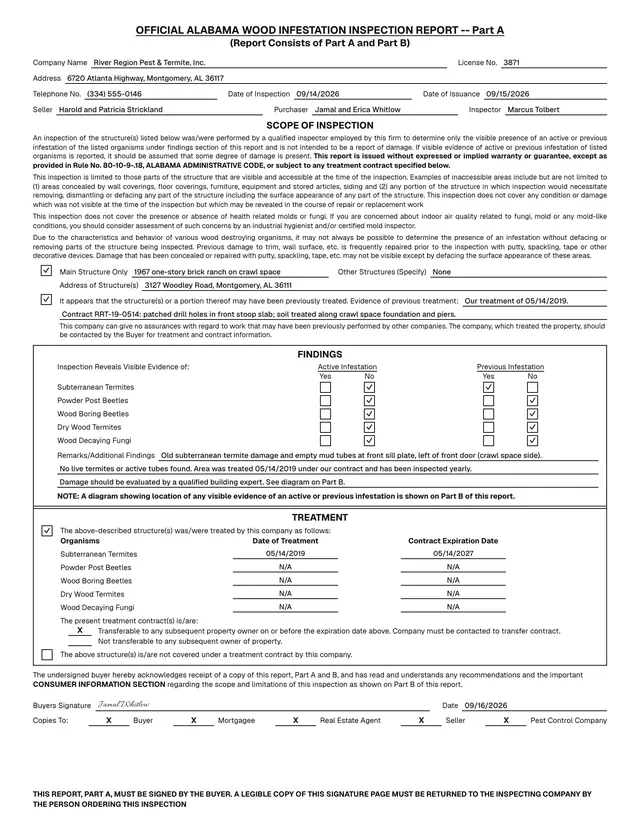
Inspection report templates- Alabama
Official Alabama Wood Infestation Inspection Report
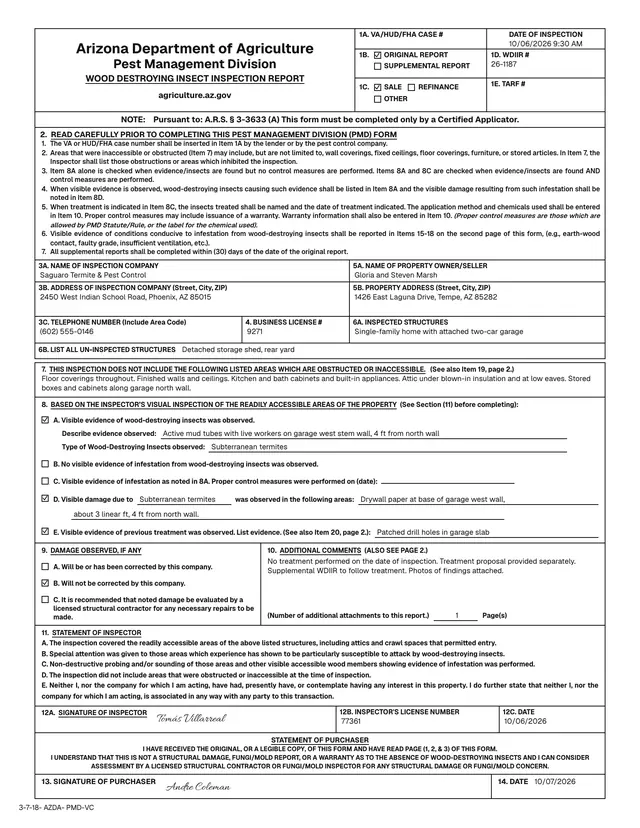
Record the termite findings from an inspection. - Arizona
Wood Destroying Insect Inspection Report
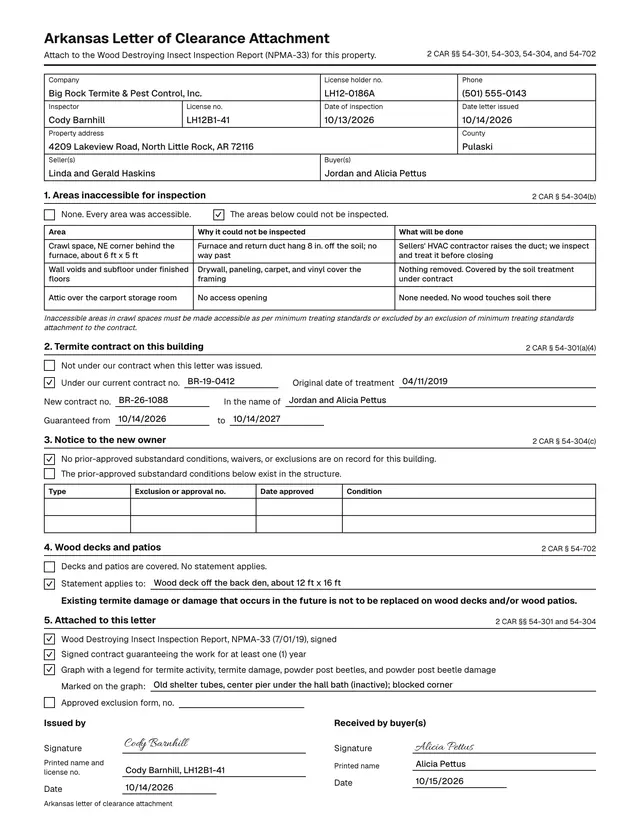
Record the termite findings from an inspection. - Arkansas
Arkansas Letter of Clearance Attachment
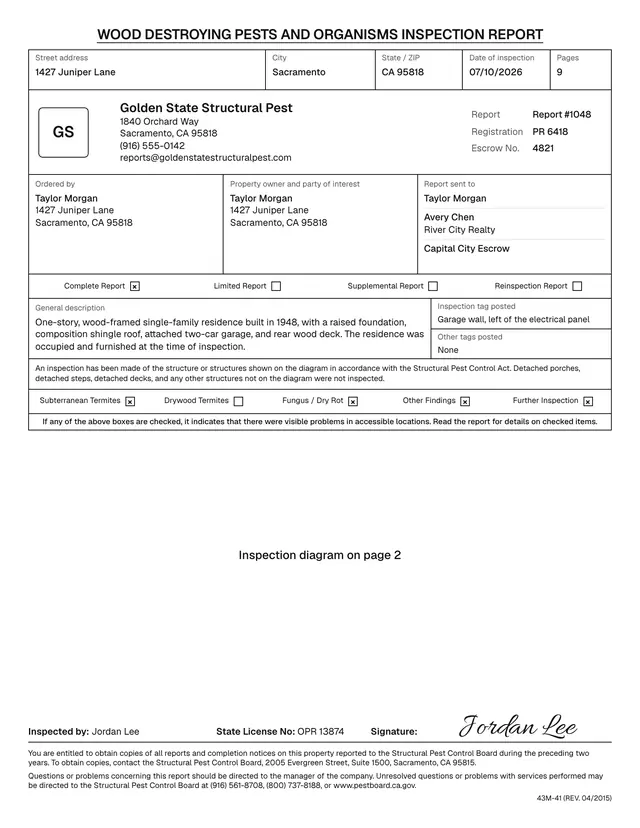
Record the termite findings from an inspection. - California43M-41
Wood Destroying Pests and Organisms Inspection Report
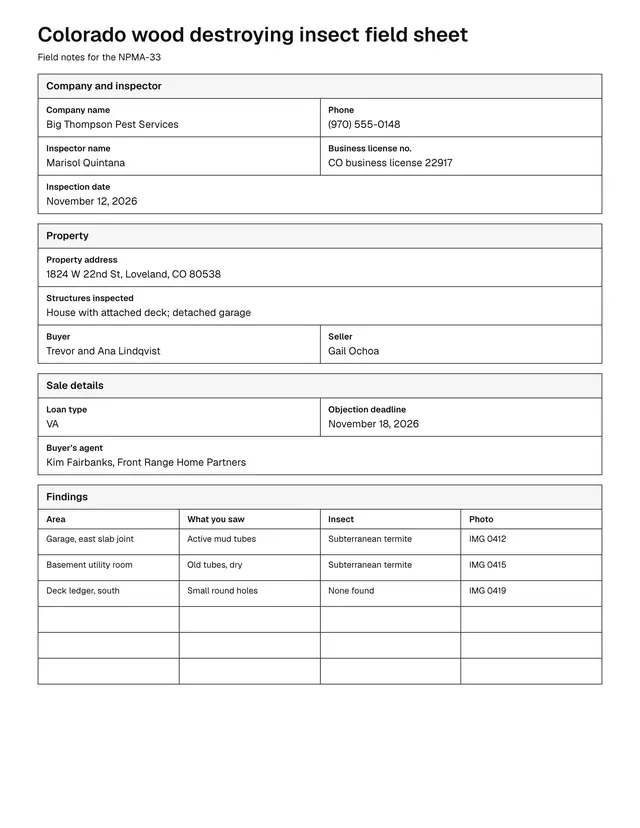
Record the termite findings from an inspection. - ColoradoNPMA-33
Colorado termite inspection report (NPMA-33)
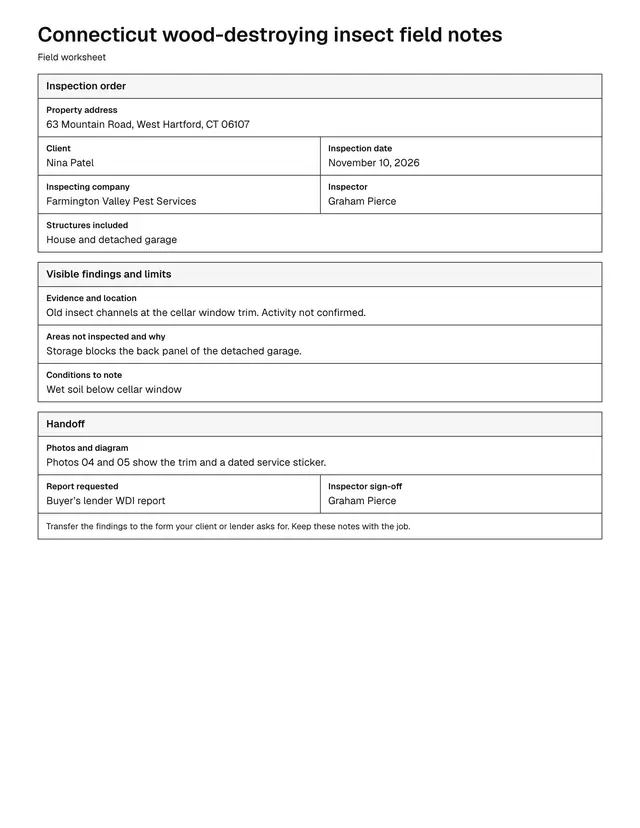
Record the termite findings from an inspection. - Connecticut
Connecticut wood-destroying insect field notes
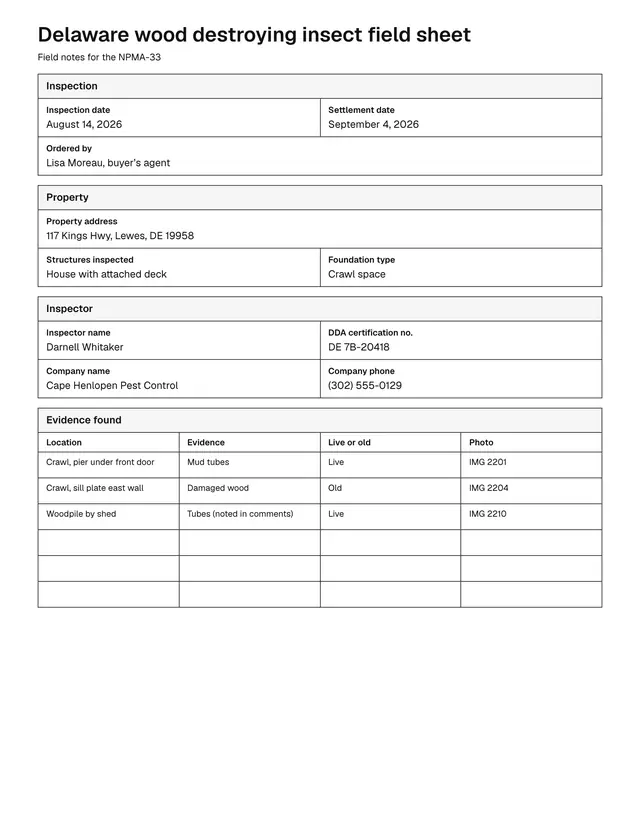
Record the termite findings from an inspection. - DelawareNPMA-33
Delaware termite inspection report (NPMA-33)
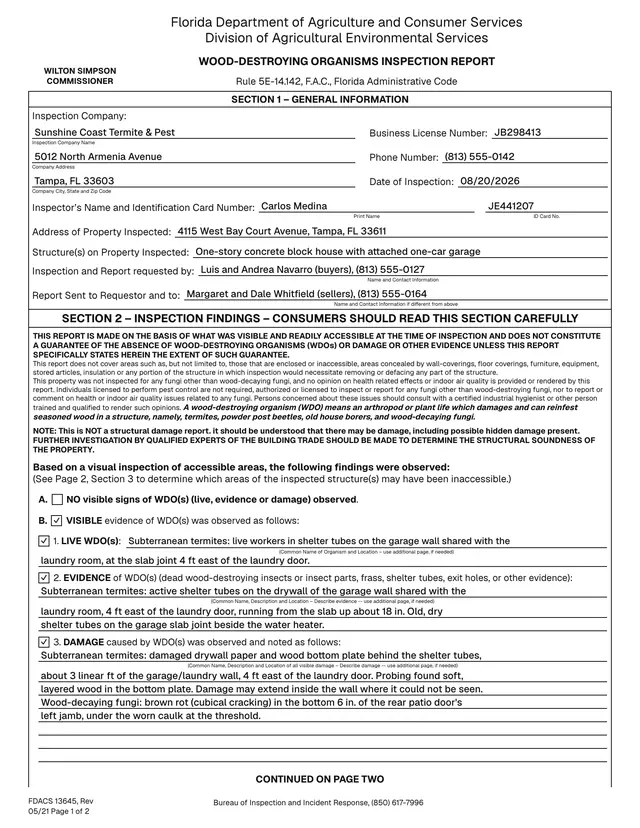
Record the termite findings from an inspection. - FloridaFDACS-13645
Wood-Destroying Organisms Inspection Report
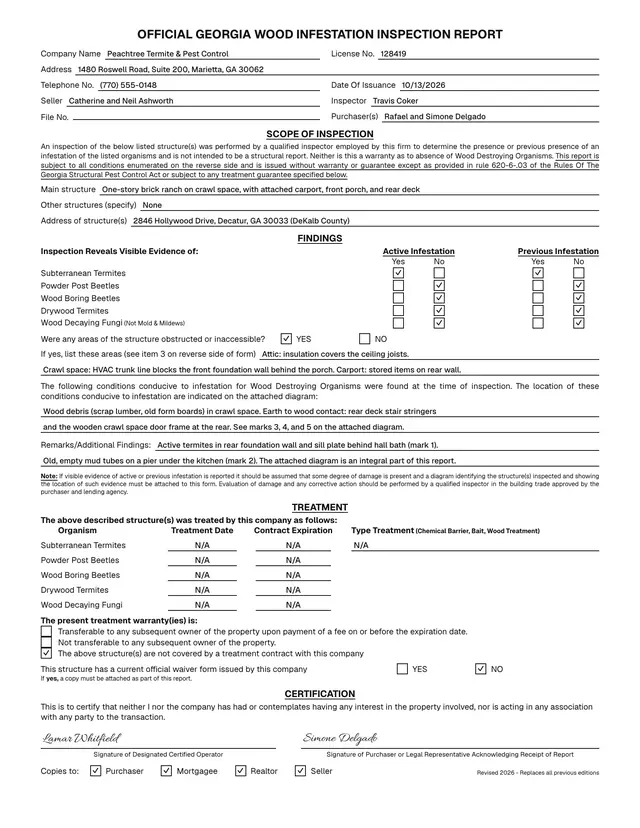
Record the termite findings from an inspection. - Georgia
Official Georgia Wood Infestation Inspection Report
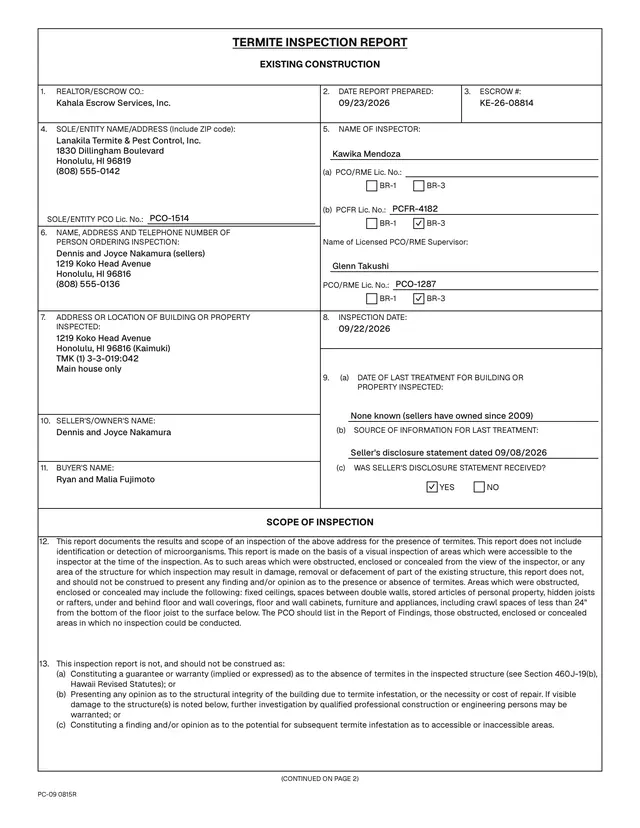
Record the termite findings from an inspection. - HawaiiPC-9
Termite Inspection Report, Existing Construction
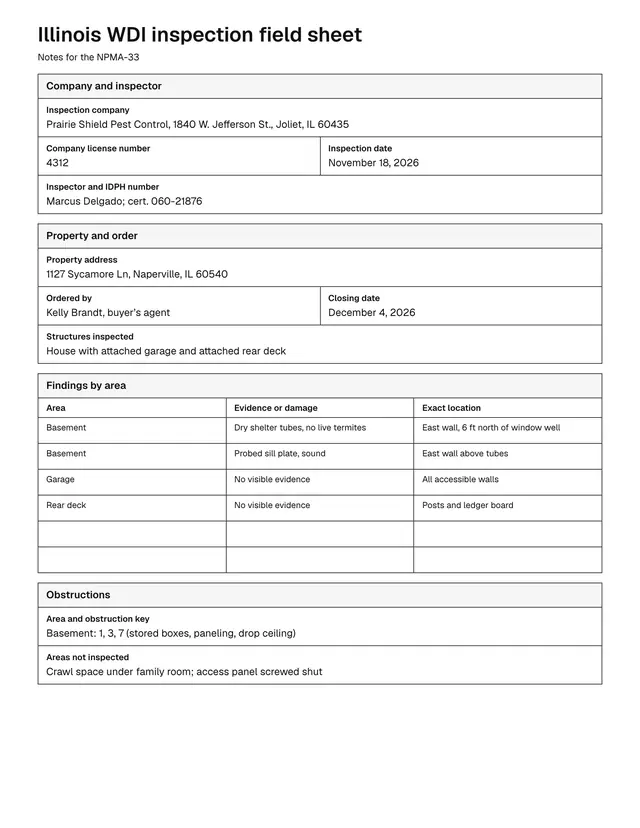
Record the termite findings from an inspection. - IllinoisNPMA-33
Illinois wood destroying insect inspection report (NPMA-33)
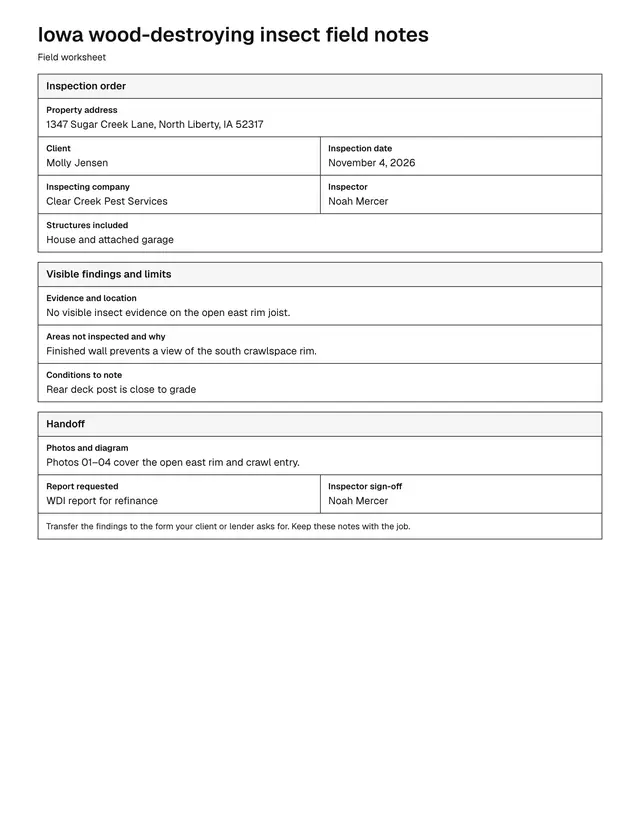
Record the termite findings from an inspection. - Iowa
Iowa wood-destroying insect field notes
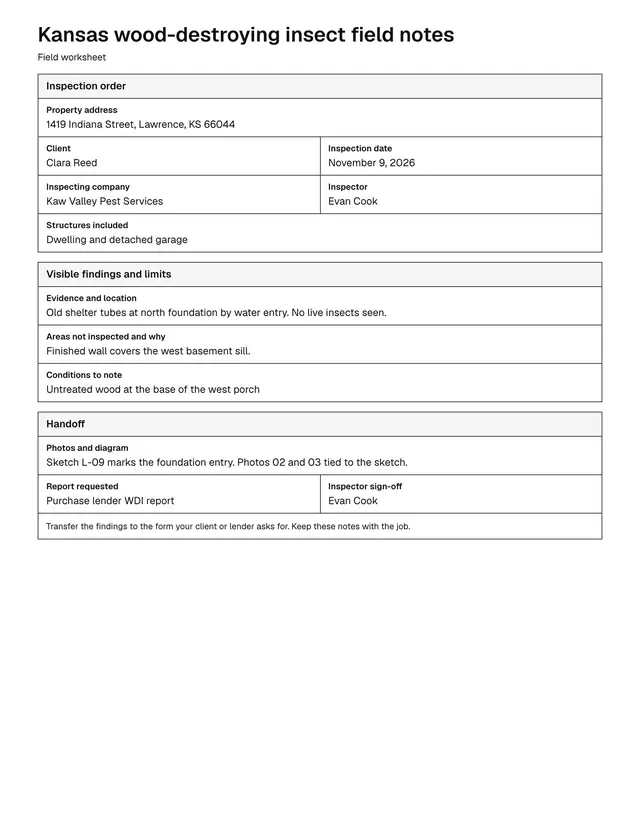
Record the termite findings from an inspection. - Kansas
Kansas wood-destroying insect field notes
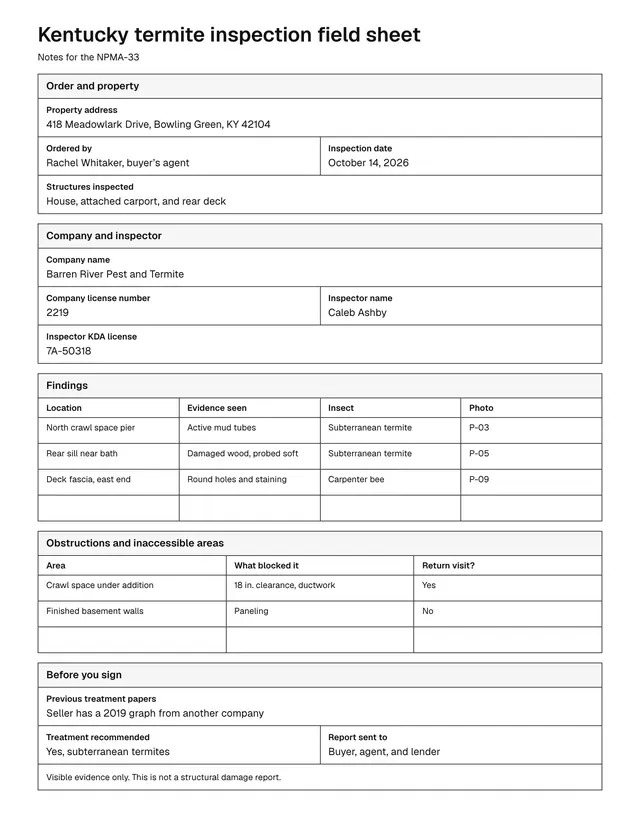
Record the termite findings from an inspection. - Kentucky
Kentucky termite inspection report (NPMA-33)
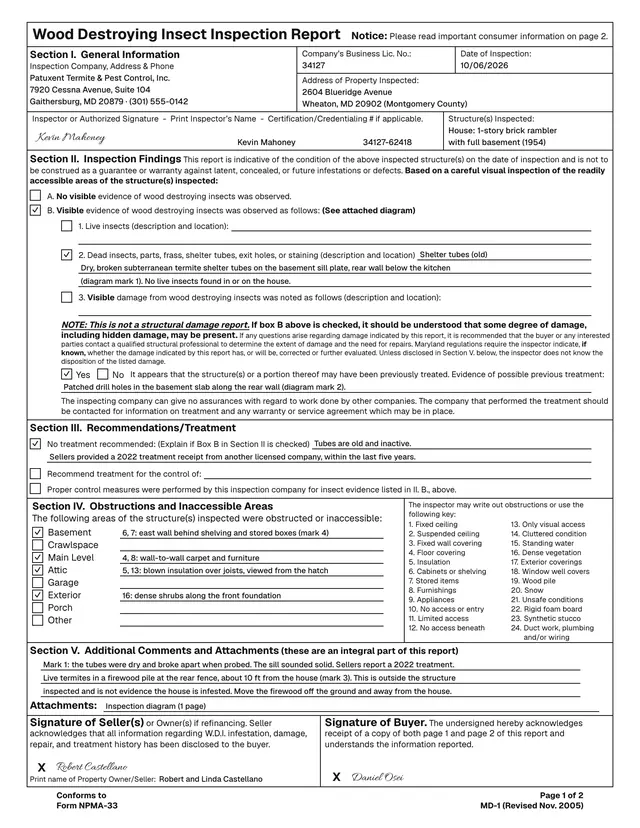
Record the termite findings from an inspection. - MarylandMD-1
Wood Destroying Insect Inspection Report
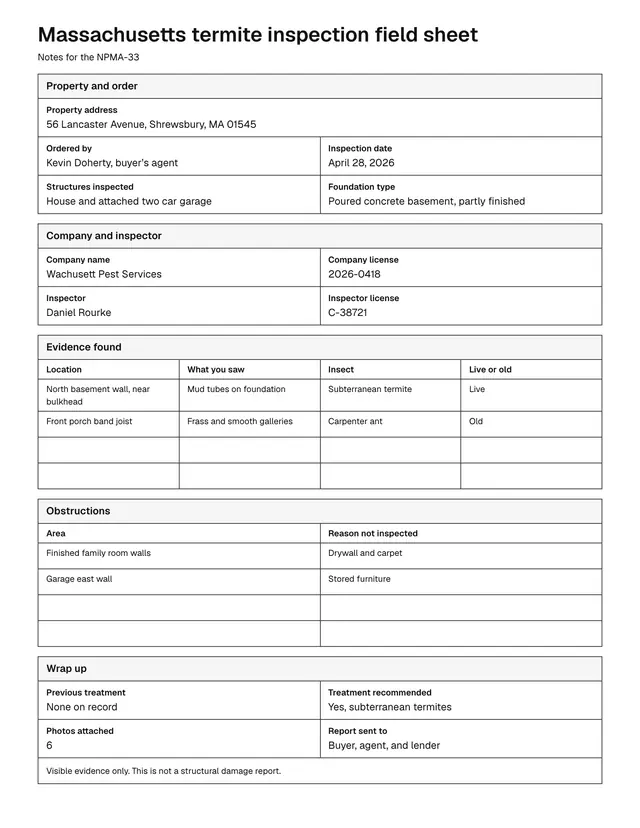
Record the termite findings from an inspection. - Massachusetts
Massachusetts termite inspection report (NPMA-33)
Record the termite findings from an inspection. - MichiganNPMA-33
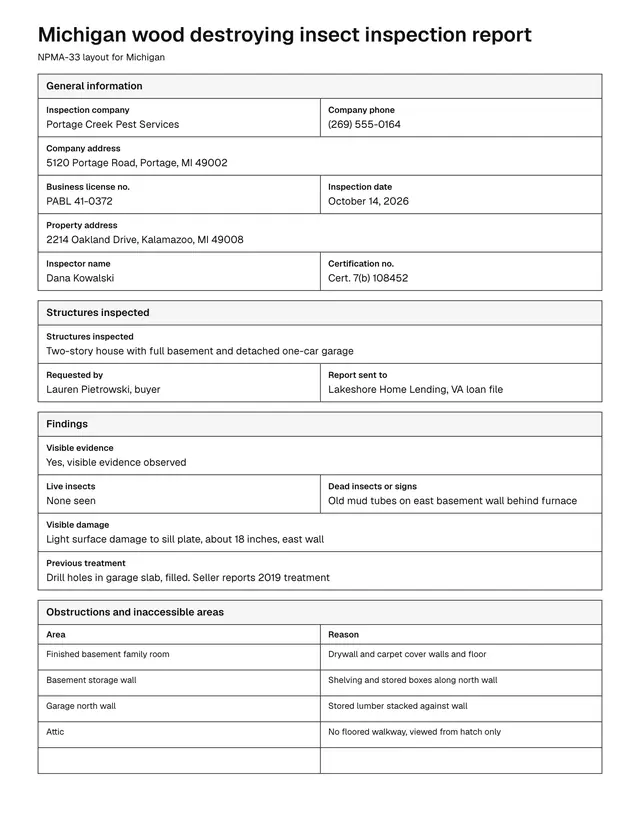
Michigan wood-destroying insect inspection report (NPMA-33)
Record the termite findings from an inspection. - Mississippi
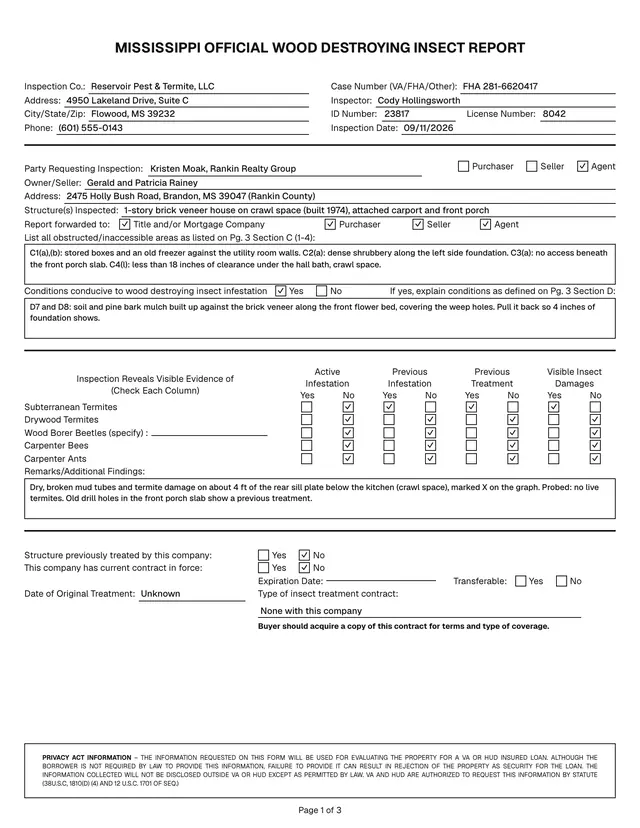
Mississippi Official Wood Destroying Insect Report
Record the termite findings from an inspection. - MissouriNPMA-33
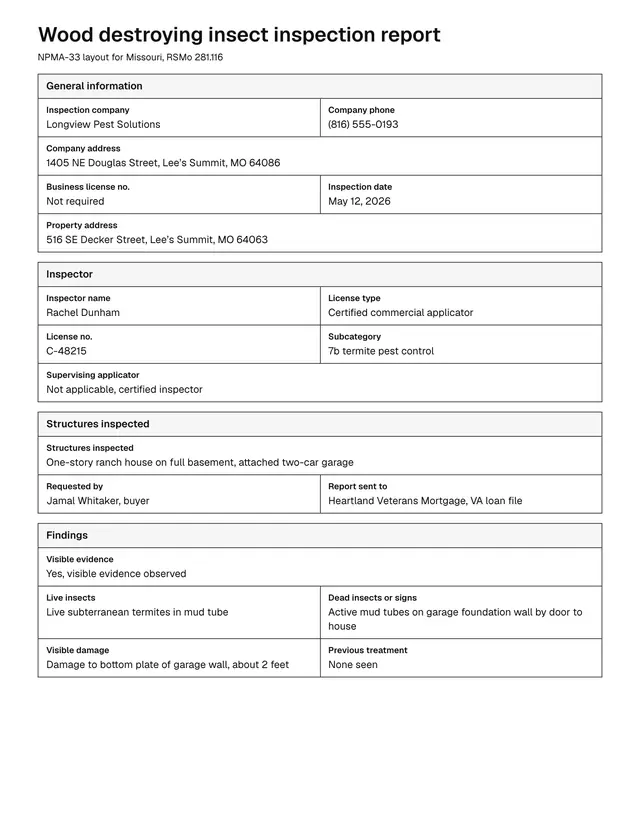
Missouri wood-destroying insect inspection report (NPMA-33)
Record the termite findings from an inspection. - Nevada
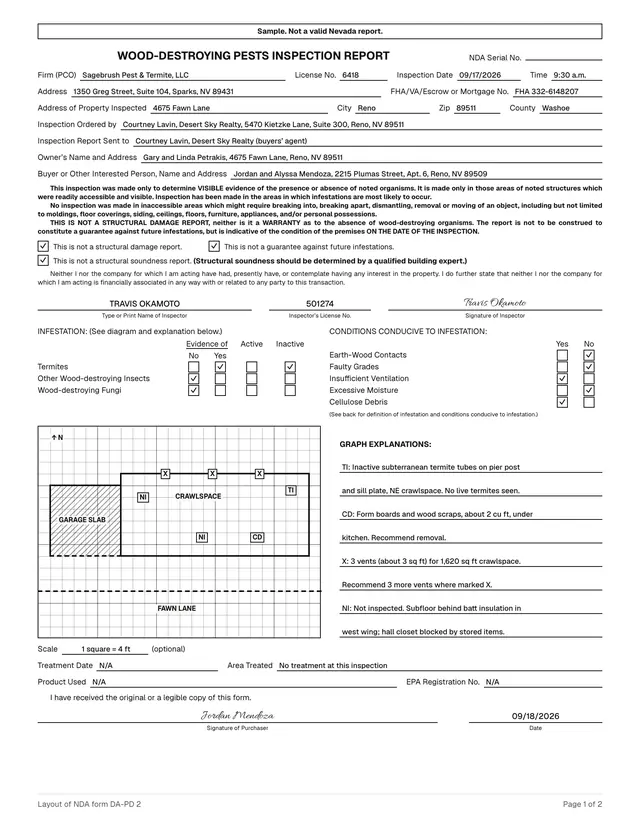
Wood-Destroying Pests Inspection Report
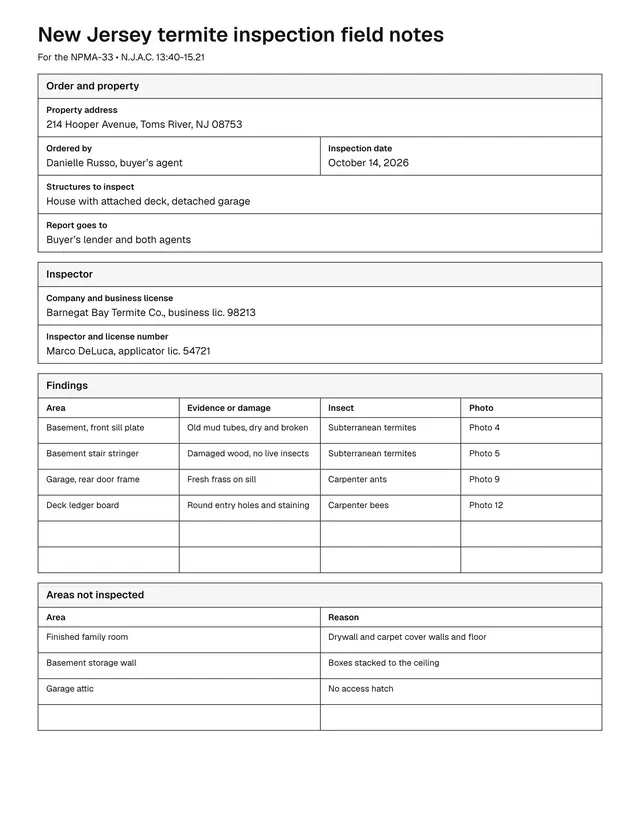
Record the termite findings from an inspection. - New Jersey
New Jersey termite inspection report (NPMA-33 field notes)
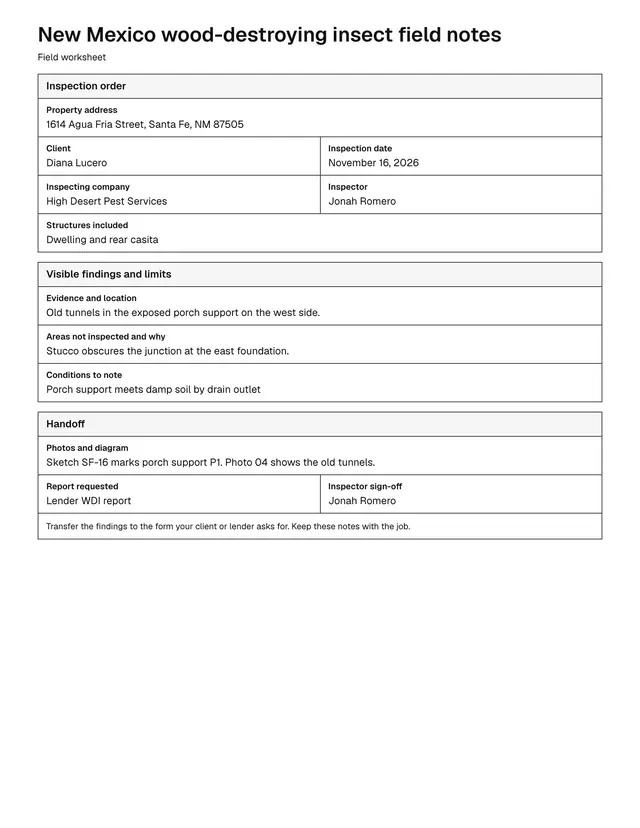
Record the termite findings from an inspection. - New Mexico
New Mexico wood-destroying insect field notes
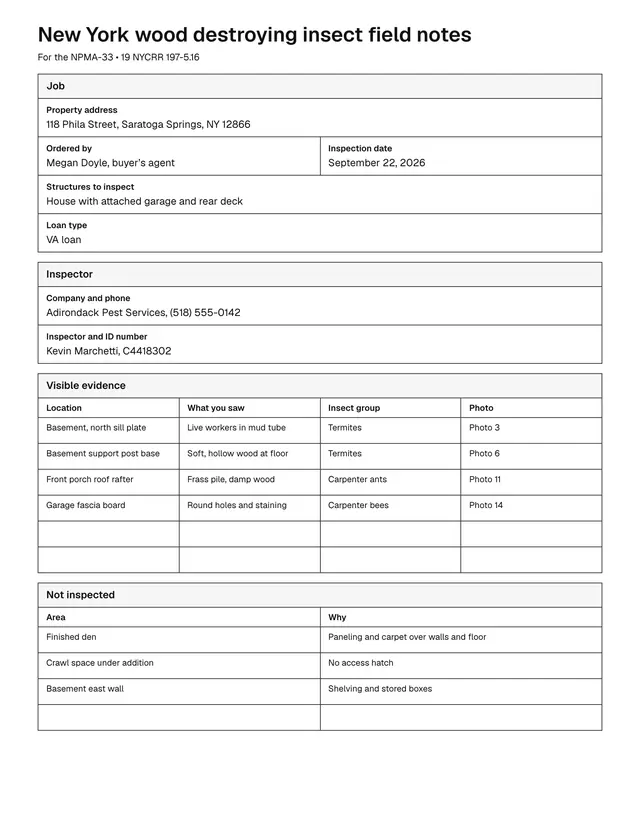
Record the termite findings from an inspection. - New York
New York wood destroying insect inspection notes (NPMA-33)
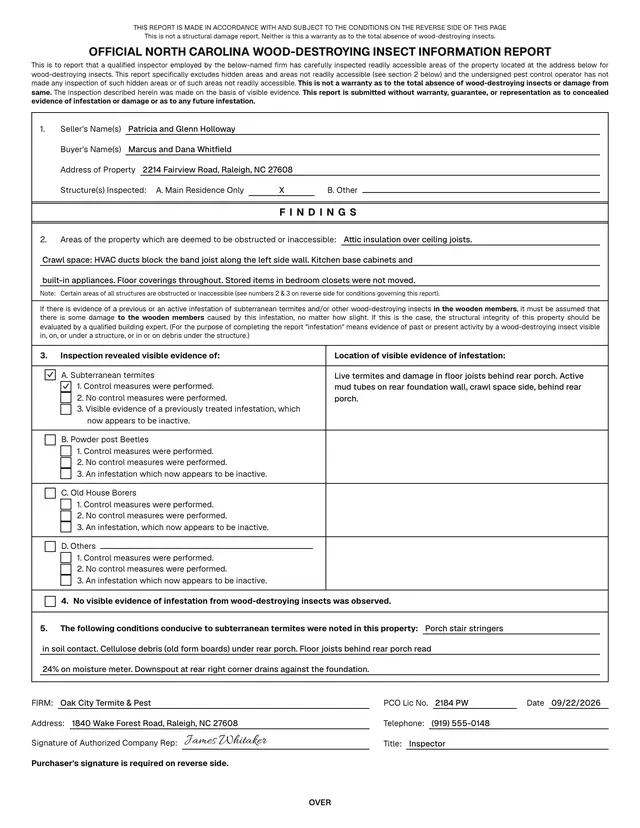
Record the termite findings from an inspection. - North CarolinaWDIR 100
Official North Carolina Wood-Destroying Insect Information Report
Record the termite findings from an inspection. - OhioNPMA-33
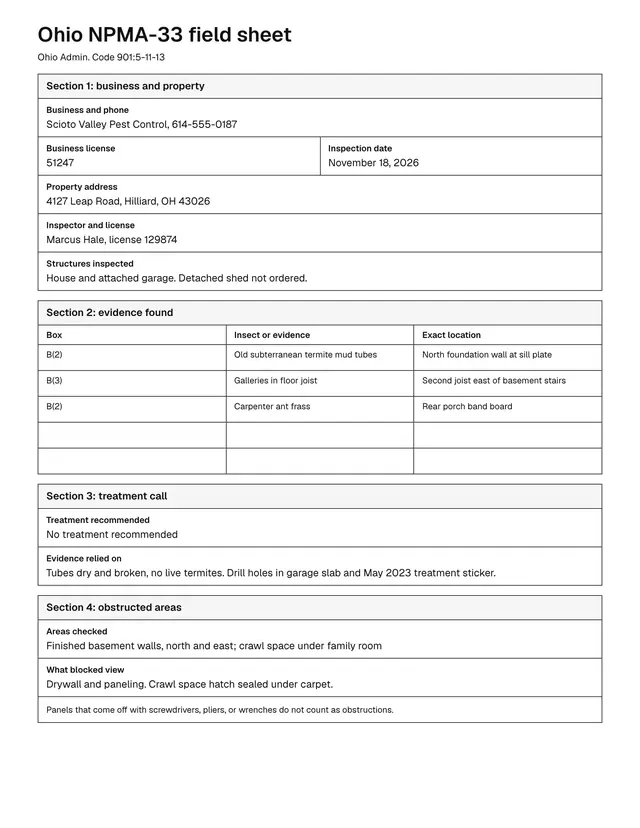
Ohio NPMA-33 wood-destroying insect inspection report
Record the termite findings from an inspection. - OklahomaForm ODAFF-1
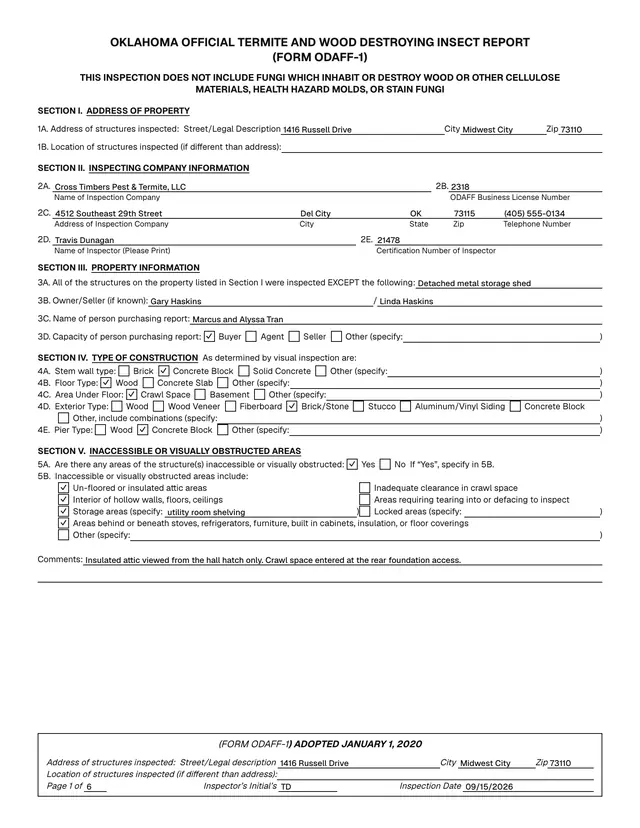
Oklahoma Official Termite and Wood Destroying Insect Report
Record the termite findings from an inspection. - Oregon
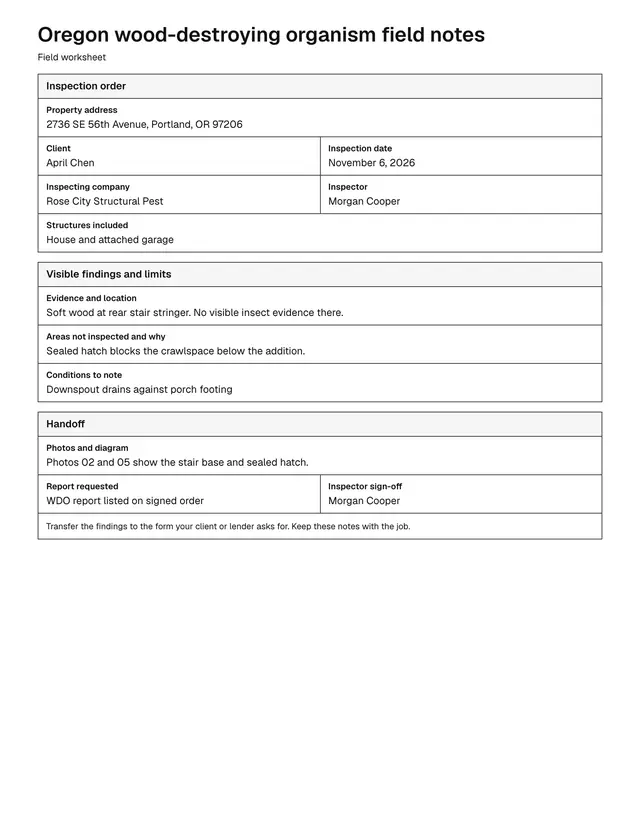
Oregon wood-destroying organism field notes
Record the termite findings from an inspection. - PennsylvaniaNPMA-33
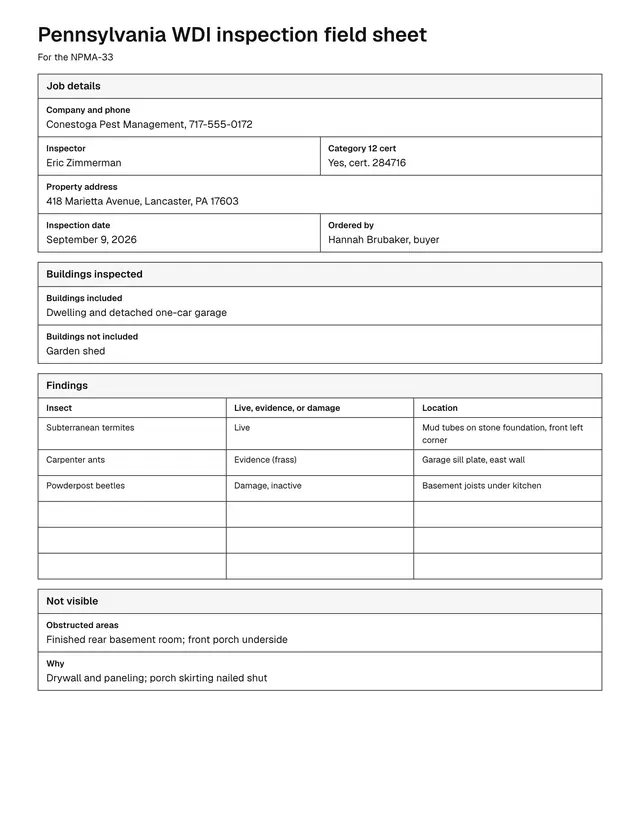
Pennsylvania wood-destroying insect inspection report (NPMA-33)
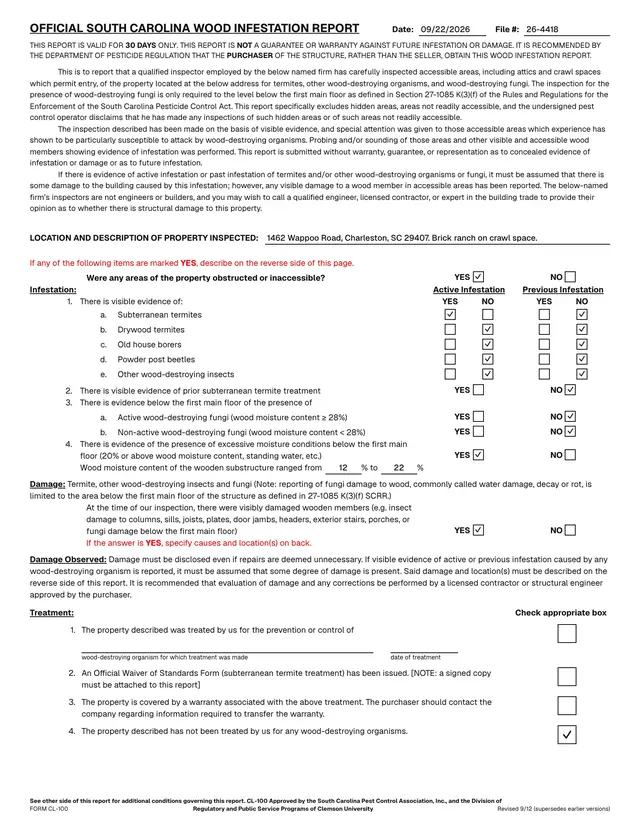
Record the termite findings from an inspection. - South CarolinaCL-100
Official South Carolina Wood Infestation Report
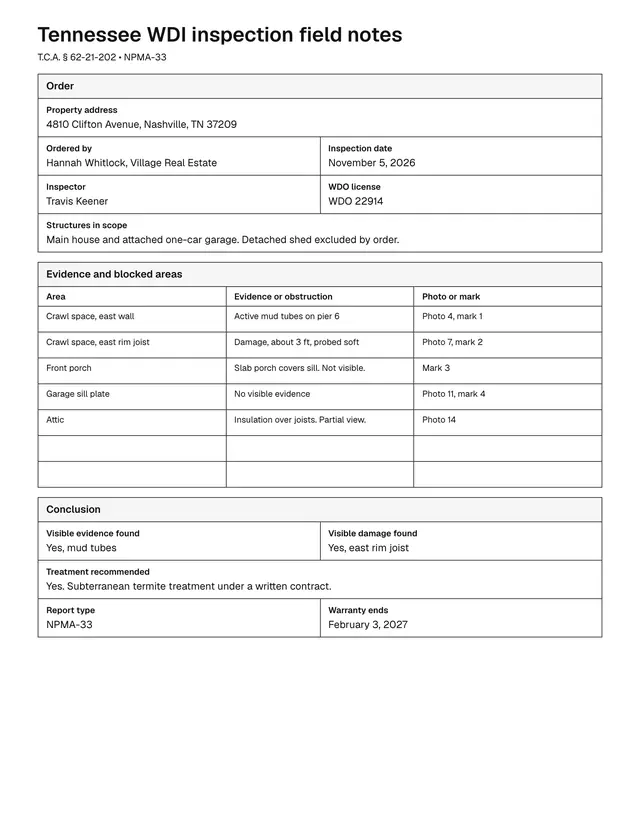
Record the termite findings from an inspection. - Tennessee
Tennessee wood destroying insect infestation inspection report
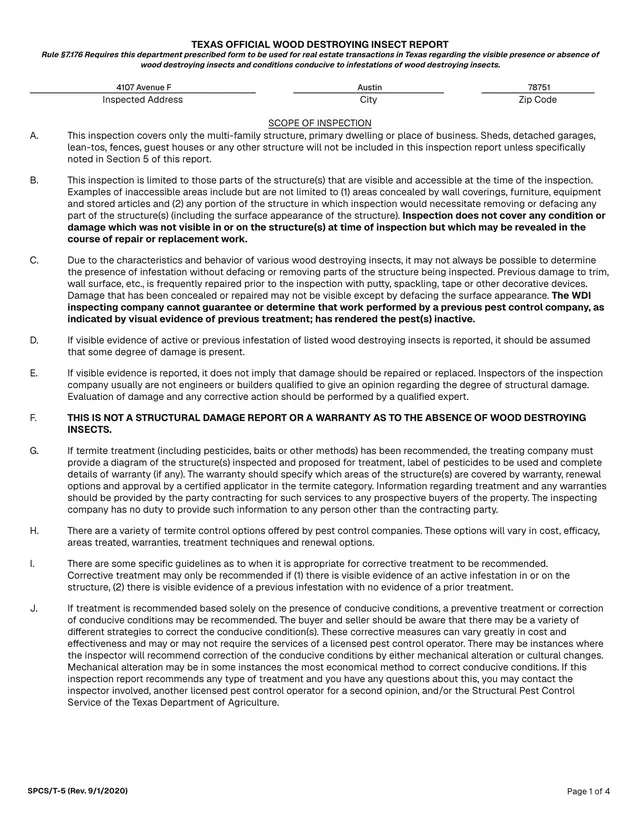
Record the termite findings from an inspection. - TexasSPCS/T-5
Texas Official Wood Destroying Insect Report
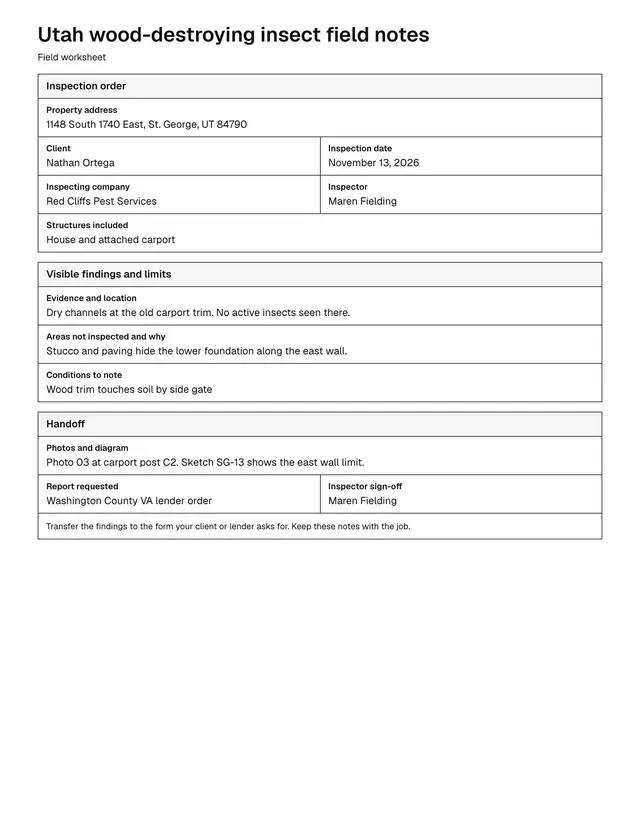
Record the termite findings from an inspection. - Utah
Utah wood-destroying insect field notes
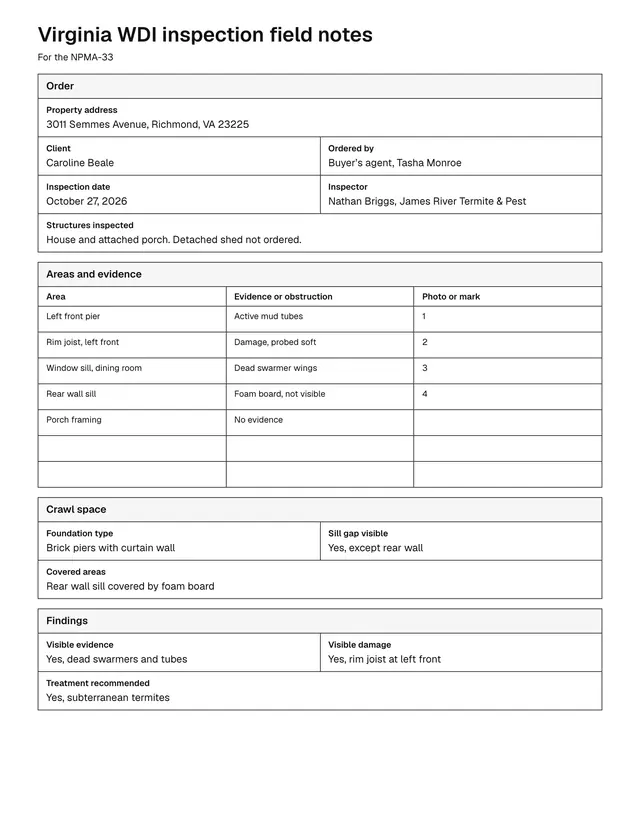
Record the termite findings from an inspection. - Virginia
Virginia wood destroying insect inspection report
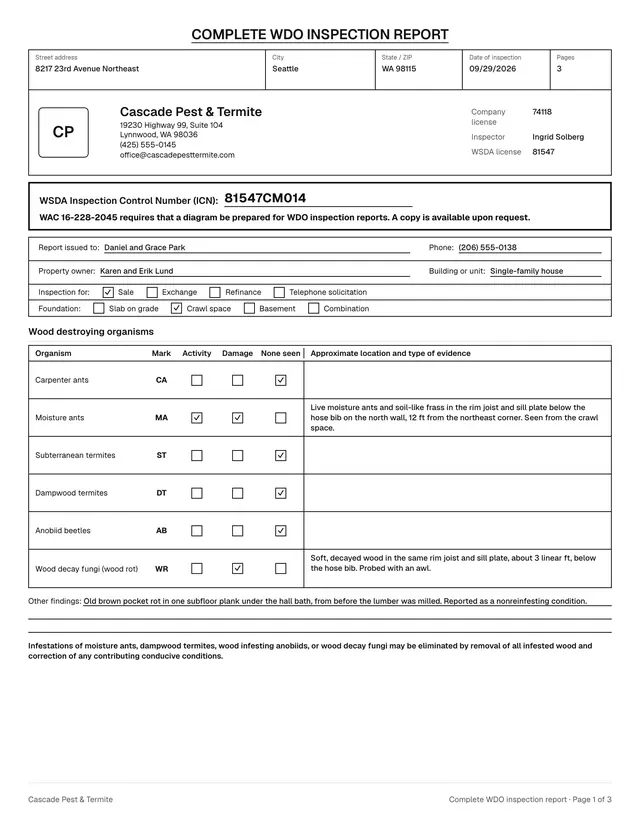
Record the termite findings from an inspection. - Washington
Complete WDO Inspection Report
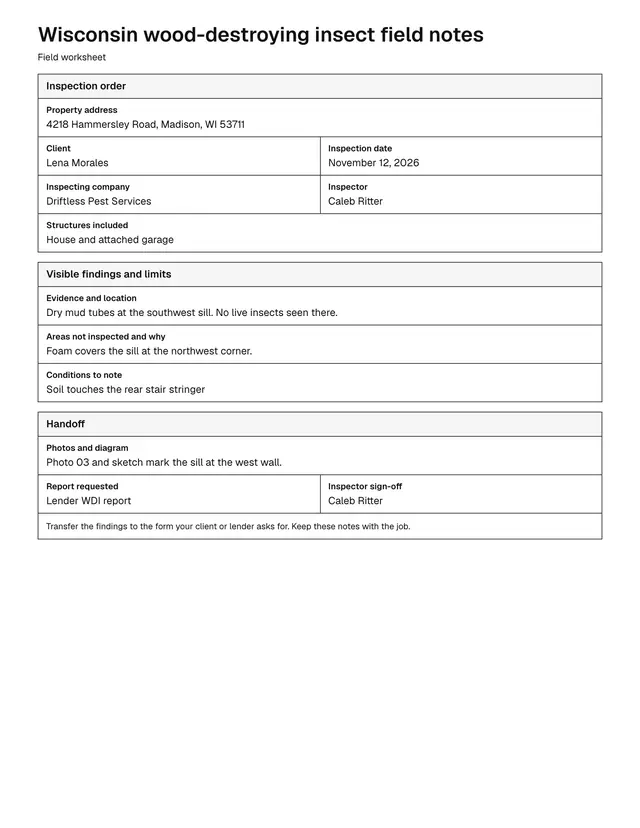
Record the termite findings from an inspection. - Wisconsin
Wisconsin wood-destroying insect field notes
Record the termite findings from an inspection.