Michigan wood-destroying insect inspection report (NPMA-33)
Michigan has no state termite report, so buyers, lenders, and agents ask for the NPMA-33. Here’s when a Michigan sale needs one and how to fill it out so it holds up at closing.
At a glance
- Form used
- NPMA-33
- State report rule
- None found
- VA requires it in
- 25 Michigan counties
- Treatment license
- Subcategory 7(b), R 285.636.3
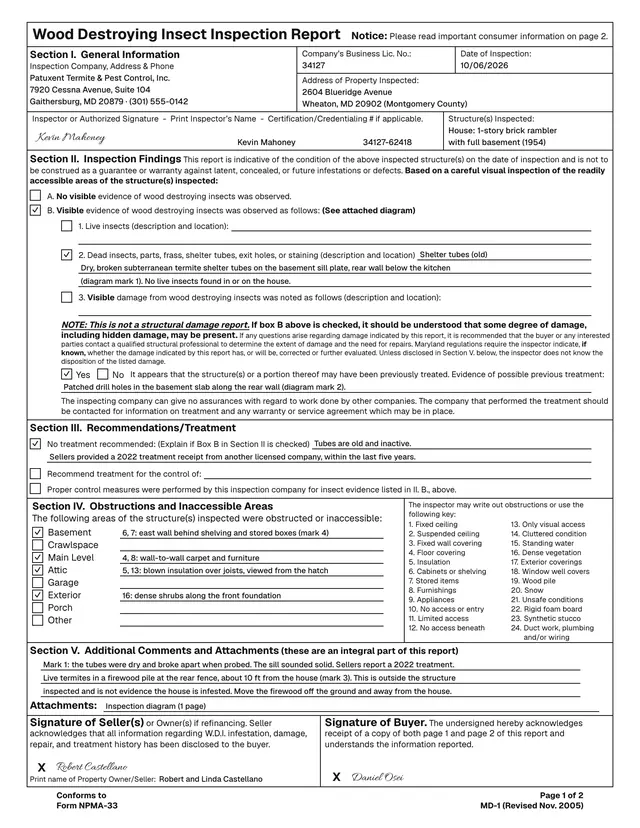
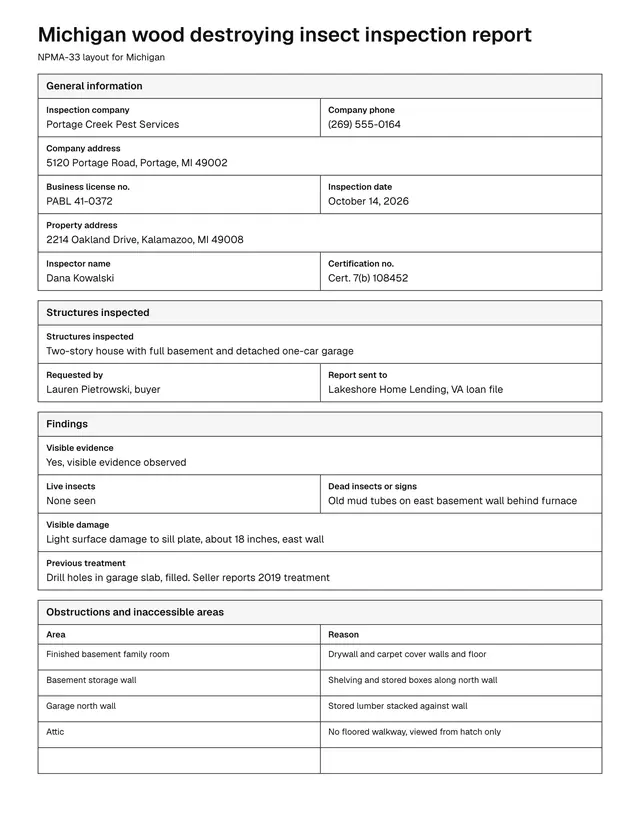
Completed example
Download PDFDoes Michigan have its own termite report?
No. We found no Michigan statute or MDARD rule that sets a wood-destroying insect report or says what one must hold. Michigan regulates the people who treat for termites, not the paper that says whether termites are there. So when a buyer, lender, or agent here asks for a “termite letter,” what shows up is almost always the NPMA-33, the Wood Destroying Insect Inspection Report from the National Pest Management Association.
NPMA’s own guideline for completing the NPMA-33 says state forms and procedures come first where a state has them. Michigan doesn’t, so the national form and that guideline are the rulebook you’ll be judged by. It’s worth one full read, start to finish, instead of learning the form one closing at a time.
The bugs on the list matter too. Michigan’s seller disclosure form asks about “History of infestation, if any: (termites, carpenter ants, etc.)” Carpenter ants get named right next to termites, so expect buyers to ask about both. The state’s pest control rules agree: the wood-destroying organism subcategory in R 285.636.3 lists termites, powder post beetles, carpenter ants, and wood-destroying fungi.
When a Michigan sale calls for one
VA loans, in 25 counties. The VA keeps a list of local termite rules by state. For Michigan, a report is required only in Allegan, Barry, Berrien, Branch, Calhoun, Cass, Hillsdale, Ionia, Jackson, Kalamazoo, Kent, Lenawee, Livingston, Macomb, Mason, Monroe, Muskegon, Oakland, Oceana, Ottawa, St. Clair, St. Joseph, Van Buren, Washtenaw, and Wayne counties. Outside that list, the VA local requirements page sets no county rule, though an appraiser who spots damage can still call for one.
Conventional and cash deals. No Michigan law makes a buyer get one. It comes up because the purchase agreement gives the buyer an inspection window, the lender asks, or the home inspector saw frass under a basement window and wrote “further evaluation by a pest control company.”
Reports the seller orders. Under MCL 565.955, a seller can lean on an expert’s report, and the law names a “structural pest control operator” in its list, when the buyer asks for that report. So your NPMA-33 may get read as part of the seller’s disclosure, not just the lender’s file. Write it as if a buyer’s attorney will read every line.
Filling out the NPMA-33 in Michigan
Section I, company and inspector. The form asks for a business license number. Michigan does license the business: a firm that applies pesticides for hire holds a Pesticide Application Business License from MDARD. Put that number here. On the inspector line, use the inspector’s own certification number if they hold one.
Section II, findings. Mark whether you saw visible evidence. If you did, say whether it was live insects, dead insects or signs like tubes and frass, or visible damage. There’s a separate box for signs of an earlier treatment, such as drill holes in a garage slab. Say exactly where. “Mud tubes on the east basement wall behind the furnace” helps the next person. “Evidence observed” doesn’t. NPMA calls the form “not a structural damage report,” so describe what you saw and send anything structural to a contractor.
Wood decay. Rot isn’t an insect, so it doesn’t go in the main findings. NPMA has a separate attachment for wood decay fungi. A Michigan basement with a damp sill plate or a crawlspace that floods each spring is where you’ll use it.
Section IV, what you couldn’t see. A finished basement with drywall to the floor, boxes stacked along the walls, a crawlspace with no hatch, and in winter, snow banked against the foundation. List each one with the reason. This section protects you more than any other line on the page.
Signatures. You sign the inspector line. The buyer and seller sign to say they got the report, usually at closing through the agent or title company. You don’t need to chase those signatures yourself.
What happens when the report finds termites?
The NPMA-33 only says what you saw. If treatment follows, it becomes a pesticide job, and Michigan rules apply. The applicator needs certification in the wood-destroying organism subcategory, and the customer gets written details at the time of the application. That handout is the Michigan pesticide customer information receipt.
The firm keeps its own record too. Under R 285.636.15, commercial applicator records for general-use products stay on file at least 1 year, and restricted-use records at least 3. A termiticide like Termidor SC (EPA Reg. No. 7969-210) falls under the 1-year floor, but if your termite warranty runs longer, keep the record as long as the warranty.
Before you write anything else, ask the loan officer what proof of treatment they want before closing. Some want a note on the report, and some want a separate letter from the treating firm.
Noma specializes in the Michigan wood-destroying insect inspection report (NPMA-33). Work the job in the Noma mobile app, draw an inspection diagram that marks where you found tubes or damage, and send the finished PDF to the buyer and seller to sign online. See how Noma handles termite inspections.
Helpful resources
Frequentlyaskedquestions
Send this document in minutes, not an afternoon.
Other states
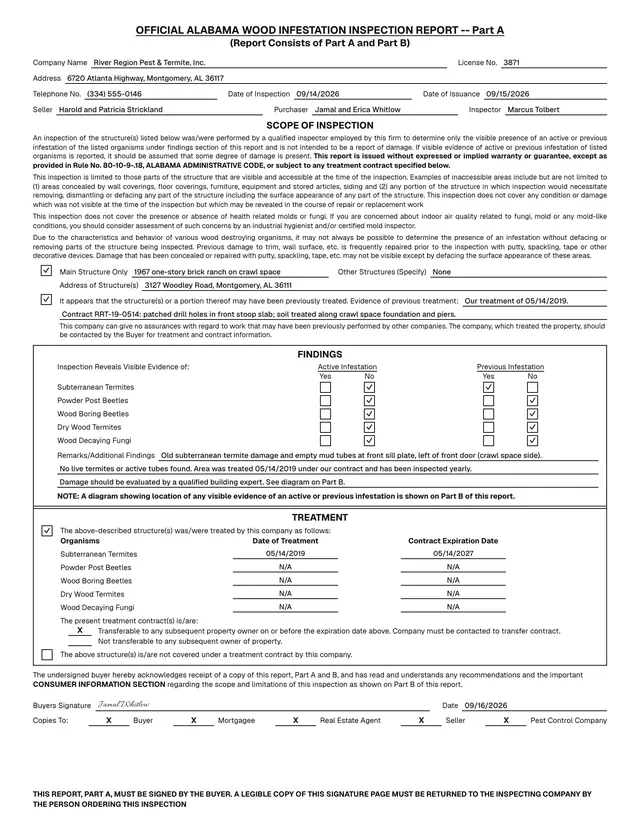
Inspection report templates- Alabama
Official Alabama Wood Infestation Inspection Report
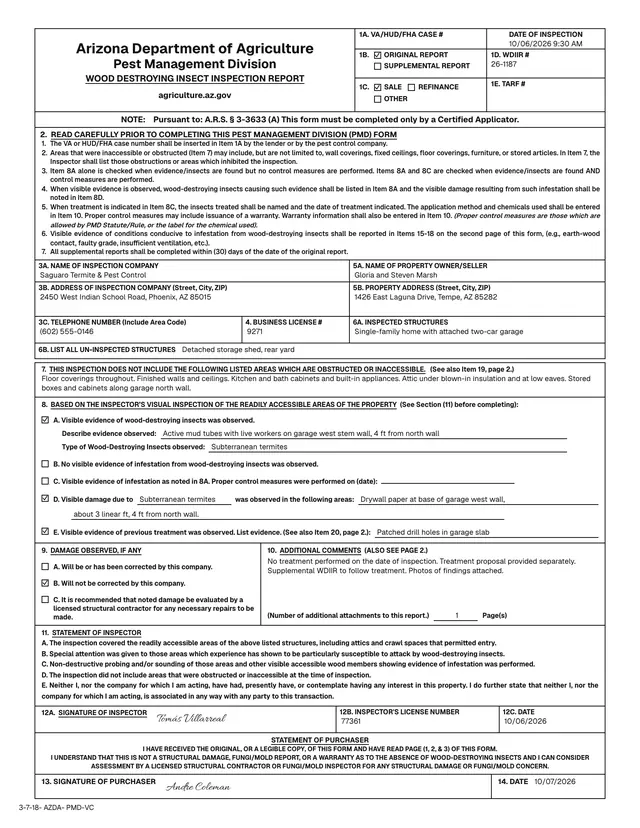
Record the termite findings from an inspection. - Arizona
Wood Destroying Insect Inspection Report
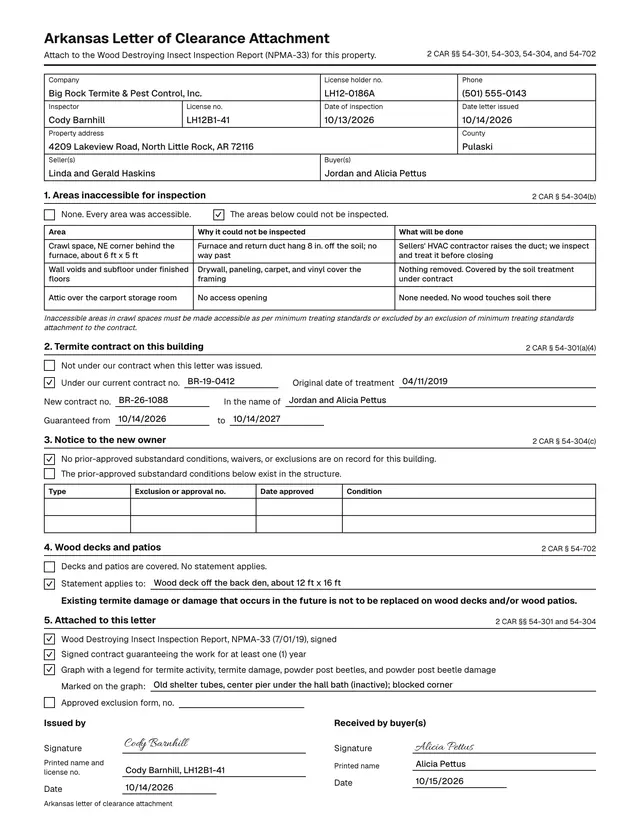
Record the termite findings from an inspection. - Arkansas
Arkansas Letter of Clearance Attachment
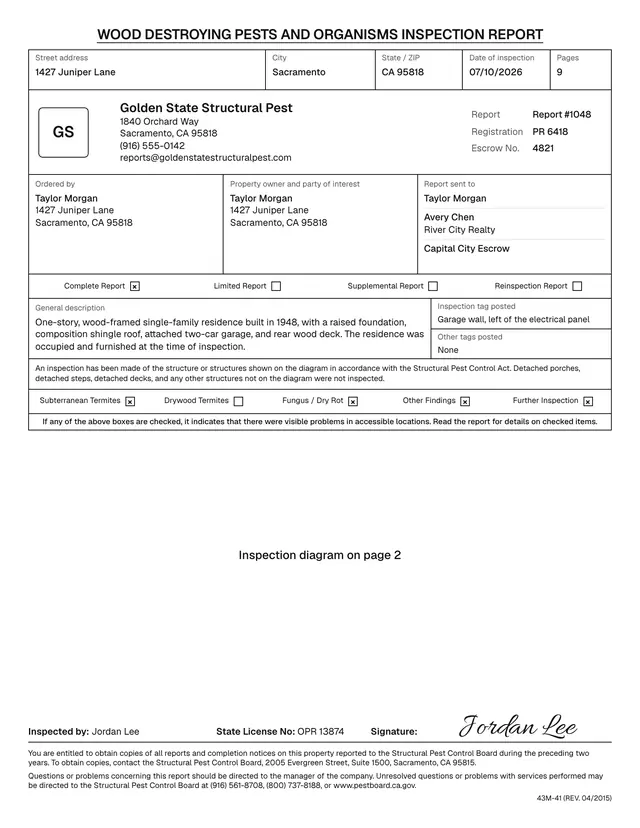
Record the termite findings from an inspection. - California43M-41
Wood Destroying Pests and Organisms Inspection Report
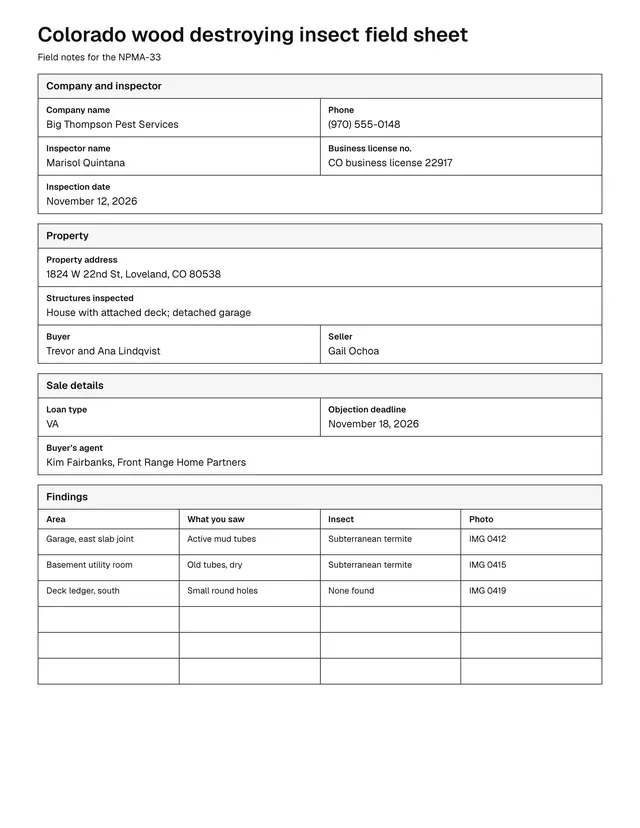
Record the termite findings from an inspection. - ColoradoNPMA-33
Colorado termite inspection report (NPMA-33)
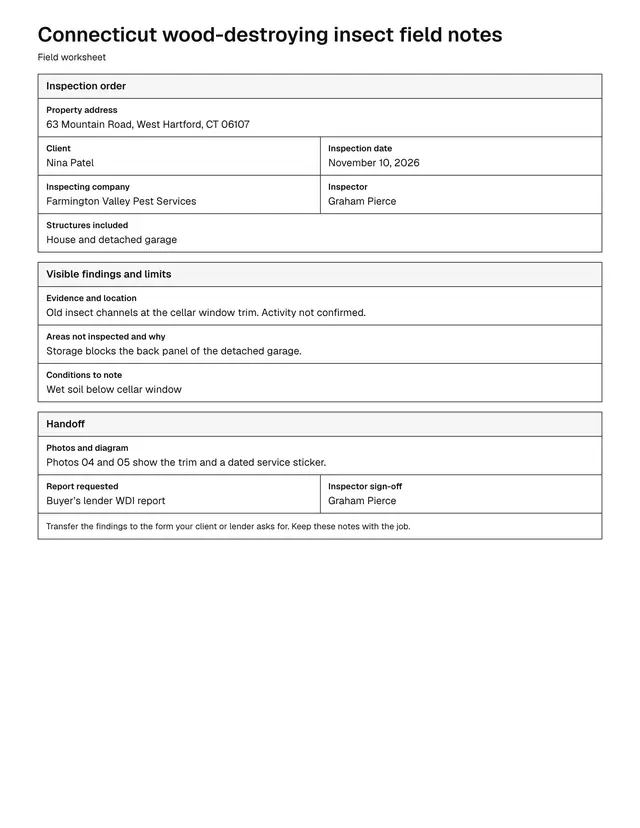
Record the termite findings from an inspection. - Connecticut
Connecticut wood-destroying insect field notes
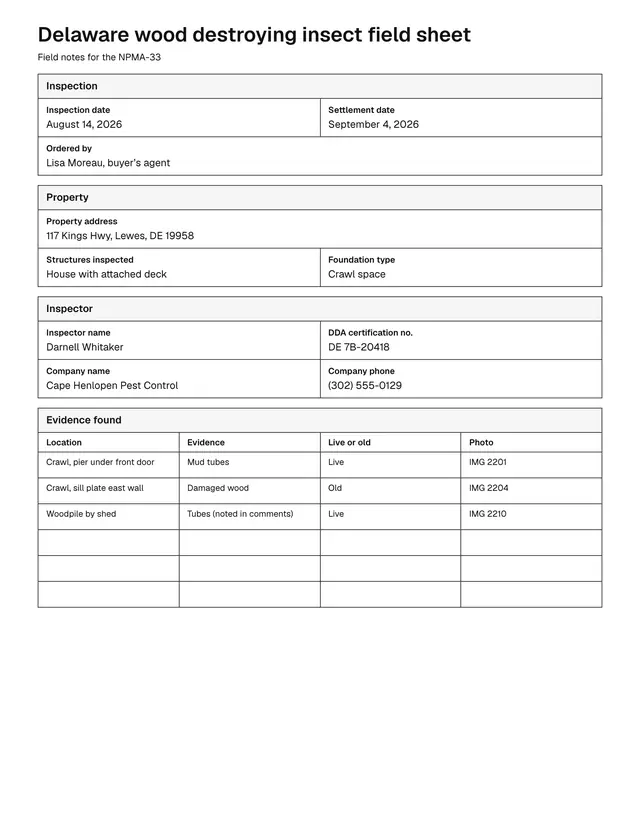
Record the termite findings from an inspection. - DelawareNPMA-33
Delaware termite inspection report (NPMA-33)
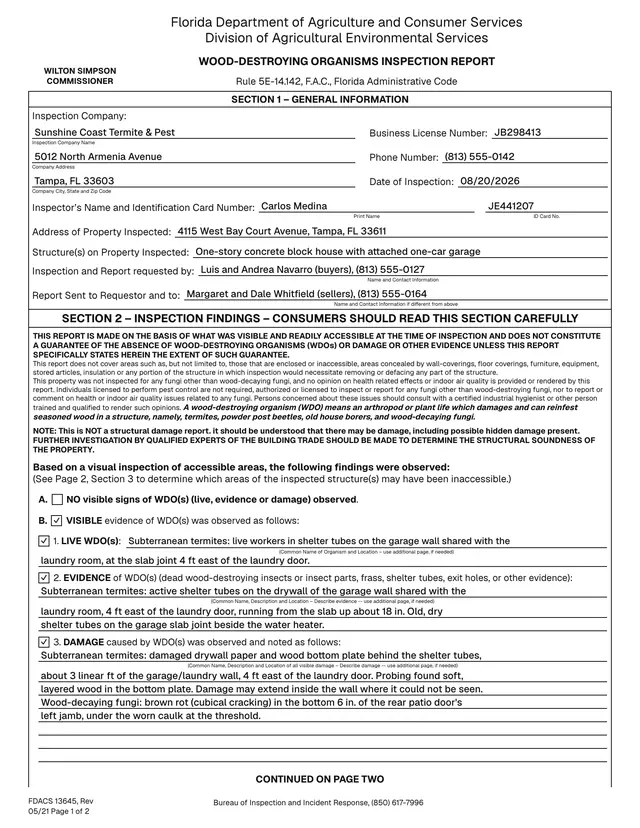
Record the termite findings from an inspection. - FloridaFDACS-13645
Wood-Destroying Organisms Inspection Report
Record the termite findings from an inspection. - Georgia
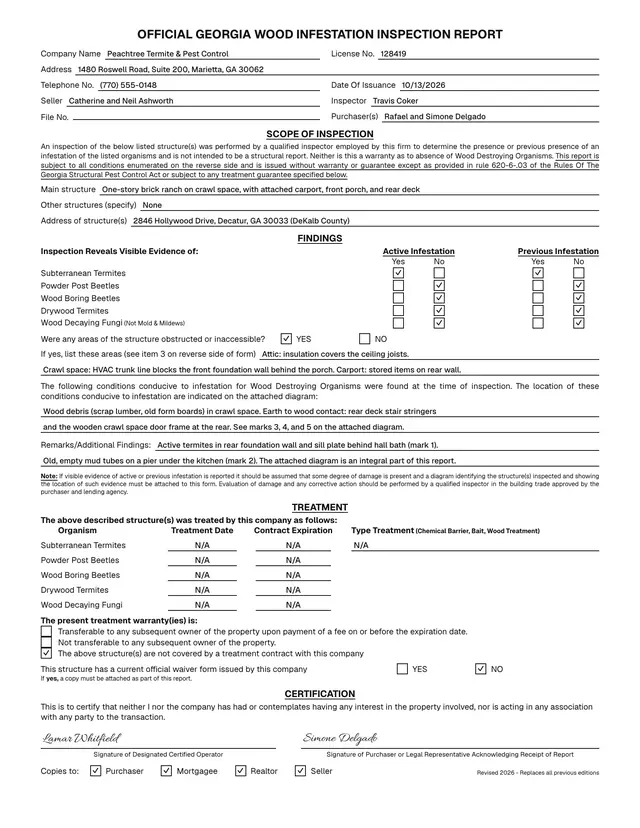
Official Georgia Wood Infestation Inspection Report
Record the termite findings from an inspection. - HawaiiPC-9
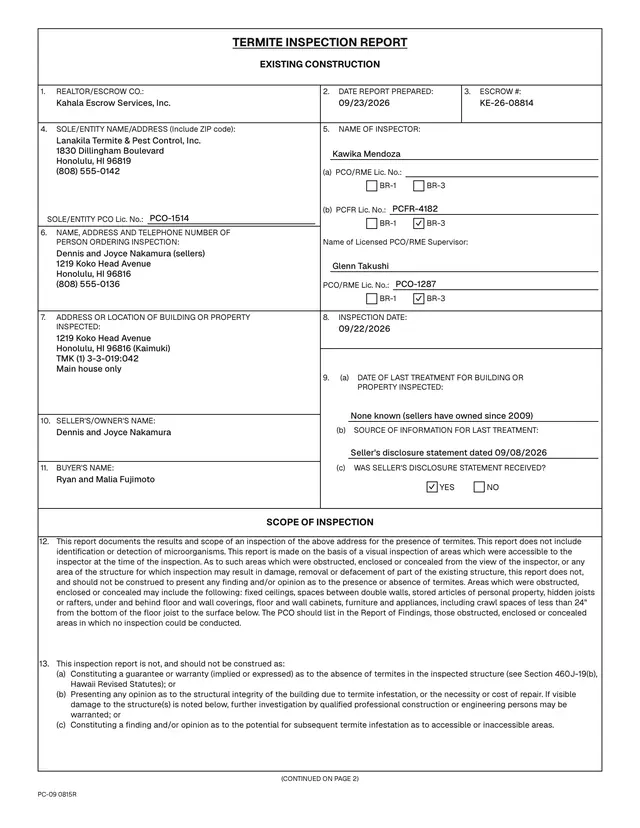
Termite Inspection Report, Existing Construction
Record the termite findings from an inspection. - IllinoisNPMA-33
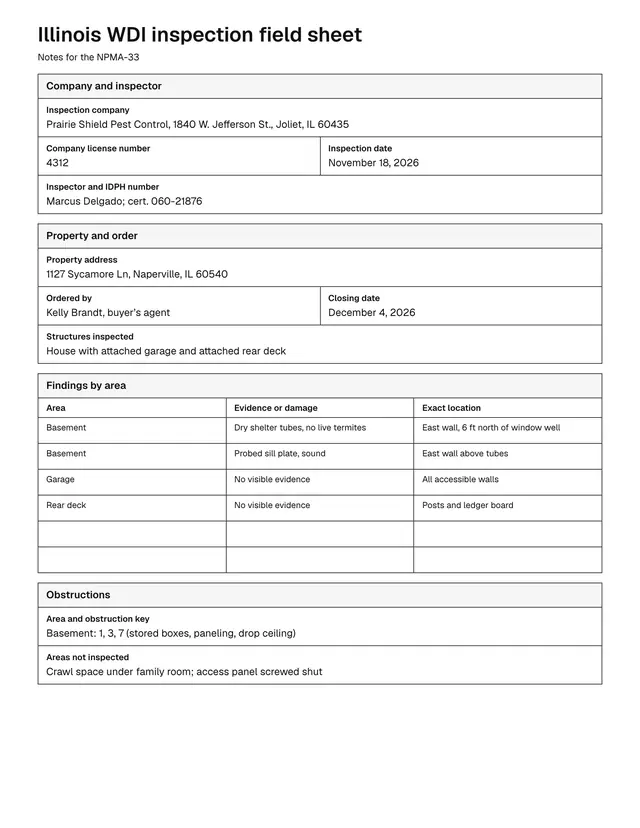
Illinois wood destroying insect inspection report (NPMA-33)
Record the termite findings from an inspection. - IndianaNPMA-33
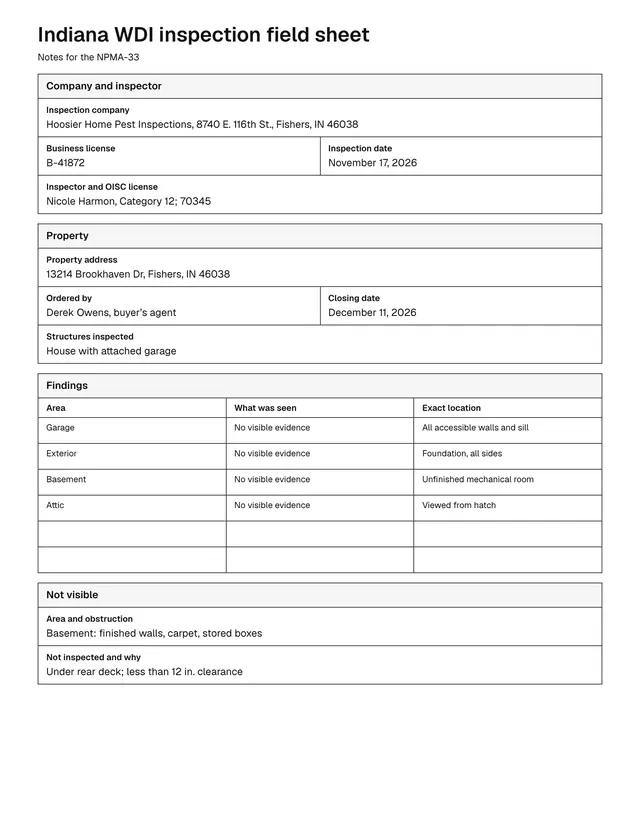
Indiana wood destroying insect inspection report (NPMA-33)
Record the termite findings from an inspection. - Iowa
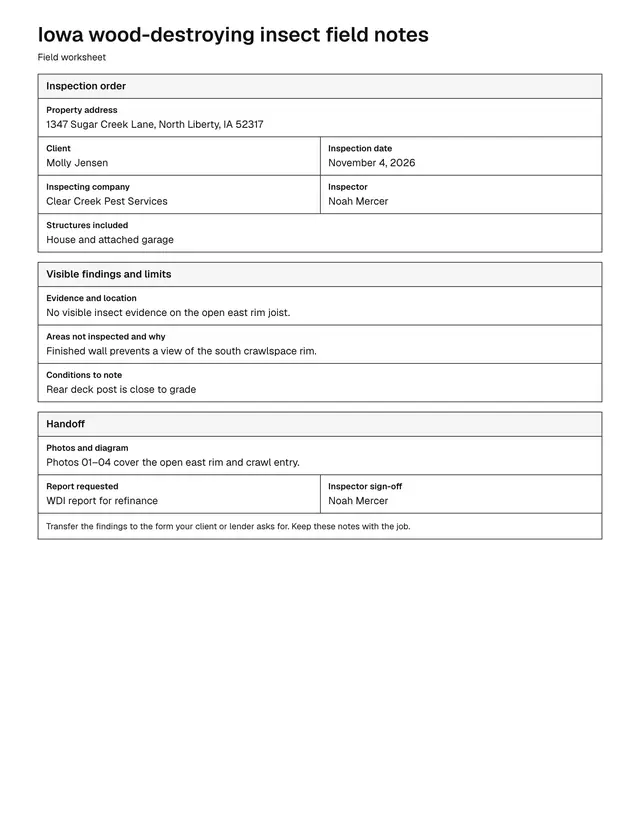
Iowa wood-destroying insect field notes
Record the termite findings from an inspection. - Kansas
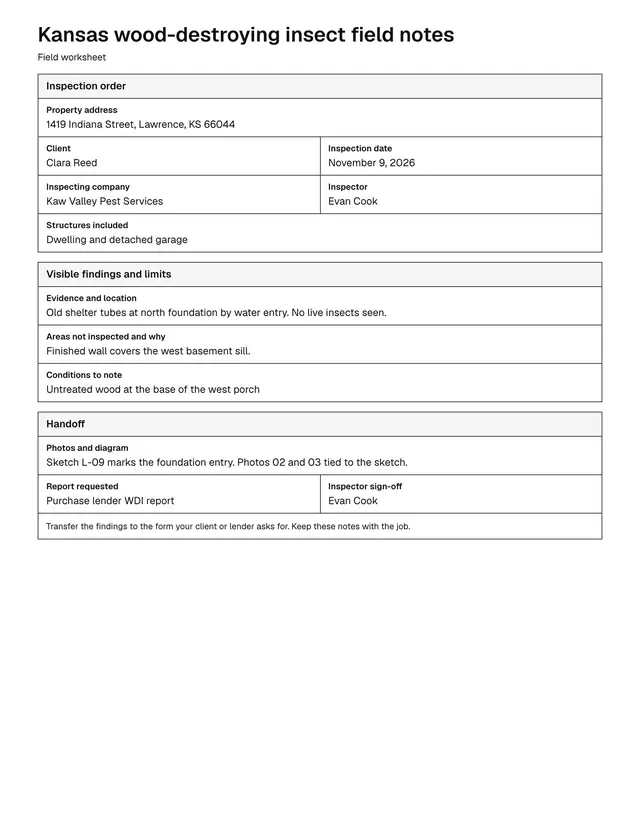
Kansas wood-destroying insect field notes
Record the termite findings from an inspection. - Kentucky
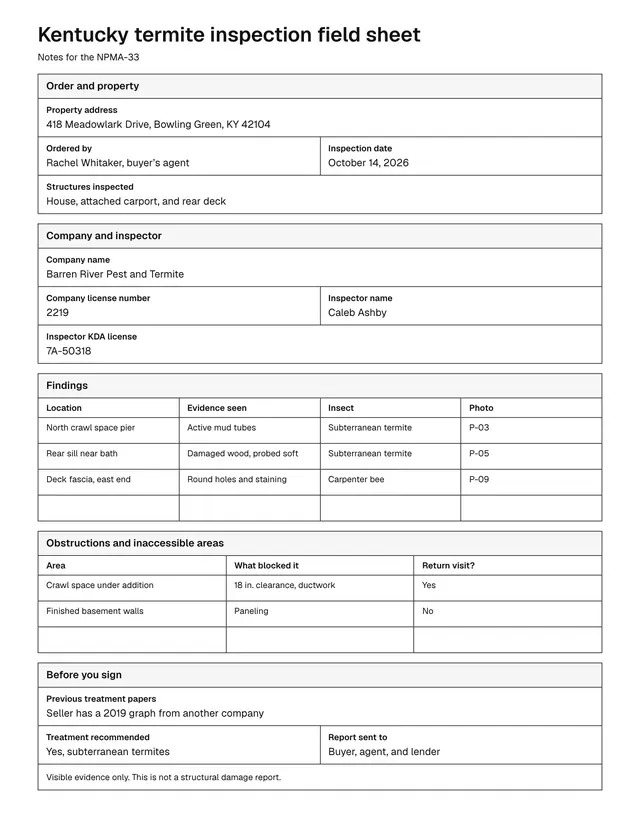
Kentucky termite inspection report (NPMA-33)
Record the termite findings from an inspection. - MarylandMD-1
Wood Destroying Insect Inspection Report
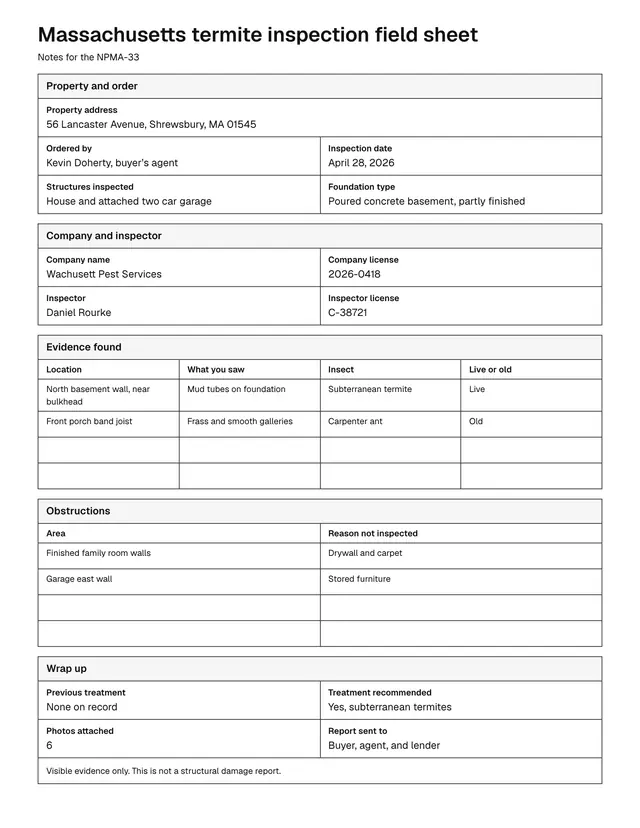
Record the termite findings from an inspection. - Massachusetts
Massachusetts termite inspection report (NPMA-33)
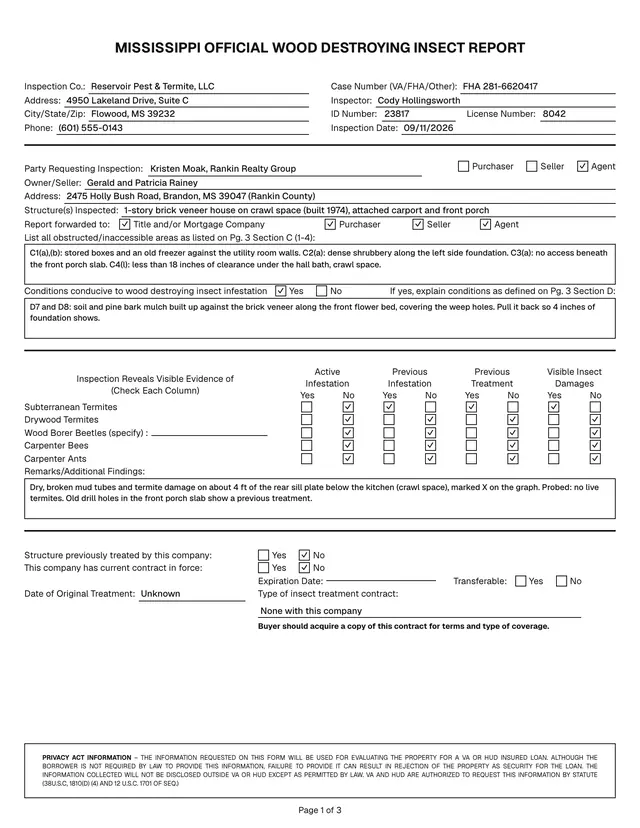
Record the termite findings from an inspection. - Mississippi
Mississippi Official Wood Destroying Insect Report
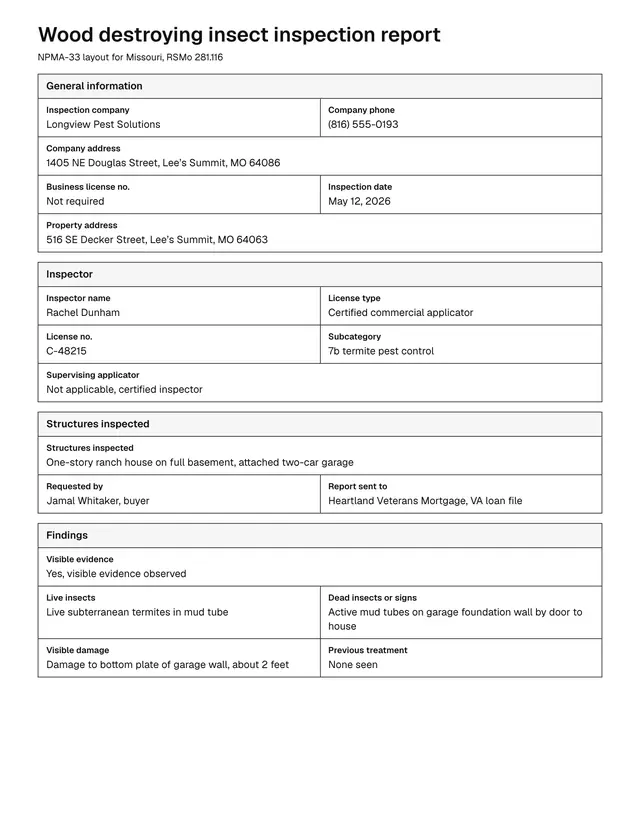
Record the termite findings from an inspection. - MissouriNPMA-33
Missouri wood-destroying insect inspection report (NPMA-33)
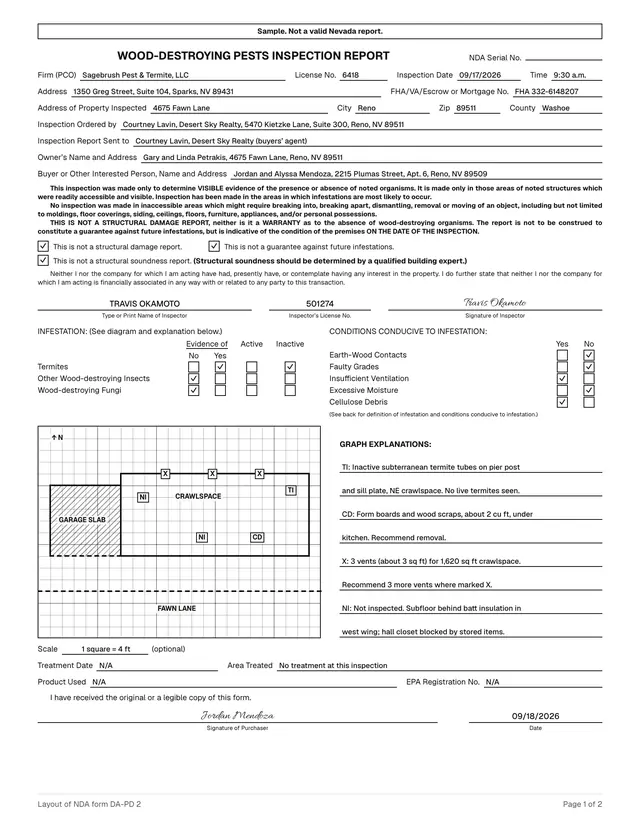
Record the termite findings from an inspection. - Nevada
Wood-Destroying Pests Inspection Report
Record the termite findings from an inspection. - New Jersey
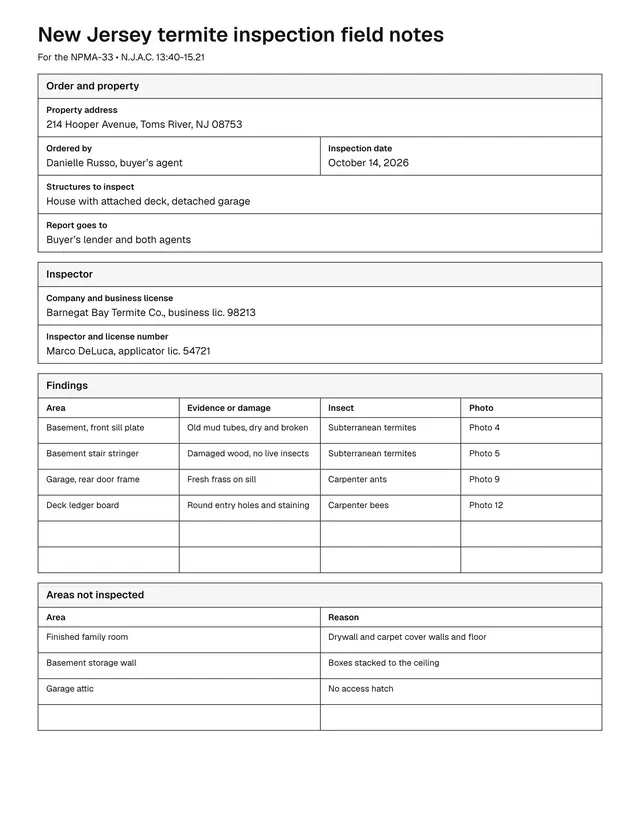
New Jersey termite inspection report (NPMA-33 field notes)
Record the termite findings from an inspection. - New Mexico
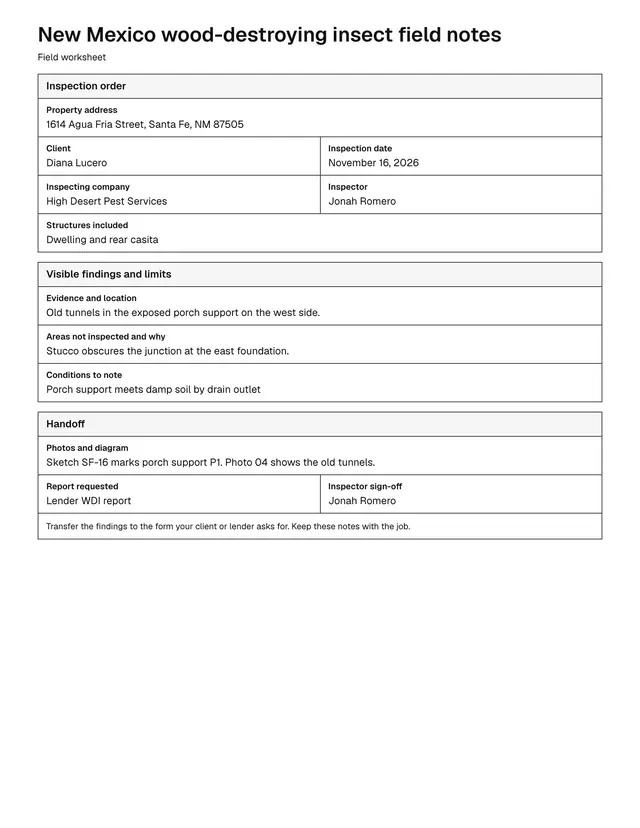
New Mexico wood-destroying insect field notes
Record the termite findings from an inspection. - New York
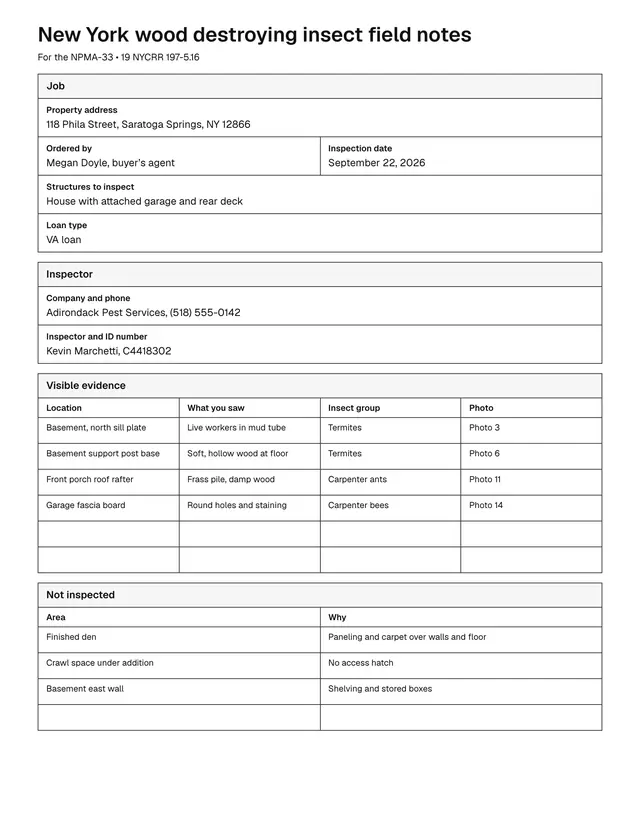
New York wood destroying insect inspection notes (NPMA-33)
Record the termite findings from an inspection. - North CarolinaWDIR 100
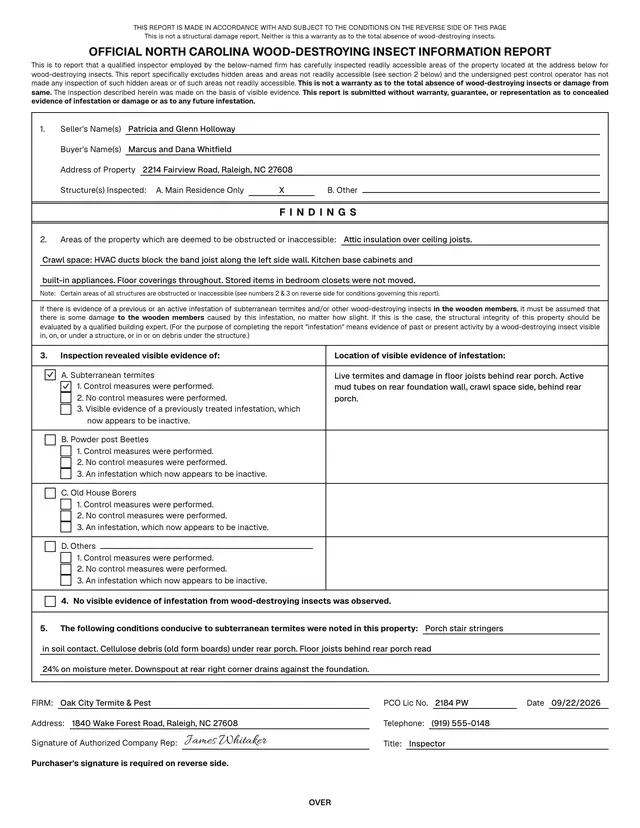
Official North Carolina Wood-Destroying Insect Information Report
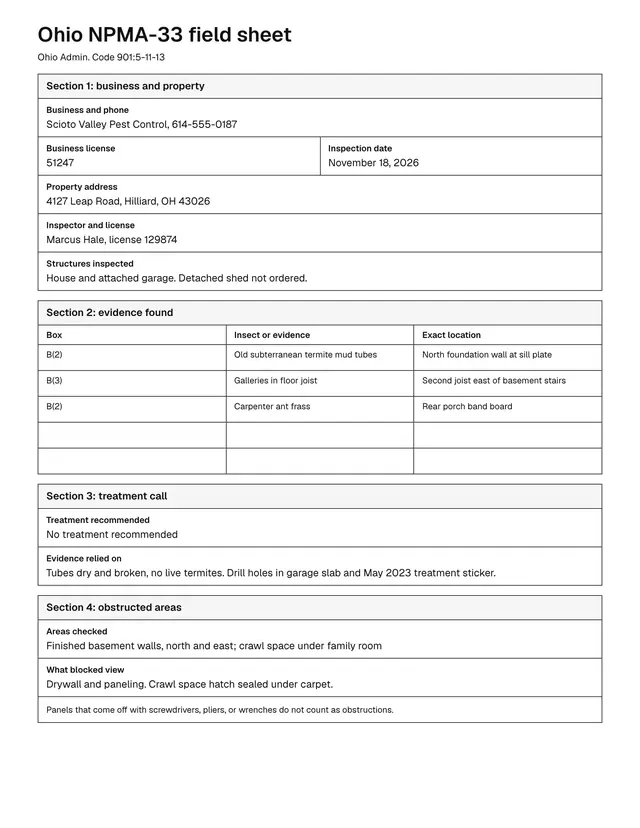
Record the termite findings from an inspection. - OhioNPMA-33
Ohio NPMA-33 wood-destroying insect inspection report
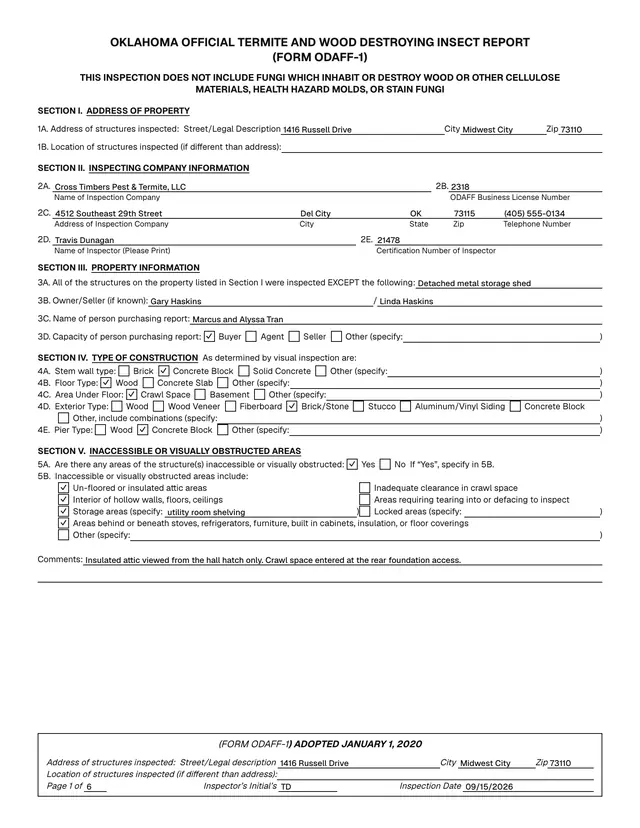
Record the termite findings from an inspection. - OklahomaForm ODAFF-1
Oklahoma Official Termite and Wood Destroying Insect Report
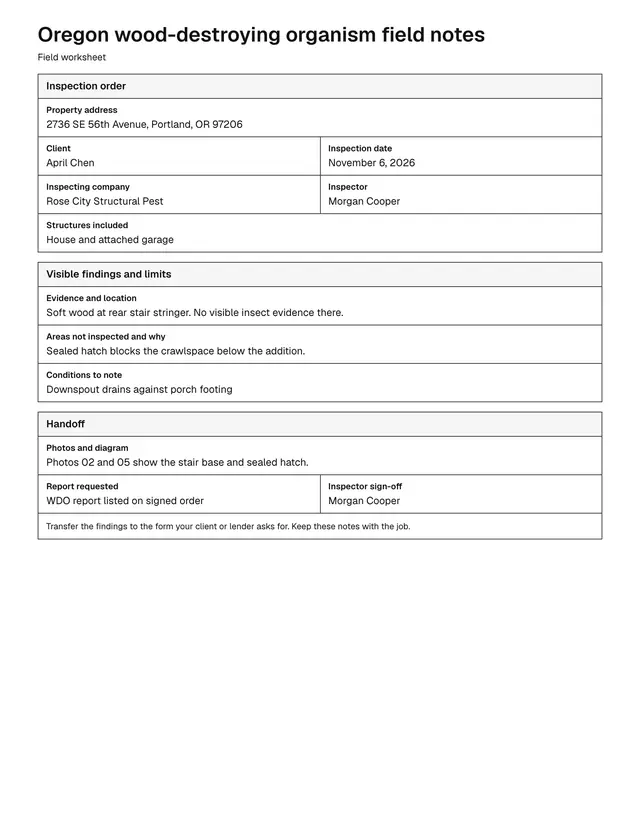
Record the termite findings from an inspection. - Oregon
Oregon wood-destroying organism field notes
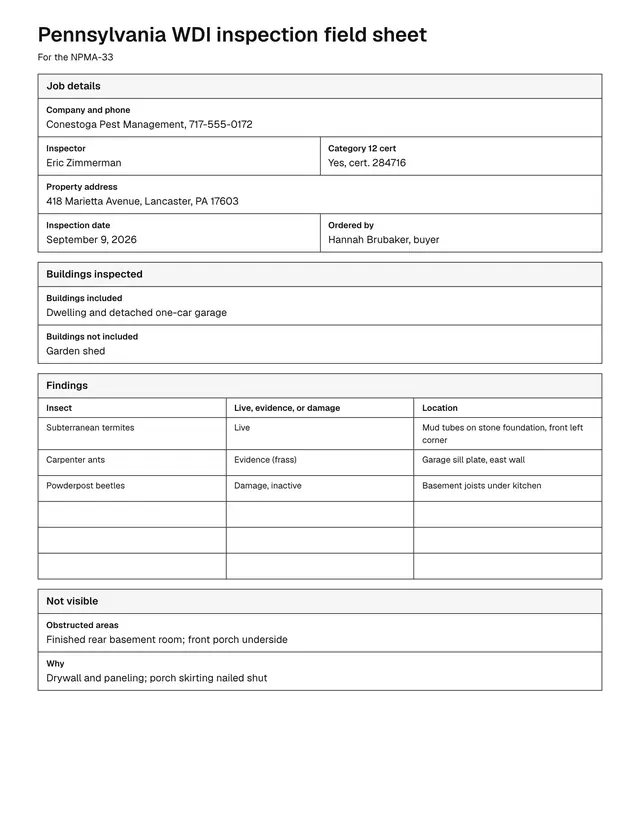
Record the termite findings from an inspection. - PennsylvaniaNPMA-33
Pennsylvania wood-destroying insect inspection report (NPMA-33)
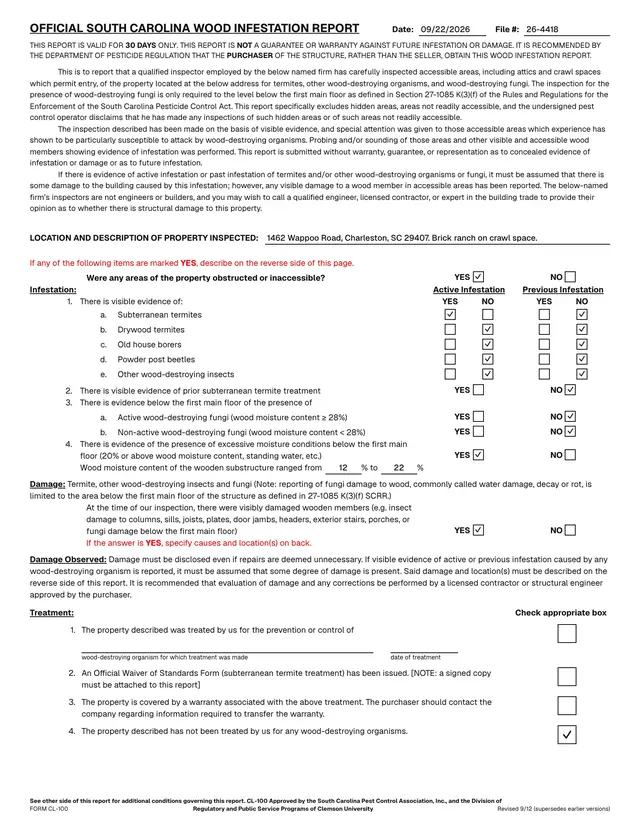
Record the termite findings from an inspection. - South CarolinaCL-100
Official South Carolina Wood Infestation Report
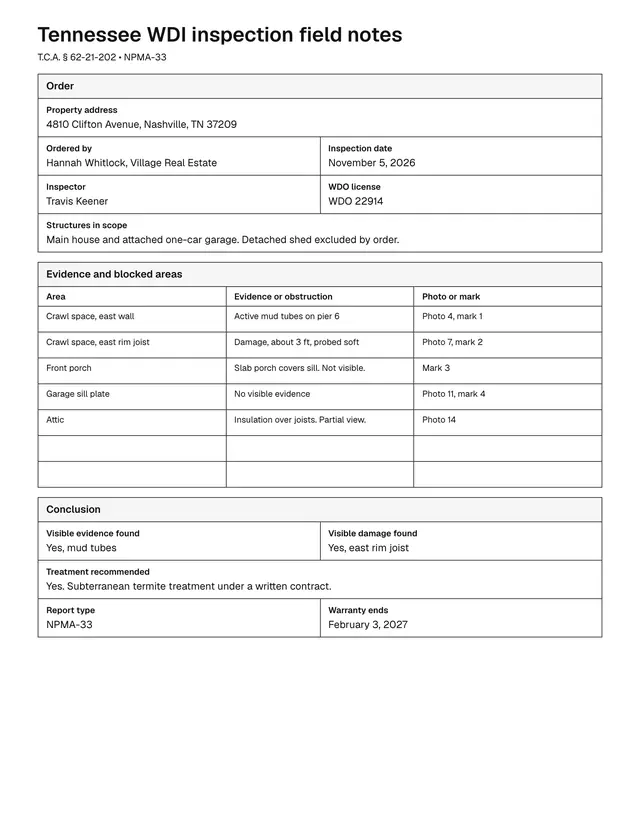
Record the termite findings from an inspection. - Tennessee
Tennessee wood destroying insect infestation inspection report
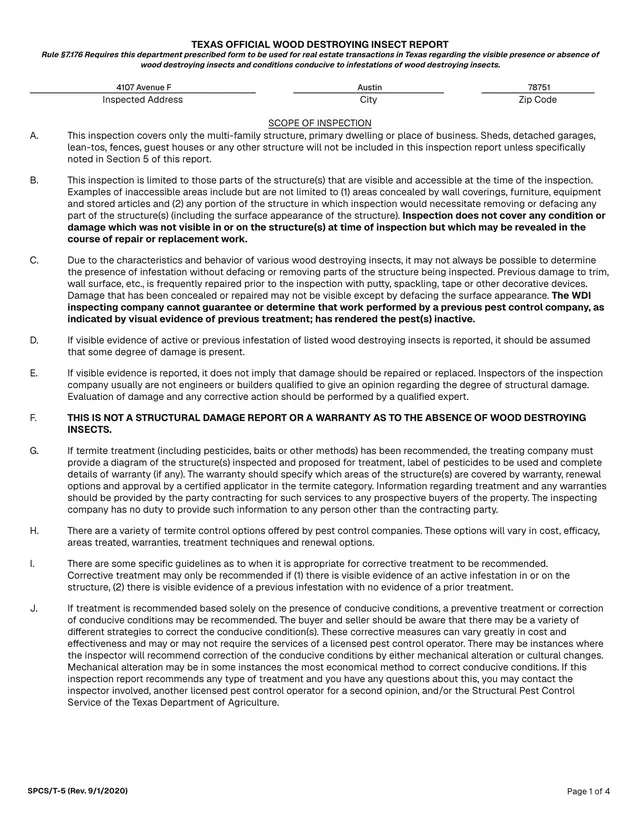
Record the termite findings from an inspection. - TexasSPCS/T-5
Texas Official Wood Destroying Insect Report
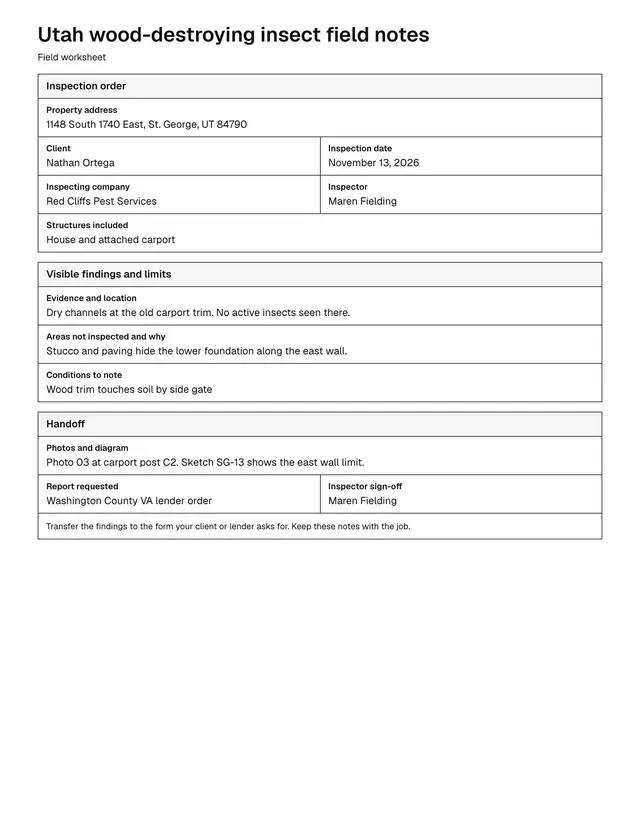
Record the termite findings from an inspection. - Utah
Utah wood-destroying insect field notes
Record the termite findings from an inspection. - Virginia
Virginia wood destroying insect inspection report
Record the termite findings from an inspection. - Washington
Complete WDO Inspection Report
Record the termite findings from an inspection. - Wisconsin
Wisconsin wood-destroying insect field notes
Record the termite findings from an inspection.