Tennessee wood destroying insect infestation inspection report
In Tennessee the termite letter is a 90-day warranty under T.C.A. § 62-21-202, written on the NPMA-33. These field notes back up every box you check.
At a glance
- Law
- T.C.A. § 62-21-202
- Form
- NPMA-33
- Warranty
- 90 days
- Issued by
- Chartered company, WDO license
Completed example
Download PDFWhy Tennessee treats the letter as a warranty
Most states call the termite letter an opinion. Tennessee goes further. Under T.C.A. § 62-21-202, a wood destroying insect infestation inspection report is “a warranty for ninety (90) days of the accuracy of any representations in the inspection report.” If you write that the crawl space is clear and the buyer finds live termites in month two, the law is on their side.
The same section says what the report proves: the “presence or absence of visible wood destroying insects” and visible damage “on the day the inspection is made.” Nothing more. You aren’t promising the house is termite free. You’re promising that what you wrote down matches what a careful inspector could see that day.
The stakes are real. The buyer can recover repair costs that tie back to the warranty. A company that knowingly issues a false report, or issues one without physically inspecting the site, faces triple damages. That’s also why TDA requires errors and omissions insurance (at least $100,000 per claim and $300,000 total) for any charter that holds a WDO license.
Which form the closing will ask for
Tennessee doesn’t have a state termite form. The statute says the report “shall be submitted on forms prescribed by the National Pest Management Association and the department of housing and urban development.” In practice that means the NPMA-33, which you buy from NPMA. Agents in Knoxville and Memphis still call it a termite letter or a clearance letter. It’s the same thing.
NPMA’s own guidelines for the NPMA-33 say the form “does not preempt state requirements.” So the 90-day warranty rides along no matter what the form’s fine print says. If you see wood decay or moisture damage, the NPMA-33 only covers insects. NPMA publishes a separate WDO attachment for fungus, and it has to be listed in Section V of the NPMA-33.
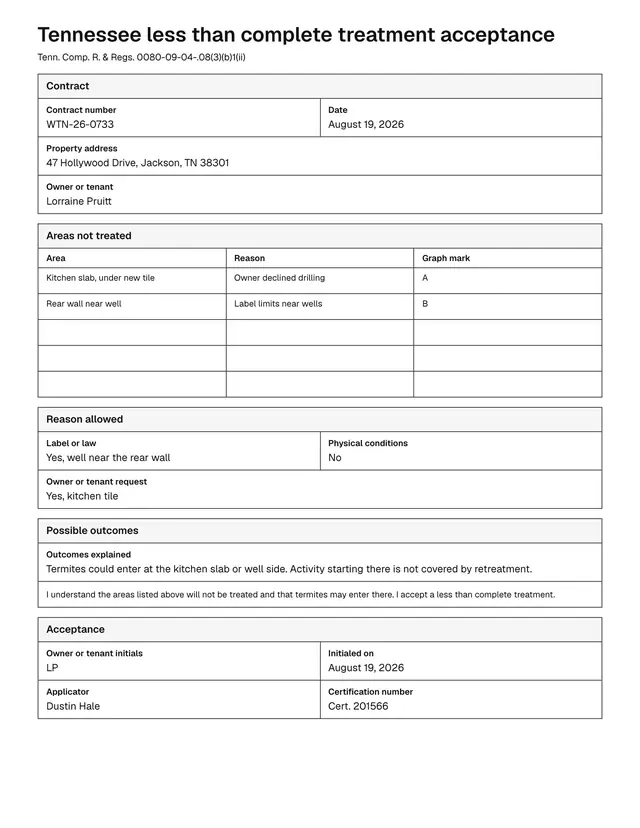
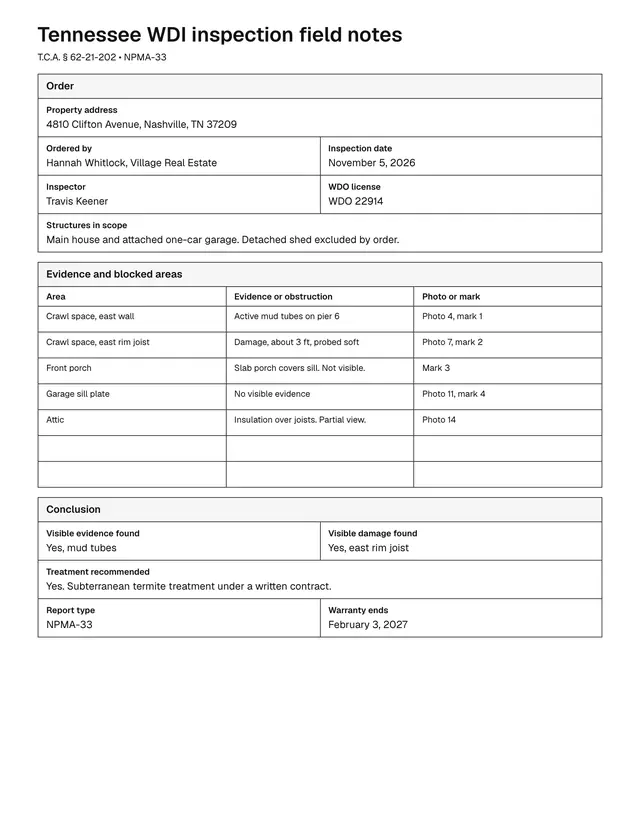
The form is copyrighted, so this page doesn’t copy it. Use the sheet below as your field notes, then move the findings onto the real NPMA-33 at the office.
What to write down at the house
Start with the scope. List every structure the order covers: the house, an attached garage, a detached shop. If the order says main house only, write that. A shed you never looked at can’t become a warranty claim.
Log evidence by location. For each finding, name the spot (east rim joist, back porch sill) and what you saw: live insects, mud tubes, frass, exit holes, or damage. Tie it to a photo number and a mark on the graph page.
Name every blocked area. Stored boxes against a basement wall, a finished ceiling, a crawl space entry under a deck. Write what blocked the view and whether a return visit could help. A Tennessee report that skips this leaves the 90-day warranty wide open.
Draw the building. Show the front, the measured sides, and numbered marks that match your notes. TDA’s consumer tips tell homeowners to ask to be shown damage before they sign for treatment, so a clear sketch saves a second trip.
Who can put their name on it
The letter has to come from a chartered pest control company with a WDO license. TDA’s FAQ says its rules reach anyone “conducting inspections for wood-destroying insect reports,” so a general home inspector can’t hand one out as an add-on.
Check your paperwork before a busy spring. New structural charters carry a $50,000 bond for the first three years, then $10,000. Licenses and charters expire June 30 of odd-numbered years, so a lapse on June 30, 2027 means no letters on July 1.
One visit, one letter. If a deal falls through and a new buyer wants a letter three months later, go back out. Putting a new date on an old report is exactly the no-inspection case that brings triple damages.
What if the letter turns up active termites?
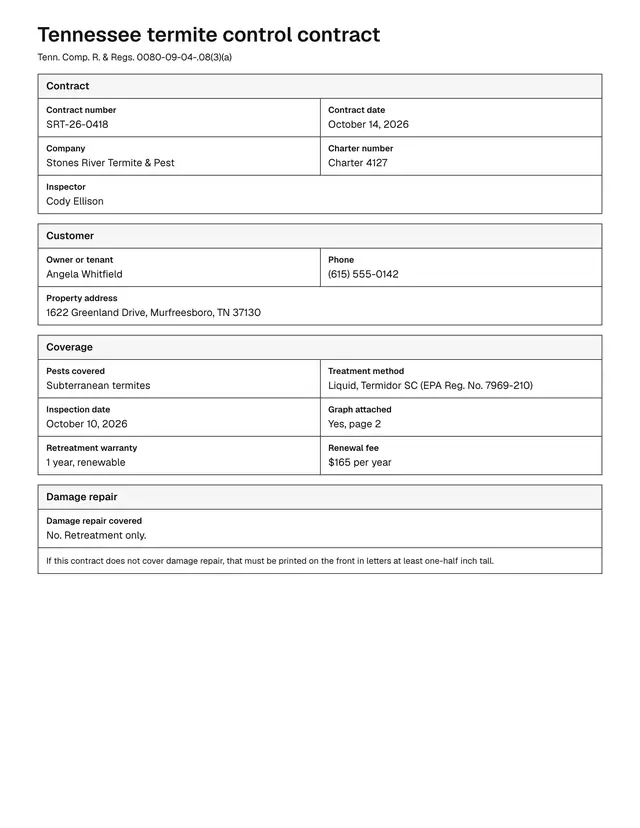
The letter itself doesn’t treat anything. If the buyer or seller wants treatment, Tennessee needs a separate written termite contract signed in duplicate before any pesticide goes down, with an inspection date and a graph. Your field graph is a good start for that one.
Noma specializes in the Tennessee Wood Destroying Insect Infestation Inspection Report (T.C.A. § 62-21-202). Inspectors draw the inspection diagram on the job from their phone, and the office can upload the finished NPMA-33 as a PDF and send it to the client to sign online. See how Noma handles termite inspections.
Frequentlyaskedquestions
Send this document in minutes, not an afternoon.
Other states
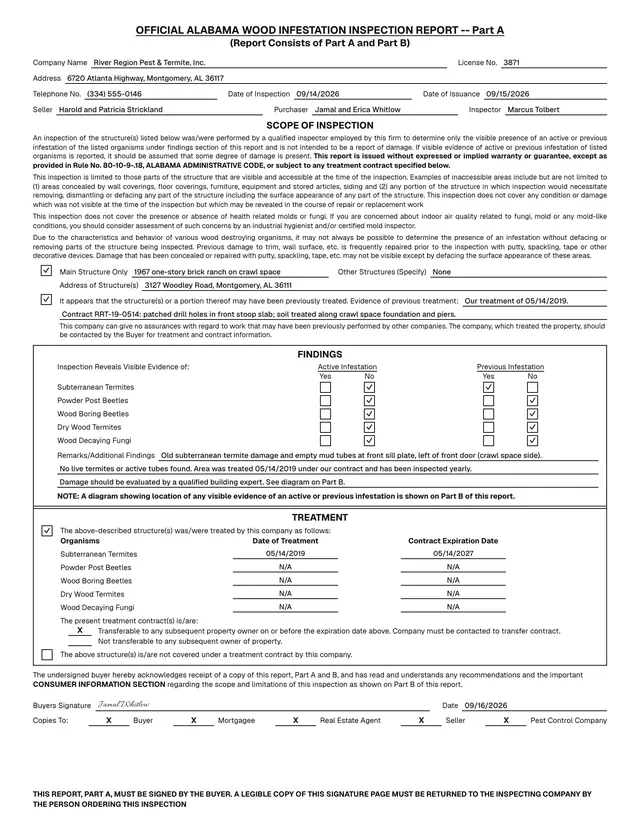
Inspection report templates- Alabama
Official Alabama Wood Infestation Inspection Report
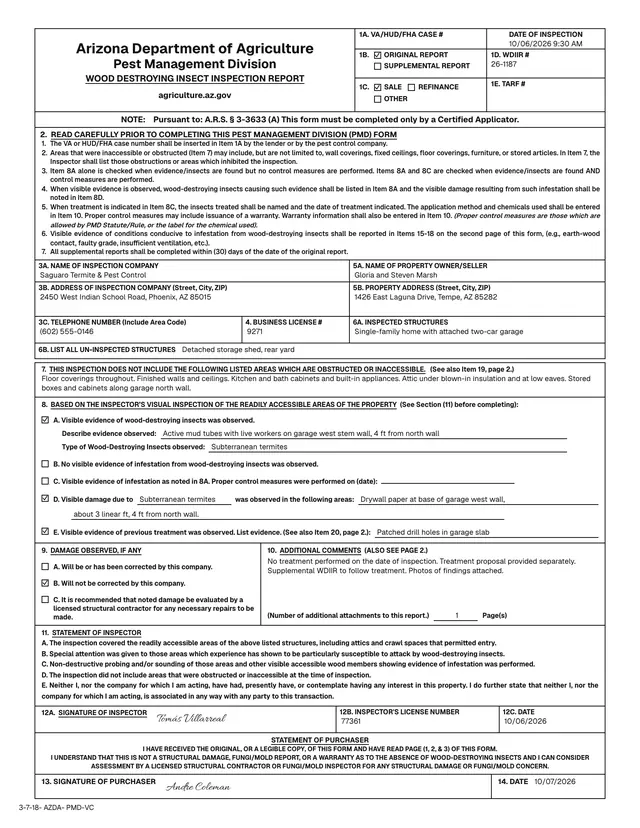
Record the termite findings from an inspection. - Arizona
Wood Destroying Insect Inspection Report
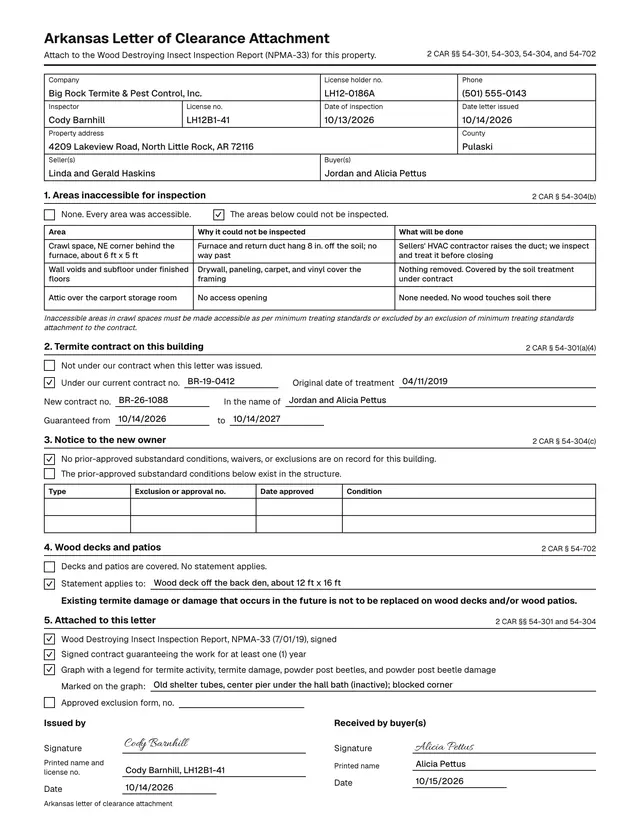
Record the termite findings from an inspection. - Arkansas
Arkansas Letter of Clearance Attachment
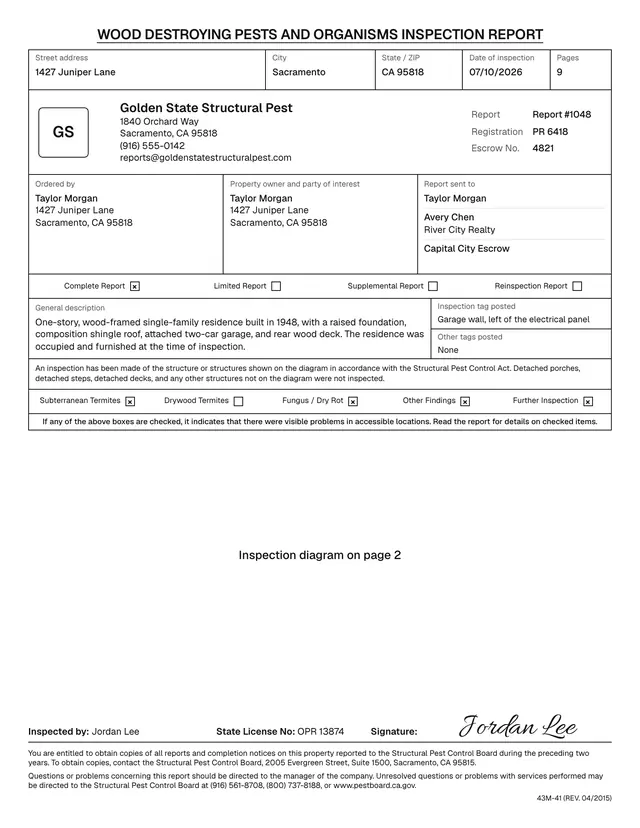
Record the termite findings from an inspection. - California43M-41
Wood Destroying Pests and Organisms Inspection Report
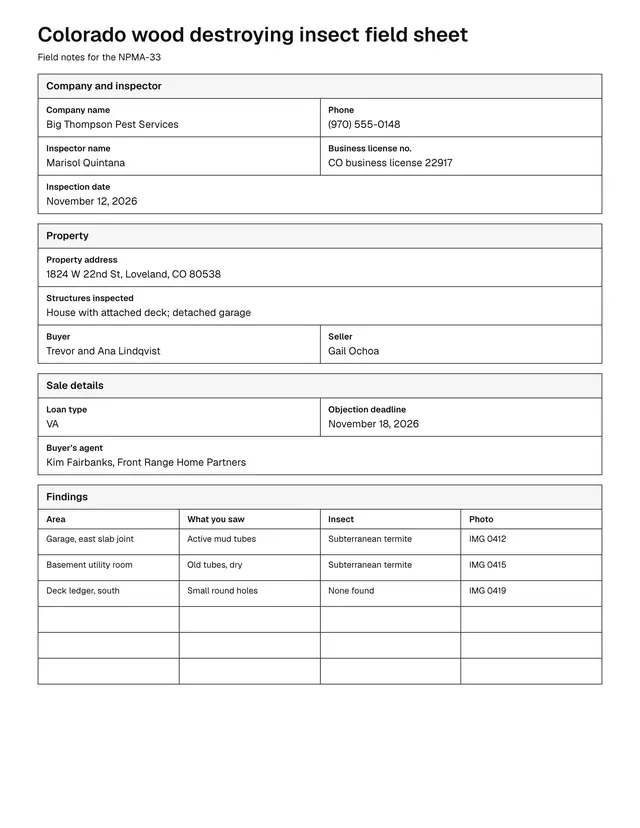
Record the termite findings from an inspection. - ColoradoNPMA-33
Colorado termite inspection report (NPMA-33)
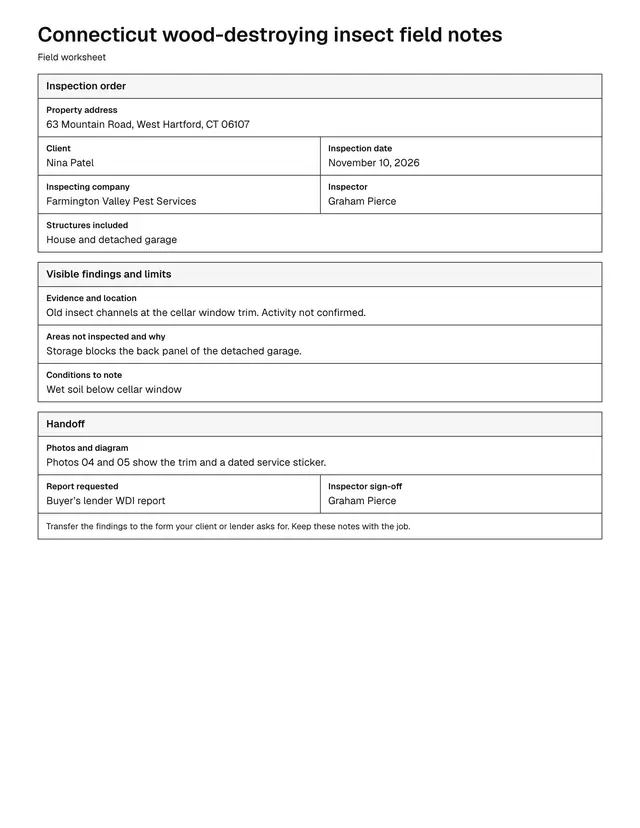
Record the termite findings from an inspection. - Connecticut
Connecticut wood-destroying insect field notes
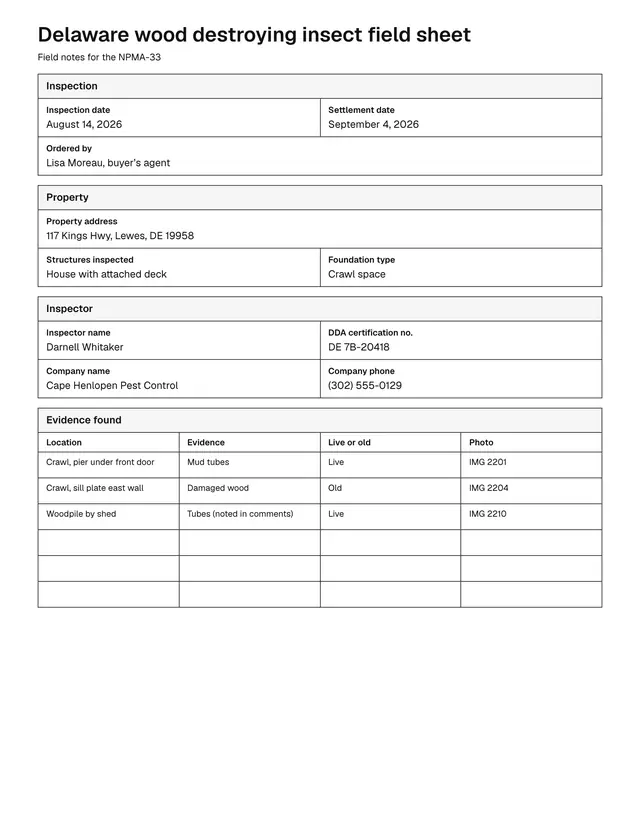
Record the termite findings from an inspection. - DelawareNPMA-33
Delaware termite inspection report (NPMA-33)
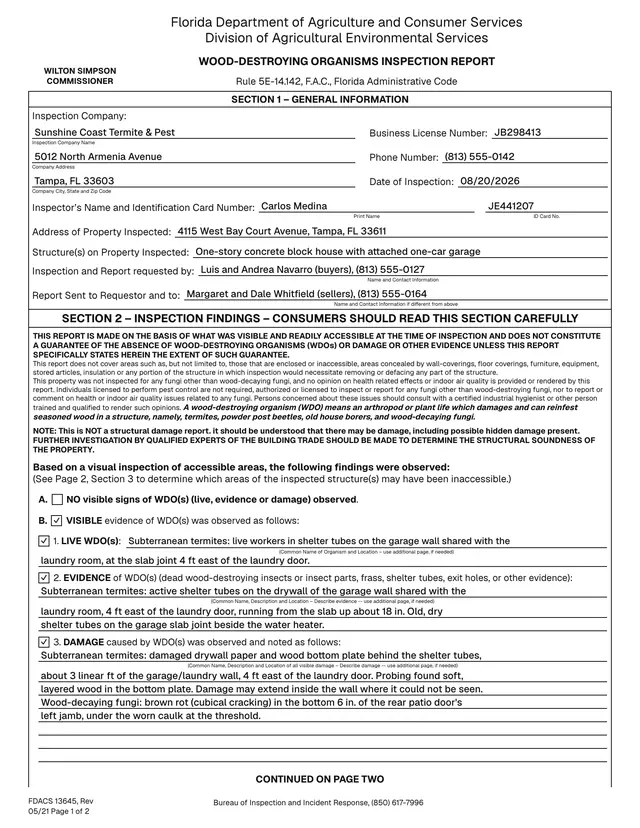
Record the termite findings from an inspection. - FloridaFDACS-13645
Wood-Destroying Organisms Inspection Report
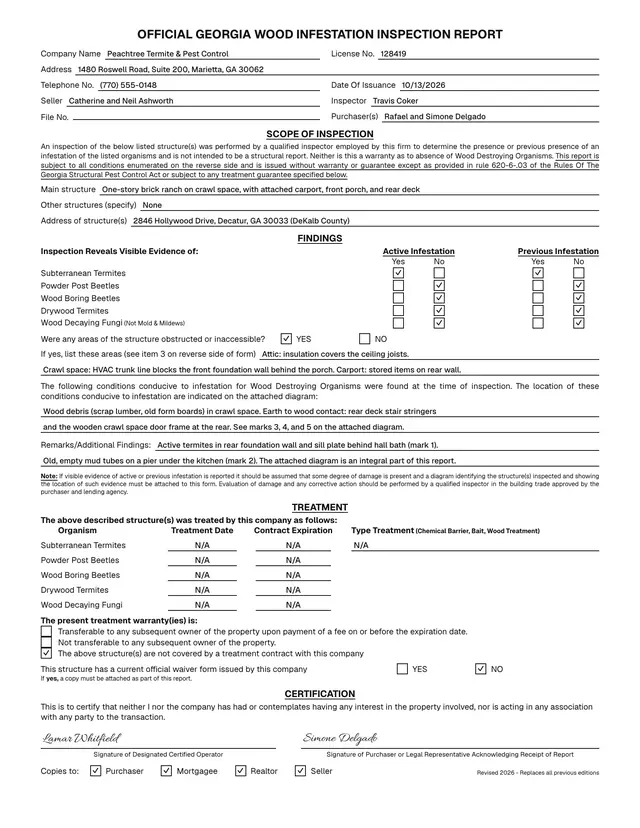
Record the termite findings from an inspection. - Georgia
Official Georgia Wood Infestation Inspection Report
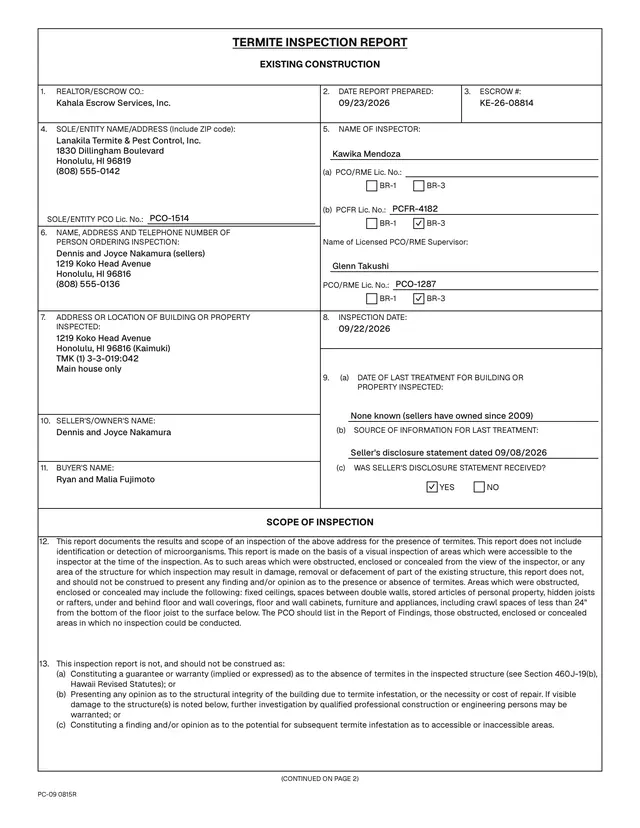
Record the termite findings from an inspection. - HawaiiPC-9
Termite Inspection Report, Existing Construction
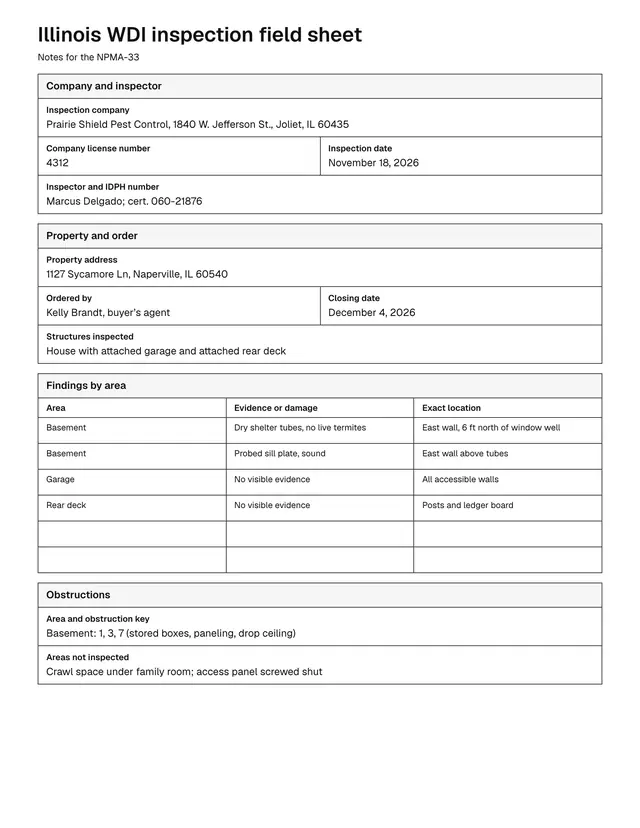
Record the termite findings from an inspection. - IllinoisNPMA-33
Illinois wood destroying insect inspection report (NPMA-33)
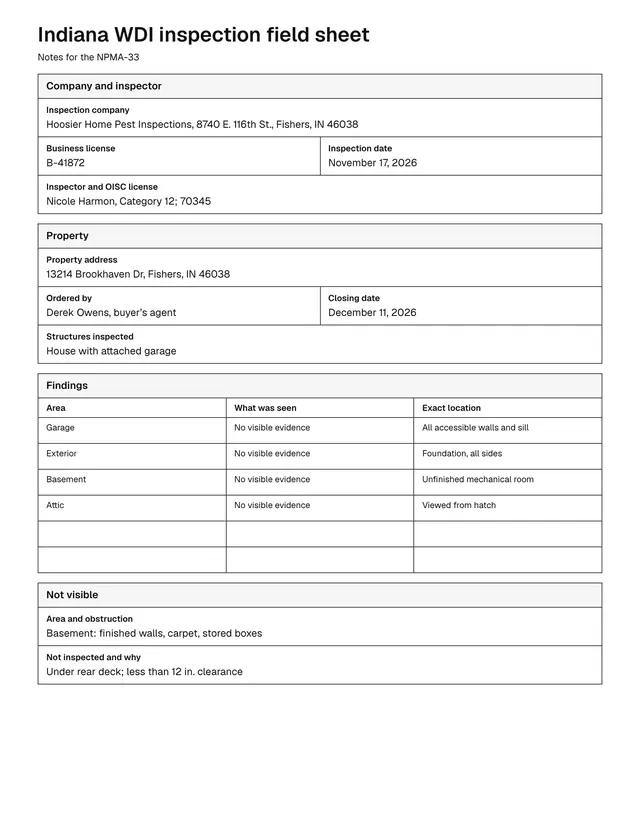
Record the termite findings from an inspection. - IndianaNPMA-33
Indiana wood destroying insect inspection report (NPMA-33)
Record the termite findings from an inspection. - Iowa
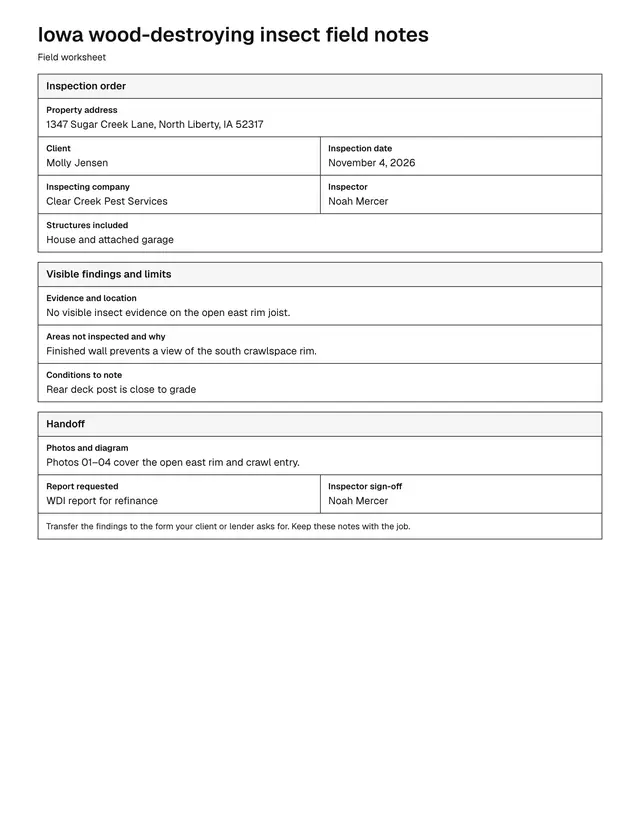
Iowa wood-destroying insect field notes
Record the termite findings from an inspection. - Kansas
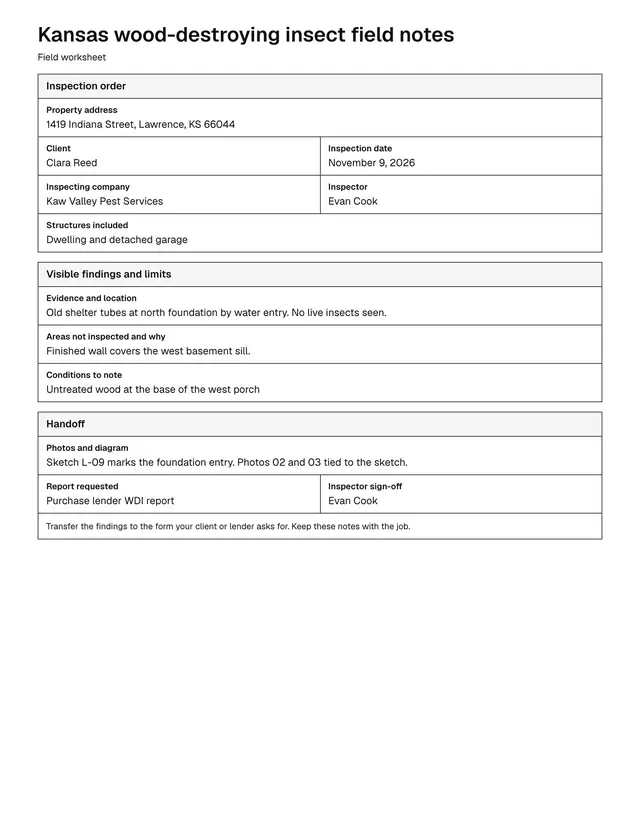
Kansas wood-destroying insect field notes
Record the termite findings from an inspection. - Kentucky
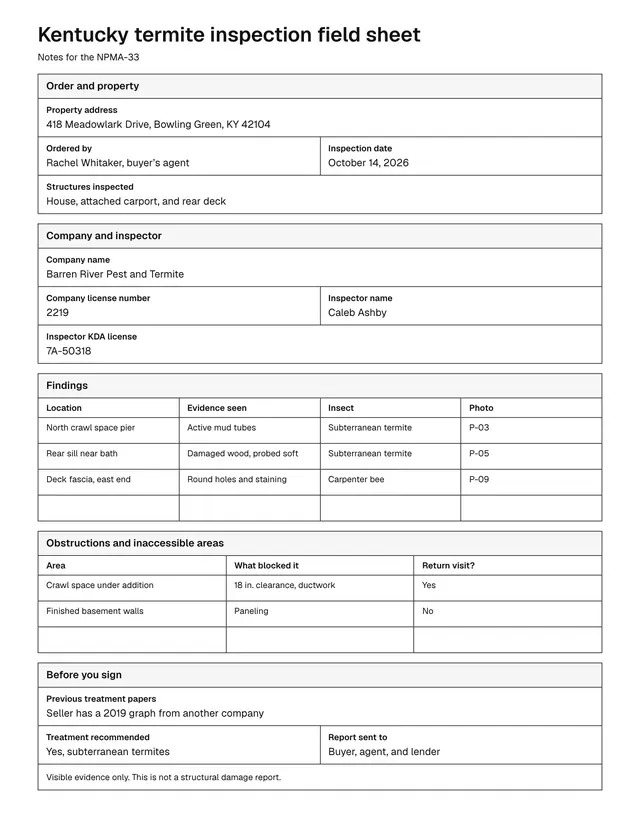
Kentucky termite inspection report (NPMA-33)
Record the termite findings from an inspection. - MarylandMD-1
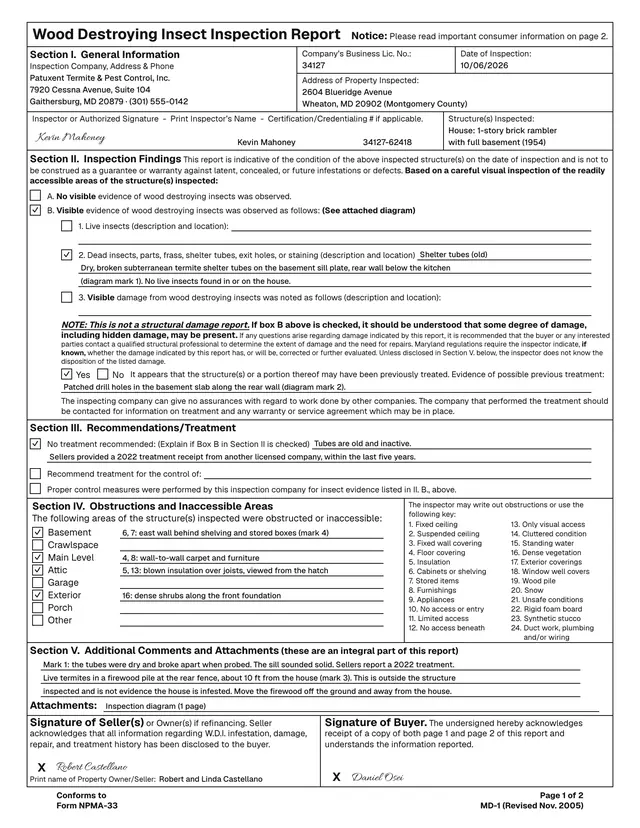
Wood Destroying Insect Inspection Report
Record the termite findings from an inspection. - Massachusetts
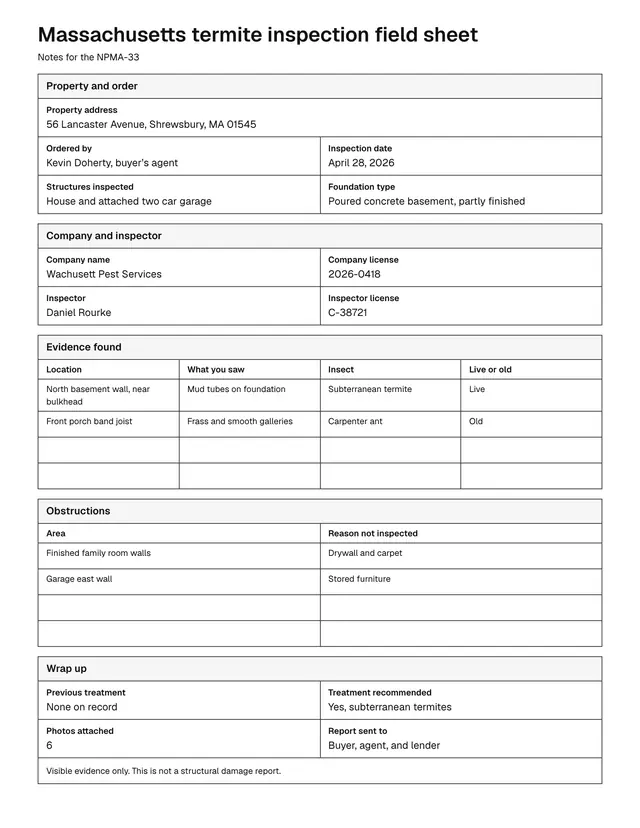
Massachusetts termite inspection report (NPMA-33)
Record the termite findings from an inspection. - MichiganNPMA-33
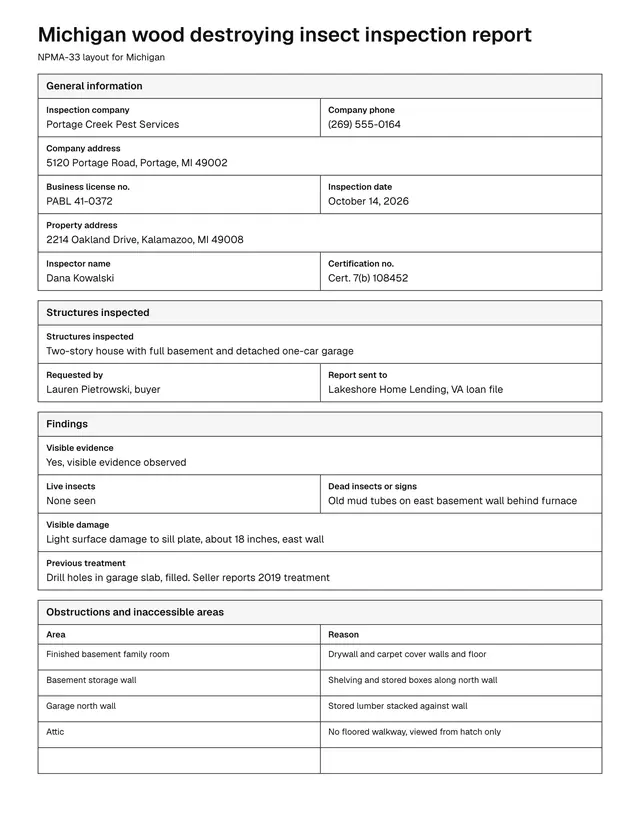
Michigan wood-destroying insect inspection report (NPMA-33)
Record the termite findings from an inspection. - Mississippi
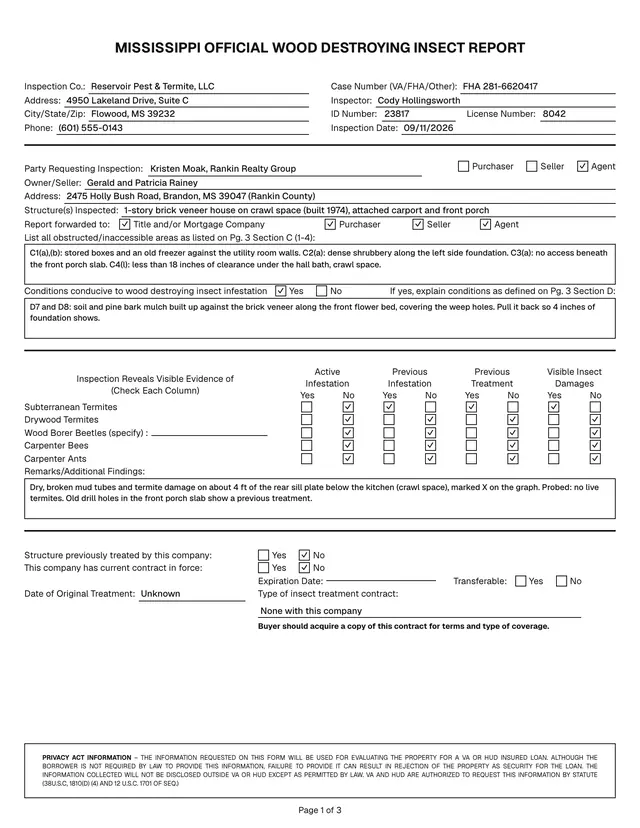
Mississippi Official Wood Destroying Insect Report
Record the termite findings from an inspection. - MissouriNPMA-33
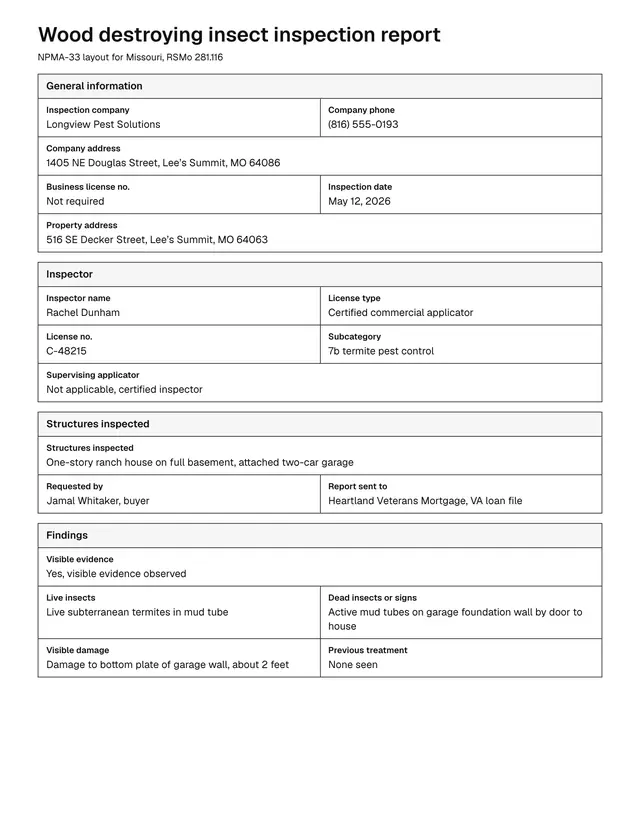
Missouri wood-destroying insect inspection report (NPMA-33)
Record the termite findings from an inspection. - Nevada
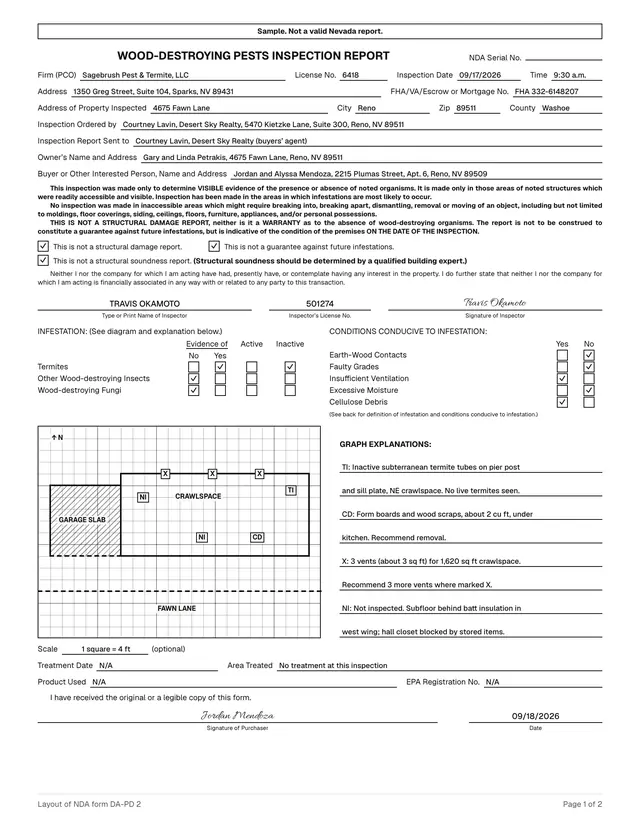
Wood-Destroying Pests Inspection Report
Record the termite findings from an inspection. - New Jersey
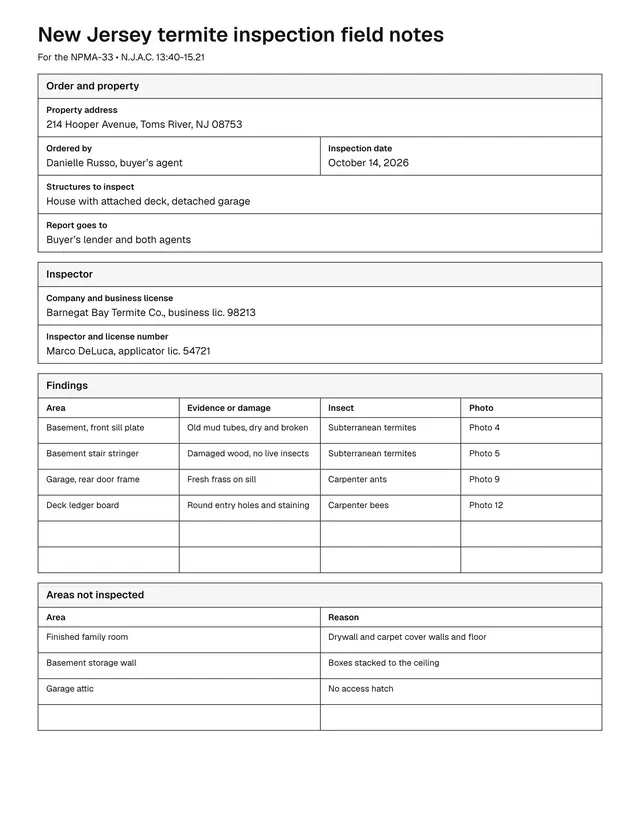
New Jersey termite inspection report (NPMA-33 field notes)
Record the termite findings from an inspection. - New Mexico
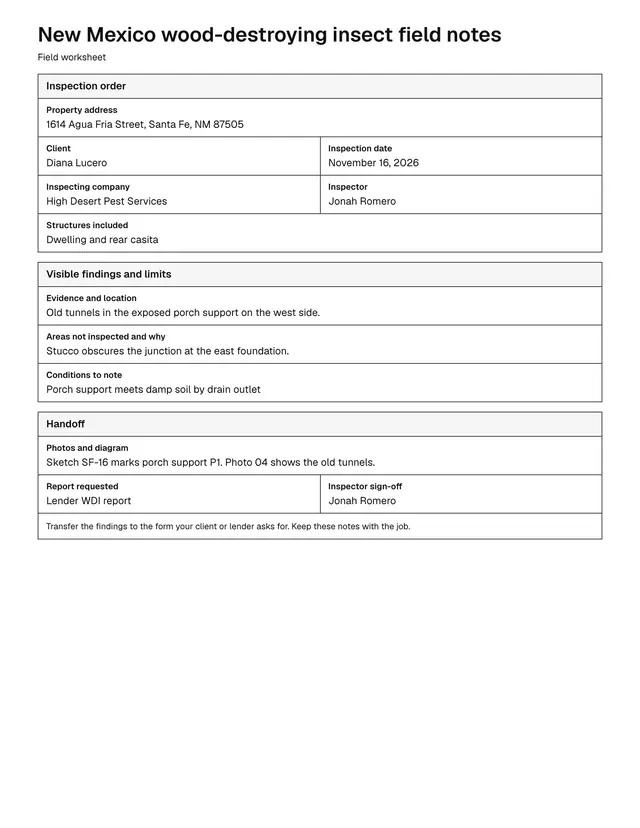
New Mexico wood-destroying insect field notes
Record the termite findings from an inspection. - New York
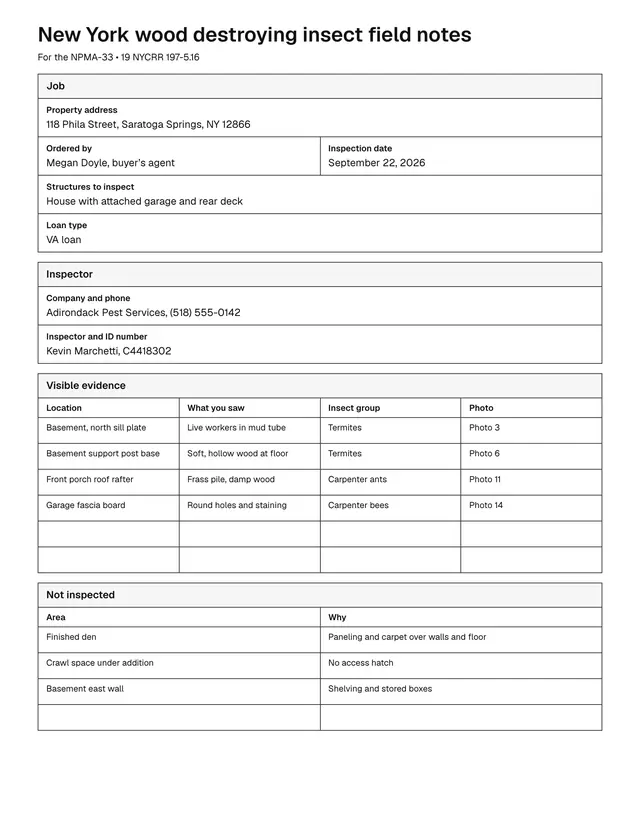
New York wood destroying insect inspection notes (NPMA-33)
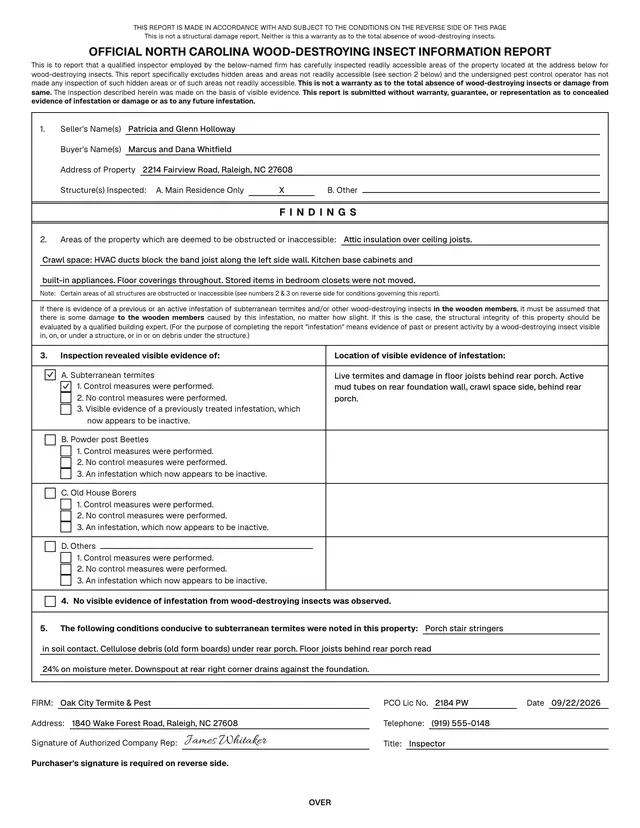
Record the termite findings from an inspection. - North CarolinaWDIR 100
Official North Carolina Wood-Destroying Insect Information Report
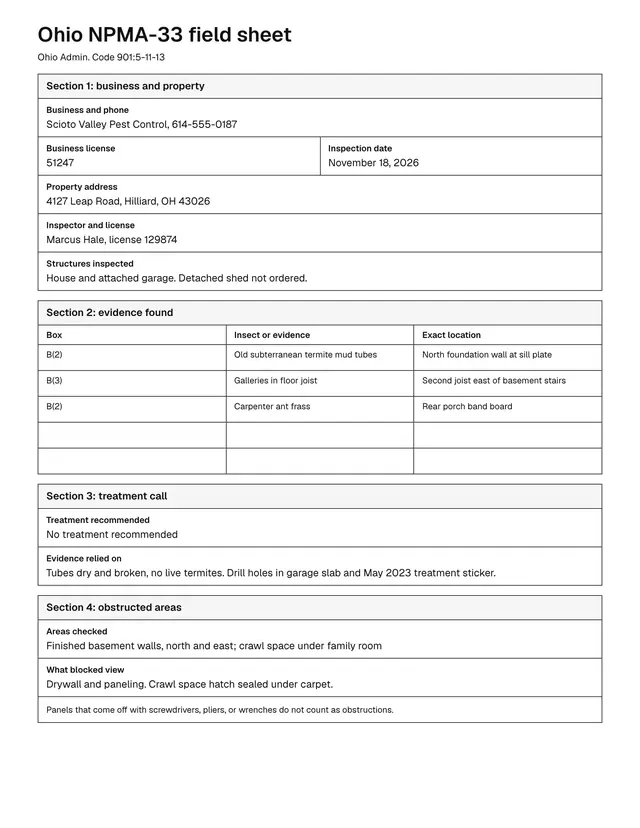
Record the termite findings from an inspection. - OhioNPMA-33
Ohio NPMA-33 wood-destroying insect inspection report
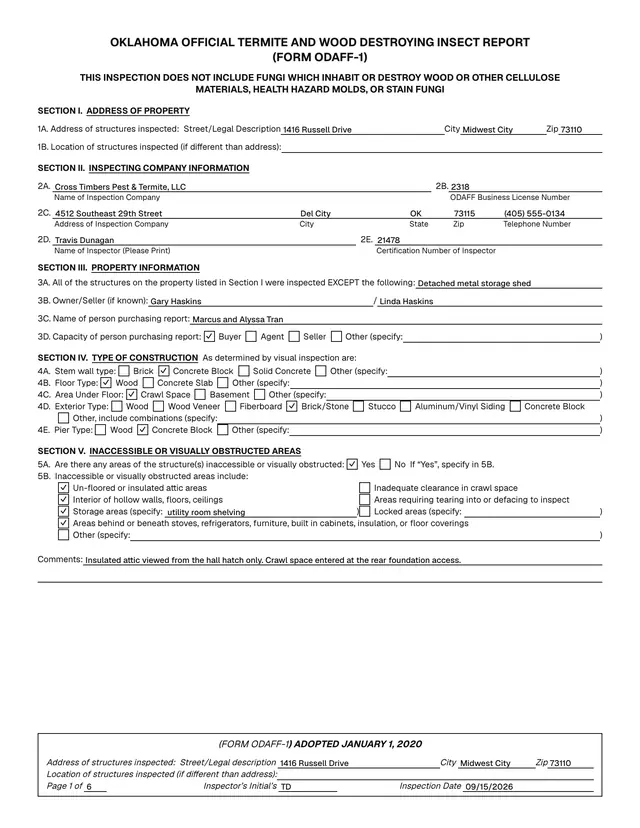
Record the termite findings from an inspection. - OklahomaForm ODAFF-1
Oklahoma Official Termite and Wood Destroying Insect Report
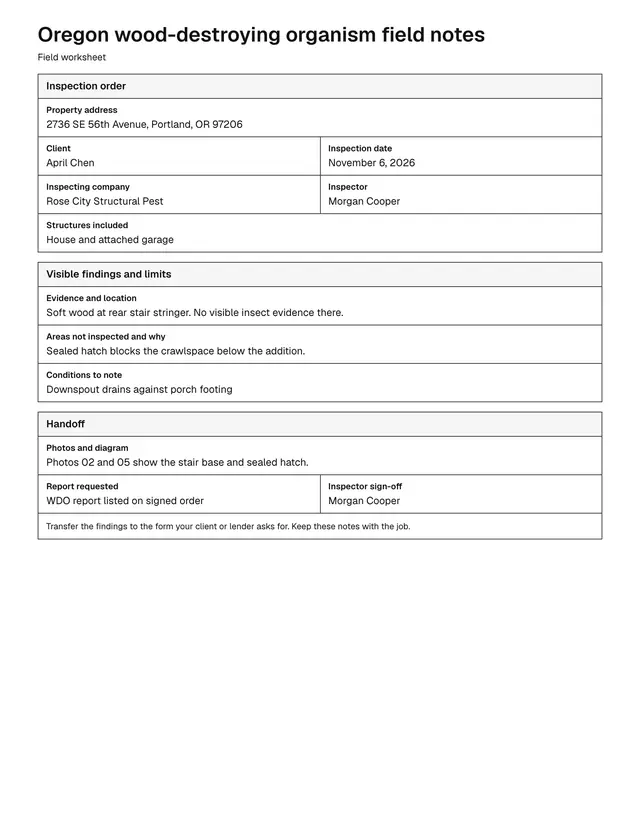
Record the termite findings from an inspection. - Oregon
Oregon wood-destroying organism field notes
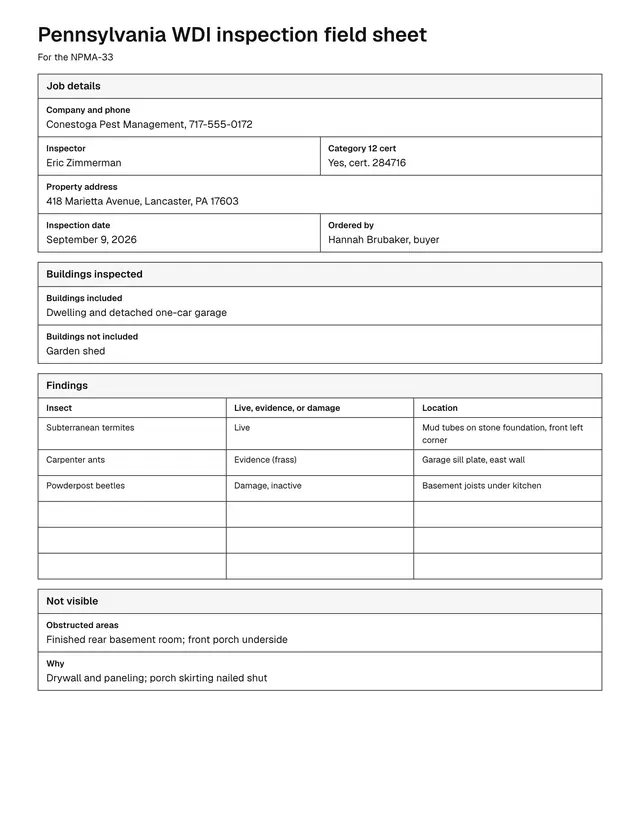
Record the termite findings from an inspection. - PennsylvaniaNPMA-33
Pennsylvania wood-destroying insect inspection report (NPMA-33)
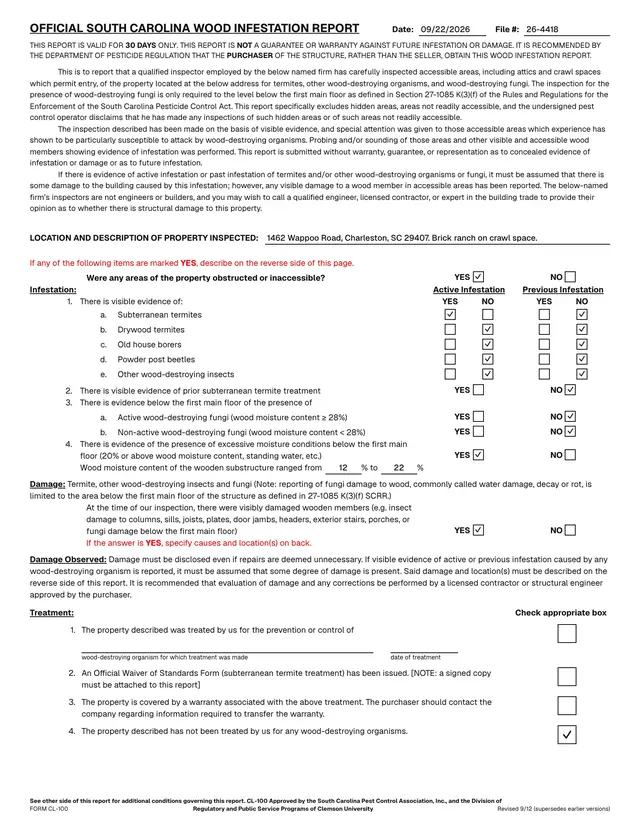
Record the termite findings from an inspection. - South CarolinaCL-100
Official South Carolina Wood Infestation Report
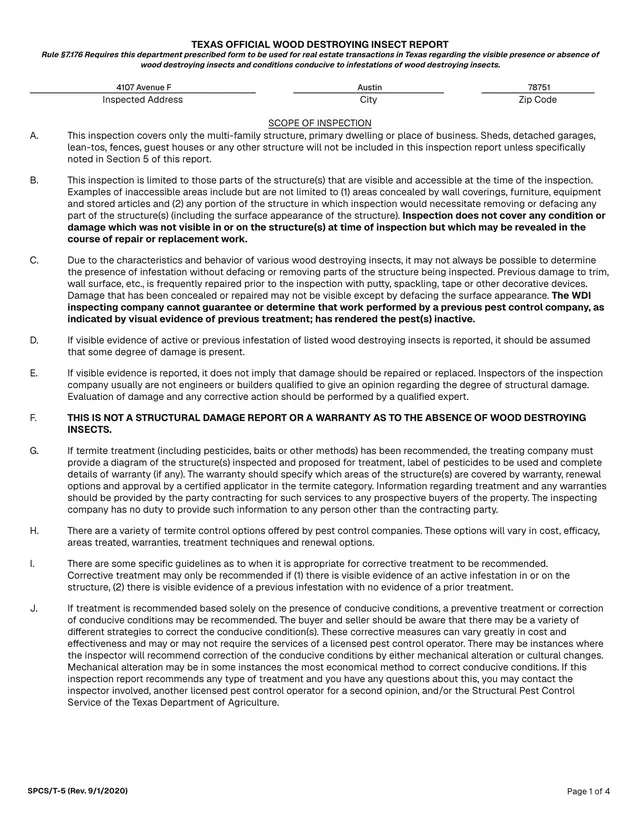
Record the termite findings from an inspection. - TexasSPCS/T-5
Texas Official Wood Destroying Insect Report
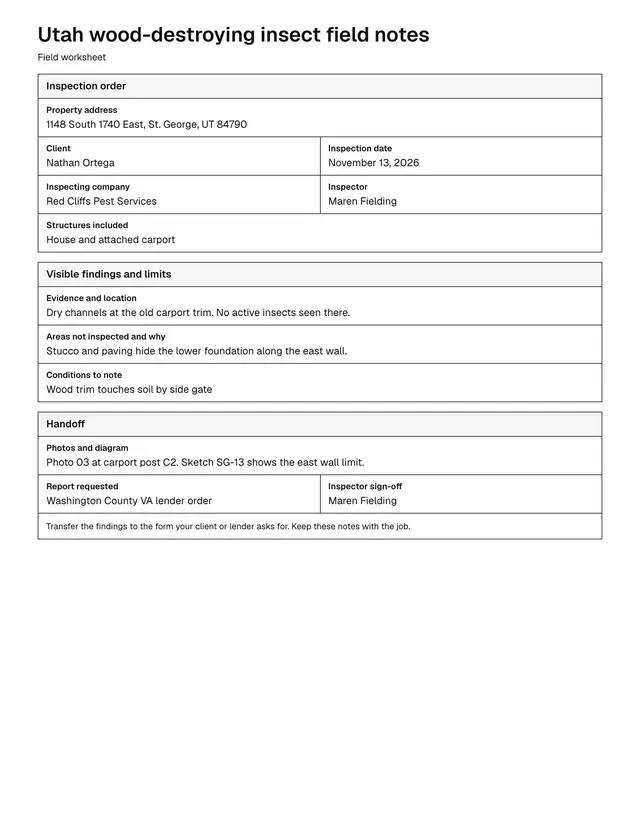
Record the termite findings from an inspection. - Utah
Utah wood-destroying insect field notes
Record the termite findings from an inspection. - Virginia
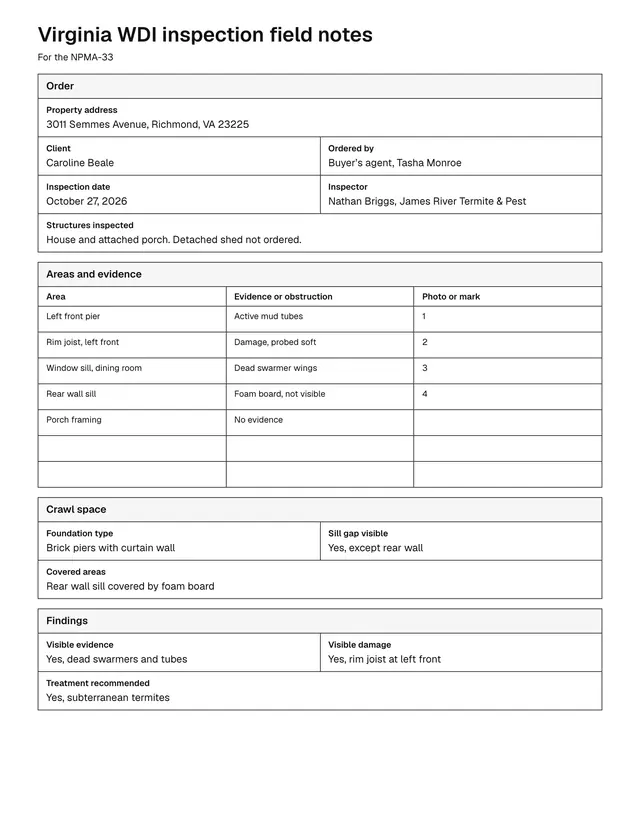
Virginia wood destroying insect inspection report
Record the termite findings from an inspection. - Washington
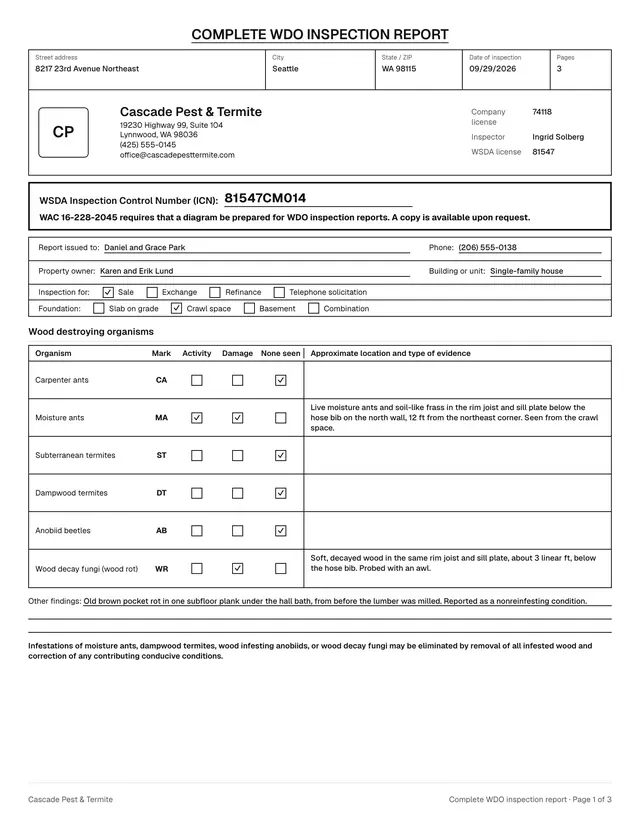
Complete WDO Inspection Report
Record the termite findings from an inspection. - Wisconsin
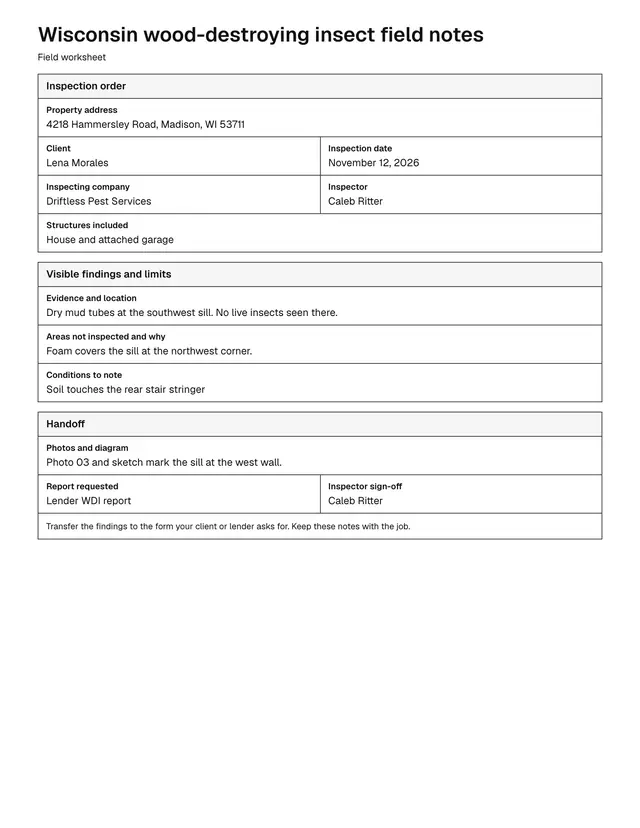
Wisconsin wood-destroying insect field notes
Record the termite findings from an inspection.