Pennsylvania wood-destroying insect inspection report (NPMA-33)
Pennsylvania has no state termite inspection form or rule, so the NPMA-33 fills the gap. Who signs it, and what they can sell afterward, comes from the pesticide rules and the Home Inspection Law.
At a glance
- State form
- None. NPMA-33 is the standard
- Pest license
- Category 12, wood destroying pests
- Home inspection law
- WDI-only exams excluded, 68 Pa.C.S. § 7502
- If you treat
- Record under 7 Pa. Code § 128.35
Completed example
Download PDFPennsylvania leaves the termite report to the industry
Some states write a rule for the termite letter. Pennsylvania doesn’t. The pesticide rules in 7 Pa. Code Chapter 128 cover how you apply, record, and notify. None of them names a wood-destroying insect report, a deadline to sign it, or a state form.
So the NPMA-33 does the job by habit. Most buyers order one because the lender or the agreement of sale asks for it, and that’s the form they mean. The NPMA forms page has the current version and its instructions, and those instructions are the rulebook you’re working from here.
That cuts both ways. Nobody in Harrisburg will fine you for a late NPMA-33. But a vague one is what gets pulled out when a buyer finds tunnels behind the drywall six months after closing.
Read the NPMA guidelines before your first one. They explain what each box means and how to word findings, and with no state rule on top, they’re the closest thing to a rulebook you’ll get.
Who can sign one
In practice, two groups do these: pest control companies and home inspectors. On the pest side, the certification that fits is Category 12 in 7 Pa. Code § 128.42, wood destroying pests.
Home inspectors often add it. Penn State Extension says “some home inspectors choose to obtain and maintain a pesticide applicator certification in Category 12.” That means a closed-book core exam, an open-book Category 12 exam, and then six core credits and ten Category 12 credits every three years.
The Home Inspection Law treats the termite report as its own thing. 68 Pa.C.S. § 7502 says a home inspection “does not include an examination that is limited to inspection for” wood destroying insects. So when you do both on one visit, it’s two services with two reports.
There’s one more twist. Section 7505 bars a home inspector from selling repairs on a house they inspected in the past 12 months. But it says that limit “shall not apply to remediation for radon or wood destroying insects.” A certified inspector who finds termites can quote the treatment, as long as the pesticide license covers it.
Writing it up for Pennsylvania houses
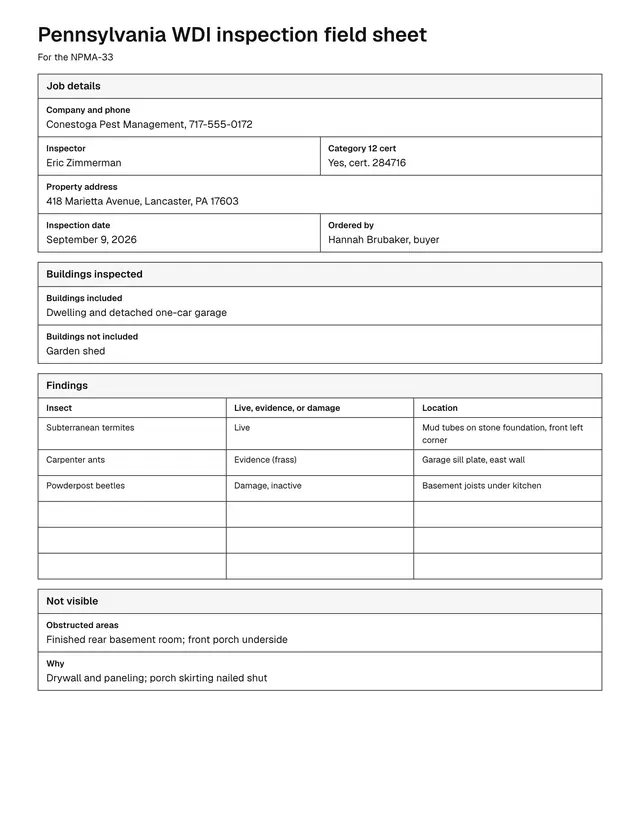
List every building you looked at. Farm properties in Lancaster County often come with a bank barn, a summer kitchen, and a garage. If the buyer only ordered the house, write “dwelling only” so nobody assumes you cleared the barn.
Separate termites from beetles and ants. Old row homes and stone farmhouses turn up all three. Write which insect, what you saw, and where. “Live subterranean termites in mud tubes on the stone foundation, front left corner” is useful. “Termite evidence, basement” isn’t.
Call out old damage on its own line. Powderpost beetle exit holes in 1920s floor joists are common. If the holes are old and the frass is gone, say so, and say what you saw that made you think so.
Be honest about what you couldn’t see. Finished basements, stacked storage, and a sealed crawl space all go in the obstructions section. A seller’s boxes against the foundation wall belong there too.
Write down the treatment history you can see. Drill holes every foot or so in a garage slab, patched holes along a basement floor, or a service sticker on the panel all point to an earlier job. If the seller hands you a warranty, note the company and date, and say you didn’t verify it.
Take a 1920s brick twin on Marietta Avenue in Lancaster. Live tubes on the stone foundation at the front corner, old frass on the garage sill, and inactive powderpost holes in the kitchen joists. That’s three insects, three lines, three locations, and a treatment call that only covers the termites.
What happens after you find live termites?
The buyer’s agent wants the report today. The seller wants a treatment quote. And if your company does the work, the treatment record under 7 Pa. Code § 128.35 kicks in, which is on the Pennsylvania pesticide application record page.
Noma specializes in the Pennsylvania wood-destroying insect inspection report (NPMA-33). Sketch the foundation and the activity spots on a diagram during the job, upload the finished NPMA-33 PDF and send it to be signed online, and book and invoice the inspection in one place. See how Noma handles termite inspections.
Frequentlyaskedquestions
Send this document in minutes, not an afternoon.
Other states
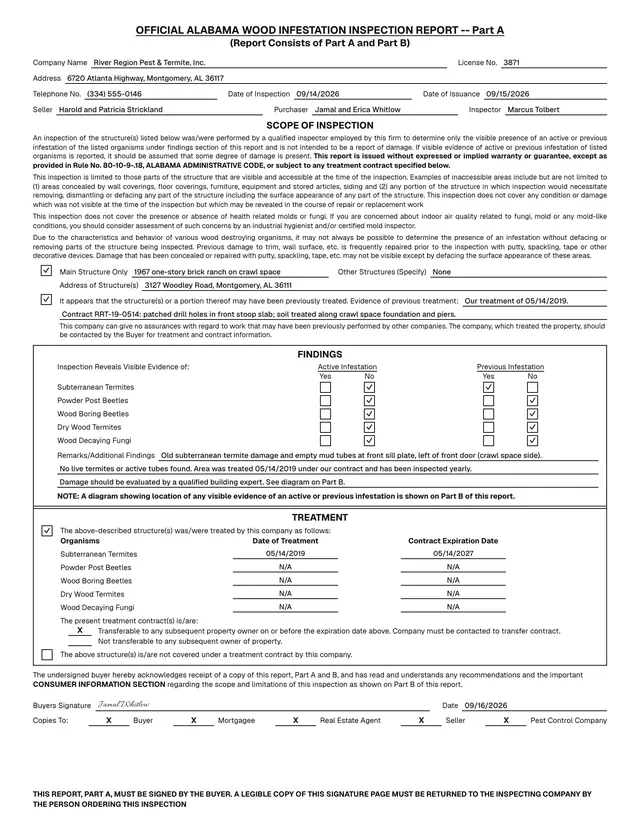
Inspection report templates- Alabama
Official Alabama Wood Infestation Inspection Report
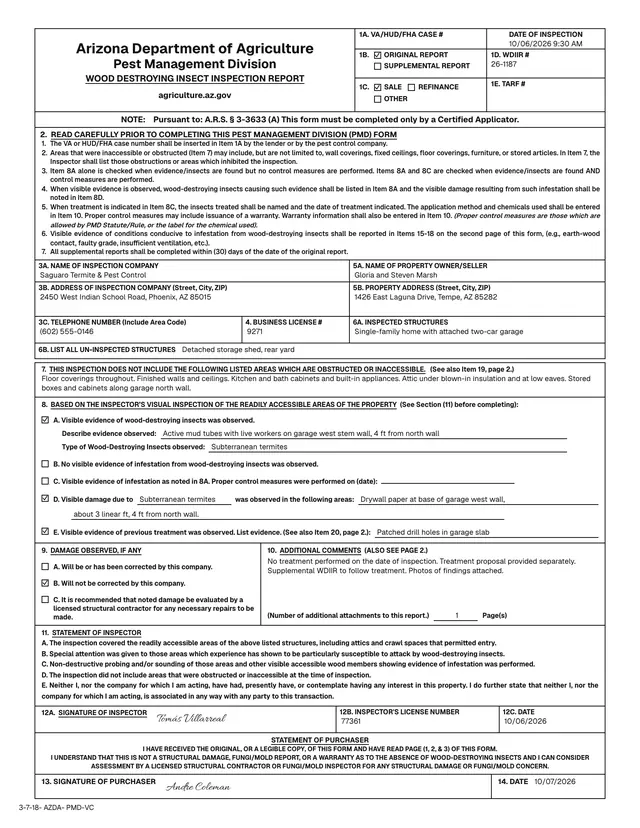
Record the termite findings from an inspection. - Arizona
Wood Destroying Insect Inspection Report
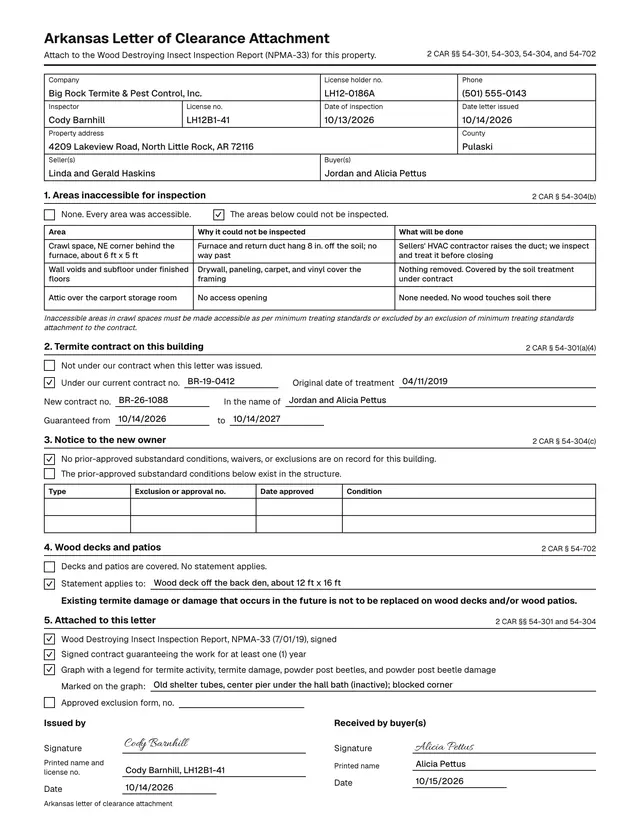
Record the termite findings from an inspection. - Arkansas
Arkansas Letter of Clearance Attachment
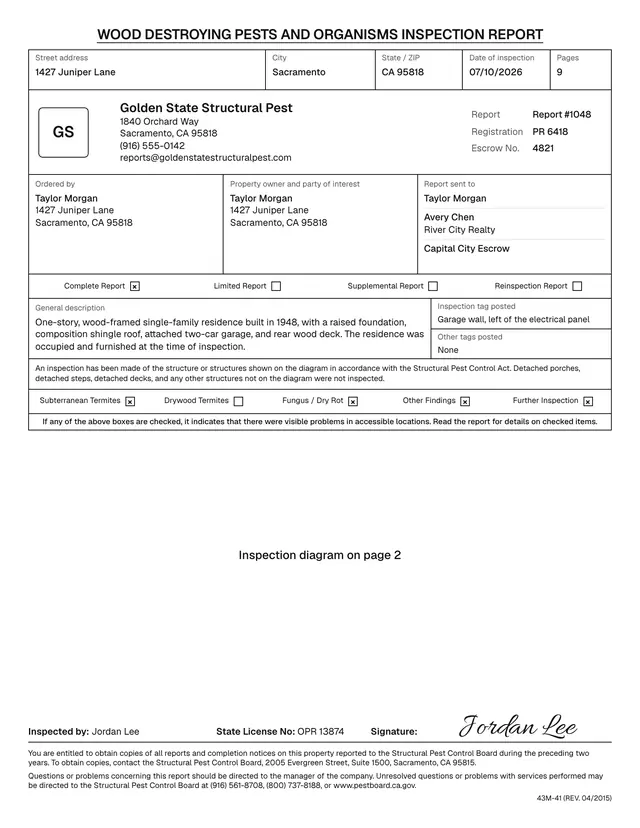
Record the termite findings from an inspection. - California43M-41
Wood Destroying Pests and Organisms Inspection Report
Record the termite findings from an inspection. - ColoradoNPMA-33
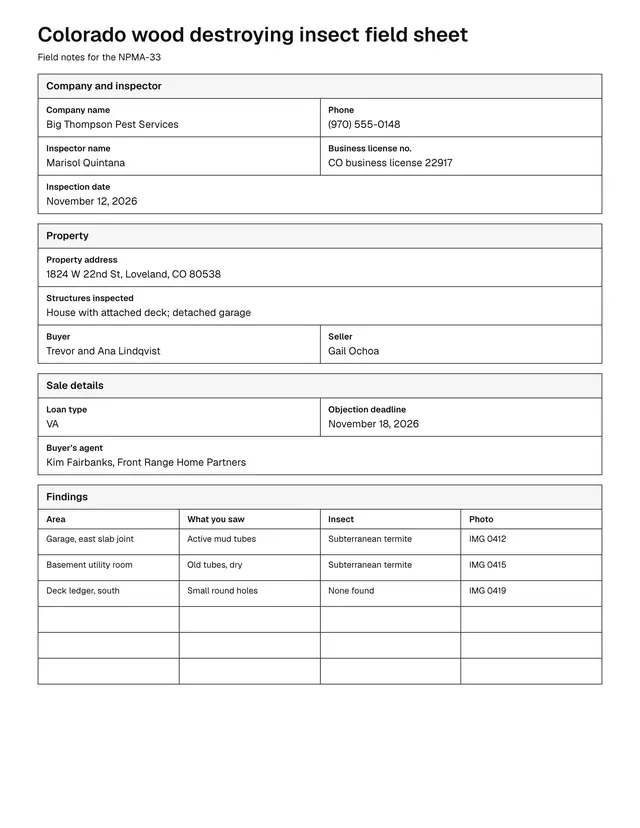
Colorado termite inspection report (NPMA-33)
Record the termite findings from an inspection. - Connecticut
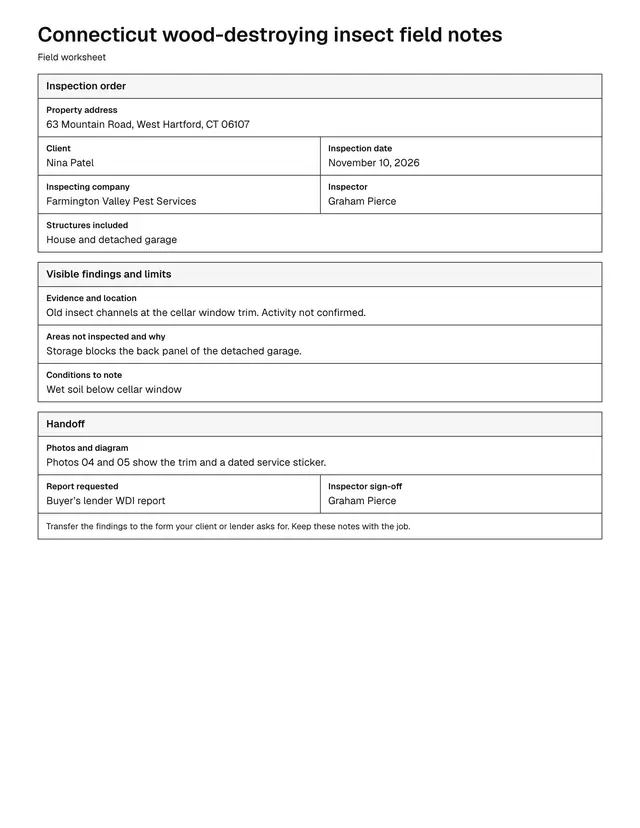
Connecticut wood-destroying insect field notes
Record the termite findings from an inspection. - DelawareNPMA-33
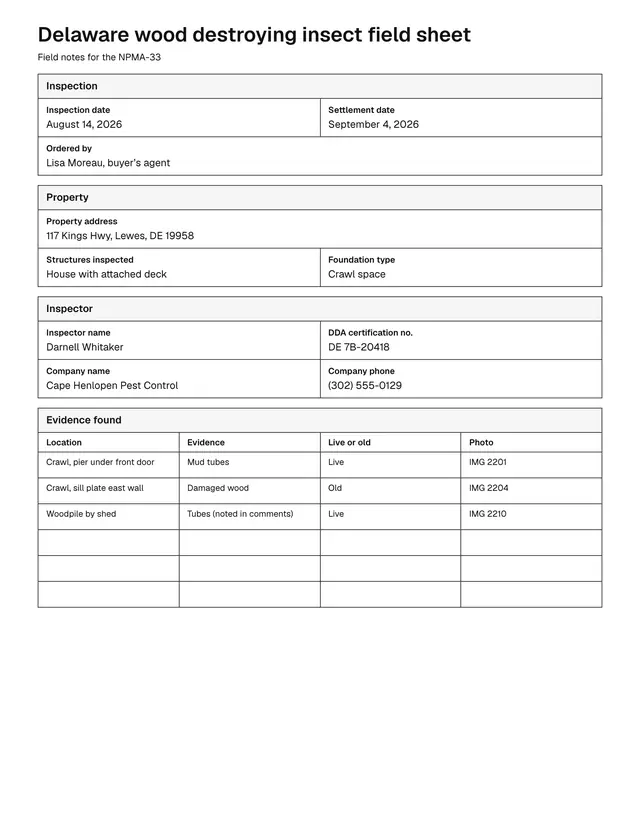
Delaware termite inspection report (NPMA-33)
Record the termite findings from an inspection. - FloridaFDACS-13645
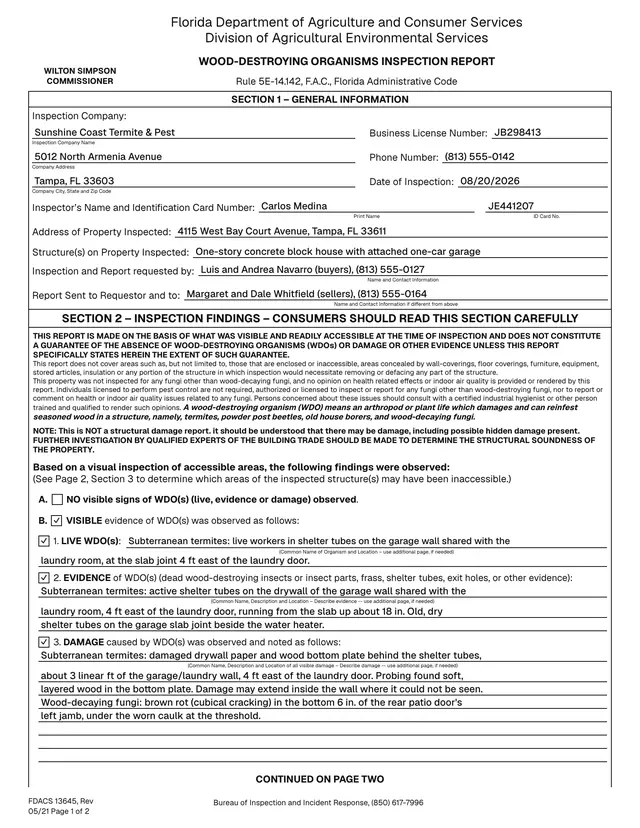
Wood-Destroying Organisms Inspection Report
Record the termite findings from an inspection. - Georgia
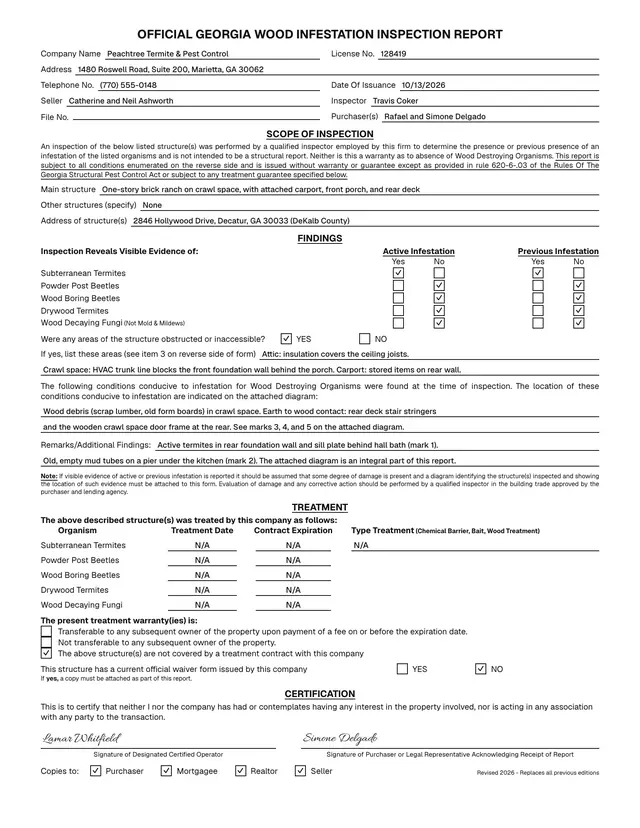
Official Georgia Wood Infestation Inspection Report
Record the termite findings from an inspection. - HawaiiPC-9
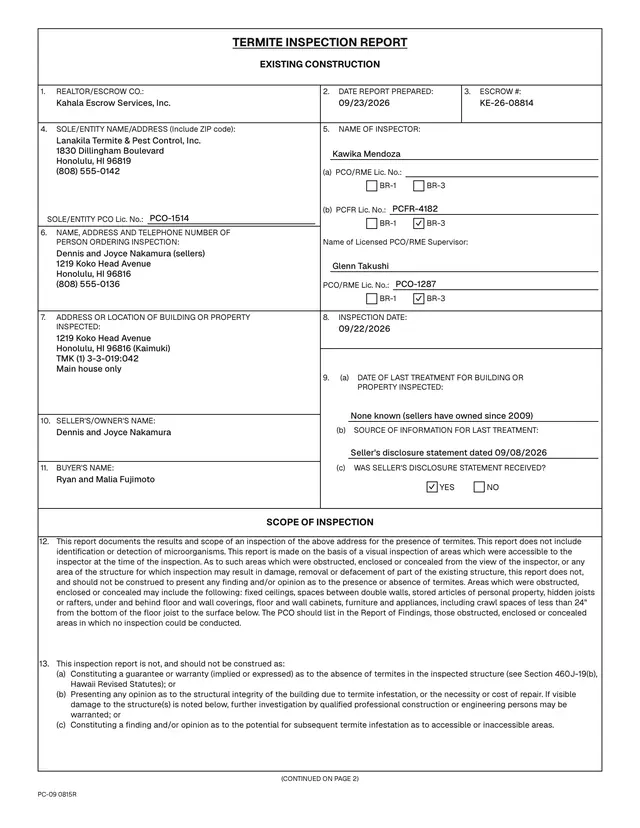
Termite Inspection Report, Existing Construction
Record the termite findings from an inspection. - IllinoisNPMA-33
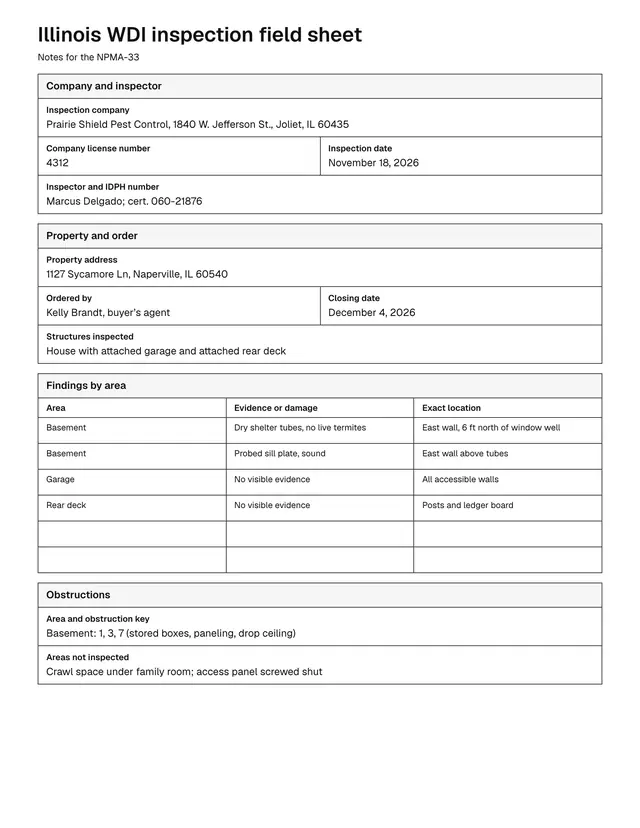
Illinois wood destroying insect inspection report (NPMA-33)
Record the termite findings from an inspection. - IndianaNPMA-33
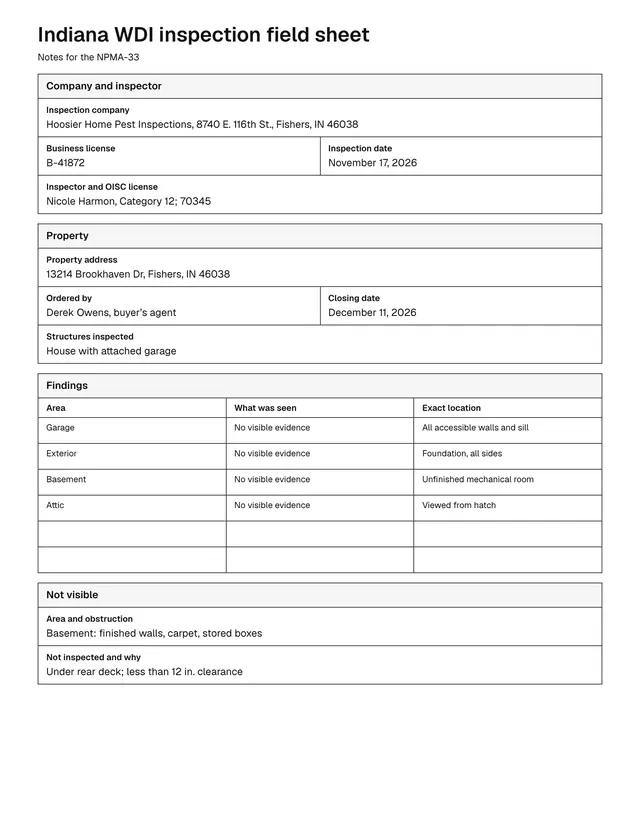
Indiana wood destroying insect inspection report (NPMA-33)
Record the termite findings from an inspection. - Iowa
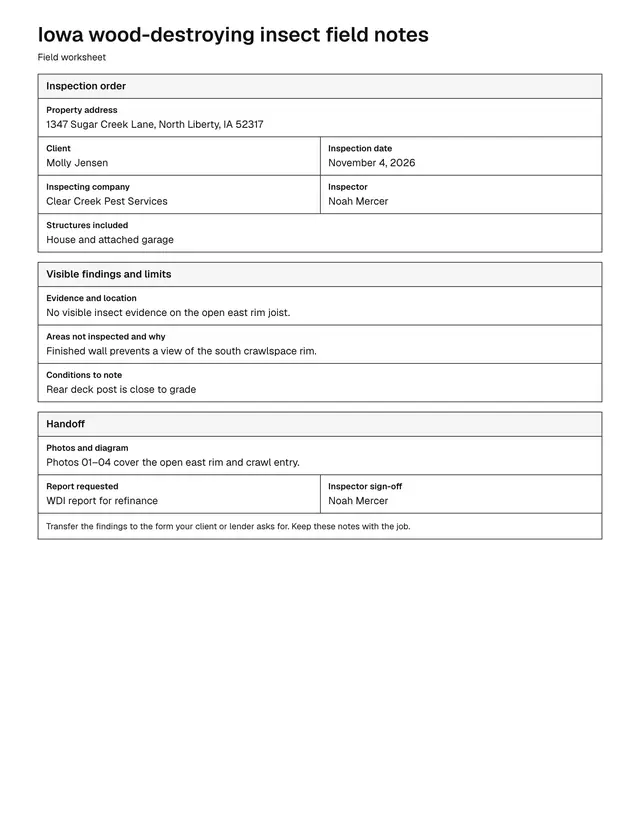
Iowa wood-destroying insect field notes
Record the termite findings from an inspection. - Kansas
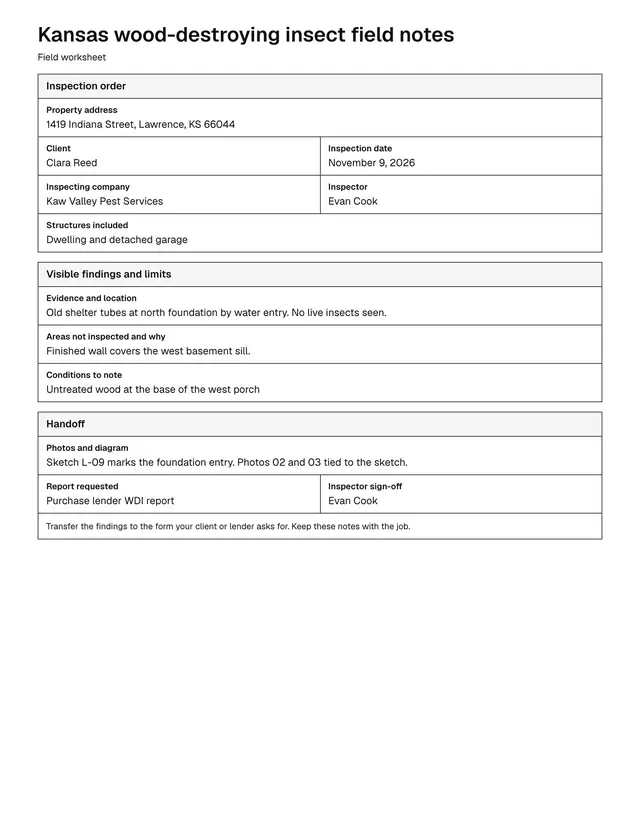
Kansas wood-destroying insect field notes
Record the termite findings from an inspection. - Kentucky
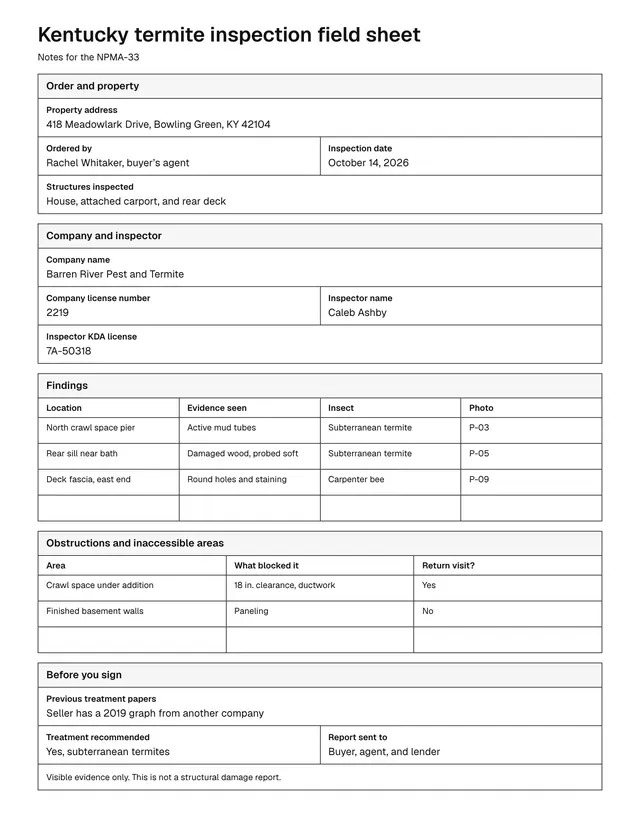
Kentucky termite inspection report (NPMA-33)
Record the termite findings from an inspection. - MarylandMD-1
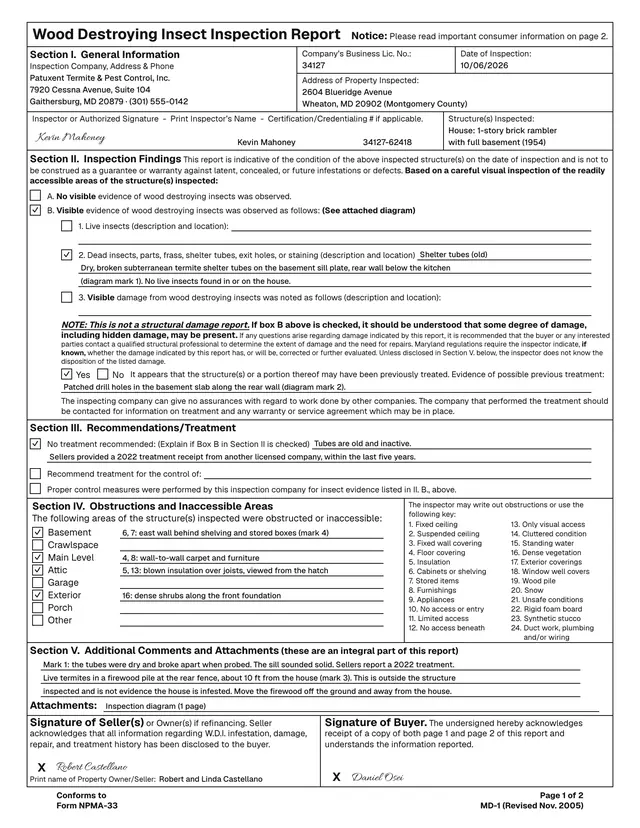
Wood Destroying Insect Inspection Report
Record the termite findings from an inspection. - Massachusetts
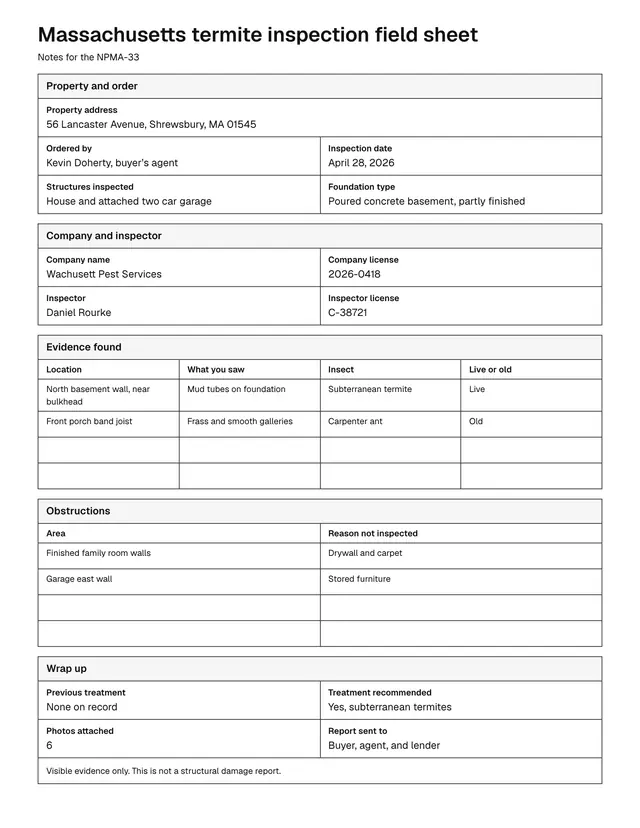
Massachusetts termite inspection report (NPMA-33)
Record the termite findings from an inspection. - MichiganNPMA-33
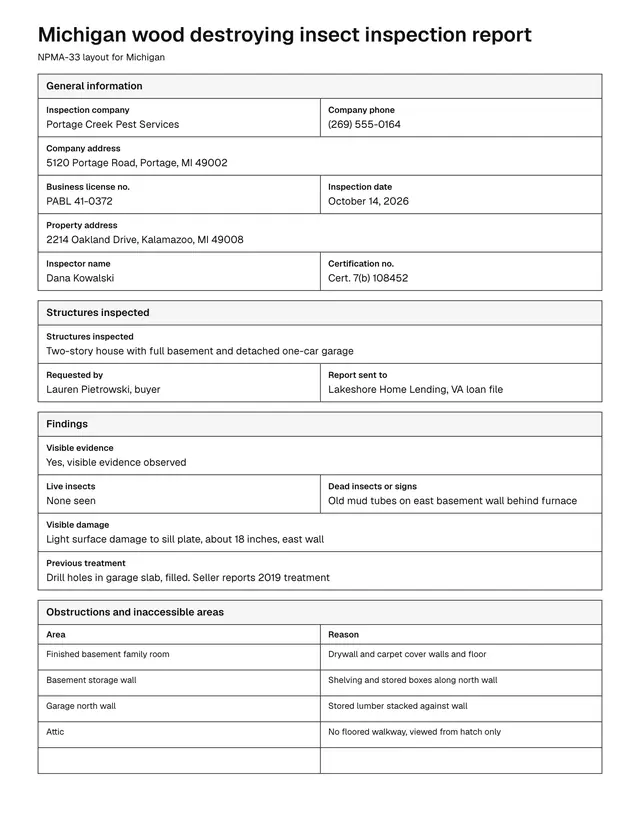
Michigan wood-destroying insect inspection report (NPMA-33)
Record the termite findings from an inspection. - Mississippi
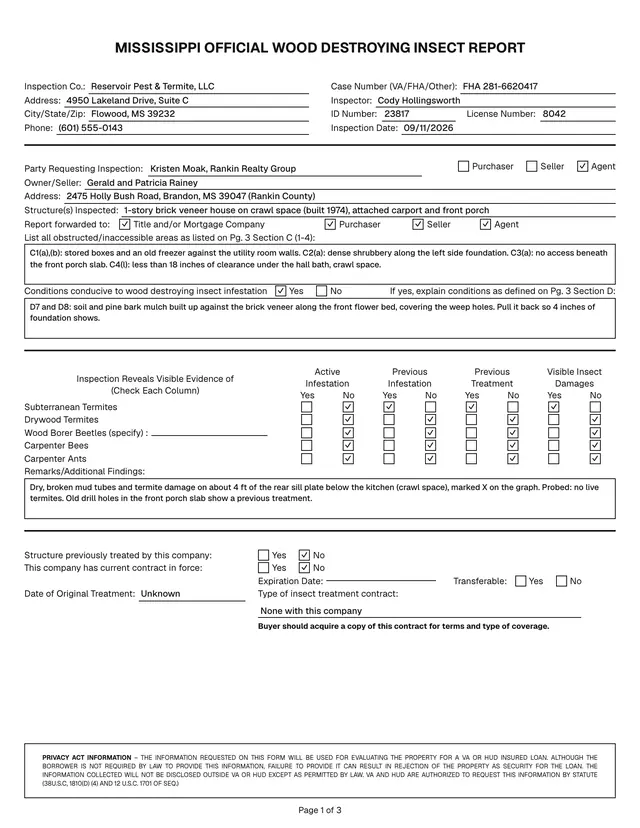
Mississippi Official Wood Destroying Insect Report
Record the termite findings from an inspection. - MissouriNPMA-33
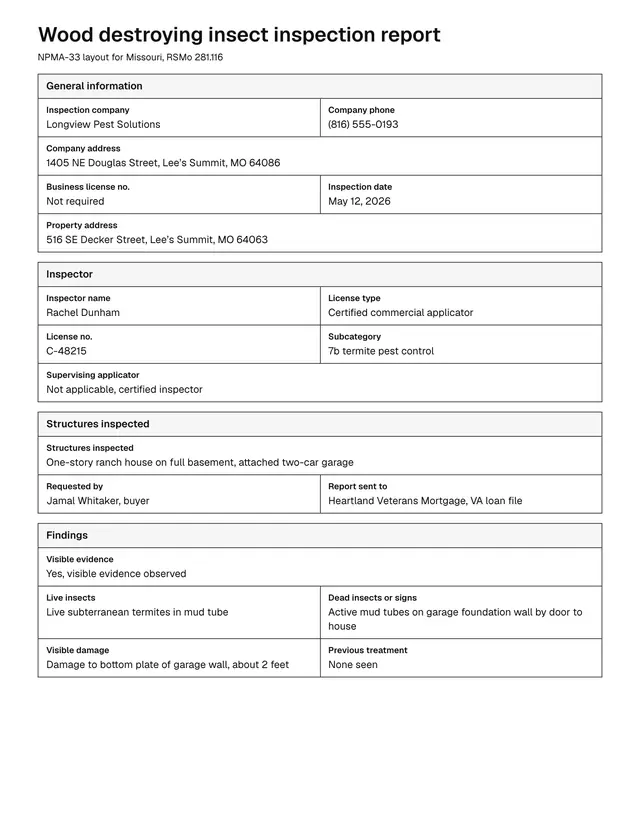
Missouri wood-destroying insect inspection report (NPMA-33)
Record the termite findings from an inspection. - Nevada
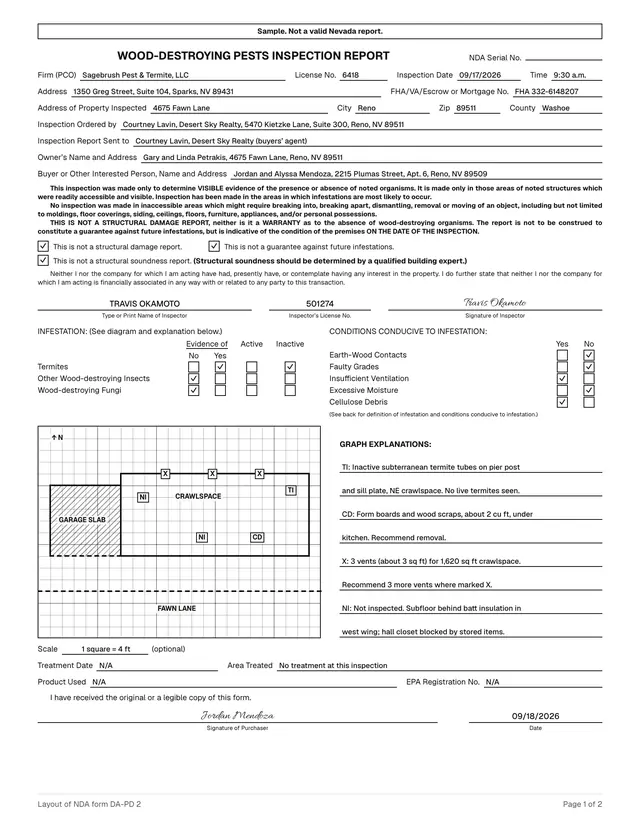
Wood-Destroying Pests Inspection Report
Record the termite findings from an inspection. - New Jersey
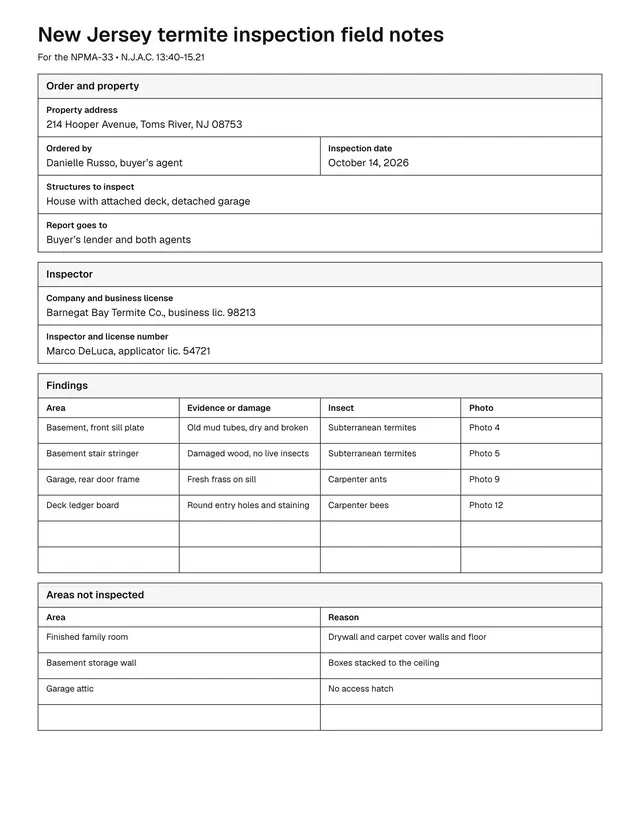
New Jersey termite inspection report (NPMA-33 field notes)
Record the termite findings from an inspection. - New Mexico
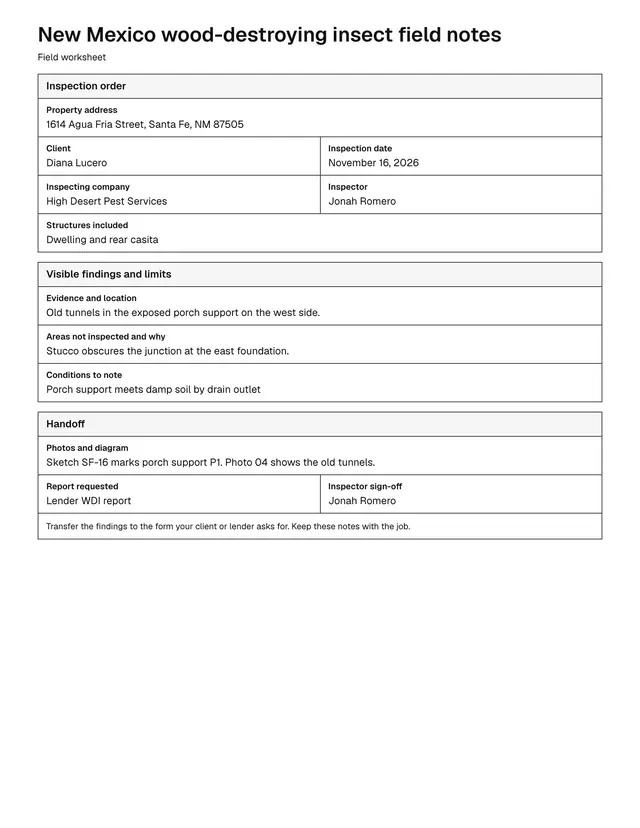
New Mexico wood-destroying insect field notes
Record the termite findings from an inspection. - New York
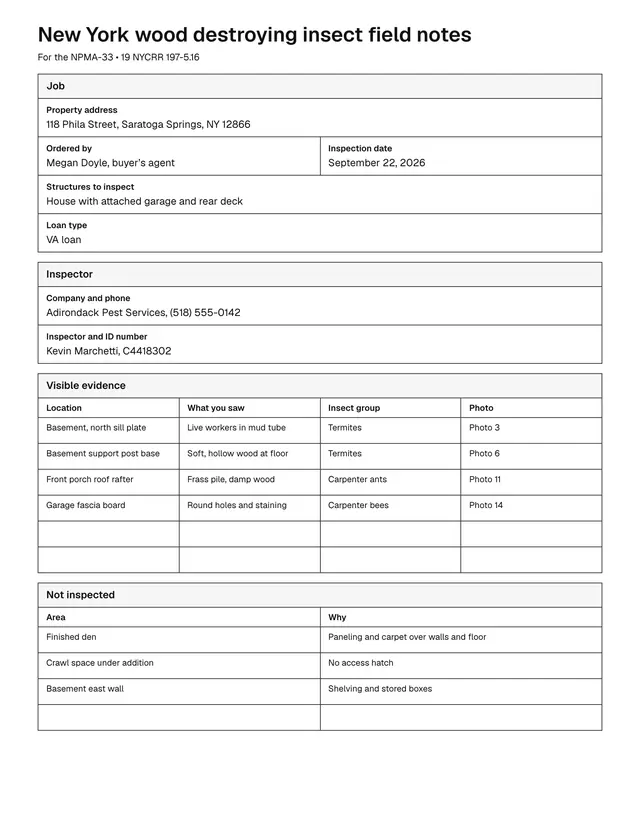
New York wood destroying insect inspection notes (NPMA-33)
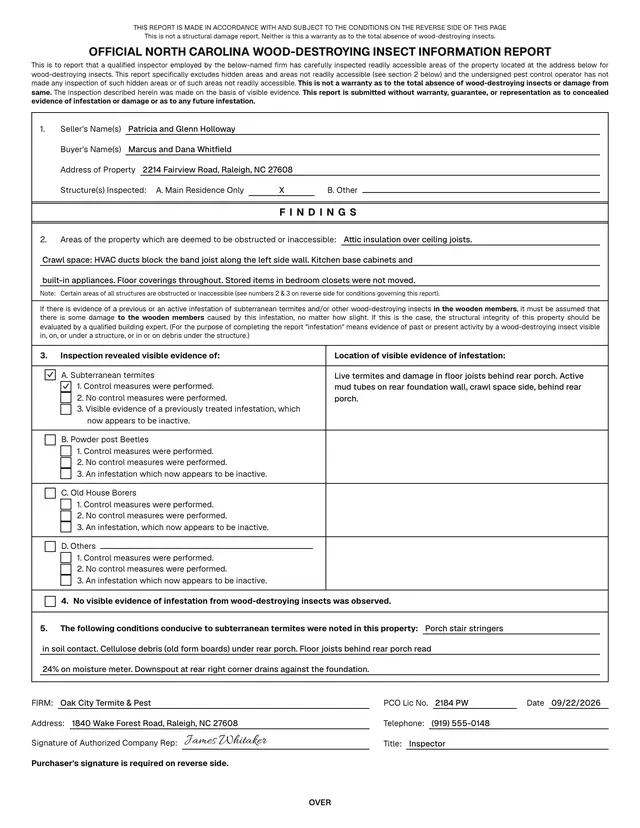
Record the termite findings from an inspection. - North CarolinaWDIR 100
Official North Carolina Wood-Destroying Insect Information Report
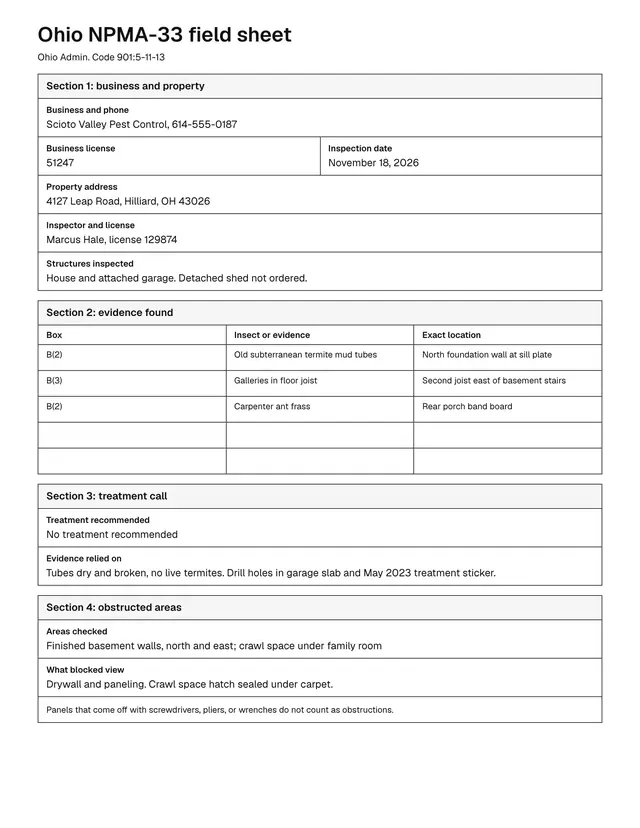
Record the termite findings from an inspection. - OhioNPMA-33
Ohio NPMA-33 wood-destroying insect inspection report
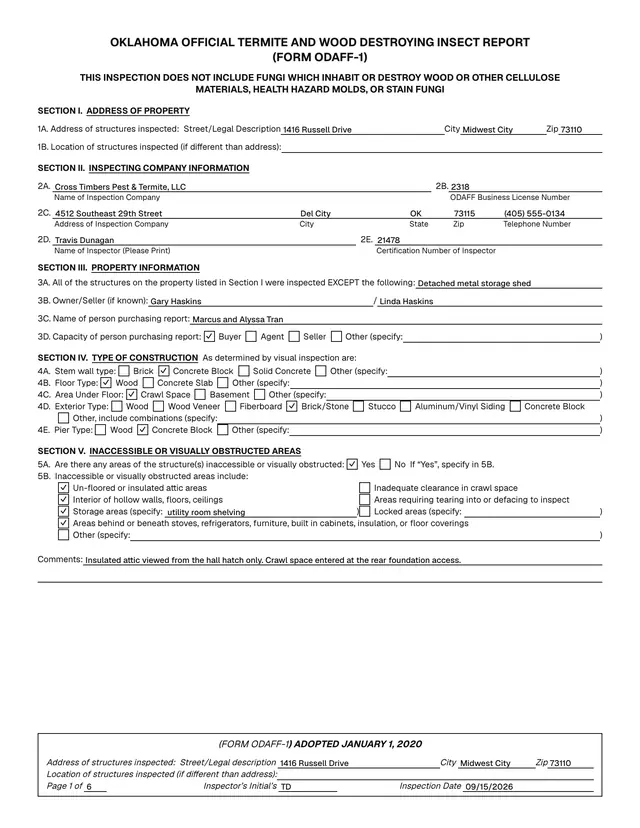
Record the termite findings from an inspection. - OklahomaForm ODAFF-1
Oklahoma Official Termite and Wood Destroying Insect Report
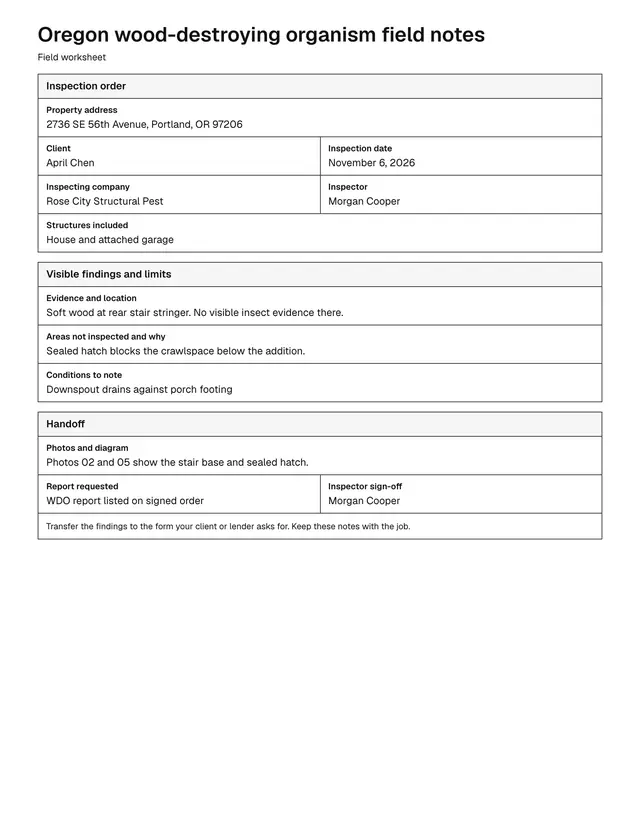
Record the termite findings from an inspection. - Oregon
Oregon wood-destroying organism field notes
Record the termite findings from an inspection. - South CarolinaCL-100
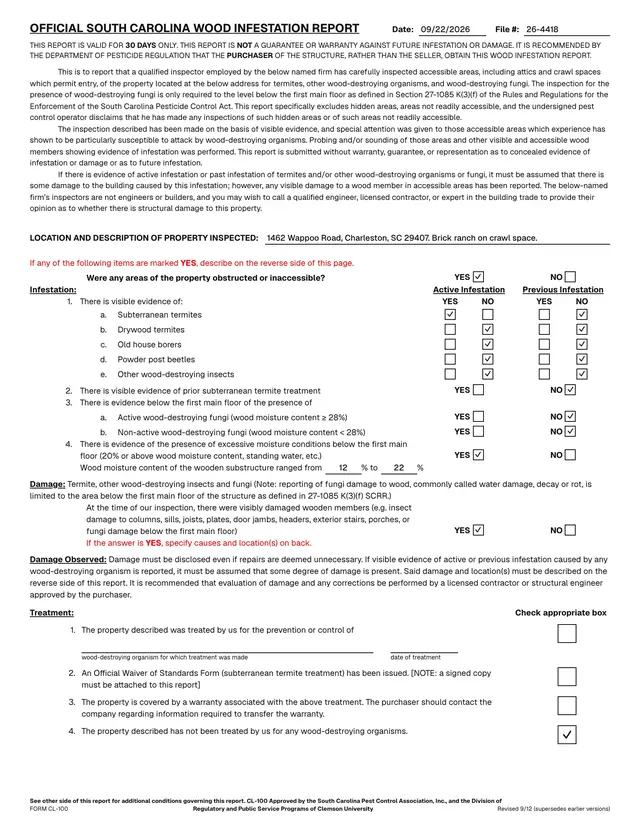
Official South Carolina Wood Infestation Report
Record the termite findings from an inspection. - Tennessee
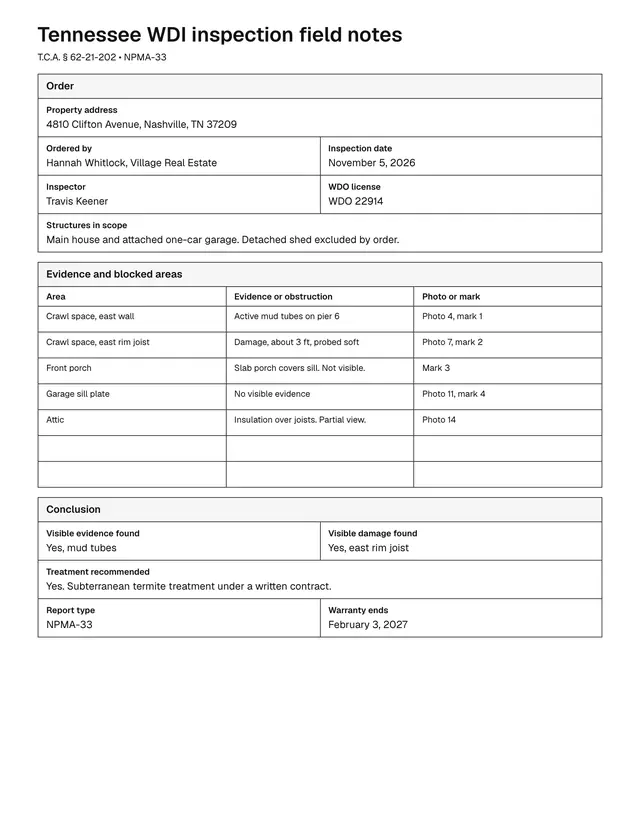
Tennessee wood destroying insect infestation inspection report
Record the termite findings from an inspection. - TexasSPCS/T-5
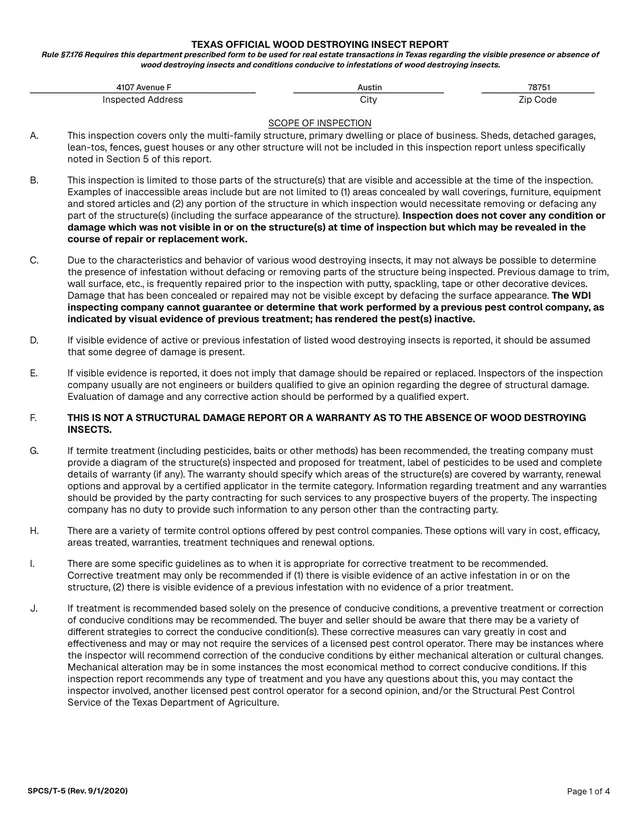
Texas Official Wood Destroying Insect Report
Record the termite findings from an inspection. - Utah
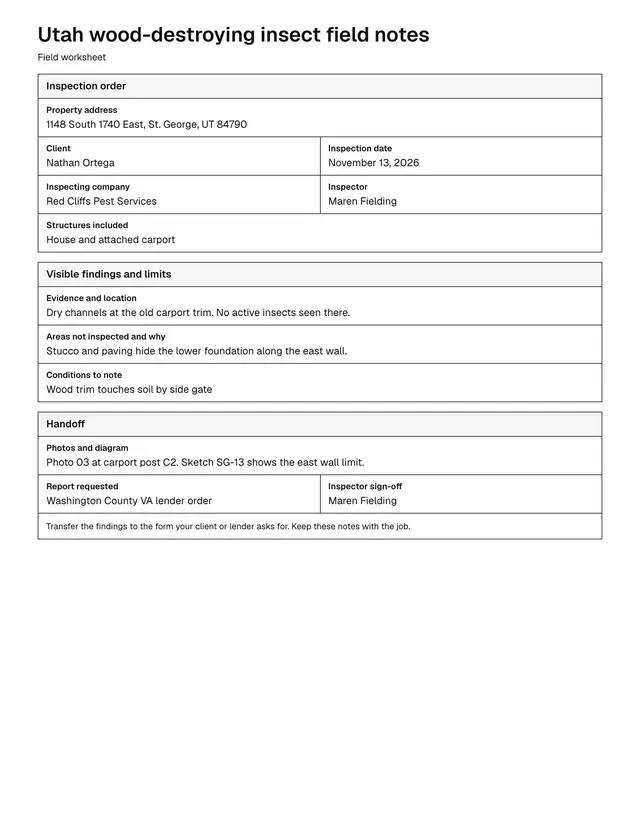
Utah wood-destroying insect field notes
Record the termite findings from an inspection. - Virginia
Virginia wood destroying insect inspection report
Record the termite findings from an inspection. - Washington
Complete WDO Inspection Report
Record the termite findings from an inspection. - Wisconsin
Wisconsin wood-destroying insect field notes
Record the termite findings from an inspection.