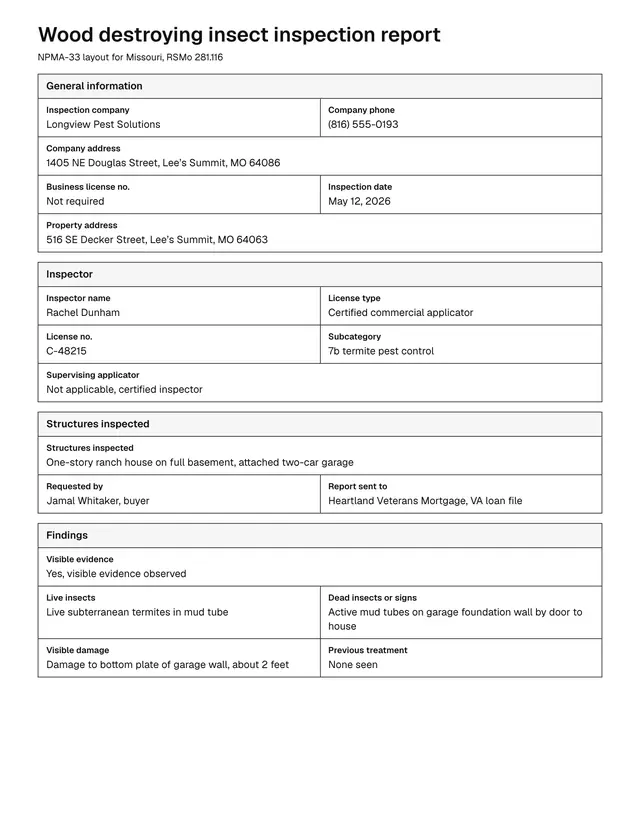
Missouri wood-destroying insect inspection report (NPMA-33)
In Missouri, only someone with a 7b termite license can do the termite inspection for a home sale. Most use the NPMA-33, and VA loans need one anywhere in the state.
At a glance
- Law
- RSMo 281.116
- License needed
- Subcategory 7b, termite pest control
- VA loans
- Required statewide
- Form used
- NPMA-33 (no state form)
Completed example
Download PDFWho can do a termite inspection for a Missouri sale
Missouri spells this out in a statute. RSMo 281.116 says anyone “performing inspections for evidence of wood-destroying insects at the request of the buyer, seller or lending institution for real estate transactions” needs a Missouri pesticide license in “subcategory 7b-termite pest control.”
Four licenses qualify: a certified commercial applicator, a certified noncommercial applicator, a certified public operator, or a pesticide technician working under the direct supervision of a certified commercial applicator. All four have to carry the 7b subcategory.
That rules out a home inspector who doesn’t hold one. A home inspector can still note mud tubes in the report, and should. But the separate termite report that a lender or buyer orders for the sale needs a 7b license behind it. If a client asks you to “just check the termite box” on a home inspection, send them to a licensed firm or get the license.
When a Missouri loan calls for one
VA loans. The VA keeps a list of local termite rules. For Missouri, the VA local requirements page says a wood-destroying insect report is required in the entire state, from Kansas City row houses to lake cabins in the Ozarks.
Other loans and cash buyers. No Missouri law makes a buyer get one. It comes from the lender, the purchase contract, or a home inspector who saw something and wrote “further evaluation by a licensed pest control company.”
Who stands behind it. Missouri real estate agents get a shield here. Under RSMo 339.190, a licensee isn’t liable for statements made by “wood-destroying inspection and control experts, termite inspectors” and similar experts, unless the agent employed or picked you, or knew the report was false. The statute adds that “the ordering of a report or inspection alone shall not constitute selecting or engaging a person.” In plain words, when the agent orders your report, it’s still your report.
Filling in the NPMA-33 with Missouri numbers
Section I. The form asks for a company business license number. Missouri issues pesticide licenses to individuals, not businesses (2 CSR 70-25.020). NPMA’s guideline for the NPMA-33 covers this: “In states where no business licenses are issued, enter ‘not required.’” Put the inspector’s own license number on the inspector line, and make sure it carries the 7b subcategory.
Section II. Mark what you saw: live insects, dead insects or signs like mud tubes and wings, visible damage, or signs of an earlier treatment like drilled and patched slab holes. Say where each one was. NPMA calls the form “not a structural damage report,” so describe and point to a contractor rather than judging the framing.
Section IV. Missouri houses give you plenty to list here. Finished basements in the St. Louis and Kansas City suburbs, slab homes with flooring tight to the walls, crawlspaces with no hatch, and siding run below grade. Name each area and why you couldn’t see it.
Section III, recommendations. If you found live insects or damage with no treatment record, check that treatment is recommended and say what for: subterranean termites, carpenter ants, or powderpost beetles. Missouri’s 7b subcategory covers all three. If the seller has a current treatment warranty, ask for a copy and note it here instead of guessing.
Signatures. You sign as the inspector. The buyer and seller sign to say they got it, usually at closing through the agent or title company.
What if you find live termites?
The report says what you saw. Treatment is a separate job with its own paper. A Missouri commercial applicator records every pesticide use within 3 business days and keeps it 3 years, under 2 CSR 70-25.120. Our Missouri pesticide application record page walks through all 14 items.
If your firm does the treatment, the licensed applicator who does it needs 7b too. A pesticide technician can do the work only under the direct supervision of a certified commercial applicator.
Watch what you promise the seller. RSMo 281.101 makes it unlawful to say “that any pesticide work done will be inspected by any branch of government.” Tell the buyer what you treated and when, and leave the state out of it.
Noma specializes in the Missouri wood-destroying insect inspection report (RSMo 281.116). Work the inspection in the Noma mobile app, draw an inspection diagram that shows where you found tubes or damage, and send the finished PDF to the buyer and seller to sign online. See how Noma handles termite inspections.
Frequentlyaskedquestions
Send this document in minutes, not an afternoon.
Other states
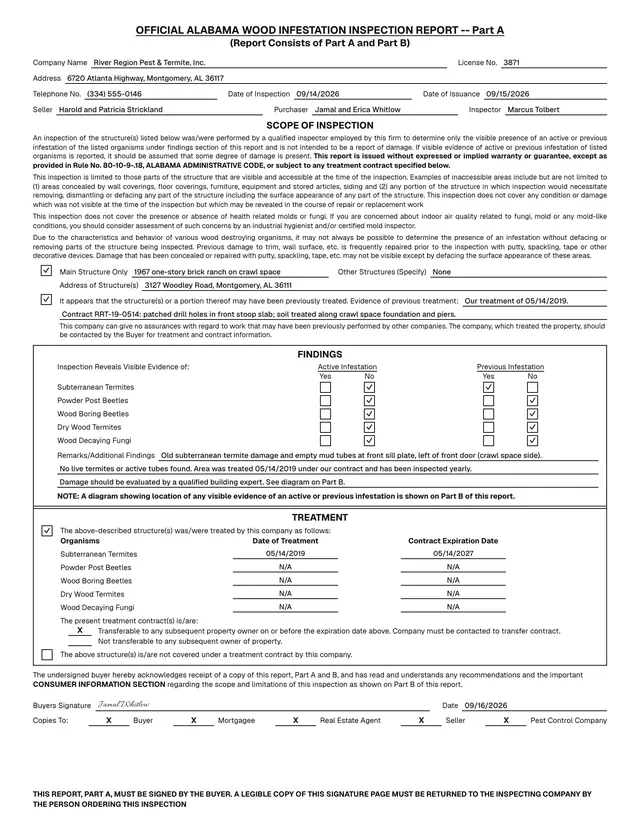
Inspection report templates- Alabama
Official Alabama Wood Infestation Inspection Report
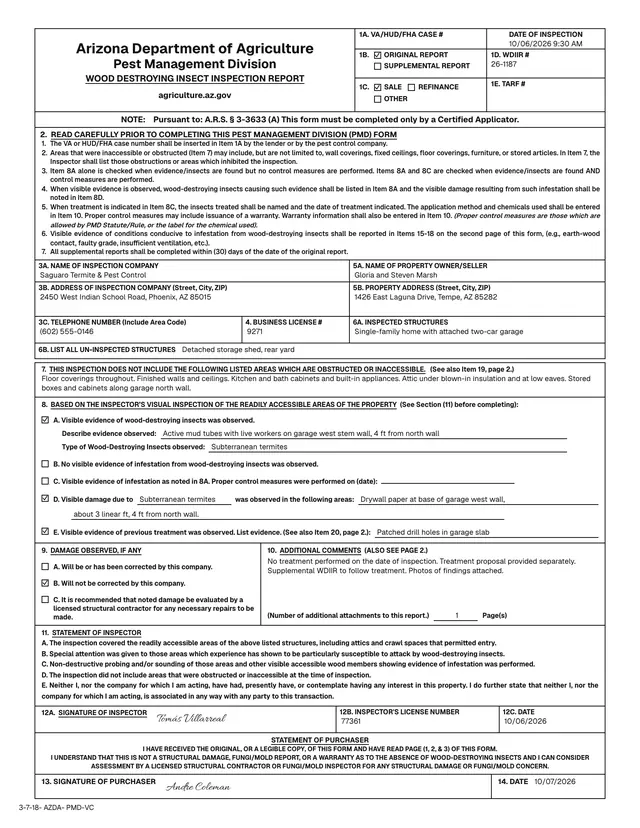
Record the termite findings from an inspection. - Arizona
Wood Destroying Insect Inspection Report
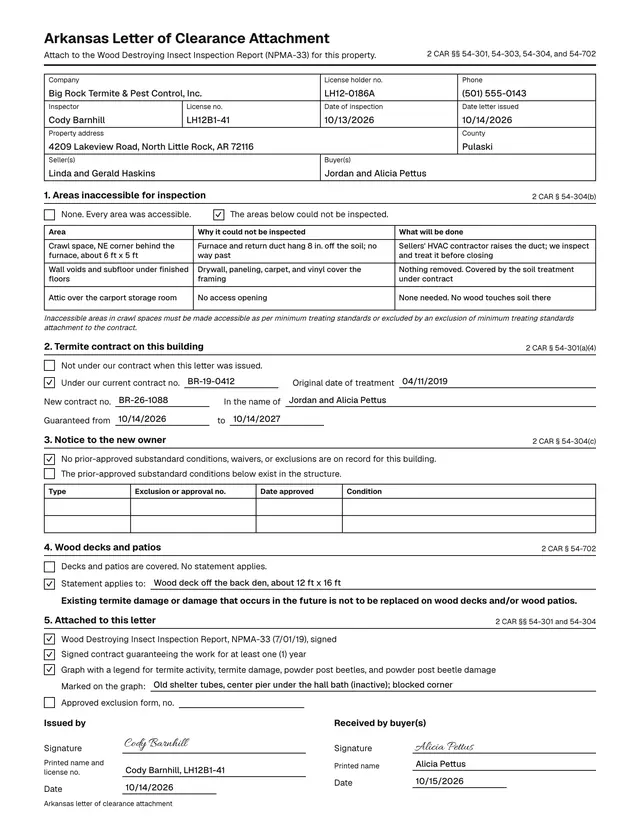
Record the termite findings from an inspection. - Arkansas
Arkansas Letter of Clearance Attachment
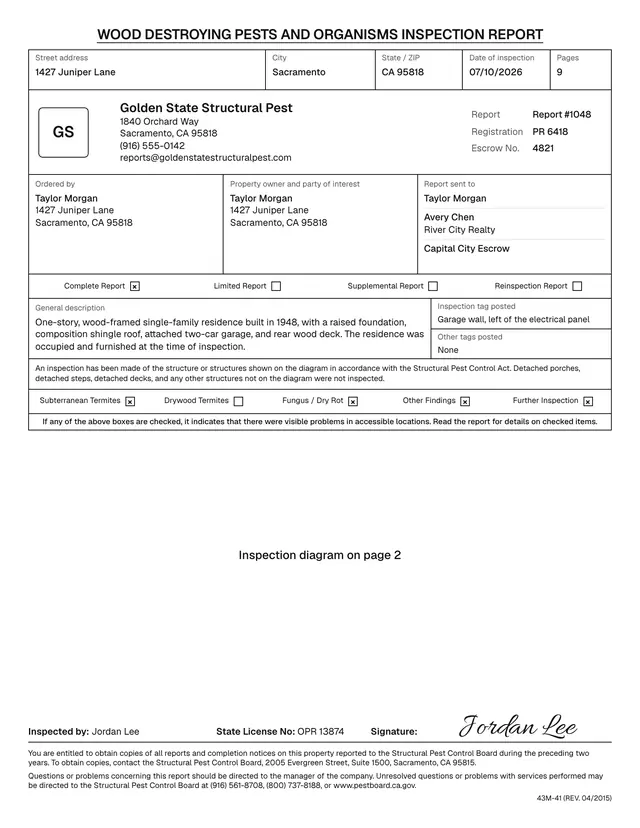
Record the termite findings from an inspection. - California43M-41
Wood Destroying Pests and Organisms Inspection Report
Record the termite findings from an inspection. - ColoradoNPMA-33
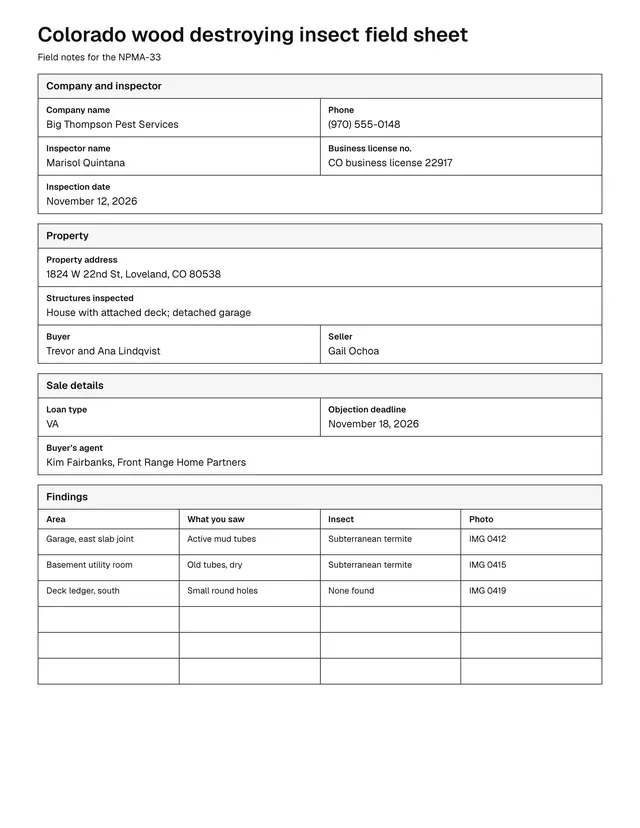
Colorado termite inspection report (NPMA-33)
Record the termite findings from an inspection. - Connecticut
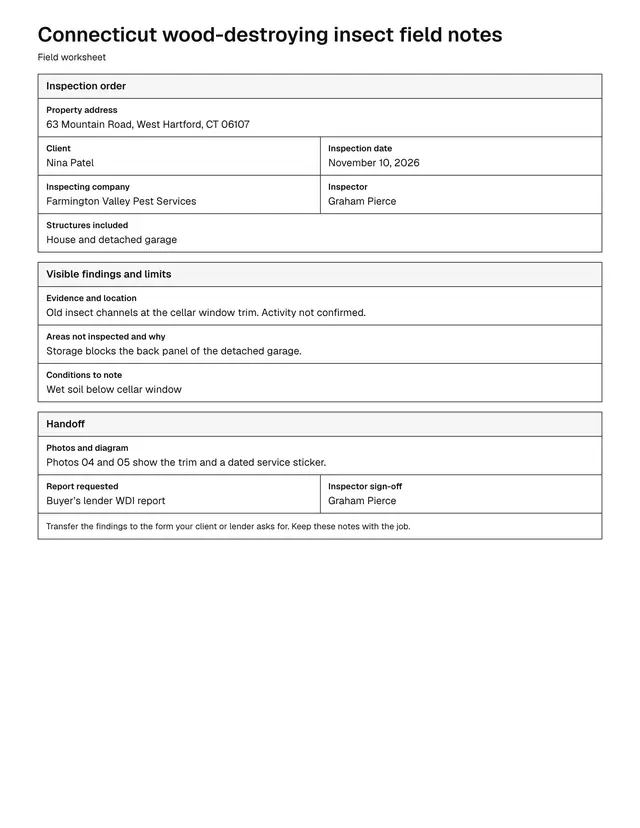
Connecticut wood-destroying insect field notes
Record the termite findings from an inspection. - DelawareNPMA-33
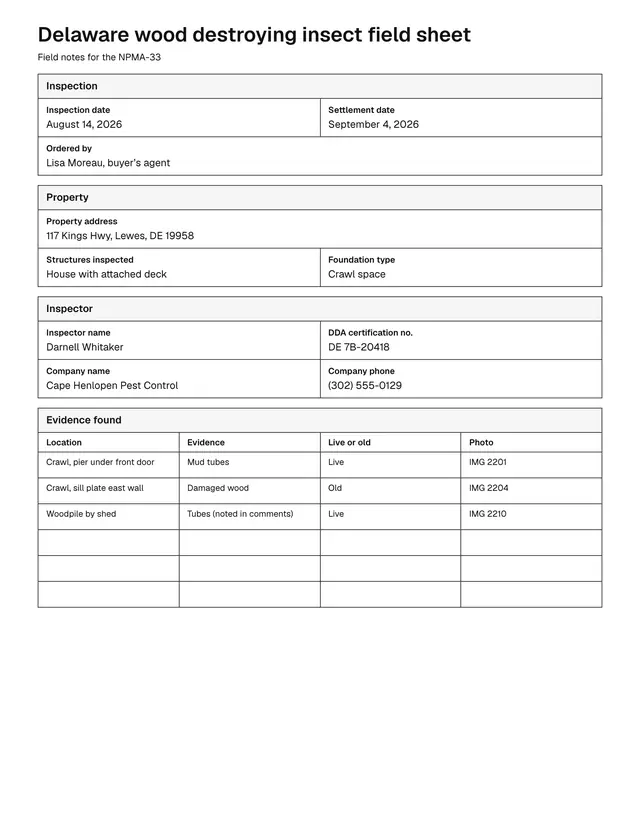
Delaware termite inspection report (NPMA-33)
Record the termite findings from an inspection. - FloridaFDACS-13645
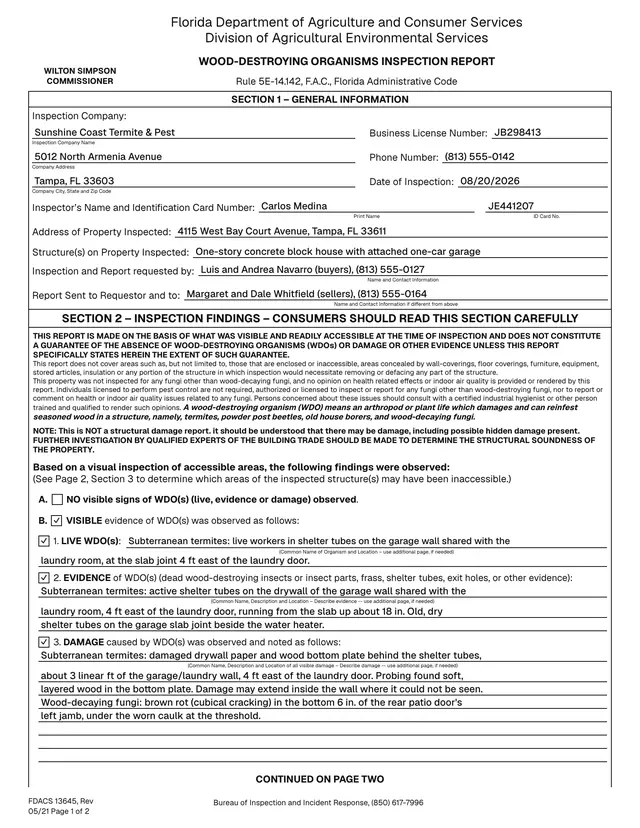
Wood-Destroying Organisms Inspection Report
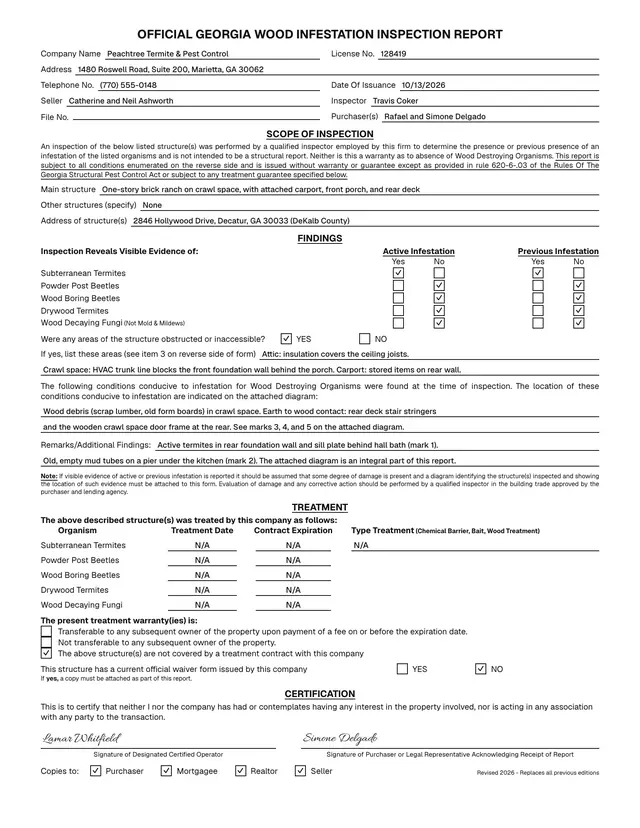
Record the termite findings from an inspection. - Georgia
Official Georgia Wood Infestation Inspection Report
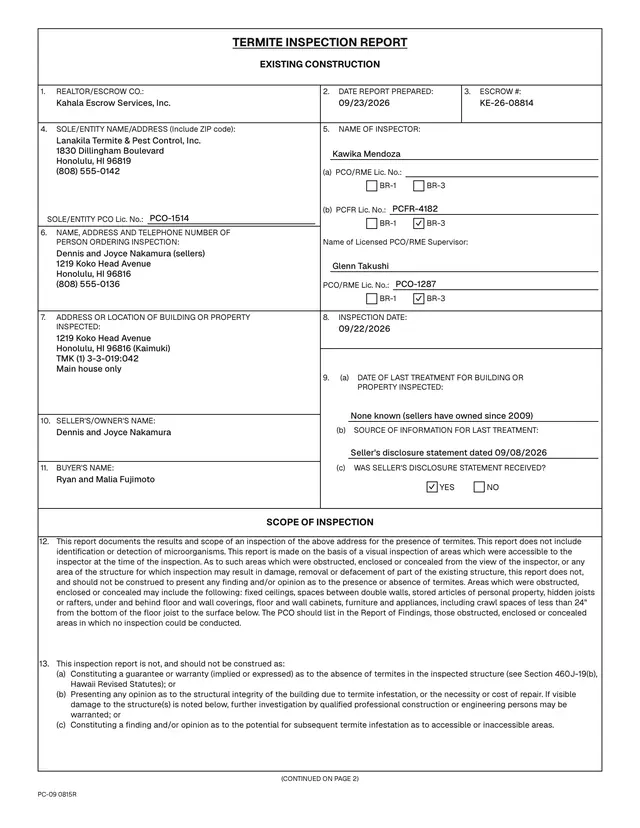
Record the termite findings from an inspection. - HawaiiPC-9
Termite Inspection Report, Existing Construction
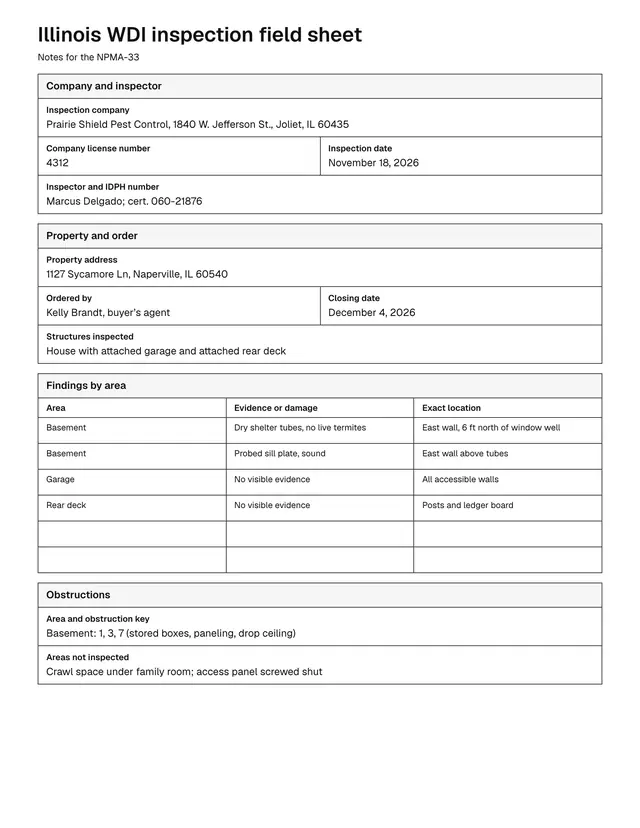
Record the termite findings from an inspection. - IllinoisNPMA-33
Illinois wood destroying insect inspection report (NPMA-33)
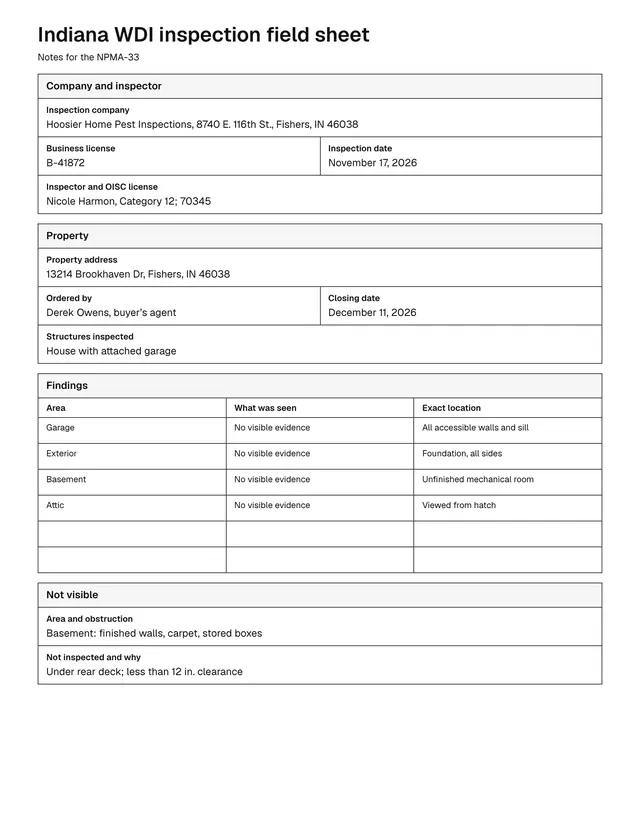
Record the termite findings from an inspection. - IndianaNPMA-33
Indiana wood destroying insect inspection report (NPMA-33)
Record the termite findings from an inspection. - Iowa
Iowa wood-destroying insect field notes
Record the termite findings from an inspection. - Kansas
Kansas wood-destroying insect field notes
Record the termite findings from an inspection. - Kentucky
Kentucky termite inspection report (NPMA-33)
Record the termite findings from an inspection. - MarylandMD-1
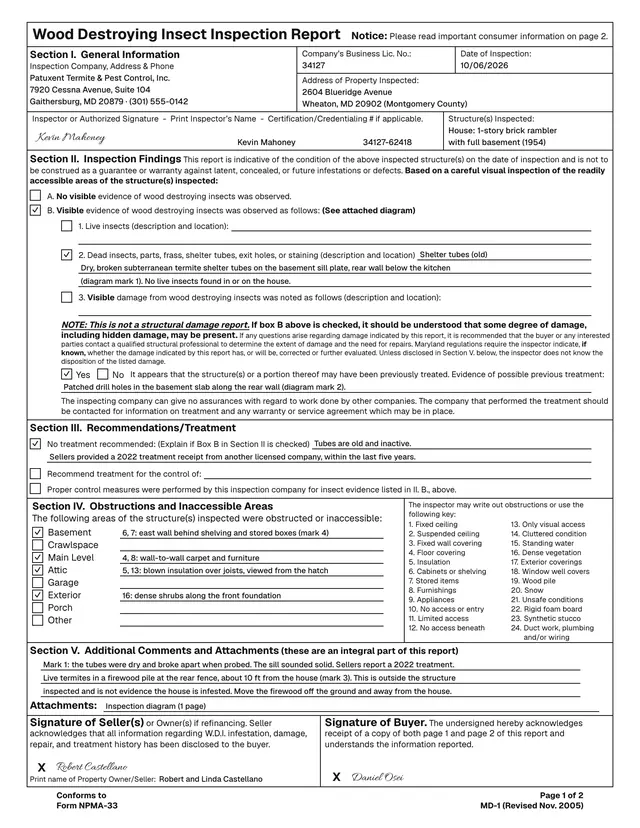
Wood Destroying Insect Inspection Report
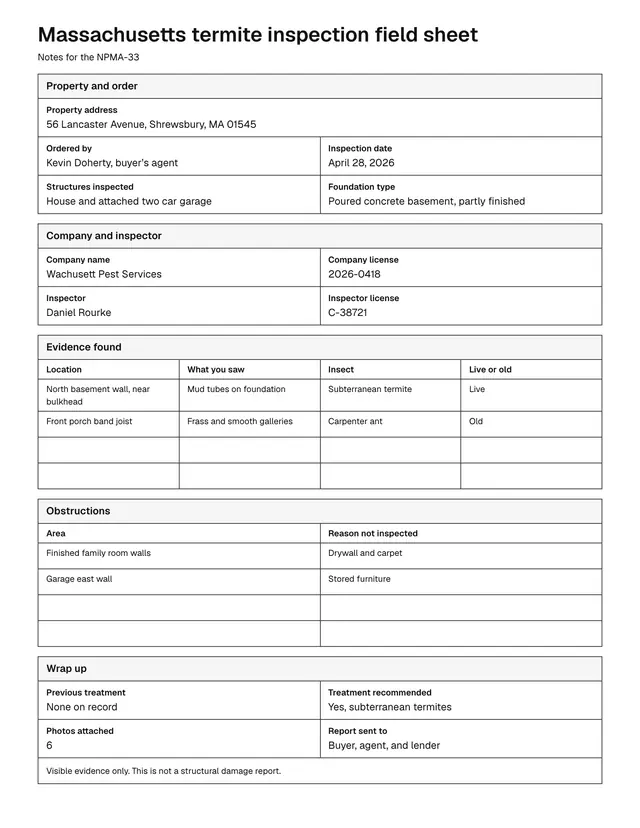
Record the termite findings from an inspection. - Massachusetts
Massachusetts termite inspection report (NPMA-33)
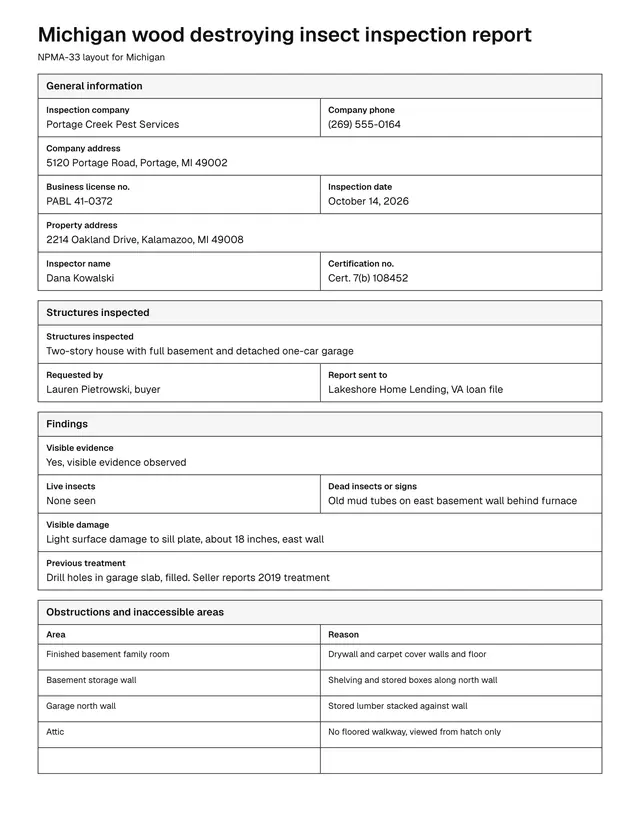
Record the termite findings from an inspection. - MichiganNPMA-33
Michigan wood-destroying insect inspection report (NPMA-33)
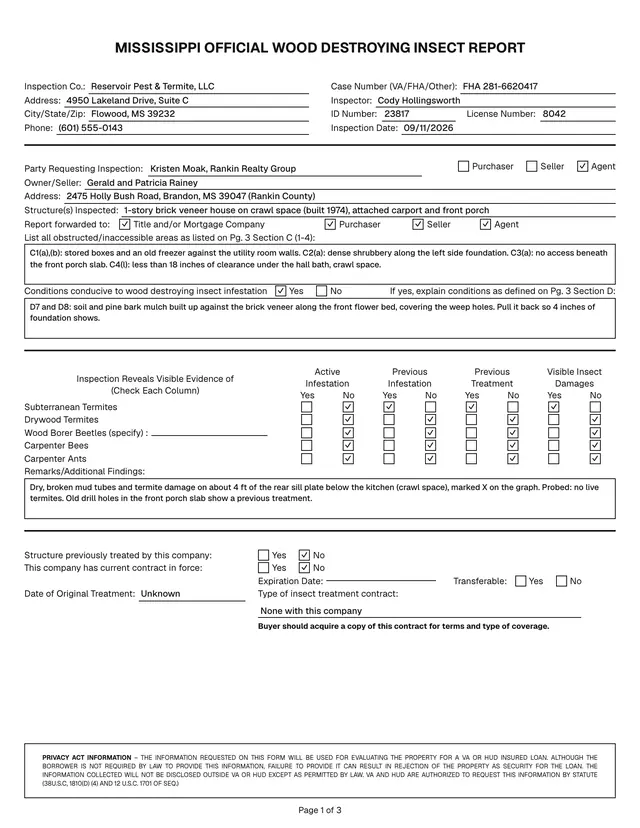
Record the termite findings from an inspection. - Mississippi
Mississippi Official Wood Destroying Insect Report
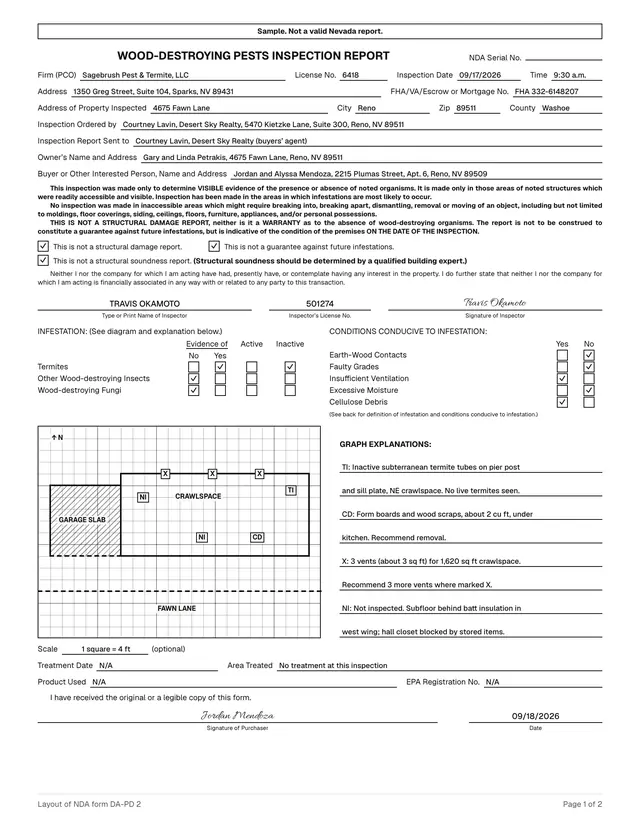
Record the termite findings from an inspection. - Nevada
Wood-Destroying Pests Inspection Report
Record the termite findings from an inspection. - New Jersey
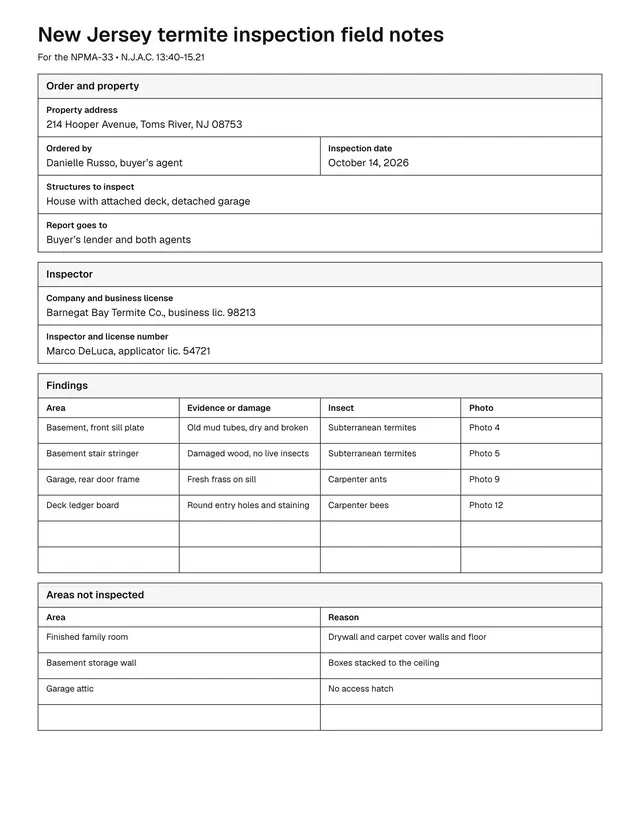
New Jersey termite inspection report (NPMA-33 field notes)
Record the termite findings from an inspection. - New Mexico
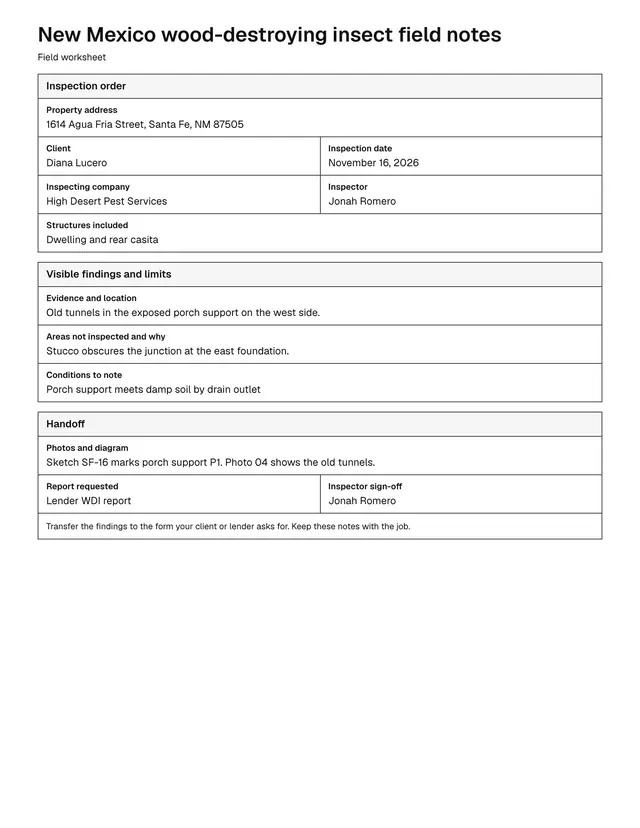
New Mexico wood-destroying insect field notes
Record the termite findings from an inspection. - New York
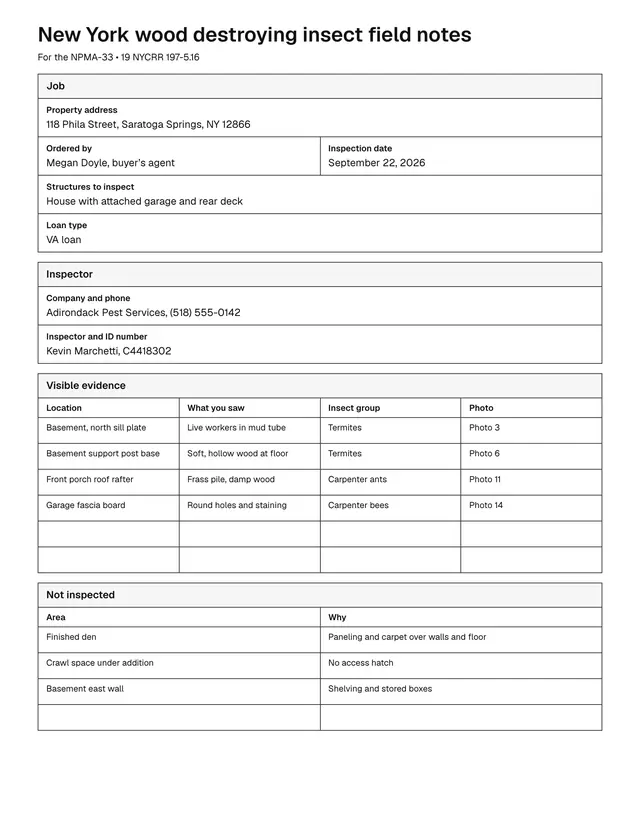
New York wood destroying insect inspection notes (NPMA-33)
Record the termite findings from an inspection. - North CarolinaWDIR 100
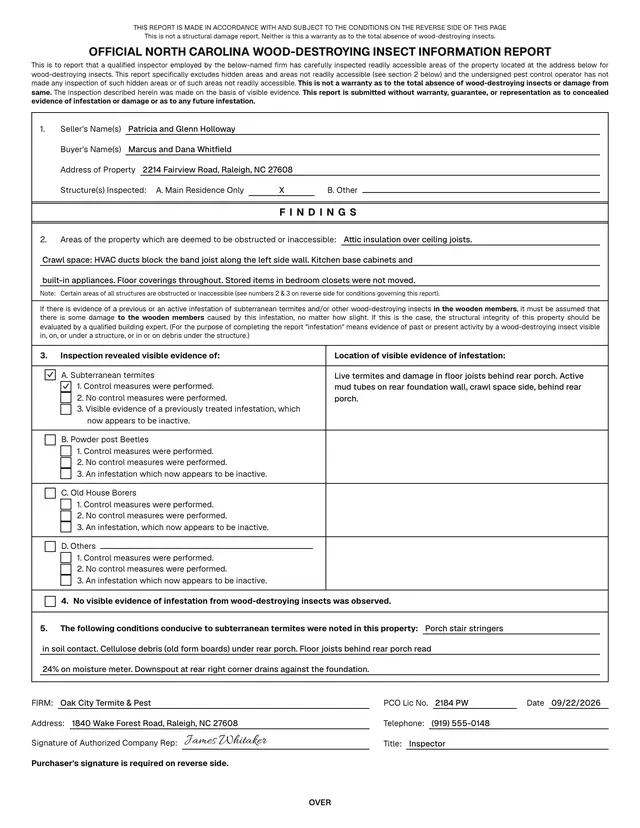
Official North Carolina Wood-Destroying Insect Information Report
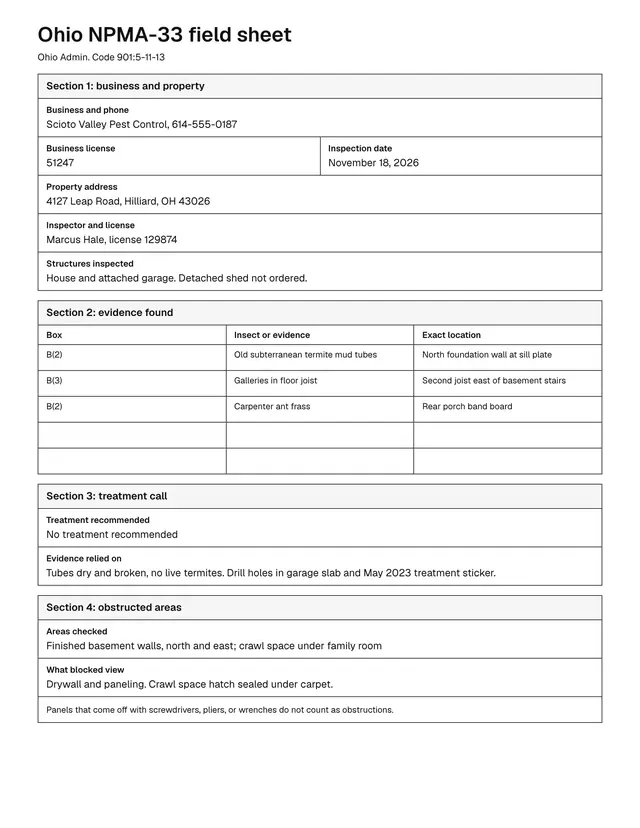
Record the termite findings from an inspection. - OhioNPMA-33
Ohio NPMA-33 wood-destroying insect inspection report
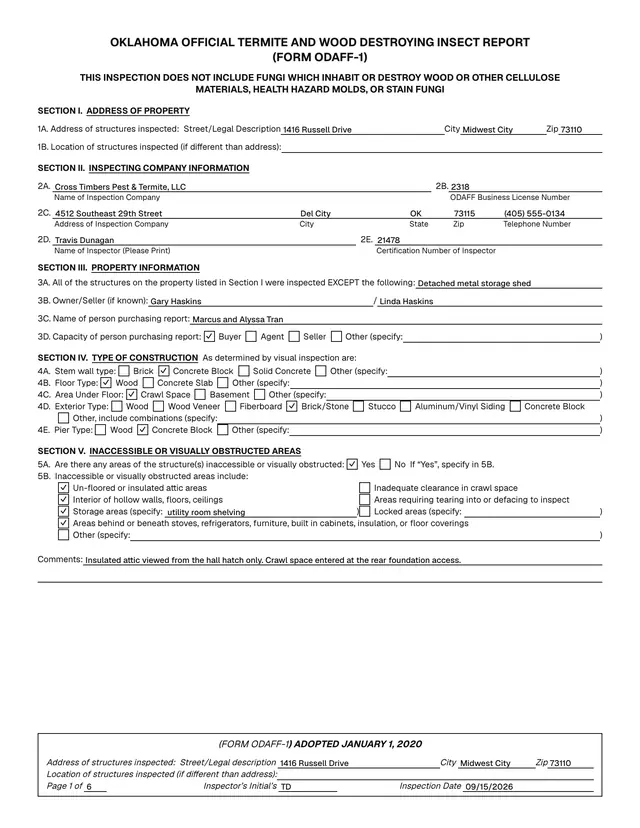
Record the termite findings from an inspection. - OklahomaForm ODAFF-1
Oklahoma Official Termite and Wood Destroying Insect Report
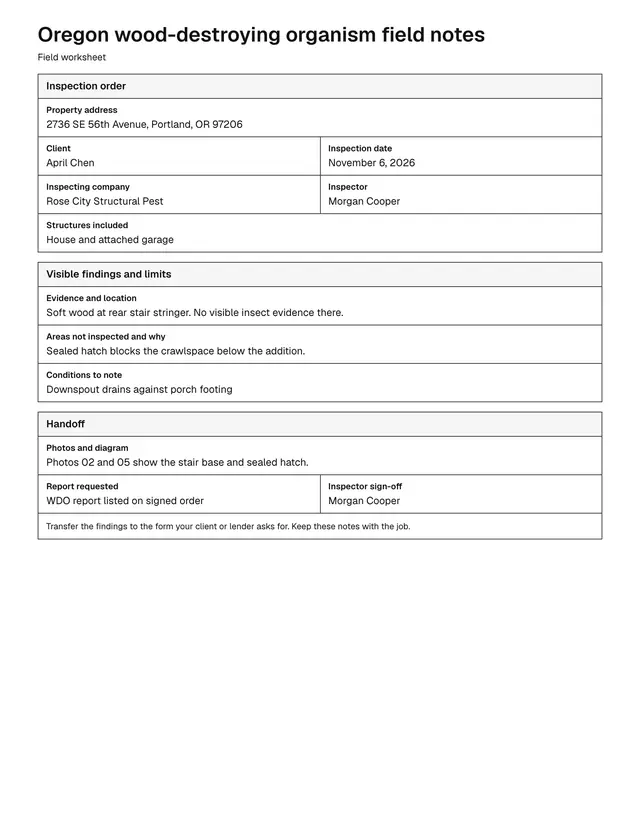
Record the termite findings from an inspection. - Oregon
Oregon wood-destroying organism field notes
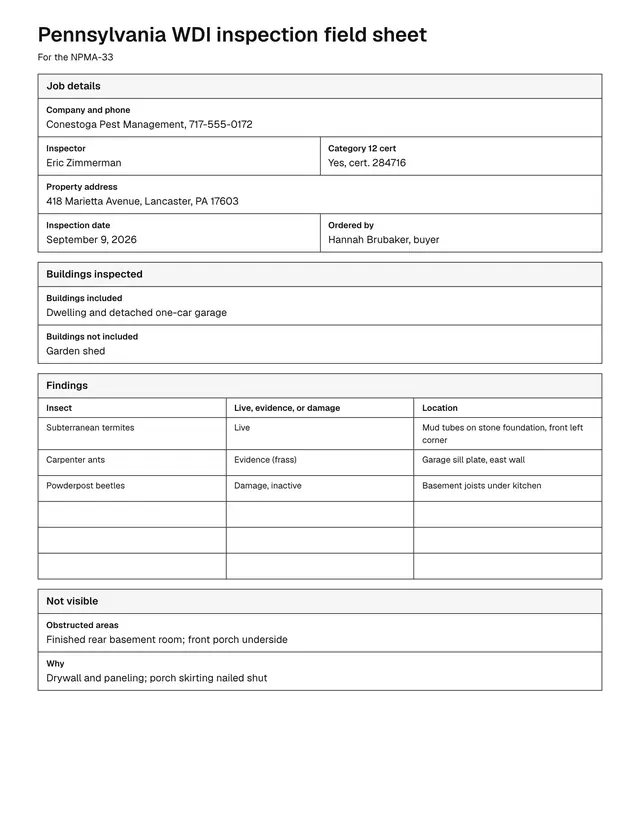
Record the termite findings from an inspection. - PennsylvaniaNPMA-33
Pennsylvania wood-destroying insect inspection report (NPMA-33)
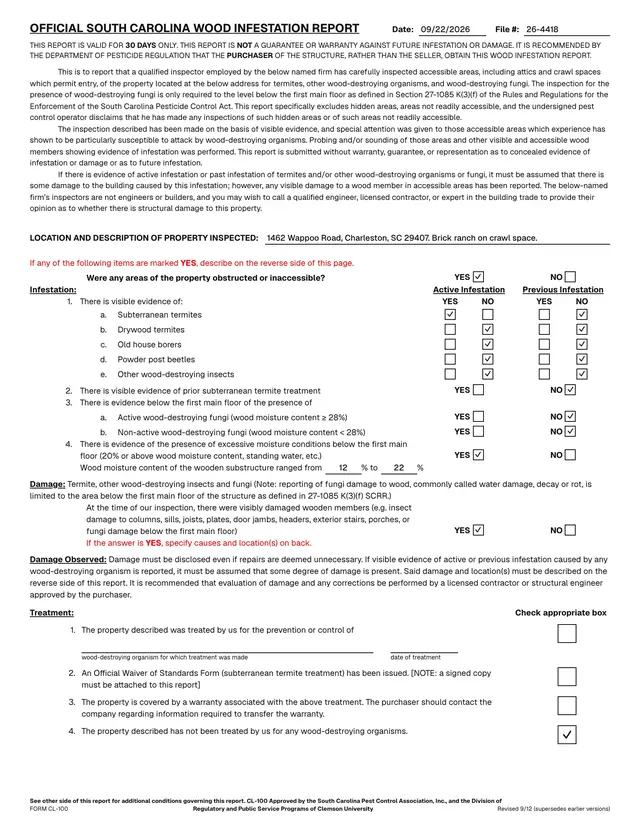
Record the termite findings from an inspection. - South CarolinaCL-100
Official South Carolina Wood Infestation Report
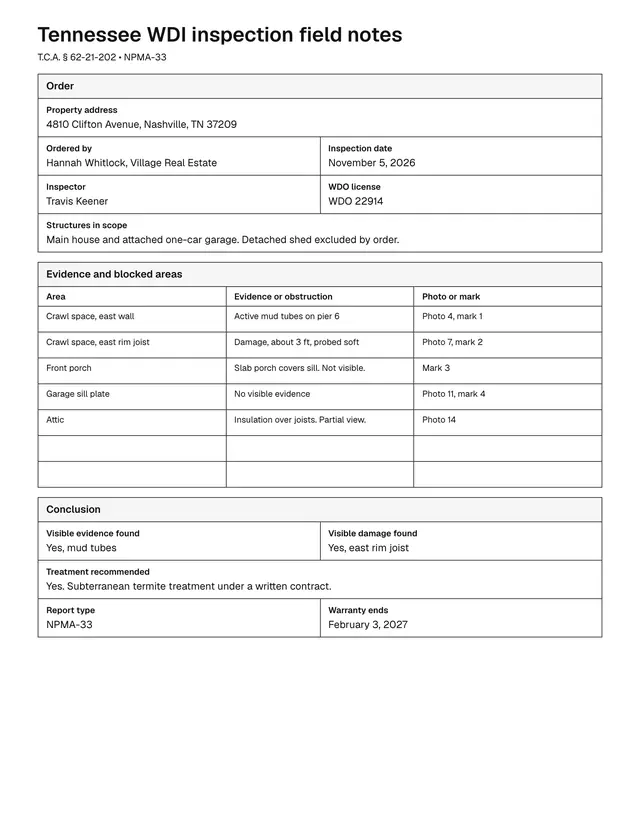
Record the termite findings from an inspection. - Tennessee
Tennessee wood destroying insect infestation inspection report
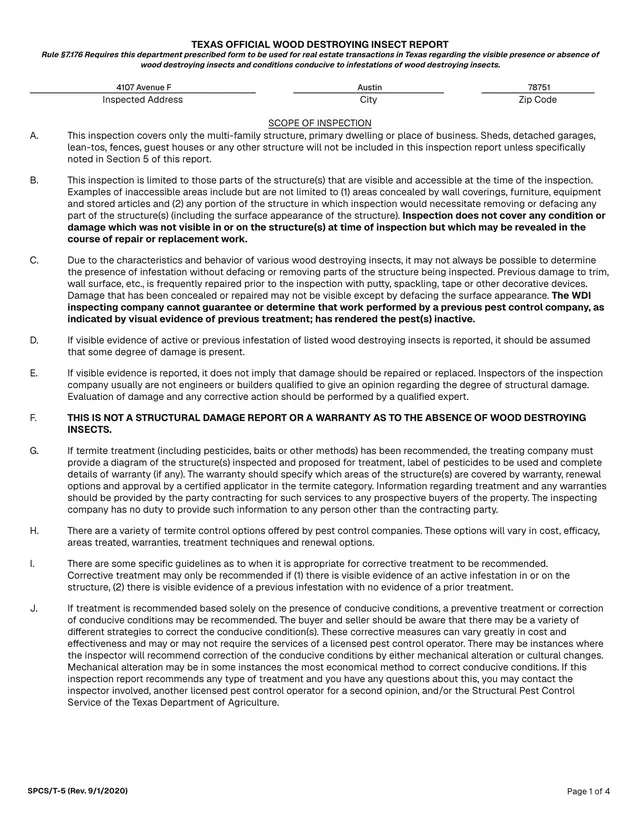
Record the termite findings from an inspection. - TexasSPCS/T-5
Texas Official Wood Destroying Insect Report
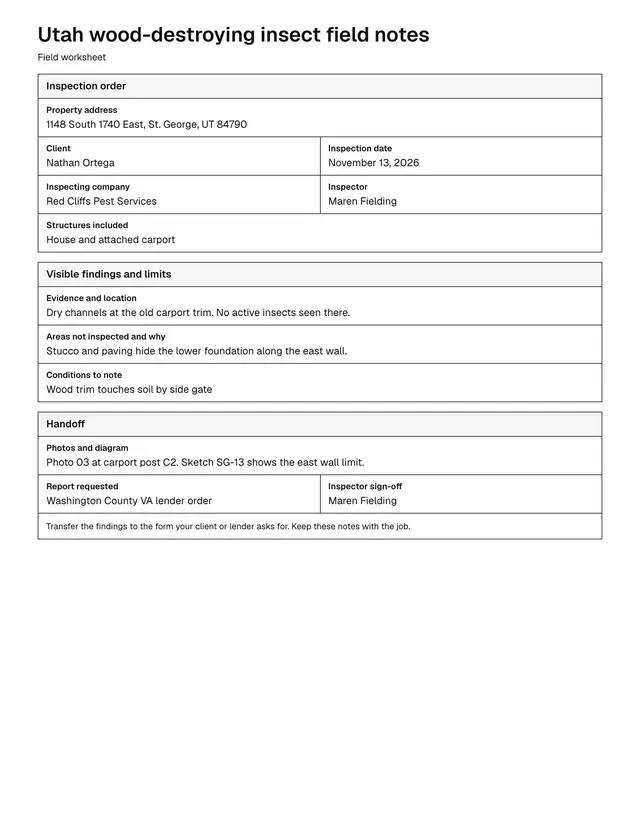
Record the termite findings from an inspection. - Utah
Utah wood-destroying insect field notes
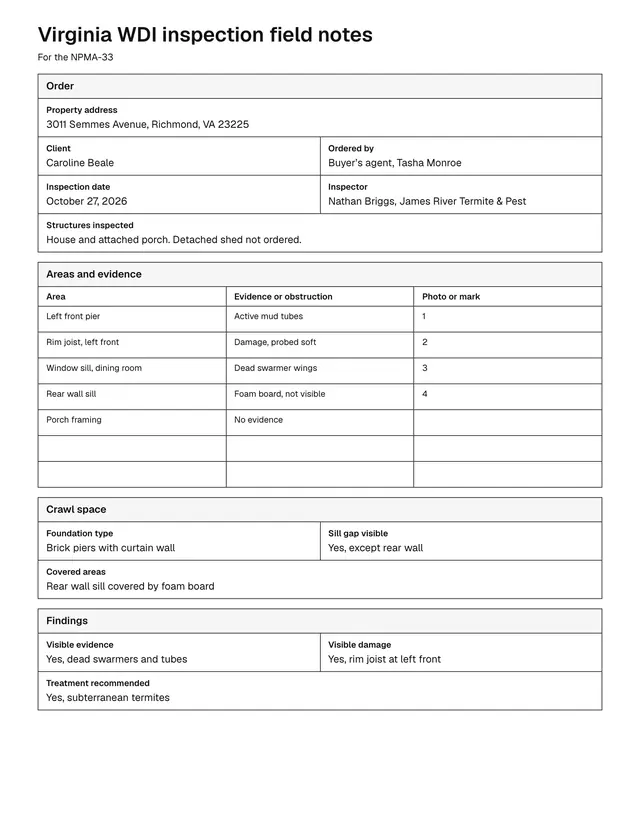
Record the termite findings from an inspection. - Virginia
Virginia wood destroying insect inspection report
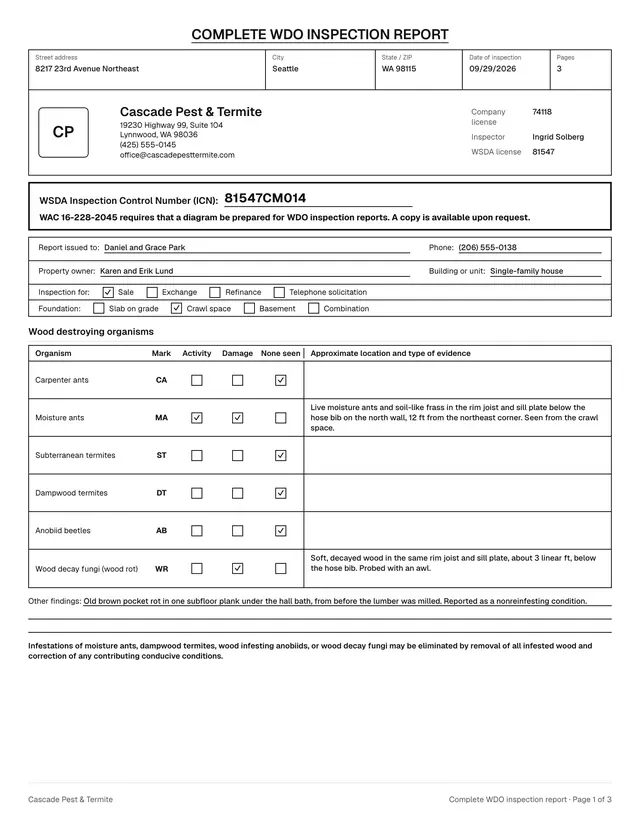
Record the termite findings from an inspection. - Washington
Complete WDO Inspection Report
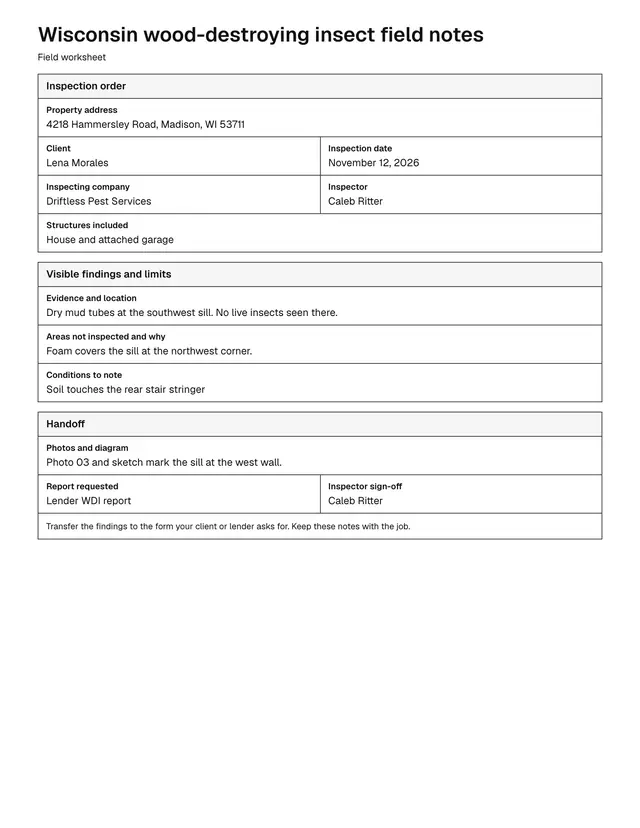
Record the termite findings from an inspection. - Wisconsin
Wisconsin wood-destroying insect field notes
Record the termite findings from an inspection.