New York wood destroying insect inspection notes (NPMA-33)
In New York the termite report comes from the loan or the contract, not from a state rule. These notes back up the NPMA-33 you hand over before closing.
At a glance
- Form lenders ask for
- NPMA-33 (industry form)
- State form
- None in New York
- Standard home inspection
- Doesn’t include it (19 NYCRR 197-5.16)
- If you treat
- Record it under 6 NYCRR 325.25
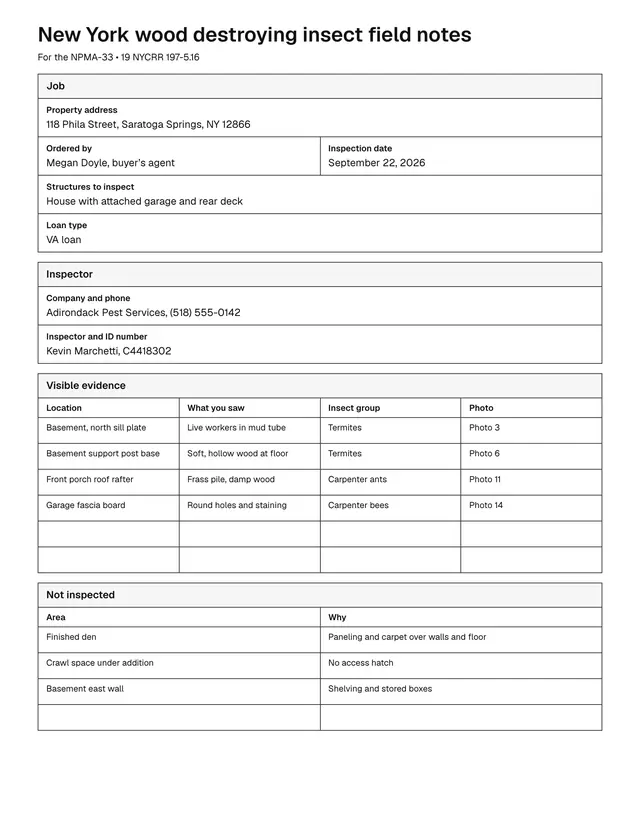
Completed example
Download PDFWhere the request comes from
In New York, the termite report shows up because of the deal, not the state. A VA loan, an FHA loan, or a line in the purchase contract asks for a wood destroying insect inspection. The Department of State licenses home inspectors and DEC certifies pesticide applicators, but neither one prints a termite form.
So the industry form fills the gap. NPMA’s guideline for the NPMA-33 says the form “MUST be used” for HUD and VA loans and is “typically used for conventional transactions.” It also steps aside where a state has its own required form. New York doesn’t, so you’ll hand over an NPMA-33.
NPMA holds the copyright, and blank forms come through NPMA’s forms page. What you can make your own is the notebook. These notes catch what the small boxes can’t: photo numbers, blocked walls, and the seller’s story about a treatment back in 2012.
Doesn’t the home inspector cover this?
Not by default. New York’s standards of practice, 19 NYCRR 197-5.16, say a home inspector isn’t required to find “wood destroying organisms.” Buyers are often surprised by that, so say it plainly when they book.
Some home inspectors offer the termite check as an extra. If you do, put it in your pre-inspection agreement with its own price. The rules say that agreement has to describe the scope of service and the cost, and an add-on is part of the scope.
Plenty of agents send the job to a pest control company instead. That company can quote the treatment on the same visit, which helps when the closing date is two weeks out.
On site, from the bottom up
Pin down the structures. NPMA’s guideline says the person ordering the job picks which structures go in the report. Write their answer word for word, like “house, attached garage, and shed.” A deck attached to the house counts as part of the house.
Work the basement slowly. A lot of older New York homes sit on fieldstone or block with the sill plate right on top. Run a flashlight along the sill and rim joist, press soft spots with a screwdriver, and check the bottoms of wood stairs and posts set on the floor. Mud tubes, swarm wings by basement windows, and wood that sounds hollow each get their own line.
Remember the other three groups. The form covers termites, carpenter ants, carpenter bees, and reinfesting wood boring beetles. In a house with a damp porch roof, carpenter ants can be the bigger find.
List what you couldn’t reach. Finished basements, paneling, stored boxes, and crawl spaces with no hatch go on the list with a reason. The guideline is clear that “this is not a structural damage report,” so your job is to show where you looked and what you saw, not to price repairs.
Yard evidence goes in comments. Mud tubes on a woodpile, in mulch, or under a deck are worth noting. NPMA’s guideline keeps them out of the findings and puts them in the comments.
What happens after you hand it over?
If you mark visible evidence, the next call is about treatment. When there’s evidence and no proof of a licensed treatment, NPMA’s guideline says to recommend one. Bait stations alone don’t settle it. Ask the seller for the service contract, and if nobody can show a current one, recommend treatment.
If your company then treats the house, New York’s records rule takes over. 6 NYCRR 325.25 wants the pesticide, the amount, the dosage rate, the method, the target pest, and the date and place, kept at least three years. That visit gets its own pesticide application record.
Signatures are the last snag. NPMA’s guideline says the realtor or closing firm collects the buyer and seller signatures, not you. Agents still ask the inspector to send it around, so keep a clean PDF ready. Keep your field notes with it, since they show what you saw on the day if a question comes up after the buyer moves in.
Noma specializes in the Wood Destroying Insect Inspection Report (NPMA-33) for New York home sales. Take the job from an online booking to a paid invoice in one place, then upload the completed NPMA-33 PDF and send it out to sign online when an agent asks you to. See how Noma handles the termite report job.
Frequentlyaskedquestions
Send this document in minutes, not an afternoon.
Other states
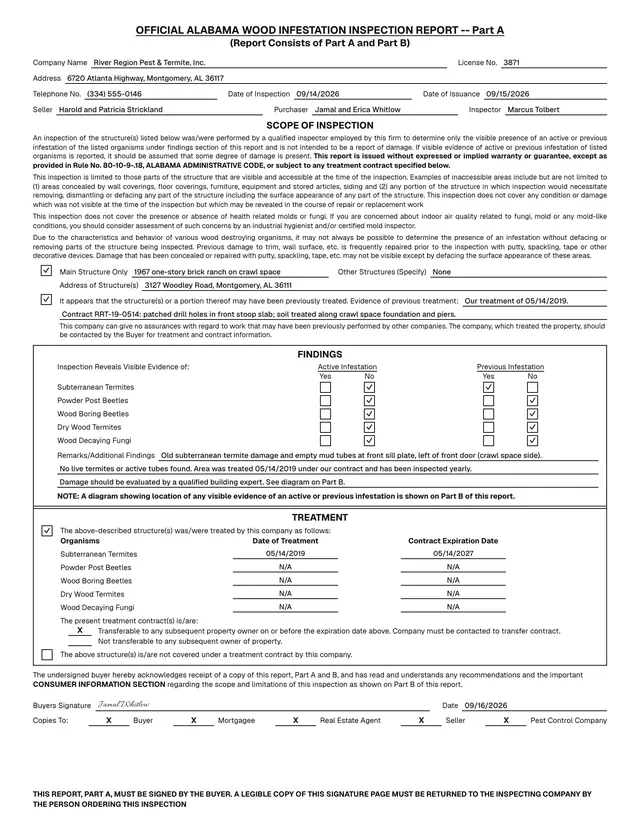
Inspection report templates- Alabama
Official Alabama Wood Infestation Inspection Report
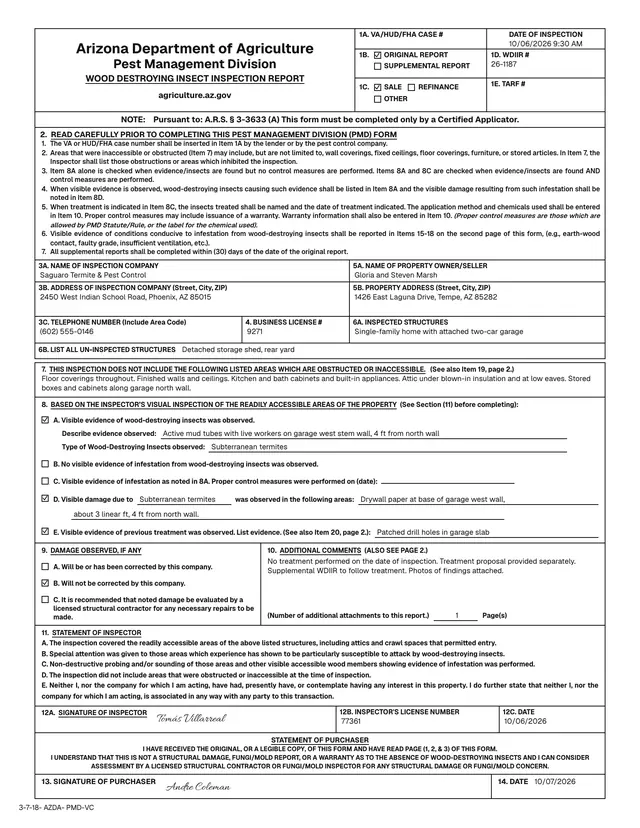
Record the termite findings from an inspection. - Arizona
Wood Destroying Insect Inspection Report
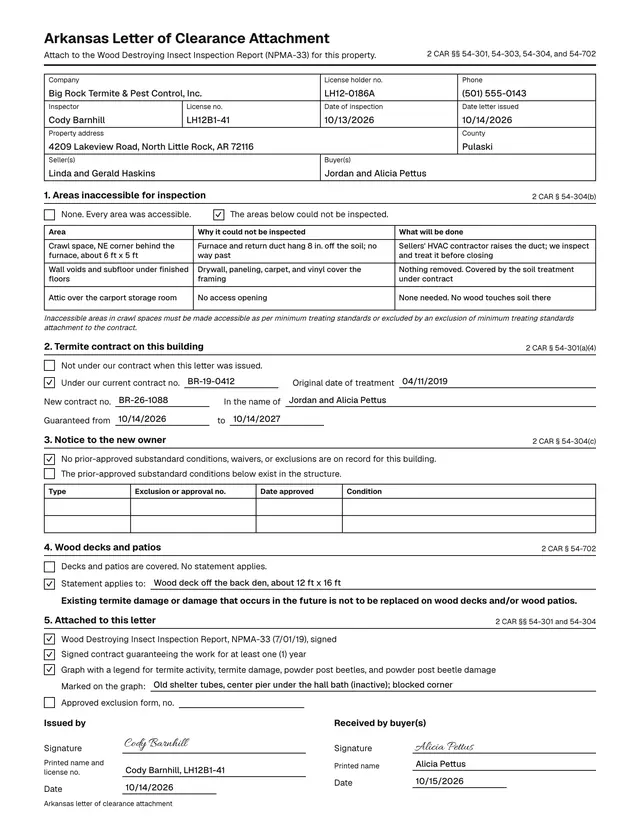
Record the termite findings from an inspection. - Arkansas
Arkansas Letter of Clearance Attachment
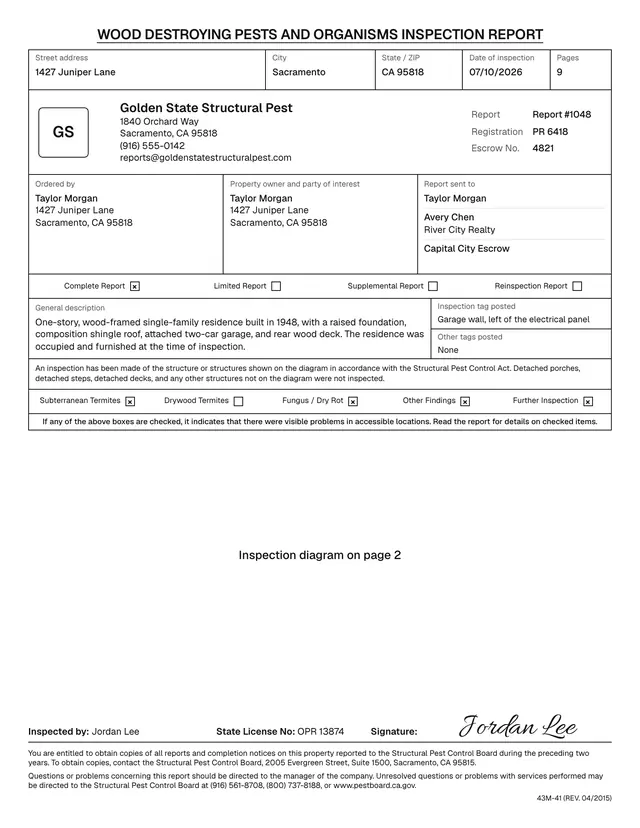
Record the termite findings from an inspection. - California43M-41
Wood Destroying Pests and Organisms Inspection Report
Record the termite findings from an inspection. - ColoradoNPMA-33
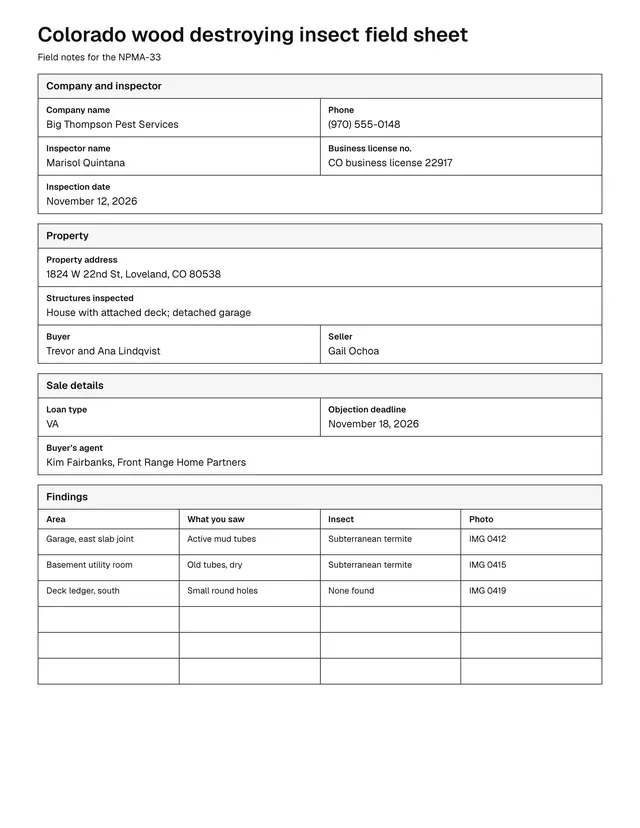
Colorado termite inspection report (NPMA-33)
Record the termite findings from an inspection. - Connecticut
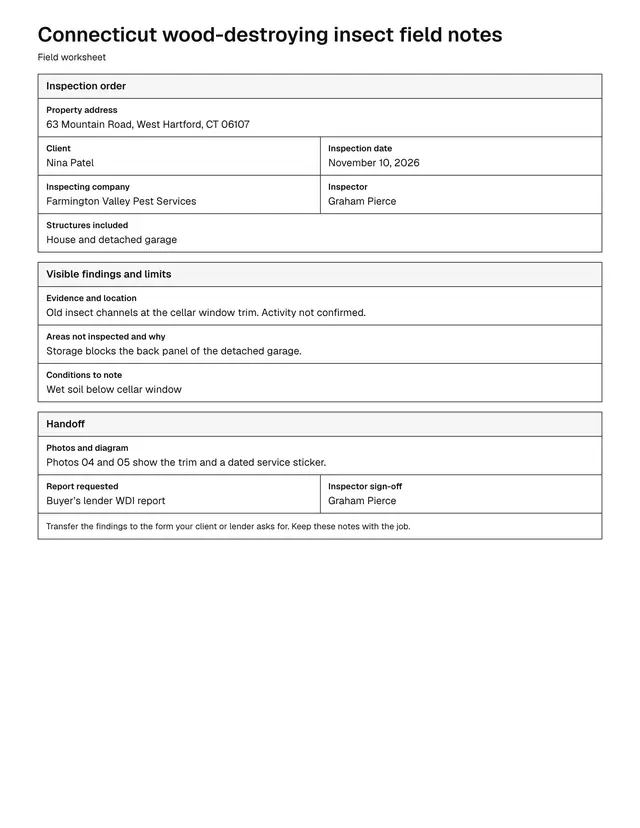
Connecticut wood-destroying insect field notes
Record the termite findings from an inspection. - DelawareNPMA-33
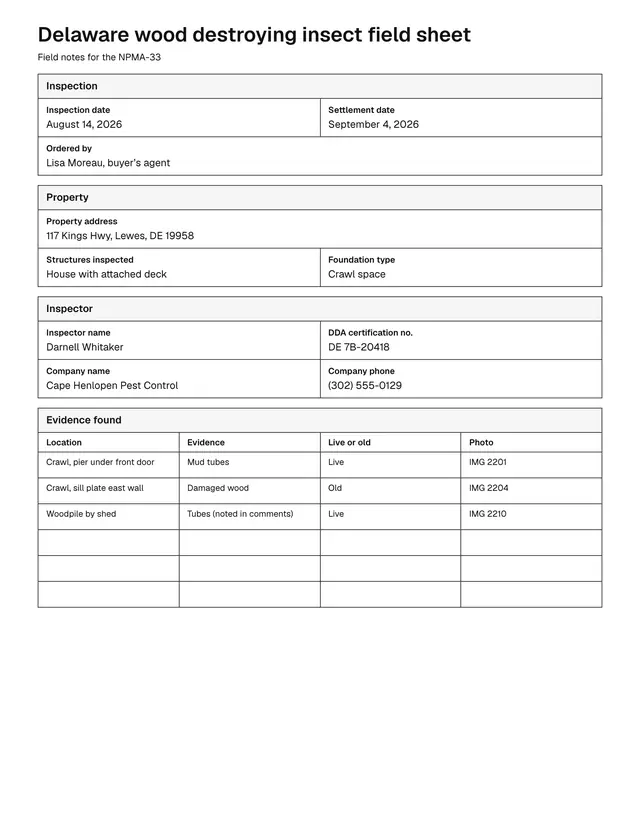
Delaware termite inspection report (NPMA-33)
Record the termite findings from an inspection. - FloridaFDACS-13645
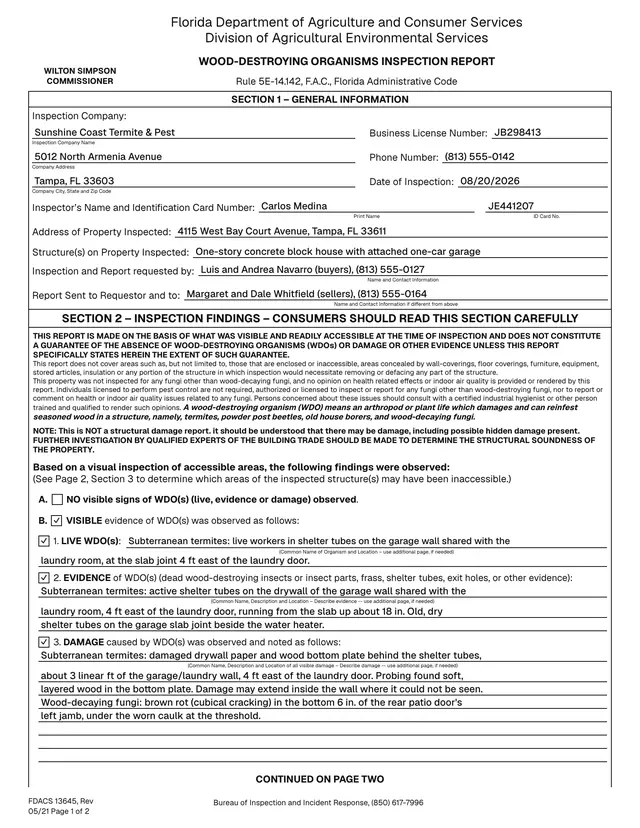
Wood-Destroying Organisms Inspection Report
Record the termite findings from an inspection. - Georgia
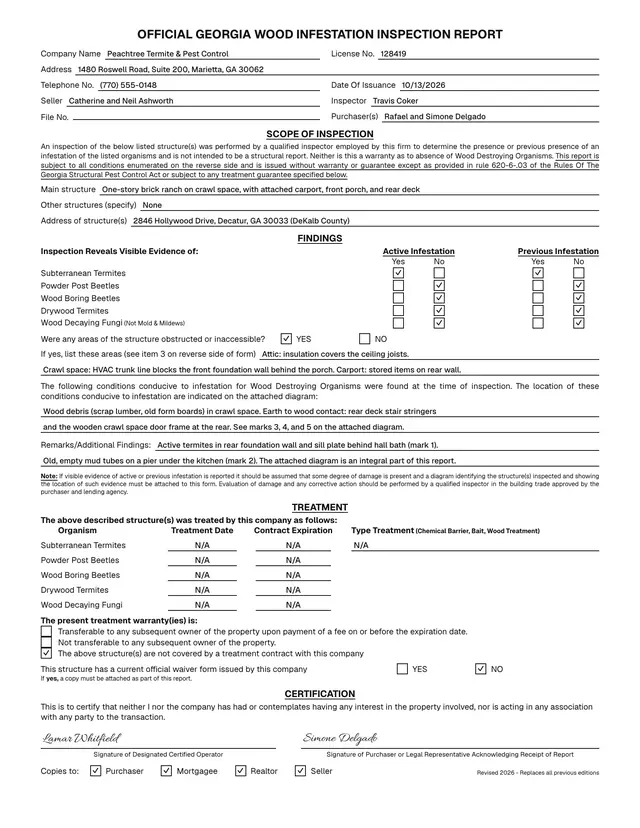
Official Georgia Wood Infestation Inspection Report
Record the termite findings from an inspection. - HawaiiPC-9
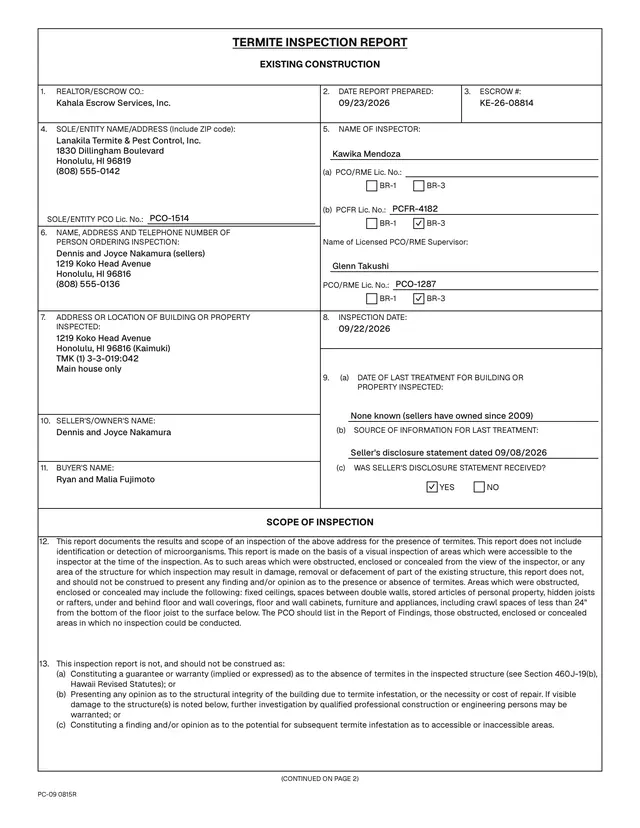
Termite Inspection Report, Existing Construction
Record the termite findings from an inspection. - IllinoisNPMA-33
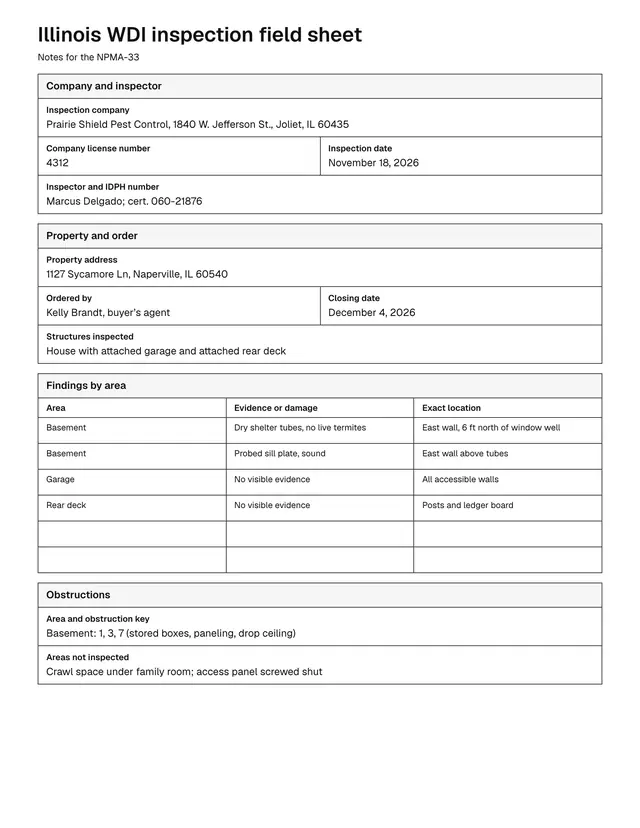
Illinois wood destroying insect inspection report (NPMA-33)
Record the termite findings from an inspection. - IndianaNPMA-33
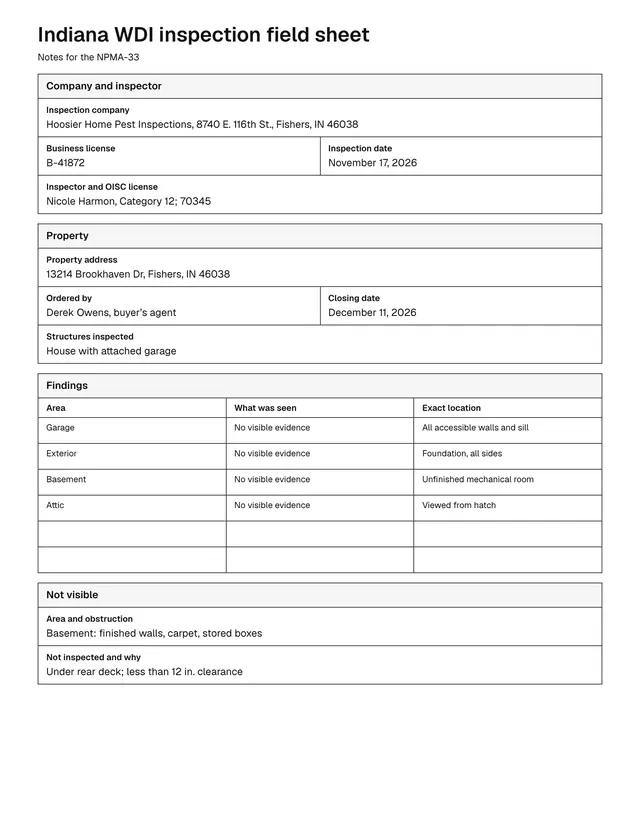
Indiana wood destroying insect inspection report (NPMA-33)
Record the termite findings from an inspection. - Iowa
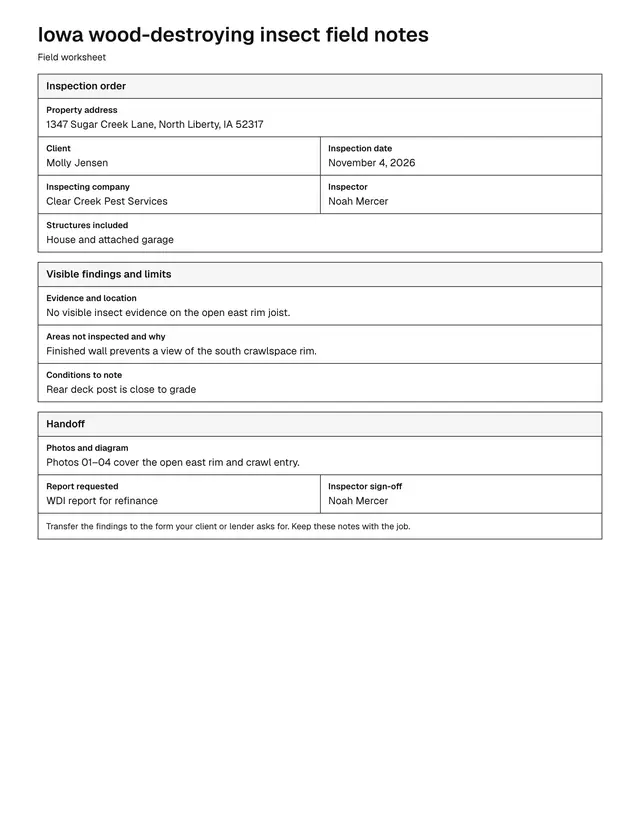
Iowa wood-destroying insect field notes
Record the termite findings from an inspection. - Kansas
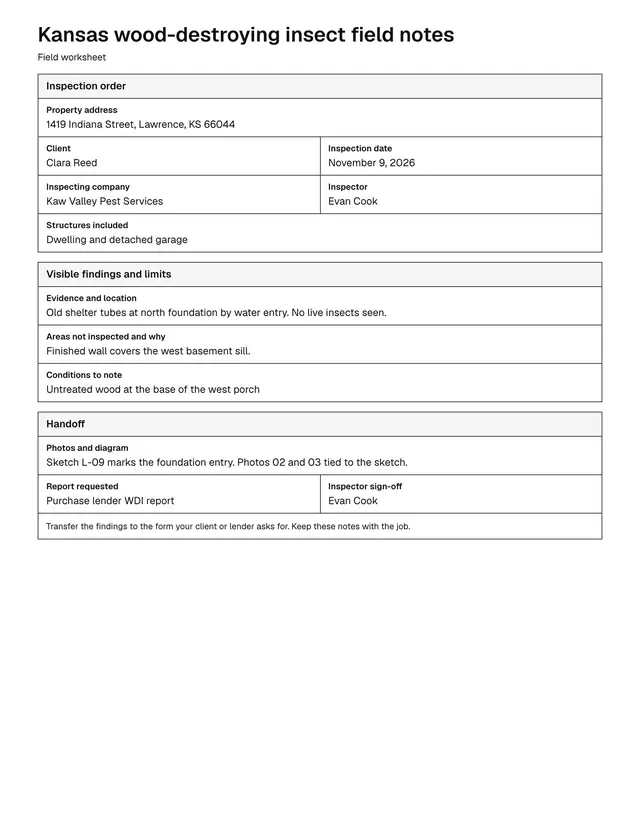
Kansas wood-destroying insect field notes
Record the termite findings from an inspection. - Kentucky
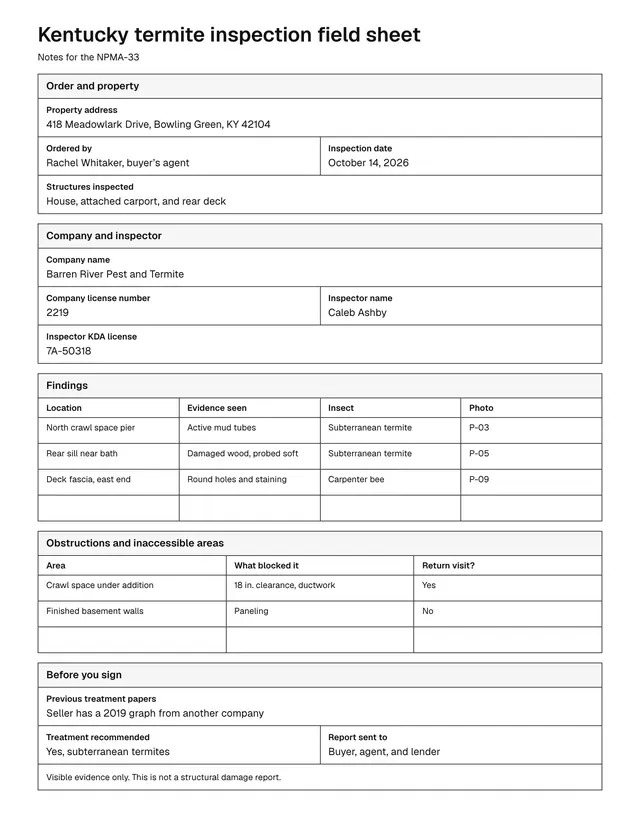
Kentucky termite inspection report (NPMA-33)
Record the termite findings from an inspection. - MarylandMD-1
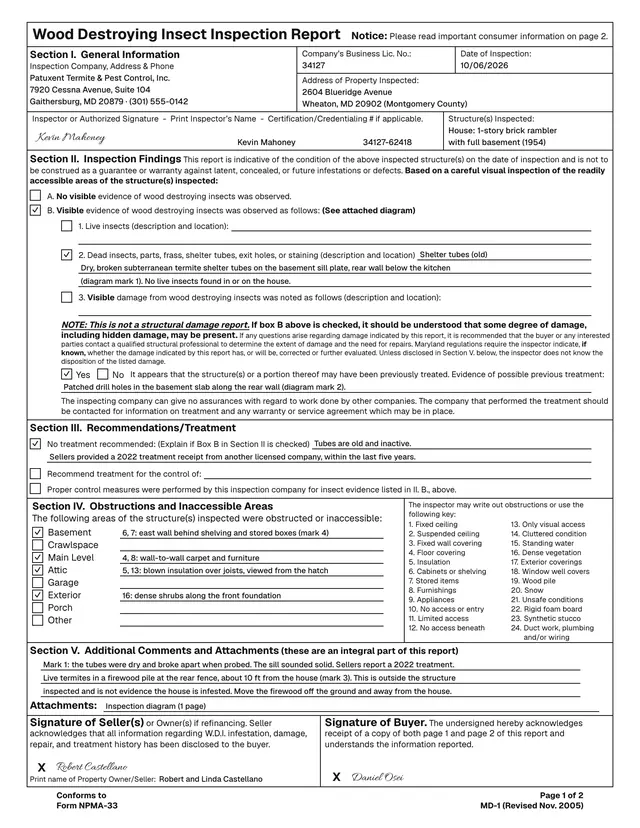
Wood Destroying Insect Inspection Report
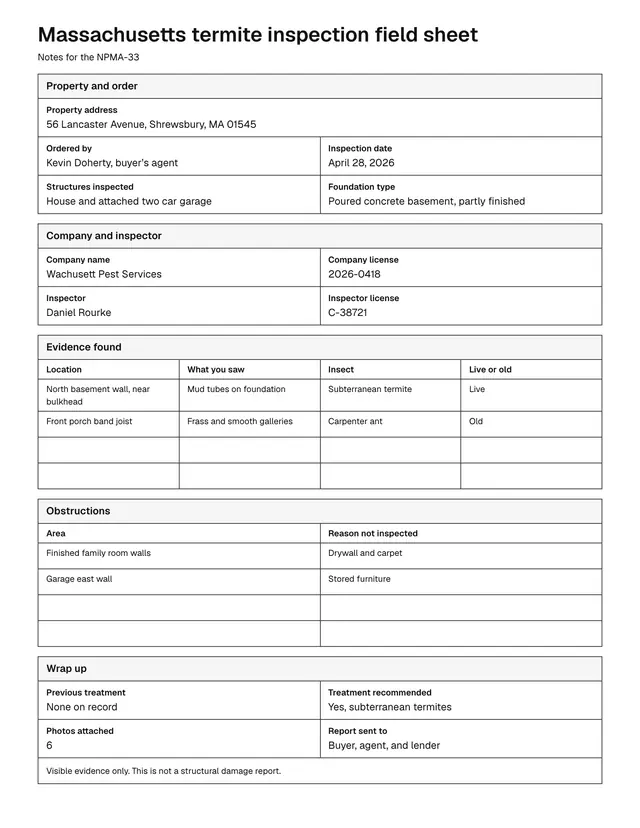
Record the termite findings from an inspection. - Massachusetts
Massachusetts termite inspection report (NPMA-33)
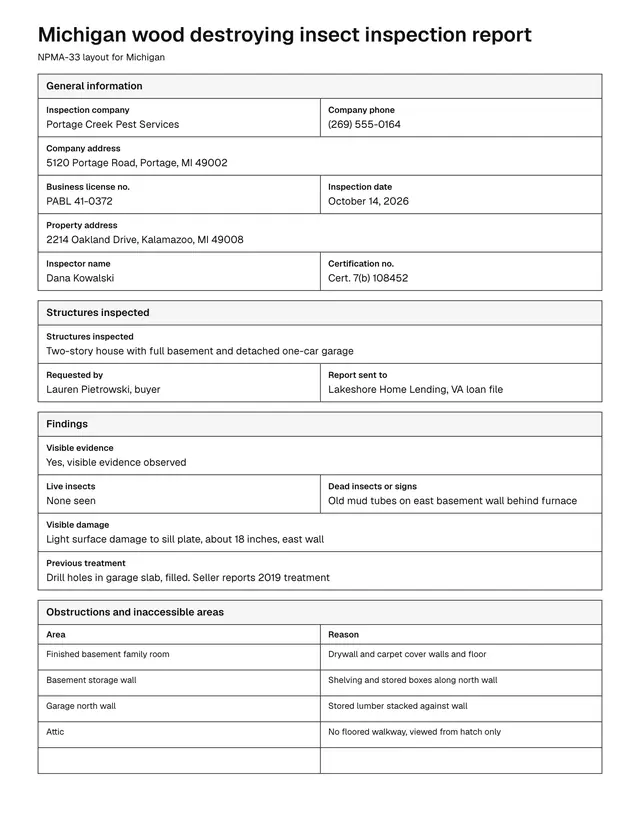
Record the termite findings from an inspection. - MichiganNPMA-33
Michigan wood-destroying insect inspection report (NPMA-33)
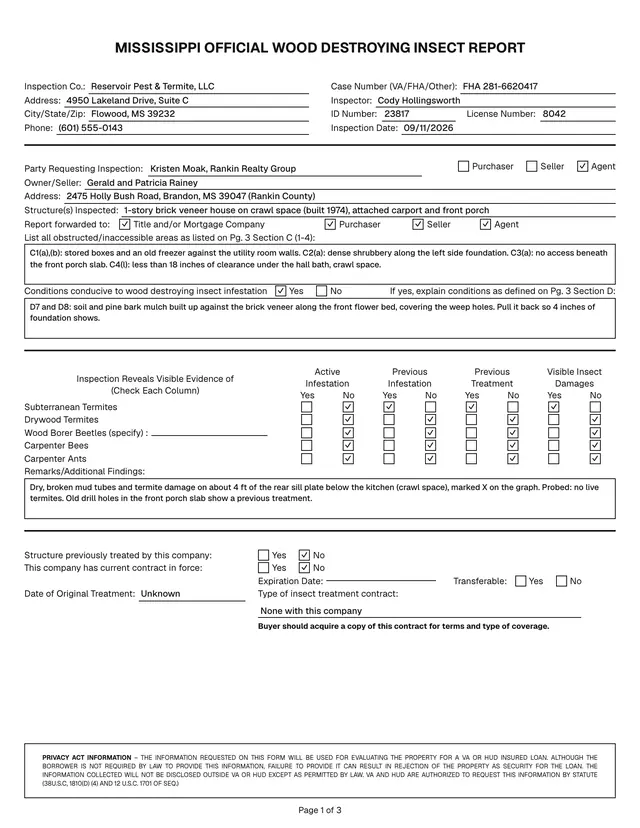
Record the termite findings from an inspection. - Mississippi
Mississippi Official Wood Destroying Insect Report
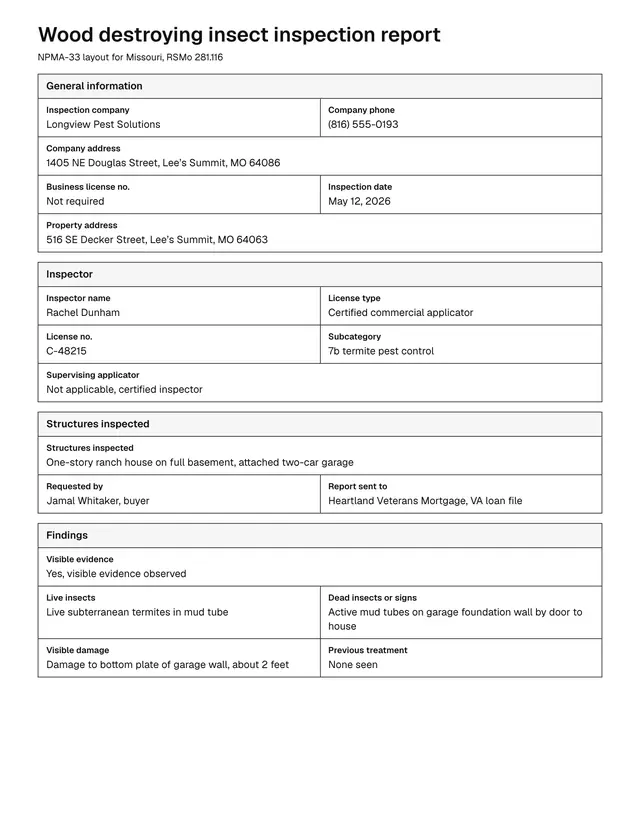
Record the termite findings from an inspection. - MissouriNPMA-33
Missouri wood-destroying insect inspection report (NPMA-33)
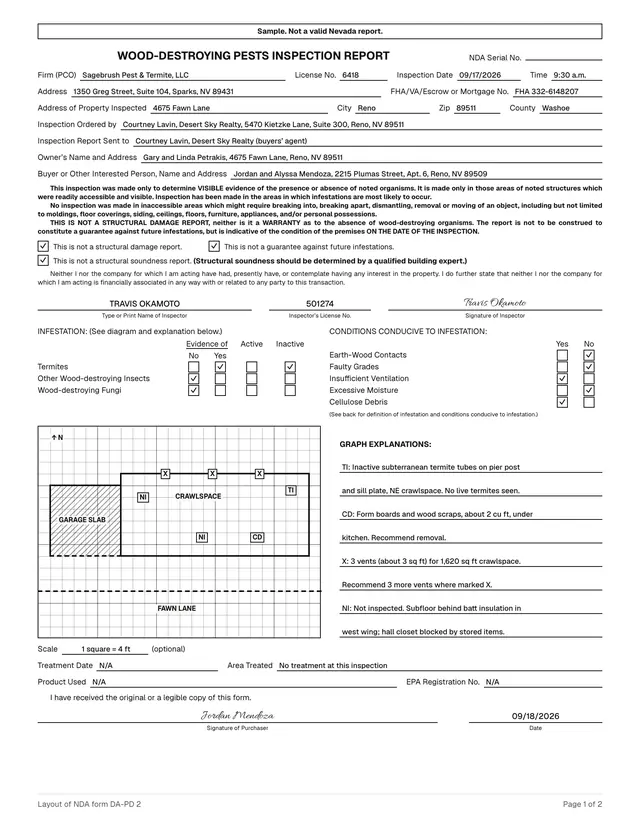
Record the termite findings from an inspection. - Nevada
Wood-Destroying Pests Inspection Report
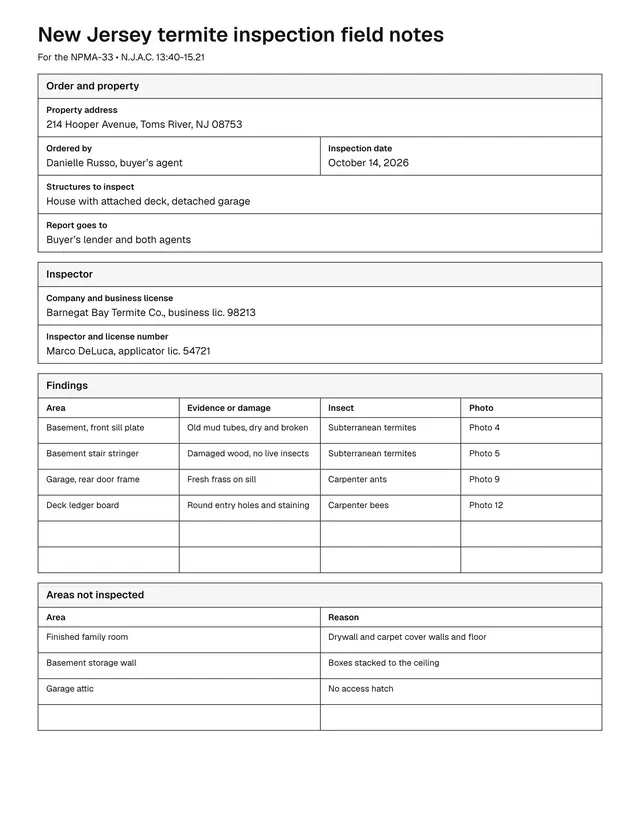
Record the termite findings from an inspection. - New Jersey
New Jersey termite inspection report (NPMA-33 field notes)
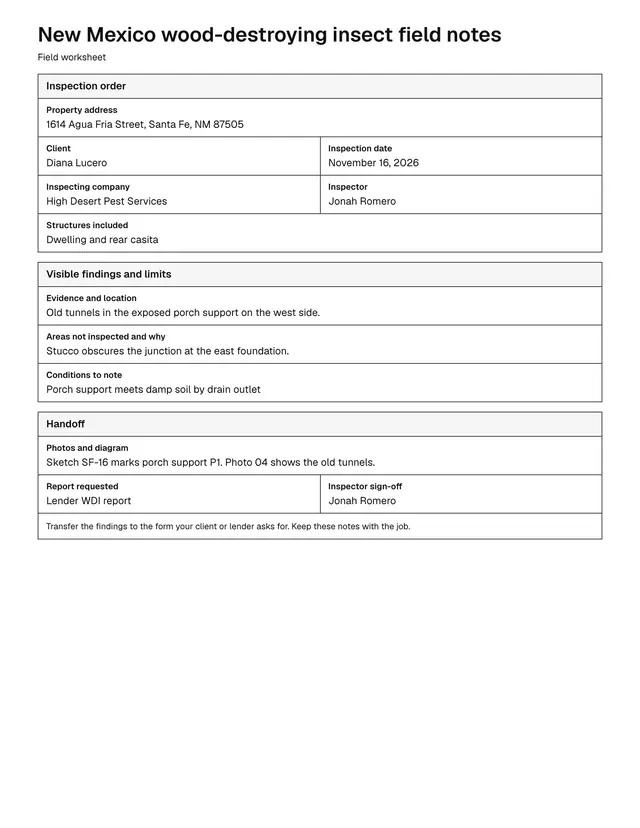
Record the termite findings from an inspection. - New Mexico
New Mexico wood-destroying insect field notes
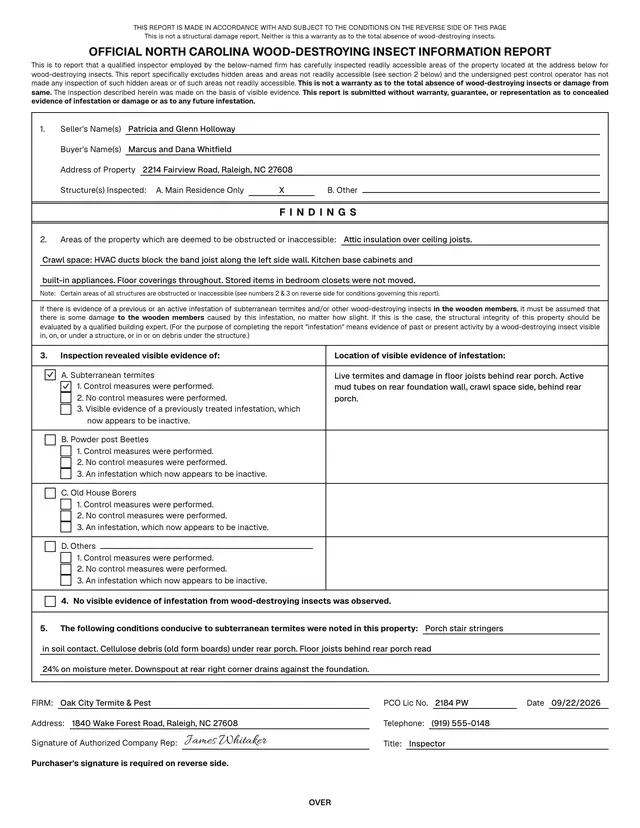
Record the termite findings from an inspection. - North CarolinaWDIR 100
Official North Carolina Wood-Destroying Insect Information Report
Record the termite findings from an inspection. - OhioNPMA-33
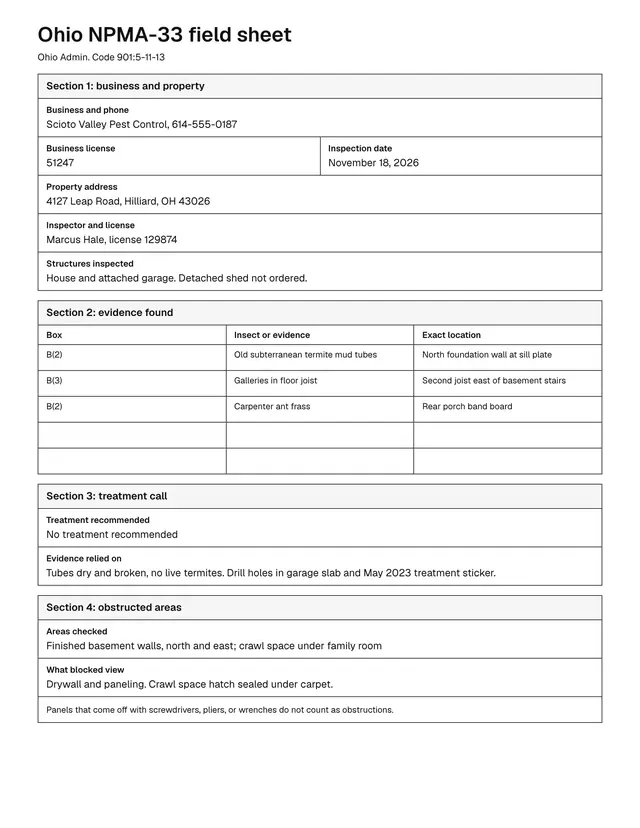
Ohio NPMA-33 wood-destroying insect inspection report
Record the termite findings from an inspection. - OklahomaForm ODAFF-1
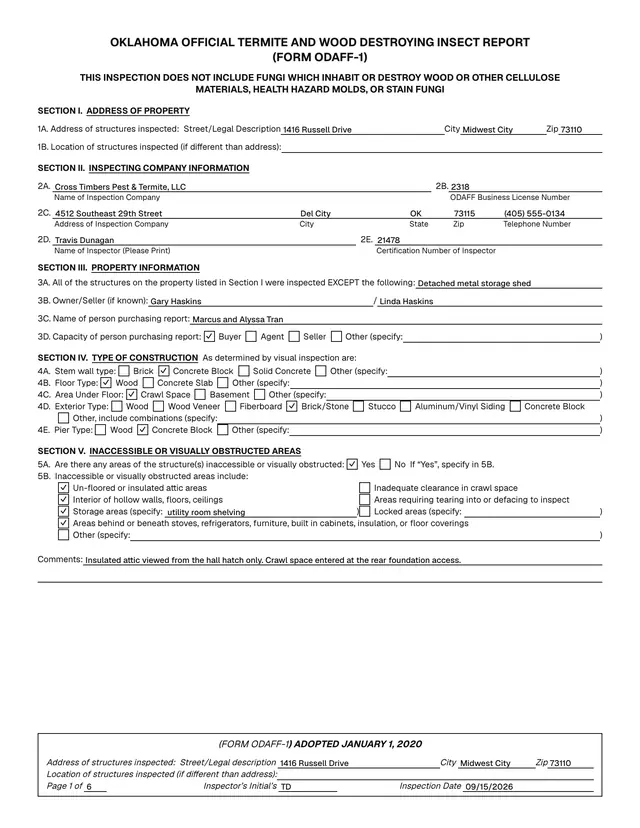
Oklahoma Official Termite and Wood Destroying Insect Report
Record the termite findings from an inspection. - Oregon
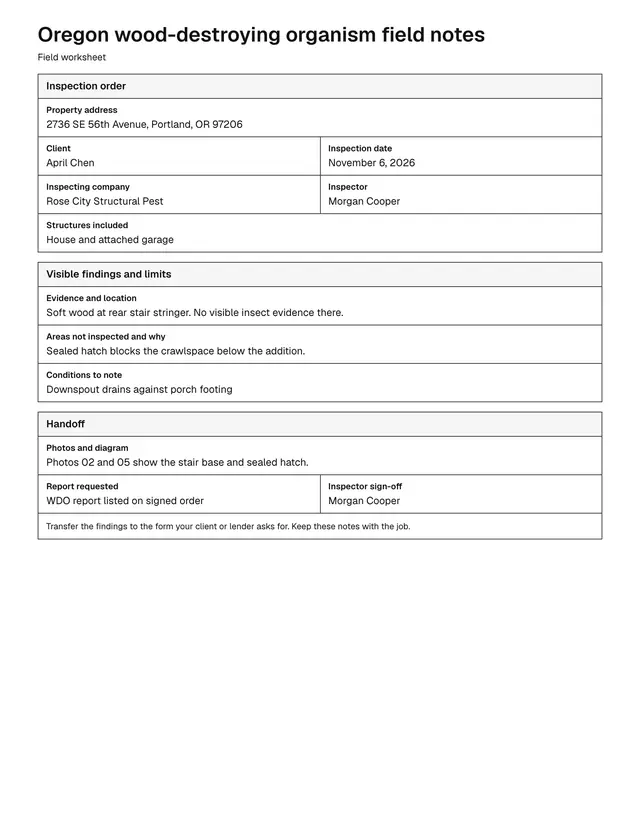
Oregon wood-destroying organism field notes
Record the termite findings from an inspection. - PennsylvaniaNPMA-33
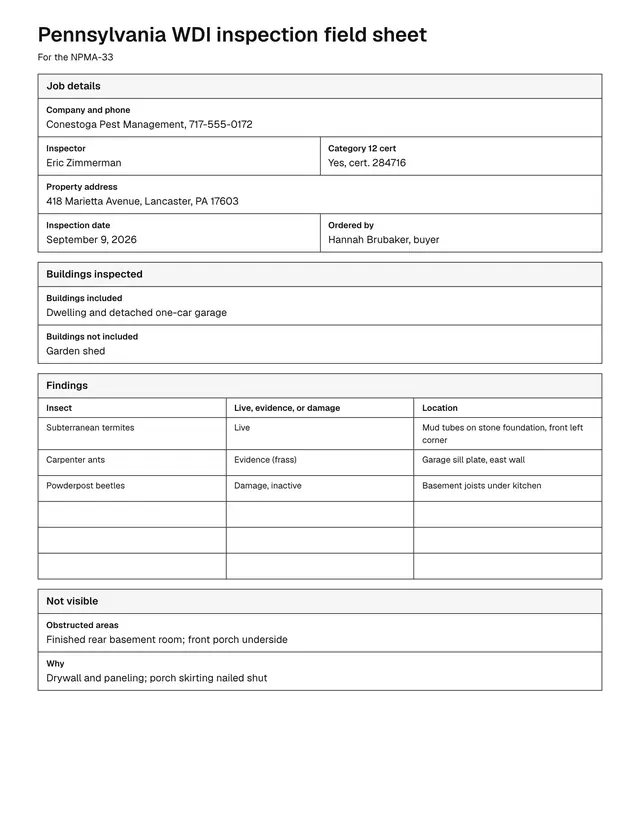
Pennsylvania wood-destroying insect inspection report (NPMA-33)
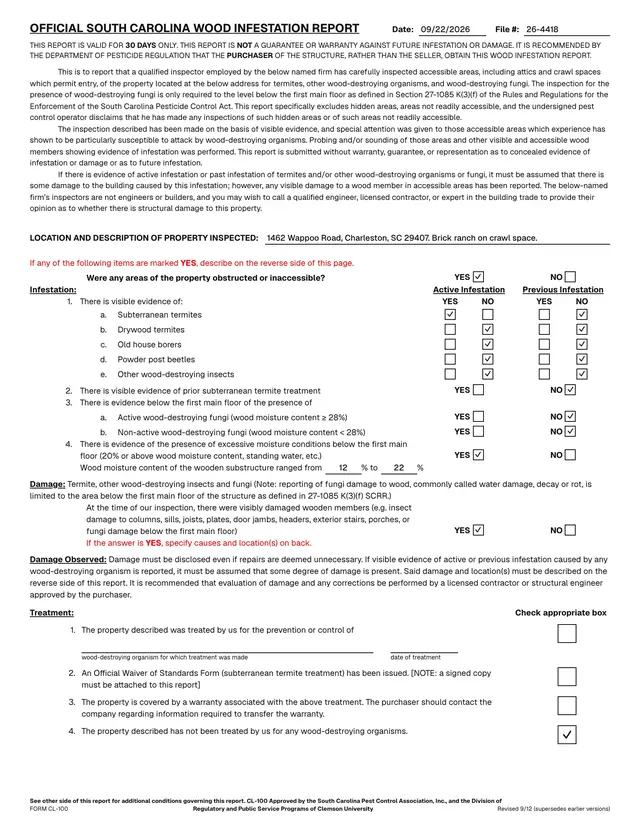
Record the termite findings from an inspection. - South CarolinaCL-100
Official South Carolina Wood Infestation Report
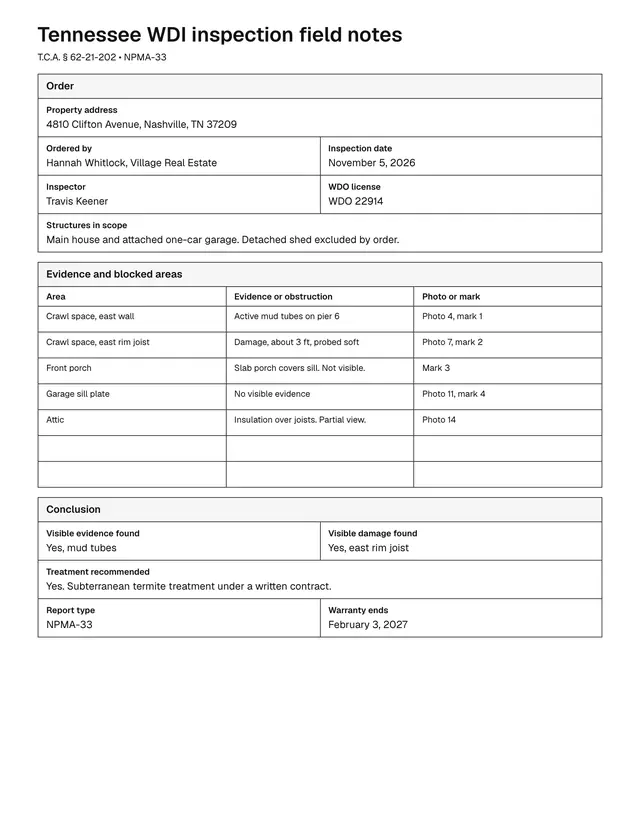
Record the termite findings from an inspection. - Tennessee
Tennessee wood destroying insect infestation inspection report
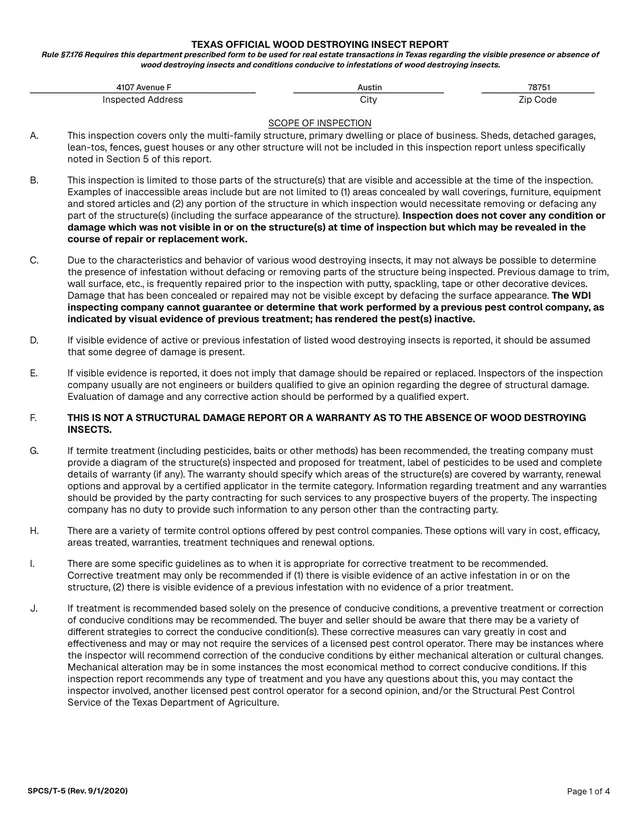
Record the termite findings from an inspection. - TexasSPCS/T-5
Texas Official Wood Destroying Insect Report
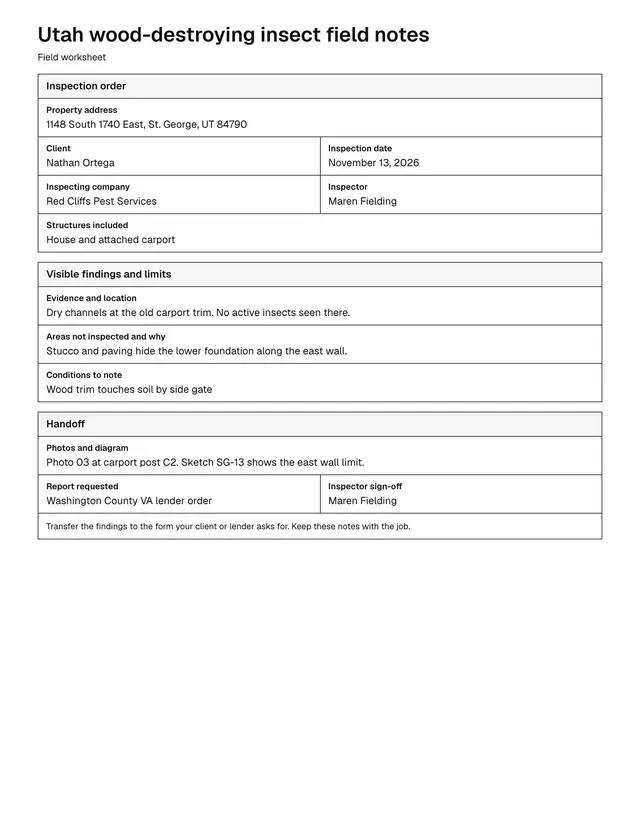
Record the termite findings from an inspection. - Utah
Utah wood-destroying insect field notes
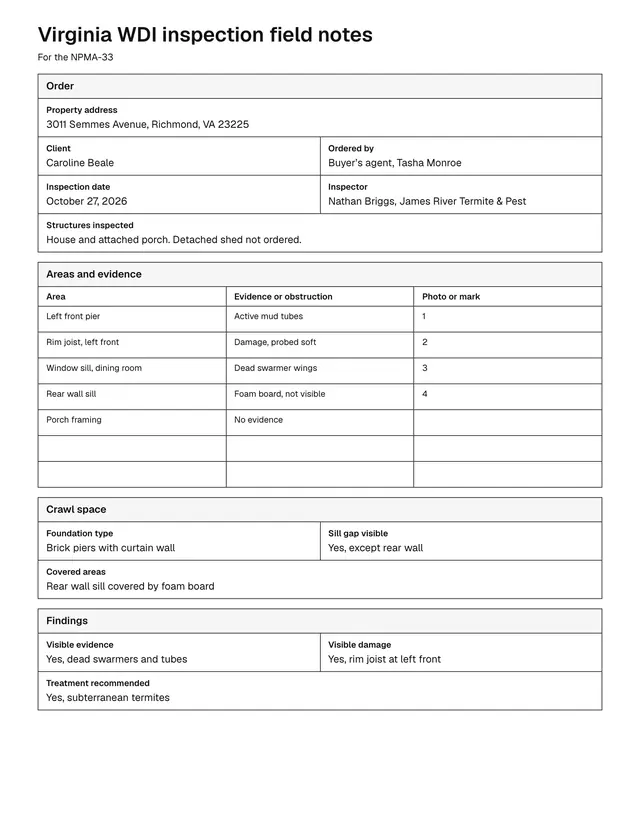
Record the termite findings from an inspection. - Virginia
Virginia wood destroying insect inspection report
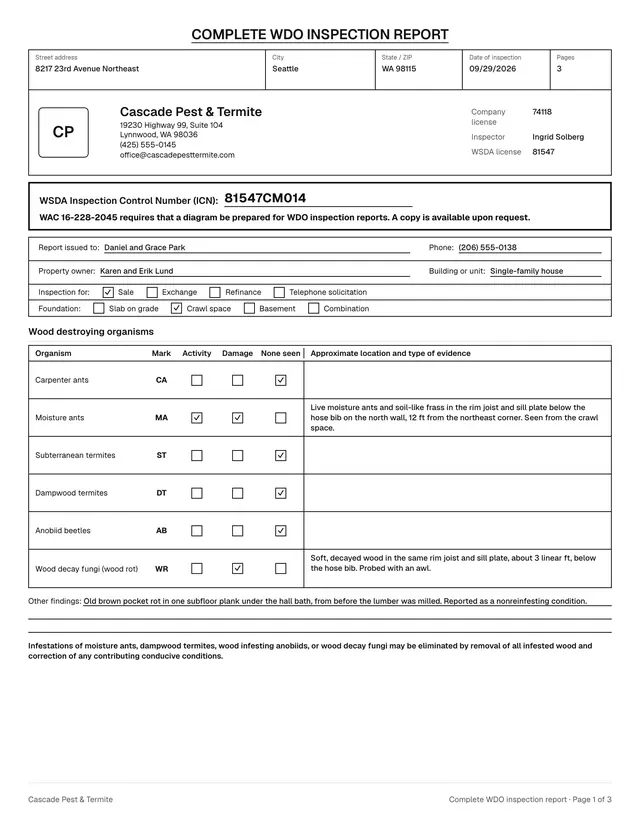
Record the termite findings from an inspection. - Washington
Complete WDO Inspection Report
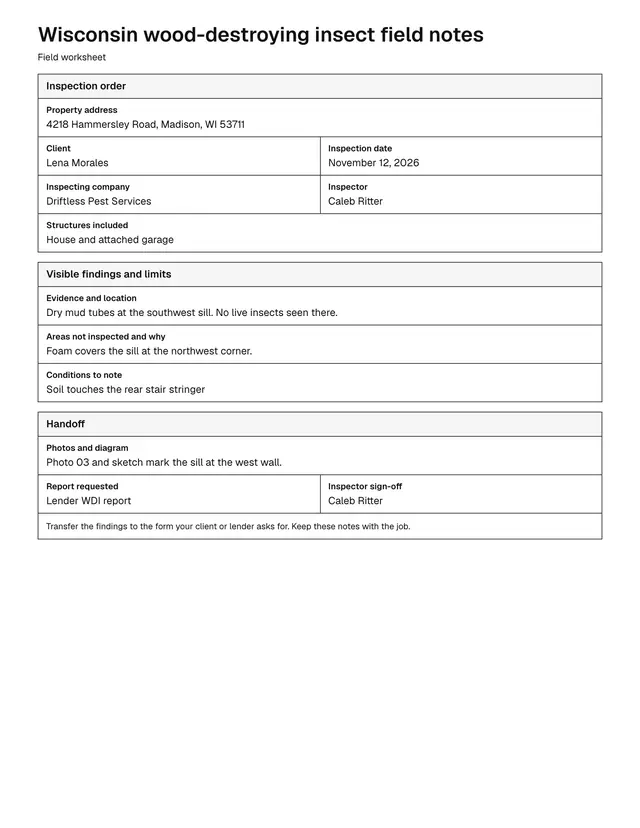
Record the termite findings from an inspection. - Wisconsin
Wisconsin wood-destroying insect field notes
Record the termite findings from an inspection.