Virginia wood destroying insect inspection report
Virginia has no state termite letter, so sales run on the NPMA-33. These field notes cover what the form asks, plus the crawl space gap Virginia’s building code adds.
At a glance
- Form
- NPMA-33
- State form
- None
- Treatment category
- 7b, 2VAC5-685-70
- Business license
- VDACS, renews March 31
Completed example
Download PDFNo Virginia form, so the NPMA-33 it is
Ask ten Virginia agents for the termite form and you’ll hear “termite letter,” “WDI,” and “the 33.” They all mean the NPMA-33. We didn’t find a Virginia statute or VDACS rule that sets its own form, so the national one fills the gap. You buy it from NPMA.
One mix-up shows up in nearly every loan file. A “VA loan” is a Veterans Affairs loan, not a Virginia one. A buyer in Fredericksburg using VA financing still gets the NPMA-33. There’s no separate Virginia version.
NPMA’s completion guidelines say the form “does not preempt state requirements.” In Virginia that matters less for the letter than for what comes after it, since treatment falls under the state’s pesticide rules. The guidelines also say wood decay belongs on NPMA’s separate WDO attachment, listed in Section V. The NPMA-33 itself is about insects.
Date the letter for the day you inspected, not the day you typed it. The form reports what was visible on that visit.
The form is copyrighted. This page gives you field notes to fill out at the house. Copy the findings onto the real NPMA-33 when you finish.
Licenses behind the letter
Virginia sorts commercial applicators by category. Under 2VAC5-685-70, category 7b is “wood-destroying pest control,” and it leaves fumigation out. Fumigation is 7c. If the letter leads to a treatment, the person applying the termiticide works under 7b.
The company needs a VDACS pesticide business license too. The license instructions list a $75 fee and proof of insurance: $100,000 for property damage, $100,000 for injury to one person, and $300,000 per occurrence. Licenses expire March 31 every year, and a late renewal adds a 20 percent penalty. Mark the date, since spring is also when termites swarm and phones ring.
Virginia’s crawl space inspection gap
Virginia adds a termite rule to its building code that most states don’t have. In 13VAC5-63-210, the state adds section R408.3.1 to the residential code. Where an unvented crawl space is built, the vertical face of the sill plate stays “clear and unobstructed,” with an inspection gap of at least 1 inch and no more than 2 inches below the sill along the top of any interior wall covering.
There are exceptions. Areas the code’s map rates as not subject to termite damage don’t need the gap, and builders can use “other approved means” of inspection. For pier and curtain foundations, the inside face of the rim joist and sill stays clear, though easily removable fiberglass insulation is allowed.
Here’s why it matters on a letter. Encapsulated crawl spaces are common in Chesapeake and Virginia Beach. When spray foam or board runs right up over the sill, you can’t see the place termites would show up first. Don’t call it a code violation. That’s the building official’s job. Write it as an obstruction, name the walls, and say which areas you couldn’t see.
The same code section sets dehumidifier sizing for conditioned crawl spaces at 70 pints a day per 1,000 square feet. That’s more a home inspector’s concern, but a wet sealed crawl space with no dehumidifier earns a moisture note on yours.
What to write while you’re there
Every structure in the order. House, attached garage, detached shed. If the order says house only, write that.
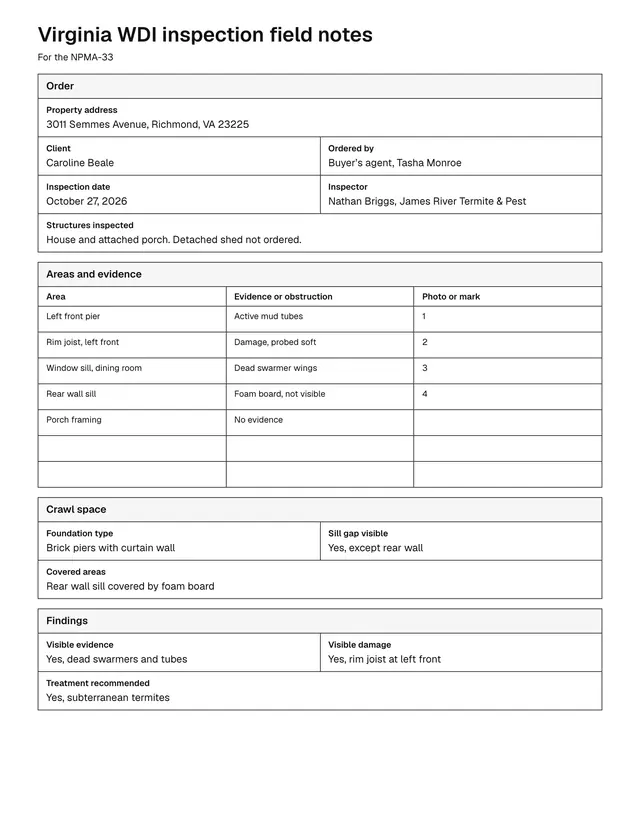
Evidence by spot. Name the place, like “left front pier” or “garage sill,” and what you saw: live insects, tubes, frass, exit holes, or damage. Tie each to a photo and a number on the graph.
Every blocked area, with the reason. Stored boxes, a finished basement ceiling, foam over the sill. That list becomes the obstructions part of the NPMA-33.
Conditions that invite termites. Wood touching soil, mulch over the foundation, gutters dumping at the wall, a dripping AC line. Put them in your comments. Buyers act on them.
What happens when you find live termites?
The letter only reports. If the buyer or seller wants treatment, that’s a new job, and every product you apply goes on a pesticide application record with its EPA Reg. No. and the amount of concentrate and water. Your graph from the letter is a head start.
Fumigation for drywood termites or powderpost beetles is a different category, 7c. If you refer that work out, check the other company holds it.
Noma specializes in the Virginia Wood Destroying Insect Inspection Report (NPMA-33). Inspectors draw the graph on their phone at the house, and the office uploads the finished NPMA-33 as a PDF and sends it to sign online. See how Noma handles termite letters.
Frequentlyaskedquestions
Send this document in minutes, not an afternoon.
Other states
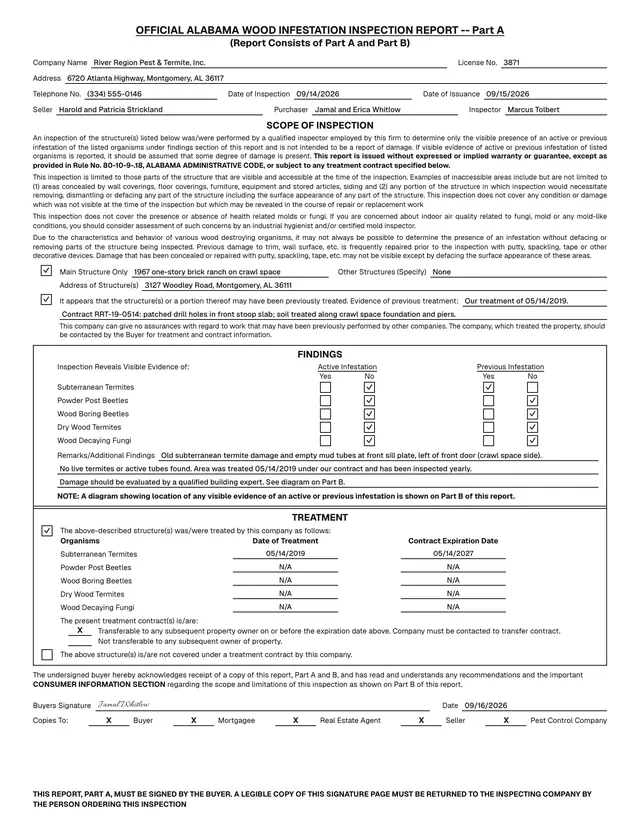
Inspection report templates- Alabama
Official Alabama Wood Infestation Inspection Report
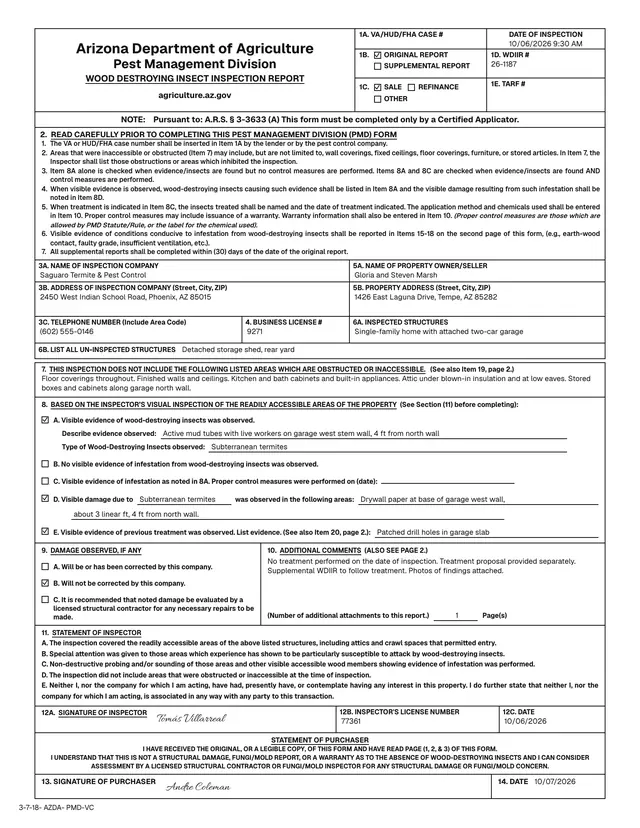
Record the termite findings from an inspection. - Arizona
Wood Destroying Insect Inspection Report
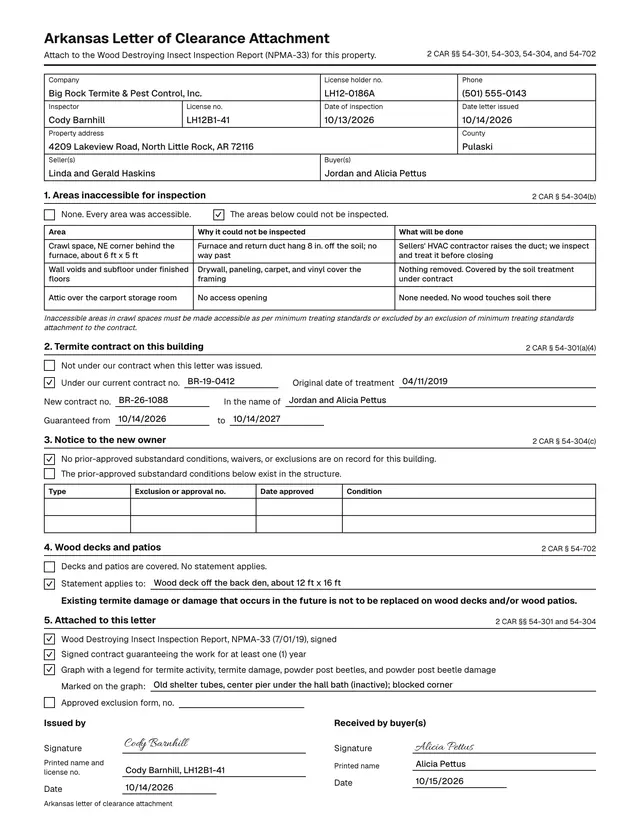
Record the termite findings from an inspection. - Arkansas
Arkansas Letter of Clearance Attachment
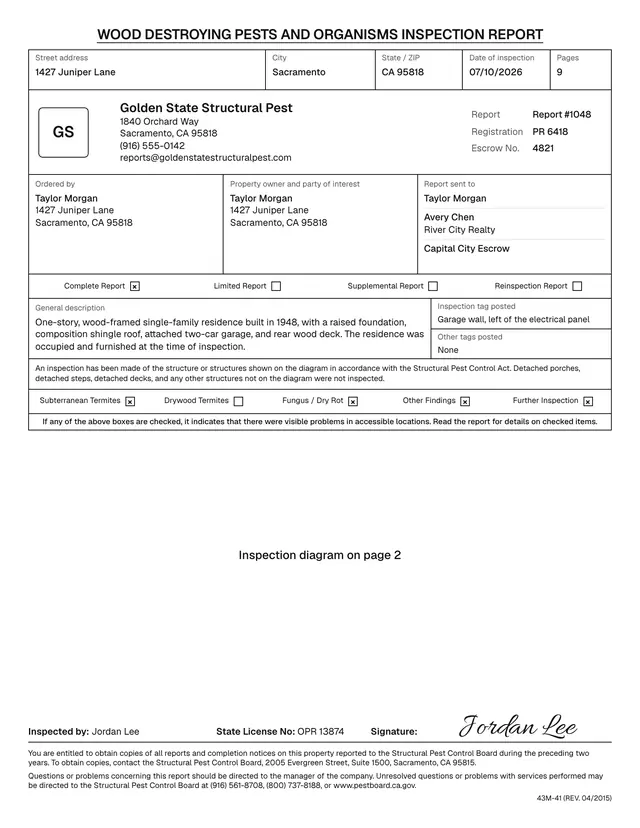
Record the termite findings from an inspection. - California43M-41
Wood Destroying Pests and Organisms Inspection Report
Record the termite findings from an inspection. - ColoradoNPMA-33
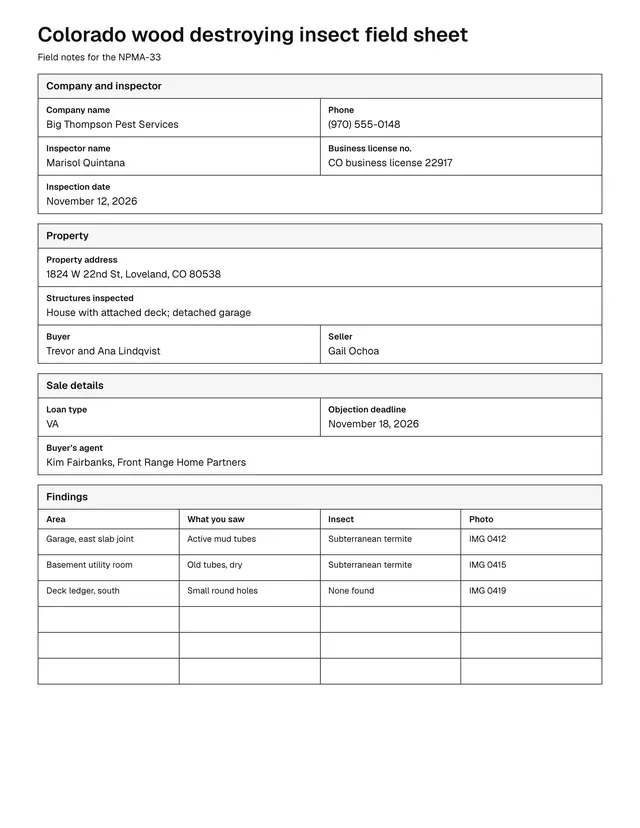
Colorado termite inspection report (NPMA-33)
Record the termite findings from an inspection. - Connecticut
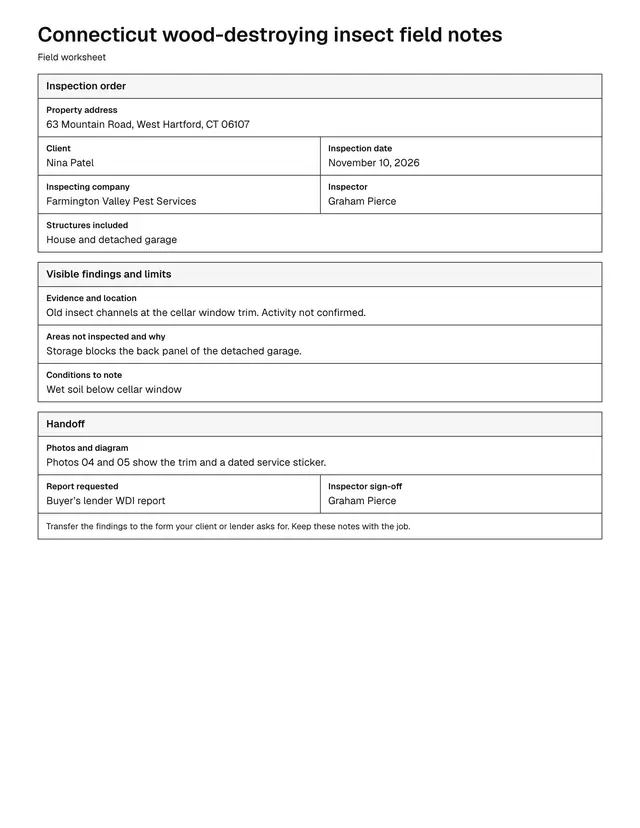
Connecticut wood-destroying insect field notes
Record the termite findings from an inspection. - DelawareNPMA-33
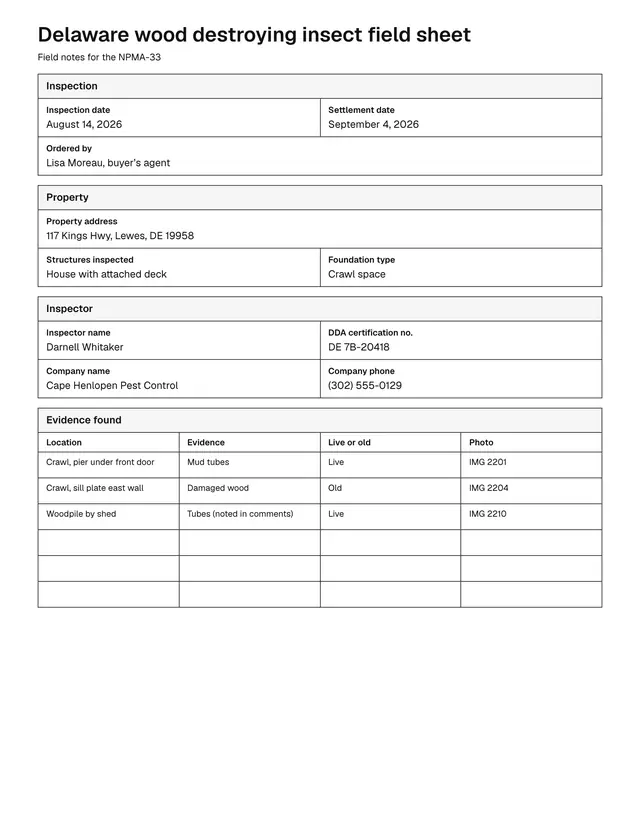
Delaware termite inspection report (NPMA-33)
Record the termite findings from an inspection. - FloridaFDACS-13645
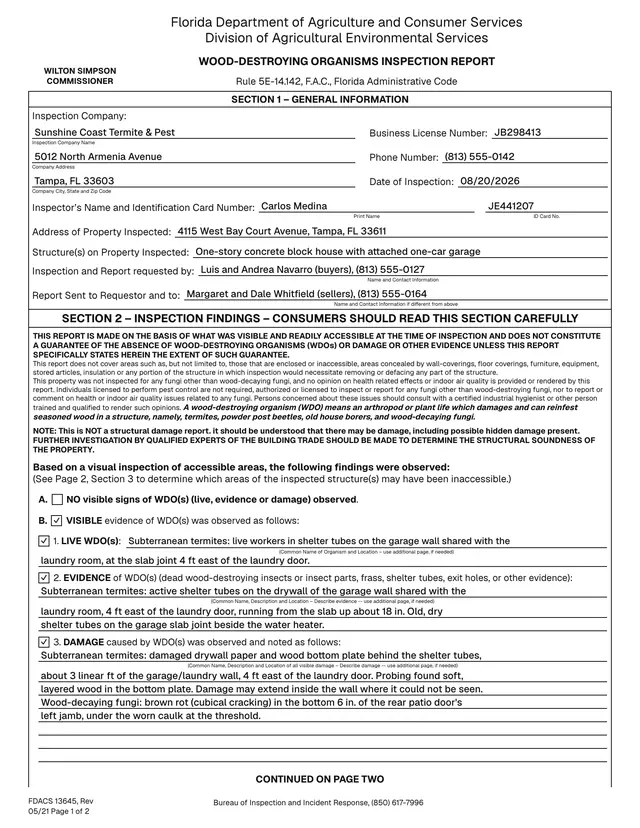
Wood-Destroying Organisms Inspection Report
Record the termite findings from an inspection. - Georgia
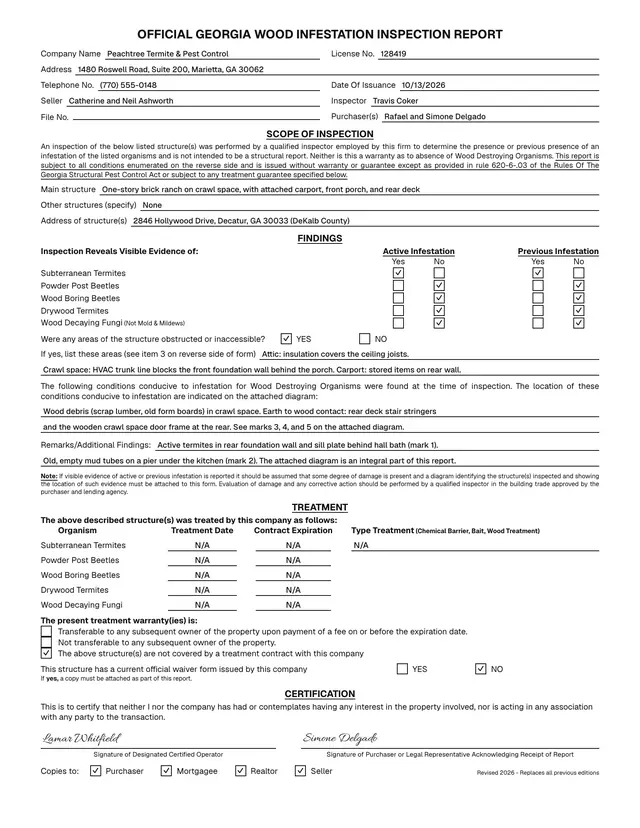
Official Georgia Wood Infestation Inspection Report
Record the termite findings from an inspection. - HawaiiPC-9
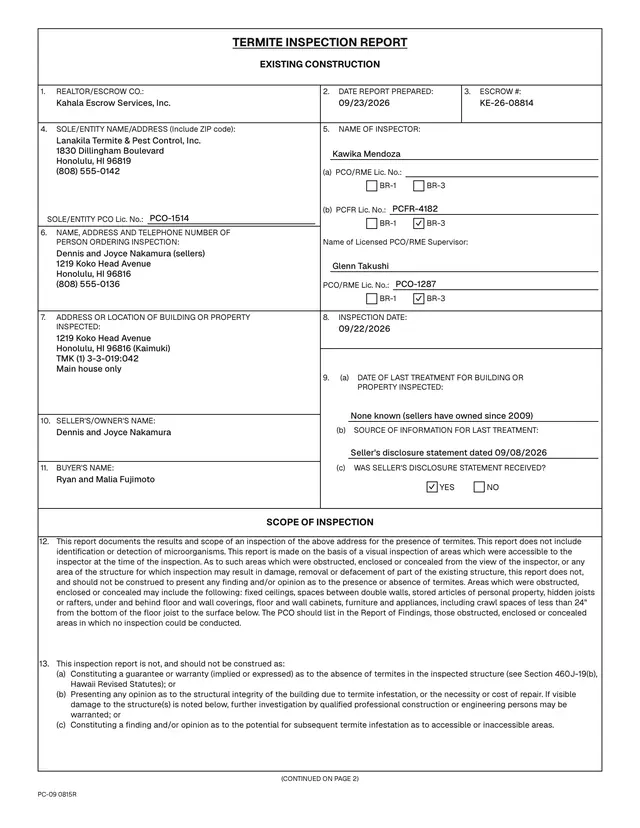
Termite Inspection Report, Existing Construction
Record the termite findings from an inspection. - IllinoisNPMA-33
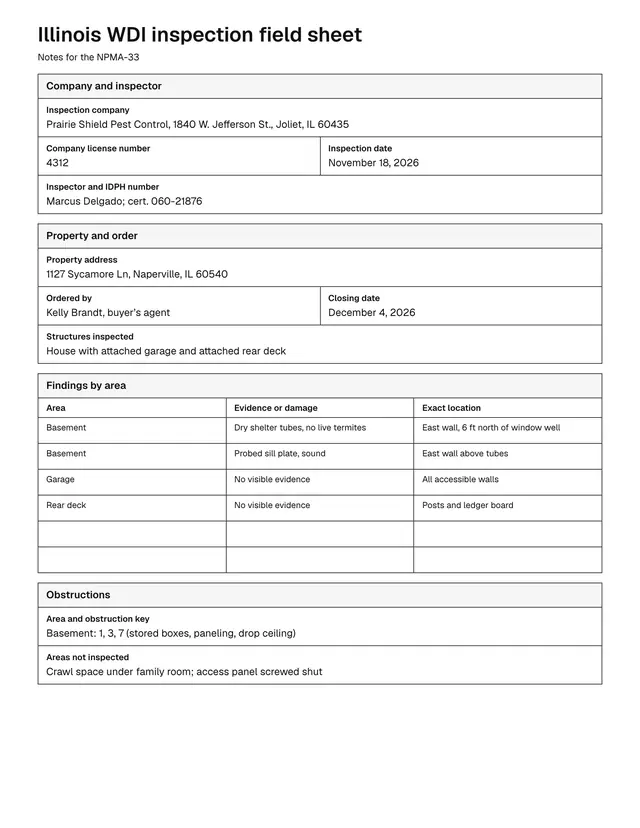
Illinois wood destroying insect inspection report (NPMA-33)
Record the termite findings from an inspection. - IndianaNPMA-33
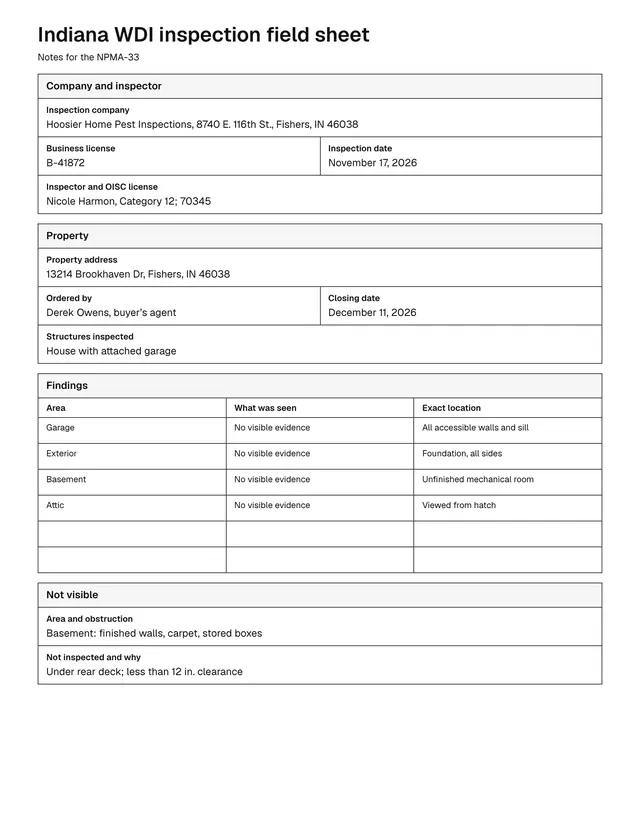
Indiana wood destroying insect inspection report (NPMA-33)
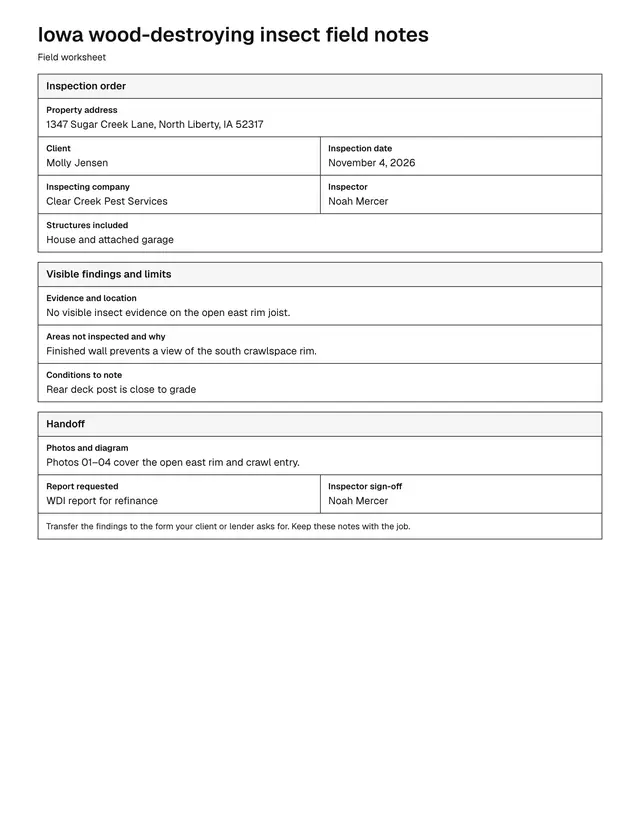
Record the termite findings from an inspection. - Iowa
Iowa wood-destroying insect field notes
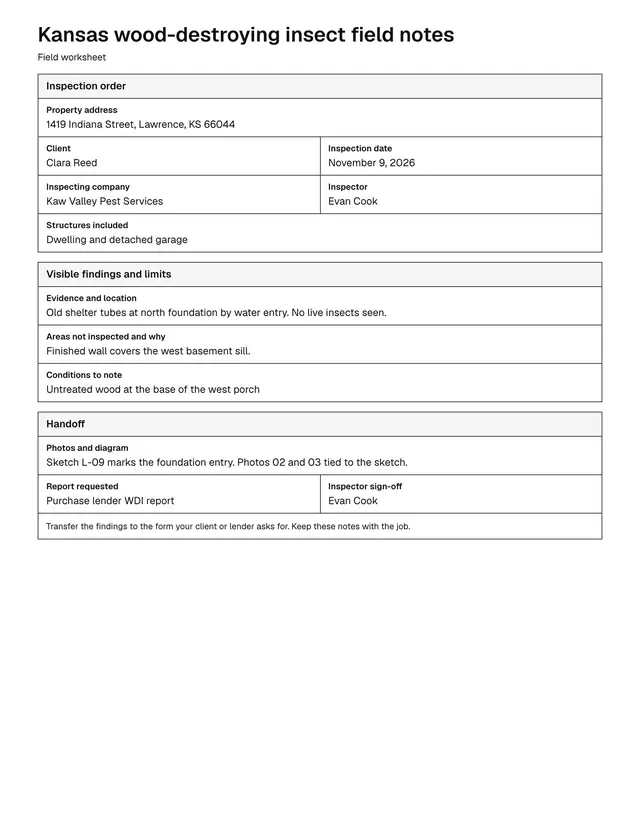
Record the termite findings from an inspection. - Kansas
Kansas wood-destroying insect field notes
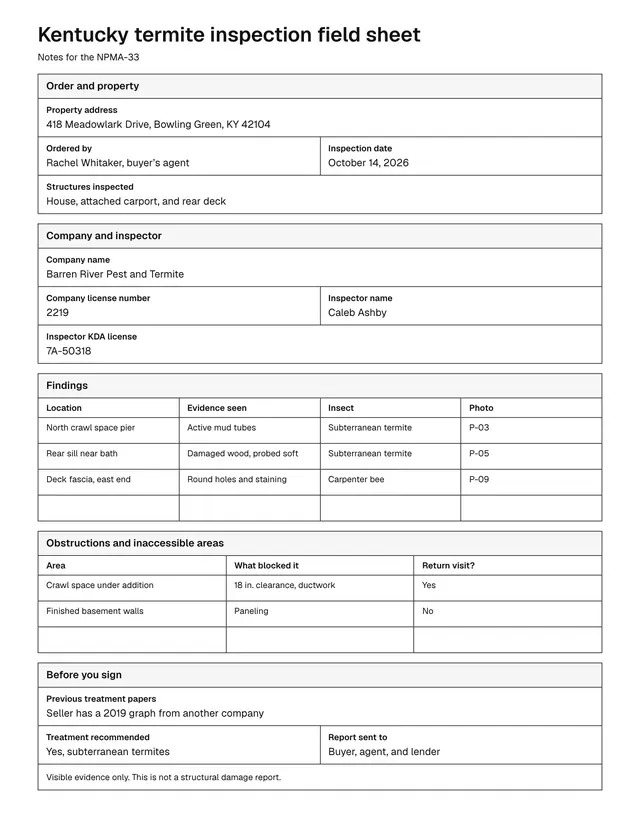
Record the termite findings from an inspection. - Kentucky
Kentucky termite inspection report (NPMA-33)
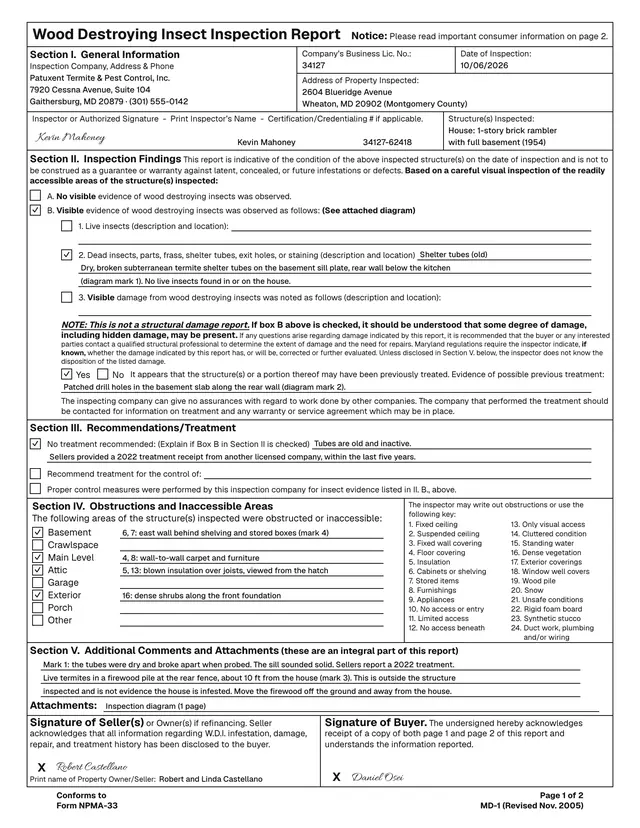
Record the termite findings from an inspection. - MarylandMD-1
Wood Destroying Insect Inspection Report
Record the termite findings from an inspection. - Massachusetts
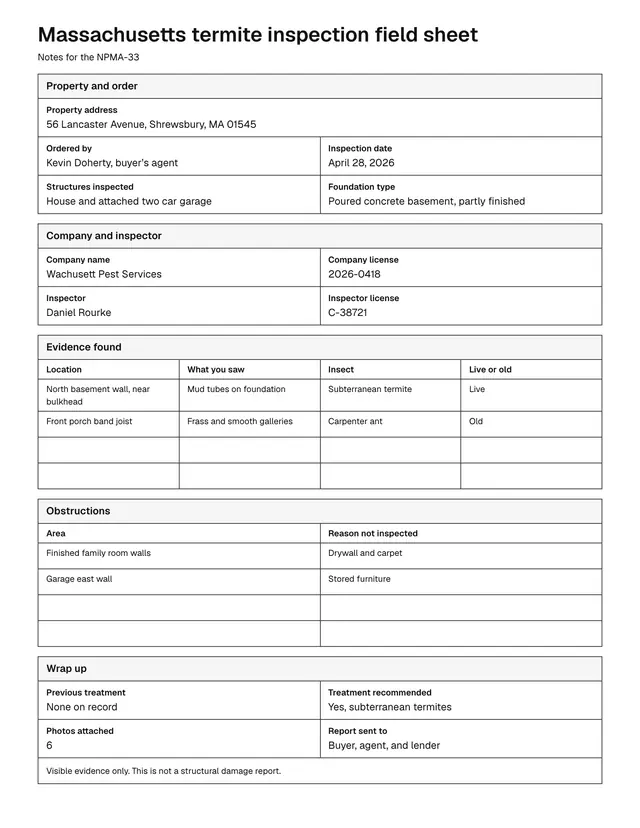
Massachusetts termite inspection report (NPMA-33)
Record the termite findings from an inspection. - MichiganNPMA-33
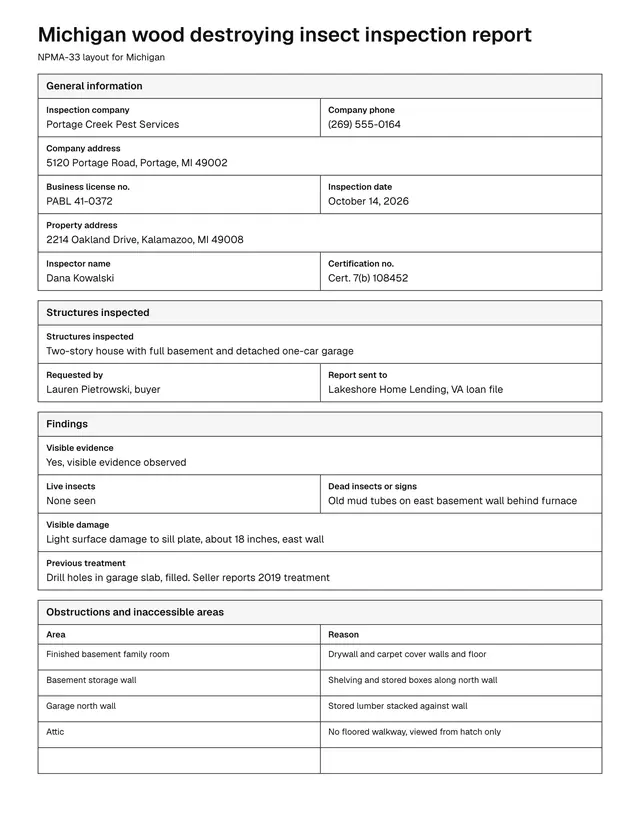
Michigan wood-destroying insect inspection report (NPMA-33)
Record the termite findings from an inspection. - Mississippi
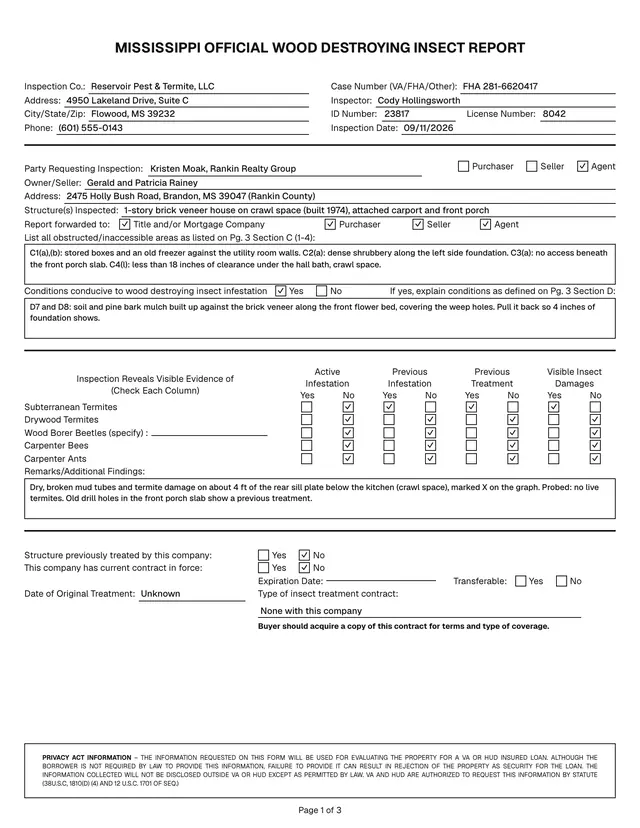
Mississippi Official Wood Destroying Insect Report
Record the termite findings from an inspection. - MissouriNPMA-33
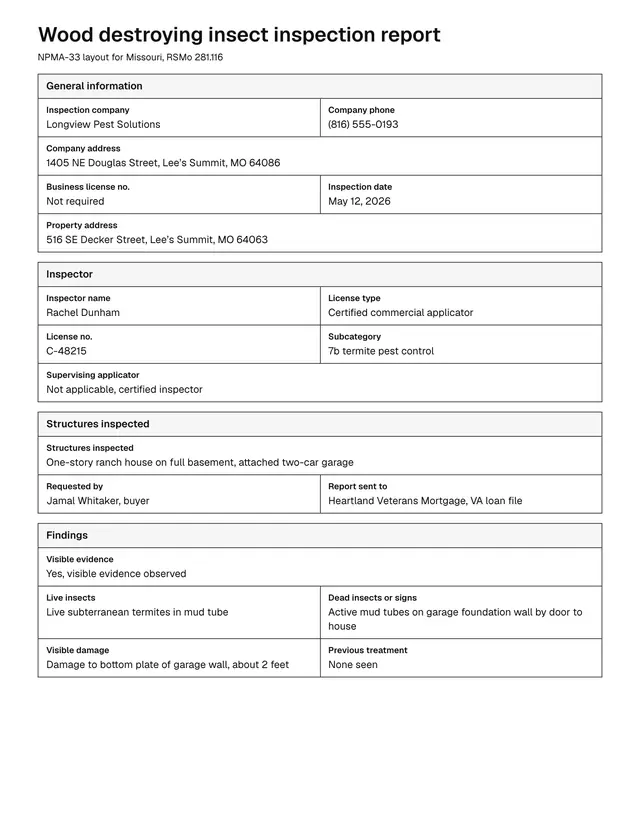
Missouri wood-destroying insect inspection report (NPMA-33)
Record the termite findings from an inspection. - Nevada
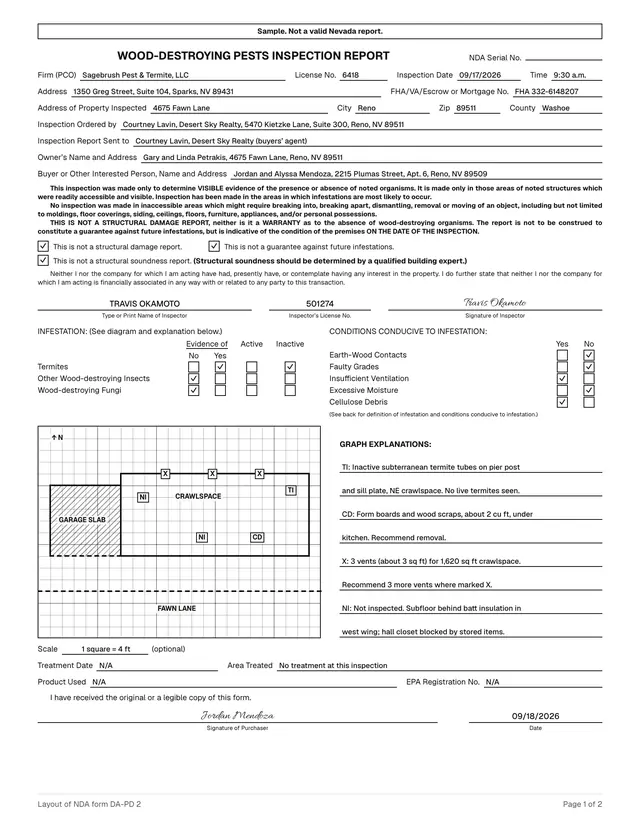
Wood-Destroying Pests Inspection Report
Record the termite findings from an inspection. - New Jersey
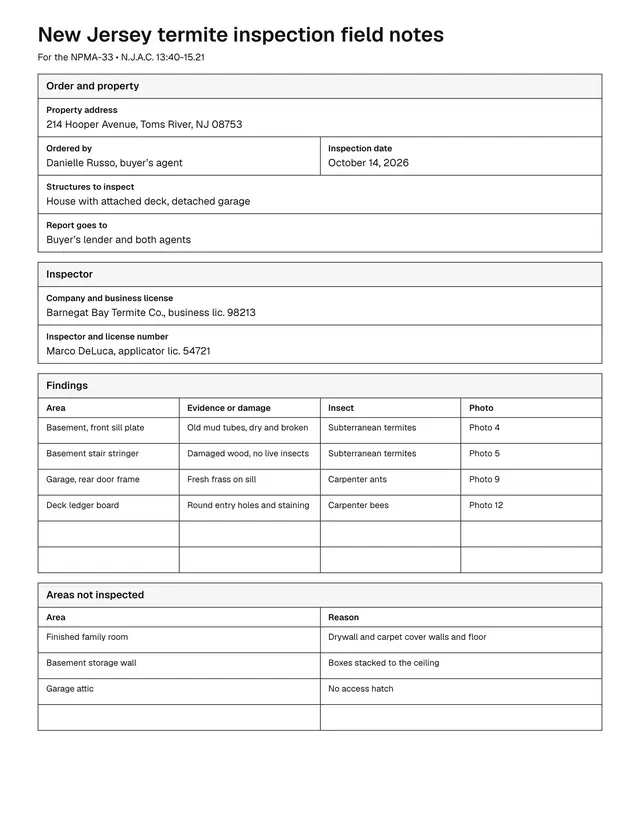
New Jersey termite inspection report (NPMA-33 field notes)
Record the termite findings from an inspection. - New Mexico
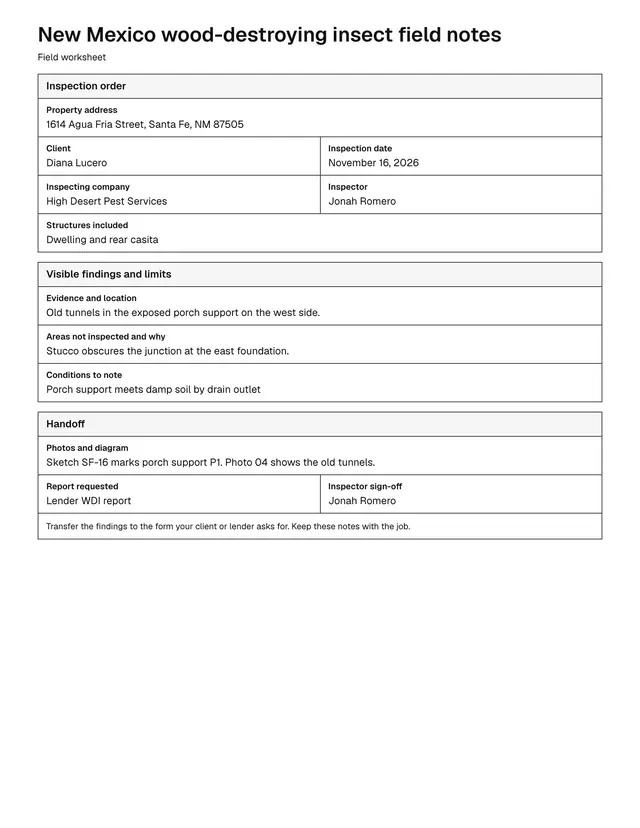
New Mexico wood-destroying insect field notes
Record the termite findings from an inspection. - New York
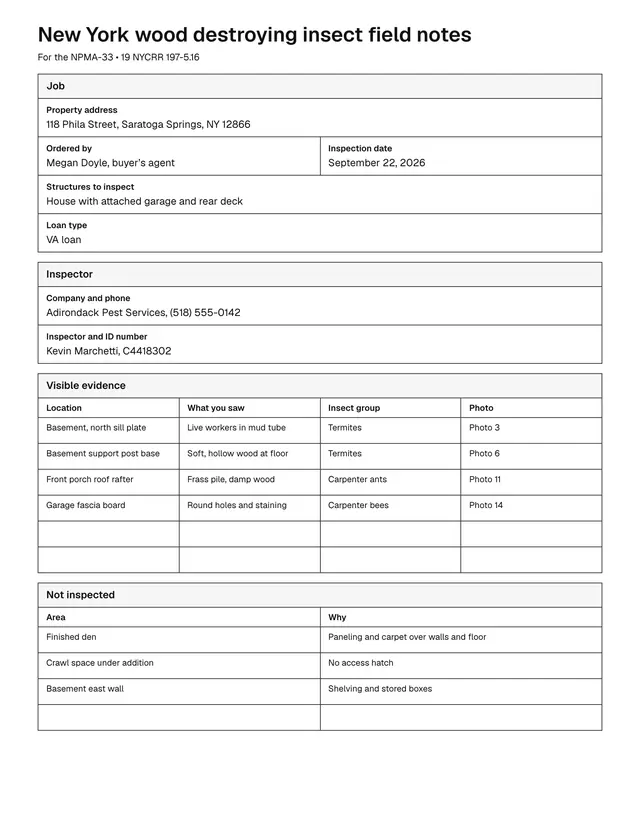
New York wood destroying insect inspection notes (NPMA-33)
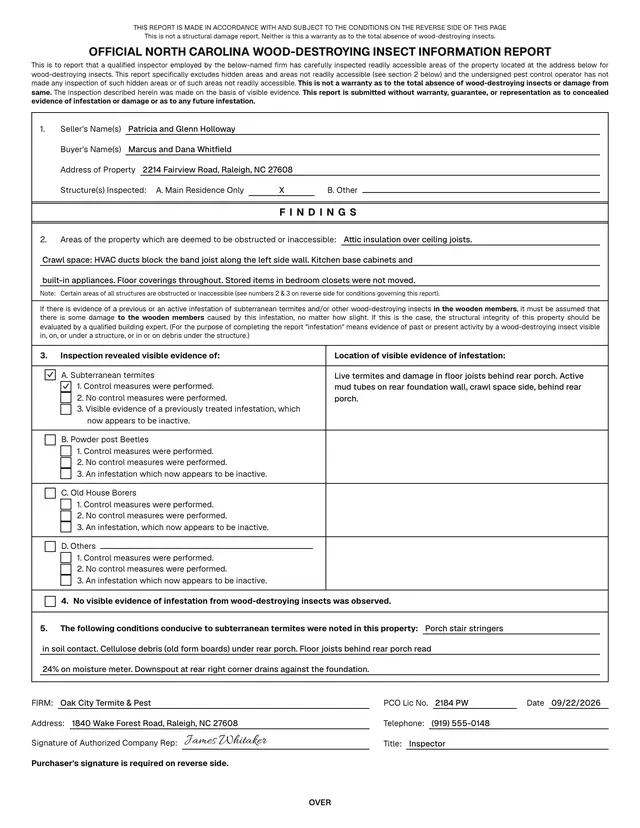
Record the termite findings from an inspection. - North CarolinaWDIR 100
Official North Carolina Wood-Destroying Insect Information Report
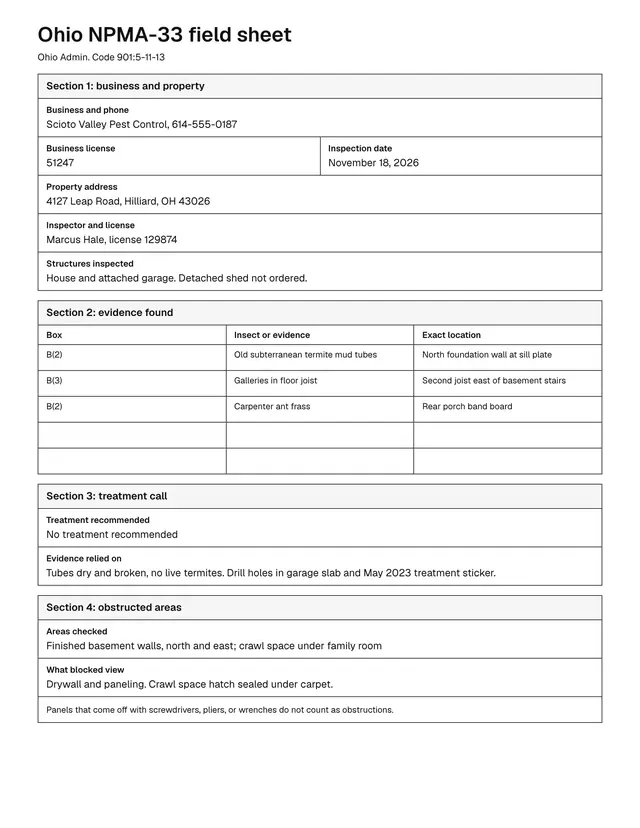
Record the termite findings from an inspection. - OhioNPMA-33
Ohio NPMA-33 wood-destroying insect inspection report
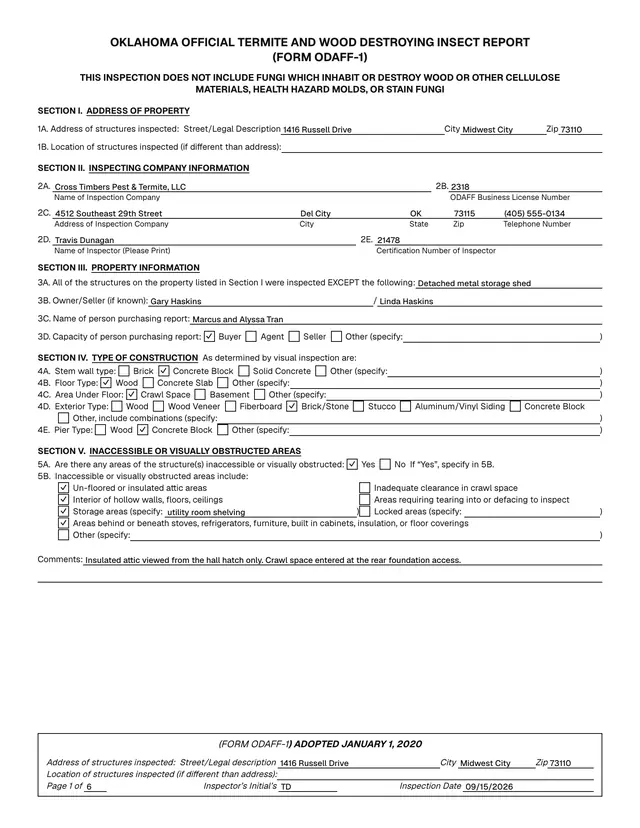
Record the termite findings from an inspection. - OklahomaForm ODAFF-1
Oklahoma Official Termite and Wood Destroying Insect Report
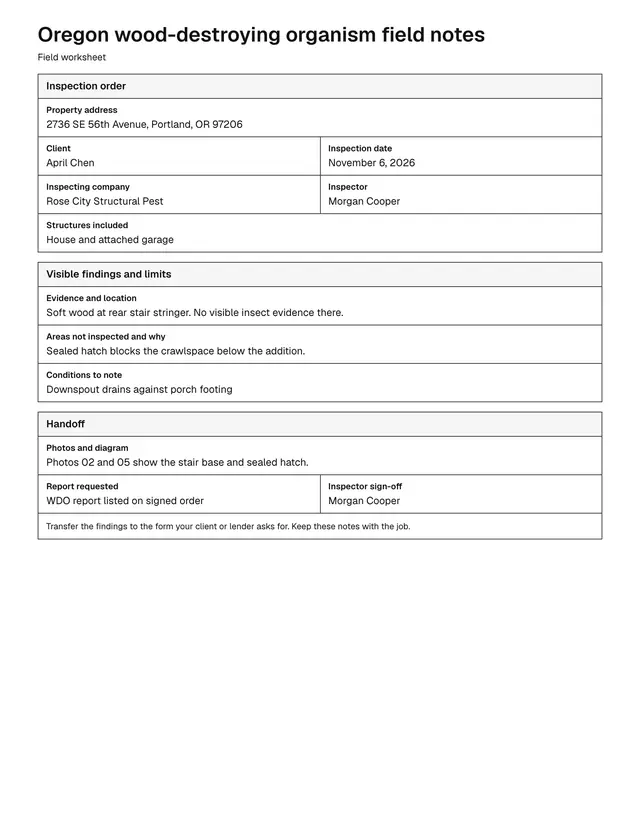
Record the termite findings from an inspection. - Oregon
Oregon wood-destroying organism field notes
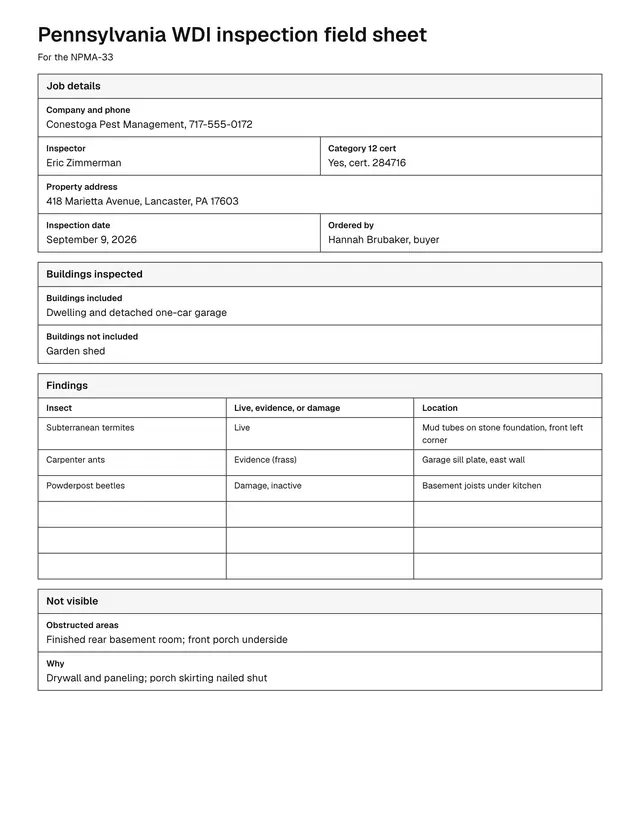
Record the termite findings from an inspection. - PennsylvaniaNPMA-33
Pennsylvania wood-destroying insect inspection report (NPMA-33)
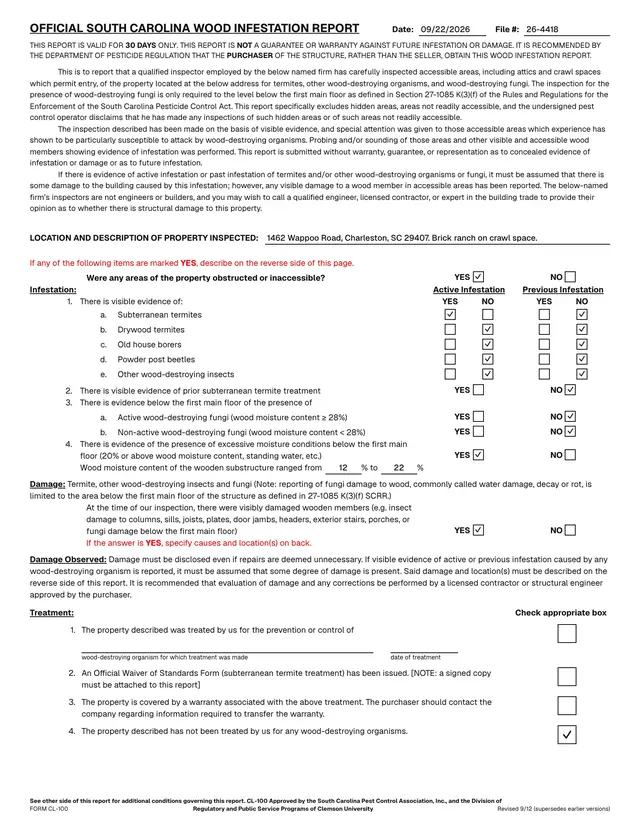
Record the termite findings from an inspection. - South CarolinaCL-100
Official South Carolina Wood Infestation Report
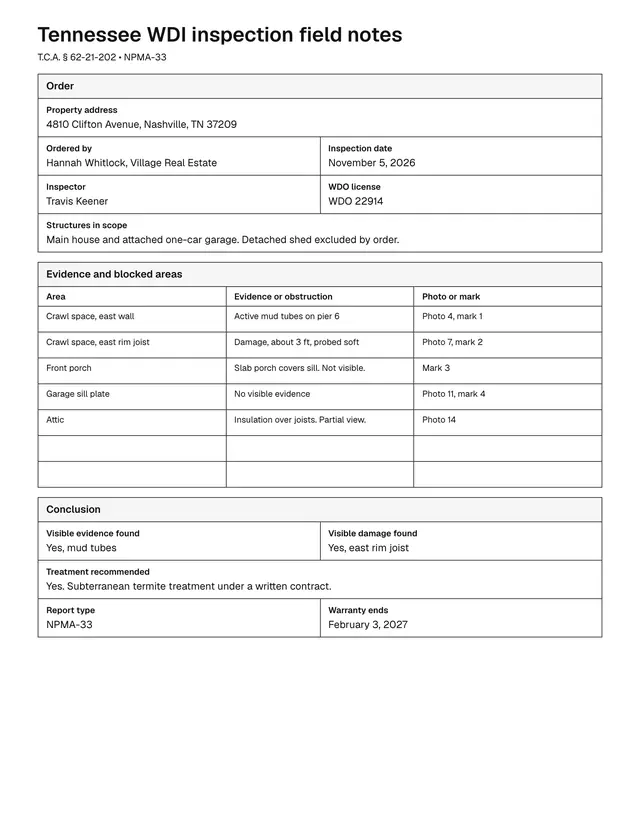
Record the termite findings from an inspection. - Tennessee
Tennessee wood destroying insect infestation inspection report
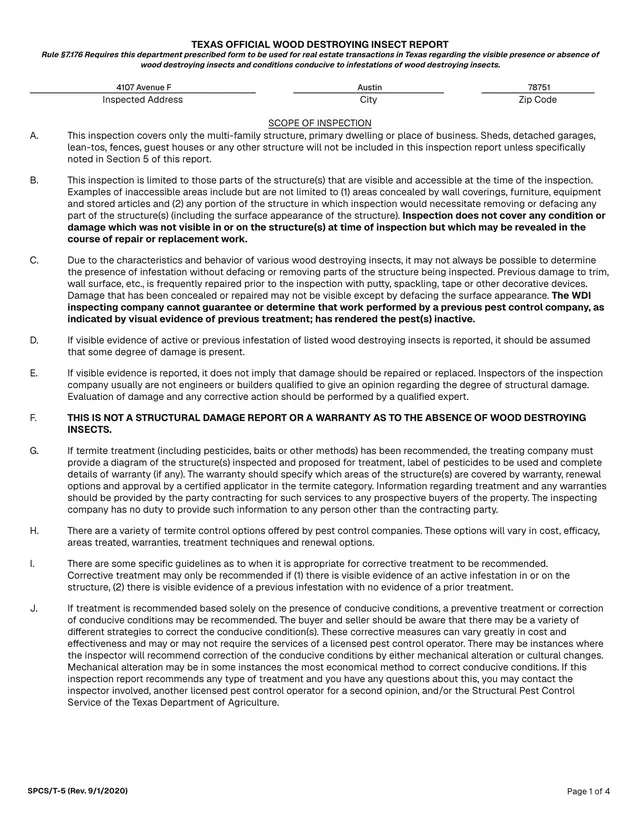
Record the termite findings from an inspection. - TexasSPCS/T-5
Texas Official Wood Destroying Insect Report
Record the termite findings from an inspection. - Utah
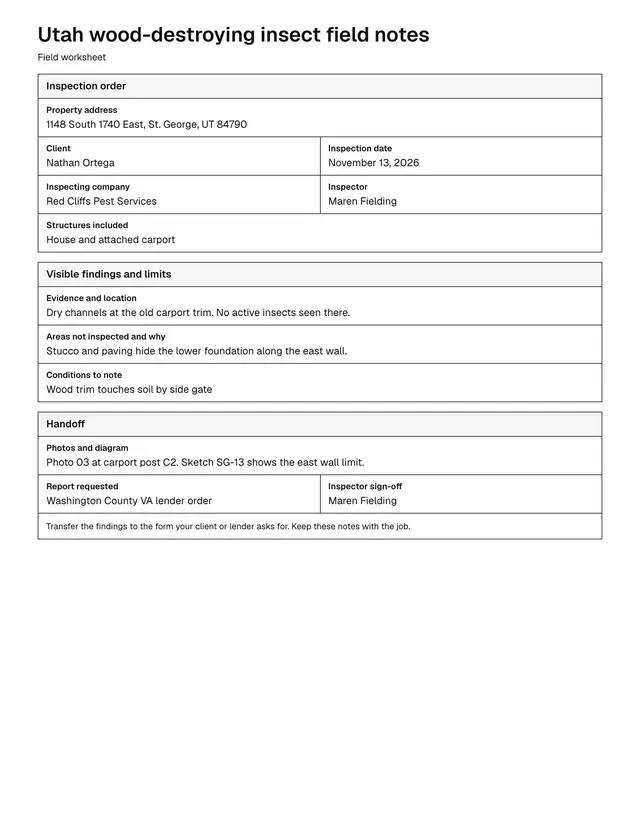
Utah wood-destroying insect field notes
Record the termite findings from an inspection. - Washington
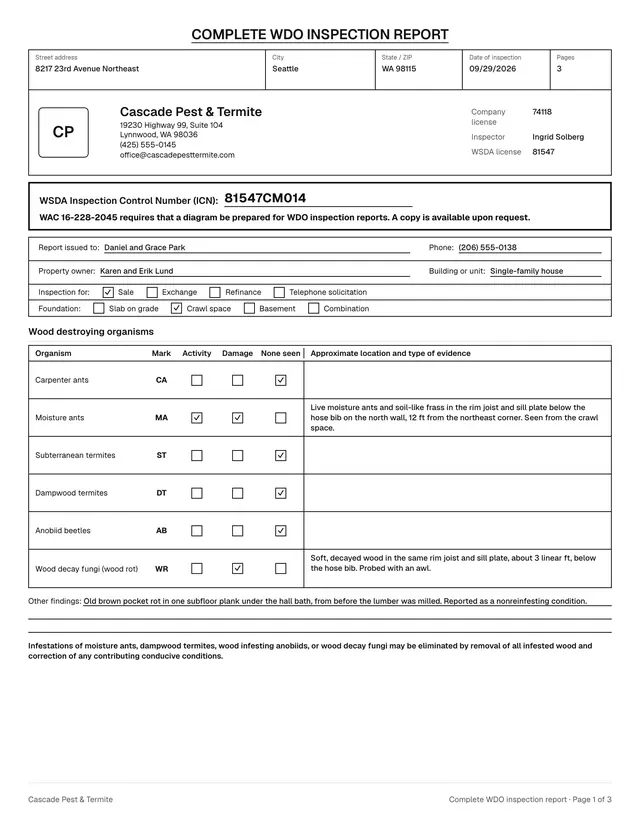
Complete WDO Inspection Report
Record the termite findings from an inspection. - Wisconsin
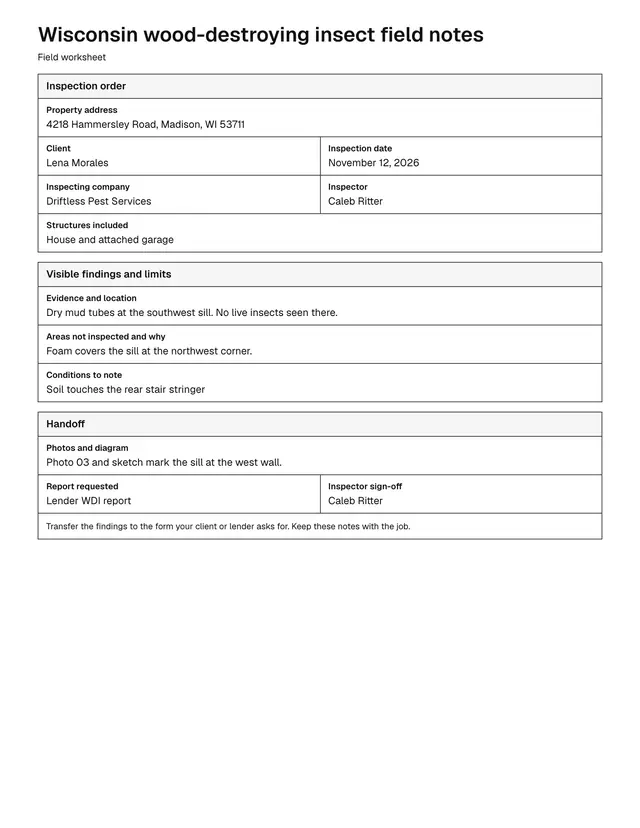
Wisconsin wood-destroying insect field notes
Record the termite findings from an inspection.