Massachusetts termite inspection report (NPMA-33)
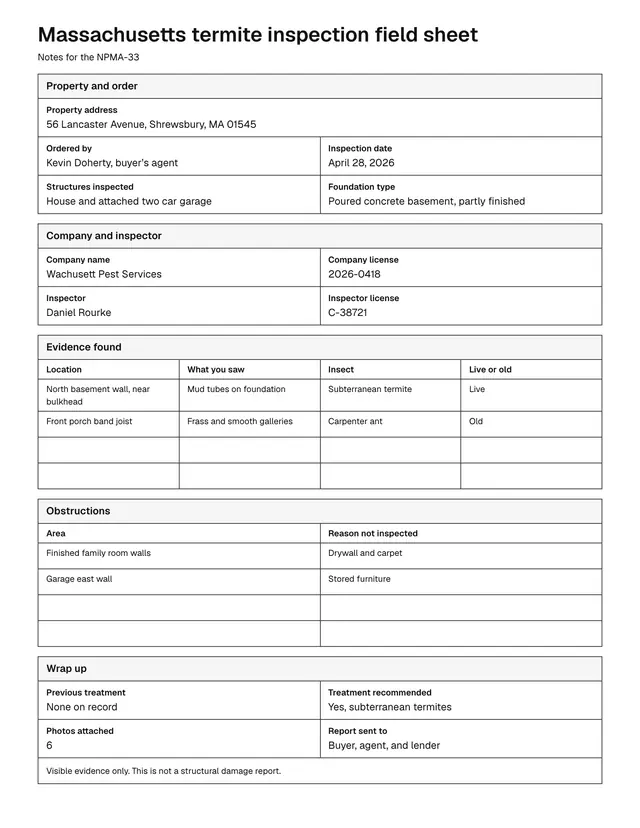
Massachusetts has no state termite inspection form. Lenders and agents ask for the NPMA-33, and this sheet keeps your basement notes in order until you sign it.
At a glance
- Form used
- NPMA-33
- State form
- None
- Pest category
- Termite and Structural Pest Control
- Before treating
- Consumer bulletin, 333 CMR 13.05
Completed example
Download PDFWhich form do Massachusetts buyers get?
The NPMA-33. Massachusetts writes a lot of pest rules, but none of them prints a termite inspection form for a home sale. So when a lender or an agent asks for a “termite letter,” they mean the Wood Destroying Insect Inspection Report from the National Pest Management Association.
NPMA’s guidelines say the NPMA-33 “MUST be used” for HUD and VA loans and is “typically used” on regular sales. A state form would replace it only where a state mandates one. Massachusetts doesn’t, so you sign the NPMA-33 and this sheet is your rough draft.
Who can do the inspection?
A pest company, almost always. The home inspector licensing law, M.G.L. c. 112, § 222, exempts a person “employed as a radon, licensed lead paint, urea formaldehyde or termite inspector solely for the purpose of conducting such inspections.” It also exempts anyone “certified or registered as a pesticide applicator.” So a termite-only inspection doesn’t need a home inspector license.
Treatment is a different story. 333 CMR 10.03 has a “Termite and Structural Pest Control” category for applicators “trained and equipped” to protect structures from termites and other wood destroying organisms. NPMA-33 Section I asks for the company’s license number and the inspector’s license or certification number. For a Massachusetts pest company, those come from the Department of Agricultural Resources (MDAR), which licenses and certifies applicators.
Notes from a New England basement
Start with the structures. NPMA-33 findings cover what’s “in, on or under the structure,” and attached decks count. Detached garages, sheds, and barns are only in if the person ordering the report asks. Write the list before you start.
Look past the termites. The form covers subterranean termites, carpenter ants, carpenter bees, and reinfesting wood boring beetles. In older Massachusetts homes, carpenter ants in wet sills and porch framing are a common find too. Check the band joist above the fieldstone or block walls, where water and wood meet.
Record what blocked you. Finished basements, stored boxes, low crawl spaces under additions, and siding down to the soil line all hide wood. Section IV of the NPMA-33 is “Obstructions & Inaccessible Areas.” The guidelines say “virtually every property” has some, so name each one and the reason.
Take pictures. Section V lets you attach photos and diagrams, plus any documentation of previous treatment. A photo of the mud tubes on the north basement wall answers most of the agent’s questions before they ask.
Check where slabs meet walls. The joint where a garage or porch slab meets the house is a common way in for subterranean termites. Look there even when the basement walls are clean, and note it if stored items cover it.
Does a Massachusetts termite report expire?
No state rule says so. How fresh the NPMA-33 has to be is up to the lender or the purchase and sale agreement. Ask the agent for the deadline when you book, so the report isn’t dated a week too early.
It also isn’t a home inspection in the eyes of the law. Since § 222 exempts termite inspectors, the home inspector report rules, like recording start and finish times, don’t apply to your NPMA-33. Home inspectors who spot mud tubes will usually send the buyer to you anyway.
What happens if you recommend treatment?
NPMA-33 tells you to recommend treatment for live termites, or for evidence with no proof of a past treatment. If the owner hires your company for a soil treatment, Massachusetts adds steps before you dig.
Under 333 CMR 13.05, soil termiticide work must be done by someone certified in “Category 43 - Termite and Structural Pest Control” or under their direct supervision. Before the contract is signed, the owner gets a “Department-approved Consumer Information Bulletin on Termite Applications.” Before you inject under a slab, you must find the heating ducts, water lines, sewer lines, and conduits under it. And if the basement walls have cracks or holes, you take steps so the termiticide doesn’t seep inside.
Then the treatment gets its own paperwork. The Massachusetts pesticide application record covers what you keep for three years.
Noma specializes in the NPMA-33 Wood Destroying Insect Inspection Report for Massachusetts homes (no state form, with treatment under 333 CMR 13.05). Draw the basement diagram on the job and build the report on your phone, with your own sections for findings and blocked areas. See how Noma handles termite inspections.
Frequentlyaskedquestions
Send this document in minutes, not an afternoon.
Other states
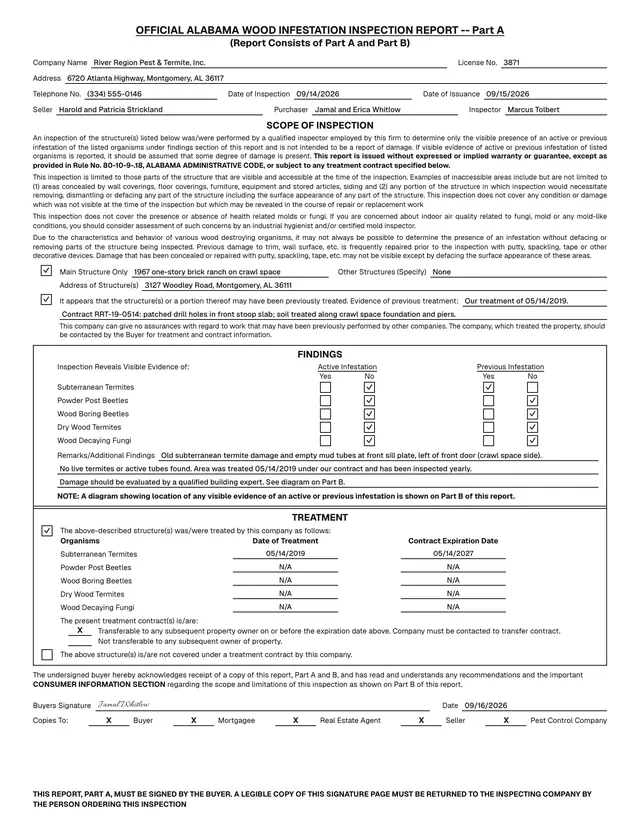
Inspection report templates- Alabama
Official Alabama Wood Infestation Inspection Report
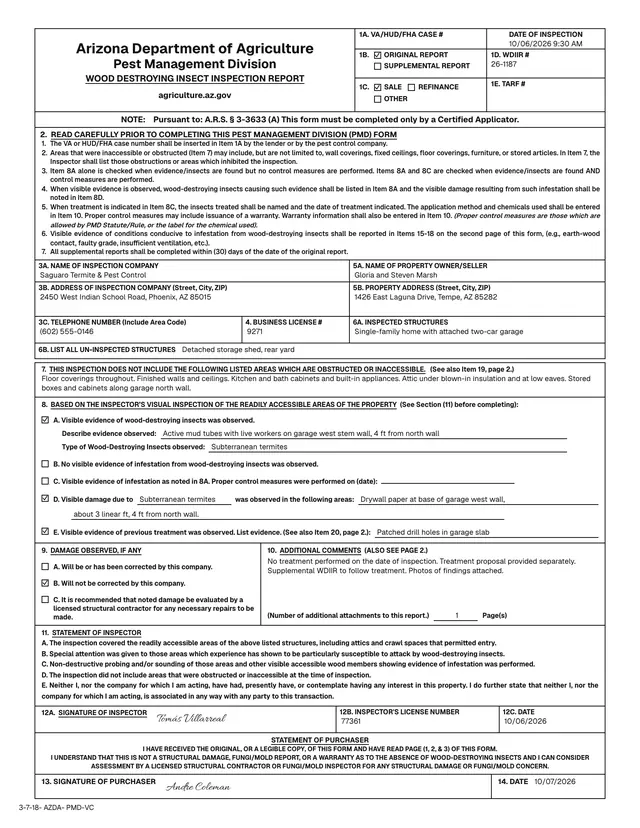
Record the termite findings from an inspection. - Arizona
Wood Destroying Insect Inspection Report
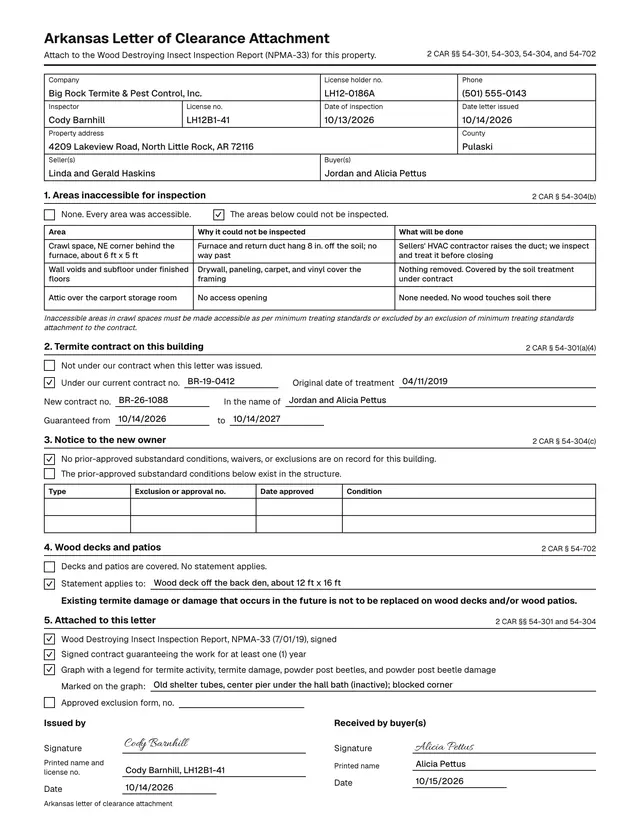
Record the termite findings from an inspection. - Arkansas
Arkansas Letter of Clearance Attachment
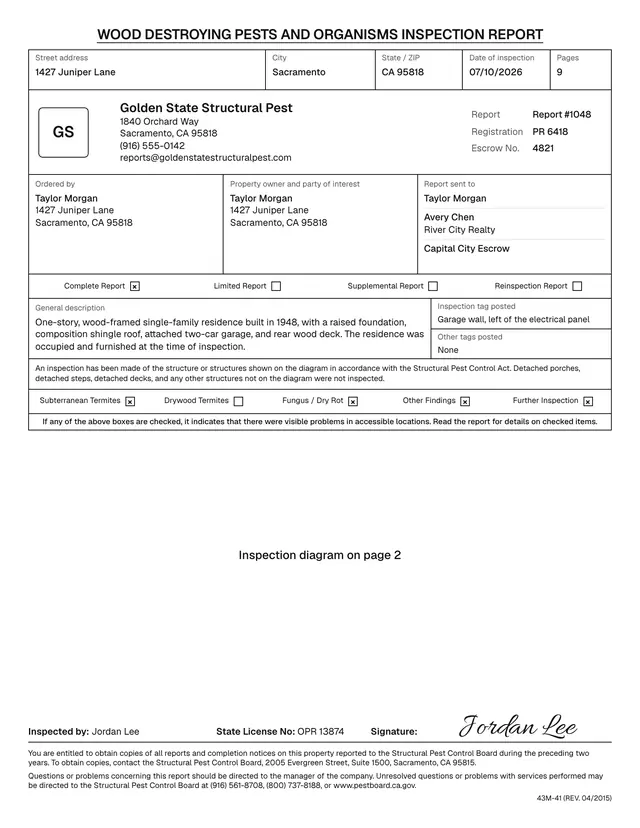
Record the termite findings from an inspection. - California43M-41
Wood Destroying Pests and Organisms Inspection Report
Record the termite findings from an inspection. - ColoradoNPMA-33
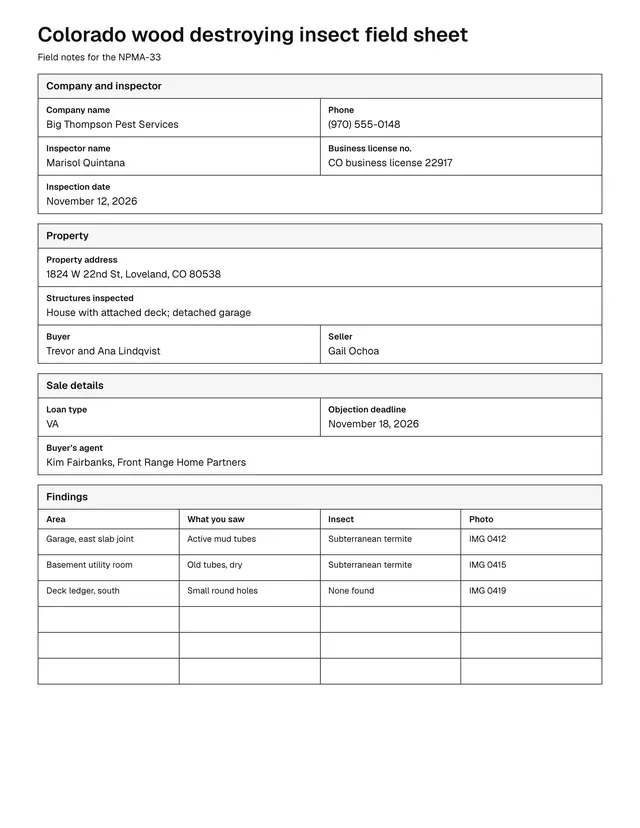
Colorado termite inspection report (NPMA-33)
Record the termite findings from an inspection. - Connecticut
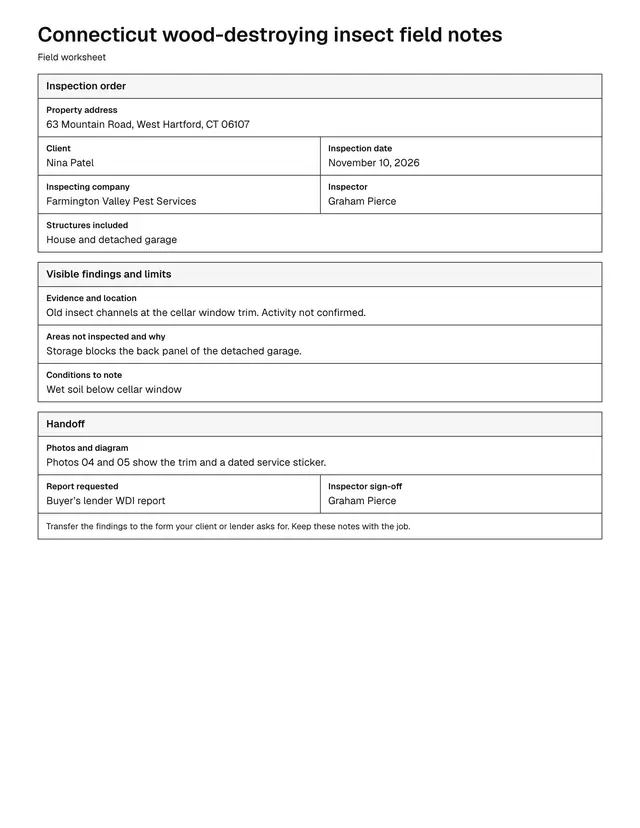
Connecticut wood-destroying insect field notes
Record the termite findings from an inspection. - DelawareNPMA-33
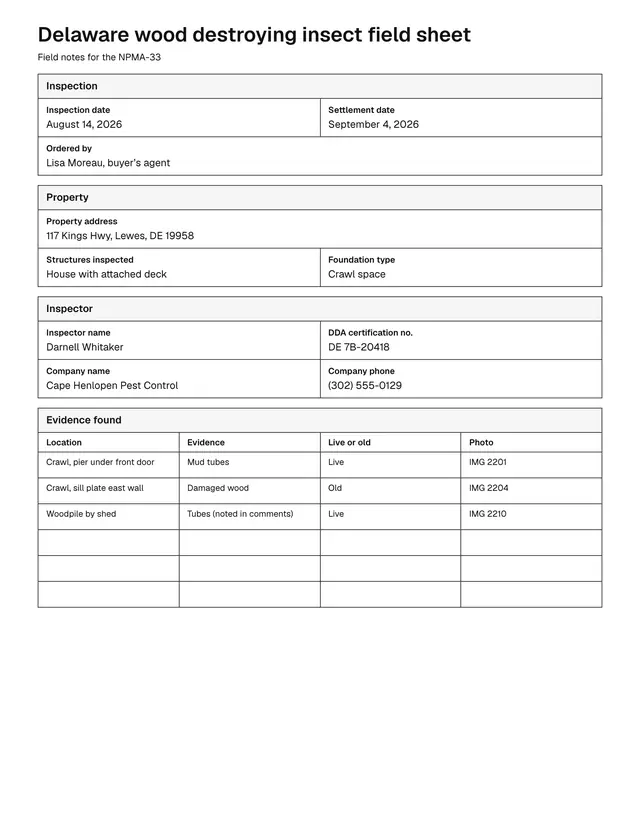
Delaware termite inspection report (NPMA-33)
Record the termite findings from an inspection. - FloridaFDACS-13645
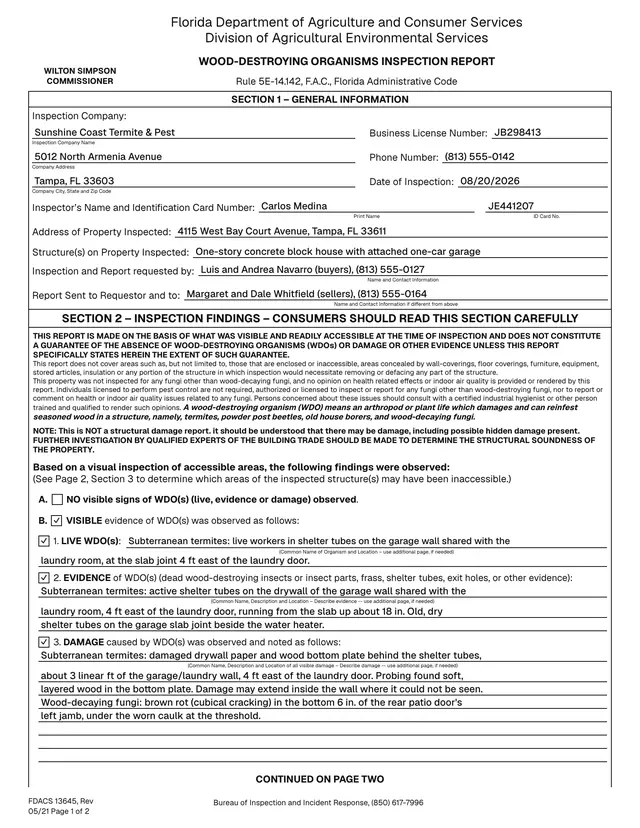
Wood-Destroying Organisms Inspection Report
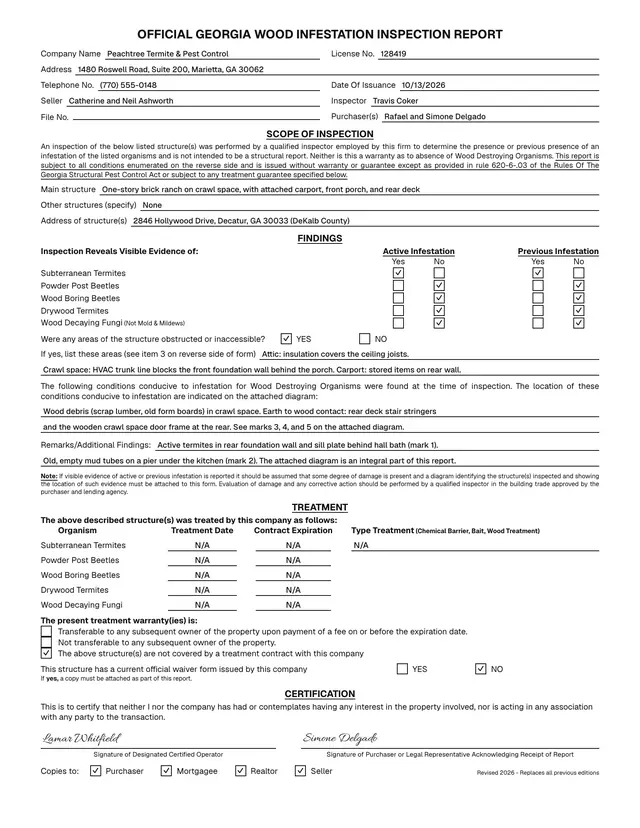
Record the termite findings from an inspection. - Georgia
Official Georgia Wood Infestation Inspection Report
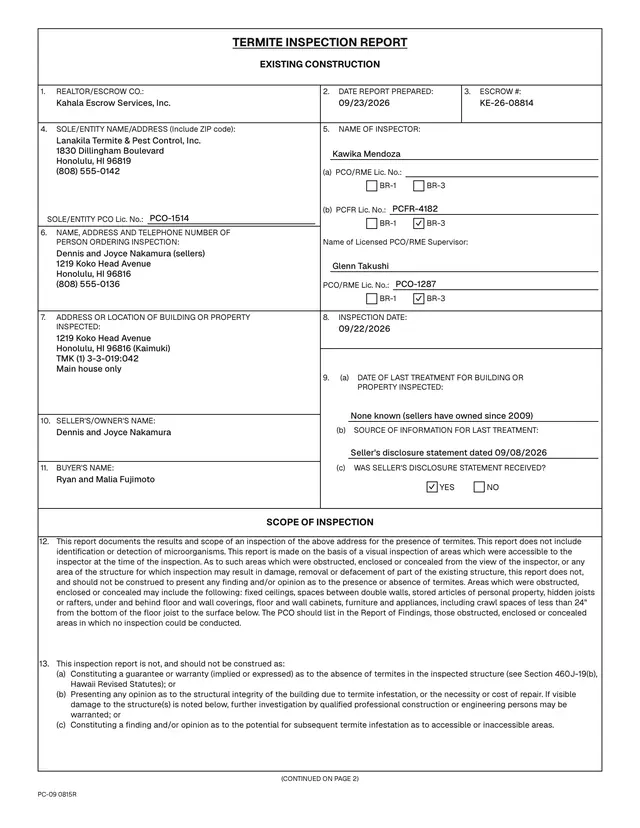
Record the termite findings from an inspection. - HawaiiPC-9
Termite Inspection Report, Existing Construction
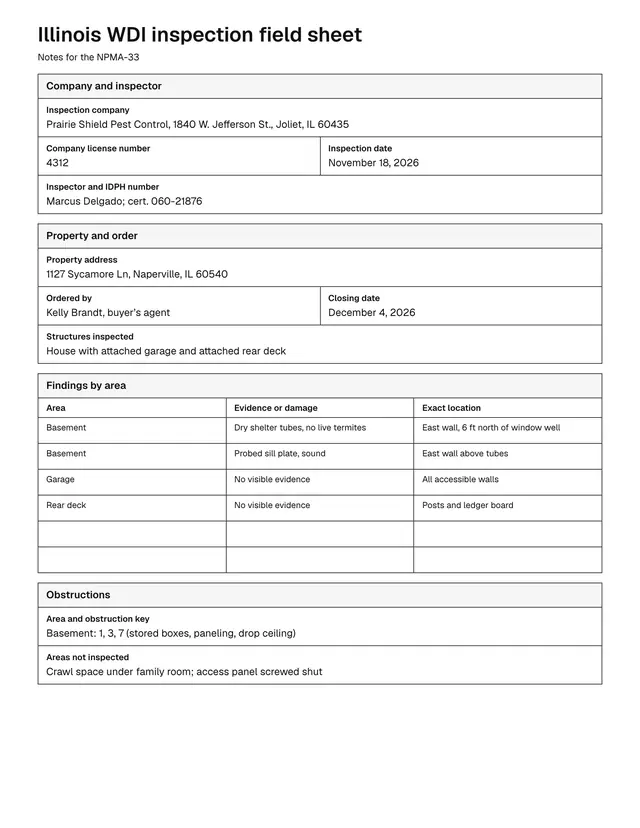
Record the termite findings from an inspection. - IllinoisNPMA-33
Illinois wood destroying insect inspection report (NPMA-33)
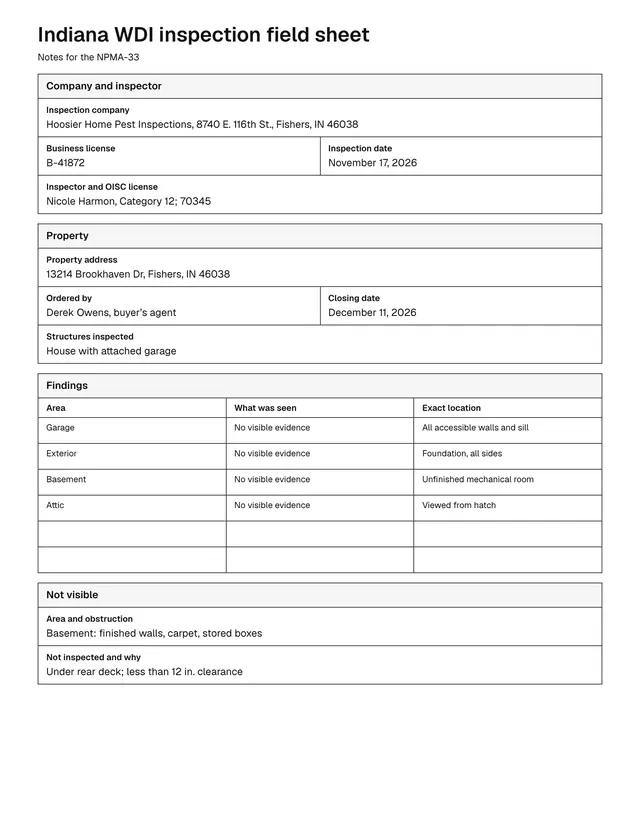
Record the termite findings from an inspection. - IndianaNPMA-33
Indiana wood destroying insect inspection report (NPMA-33)
Record the termite findings from an inspection. - Iowa
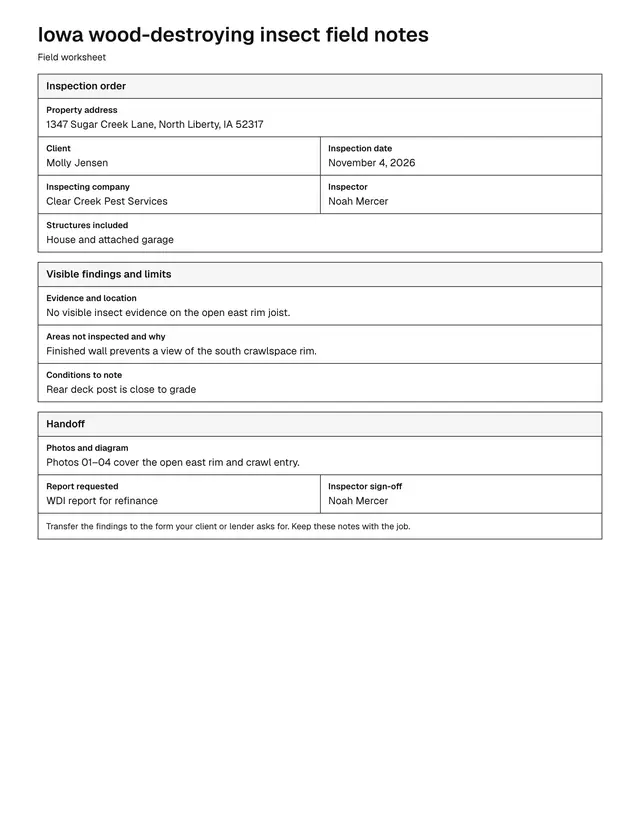
Iowa wood-destroying insect field notes
Record the termite findings from an inspection. - Kansas
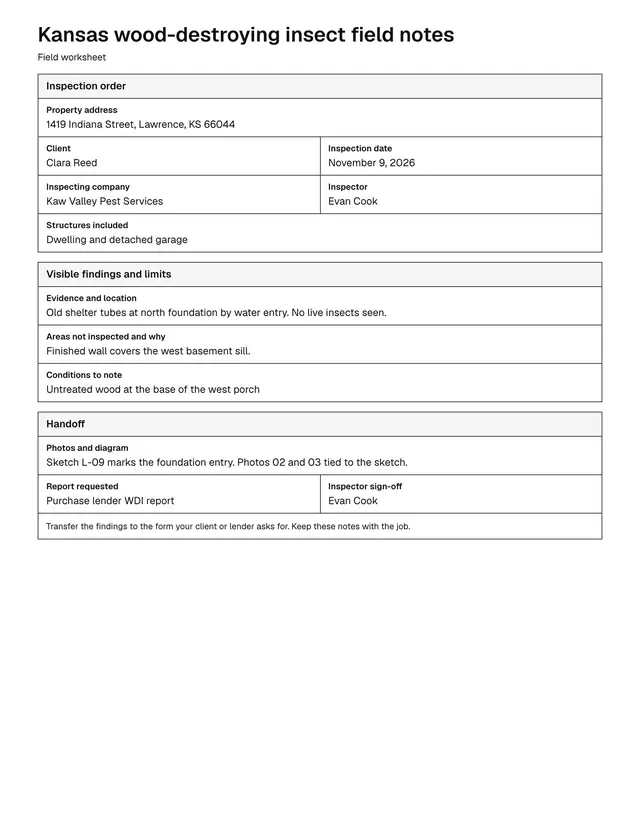
Kansas wood-destroying insect field notes
Record the termite findings from an inspection. - Kentucky
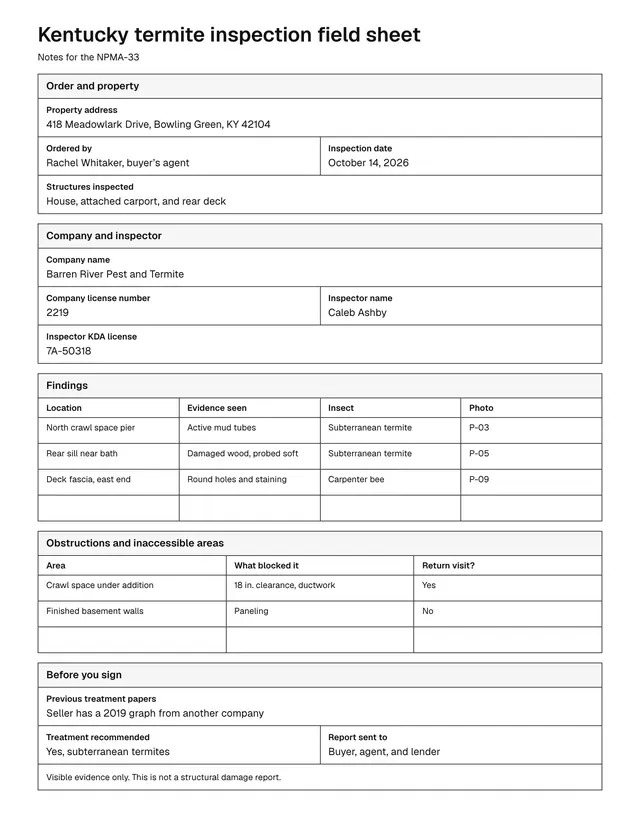
Kentucky termite inspection report (NPMA-33)
Record the termite findings from an inspection. - MarylandMD-1
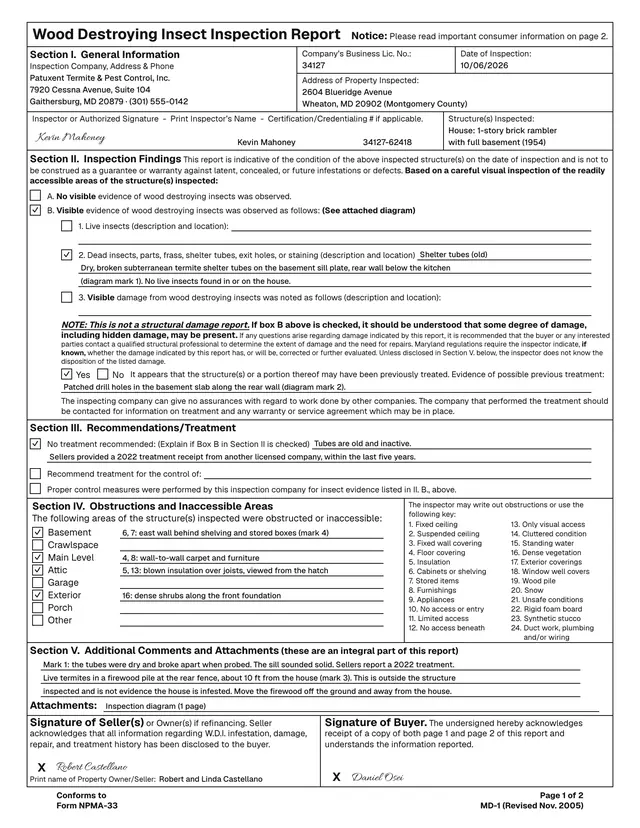
Wood Destroying Insect Inspection Report
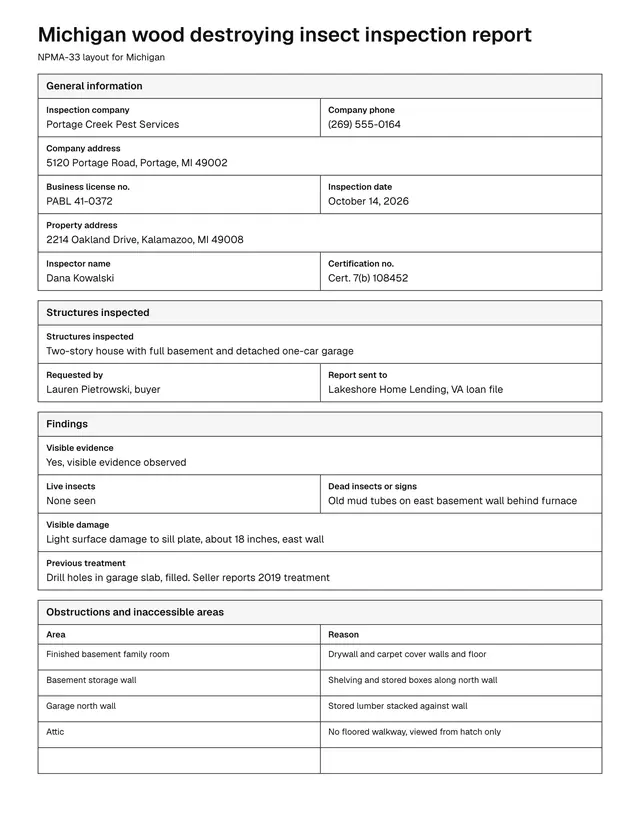
Record the termite findings from an inspection. - MichiganNPMA-33
Michigan wood-destroying insect inspection report (NPMA-33)
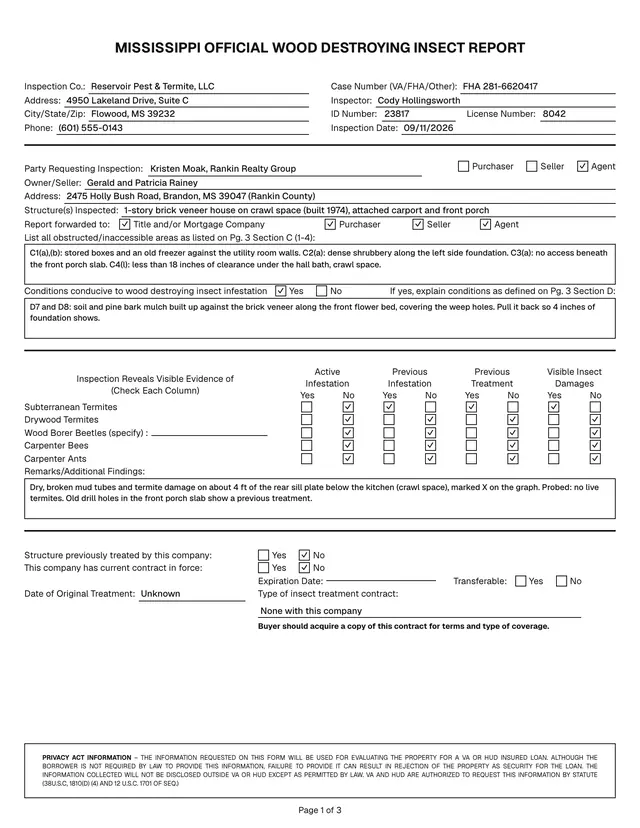
Record the termite findings from an inspection. - Mississippi
Mississippi Official Wood Destroying Insect Report
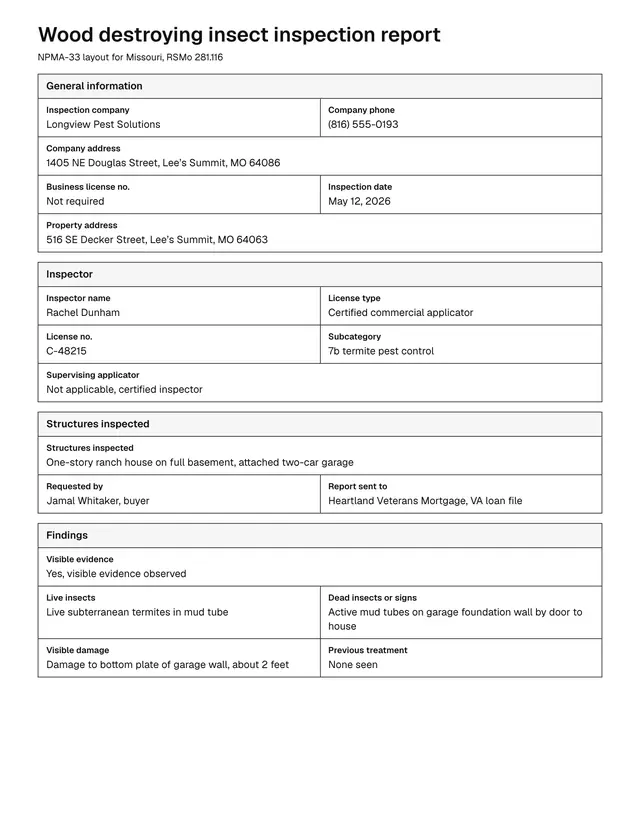
Record the termite findings from an inspection. - MissouriNPMA-33
Missouri wood-destroying insect inspection report (NPMA-33)
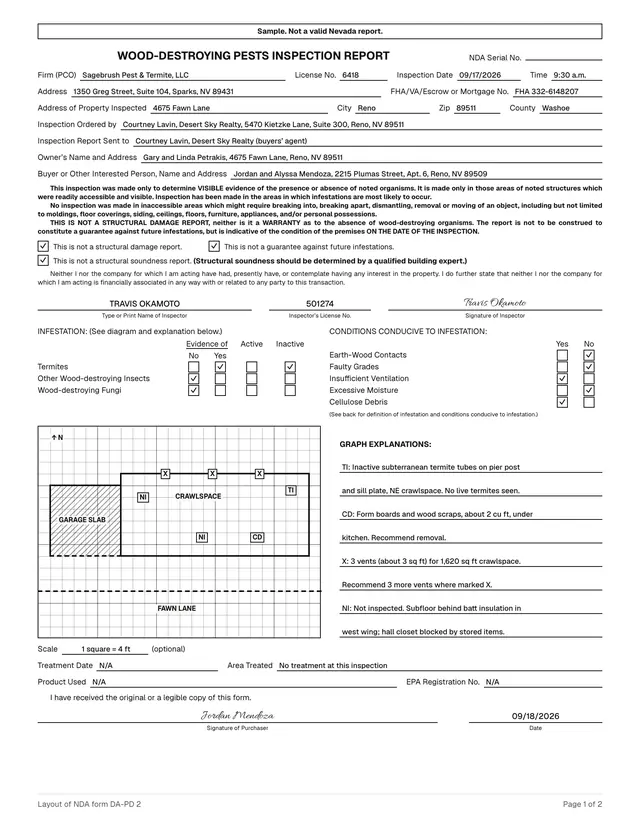
Record the termite findings from an inspection. - Nevada
Wood-Destroying Pests Inspection Report
Record the termite findings from an inspection. - New Jersey
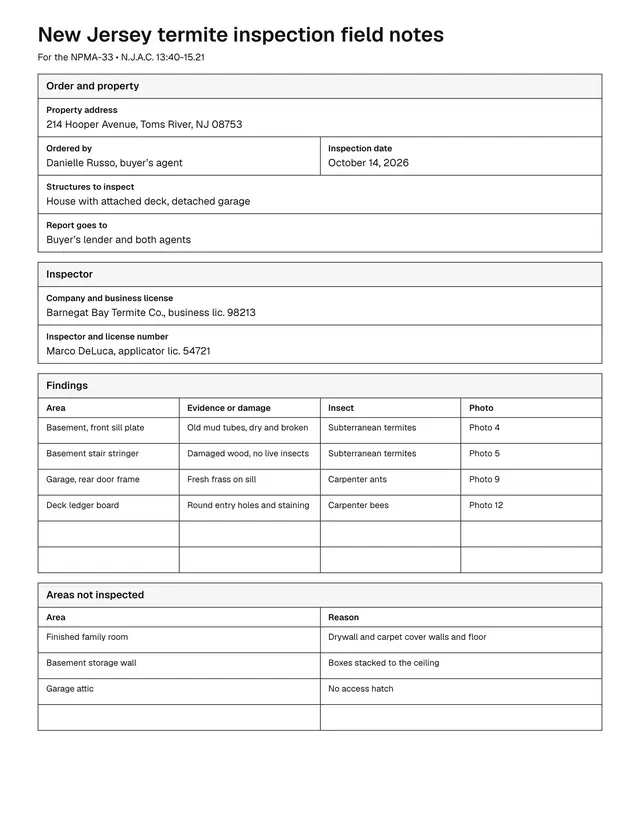
New Jersey termite inspection report (NPMA-33 field notes)
Record the termite findings from an inspection. - New Mexico
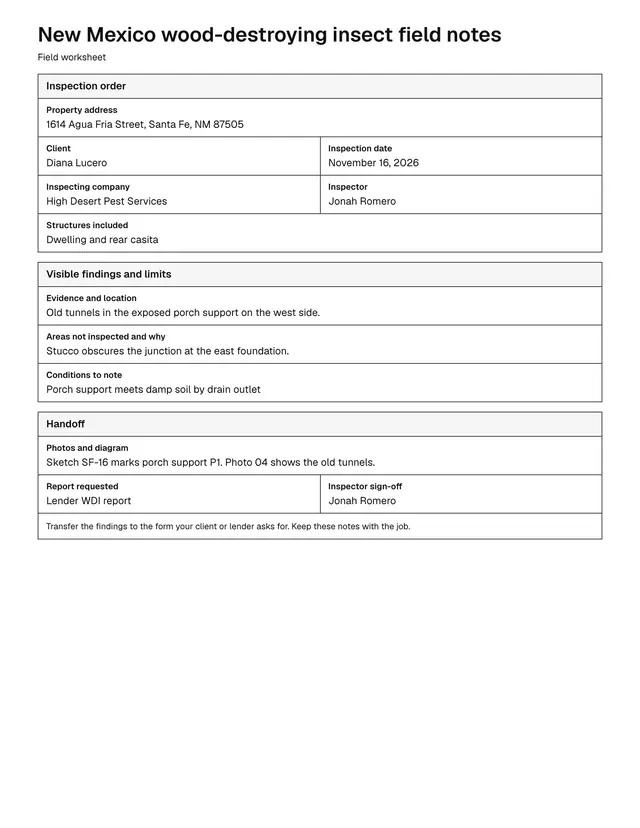
New Mexico wood-destroying insect field notes
Record the termite findings from an inspection. - New York
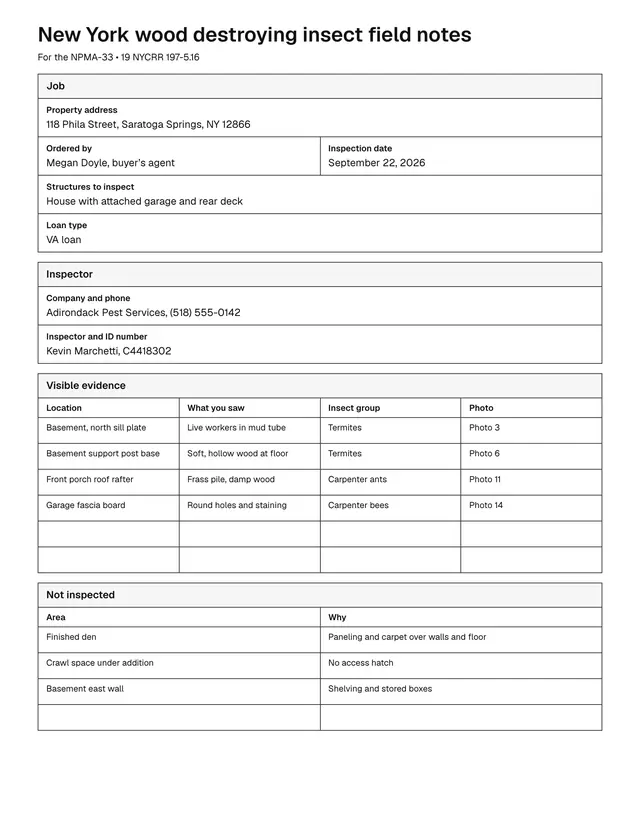
New York wood destroying insect inspection notes (NPMA-33)
Record the termite findings from an inspection. - North CarolinaWDIR 100
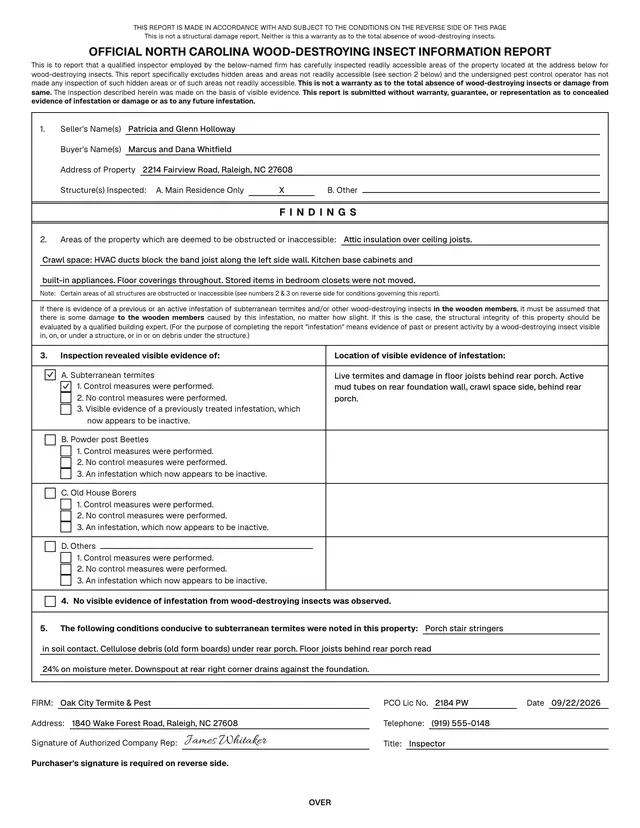
Official North Carolina Wood-Destroying Insect Information Report
Record the termite findings from an inspection. - OhioNPMA-33
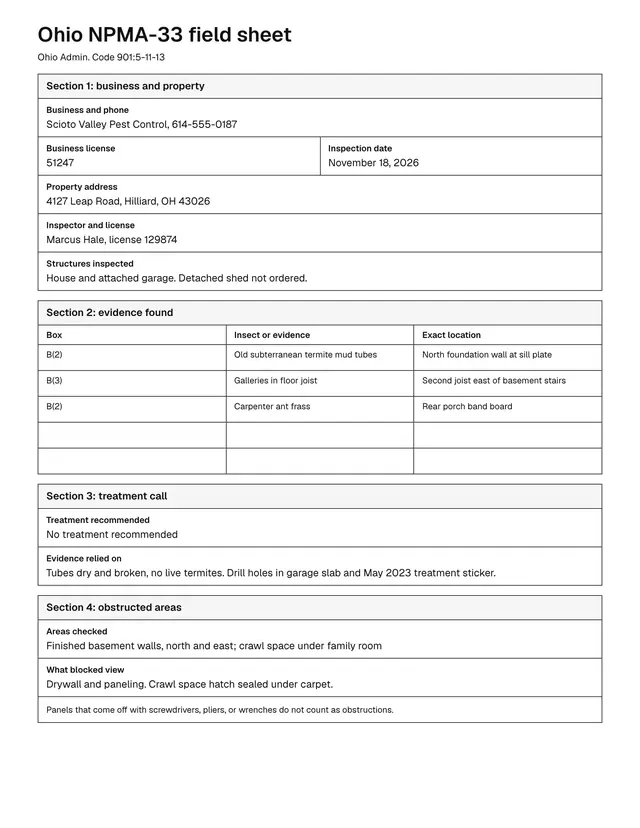
Ohio NPMA-33 wood-destroying insect inspection report
Record the termite findings from an inspection. - OklahomaForm ODAFF-1
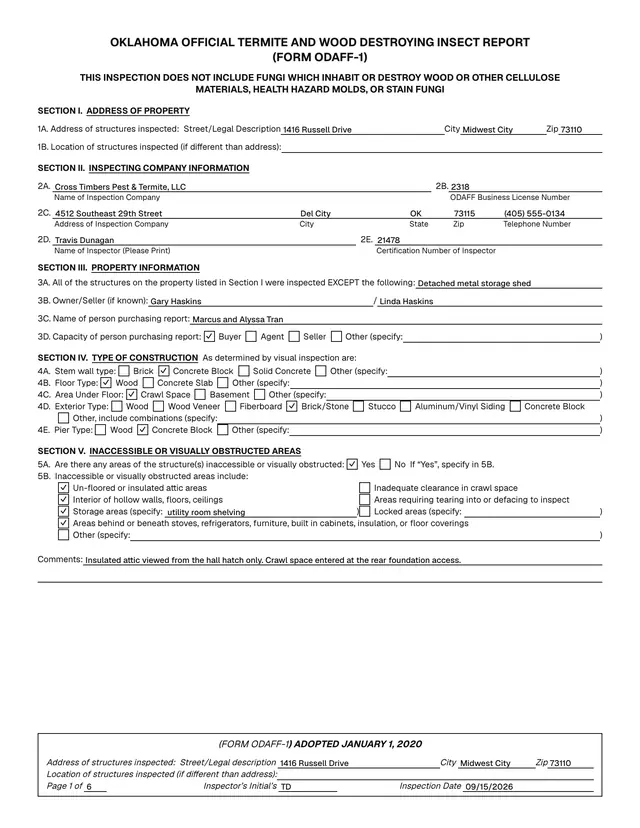
Oklahoma Official Termite and Wood Destroying Insect Report
Record the termite findings from an inspection. - Oregon
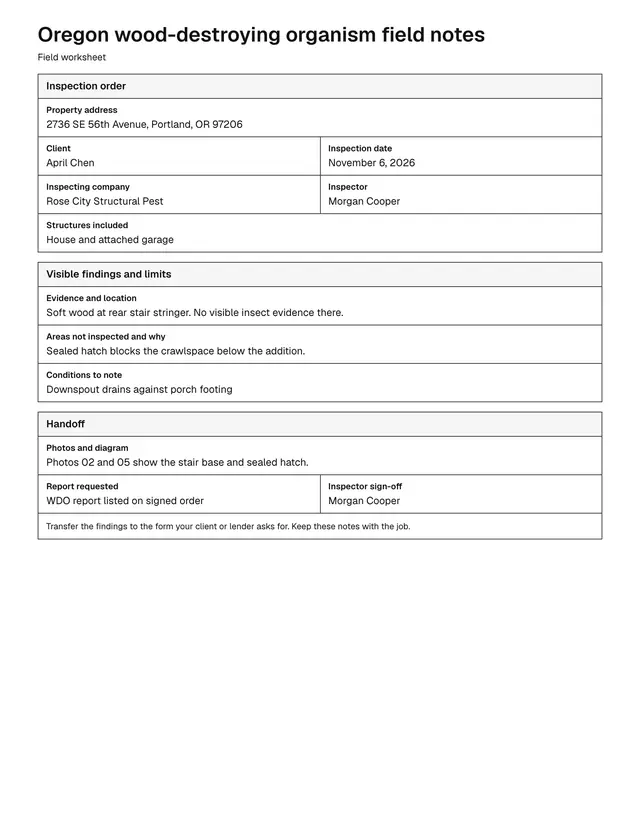
Oregon wood-destroying organism field notes
Record the termite findings from an inspection. - PennsylvaniaNPMA-33
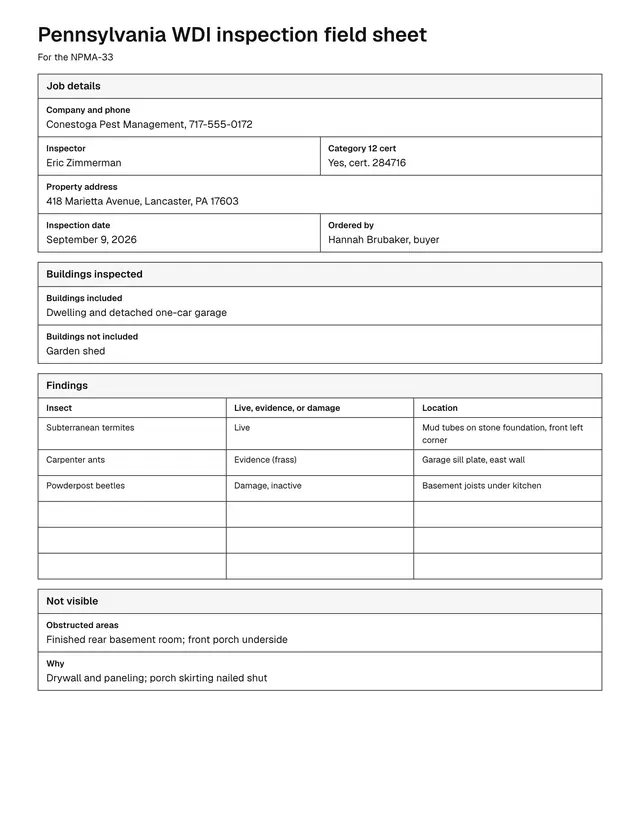
Pennsylvania wood-destroying insect inspection report (NPMA-33)
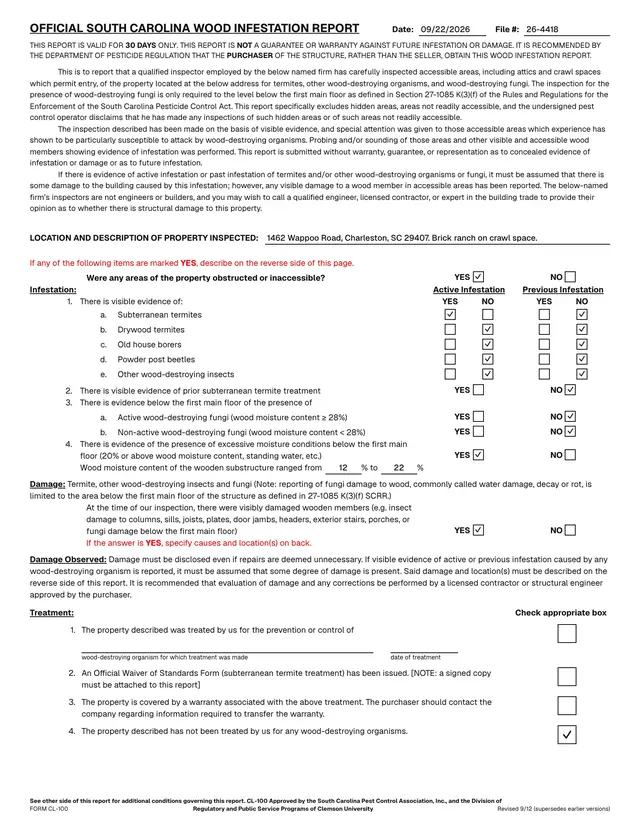
Record the termite findings from an inspection. - South CarolinaCL-100
Official South Carolina Wood Infestation Report
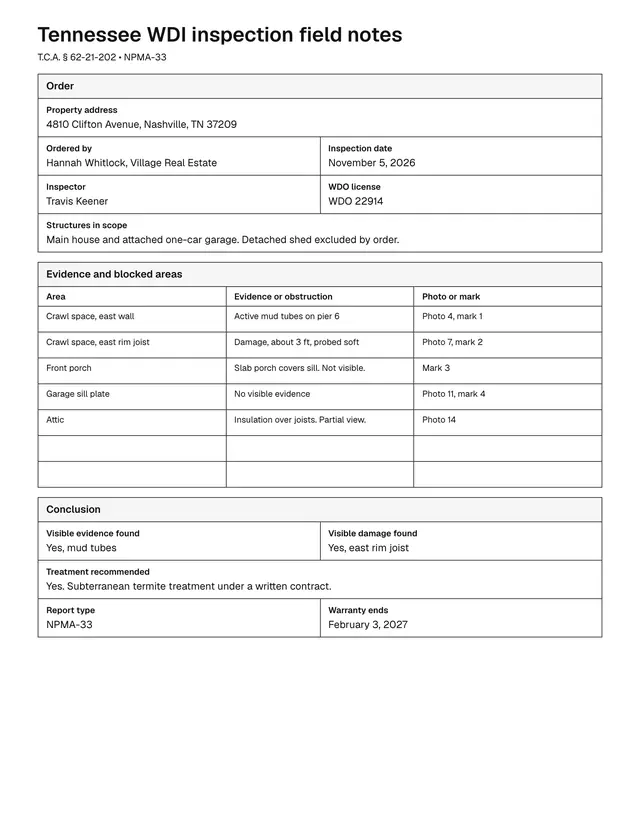
Record the termite findings from an inspection. - Tennessee
Tennessee wood destroying insect infestation inspection report
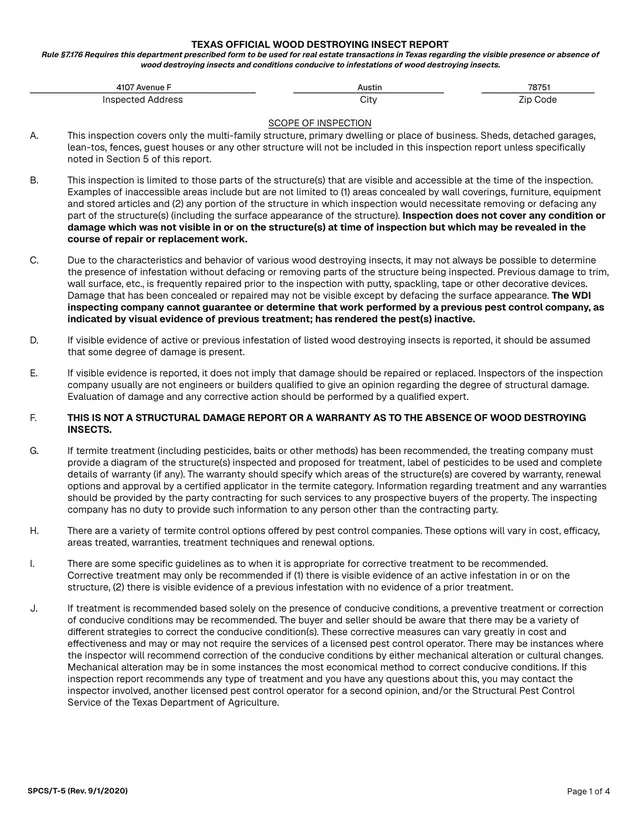
Record the termite findings from an inspection. - TexasSPCS/T-5
Texas Official Wood Destroying Insect Report
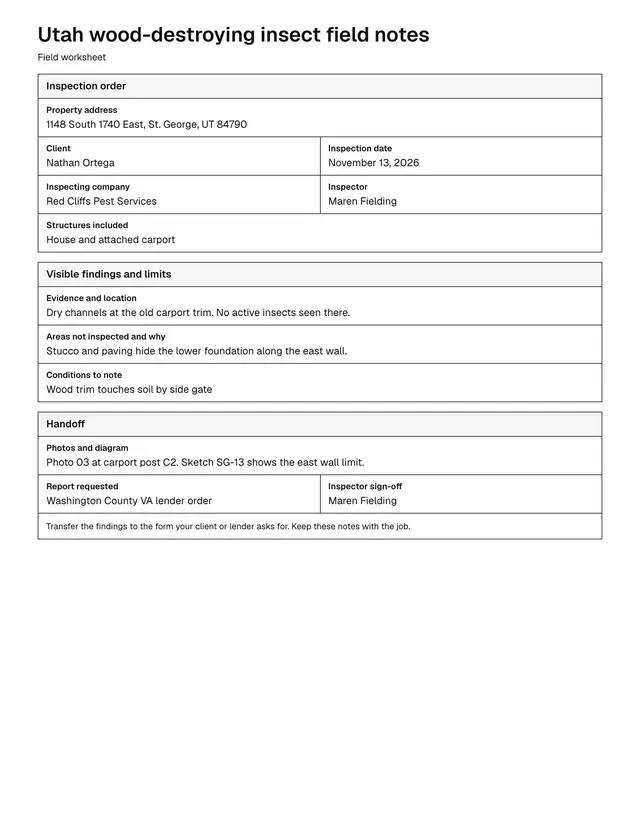
Record the termite findings from an inspection. - Utah
Utah wood-destroying insect field notes
Record the termite findings from an inspection. - Virginia
Virginia wood destroying insect inspection report
Record the termite findings from an inspection. - Washington
Complete WDO Inspection Report
Record the termite findings from an inspection. - Wisconsin
Wisconsin wood-destroying insect field notes
Record the termite findings from an inspection.