Massachusetts pesticide application record (333 CMR 10.14)
Massachusetts applicators keep an 11 part record of every job under 333 CMR 10.14. After indoor work, 333 CMR 13.08 adds a short written notice for the customer.
At a glance
- Record rule
- 333 CMR 10.14
- Customer notice
- 333 CMR 13.08(1)(g)
- Kept for
- 3 years from the application
- Incident report
- Within 48 hours
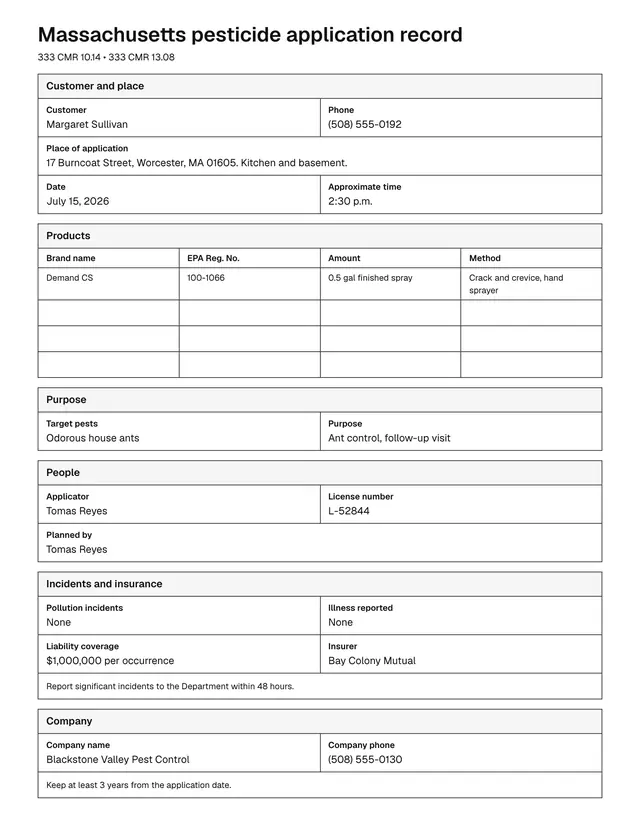
Completed example
Download PDFTwo rules, one ticket
Massachusetts splits this paperwork across two rules. 333 CMR 10.14 says what you keep. 333 CMR 13.08 says what the customer gets after you treat indoors. Most companies print both on one ticket, with a tear-off or emailed copy for the customer.
The record side is longer than most states. It has 11 items, and a few of them aren’t about the job at all. That’s why a generic service ticket from a national supplier often comes up short here.
The 11 things 10.14 asks for
The usual ones come first: where you applied, the date, the brand or registered name, the EPA registration number, the amount, the purpose, and the method of application. “Method” trips people up. Write “crack and crevice with hand sprayer” or “perimeter band, power sprayer,” not just “sprayed.”
Then the rule asks for “the persons certified or licensed by the Department who participated in the planning and execution.” If an office manager with a license set up the job and a tech did it, both names go down.
The last three are the odd ones. Any accidents or incidents that caused pollution. “The amount of liability insurance carried and the name of the insurer.” And any illnesses or injuries reported to you that may have come from pesticides. Most tickets print the insurance line in the footer and leave a box for the other two marked “none.”
Those two boxes aren’t just paperwork. The Department requires an annual report of incidents and illnesses, and the rule says “in no case later than 48 hours” for telling them about significant ones. Keep everything at least three years.
What the customer gets after an indoor job
333 CMR 13.08(1)(g) says that after each indoor application, you give the contracting entity five things: your company’s name and phone, the applicator’s name and license number, the target pests, the names and EPA registration numbers of the products, and the date and approximate time.
A clean example: Demand CS (EPA Reg. No. 100-1066), applied to the kitchen and basement of a Worcester single family home for odorous house ants, about 2:30 p.m. Residents and other occupants can ask for the same information, so it helps to have it ready in a form you can hand out.
Some work skips this rule. Disinfectants, insect baits in tamper-resistant stations or “generally inaccessible locations,” and treatments to wall or floor voids are exempt from 13.08. They still go in the 10.14 record.
Anyone who lives or works in the treated space can also ask for a heads-up before you come. Under 13.08(1)(e), you then give them written notice between seven days and 48 hours ahead, with your company and phone, the date, the locations, and the products with their EPA numbers and active ingredients.
Apartments, landlords, and public buildings
If the person hiring you lives in the unit, they get a Department-approved Consumer Information Bulletin before you sign the agreement. If they don’t, like a landlord with a three-family in Lowell, the list gets longer.
The landlord gets the Information Bulletin for Building Managers and Landlords. Every occupant who can reach the treated area gets a written pre-notice between seven days and 48 hours before, with the date and time, locations, products, EPA numbers, active ingredients, purpose, label prep steps (like covering food and moving pets), and the Consumer Information Bulletin. You post a Department-approved notice at the entrances to treated common areas and leave it up after.
A landlord who doesn’t want notices posted signs a Department-approved form saying so. You keep that form for three years. Non-residential public buildings follow a similar posting rule.
Emergencies get one escape hatch. When there’s an immediate threat to public health or safety, 13.08(5) lets you skip the pre-notice for one application. You write down why, keep it for three years, send it to the Department within 24 hours, and give it to anyone who asked for pre-notice within 48 hours.
How do you keep a landlord account straight?
Multi-unit work means a pre-notice for every visit, a signed no-posting form if they want one, and a ticket for each building. It piles up fast on a monthly route.
Noma specializes in the Massachusetts Pesticide Application Record (333 CMR 10.14). Schedule recurring visits and invoice them with online payment, and upload the no-posting form once as a reusable document so the landlord can e-sign it on each job. See how Noma runs pest control routes.
Frequentlyaskedquestions
Send this document in minutes, not an afternoon.
Other states
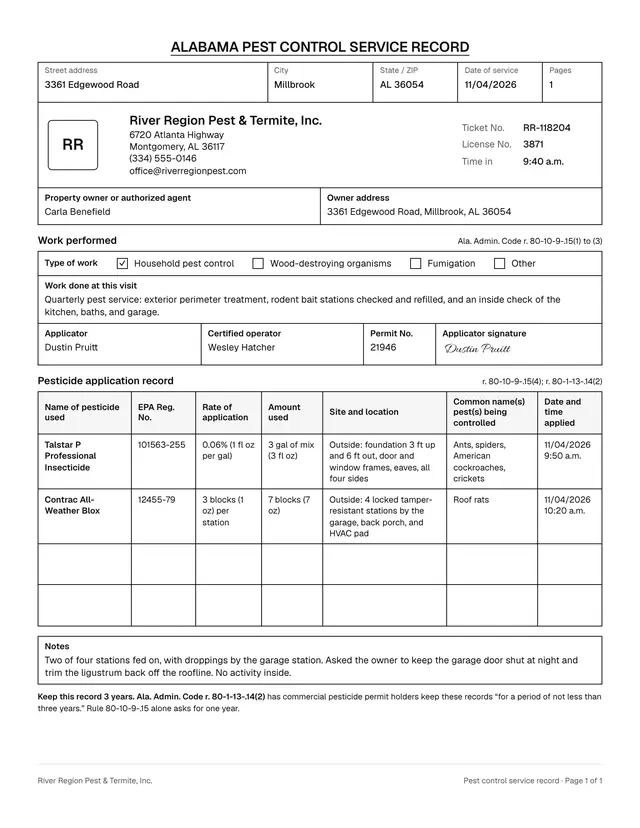
After-treatment notice templates- Alabama
Alabama Pest Control Service Record
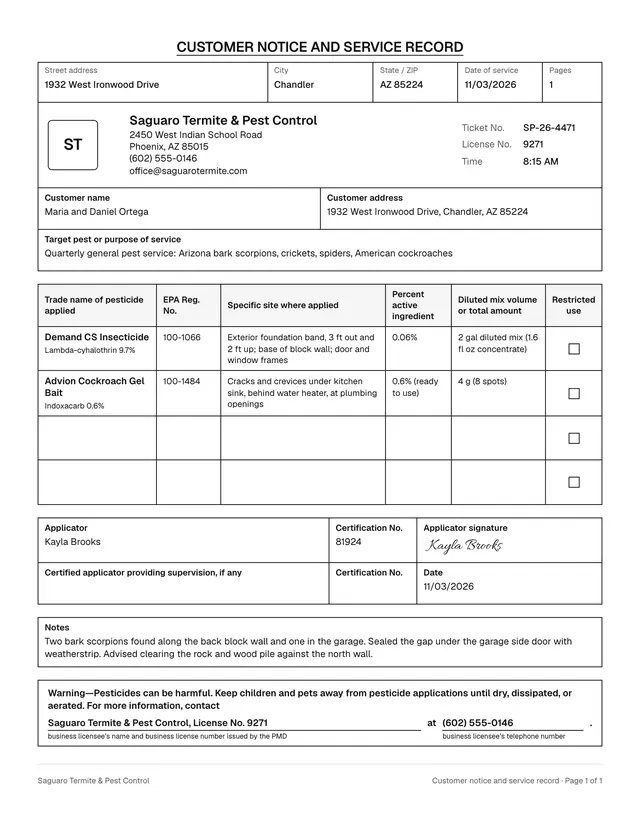
Record each pesticide applied at a service visit. - Arizona
Customer Notice and Service Record
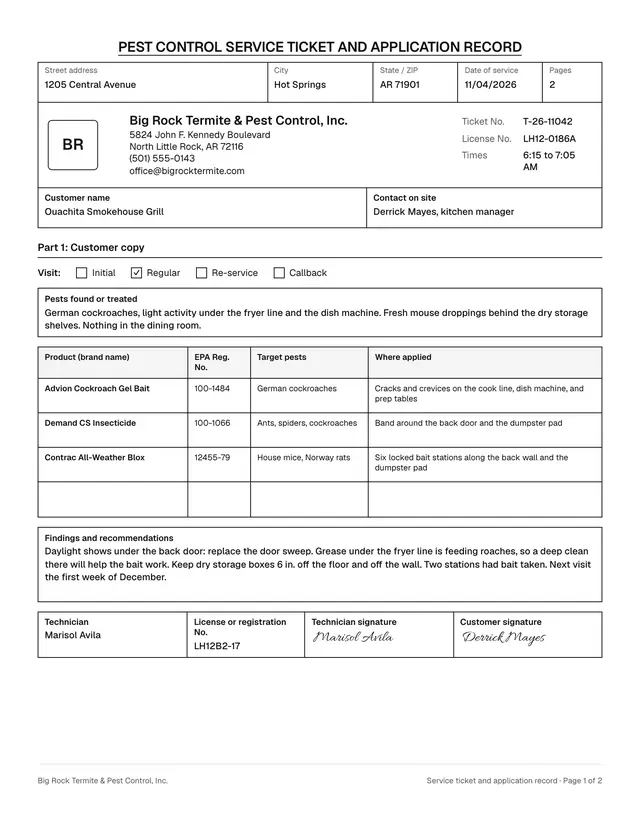
Record each pesticide applied at a service visit. - Arkansas
Pest Control Service Ticket and Application Record
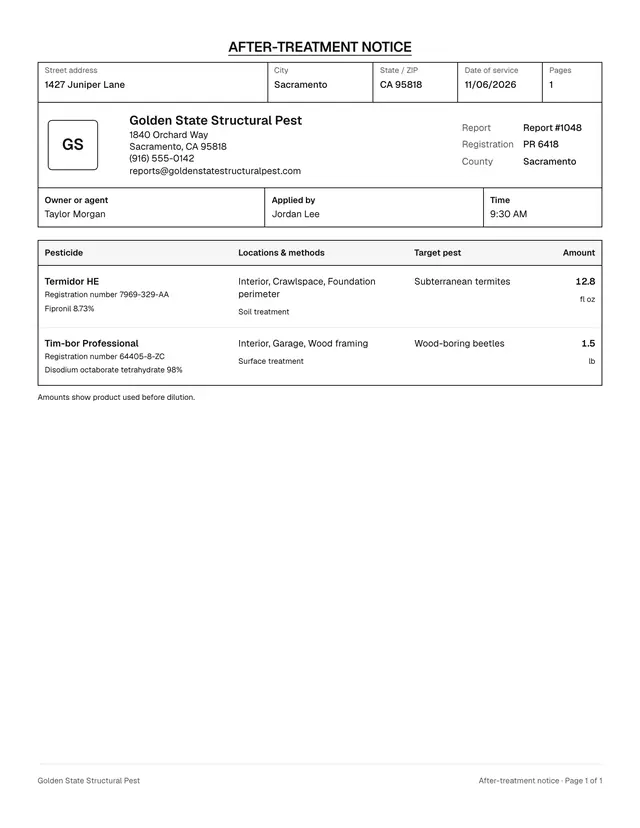
Record each pesticide applied at a service visit. - California
After-Treatment Notice
Record each pesticide applied at a service visit. - Colorado
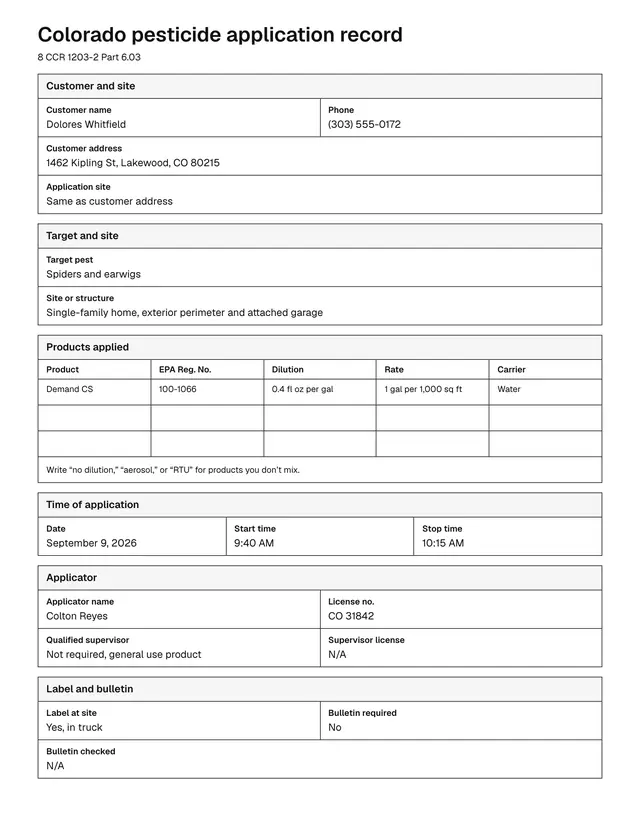
Colorado commercial pesticide application record
Record each pesticide applied at a service visit. - Connecticut
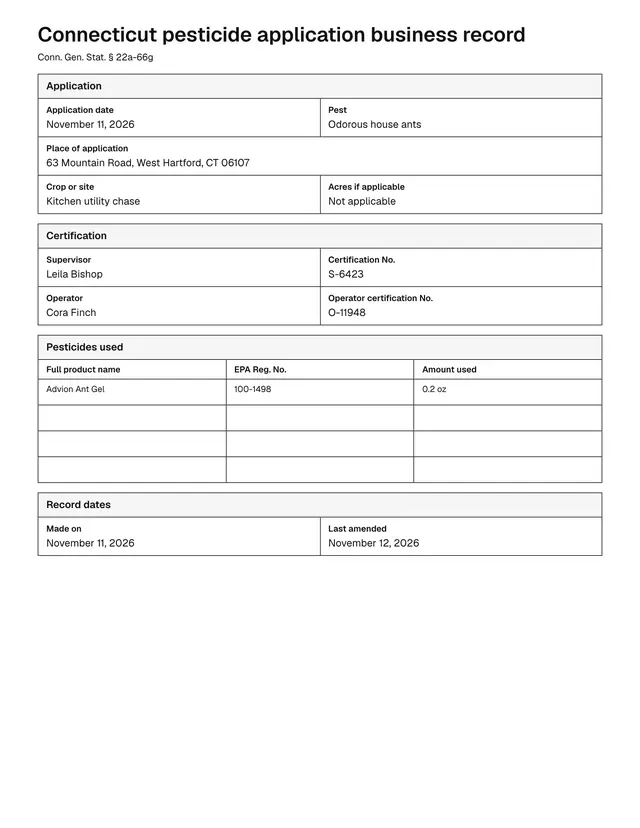
Connecticut pesticide application business record
Record each pesticide applied at a service visit. - Delaware
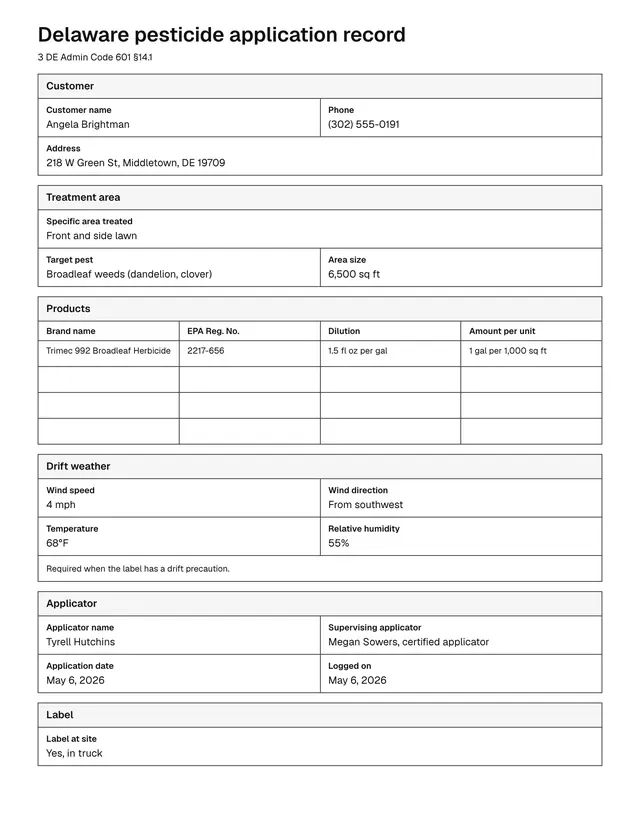
Delaware pesticide application record (3 DE Admin Code 601 §14.1)
Record each pesticide applied at a service visit. - Georgia
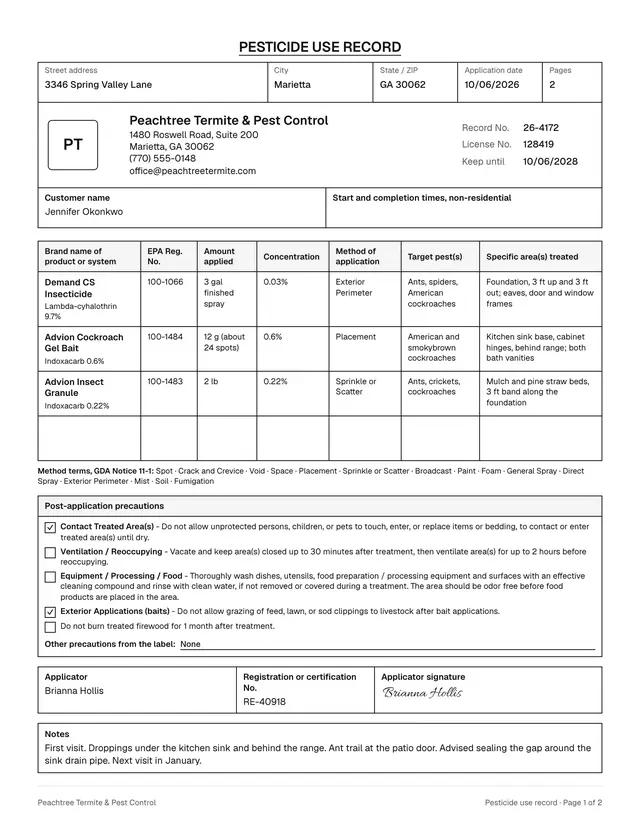
Pesticide Use Record
Record each pesticide applied at a service visit. - Hawaii
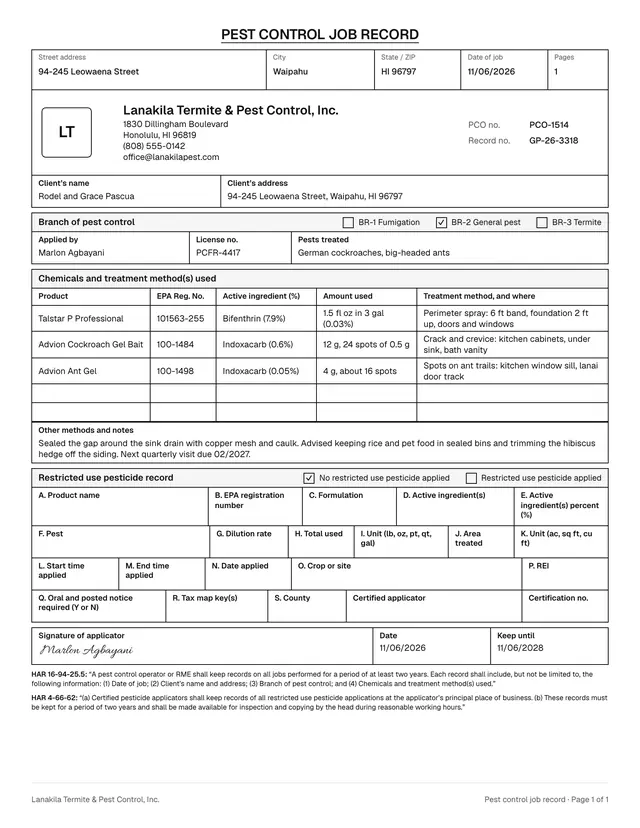
Pest Control Job Record
Record each pesticide applied at a service visit. - Illinois
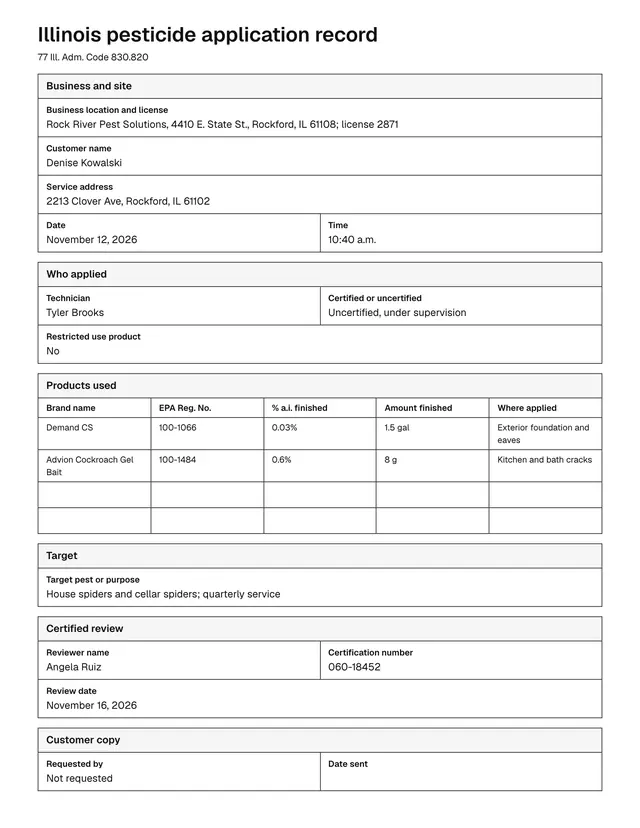
Illinois structural pest control application record
Record each pesticide applied at a service visit. - Indiana
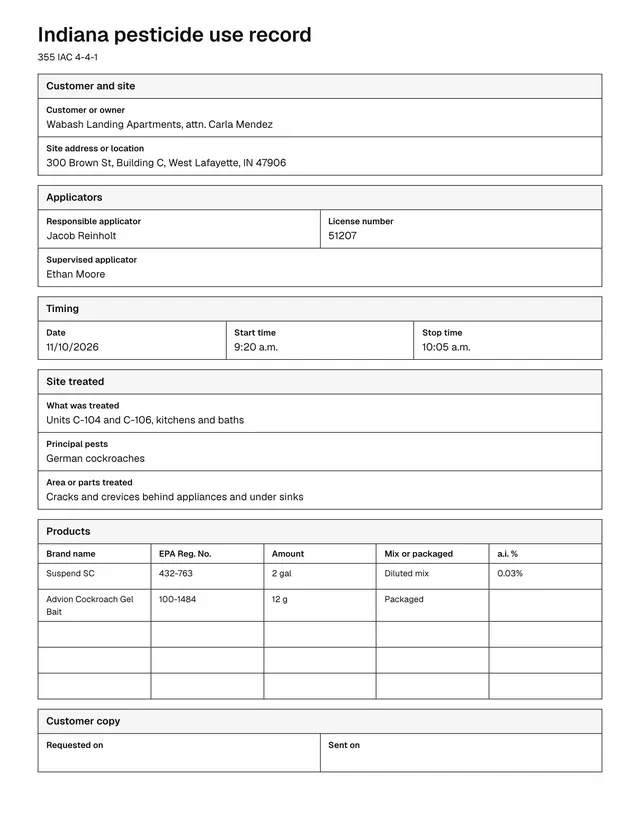
Indiana commercial applicator pesticide use record
Record each pesticide applied at a service visit. - Iowa
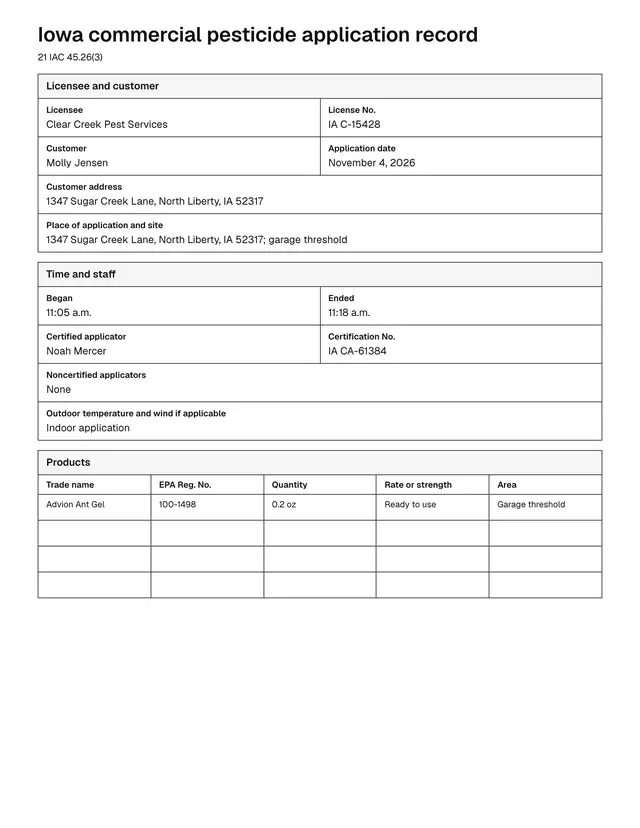
Iowa commercial pesticide application record
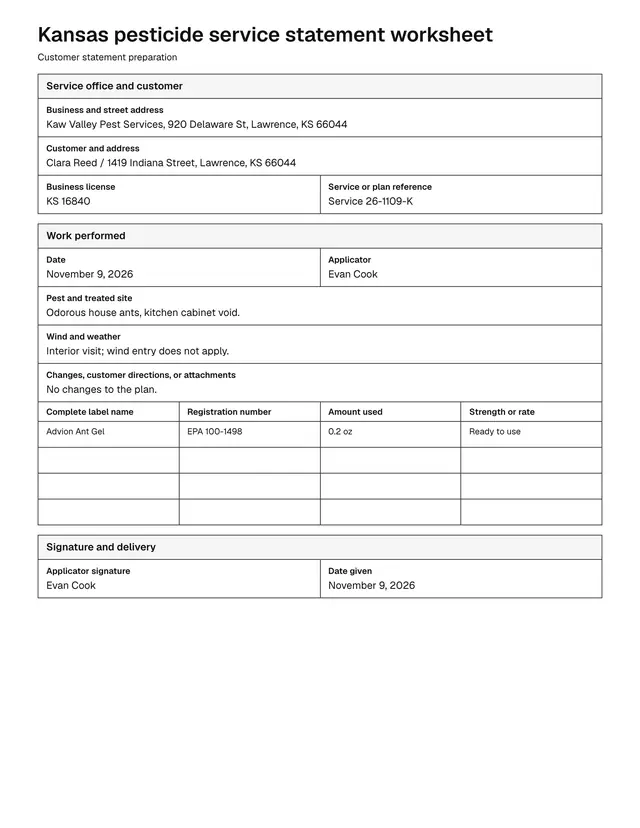
Record each pesticide applied at a service visit. - Kansas
Kansas pesticide service statement worksheet
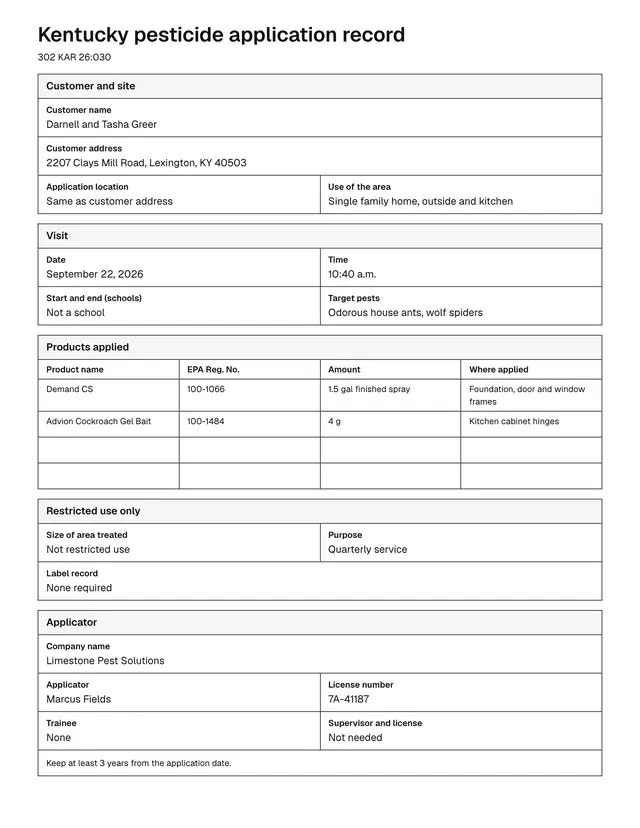
Record each pesticide applied at a service visit. - Kentucky
Kentucky pesticide application record (302 KAR 26:030)
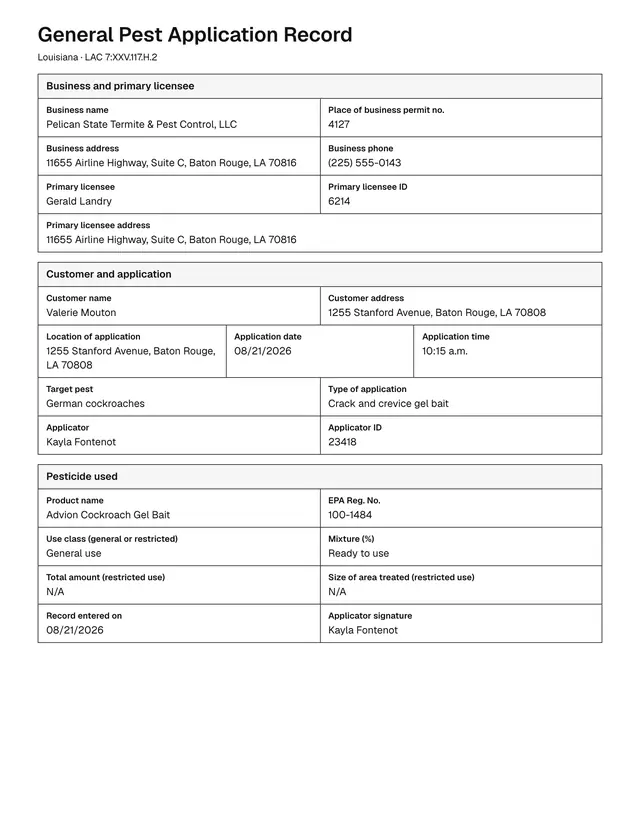
Record each pesticide applied at a service visit. - Louisiana
General Pest Application Record
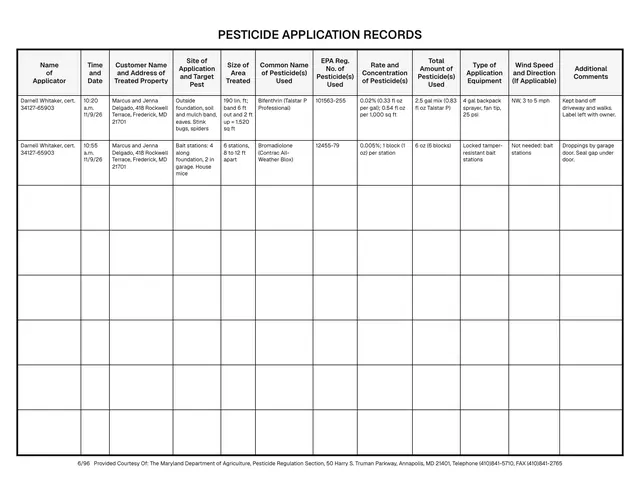
Record each pesticide applied at a service visit. - Maryland
Pesticide Application Record and Customer Pesticide Information
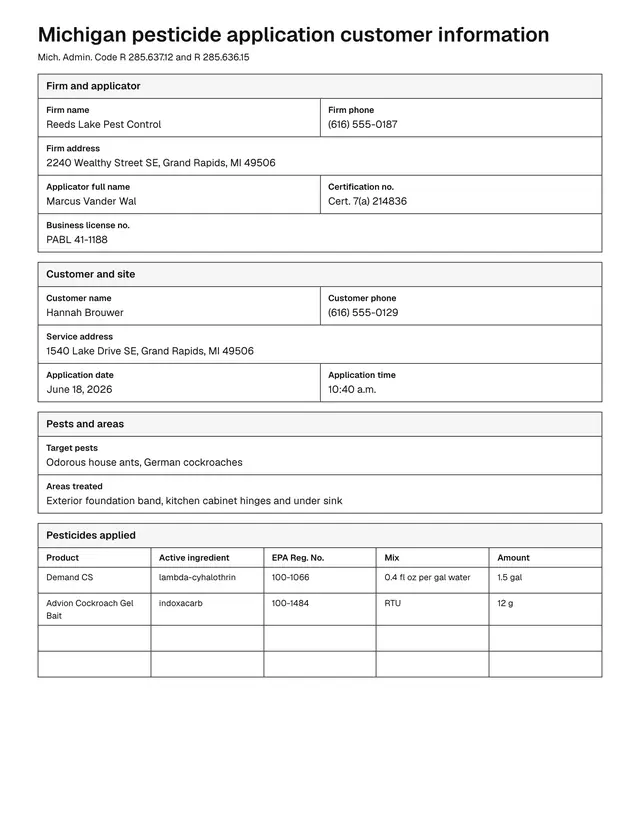
Record each pesticide applied at a service visit. - Michigan
Michigan pesticide customer information receipt
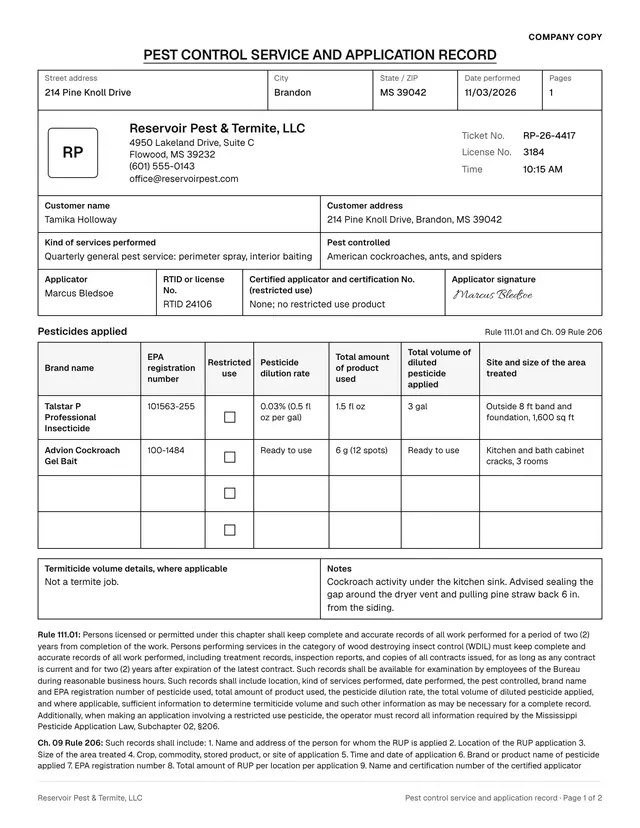
Record each pesticide applied at a service visit. - Mississippi
Pest Control Service and Application Record
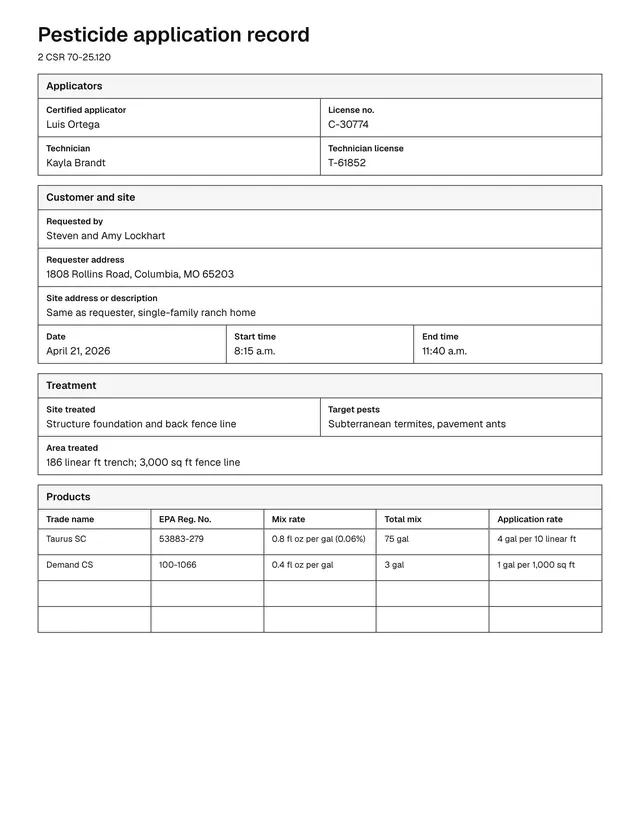
Record each pesticide applied at a service visit. - Missouri
Missouri pesticide application record (2 CSR 70-25.120)
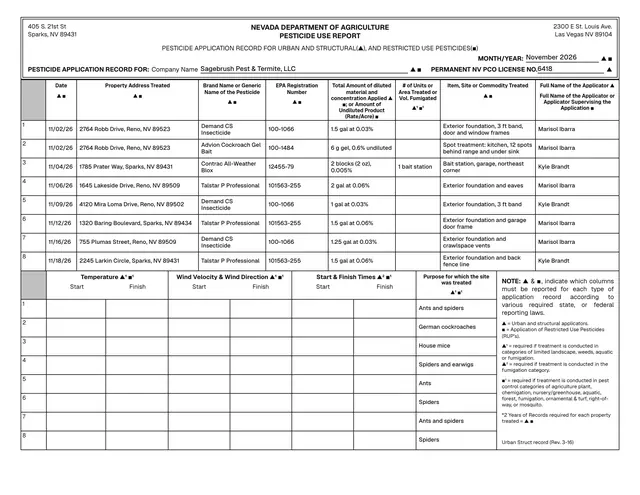
Record each pesticide applied at a service visit. - Nevada
Pesticide Application Record for Urban and Structural and Restricted Use Pesticides
Record each pesticide applied at a service visit. - New Jersey
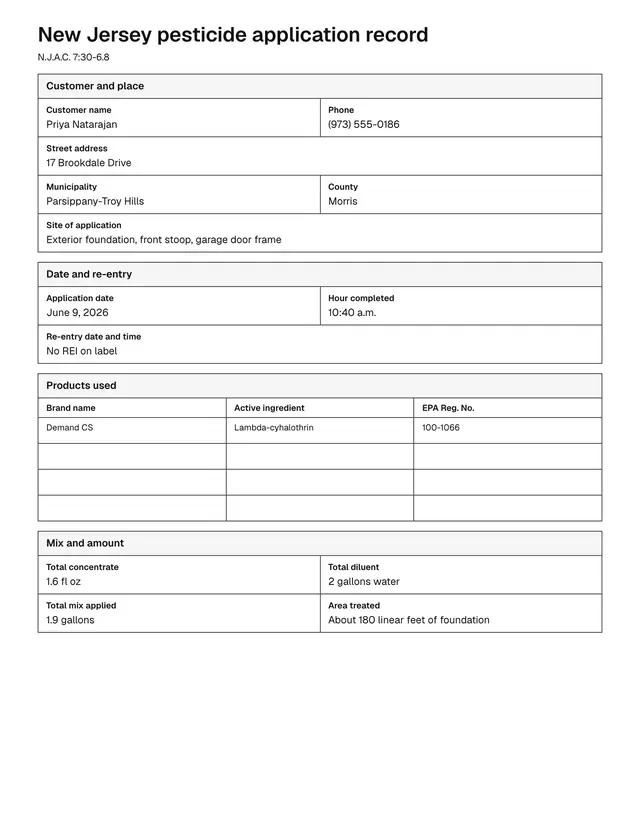
New Jersey pesticide application record (N.J.A.C. 7:30-6.8)
Record each pesticide applied at a service visit. - New Mexico
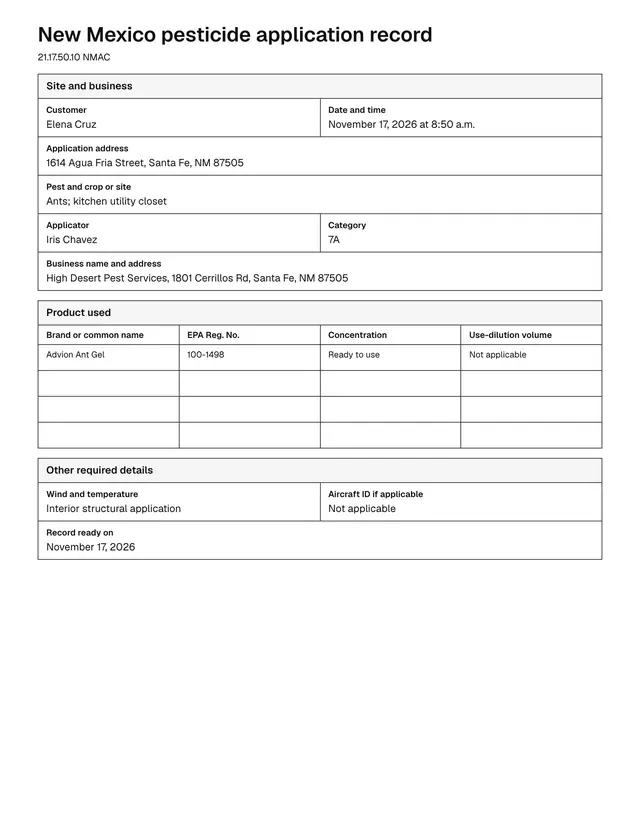
New Mexico pesticide application record
Record each pesticide applied at a service visit. - New York
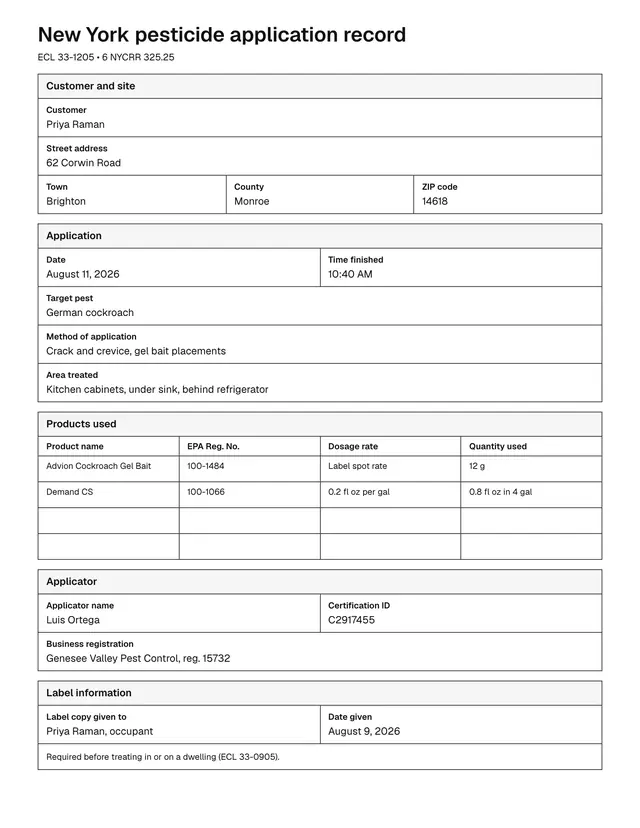
New York pesticide application record (6 NYCRR 325.25)
Record each pesticide applied at a service visit. - North Carolina
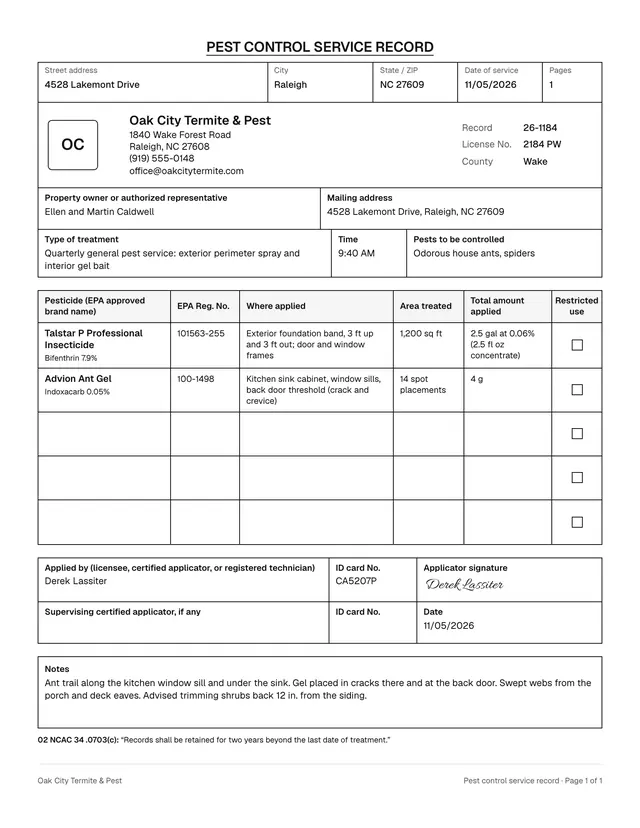
Pest Control Service Record
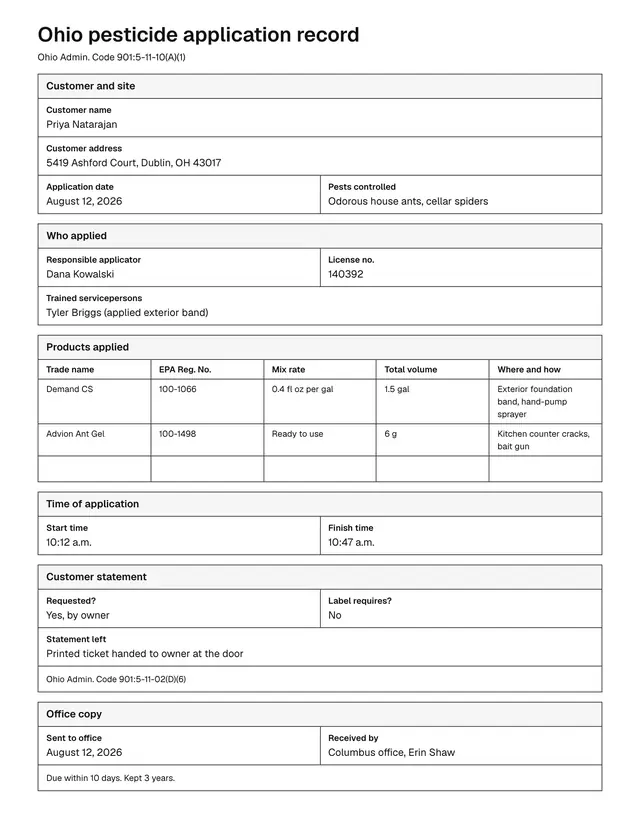
Record each pesticide applied at a service visit. - Ohio
Ohio pesticide application record
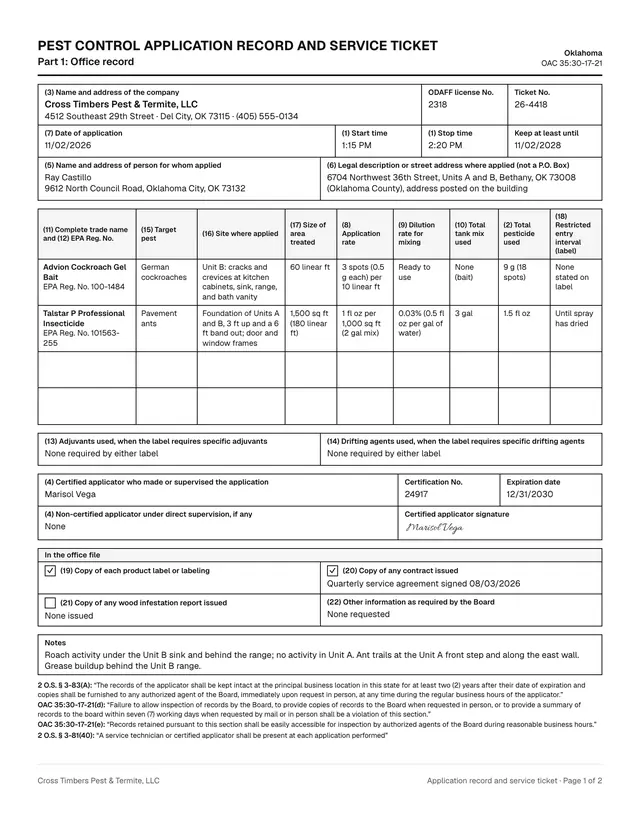
Record each pesticide applied at a service visit. - Oklahoma
Pest Control Application Record and Service Ticket
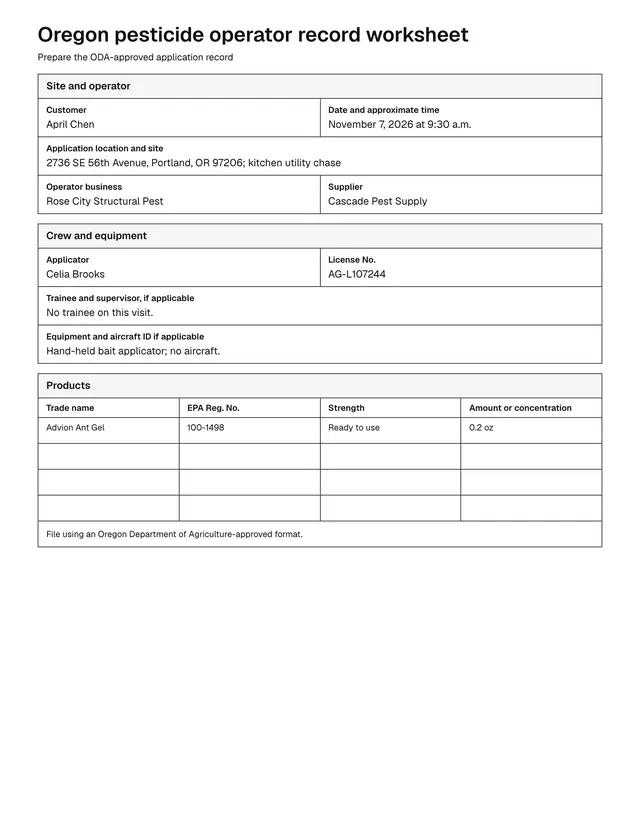
Record each pesticide applied at a service visit. - Oregon
Oregon pesticide operator record worksheet
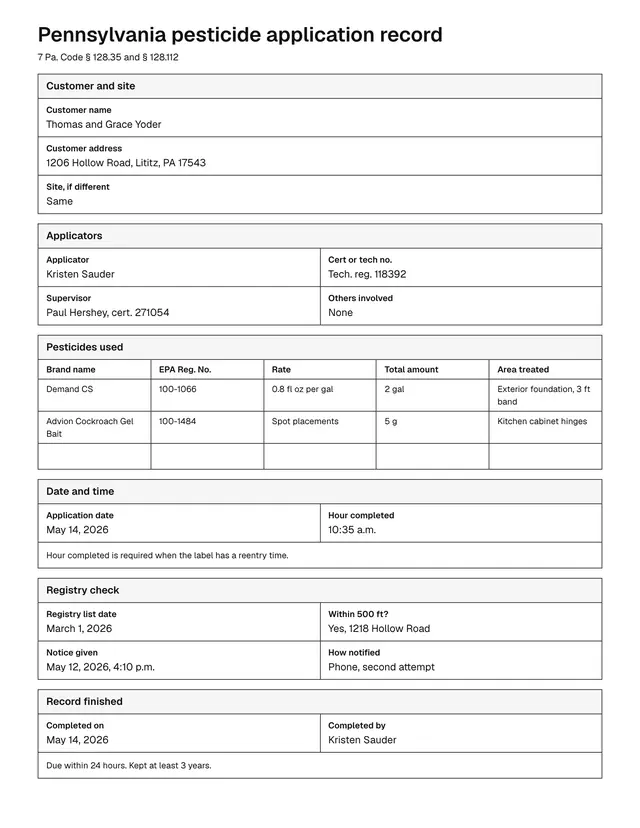
Record each pesticide applied at a service visit. - Pennsylvania
Pennsylvania pesticide application record
Record each pesticide applied at a service visit. - South Carolina
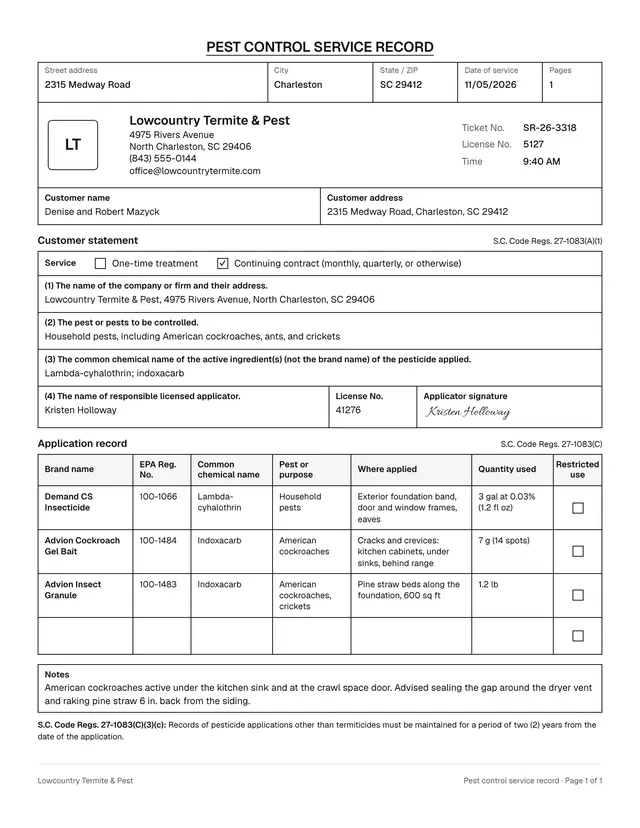
Pest Control Service Record
Record each pesticide applied at a service visit. - Tennessee
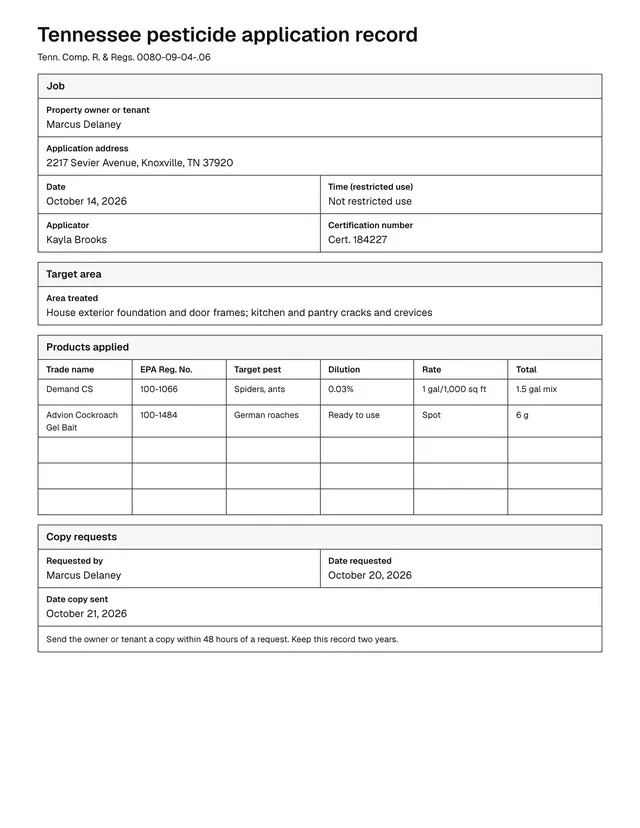
Tennessee pesticide application record
Record each pesticide applied at a service visit. - Texas
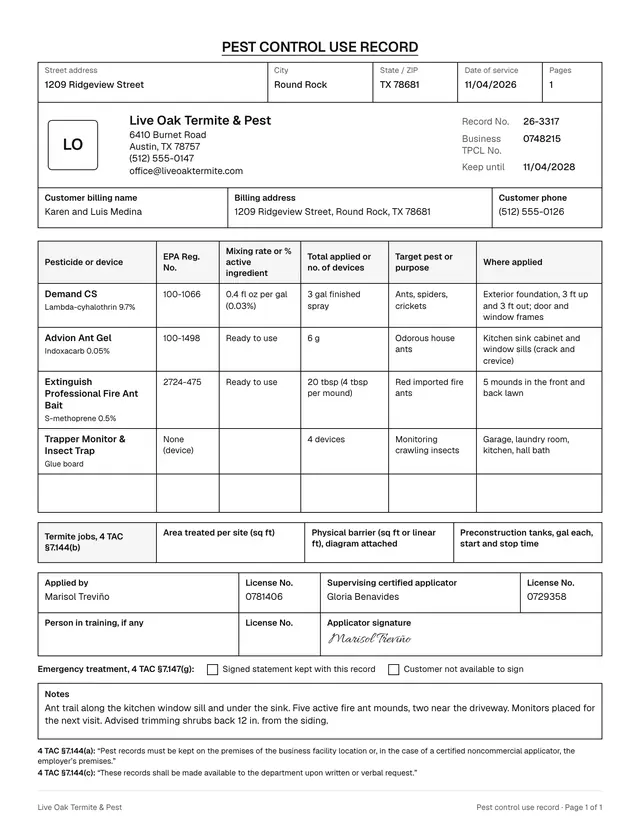
Pest Control Use Record
Record each pesticide applied at a service visit. - Utah
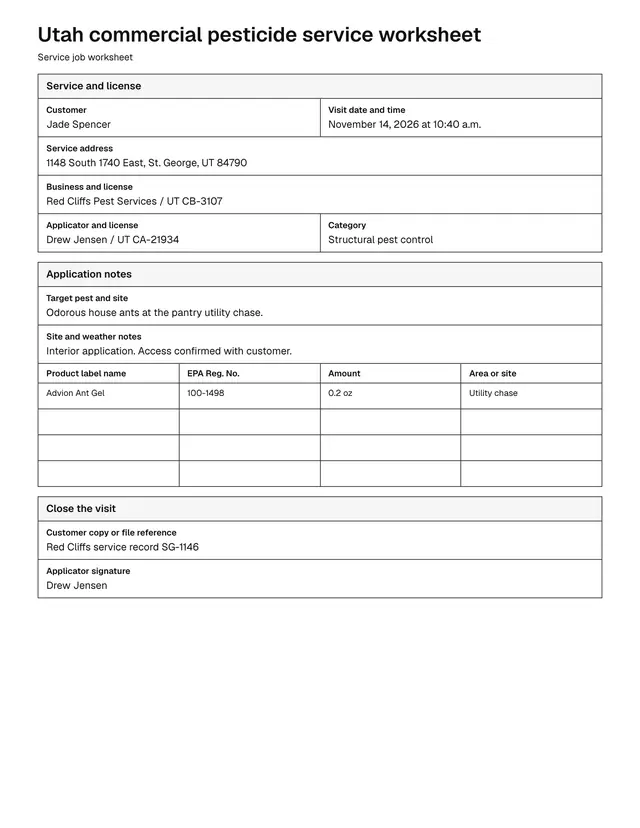
Utah commercial pesticide service worksheet
Record each pesticide applied at a service visit. - Virginia
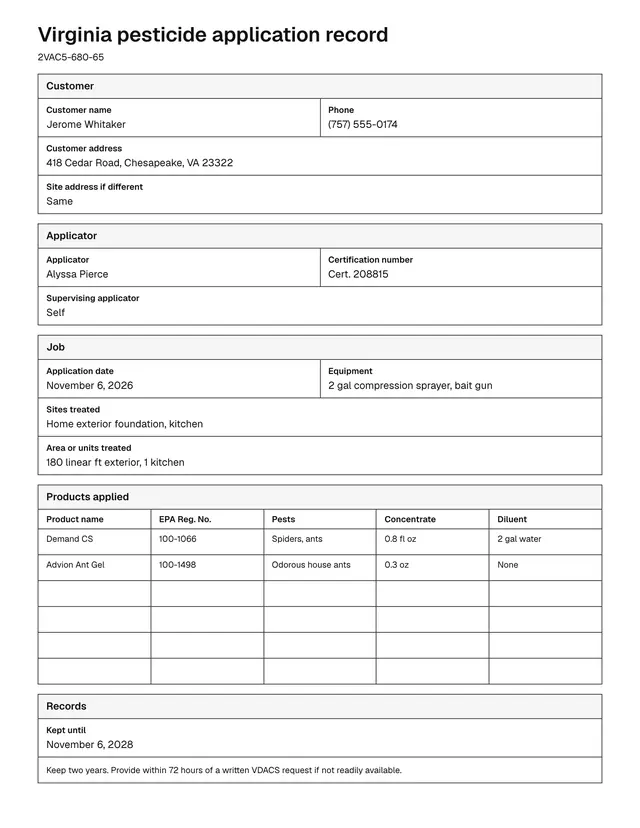
Virginia pesticide application record
Record each pesticide applied at a service visit. - Washington
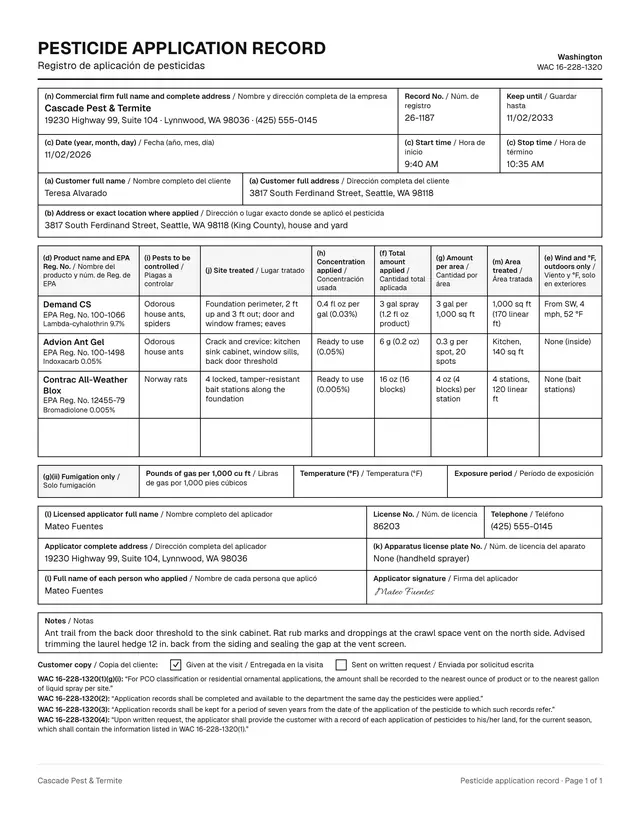
Pesticide Application Record
Record each pesticide applied at a service visit. - Wisconsin
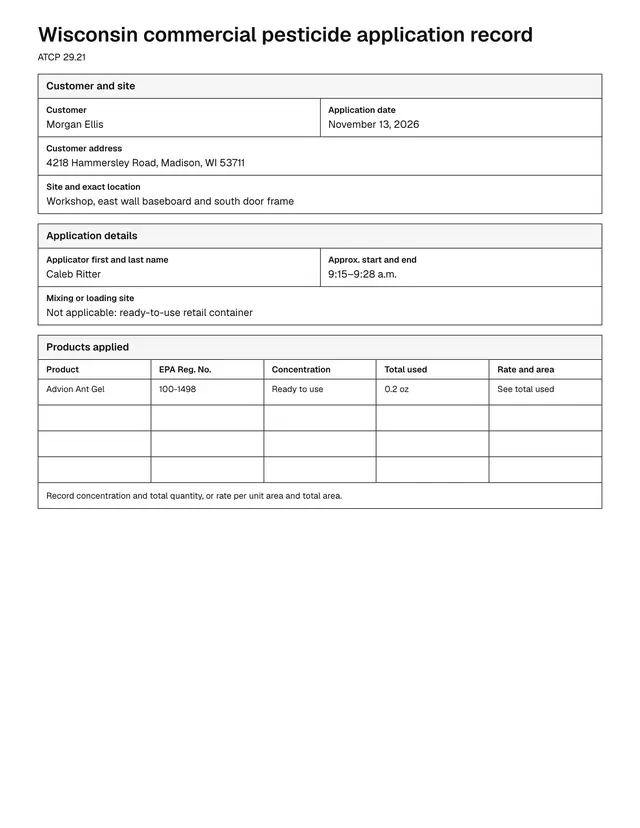
Wisconsin commercial pesticide application record
Record each pesticide applied at a service visit.