Illinois structural pest control application record
Every pesticide application an Illinois pest control company makes goes on a record kept at the business for two years. Here’s what 77 Ill. Adm. Code 830.820 wants on each one.
At a glance
- Rule
- 77 Ill. Adm. Code 830.820
- Keep
- 2 years at the business location
- Customer copy
- When the owner, manager, or tenant asks
- Regulator
- Illinois Department of Public Health
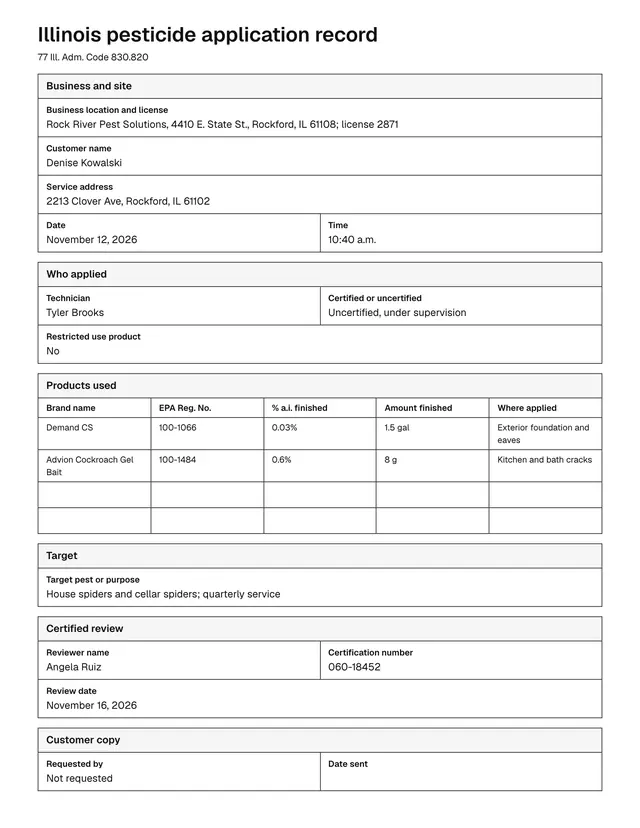
Completed example
Download PDFWho has to keep this record
Illinois splits pest control businesses into two kinds. A commercial location (you do pest control for hire) keeps records of “all pesticide applications” for at least two years. A non-commercial location, like a hospital’s in-house crew, only has to keep records of restricted use applications.
The difference is who you treat for. A one-truck company in Peoria spraying other people’s homes is commercial. An organization whose own staff treat its own buildings, like a hospital, registers with IDPH as non-commercial on a separate application.
If you do use restricted products, those records have to be kept separate from your general use records. Same fields, different pile. And all of them live at the business. Under section 830.820, every record except the last week’s has to be at the location and ready for IDPH to see. So the truck can hold this week’s tickets, not last month’s.
The six things on every record
The list is short, and most of it you already write down. Every record needs the customer’s name and address (or the site), the technician who applied it, the date and time, and the target pest or purpose.
The product line is where tickets fall short. Illinois wants four things for each product: the brand or common name, the USEPA registration number, the percent of active ingredient in the finished product, and an estimate of each finished product used that’s accurate within 10 percent.
Here’s what that looks like. A tech mixes Demand CS (EPA Reg. No. 100-1066) at 0.03% and sprays about a gallon and a half around a Rockford ranch. The record says “Demand CS, 100-1066, 0.03%, 1.5 gal finished.” Anything from 1.35 to 1.65 gallons used would be inside the 10 percent window. “Perimeter spray, Demand” is not a record.
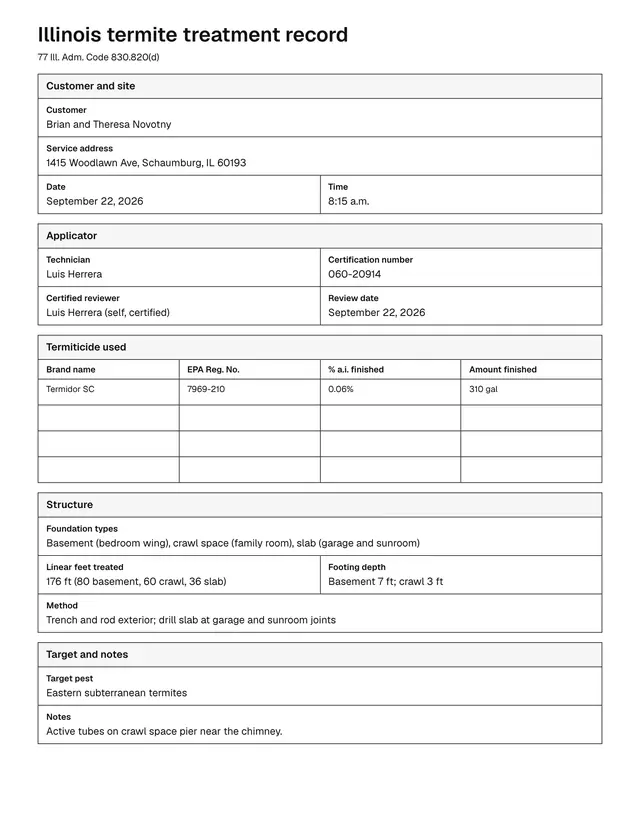
Termite work adds one more item, a diagram of the structure. That one has its own sheet: the Illinois termite treatment record and diagram.
The review signature people forget
Illinois lets uncertified techs apply pesticides under a certified technician. The catch is in 830.820(c). The certified tech who oversees them has to document a review of every record for services done by uncertified techs, with their name, certification number, and the dates of service.
In practice, that means someone with a certification signs off on the new hires’ tickets. A lot of shops do it every Monday for the week before. The rule doesn’t set a schedule, but a weekly batch keeps it from piling up. Keep the on-the-job training records too. Those stay as long as the employee works for you or until they become certified.
IDPH renews each business license every year by December 1, and technician certifications every three years. Because the records stay at the location, an IDPH inspector can look at them, along with the training files, on a routine visit.
Copies, hospitals, and bad days
Copies are a customer right here. Section 830.820(f) says businesses “shall provide copies of service records upon request” of the property’s current owner, manager, or tenant. That last one surprises people. A renter in a Champaign apartment can ask what you sprayed in their unit, and you owe them the record.
Health care jobs come with handouts. When you treat a patient area, section 830.800(g) says to post a sign at each entrance and give the person in charge of patient care a copy of the sign, the label, and the safety data sheet for each product.
If something goes wrong, the clock is short. Under section 830.870, you notify IDPH within one business day of learning about an illness, a contaminated water supply, or a contaminated structure tied to your work. A good record is the first thing they’ll ask for.
Does a monthly route mean a mountain of paper?
It can. A tech with 14 stops a day writes 14 records, and the office has to find any one of them for two years. Add the weekly review for uncertified techs and the tenant who wants a copy, and the filing adds up fast.
Whatever your techs fill out, build the six items into the ticket itself. A blank for the EPA Reg. No. and one for the finished amount fixes most gaps before they happen.
Noma specializes in the Illinois structural pest control application record (77 Ill. Adm. Code 830.820). It schedules the recurring visits, puts each stop on the tech’s phone, and sends the invoice with an online payment link when the work is done. See how Noma runs pest control routes.
Frequentlyaskedquestions
Send this document in minutes, not an afternoon.
Other states
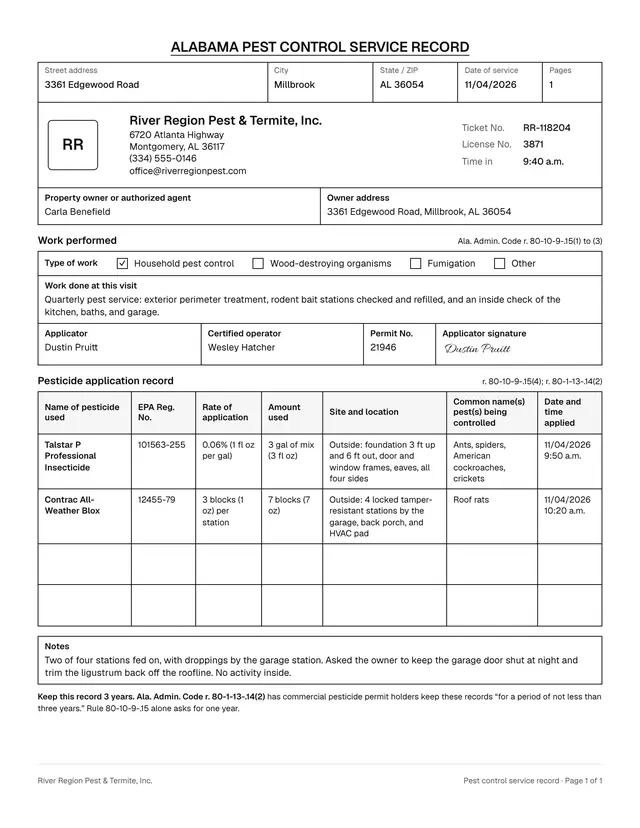
After-treatment notice templates- Alabama
Alabama Pest Control Service Record
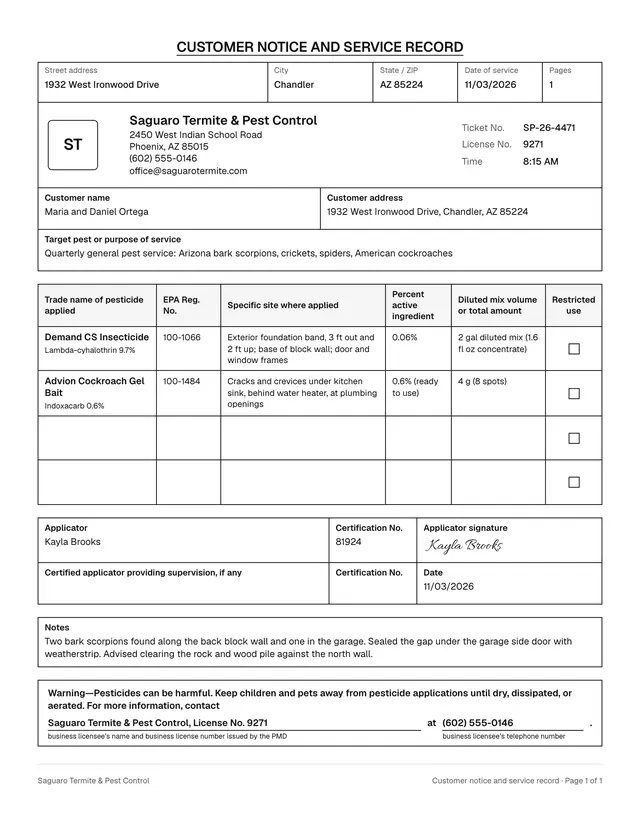
Record each pesticide applied at a service visit. - Arizona
Customer Notice and Service Record
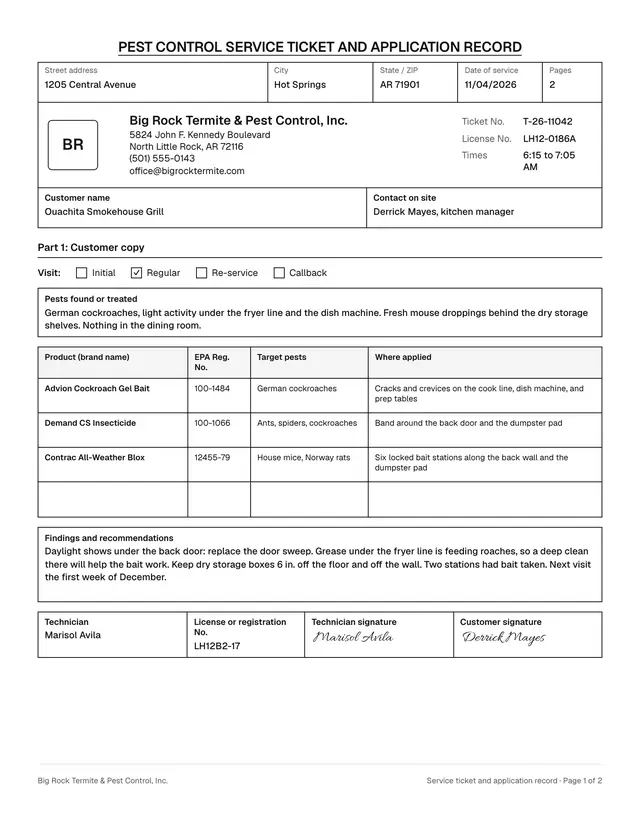
Record each pesticide applied at a service visit. - Arkansas
Pest Control Service Ticket and Application Record
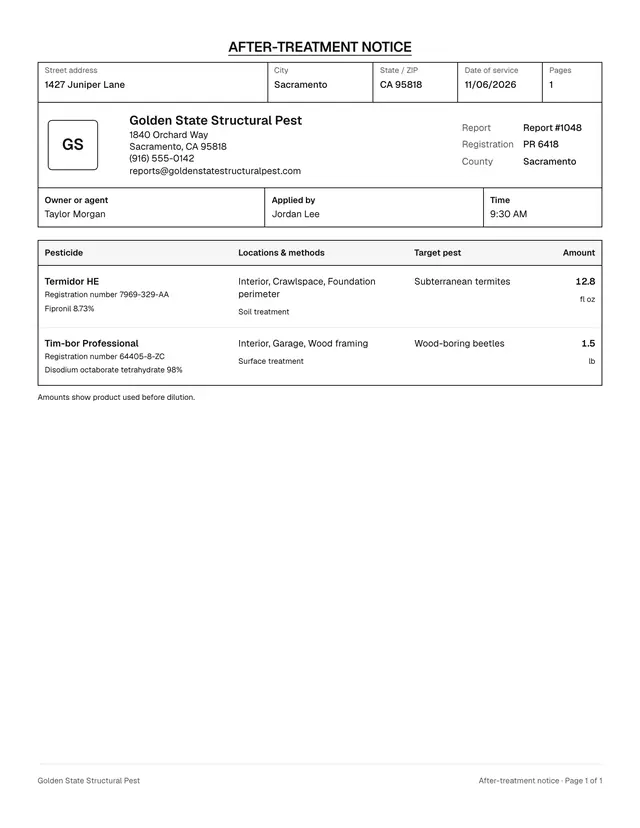
Record each pesticide applied at a service visit. - California
After-Treatment Notice
Record each pesticide applied at a service visit. - Colorado
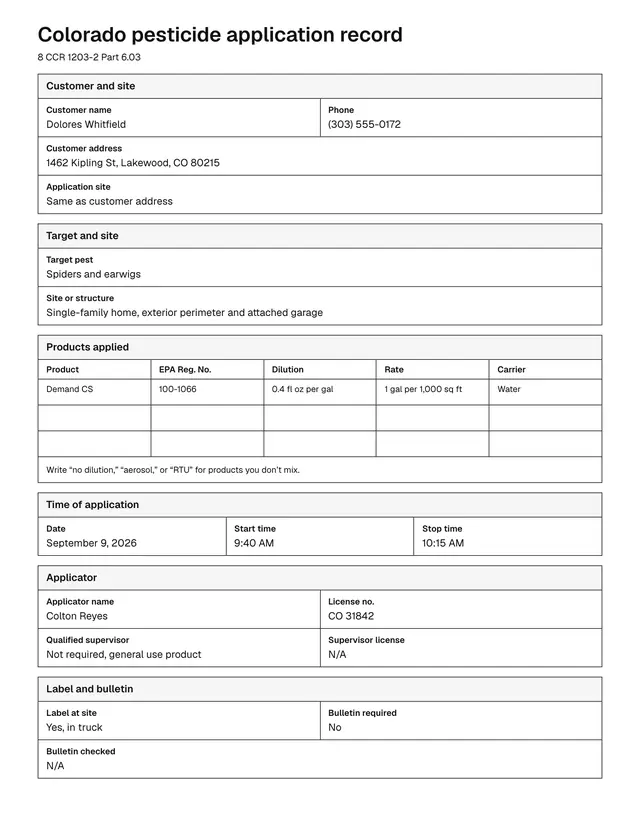
Colorado commercial pesticide application record
Record each pesticide applied at a service visit. - Connecticut
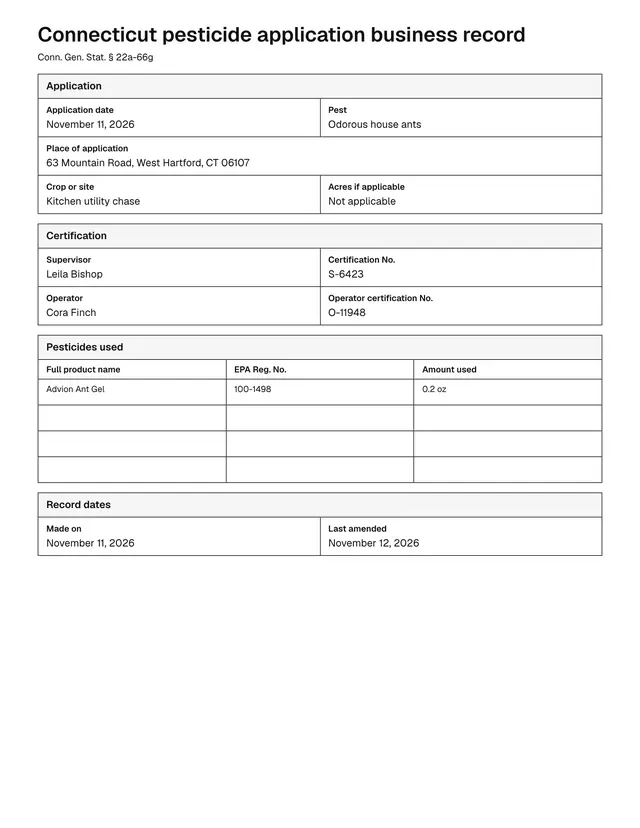
Connecticut pesticide application business record
Record each pesticide applied at a service visit. - Delaware
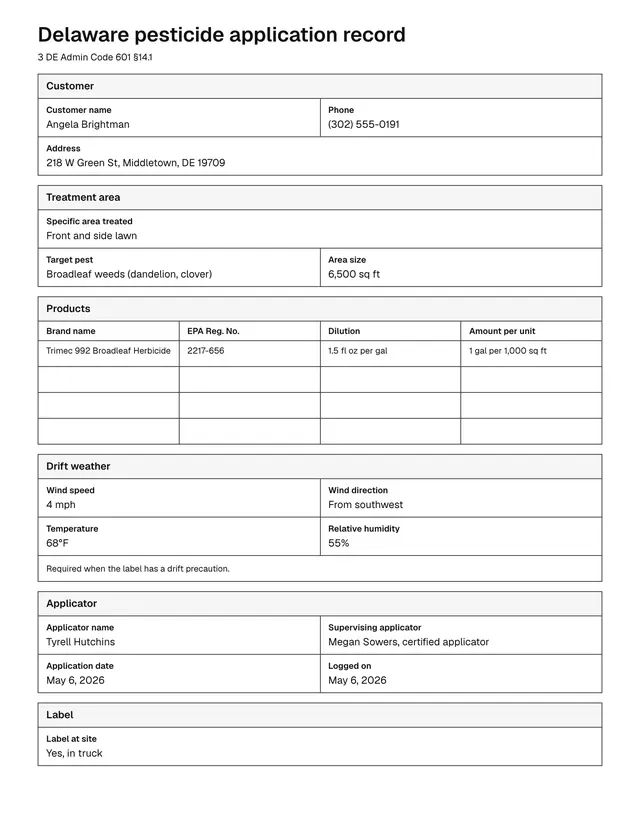
Delaware pesticide application record (3 DE Admin Code 601 §14.1)
Record each pesticide applied at a service visit. - Georgia
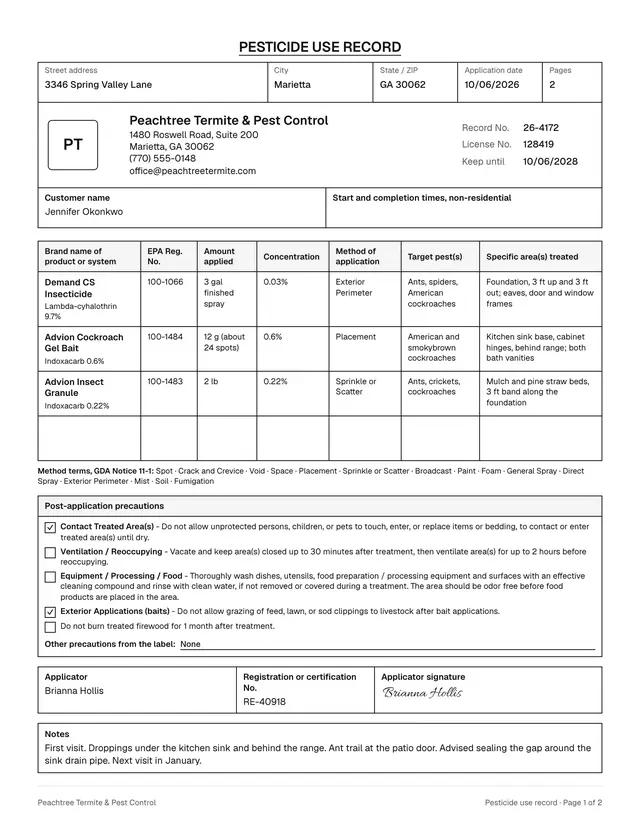
Pesticide Use Record
Record each pesticide applied at a service visit. - Hawaii
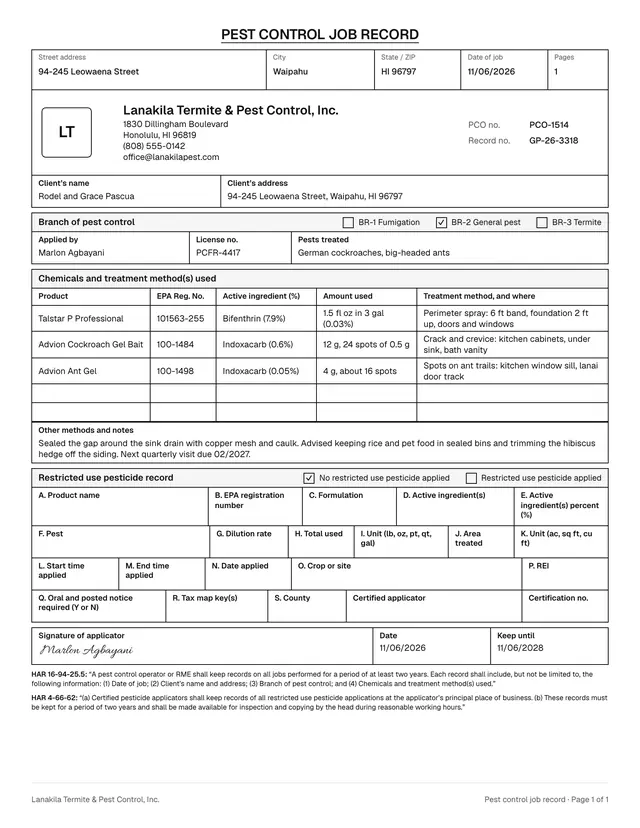
Pest Control Job Record
Record each pesticide applied at a service visit. - Indiana
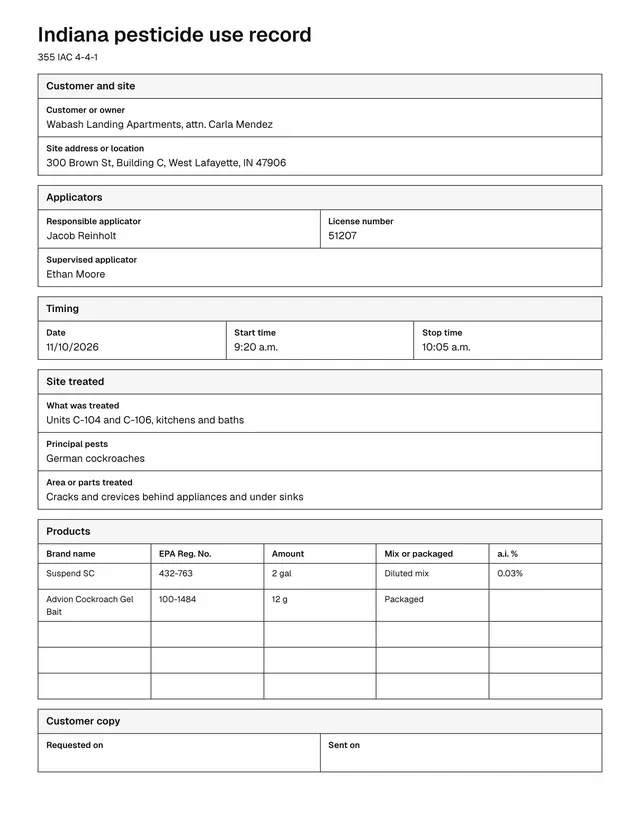
Indiana commercial applicator pesticide use record
Record each pesticide applied at a service visit. - Iowa
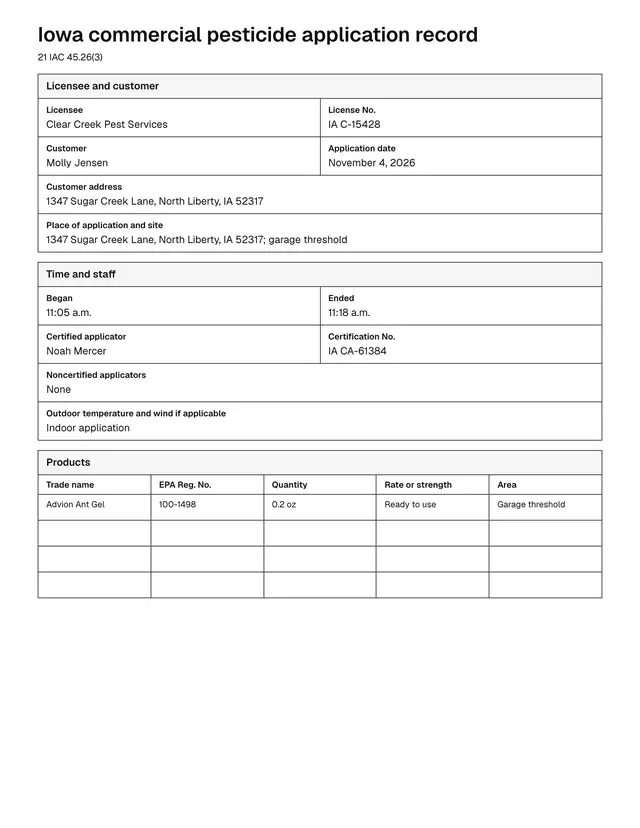
Iowa commercial pesticide application record
Record each pesticide applied at a service visit. - Kansas
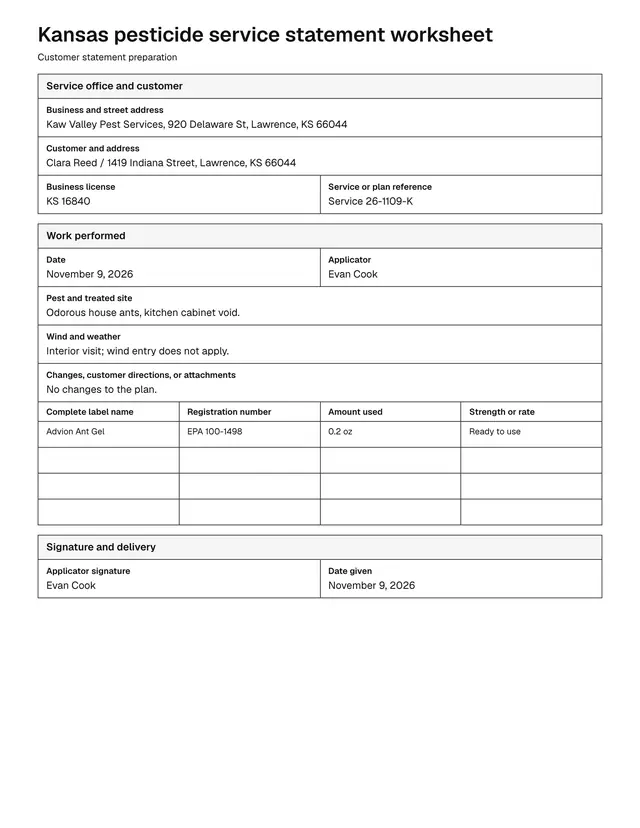
Kansas pesticide service statement worksheet
Record each pesticide applied at a service visit. - Kentucky
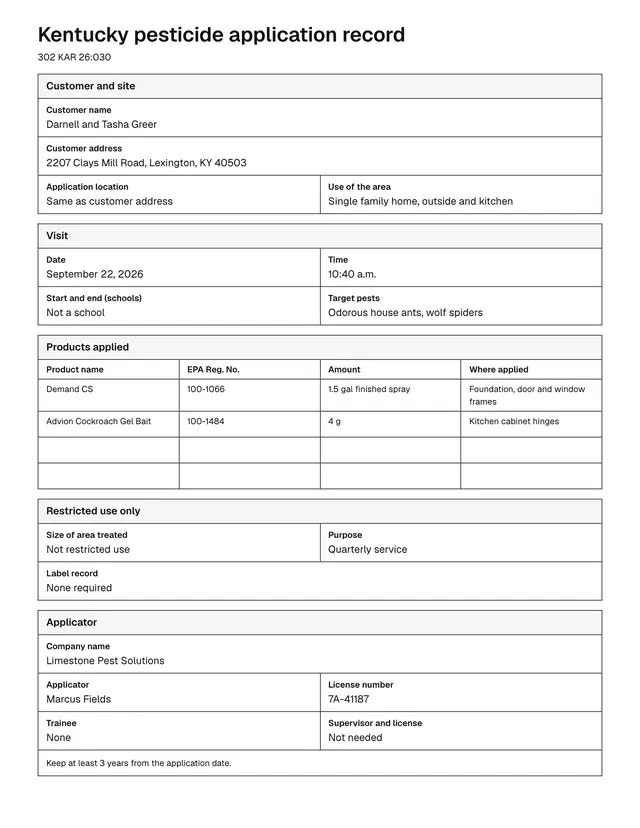
Kentucky pesticide application record (302 KAR 26:030)
Record each pesticide applied at a service visit. - Louisiana
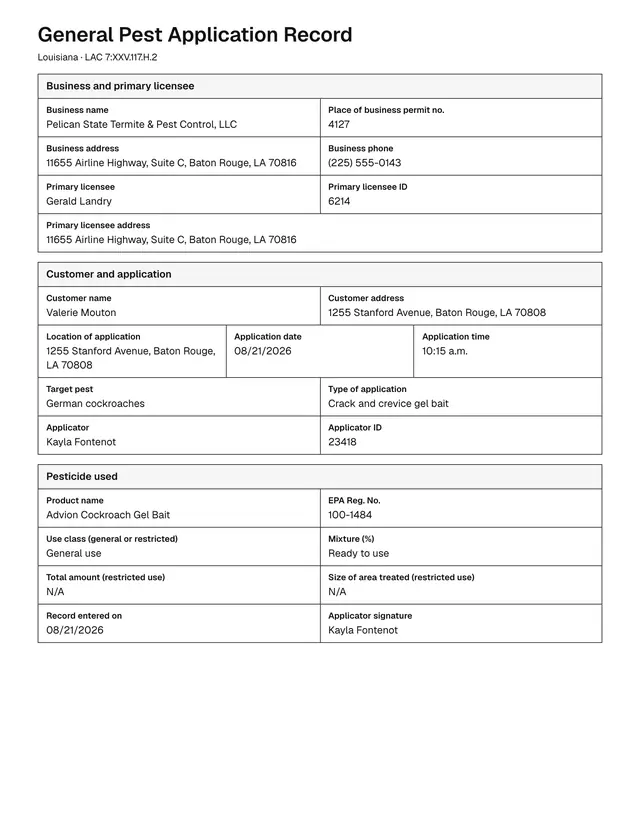
General Pest Application Record
Record each pesticide applied at a service visit. - Maryland
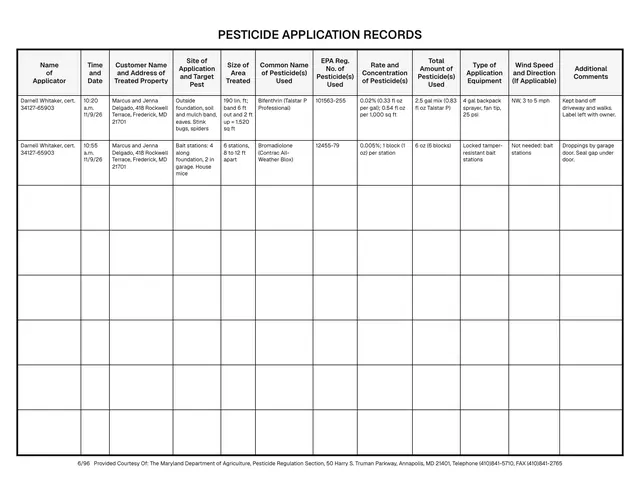
Pesticide Application Record and Customer Pesticide Information
Record each pesticide applied at a service visit. - Massachusetts
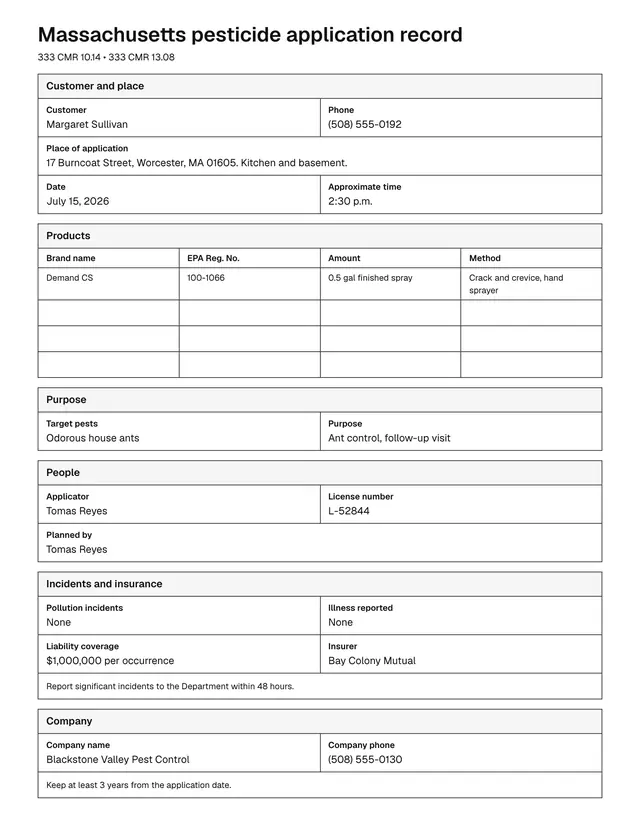
Massachusetts pesticide application record (333 CMR 10.14)
Record each pesticide applied at a service visit. - Michigan
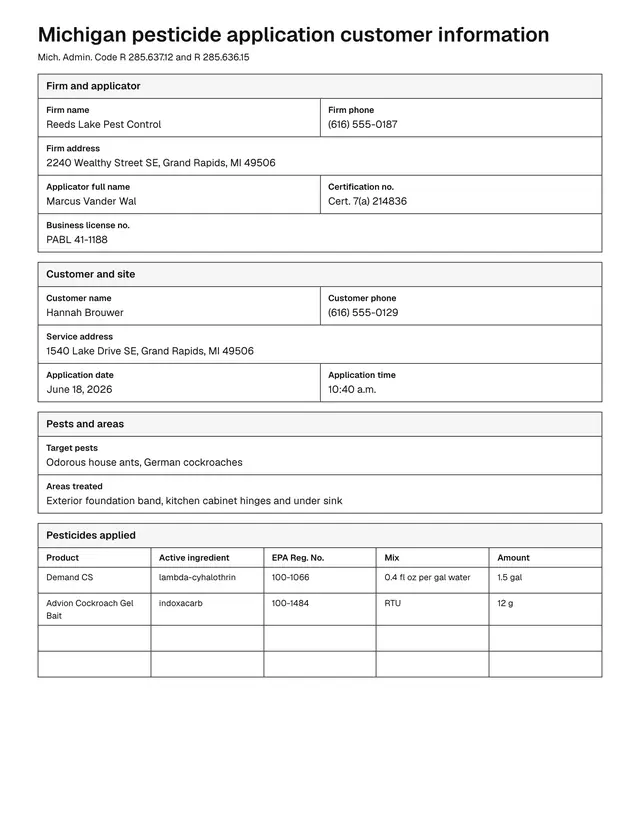
Michigan pesticide customer information receipt
Record each pesticide applied at a service visit. - Mississippi
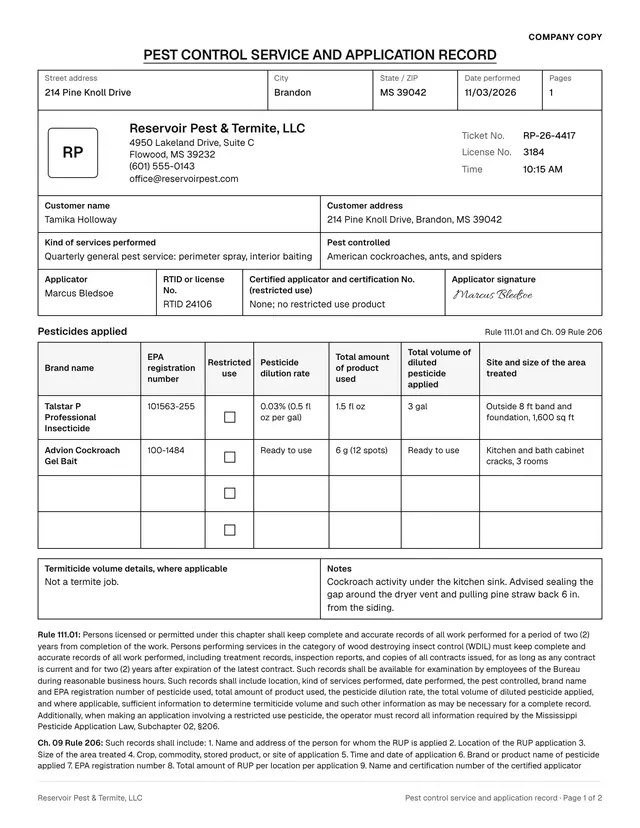
Pest Control Service and Application Record
Record each pesticide applied at a service visit. - Missouri
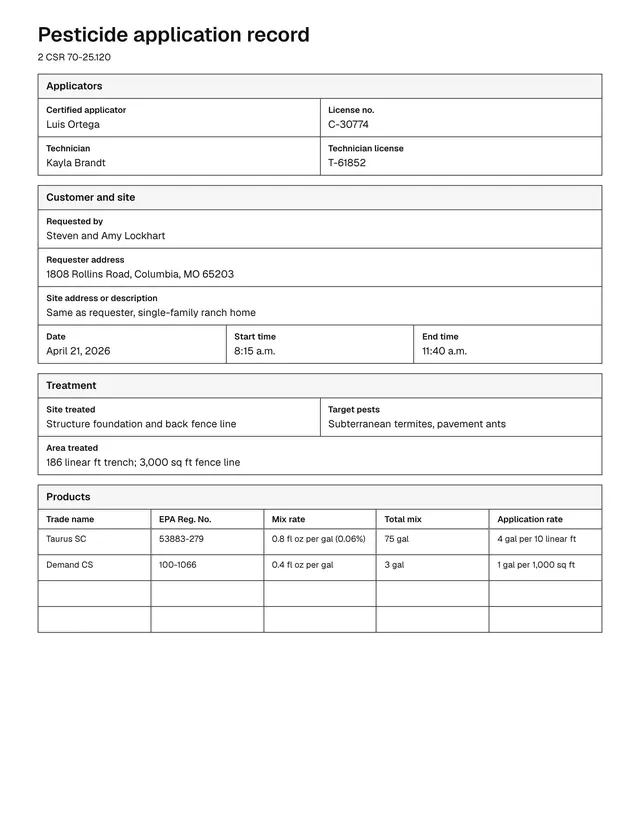
Missouri pesticide application record (2 CSR 70-25.120)
Record each pesticide applied at a service visit. - Nevada
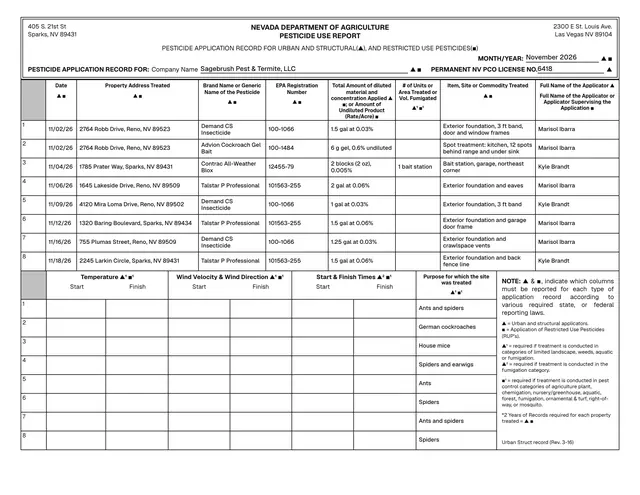
Pesticide Application Record for Urban and Structural and Restricted Use Pesticides
Record each pesticide applied at a service visit. - New Jersey
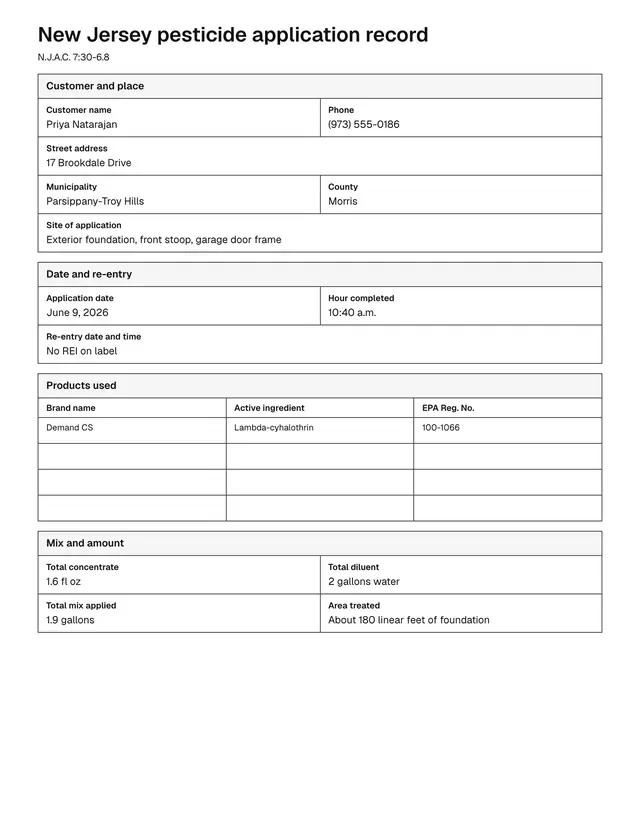
New Jersey pesticide application record (N.J.A.C. 7:30-6.8)
Record each pesticide applied at a service visit. - New Mexico
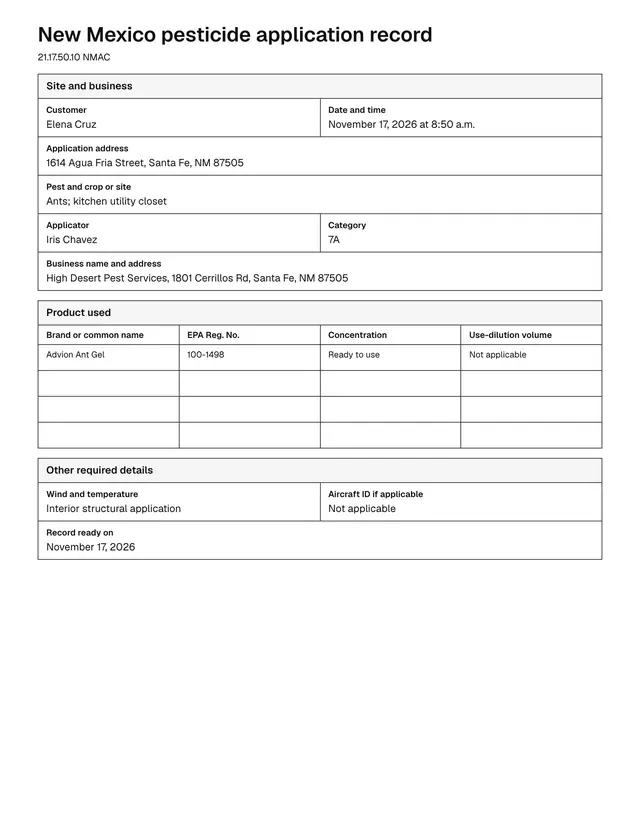
New Mexico pesticide application record
Record each pesticide applied at a service visit. - New York
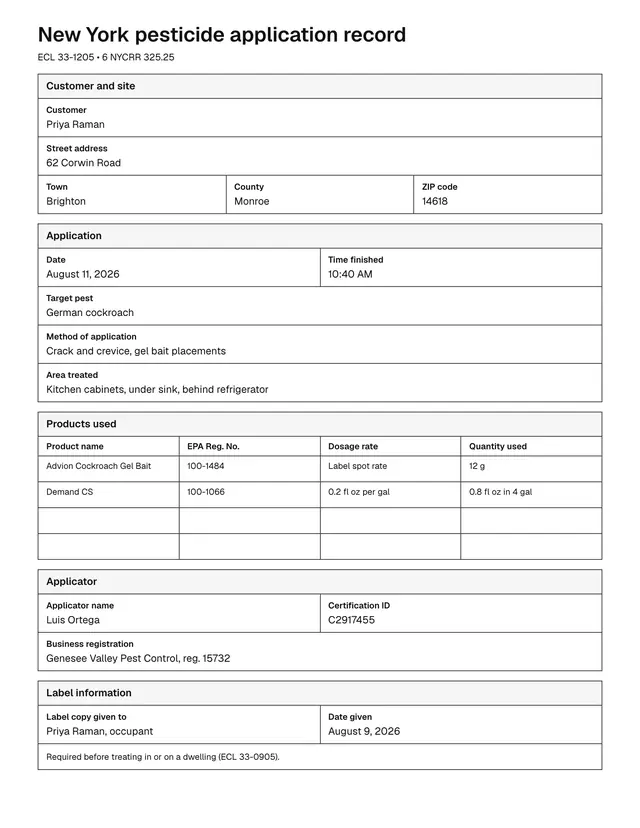
New York pesticide application record (6 NYCRR 325.25)
Record each pesticide applied at a service visit. - North Carolina
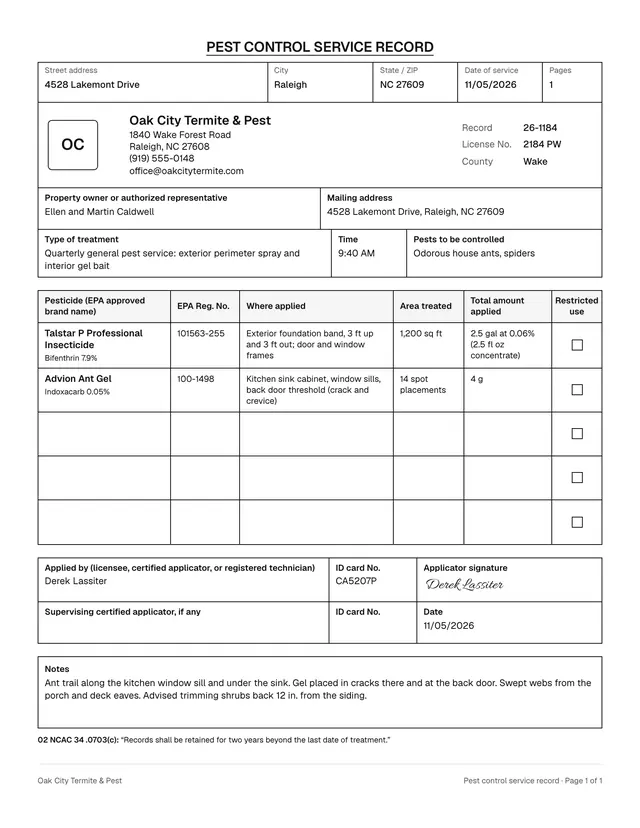
Pest Control Service Record
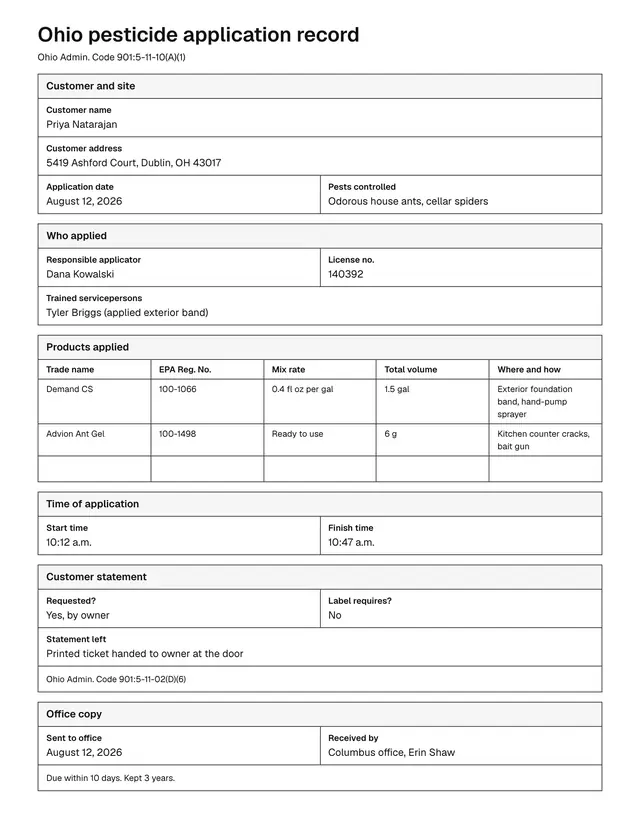
Record each pesticide applied at a service visit. - Ohio
Ohio pesticide application record
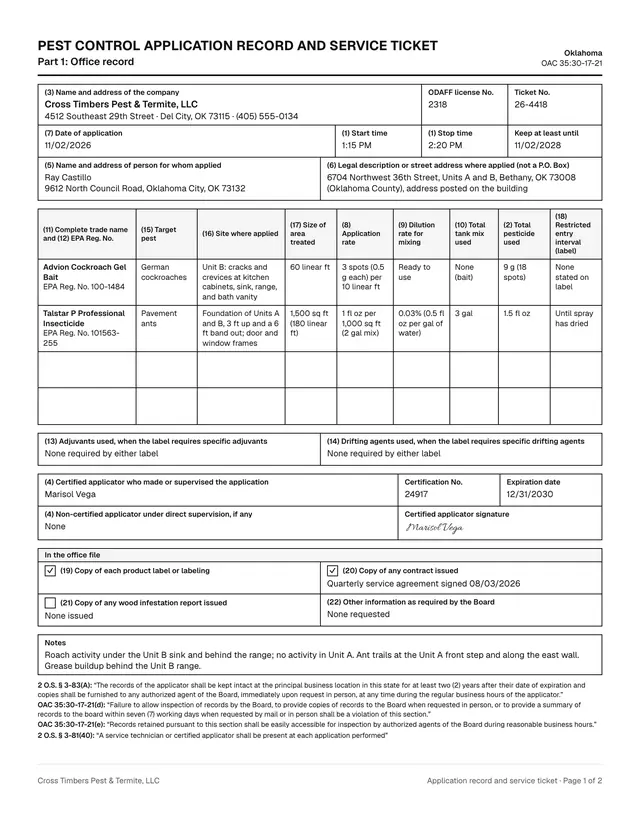
Record each pesticide applied at a service visit. - Oklahoma
Pest Control Application Record and Service Ticket
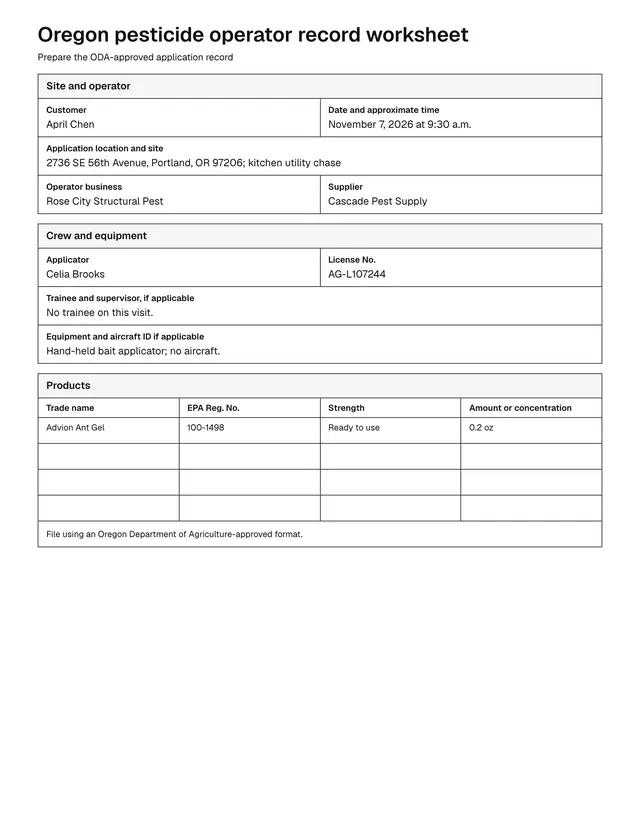
Record each pesticide applied at a service visit. - Oregon
Oregon pesticide operator record worksheet
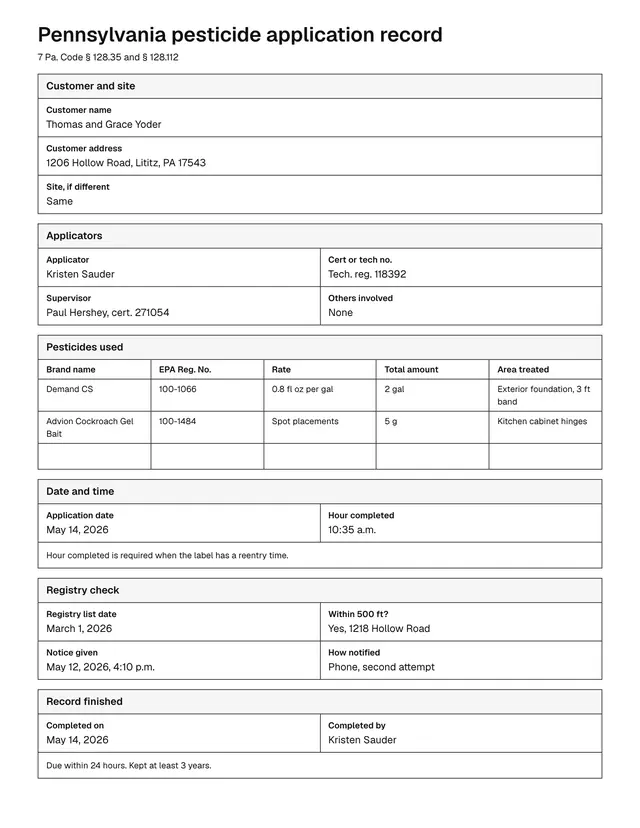
Record each pesticide applied at a service visit. - Pennsylvania
Pennsylvania pesticide application record
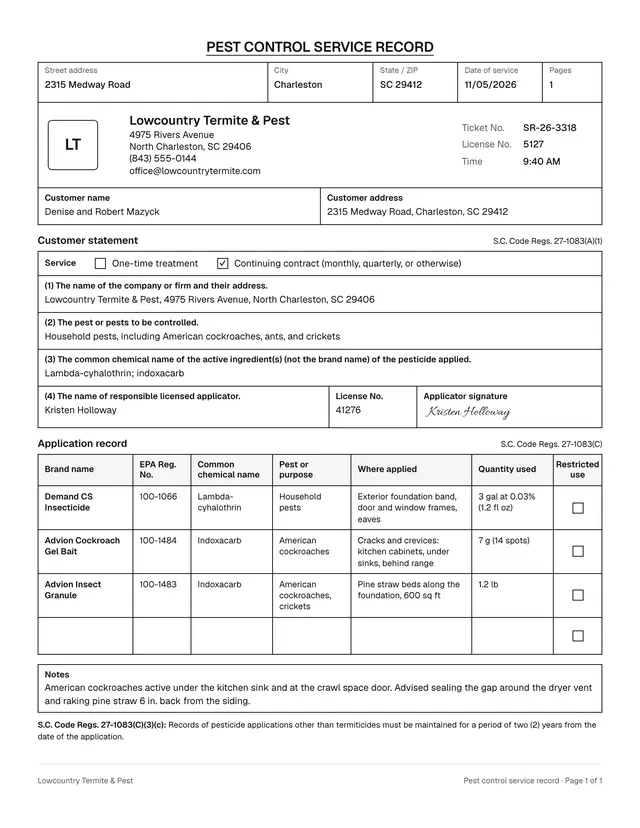
Record each pesticide applied at a service visit. - South Carolina
Pest Control Service Record
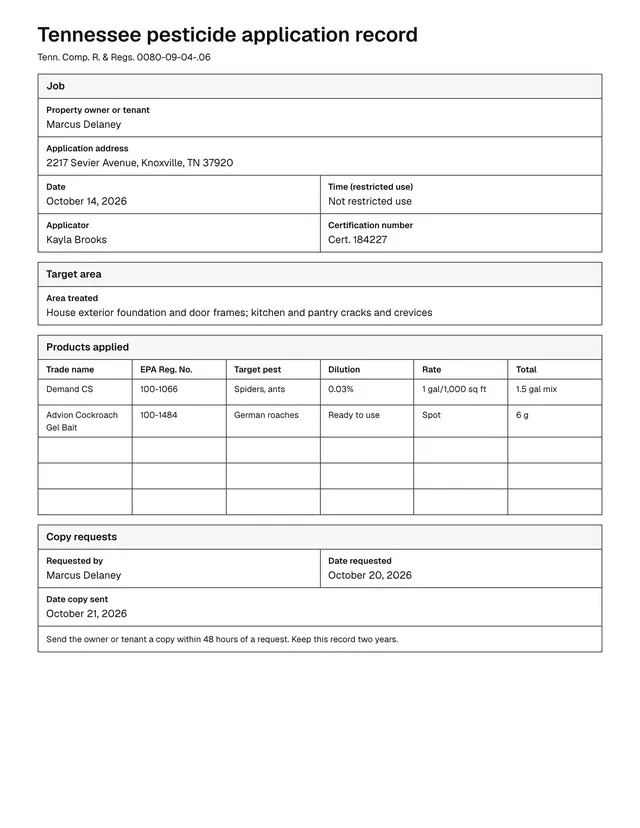
Record each pesticide applied at a service visit. - Tennessee
Tennessee pesticide application record
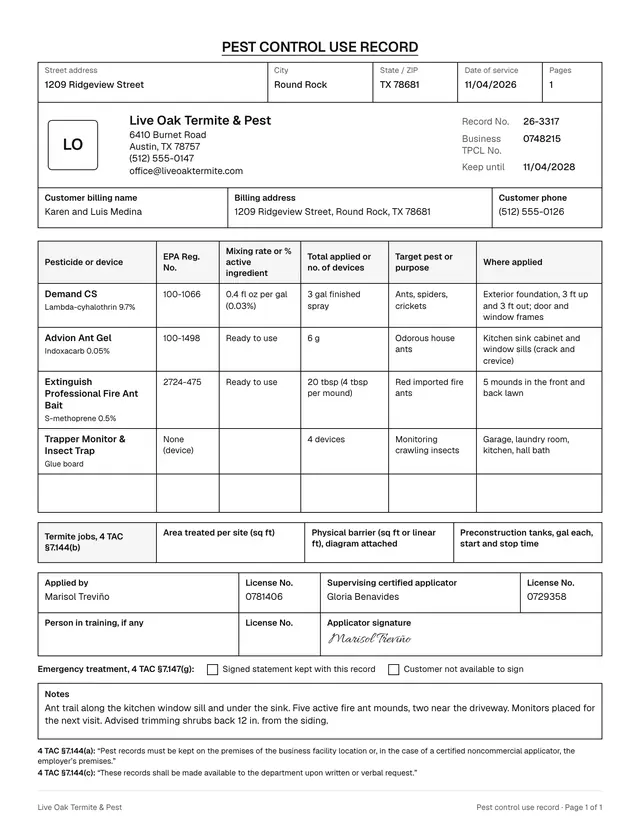
Record each pesticide applied at a service visit. - Texas
Pest Control Use Record
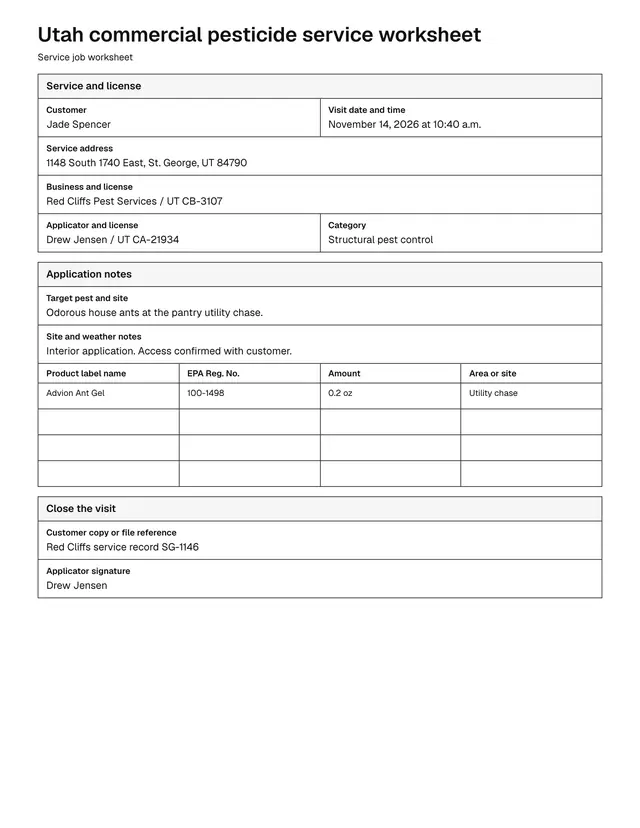
Record each pesticide applied at a service visit. - Utah
Utah commercial pesticide service worksheet
Record each pesticide applied at a service visit. - Virginia
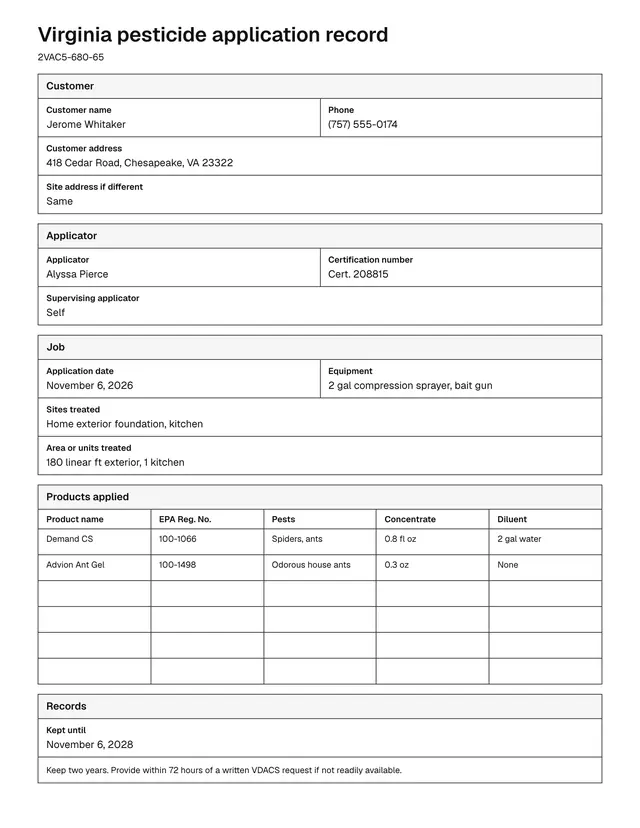
Virginia pesticide application record
Record each pesticide applied at a service visit. - Washington
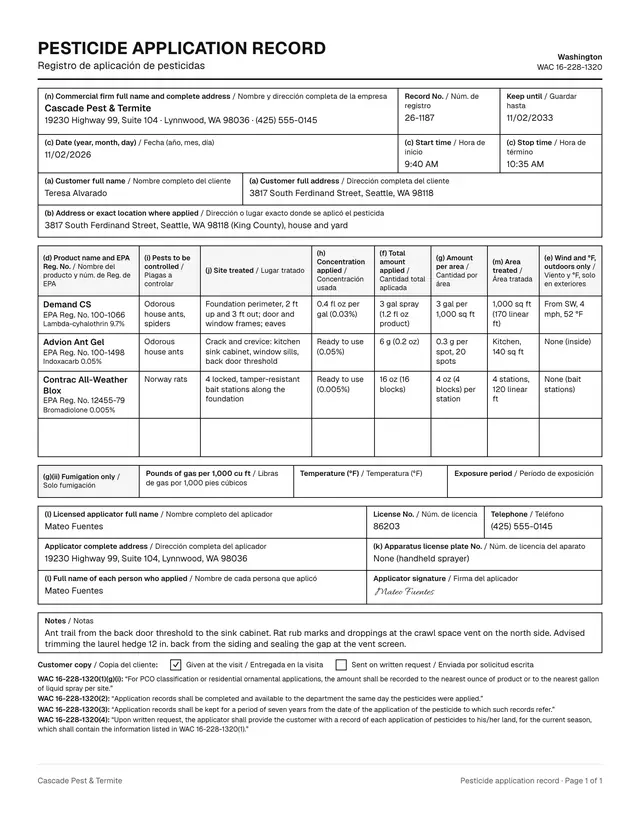
Pesticide Application Record
Record each pesticide applied at a service visit. - Wisconsin
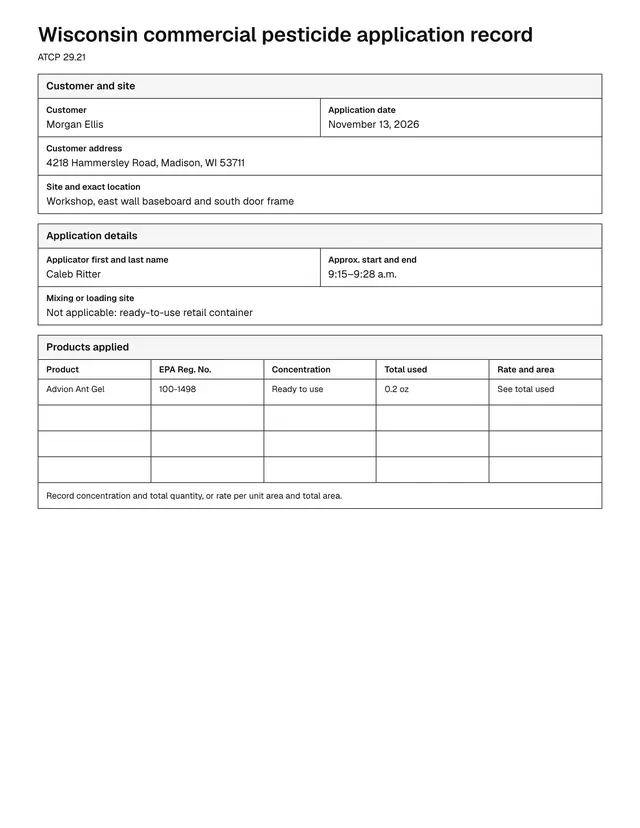
Wisconsin commercial pesticide application record
Record each pesticide applied at a service visit.