Michigan pesticide customer information receipt
Michigan Reg 637 says every commercial pest control customer gets six facts in writing at each application. Here’s what goes on the receipt, when email is allowed, and the mistakes MDARD writes up.
At a glance
- Rule
- Mich. Admin. Code R 285.637.12
- When
- At each application, or by email within 48 hours
- Office record
- 1 year general use, 3 years restricted use
- Service agreement
- Good for 12 months unless renewed
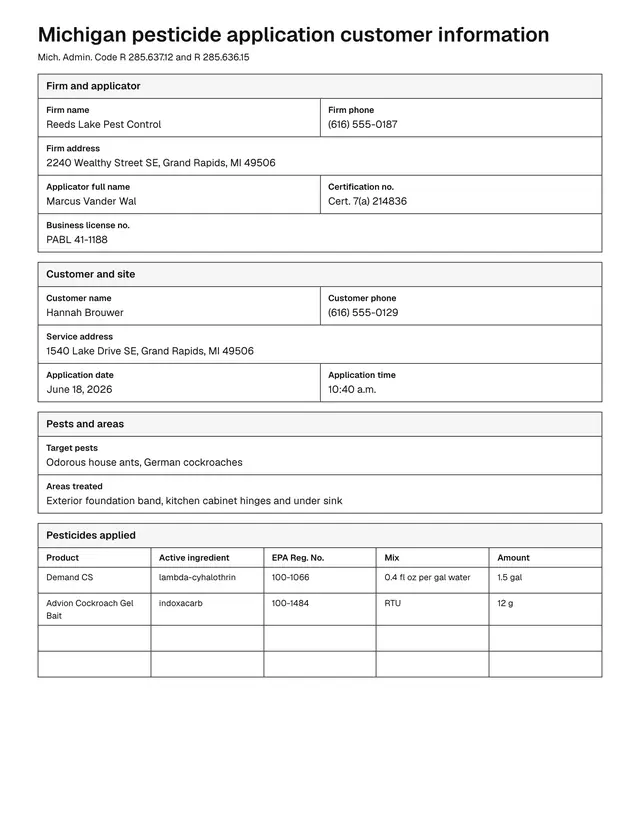
Completed example
Download PDFThe six facts every Michigan customer gets
Michigan doesn’t hand you a state form. It hands you a list. Under R 285.637.12, a commercial applicator gives the customer written information that includes the firm’s name, address, and phone number, the applicator’s full name, a general description of the target pests, the pesticides used with the common name of each active ingredient, the time and date, and any precautions or reentry limits from the label.
That “common name of the active ingredient” line is where most tickets fall short. Writing “Demand CS” isn’t enough. Write “Demand CS (lambda-cyhalothrin), EPA Reg. No. 100-1066” and the customer, their doctor, or an MDARD inspector can look it up in seconds. The EPA number isn’t on the customer list in Reg 637, but your office record under R 285.636.15 needs it, so writing it once on the ticket saves you a second step.
The label part is easy to skip on a routine ant job. Don’t. If the label says to keep people and pets off treated surfaces until dry, that sentence belongs on the receipt.
Paper at the door or email after
The default is paper at the time of each application. Michigan allows electronic delivery within 48 hours, but only with the customer’s written approval given before the application. A box checked on a signed service agreement covers it. A text that says “email is fine” sent after the visit doesn’t.
Two other papers come before the first spray. First, a service agreement, oral or written, that shows the customer’s consent, your firm’s name, address, and phone, and the rough schedule, frequency, and length of service. Second, risk and benefit information, given at or before the first application. MDARD posts a template for that one in its compliance assistance library. It covers what a pesticide is, why it’s used, general toxicity, and to call a doctor after an unusual reaction.
In an emergency, such as stinging insects at a doorway, you can treat first and get the paperwork to the customer after.
Mistakes an MDARD inspector will catch
MDARD publishes the checklist its inspectors use, the business record and customer information review checklist. It’s short, and it lists the misses that show up most.
Pre-printed product lists. If your ticket lists every product on the truck, circle the ones you used. Listing a product you didn’t apply is a violation.
Rate instead of amount. The checklist says “a rate of application is not acceptable.” Write the mix, like “0.4 fl oz per gal water,” and then the amount applied, like “1.5 gal.” Ready-to-use products get “RTU.” Minimum risk 25(b) products get “25B.”
Missing names and dates. Every applicator who worked the job goes on with first and last name. The date needs the day, month, and year.
Watch the sales copy too. Under R 285.637.13, you can’t claim a product is perfectly safe, and the rule bans phrases like “Contains all natural ingredients” and “Pollution approved.” Keep those off your door hangers and invoices as well as your receipts.
Do monthly customers need a new agreement every year?
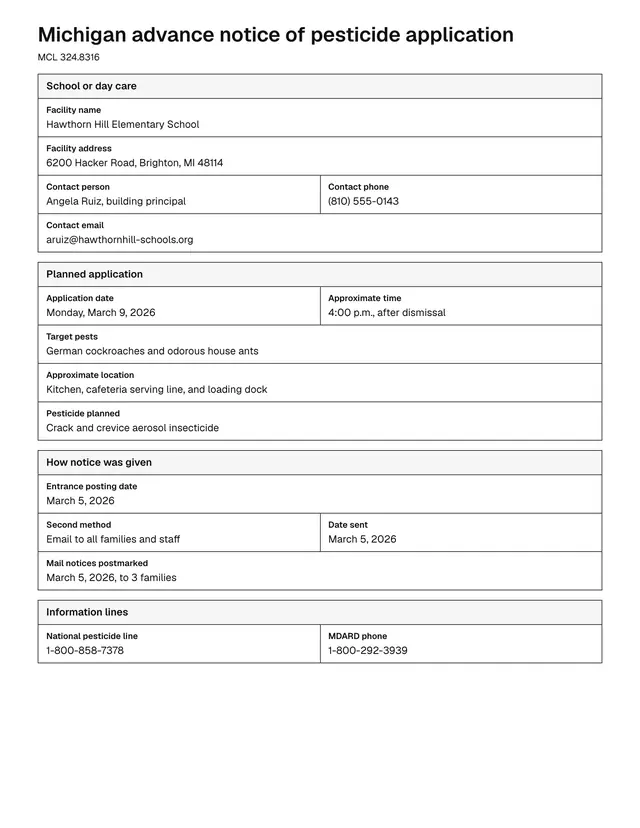
Yes, in a way. A Michigan service agreement runs no more than 12 months. To keep a recurring account going, send a written yearly notice that it will continue and how the customer can stop it, or have them sign a contract for a set term. Schools and day cares add their own notice rules on top of this, covered on the Michigan school pesticide advance notice page.
Keep your office copy where Reg 636 says: a record at your place of business that MDARD can see during normal business hours. Keep general-use records at least 1 year and restricted-use records at least 3.
Two more duties come up with landlords and property managers. If the customer asks, you hand over copies of the labels, safety data sheets, and any EPA fact sheets for what you used. And when the customer is signing for other people, like a landlord for tenants or a condo board for owners, Reg 637 makes that customer responsible for passing the information on to the people who live there. Say so in the service agreement, so the manager knows the receipt doesn’t stop at their desk.
Noma specializes in the Michigan pesticide customer information receipt (R 285.637.12). Upload your service agreement once, with the email delivery approval built in, and send it for e-signature on each new account, then schedule the recurring visits, invoice, and take payment online in one place. See how Noma runs pest control accounts.
Helpful resources
- Michigan Regulation 637, pesticide use (R 285.637.12)gsaindexed.apps.lara.state.mi.us
- MDARD business record and customer information checklistmichigan.gov
- MDARD pesticide compliance assistance librarymichigan.gov
- Michigan Regulation 636, applicator records (R 285.636.15)gsaindexed.apps.lara.state.mi.us
Frequentlyaskedquestions
Send this document in minutes, not an afternoon.
Other states
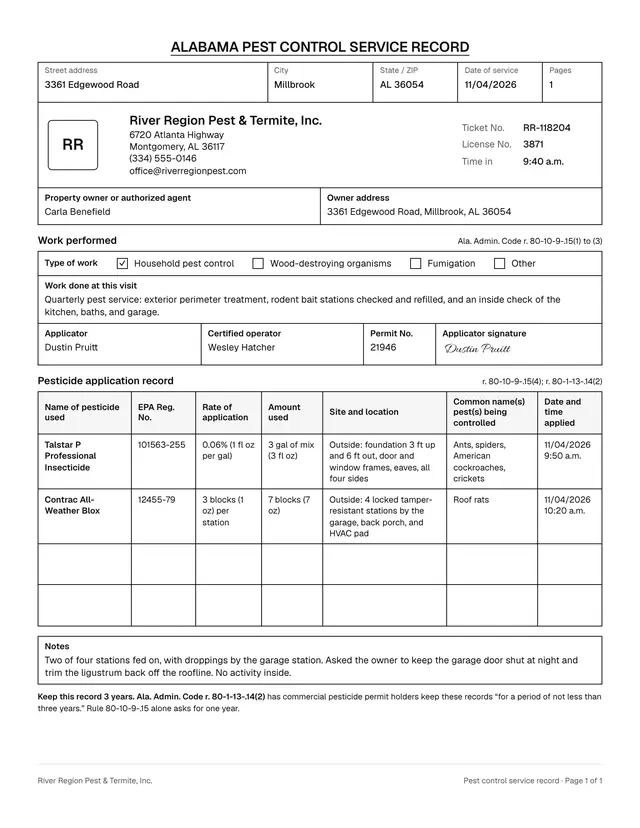
After-treatment notice templates- Alabama
Alabama Pest Control Service Record
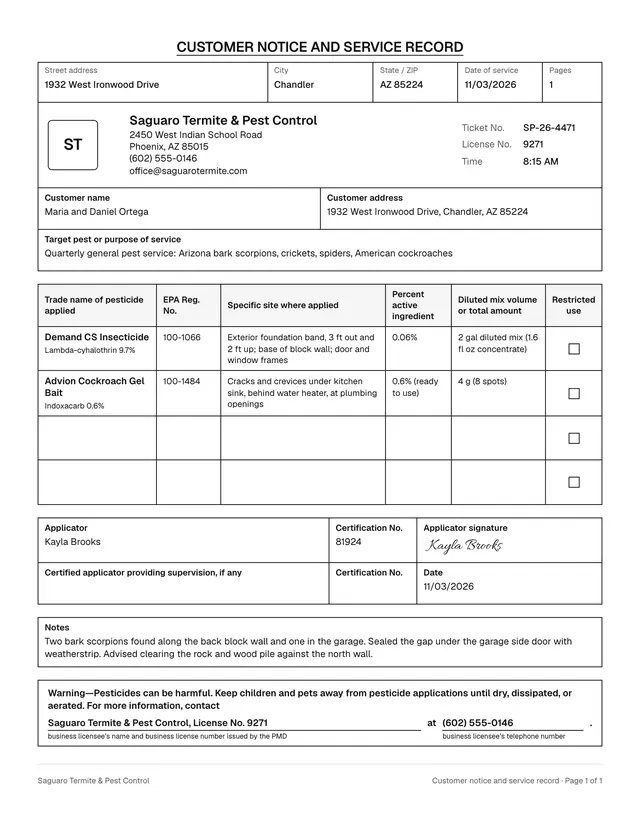
Record each pesticide applied at a service visit. - Arizona
Customer Notice and Service Record
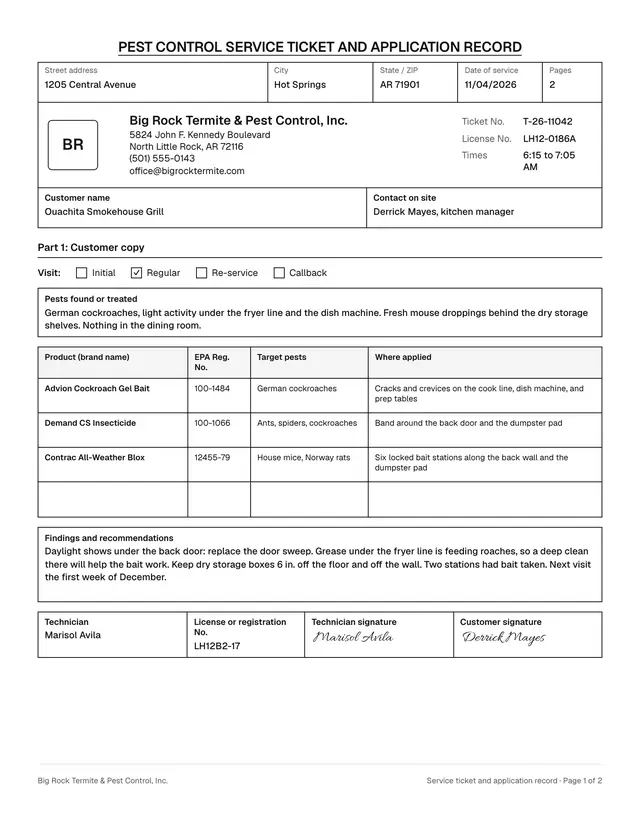
Record each pesticide applied at a service visit. - Arkansas
Pest Control Service Ticket and Application Record
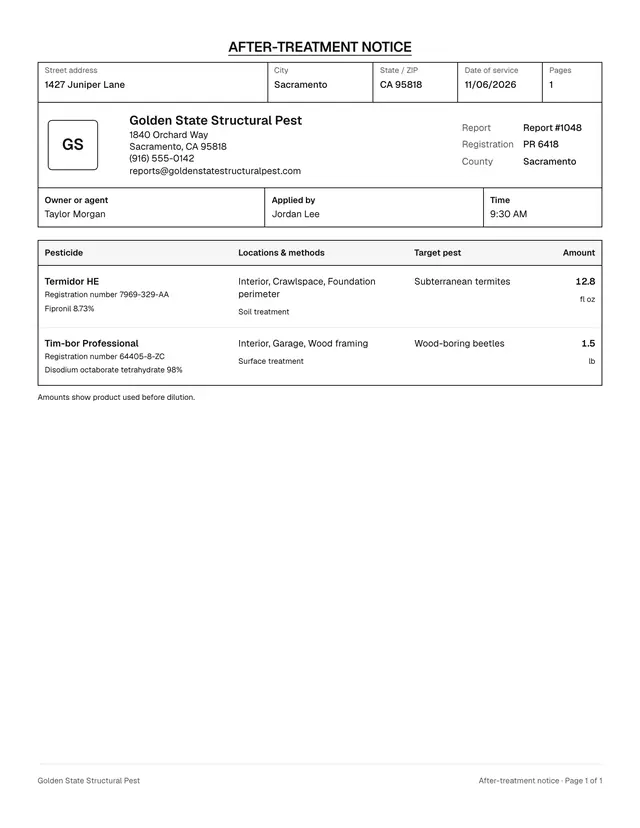
Record each pesticide applied at a service visit. - California
After-Treatment Notice
Record each pesticide applied at a service visit. - Colorado
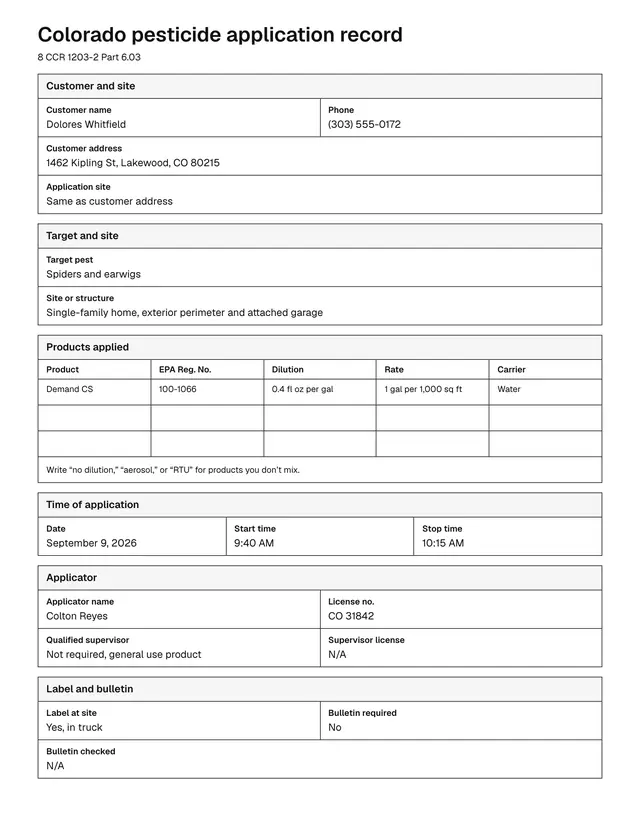
Colorado commercial pesticide application record
Record each pesticide applied at a service visit. - Connecticut
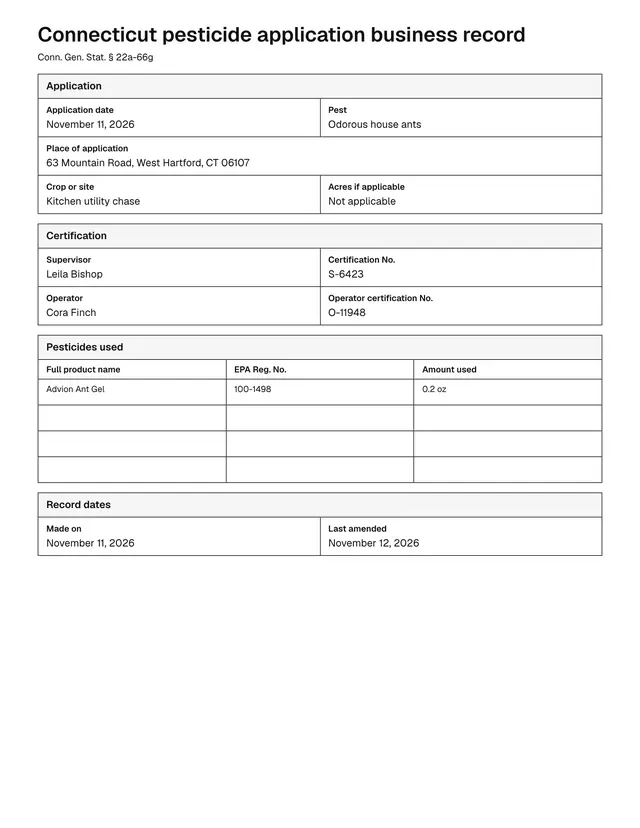
Connecticut pesticide application business record
Record each pesticide applied at a service visit. - Delaware
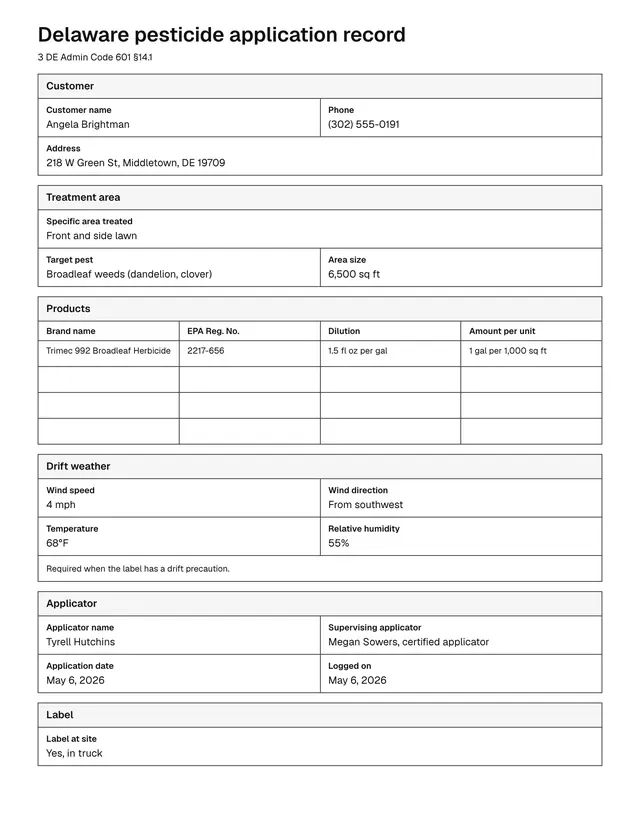
Delaware pesticide application record (3 DE Admin Code 601 §14.1)
Record each pesticide applied at a service visit. - Georgia
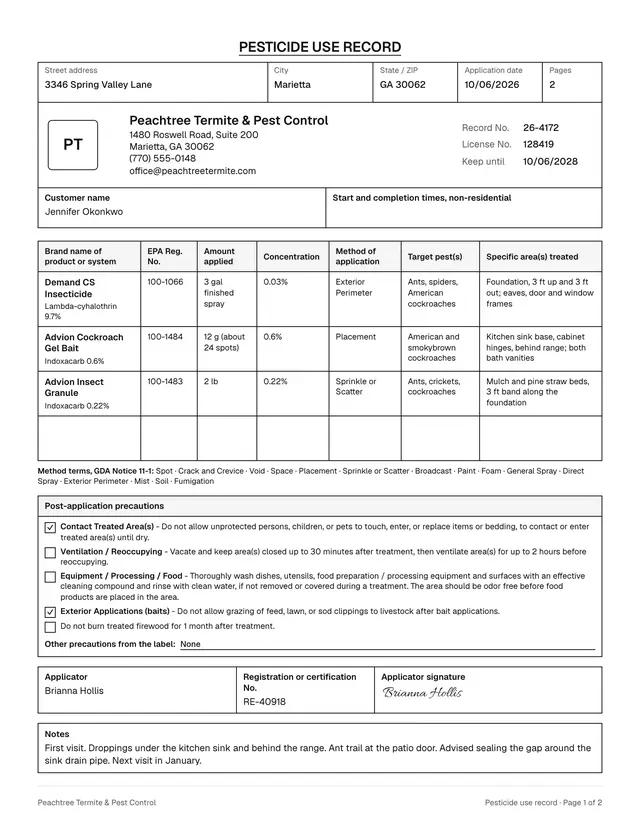
Pesticide Use Record
Record each pesticide applied at a service visit. - Hawaii
Pest Control Job Record
Record each pesticide applied at a service visit. - Illinois
Illinois structural pest control application record
Record each pesticide applied at a service visit. - Indiana
Indiana commercial applicator pesticide use record
Record each pesticide applied at a service visit. - Iowa
Iowa commercial pesticide application record
Record each pesticide applied at a service visit. - Kansas
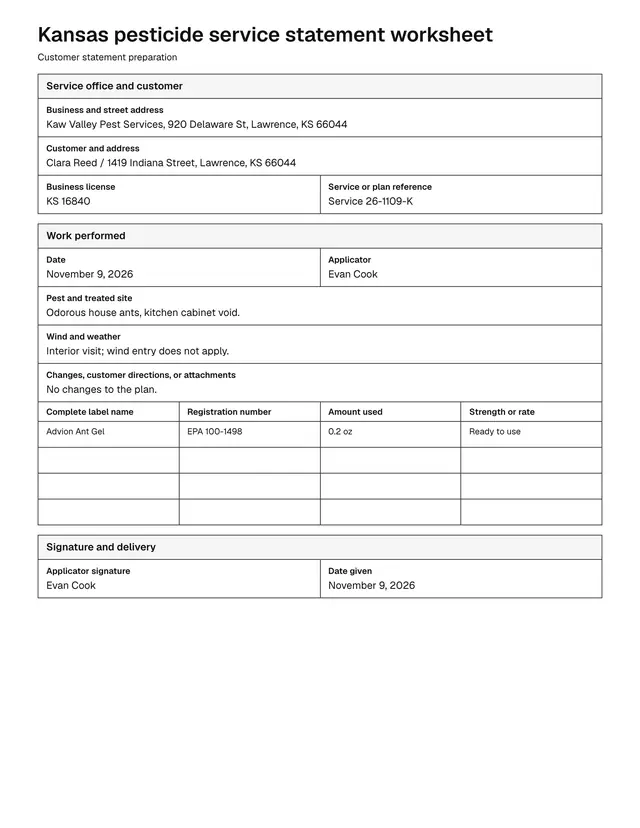
Kansas pesticide service statement worksheet
Record each pesticide applied at a service visit. - Kentucky
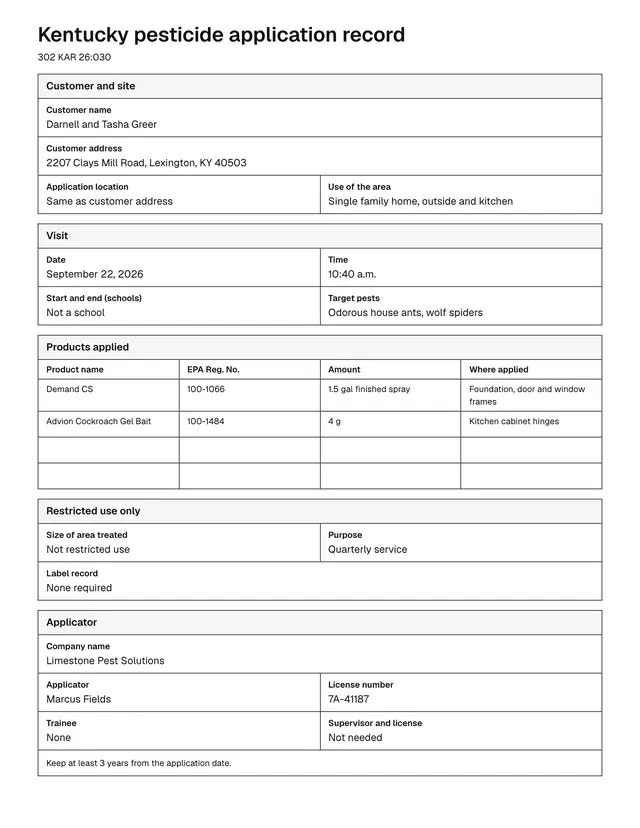
Kentucky pesticide application record (302 KAR 26:030)
Record each pesticide applied at a service visit. - Louisiana
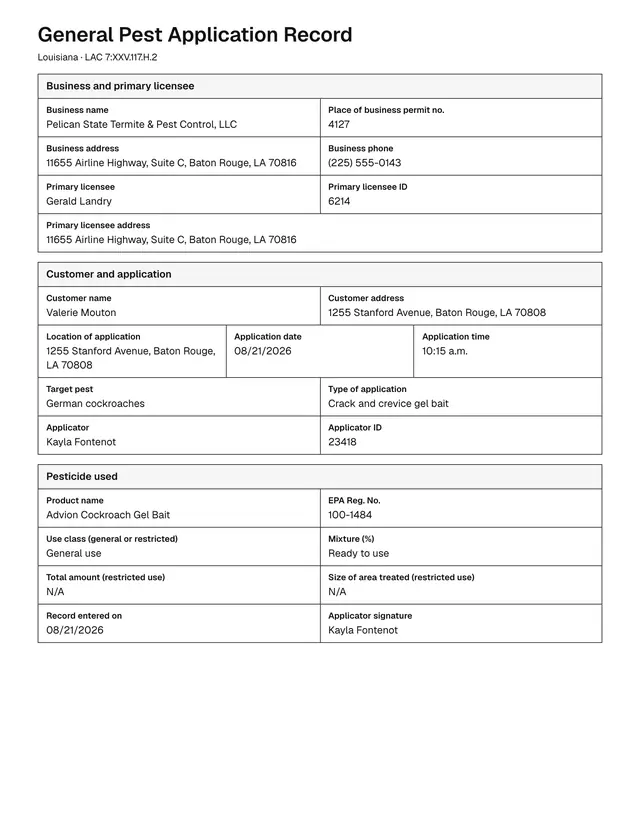
General Pest Application Record
Record each pesticide applied at a service visit. - Maryland
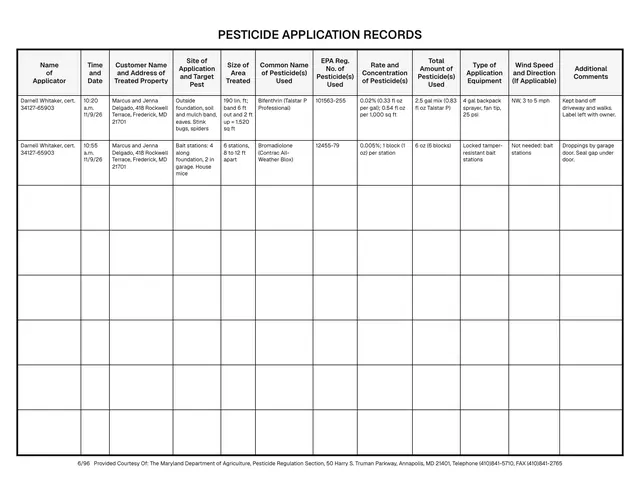
Pesticide Application Record and Customer Pesticide Information
Record each pesticide applied at a service visit. - Massachusetts
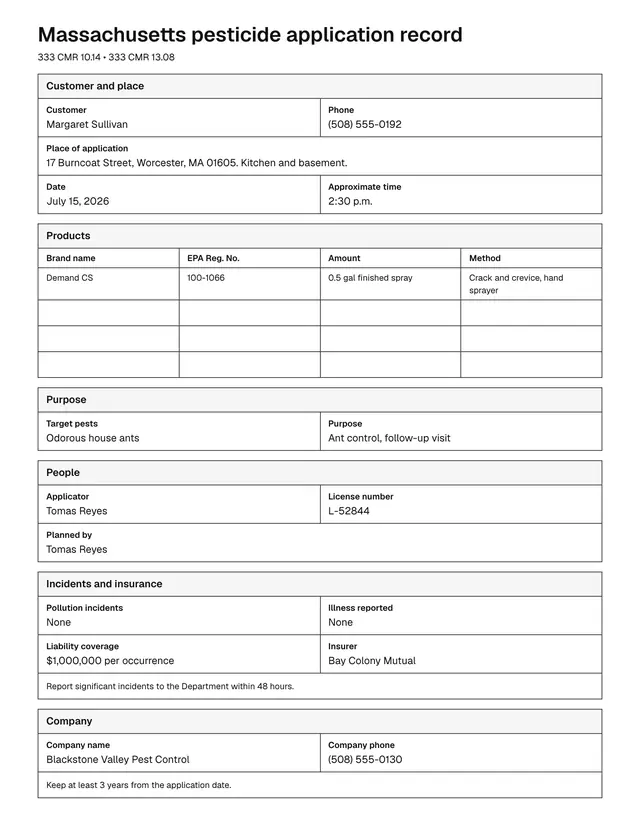
Massachusetts pesticide application record (333 CMR 10.14)
Record each pesticide applied at a service visit. - Mississippi
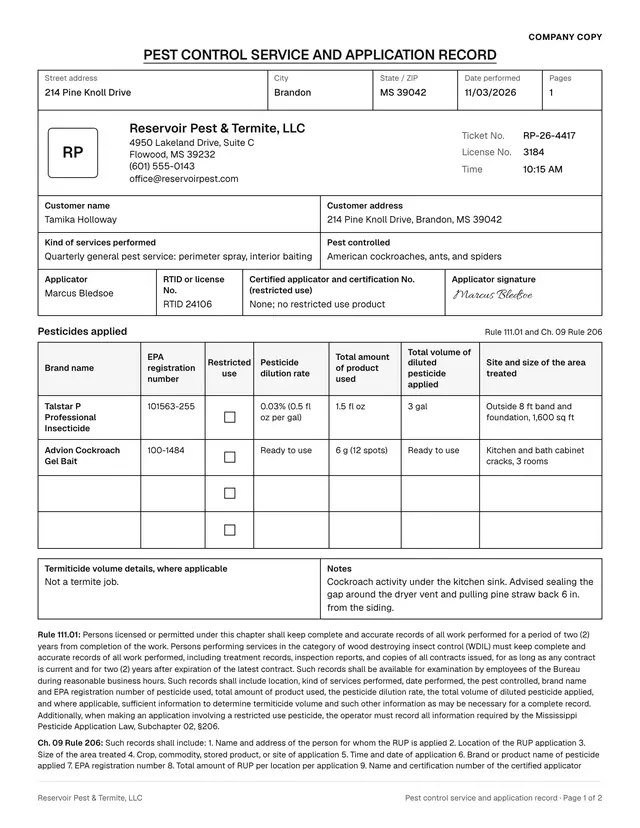
Pest Control Service and Application Record
Record each pesticide applied at a service visit. - Missouri
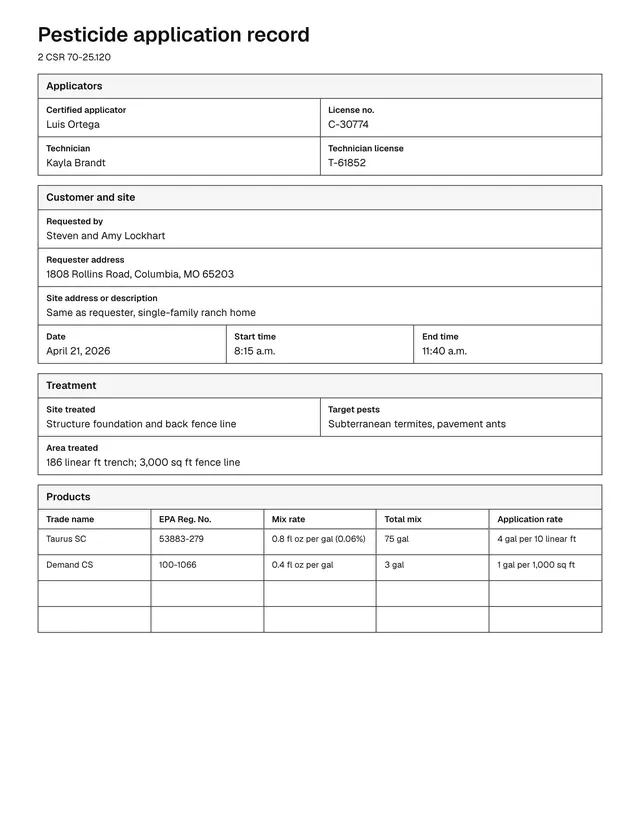
Missouri pesticide application record (2 CSR 70-25.120)
Record each pesticide applied at a service visit. - Nevada
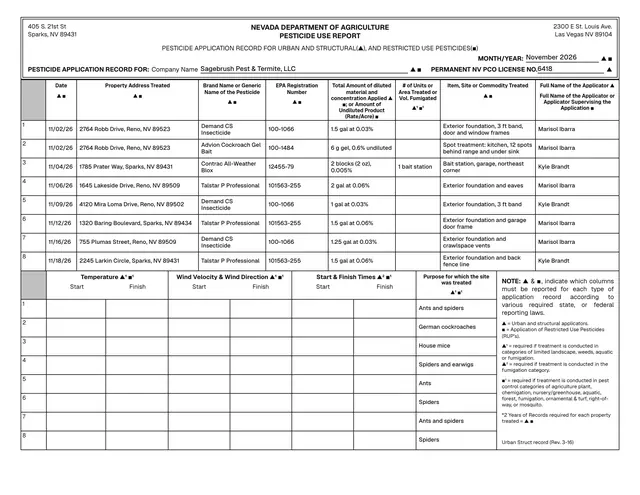
Pesticide Application Record for Urban and Structural and Restricted Use Pesticides
Record each pesticide applied at a service visit. - New Jersey
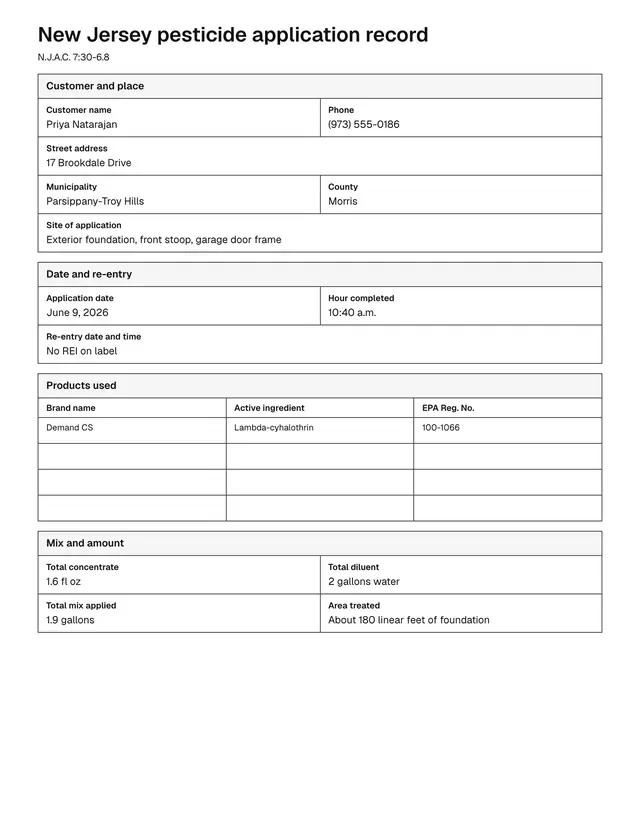
New Jersey pesticide application record (N.J.A.C. 7:30-6.8)
Record each pesticide applied at a service visit. - New Mexico
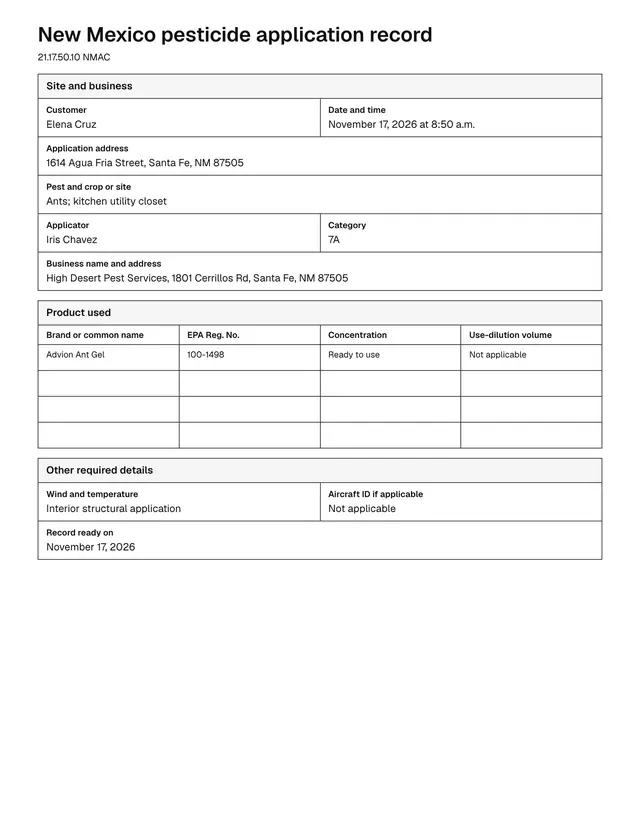
New Mexico pesticide application record
Record each pesticide applied at a service visit. - New York
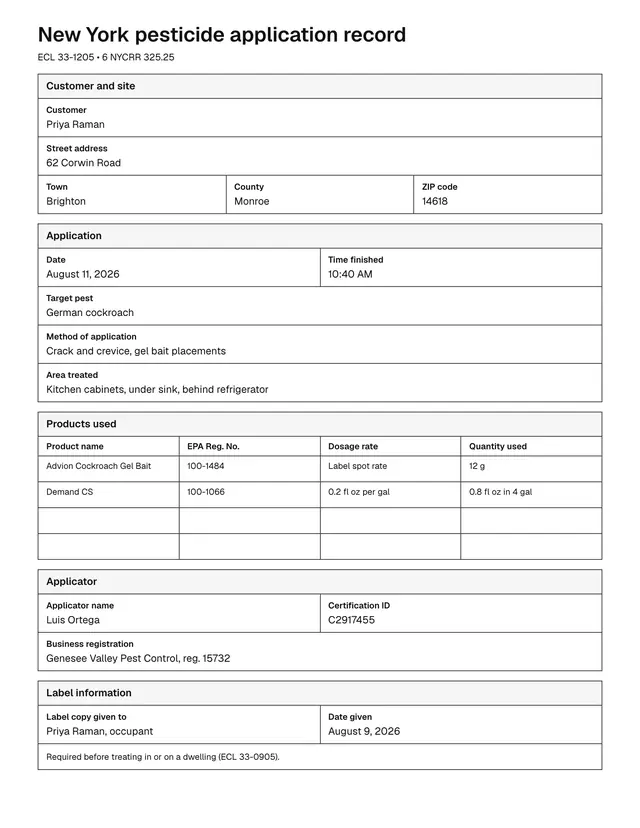
New York pesticide application record (6 NYCRR 325.25)
Record each pesticide applied at a service visit. - North Carolina
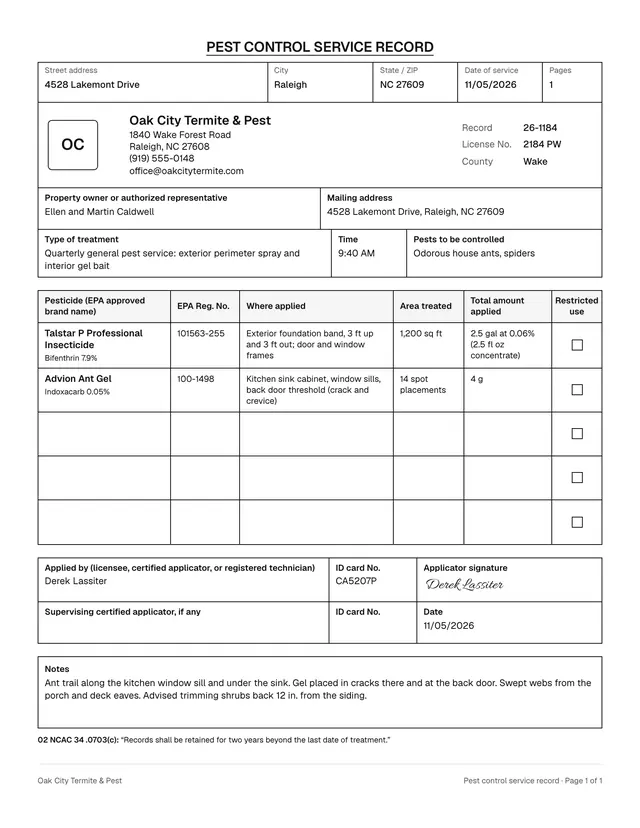
Pest Control Service Record
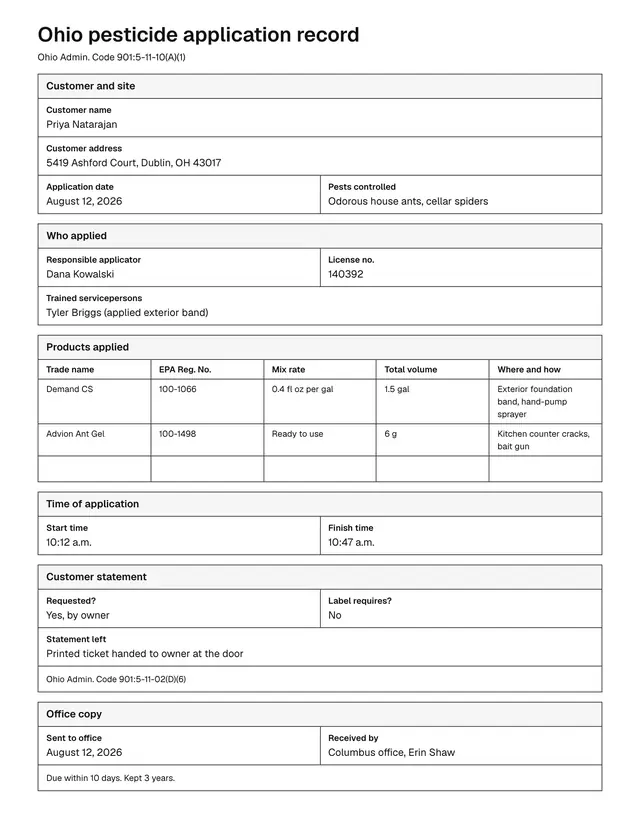
Record each pesticide applied at a service visit. - Ohio
Ohio pesticide application record
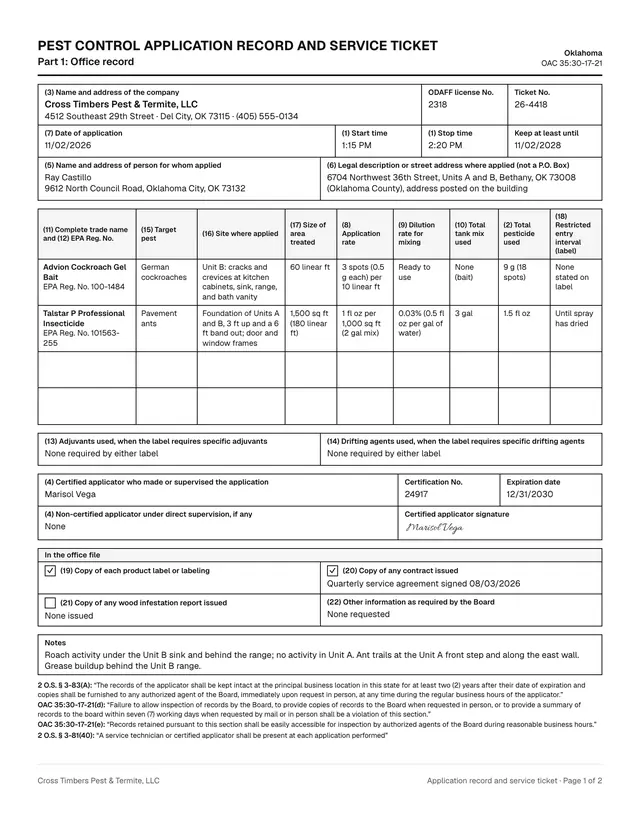
Record each pesticide applied at a service visit. - Oklahoma
Pest Control Application Record and Service Ticket
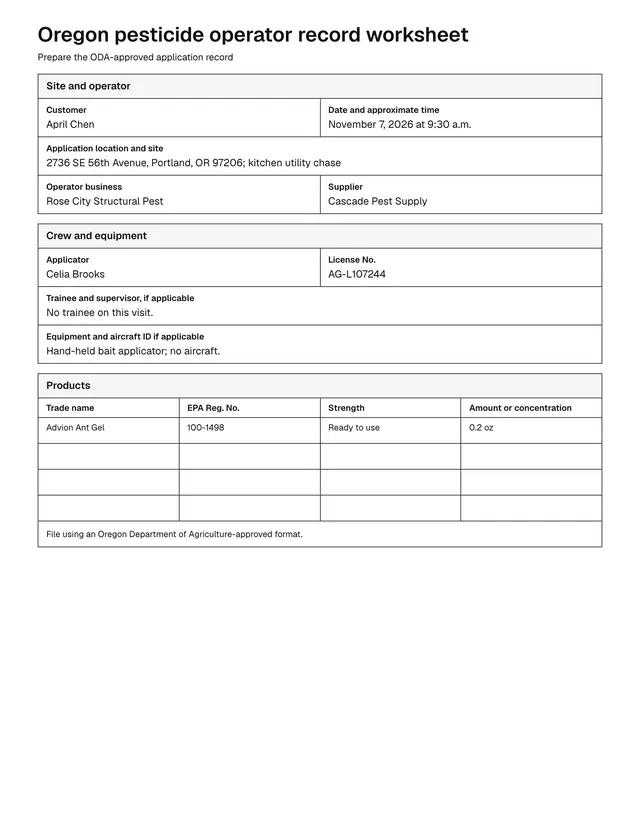
Record each pesticide applied at a service visit. - Oregon
Oregon pesticide operator record worksheet
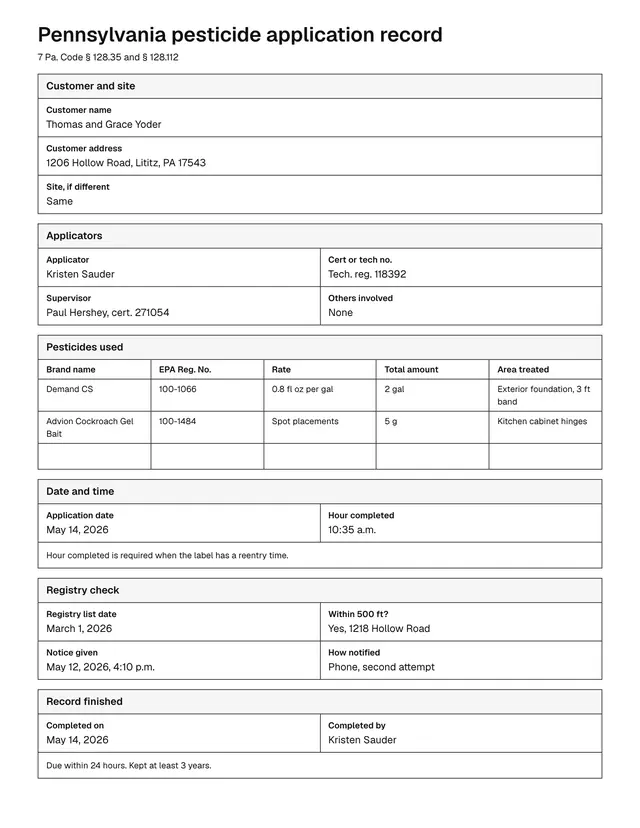
Record each pesticide applied at a service visit. - Pennsylvania
Pennsylvania pesticide application record
Record each pesticide applied at a service visit. - South Carolina
Pest Control Service Record
Record each pesticide applied at a service visit. - Tennessee
Tennessee pesticide application record
Record each pesticide applied at a service visit. - Texas
Pest Control Use Record
Record each pesticide applied at a service visit. - Utah
Utah commercial pesticide service worksheet
Record each pesticide applied at a service visit. - Virginia
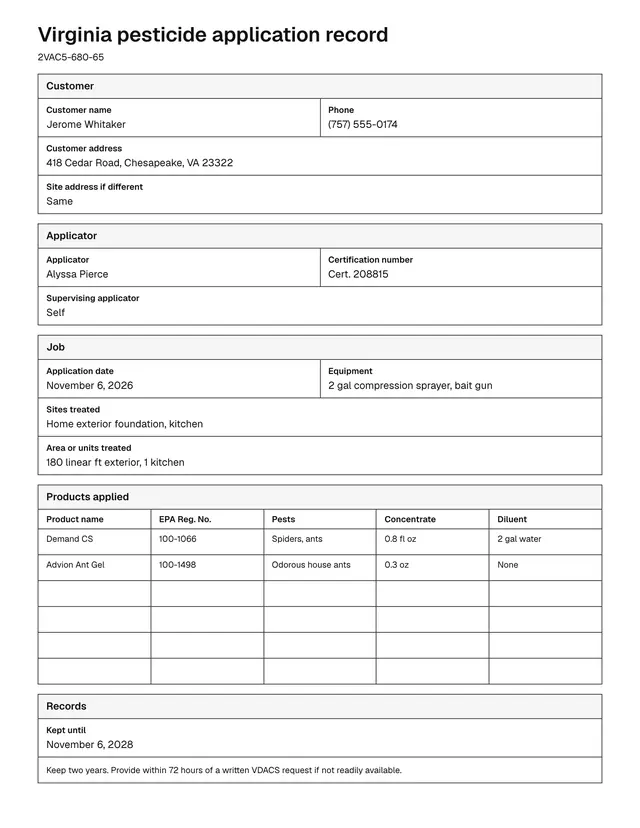
Virginia pesticide application record
Record each pesticide applied at a service visit. - Washington
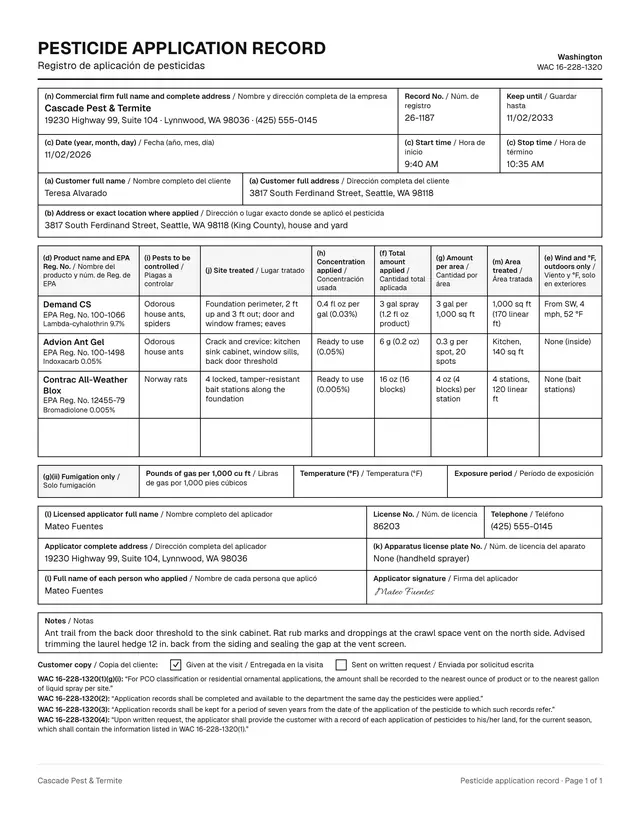
Pesticide Application Record
Record each pesticide applied at a service visit. - Wisconsin
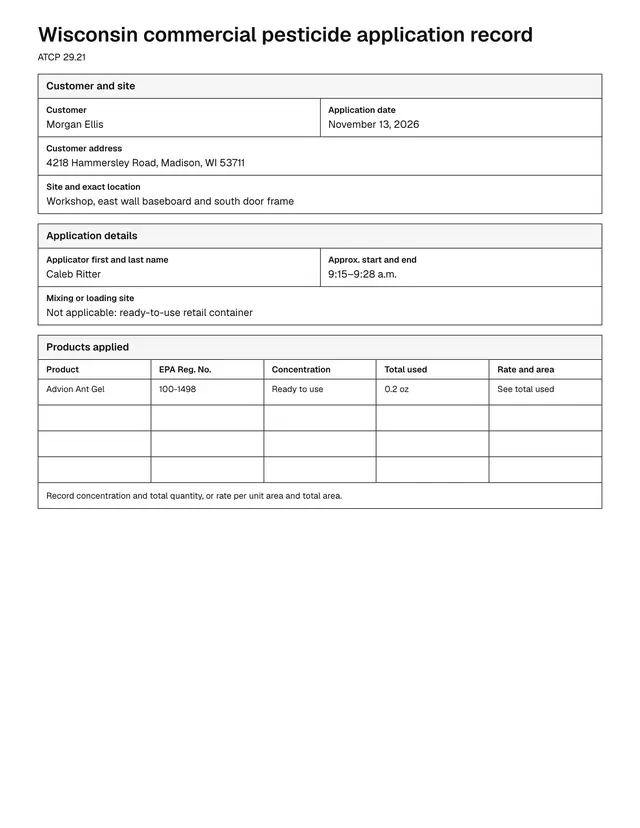
Wisconsin commercial pesticide application record
Record each pesticide applied at a service visit.