New York pesticide application record (6 NYCRR 325.25)
Every commercial application in New York gets a record, and those records feed your yearly Pesticide Reporting Law filing. Capture it right on the job and February gets a lot easier.
At a glance
- Rules
- ECL 33-1205 and 6 NYCRR 325.25
- Keep it
- At least 3 years
- Annual report
- Due February 1
- Before treating a home
- Give occupants the label info (ECL 33-0905)
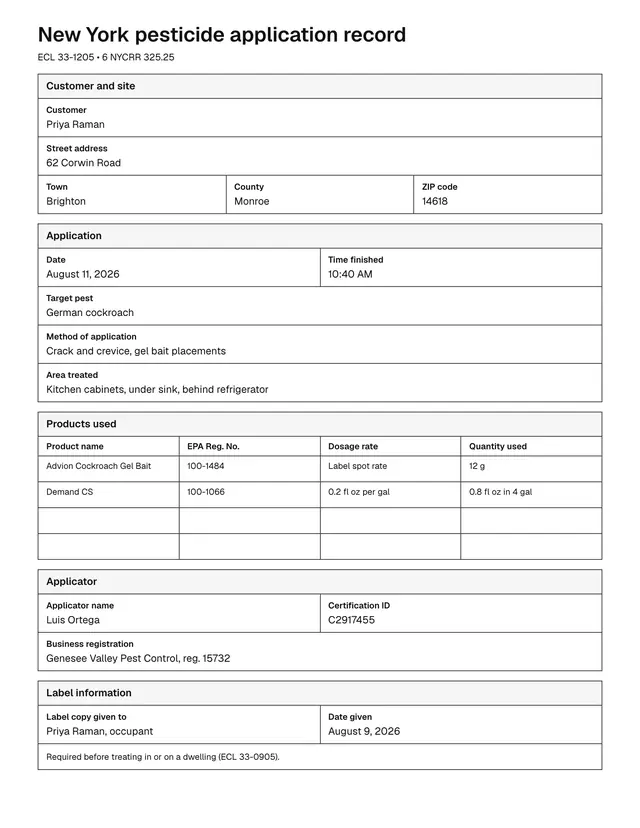
Completed example
Download PDFTwo rules, one record
New York stacks two rules on the same piece of paper. The DEC regulation, 6 NYCRR 325.25, has been around for decades. It asks for “the kind and quantity of each pesticide used; dosage rates; methods of application; target organisms; and the use, date and place of application.”
The Pesticide Reporting Law came later and lives in ECL 33-1205. It wants the EPA registration number, the product name, the quantity, the date, and the address “including the five digit zip code.” It also asks for “corresponding records of the dosage rates, methods of application and target organisms.” Put both lists together and you have the record.
Who keeps it? Every business registered with DEC, for every commercial application its applicators make. The rule also reaches certified applicators who work outside a registered business. Section 325.25(c) names “building superintendents and employees of cemeteries or golf courses.”
Fields that trip people up
The ZIP code. It’s easy to skip on a familiar route. The statute asks for it outright, so put the full five digits on every record. A Brighton job is 14618, not just “Rochester.”
Quantity versus dosage rate. They’re two separate lines. Quantity is how much product went down, like 0.8 fl oz of Demand CS. The dosage rate is the label rate you mixed at, like 0.2 fl oz per gallon. DEC needs the quantity for the yearly report and the rate to check the job matched the label.
The EPA Reg. No. Copy it from the label, not from memory. Demand CS is 100-1066. Advion Cockroach Gel Bait is 100-1484. If a number looks off, check EPA’s product label system. The annual filing matches products by this number, so one wrong digit turns into a reporting error later.
Method and target. “Crack and crevice” or “perimeter band, 3 ft up and 3 ft out” beats “spray.” Name the pest, too. “German cockroach” is better than “roaches.”
Who did it. Put the applicator’s name and certification ID on every record. If an apprentice did the work, the supervising certified applicator’s ID goes on it, because DEC’s reporting guide says apprentice jobs get reported by their supervisor.
The paper that goes out before you treat
New York doesn’t require you to hand the customer a copy of the application record. It does require something before the job starts. Under ECL 33-0905, as repeated in 6 NYCRR 325.40(i) (the section that sets the lawn contract rules), a certified applicator treating in or on a dwelling must first give the occupants “a written copy of the information, including any warnings,” from the label.
For an apartment building or a business, the label copy goes to the owner or the owner’s agent. They then have to make it available to residents who ask. Many shops just print the label and leave it with the work order.
Put the date you gave it on the record. If a tenant in a Rochester duplex later says nobody told them what was used, that line shows the label went out before the job, and to whom.
Where the records go next
Keep each year’s records together. 325.25 says records are “maintained on an annual basis and retained for a minimum of three years,” and DEC can ask to see them. The statute uses the same three years.
Here’s how a full record reads for a cockroach job in Brighton: Priya Raman, 62 Corwin Road, Brighton, Monroe County, 14618. August 11, 2026. German cockroach, crack and crevice in the kitchen. Advion Cockroach Gel Bait, EPA Reg. No. 100-1484, 12 grams at the label spot rate. Applicator Luis Ortega, C2917455. Every item the statute and the regulation ask for is in there.
Then once a year the daily records turn into the annual pesticide report. The statute puts the due date at February 1. The regulation still says January 15, but DEC’s OGC-3 policy says the statute’s date governs. Either way, that report is only as good as the daily records behind it.
Lawn jobs carry one more piece of paper. A commercial lawn application needs a written contract first, which the lawn service agreement page explains.
Noma specializes in the New York pesticide application record (6 NYCRR 325.25). Techs finish each job on the mobile app, and you can upload your label sheet once as a reusable document and send it with every booked job before the truck arrives. See how Noma runs pest control jobs.
Frequentlyaskedquestions
Send this document in minutes, not an afternoon.
Other states
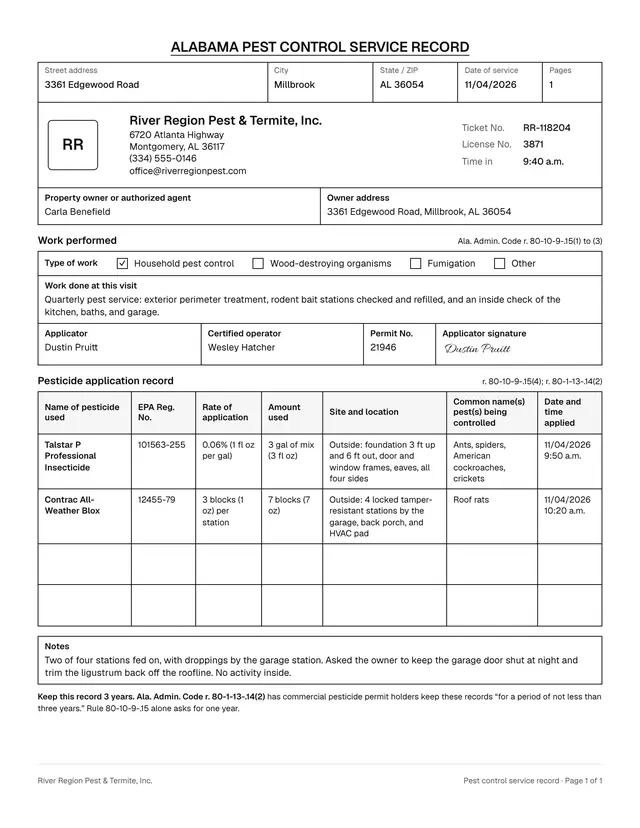
After-treatment notice templates- Alabama
Alabama Pest Control Service Record
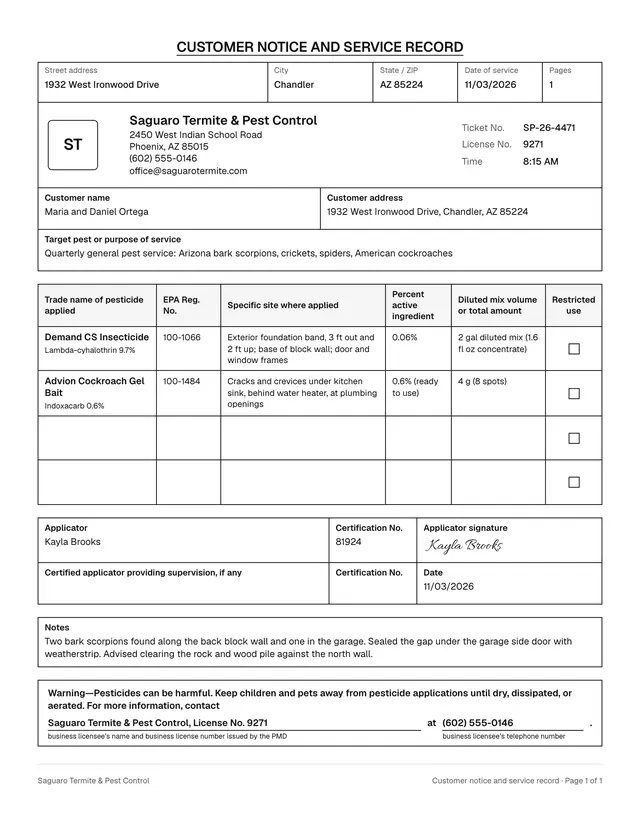
Record each pesticide applied at a service visit. - Arizona
Customer Notice and Service Record
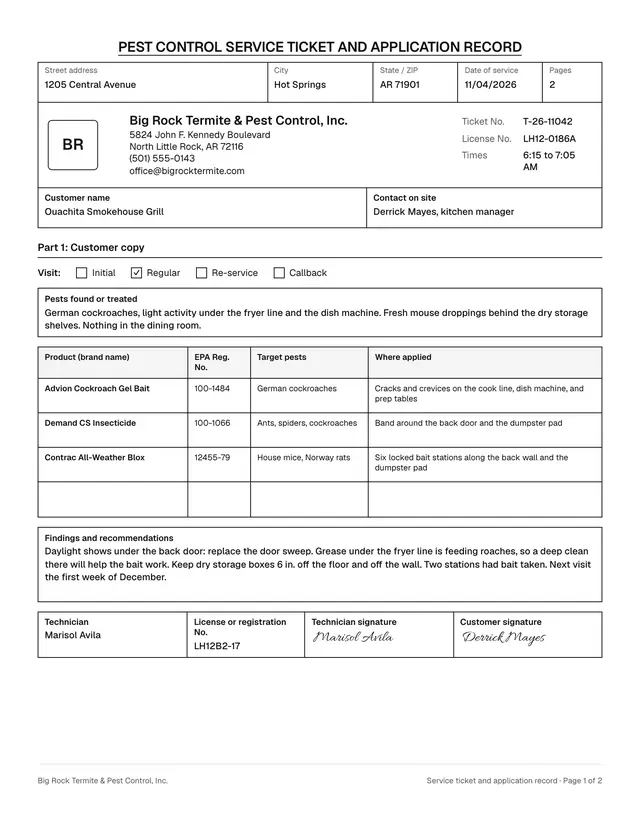
Record each pesticide applied at a service visit. - Arkansas
Pest Control Service Ticket and Application Record
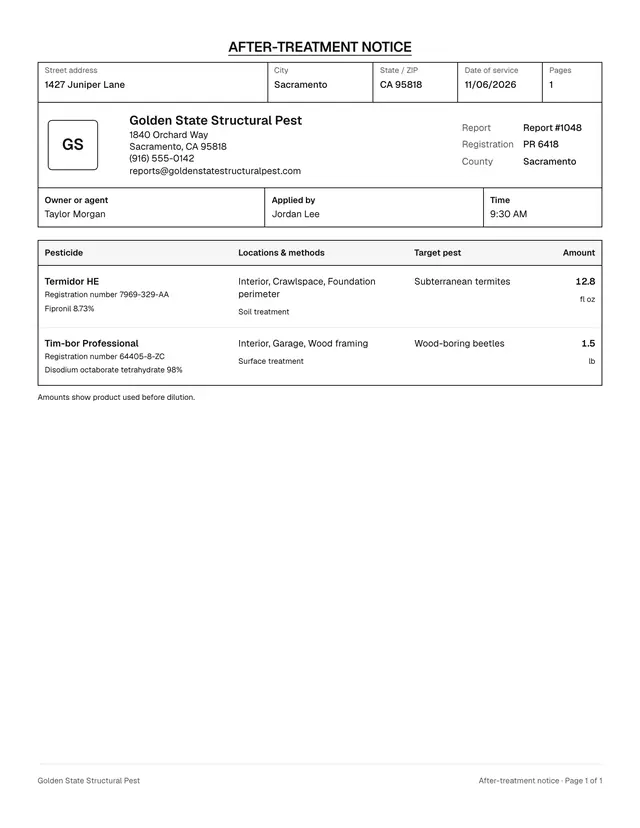
Record each pesticide applied at a service visit. - California
After-Treatment Notice
Record each pesticide applied at a service visit. - Colorado
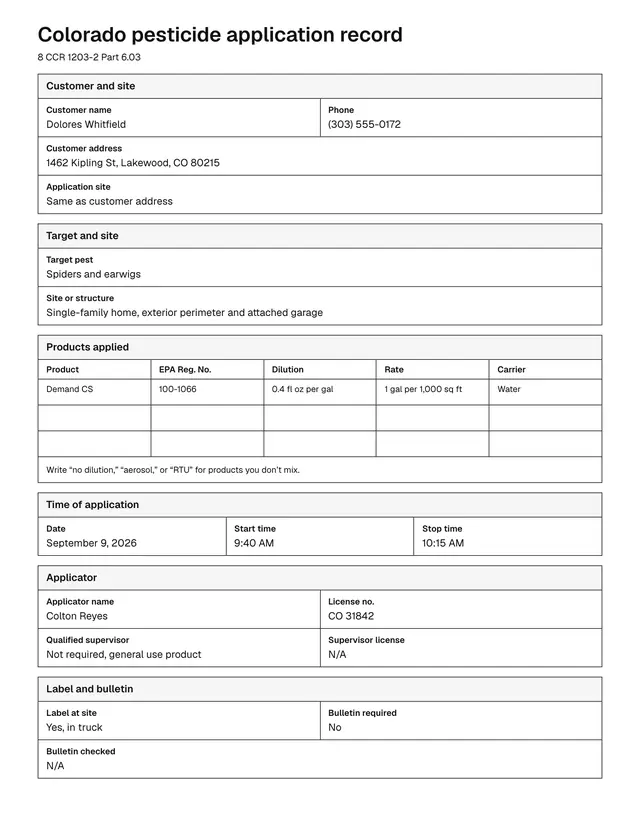
Colorado commercial pesticide application record
Record each pesticide applied at a service visit. - Connecticut
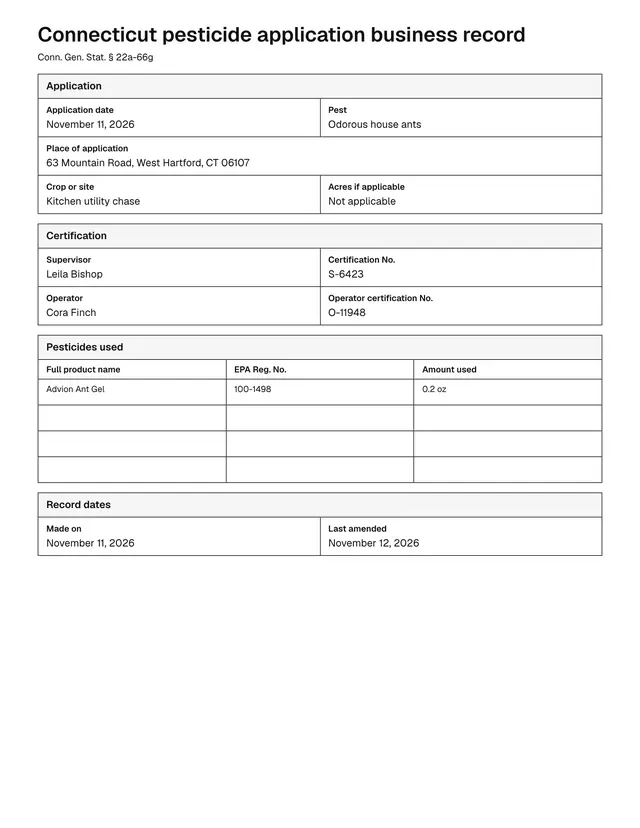
Connecticut pesticide application business record
Record each pesticide applied at a service visit. - Delaware
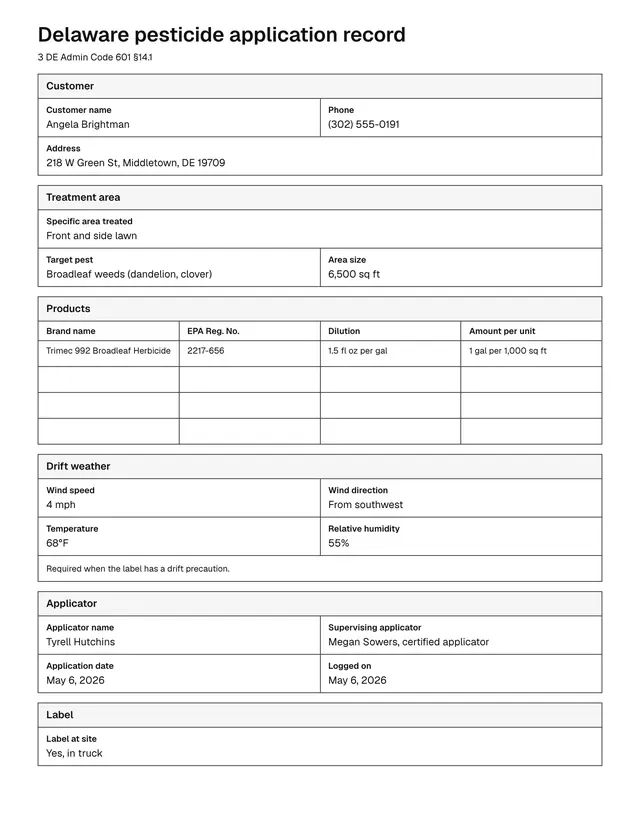
Delaware pesticide application record (3 DE Admin Code 601 §14.1)
Record each pesticide applied at a service visit. - Georgia
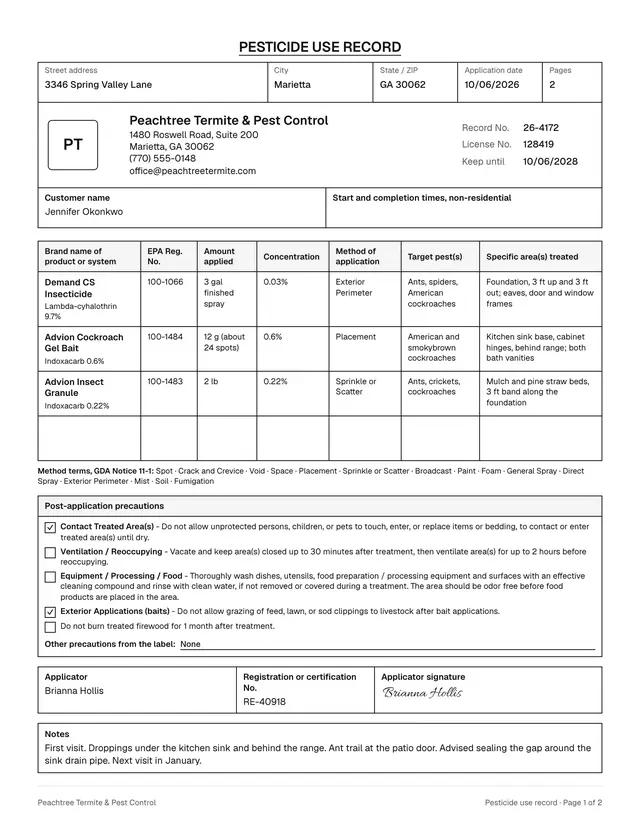
Pesticide Use Record
Record each pesticide applied at a service visit. - Hawaii
Pest Control Job Record
Record each pesticide applied at a service visit. - Illinois
Illinois structural pest control application record
Record each pesticide applied at a service visit. - Indiana
Indiana commercial applicator pesticide use record
Record each pesticide applied at a service visit. - Iowa
Iowa commercial pesticide application record
Record each pesticide applied at a service visit. - Kansas
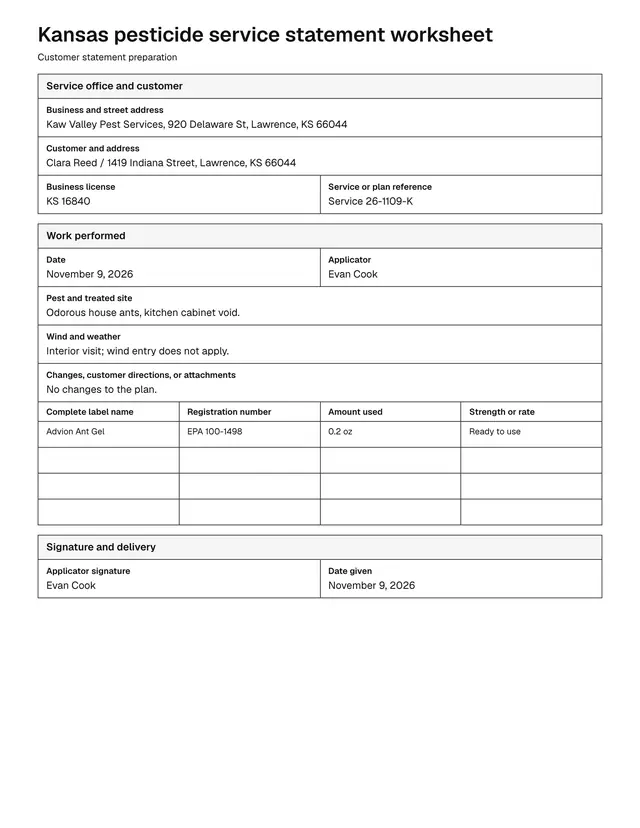
Kansas pesticide service statement worksheet
Record each pesticide applied at a service visit. - Kentucky
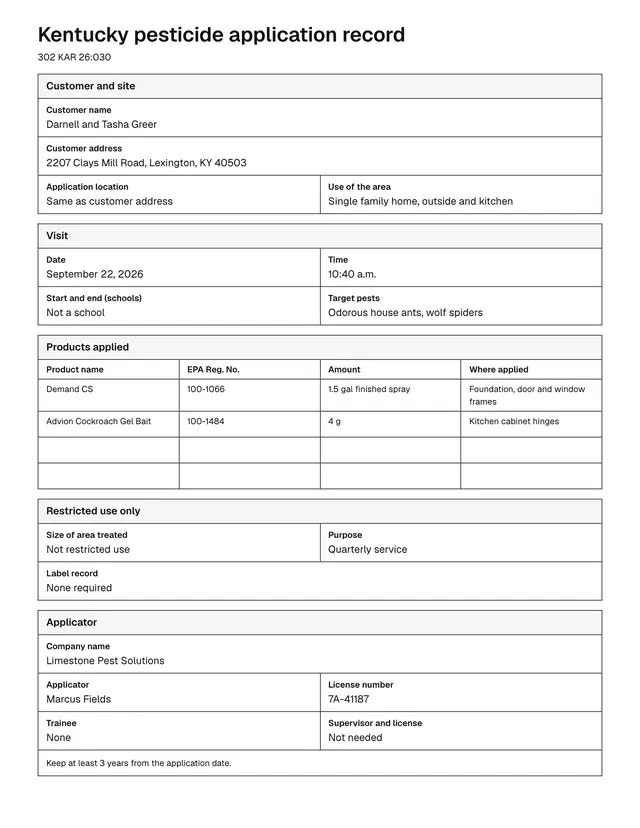
Kentucky pesticide application record (302 KAR 26:030)
Record each pesticide applied at a service visit. - Louisiana
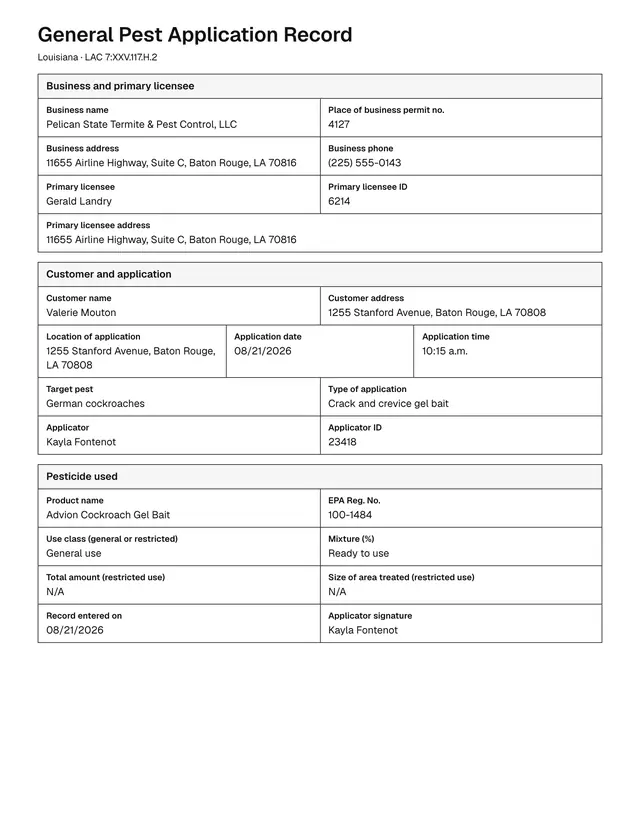
General Pest Application Record
Record each pesticide applied at a service visit. - Maryland
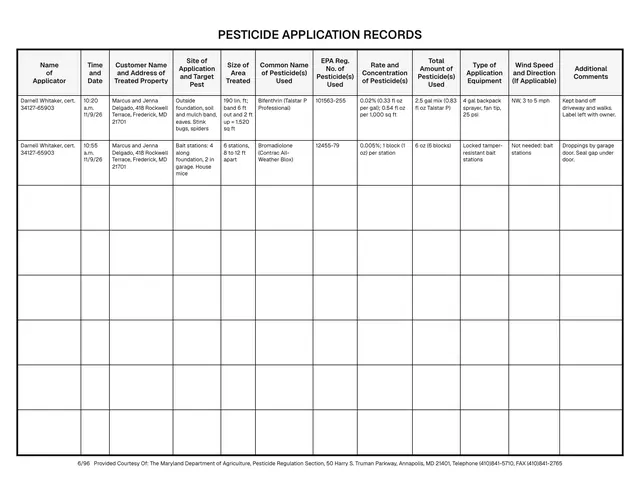
Pesticide Application Record and Customer Pesticide Information
Record each pesticide applied at a service visit. - Massachusetts
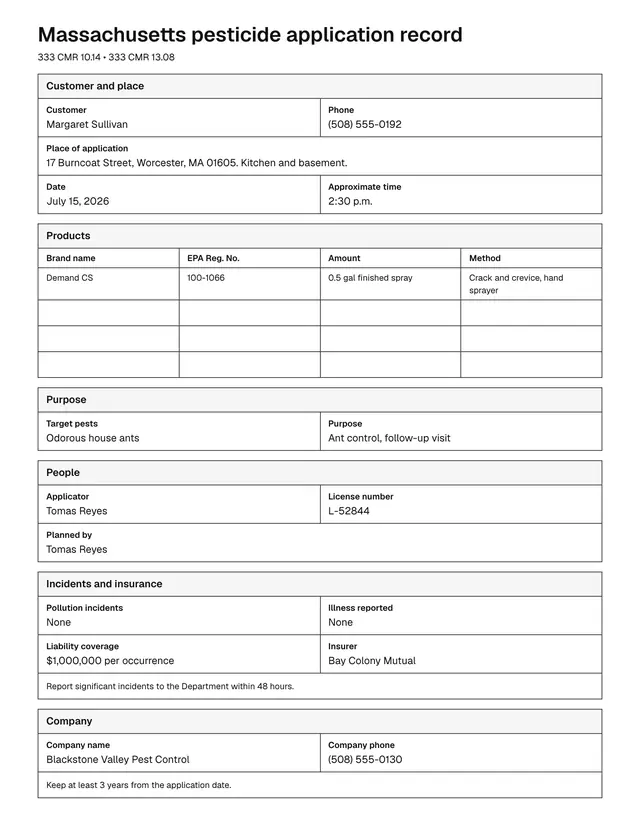
Massachusetts pesticide application record (333 CMR 10.14)
Record each pesticide applied at a service visit. - Michigan
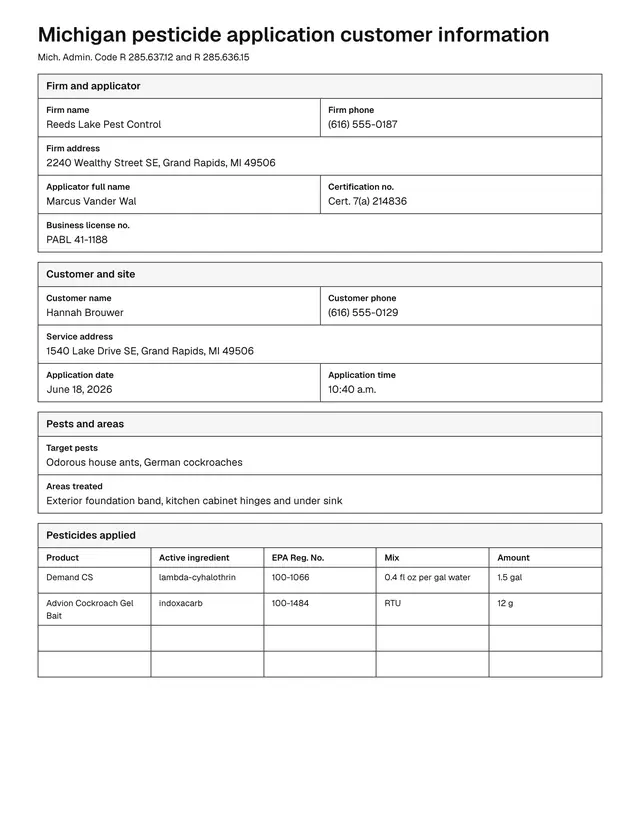
Michigan pesticide customer information receipt
Record each pesticide applied at a service visit. - Mississippi
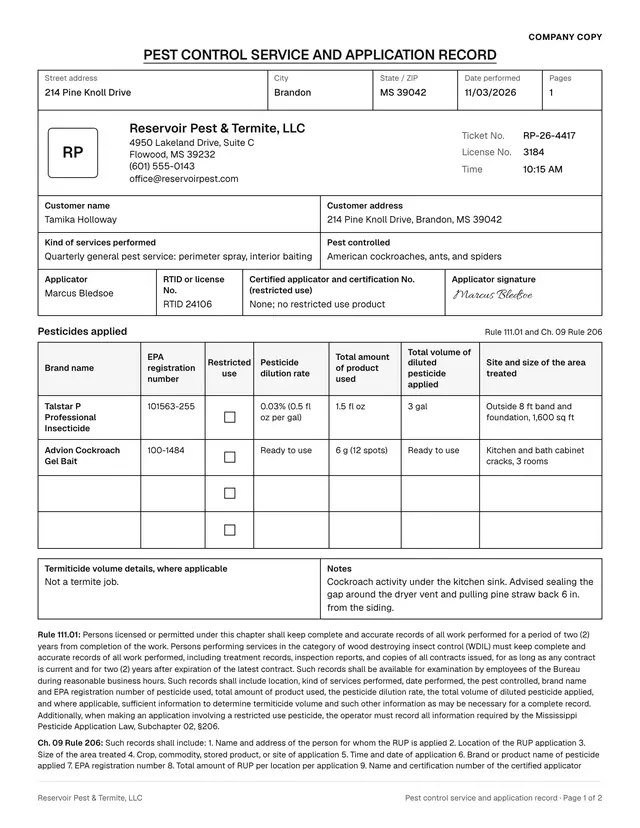
Pest Control Service and Application Record
Record each pesticide applied at a service visit. - Missouri
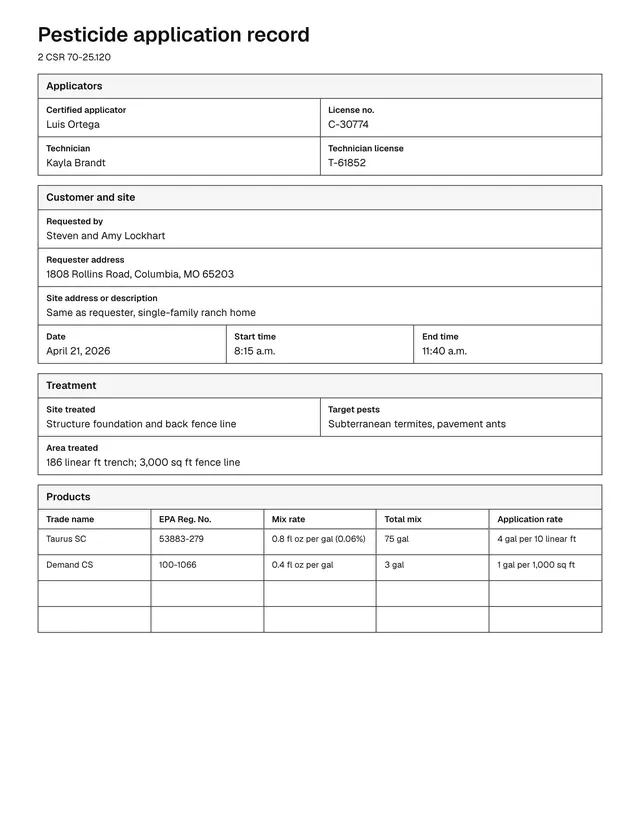
Missouri pesticide application record (2 CSR 70-25.120)
Record each pesticide applied at a service visit. - Nevada
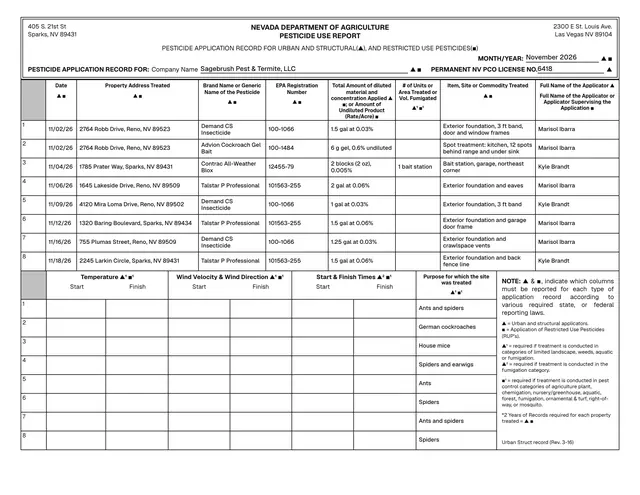
Pesticide Application Record for Urban and Structural and Restricted Use Pesticides
Record each pesticide applied at a service visit. - New Jersey
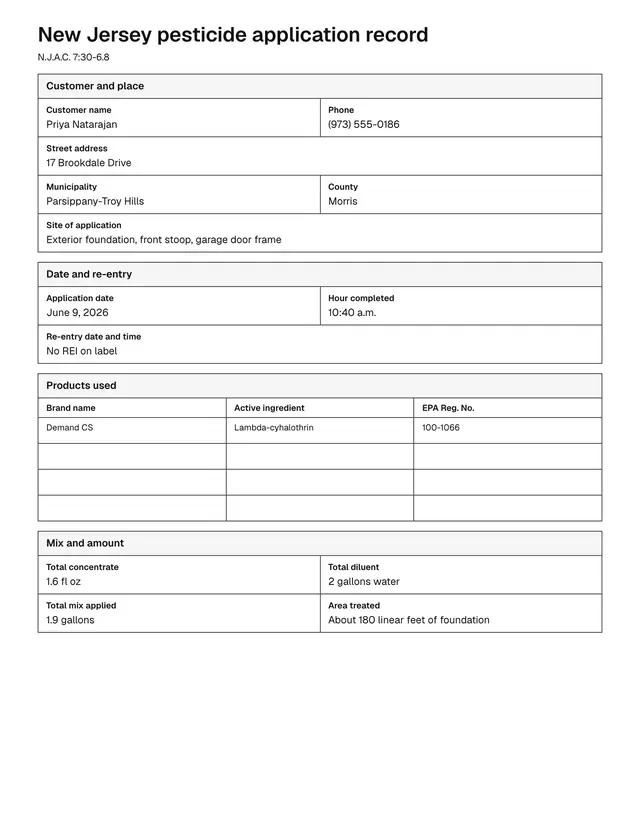
New Jersey pesticide application record (N.J.A.C. 7:30-6.8)
Record each pesticide applied at a service visit. - New Mexico
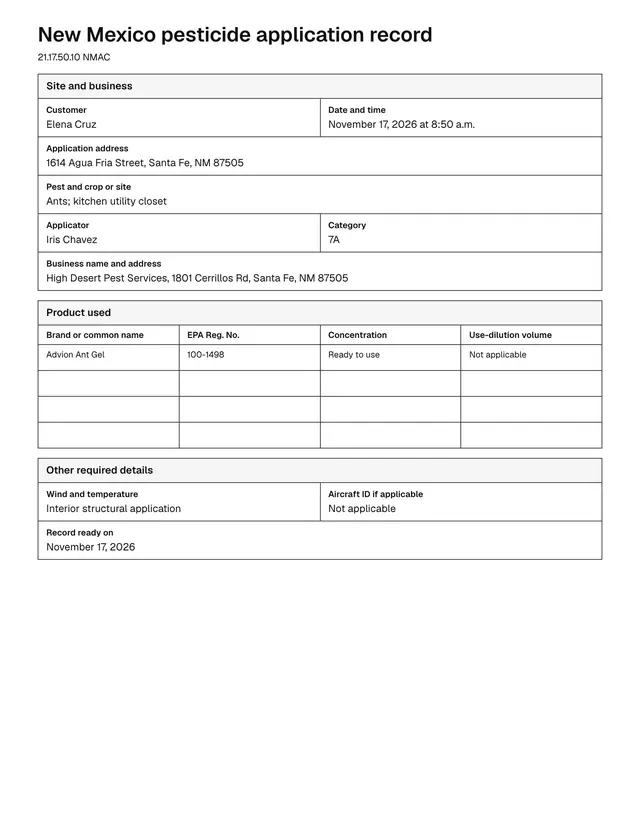
New Mexico pesticide application record
Record each pesticide applied at a service visit. - North Carolina
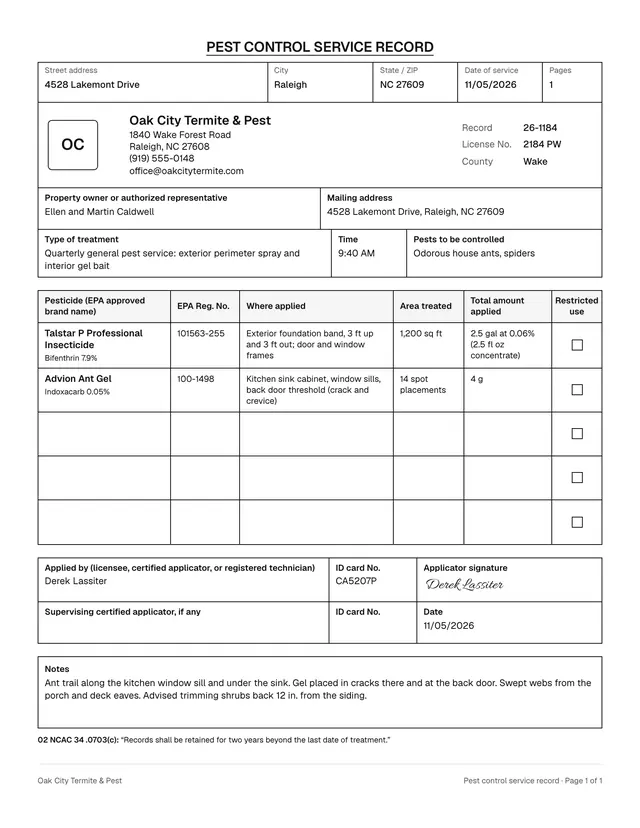
Pest Control Service Record
Record each pesticide applied at a service visit. - Ohio
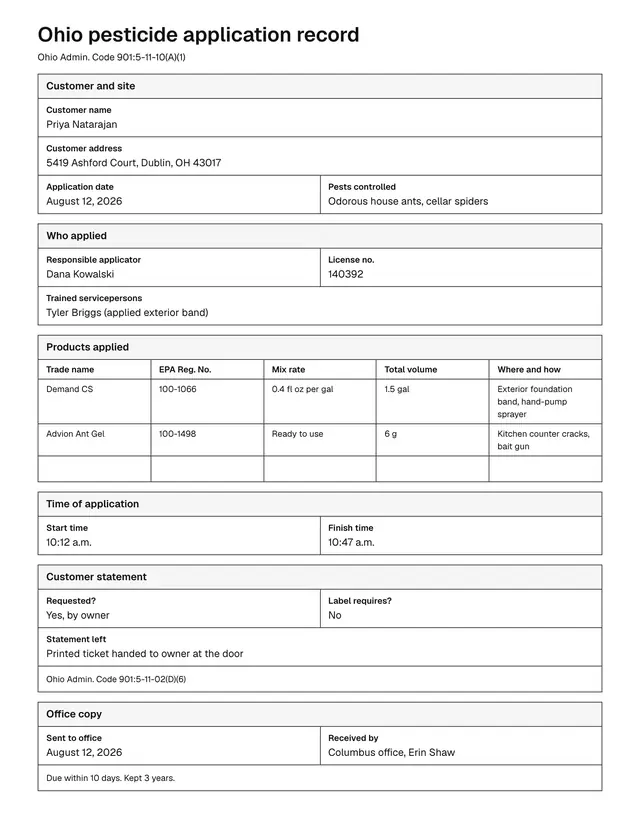
Ohio pesticide application record
Record each pesticide applied at a service visit. - Oklahoma
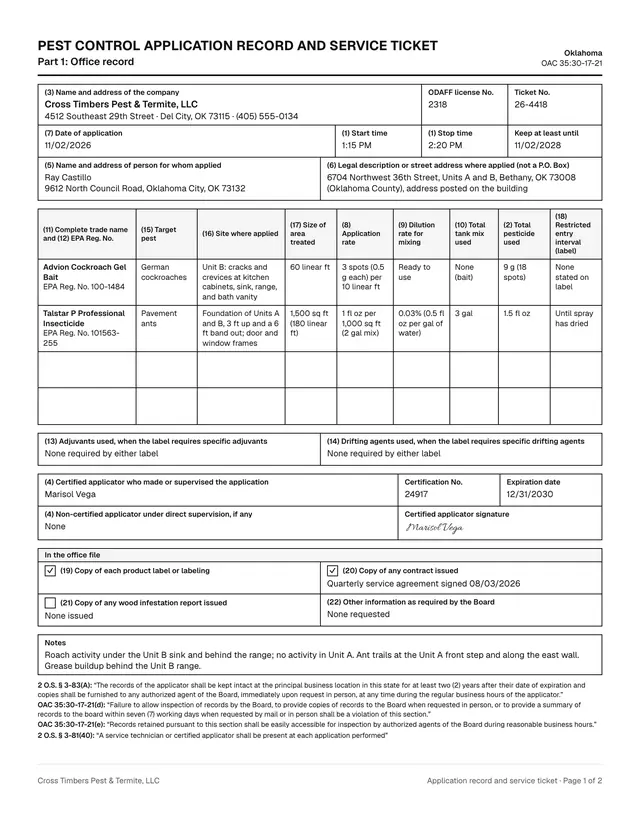
Pest Control Application Record and Service Ticket
Record each pesticide applied at a service visit. - Oregon
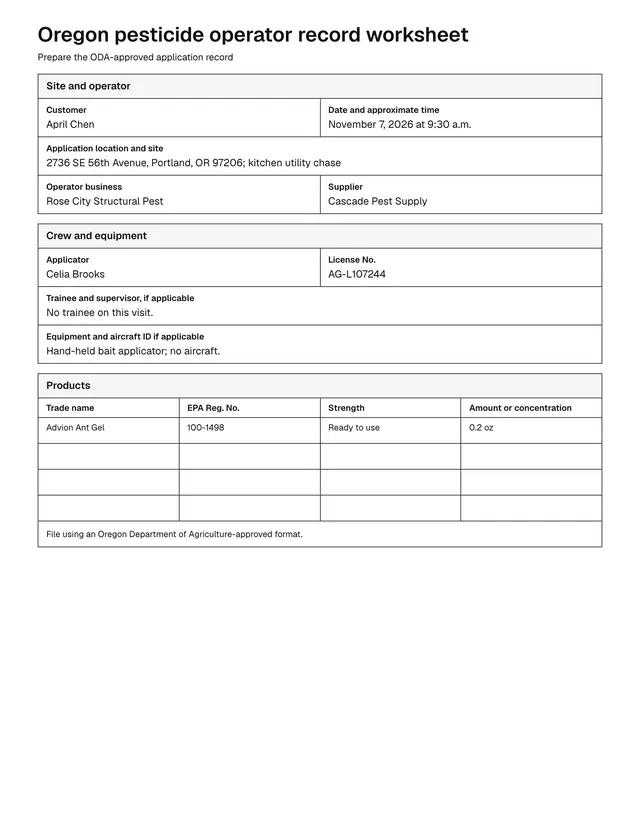
Oregon pesticide operator record worksheet
Record each pesticide applied at a service visit. - Pennsylvania
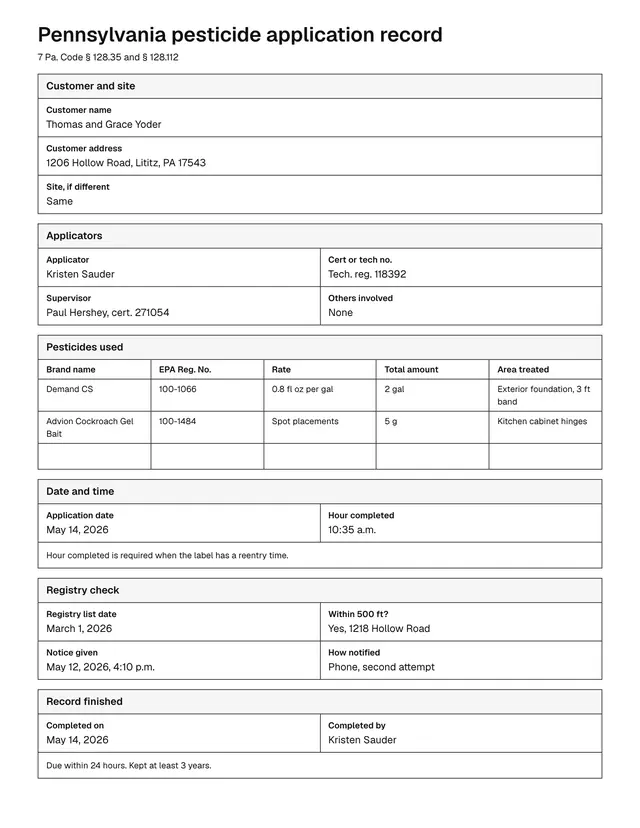
Pennsylvania pesticide application record
Record each pesticide applied at a service visit. - South Carolina
Pest Control Service Record
Record each pesticide applied at a service visit. - Tennessee
Tennessee pesticide application record
Record each pesticide applied at a service visit. - Texas
Pest Control Use Record
Record each pesticide applied at a service visit. - Utah
Utah commercial pesticide service worksheet
Record each pesticide applied at a service visit. - Virginia
Virginia pesticide application record
Record each pesticide applied at a service visit. - Washington
Pesticide Application Record
Record each pesticide applied at a service visit. - Wisconsin
Wisconsin commercial pesticide application record
Record each pesticide applied at a service visit.