Missouri pesticide application record (2 CSR 70-25.120)
Missouri commercial applicators record every pesticide use within 3 business days and keep it 3 years. The rule lists 14 items, including a weather check that most structural jobs can skip.
At a glance
- Rule
- 2 CSR 70-25.120
- Complete within
- 3 business days
- Keep for
- 3 years
- Copy to MDA
- Within 10 days of a written request
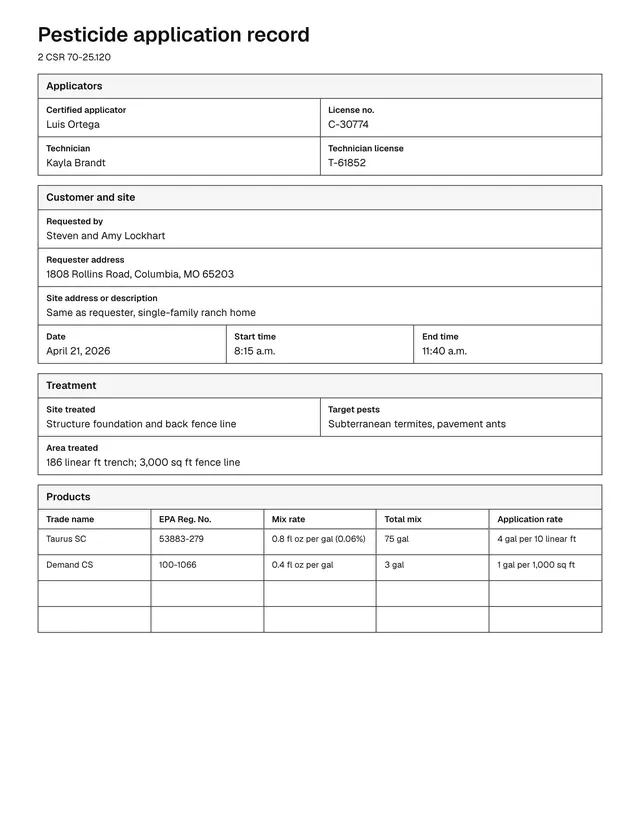
Completed example
Download PDFWhy Missouri wants this record
Missouri is unusually honest about why it wants your paperwork. The purpose statement for 2 CSR 70-25.120 says the record is there to give “all the necessary information on particular pesticide treatments in the event a commercial applicator, noncommercial applicator, or public operator is charged with misuse of a pesticide.” The charge can come from the state, another agency, or a client. In other words, this record is your defense file.
Certified commercial applicators, or their employers, record the use of all pesticides, not just restricted-use ones. Noncommercial applicators and public operators, like a school district’s own crew, only record restricted-use products. Either way, the record is finished within three business days and kept three years “in a neat and legible condition.”
The records live where the work is run from: the physical location your applicators work out of or are supervised from. They’re open to the Missouri Department of Agriculture during regular business hours. If the director asks in writing, you send a copy within 10 days.
What the record holds, item by item
The rule lists items (A) through (N). Grouped the way you’d fill them in:
People. The certified applicator’s name and license number. If a noncertified applicator or pesticide technician did the work, their names and license numbers too.
That second line matters on termite jobs. Missouri requires a pesticide technician license for people who apply under direct supervision in structural work, so the technician’s license number goes on the record next to their name.
When and for whom. The date, the start time, and the end time. The name and address of the person who asked for the work, and the address or a description of the site.
What and where. The size of the area treated, in square feet, linear feet, or acres. Indoor spot and crack and crevice treatments are left out of that measurement. Then the site or commodity treated and the target pests.
The product. The complete trade name and the EPA registration number, plus any special local need number. The rule also accepts other paperwork that gives an “incontrovertible correlation” to the product, but the EPA number is the simple way.
The mix. The mixture rate, the total amount of mixture used, and the rate of application. For a ready-to-use product, an estimate of the amount used.
Weather and ag requests. Outdoor weather (more on that below), and for farm work, a signed request if the grower wants a lower concentration than the label gives.
The 10-foot weather rule
Item (M) asks for “the air temperature, measured wind speed, and wind direction at the site of outdoor pesticide applications.” That word “measured” matters. A guess from the truck’s weather app isn’t a measurement. Carry a pocket wind meter.
Then comes the exception most pest control techs live under: general structural and termite pest control “within ten feet (10’) of a building” is excluded. So a termite trench treatment along the foundation needs no weather line. Say you trench 186 linear feet around a Columbia ranch house with Taurus SC (EPA Reg. No. 53883-279) at 0.8 fl oz per gallon, at 4 gallons per 10 linear feet. Record about 75 gallons of mix, the mix rate, the application rate, and 186 linear feet. No weather.
Now say the same customer wants the back fence line sprayed for ants, 25 feet out from the house, with Demand CS (EPA Reg. No. 100-1066). That’s outdoors and past 10 feet. Take the temperature, wind speed, and wind direction before you start, and write them down.
How do you hit the 3-day window on a busy week?
Write the record at the truck, not at the end of the week. Three business days goes fast in May. The items people skip when they catch up later are the start and end times and the total mix used, and those are hard to rebuild from memory. A record that’s neat but finished on day four is still late.
Mind what you say on the invoice too. RSMo 281.101 makes it unlawful to claim “that any pesticide work done will be inspected by any branch of government.” Your records may get checked by the Missouri Department of Agriculture, but that’s not a selling point you can promise a customer.
Noma specializes in the Missouri pesticide application record (2 CSR 70-25.120). Techs work each stop in the Noma mobile app, and the office schedules recurring service, sends invoices, and takes payments online from the same jobs. See how Noma runs pest control routes.
Frequentlyaskedquestions
Send this document in minutes, not an afternoon.
Other states
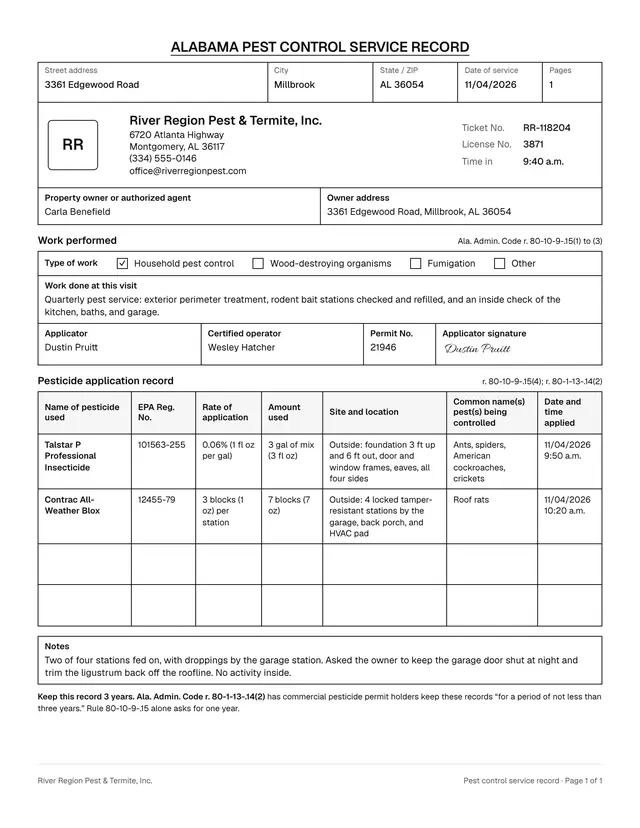
After-treatment notice templates- Alabama
Alabama Pest Control Service Record
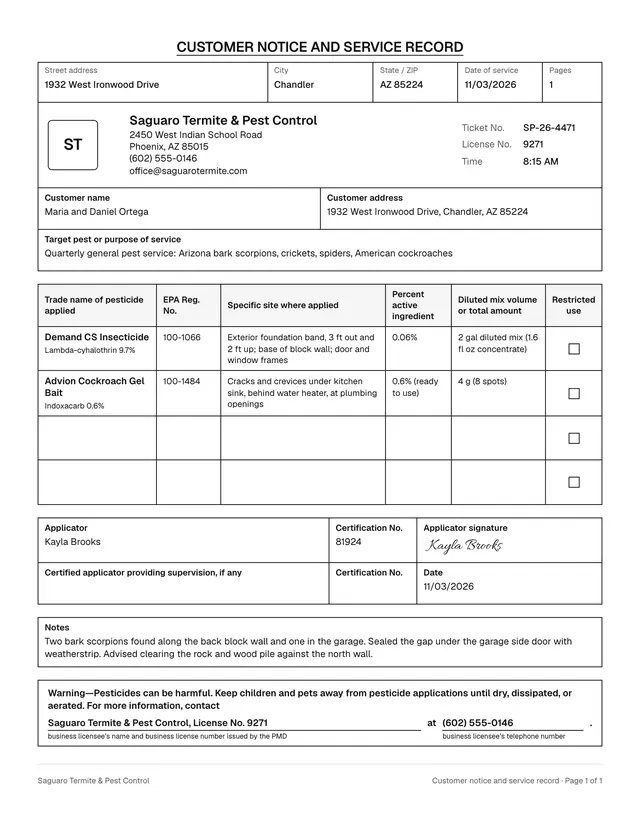
Record each pesticide applied at a service visit. - Arizona
Customer Notice and Service Record
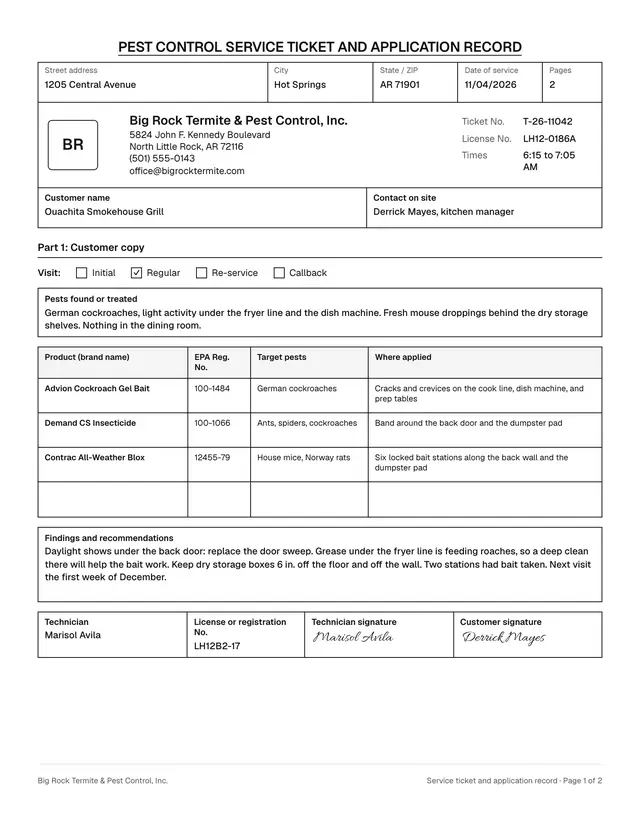
Record each pesticide applied at a service visit. - Arkansas
Pest Control Service Ticket and Application Record
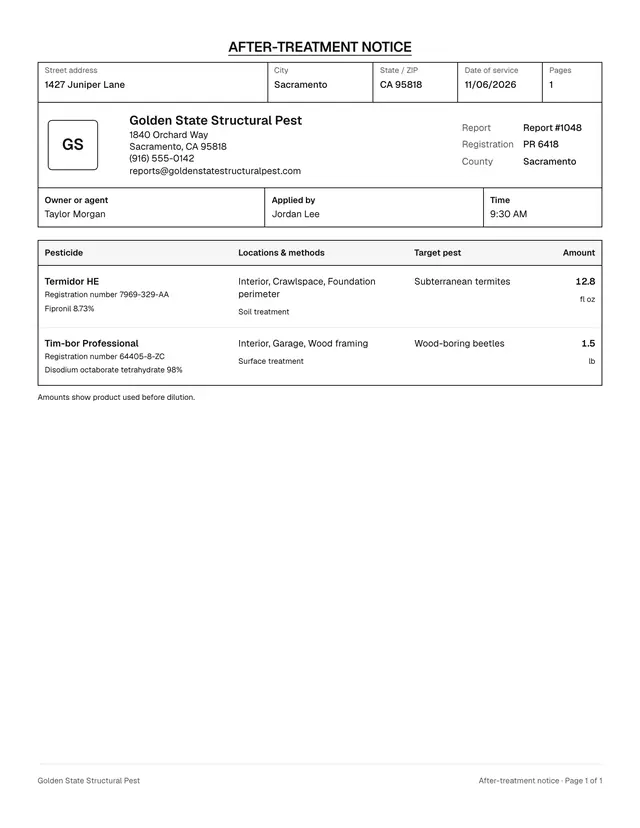
Record each pesticide applied at a service visit. - California
After-Treatment Notice
Record each pesticide applied at a service visit. - Colorado
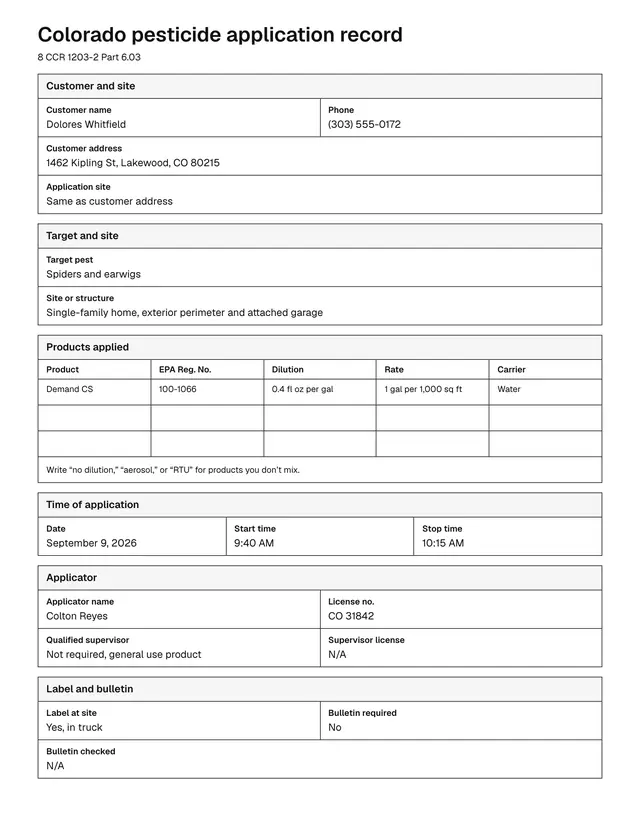
Colorado commercial pesticide application record
Record each pesticide applied at a service visit. - Connecticut
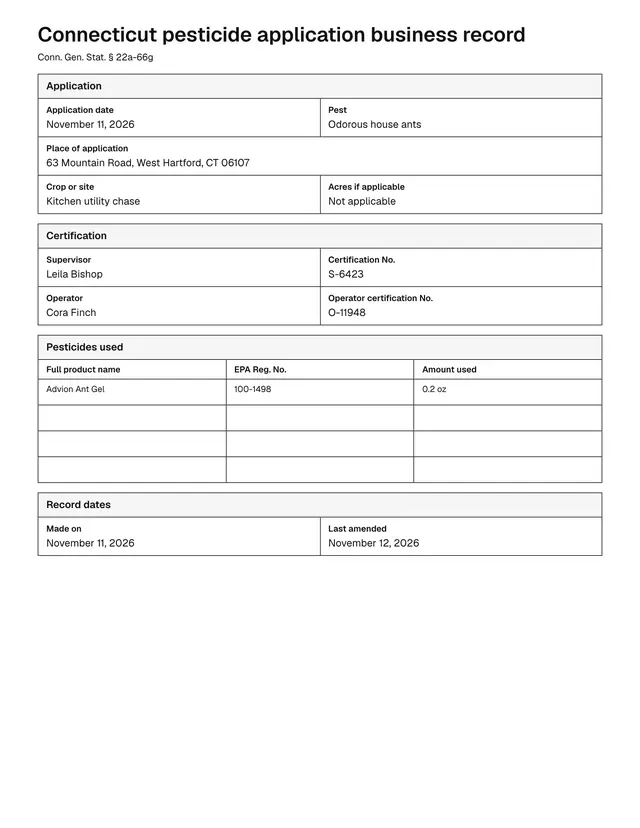
Connecticut pesticide application business record
Record each pesticide applied at a service visit. - Delaware
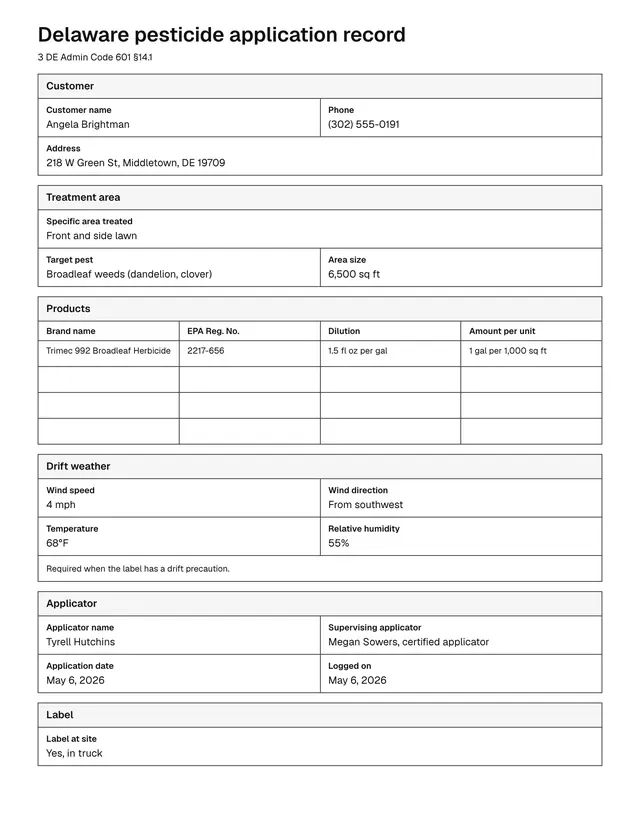
Delaware pesticide application record (3 DE Admin Code 601 §14.1)
Record each pesticide applied at a service visit. - Georgia
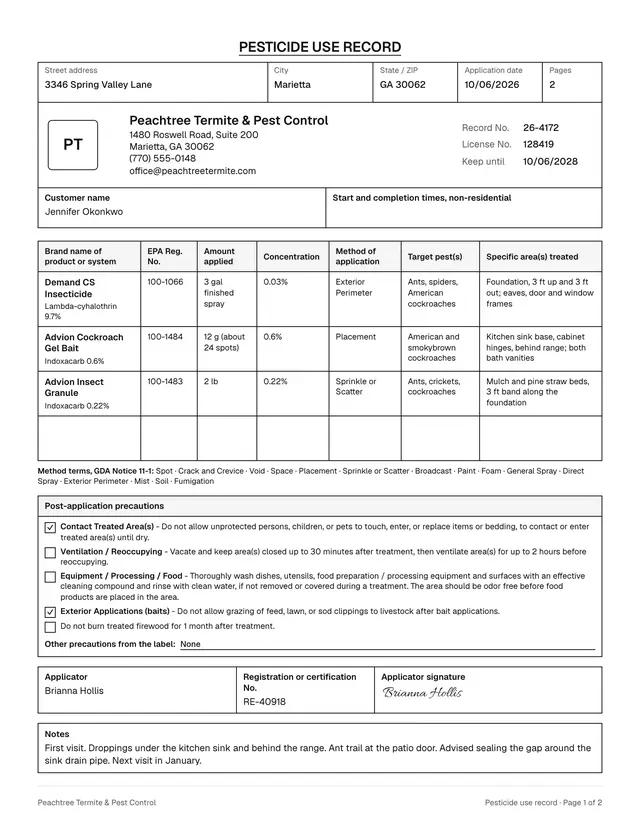
Pesticide Use Record
Record each pesticide applied at a service visit. - Hawaii
Pest Control Job Record
Record each pesticide applied at a service visit. - Illinois
Illinois structural pest control application record
Record each pesticide applied at a service visit. - Indiana
Indiana commercial applicator pesticide use record
Record each pesticide applied at a service visit. - Iowa
Iowa commercial pesticide application record
Record each pesticide applied at a service visit. - Kansas
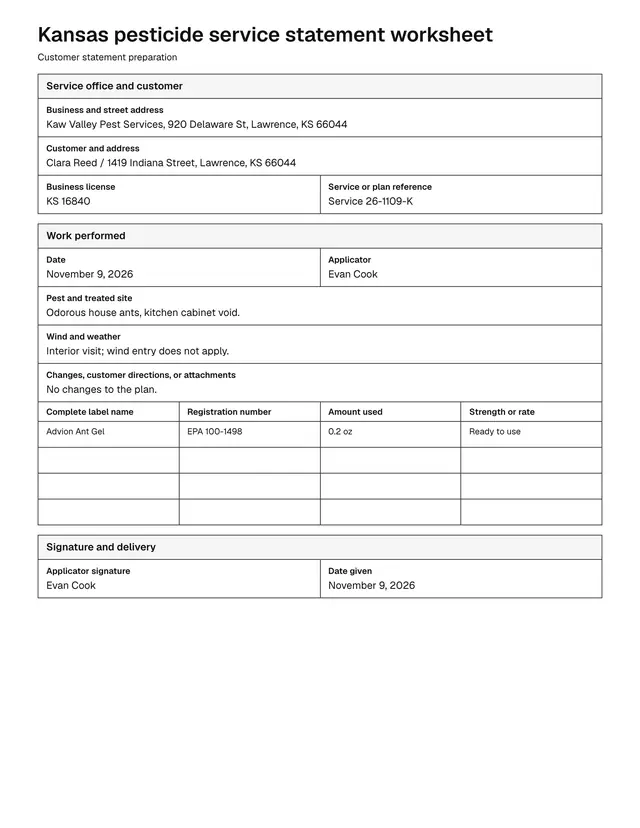
Kansas pesticide service statement worksheet
Record each pesticide applied at a service visit. - Kentucky
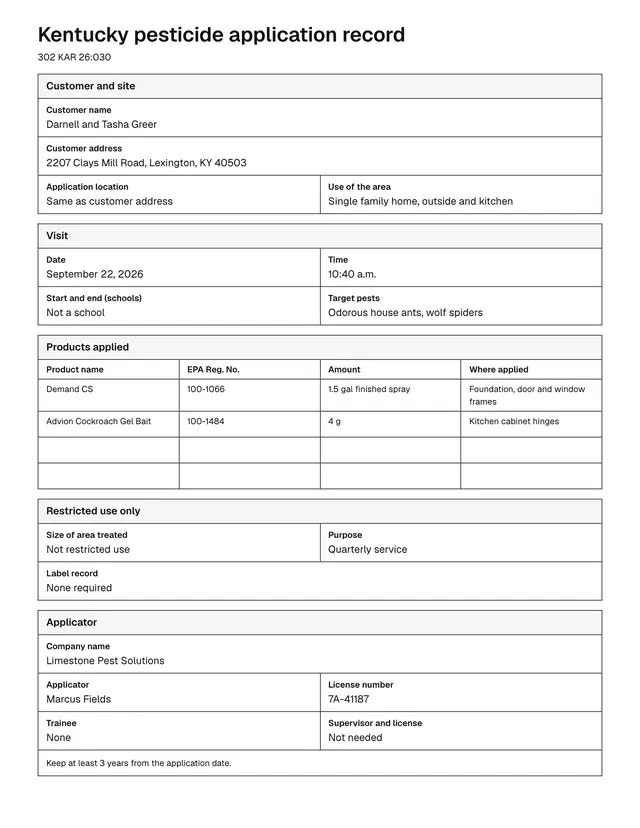
Kentucky pesticide application record (302 KAR 26:030)
Record each pesticide applied at a service visit. - Louisiana
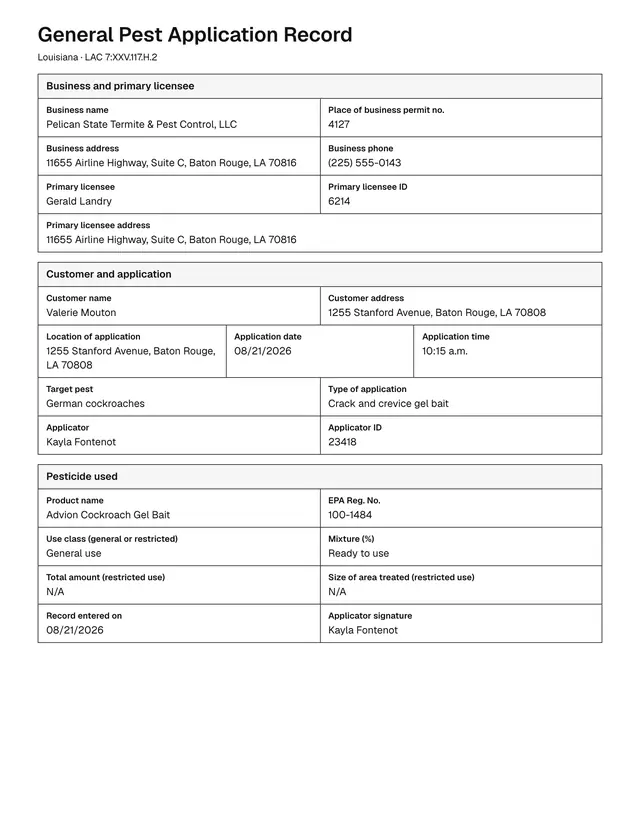
General Pest Application Record
Record each pesticide applied at a service visit. - Maryland
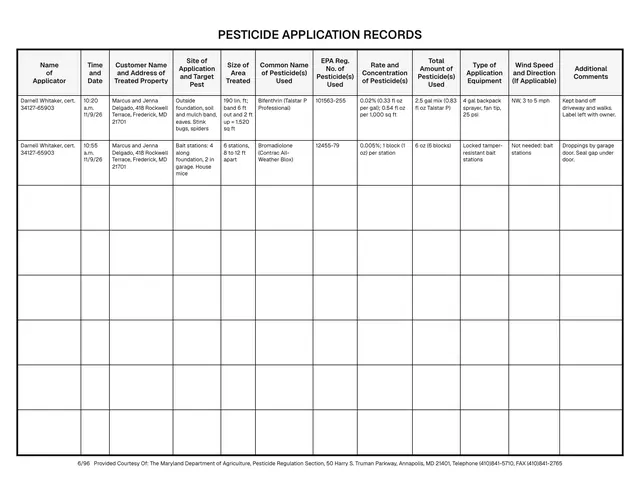
Pesticide Application Record and Customer Pesticide Information
Record each pesticide applied at a service visit. - Massachusetts
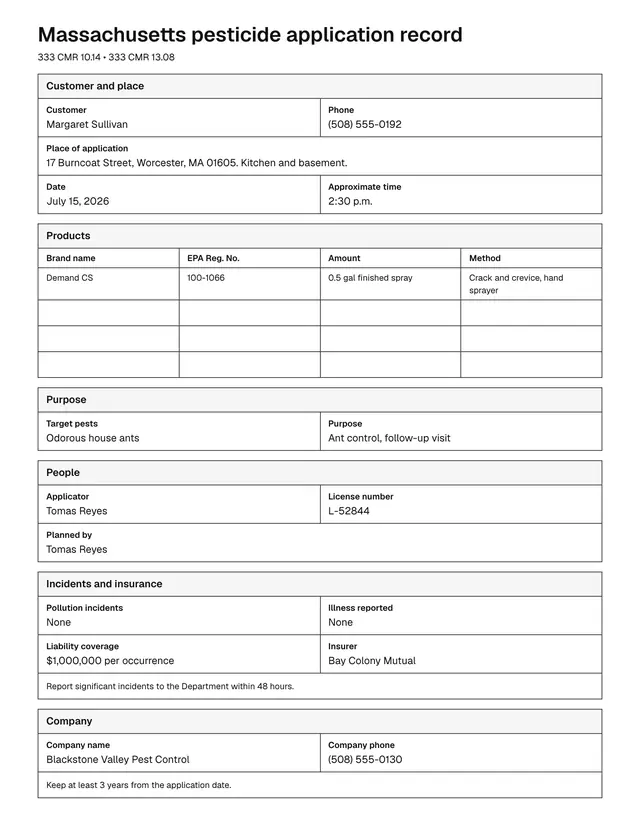
Massachusetts pesticide application record (333 CMR 10.14)
Record each pesticide applied at a service visit. - Michigan
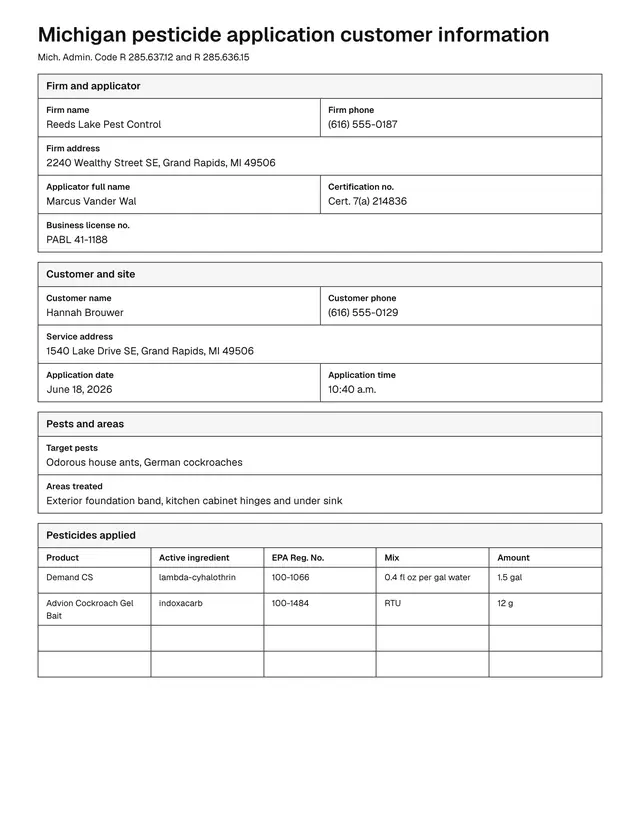
Michigan pesticide customer information receipt
Record each pesticide applied at a service visit. - Mississippi
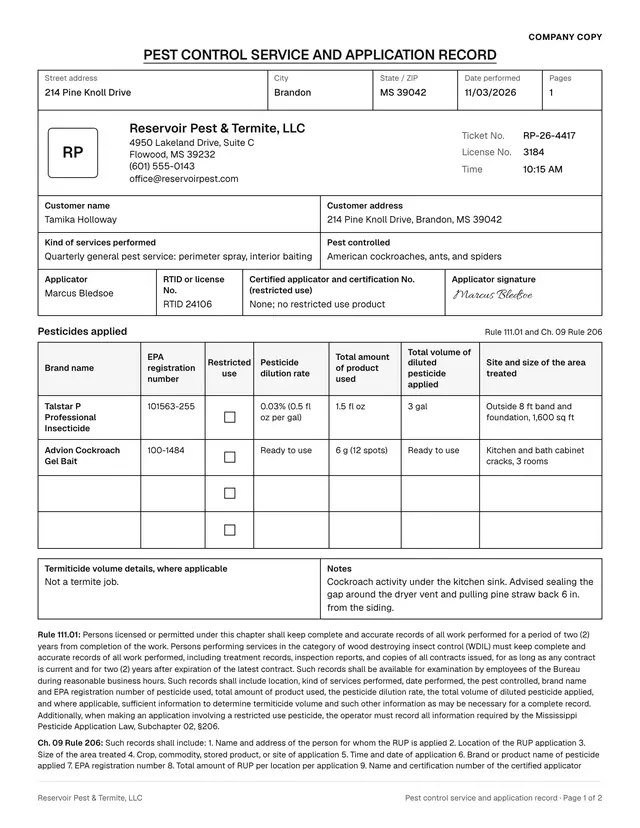
Pest Control Service and Application Record
Record each pesticide applied at a service visit. - Nevada
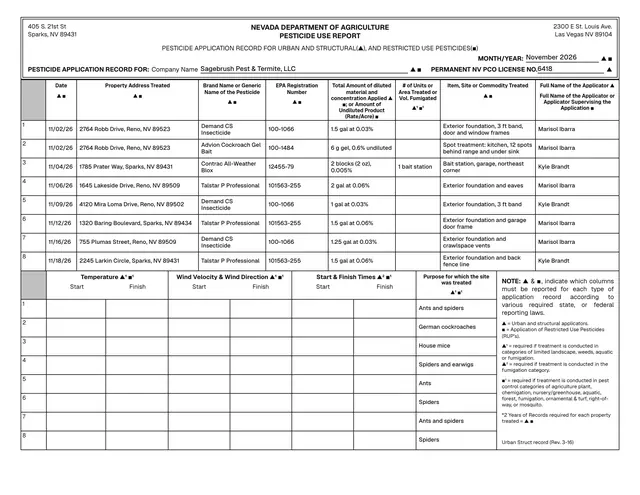
Pesticide Application Record for Urban and Structural and Restricted Use Pesticides
Record each pesticide applied at a service visit. - New Jersey
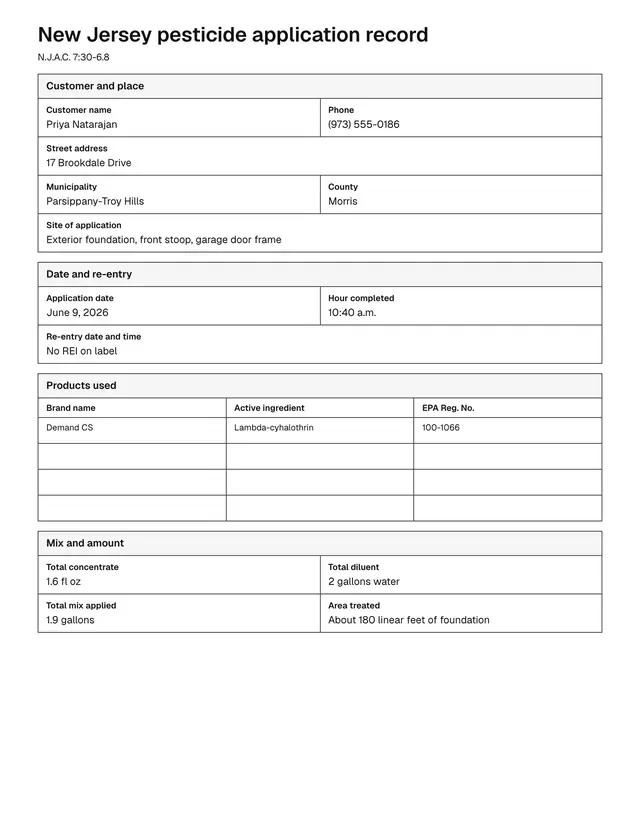
New Jersey pesticide application record (N.J.A.C. 7:30-6.8)
Record each pesticide applied at a service visit. - New Mexico
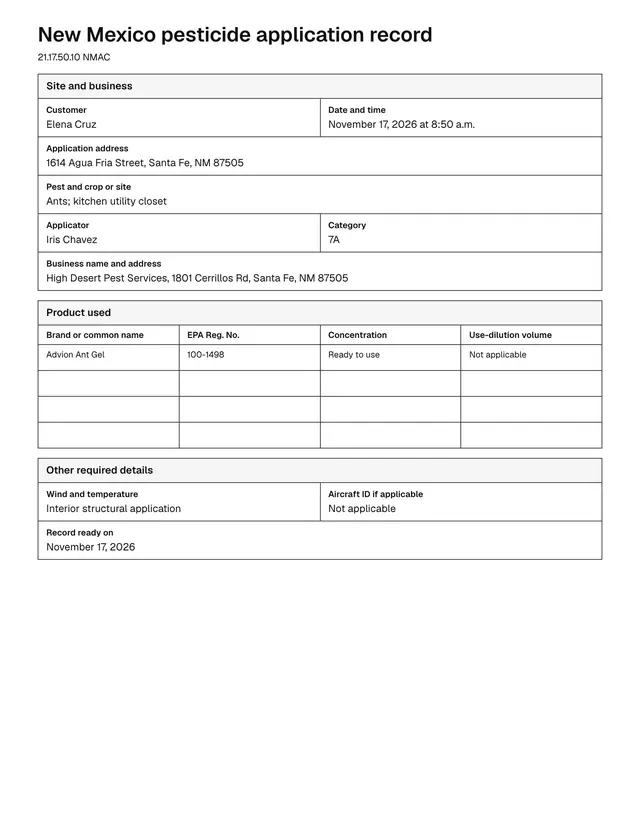
New Mexico pesticide application record
Record each pesticide applied at a service visit. - New York
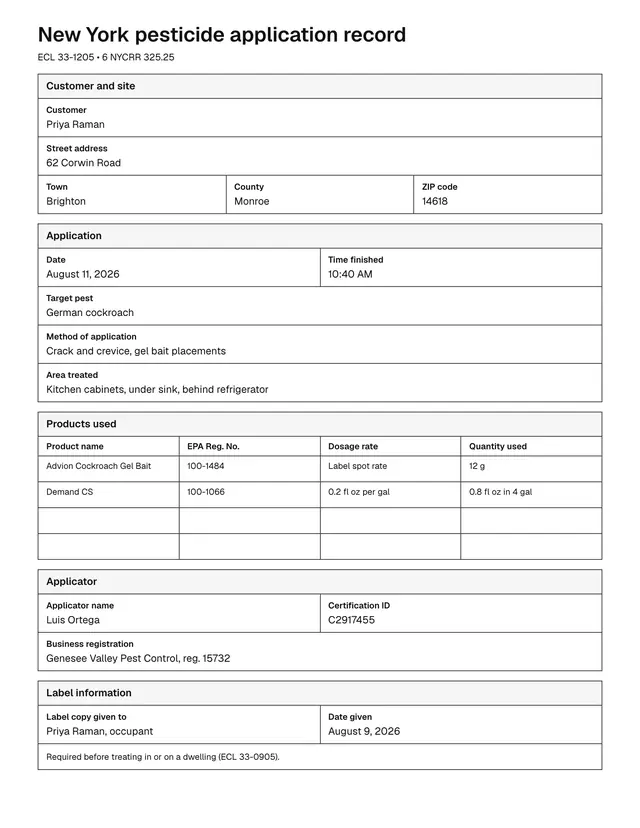
New York pesticide application record (6 NYCRR 325.25)
Record each pesticide applied at a service visit. - North Carolina
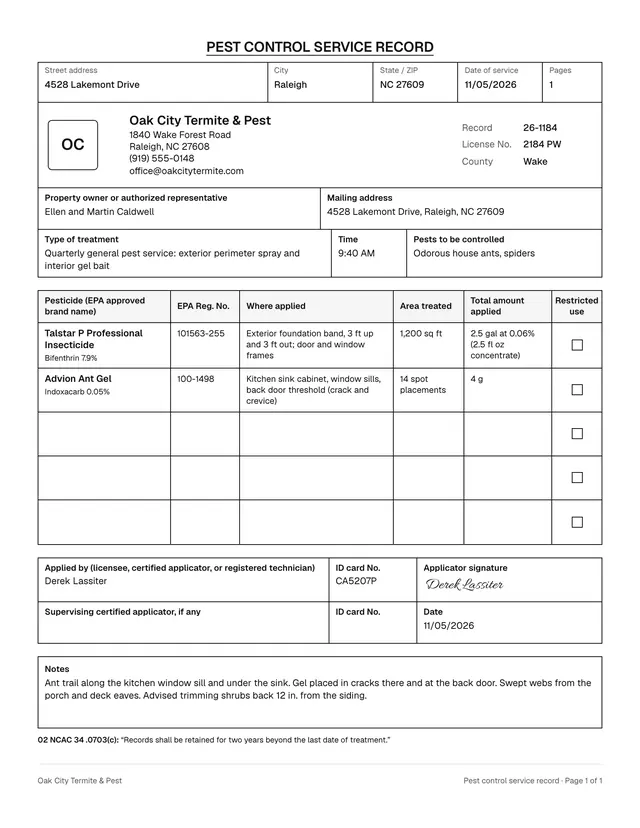
Pest Control Service Record
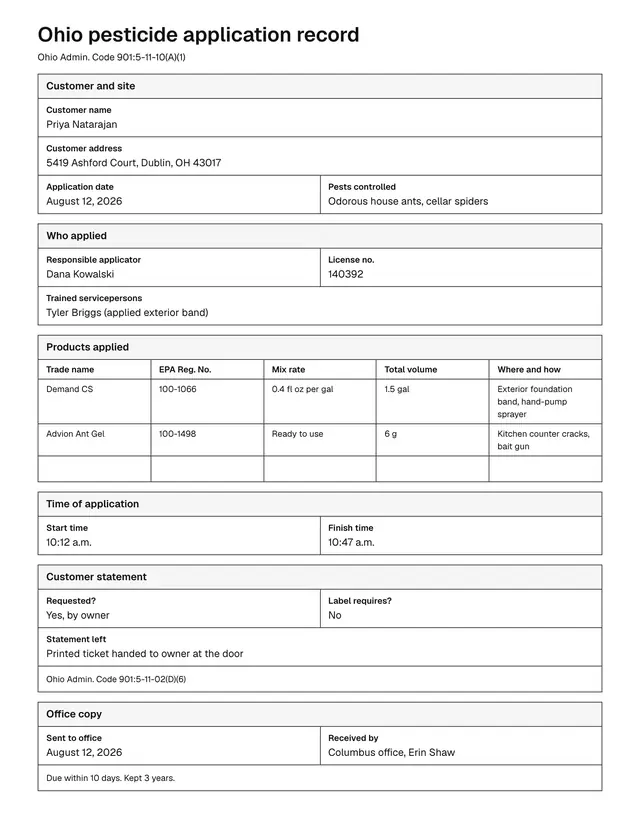
Record each pesticide applied at a service visit. - Ohio
Ohio pesticide application record
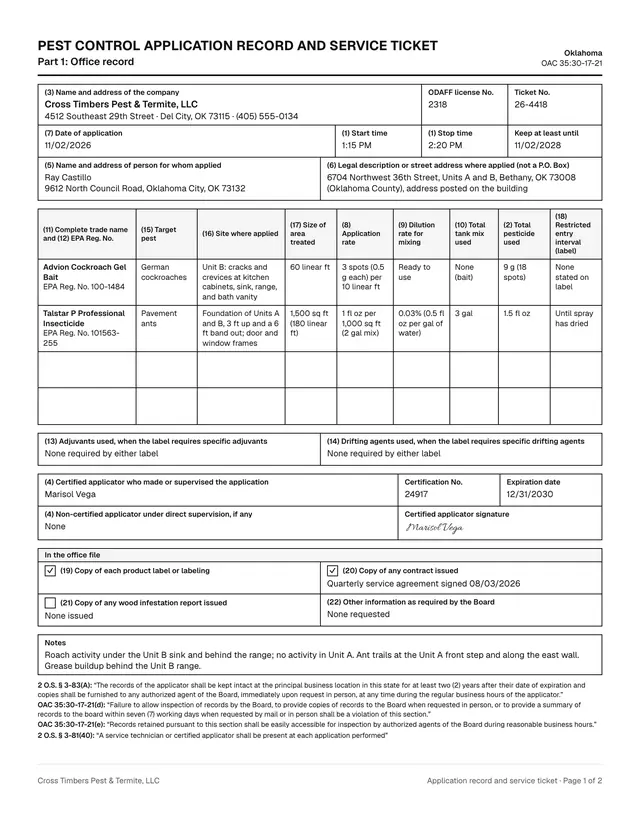
Record each pesticide applied at a service visit. - Oklahoma
Pest Control Application Record and Service Ticket
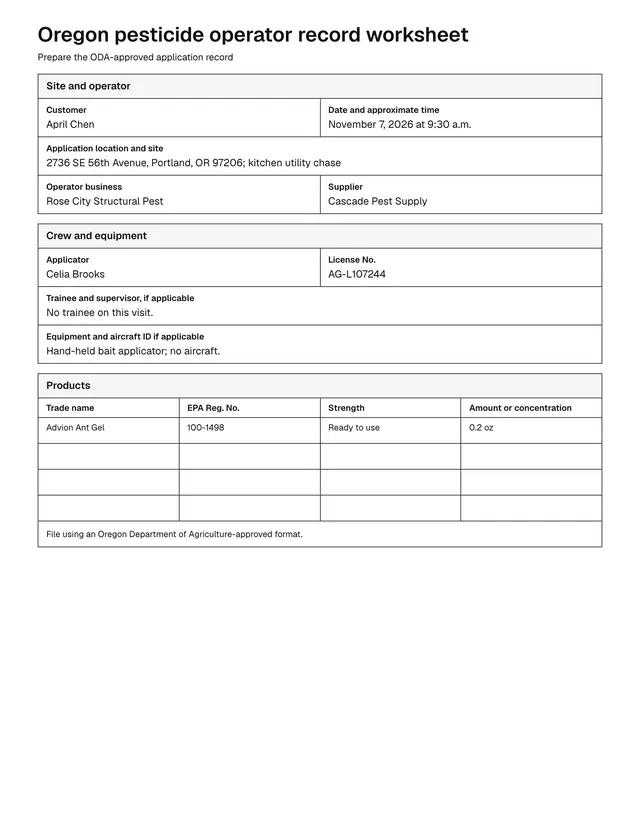
Record each pesticide applied at a service visit. - Oregon
Oregon pesticide operator record worksheet
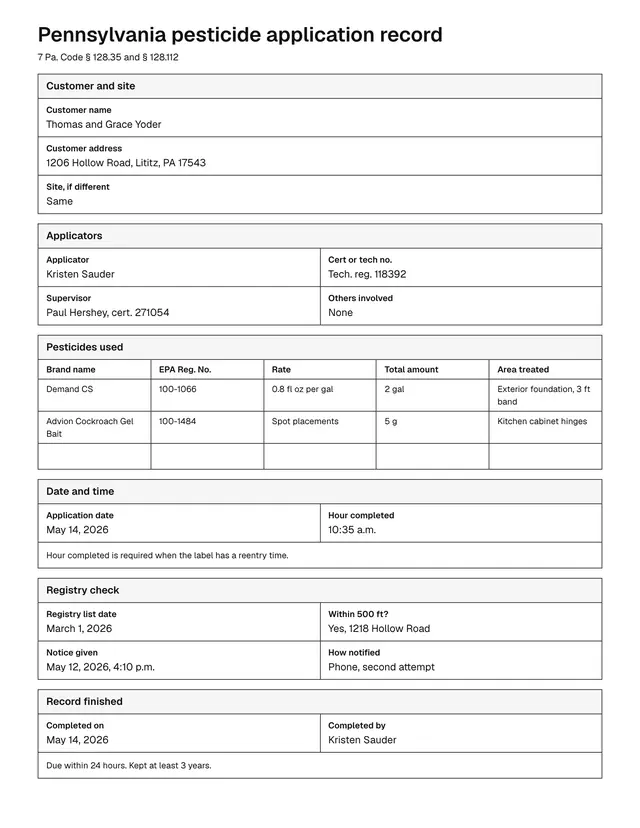
Record each pesticide applied at a service visit. - Pennsylvania
Pennsylvania pesticide application record
Record each pesticide applied at a service visit. - South Carolina
Pest Control Service Record
Record each pesticide applied at a service visit. - Tennessee
Tennessee pesticide application record
Record each pesticide applied at a service visit. - Texas
Pest Control Use Record
Record each pesticide applied at a service visit. - Utah
Utah commercial pesticide service worksheet
Record each pesticide applied at a service visit. - Virginia
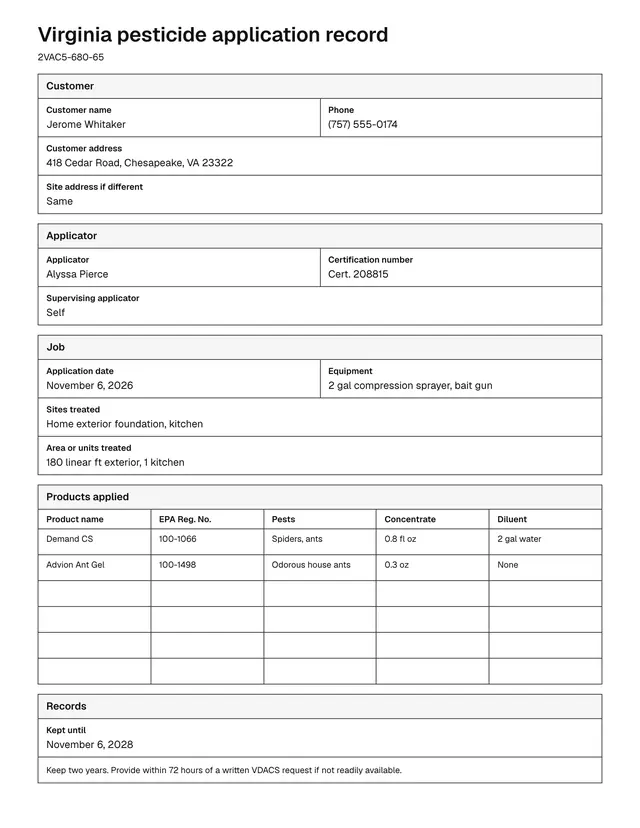
Virginia pesticide application record
Record each pesticide applied at a service visit. - Washington
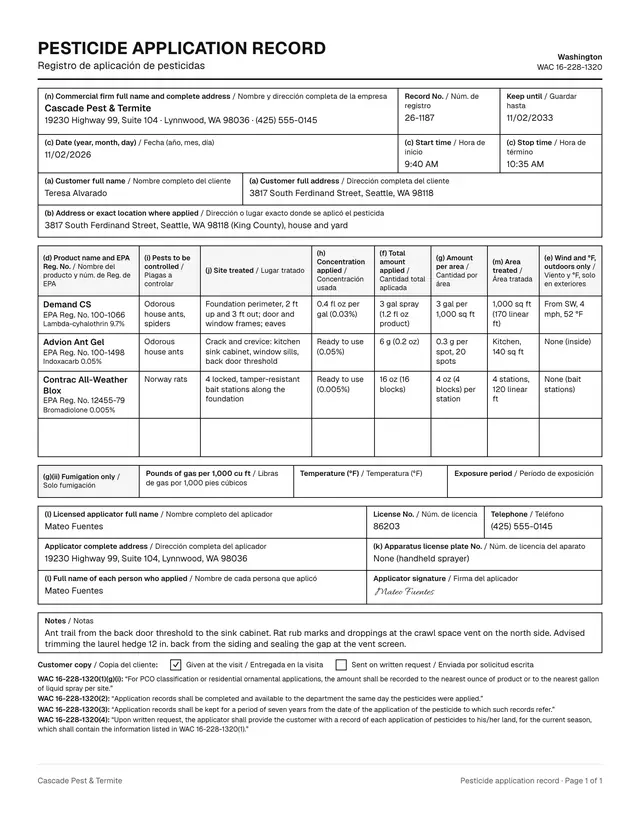
Pesticide Application Record
Record each pesticide applied at a service visit. - Wisconsin
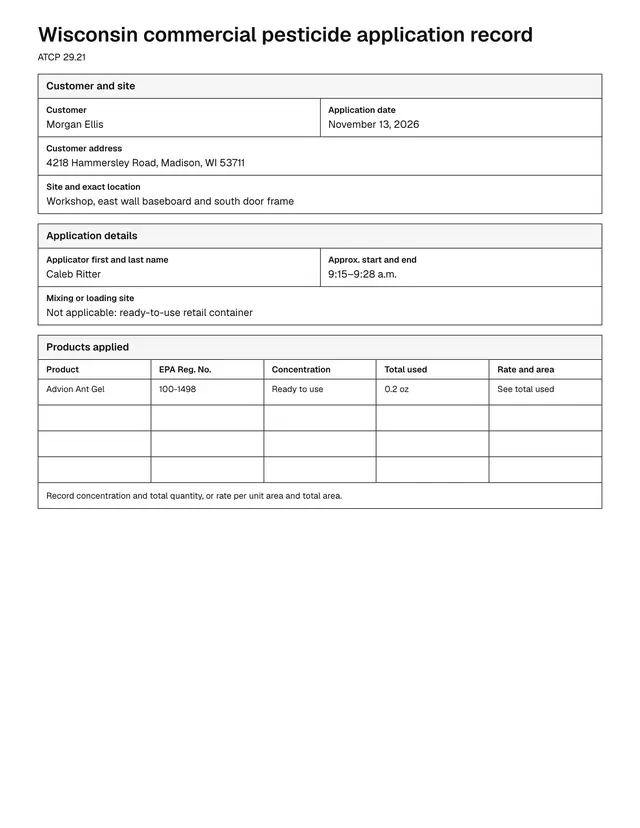
Wisconsin commercial pesticide application record
Record each pesticide applied at a service visit.