Pennsylvania pesticide application record
Pennsylvania gives you 24 hours to finish the record for each application. If a neighbor within 500 feet is on the hypersensitivity registry, the notice record goes with it.
At a glance
- Rule
- 7 Pa. Code § 128.35
- Done by
- 24 hours after the application
- Kept for
- At least 3 years
- Registry
- 7 Pa. Code § 128.112
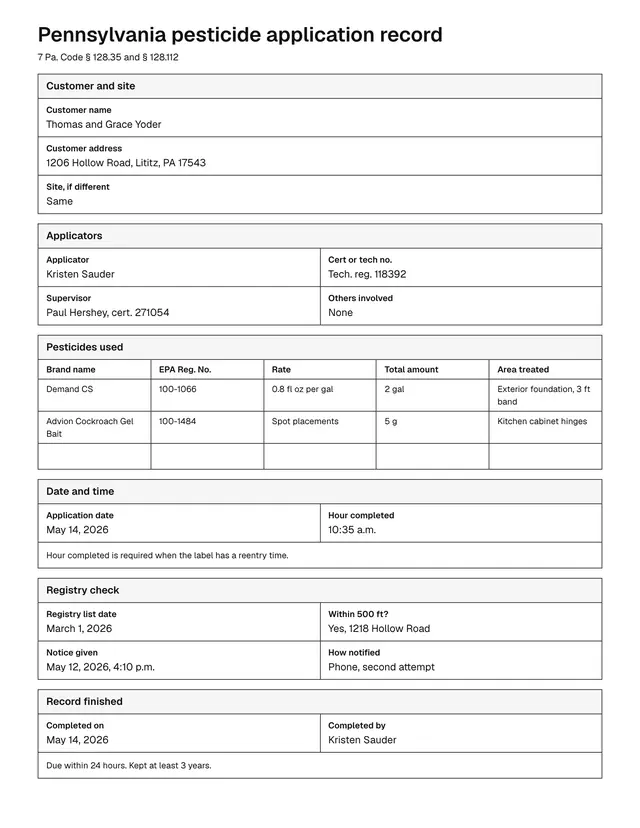
Completed example
Download PDFPennsylvania gives you until tomorrow
Some states want the record before you leave the driveway. Pennsylvania gives a little slack. 7 Pa. Code § 128.35(d) says the record must be “completed in written or printable form no later than 24 hours after the application date and made immediately available to the Department upon request.”
That record is kept by the pesticide application business for at least three years. And it has a second reader besides the inspector. Under (c), product and application details go to “medical personnel in an emergency” right away. If a customer’s kid gets into a bait tray, the ER isn’t waiting on tomorrow’s paperwork.
One thing people expect that isn’t there: a customer copy. Paragraph (b) only requires a copy within 30 days for restricted use pesticides on agricultural crops. For a house, the ticket you hand over is a courtesy.
What goes on it
The date, and sometimes the hour. Every record has the date. If the product has a reentry time, the date “must include the hour completed.” Check the label before you leave it off.
The customer and the site. Name and address, plus the site’s address if it’s different, like a rental the owner doesn’t live in.
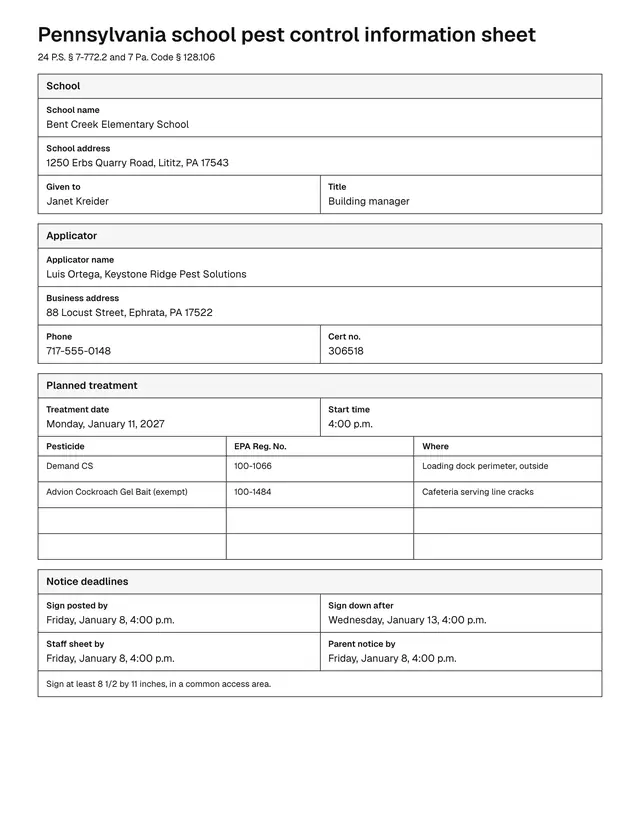
Brand name and EPA Reg. No. Pennsylvania says brand name, not just the active ingredient. Copy it off the label. For example: Demand CS, EPA Reg. No. 100-1066, and Advion Cockroach Gel Bait, EPA Reg. No. 100-1484. The EPA label search helps when a jug’s label is worn.
Total amount and rate. Both. The total is in pounds, ounces, gallons, or liters “applied to a treated area,” and the rate is the dosage you used. “0.8 fl oz per gallon, 2 gallons finished spray” covers it.
Who applied or supervised. Names with certification or technician registration numbers for each person who made or supervised the application. If someone without either helped, their name goes on too.
Paper or screen, as long as it prints. The rule says “written or printable form,” so an electronic record counts. What matters is that you can hand the Department a copy right away when they ask.
Check the registry before the spray rig rolls
This is the part that’s pure Pennsylvania. The Department of Agriculture keeps a Pesticide Hypersensitivity Registry of people whose doctor has verified they react to pesticides. Under § 128.111, they renew every October, and the Department sends the list to licensed businesses on or before March 1 and July 15.
Under § 128.112, if a registry person’s home or listed second location has a property line within 500 feet of your job, they get notice 12 to 72 hours before you apply. The notice gives the date, the site, and a start and finish window no wider than 24 hours. It names the brand, EPA number, and active ingredient of each product you might use, plus your business name, phone, and license number. If they ask in writing, they get a label copy within 10 days.
Here’s a real one. You’re treating the outside of a house on Hollow Road in Lititz at 8 a.m. on a Thursday, and a neighbor two lots over is on the list. The call has to land between 8 a.m. Monday and 8 p.m. Wednesday. “Thursday, 8 a.m. to 5 p.m., Demand CS, EPA 100-1066, lambda-cyhalothrin.” If two calls don’t reach anyone, the written notice can go on their front door in the same window.
Some jobs skip it. No notice is needed for work inside a detached building that isn’t a listed second location, below the soil surface, in a tamper-resistant bait station, by tree or pole injection, with a disinfectant, or for pool care. Whatever you do, write down every call and attempt. The notice record is due within 24 hours after the job and is kept three years, same as the application record.
Who remembers the neighbor on the list?
The registry check is easy to forget on a repeat account, because nothing about the house changed. The neighbor’s listing did. Schools add their own 72-hour process, covered on the Pennsylvania school pest control information sheet page.
Noma specializes in the Pennsylvania pesticide application record (7 Pa. Code § 128.35). Schedule the visits far enough out to leave room for a notice call, run the day from the phone at each stop, and send invoices and take payment online. See how Noma schedules pest control visits.
Frequentlyaskedquestions
Send this document in minutes, not an afternoon.
Other states
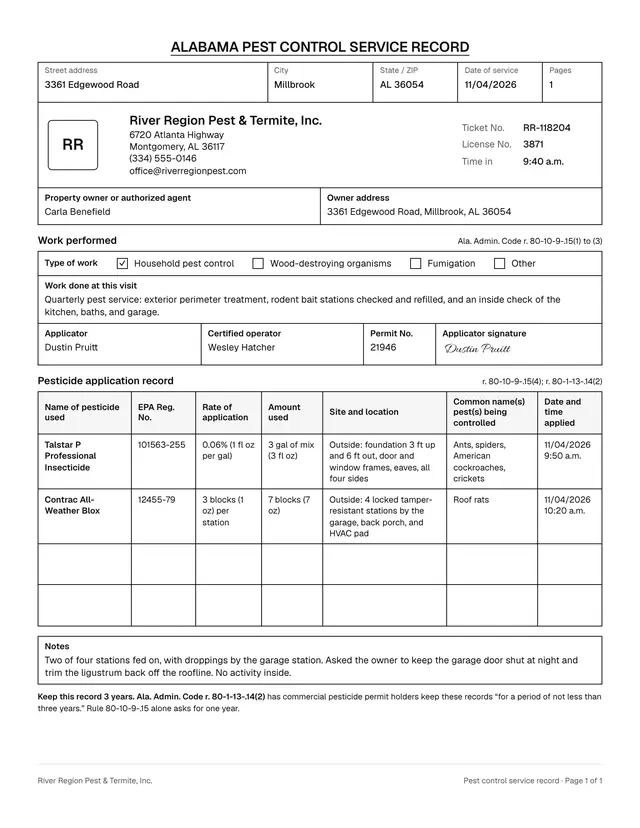
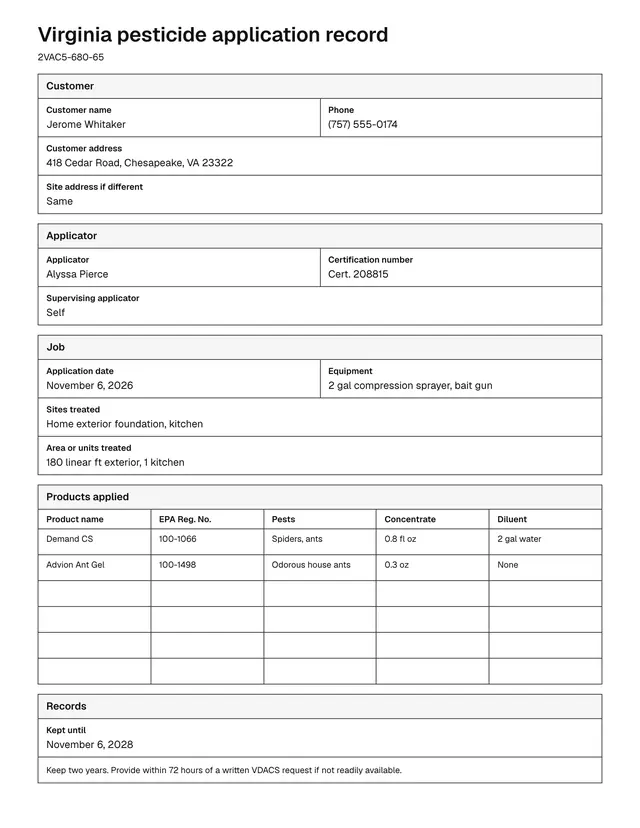
After-treatment notice templates- Alabama
Alabama Pest Control Service Record
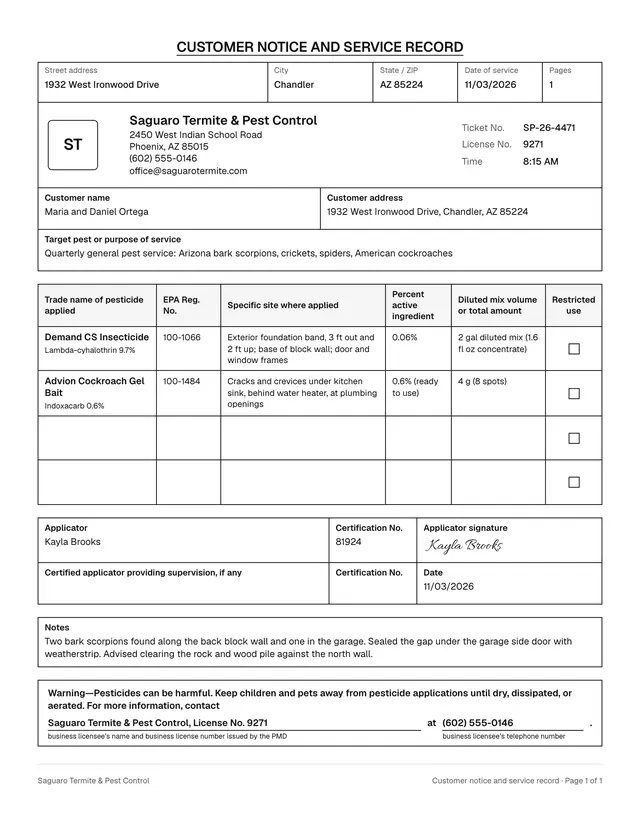
Record each pesticide applied at a service visit. - Arizona
Customer Notice and Service Record
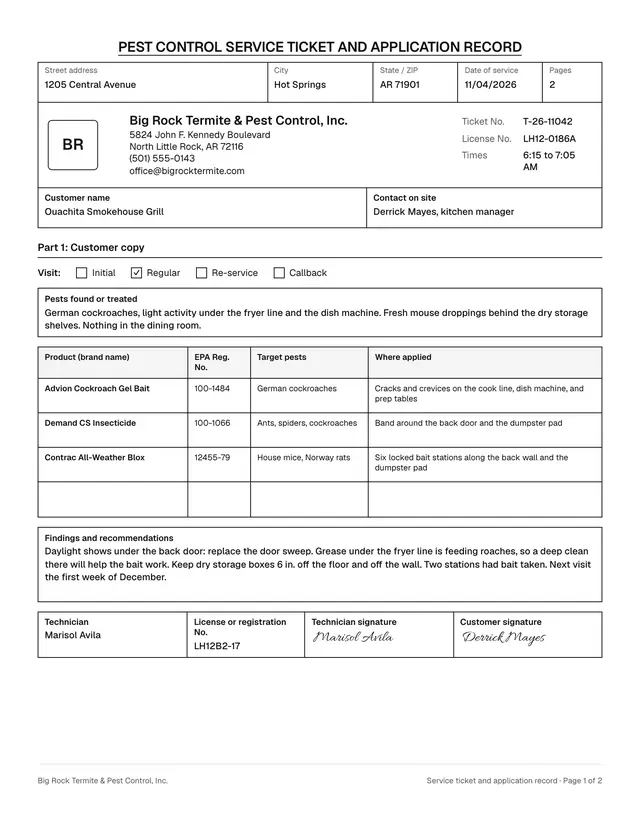
Record each pesticide applied at a service visit. - Arkansas
Pest Control Service Ticket and Application Record
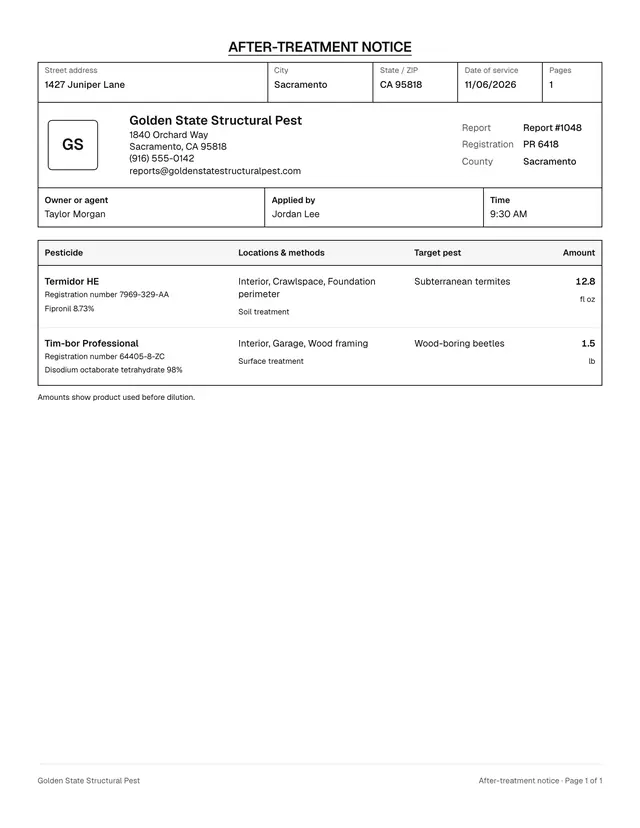
Record each pesticide applied at a service visit. - California
After-Treatment Notice
Record each pesticide applied at a service visit. - Colorado
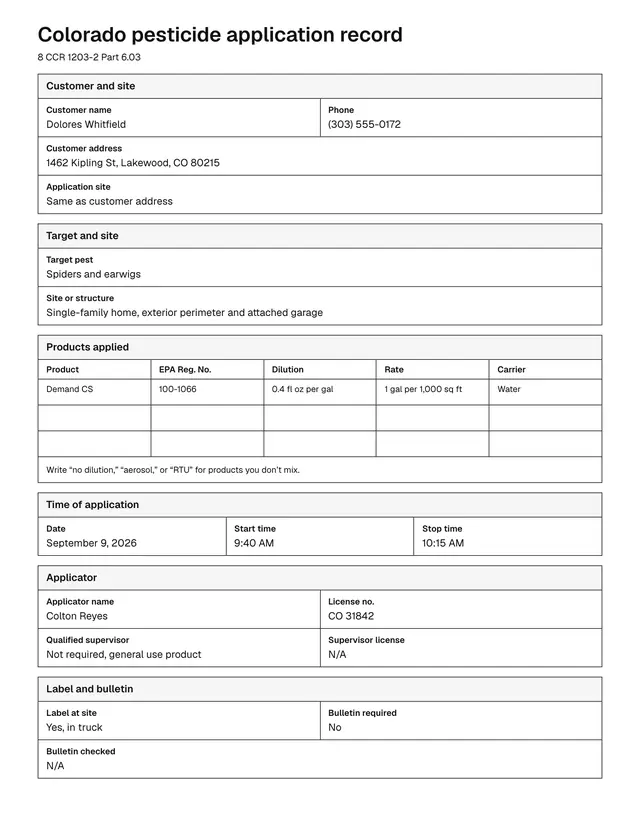
Colorado commercial pesticide application record
Record each pesticide applied at a service visit. - Connecticut
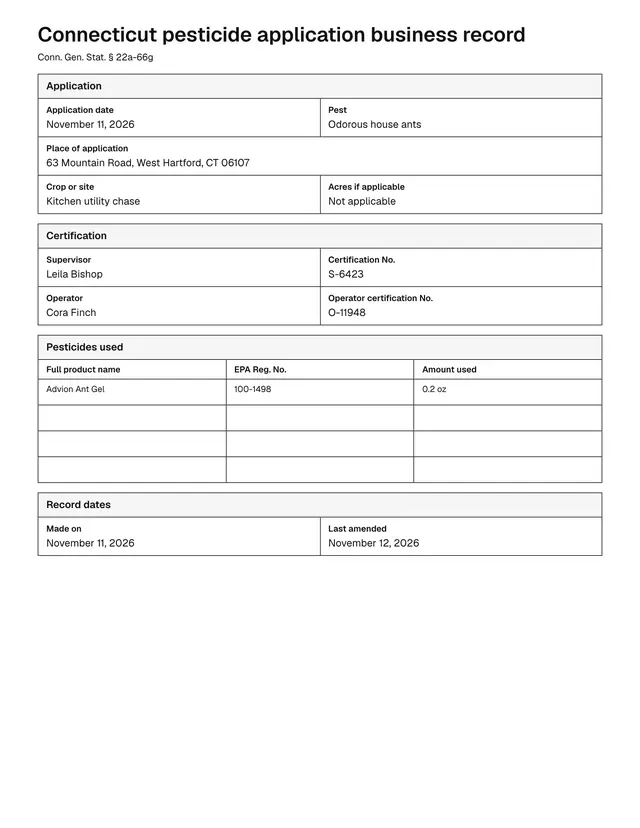
Connecticut pesticide application business record
Record each pesticide applied at a service visit. - Delaware
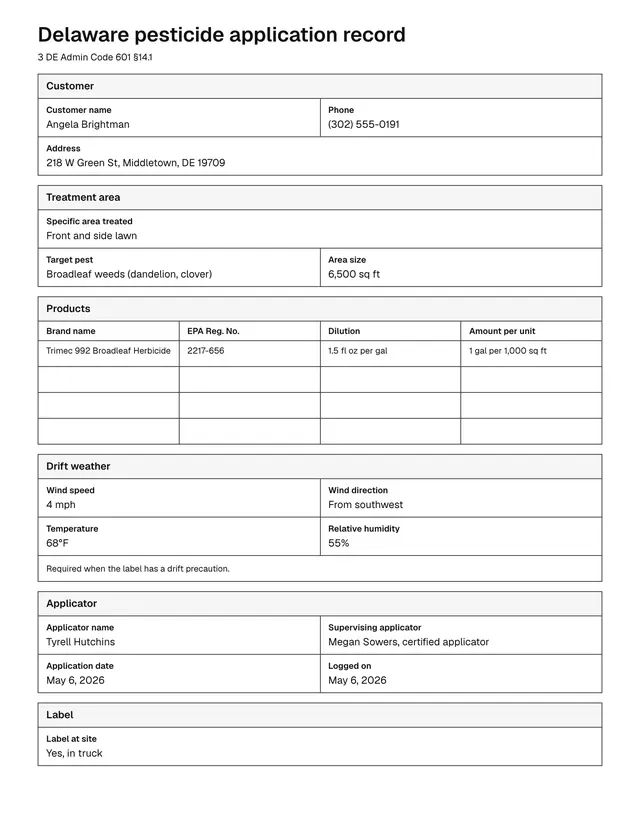
Delaware pesticide application record (3 DE Admin Code 601 §14.1)
Record each pesticide applied at a service visit. - Georgia
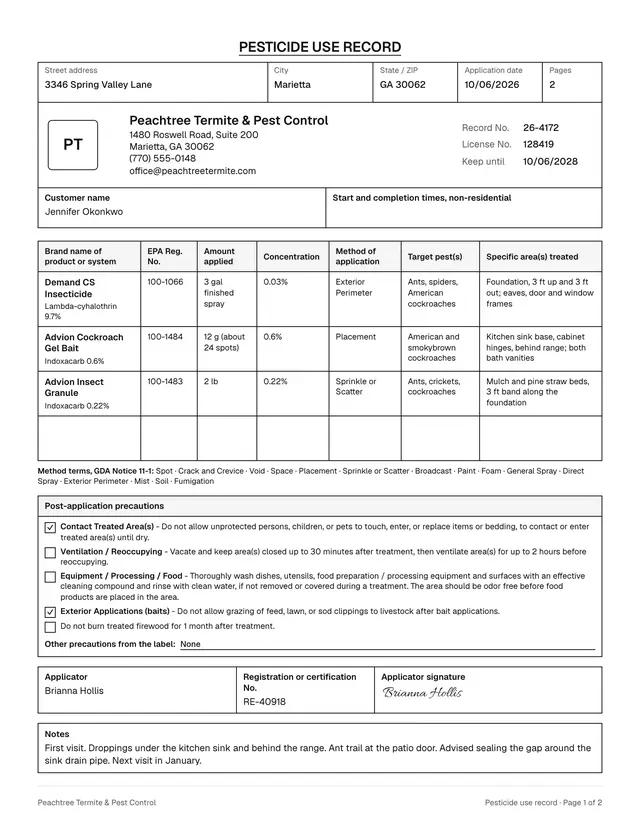
Pesticide Use Record
Record each pesticide applied at a service visit. - Hawaii
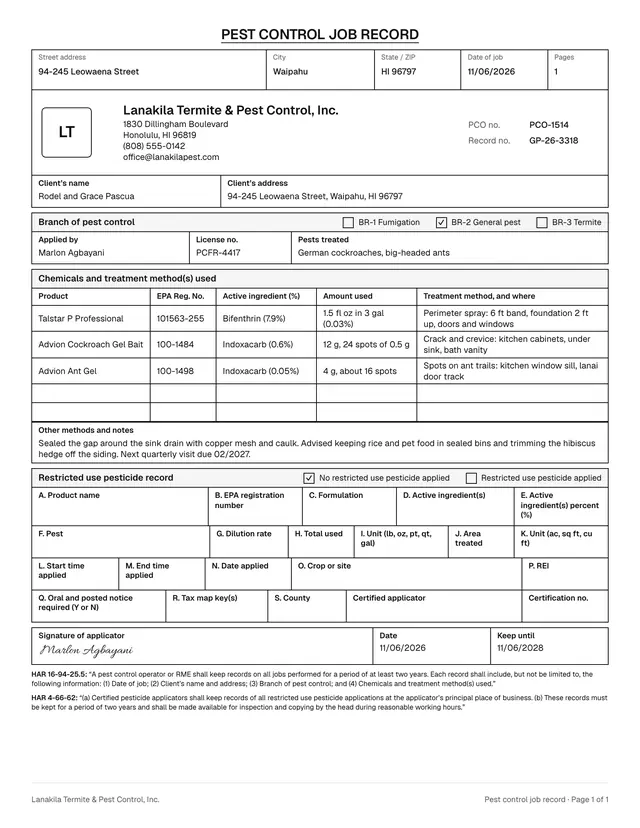
Pest Control Job Record
Record each pesticide applied at a service visit. - Illinois
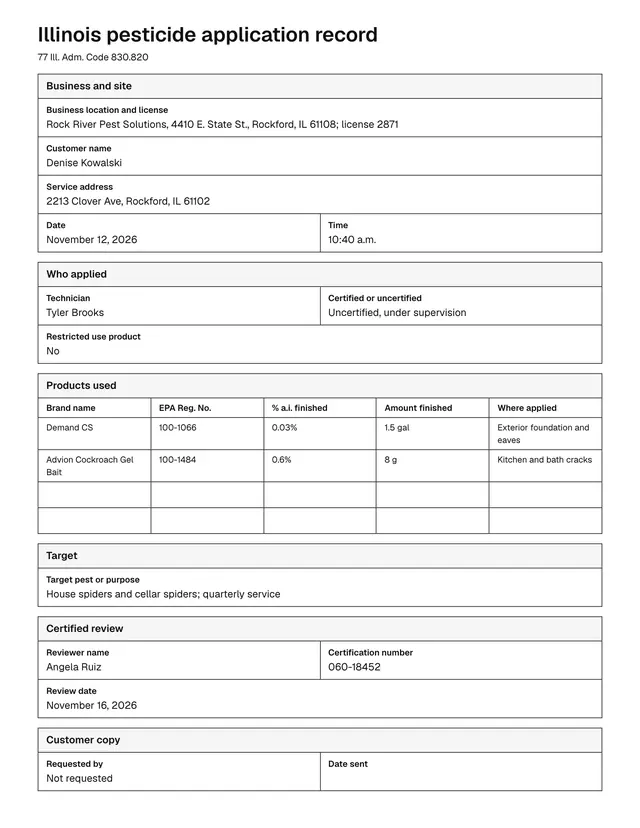
Illinois structural pest control application record
Record each pesticide applied at a service visit. - Indiana
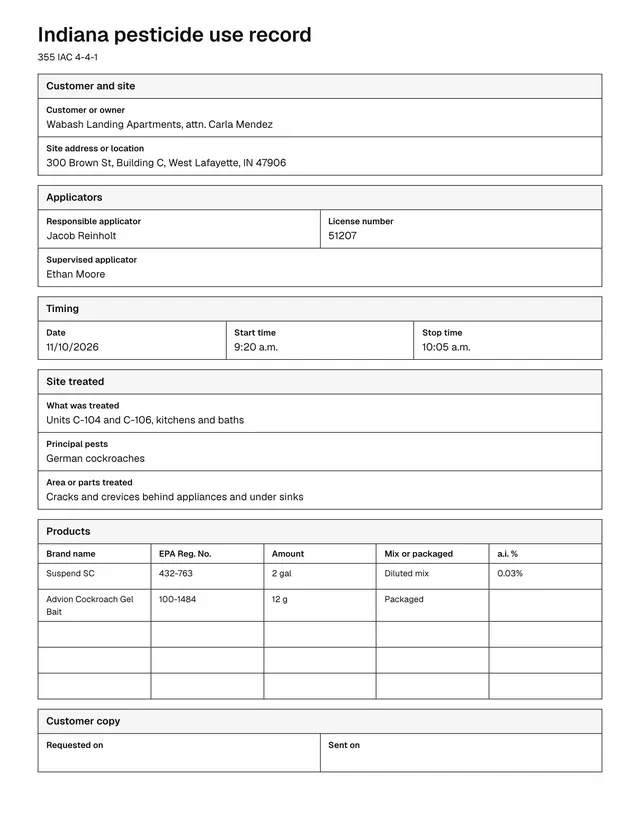
Indiana commercial applicator pesticide use record
Record each pesticide applied at a service visit. - Iowa
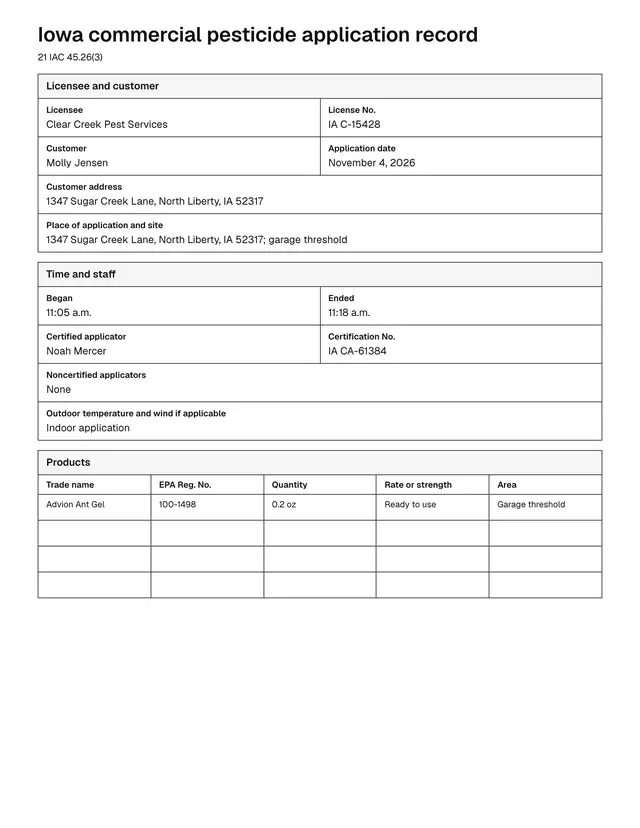
Iowa commercial pesticide application record
Record each pesticide applied at a service visit. - Kansas
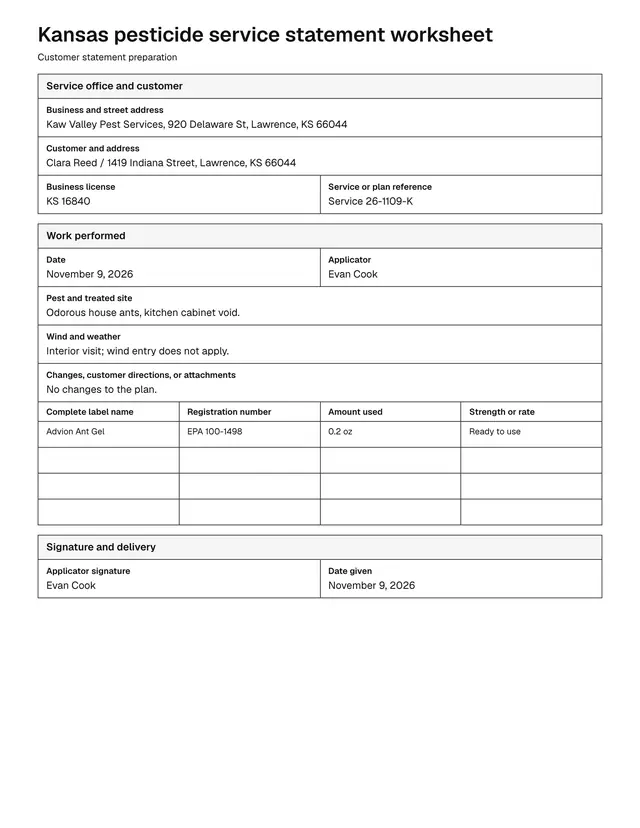
Kansas pesticide service statement worksheet
Record each pesticide applied at a service visit. - Kentucky
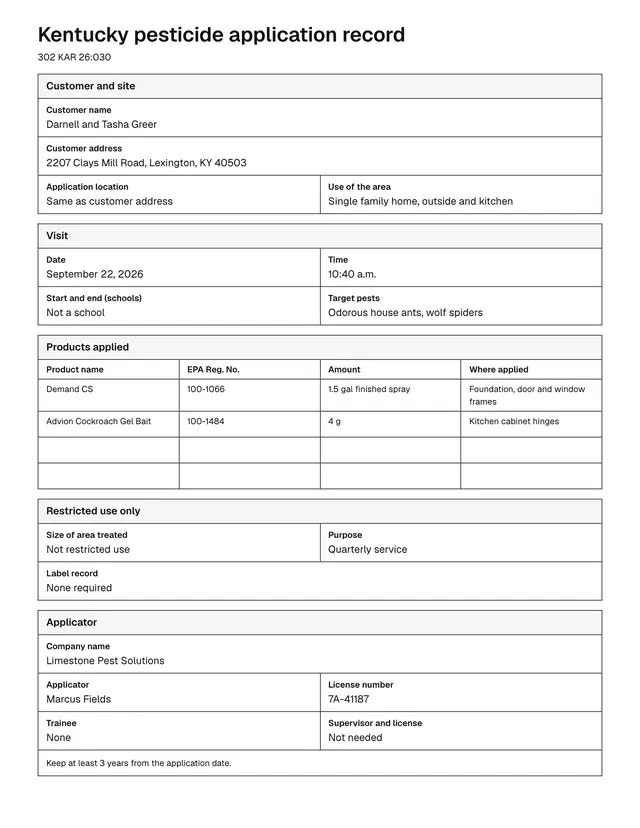
Kentucky pesticide application record (302 KAR 26:030)
Record each pesticide applied at a service visit. - Louisiana
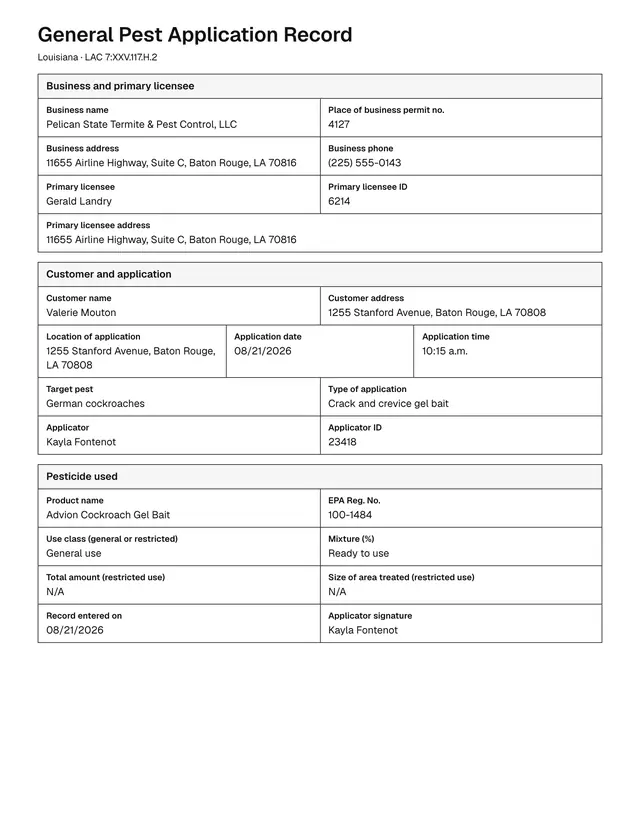
General Pest Application Record
Record each pesticide applied at a service visit. - Maryland
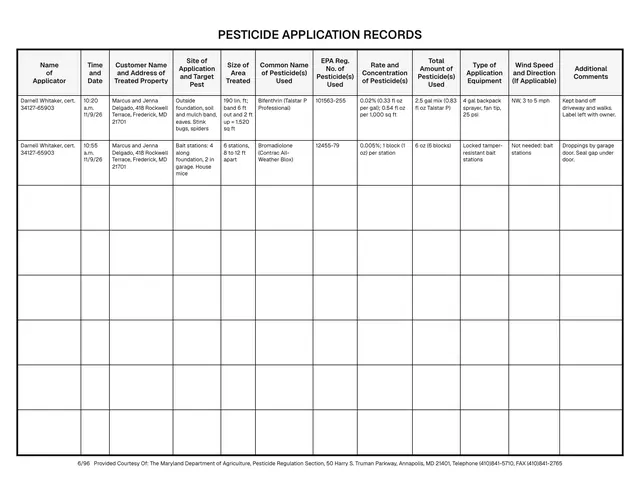
Pesticide Application Record and Customer Pesticide Information
Record each pesticide applied at a service visit. - Massachusetts
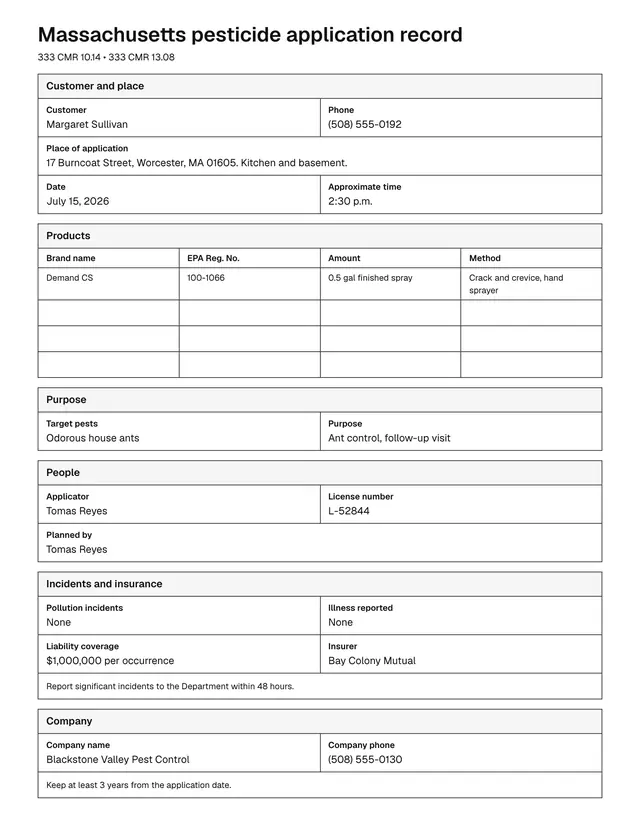
Massachusetts pesticide application record (333 CMR 10.14)
Record each pesticide applied at a service visit. - Michigan
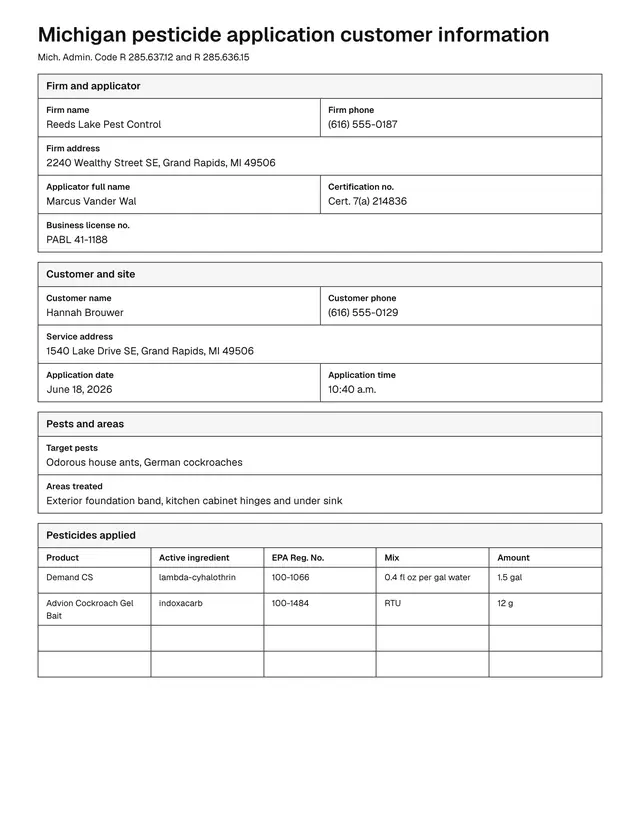
Michigan pesticide customer information receipt
Record each pesticide applied at a service visit. - Mississippi
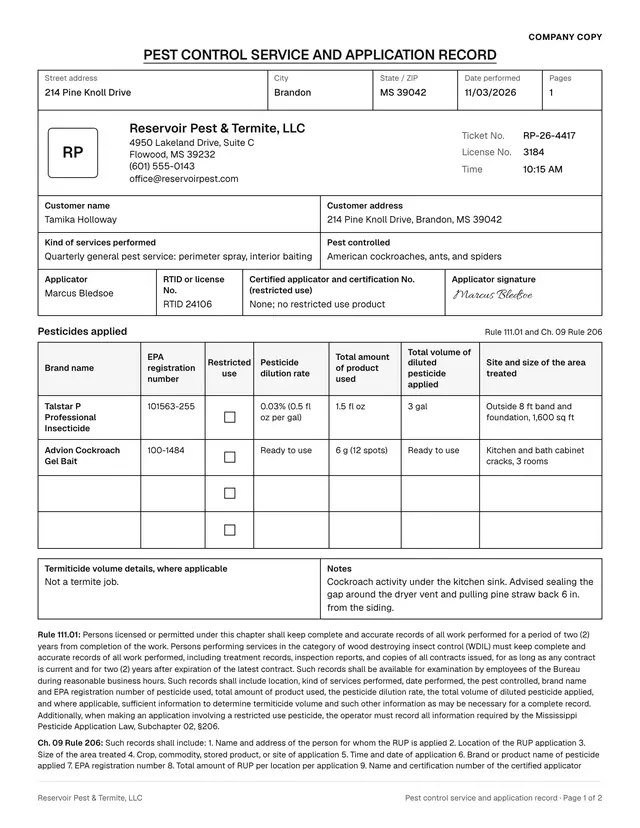
Pest Control Service and Application Record
Record each pesticide applied at a service visit. - Missouri
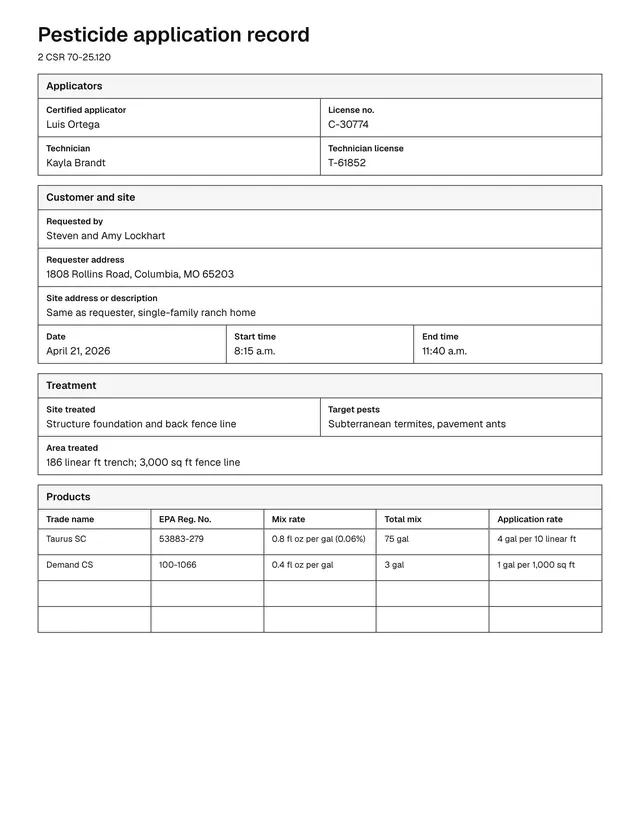
Missouri pesticide application record (2 CSR 70-25.120)
Record each pesticide applied at a service visit. - Nevada
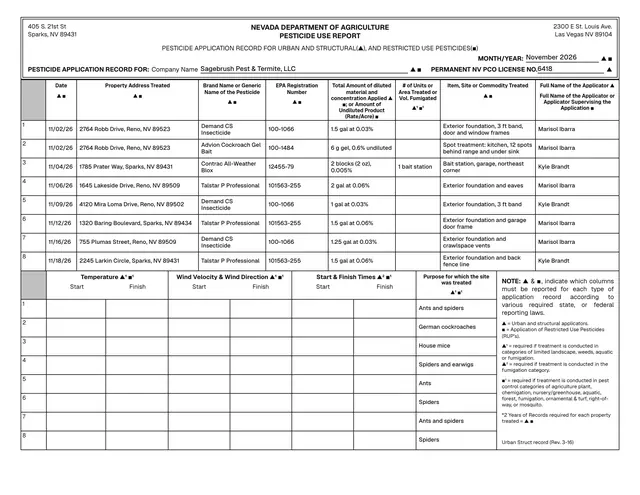
Pesticide Application Record for Urban and Structural and Restricted Use Pesticides
Record each pesticide applied at a service visit. - New Jersey
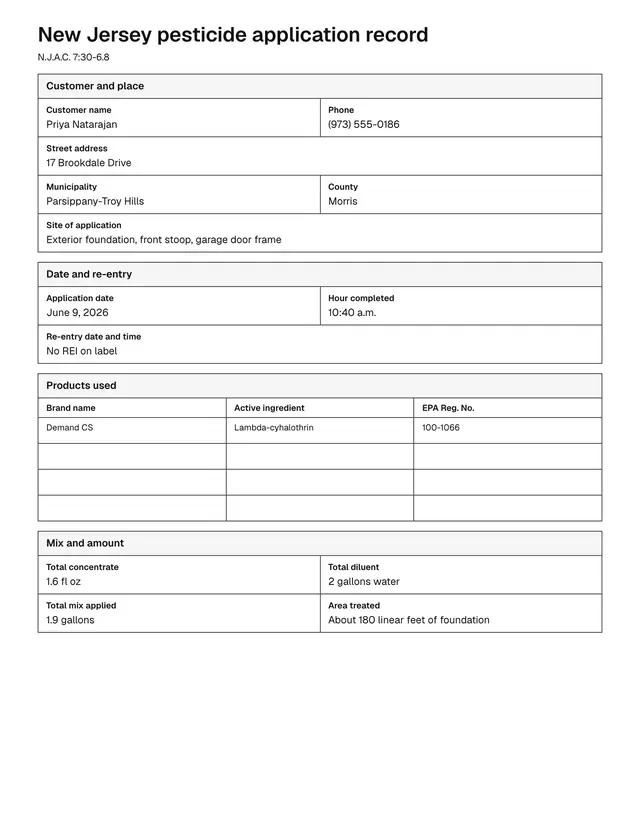
New Jersey pesticide application record (N.J.A.C. 7:30-6.8)
Record each pesticide applied at a service visit. - New Mexico
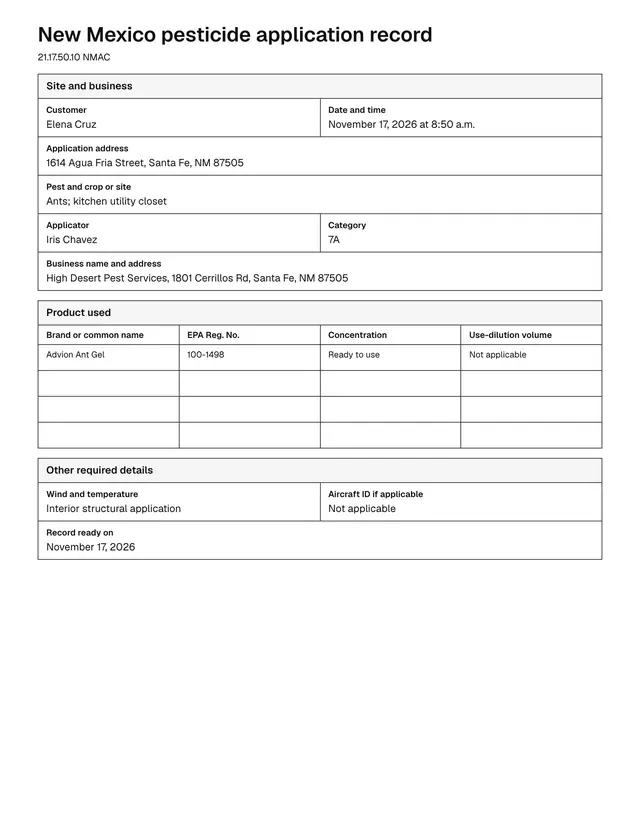
New Mexico pesticide application record
Record each pesticide applied at a service visit. - New York
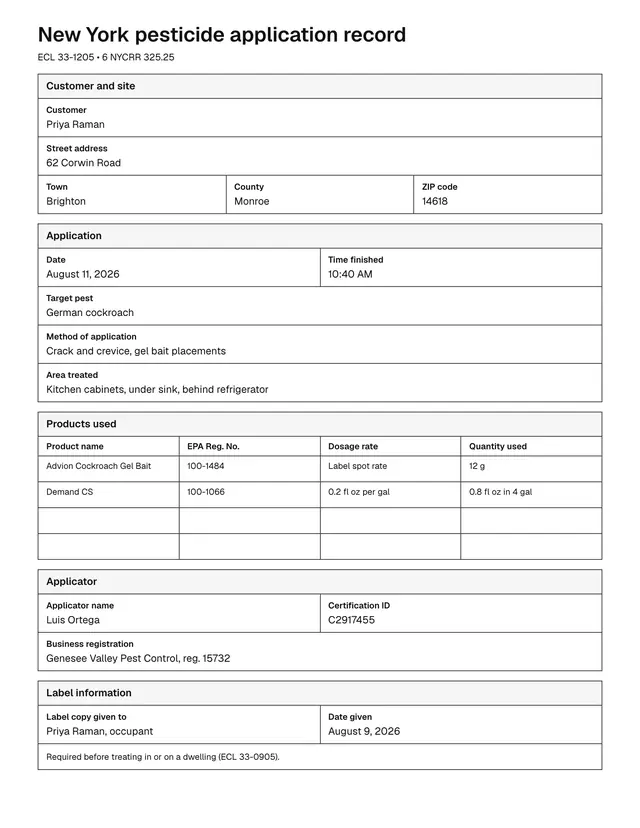
New York pesticide application record (6 NYCRR 325.25)
Record each pesticide applied at a service visit. - North Carolina
Pest Control Service Record
Record each pesticide applied at a service visit. - Ohio
Ohio pesticide application record
Record each pesticide applied at a service visit. - Oklahoma
Pest Control Application Record and Service Ticket
Record each pesticide applied at a service visit. - Oregon
Oregon pesticide operator record worksheet
Record each pesticide applied at a service visit. - South Carolina
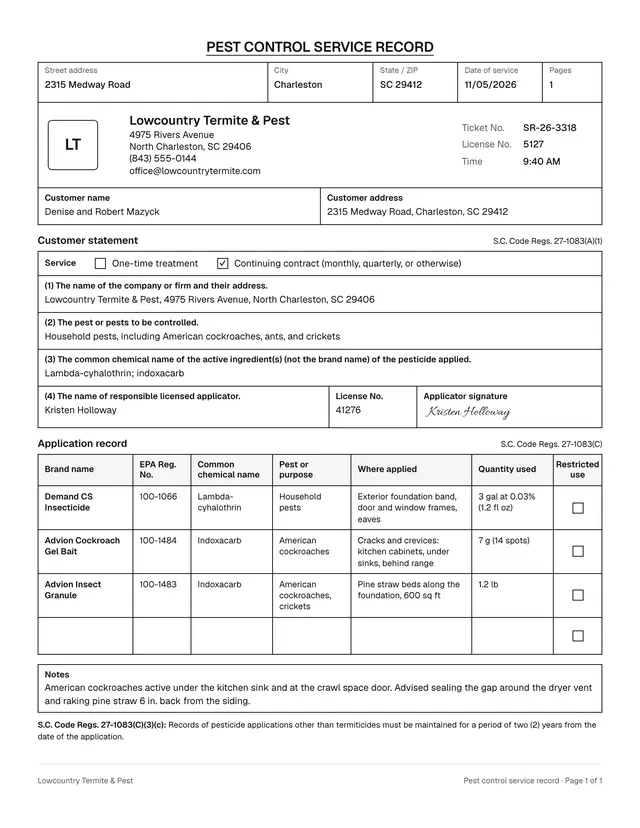
Pest Control Service Record
Record each pesticide applied at a service visit. - Tennessee
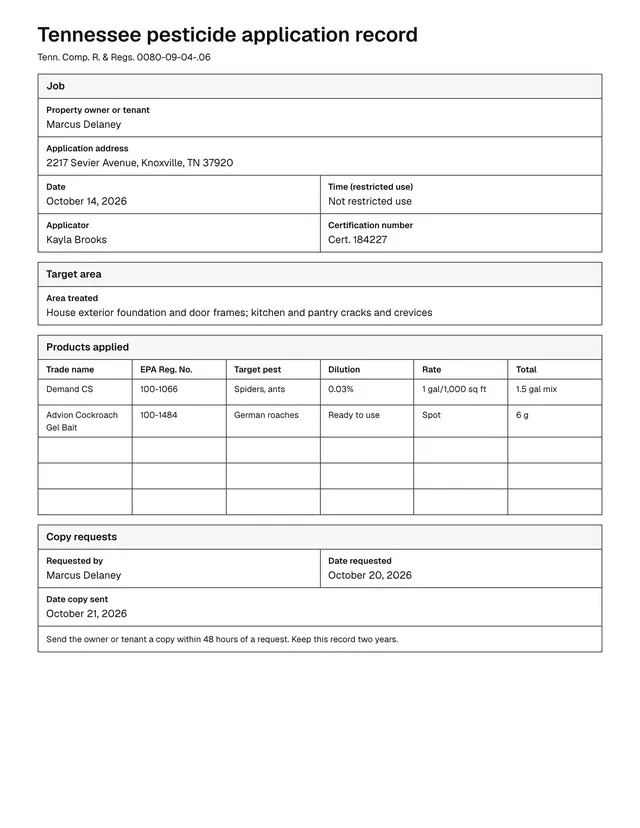
Tennessee pesticide application record
Record each pesticide applied at a service visit. - Texas
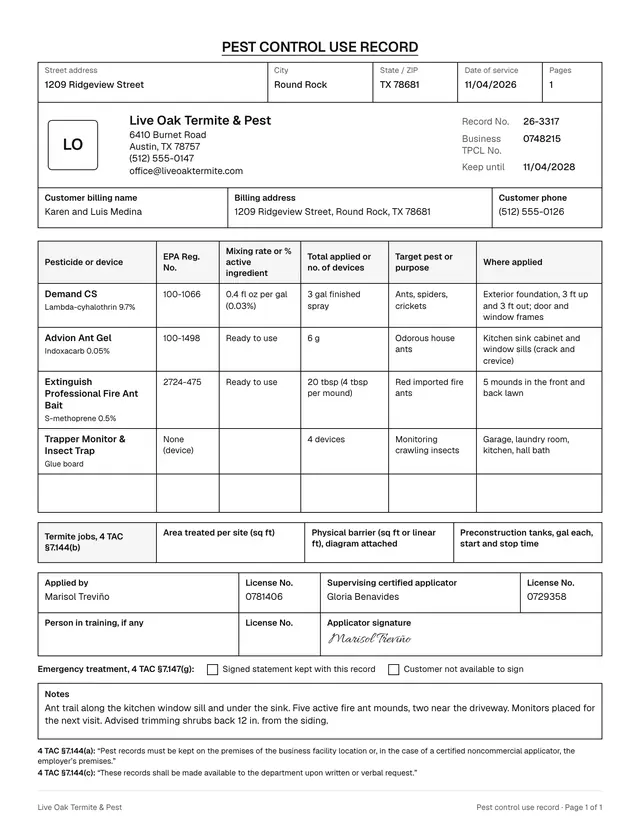
Pest Control Use Record
Record each pesticide applied at a service visit. - Utah
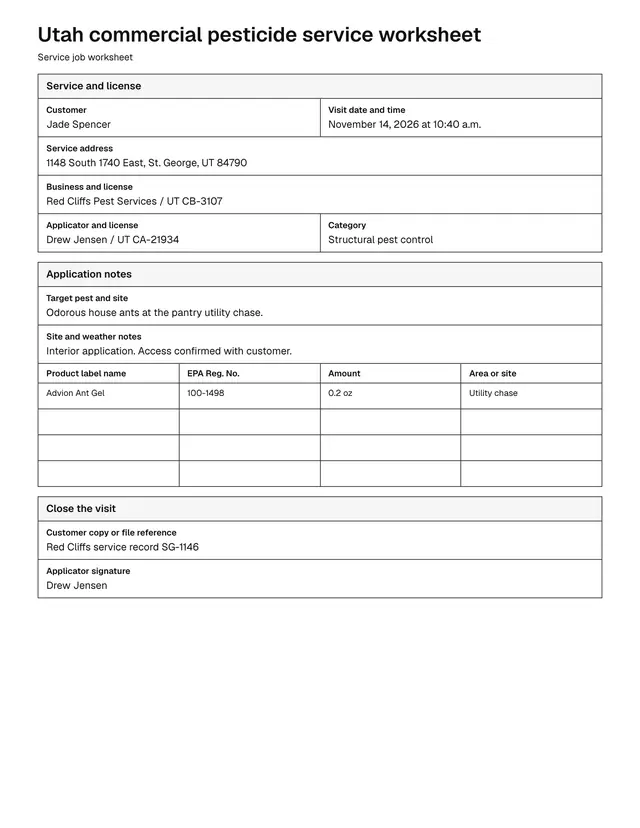
Utah commercial pesticide service worksheet
Record each pesticide applied at a service visit. - Virginia
Virginia pesticide application record
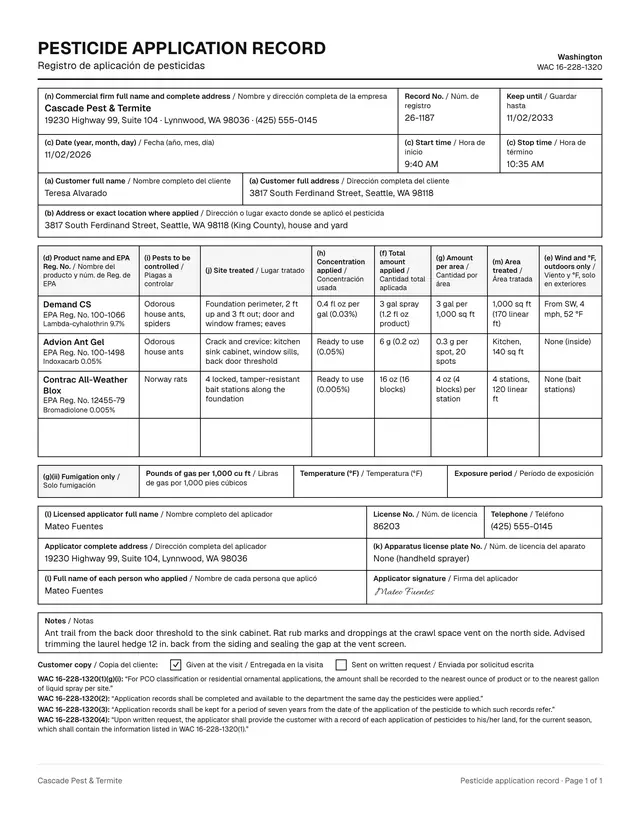
Record each pesticide applied at a service visit. - Washington
Pesticide Application Record
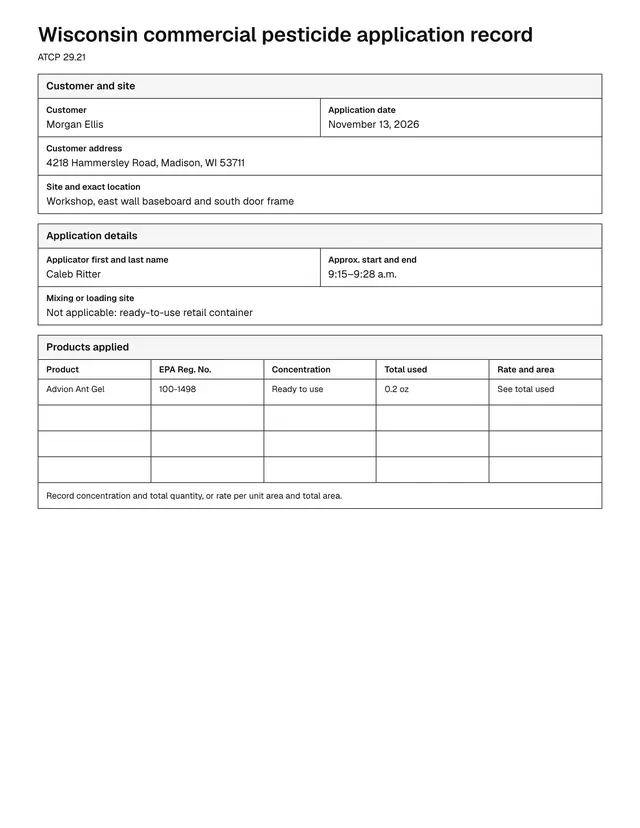
Record each pesticide applied at a service visit. - Wisconsin
Wisconsin commercial pesticide application record
Record each pesticide applied at a service visit.