Indiana commercial applicator pesticide use record
Indiana’s record rule, 355 IAC 4-4-1, lists 13 items per application. Records are written the same day and kept two years, and the customer can ask for a copy.
At a glance
- Rule
- 355 IAC 4-4-1
- Recorded
- On the date of application
- Keep
- At least 2 years
- Customer copy
- Within 30 days, if asked
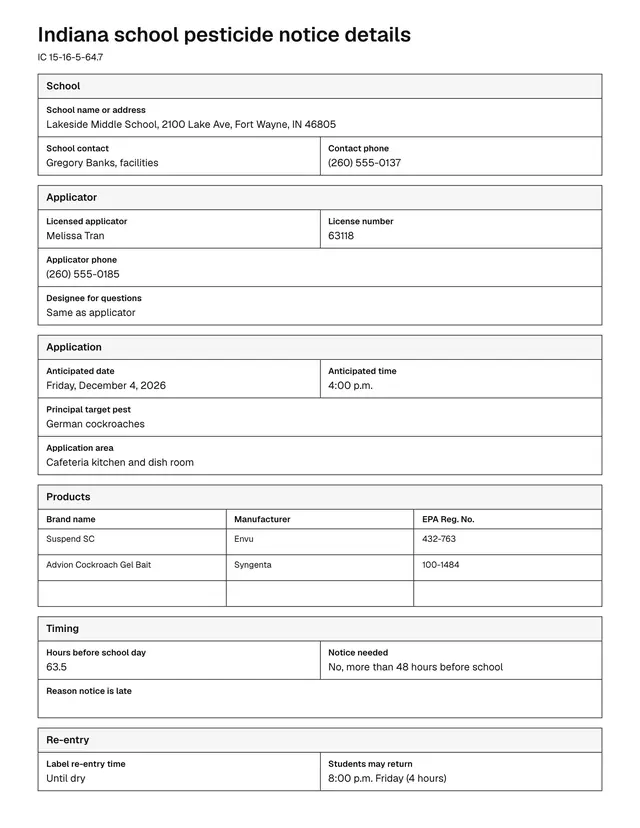
Completed example
Download PDFWhich applications need a record
Start with the first line of 355 IAC 4-4-1: every commercial applicator records every application of a restricted use pesticide. That part is simple. If the label says restricted use, it gets a record.
General use products are where Indiana gets specific. The rule also requires records of “all applications of unrestricted general use pesticide products” for three groups: applicators working on golf courses, applicators working at schools, and applicators certified in Category 7b, termite control.
Golf course and school work are named in 355 IAC 4-1-1.1, the rule on when a license is needed. If you work either one, every application gets a record, even a quick perimeter spray.
That last group is the one to think about. The rule names the category, not the job. Read plainly, a 7b-certified tech keeps general use records, not just termite records. Many Indiana shops simply record every application for everyone, which settles the question. If yours doesn’t, ask OISC how it applies to your techs.
The 13 items, in plain words
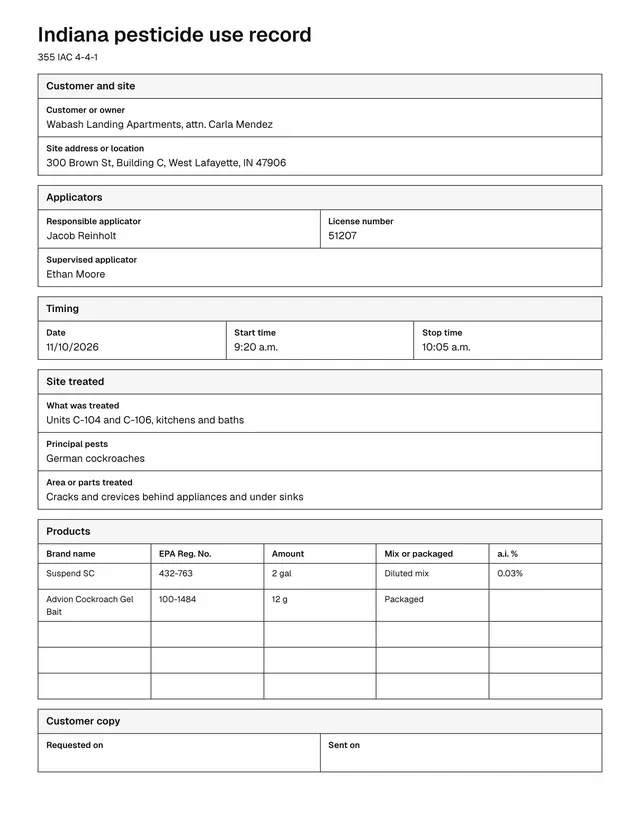
Who and where. The customer or property owner’s name, and the address, coordinates, or a general description of the site.
Item 2 is flexible on purpose. A street address works for a house. For a field or a long fence line, coordinates or a short description like “north fence line, Tippecanoe County Fairgrounds” do the job.
Who applied it. The responsible commercial applicator’s name and license number, plus the name of any supervised noncertified applicator.
When. The date (month, day, and year) and the start and stop times. Start and stop is the one people skip. “Afternoon” isn’t a time.
What and why. A description of what was treated, the principal pests, and how much area or which parts of the structure.
The product. The brand name, the EPA registration number, and the amount used. Indiana lets you write the amount two ways: as packaged product, or as diluted mix plus the active ingredient percentage.
Here’s a full product line from a Lafayette apartment job: “Suspend SC, EPA Reg. No. 432-763, 2 gal diluted mix at 0.03%.” Or, using packaged product: “Suspend SC, 432-763, 0.5 fl oz.” Either way works. Mixing the two on one line doesn’t.
Same day, two years, thirty days
Three numbers run this rule. Records are “recorded on the date of application,” not at the end of the week. They’re kept at least two years. And if the person you treated for asks, you give them a copy within 30 days of the application date.
OISC’s recordkeeping page adds that there’s no required format. A notebook, a spreadsheet, or a software ticket all count, as long as all 13 items are there.
Under 355 IAC 4-4-2, the state chemist or an authorized agent can ask to see and copy your records, in writing or out loud. Health care professionals treating someone for a possible pesticide exposure can get the information too. Keeping records in order is cheaper than finding them during an inspection.
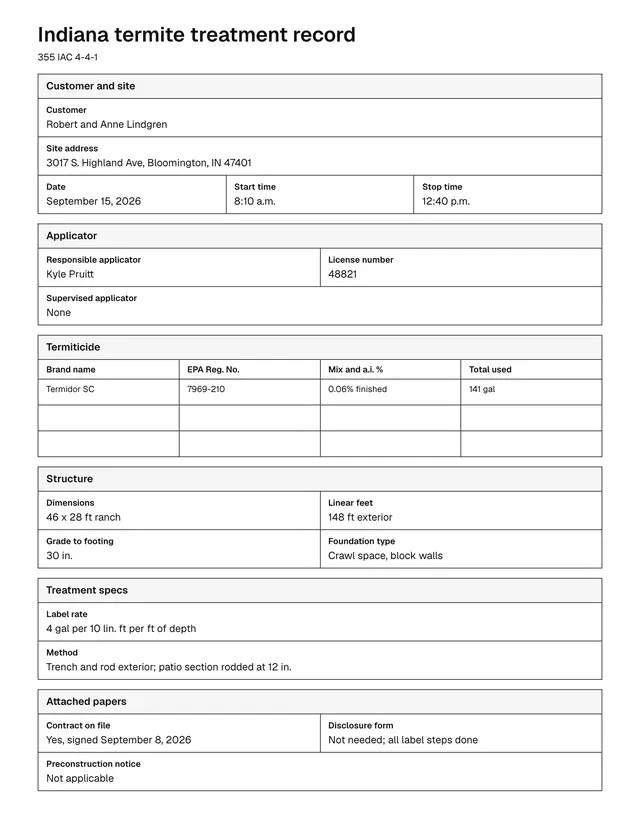
Termite jobs need more than the 13 items. That list lives on the Indiana termite treatment record page.
Noncertified techs and the label
Restricted use products can only be applied by a certified applicator or by a noncertified person under the direct supervision of one. That’s why the record has two names: the responsible applicator with a license number, and the supervised tech who did the work.
If your noncertified techs use restricted use products, OISC also wants a training record for each of them, kept two years. It holds the tech’s name and signature, the training date, the trainer’s name, and the title of the training.
Then read the label. OISC points out that some labels ask for more records than the rule does. If a label says to log something extra, add a line for it on that product’s ticket.
What if a tech has 14 stops and no time to write?
That’s when start and stop times turn into guesses. The fix is to make the record part of finishing each stop, not something done at the end of the day from memory.
Write it as you leave each stop, while the stop time is still the real stop time.
Noma specializes in the Indiana commercial applicator pesticide use record (355 IAC 4-4-1). It puts each scheduled stop on the tech’s phone, keeps recurring routes on the calendar, and sends the invoice with an online payment link when the work is done. See how Noma runs pest control routes.
Frequentlyaskedquestions
Send this document in minutes, not an afternoon.
Other states
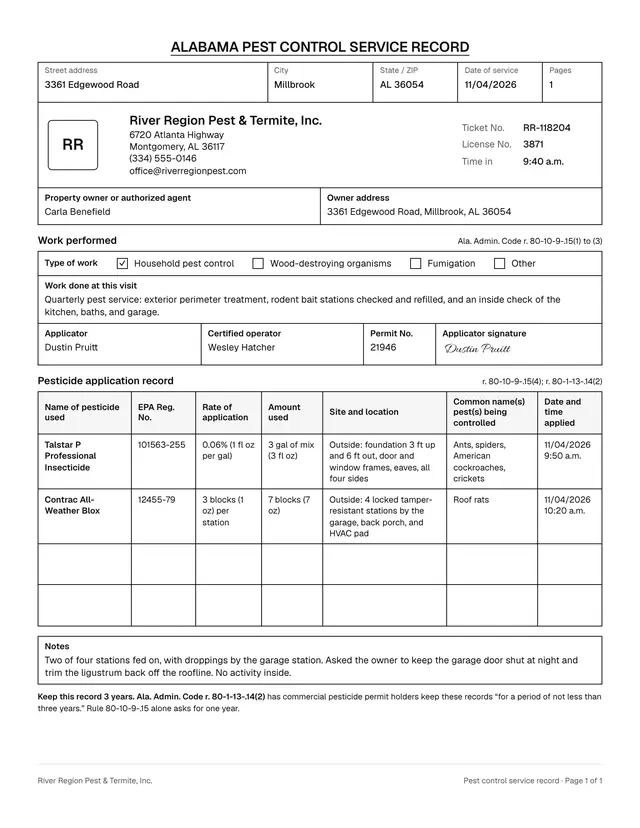
After-treatment notice templates- Alabama
Alabama Pest Control Service Record
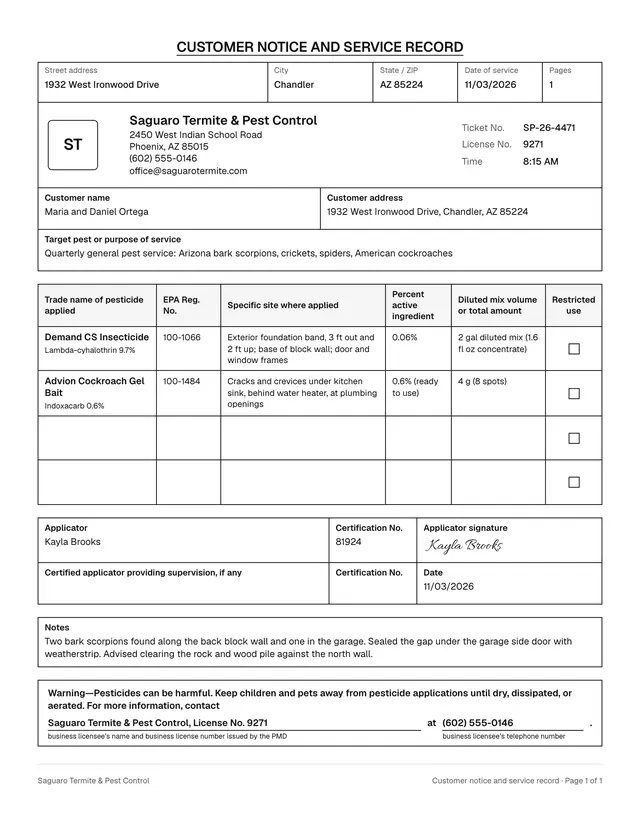
Record each pesticide applied at a service visit. - Arizona
Customer Notice and Service Record
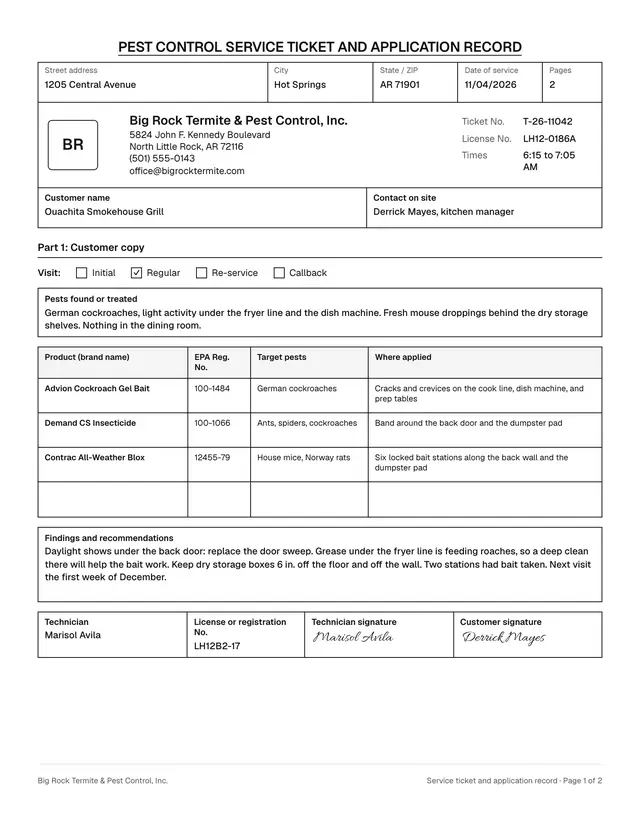
Record each pesticide applied at a service visit. - Arkansas
Pest Control Service Ticket and Application Record
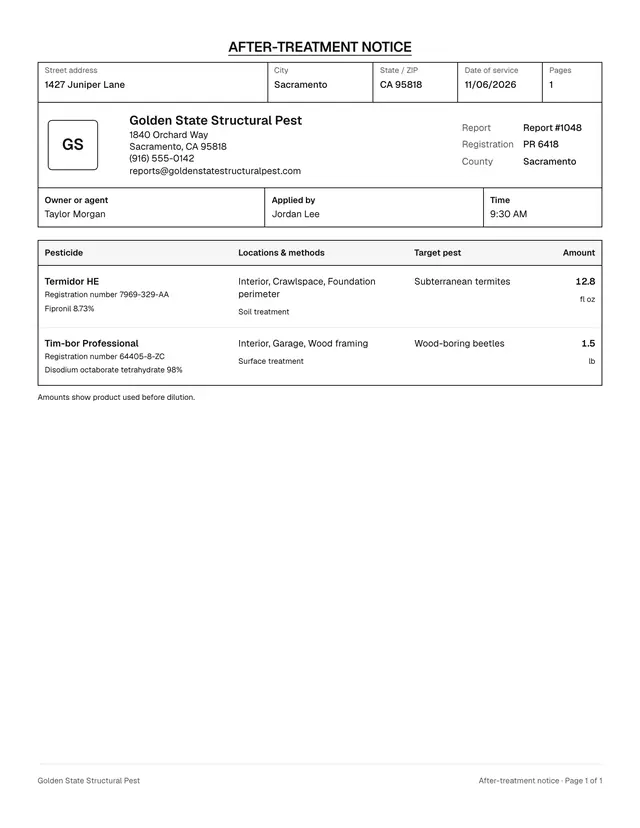
Record each pesticide applied at a service visit. - California
After-Treatment Notice
Record each pesticide applied at a service visit. - Colorado
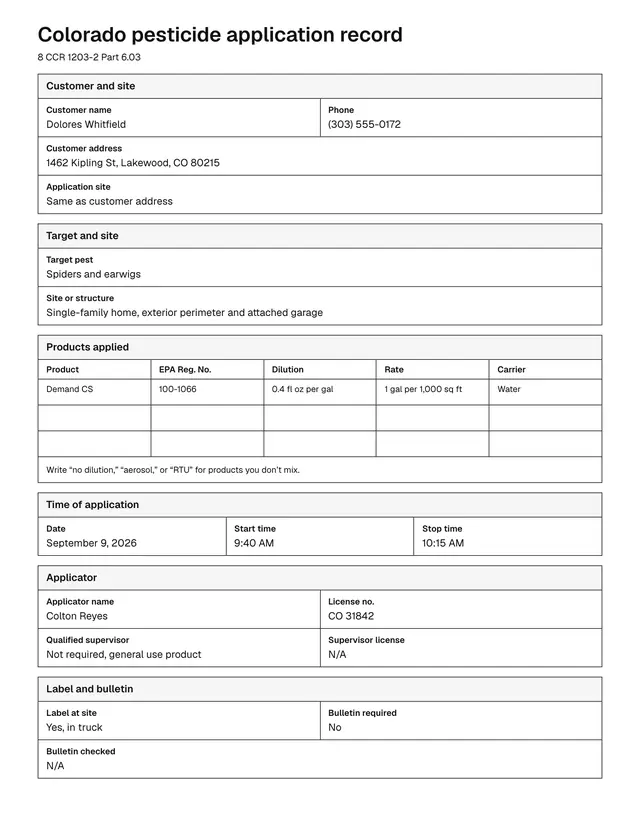
Colorado commercial pesticide application record
Record each pesticide applied at a service visit. - Connecticut
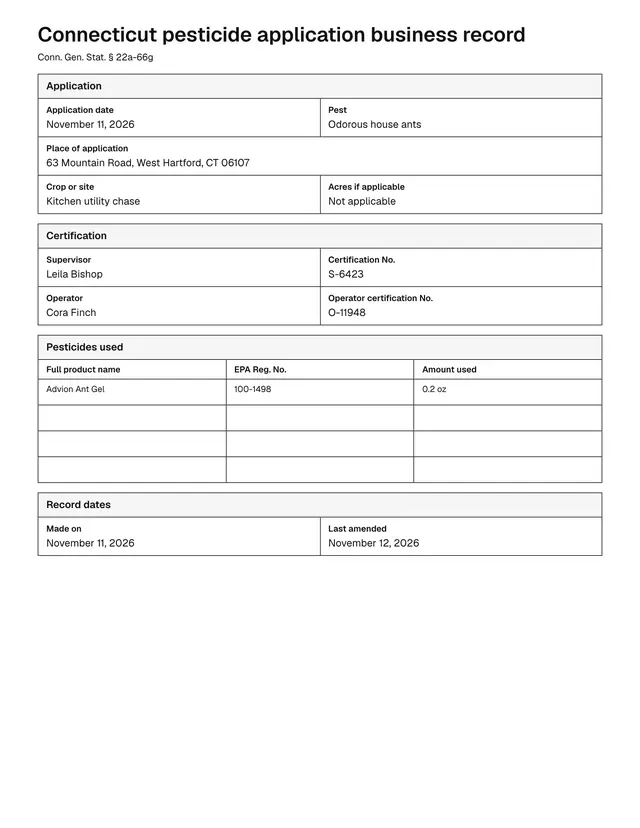
Connecticut pesticide application business record
Record each pesticide applied at a service visit. - Delaware
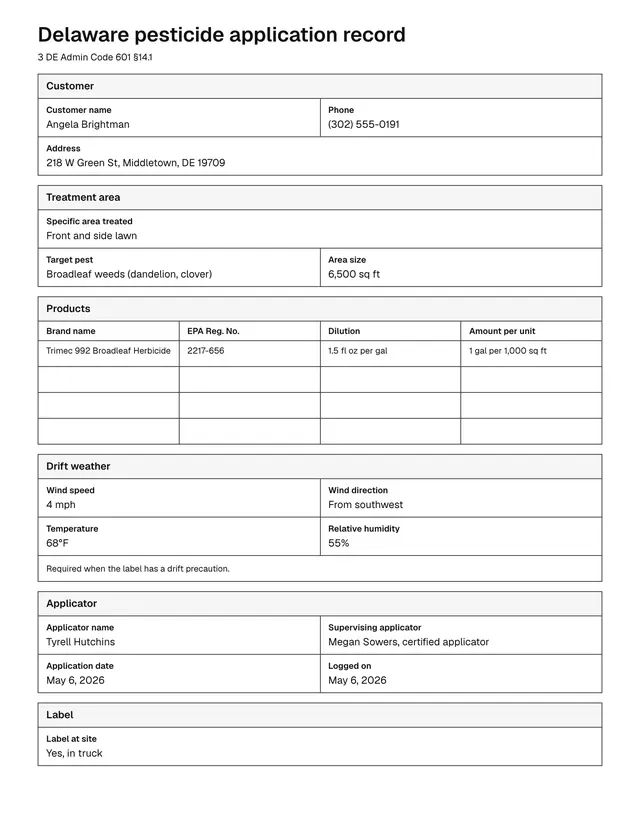
Delaware pesticide application record (3 DE Admin Code 601 §14.1)
Record each pesticide applied at a service visit. - Georgia
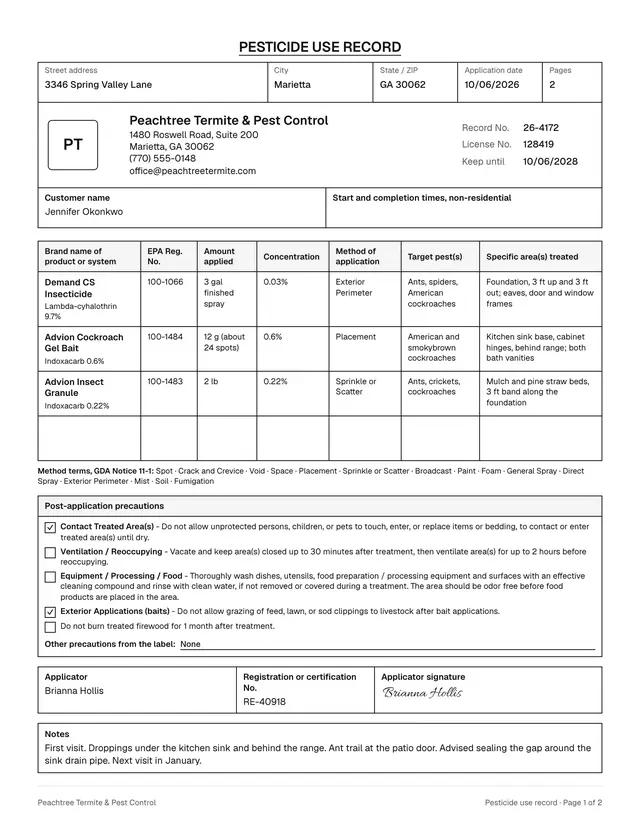
Pesticide Use Record
Record each pesticide applied at a service visit. - Hawaii
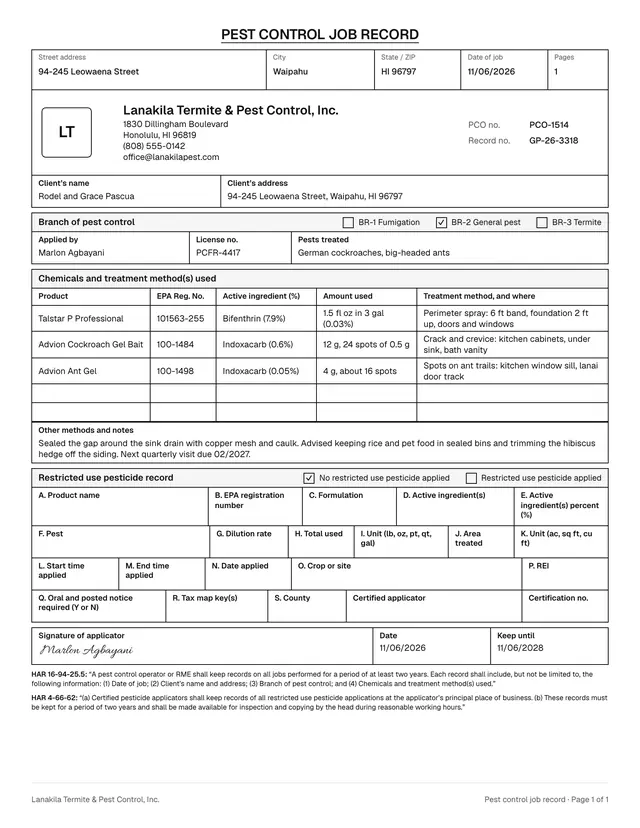
Pest Control Job Record
Record each pesticide applied at a service visit. - Illinois
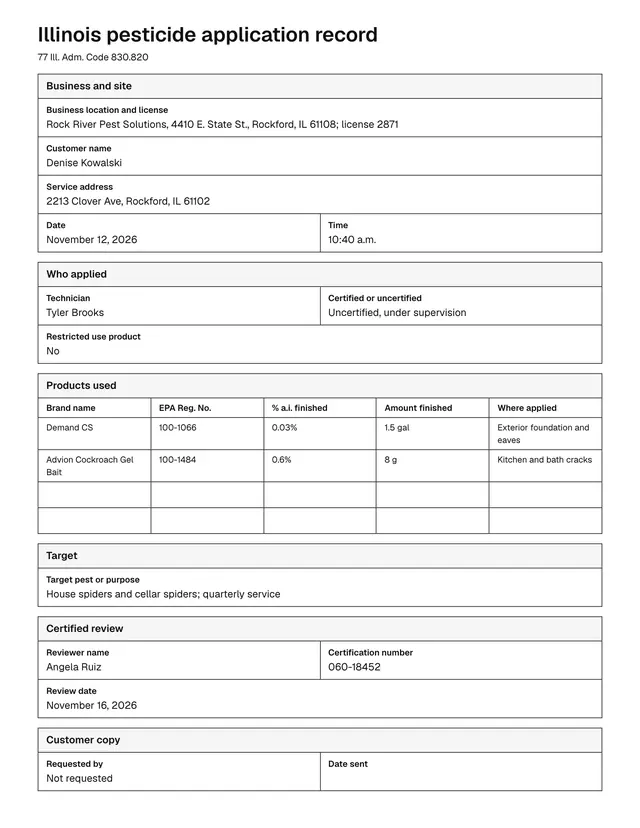
Illinois structural pest control application record
Record each pesticide applied at a service visit. - Iowa
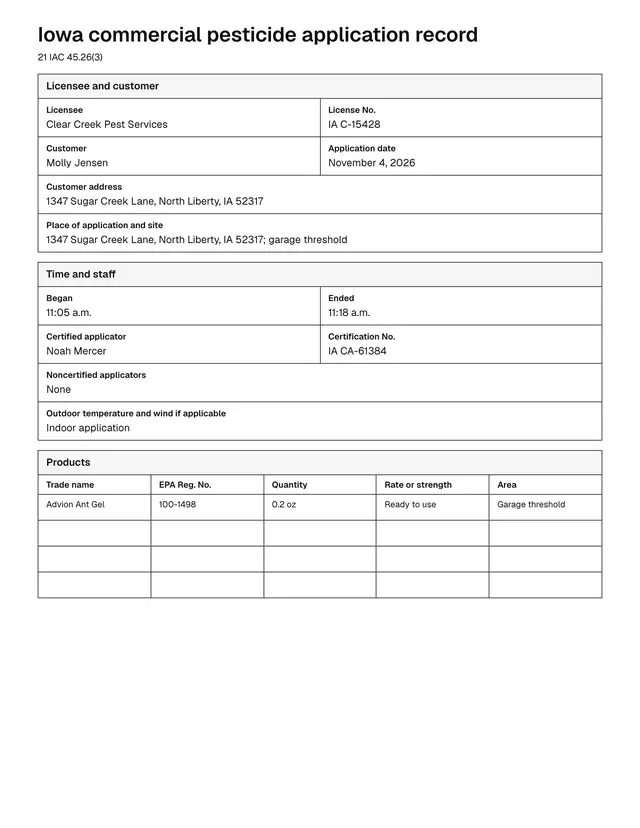
Iowa commercial pesticide application record
Record each pesticide applied at a service visit. - Kansas
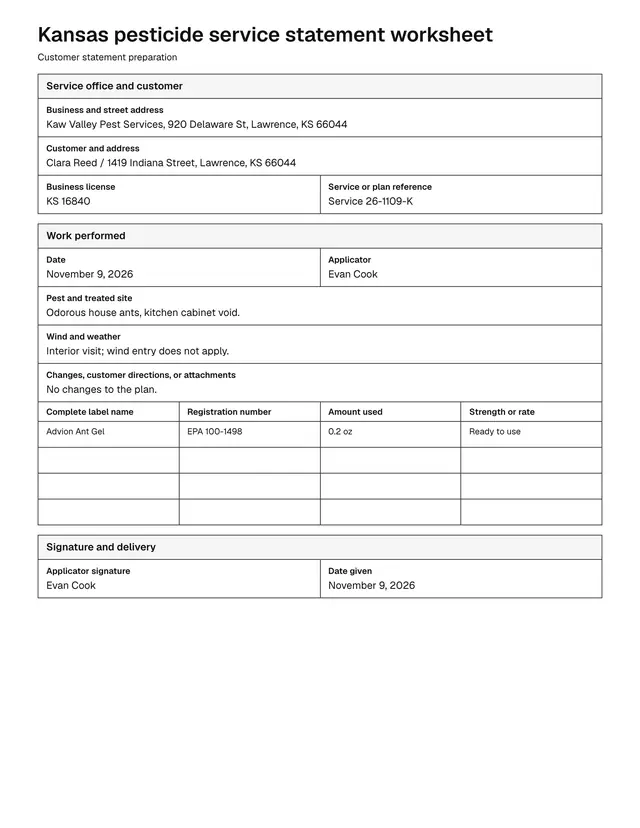
Kansas pesticide service statement worksheet
Record each pesticide applied at a service visit. - Kentucky
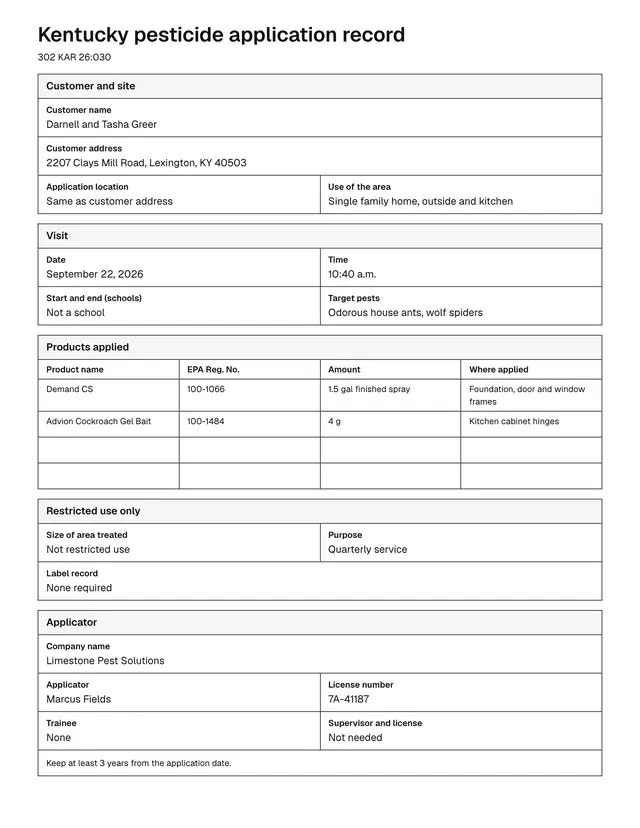
Kentucky pesticide application record (302 KAR 26:030)
Record each pesticide applied at a service visit. - Louisiana
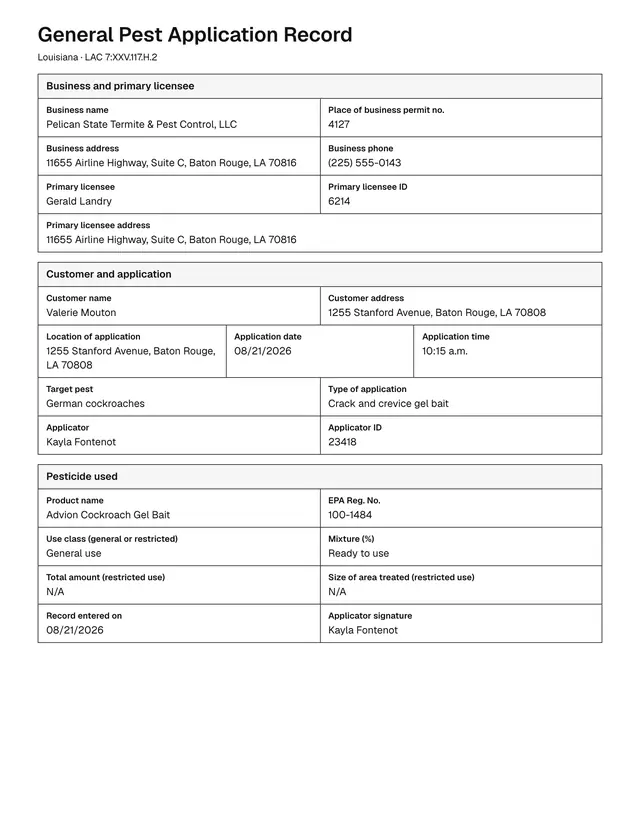
General Pest Application Record
Record each pesticide applied at a service visit. - Maryland
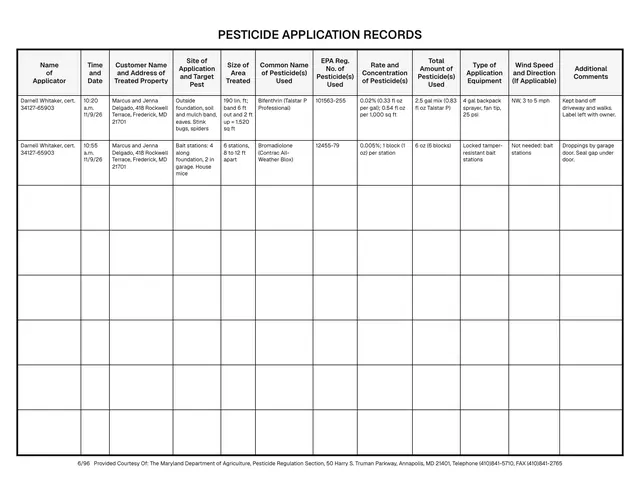
Pesticide Application Record and Customer Pesticide Information
Record each pesticide applied at a service visit. - Massachusetts
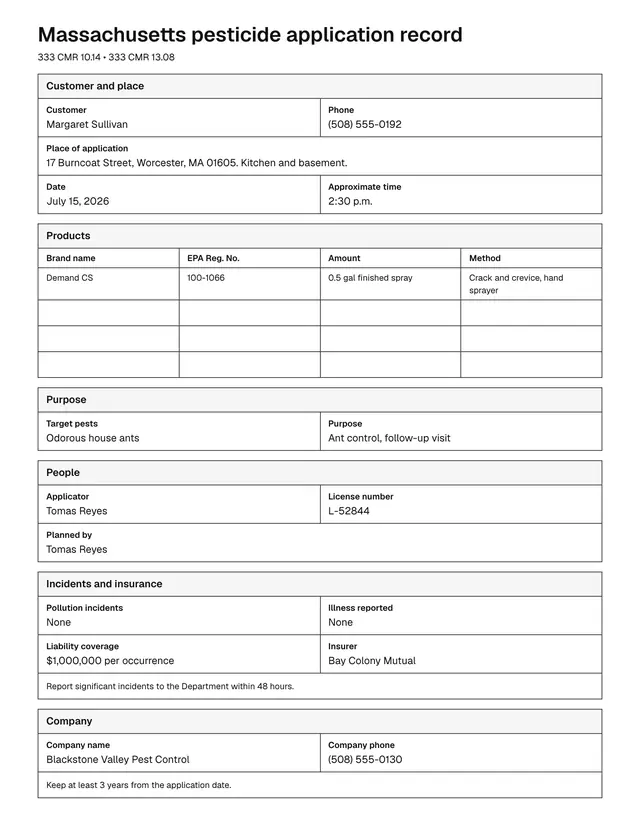
Massachusetts pesticide application record (333 CMR 10.14)
Record each pesticide applied at a service visit. - Michigan
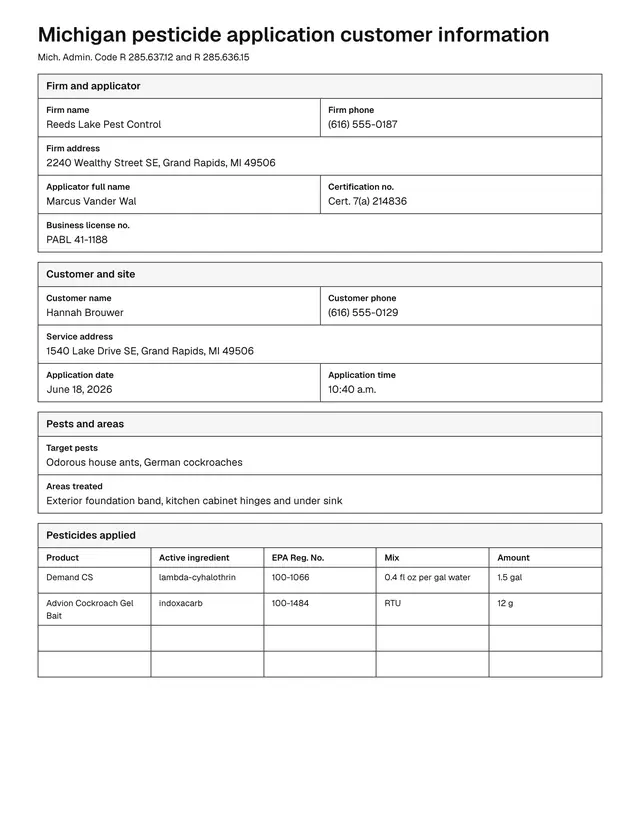
Michigan pesticide customer information receipt
Record each pesticide applied at a service visit. - Mississippi
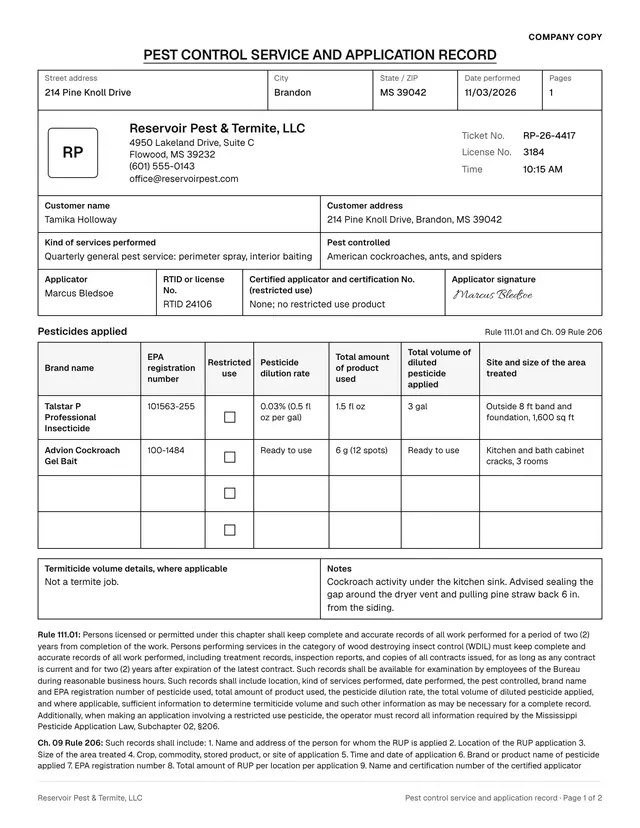
Pest Control Service and Application Record
Record each pesticide applied at a service visit. - Missouri
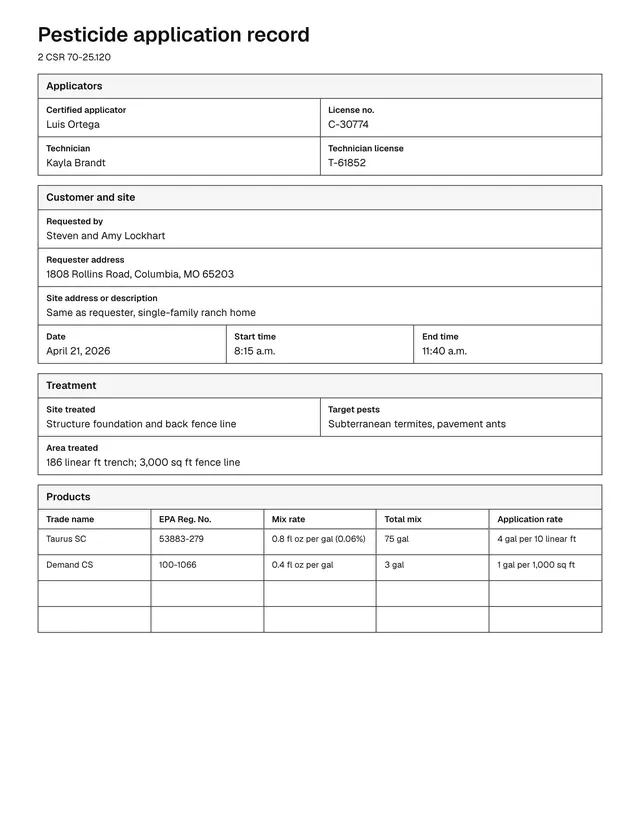
Missouri pesticide application record (2 CSR 70-25.120)
Record each pesticide applied at a service visit. - Nevada
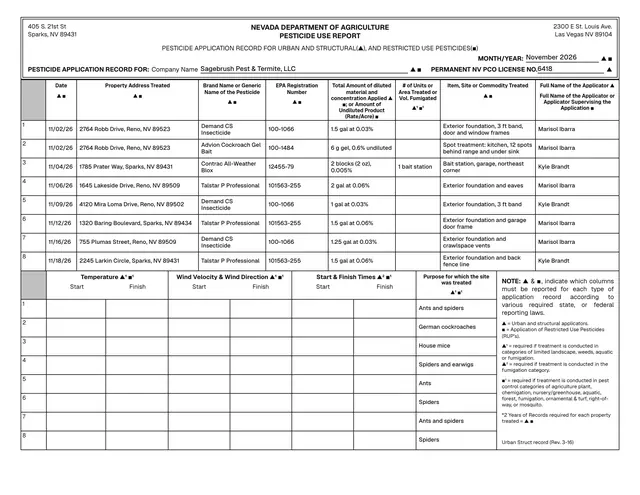
Pesticide Application Record for Urban and Structural and Restricted Use Pesticides
Record each pesticide applied at a service visit. - New Jersey
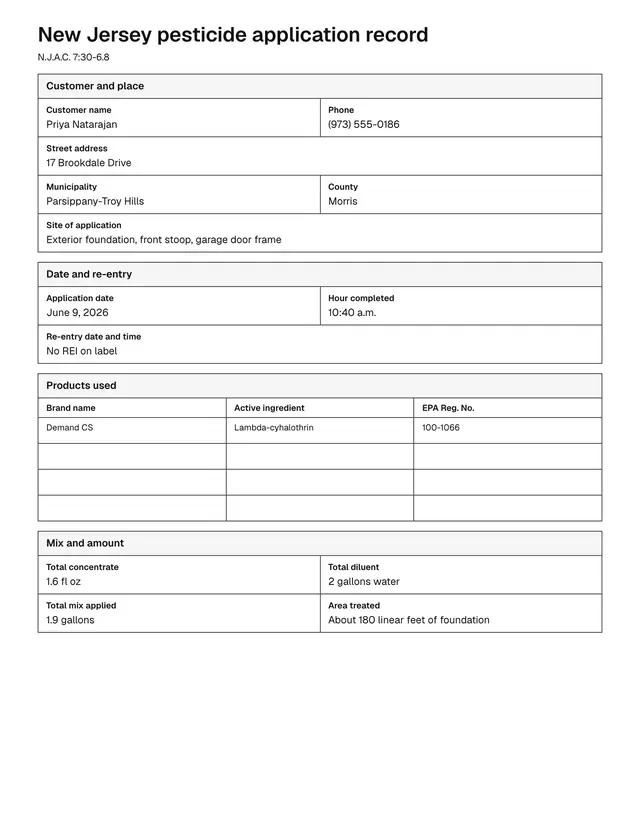
New Jersey pesticide application record (N.J.A.C. 7:30-6.8)
Record each pesticide applied at a service visit. - New Mexico
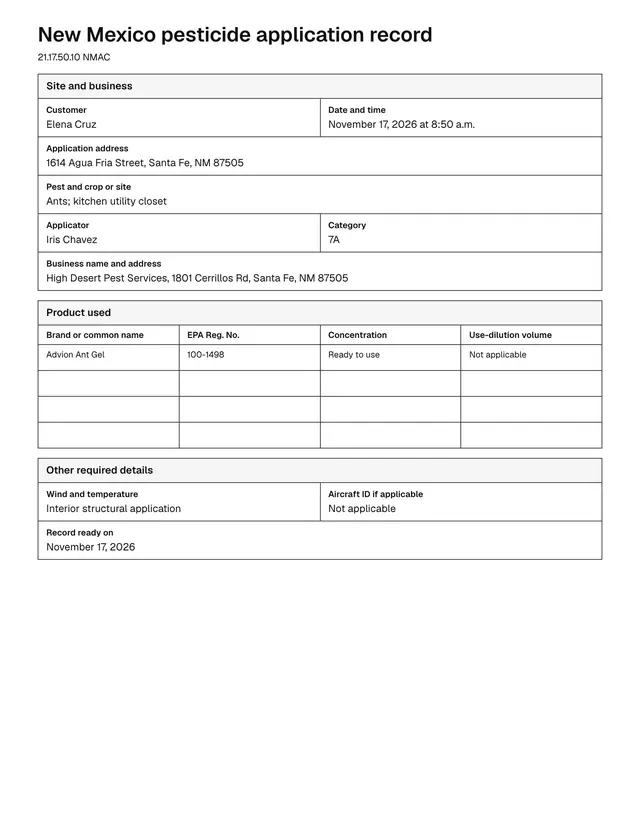
New Mexico pesticide application record
Record each pesticide applied at a service visit. - New York
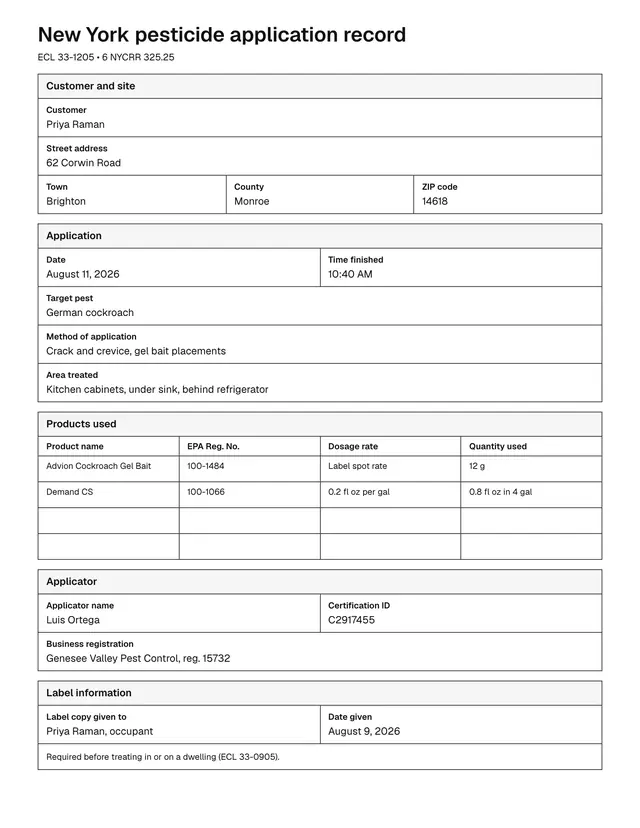
New York pesticide application record (6 NYCRR 325.25)
Record each pesticide applied at a service visit. - North Carolina
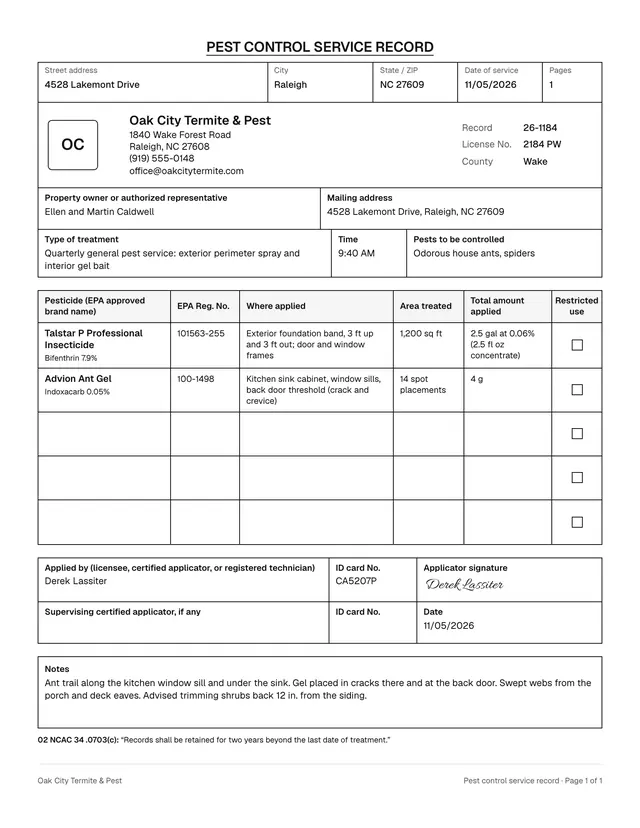
Pest Control Service Record
Record each pesticide applied at a service visit. - Ohio
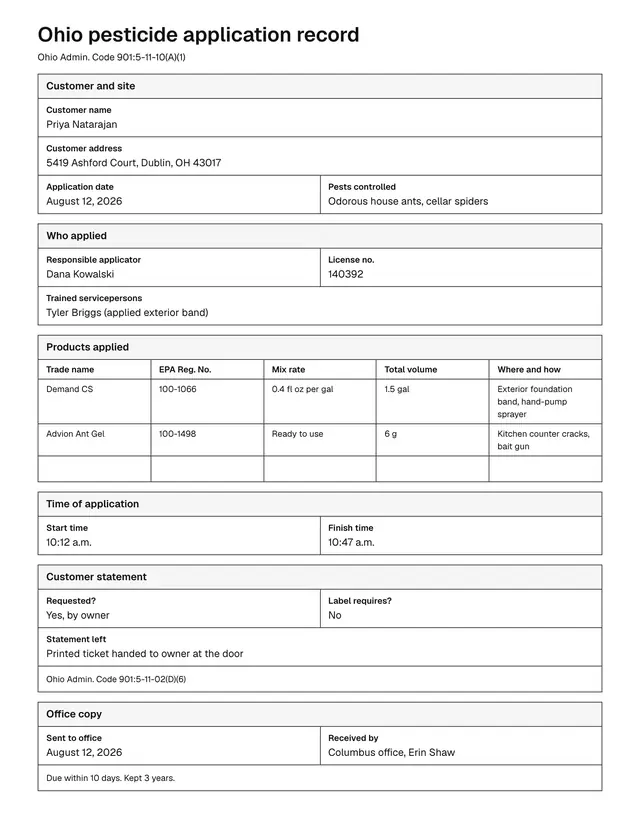
Ohio pesticide application record
Record each pesticide applied at a service visit. - Oklahoma
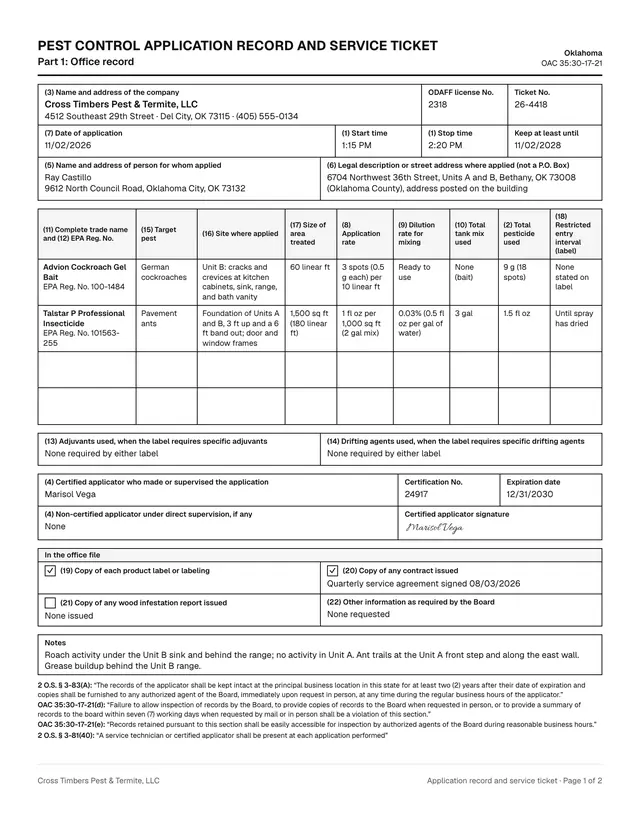
Pest Control Application Record and Service Ticket
Record each pesticide applied at a service visit. - Oregon
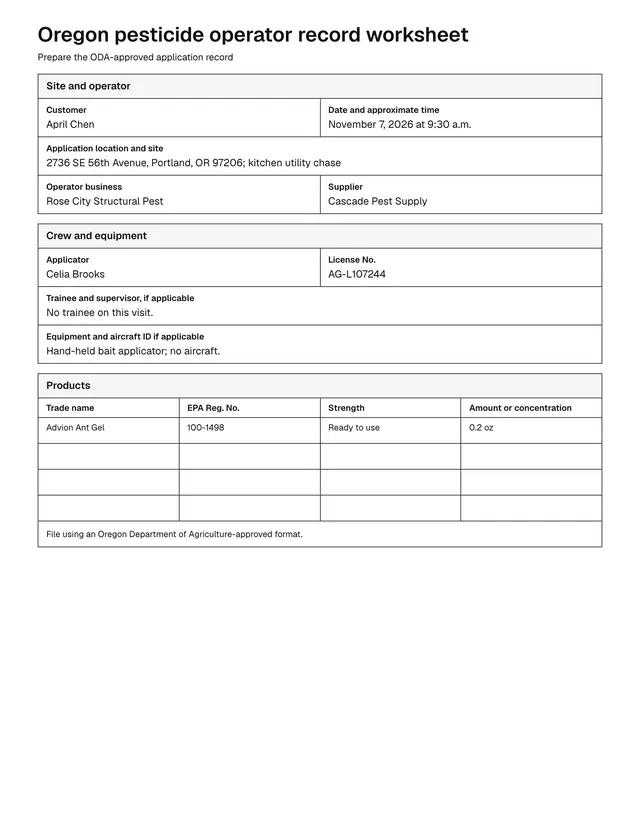
Oregon pesticide operator record worksheet
Record each pesticide applied at a service visit. - Pennsylvania
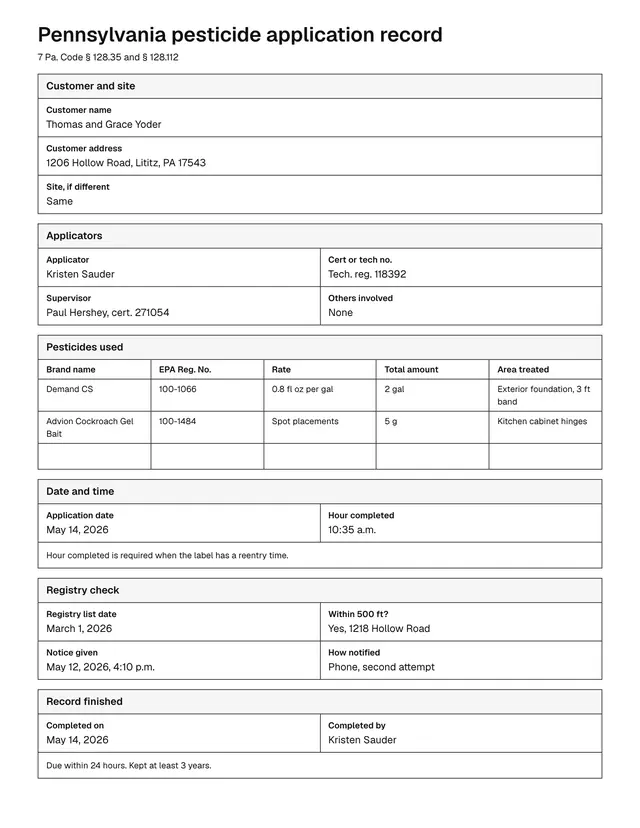
Pennsylvania pesticide application record
Record each pesticide applied at a service visit. - South Carolina
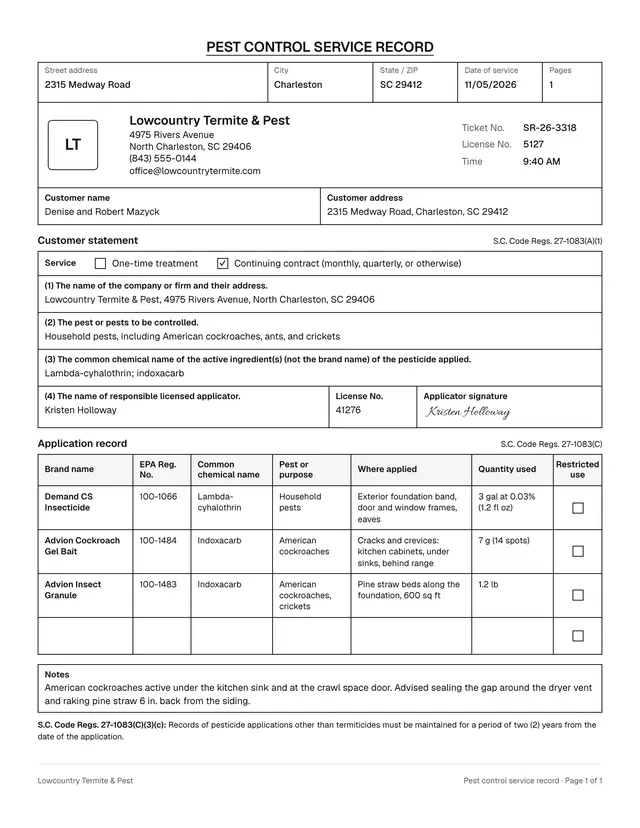
Pest Control Service Record
Record each pesticide applied at a service visit. - Tennessee
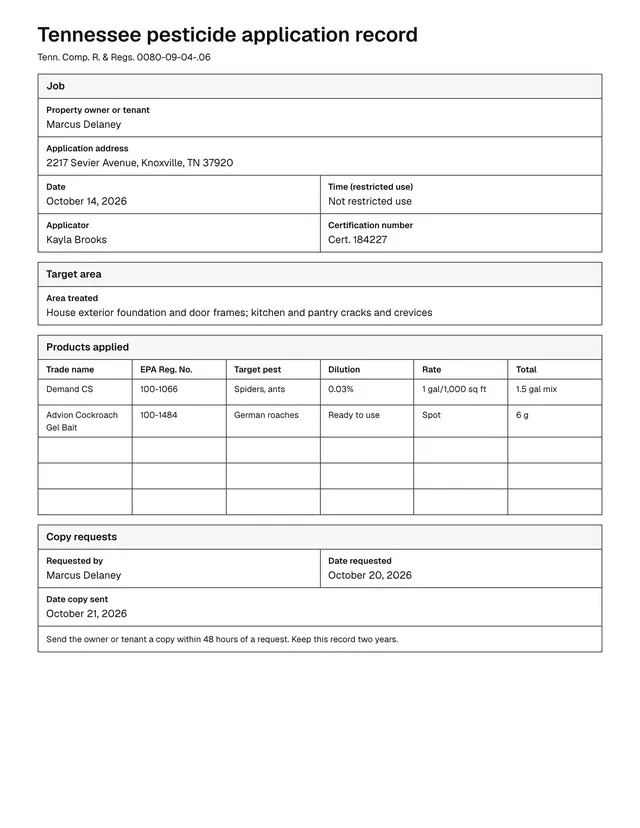
Tennessee pesticide application record
Record each pesticide applied at a service visit. - Texas
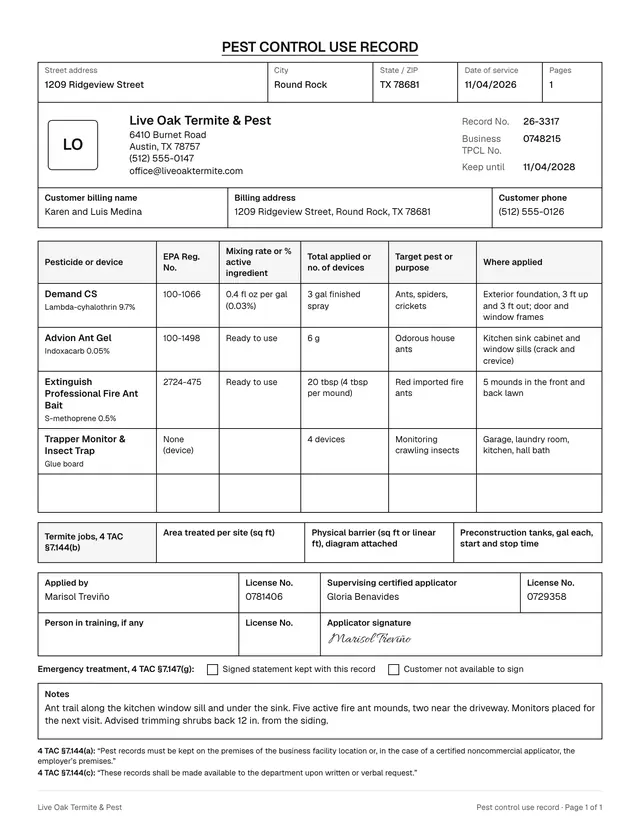
Pest Control Use Record
Record each pesticide applied at a service visit. - Utah
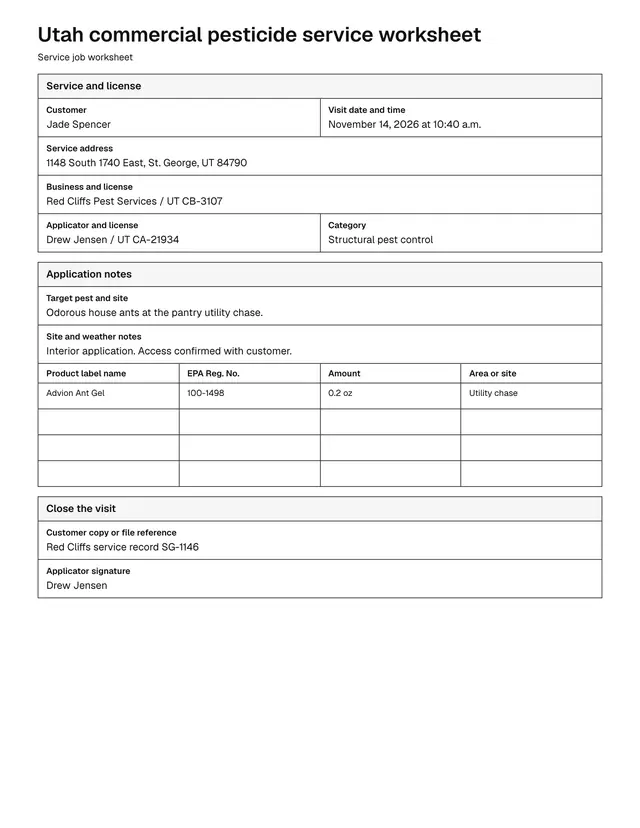
Utah commercial pesticide service worksheet
Record each pesticide applied at a service visit. - Virginia
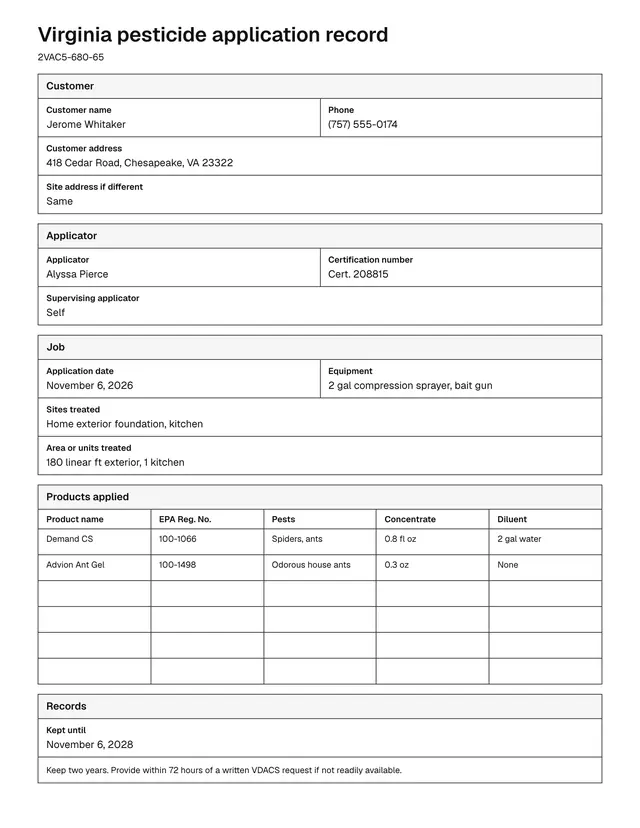
Virginia pesticide application record
Record each pesticide applied at a service visit. - Washington
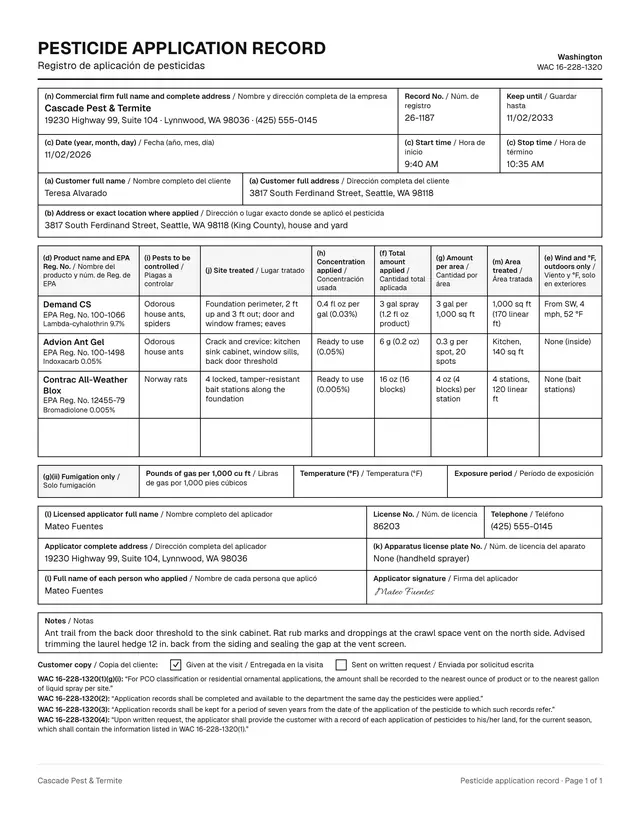
Pesticide Application Record
Record each pesticide applied at a service visit. - Wisconsin
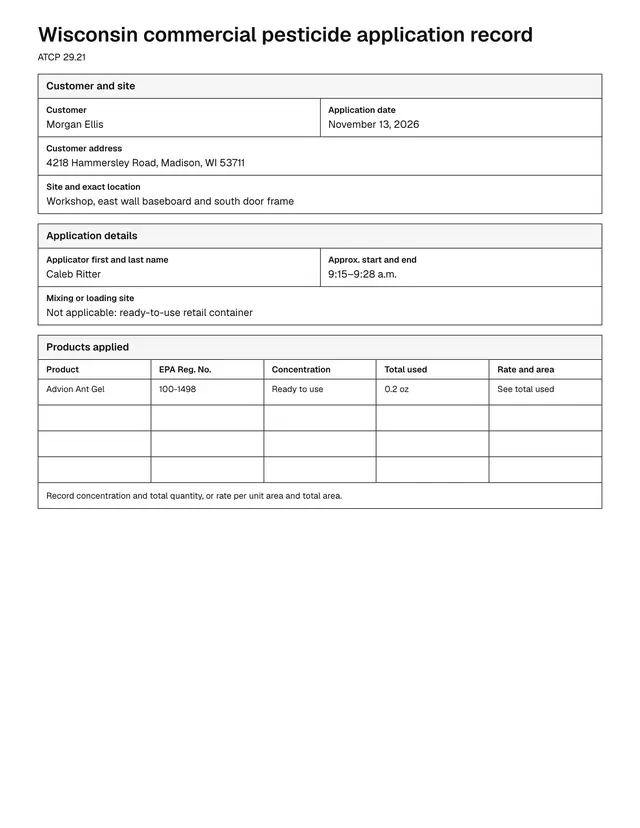
Wisconsin commercial pesticide application record
Record each pesticide applied at a service visit.