New Jersey termite inspection report (NPMA-33 field notes)
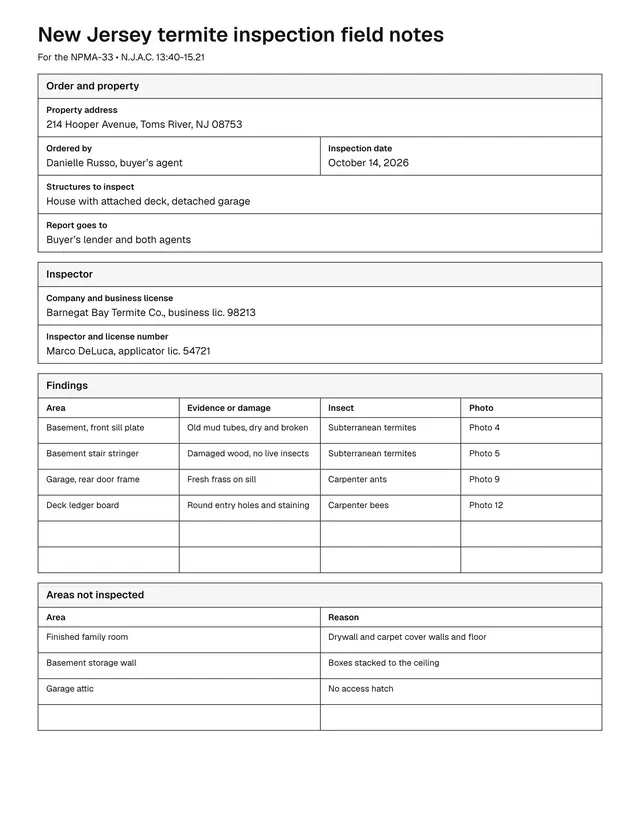
New Jersey has no state termite inspection form, so home sales run on the NPMA-33. These field notes hold what you saw, what you couldn’t reach, and the treatment history before you fill in the real form.
At a glance
- Form lenders ask for
- NPMA-33 (industry form)
- State form
- None in New Jersey
- Home inspectors
- Need the right credential (N.J.A.C. 13:40-15.21)
- Retreatment rule
- N.J.A.C. 7:30-10.4(n)
Completed example
Download PDFWhy New Jersey sales still use the NPMA-33
A buyer’s lender asks for a “termite letter,” and in New Jersey that almost always means the NPMA-33. The state doesn’t print its own wood-destroying insect form. We went through the pesticide rules at N.J.A.C. 7:30 and the home inspector rules at N.J.A.C. 13:40-15 and found nothing that sets one.
NPMA fills the gap. Its guideline for the NPMA-33 says the form “MUST be used” for HUD and VA loans and is “typically used for conventional transactions” too. It also says a state-mandated form wins if a state ever makes one. New Jersey hasn’t.
The NPMA-33 is copyrighted, so you get blank copies through NPMA and you can’t redraw it. That’s why this page is a field sheet, not the form. It’s what you carry into the basement: the notes, the photo numbers, and the blocked areas that back up each box you check later.
Who’s allowed to do it here?
Two kinds of people do these in New Jersey: pest control companies and home inspectors. If your company treats termites, your applicators are certified in DEP’s Category 7B, “Termites and other wood destroying pests.” The NPMA-33 asks for your company’s business license number and the inspector’s own license or certification number, so have both handy before you start writing.
Home inspectors can do them too, but a home inspector license alone isn’t the whole story. N.J.A.C. 13:40-15.21 lists “determining the presence of wood-destroying insects” as an extra service. A licensee may offer it only with the “requisite experience, education, training, and/or required license or certification.”
If you’re a home inspector without that background, refer the termite check out and say so up front. Add-on services and their fees belong in your pre-inspection agreement, so the buyer knows before the visit who is looking for bugs.
Filling out the field notes
Get the structures in writing. NPMA’s guideline says the person ordering the inspection picks which structures are in the report. Write down exactly what they asked for, like “house and detached garage,” before you walk the property. Decks attached to the house count as part of it.
Start low. Most New Jersey homes sit on a basement or a crawl space, and that’s where termites show up first. Check sill plates, rim joists, the bottom of the basement stairs, and any wood touching the slab. Look for mud tubes, discarded wings near windows, frass, and damaged wood. The form covers four insect groups: termites, carpenter ants, carpenter bees, and reinfesting wood boring beetles.
Write down what you couldn’t see. Finished basements, drop ceilings, and walls of storage boxes hide a lot. List each blocked area with the reason and a photo number. Those notes turn into the obstructions section of the real report, and they’re your best defense if damage turns up after closing.
Keep the yard out of the findings. The guideline says evidence in mulch, stumps, woodpiles, or under decks and roof overhangs should not go in the findings section. If you see it, put it in comments instead.
Copy the treatment history exactly. If the seller hands you an old termite contract, write the company, the date, and whether a bait contract is still active. When you can’t tell if a bait contract is current, NPMA says you may recommend treatment “unless there is a current baiting system service agreement in effect.”
What if the house was treated before?
This comes up all the time with older homes in towns like Toms River or Cherry Hill. The seller says the house was treated in 2015, but you find old mud tubes on the sill and no paperwork. NPMA’s rule of thumb is simple: evidence plus no proof of a licensed treatment means you recommend treatment.
New Jersey’s own rule matters for whoever does the follow-up work. N.J.A.C. 7:30-10.4 allows another termiticide treatment only after five years, after new evidence of termites, or where construction or landscaping broke the soil barrier. It also says “previously reported damage shall not be accepted as evidence of re-infestation.” So write live activity and old damage as separate lines. The treating company will need to know which is which, and their job gets its own termite treatment record.
Noma specializes in the Wood Destroying Insect Inspection Report (NPMA-33) for New Jersey home sales. Book and invoice the inspection in Noma, then upload the finished NPMA-33 as a PDF and send it to the buyer or seller to sign online when you’re asked to collect signatures. See how Noma sends reports for signature.
Frequentlyaskedquestions
Send this document in minutes, not an afternoon.
Other states
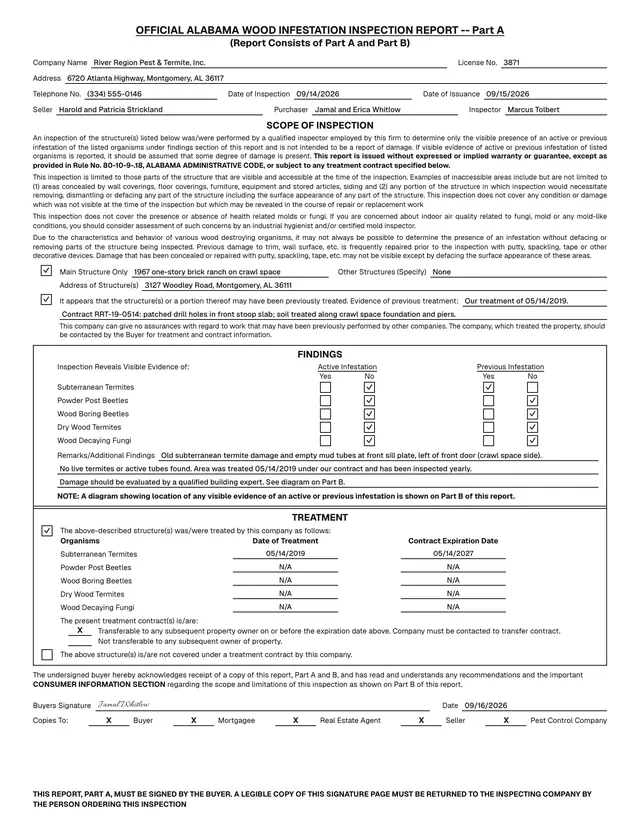
Inspection report templates- Alabama
Official Alabama Wood Infestation Inspection Report
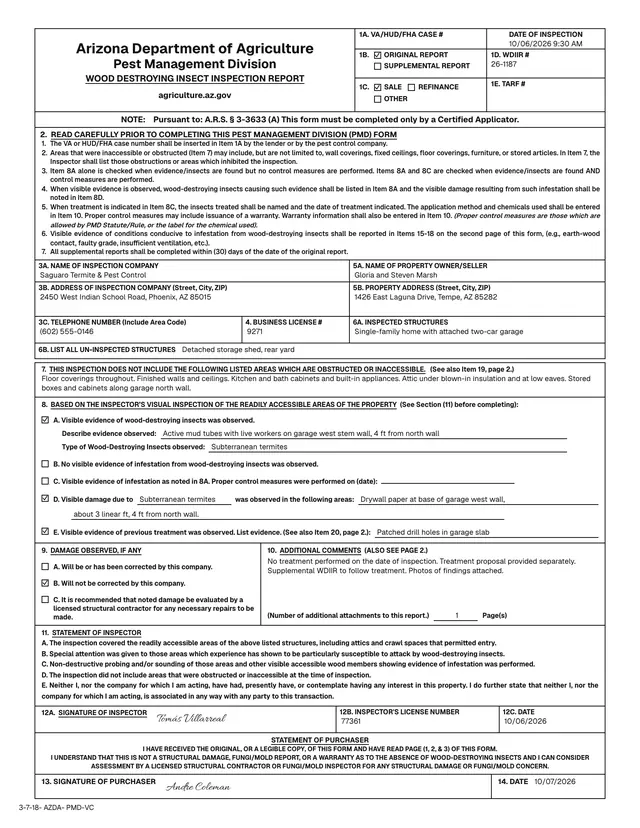
Record the termite findings from an inspection. - Arizona
Wood Destroying Insect Inspection Report
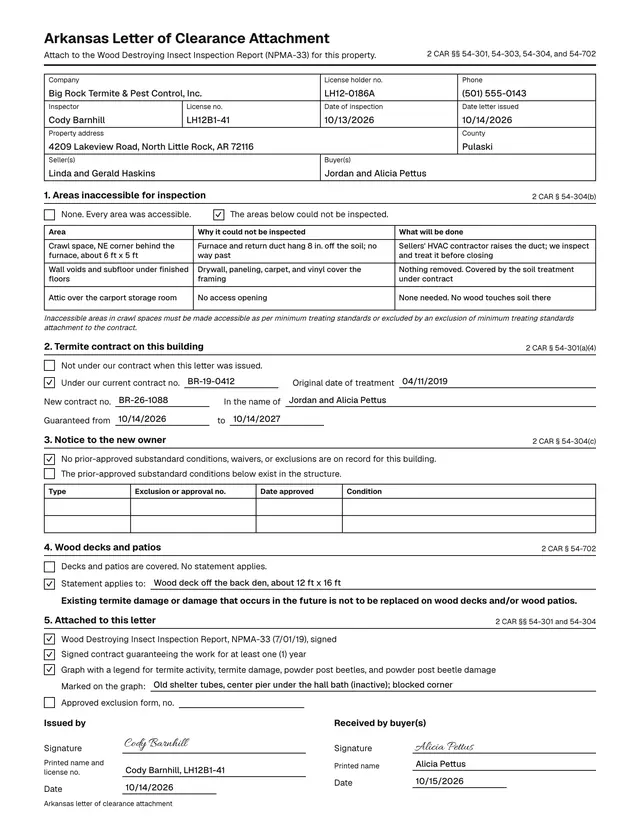
Record the termite findings from an inspection. - Arkansas
Arkansas Letter of Clearance Attachment
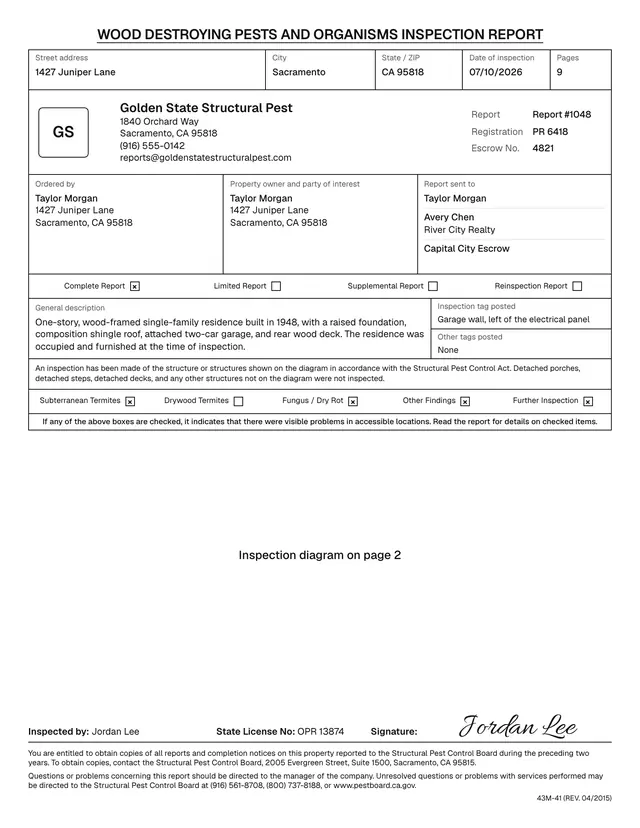
Record the termite findings from an inspection. - California43M-41
Wood Destroying Pests and Organisms Inspection Report
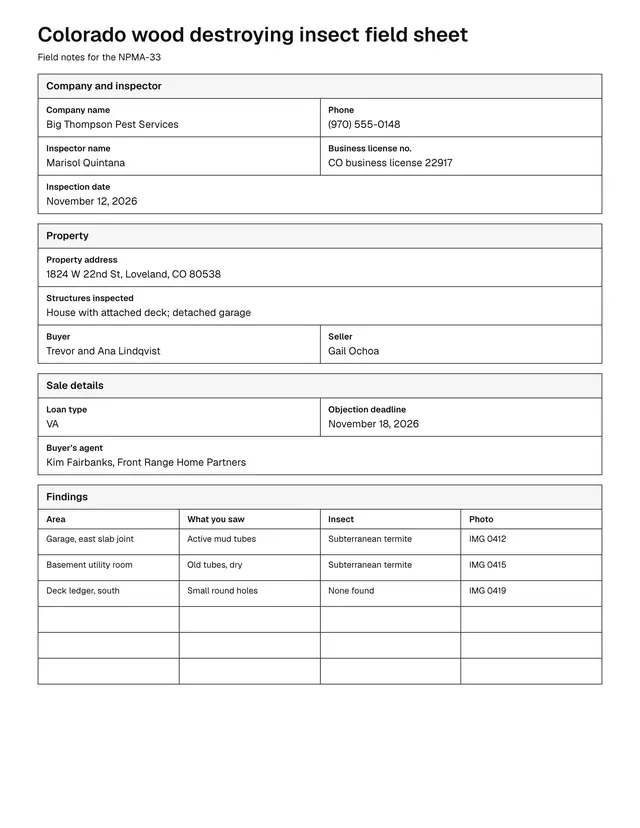
Record the termite findings from an inspection. - ColoradoNPMA-33
Colorado termite inspection report (NPMA-33)
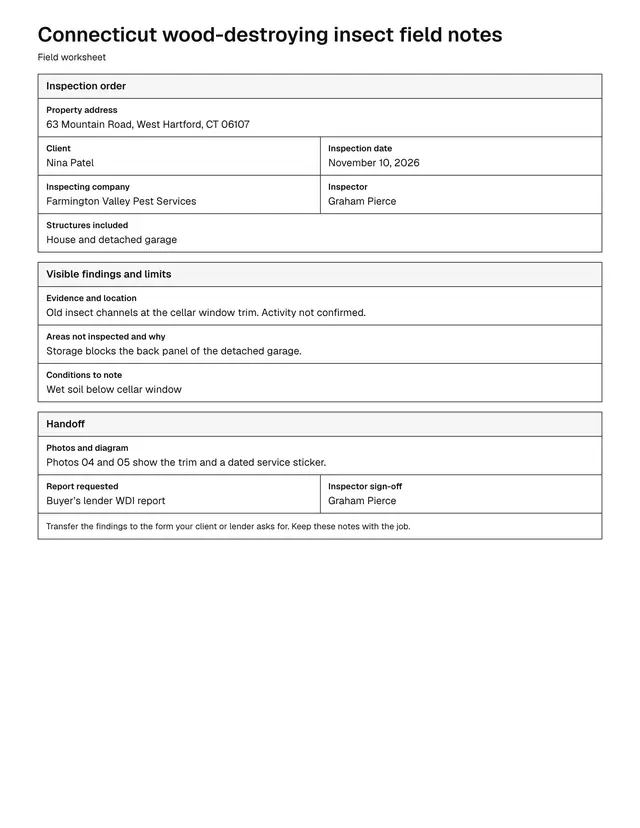
Record the termite findings from an inspection. - Connecticut
Connecticut wood-destroying insect field notes
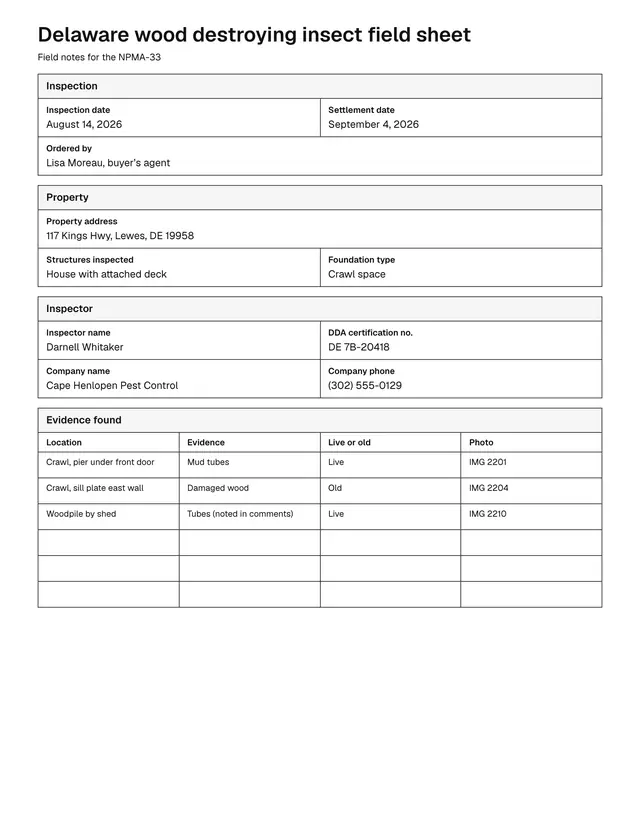
Record the termite findings from an inspection. - DelawareNPMA-33
Delaware termite inspection report (NPMA-33)
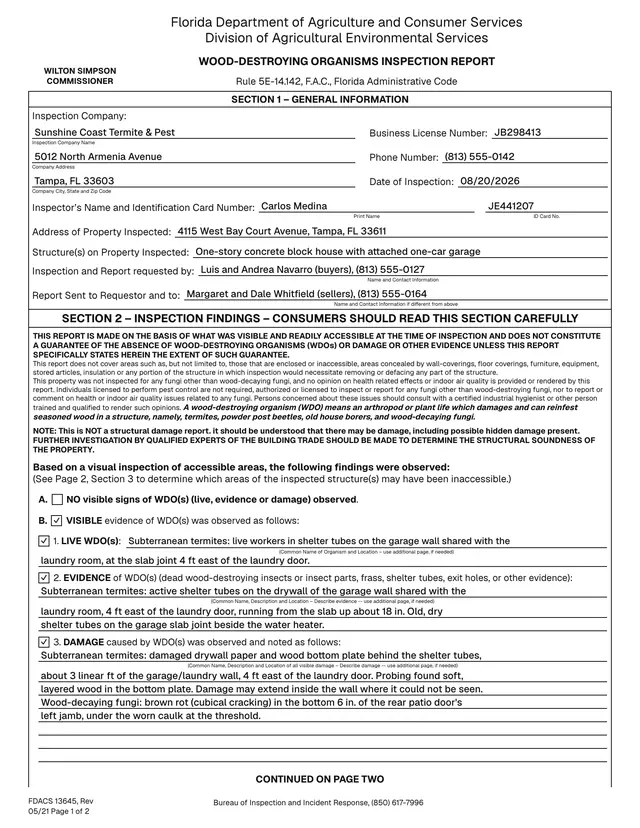
Record the termite findings from an inspection. - FloridaFDACS-13645
Wood-Destroying Organisms Inspection Report
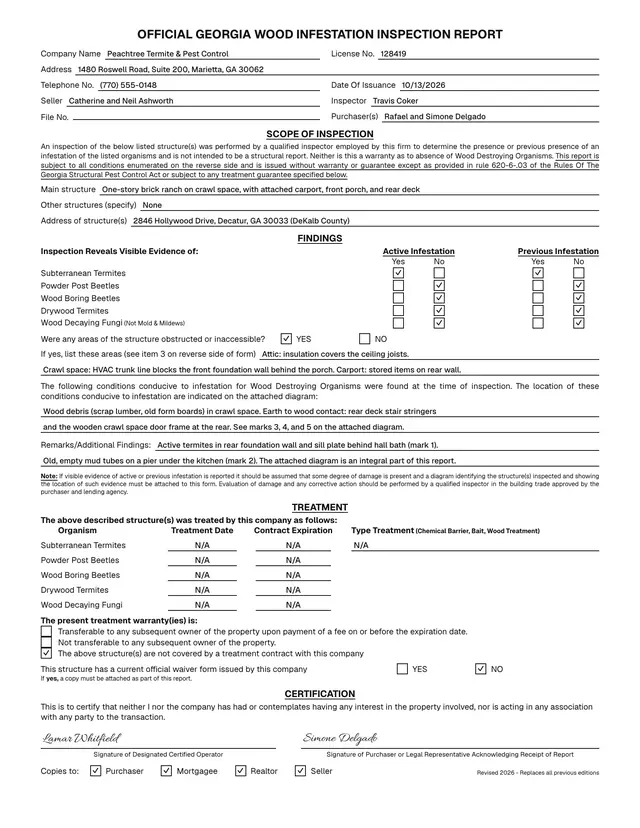
Record the termite findings from an inspection. - Georgia
Official Georgia Wood Infestation Inspection Report
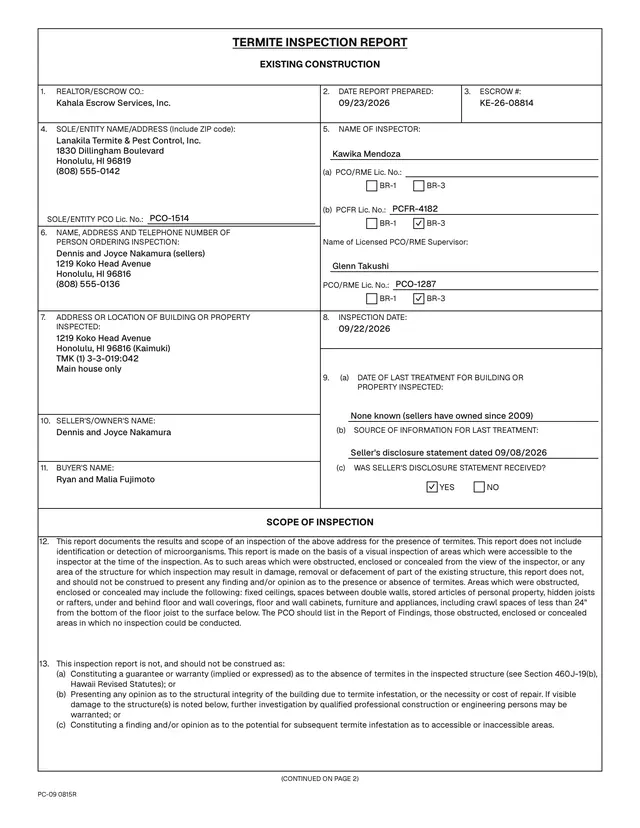
Record the termite findings from an inspection. - HawaiiPC-9
Termite Inspection Report, Existing Construction
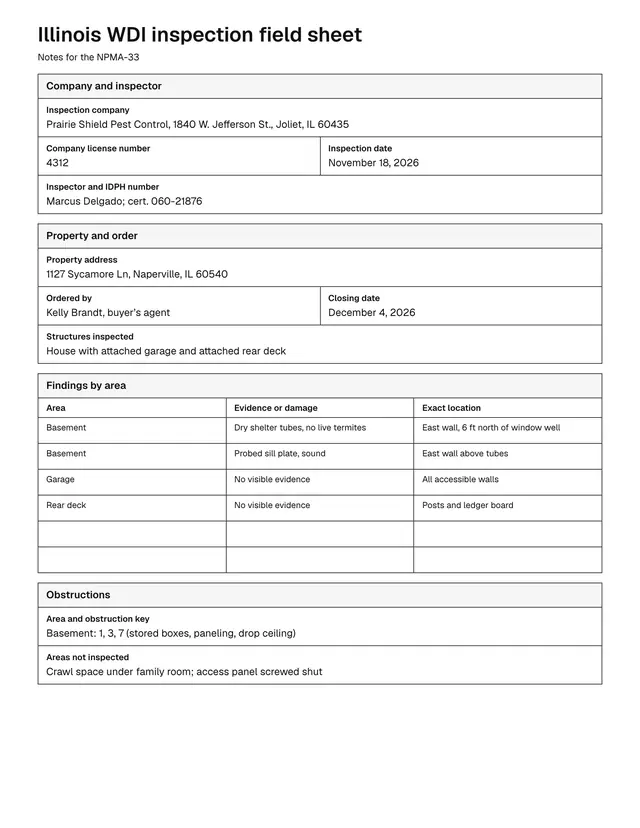
Record the termite findings from an inspection. - IllinoisNPMA-33
Illinois wood destroying insect inspection report (NPMA-33)
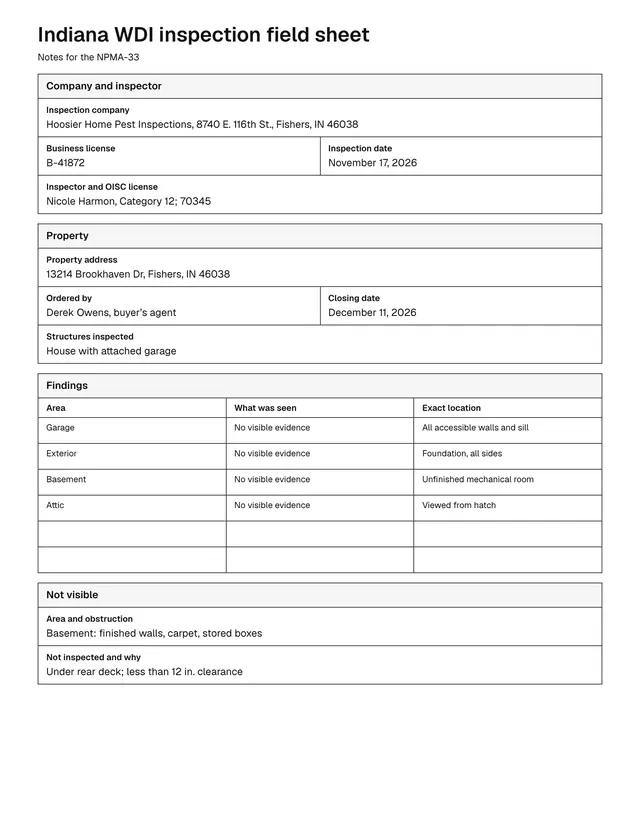
Record the termite findings from an inspection. - IndianaNPMA-33
Indiana wood destroying insect inspection report (NPMA-33)
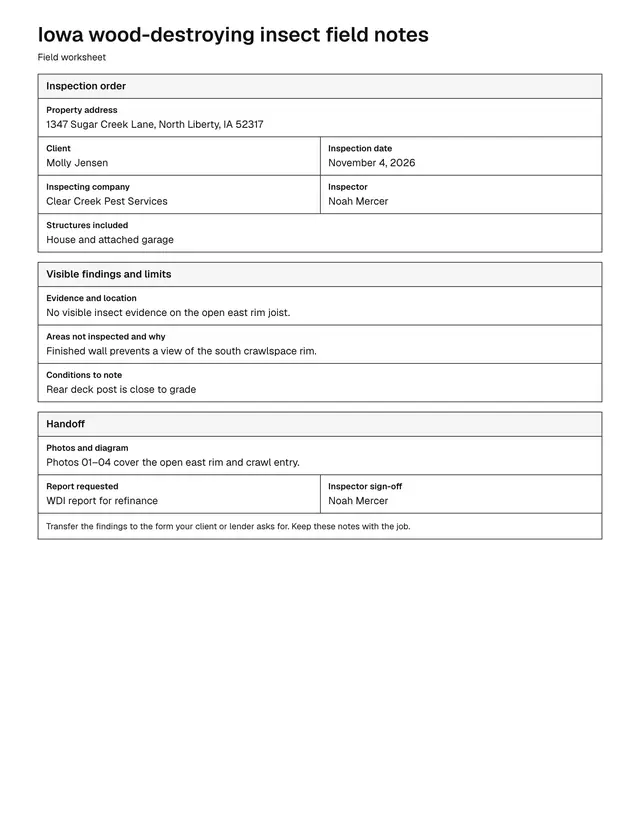
Record the termite findings from an inspection. - Iowa
Iowa wood-destroying insect field notes
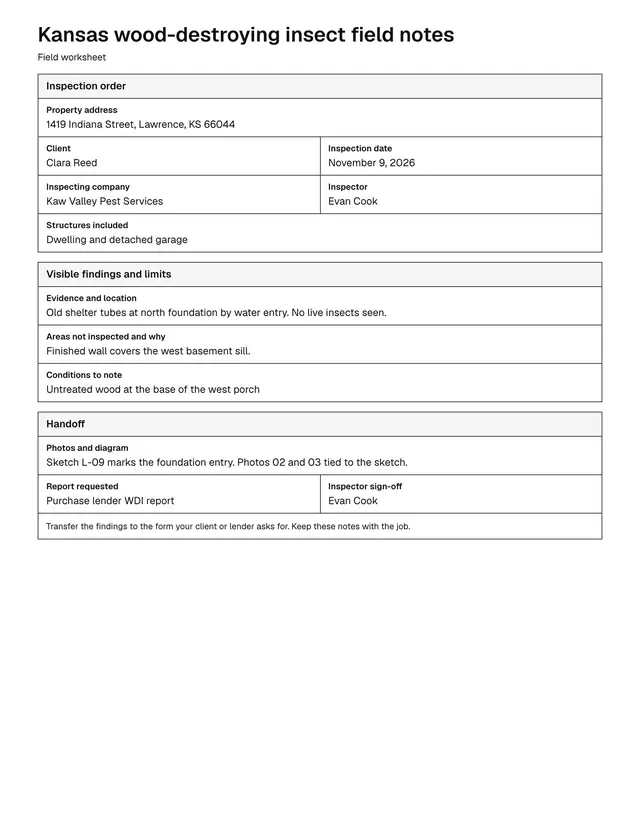
Record the termite findings from an inspection. - Kansas
Kansas wood-destroying insect field notes
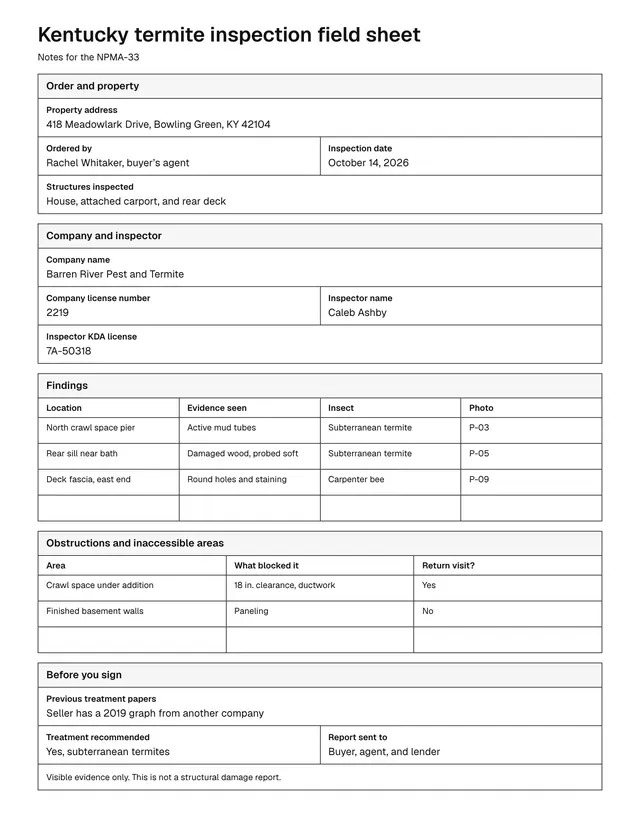
Record the termite findings from an inspection. - Kentucky
Kentucky termite inspection report (NPMA-33)
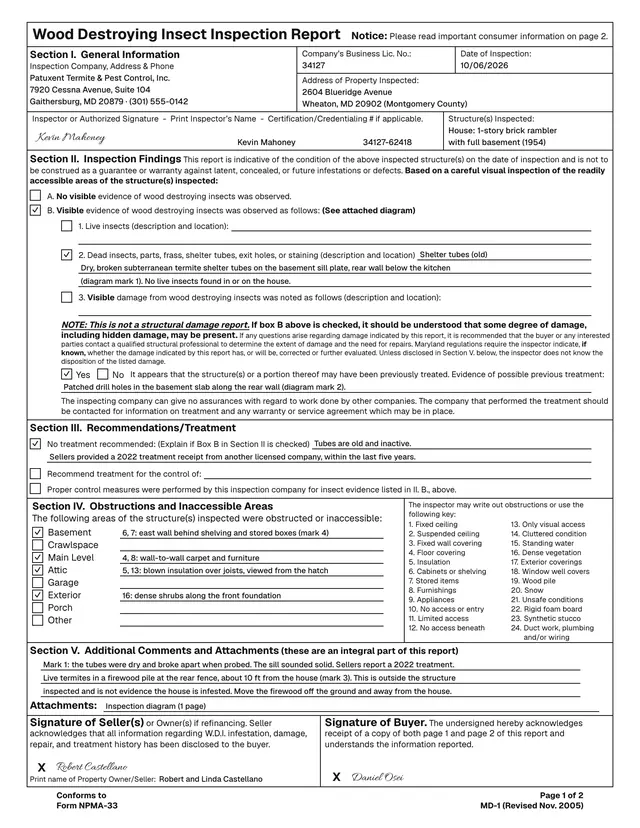
Record the termite findings from an inspection. - MarylandMD-1
Wood Destroying Insect Inspection Report
Record the termite findings from an inspection. - Massachusetts
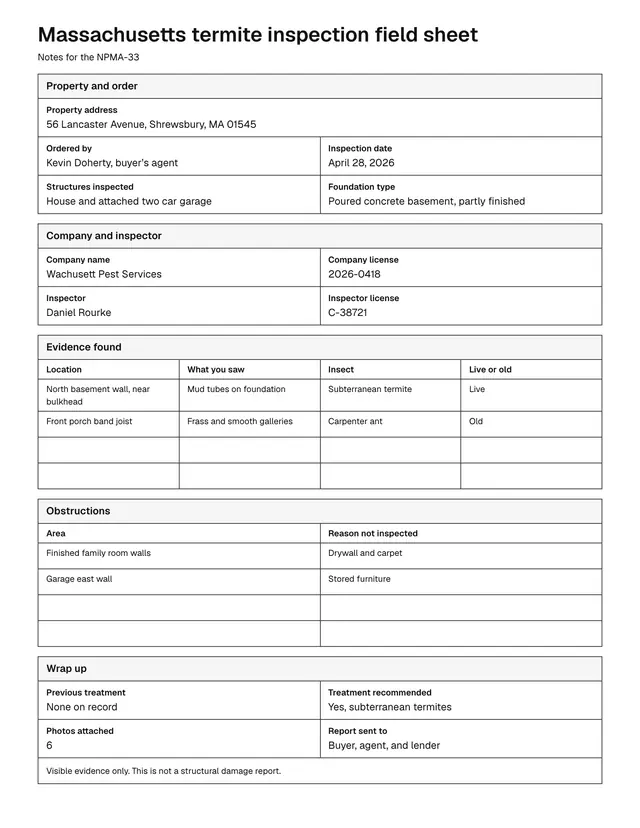
Massachusetts termite inspection report (NPMA-33)
Record the termite findings from an inspection. - MichiganNPMA-33
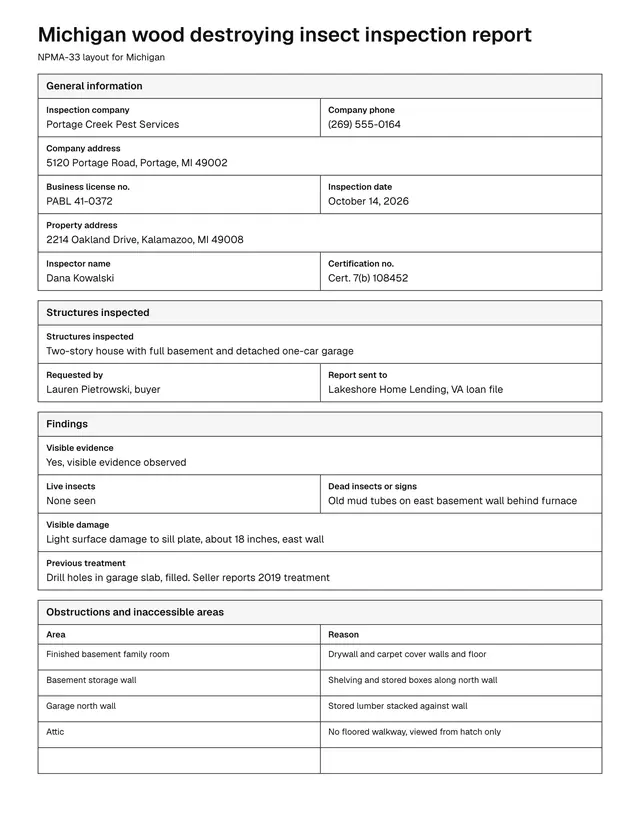
Michigan wood-destroying insect inspection report (NPMA-33)
Record the termite findings from an inspection. - Mississippi
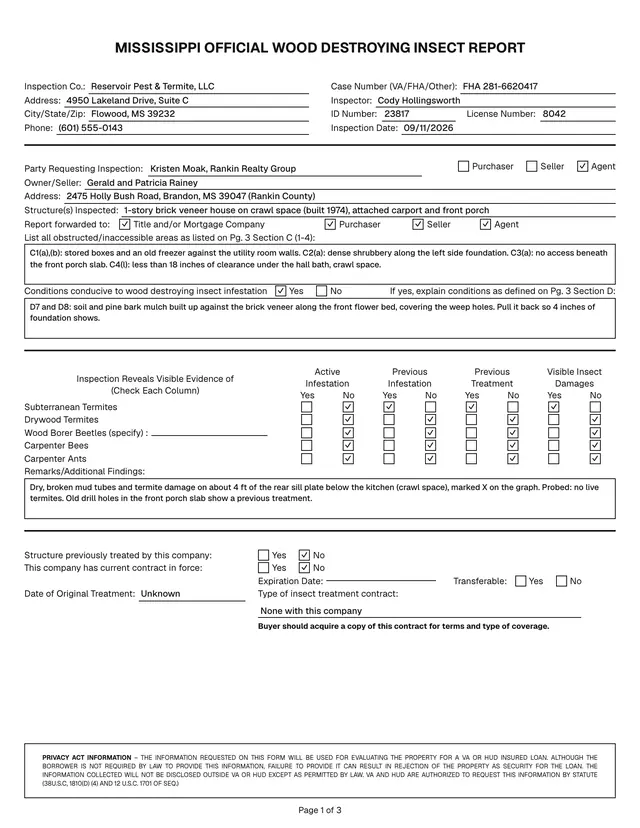
Mississippi Official Wood Destroying Insect Report
Record the termite findings from an inspection. - MissouriNPMA-33
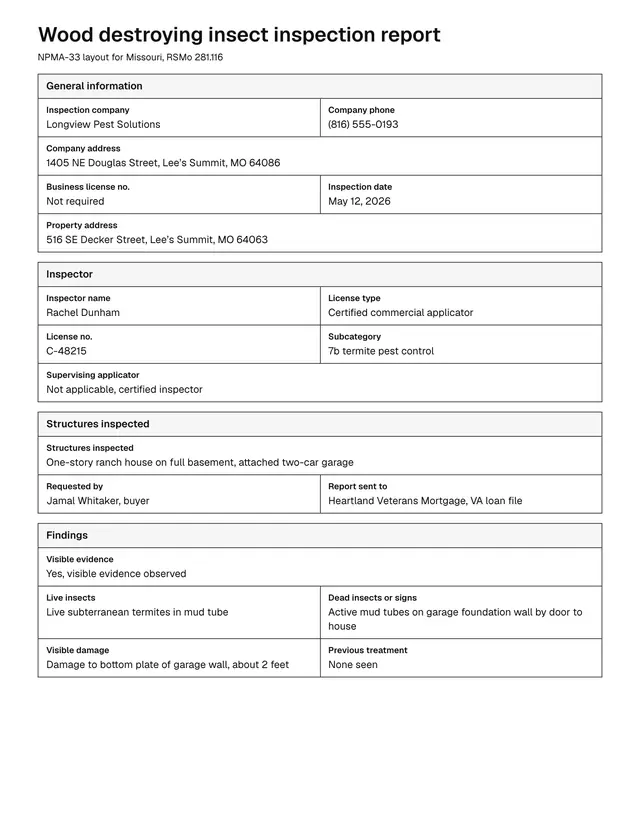
Missouri wood-destroying insect inspection report (NPMA-33)
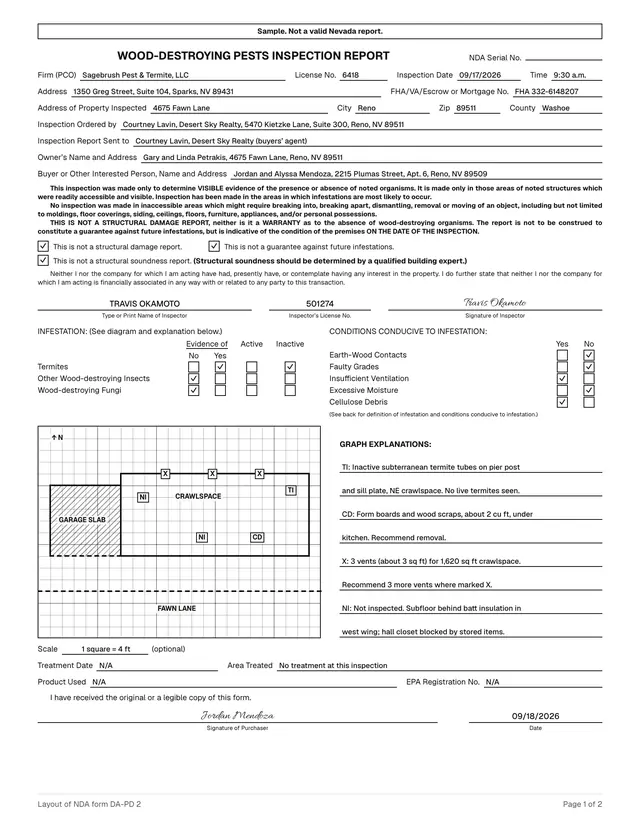
Record the termite findings from an inspection. - Nevada
Wood-Destroying Pests Inspection Report
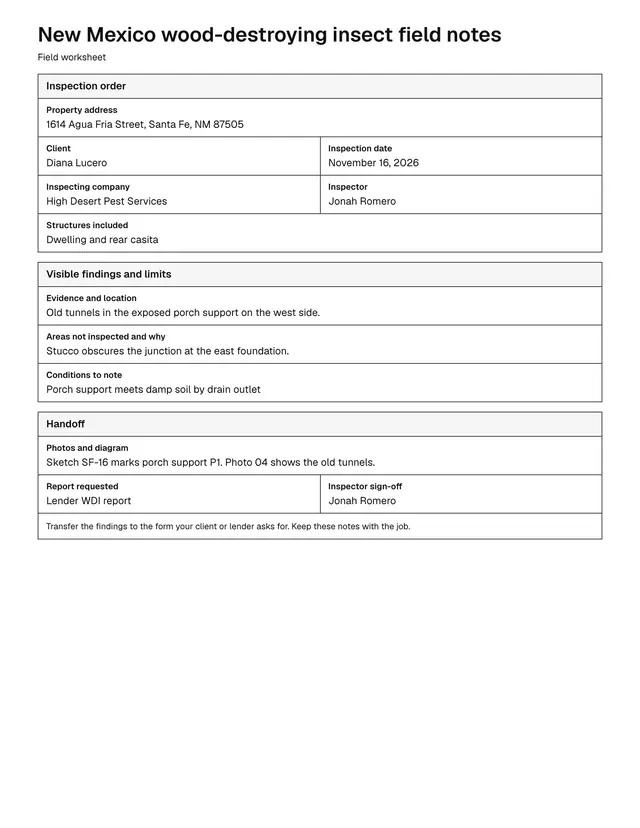
Record the termite findings from an inspection. - New Mexico
New Mexico wood-destroying insect field notes
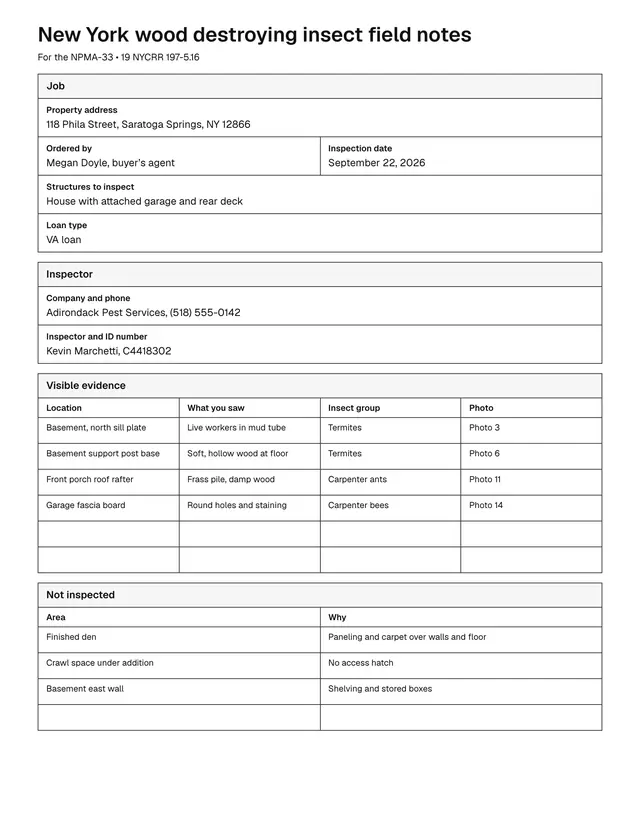
Record the termite findings from an inspection. - New York
New York wood destroying insect inspection notes (NPMA-33)
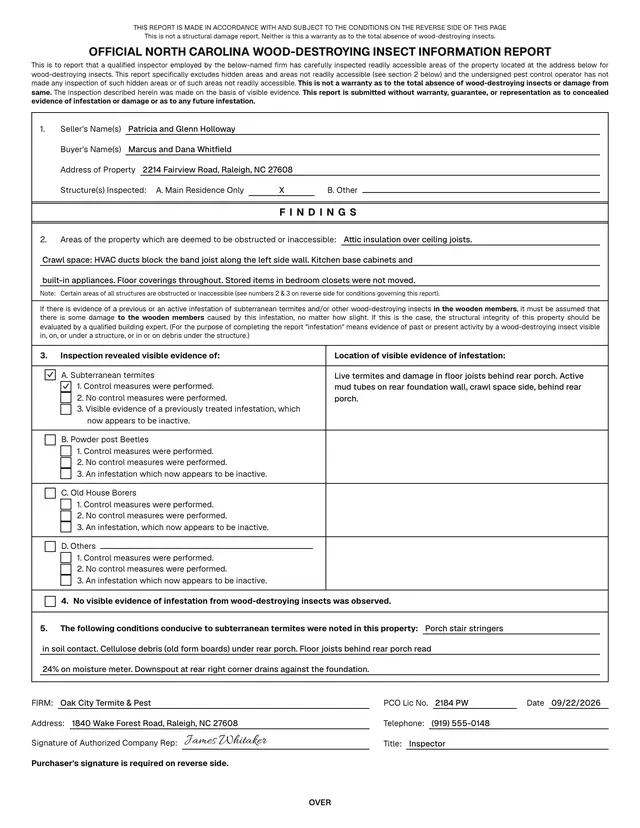
Record the termite findings from an inspection. - North CarolinaWDIR 100
Official North Carolina Wood-Destroying Insect Information Report
Record the termite findings from an inspection. - OhioNPMA-33
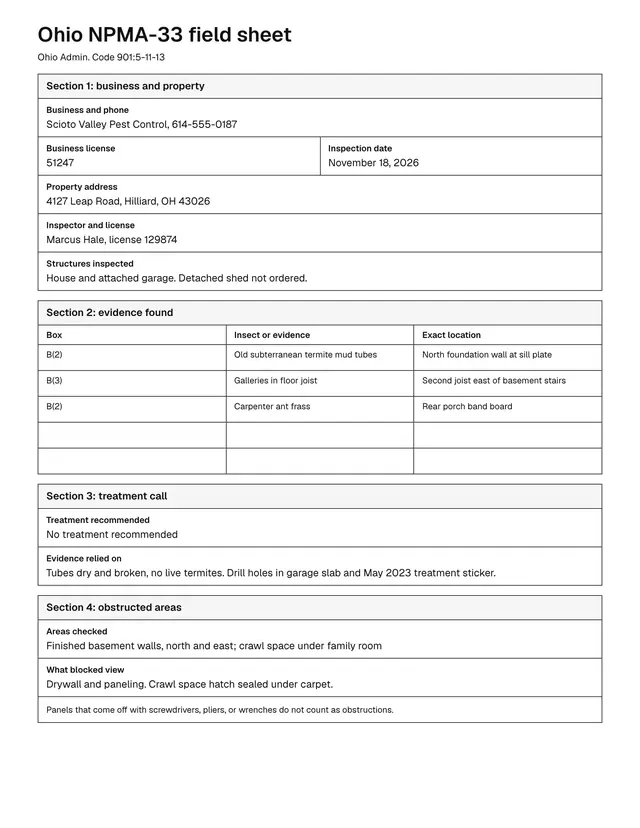
Ohio NPMA-33 wood-destroying insect inspection report
Record the termite findings from an inspection. - OklahomaForm ODAFF-1
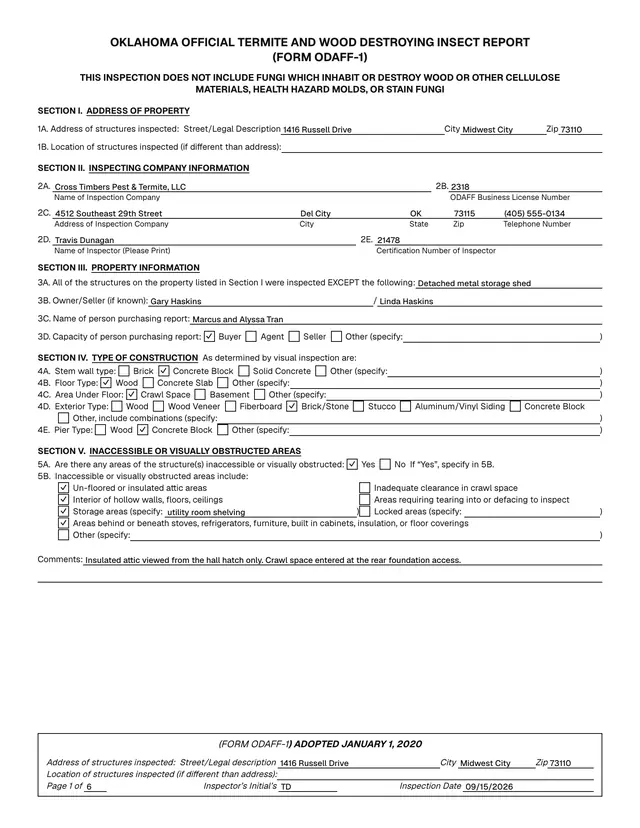
Oklahoma Official Termite and Wood Destroying Insect Report
Record the termite findings from an inspection. - Oregon
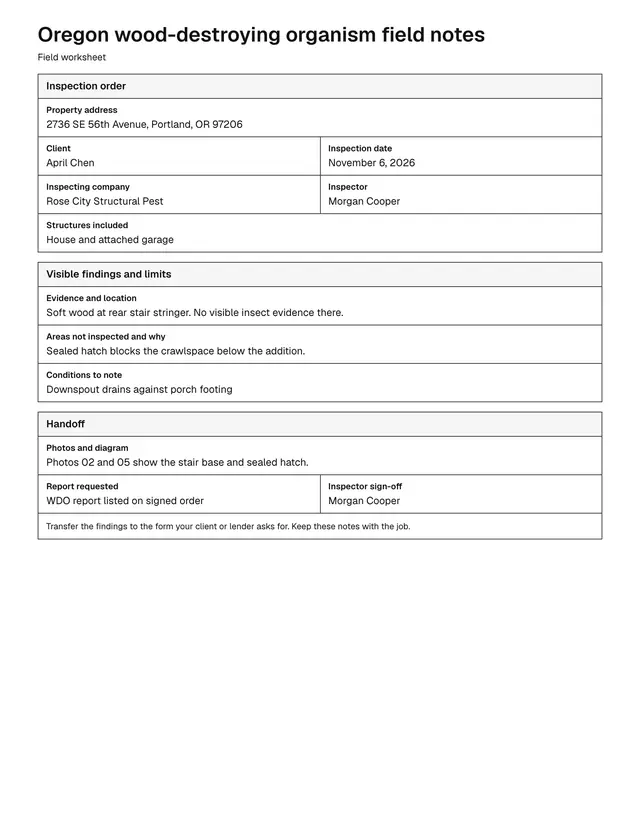
Oregon wood-destroying organism field notes
Record the termite findings from an inspection. - PennsylvaniaNPMA-33
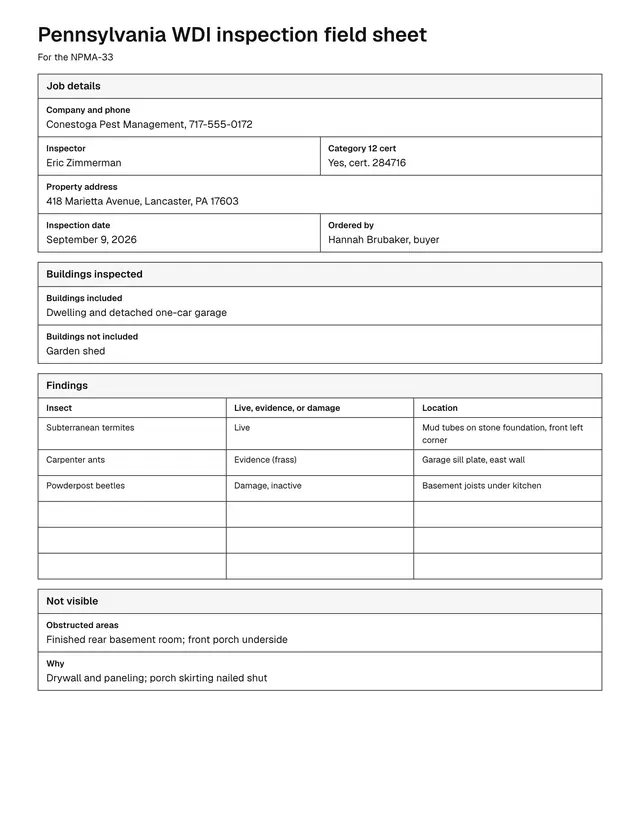
Pennsylvania wood-destroying insect inspection report (NPMA-33)
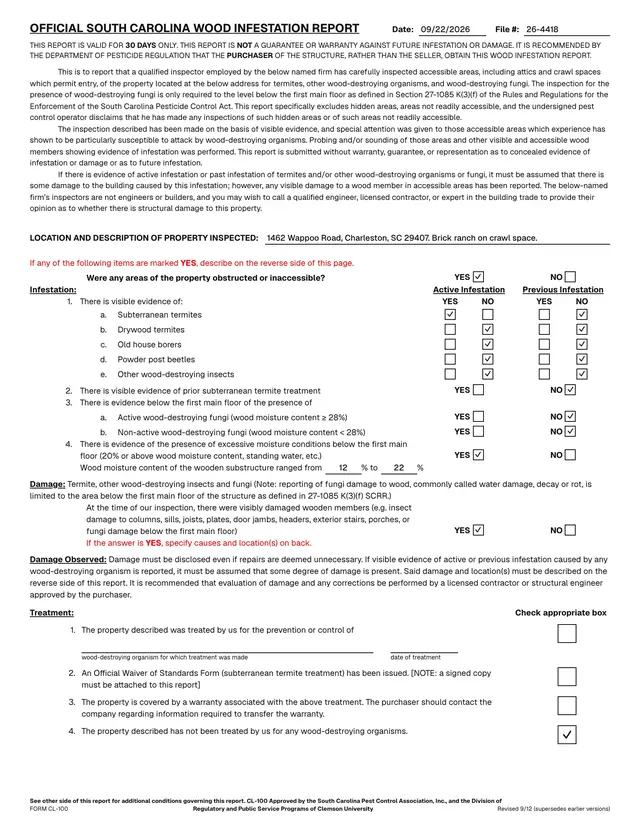
Record the termite findings from an inspection. - South CarolinaCL-100
Official South Carolina Wood Infestation Report
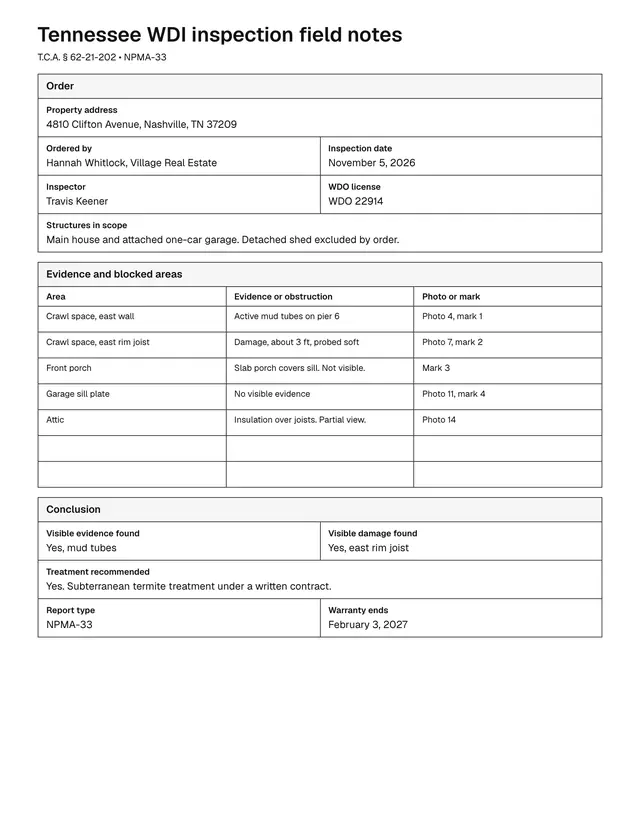
Record the termite findings from an inspection. - Tennessee
Tennessee wood destroying insect infestation inspection report
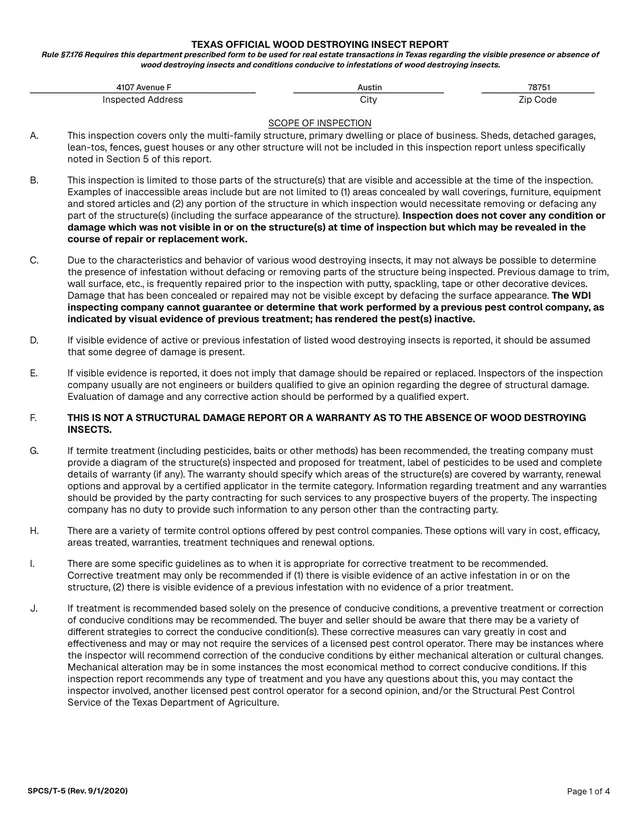
Record the termite findings from an inspection. - TexasSPCS/T-5
Texas Official Wood Destroying Insect Report
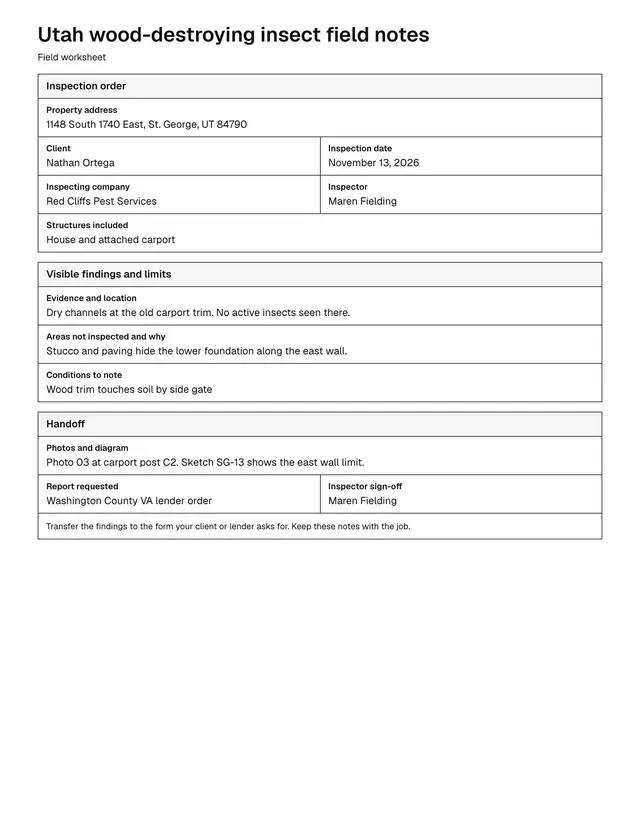
Record the termite findings from an inspection. - Utah
Utah wood-destroying insect field notes
Record the termite findings from an inspection. - Virginia
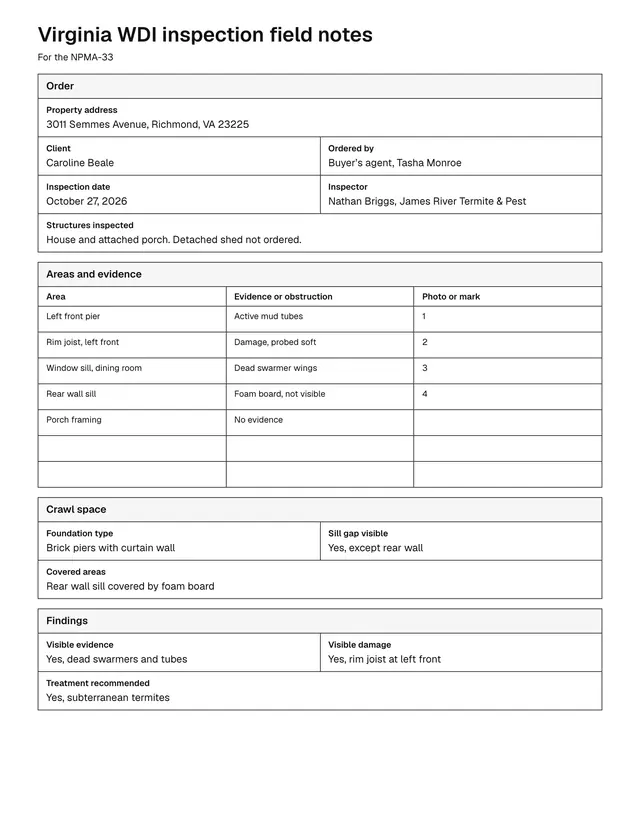
Virginia wood destroying insect inspection report
Record the termite findings from an inspection. - Washington
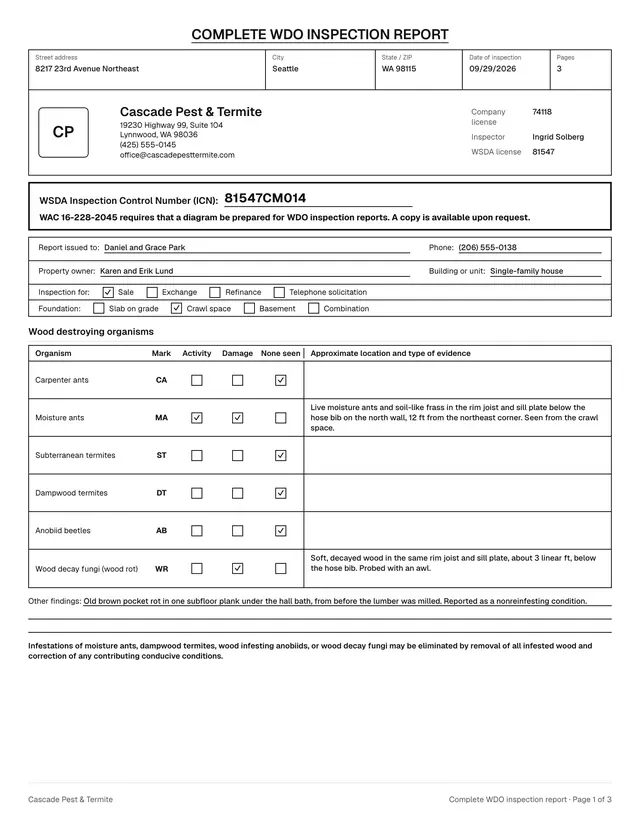
Complete WDO Inspection Report
Record the termite findings from an inspection. - Wisconsin
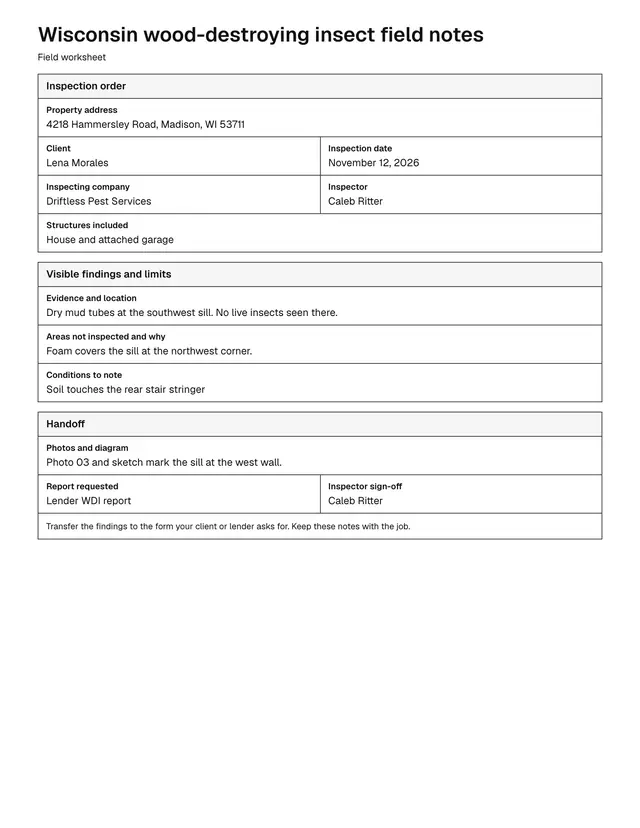
Wisconsin wood-destroying insect field notes
Record the termite findings from an inspection.