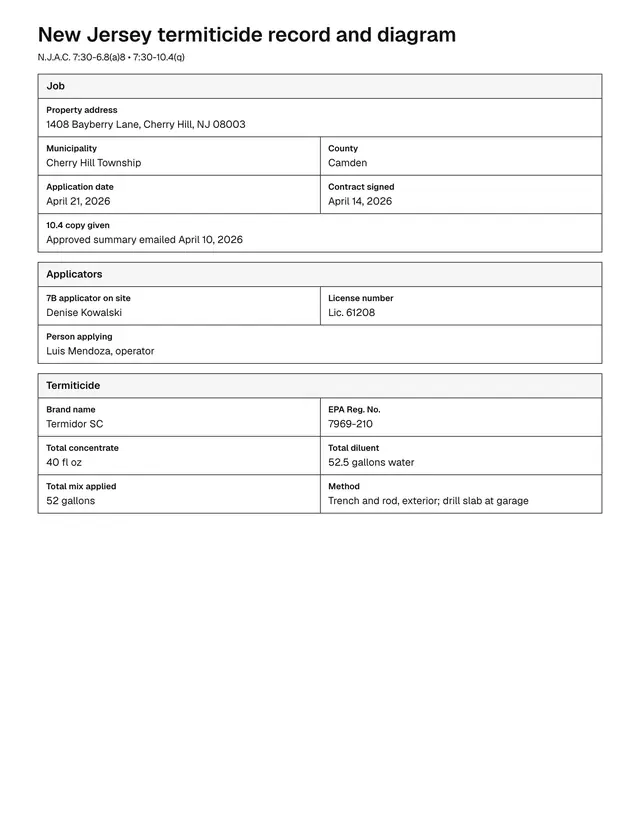
New Jersey termiticide record and diagram (N.J.A.C. 7:30-6.8 and 7:30-10.4)
Every termiticide job in New Jersey needs a drawing of the building, kept five years with the application record. Here’s what the drawing has to show and the treatment rules behind it.
At a glance
- Rules
- N.J.A.C. 7:30-6.8(a)8 and 7:30-10.4(q)
- Keep
- At least 5 years
- Before the contract
- Copy or approved summary of 7:30-10.4
- On site
- A 7B applicator within line of sight
Completed example
Download PDFThe drawing New Jersey asks for
Some states want a termite graph only for certain jobs. New Jersey wants one for every termiticide application. Under N.J.A.C. 7:30-6.8, a termite job’s record adds “a diagram of the structure treated” that shows four things.
The lower level. The basement, crawl space, or slab outline, since that’s where the work happens. Rough scale is fine. Mark doors, stairs, and the front of the house so someone else can read it.
Where the termites were. The general location of each infestation or re-infestation, plus any visible damage.
What you treated. Trenched and rodded runs, drilled slab, foamed voids. If you treated only part of the house, the drawing should make that obvious at a glance.
What could get hurt. Known wells, drainage systems, “porch over basement” spots, and nearby streams and ponds.
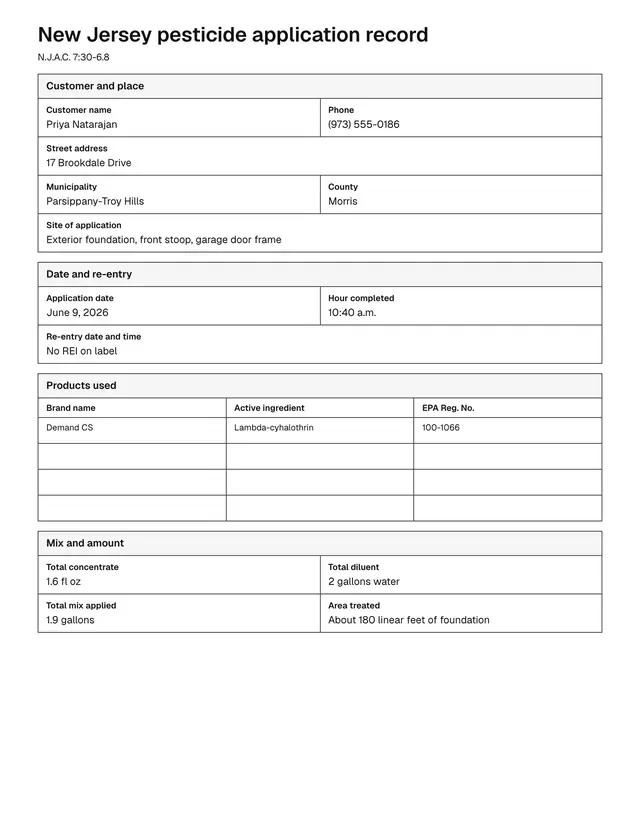
Section 10.4(q) repeats the list and says the diagram becomes part of the termite application records, kept “for a minimum of five years.” The rest of the record is the same one every job gets: date, place, product, recipe, amount, and applicator, as on the pesticide application record.
Rules that change what you draw
The drawing is really a record of choices that 10.4 controls. These are the ones that show up on paper.
Wells. If a well is more than 20 feet from the treatment site in sandy soil, or more than 100 feet in other soils, you follow the label. Closer than that, the rule sets special methods, like gravity feed instead of pressure. Measure the distance and write it on the drawing.
Sump pits. A basement floor with standing water in the sump pit can’t be treated until the pit is pumped and doesn’t refill. Mark the sump and what you found in it.
Plenum crawl spaces. If the crawl space works as an air chamber for heat or cooling, the rule calls for a product labeled for that site, low pressure injection, active ventilation for 24 hours, and six mil plastic over the treated soil. Occupants should be told to leave during treatment and the 24-hour airing out.
Wet floors and high water. A wet basement floor can’t be treated unless you can show the injection point sits above the water table around it. If the owner told you about a high water table, that floor waits until the water is below the injection level. Note what the floor looked like.
Who was there. At least one applicator certified in Category 7B has to be present for the whole job and “within line of sight” of the person applying. Write that person’s name and license number on the record, even if a crew member ran the rig.
Paperwork before the contract
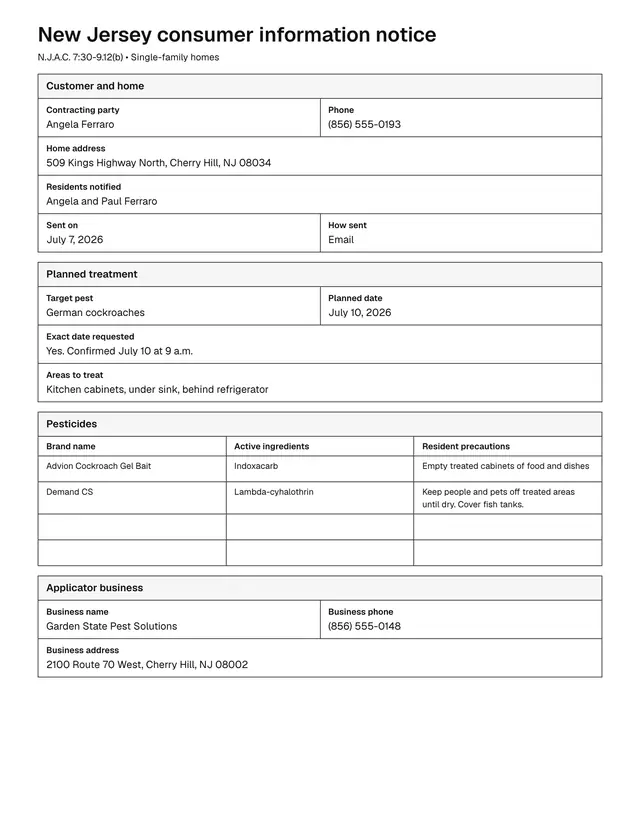
Before you sign a termite contract, 10.4(p) says to give the customer a copy of section 10.4, or a DEP-approved summary, along with the consumer information notice. Termite bait jobs don’t need the 10.4 copy.
On the day, pressurize the rig and check the tank, pump, hose, fittings, and injector for leaks before you start. Any leak gets fixed first. It takes five minutes, and it’s in the rule at 10.4(b) for a reason: a split hose in a finished basement is a cleanup nobody wants.
Retreatment is limited, which is why old drawings matter. Under 10.4(n), you can retreat with a liquid termiticide only after five years, when there’s evidence of reinfestation, or where construction, digging, or landscaping broke the soil barrier. If only the barrier was disturbed, only those spots get retreated. And “previously reported damage shall not be accepted as evidence of re-infestation.”
What if the customer calls in year three?
Swarmers show up in a Cherry Hill kitchen in April, three years after you treated. The first question is where they came out. Is it a spot you treated, a gap in the old barrier, or a part of the house you never touched? Without the old drawing, nobody can say, and the five-year rule makes that answer matter.
Pull the old drawing, compare it to where the swarmers came out, and write the new visit as its own record with its own drawing. If the termites came out in a treated area, that’s evidence of reinfestation and the rule allows a retreatment there.
Noma specializes in the New Jersey Termiticide Record and Diagram (N.J.A.C. 7:30-6.8 and 7:30-10.4). Draw the diagram on the job in the Noma app, and schedule yearly reinspections so termite accounts come back around on time. See how Noma handles termite jobs.
Frequentlyaskedquestions
Send this document in minutes, not an afternoon.
Other states
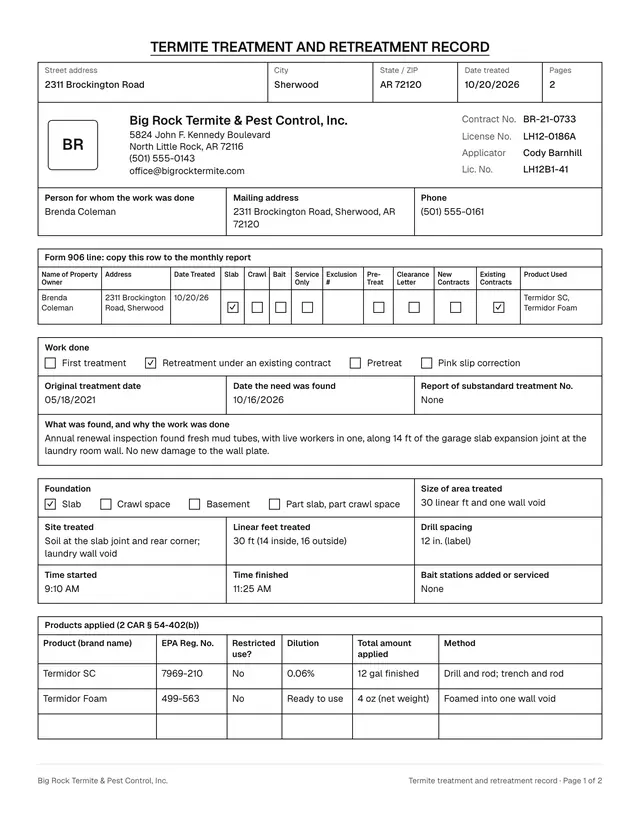
Termite treatment record templates- Arkansas
Termite Treatment and Retreatment Record
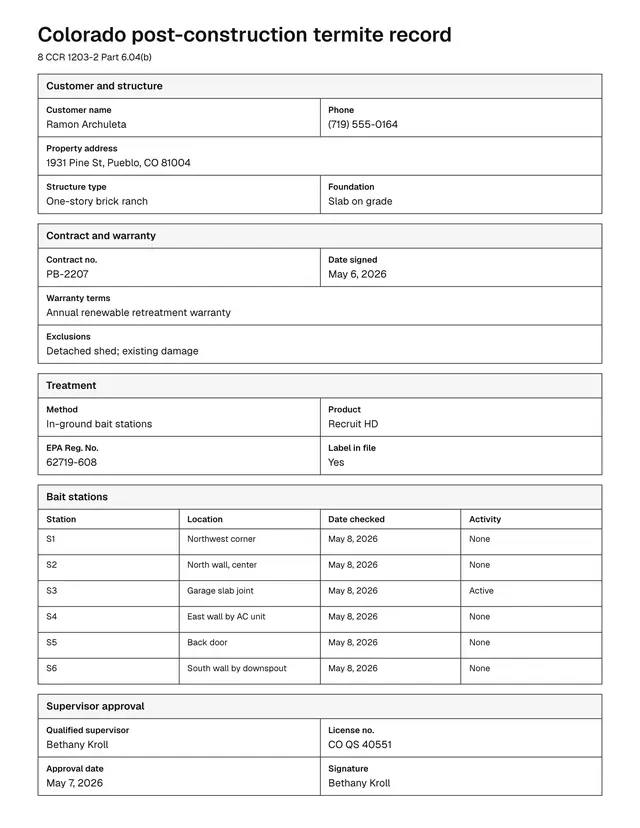
Record the termiticide, the amount, and the method for each job. - Colorado
Colorado post-construction termite treatment record (Part 6.04(b))
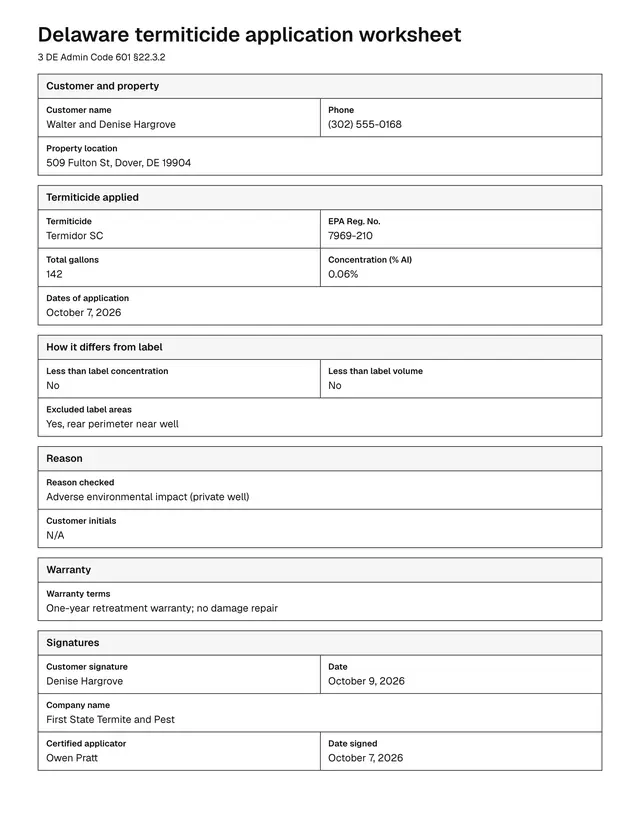
Record the termiticide, the amount, and the method for each job. - DelawareDocument # 65-01-06/01/09/02
Delaware Notice of Termiticide Application
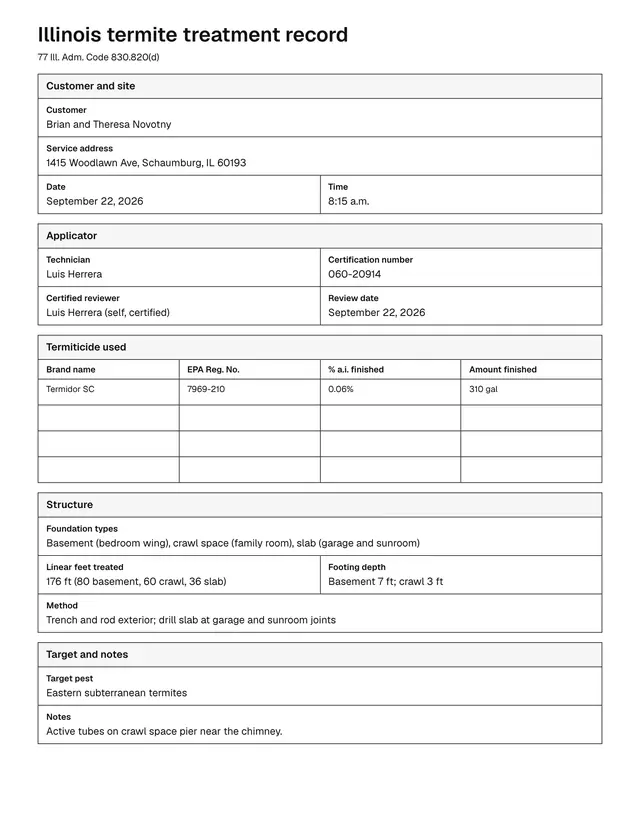
Record the termiticide, the amount, and the method for each job. - Illinois
Illinois termite treatment record and diagram
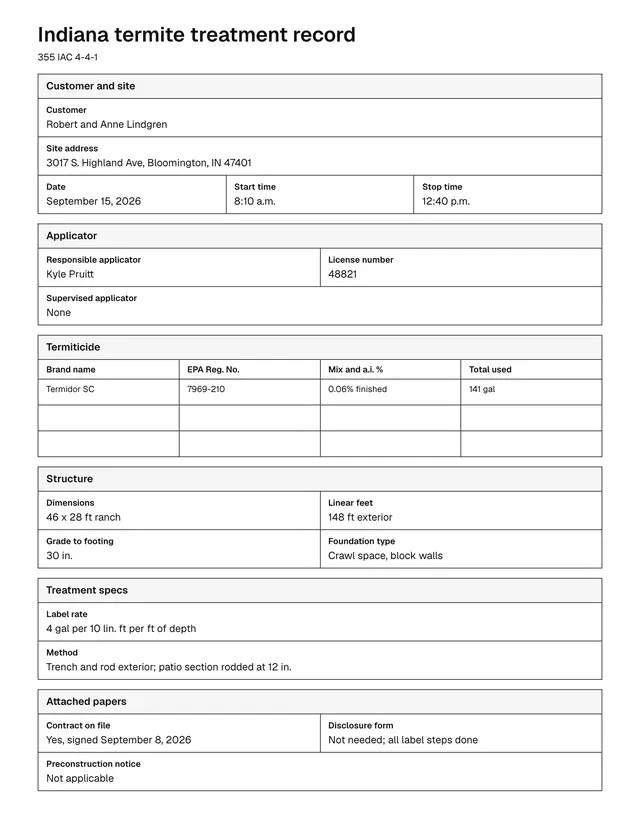
Record the termiticide, the amount, and the method for each job. - Indiana
Indiana termite treatment record and graph
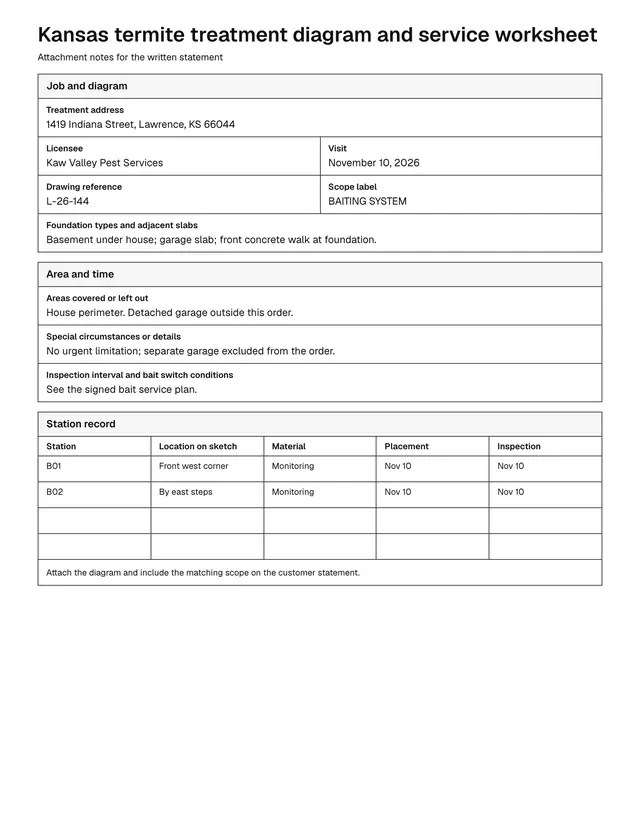
Record the termiticide, the amount, and the method for each job. - Kansas
Kansas termite treatment diagram and service worksheet
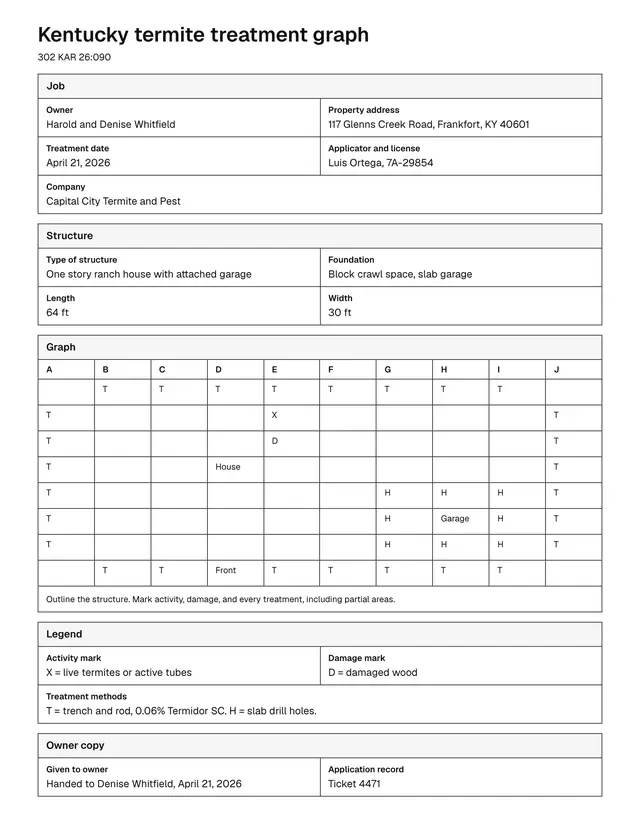
Record the termiticide, the amount, and the method for each job. - Kentucky
Kentucky termite treatment graph (302 KAR 26:090)
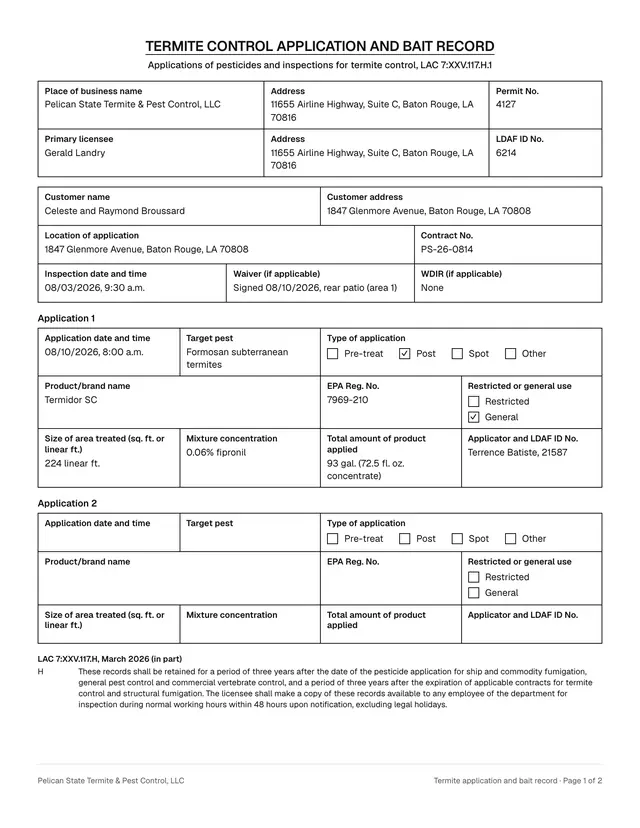
Record the termiticide, the amount, and the method for each job. - Louisiana
Termite Control Application and Bait Record
Record the termiticide, the amount, and the method for each job. - Maryland
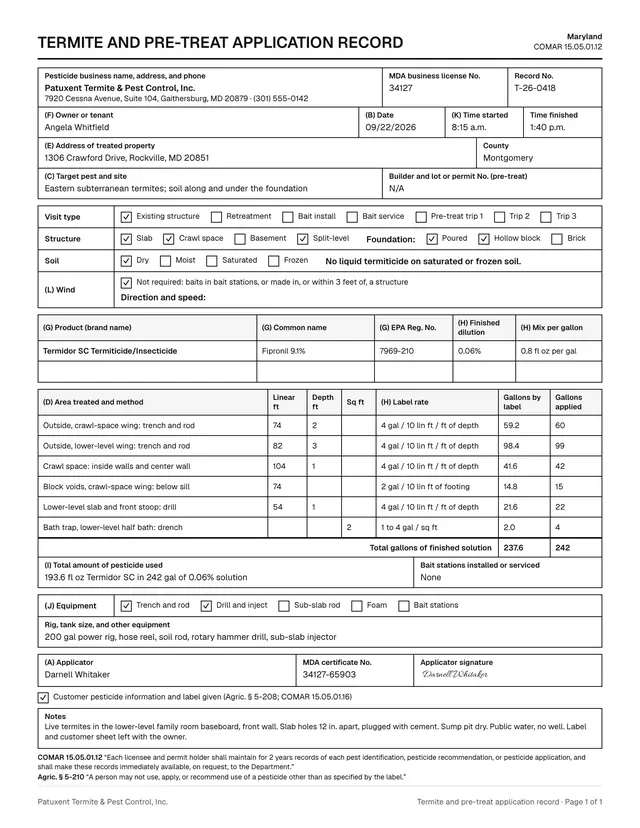
Termite and Pre-Treat Application Record
Record the termiticide, the amount, and the method for each job. - Mississippi
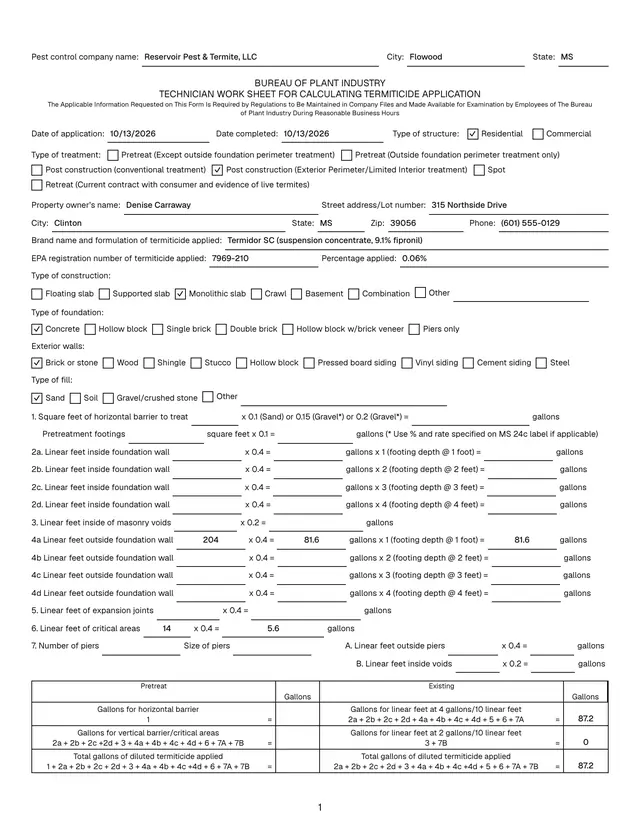
Technician Work Sheet for Calculating Termiticide Application
Record the termiticide, the amount, and the method for each job. - Ohio
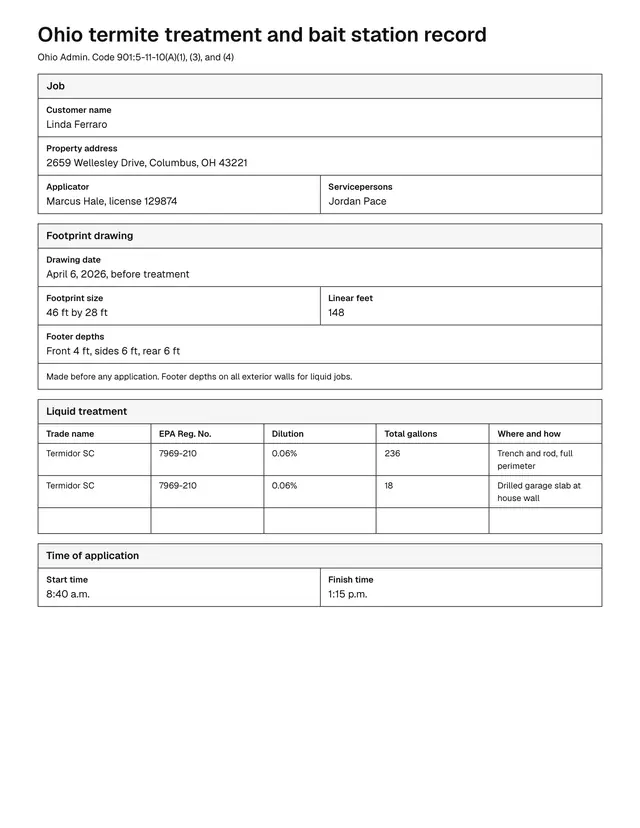
Ohio termite treatment and bait station record
Record the termiticide, the amount, and the method for each job. - Oklahoma
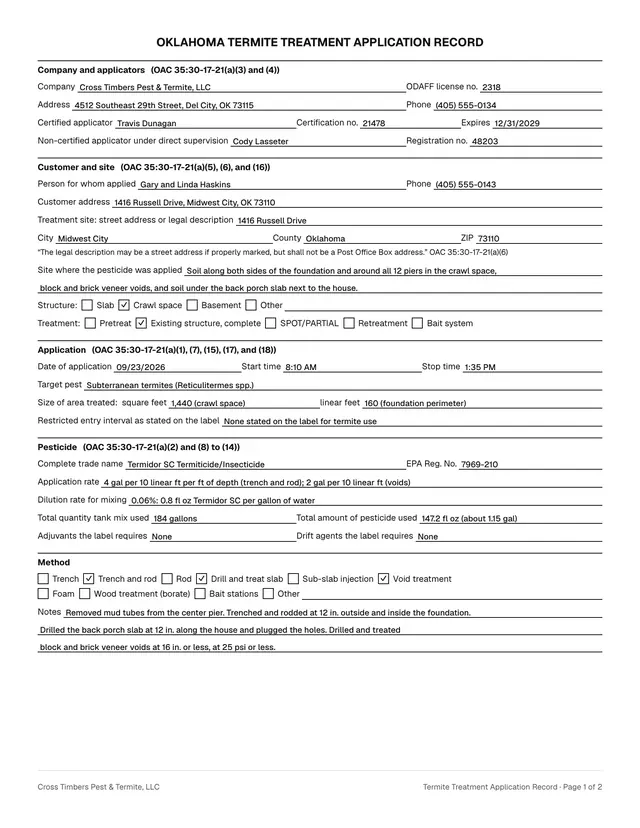
Oklahoma Termite Treatment Application Record
Record the termiticide, the amount, and the method for each job. - South Carolina
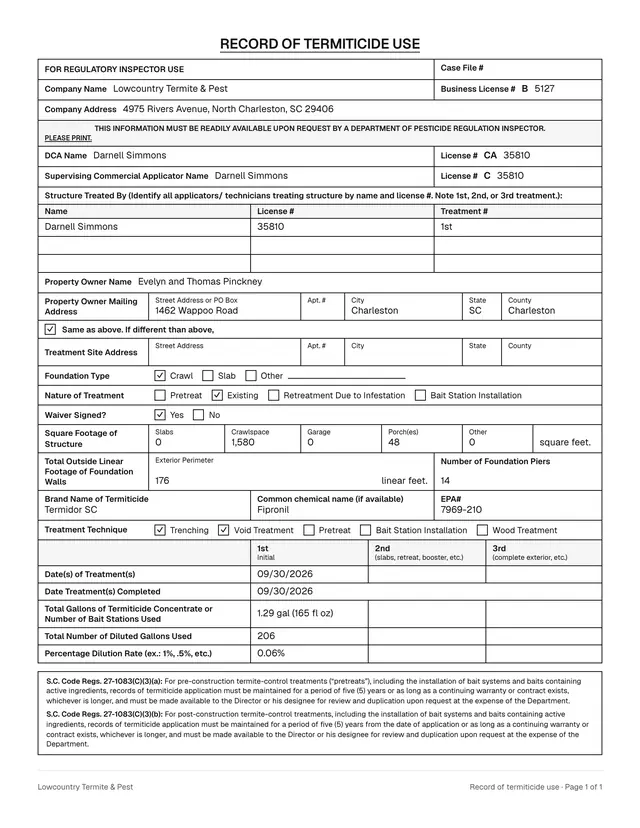
Record of Termiticide Use
Record the termiticide, the amount, and the method for each job.