Kentucky termite treatment graph (302 KAR 26:090)
Every Kentucky termite treatment ends with a graph for the owner: a drawing of the building that shows the activity, the damage, and every spot you treated.
At a glance
- Rule
- 302 KAR 26:090, Section 2
- Given to
- The property owner
- When
- At the time of treatment
- Records
- 302 KAR 26:030, kept 3 years
Completed example
Download PDFWhat is a graph?
It’s a drawing of the house, and in Kentucky it’s required. 302 KAR 26:090 says that at the time of a treatment “for control or prevention of wood-destroying organisms, a graph shall be issued to the owner of the property.” Old-timers call it a termite graph. Customers call it the drawing.
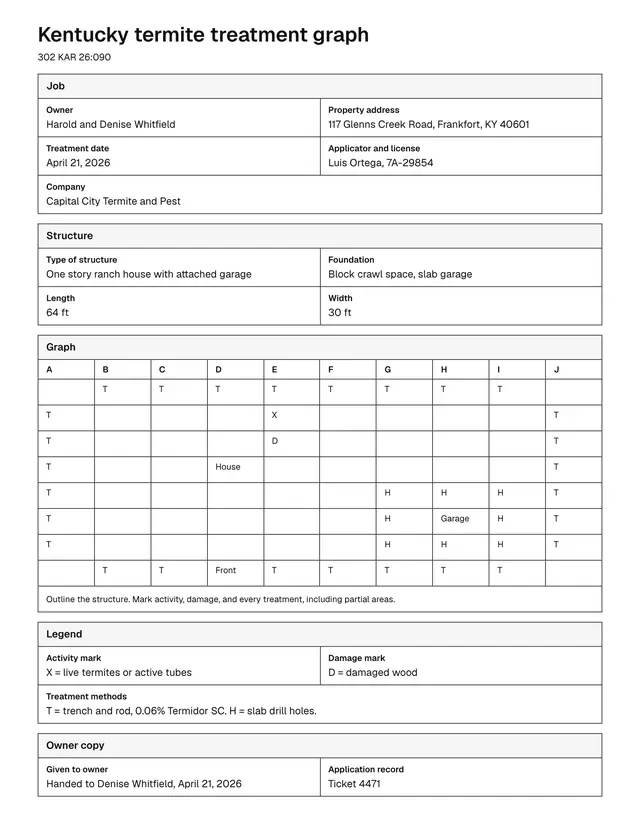
The rule defines a graph by what it has to show. It names the type of structure. It gives an outline with the approximate length and width. It marks where you saw current activity and current damage. And it shows “all treatment methods applied, including all partial treatments.”
The same rule covers integrated pest management in schools, but the graph part applies to every property: houses, churches, restaurants, and barns with living space. If you treat it for wood destroying organisms, the owner gets a graph.
Drawing it step by step
Outline the building. Pace or tape the walls and write the measurements on the outside lines: “42 ft” across the front, “28 ft” on the side. Add the garage, porch, and any slab or crawl space break. Mark the front of the house so the next tech can orient it.
Mark what you found. Use one symbol for live termites or mud tubes and another for damaged wood. The rule says current and visible, so a scar from an old infestation doesn’t need a mark unless it’s active.
Mark every treatment. Trenching along the foundation, drilling through the garage slab, rodding at the porch, foam in a wall void, bait stations. Each one gets its own line or symbol in the legend. If you only treated the back wall, shade just that part. Partial jobs are exactly what the rule calls out.
Add a legend and a date. A graph without a key is just a sketch. Put the property address, the treatment date, and your company name at the top.
Keep it readable. The owner should be able to read it without you there. If the crawl space has a separate pier line or an addition on a slab, label them in words, not just symbols.
The graph isn’t the whole record
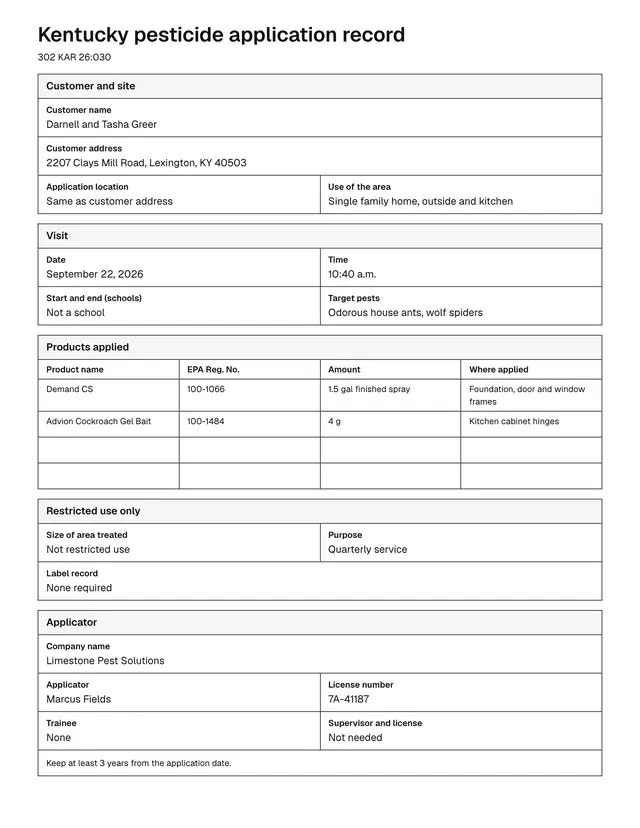
The graph shows where. Your Kentucky pesticide application record under 302 KAR 26:030 shows what and how much: the customer and location, the use of the area, the date and time, the product, the amount, the target pest, and who applied it. Keep both for three years.
Here’s how they fit on a real job. A ranch house in Frankfort gets a full liquid treatment with Termidor SC (EPA Reg. No. 7969-210). The graph shows the trench line around the foundation, the drill holes through the garage slab, and the tubes on the north crawl pier. The application record shows the 0.06% mix and the gallons used.
Write the mix you really used. Termidor SC’s label gives more than one rate, so “Termidor” alone on the ticket doesn’t tell the next tech what went in the ground.
Warranty calls, retreats, and the next sale
Because the next buyer’s inspector will ask. Section V of the NPMA-33 lists “documentation of previous treatment,” and a clean graph is the fastest proof. Without it, the Kentucky termite inspection report may recommend treating a house you already treated.
It also settles warranty calls. When a customer finds swarmers in the back bedroom, the graph shows whether that wall was in the treated area or left out.
The rule ties the graph to each treatment application. So when you come back to retreat the back porch, draw the house again and shade just the porch. Partial treatments are spelled out in the definition, and a spot job is the textbook partial treatment.
Mark the date and what changed. If the first graph showed the porch as treated in April and the new one shows a retreat in October, the owner can see the history at a glance. Keep the old graph too, since the next inspector may want both.
Do you still draw graphs on graph paper?
Lots of crews do, on a clipboard in the truck, and then the office scans it. The scan is crooked, the legend is half cut off, and the owner’s copy goes missing.
Noma specializes in the Kentucky Termite Treatment Graph (302 KAR 26:090). Draw the inspection diagram on your phone at the job, mark activity and treatment areas, and the drawing stays with the job, its schedule, and its invoice. See how Noma handles termite jobs.
Frequentlyaskedquestions
Send this document in minutes, not an afternoon.
Other states
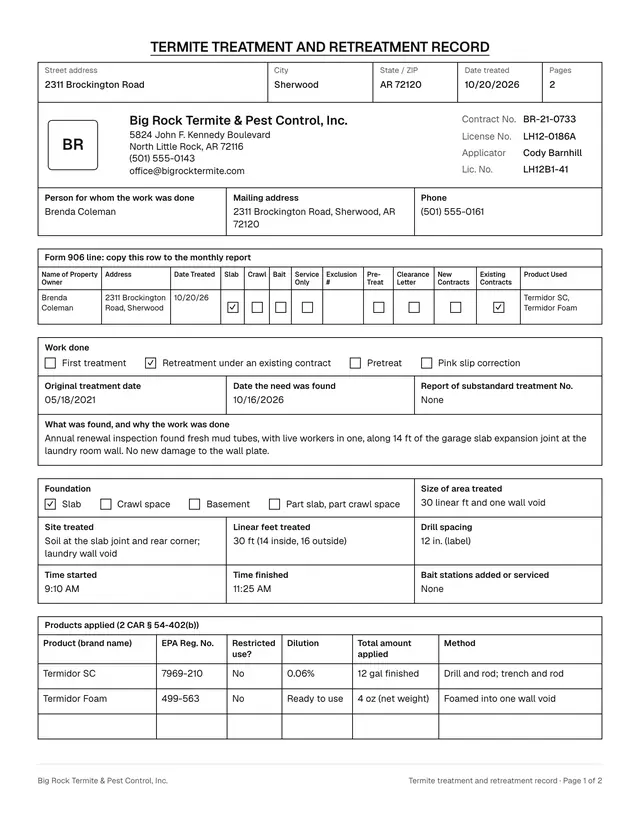
Termite treatment record templates- Arkansas
Termite Treatment and Retreatment Record
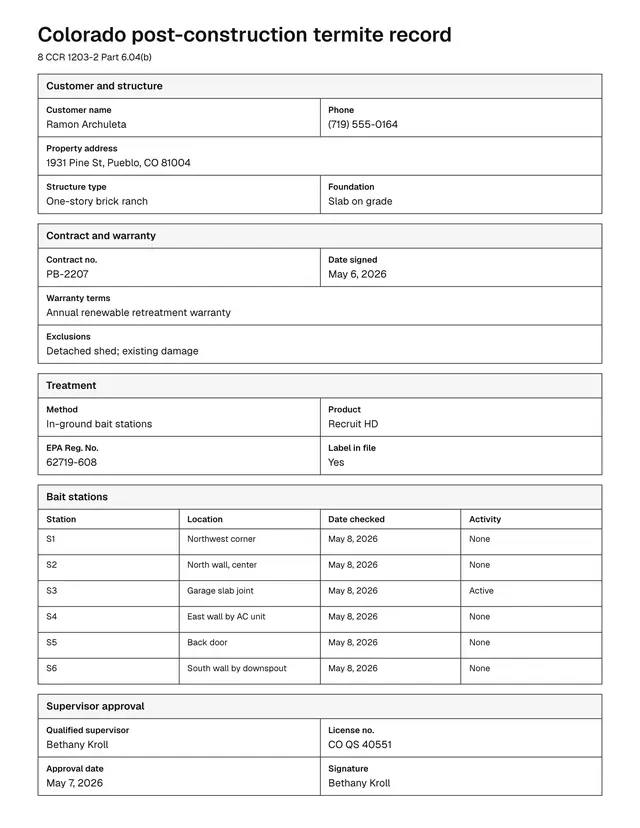
Record the termiticide, the amount, and the method for each job. - Colorado
Colorado post-construction termite treatment record (Part 6.04(b))
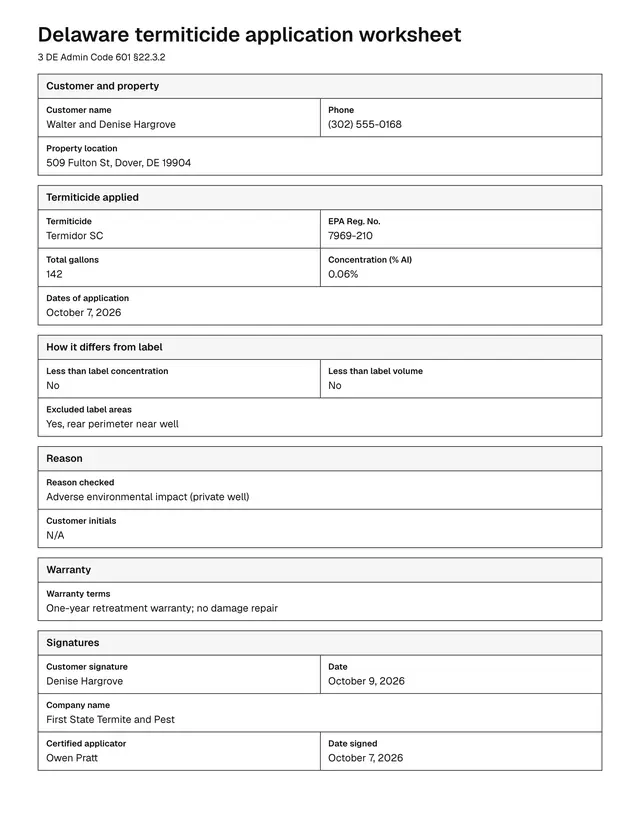
Record the termiticide, the amount, and the method for each job. - DelawareDocument # 65-01-06/01/09/02
Delaware Notice of Termiticide Application
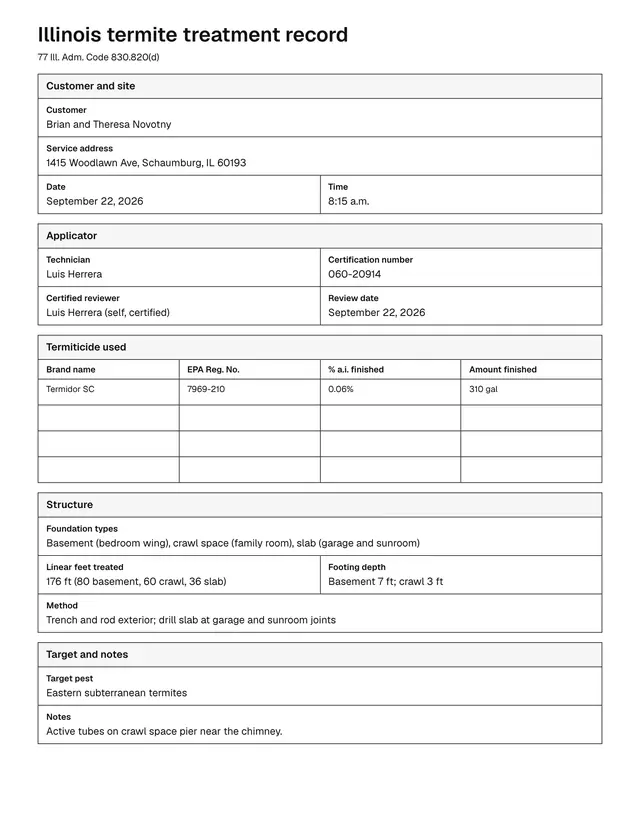
Record the termiticide, the amount, and the method for each job. - Illinois
Illinois termite treatment record and diagram
Record the termiticide, the amount, and the method for each job. - Indiana
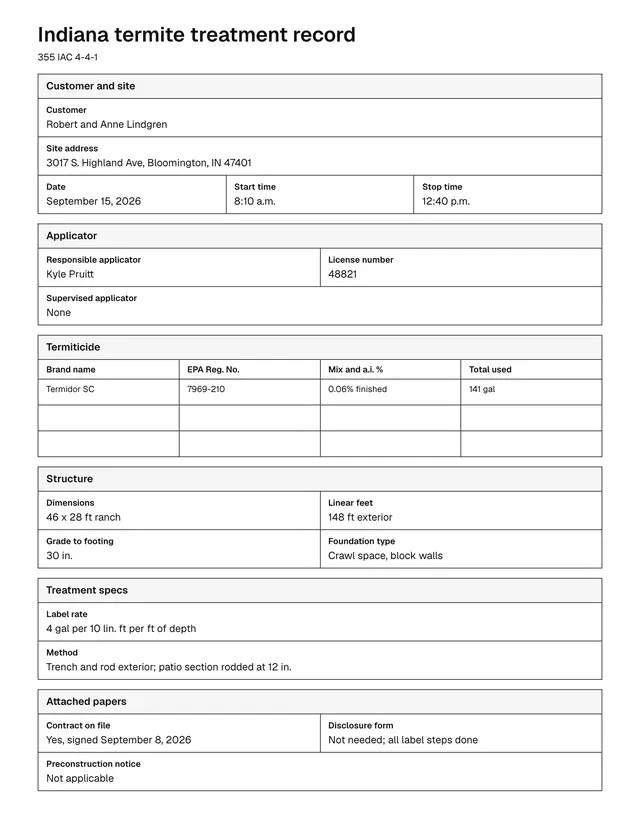
Indiana termite treatment record and graph
Record the termiticide, the amount, and the method for each job. - Kansas
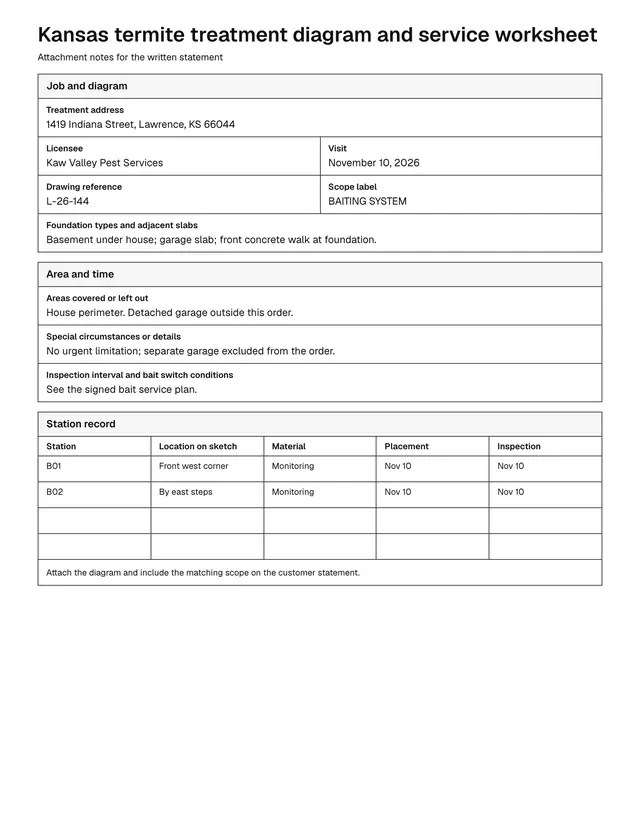
Kansas termite treatment diagram and service worksheet
Record the termiticide, the amount, and the method for each job. - Louisiana
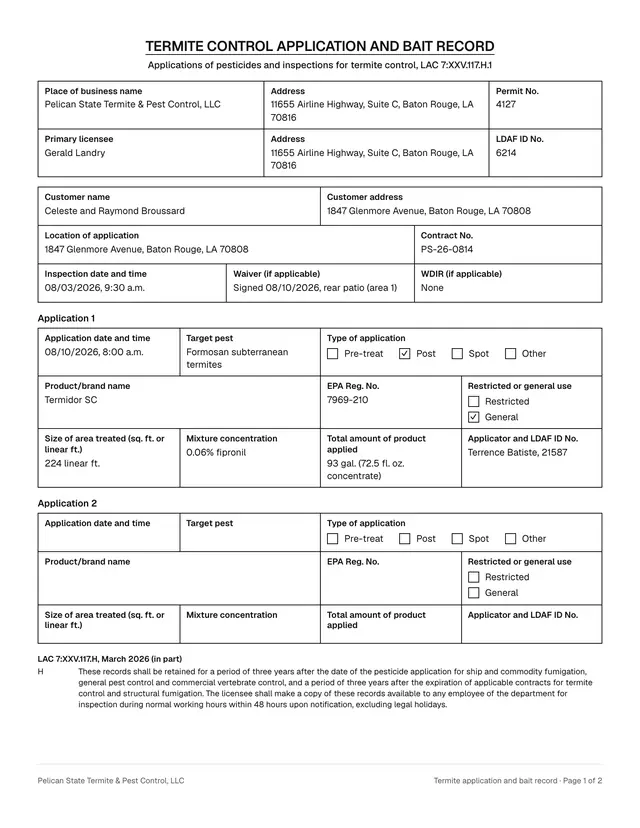
Termite Control Application and Bait Record
Record the termiticide, the amount, and the method for each job. - Maryland
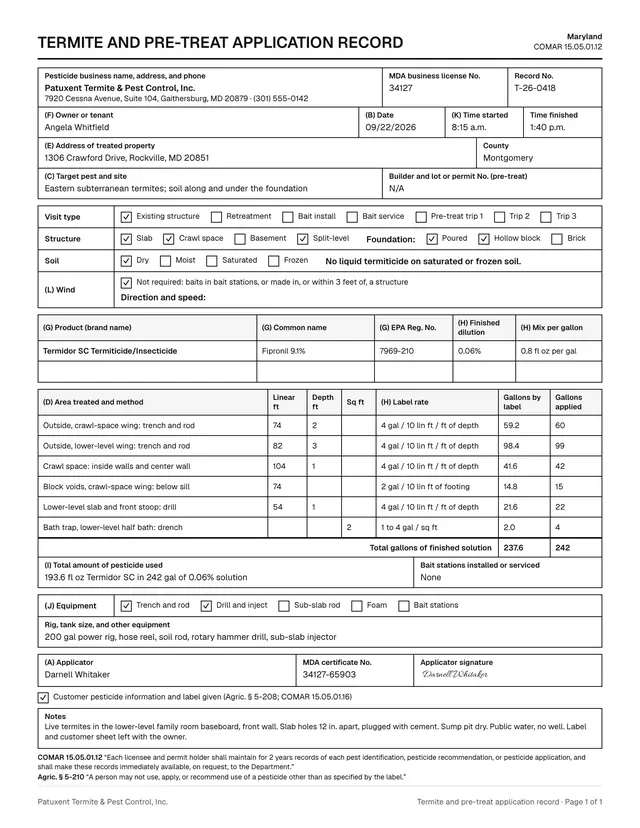
Termite and Pre-Treat Application Record
Record the termiticide, the amount, and the method for each job. - Mississippi
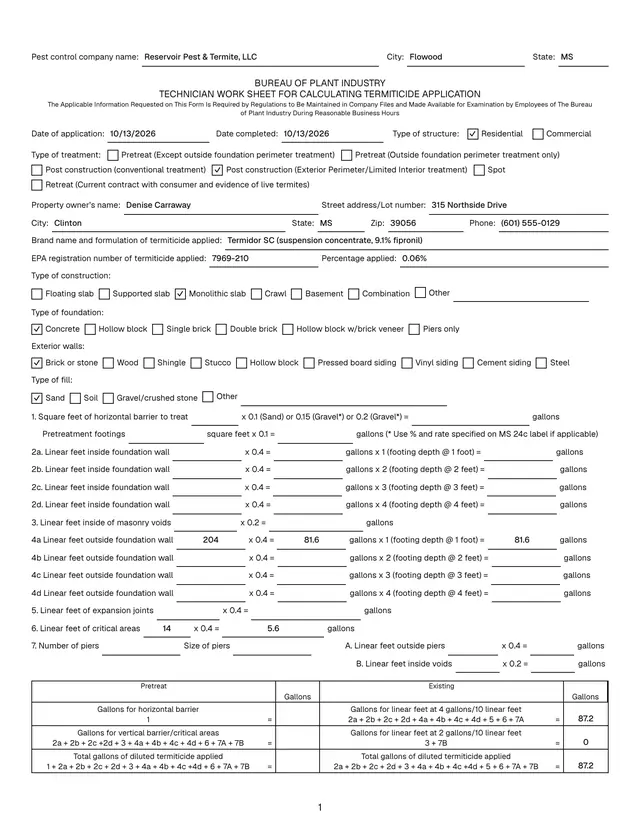
Technician Work Sheet for Calculating Termiticide Application
Record the termiticide, the amount, and the method for each job. - New Jersey
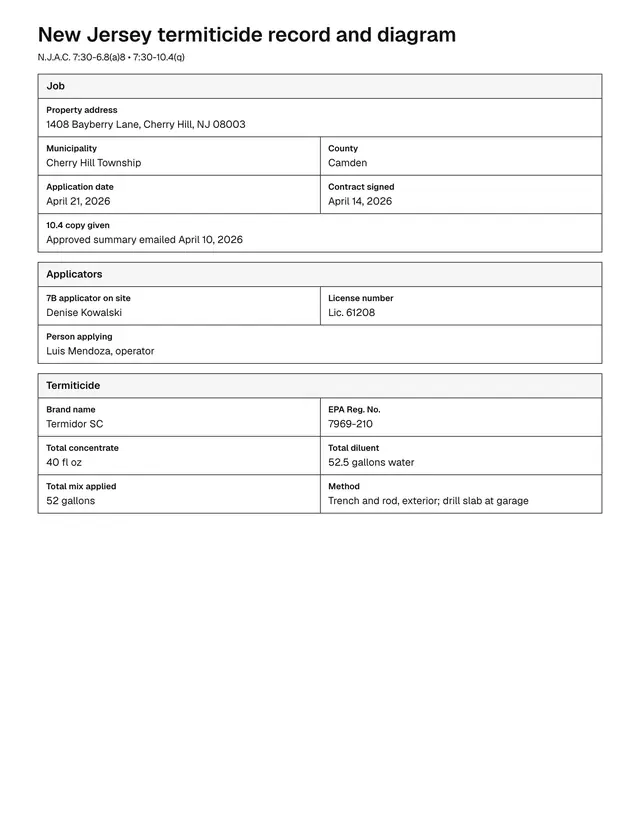
New Jersey termiticide record and diagram (N.J.A.C. 7:30-6.8 and 7:30-10.4)
Record the termiticide, the amount, and the method for each job. - Ohio
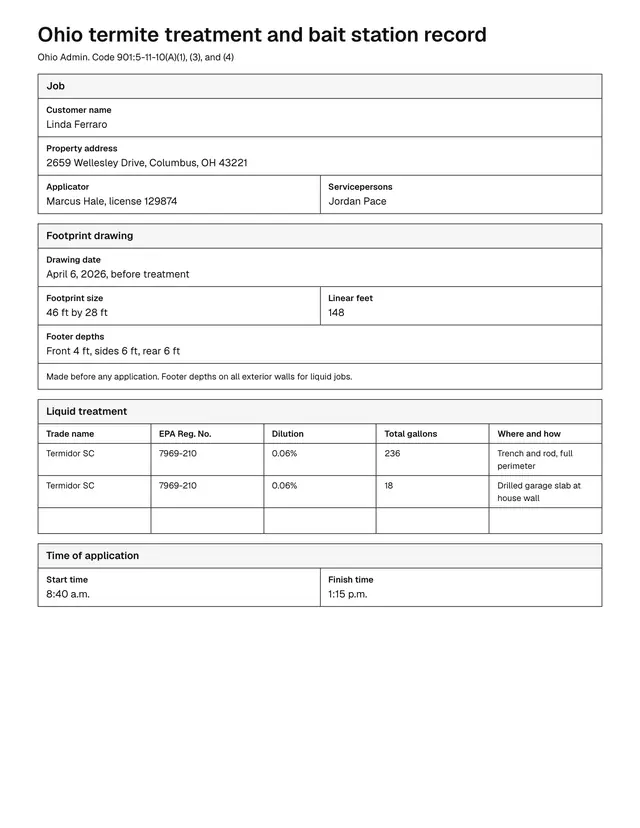
Ohio termite treatment and bait station record
Record the termiticide, the amount, and the method for each job. - Oklahoma
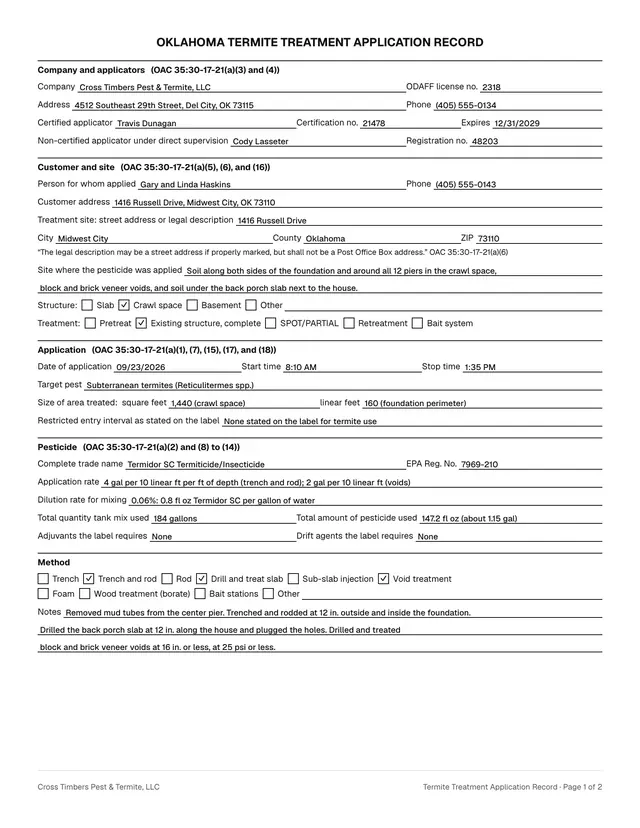
Oklahoma Termite Treatment Application Record
Record the termiticide, the amount, and the method for each job. - South Carolina
Record of Termiticide Use
Record the termiticide, the amount, and the method for each job.