Kentucky termite inspection report (NPMA-33)
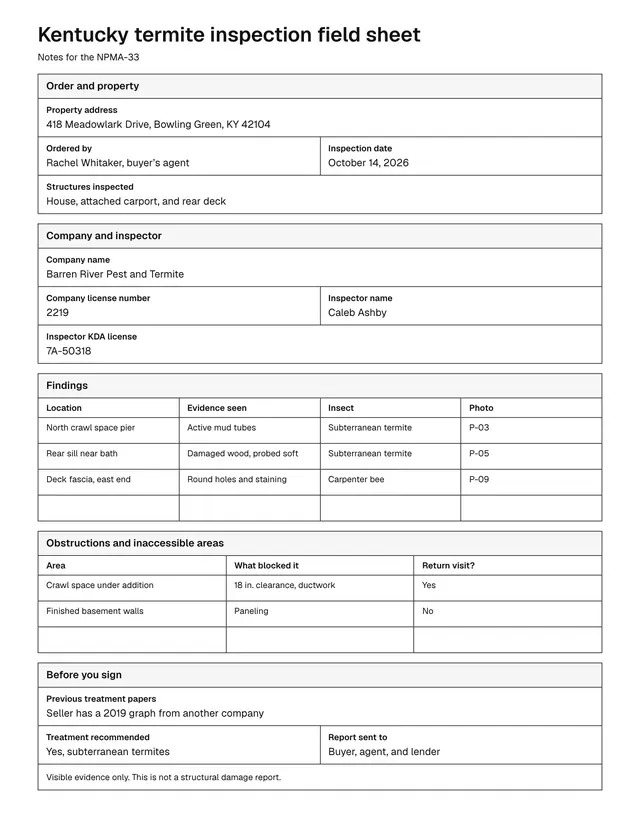
Kentucky has no state termite inspection form, so sales use the NPMA-33. This field sheet holds your crawl space notes, blocked areas, and license numbers until you sign it.
At a glance
- Form used
- NPMA-33
- State form
- None in 302 KAR 26
- License
- KDA Category 7A
- Covers
- Termites, carpenter ants, bees, beetles
Completed example
Download PDFIs there a Kentucky termite inspection form?
No. Kentucky’s structural pest rules in 302 KAR Chapter 26 cover licenses, records, storage, trucks, and treatments. None of them prints a form for a termite inspection at a home sale. So the report Kentucky lenders and agents ask for is the NPMA-33, the Wood Destroying Insect Inspection Report from the National Pest Management Association.
NPMA’s own guidelines for the NPMA-33 say the form “MUST be used” for HUD and VA loans and is “typically used” on regular sales too. They add that a state form wins only if a state requires one and bans the rest. Kentucky doesn’t, so the NPMA-33 is what you sign.
This field sheet doesn’t replace it. It’s the page you carry under the house, so the NPMA-33 you sign later matches what you really saw and where you couldn’t look.
Whose license number goes on it?
Two numbers. Section I of the NPMA-33 asks for the company’s pest control business license number, then the inspector’s own certification or license number from the state pesticide agency. In Kentucky, that agency is the Department of Agriculture (KDA).
KDA’s structural license page lists Category 7A “for General Pest and termite work.” The test is $25 and a pest control operator license is $100 a year. A registered trainee works under someone else’s license and has no number of their own to write, so the licensed inspector signs.
NPMA’s guidelines let you write “not required” on the company license line in states that don’t license the business. Kentucky isn’t one of them, so fill it in. A blank license line is one of the easiest ways to get a form sent back a day before closing.
What to write down in the crawl space
List every structure first. NPMA-33 findings only cover what’s “in, on or under the structure,” and attached decks count as part of it. A detached garage or barn is only in the report if the person ordering it says so. Write the list on the sheet before you go under.
Check for all four insect groups. The form covers termites, carpenter ants, carpenter bees, and reinfesting wood boring beetles. Eastern subterranean termites are the usual find in Kentucky. Mud tubes on block foundations, crawl space piers, and sill plates take up most of the visit, but don’t skip carpenter bee holes in porch fascia.
Log blocked areas with a reason. Low clearance, paneled basement walls, stored boxes, a sealed crawl door. Section IV of the NPMA-33 is “Obstructions & Inaccessible Areas,” and the guidelines admit “virtually every property” has some. Name the spot and what blocked it. Those notes protect you if damage turns up behind a finished wall next spring.
Don’t grade the damage. The guidelines say the inspector “is not a damage expert,” and the form says it’s “not a structural damage report.” Write where the damage is. If the buyer needs to know how bad it is, point them to a contractor or engineer in the comments.
Take photos as you go. Section V of the NPMA-33 lists photos and diagrams as attachments. A picture of the tubes on the pier, with a note of which pier, ends a lot of arguments between the buyer’s and seller’s agents.
How long is a Kentucky termite letter good for?
Kentucky doesn’t set a number. Nothing in 302 KAR 26 says when an NPMA-33 goes stale, so the lender or the sales contract decides. Ask the agent what date the report needs to be dated within before you book, not after.
If the buyer’s loan is HUD or VA, the guidelines say the NPMA-33 is the form to use, full stop. On a cash sale nobody has to use it, but most agents still ask for it because everyone knows how to read it.
What if you find live termites?
The NPMA-33 says to recommend treatment when you find live termites, or signs of them with no papers showing a past treatment. If the owner then hires your company, Kentucky adds a step. Under 302 KAR 26:090, at the time of a termite treatment “a graph shall be issued to the owner of the property.” That drawing has its own page: the Kentucky termite treatment graph.
Ask the seller for old treatment papers before you finish. Section V of the NPMA-33 is where you note “documentation of previous treatment,” photos, and diagrams. An old graph shows you where the last company trenched and drilled, which often explains the tubes you just found.
Noma specializes in the NPMA-33 Wood Destroying Insect Inspection Report for Kentucky homes (no state form under 302 KAR 26). Draw the crawl space diagram on the job and build the report on your phone, with your own sections for findings and the areas you couldn’t reach. See how Noma handles termite inspections.
Frequentlyaskedquestions
Send this document in minutes, not an afternoon.
Other states
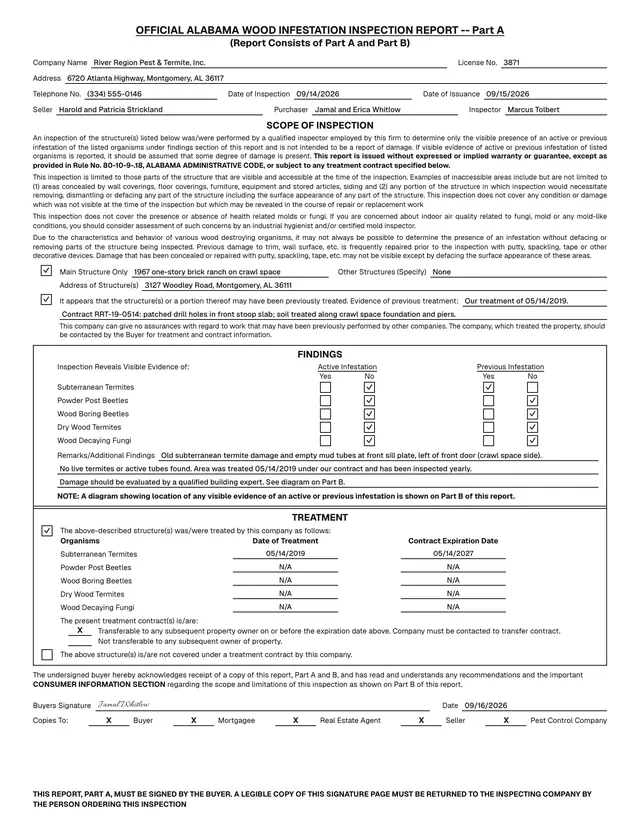
Inspection report templates- Alabama
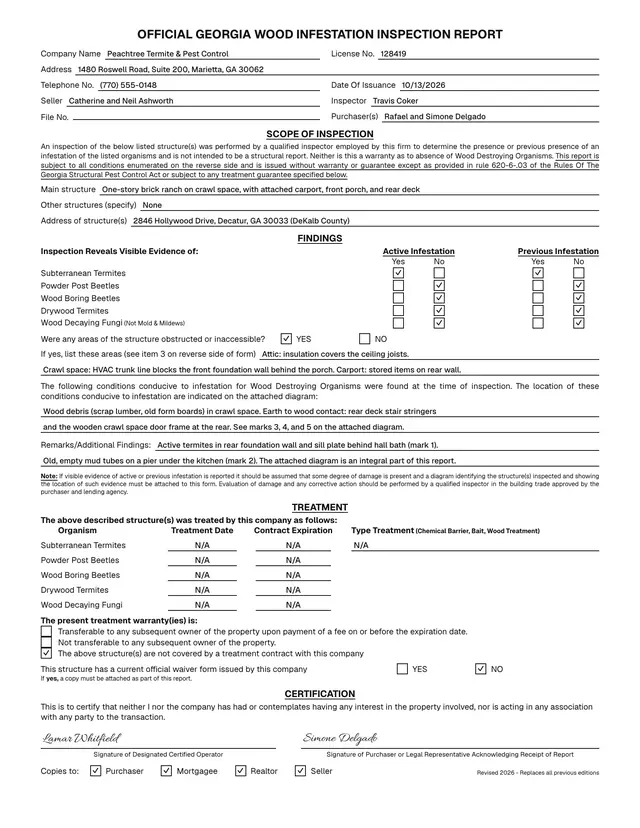
Official Alabama Wood Infestation Inspection Report
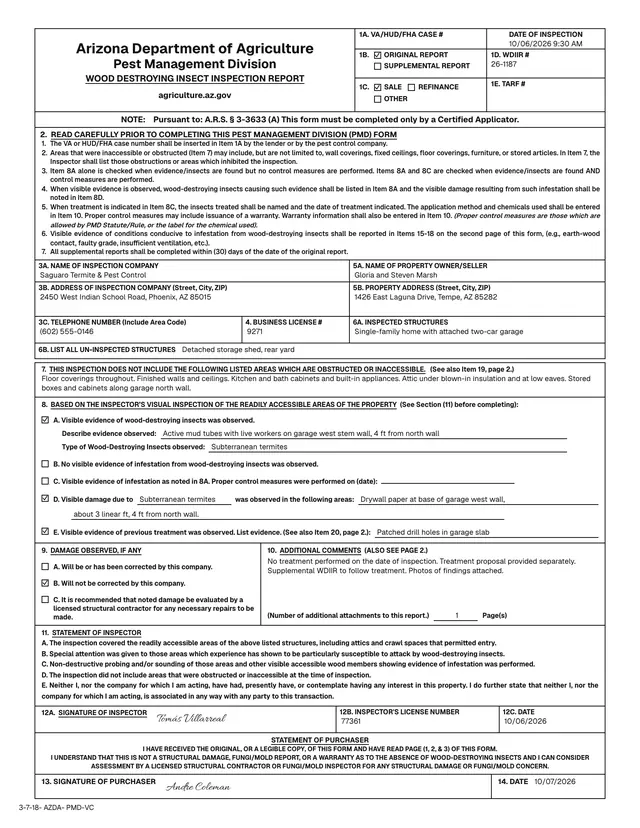
Record the termite findings from an inspection. - Arizona
Wood Destroying Insect Inspection Report
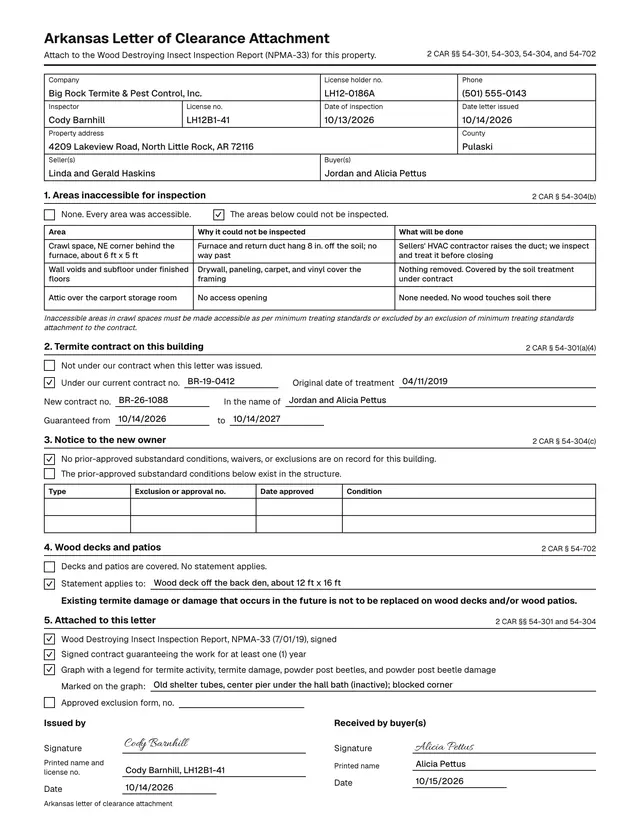
Record the termite findings from an inspection. - Arkansas
Arkansas Letter of Clearance Attachment
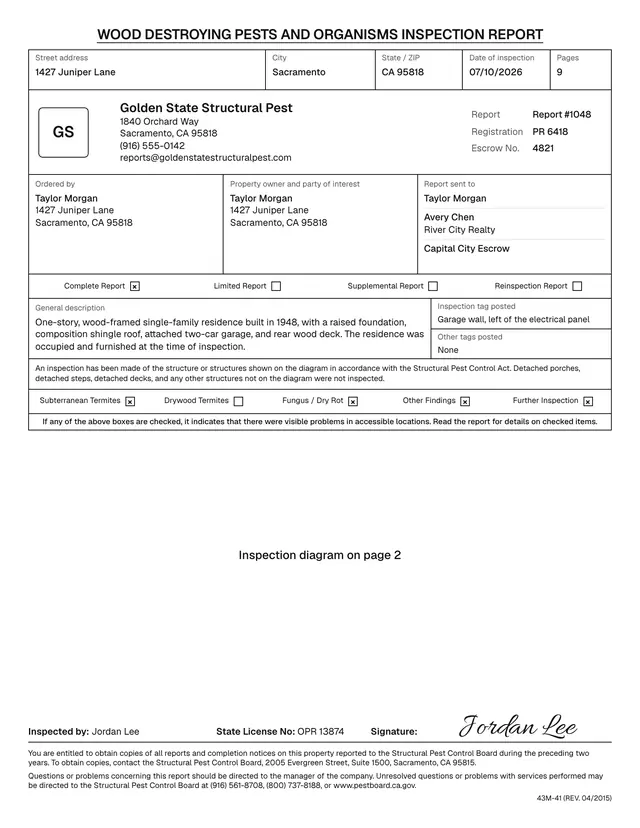
Record the termite findings from an inspection. - California43M-41
Wood Destroying Pests and Organisms Inspection Report
Record the termite findings from an inspection. - ColoradoNPMA-33
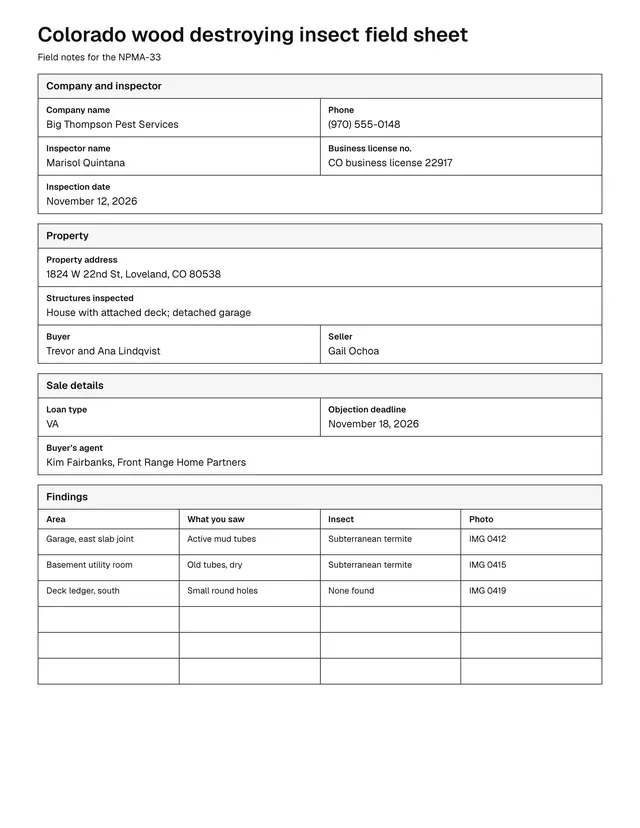
Colorado termite inspection report (NPMA-33)
Record the termite findings from an inspection. - Connecticut
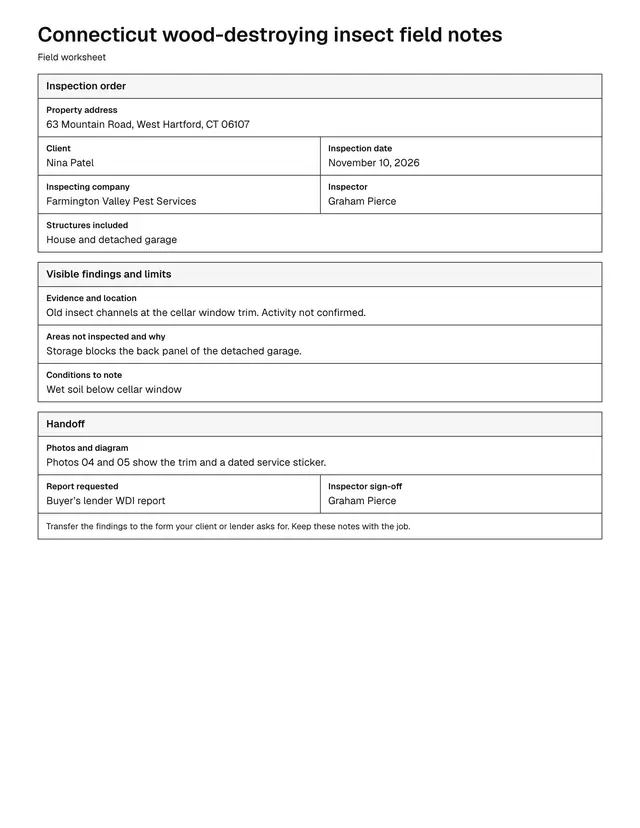
Connecticut wood-destroying insect field notes
Record the termite findings from an inspection. - DelawareNPMA-33
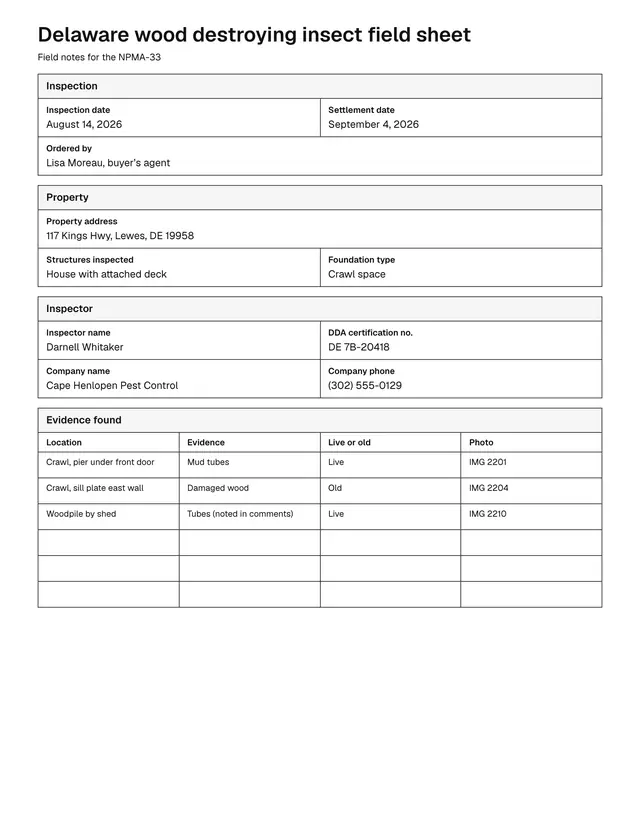
Delaware termite inspection report (NPMA-33)
Record the termite findings from an inspection. - FloridaFDACS-13645
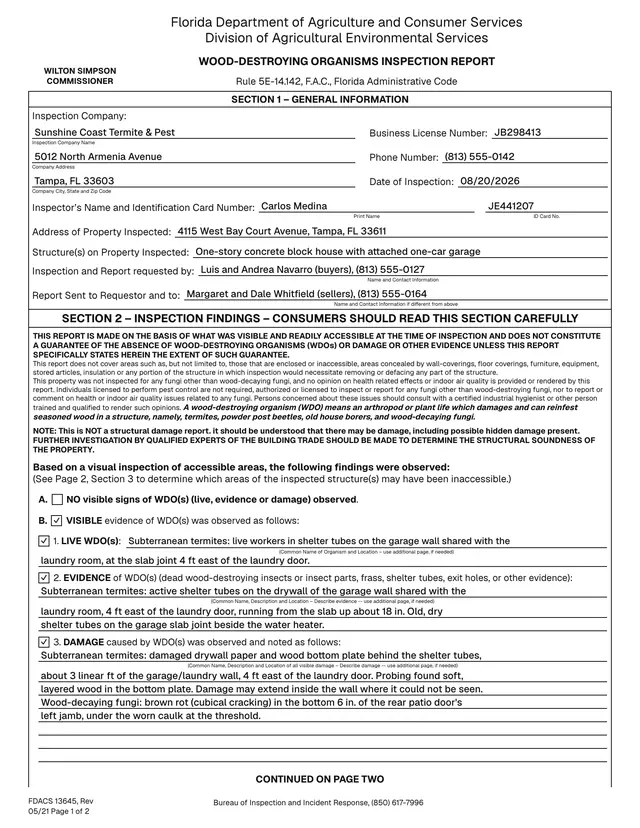
Wood-Destroying Organisms Inspection Report
Record the termite findings from an inspection. - Georgia
Official Georgia Wood Infestation Inspection Report
Record the termite findings from an inspection. - HawaiiPC-9
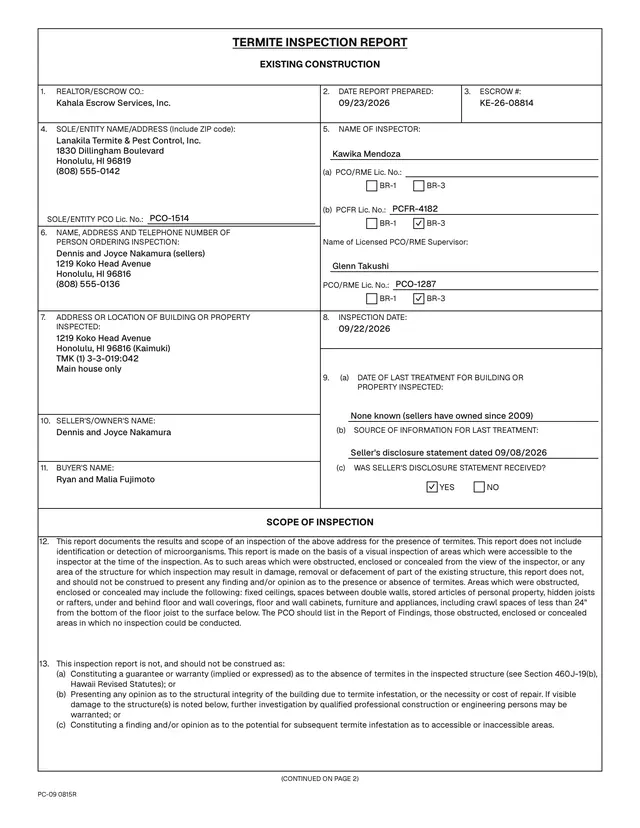
Termite Inspection Report, Existing Construction
Record the termite findings from an inspection. - IllinoisNPMA-33
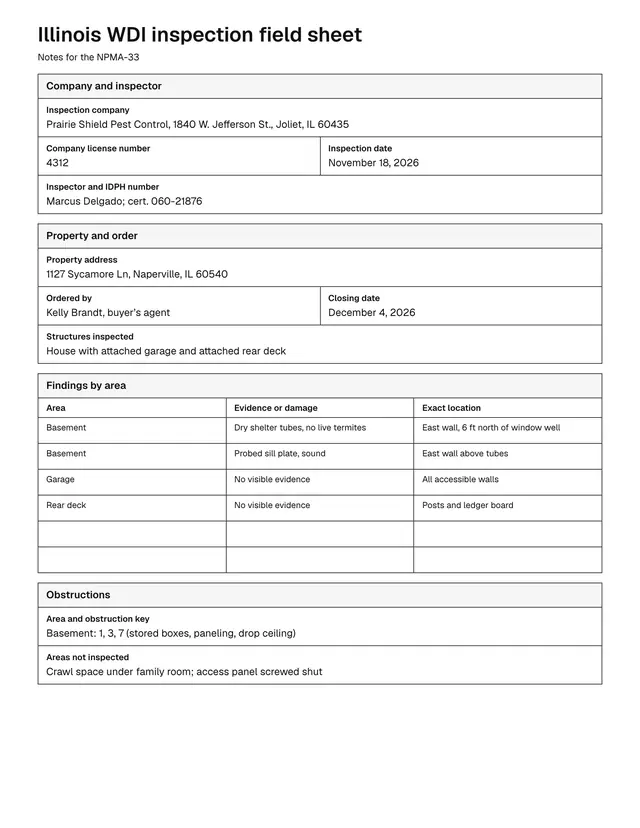
Illinois wood destroying insect inspection report (NPMA-33)
Record the termite findings from an inspection. - IndianaNPMA-33
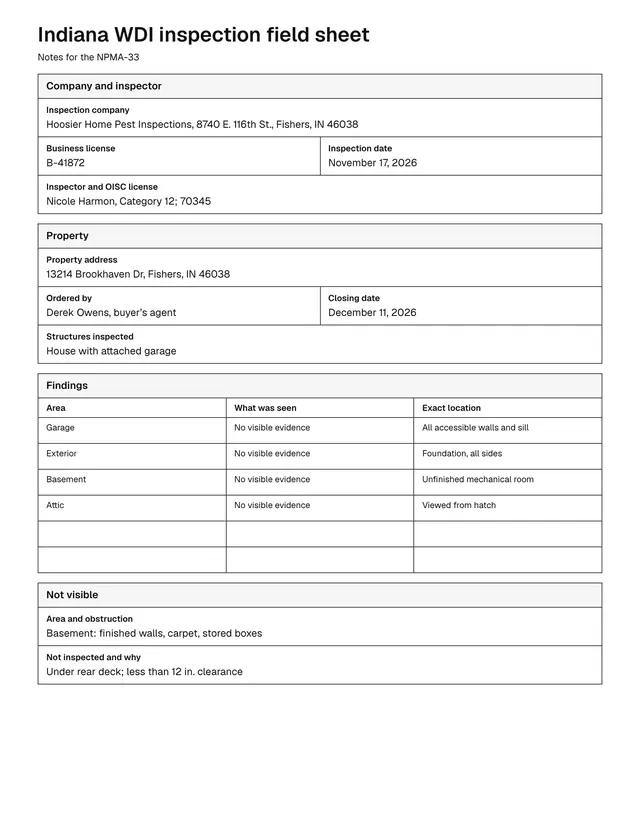
Indiana wood destroying insect inspection report (NPMA-33)
Record the termite findings from an inspection. - Iowa
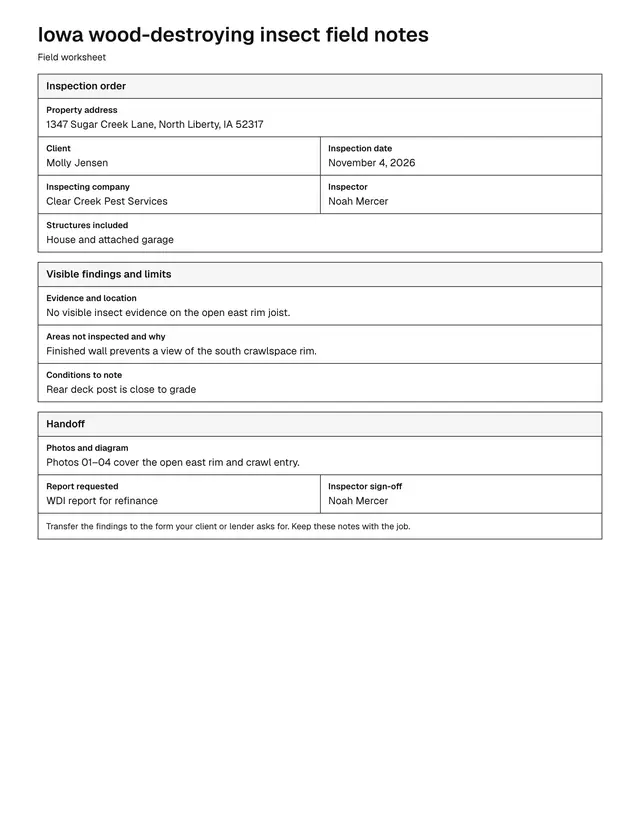
Iowa wood-destroying insect field notes
Record the termite findings from an inspection. - Kansas
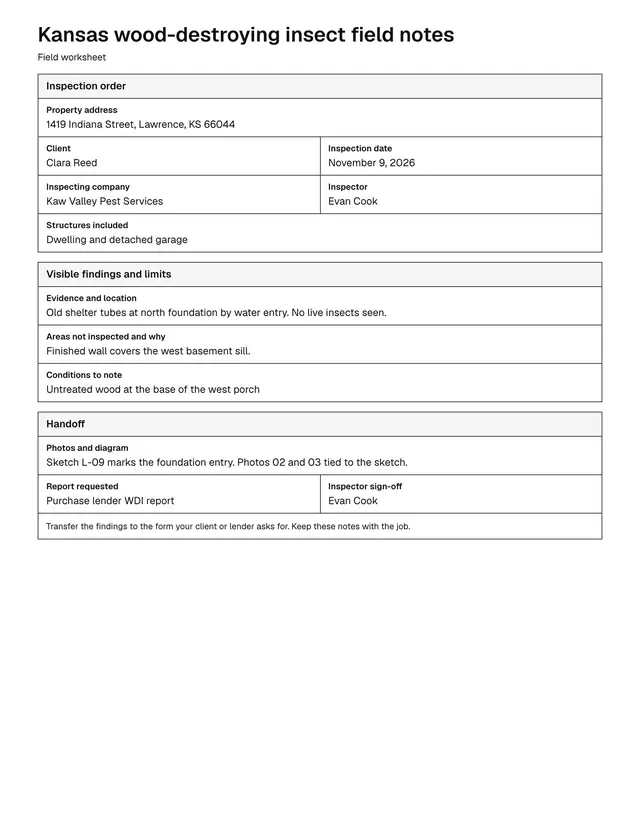
Kansas wood-destroying insect field notes
Record the termite findings from an inspection. - MarylandMD-1
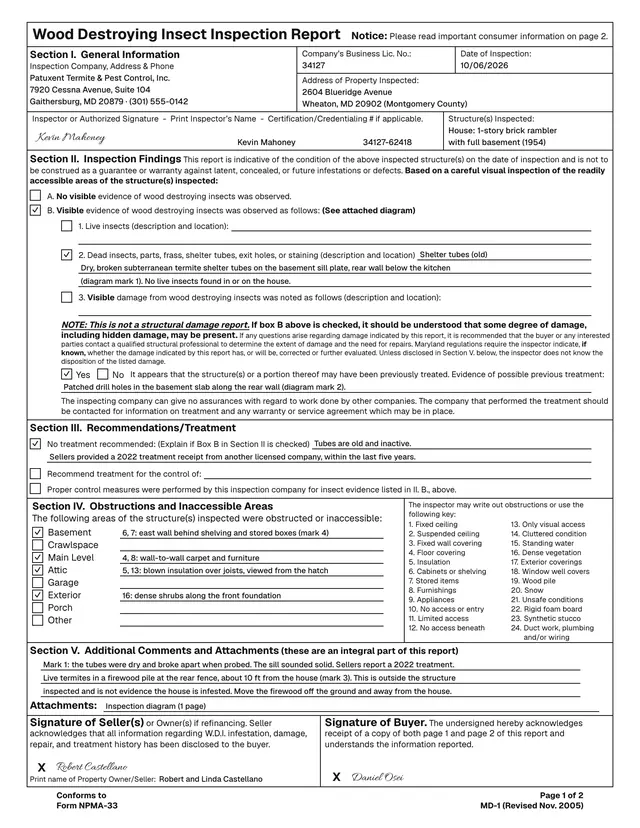
Wood Destroying Insect Inspection Report
Record the termite findings from an inspection. - Massachusetts
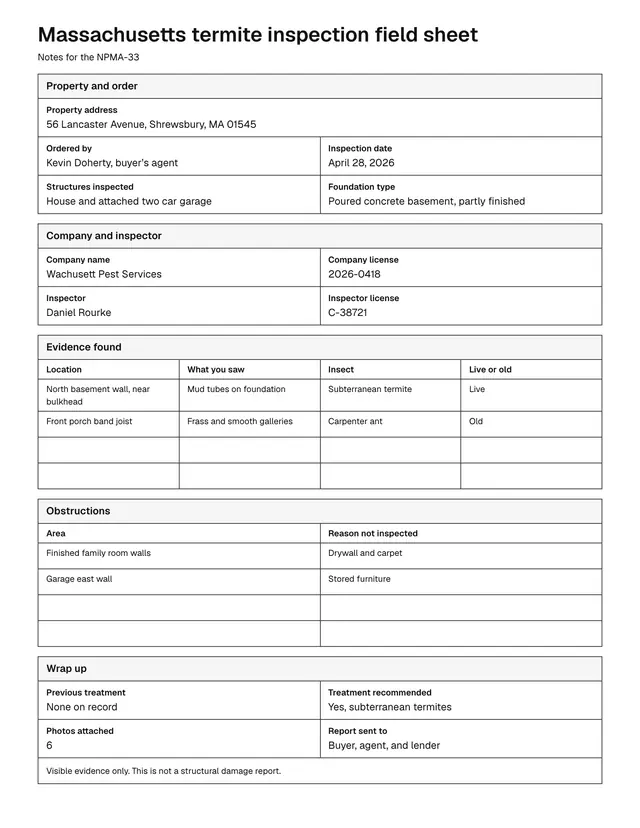
Massachusetts termite inspection report (NPMA-33)
Record the termite findings from an inspection. - MichiganNPMA-33
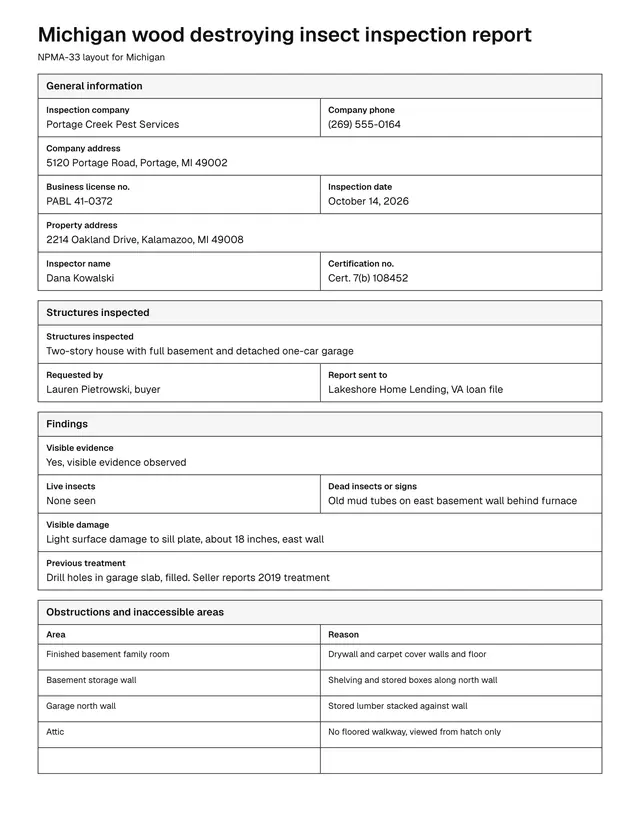
Michigan wood-destroying insect inspection report (NPMA-33)
Record the termite findings from an inspection. - Mississippi
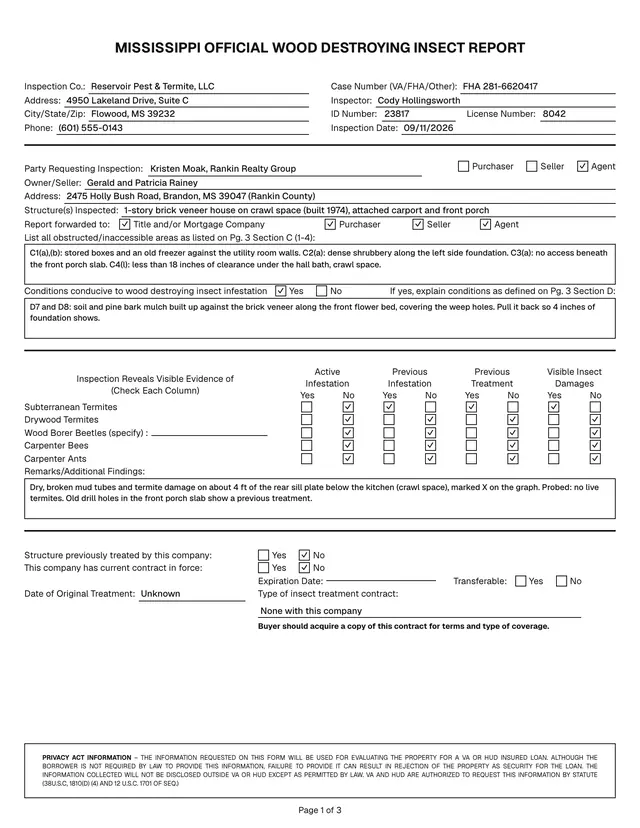
Mississippi Official Wood Destroying Insect Report
Record the termite findings from an inspection. - MissouriNPMA-33
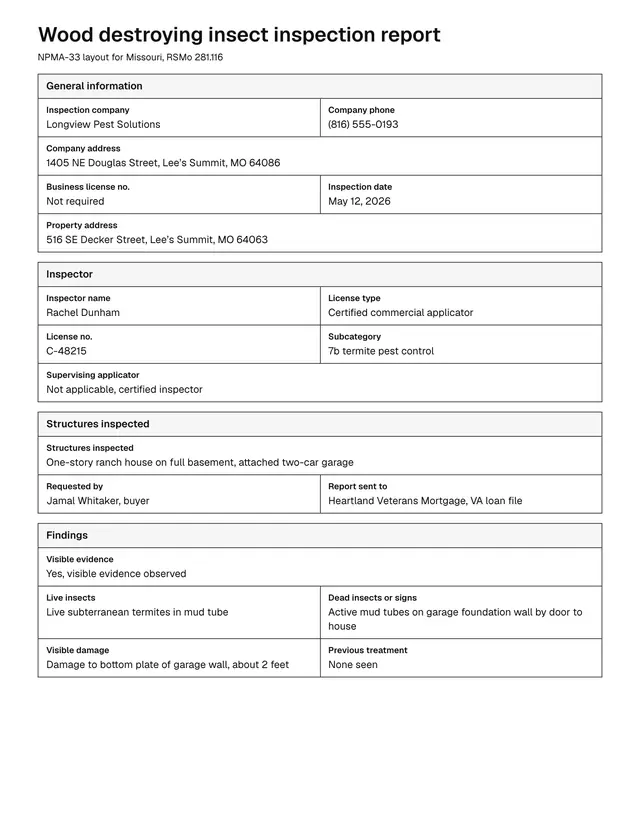
Missouri wood-destroying insect inspection report (NPMA-33)
Record the termite findings from an inspection. - Nevada
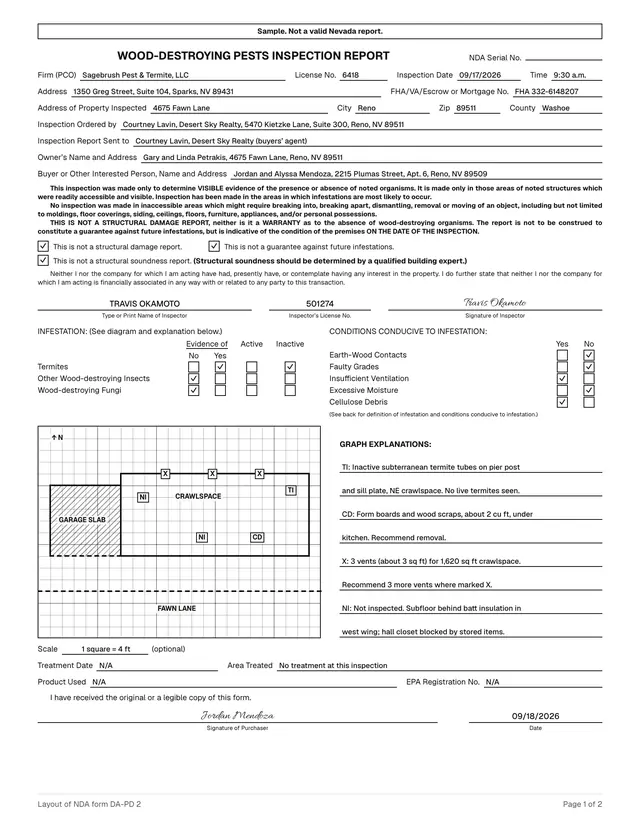
Wood-Destroying Pests Inspection Report
Record the termite findings from an inspection. - New Jersey
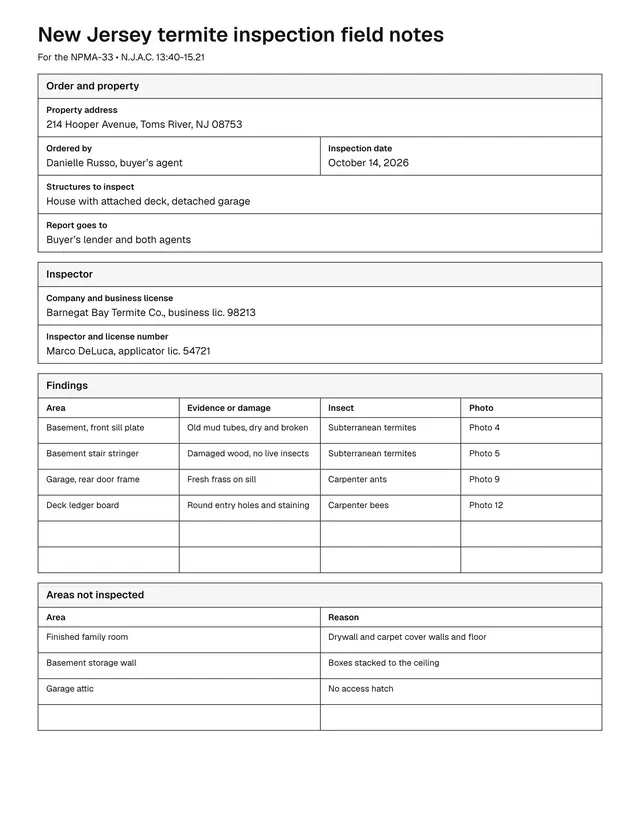
New Jersey termite inspection report (NPMA-33 field notes)
Record the termite findings from an inspection. - New Mexico
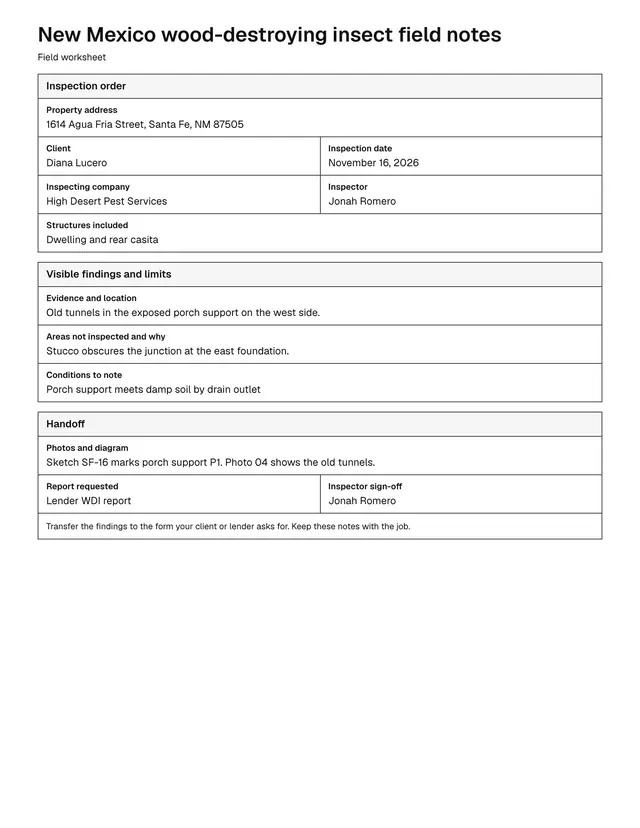
New Mexico wood-destroying insect field notes
Record the termite findings from an inspection. - New York
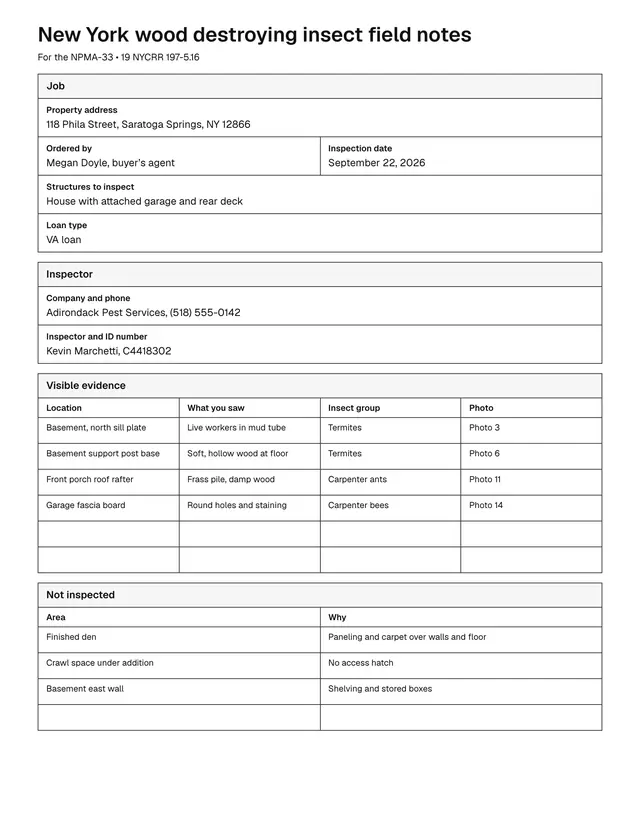
New York wood destroying insect inspection notes (NPMA-33)
Record the termite findings from an inspection. - North CarolinaWDIR 100
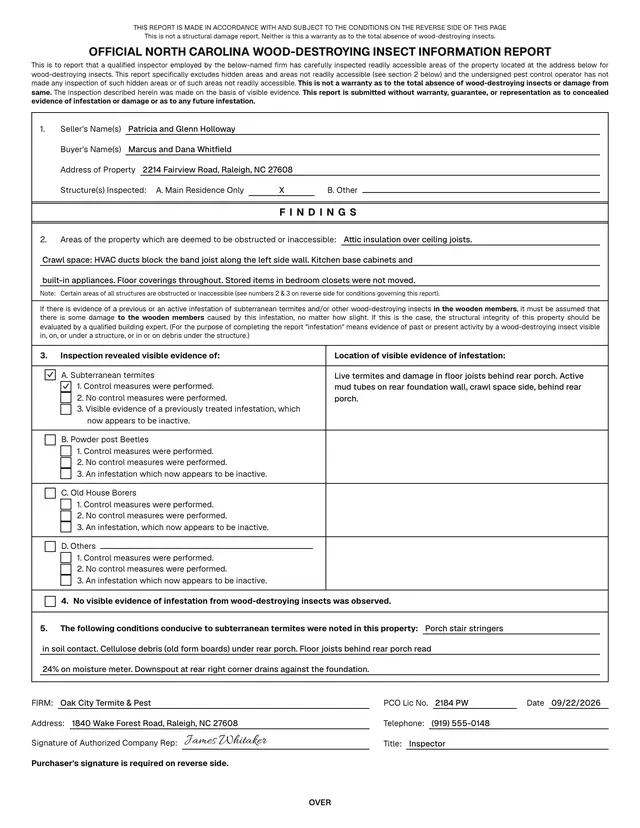
Official North Carolina Wood-Destroying Insect Information Report
Record the termite findings from an inspection. - OhioNPMA-33
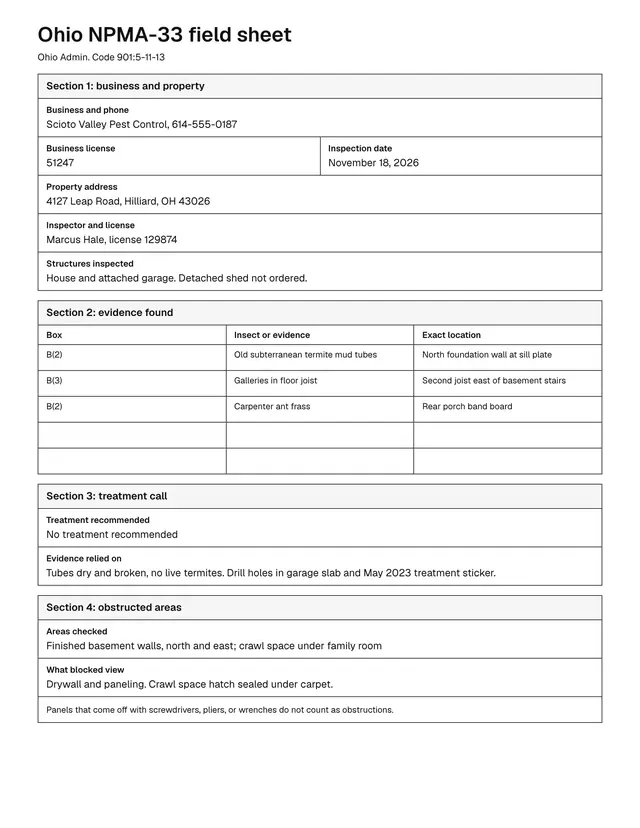
Ohio NPMA-33 wood-destroying insect inspection report
Record the termite findings from an inspection. - OklahomaForm ODAFF-1
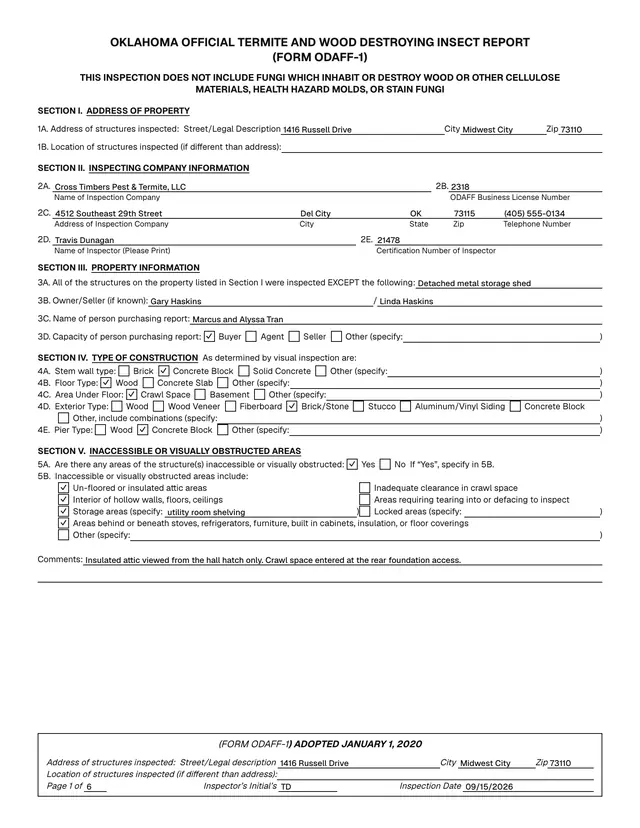
Oklahoma Official Termite and Wood Destroying Insect Report
Record the termite findings from an inspection. - Oregon
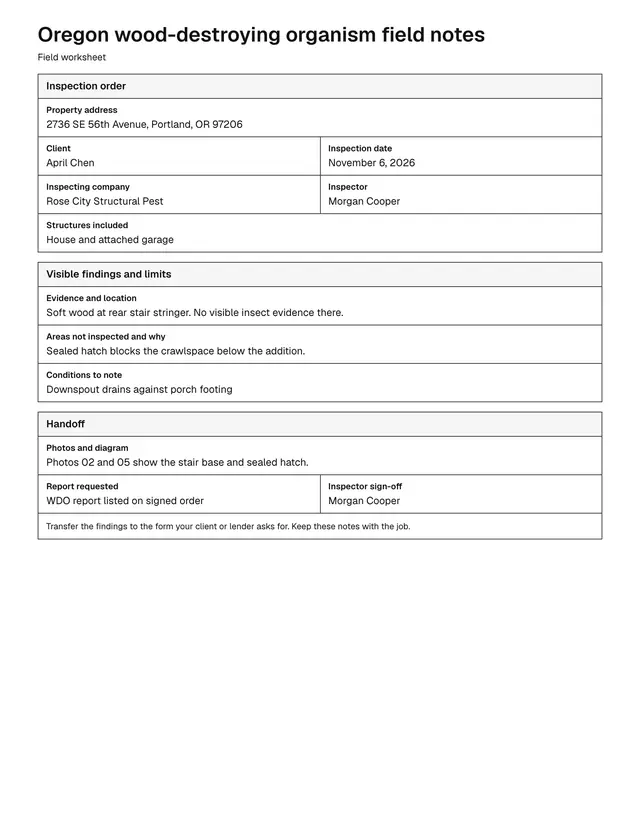
Oregon wood-destroying organism field notes
Record the termite findings from an inspection. - PennsylvaniaNPMA-33
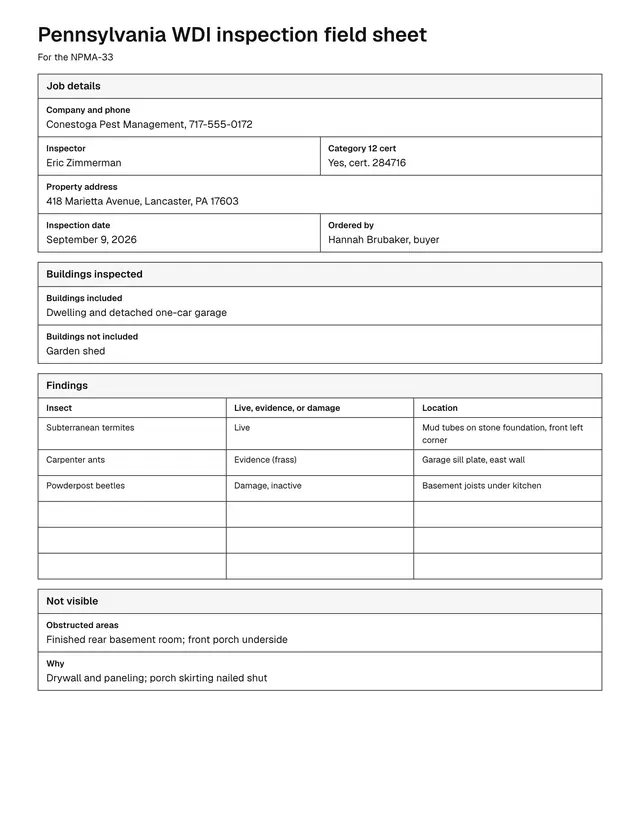
Pennsylvania wood-destroying insect inspection report (NPMA-33)
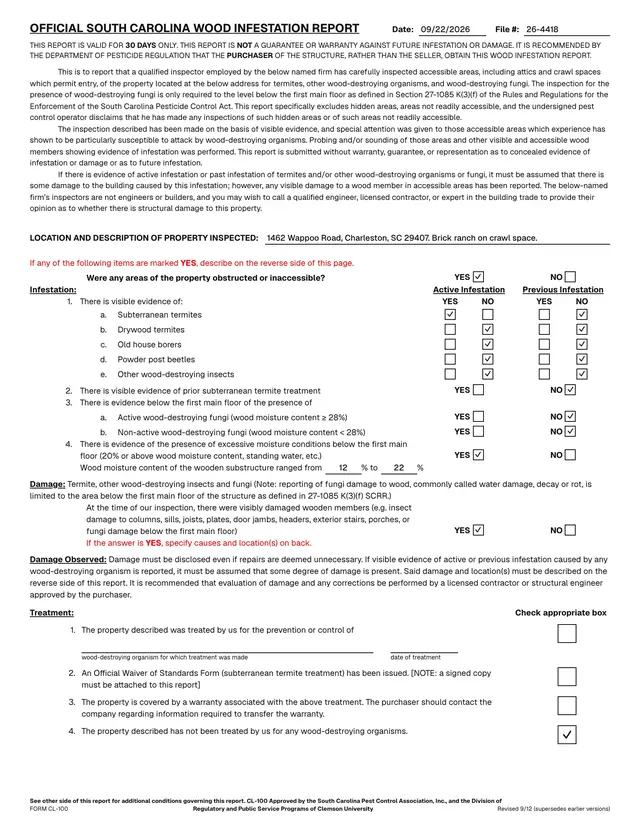
Record the termite findings from an inspection. - South CarolinaCL-100
Official South Carolina Wood Infestation Report
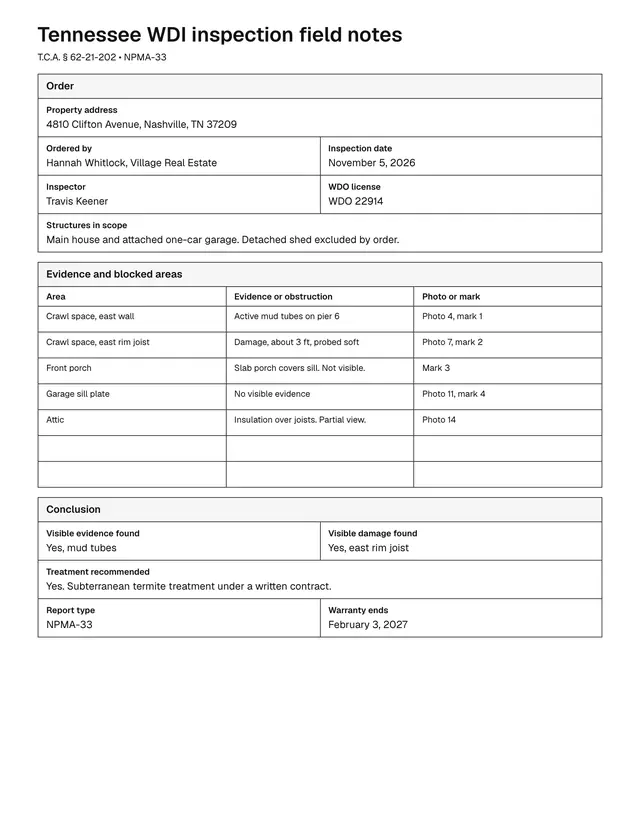
Record the termite findings from an inspection. - Tennessee
Tennessee wood destroying insect infestation inspection report
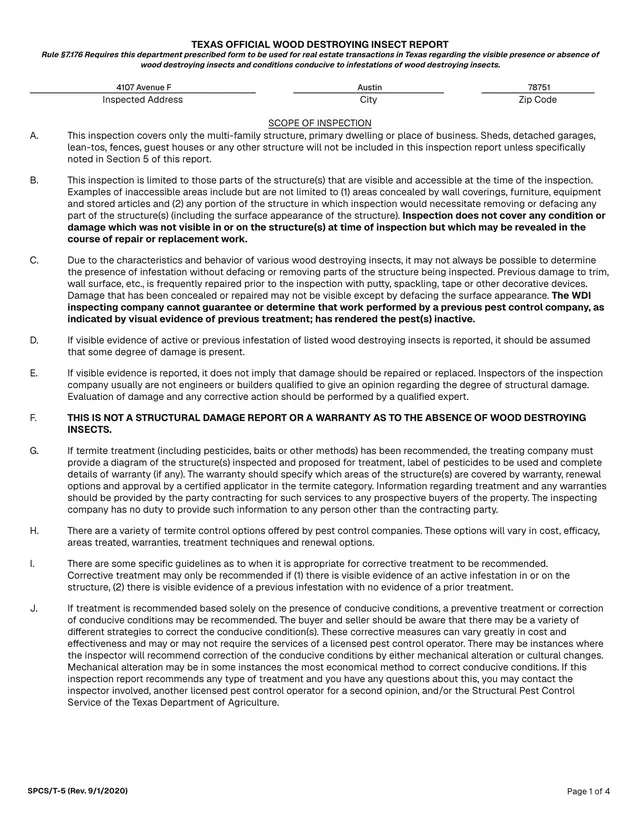
Record the termite findings from an inspection. - TexasSPCS/T-5
Texas Official Wood Destroying Insect Report
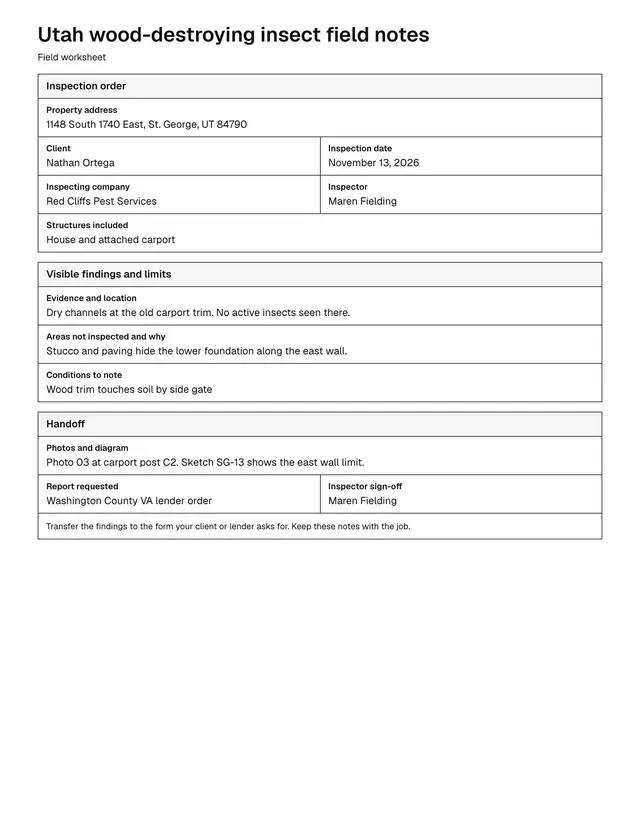
Record the termite findings from an inspection. - Utah
Utah wood-destroying insect field notes
Record the termite findings from an inspection. - Virginia
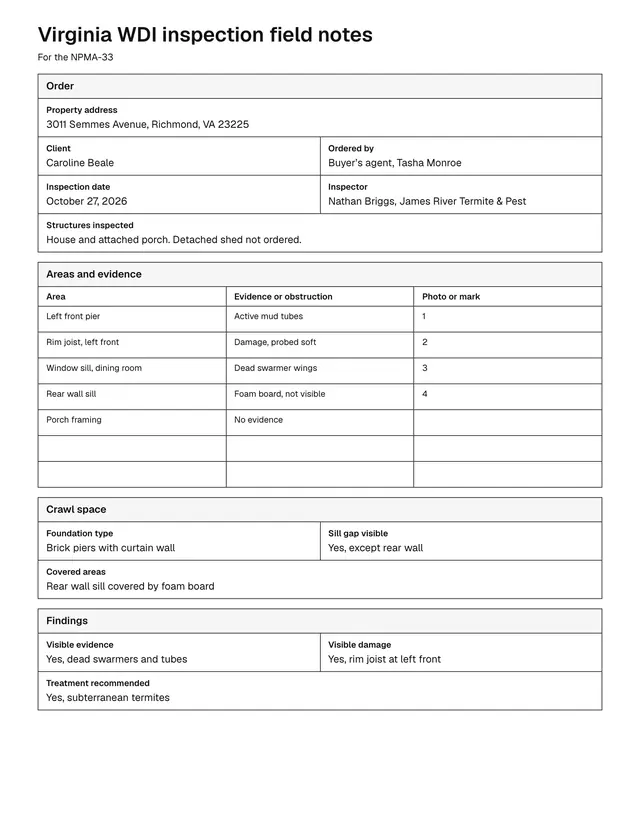
Virginia wood destroying insect inspection report
Record the termite findings from an inspection. - Washington
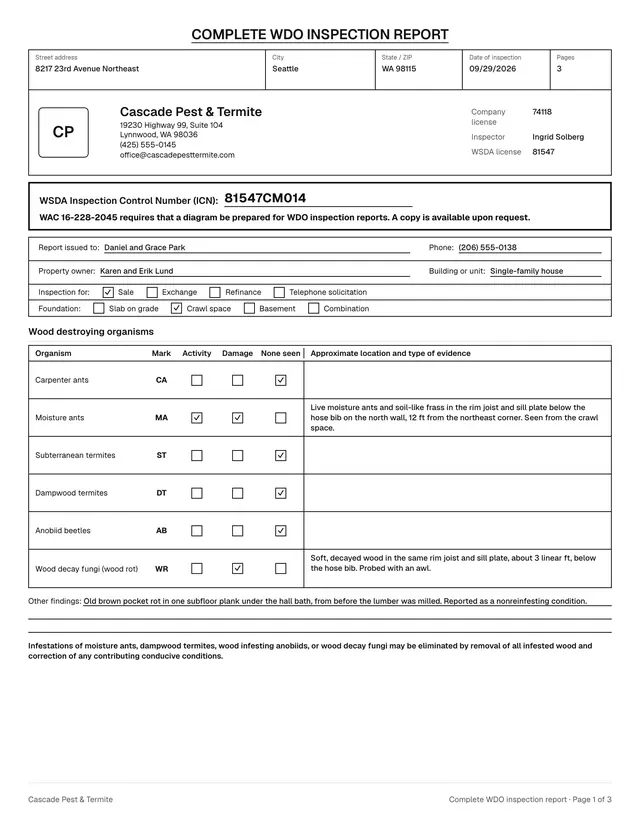
Complete WDO Inspection Report
Record the termite findings from an inspection. - Wisconsin
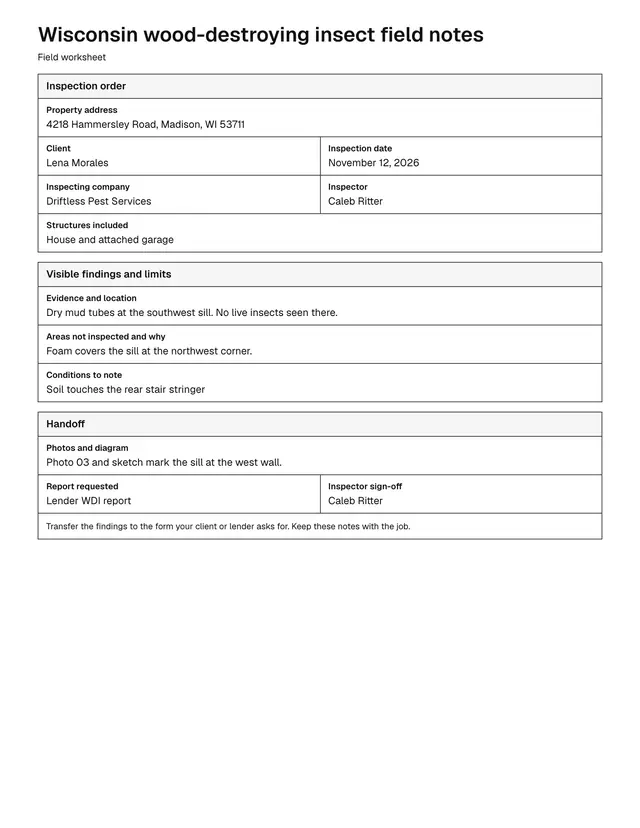
Wisconsin wood-destroying insect field notes
Record the termite findings from an inspection.