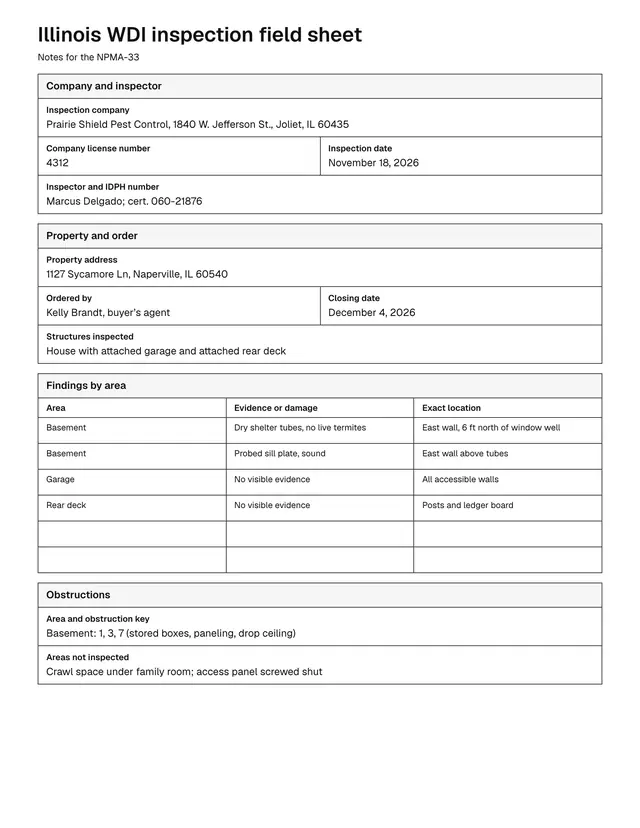
Illinois wood destroying insect inspection report (NPMA-33)
Illinois has no state termite inspection form, so home sales here run on the NPMA-33. Use this field sheet to log what you saw and what you couldn’t reach before you sign the real report.
At a glance
- Form
- NPMA-33 (national)
- State form
- None in Illinois
- Regulator
- Illinois Department of Public Health
- Signed by
- Inspector, then buyer and seller at closing
Completed example
Download PDFWhy Illinois closings use the NPMA-33
Some states print their own termite report. Illinois doesn’t. Read through the Structural Pest Control Code and you’ll find rules for records, pesticide storage, service trucks, and school pest programs. You won’t find a section on how to write up a termite inspection.
So the closing table falls back on the national form. NPMA’s own guidelines for the NPMA-33 say the form “MUST be used” for any HUD or VA guaranteed sale, and that it’s “typically used” for conventional loans too. If a state required its own form, that form would win. Illinois has no such rule, so the NPMA-33 is what the lender expects.
Buyers sometimes think the home inspection already covered this. It didn’t, at least not the same way. Illinois home inspectors only have to report “any infestation that significantly impacts the structure” under 68 Ill. Adm. Code 1410.200(g). That line in a home inspection report is a heads up, not a termite letter.
Illinois does regulate the people. IDPH certifies pest control technicians and licenses about 750 business locations. Technician certifications renew every three years and business licenses every year, both by December 1. The NPMA-33 asks for both numbers, so have them handy.
What counts as evidence on the form
For this report, wood destroying insects means termites, carpenter ants, carpenter bees, and reinfesting wood boring beetles. In northern Illinois that’s mostly eastern subterranean termites in older basements and carpenter ants in wet sill plates. Downstate, add powderpost beetles in old barns turned into garages.
Section II has two boxes. Check A only when there’s “absolutely no visible evidence (past or present).” A single old mud tube in a corner of a Peoria basement means B, even if it’s been dry for 20 years. Once you check B, you have to check at least one of the three reasons: live insects, dead insects or other signs (frass, tubes, exit holes, staining), or visible damage.
Damage is not a judgment call about strength. NPMA tells inspectors to probe and sound the wood they can reach, but not to sort damage into structural or cosmetic. The form itself says “this is not a structural damage report.” If you also sell damage evaluation or repair, that’s a separate contract you attach and list in Section V.
Carpenter bees are easy to miss in the summer rush. Look for round holes on the underside of fascia boards, deck rails, and pergolas. An empty hole with old frass below it still counts as evidence, even if the bees are long gone.
Filling out this sheet on site
Start with the order. Write down every structure the buyer or agent asked you to inspect, like “house and detached garage.” Attached decks count as part of the house. Mulch beds, stumps, woodpiles, and landscape timbers don’t go in the findings. Put anything you see there in the comments.
Log each area as you go. Use the findings table for each spot, with what you saw and exactly where. “Shelter tubes, east foundation wall, 6 ft north of the window well” helps the next person. “Basement” doesn’t.
Name what blocked you. Section IV of the NPMA-33 has a key for common obstructions. Storage against the walls, paneling, and a drop ceiling in a basement would read “1, 3, 7.” Write it on the sheet now, while you can still see it.
Ask for treatment papers before you leave. NPMA says to recommend treatment when you see signs of subterranean termites and there’s no proof of a past treatment by a licensed company. If the seller has a service agreement, write the company and the end date. Illinois pest companies have to keep a termite treatment record and diagram, so that’s usually what they hand you.
Check the header last. Section I needs the company’s license number, the inspection date, the full property address, and your IDPH certification number next to your signature.
What if the closing is in three days?
Termite letters are almost always last minute. The agent books on Monday, the closing is Thursday, and the seller’s old treatment papers turn up Wednesday night. Don’t rewrite a signed report to fit them. NPMA’s advice is to tell the parties to give those papers to the lender.
You also don’t have to chase signatures. The buyer and seller sign at closing, usually with the agent or title company there. Your job ends once the inspector’s signature is on the report and it’s in the right inbox.
Noma specializes in the Illinois wood destroying insect inspection report (NPMA-33). Agents book the visit online, you work the job from your phone and draw the diagram on site, and the invoice goes out with an online payment link. See how Noma runs termite inspections.
Frequentlyaskedquestions
Send this document in minutes, not an afternoon.
Other states
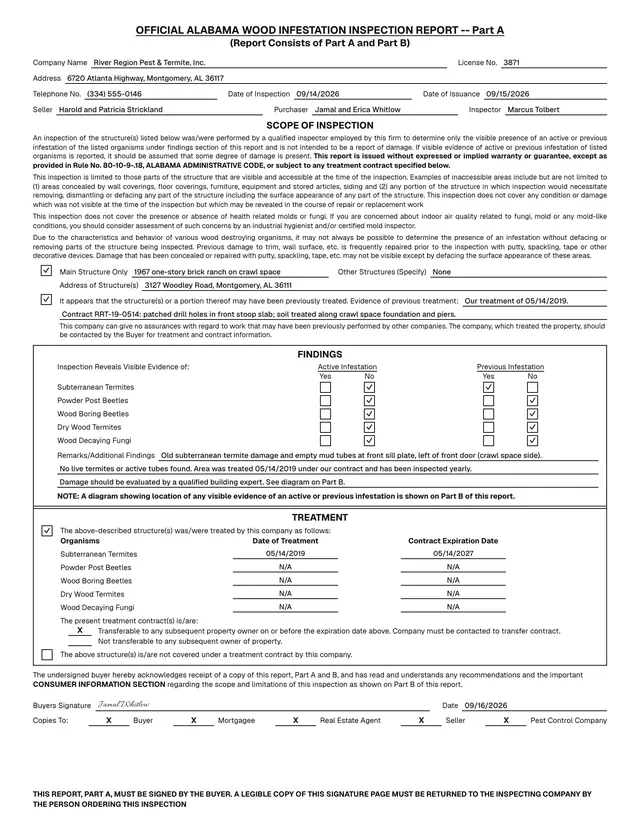
Inspection report templates- Alabama
Official Alabama Wood Infestation Inspection Report
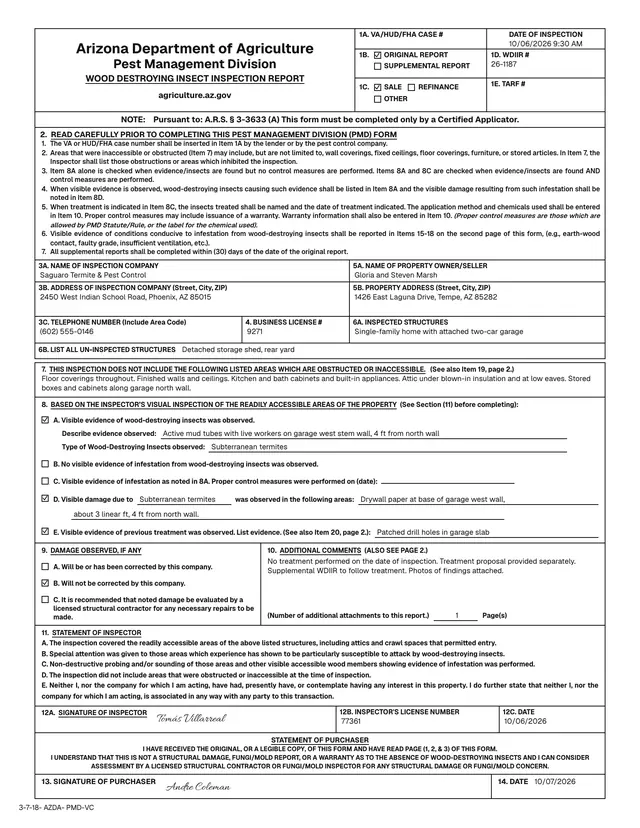
Record the termite findings from an inspection. - Arizona
Wood Destroying Insect Inspection Report
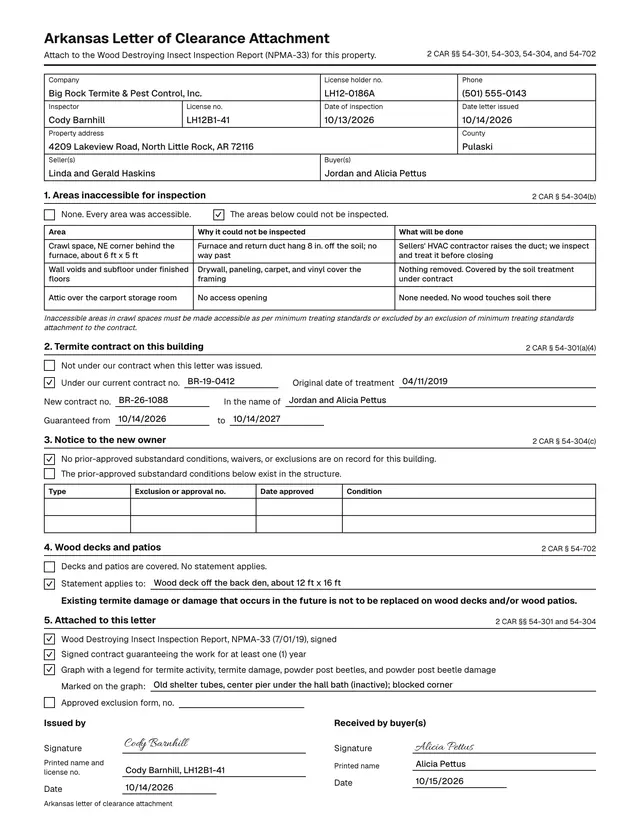
Record the termite findings from an inspection. - Arkansas
Arkansas Letter of Clearance Attachment
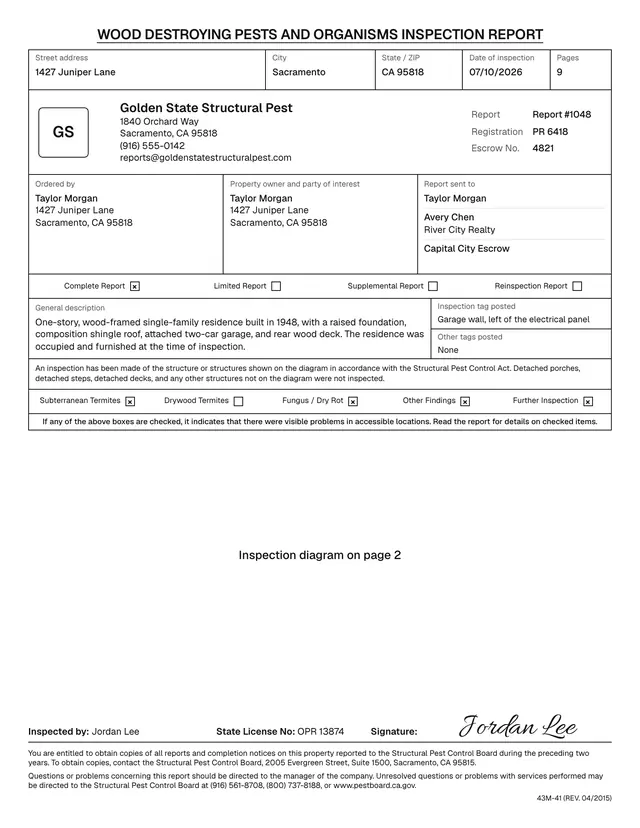
Record the termite findings from an inspection. - California43M-41
Wood Destroying Pests and Organisms Inspection Report
Record the termite findings from an inspection. - ColoradoNPMA-33
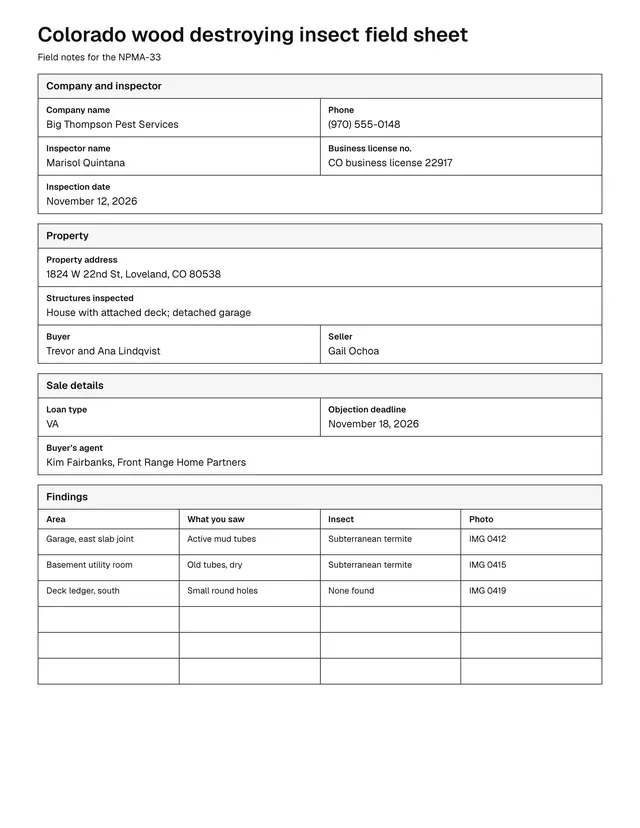
Colorado termite inspection report (NPMA-33)
Record the termite findings from an inspection. - Connecticut
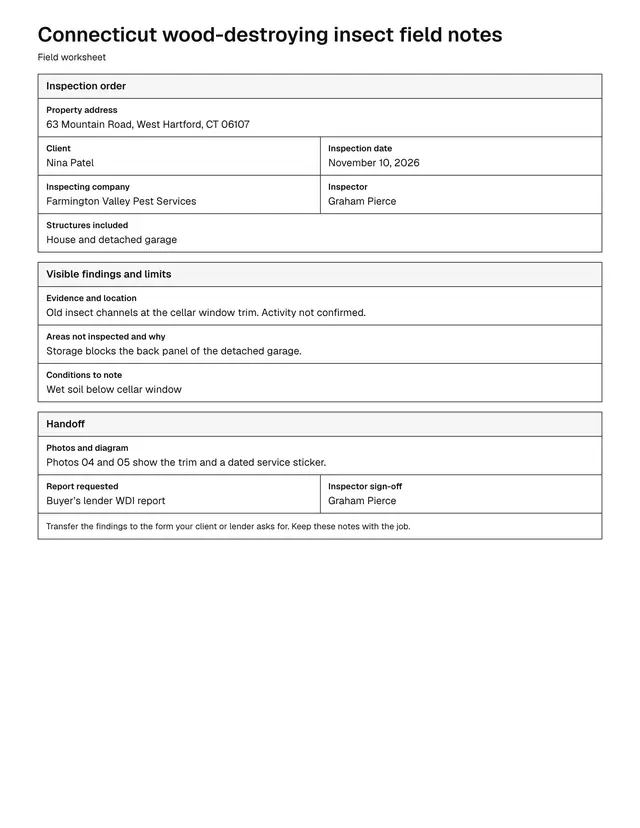
Connecticut wood-destroying insect field notes
Record the termite findings from an inspection. - DelawareNPMA-33
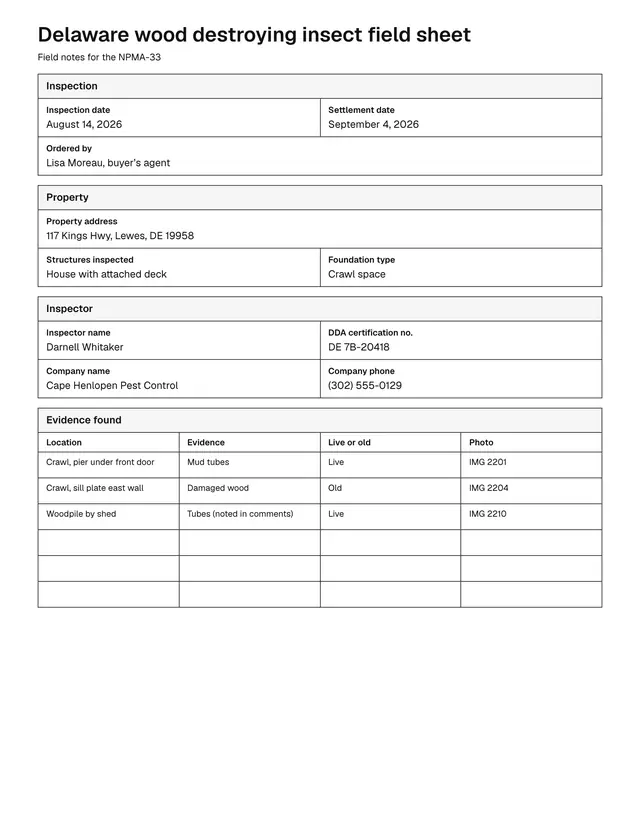
Delaware termite inspection report (NPMA-33)
Record the termite findings from an inspection. - FloridaFDACS-13645
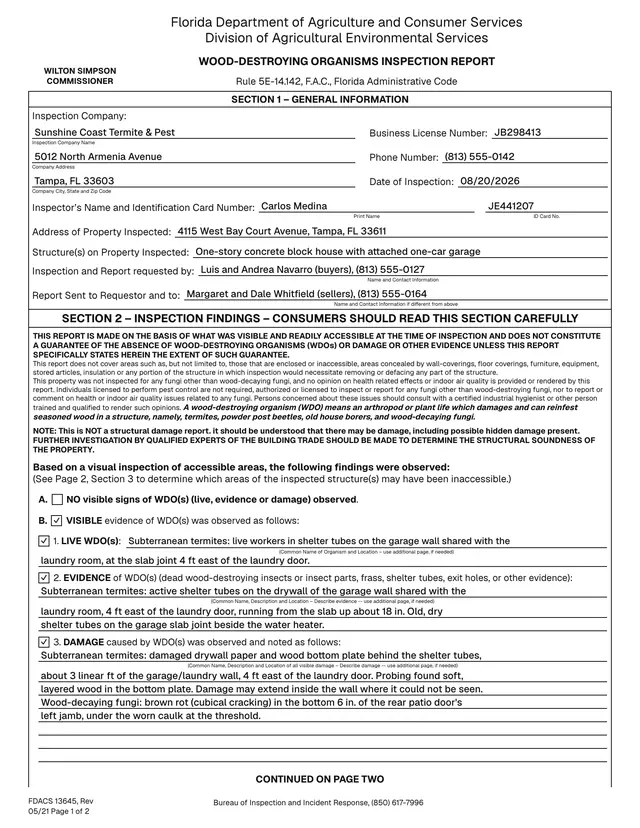
Wood-Destroying Organisms Inspection Report
Record the termite findings from an inspection. - Georgia
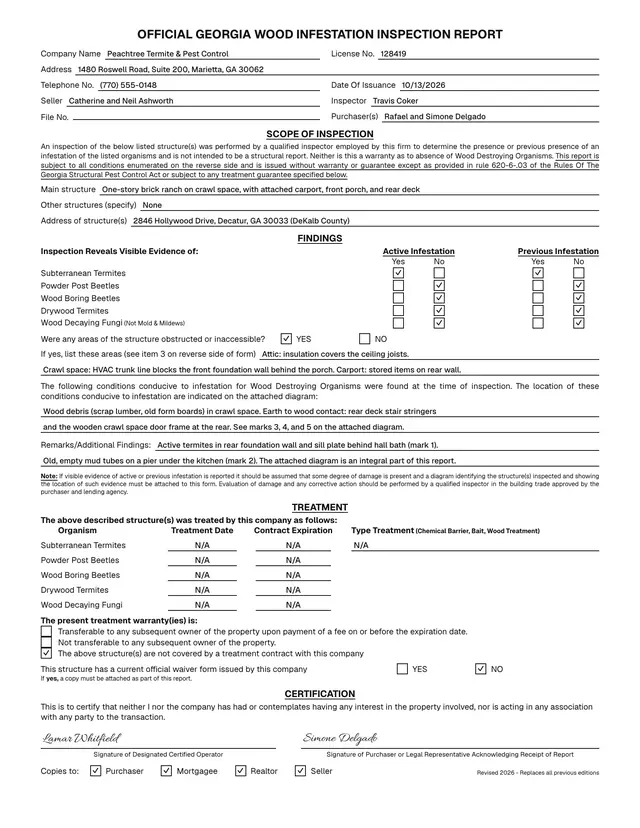
Official Georgia Wood Infestation Inspection Report
Record the termite findings from an inspection. - HawaiiPC-9
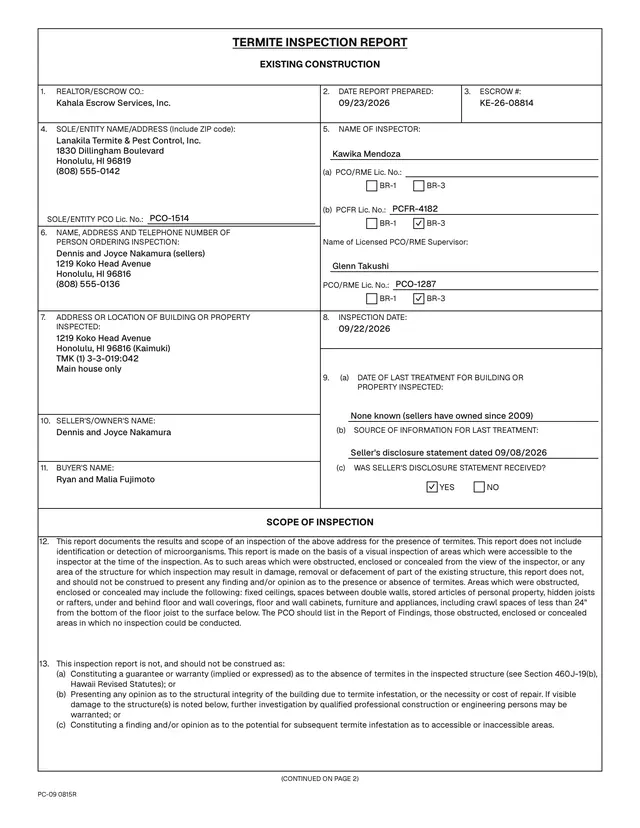
Termite Inspection Report, Existing Construction
Record the termite findings from an inspection. - IndianaNPMA-33
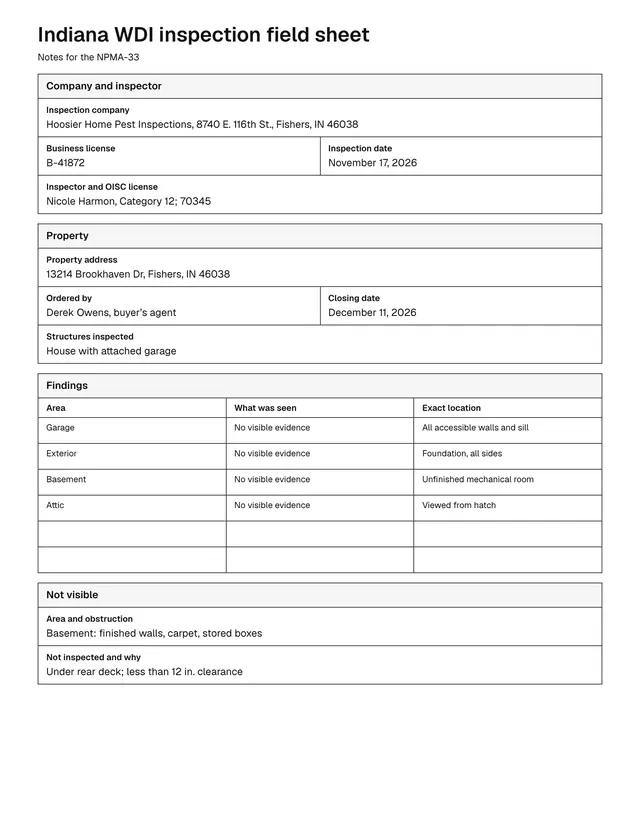
Indiana wood destroying insect inspection report (NPMA-33)
Record the termite findings from an inspection. - Iowa
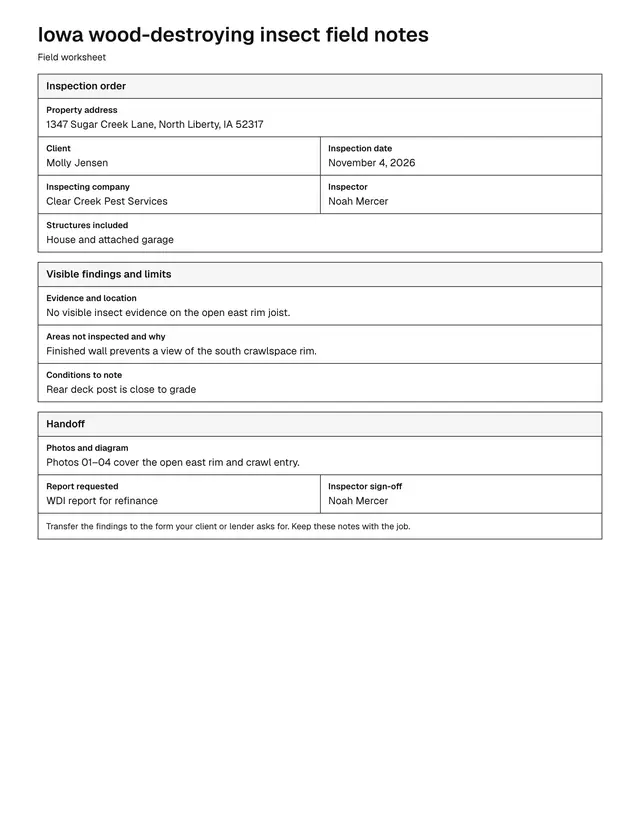
Iowa wood-destroying insect field notes
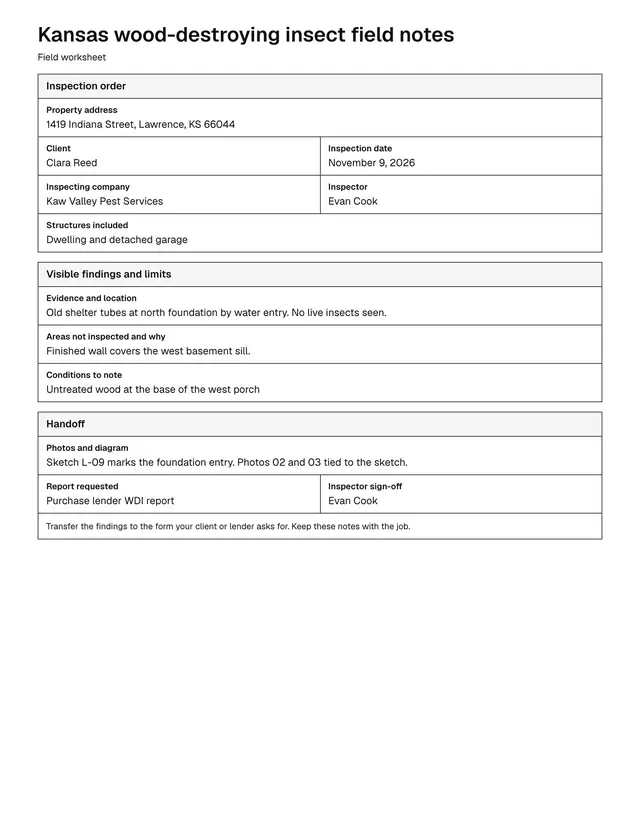
Record the termite findings from an inspection. - Kansas
Kansas wood-destroying insect field notes
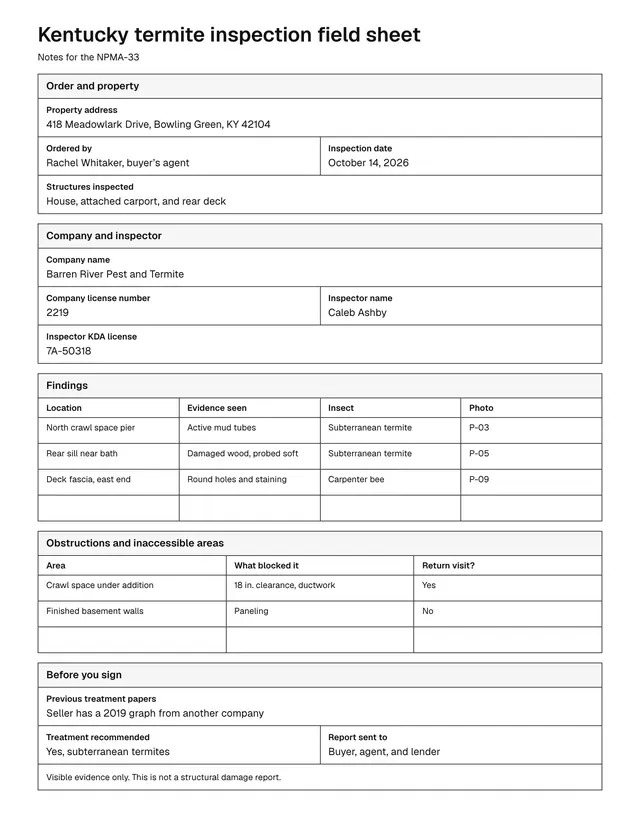
Record the termite findings from an inspection. - Kentucky
Kentucky termite inspection report (NPMA-33)
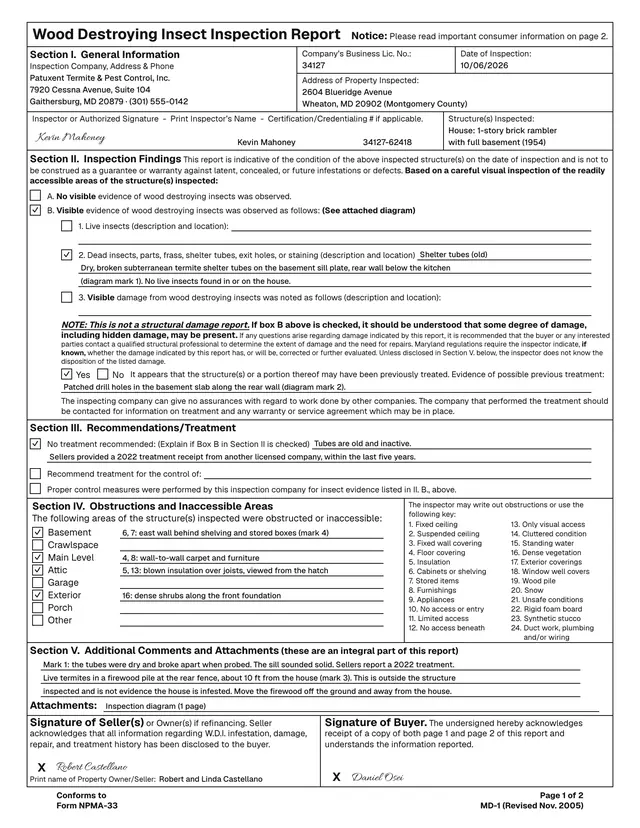
Record the termite findings from an inspection. - MarylandMD-1
Wood Destroying Insect Inspection Report
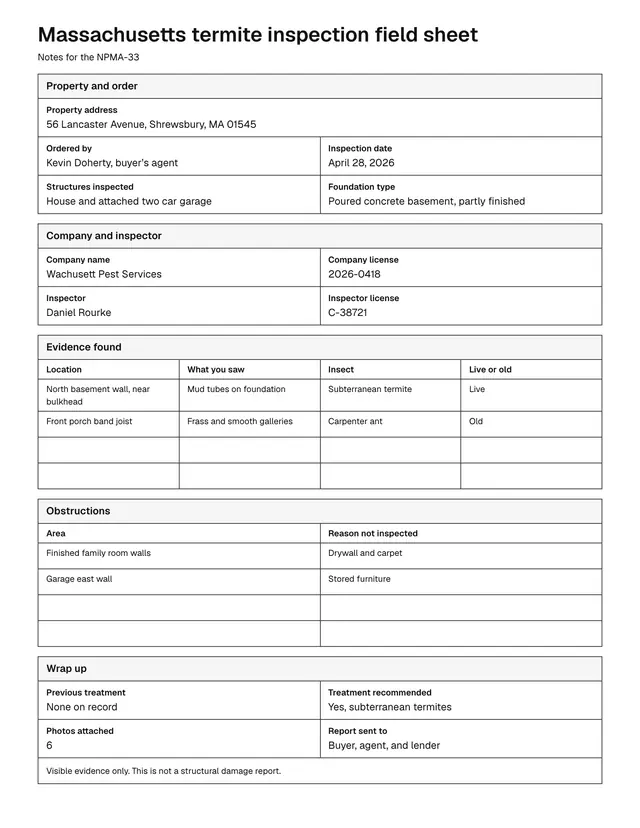
Record the termite findings from an inspection. - Massachusetts
Massachusetts termite inspection report (NPMA-33)
Record the termite findings from an inspection. - MichiganNPMA-33
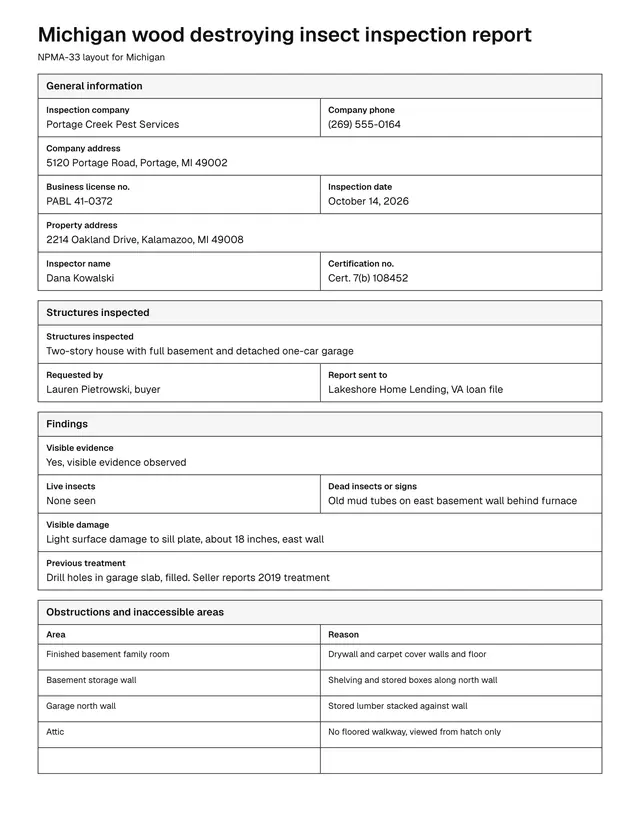
Michigan wood-destroying insect inspection report (NPMA-33)
Record the termite findings from an inspection. - Mississippi
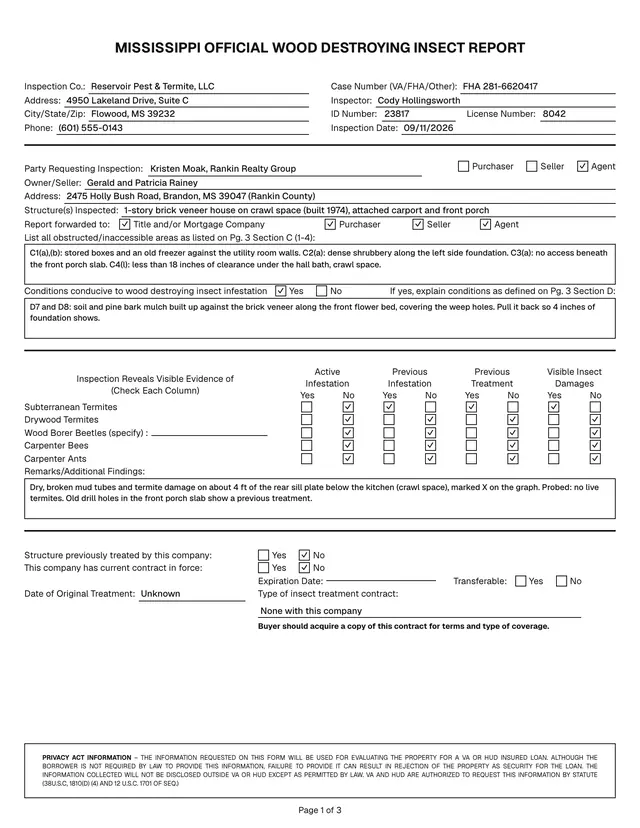
Mississippi Official Wood Destroying Insect Report
Record the termite findings from an inspection. - MissouriNPMA-33
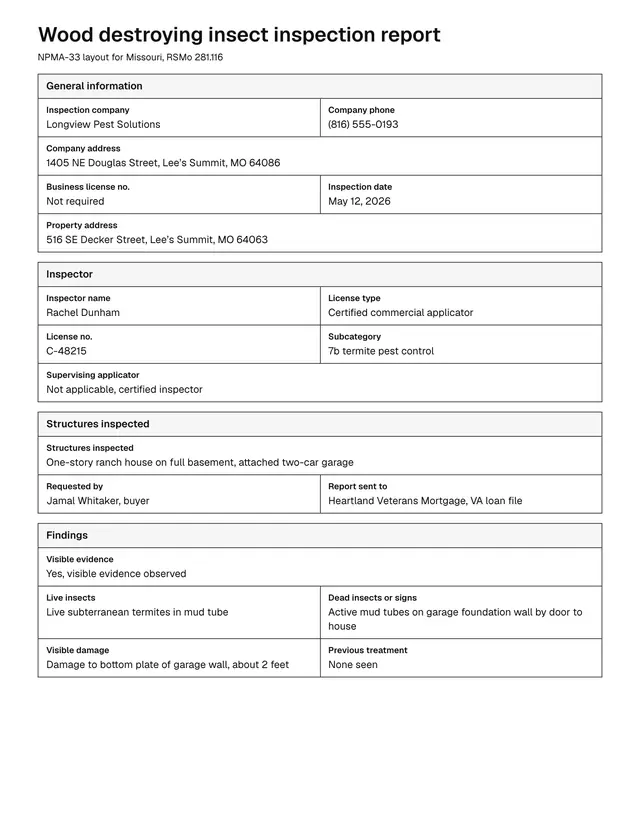
Missouri wood-destroying insect inspection report (NPMA-33)
Record the termite findings from an inspection. - Nevada
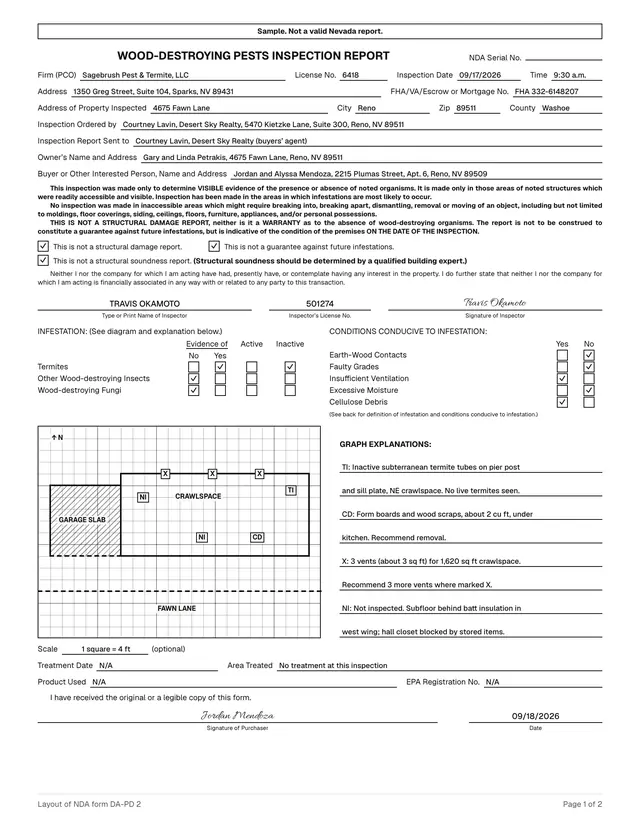
Wood-Destroying Pests Inspection Report
Record the termite findings from an inspection. - New Jersey
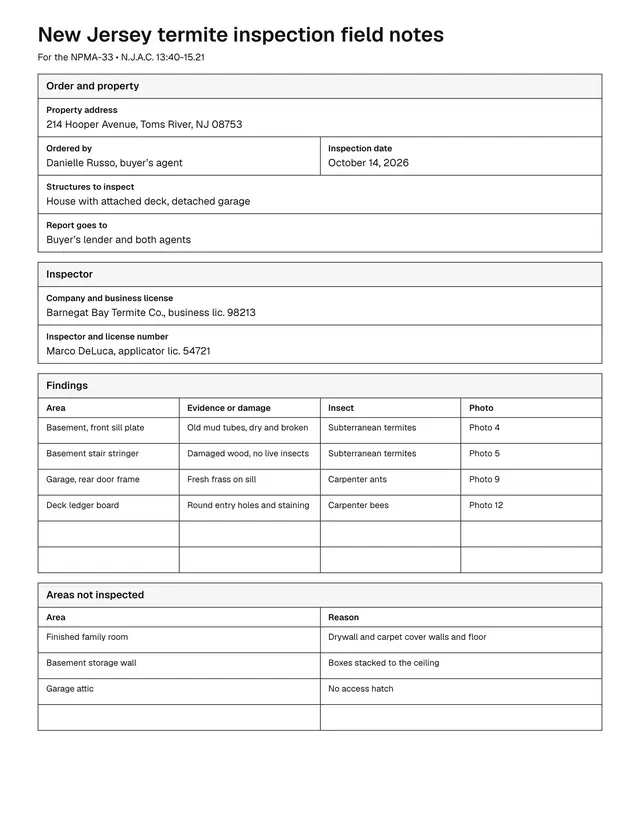
New Jersey termite inspection report (NPMA-33 field notes)
Record the termite findings from an inspection. - New Mexico
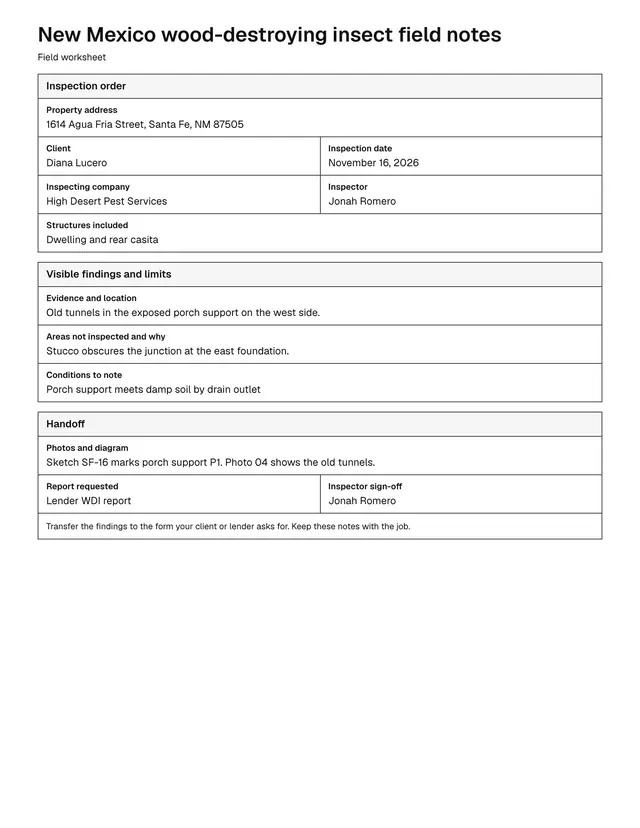
New Mexico wood-destroying insect field notes
Record the termite findings from an inspection. - New York
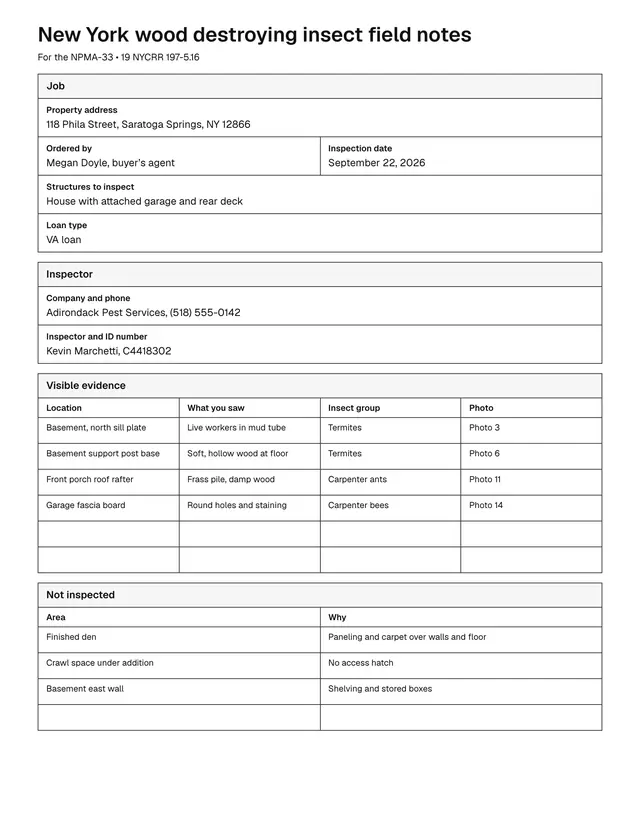
New York wood destroying insect inspection notes (NPMA-33)
Record the termite findings from an inspection. - North CarolinaWDIR 100
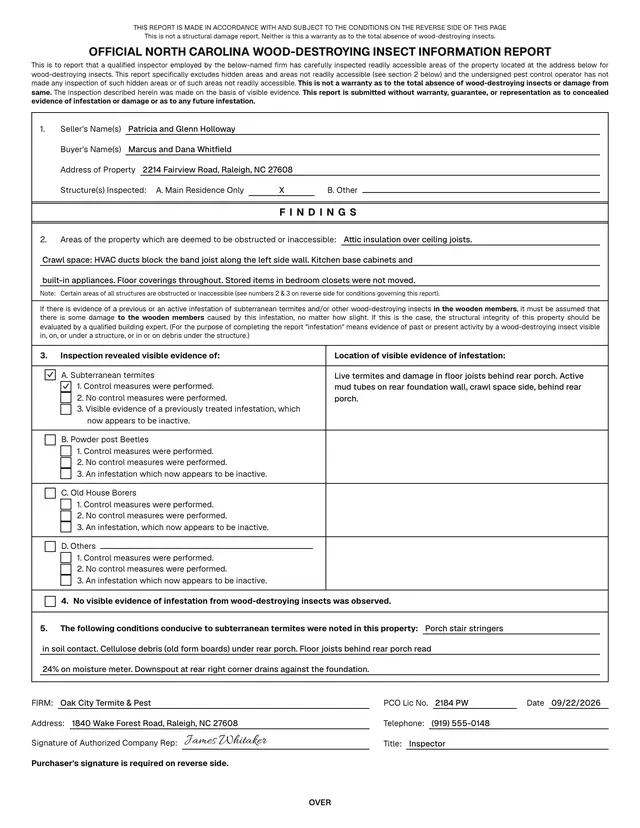
Official North Carolina Wood-Destroying Insect Information Report
Record the termite findings from an inspection. - OhioNPMA-33
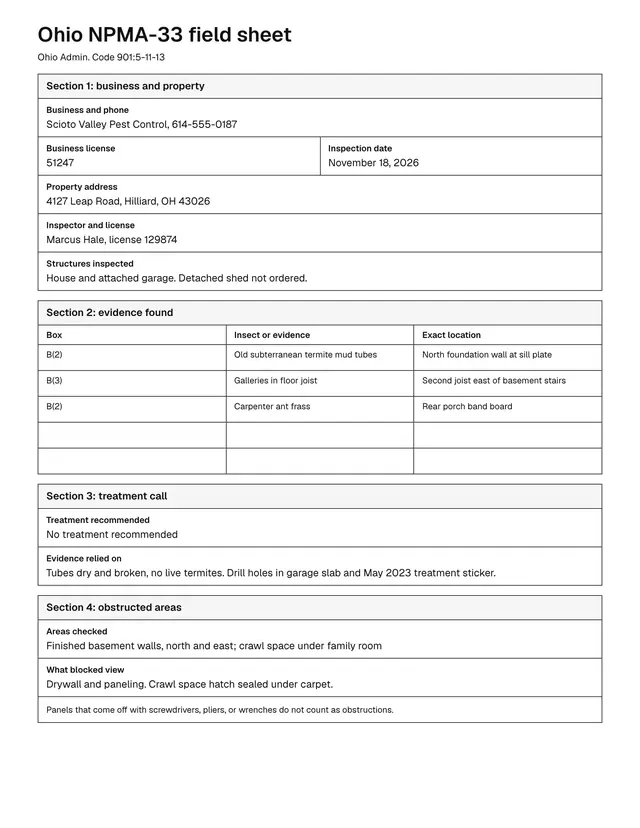
Ohio NPMA-33 wood-destroying insect inspection report
Record the termite findings from an inspection. - OklahomaForm ODAFF-1
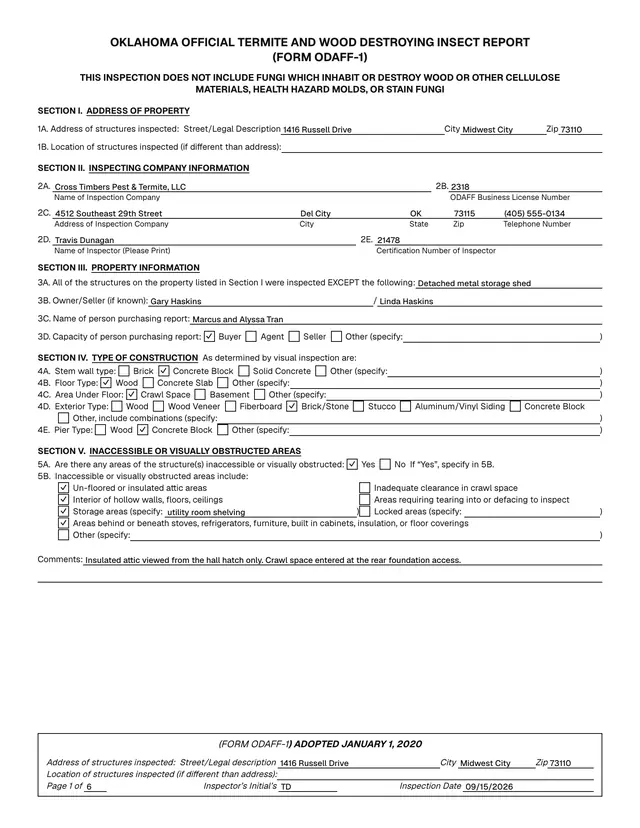
Oklahoma Official Termite and Wood Destroying Insect Report
Record the termite findings from an inspection. - Oregon
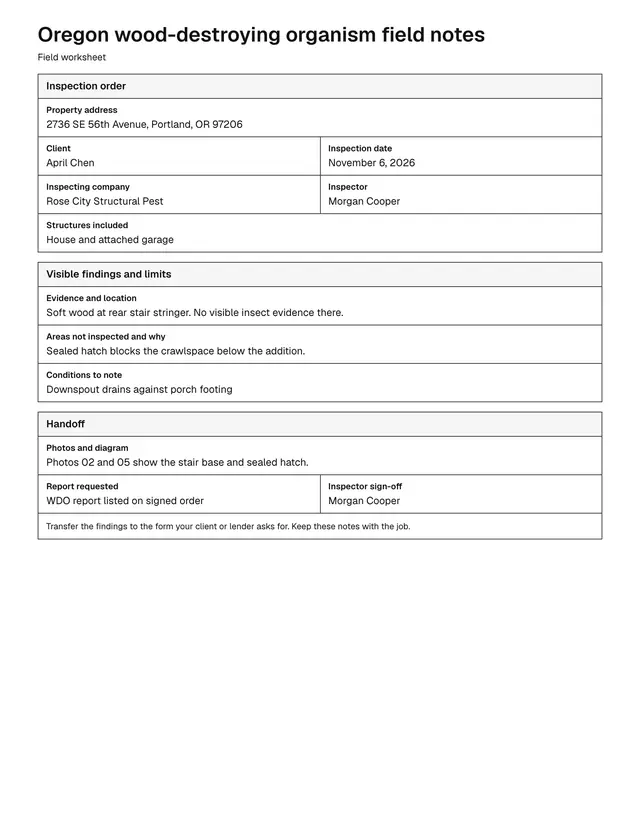
Oregon wood-destroying organism field notes
Record the termite findings from an inspection. - PennsylvaniaNPMA-33
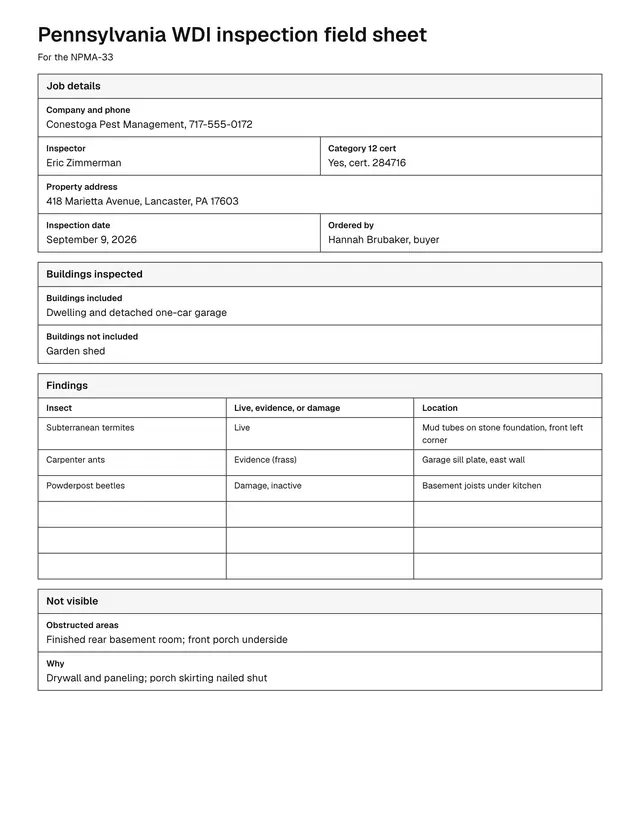
Pennsylvania wood-destroying insect inspection report (NPMA-33)
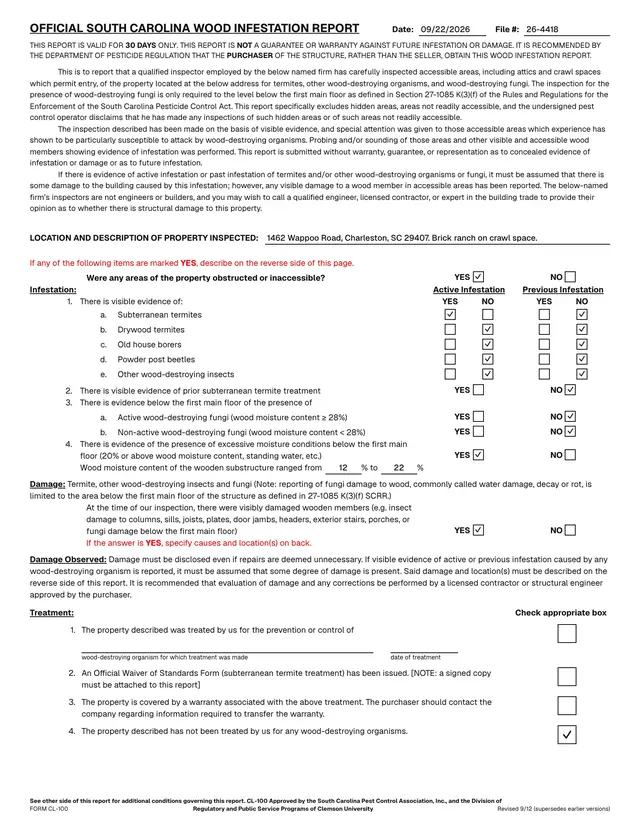
Record the termite findings from an inspection. - South CarolinaCL-100
Official South Carolina Wood Infestation Report
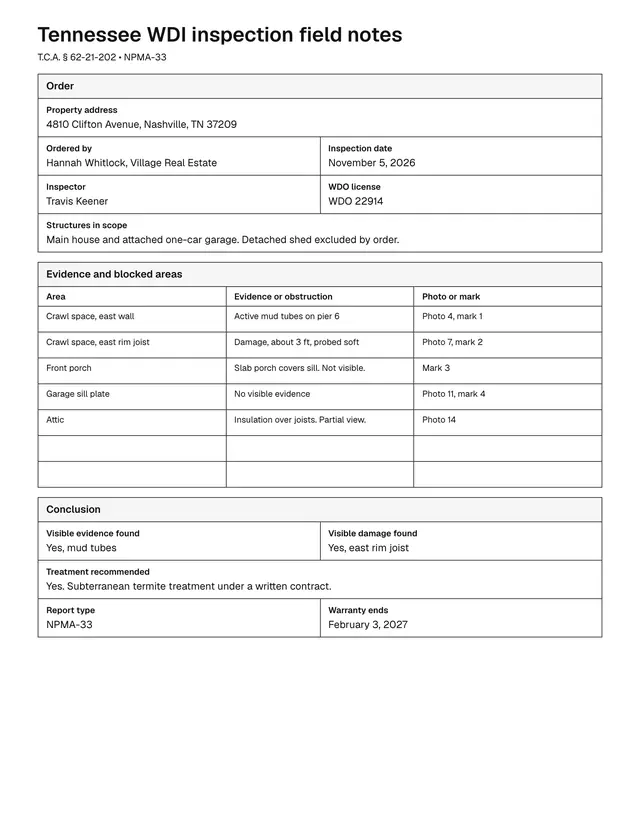
Record the termite findings from an inspection. - Tennessee
Tennessee wood destroying insect infestation inspection report
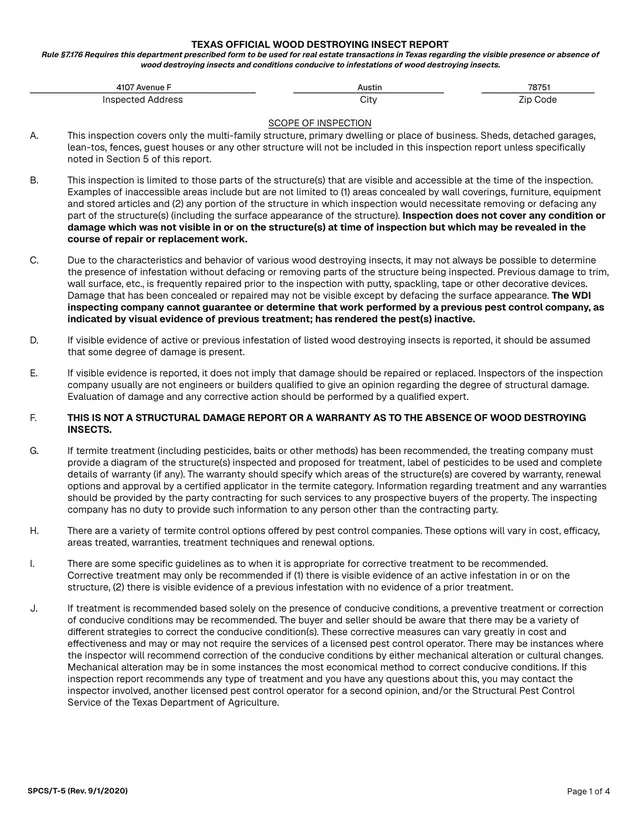
Record the termite findings from an inspection. - TexasSPCS/T-5
Texas Official Wood Destroying Insect Report
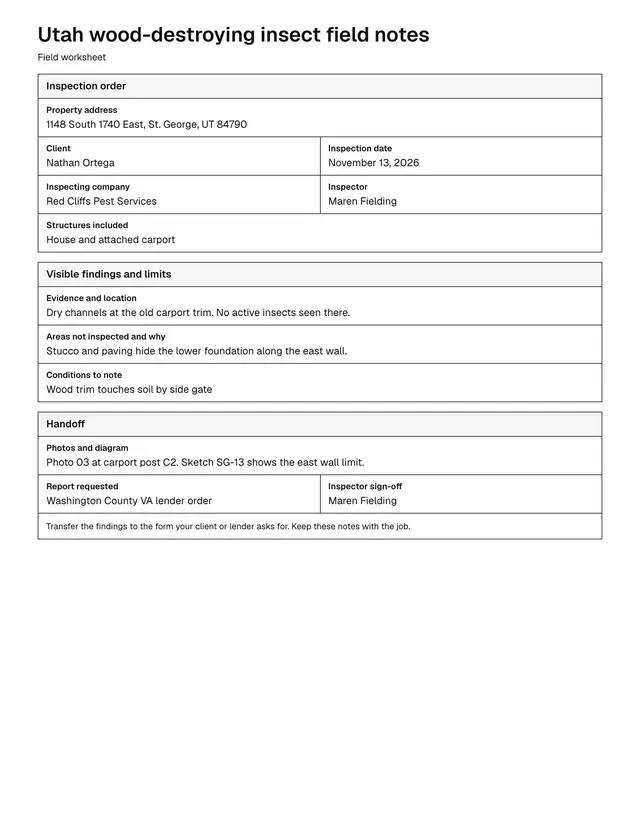
Record the termite findings from an inspection. - Utah
Utah wood-destroying insect field notes
Record the termite findings from an inspection. - Virginia
Virginia wood destroying insect inspection report
Record the termite findings from an inspection. - Washington
Complete WDO Inspection Report
Record the termite findings from an inspection. - Wisconsin
Wisconsin wood-destroying insect field notes
Record the termite findings from an inspection.