Illinois home inspection report
Illinois gives you 2 business days to deliver the written report, and 68 Ill. Adm. Code 1410.200(e) says what it has to show, down to the start time and the weather.
At a glance
- Rule
- 68 Ill. Adm. Code 1410.200(e)
- Due
- Within 2 business days
- Signer shows
- Name, license number, and expiration date
- Keep
- 5 years (1410.240)
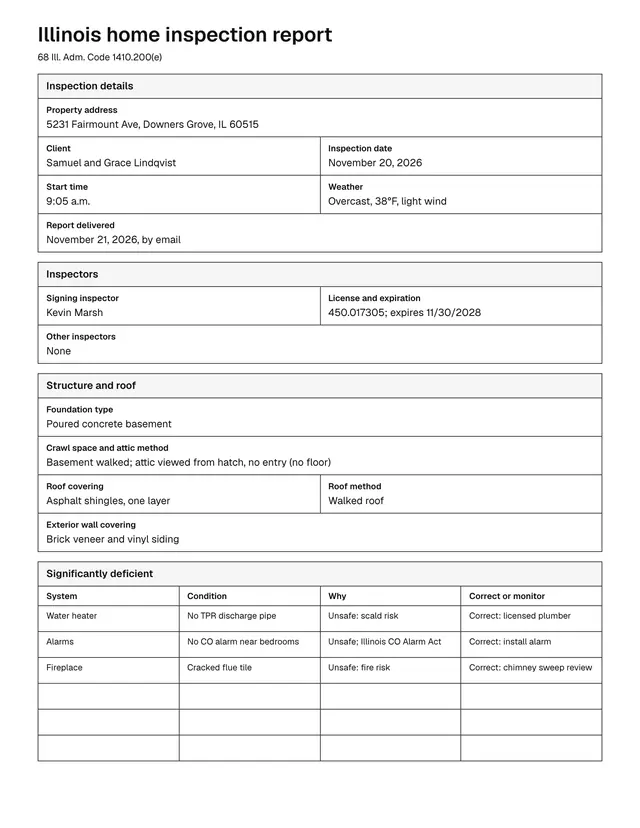
Completed example
Download PDFWhat the report has to show
Section 1410.200(e) of the Illinois home inspector rules sets a 2 business day clock. The written report goes to the client or their authorized representative within 2 business days after you finish. It can be electronic.
Every report needs your written or electronic signature, the names and license numbers of all inspectors who took part, the on-site start time, and the weather. Section 1410.250(b) adds your license’s expiration date and the names and license numbers of anyone who helped write the report or a supplement. The report section adds that office staff who only do “ministerial duties” don’t need to be named.
Then the substance. You describe the condition of each system you inspected (photos are fine). For anything significantly deficient, which the rule defines as “unsafe or not functioning,” you give the reason, say whether it should be corrected or monitored, and list any system that was there but not inspected, with the reason why.
The clock runs in business days, so weekends don’t count. A Friday inspection is due by Tuesday. Any supplement you send later, like a lab result, follows the same signature rules.
The Illinois lines that are easy to miss
Illinois adds a few specific report items that other states don’t. Check your template for each one.
Electrical. Describe the service’s amperage and voltage, where the main disconnect and subpanels are, and the wiring methods (Romex, BX, or knob and tube). Report solid conductor aluminum branch wiring. And report any non-compliance with the Carbon Monoxide Alarm Detector Act and the Smoke Detector Act. A 1950s Oak Park bungalow with a gas boiler and no CO alarm near the bedrooms needs that line.
Plumbing. Report where the main water shut-off is, where the water service enters, what the distribution pipes are made of, the type of water heater, its capacity, and any leaks.
Structure and roof. Describe the foundation and say how you inspected the crawl space or basement, the attic, and the roof. “Roof viewed from the ground with binoculars due to frost” is a method. Leaving it out is a gap.
Heating and cooling. Describe the energy source and the method for each. A Champaign rental with a heat pump and electric backup heat needs both written down, not just “heat pump.”
Interior. Unlike some states, Illinois includes household appliances that come with the property, plus garage doors and their openers.
If an appliance was unplugged or the gas was off, write that it wasn’t operated and why. That counts as a listed item not inspected.
Writing a deficiency the Illinois way
A good Illinois deficiency has four parts: what it is, where, why it’s significantly deficient, and whether to correct or monitor. Here’s one from a 1978 Naperville two-story: “Water heater, basement. Temperature and pressure relief valve has no discharge pipe. Unsafe: scalding risk if the valve opens. Correct: have a licensed plumber install a discharge pipe.”
Watch the tone. Section 1410.300 lists what counts as unprofessional conduct. Two items matter for report writing: grossly misrepresenting a condition or how serious it is, and advising the client “as to whether the client should or should not engage in a real estate transaction.” Report the furnace. Don’t tell them to walk away.
If you couldn’t get to something on the agreed list, like an attic hatch painted shut or a crawl space under two feet of water, say so and say why. That’s part of the required report, not an extra.
There’s one time you speak up beyond the client. Section 1410.300(c) says that when a condition threatens health or safety and needs emergency action, you report it to the homeowner or their agent. A strong gas smell at the meter is that kind of finding.
What if the agent asks for a copy?
Agents ask all the time. In Illinois, you need the client’s written consent before sending results to anyone else, and you keep that consent with your records (1410.250(g)). If the agreement already named the agent, you’re covered. If not, ask the client first.
Send the client’s copy on time either way. The 2 business day clock doesn’t wait for the agent’s consent to come through.
Noma specializes in the Illinois home inspection report (68 Ill. Adm. Code 1410.200(e)). Build it on your phone with your own sections and titles, mark how serious each defect is, and the summary lists the worst ones so the client sees them first. See how Noma builds inspection reports.
Frequentlyaskedquestions
Send this document in minutes, not an afternoon.
Other states
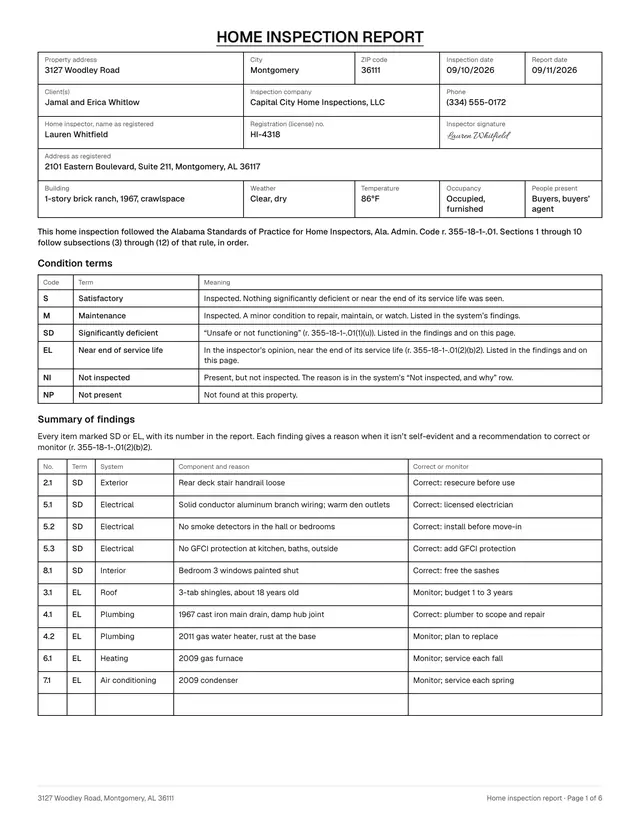
Home inspection report templates- Alabama
Home Inspection Report
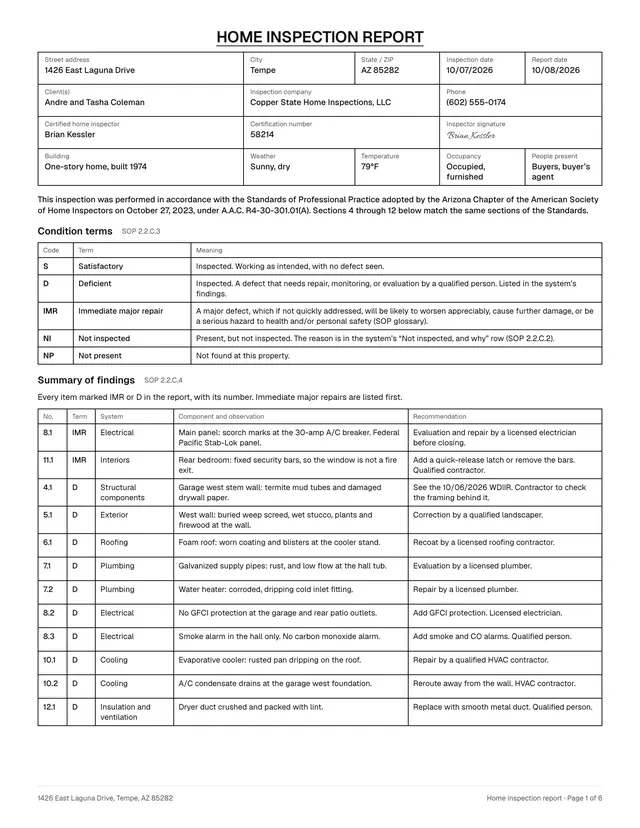
Findings by system, with each defect noted. - Arizona
Home Inspection Report
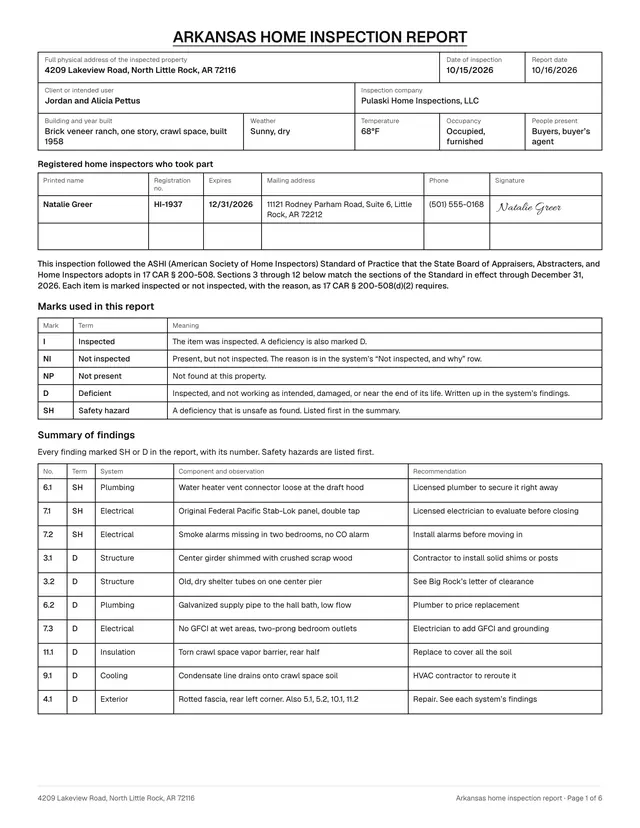
Findings by system, with each defect noted. - Arkansas
Arkansas Home Inspection Report
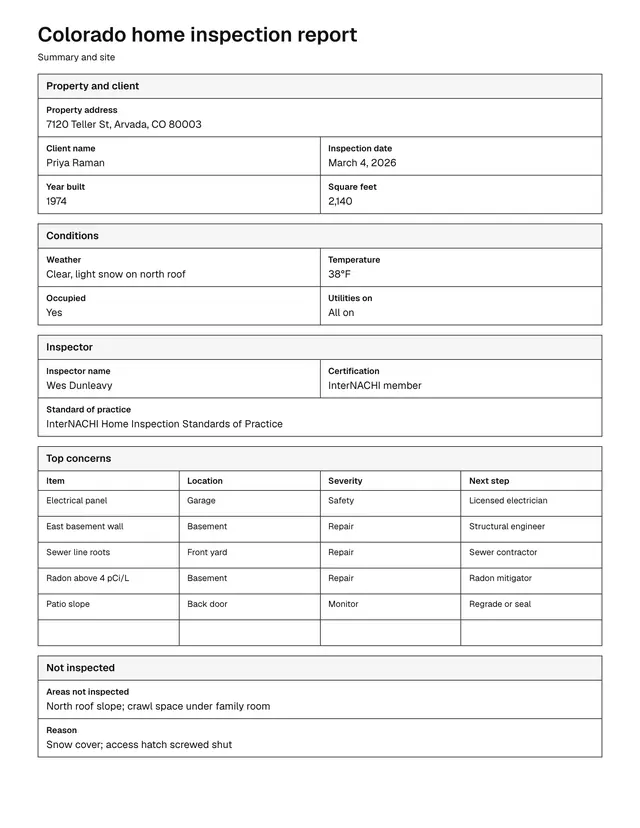
Findings by system, with each defect noted. - Colorado
Colorado home inspection report
Findings by system, with each defect noted. - Connecticut
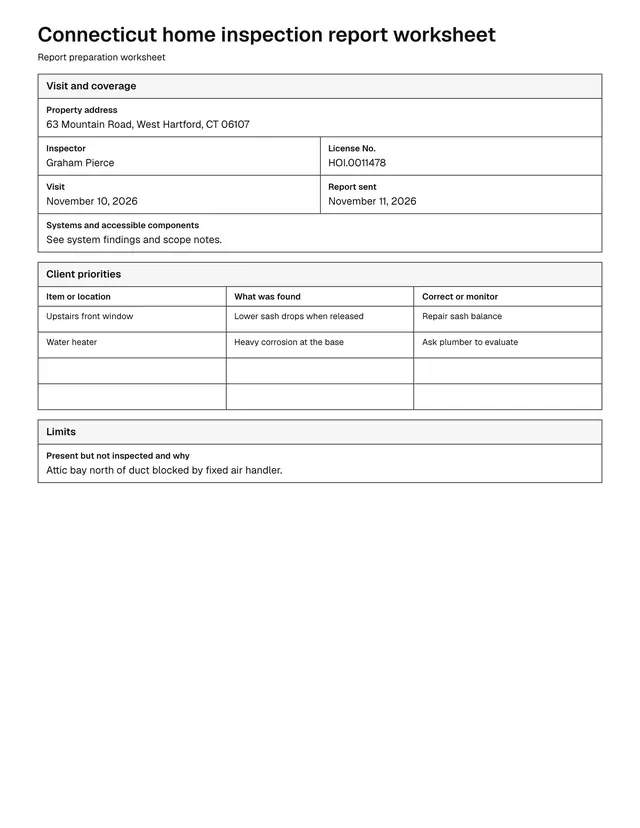
Connecticut home inspection report worksheet
Findings by system, with each defect noted. - Delaware
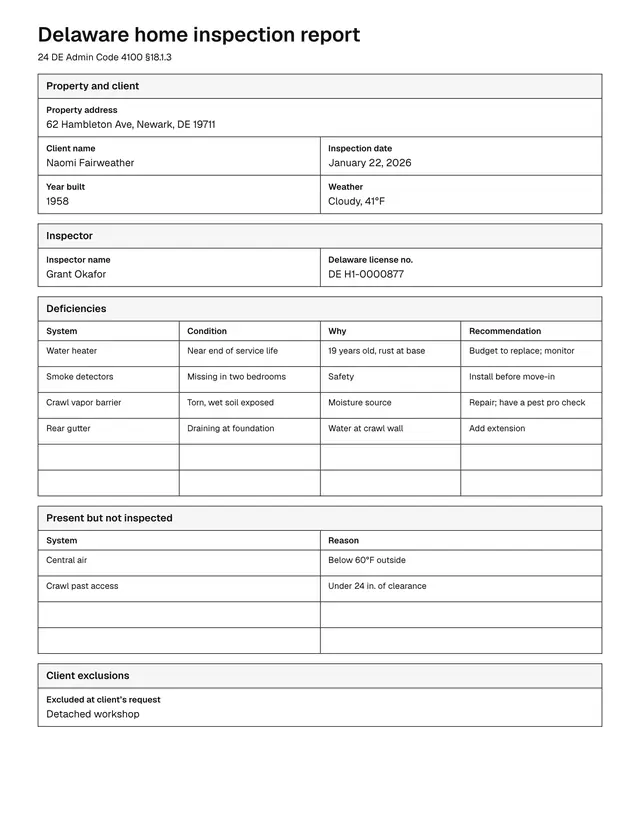
Delaware home inspection report (24 DE Admin Code 4100 §18)
Findings by system, with each defect noted. - Florida
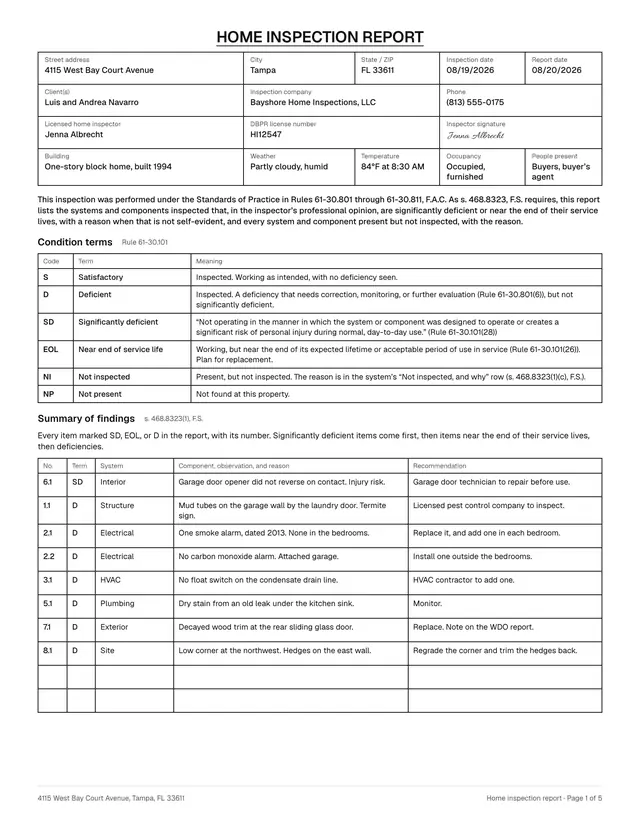
Home Inspection Report
Findings by system, with each defect noted. - Georgia
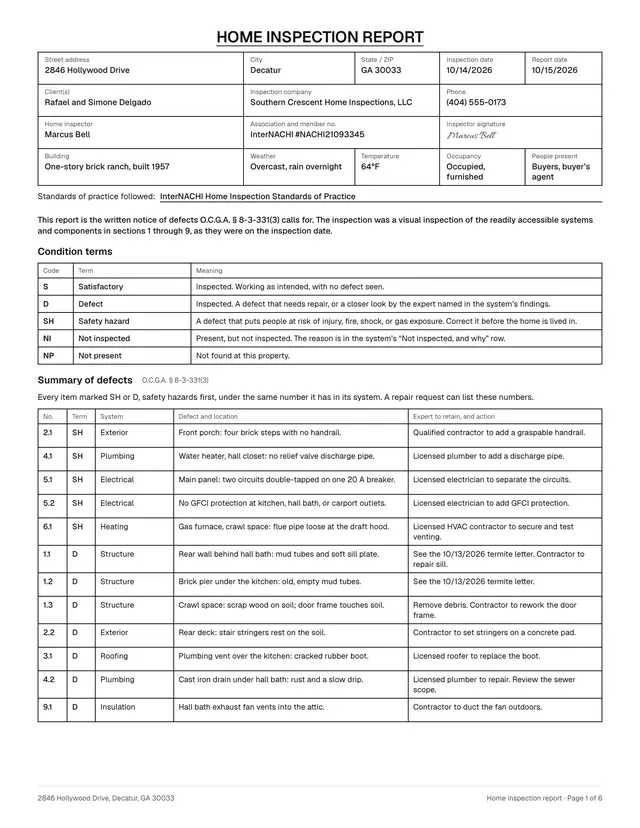
Home Inspection Report
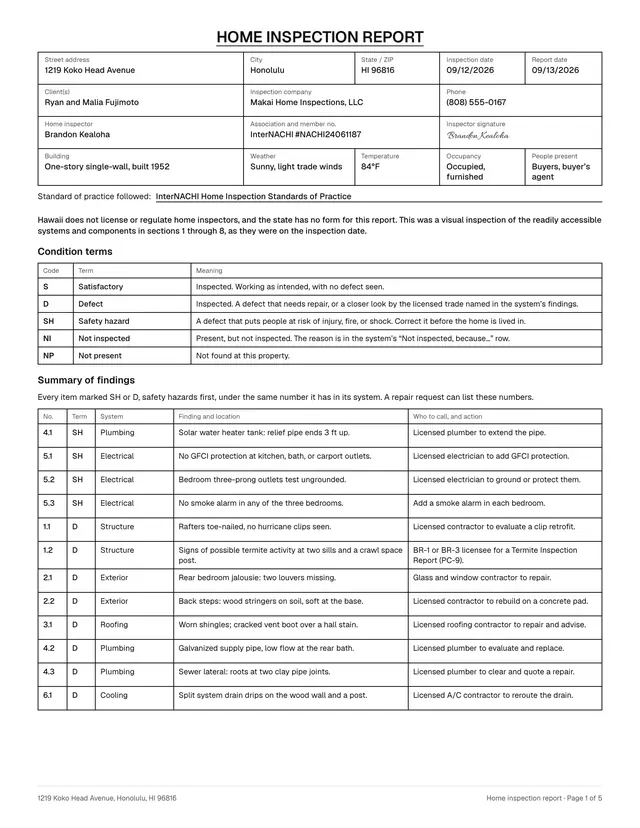
Findings by system, with each defect noted. - Hawaii
Home Inspection Report
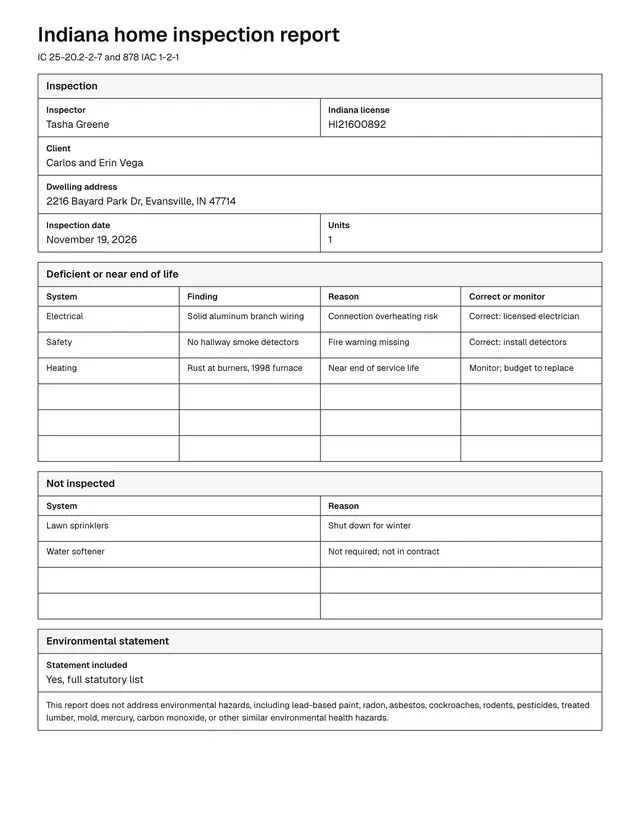
Findings by system, with each defect noted. - Indiana
Indiana home inspection report
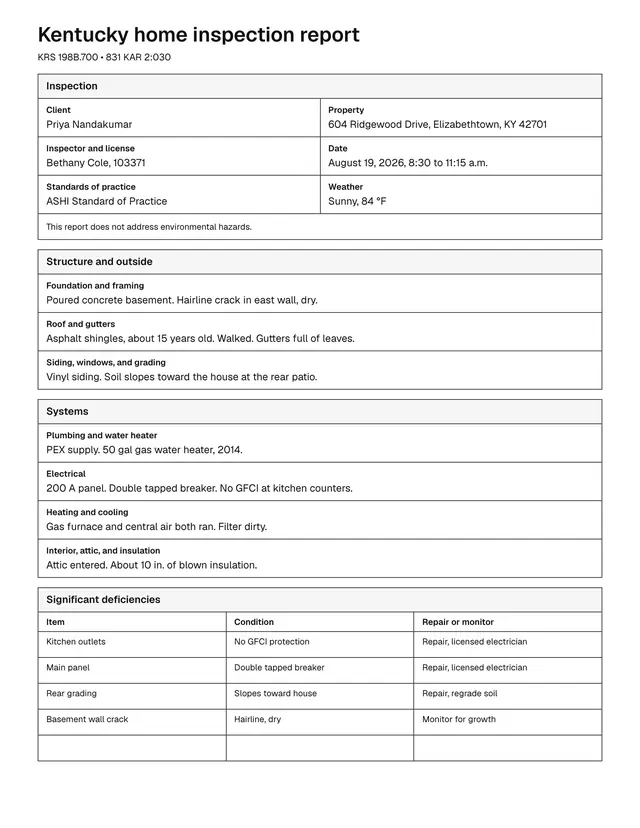
Findings by system, with each defect noted. - Kentucky
Kentucky home inspection report
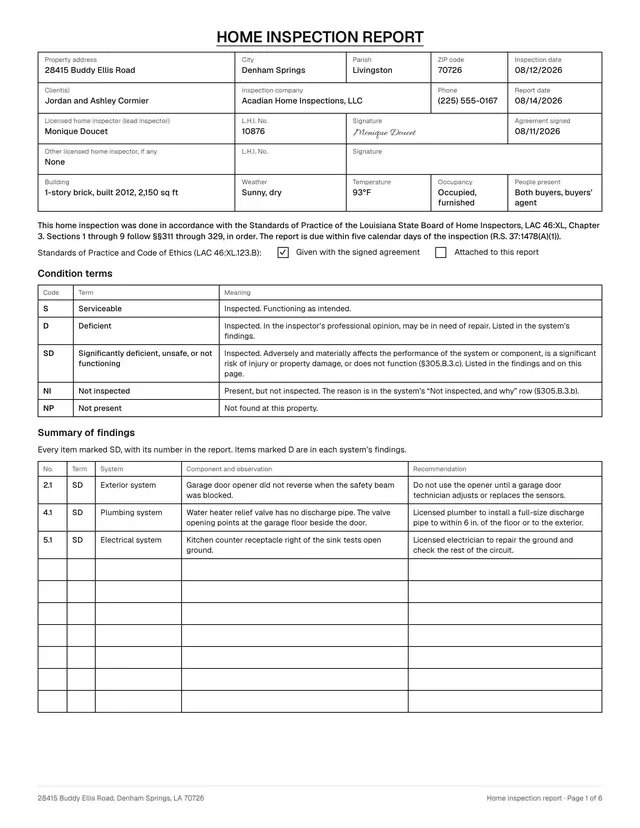
Findings by system, with each defect noted. - Louisiana
Home Inspection Report
Findings by system, with each defect noted. - Maryland
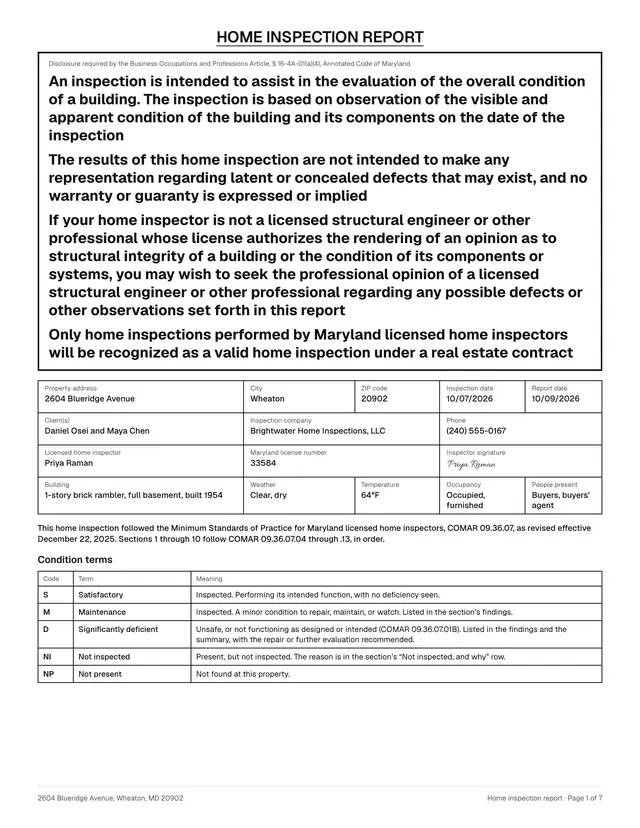
Home Inspection Report
Findings by system, with each defect noted. - Massachusetts
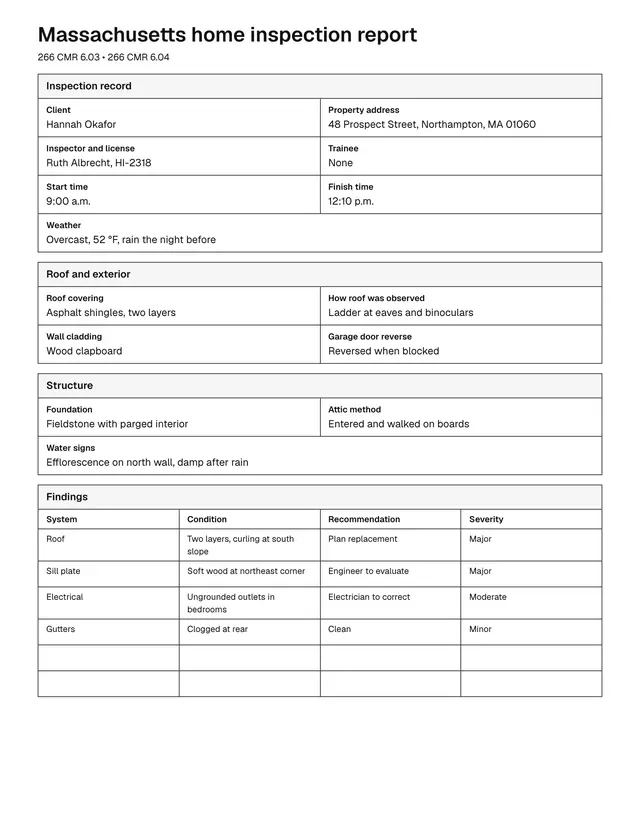
Massachusetts home inspection report (266 CMR 6.03)
Findings by system, with each defect noted. - Michigan
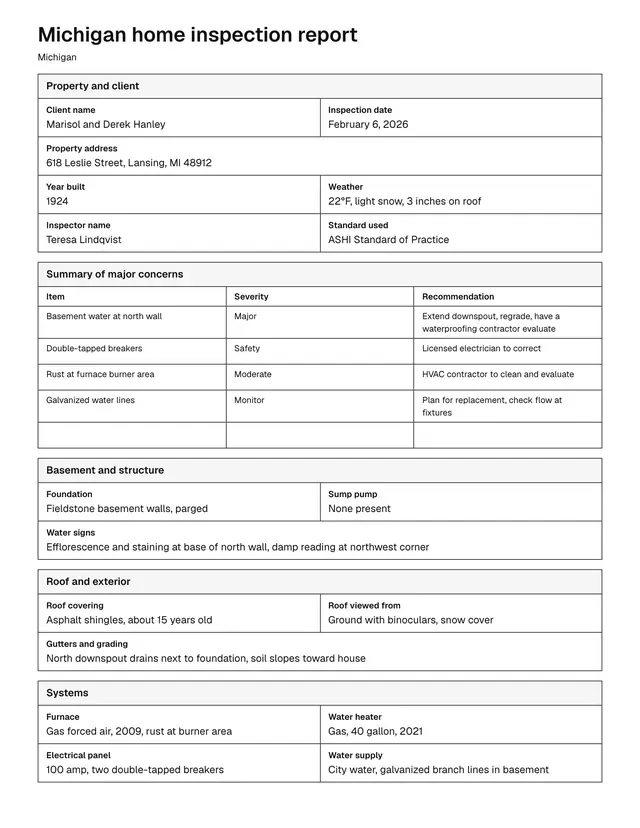
Michigan home inspection report
Findings by system, with each defect noted. - Mississippi
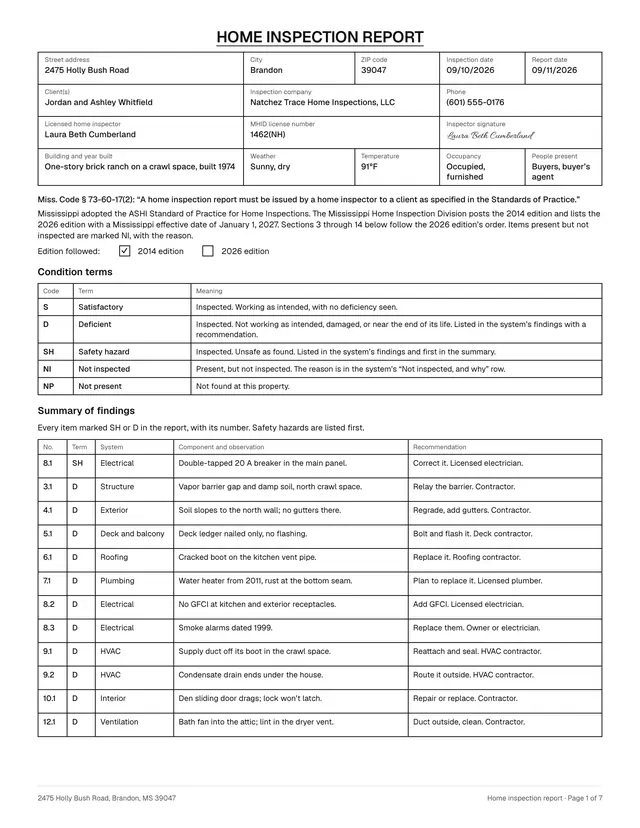
Home Inspection Report
Findings by system, with each defect noted. - Missouri
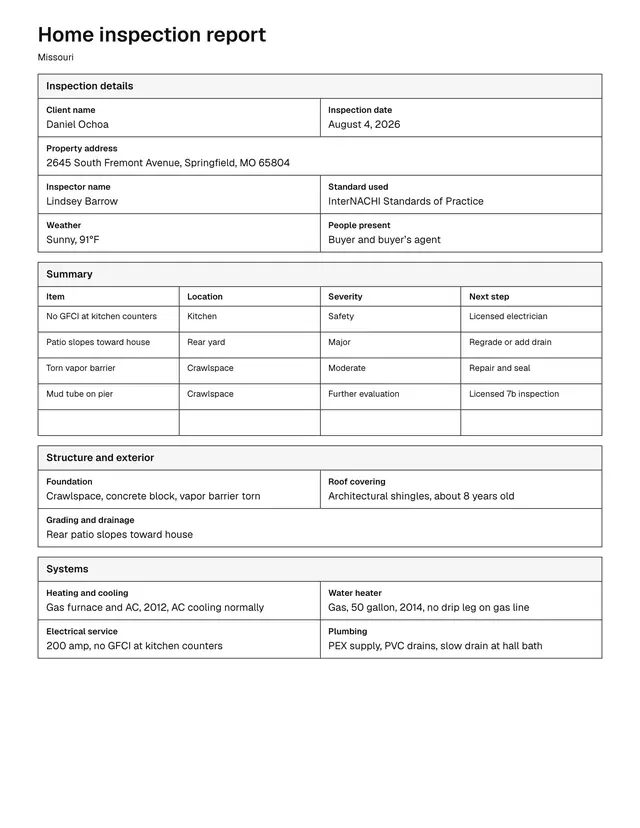
Missouri home inspection report
Findings by system, with each defect noted. - Nevada
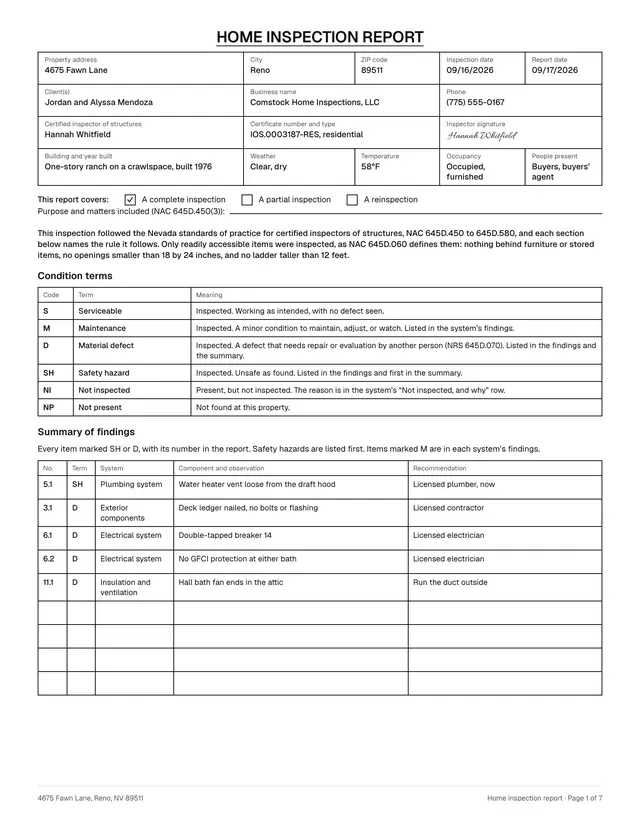
Home Inspection Report
Findings by system, with each defect noted. - New Jersey
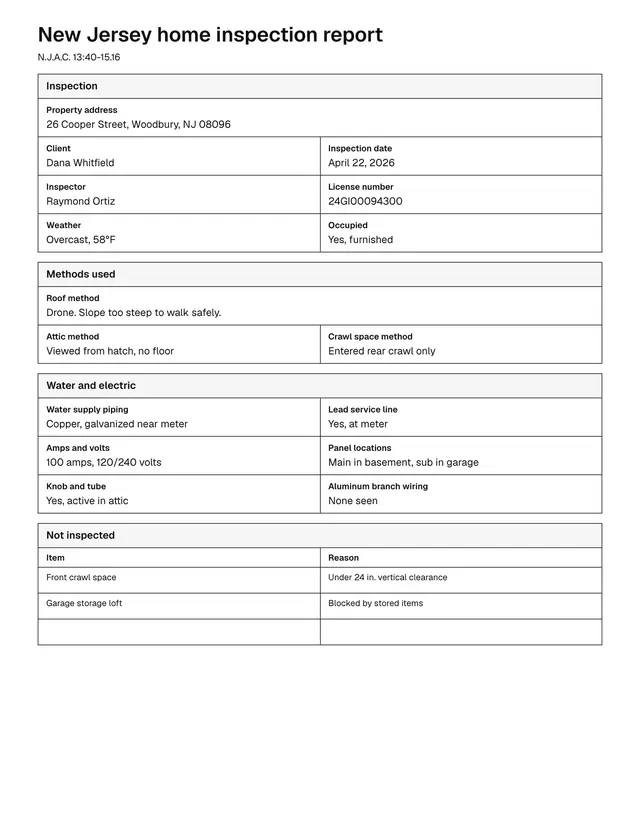
New Jersey home inspection report (N.J.A.C. 13:40-15.16)
Findings by system, with each defect noted. - New Mexico
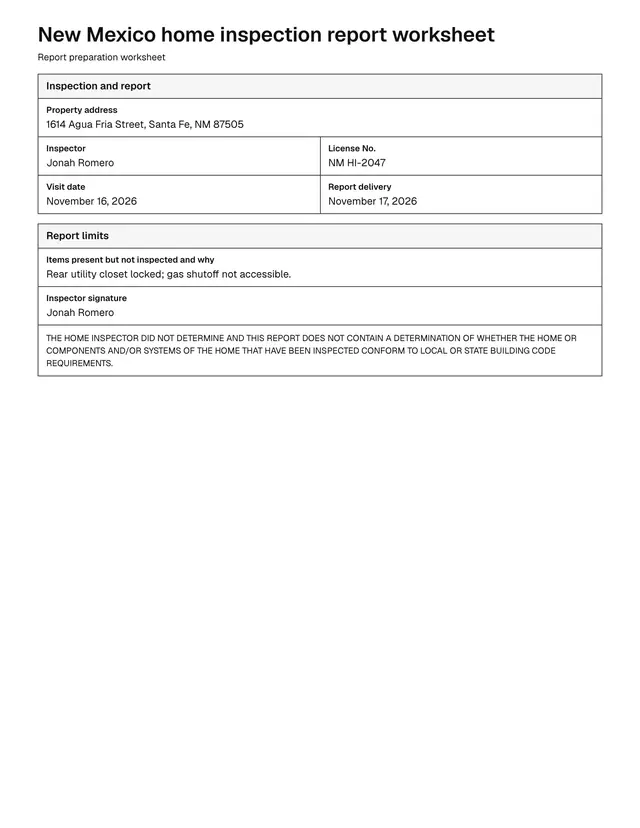
New Mexico home inspection report worksheet
Findings by system, with each defect noted. - New York
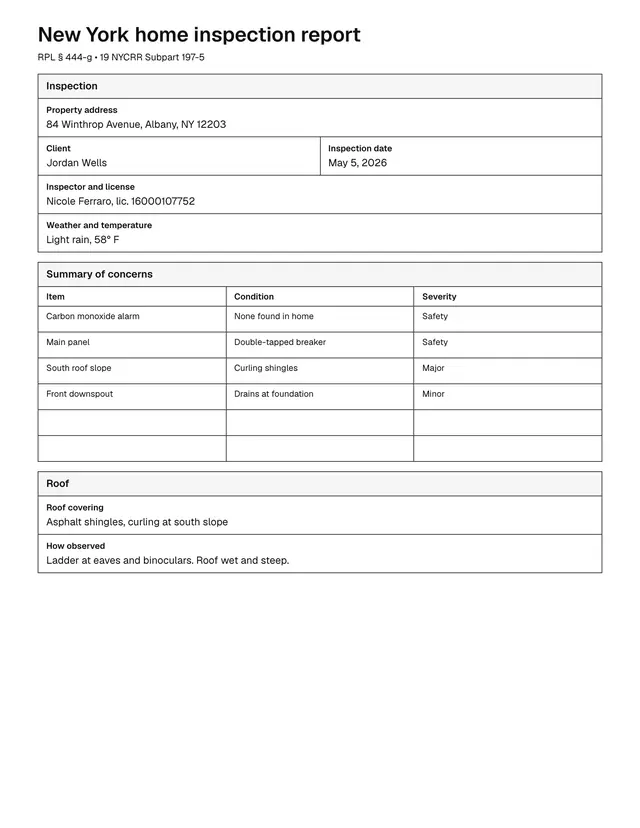
New York home inspection report (19 NYCRR Subpart 197-5)
Findings by system, with each defect noted. - North Carolina
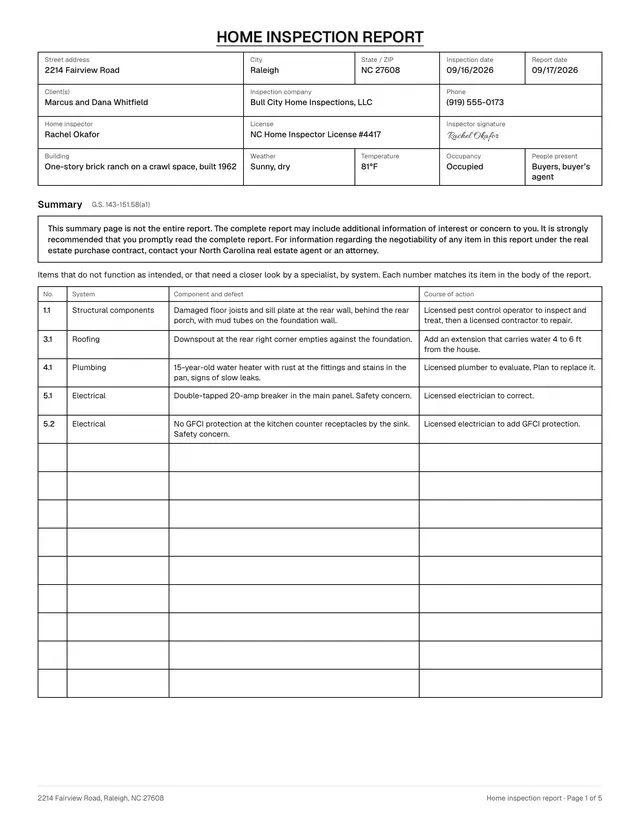
Home Inspection Report
Findings by system, with each defect noted. - Ohio
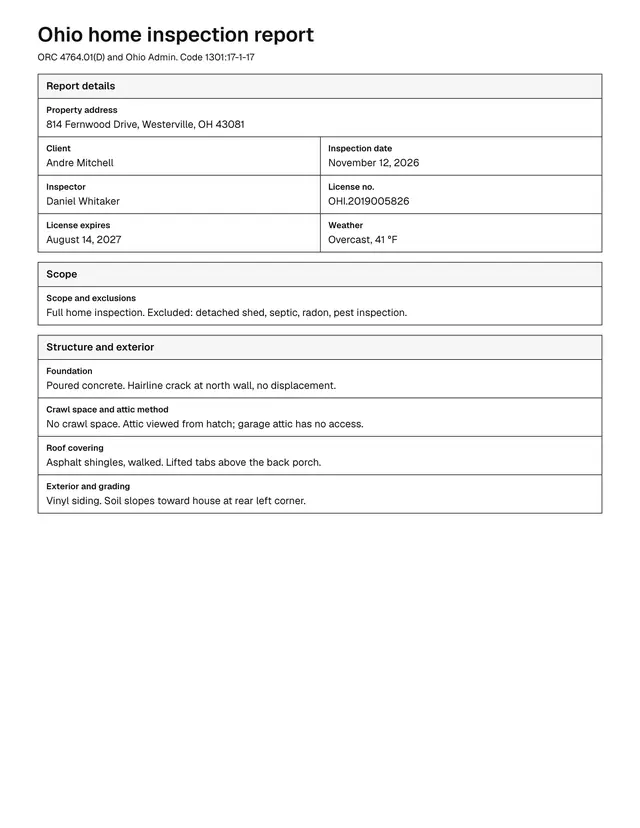
Ohio home inspection report
Findings by system, with each defect noted. - Oklahoma
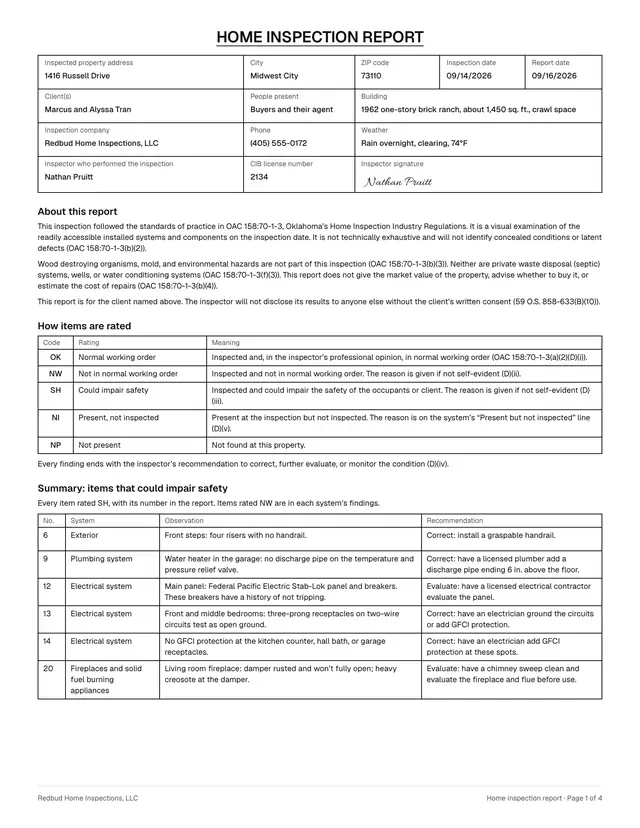
Home Inspection Report
Findings by system, with each defect noted. - Oregon
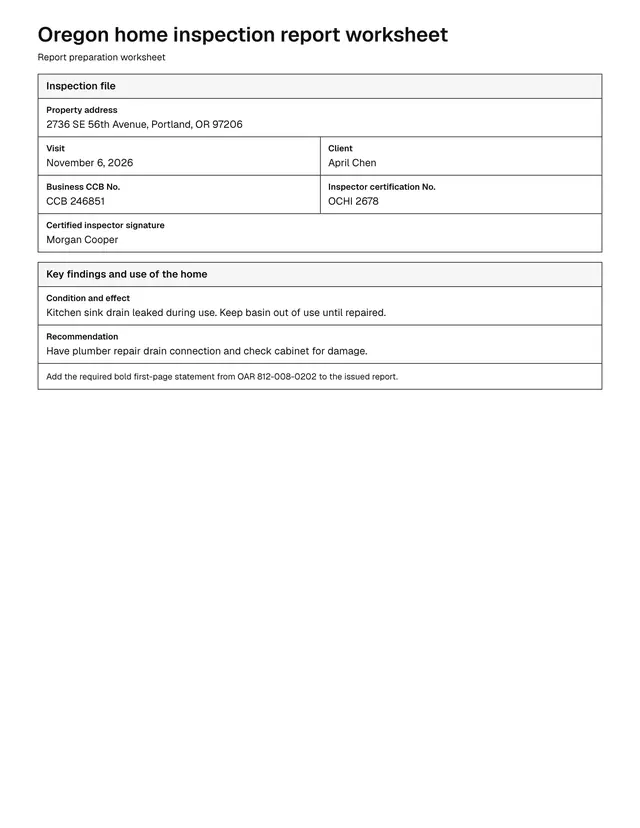
Oregon home inspection report worksheet
Findings by system, with each defect noted. - Pennsylvania
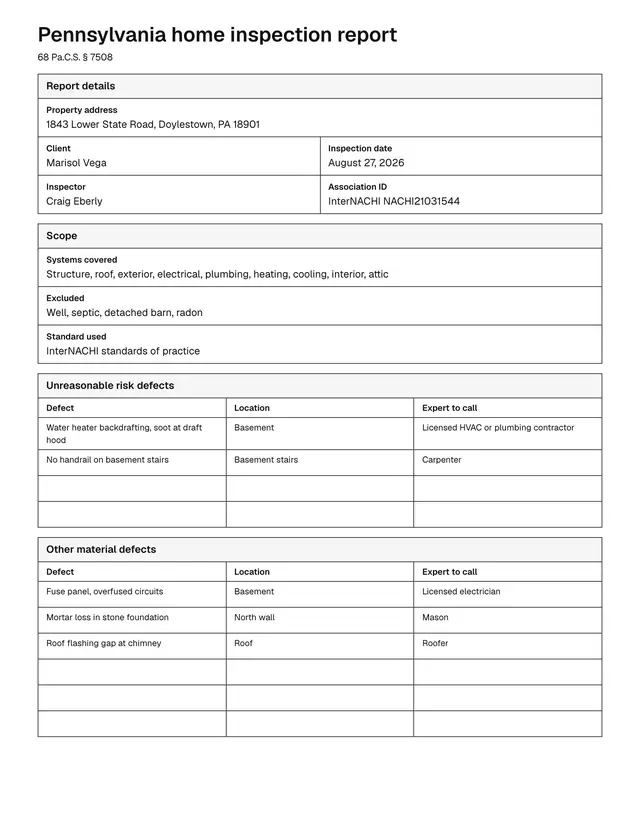
Pennsylvania home inspection report
Findings by system, with each defect noted. - South Carolina
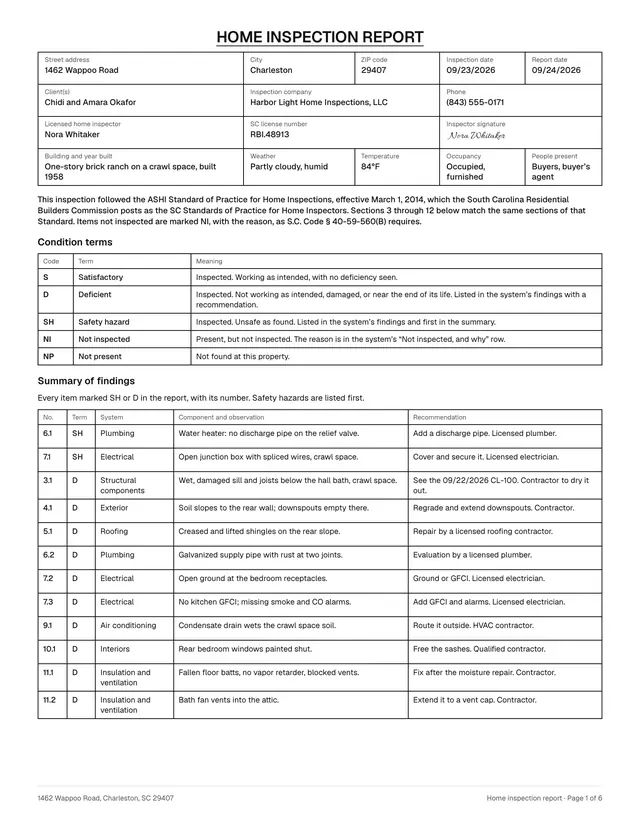
Home Inspection Report
Findings by system, with each defect noted. - Tennessee
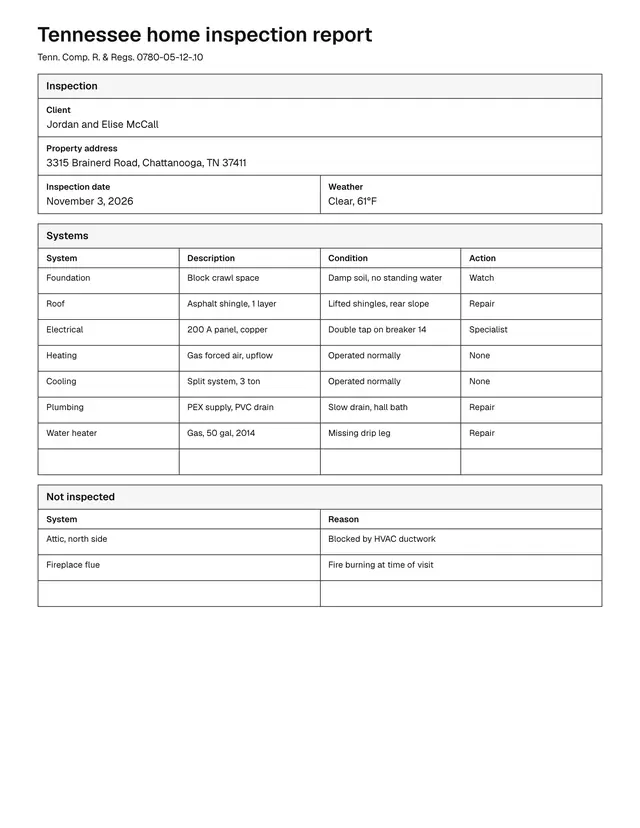
Tennessee home inspection report
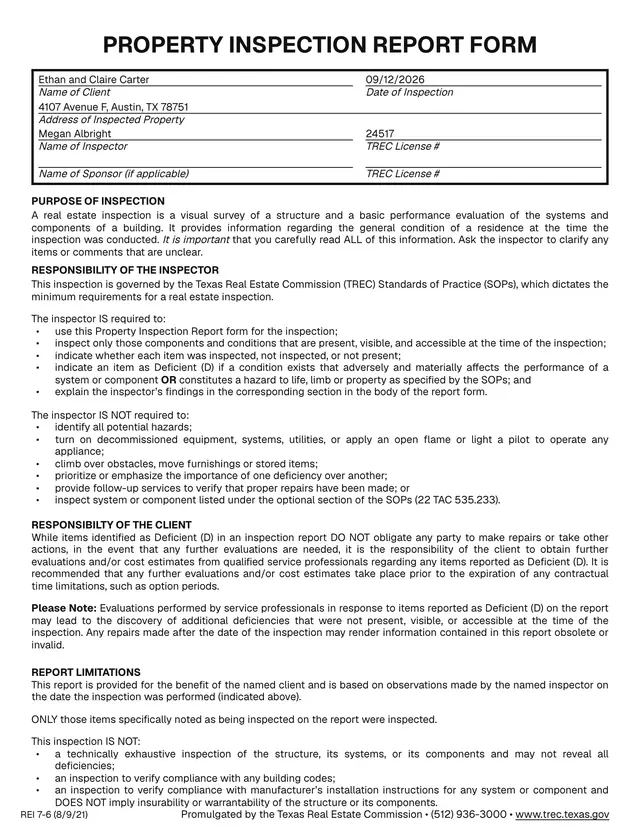
Findings by system, with each defect noted. - TexasREI 7-6
Property Inspection Report Form
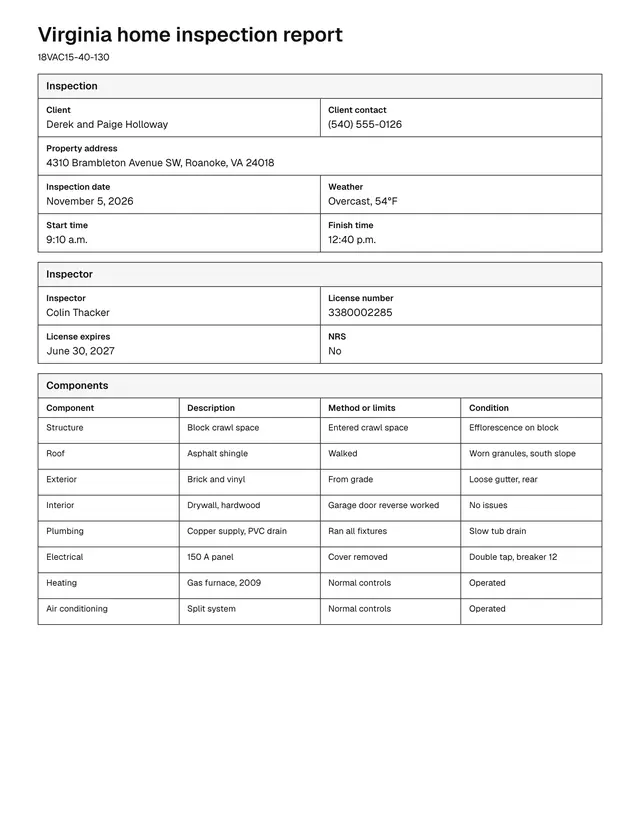
Findings by system, with each defect noted. - Virginia
Virginia home inspection report
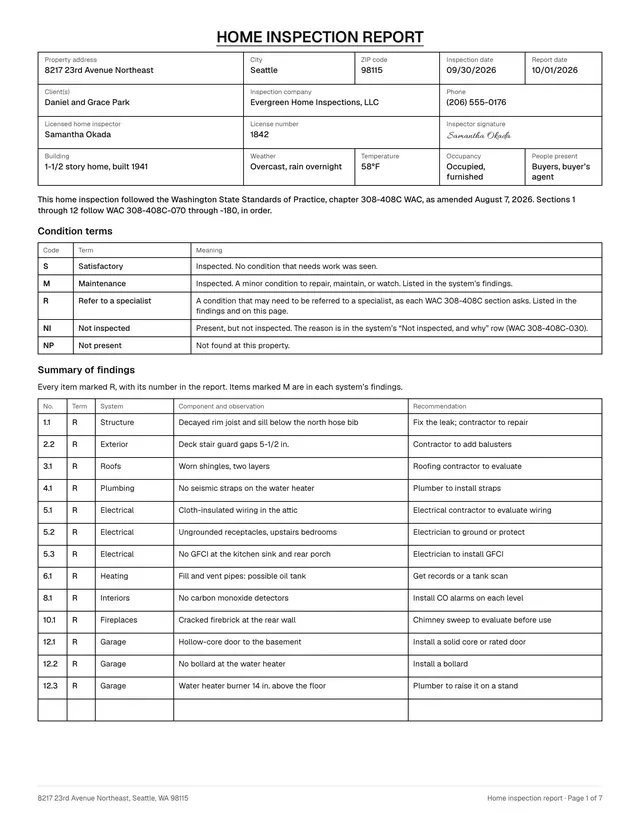
Findings by system, with each defect noted. - Washington
Home Inspection Report
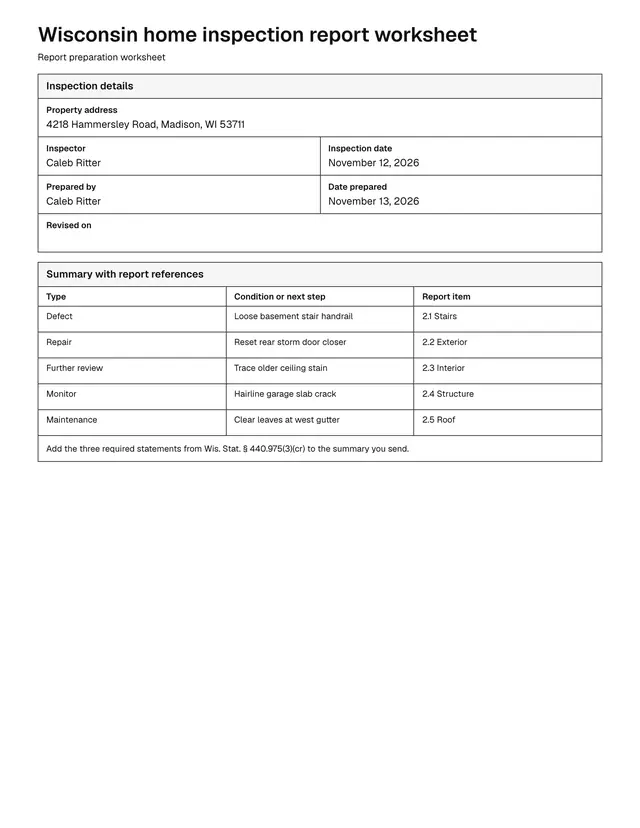
Findings by system, with each defect noted. - Wisconsin
Wisconsin home inspection report worksheet
Findings by system, with each defect noted.