New Jersey home inspection report (N.J.A.C. 13:40-15.16)
New Jersey’s standards of practice spell out what you inspect, what you describe, and what you can skip. This page covers the parts the state is picky about, like lead service lines and knob and tube wiring.
At a glance
- Rule
- N.J.A.C. 13:40-15.16
- Prepared by
- Licensed New Jersey home inspector
- Keep
- 5 years after the report is done
- Required tools
- N.J.A.C. 13:40-15.17
Completed example
Download PDFWhat a New Jersey report has to cover
The standards in N.J.A.C. 13:40-15.16 read like a checklist. You inspect the structure, exterior, roof, plumbing, electrical, heating, cooling, interior, insulation and ventilation, and fireplaces. For each one, the report has to say if it’s there, say if you couldn’t inspect it and why, describe it, state any material defects, explain why they matter, and give a recommendation.
That last part has limits. You recommend repair, replacement, monitoring, or a qualified professional, “without determining the methods, materials, or cost of corrections.” A lot of reports pad pages with ballpark prices. New Jersey doesn’t ask for them.
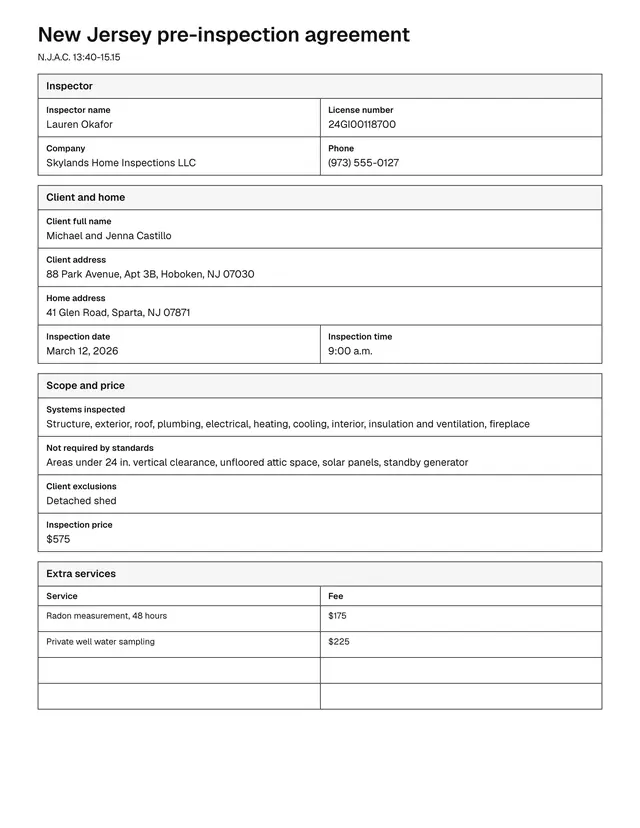
When something is there but you didn’t inspect it, the report says why. Either the client asked you to skip it, which should match the exclusions in your pre-inspection agreement, or you couldn’t get to it. A finished ceiling, a locked closet, or a crawl space that’s too tight all count. Keep the finished report five years.
Things the state names on purpose
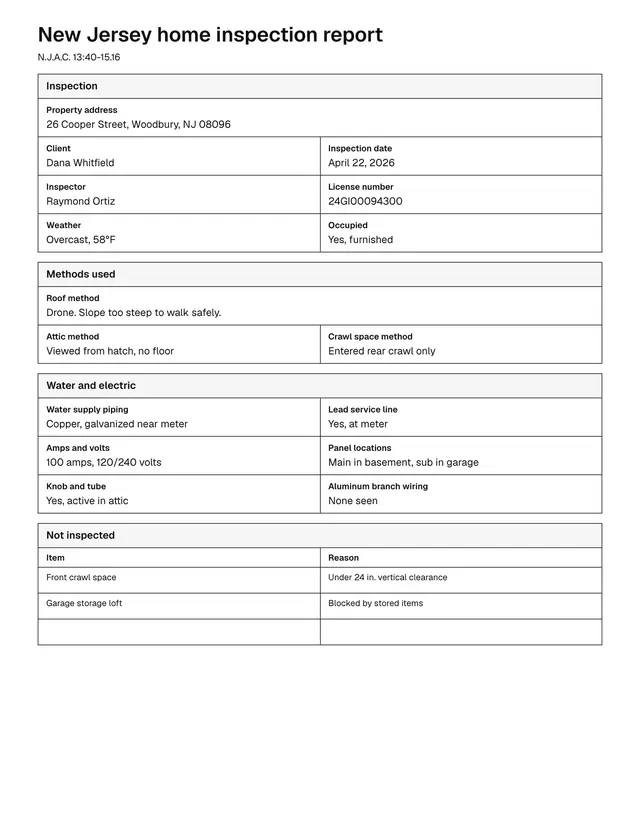
Water supply piping. Describe the main piping material, “including the presence of lead water service and/or supply piping.” Plenty of older homes in cities like Newark and Trenton still have lead service lines, and buyers care. If you can see where the line enters the basement, say what it is.
Electrical service. Describe the amperage and voltage, where the main disconnect and panels are, and the main wiring type. The rule names knob and tube branch wiring and solid conductor aluminum branch wiring, so call them out when you find them. You don’t have to inspect arc fault breakers, standby generators, or solar panels.
How you saw the roof. The report names the method: walking it, from a ladder, with binoculars from the ground, or with a drone. A drone is fine, as long as you follow the state and federal rules for flying one commercially.
Heating and cooling in the wrong season. You don’t have to run heat pumps or central air “when weather conditions or other circumstances may cause damage” to the equipment. On a cold March morning, say the air conditioning wasn’t run and why, so the buyer knows to ask the seller about it.
Attics and crawl spaces. Describe how you got into them. You don’t have to enter areas with less than 24 inches of vertical clearance and 30 inches of horizontal clearance, or walk unfloored attic space. If you looked from the hatch, write that.
The tool list and the conduct rules
New Jersey is one of the few states that tells you what to carry. N.J.A.C. 13:40-15.17 lists a ladder at least 11 feet long, a flashlight, a flame inspection mirror, a GFCI outlet tester, a measuring tape, a probe, thermometers, binoculars, a moisture meter, a combustible gas leak detector, and a voltage detector. When a finding rests on a reading, like a high moisture meter number at a basement wall, put the reading in the report.
The conduct rules in N.J.A.C. 13:40-15.19 shape the report too. You can’t offer to repair, for an extra fee, anything on a home you inspected. Your fee can’t hang on what you find or on the closing. And the report goes to your client only, unless they give written approval or you find a hidden condition that “poses an imminent risk of injury.”
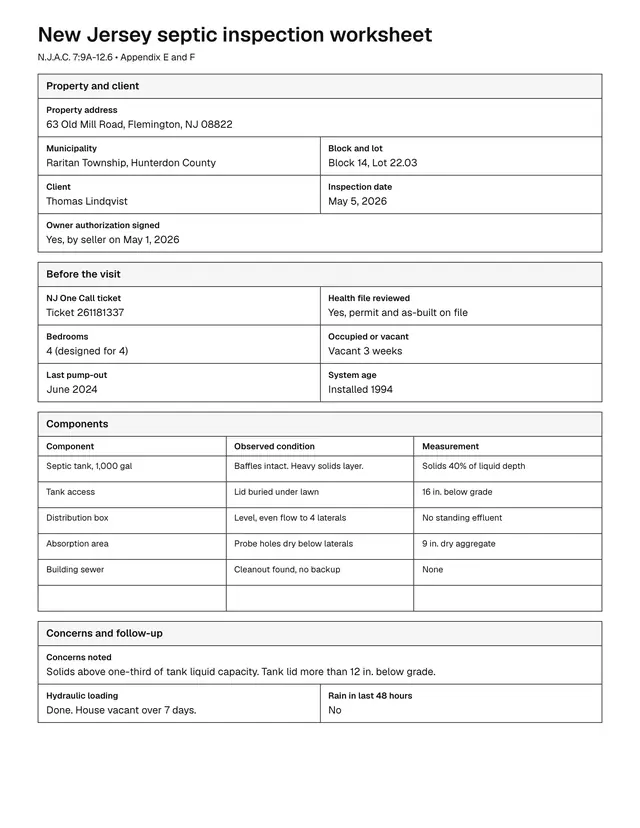
Termite checks, radon, wells, and septic systems aren’t part of the standard inspection. If you do them as add-ons, they get their own paperwork, like the septic inspection form for a home on a system.
How do buyers find the big problems fast?
A full report can run 40 pages with photos. The buyer has only a few days to send a repair request, and nobody reads page 37 first. When a material defect is buried between notes about loose cabinet hinges, it gets missed.
So lead with the worst items. Rank each defect by how serious it is and list the serious ones up front. The standards still want every system described, but nothing in them stops you from putting the important parts first.
Noma specializes in the New Jersey Home Inspection Report (N.J.A.C. 13:40-15.16). Build reports with your own sections and titles, mark how serious each defect is, and Noma lists the worst ones in the summary. Draw diagrams right on the job from the phone app. See how Noma builds inspection reports.
Frequentlyaskedquestions
Send this document in minutes, not an afternoon.
Other states
Home inspection report templates- Alabama
Home Inspection Report
Findings by system, with each defect noted. - Arizona
Home Inspection Report
Findings by system, with each defect noted. - Arkansas
Arkansas Home Inspection Report
Findings by system, with each defect noted. - Colorado
Colorado home inspection report
Findings by system, with each defect noted. - Connecticut
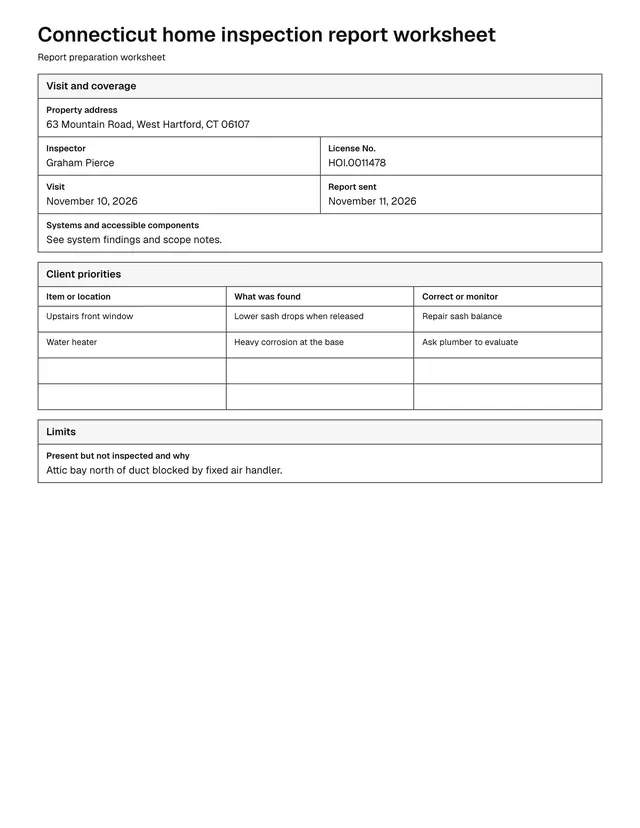
Connecticut home inspection report worksheet
Findings by system, with each defect noted. - Delaware
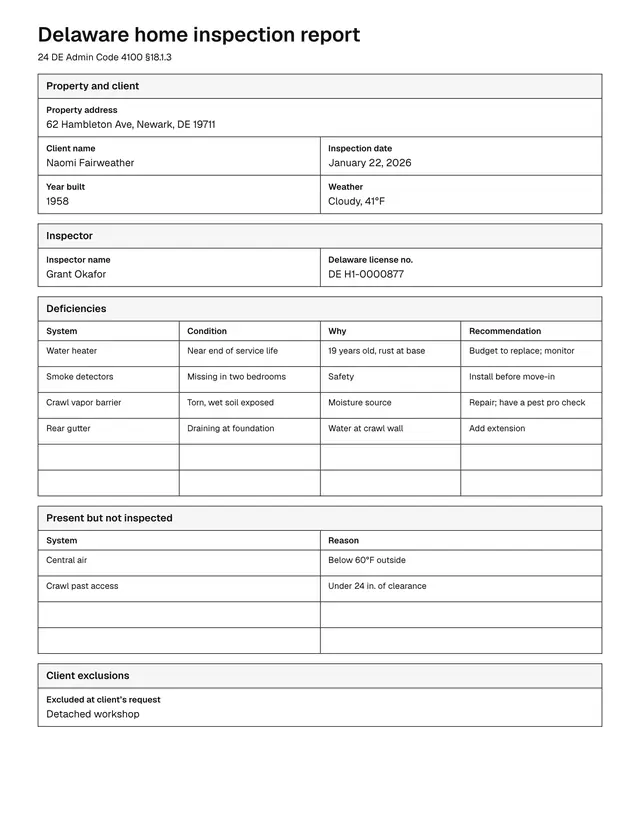
Delaware home inspection report (24 DE Admin Code 4100 §18)
Findings by system, with each defect noted. - Florida
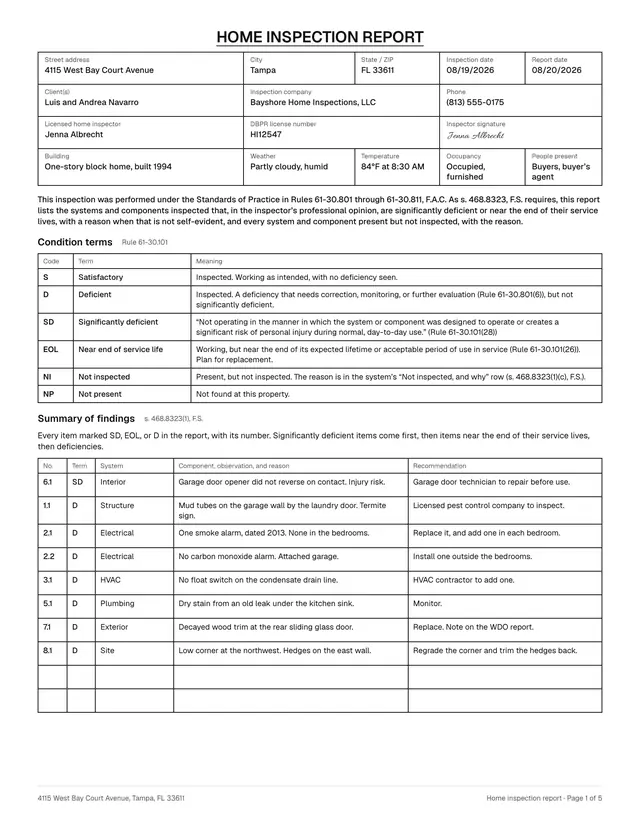
Home Inspection Report
Findings by system, with each defect noted. - Georgia
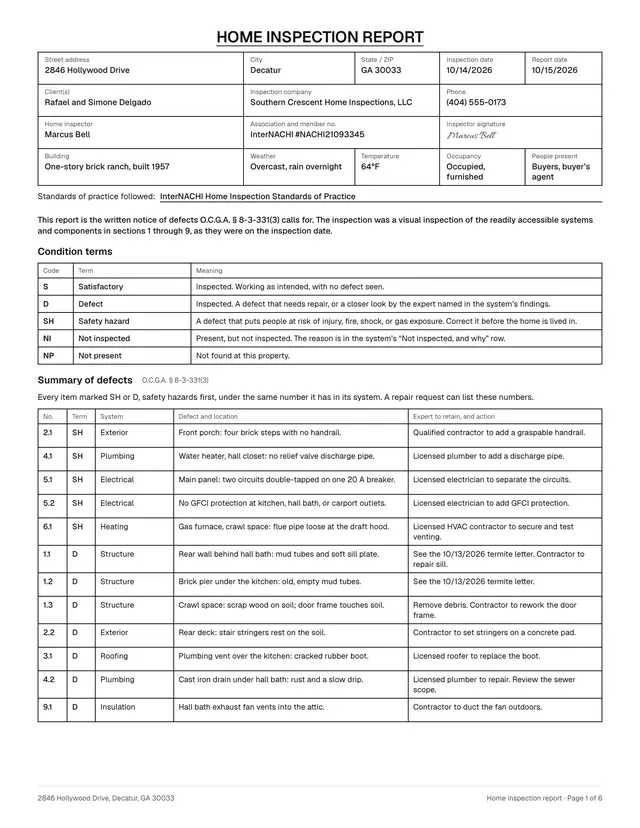
Home Inspection Report
Findings by system, with each defect noted. - Hawaii
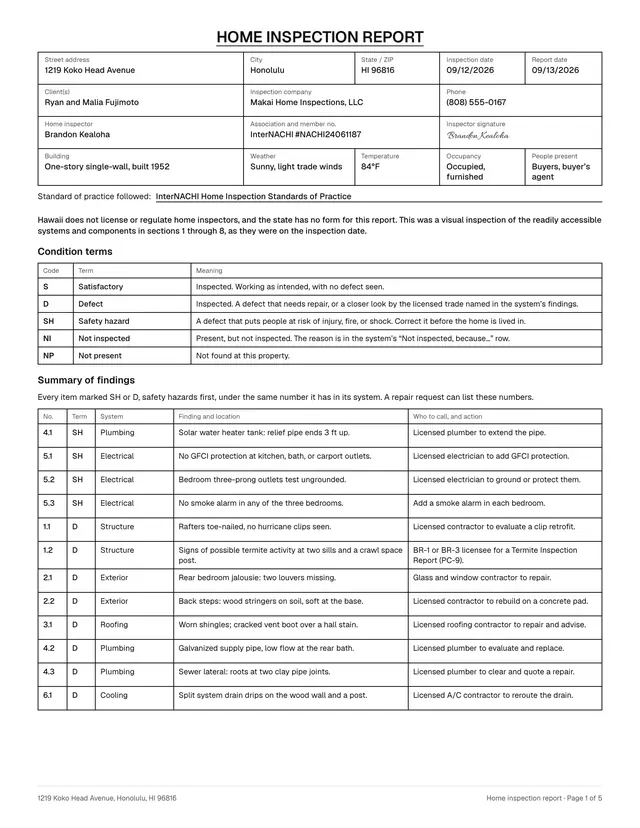
Home Inspection Report
Findings by system, with each defect noted. - Illinois
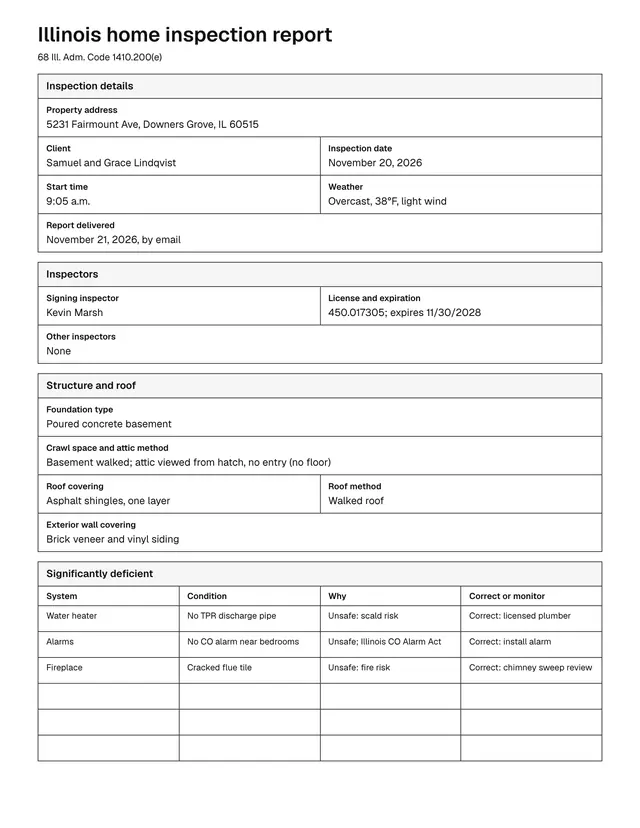
Illinois home inspection report
Findings by system, with each defect noted. - Indiana
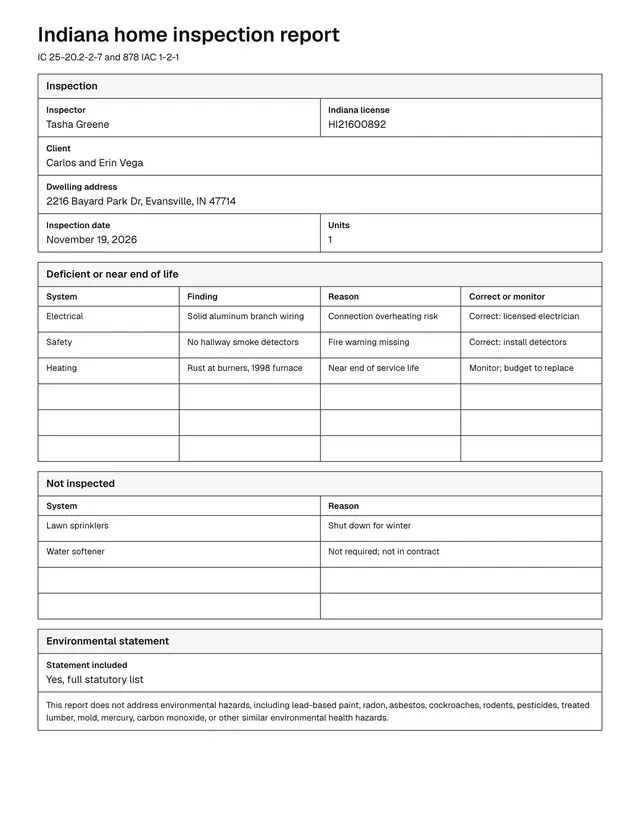
Indiana home inspection report
Findings by system, with each defect noted. - Kentucky
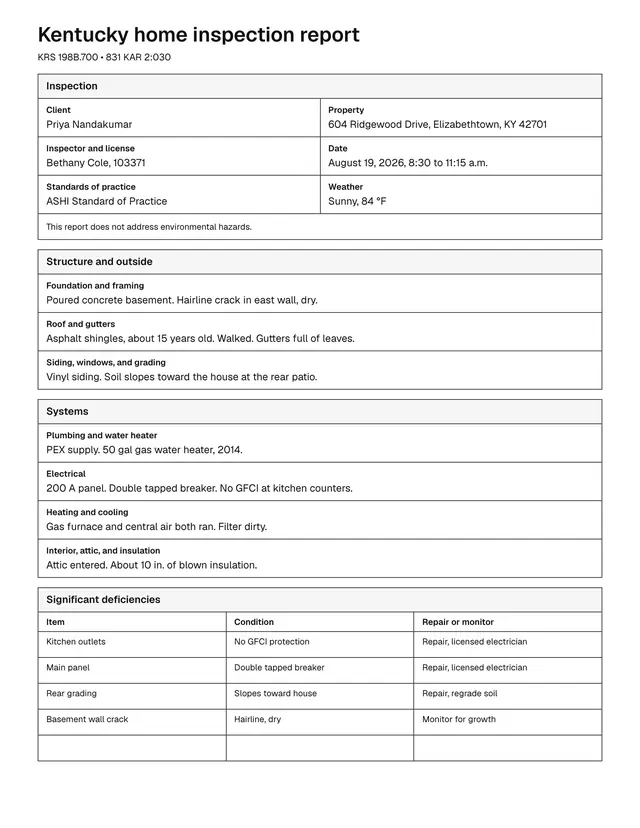
Kentucky home inspection report
Findings by system, with each defect noted. - Louisiana
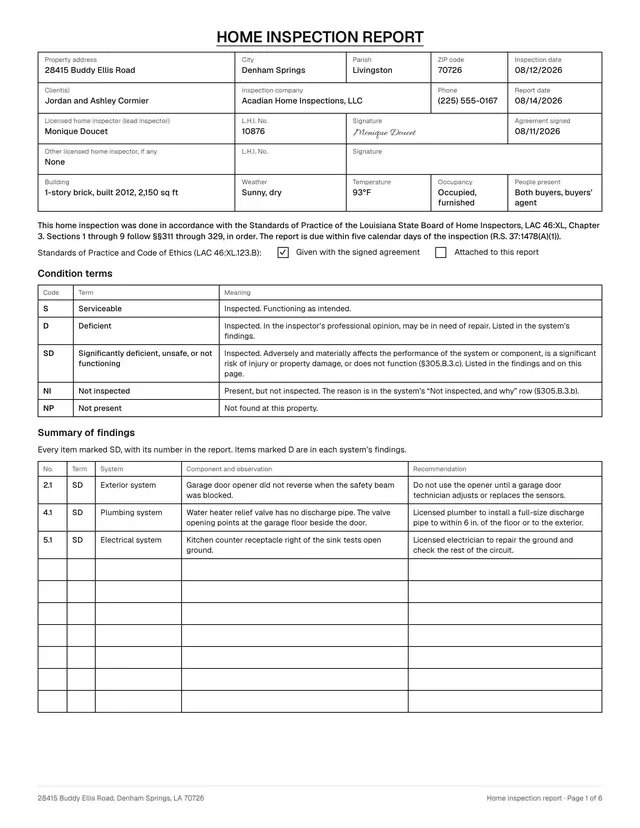
Home Inspection Report
Findings by system, with each defect noted. - Maryland
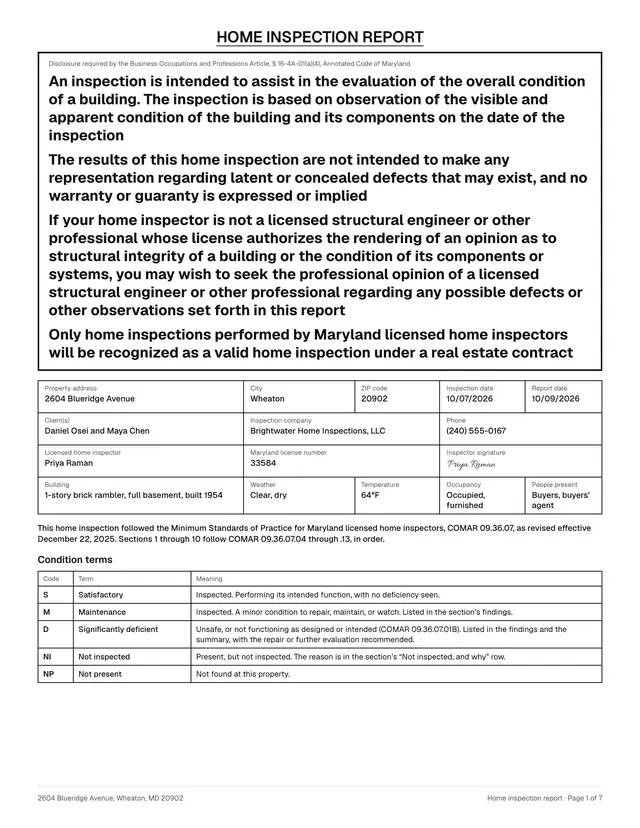
Home Inspection Report
Findings by system, with each defect noted. - Massachusetts
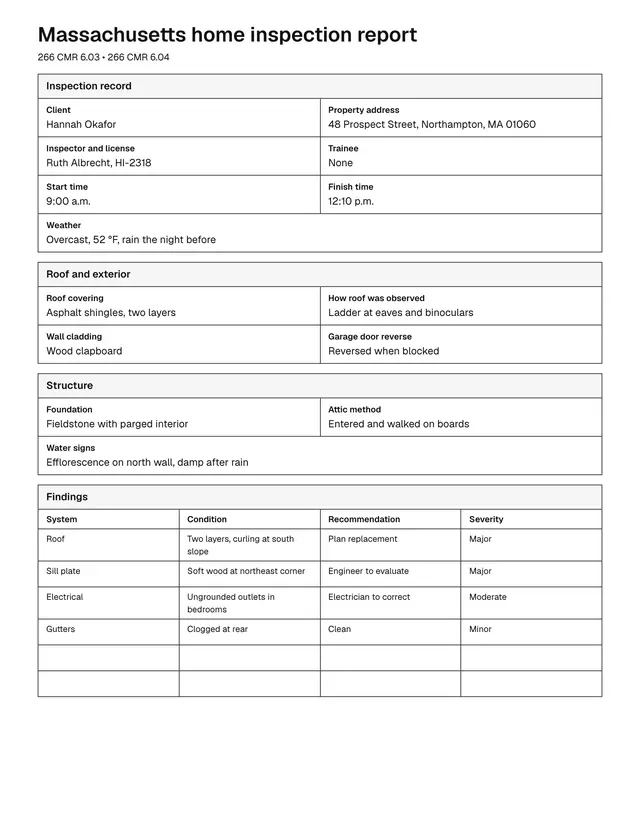
Massachusetts home inspection report (266 CMR 6.03)
Findings by system, with each defect noted. - Michigan
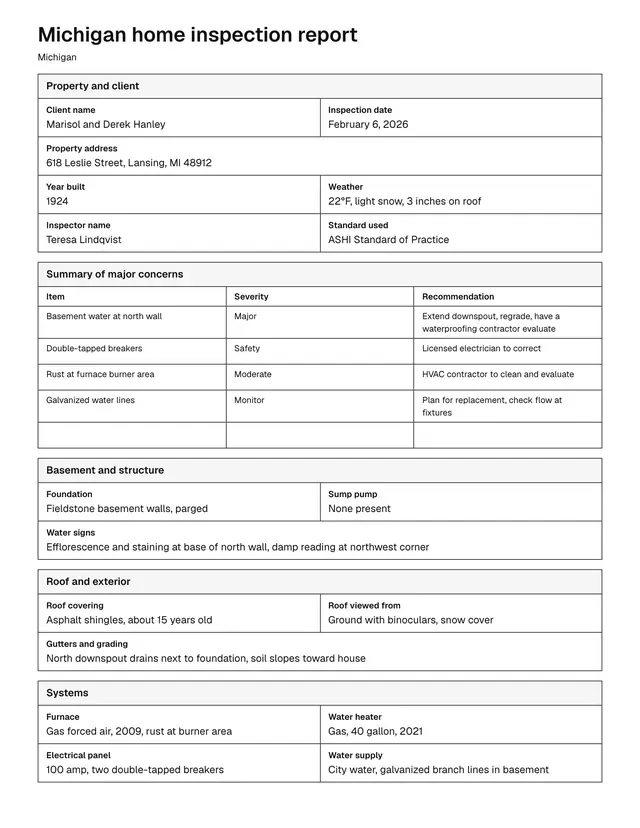
Michigan home inspection report
Findings by system, with each defect noted. - Mississippi
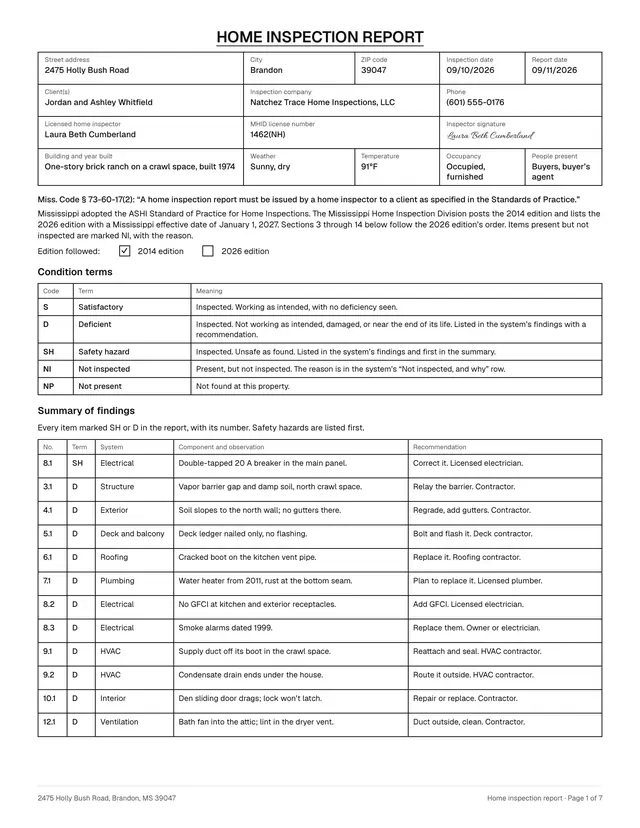
Home Inspection Report
Findings by system, with each defect noted. - Missouri
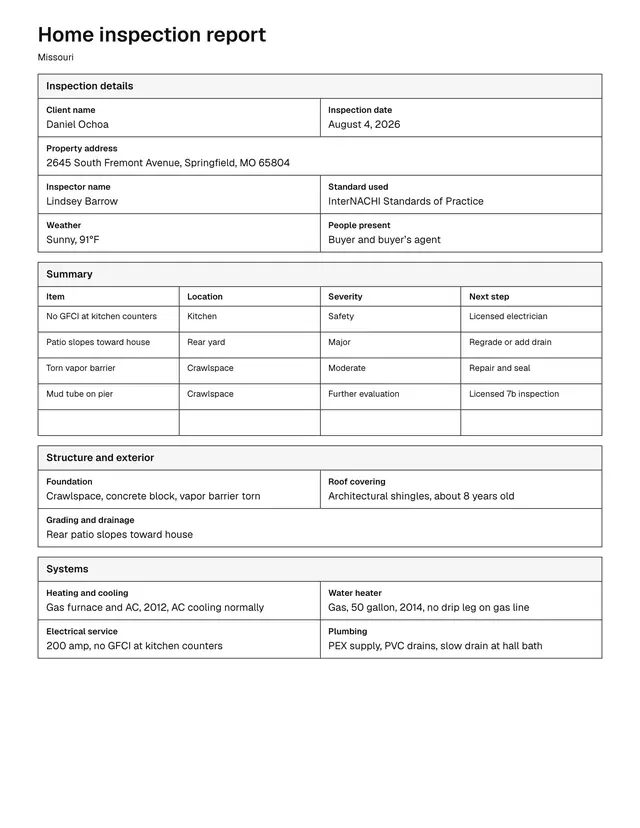
Missouri home inspection report
Findings by system, with each defect noted. - Nevada
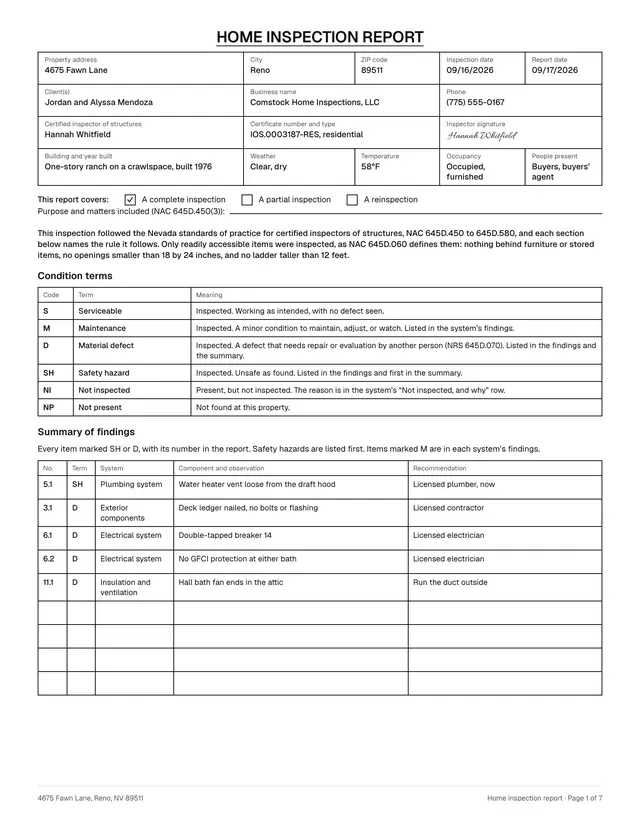
Home Inspection Report
Findings by system, with each defect noted. - New Mexico
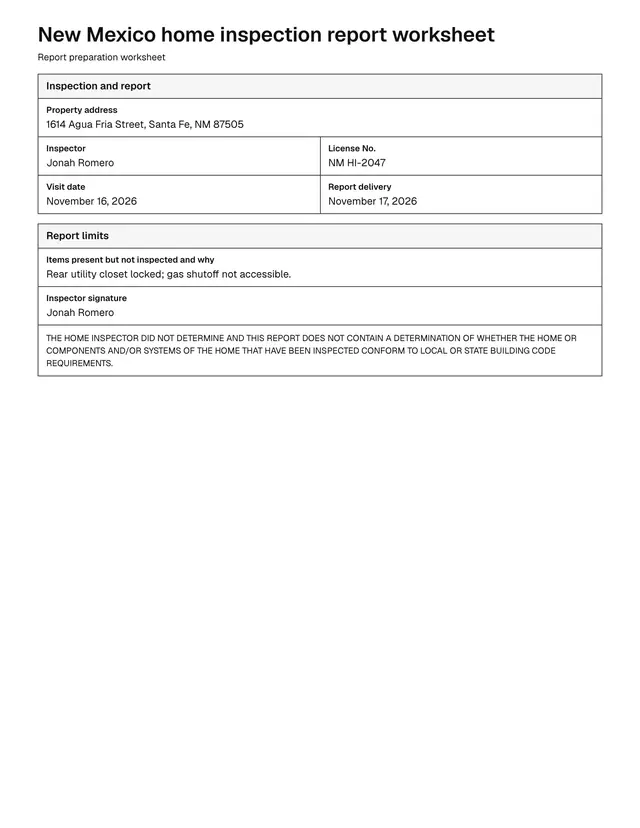
New Mexico home inspection report worksheet
Findings by system, with each defect noted. - New York
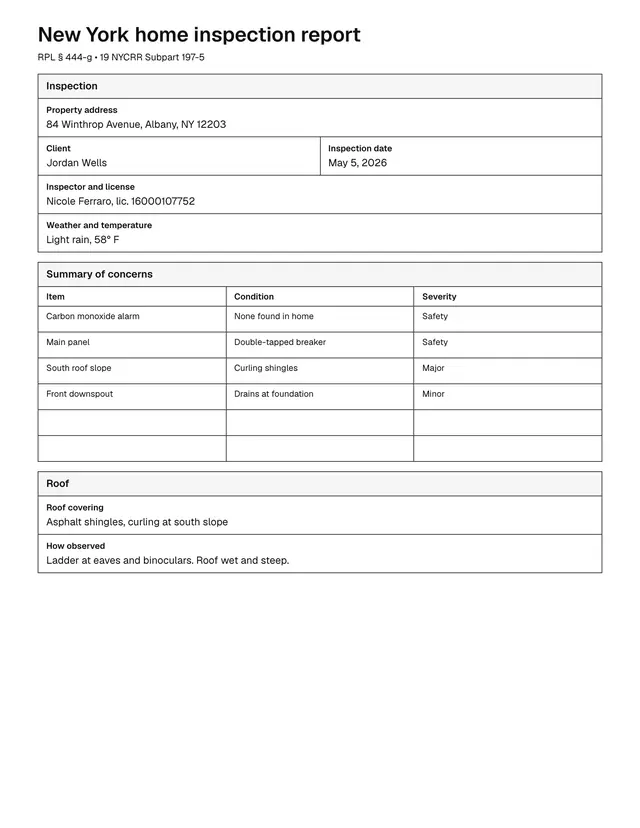
New York home inspection report (19 NYCRR Subpart 197-5)
Findings by system, with each defect noted. - North Carolina
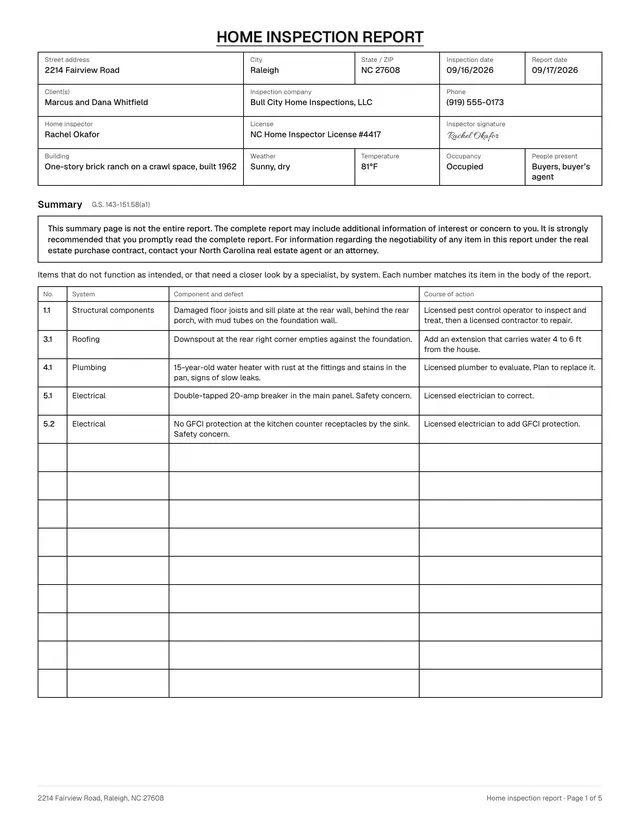
Home Inspection Report
Findings by system, with each defect noted. - Ohio
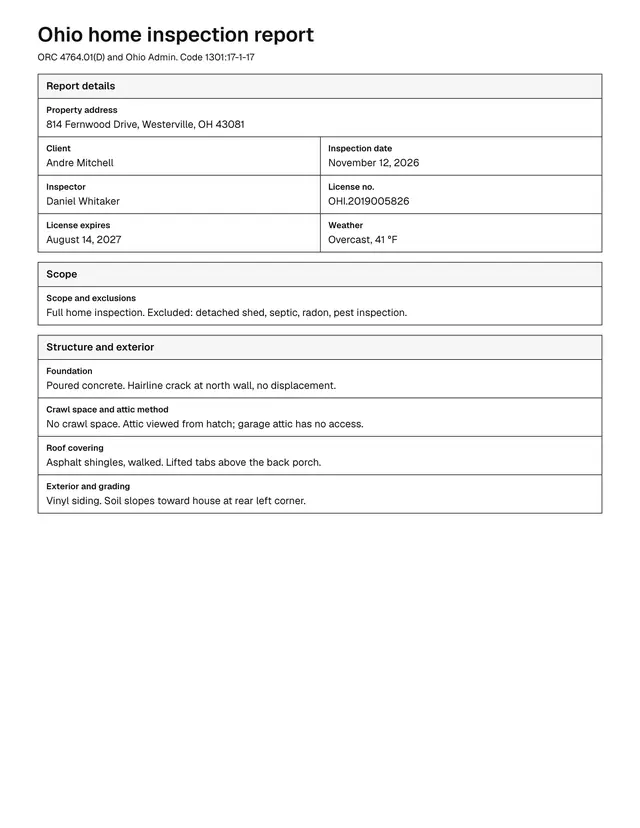
Ohio home inspection report
Findings by system, with each defect noted. - Oklahoma
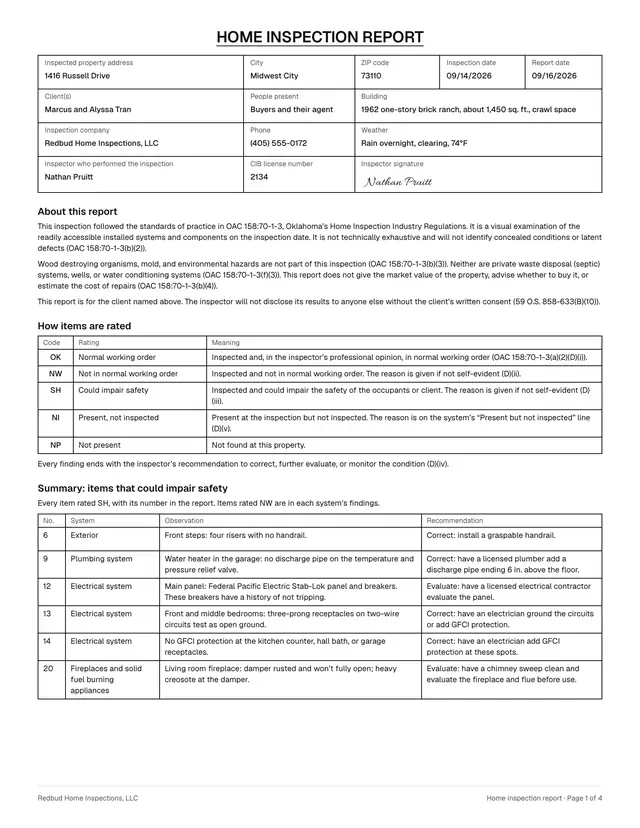
Home Inspection Report
Findings by system, with each defect noted. - Oregon
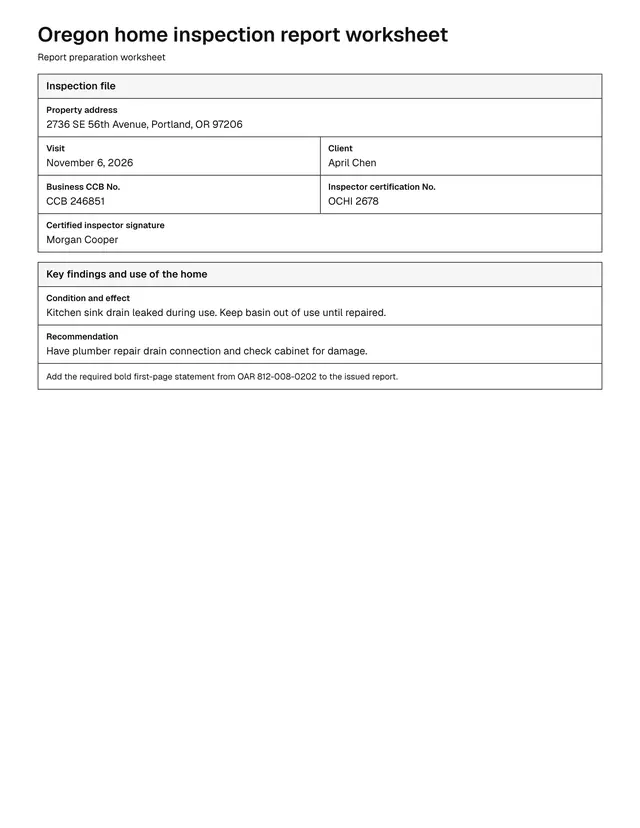
Oregon home inspection report worksheet
Findings by system, with each defect noted. - Pennsylvania
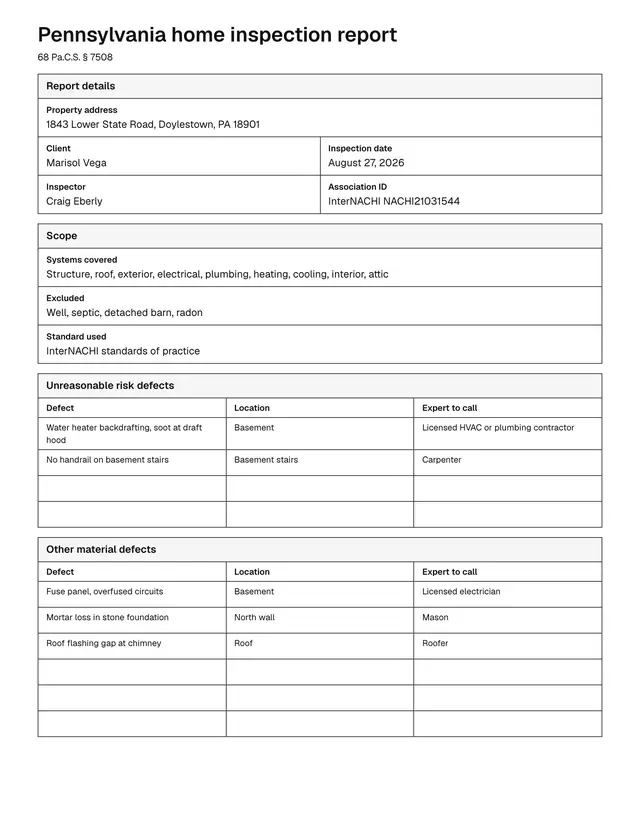
Pennsylvania home inspection report
Findings by system, with each defect noted. - South Carolina
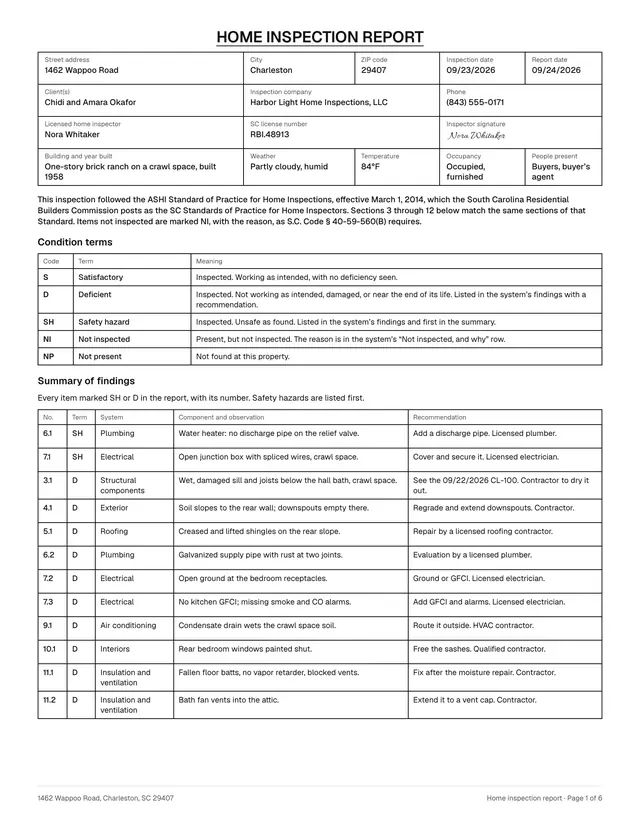
Home Inspection Report
Findings by system, with each defect noted. - Tennessee
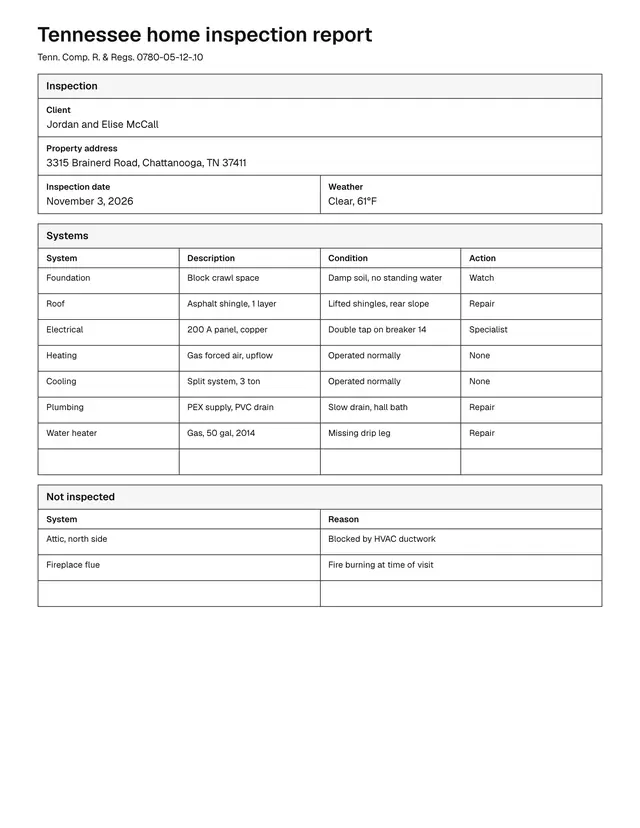
Tennessee home inspection report
Findings by system, with each defect noted. - TexasREI 7-6
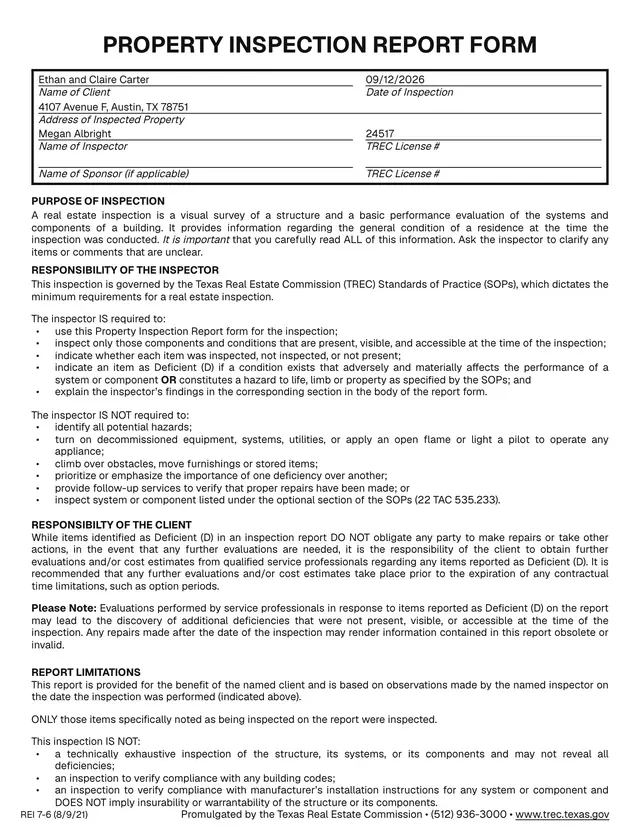
Property Inspection Report Form
Findings by system, with each defect noted. - Virginia
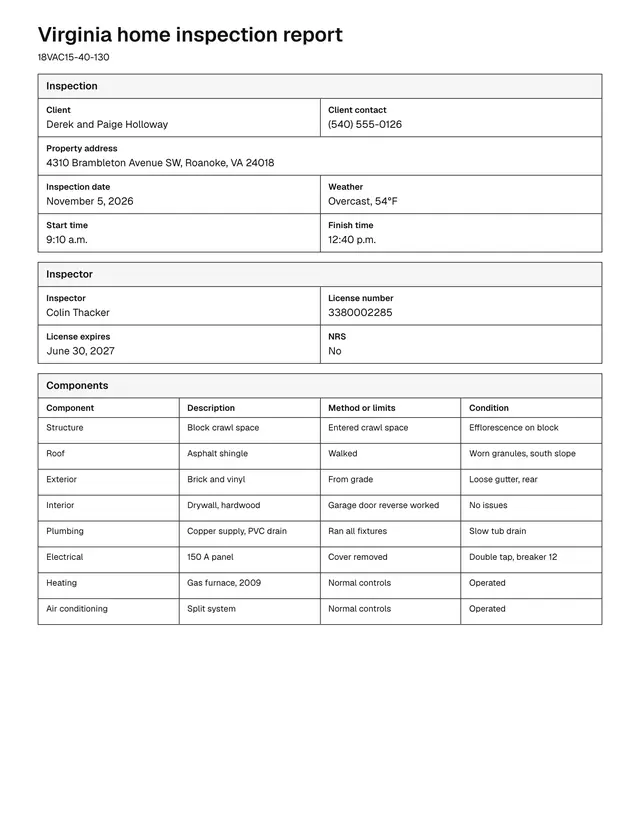
Virginia home inspection report
Findings by system, with each defect noted. - Washington
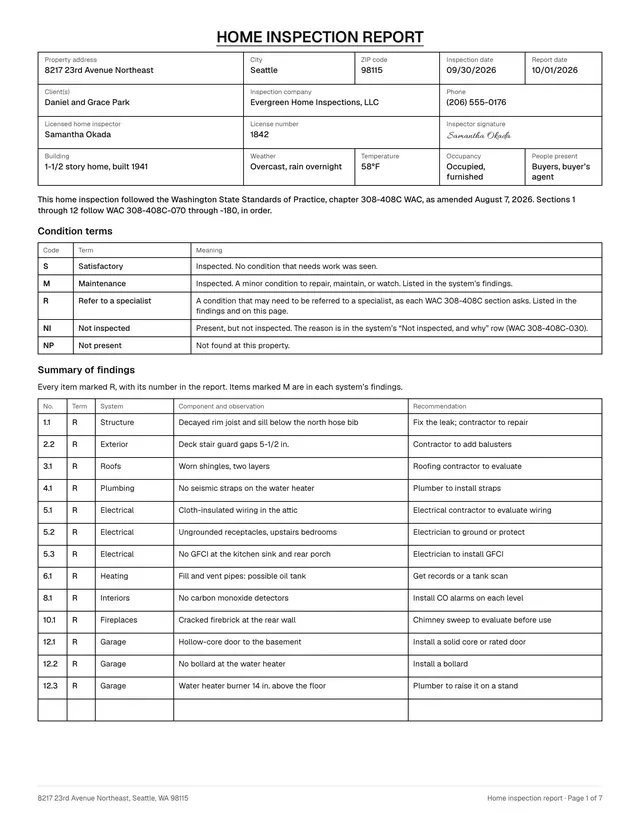
Home Inspection Report
Findings by system, with each defect noted. - Wisconsin
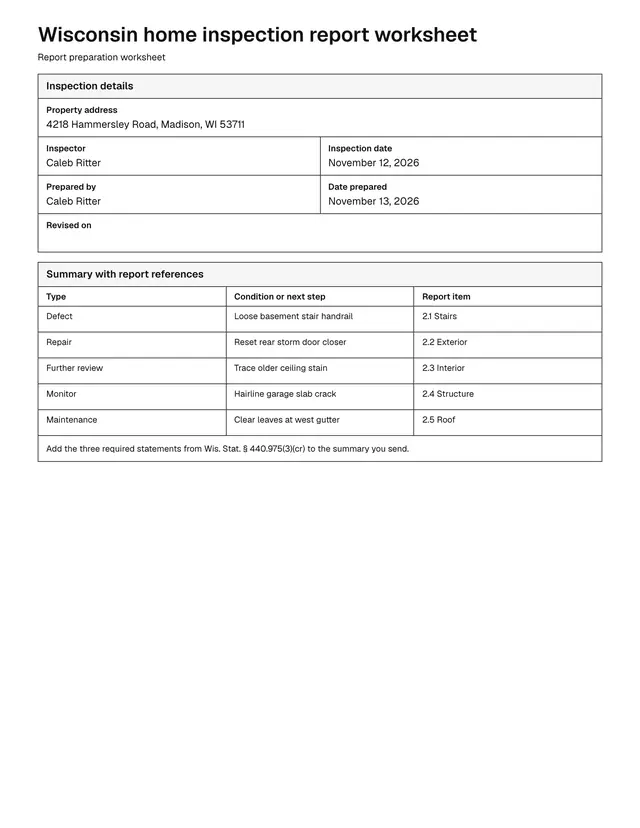
Wisconsin home inspection report worksheet
Findings by system, with each defect noted.