New York home inspection report (19 NYCRR Subpart 197-5)
A New York home inspection report is due within five business days and belongs to the client alone. The Department of State’s standards of practice decide what each system section has to say.
At a glance
- Standards
- 19 NYCRR Subpart 197-5
- Deliver within
- 5 business days (RPL § 444-g)
- Shared with
- The client, unless they consent
- Must show
- Your license number
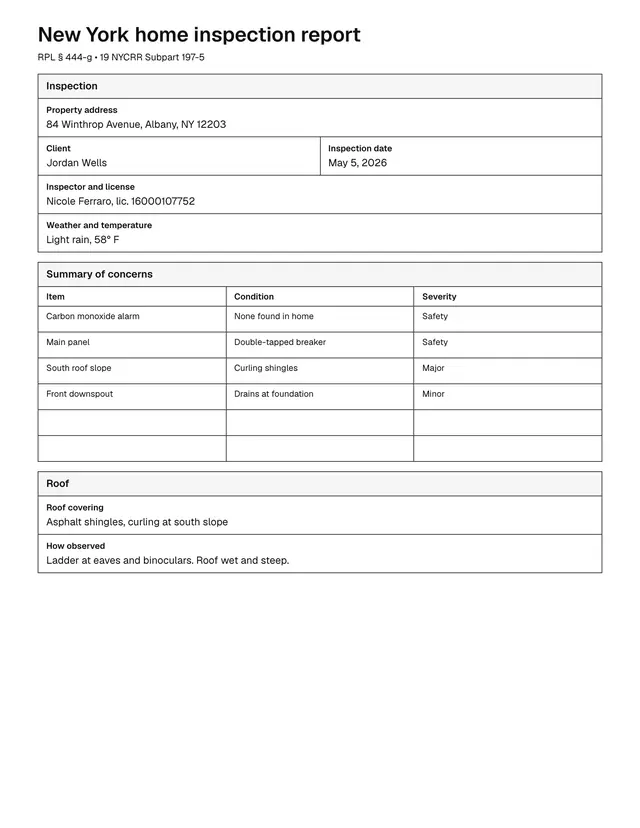
Completed example
Download PDFFive business days, and only for the client
New York puts the big rules for the report in the statute itself. Real Property Law § 444-g says that “no later than five business days after the completion of a home inspection,” you give the client “a written report of the findings.” A Thursday inspection in Albany means the report is due the following Thursday at the latest. Note the date you sent it, so you can show you made the deadline.
The same section makes the report private. It is “deemed confidential” and isn’t shared “without the express consent of the client.” Agents ask for copies all the time. Get the client’s yes in writing first, ideally in your pre-inspection agreement.
Two more statute rules show up on the page. Your license number goes on every report. And you can’t offer to fix what you found for a fee before the deal closes. The full text is in the Department of State’s licensing law booklet.
What the standards make you write down
The general rule is 19 NYCRR 197-5.3. Report the systems and parts you observed that are deficient, not working, or unsafe. Then list the ones you were supposed to look at but couldn’t, and say why. That second list protects you as much as it helps the buyer.
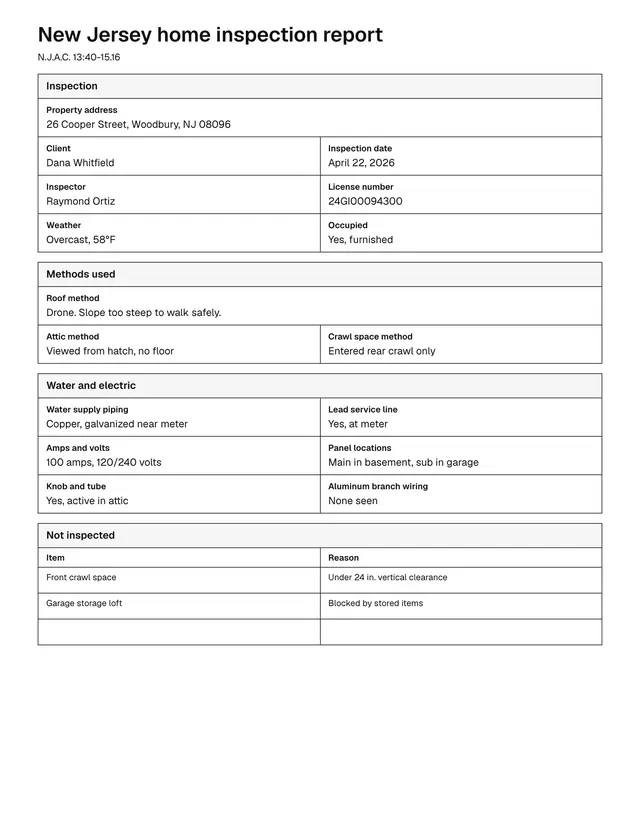
Roof. Describe the roofing type and its condition, and say how you looked at it: walked it, used a ladder at the eaves, used a drone, or looked from the ground. 197-5.7 requires the method, not just the result.
Electrical. 197-5.9 has its own checklist. Write the service amperage and voltage, where the main disconnect and any sub-panels are, whether there’s aluminum branch circuit wiring, and whether smoke detectors and carbon monoxide detectors are present or missing. A missing CO alarm is one of the most common findings in older New York houses.
Attic. Under 197-5.15 you report the method you used, like “viewed from the hatch with a flashlight” or “entered and walked the floored section.”
Limited jobs. If the client hired you for part of the house, 197-4.6 says the report must describe that scope and what was included and left out. Put it on page one, not in the fine print.
Everything else. Plumbing, heating, cooling, interiors, insulation and ventilation, and fireplaces each have their own section in Subpart 197-5. The report should also identify every system you observed, which is a separate rule in 197-4.6.
Where the rules let you stop
The standards are clear about limits, and New York weather means you’ll use them. You don’t have to walk a roof if doing so could damage it or be unsafe. You don’t have to run heating when conditions aren’t safe. Under 197-5.11 you don’t have to operate air conditioning when it’s below 65° F outside. You don’t have to enter an attic with no walkable floor.
197-5.16 covers the big exclusions. You don’t predict remaining life, you don’t give “methods, materials or costs of corrections,” and you don’t judge whether the buyer should buy. Hazards like mold, radon, lead paint, and wood destroying organisms are outside the standard inspection too. A client can also ask you to leave certain items out.
Each time you use a limit, write it down. “Central air not operated, 58° F outside” is a one-line note that heads off a phone call in July.
How do you keep the safety items from getting buried?
A full report on a 1920s colonial can run 60 pages. The buyer reads page one, maybe page two. If the missing CO alarm and the double-tapped breaker sit on page 41, they’ll get missed. Put a short list of the most serious items up front, sorted by how much they matter, and let the system sections carry the detail.
Write each finding the same way: what it is, where it is, why it matters, and who should look at it next. “Double-tapped breaker in main panel, basement east wall. Can overheat. Have a licensed electrician evaluate.” That gives the buyer a next step without you pricing the repair, which the standards don’t ask you to do.
Noma specializes in the New York home inspection report (19 NYCRR Subpart 197-5). Build it with your own sections and titles, mark how serious each defect is so the summary lists the worst ones first, and add diagrams drawn on site. See how Noma builds home inspection reports.
Frequentlyaskedquestions
Send this document in minutes, not an afternoon.
Other states
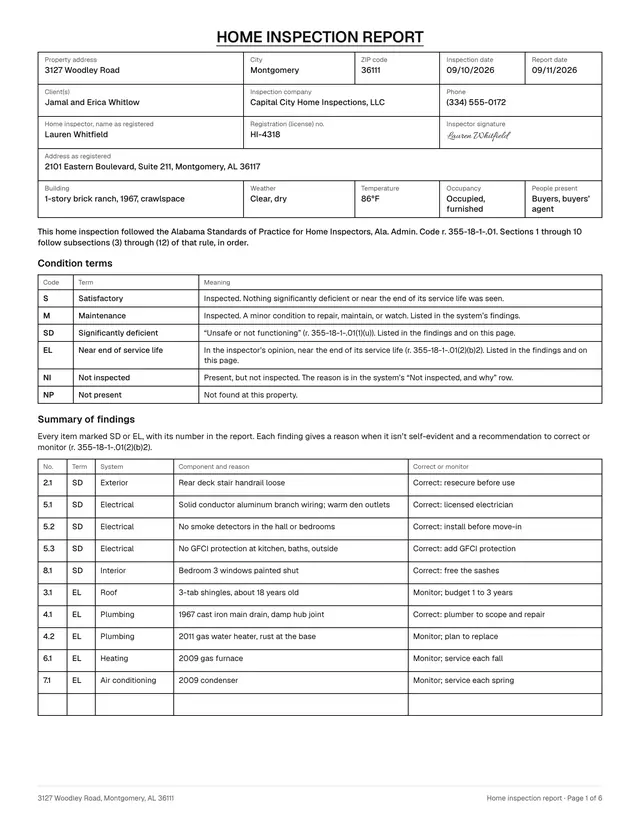
Home inspection report templates- Alabama
Home Inspection Report
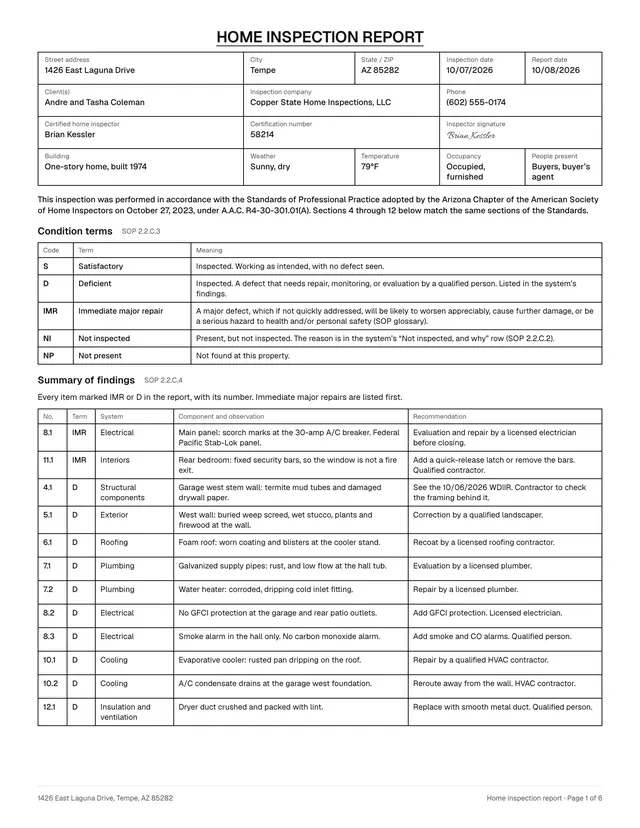
Findings by system, with each defect noted. - Arizona
Home Inspection Report
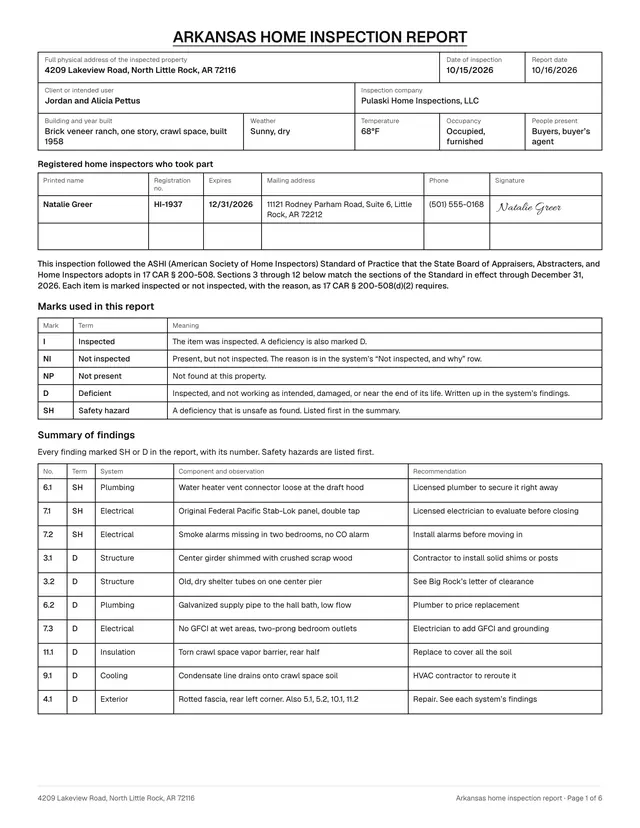
Findings by system, with each defect noted. - Arkansas
Arkansas Home Inspection Report
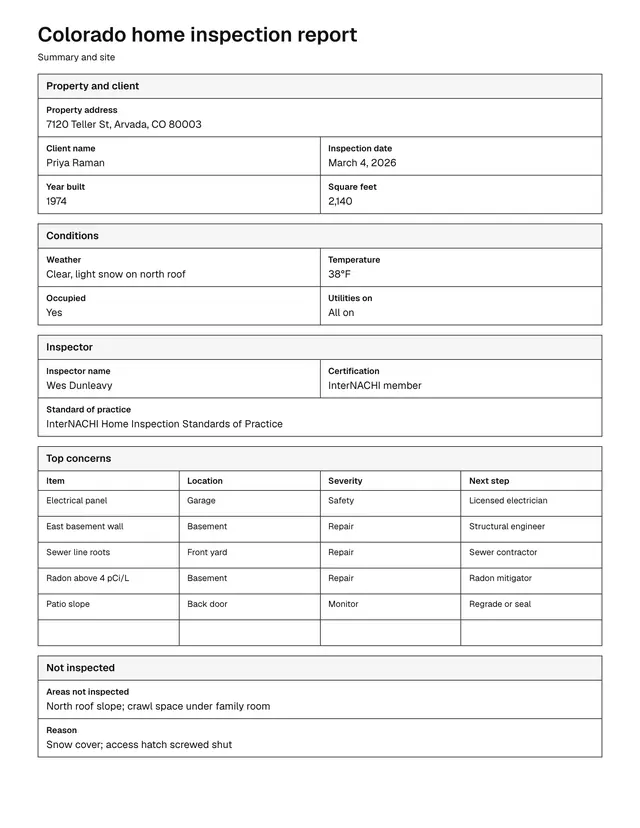
Findings by system, with each defect noted. - Colorado
Colorado home inspection report
Findings by system, with each defect noted. - Connecticut
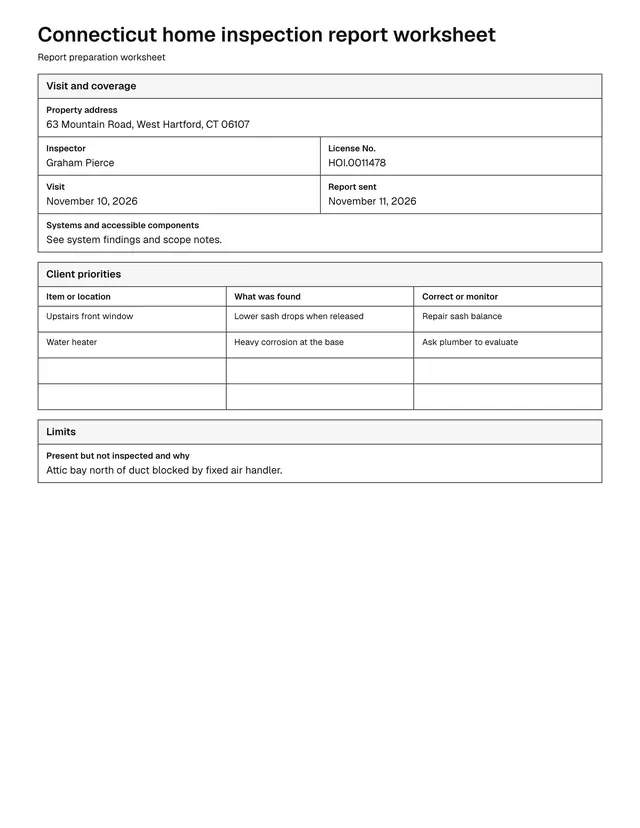
Connecticut home inspection report worksheet
Findings by system, with each defect noted. - Delaware
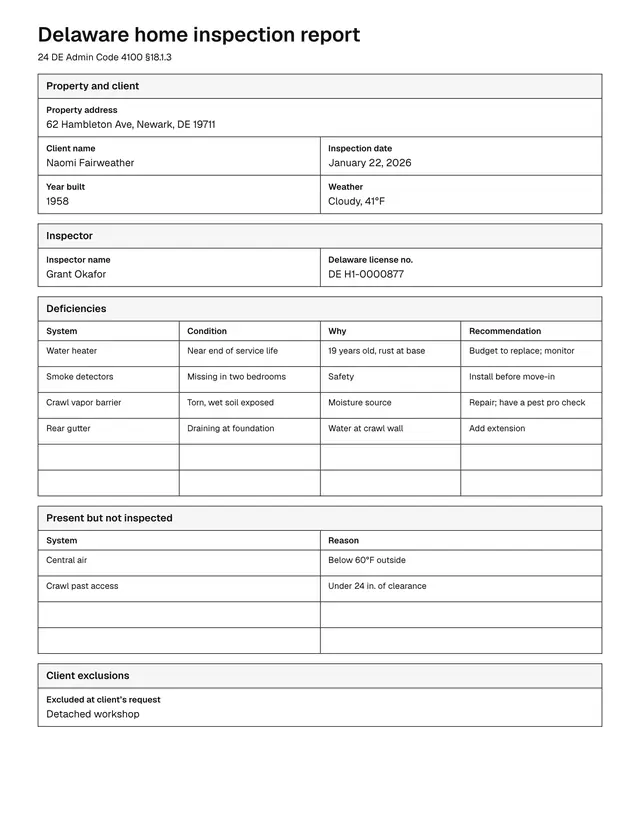
Delaware home inspection report (24 DE Admin Code 4100 §18)
Findings by system, with each defect noted. - Florida
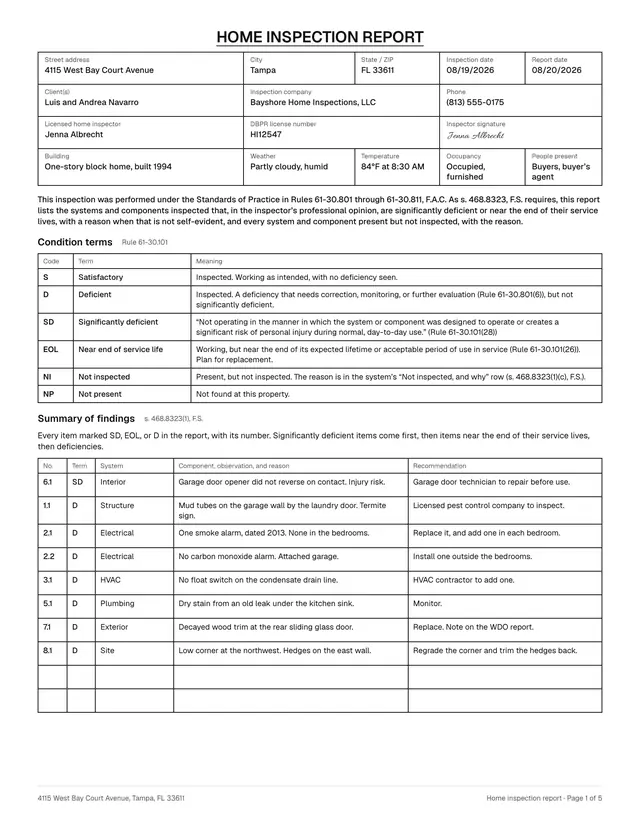
Home Inspection Report
Findings by system, with each defect noted. - Georgia
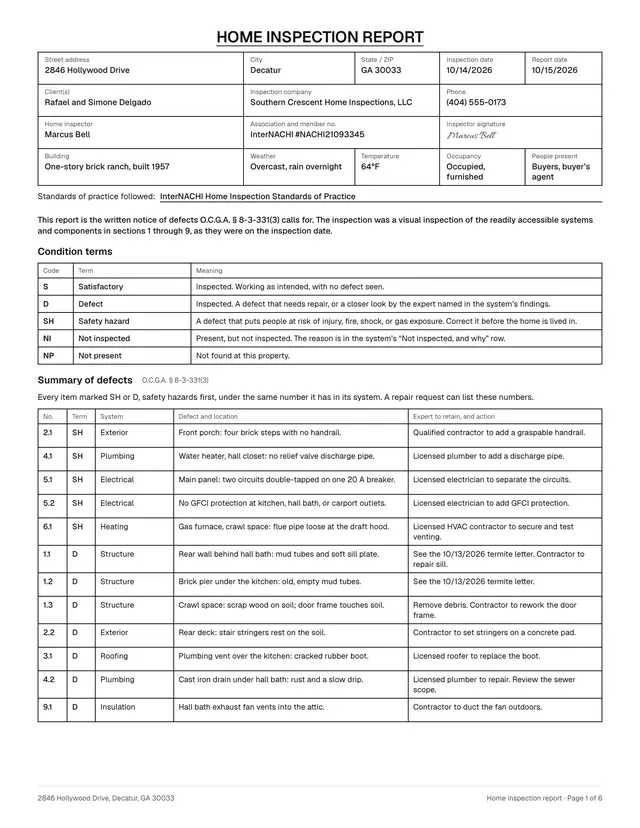
Home Inspection Report
Findings by system, with each defect noted. - Hawaii
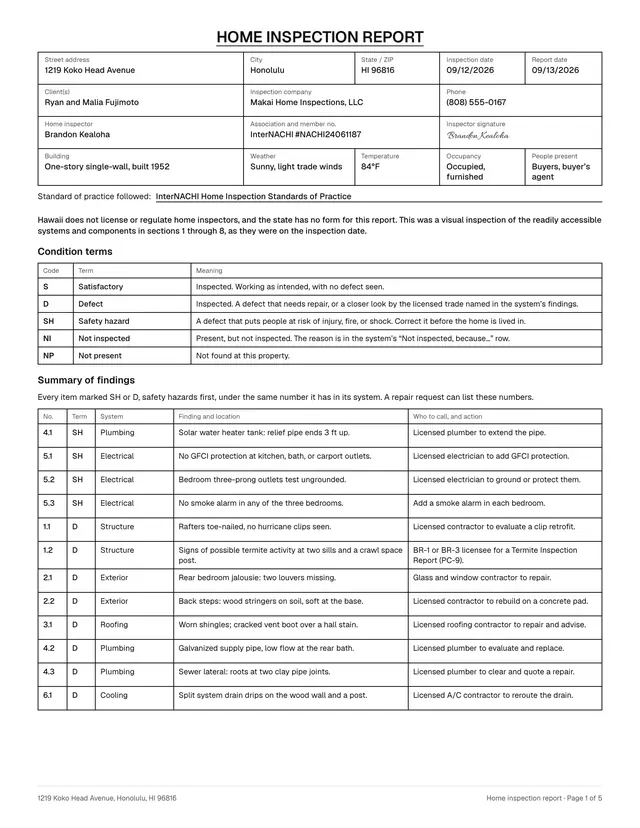
Home Inspection Report
Findings by system, with each defect noted. - Illinois
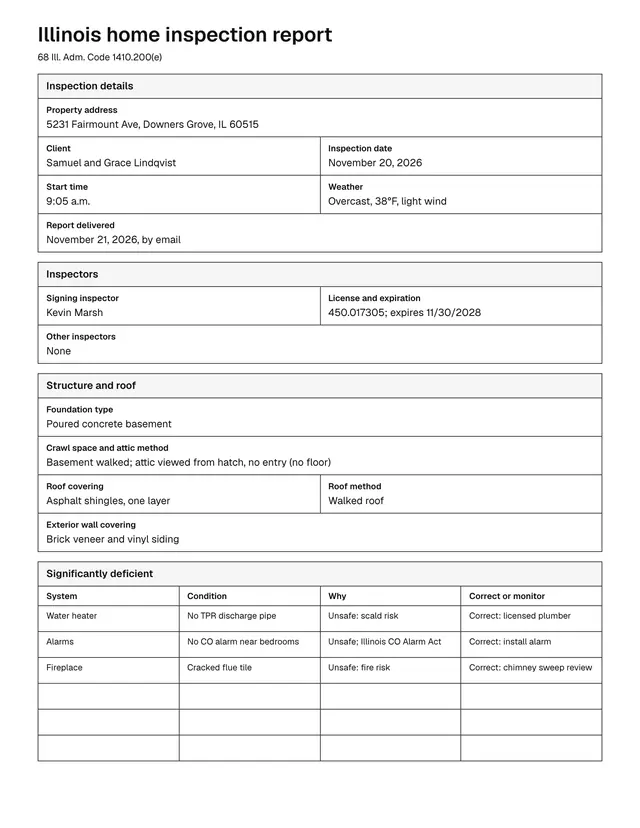
Illinois home inspection report
Findings by system, with each defect noted. - Indiana
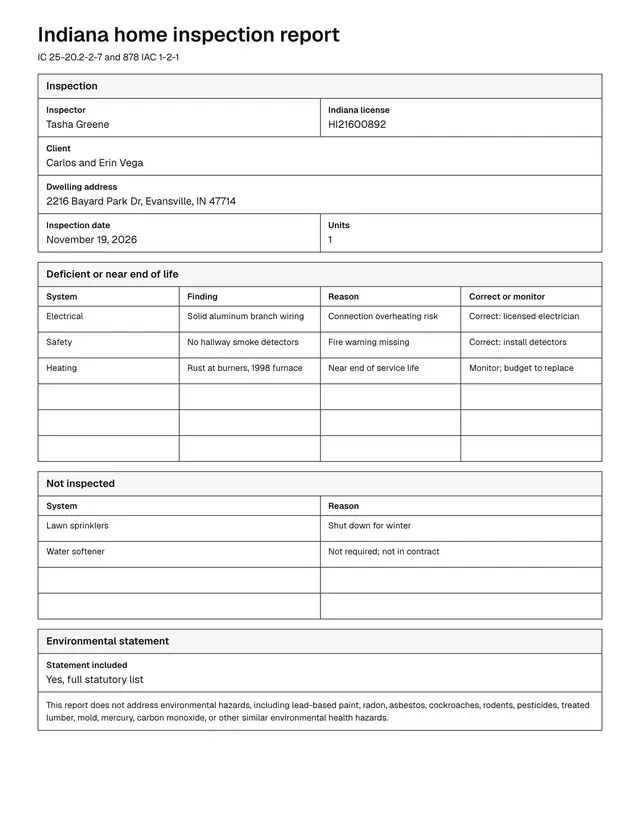
Indiana home inspection report
Findings by system, with each defect noted. - Kentucky
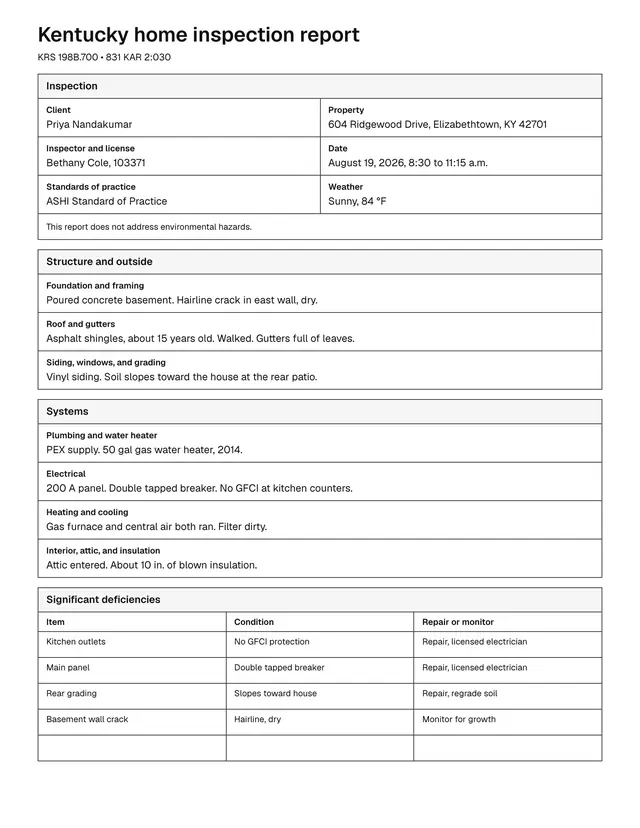
Kentucky home inspection report
Findings by system, with each defect noted. - Louisiana
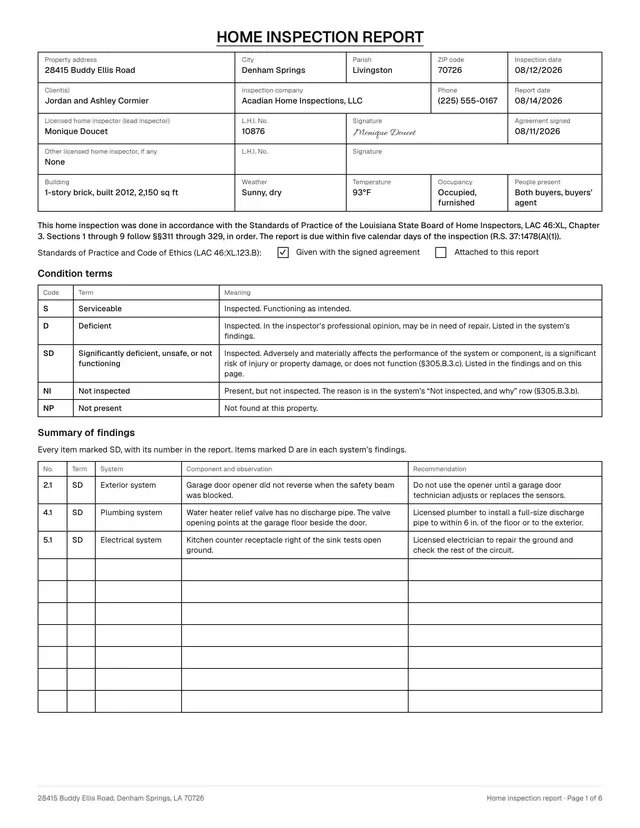
Home Inspection Report
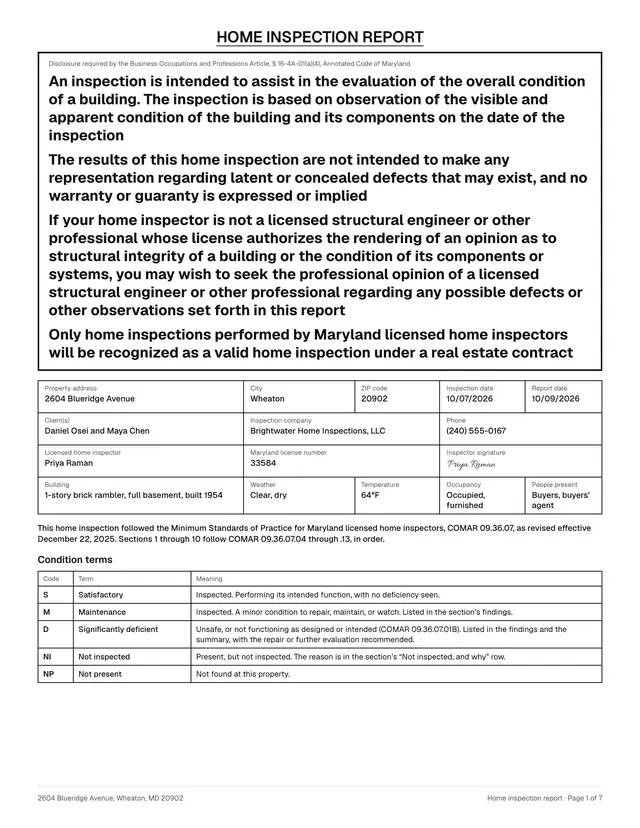
Findings by system, with each defect noted. - Maryland
Home Inspection Report
Findings by system, with each defect noted. - Massachusetts
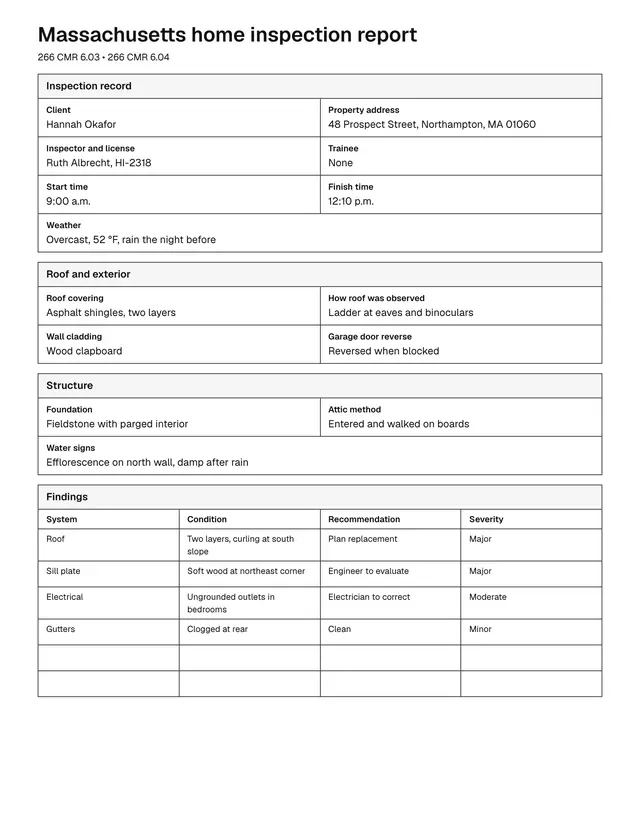
Massachusetts home inspection report (266 CMR 6.03)
Findings by system, with each defect noted. - Michigan
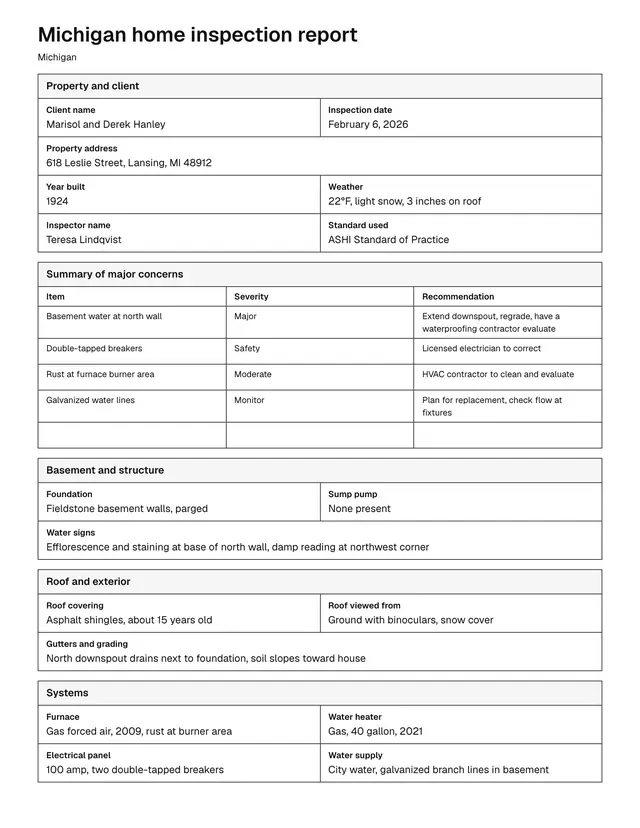
Michigan home inspection report
Findings by system, with each defect noted. - Mississippi
Home Inspection Report
Findings by system, with each defect noted. - Missouri
Missouri home inspection report
Findings by system, with each defect noted. - Nevada
Home Inspection Report
Findings by system, with each defect noted. - New Jersey
New Jersey home inspection report (N.J.A.C. 13:40-15.16)
Findings by system, with each defect noted. - New Mexico
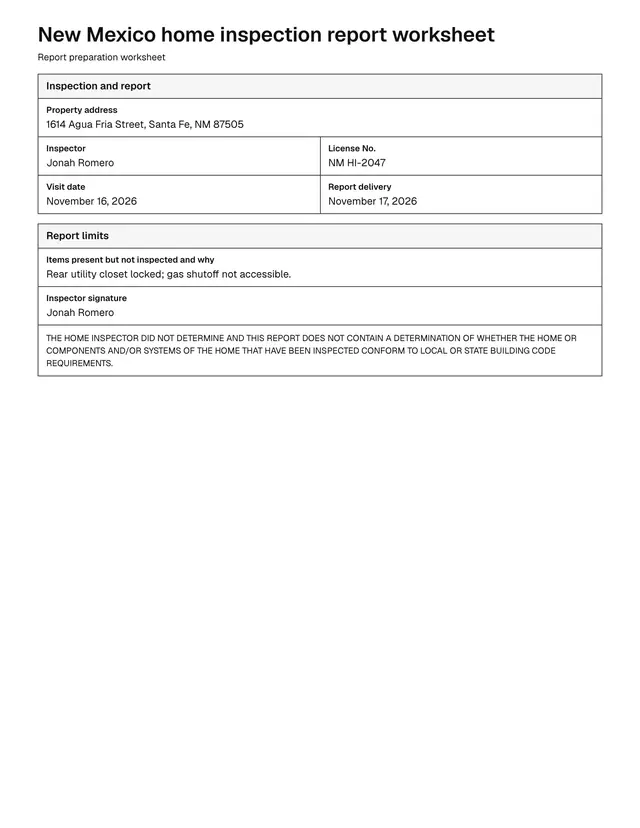
New Mexico home inspection report worksheet
Findings by system, with each defect noted. - North Carolina
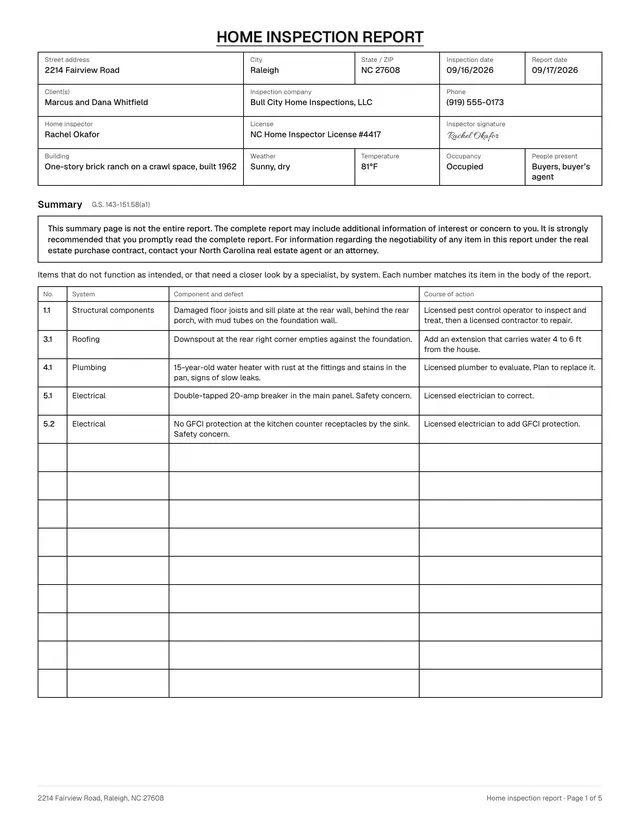
Home Inspection Report
Findings by system, with each defect noted. - Ohio
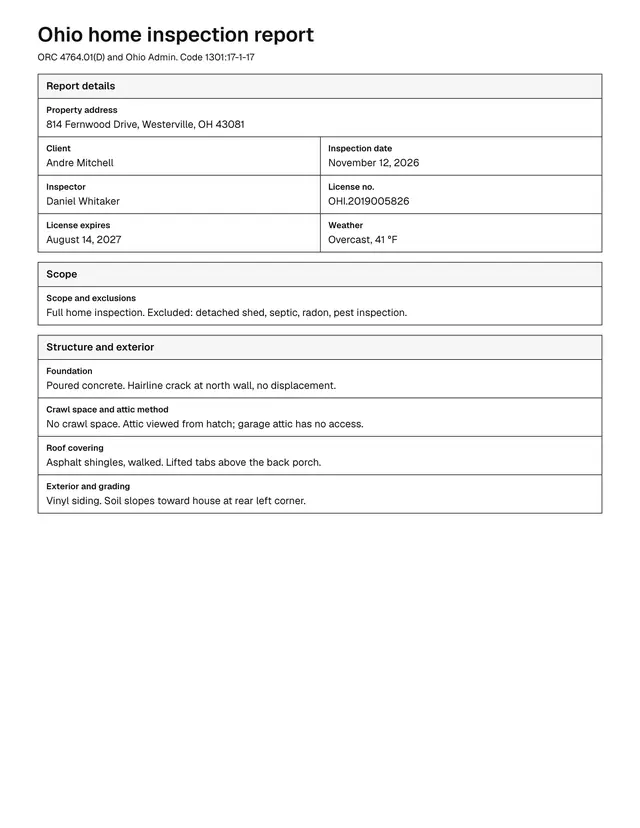
Ohio home inspection report
Findings by system, with each defect noted. - Oklahoma
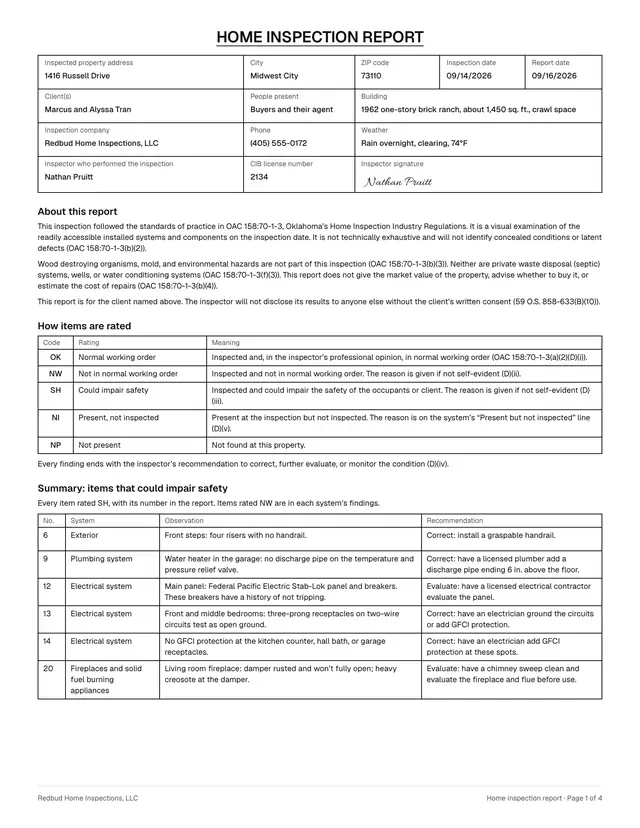
Home Inspection Report
Findings by system, with each defect noted. - Oregon
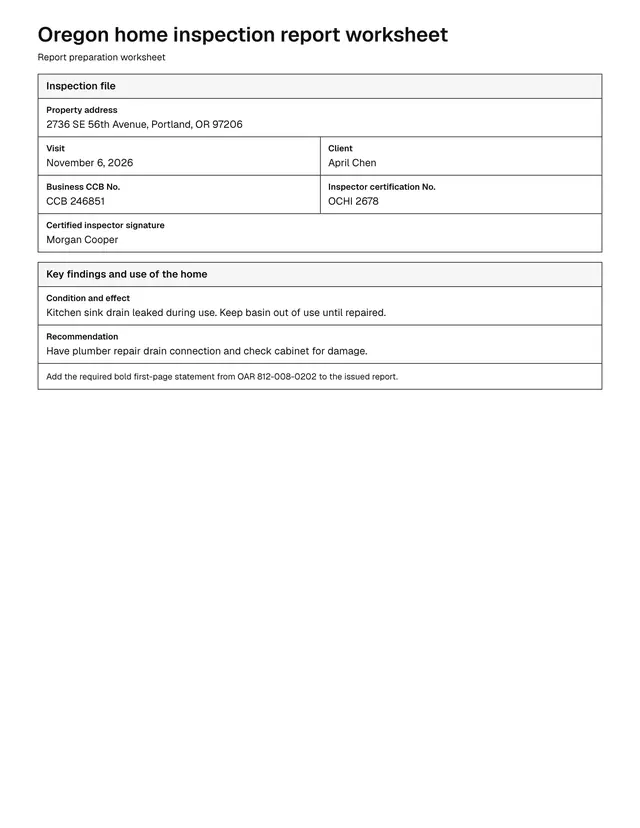
Oregon home inspection report worksheet
Findings by system, with each defect noted. - Pennsylvania
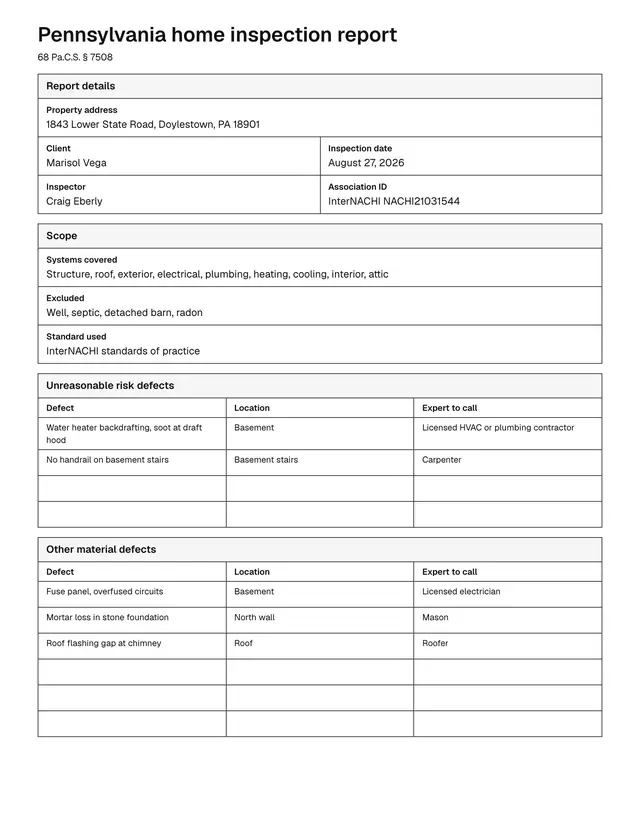
Pennsylvania home inspection report
Findings by system, with each defect noted. - South Carolina
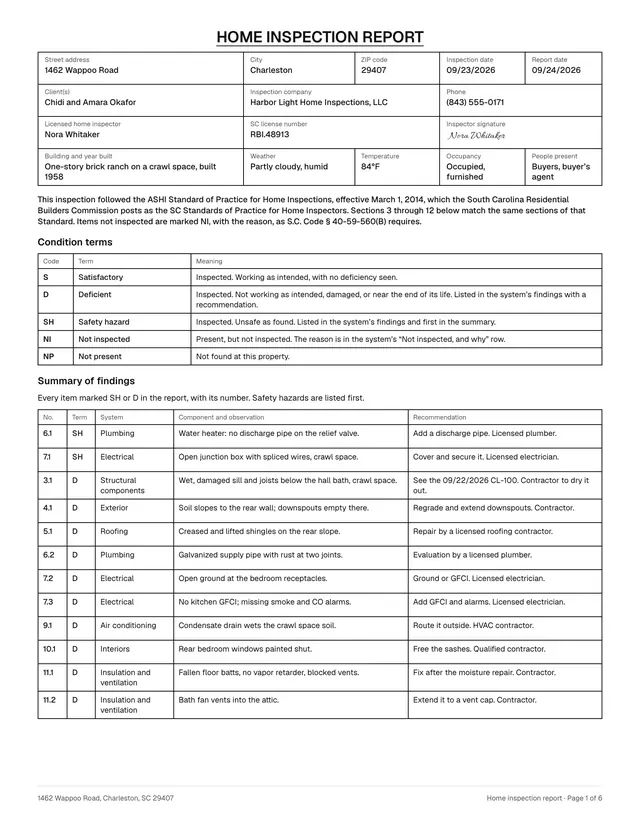
Home Inspection Report
Findings by system, with each defect noted. - Tennessee
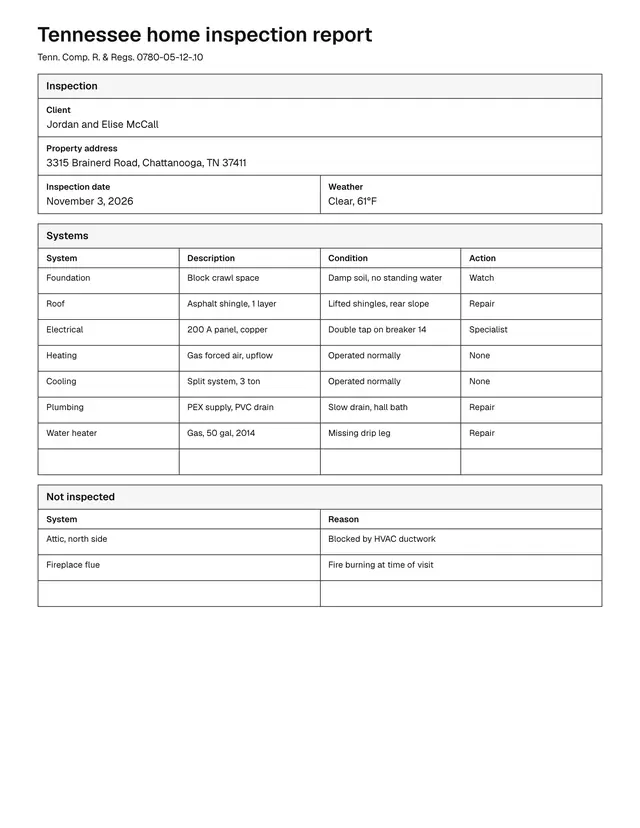
Tennessee home inspection report
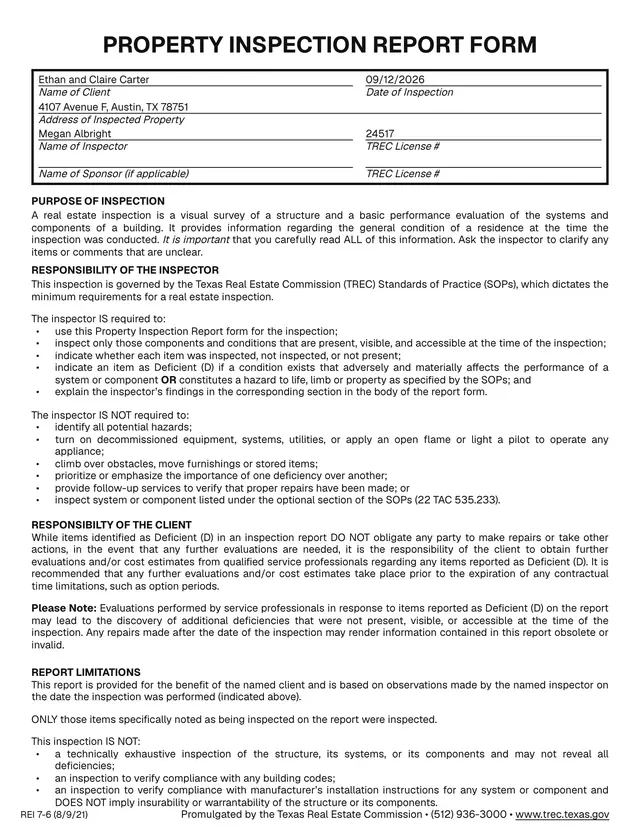
Findings by system, with each defect noted. - TexasREI 7-6
Property Inspection Report Form
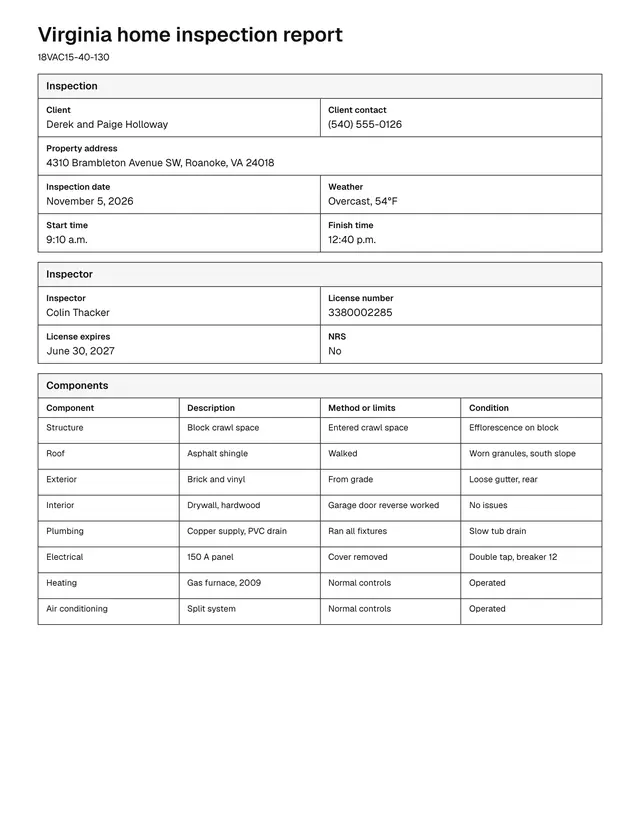
Findings by system, with each defect noted. - Virginia
Virginia home inspection report
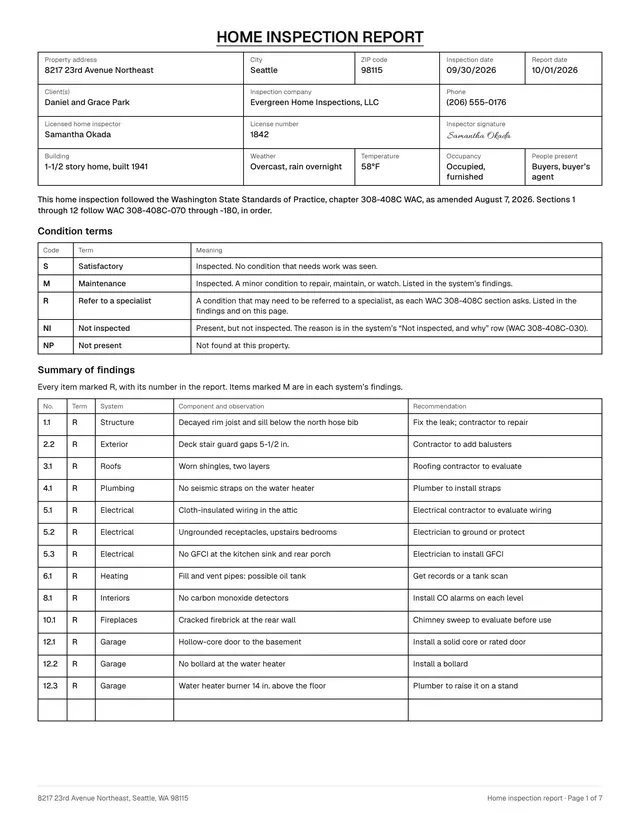
Findings by system, with each defect noted. - Washington
Home Inspection Report
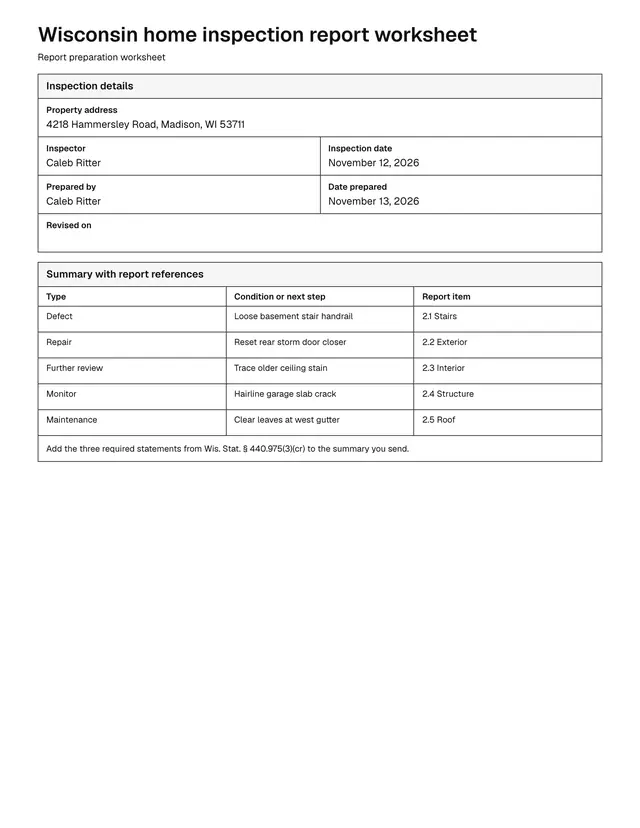
Findings by system, with each defect noted. - Wisconsin
Wisconsin home inspection report worksheet
Findings by system, with each defect noted.