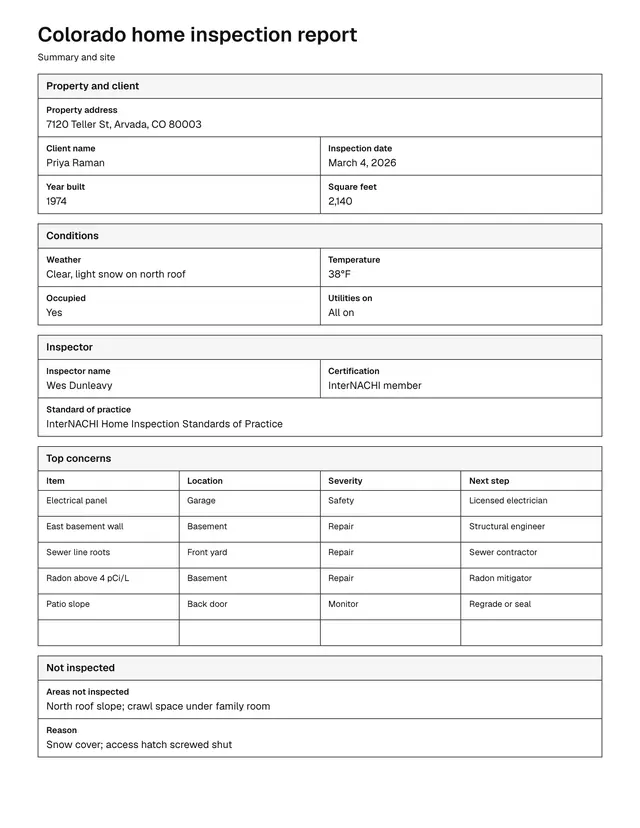
Colorado home inspection report
In Colorado, the inspection report is what the buyer’s agent turns into an Inspection Objection Notice. Write it so the agent can lift items straight across.
At a glance
- State standard
- None; name the one you follow
- Used for
- The buyer’s Inspection Objection Notice
- Due
- Before the Inspection Objection Deadline
- Common add-ons
- Radon test, sewer scope
Completed example
Download PDFWho reads this report, and what do they do with it?
The buyer reads it once. The buyer’s agent reads it with a pen. In Colorado, the agent uses it to fill out the Inspection Objection Notice, the Real Estate Commission form the buyer sends before the Inspection Objection Deadline in their contract. The seller then answers, and both sides sign an Inspection Resolution. You can see those forms on the Division of Real Estate site.
That means the report has a job beyond describing the house. Each problem needs to be clear enough to copy into a notice without a phone call to you.
What to cover when the state sets no standard
Colorado has no state license for home inspectors and no state report rule. Pick a standard, like the InterNACHI Standards of Practice, name it in your agreement, and match your report to it system by system.
Then add what Colorado houses throw at you. Along the Front Range, watch for signs of soil movement: cracked slabs, doors that stick, and basement walls that bow or crack. Hail is a big deal for roofs here, so look for bruised shingles and dented vents. Older homes may have clay sewer lines, which is why sewer scopes are a common add-on. Evaporative coolers sit on a lot of roofs too.
Radon is another one. Colorado’s health department has a radon page for buyers. If you test, give the dates, where the monitor sat, and the result.
Write each problem so the agent can use it
Say where. “Northeast corner of the basement” beats “basement.” The agent will quote you.
Say what you saw. Describe it, don’t just label it. “Vertical crack about 3/16 inch wide with water staining below” tells the seller what they’re dealing with.
Say how serious. Sort items into a few plain levels, like safety, repair, and monitor. The objection notice usually lists the top tier first.
Say who should look next. A structural engineer, a licensed electrician, a roofer. Keep it to a trade, not a company.
Say what you couldn’t see. In winter, snow can cover the roof and the grade around the foundation. Write that down with the reason. It protects you and warns the buyer.
Here’s the difference in practice. A weak line reads: “Foundation has cracks, recommend evaluation.” A strong one reads: “East basement wall has a stair-step crack from the window corner down to the floor, about 1/4 inch wide at the top, with the wall bowing in about 1/2 inch at center. Safety concern. Have a structural engineer evaluate before the objection deadline.” The agent can paste the second one straight into the notice.
What belongs in a separate report
Some things buyers ask about don’t fit in a home inspection report, and it’s cleaner to keep them apart.
Termites. Wood destroying insects are usually reported on the NPMA-33, especially for HUD and VA loans. See the Colorado NPMA-33 page. In your home report, you can still mention damaged wood you saw, and point to the termite report.
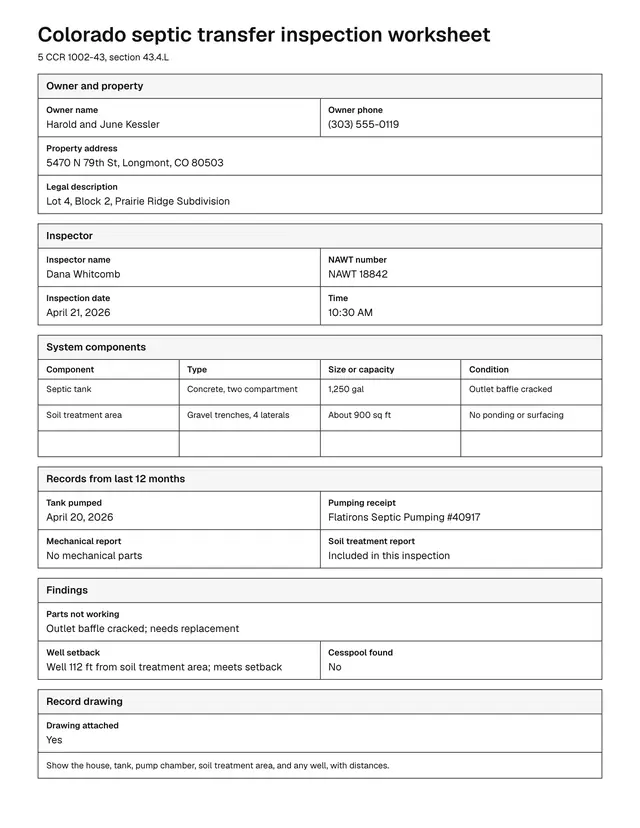
Septic. If the house is on a septic system in a county with a transfer rule, the septic report has its own required items under Regulation 43. See the Colorado septic transfer report.
Radon. Many inspectors give radon results on their own page with the test dates, where the monitor sat, and the reading. That makes it easy for the agent to attach to the notice by itself.
How do you get the worst items in front of the agent?
Agents skim. If the gas leak is on page 31 between notes on caulk, it can get missed in a tight objection window. Put a summary up front with the serious items first, and keep the full notes behind it.
Add a photo to every item in that summary. The seller and the seller’s agent may never walk the basement with you, and a clear photo of the bowed wall settles a lot of back and forth during the Inspection Resolution.
Noma specializes in the Colorado home inspection report (no state standard of practice). You build reports with your own sections and titles, mark how serious each defect is, and the summary lists the worst ones first for the objection notice. See how Noma builds inspection reports.
Frequentlyaskedquestions
Send this document in minutes, not an afternoon.
Other states
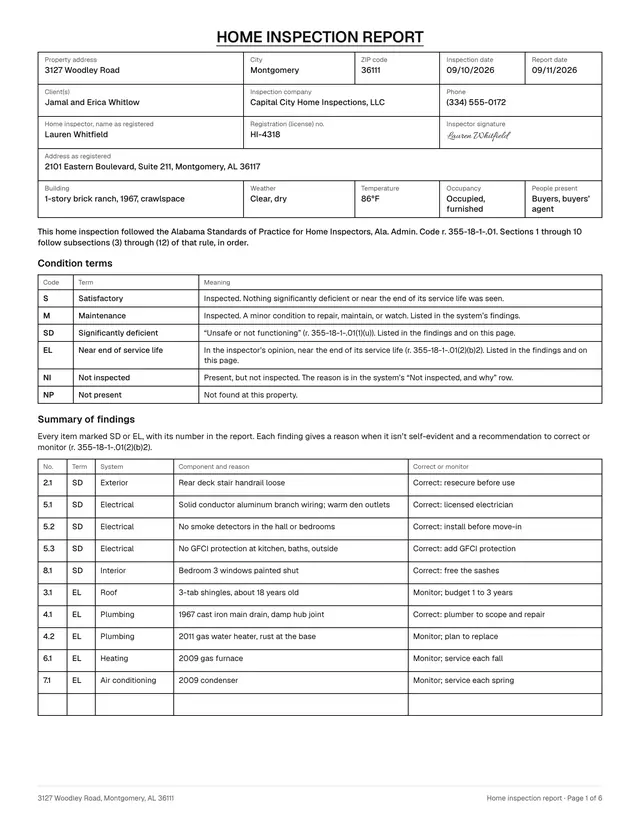
Home inspection report templates- Alabama
Home Inspection Report
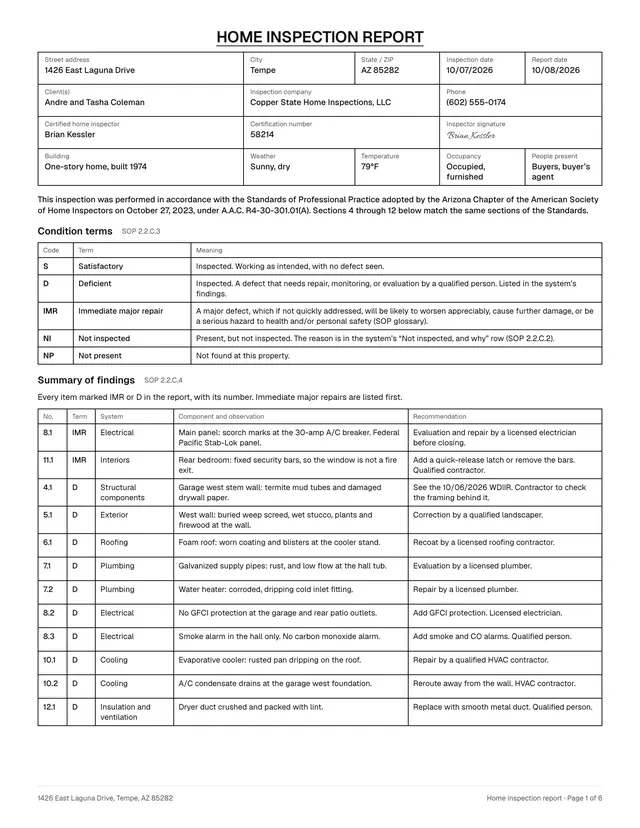
Findings by system, with each defect noted. - Arizona
Home Inspection Report
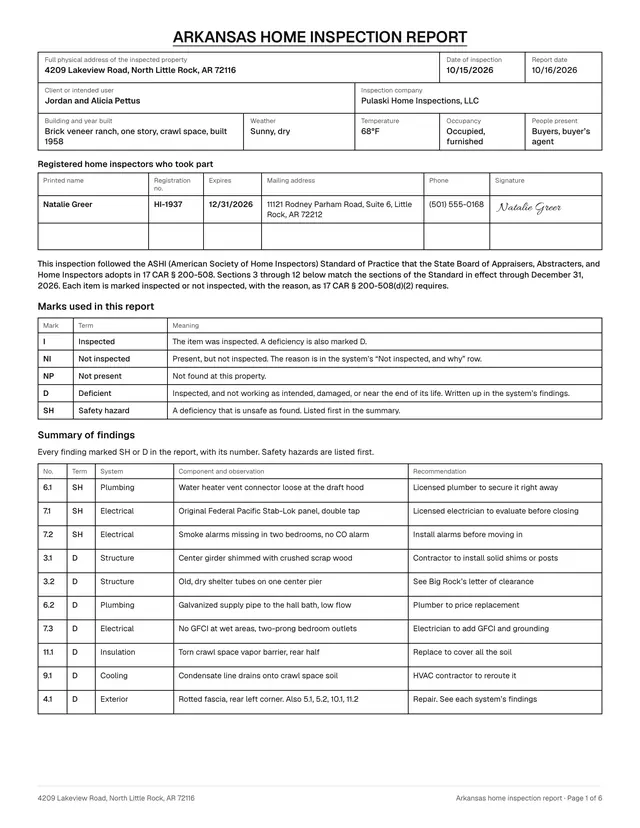
Findings by system, with each defect noted. - Arkansas
Arkansas Home Inspection Report
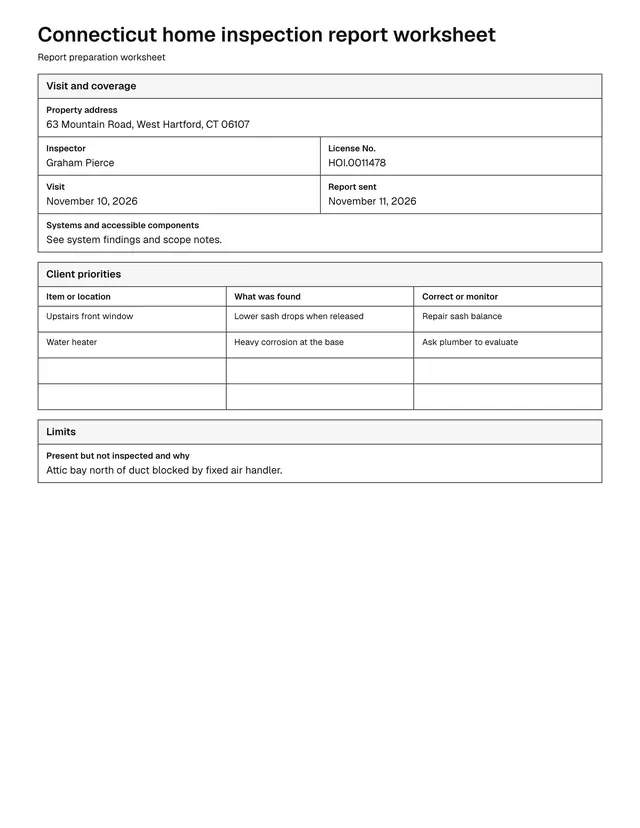
Findings by system, with each defect noted. - Connecticut
Connecticut home inspection report worksheet
Findings by system, with each defect noted. - Delaware
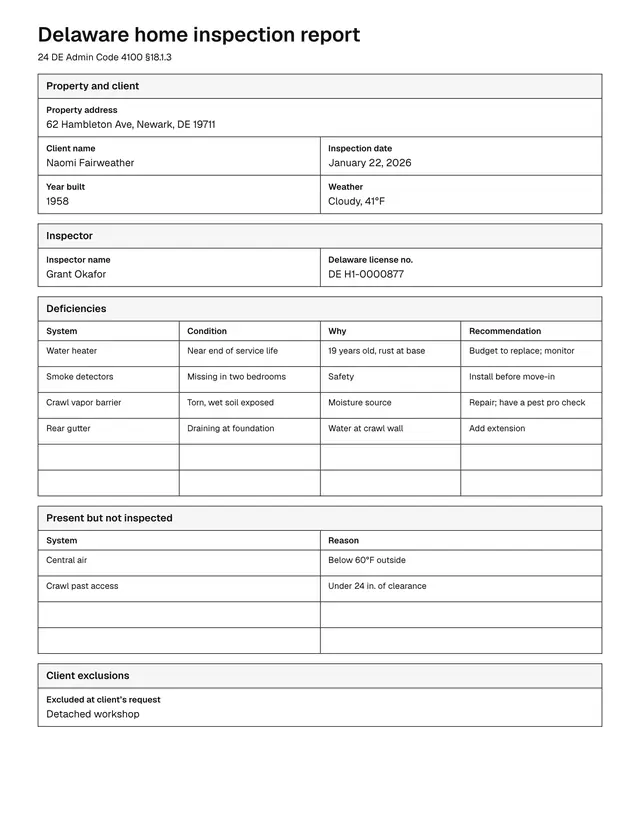
Delaware home inspection report (24 DE Admin Code 4100 §18)
Findings by system, with each defect noted. - Florida
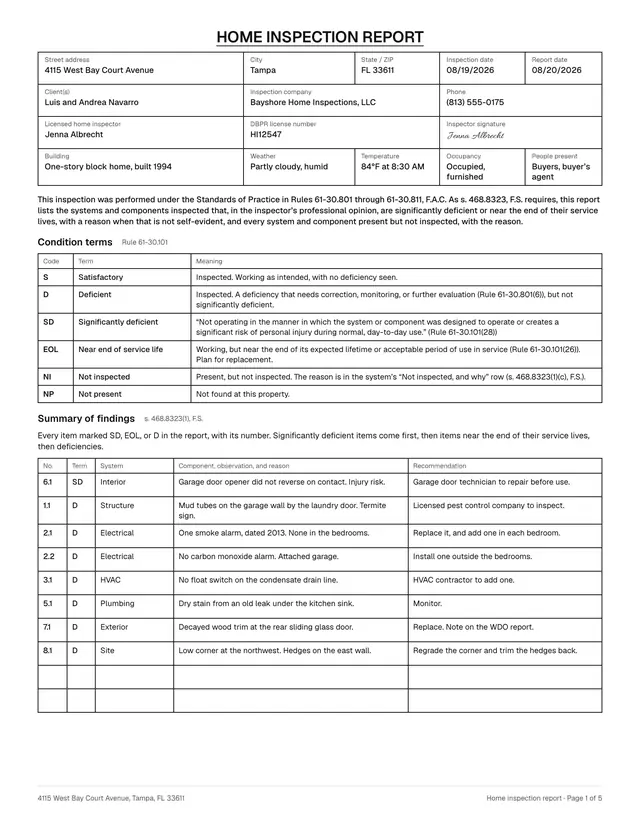
Home Inspection Report
Findings by system, with each defect noted. - Georgia
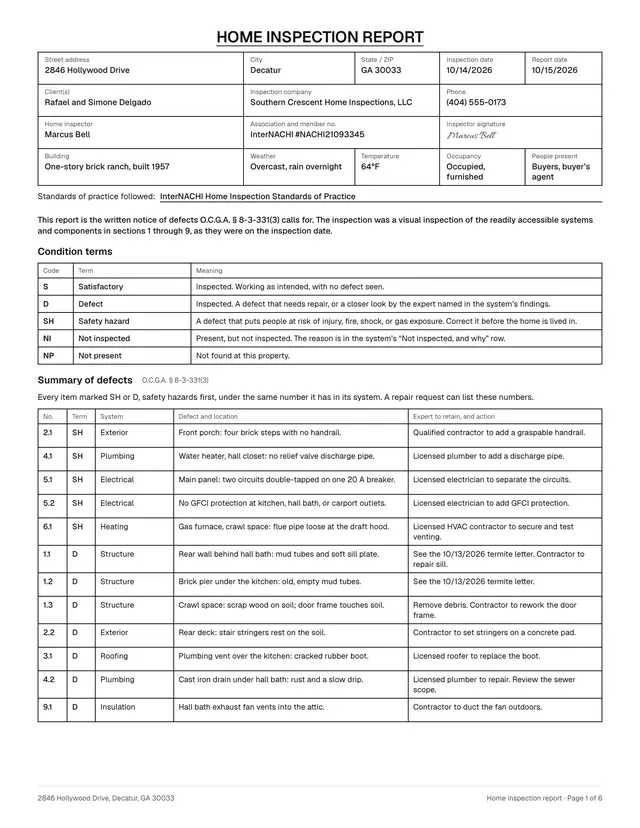
Home Inspection Report
Findings by system, with each defect noted. - Hawaii
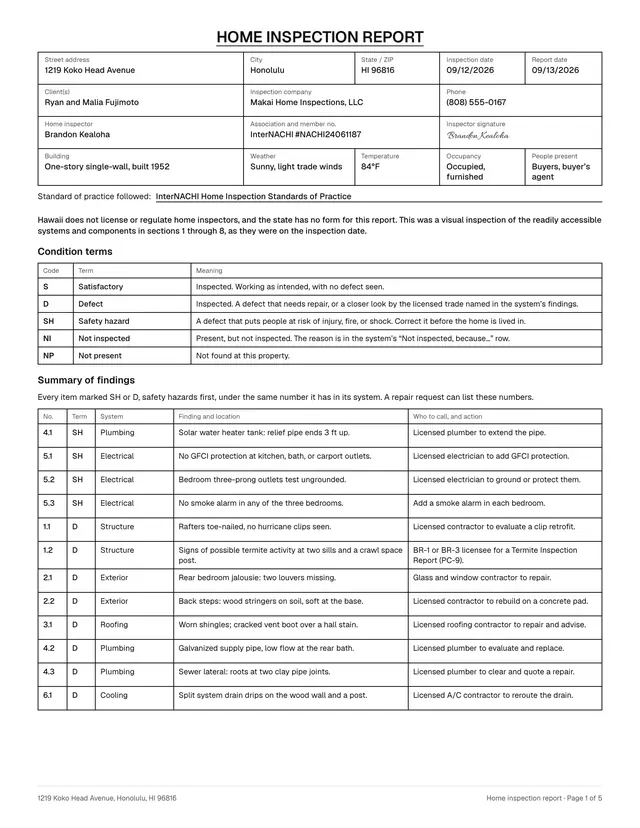
Home Inspection Report
Findings by system, with each defect noted. - Illinois
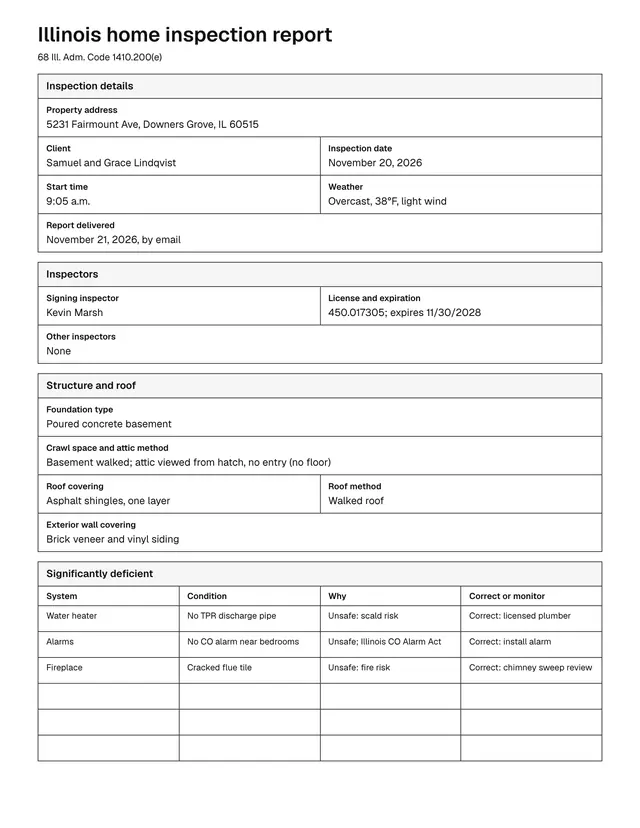
Illinois home inspection report
Findings by system, with each defect noted. - Indiana
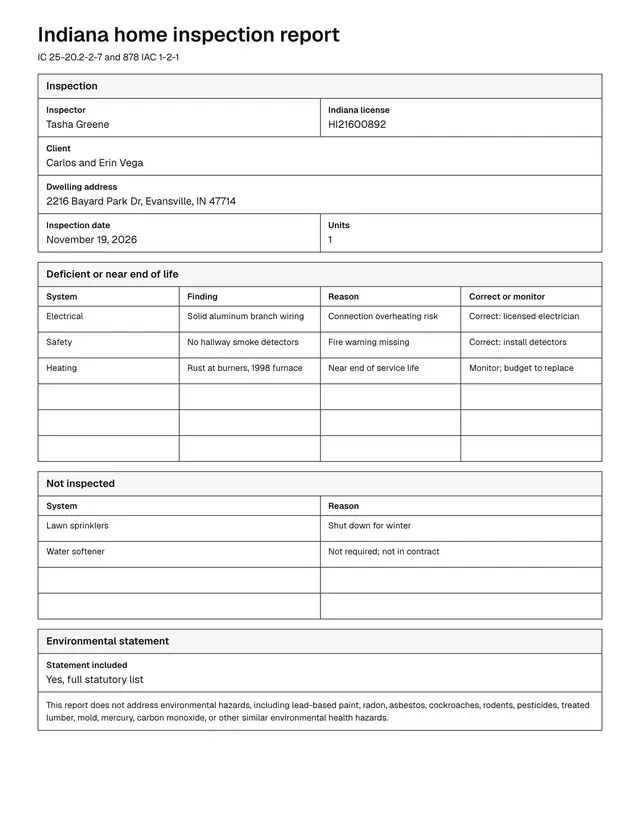
Indiana home inspection report
Findings by system, with each defect noted. - Kentucky
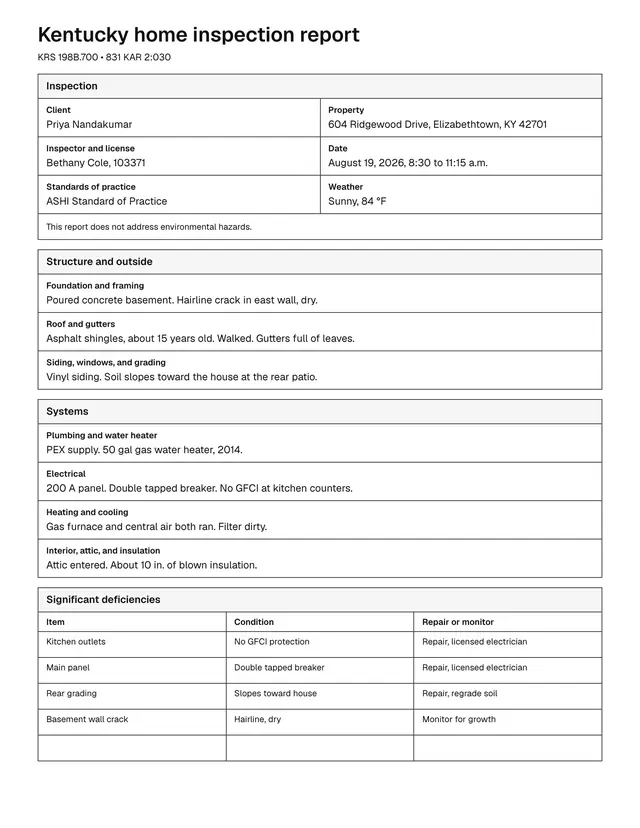
Kentucky home inspection report
Findings by system, with each defect noted. - Louisiana
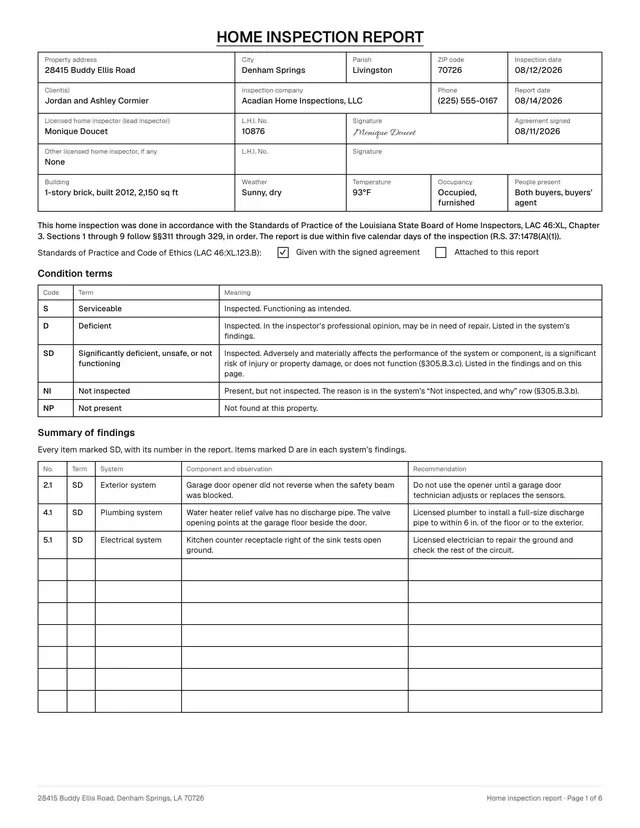
Home Inspection Report
Findings by system, with each defect noted. - Maryland
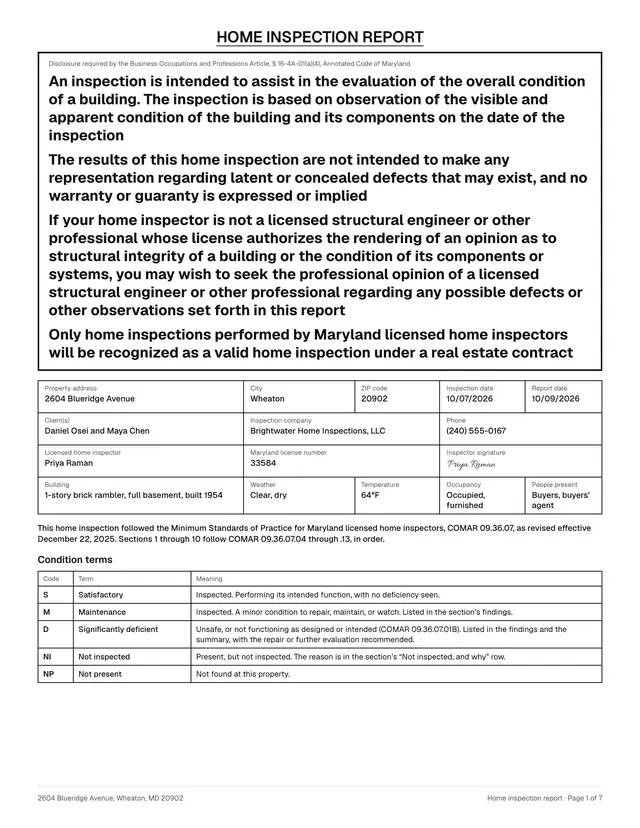
Home Inspection Report
Findings by system, with each defect noted. - Massachusetts
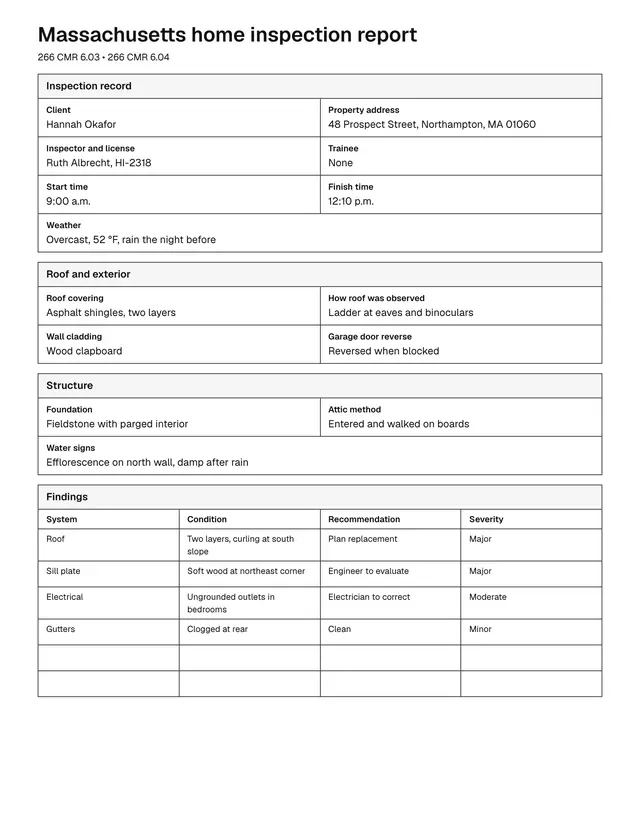
Massachusetts home inspection report (266 CMR 6.03)
Findings by system, with each defect noted. - Michigan
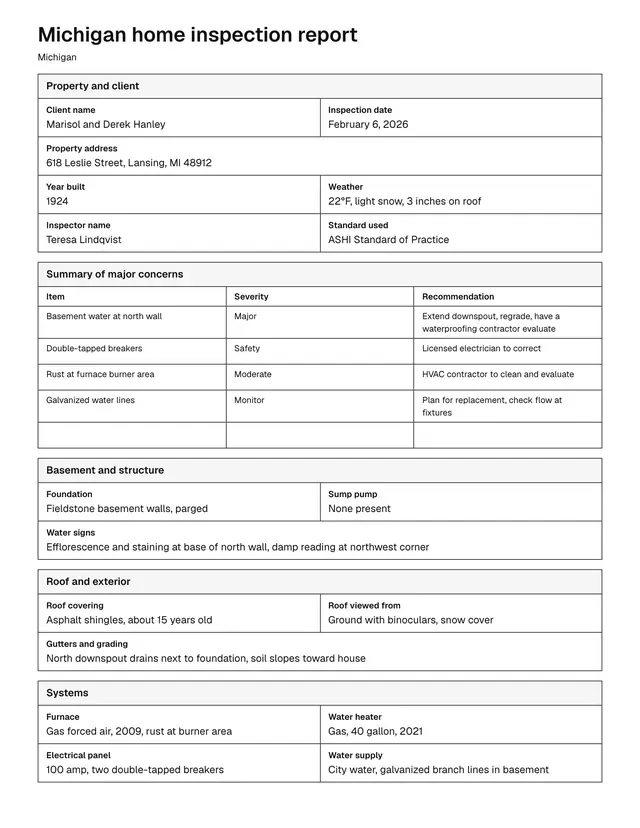
Michigan home inspection report
Findings by system, with each defect noted. - Mississippi
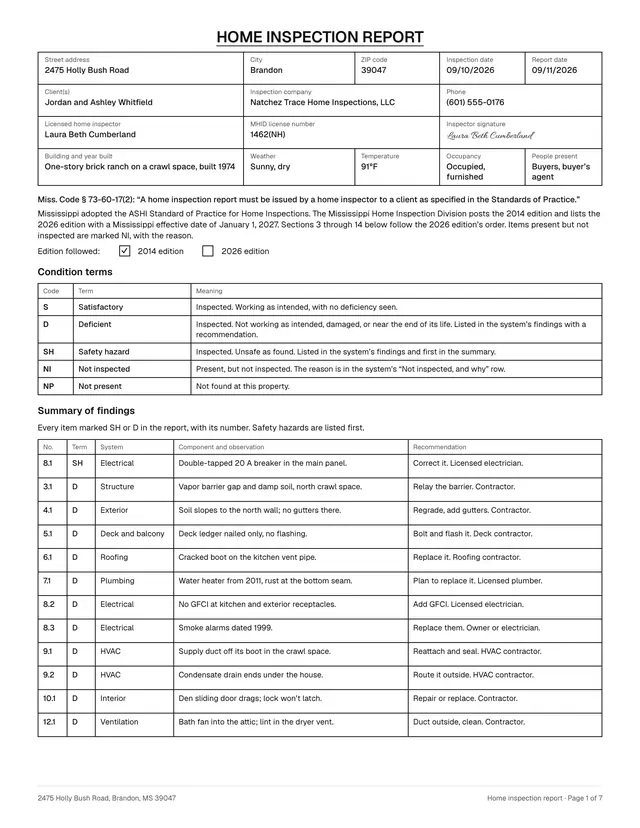
Home Inspection Report
Findings by system, with each defect noted. - Missouri
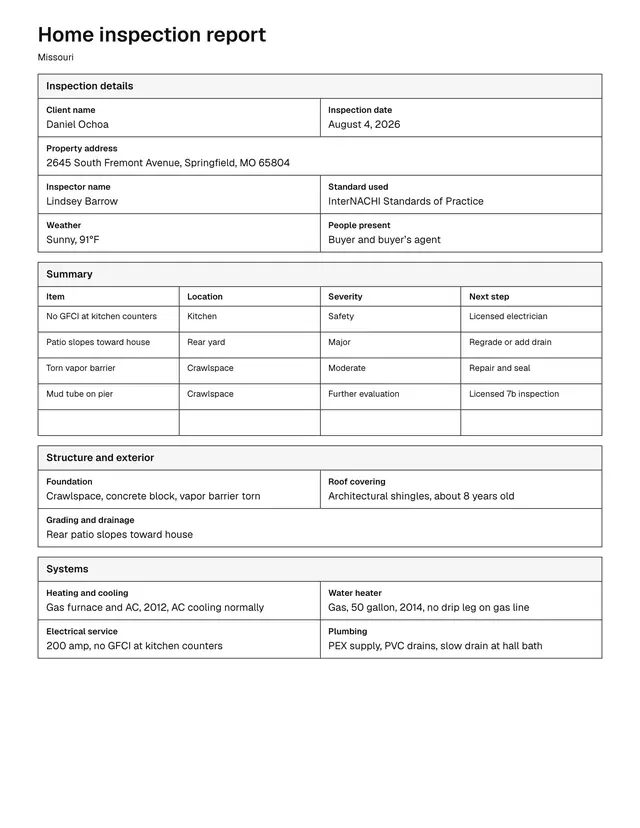
Missouri home inspection report
Findings by system, with each defect noted. - Nevada
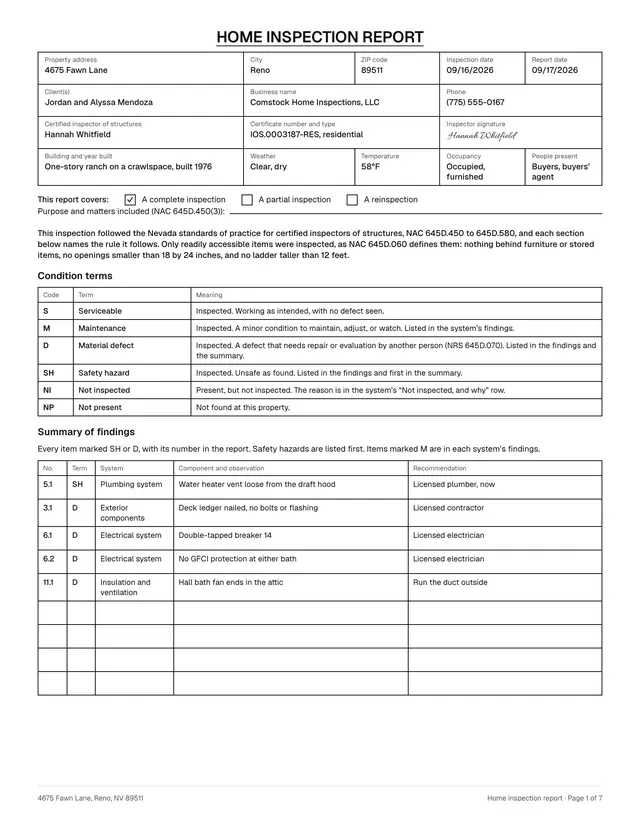
Home Inspection Report
Findings by system, with each defect noted. - New Jersey
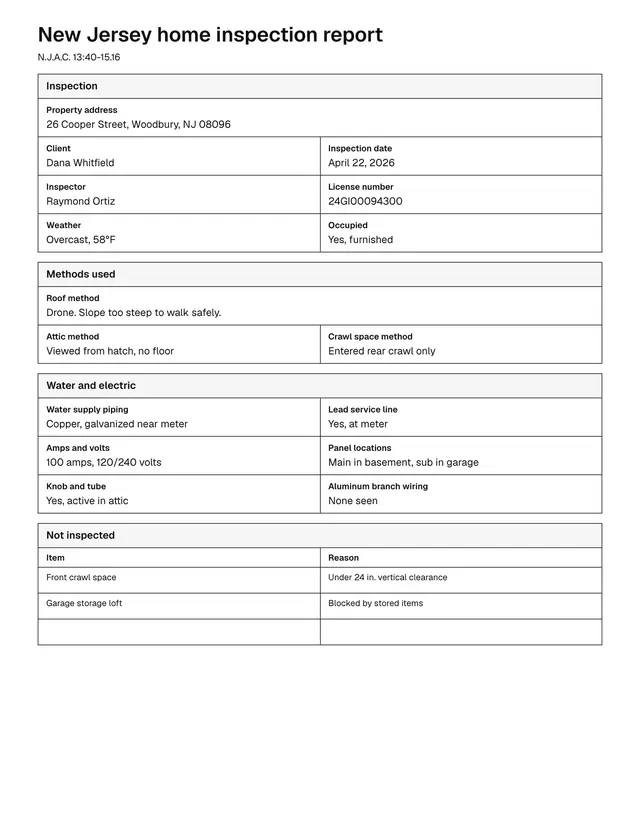
New Jersey home inspection report (N.J.A.C. 13:40-15.16)
Findings by system, with each defect noted. - New Mexico
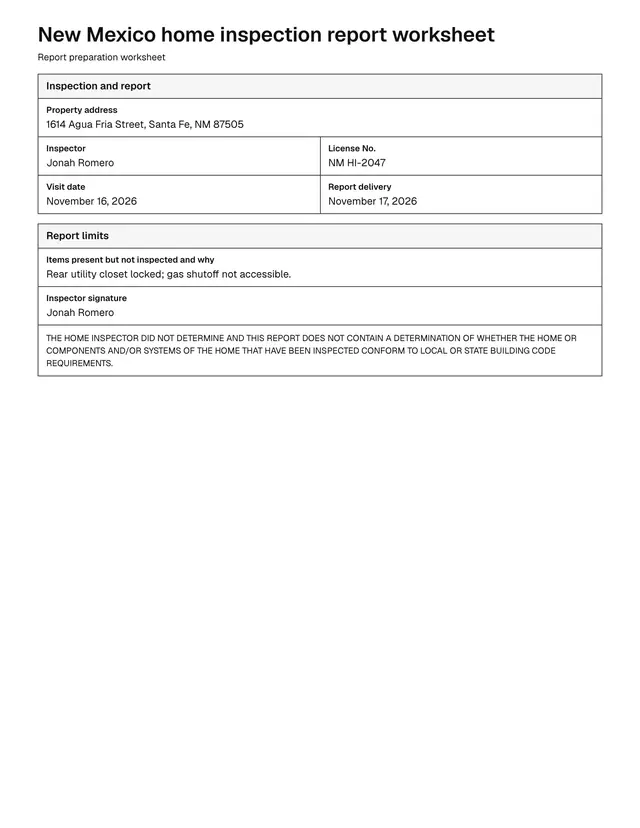
New Mexico home inspection report worksheet
Findings by system, with each defect noted. - New York
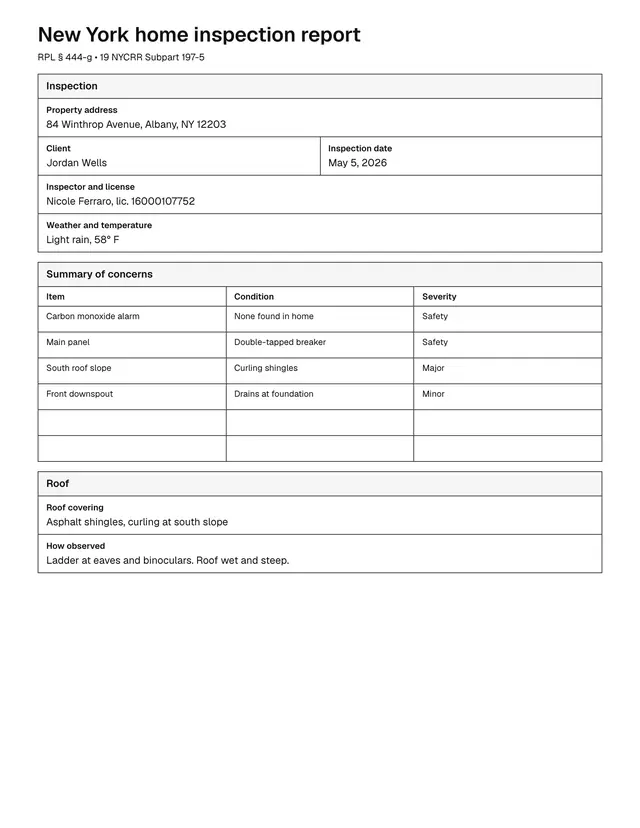
New York home inspection report (19 NYCRR Subpart 197-5)
Findings by system, with each defect noted. - North Carolina
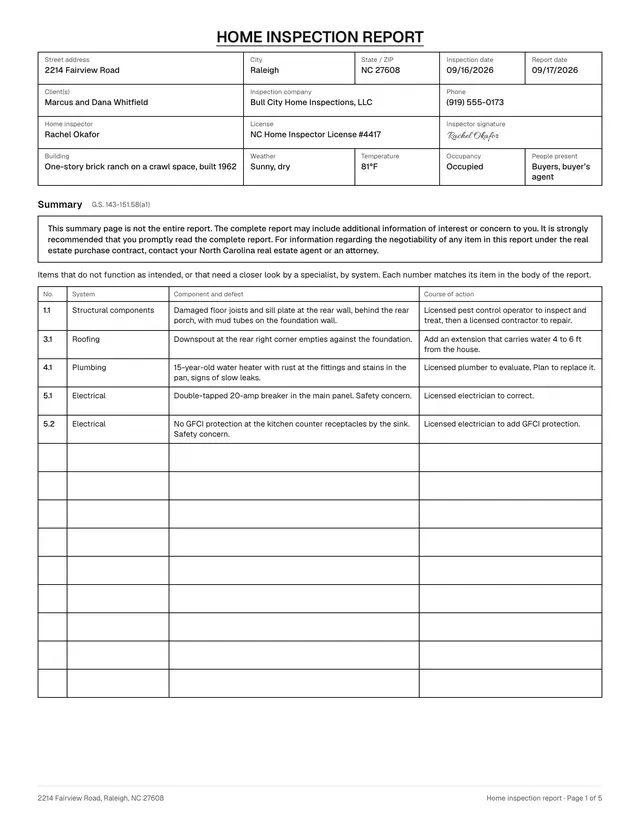
Home Inspection Report
Findings by system, with each defect noted. - Ohio
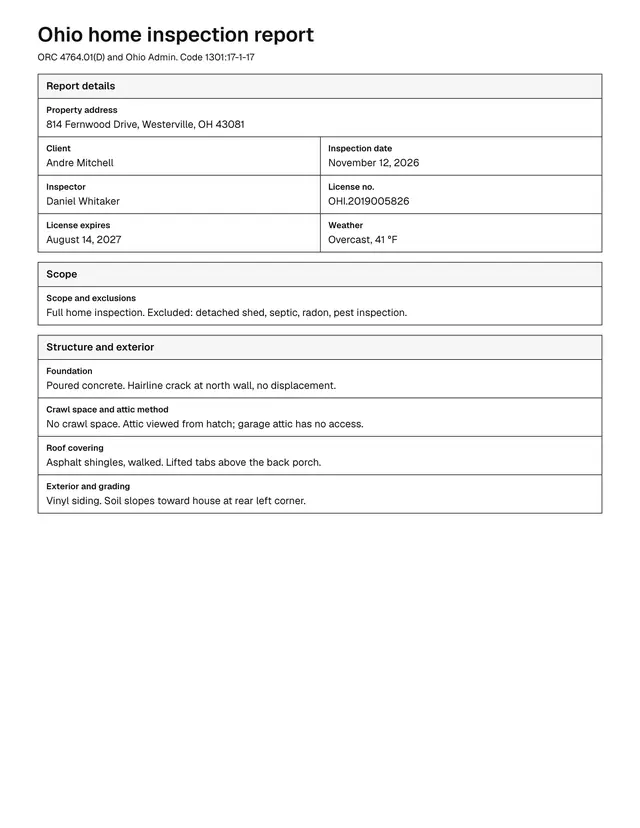
Ohio home inspection report
Findings by system, with each defect noted. - Oklahoma
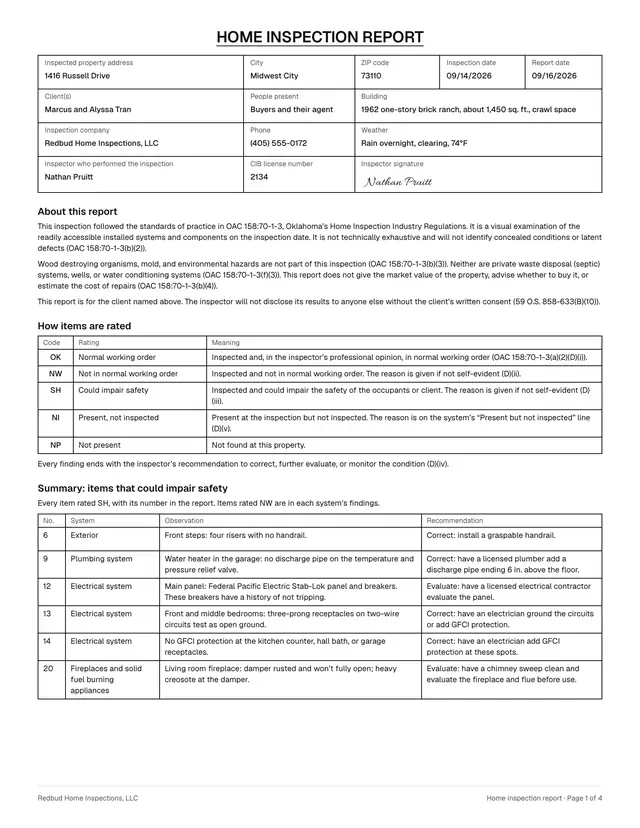
Home Inspection Report
Findings by system, with each defect noted. - Oregon
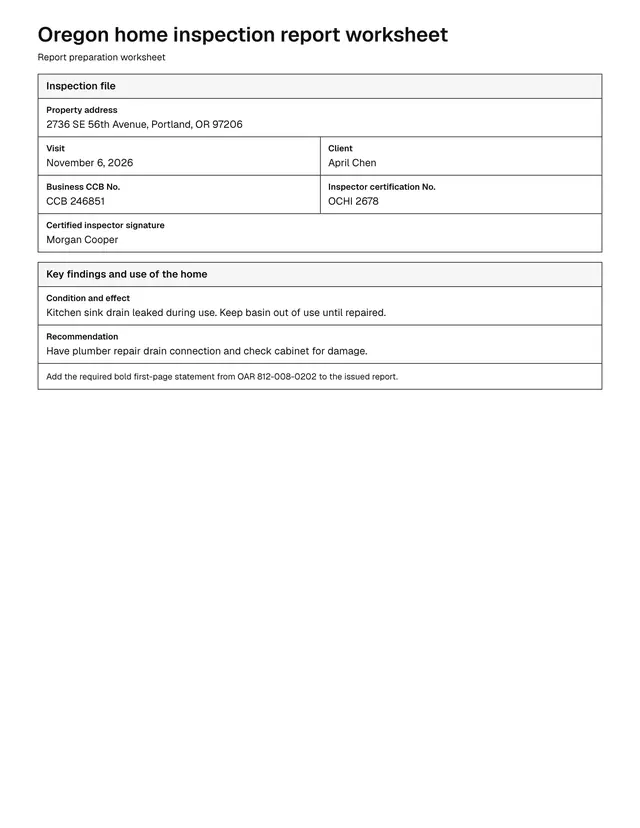
Oregon home inspection report worksheet
Findings by system, with each defect noted. - Pennsylvania
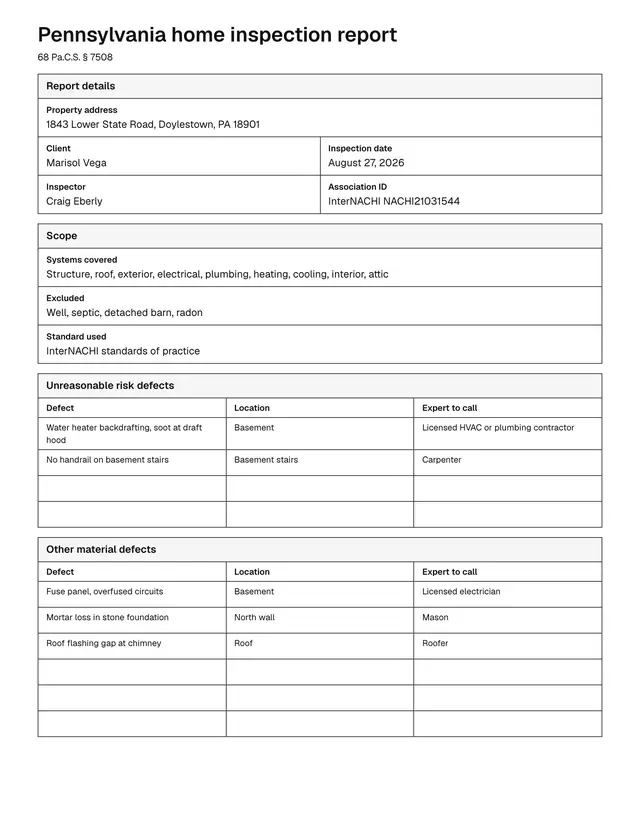
Pennsylvania home inspection report
Findings by system, with each defect noted. - South Carolina
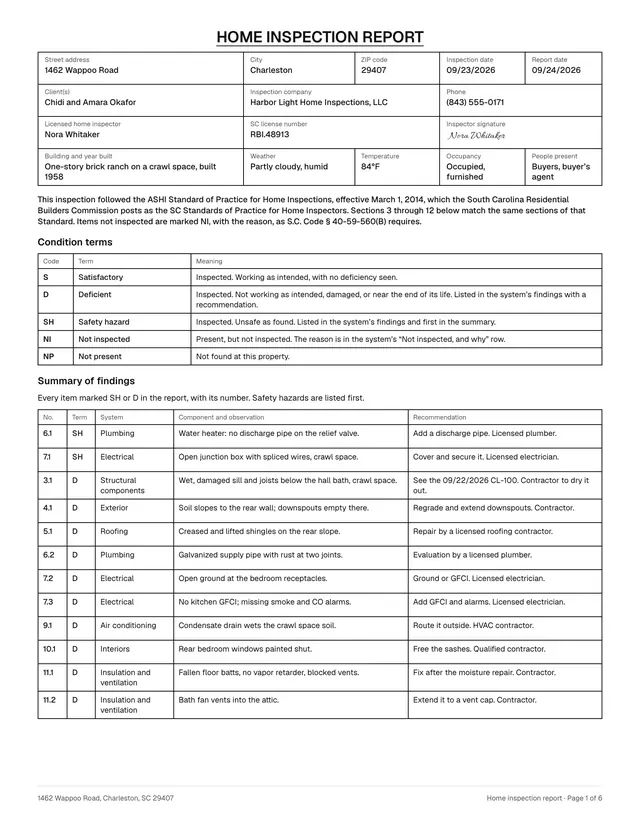
Home Inspection Report
Findings by system, with each defect noted. - Tennessee
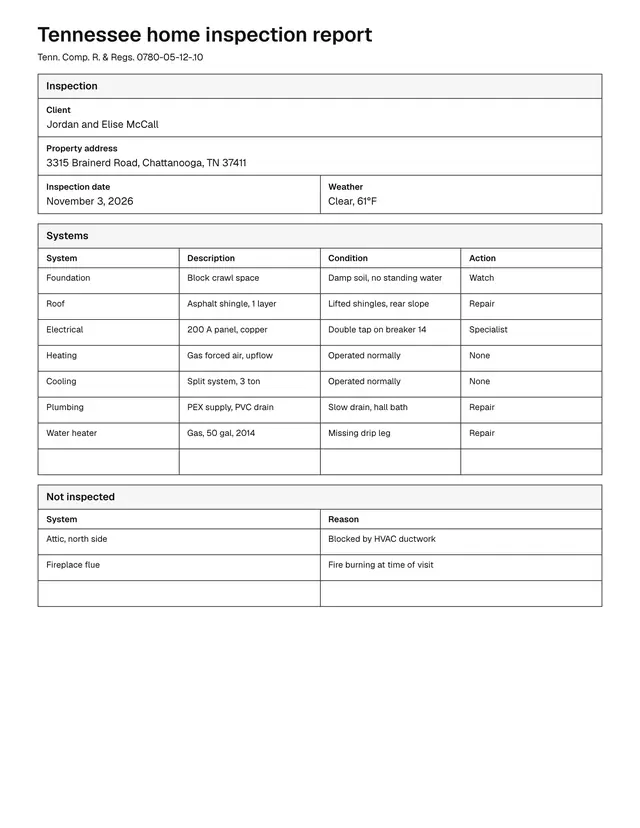
Tennessee home inspection report
Findings by system, with each defect noted. - TexasREI 7-6
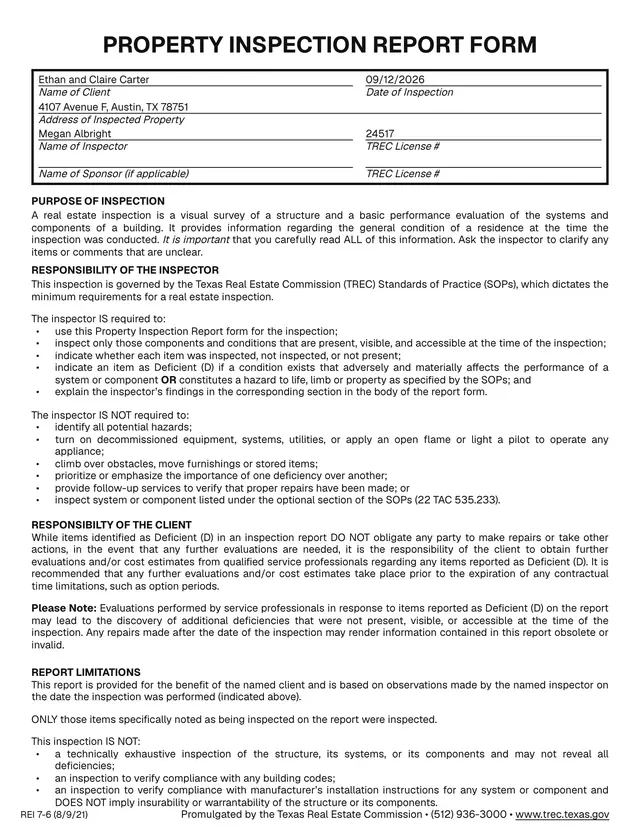
Property Inspection Report Form
Findings by system, with each defect noted. - Virginia
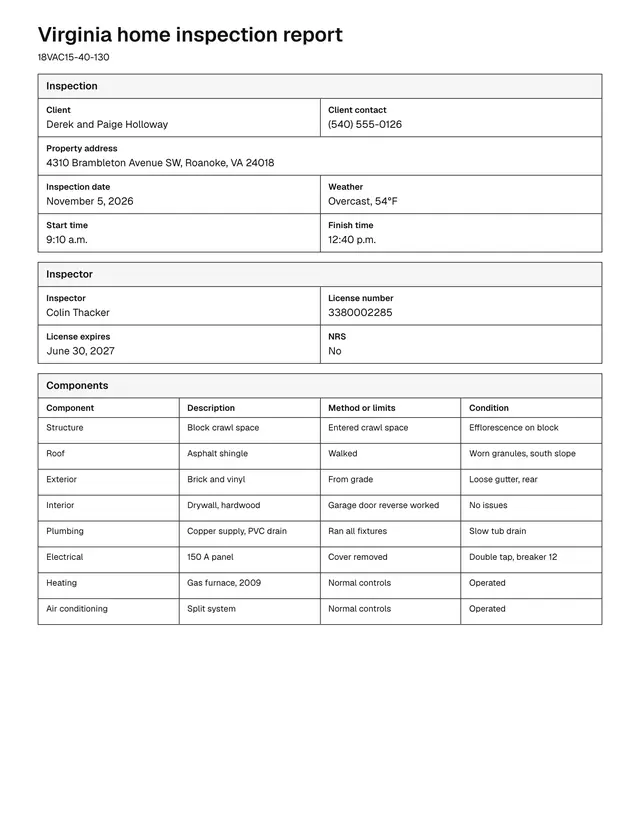
Virginia home inspection report
Findings by system, with each defect noted. - Washington
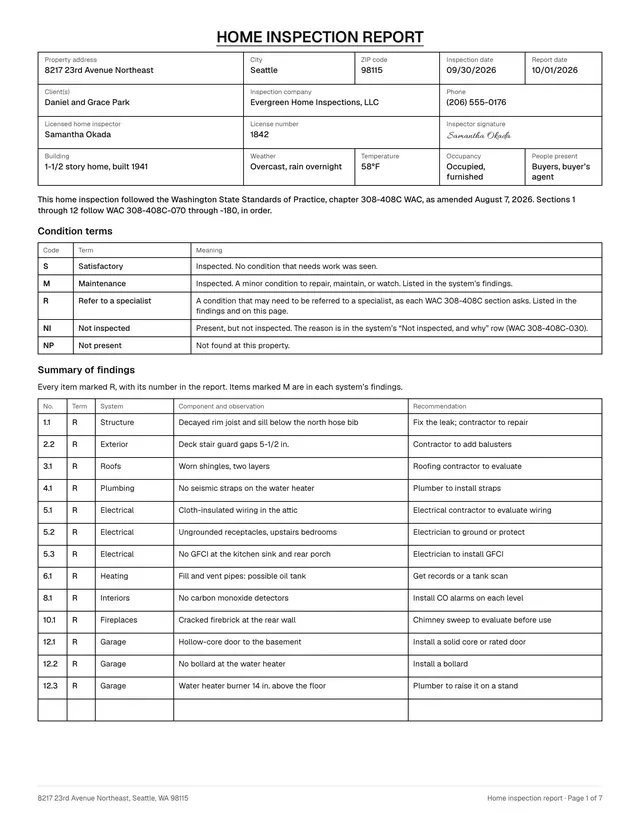
Home Inspection Report
Findings by system, with each defect noted. - Wisconsin
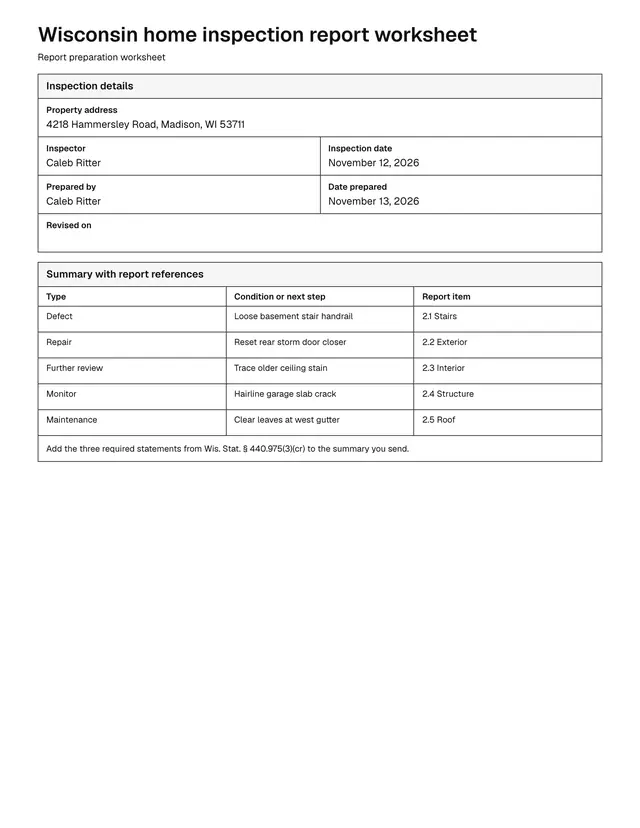
Wisconsin home inspection report worksheet
Findings by system, with each defect noted.