Massachusetts home inspection report (266 CMR 6.03)
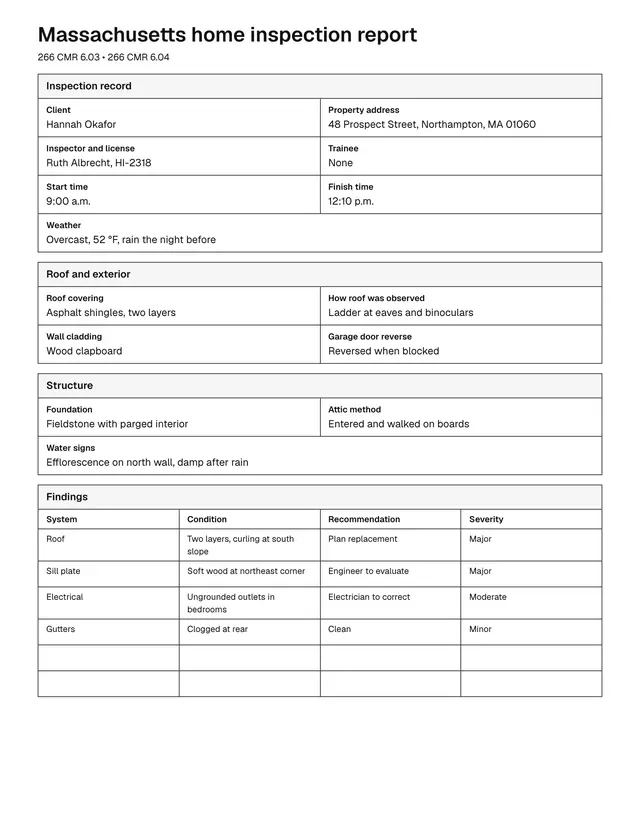
266 CMR 6.03 lists eight things every Massachusetts home inspection report must record, from start and finish times to the weather, and it goes only to the client.
At a glance
- Rule
- 266 CMR 6.03 and 6.04
- Goes to
- The client only
- Required times
- On-site start and finish
- Off limits
- Market value, buy advice
Completed example
Download PDFThe eight things it must record
Massachusetts spells it out. 266 CMR 6.03 says the report goes “only to the Client” and lists what it must do. Identify the components the standards name. Say which ones you didn’t inspect. Give the condition of the ones you did, including what needs repair.
Then the job details: your name (and a trainee’s, if one came), the client’s name, the property address, the “on-site Inspection start and finish times,” the weather, and any “obstructions and/or conditions that prevented the inspection.”
Start and finish times are the ones people forget. “Arrived 9:00 a.m., left 12:10 p.m.” on the first page does it. The weather line matters more than it looks. A dry basement in a dry August doesn’t mean much, and the report should say it was dry out.
Signing is flexible. Under 6.03(2), a report “may be stamped” with the Board’s seal and/or carry your name and license number, but only if your license is current and you wrote or oversaw the report. If a trainee did part of the work, their name goes on it too.
Say how you looked, not just what you saw
266 CMR 6.04 asks you to “note the methods used” in several places. For the roof, you note how you observed it and any signs of leaks. You don’t have to walk it unless you think it’s safe for you and won’t damage the roofing. “Viewed from ladder at eaves and with binoculars from the ground” is a complete answer on a steep slate roof in Brookline.
The same goes for the structure. Note the methods used to observe the crawl space and the attic. Probe wood where you suspect rot, unless probing would “unduly damage any finished surface.” On attached garages, run the door and report whether the opener reverses or stops when it meets resistance.
When to tell the client to dig deeper
The rule says the report “shall inform the Client if additional investigation is required” in three cases. The scope of the repair is unknown. You suspect concealed damage. Or the issue is beyond your expertise.
Unknown scope. A stained ceiling under a bathroom with no active leak. You can’t tell if it’s a bad wax ring or a rotted subfloor. Say a plumber should look.
Hidden damage. Soft sill wood at one corner of a 1920s Colonial. Recommend opening it up, since the rest of the sill is behind finished walls.
Beyond you. A crack pattern in a fieldstone foundation that looks like movement. Recommend a structural engineer. That covers the client and you.
Put the referral right next to the defect, in the same finding, not in a list at the back. A buyer who reads only the summary should still see “engineer to evaluate” beside the sill. That’s also what proves you met the rule if a complaint comes in later.
Three things to leave out
M.G.L. c. 112, § 225 lets the Board discipline an inspector who “reported on the market value of the property or its marketability” or “on the advisability or inadvisability of the purchase.” So no “priced well for the area” and no “I’d walk away from this one.” Describe the problem and the fix, and let the buyer decide.
Also leave out anything you didn’t inspect as if you did. Fences, pools, outbuildings, and detached garages are outside the standard scope. If you see signs of wood destroying insects, recommend a pest company and a separate Massachusetts termite inspection report. Results go only to the client, or with their approval.
One protection is built in. The rule says the inspector “shall not be held liable for the accuracy of third party information.” If the seller says the roof is eight years old, write that it’s the seller’s number, not yours.
The clock is the client’s friend and yours. Any lawsuit must start “within 2 years after the date of a completed written report.” Date the final report clearly.
How do you get the big items in front of the buyer?
Massachusetts buyers often have days, not weeks, to act on an inspection. They read the first page and skim the rest.
Noma specializes in the Massachusetts Home Inspection Report (266 CMR 6.03). Build it with your own sections and titles, mark how serious each defect is, and the summary lists the worst ones first. See how Noma builds inspection reports.
Frequentlyaskedquestions
Send this document in minutes, not an afternoon.
Other states
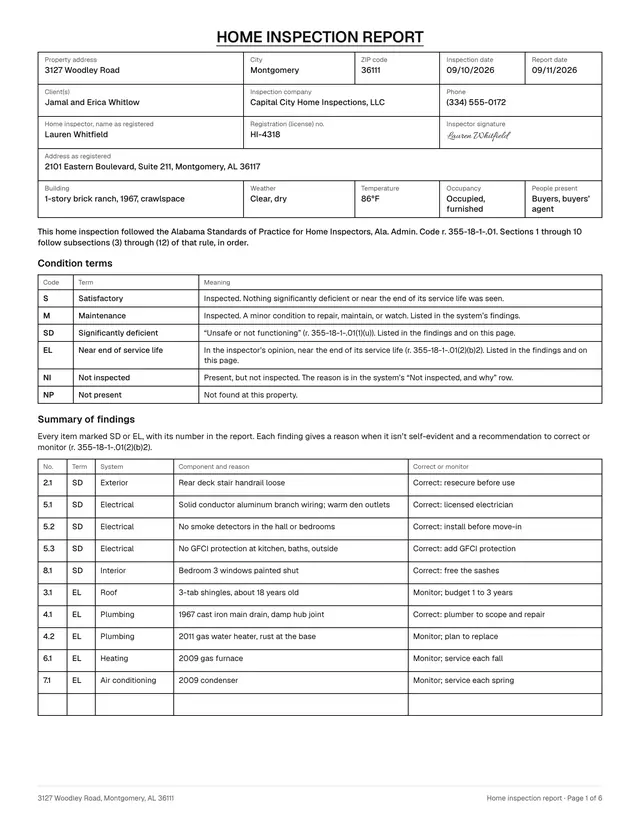
Home inspection report templates- Alabama
Home Inspection Report
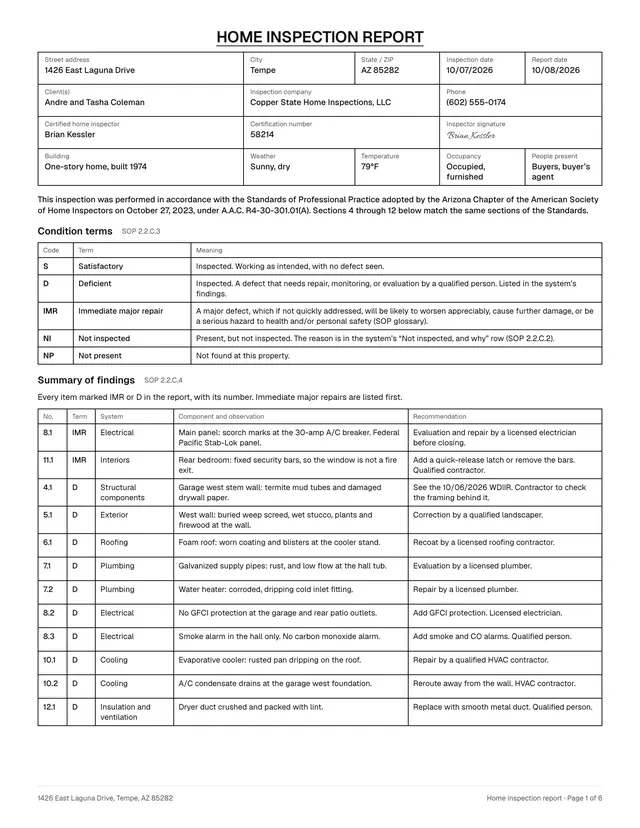
Findings by system, with each defect noted. - Arizona
Home Inspection Report
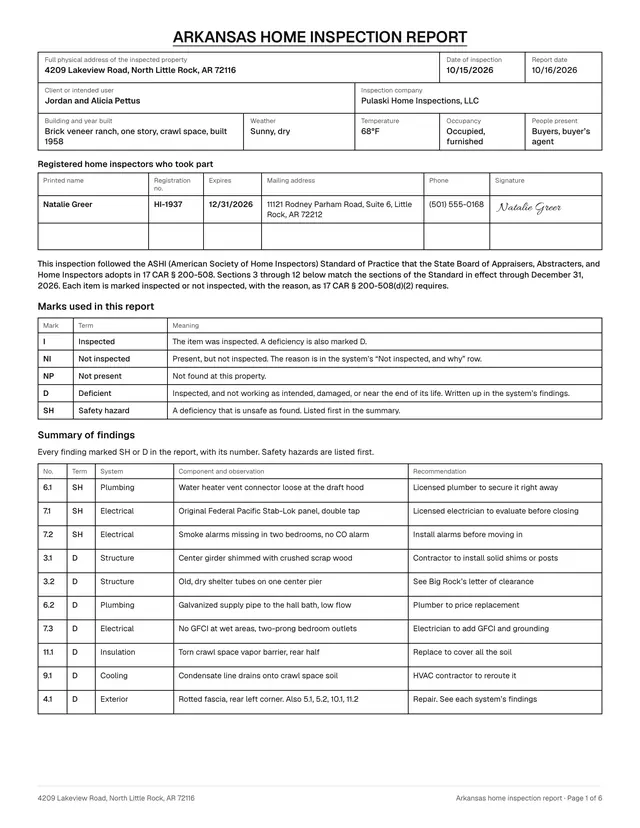
Findings by system, with each defect noted. - Arkansas
Arkansas Home Inspection Report
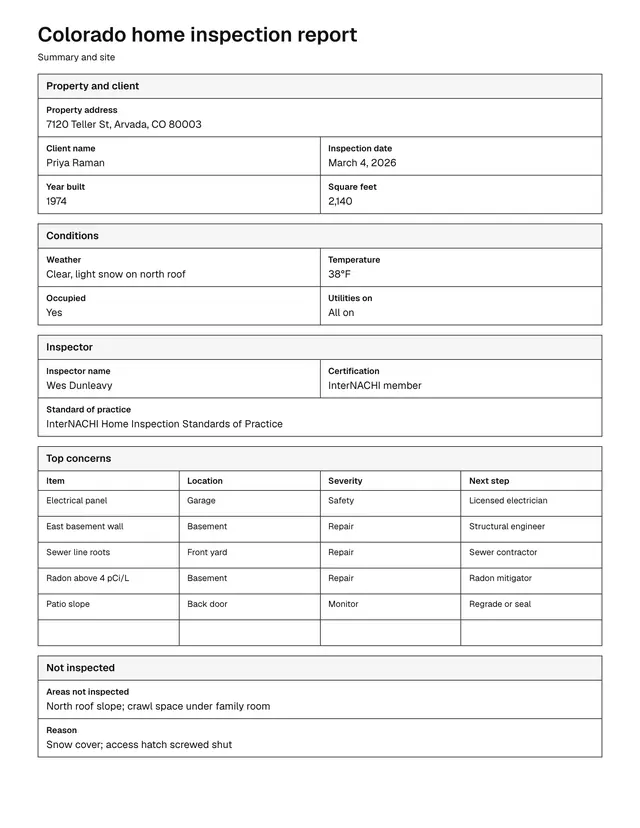
Findings by system, with each defect noted. - Colorado
Colorado home inspection report
Findings by system, with each defect noted. - Connecticut
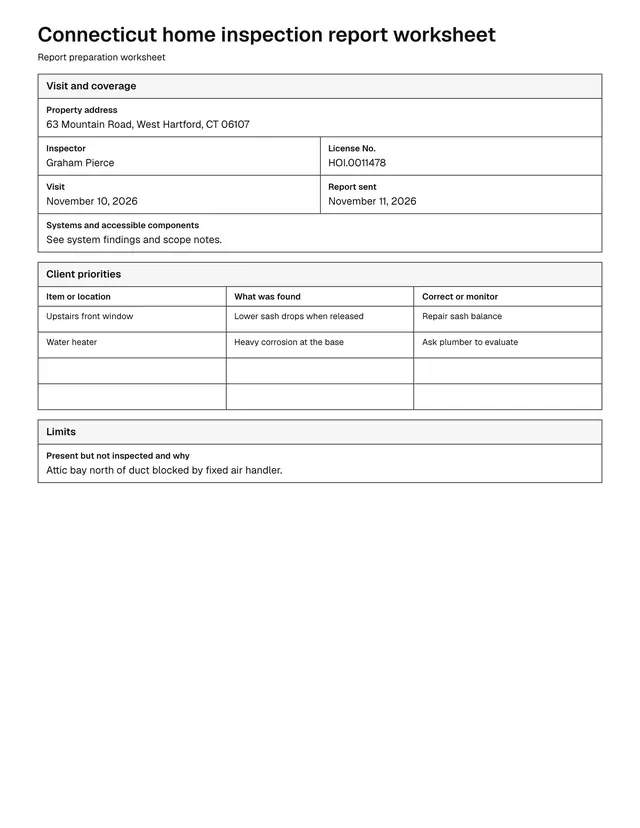
Connecticut home inspection report worksheet
Findings by system, with each defect noted. - Delaware
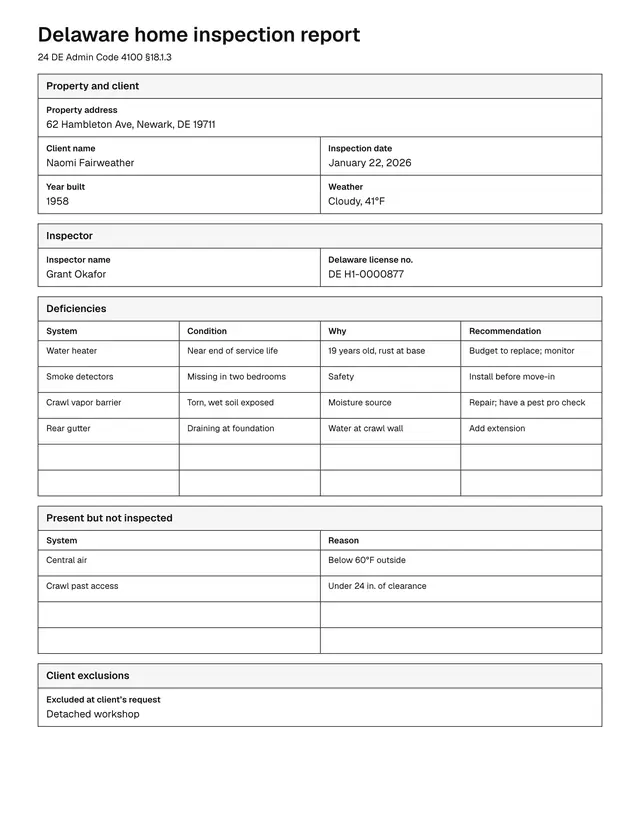
Delaware home inspection report (24 DE Admin Code 4100 §18)
Findings by system, with each defect noted. - Florida
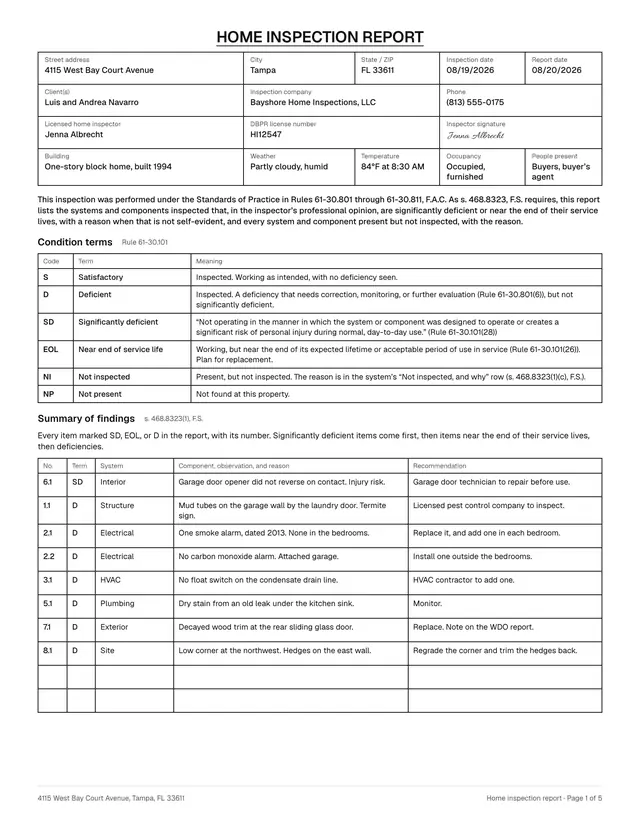
Home Inspection Report
Findings by system, with each defect noted. - Georgia
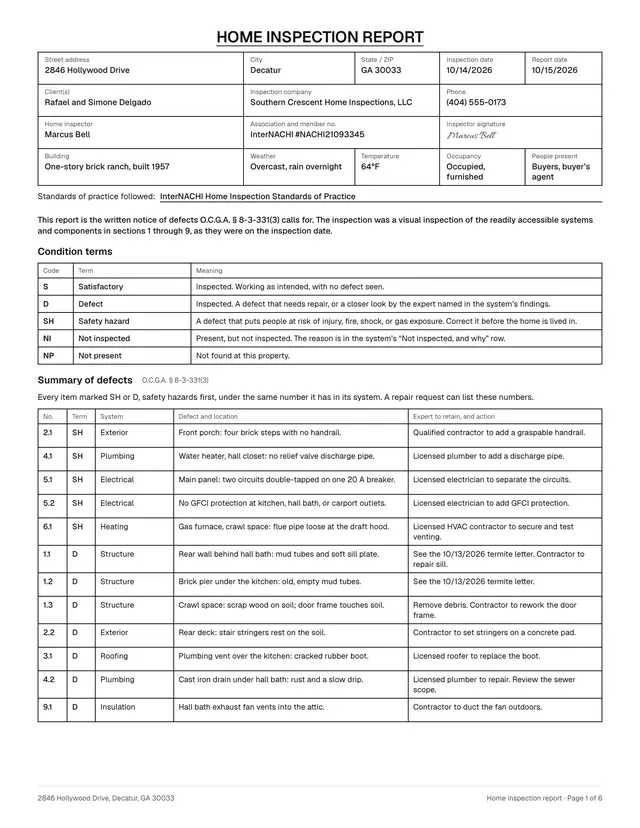
Home Inspection Report
Findings by system, with each defect noted. - Hawaii
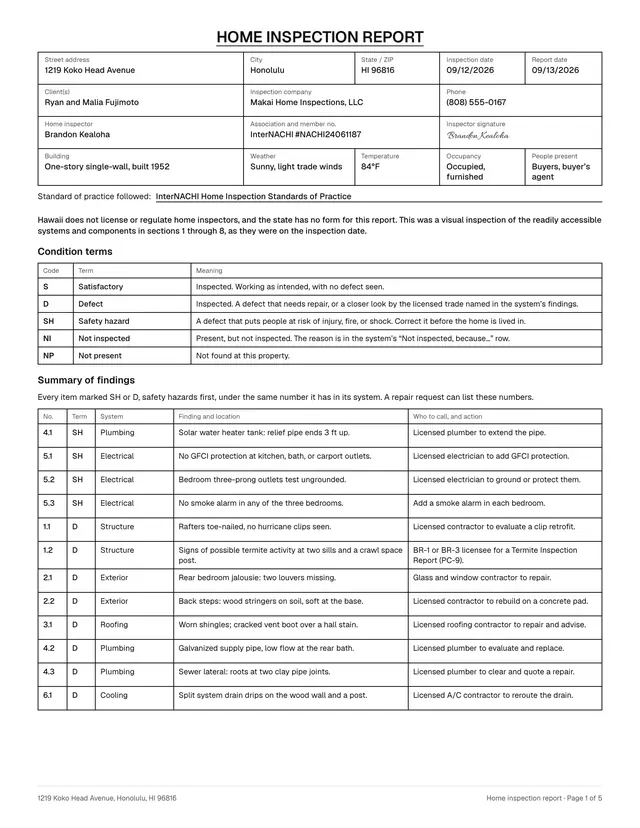
Home Inspection Report
Findings by system, with each defect noted. - Illinois
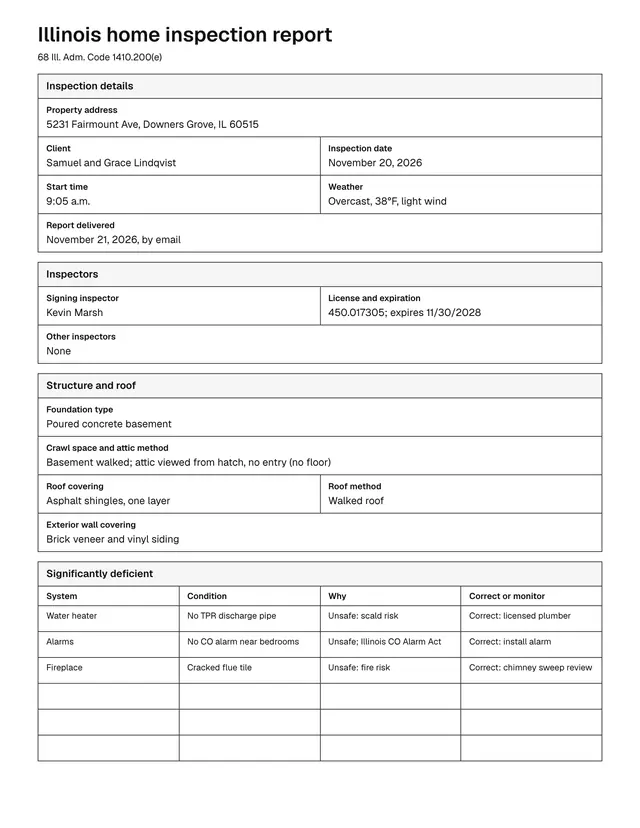
Illinois home inspection report
Findings by system, with each defect noted. - Indiana
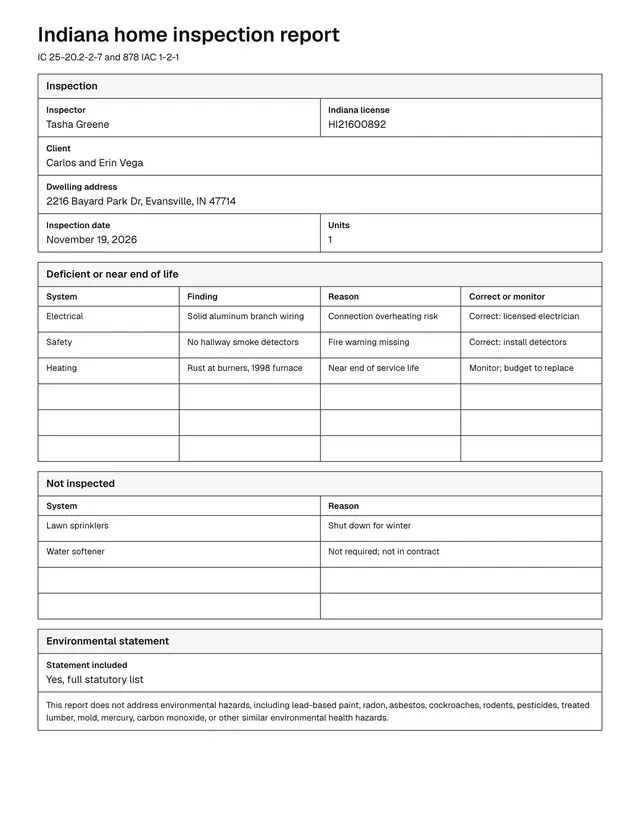
Indiana home inspection report
Findings by system, with each defect noted. - Kentucky
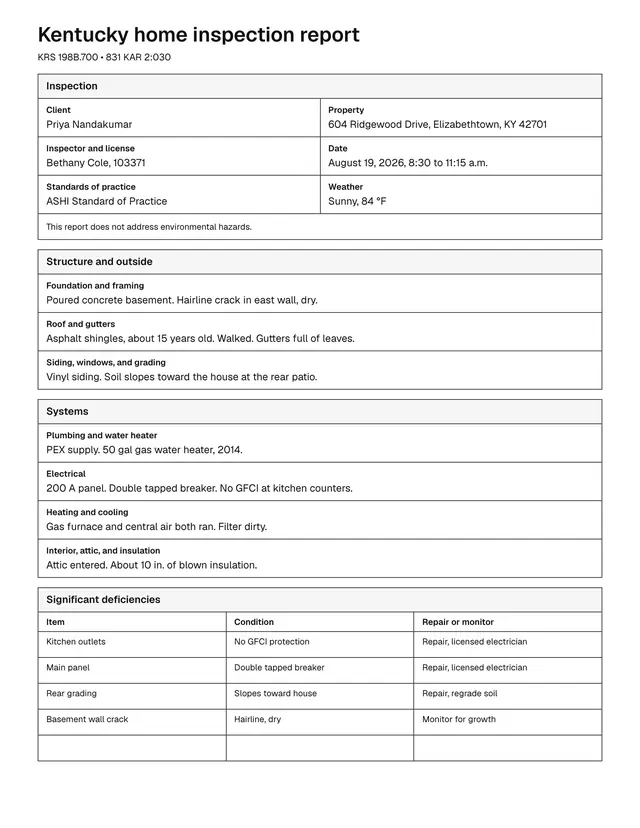
Kentucky home inspection report
Findings by system, with each defect noted. - Louisiana
Home Inspection Report
Findings by system, with each defect noted. - Maryland
Home Inspection Report
Findings by system, with each defect noted. - Michigan
Michigan home inspection report
Findings by system, with each defect noted. - Mississippi
Home Inspection Report
Findings by system, with each defect noted. - Missouri
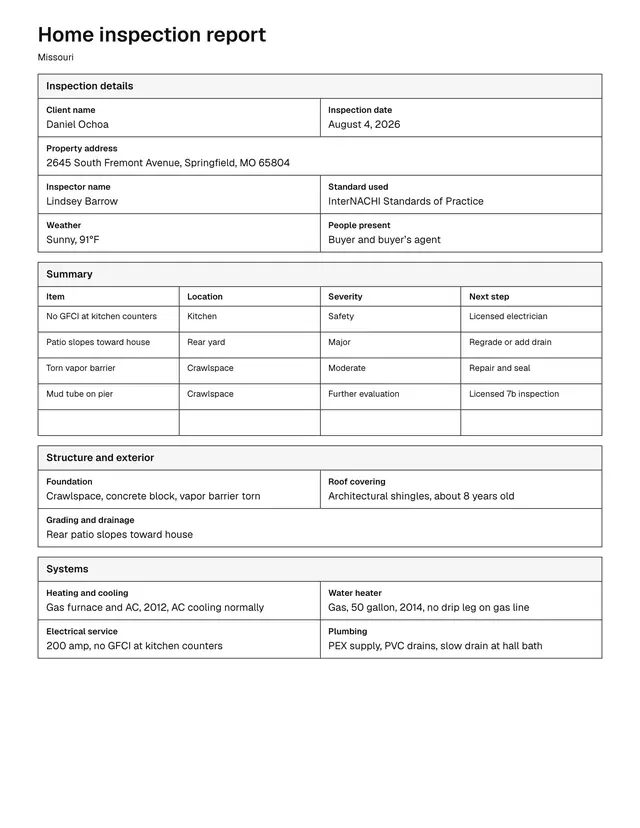
Missouri home inspection report
Findings by system, with each defect noted. - Nevada
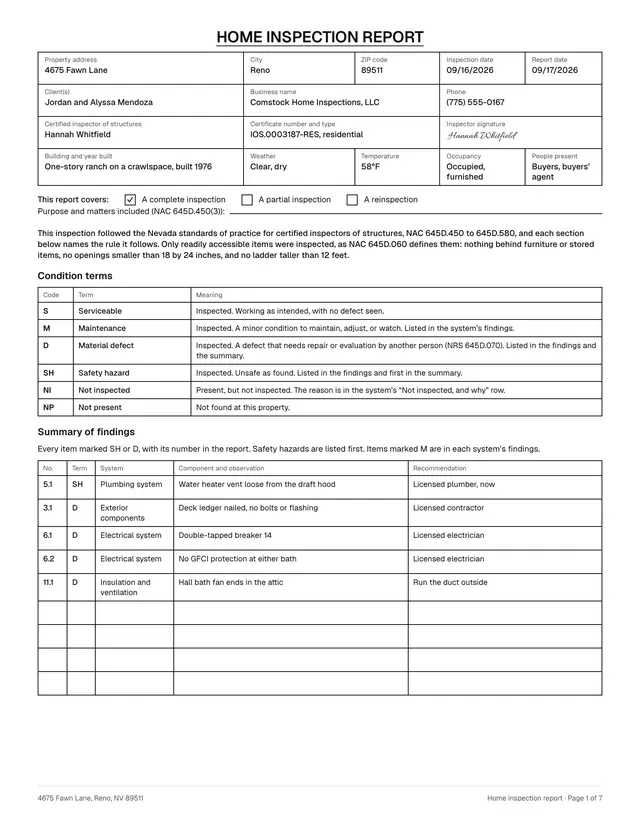
Home Inspection Report
Findings by system, with each defect noted. - New Jersey
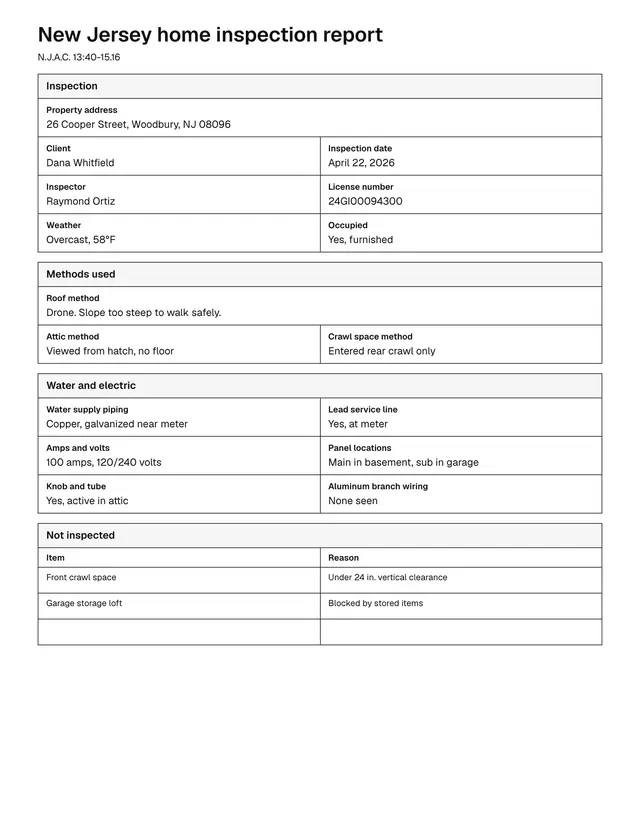
New Jersey home inspection report (N.J.A.C. 13:40-15.16)
Findings by system, with each defect noted. - New Mexico
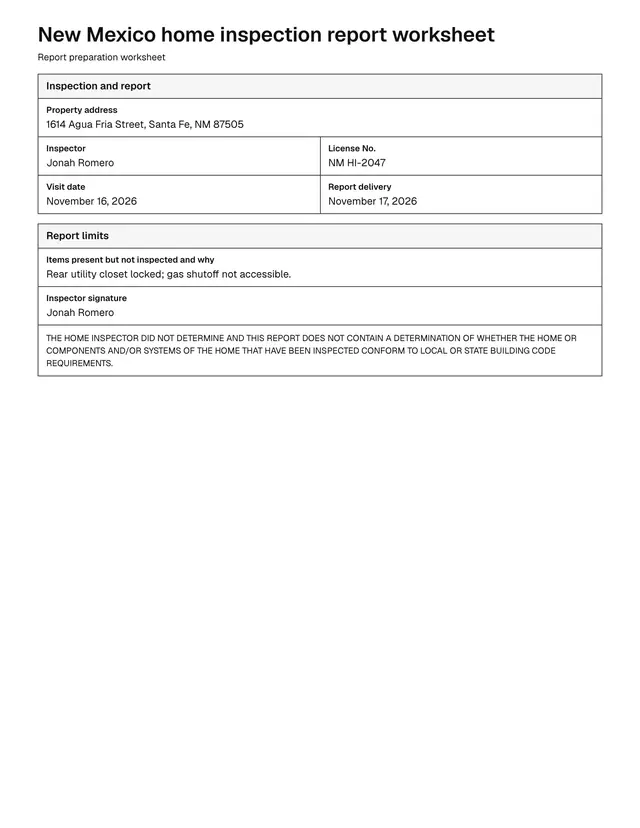
New Mexico home inspection report worksheet
Findings by system, with each defect noted. - New York
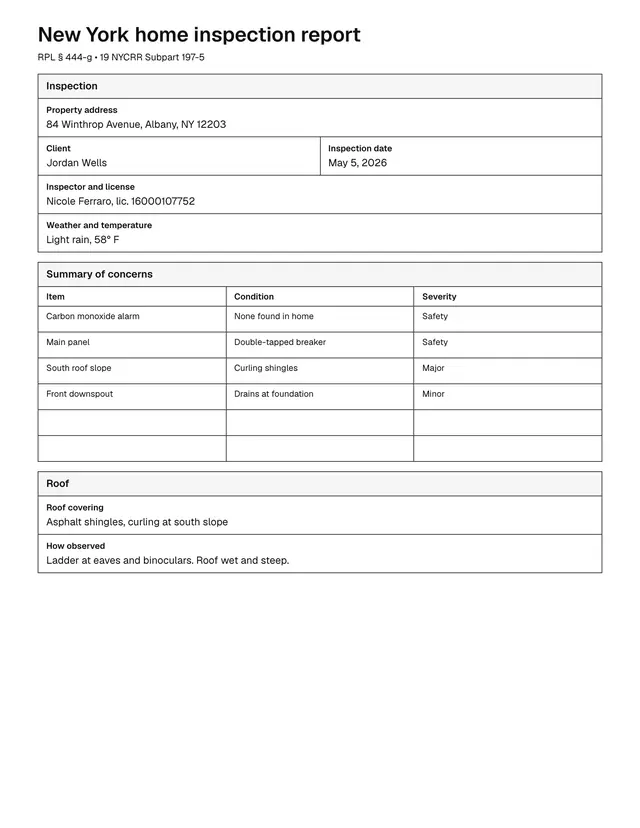
New York home inspection report (19 NYCRR Subpart 197-5)
Findings by system, with each defect noted. - North Carolina
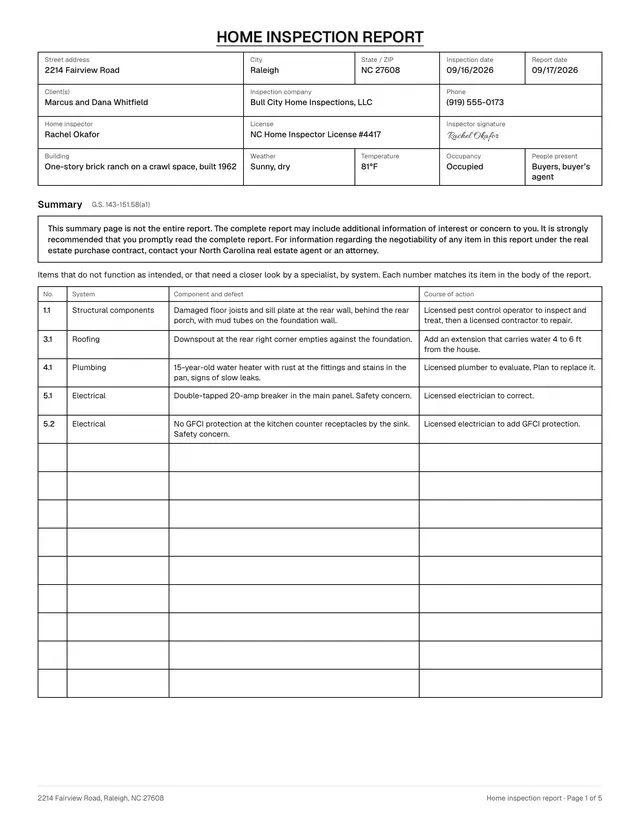
Home Inspection Report
Findings by system, with each defect noted. - Ohio
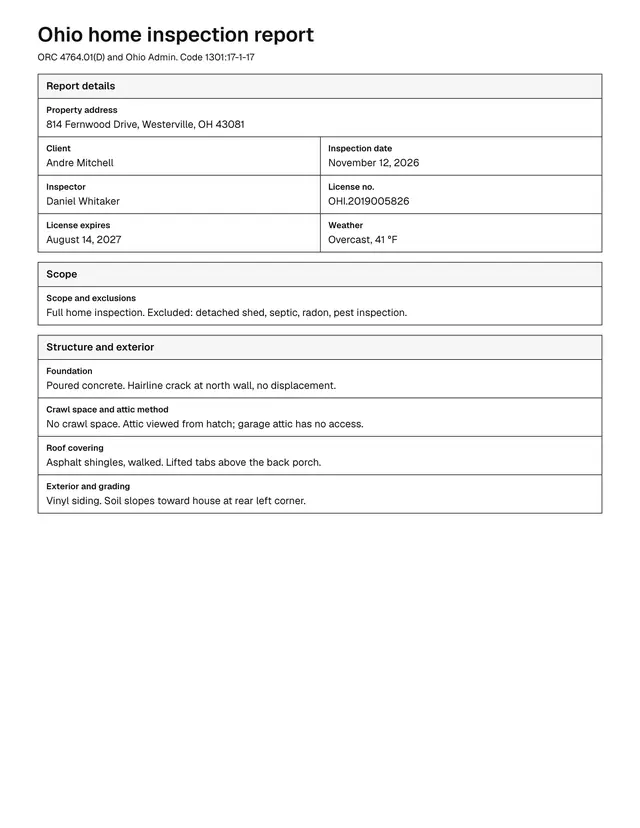
Ohio home inspection report
Findings by system, with each defect noted. - Oklahoma
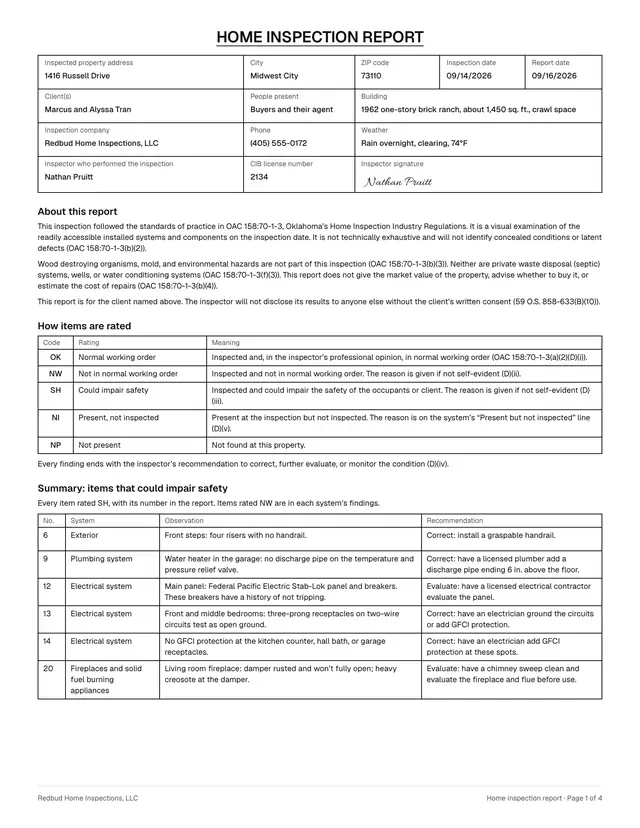
Home Inspection Report
Findings by system, with each defect noted. - Oregon
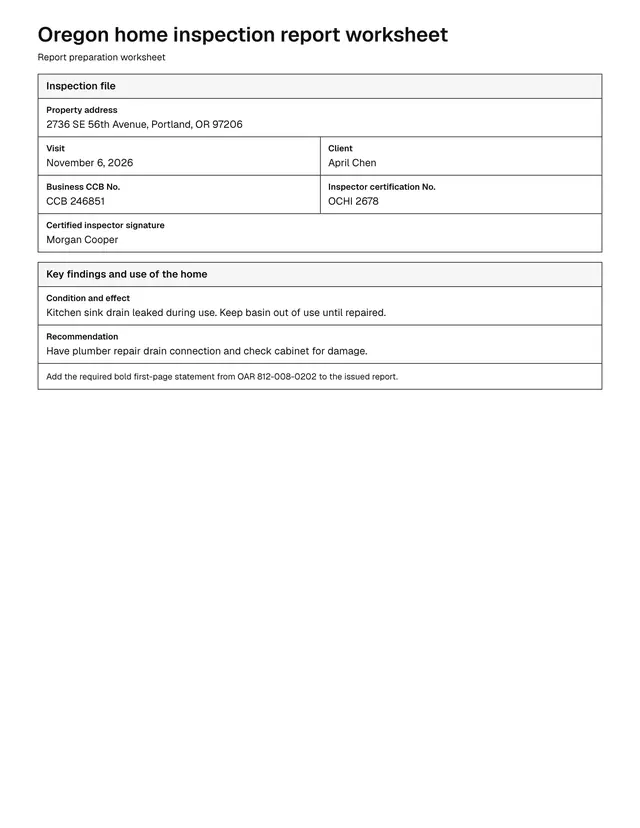
Oregon home inspection report worksheet
Findings by system, with each defect noted. - Pennsylvania
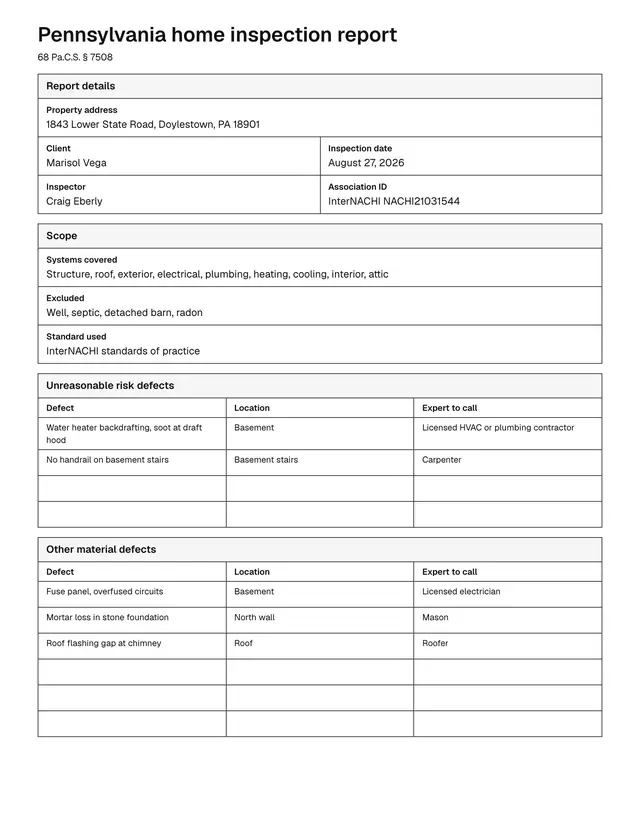
Pennsylvania home inspection report
Findings by system, with each defect noted. - South Carolina
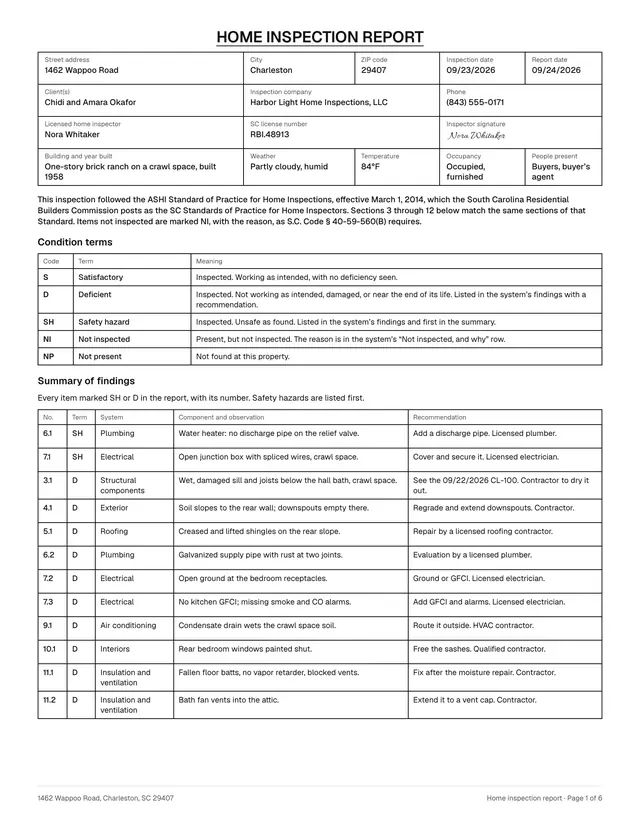
Home Inspection Report
Findings by system, with each defect noted. - Tennessee
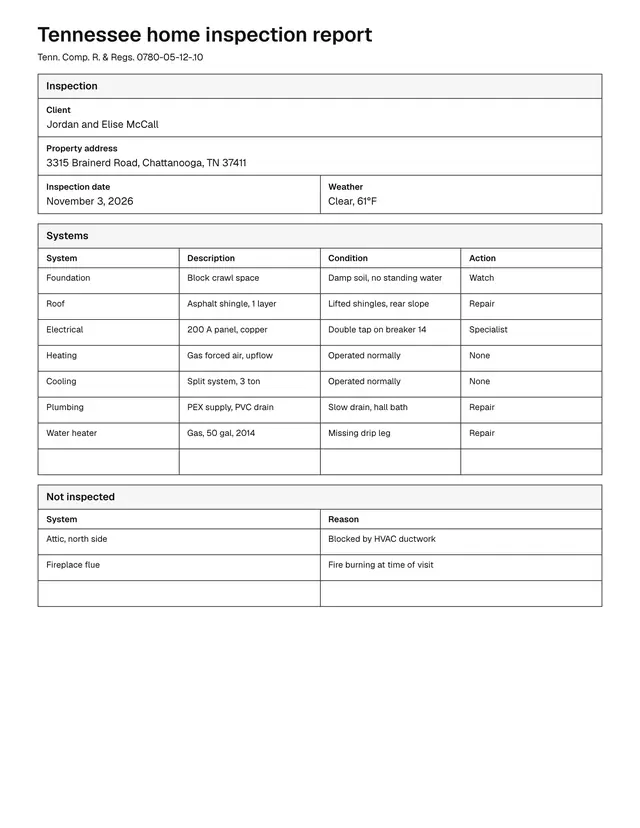
Tennessee home inspection report
Findings by system, with each defect noted. - TexasREI 7-6
Property Inspection Report Form
Findings by system, with each defect noted. - Virginia
Virginia home inspection report
Findings by system, with each defect noted. - Washington
Home Inspection Report
Findings by system, with each defect noted. - Wisconsin
Wisconsin home inspection report worksheet
Findings by system, with each defect noted.