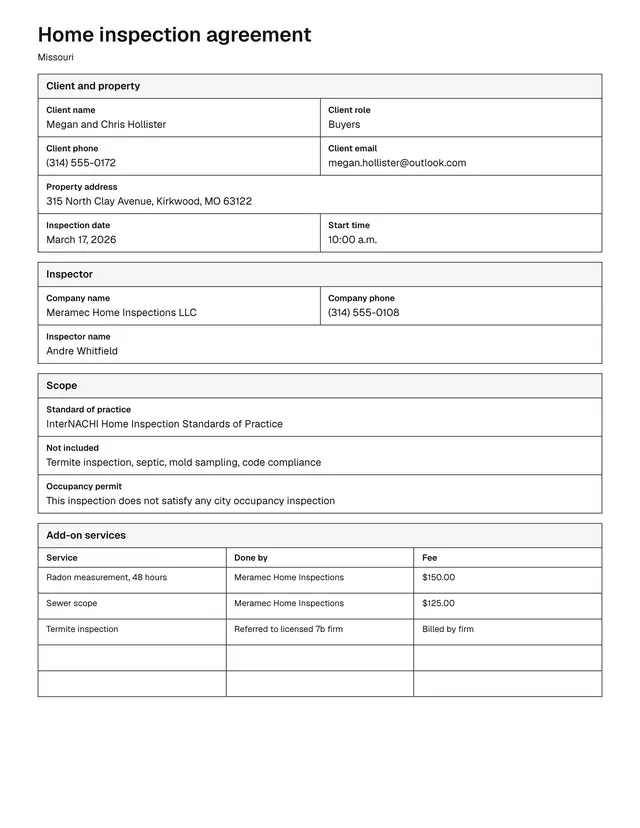
Missouri home inspection report
Missouri sets no rules for a home inspection report, but it does draw hard lines around termite and septic work. Here’s what the report should hold, where it has to stop, and how radon fits in.
At a glance
- State report rule
- None in Missouri
- Termite findings
- Refer to a 7b licensee, RSMo 281.116
- Septic findings
- Refer to a DHSS licensee, 19 CSR 20-3.070
- Radon
- DHSS: closed house 12 hours before short-term test
Completed example
Download PDFNo state format, so your standard sets it
A buyer in Springfield gets your report at 9 p.m. and has until noon tomorrow to ask for repairs. Nothing in Missouri law says what that report must look like. Missouri doesn’t license home inspectors, so the report follows whatever standard your agreement names, most often ASHI or InterNACHI.
The ASHI Standard of Practice gives a clean baseline. The report names the systems that are “not functioning properly, significantly deficient, unsafe, or are near the end of their service lives,” says what to do about each one, explains the reason when it isn’t obvious, and lists anything present that you didn’t inspect, with the reason. If you follow InterNACHI instead, its list is close.
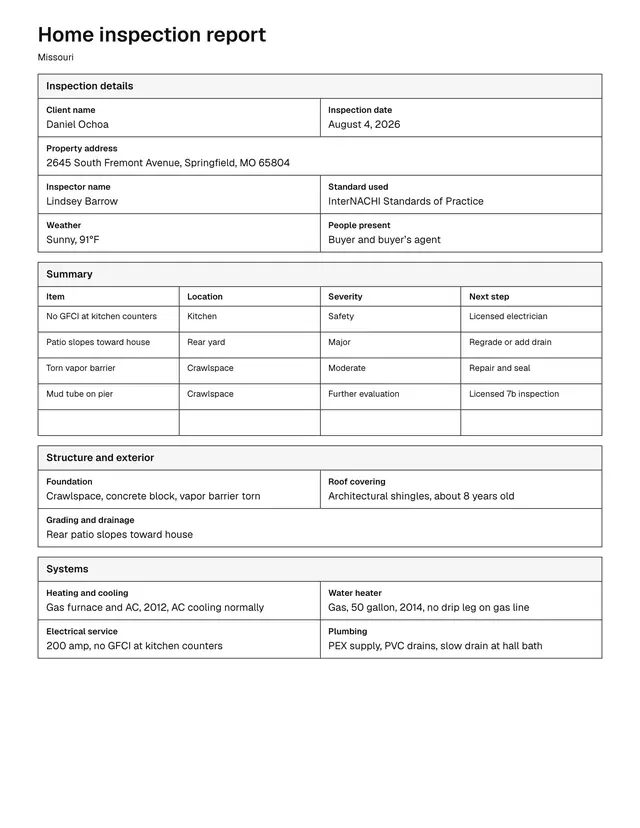
Because no state board reviews your work, the report is also your record if a buyer complains later. Date it, name the client, note the weather and who was there, and put a photo next to each defect.
Missouri housing gives that report plenty to cover: century-old brick in St. Louis with layers of wiring, split-levels across the Kansas City suburbs, and Ozark homes on crawlspaces, wells, and septic systems. Match the report to the house. A home on a slope with a walkout basement needs more on drainage than a flat lot does, and a house on a private well needs a line saying whether water was tested.
Two places your report has to stop
Termites. Note mud tubes, damaged wood, or wings on a windowsill. That’s fair observation. But the termite inspection a lender or buyer orders for the sale needs a license in subcategory 7b under RSMo 281.116. Write “recommend a wood-destroying insect inspection by a licensed pest control company” and point them to the Missouri wood-destroying insect report.
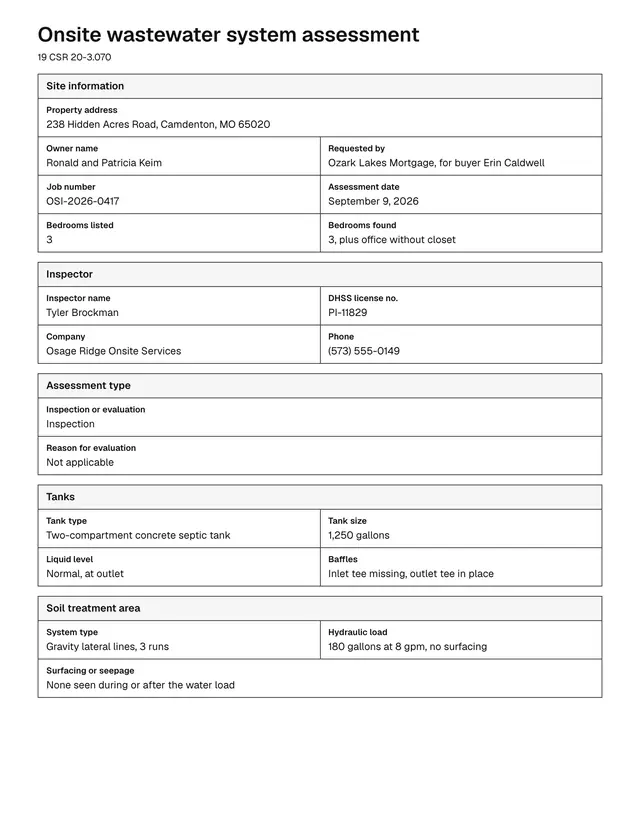
Septic. Missouri is stricter here. Its onsite rule, 19 CSR 20-3.070, says no person without a license may conduct any part of an onsite system inspection or evaluation for a sale, even under supervision. Doing it anyway is a class A misdemeanor. DHSS says onsite systems serve about a quarter of Missouri homes, and most local agencies no longer inspect them at sale, so buyers lean on licensed inspectors. Note what you can see from the yard, like soggy ground or odor, and refer the rest. Our Missouri onsite wastewater report page explains the two report types.
Where radon fits
Radon isn’t part of a standard home inspection. But DHSS is direct about sale testing. Its radon testing page says “Some radon testing, including testing related to legal transactions, should be performed by a professional radon contractor.”
If you test, put the results in a separate section of the report or a separate attachment, with the start and end times, where the monitor sat, and whether the house was closed up. DHSS says to keep doors and windows closed 12 hours before a short-term test begins. If you didn’t test, say that plainly so a buyer doesn’t assume a clean report means low radon.
Pick one place for radon results and keep it there on every report. Agents learn where to look, and a buyer who forwards the report to a radon contractor can find the numbers in seconds.
City occupancy inspections are a different report
Some Missouri cities, including many small towns in St. Louis County, run occupancy permit inspections when a home changes hands. A 2024 law, RSMo 436.345, stops cities from requiring a pre-sale home inspection, but it leaves occupancy permits alone. Those inspections check the city’s code. Yours checks the house’s condition. If your report finds a missing handrail, don’t write that it “fails code.” Write that it’s a safety issue and let the city decide what its code requires.
What will the agent read first?
The summary. Agents use it to write the repair request, often within hours. Put the safety items and big-ticket repairs at the top, ranked, with the location and a short fix. Leave the worn weatherstripping for the body of the report.
If the seller makes repairs and you’re hired to re-inspect, write a short new report that lists only the original items and what you saw this time. Don’t edit the first report. Both reports, with their own dates, tell the story better.
Noma specializes in the Missouri home inspection report (ASHI or InterNACHI standards). Build reports with your own sections and titles, mark how serious each defect is, and Noma puts the worst ones in the summary so the agent sees them first. See how Noma builds inspection reports.
Frequentlyaskedquestions
Send this document in minutes, not an afternoon.
Other states
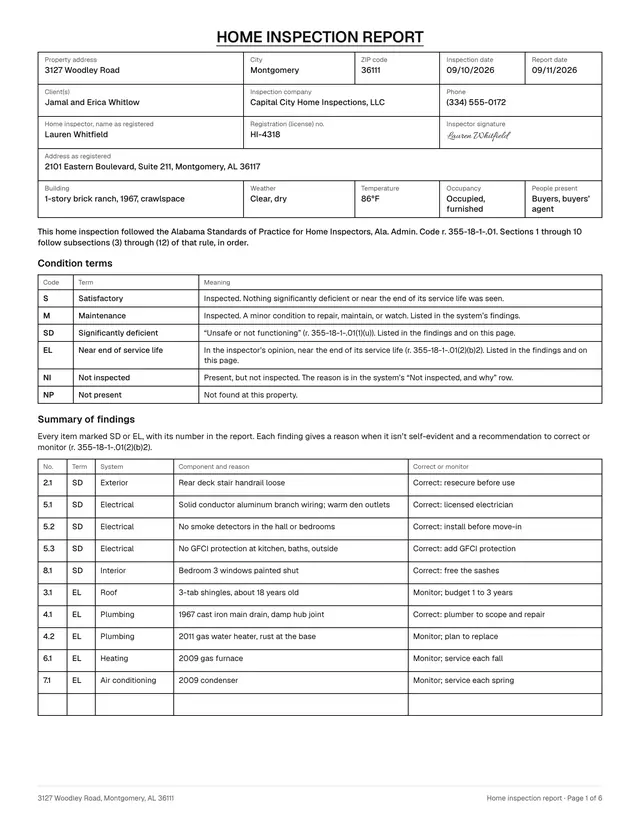
Home inspection report templates- Alabama
Home Inspection Report
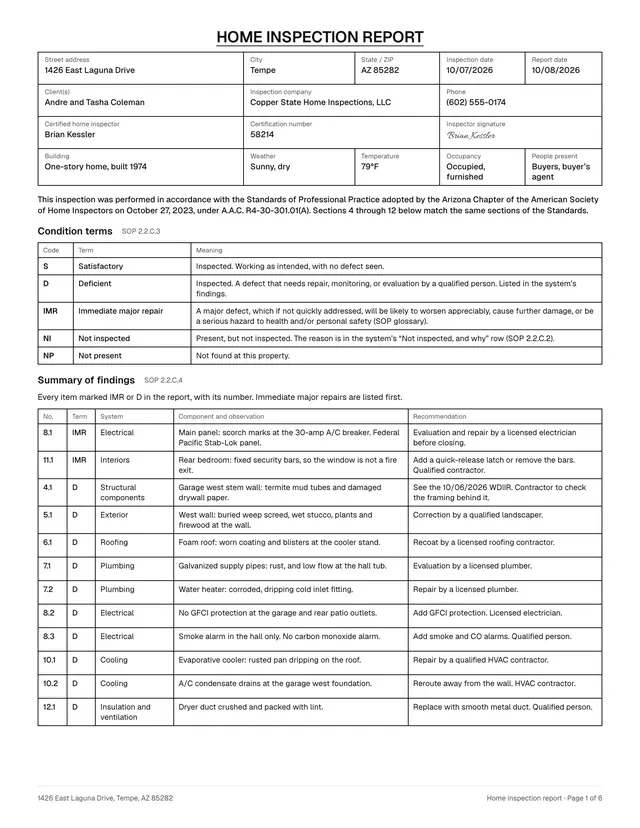
Findings by system, with each defect noted. - Arizona
Home Inspection Report
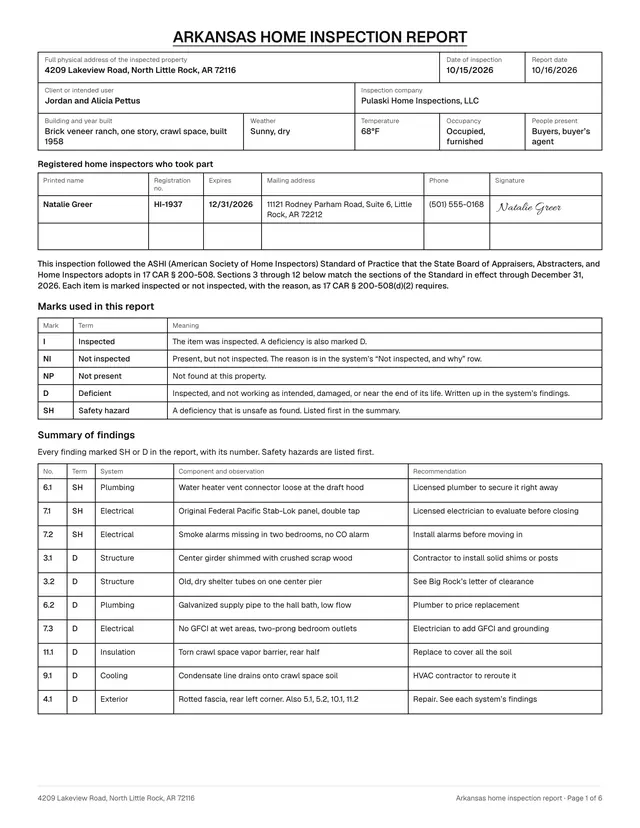
Findings by system, with each defect noted. - Arkansas
Arkansas Home Inspection Report
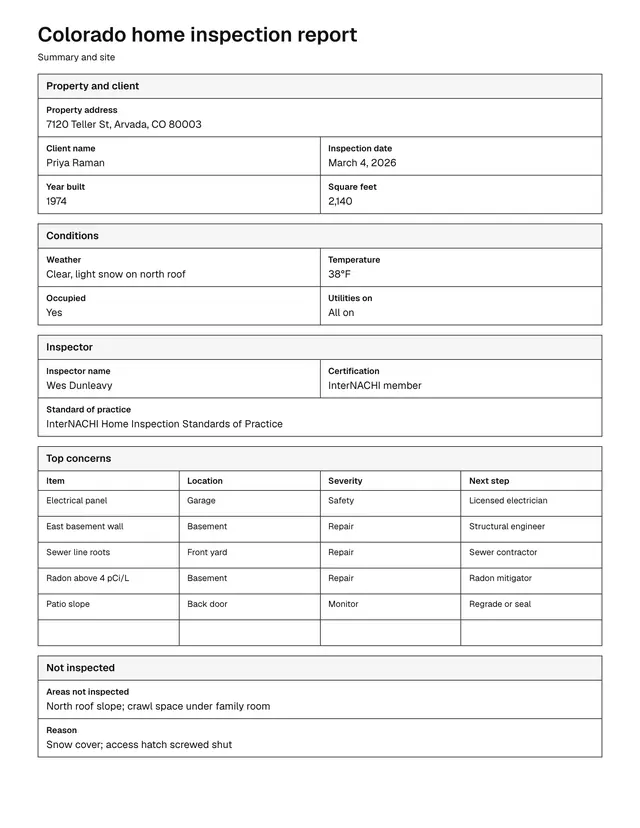
Findings by system, with each defect noted. - Colorado
Colorado home inspection report
Findings by system, with each defect noted. - Connecticut
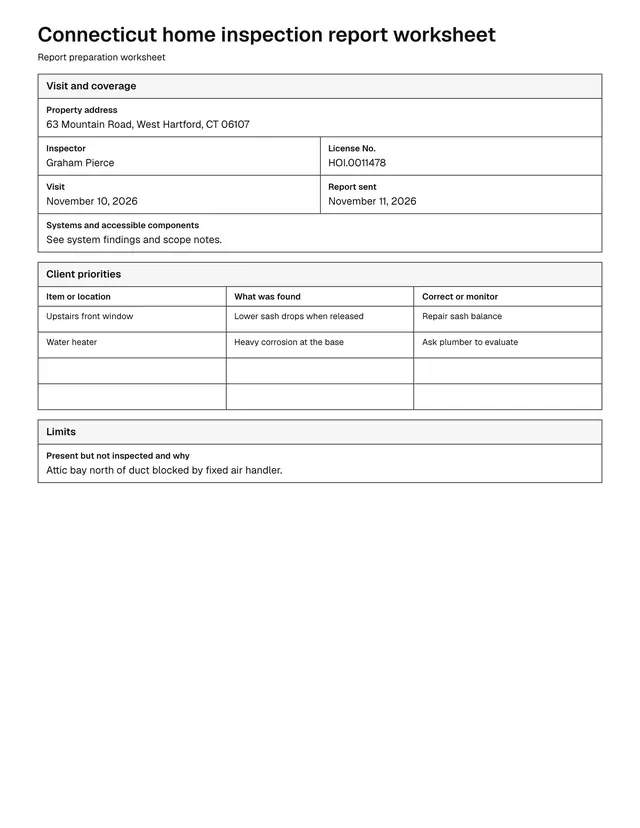
Connecticut home inspection report worksheet
Findings by system, with each defect noted. - Delaware
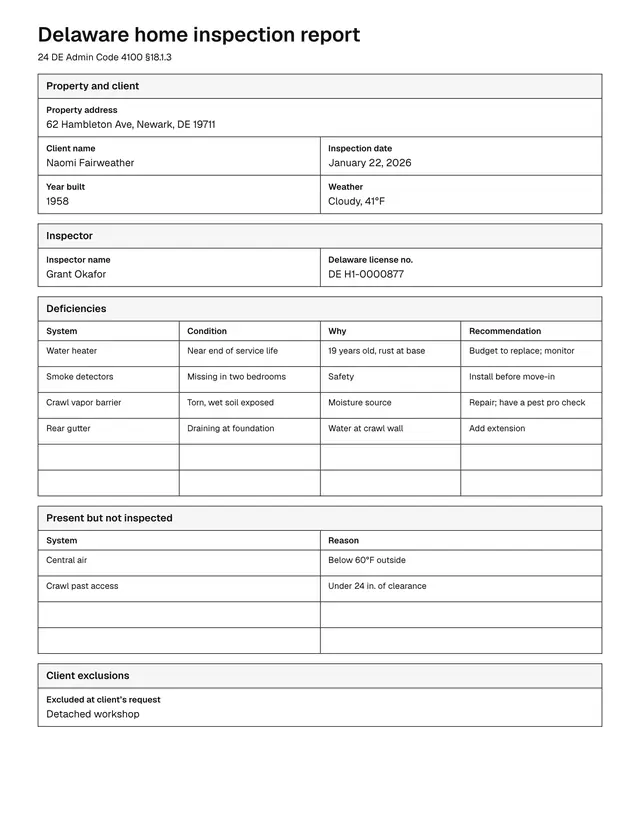
Delaware home inspection report (24 DE Admin Code 4100 §18)
Findings by system, with each defect noted. - Florida
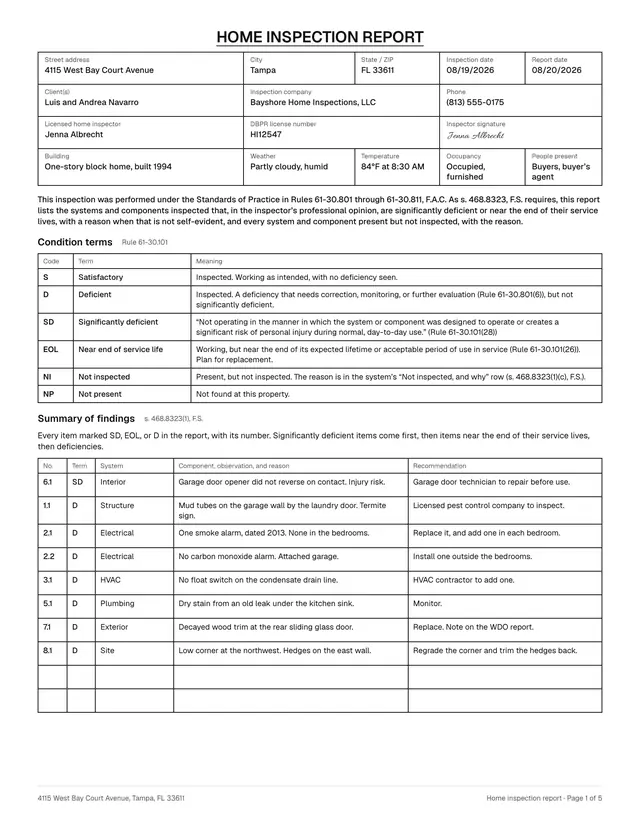
Home Inspection Report
Findings by system, with each defect noted. - Georgia
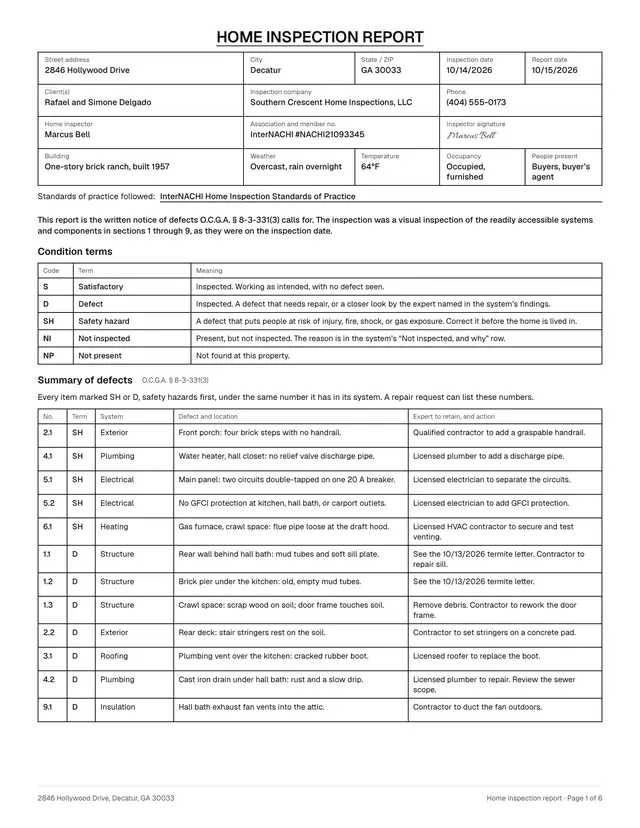
Home Inspection Report
Findings by system, with each defect noted. - Hawaii
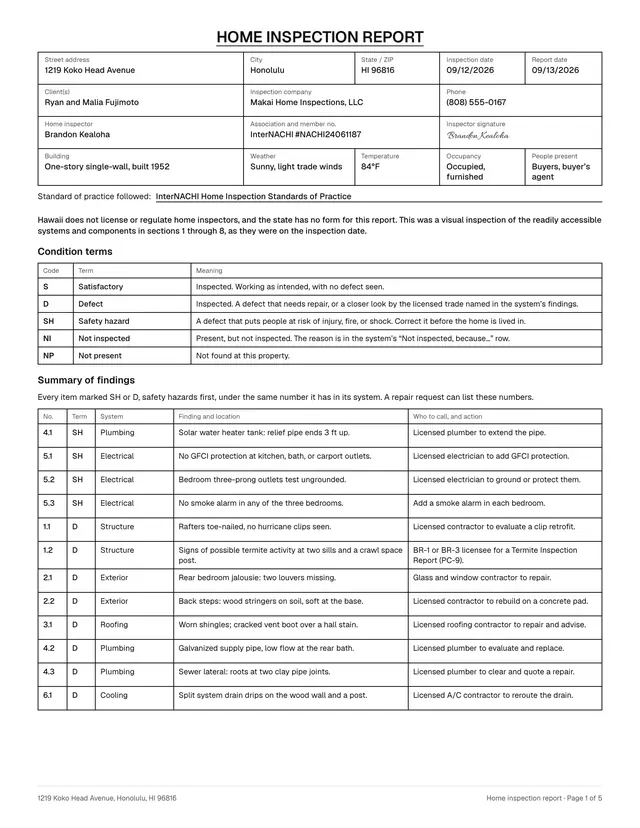
Home Inspection Report
Findings by system, with each defect noted. - Illinois
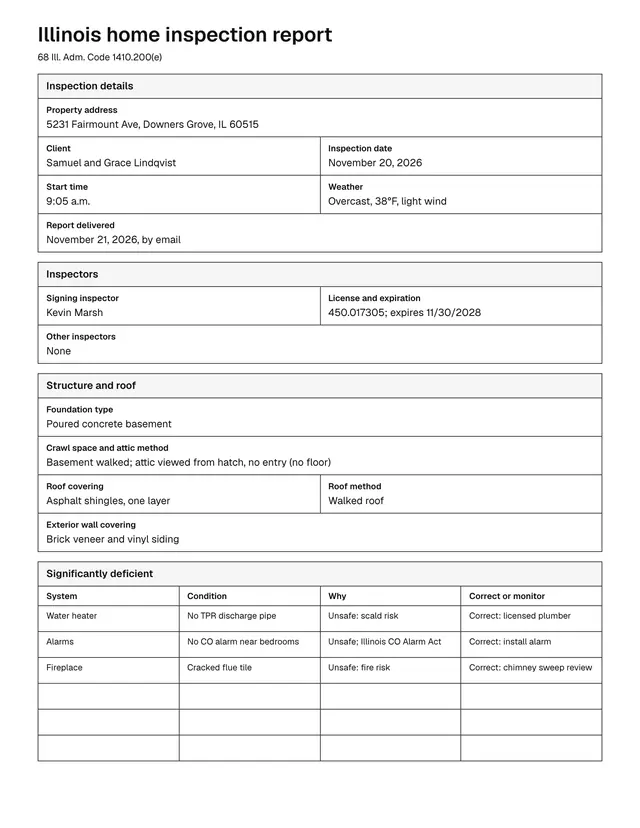
Illinois home inspection report
Findings by system, with each defect noted. - Indiana
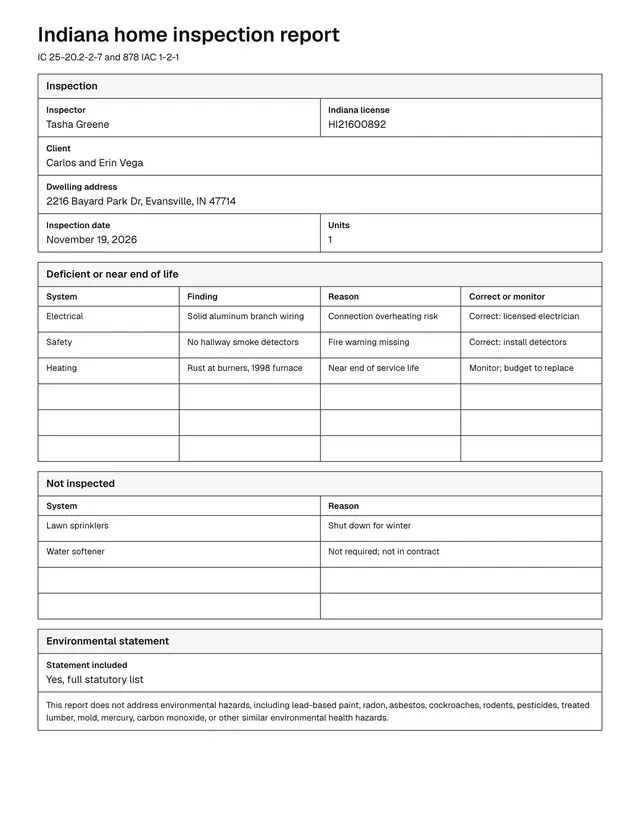
Indiana home inspection report
Findings by system, with each defect noted. - Kentucky
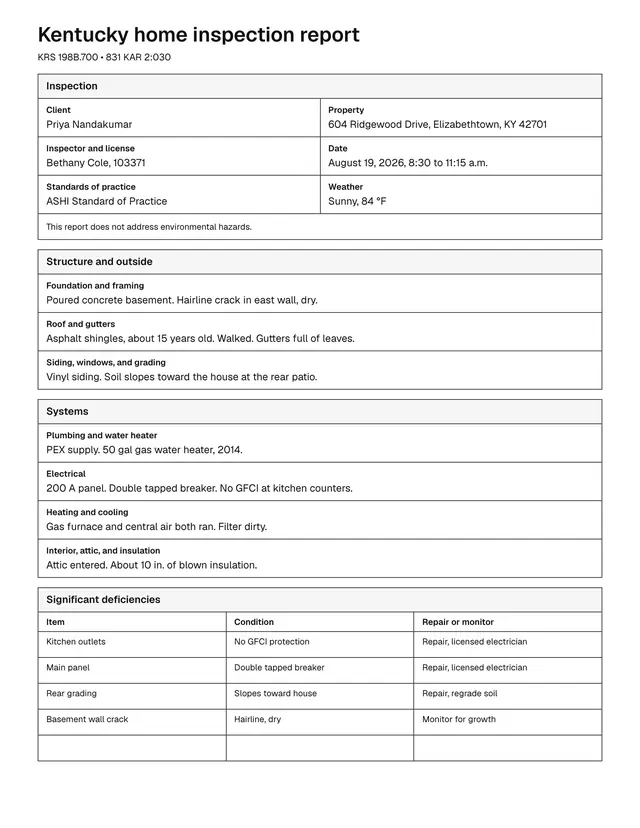
Kentucky home inspection report
Findings by system, with each defect noted. - Louisiana
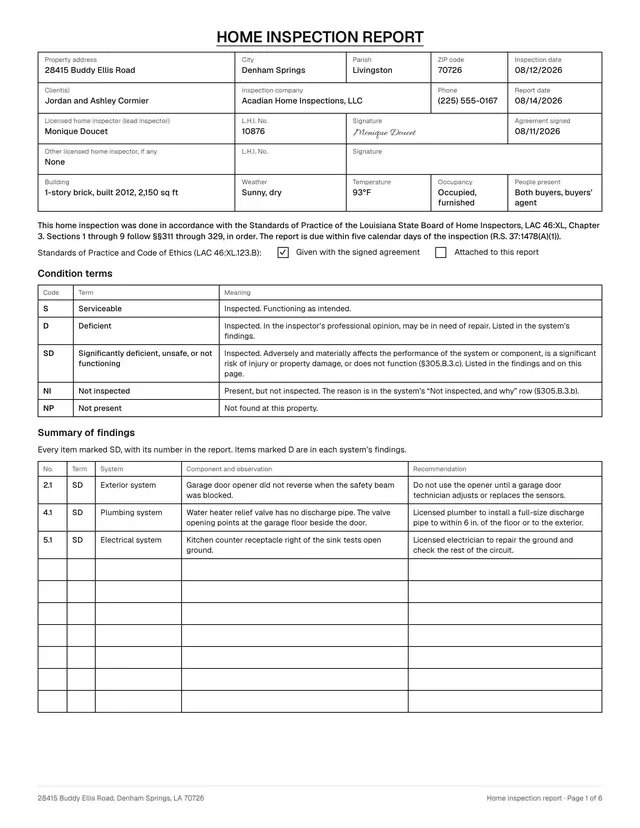
Home Inspection Report
Findings by system, with each defect noted. - Maryland
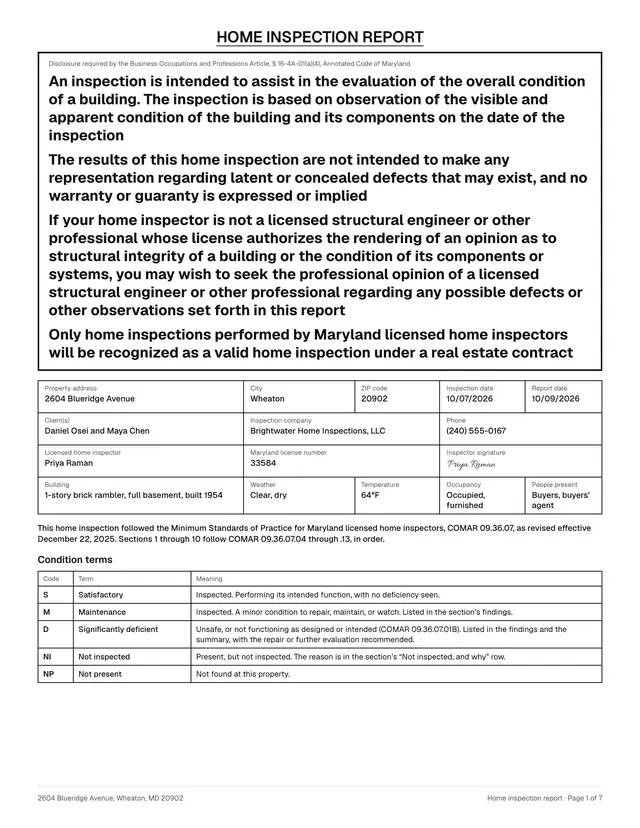
Home Inspection Report
Findings by system, with each defect noted. - Massachusetts
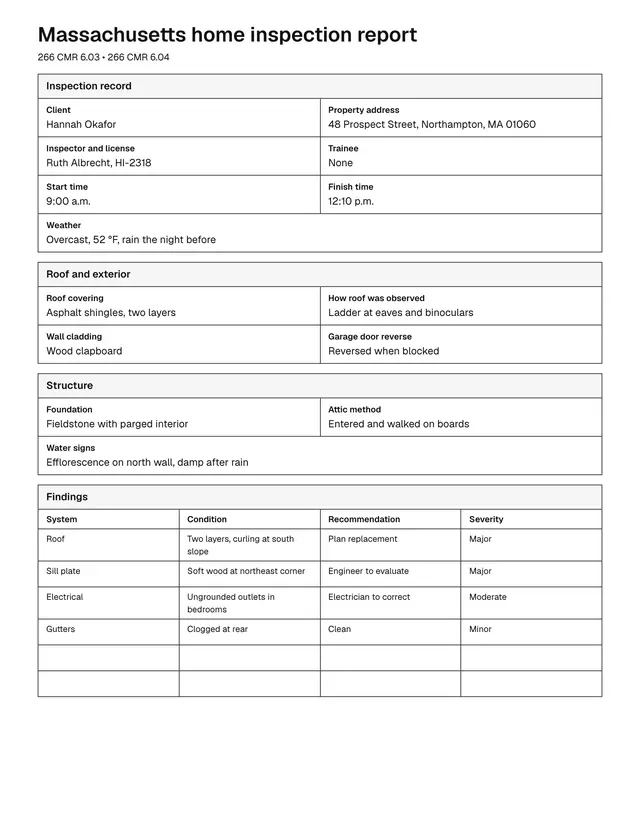
Massachusetts home inspection report (266 CMR 6.03)
Findings by system, with each defect noted. - Michigan
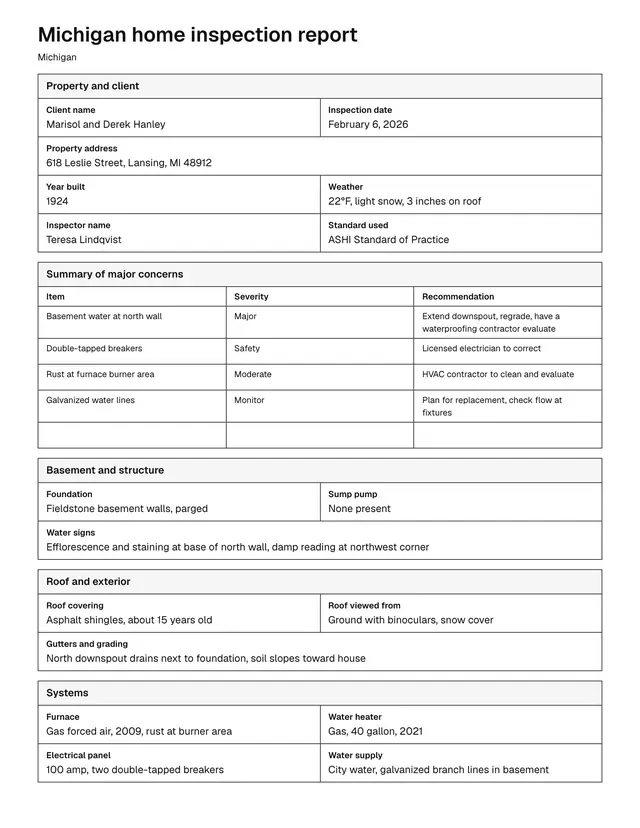
Michigan home inspection report
Findings by system, with each defect noted. - Mississippi
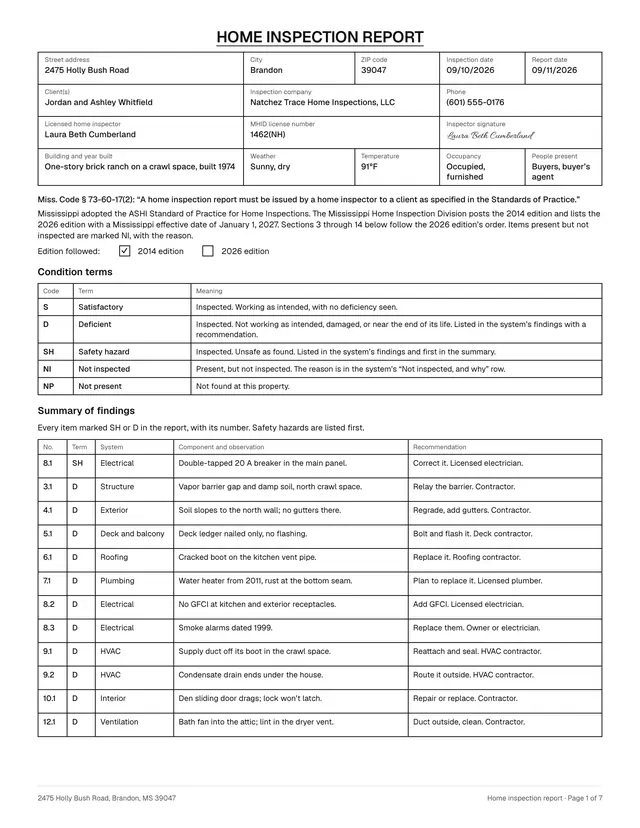
Home Inspection Report
Findings by system, with each defect noted. - Nevada
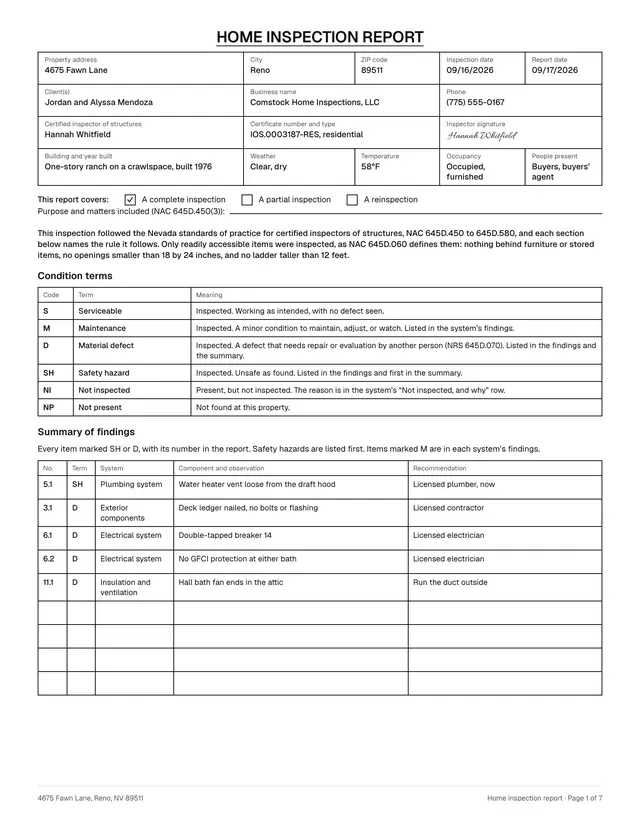
Home Inspection Report
Findings by system, with each defect noted. - New Jersey
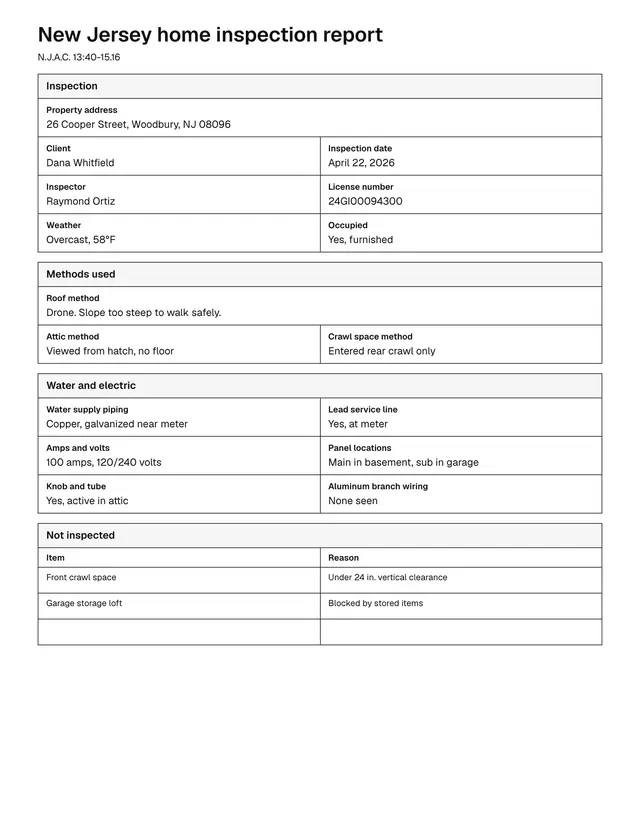
New Jersey home inspection report (N.J.A.C. 13:40-15.16)
Findings by system, with each defect noted. - New Mexico
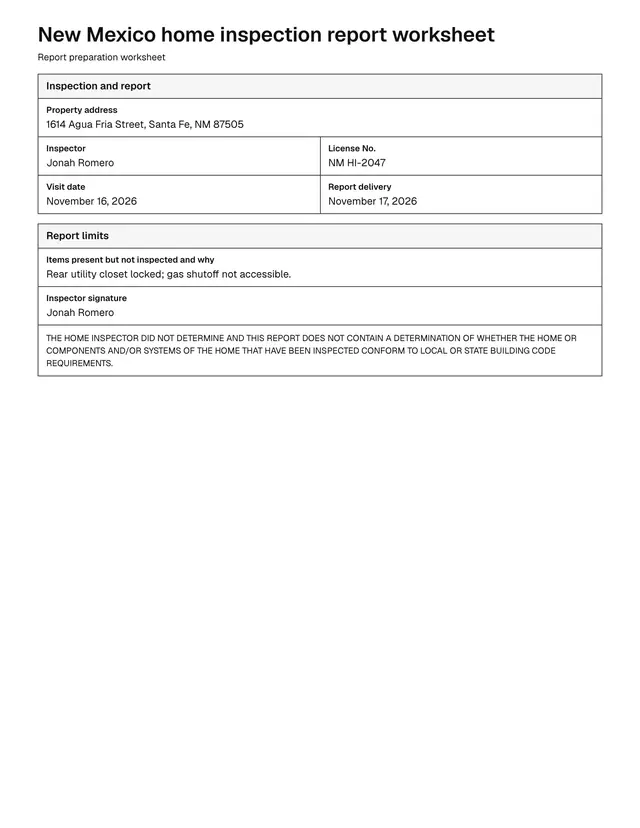
New Mexico home inspection report worksheet
Findings by system, with each defect noted. - New York
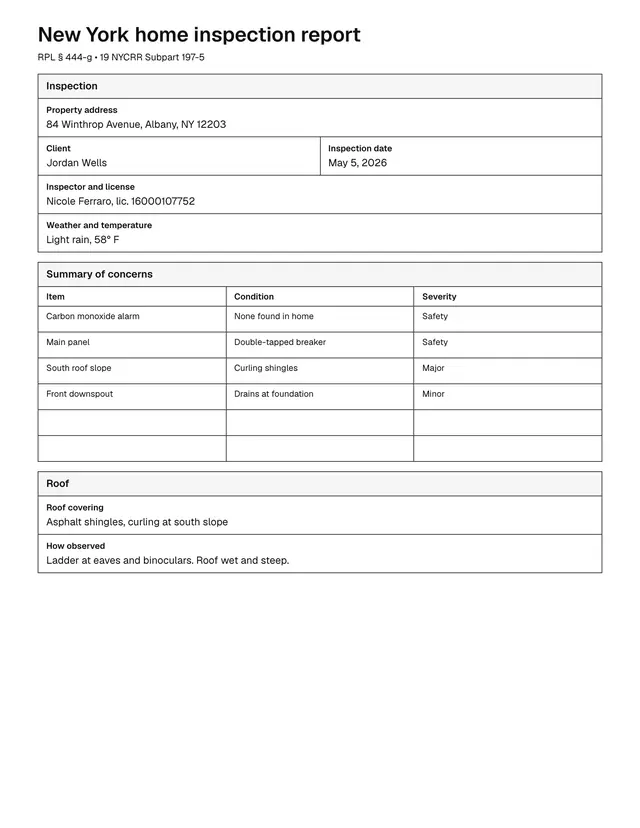
New York home inspection report (19 NYCRR Subpart 197-5)
Findings by system, with each defect noted. - North Carolina
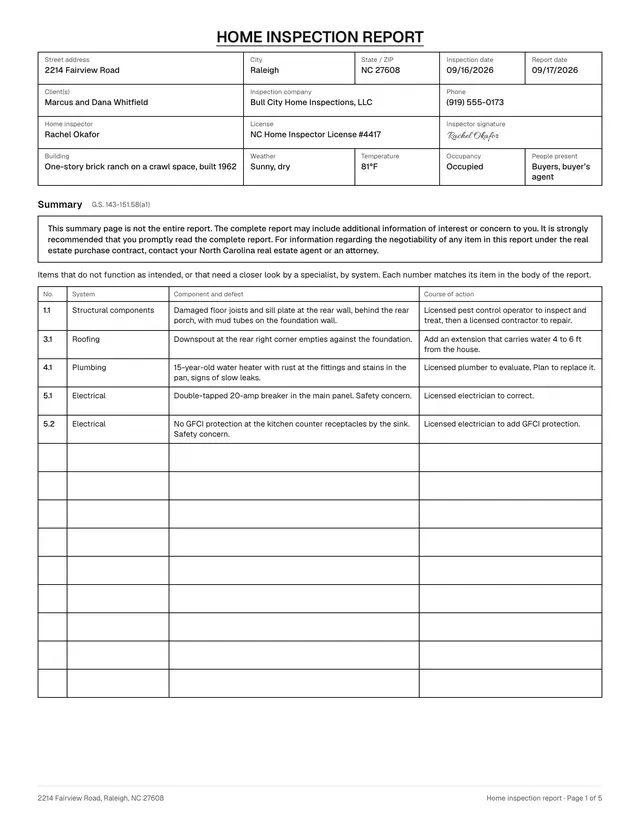
Home Inspection Report
Findings by system, with each defect noted. - Ohio
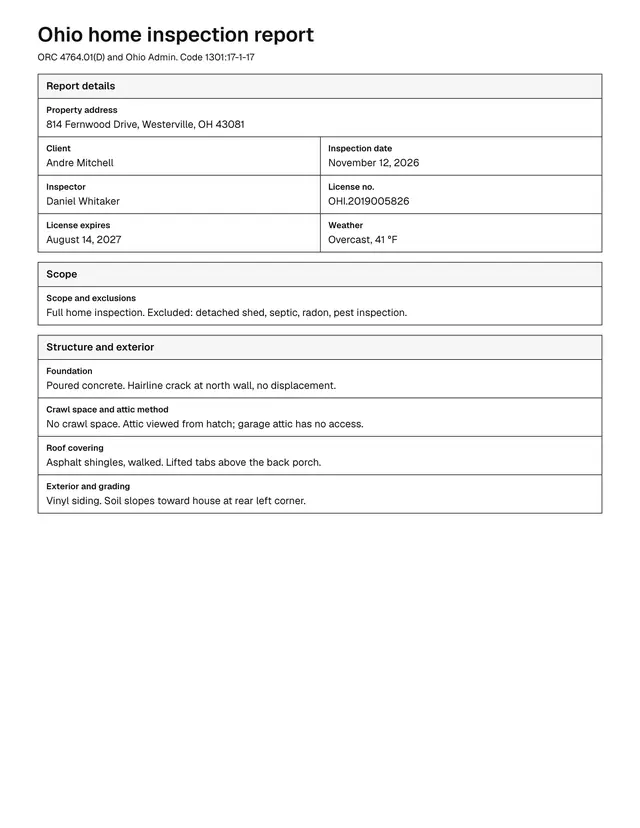
Ohio home inspection report
Findings by system, with each defect noted. - Oklahoma
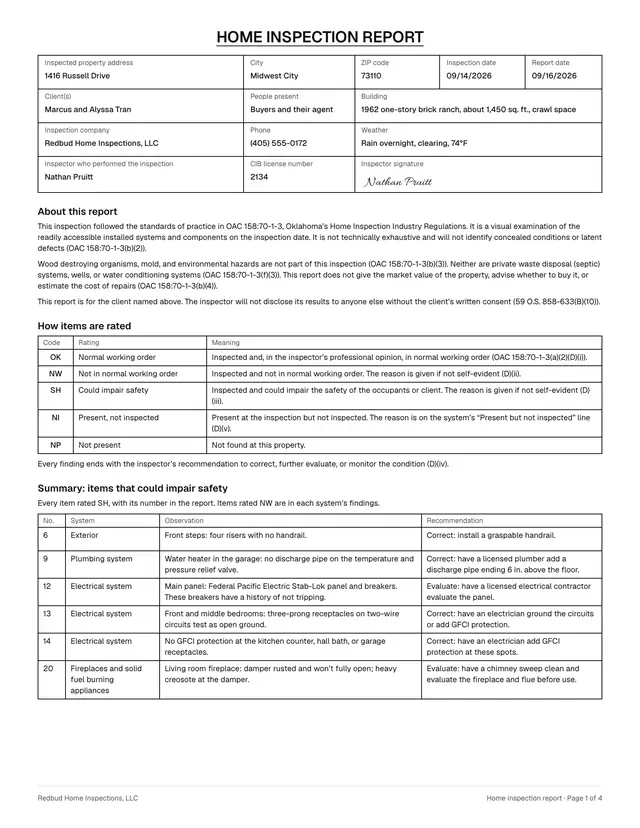
Home Inspection Report
Findings by system, with each defect noted. - Oregon
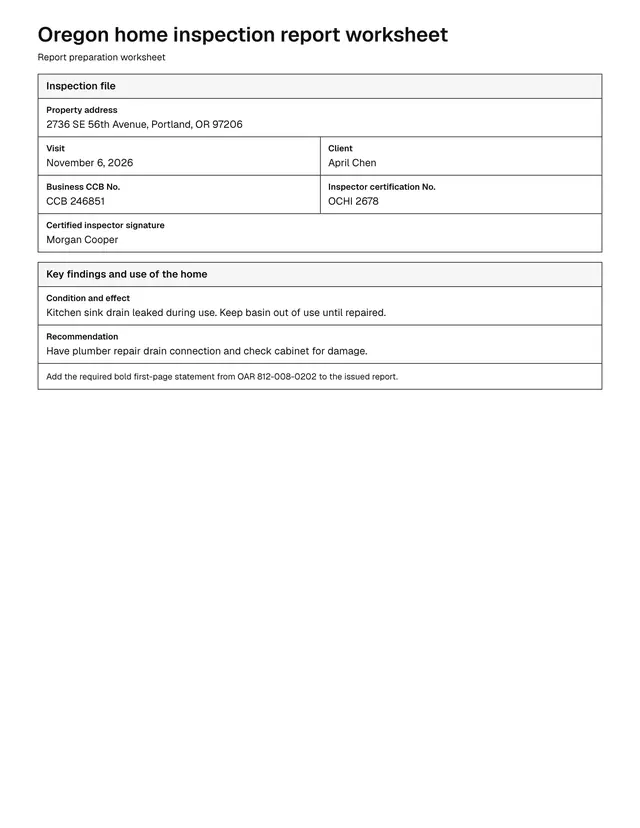
Oregon home inspection report worksheet
Findings by system, with each defect noted. - Pennsylvania
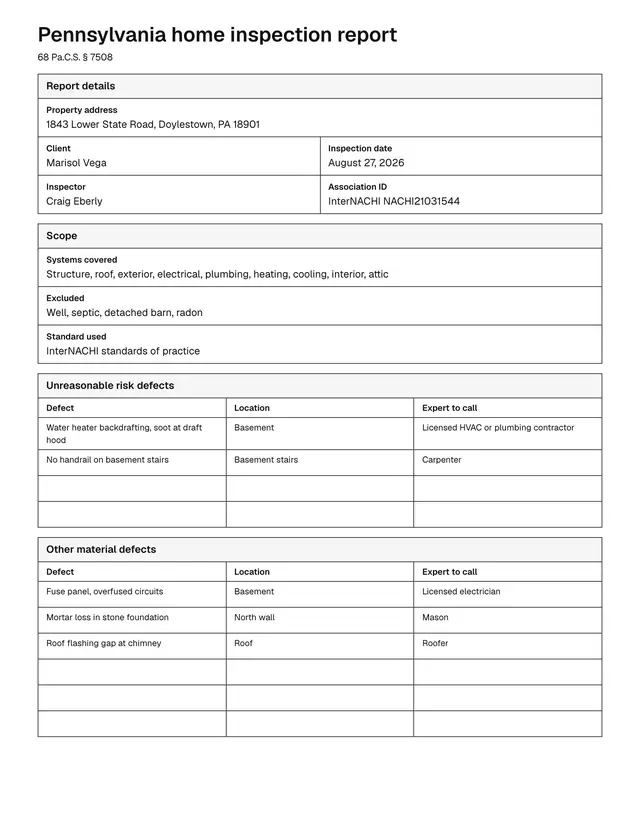
Pennsylvania home inspection report
Findings by system, with each defect noted. - South Carolina
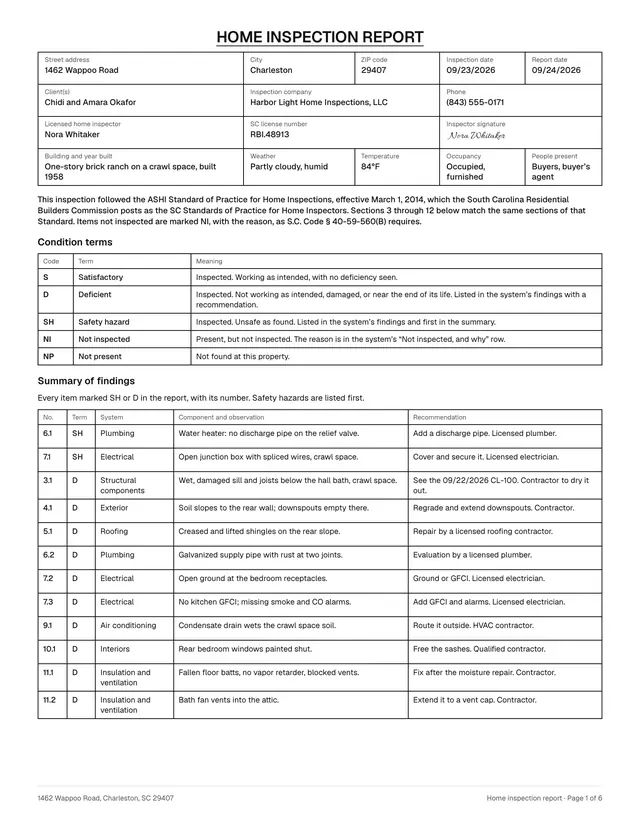
Home Inspection Report
Findings by system, with each defect noted. - Tennessee
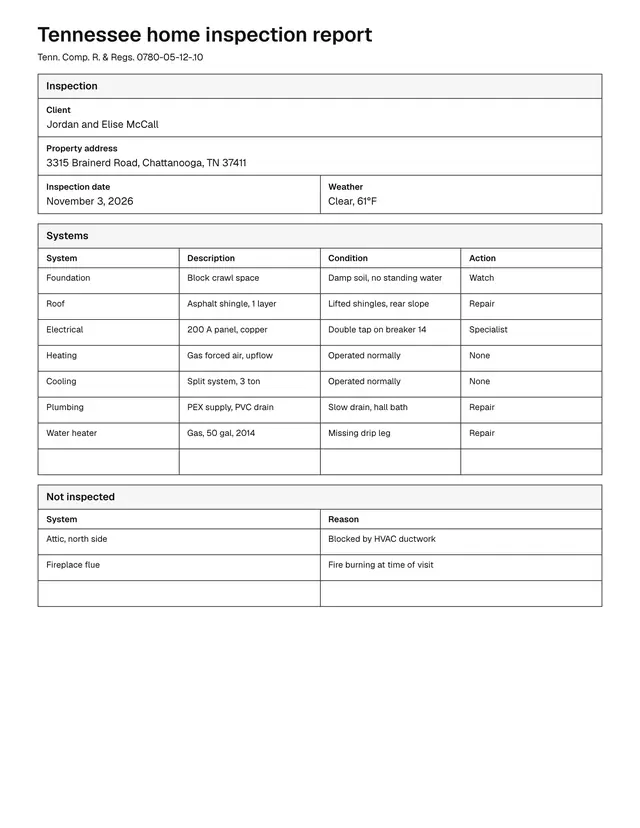
Tennessee home inspection report
Findings by system, with each defect noted. - TexasREI 7-6
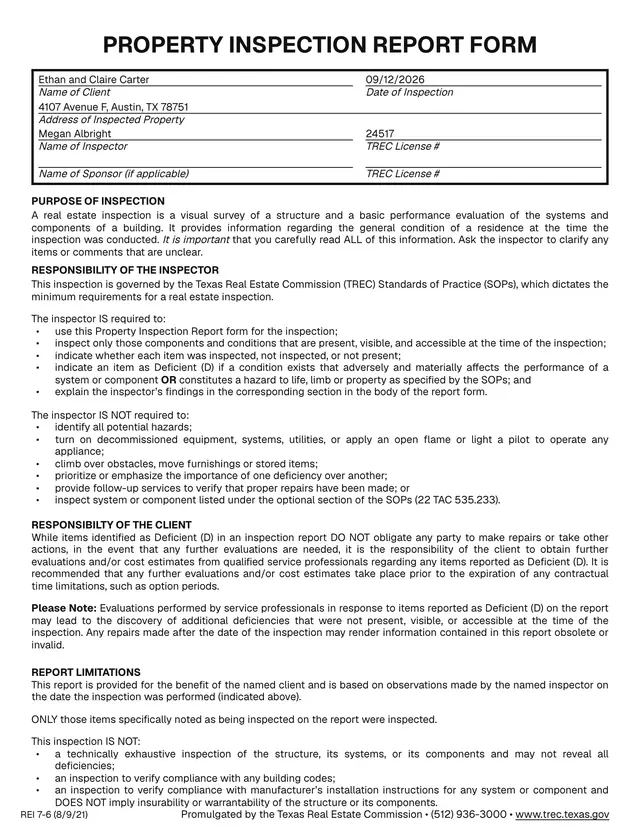
Property Inspection Report Form
Findings by system, with each defect noted. - Virginia
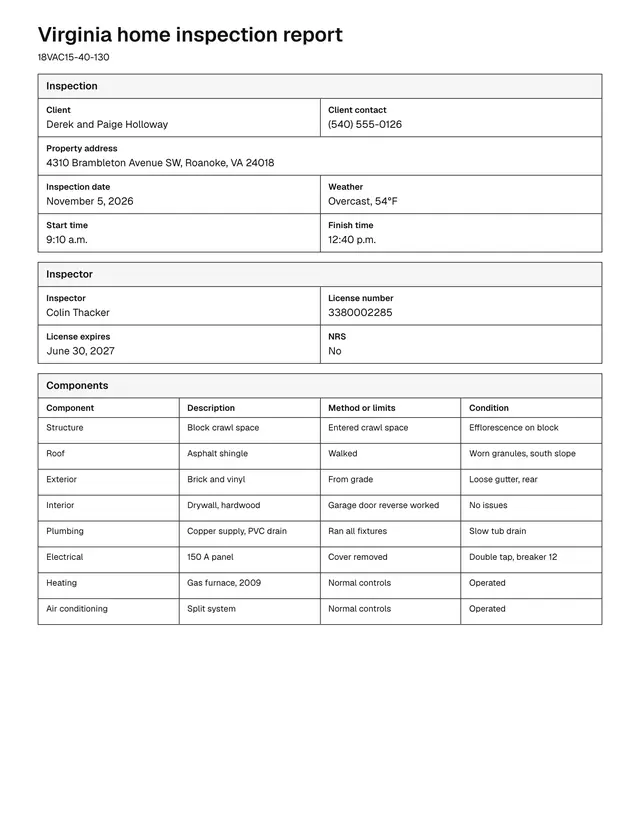
Virginia home inspection report
Findings by system, with each defect noted. - Washington
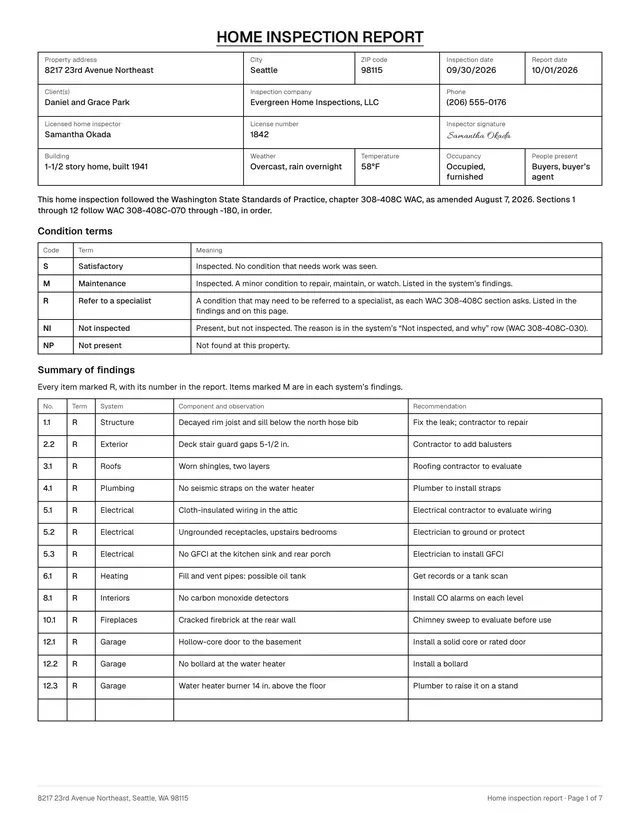
Home Inspection Report
Findings by system, with each defect noted. - Wisconsin
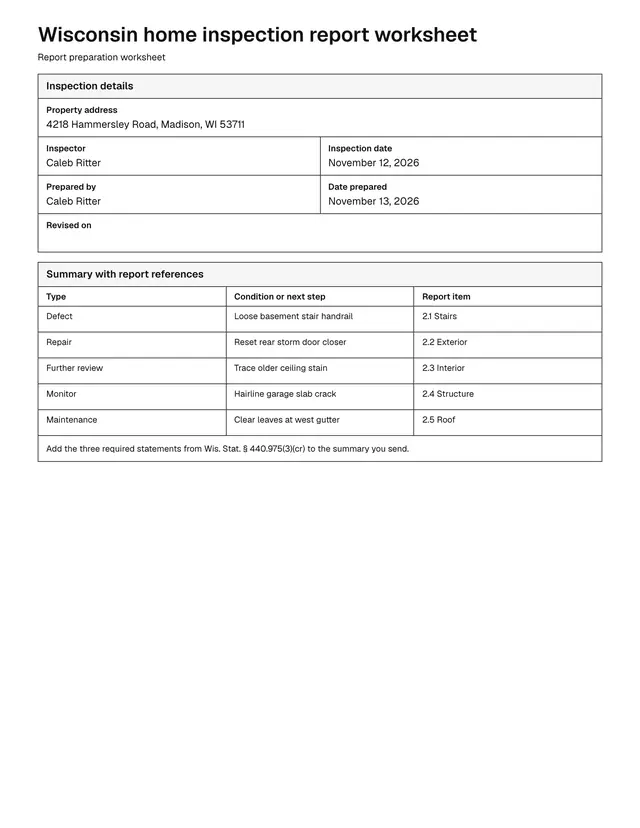
Wisconsin home inspection report worksheet
Findings by system, with each defect noted.