Missouri onsite wastewater inspection and evaluation report
When a lender or buyer asks for a septic check on a Missouri home, the work falls under 19 CSR 20-3.070. A DHSS-licensed inspector picks either an inspection or an evaluation, never both, and files the report with the state within 30 days.
At a glance
- Rule
- 19 CSR 20-3.070
- Agency
- Missouri DHSS Onsite Wastewater Program
- Submit to DHSS
- Within 30 calendar days
- Keep a copy
- At least 3 years
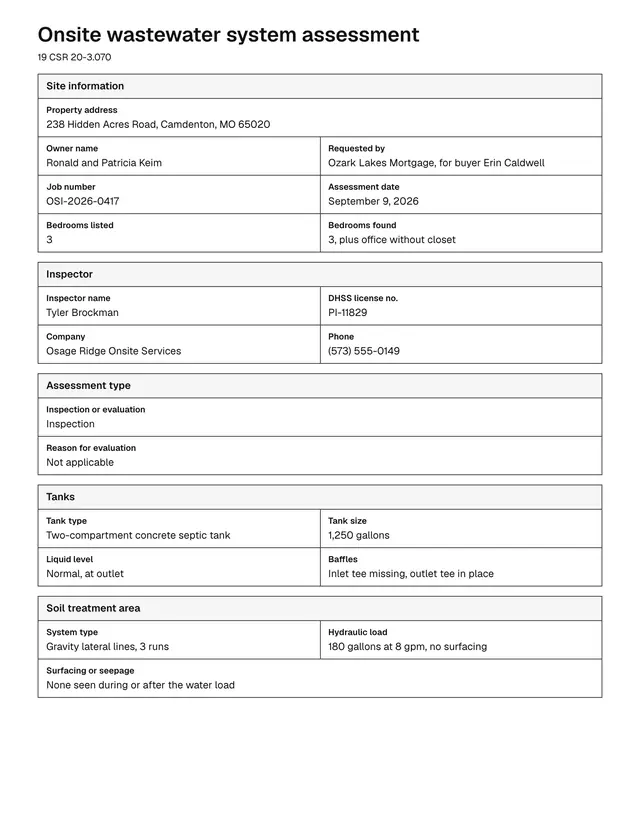
Completed example
Download PDFInspection or evaluation: you pick one
About a quarter of Missouri homes run on onsite systems, according to DHSS, and most local agencies no longer check them when a house sells. When a lender, buyer, owner, or agent asks for one, a state-licensed inspector does the work under 19 CSR 20-3.070, and the report comes in one of two kinds.
Inspection. The full job: tanks, the soil treatment area, signs of failure, a look at soil limits, and a hydraulic load test that runs water through the system.
Evaluation. Tanks, the soil treatment area you can see, and signs of failure. No hydraulic test. The DHSS training manual limits evaluations to a few cases: the system hasn’t been used for 6 straight months, the house has been empty more than 60 days, the soil treatment area is on a neighbor’s land and you can’t get access, or a new system went in on an exempt property in the last 6 months.
The rule is blunt: “Combining inspection and evaluation procedures or forms is not acceptable.” Choose one, use that form set, and label the report clearly.
Two more rules from the training manual shape the job. Items marked with an asterisk on the DHSS checklists are critical, so a problem there is a defect, not a note. And only the inspector who did the original inspection may do the re-inspection after repairs.
Getting and keeping the license
The license is personal. It goes to one person, not a company, and can’t be transferred. To get it, you pass a basic installer course and the licensed inspector course with at least 70 percent, then send DHSS the application with a $90 fee. It lasts 36 months. The first renewal takes 20 continuing education units, and later ones take 12.
Under 19 CSR 20-3.070, no person without a license may do “any part” of the work, even under a licensed inspector’s supervision. And your license number goes on everything: bids, proposals, contracts, invoices, inspection reports, evaluation reports, and other letters.
On the property
Don’t assess a system installed less than 6 months ago, and don’t do a full inspection unless it’s been in use for 6 months in a row. Expose the tanks. The DHSS training manual says pumping is recommended but not required.
Hydraulic load test. The volume depends on bedrooms: 120 gallons for one or two, 180 for three, 240 for four, and 60 more for each bedroom after that, added at about 5 to 10 gallons a minute. Count bedrooms as no fewer than the real estate listing shows. A three-bedroom lake house in Camdenton gets 180 gallons even if the seller calls one bedroom an office. For an evaluation, you add up to 50 gallons, just to confirm the fixtures are connected.
Water and neighbors. If the house has a private well, the job includes a bacteria test of the water and a look at the visible parts of the well. If any part of the system sits on a neighbor’s land, tell the neighbor and get permission before you go on their property.
What happens after you leave the site?
Write the report on the DHSS forms: site information, assessment results, the checklists for each part, and a site diagram, all under one job number. State each defect clearly. Then send it within 30 calendar days, with the water results, to the DHSS Onsite Wastewater Program at OnsiteProgram@health.mo.gov or PO Box 570, Jefferson City, MO 65102. Copies also go to the local authority, the person who asked for it, and the owner. Keep your own copy at least 3 years.
DHSS audits inspectors, so expect the department to compare your report to the site now and then. A clear site diagram and plain measurements make that easy.
Tell the owner in writing that they don’t have to hire you for repairs or the re-inspection. And if the system fails, the state doesn’t require it to meet today’s standards to sell, though the county or city might.
Noma specializes in the Missouri onsite wastewater inspection and evaluation report (19 CSR 20-3.070). Take bookings online, work the site visit in the Noma mobile app with an inspection diagram of the tanks and soil treatment area, and send the invoice from the same job. See how Noma runs septic inspections.
Frequentlyaskedquestions
Send this document in minutes, not an afternoon.
Other states
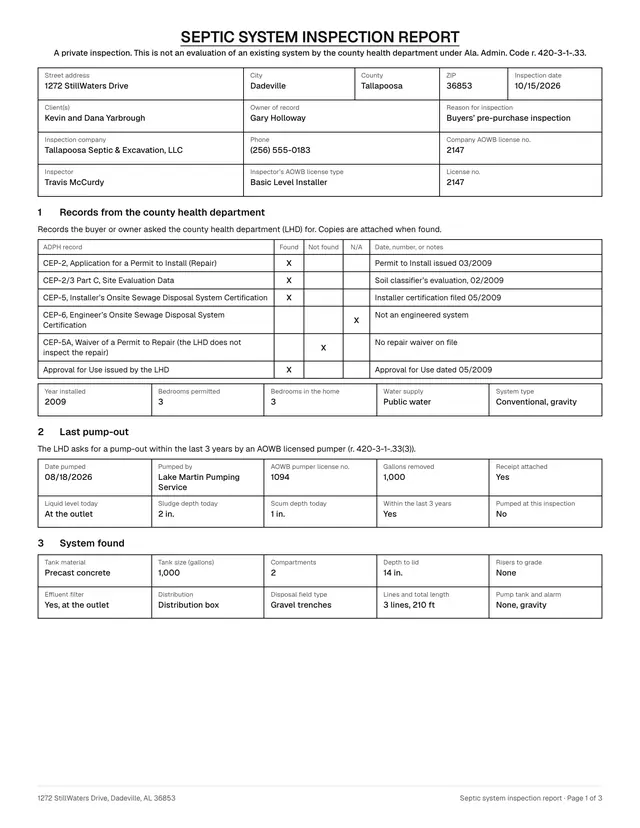
Septic inspection report templates- Alabama
Septic System Inspection Report
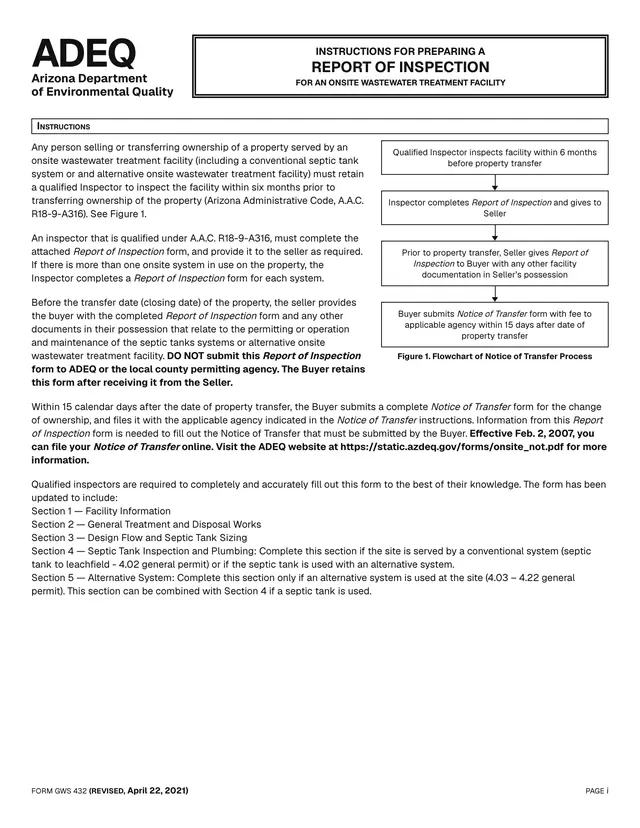
Record the tank or cesspool and what was checked. - ArizonaGWS 432
Report of Inspection for an Onsite Wastewater Treatment Facility
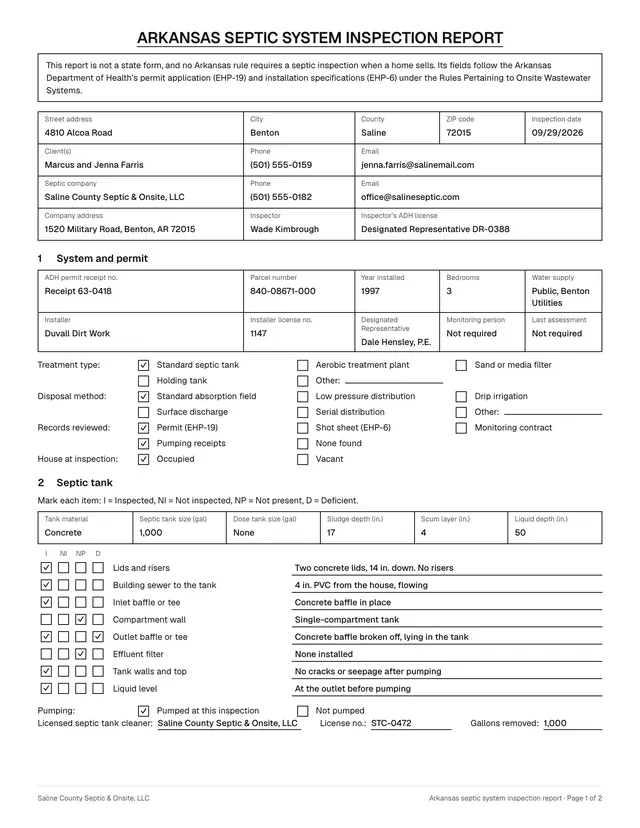
Record the tank or cesspool and what was checked. - Arkansas
Arkansas Septic System Inspection Report
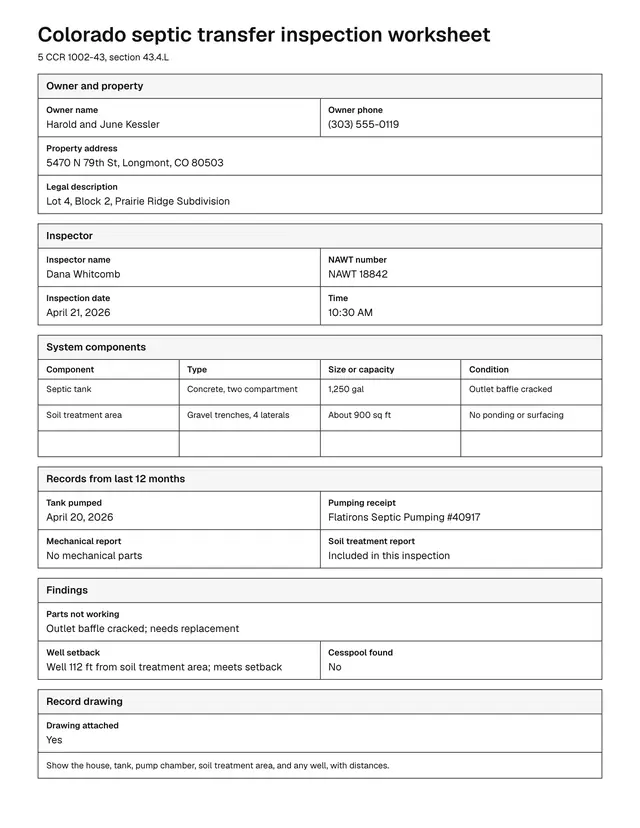
Record the tank or cesspool and what was checked. - Colorado
Colorado septic transfer of title inspection report (Regulation 43)
Record the tank or cesspool and what was checked. - Delaware
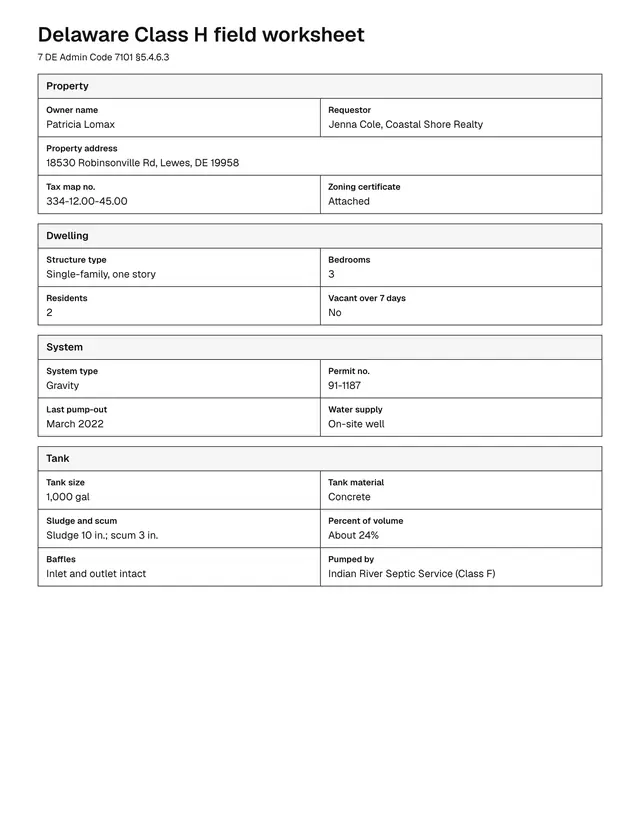
Delaware Class H septic inspection report
Record the tank or cesspool and what was checked. - Florida
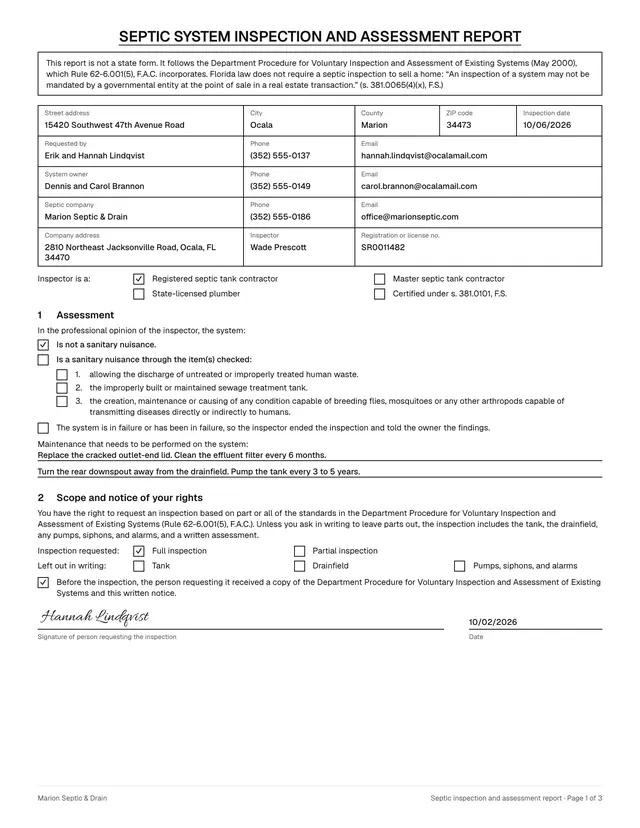
Septic System Inspection and Assessment Report
Record the tank or cesspool and what was checked. - Georgia
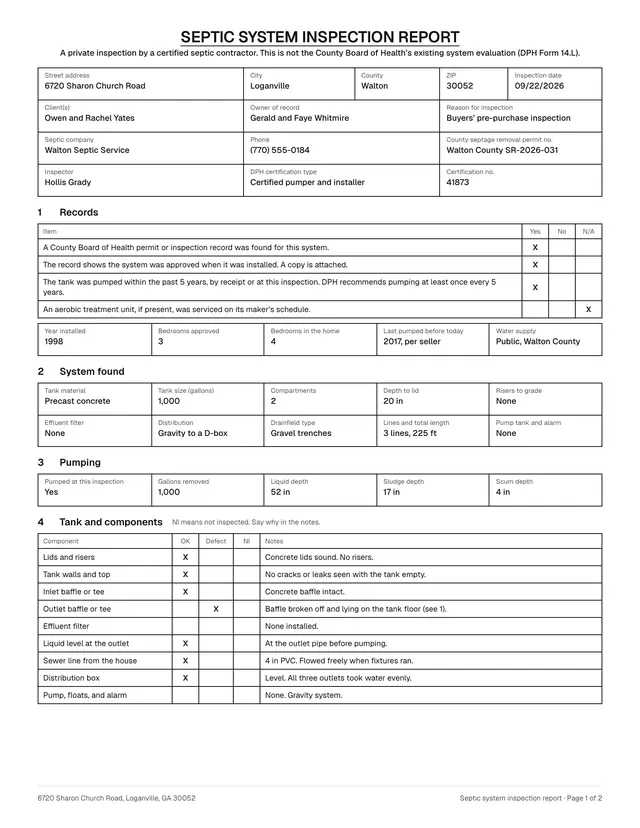
Septic System Inspection Report
Record the tank or cesspool and what was checked. - Hawaii
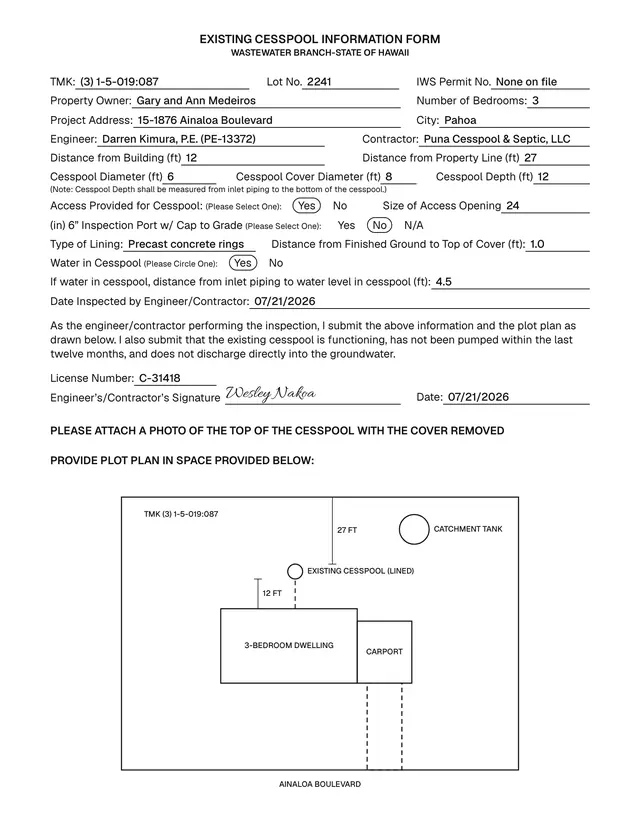
Existing Cesspool Information Form
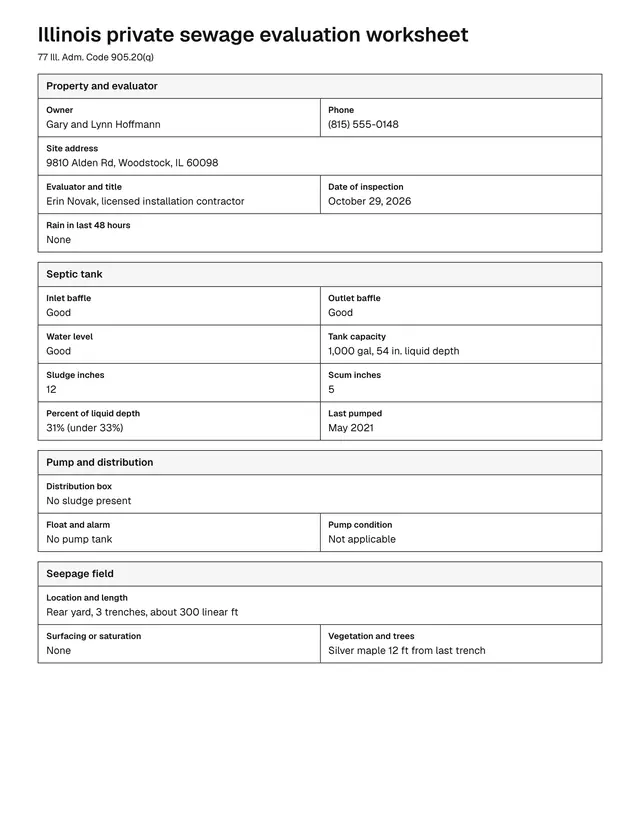
Record the tank or cesspool and what was checked. - Illinois
Illinois private sewage disposal system evaluation
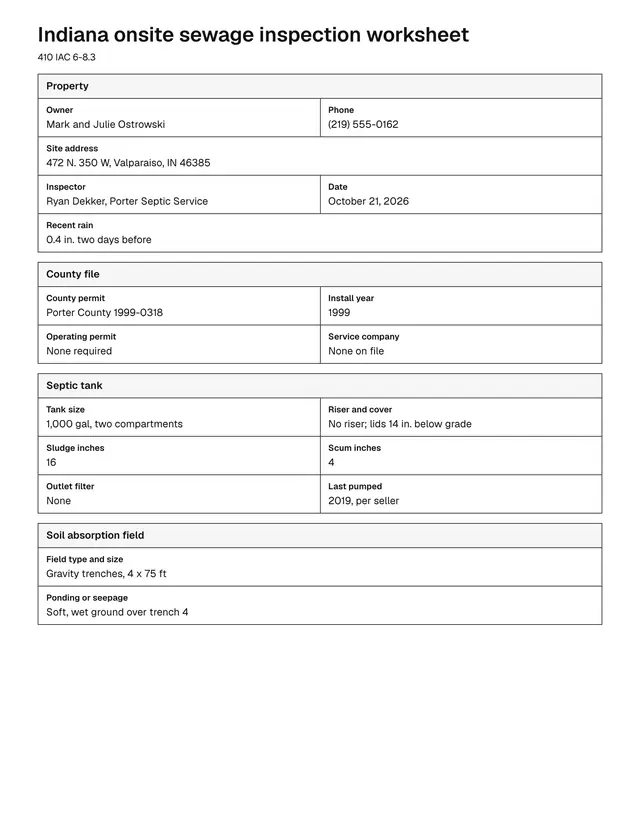
Record the tank or cesspool and what was checked. - Indiana
Indiana onsite sewage system inspection report
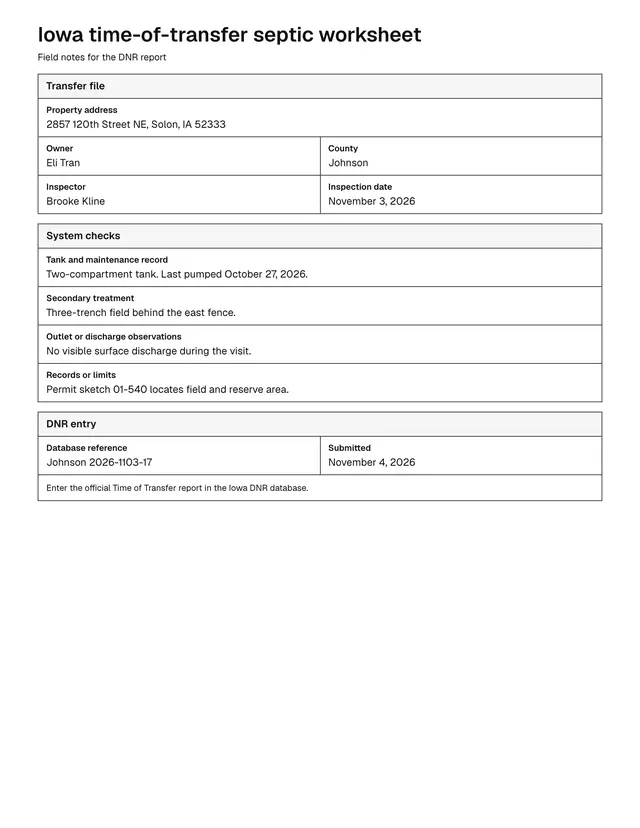
Record the tank or cesspool and what was checked. - Iowa
Iowa time-of-transfer septic worksheet
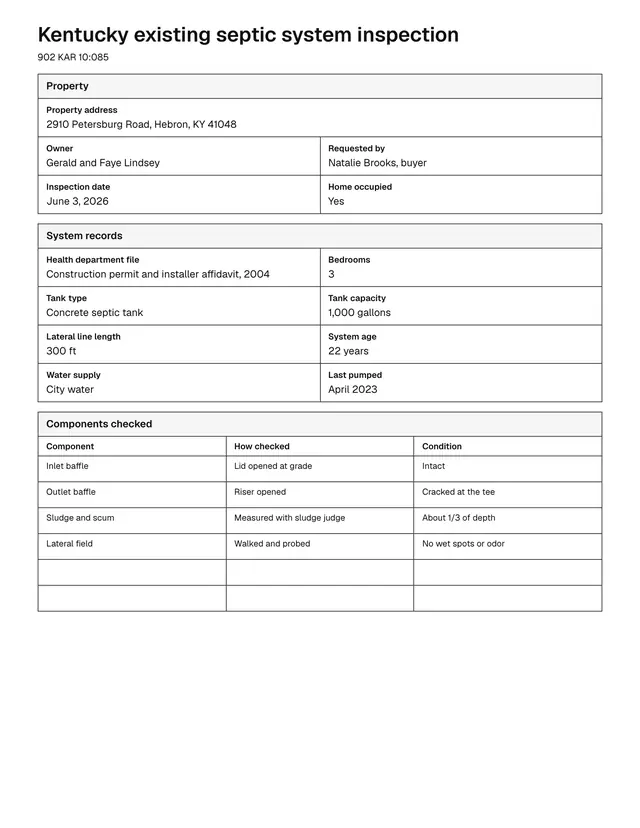
Record the tank or cesspool and what was checked. - Kentucky
Kentucky existing septic system inspection
Record the tank or cesspool and what was checked. - Louisiana
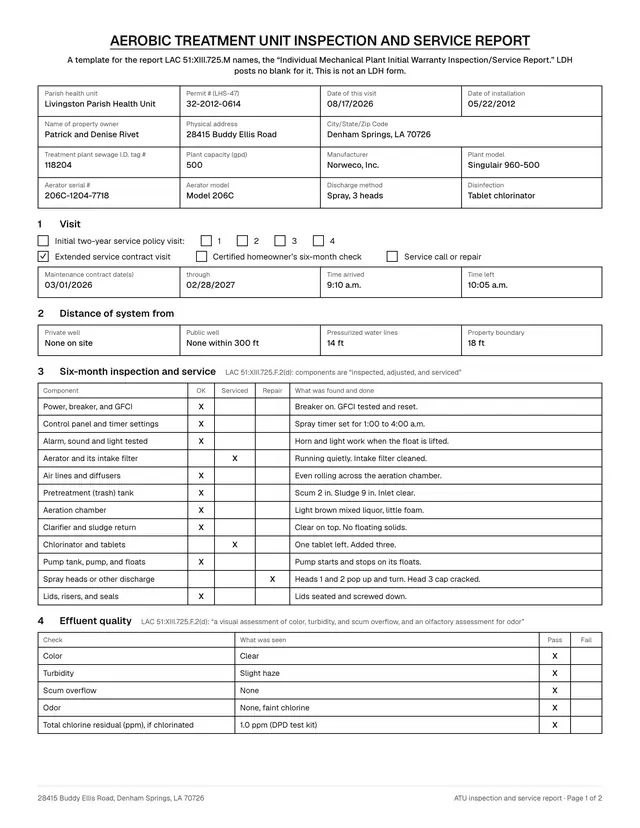
Aerobic Treatment Unit Inspection and Service Report
Record the tank or cesspool and what was checked. - Maryland
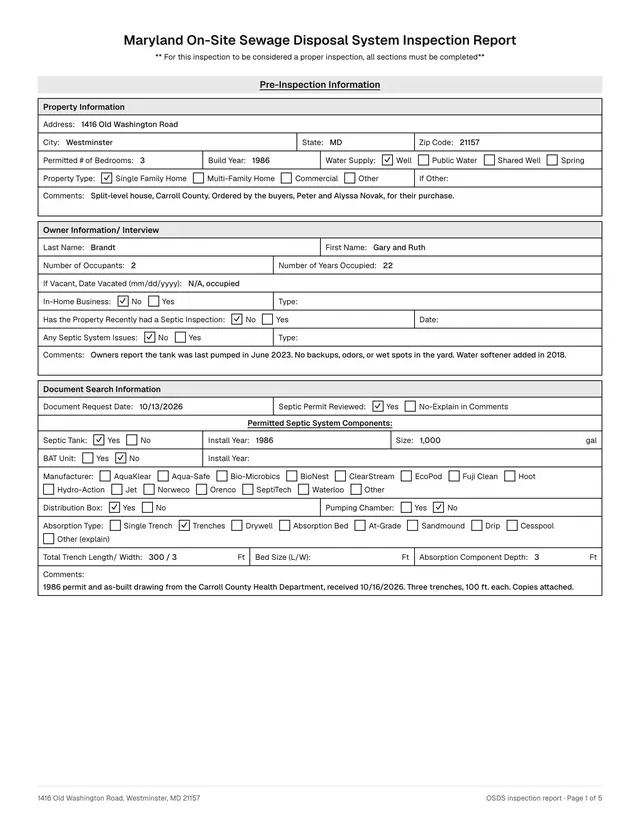
Maryland On-Site Sewage Disposal System Inspection Report
Record the tank or cesspool and what was checked. - Massachusetts
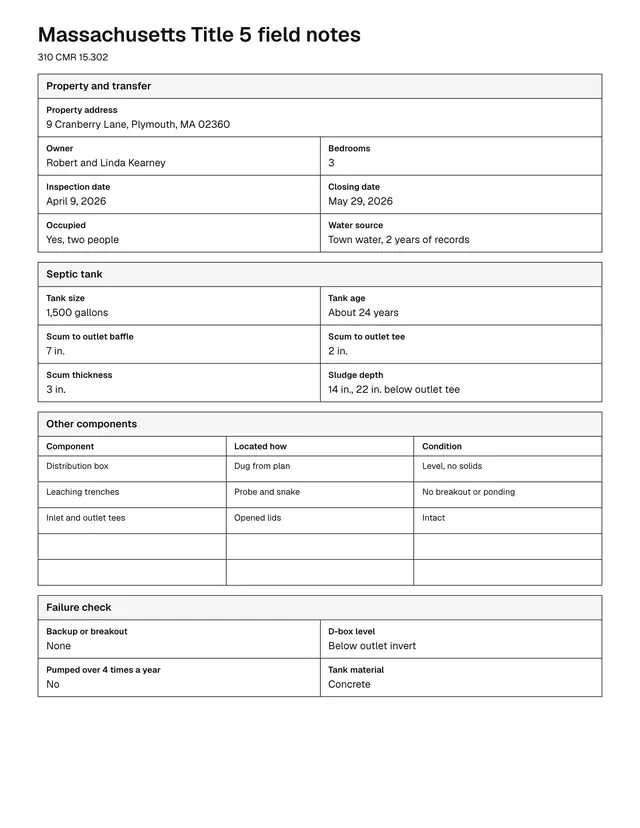
Massachusetts Title 5 inspection report (310 CMR 15.301)
Record the tank or cesspool and what was checked. - Michigan
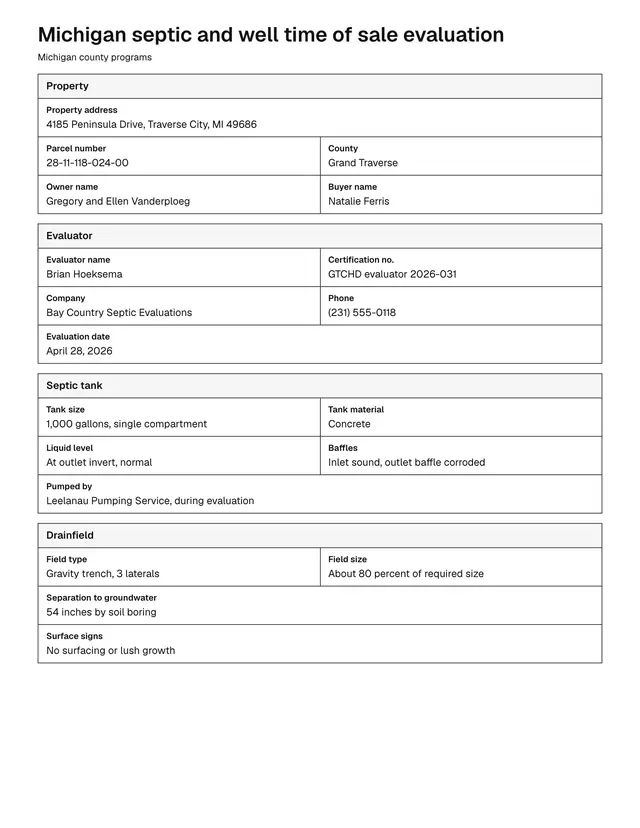
Michigan septic time of sale evaluation
Record the tank or cesspool and what was checked. - Minnesota
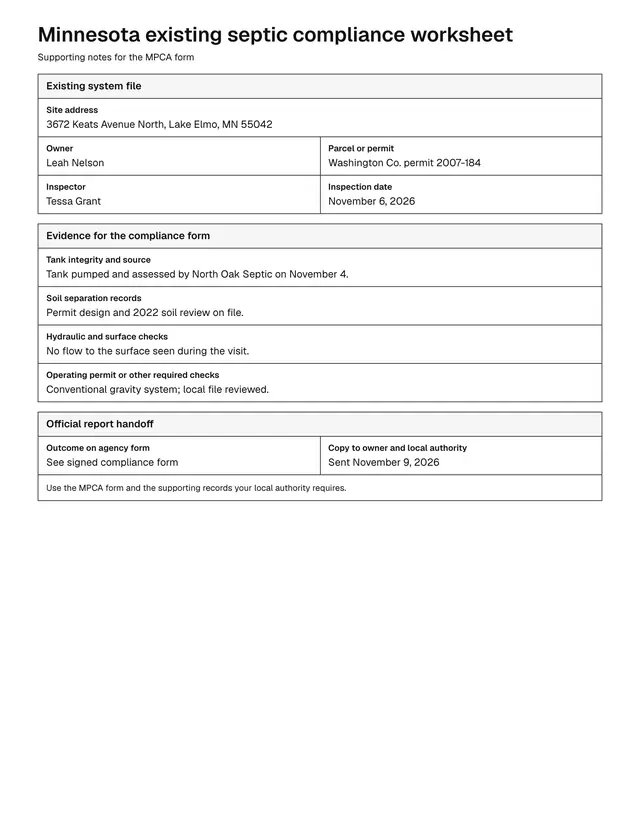
Minnesota existing septic compliance worksheet
Record the tank or cesspool and what was checked. - Mississippi
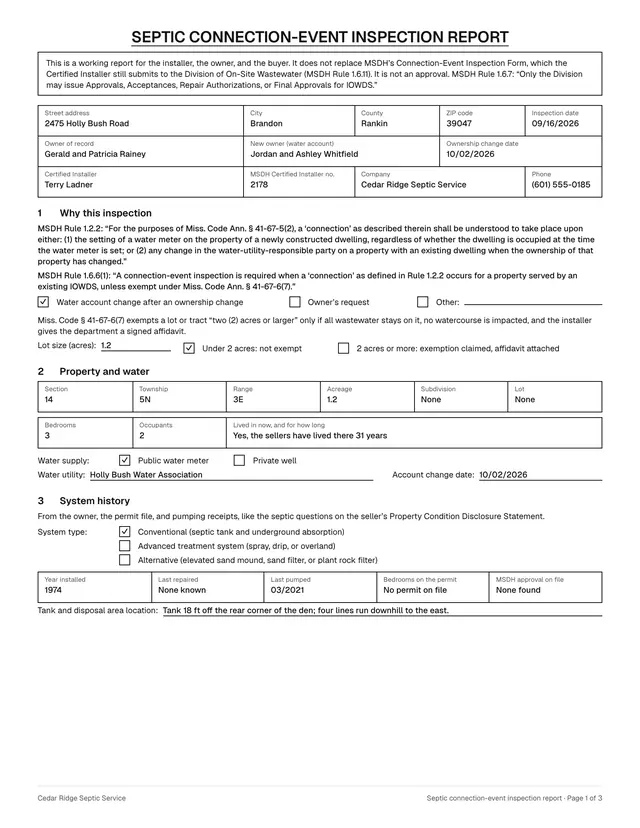
Septic Connection-Event Inspection Report
Record the tank or cesspool and what was checked. - Nevada
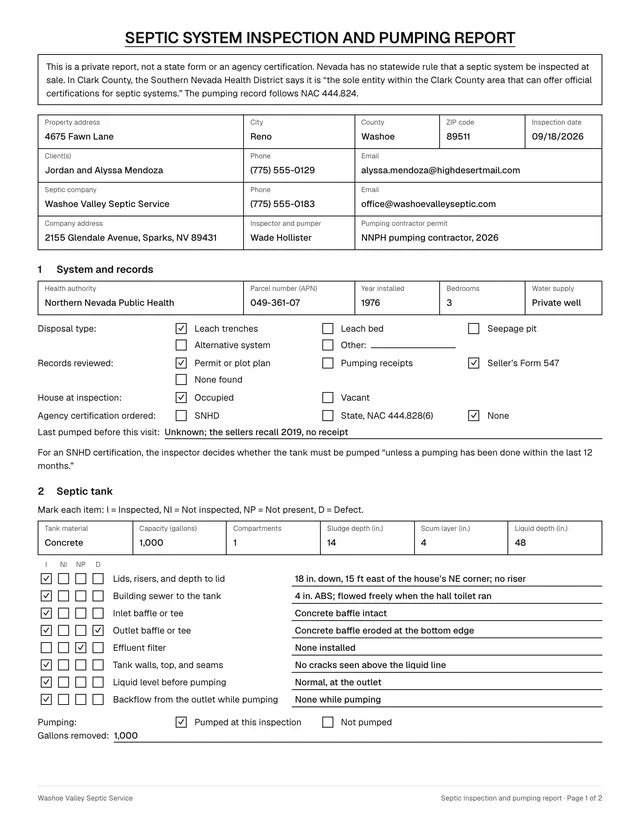
Septic System Inspection and Pumping Report
Record the tank or cesspool and what was checked. - New JerseyN.J.A.C. 7:9A Appendix F
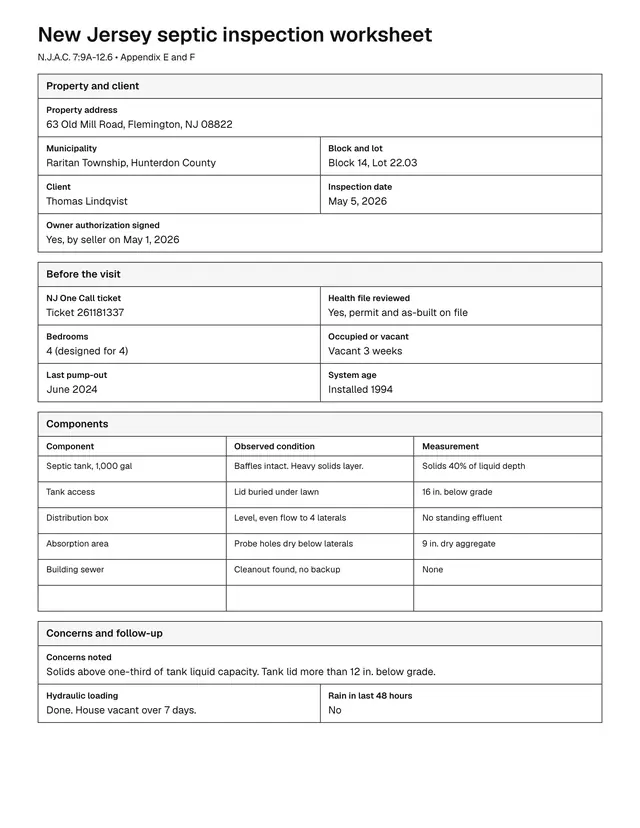
New Jersey septic inspection report (Appendix F Onsite System Inspection Form)
Record the tank or cesspool and what was checked. - New Mexico
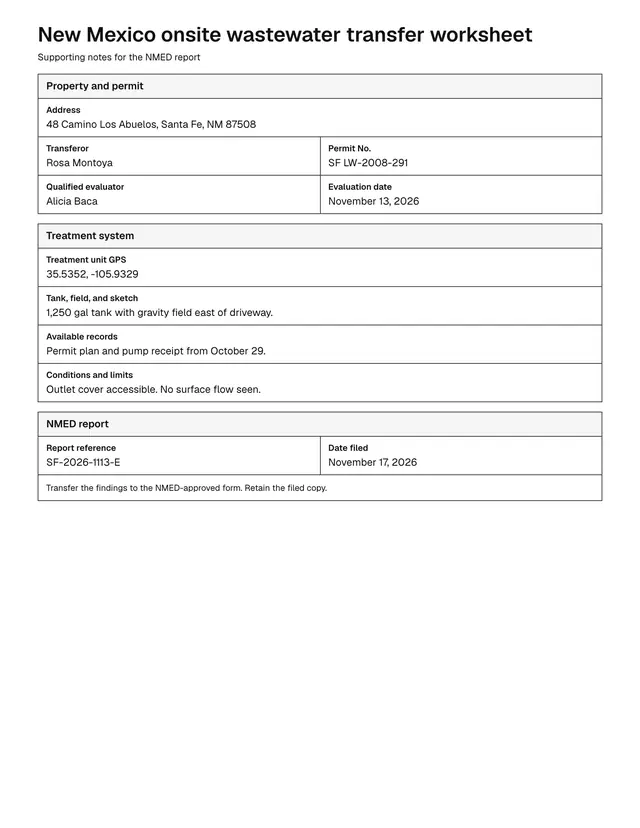
New Mexico onsite wastewater transfer worksheet
Record the tank or cesspool and what was checked. - New York
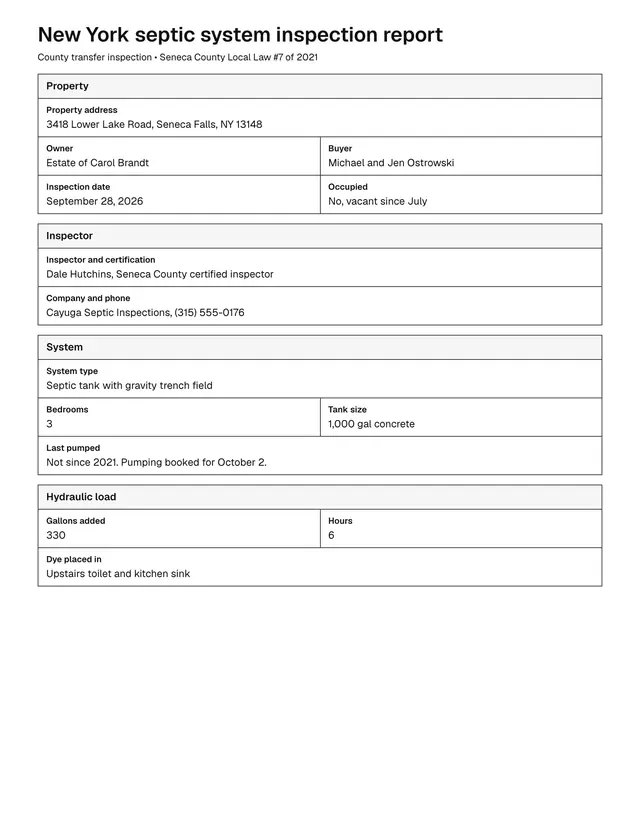
New York septic system inspection report (county transfer inspections)
Record the tank or cesspool and what was checked. - North Carolina
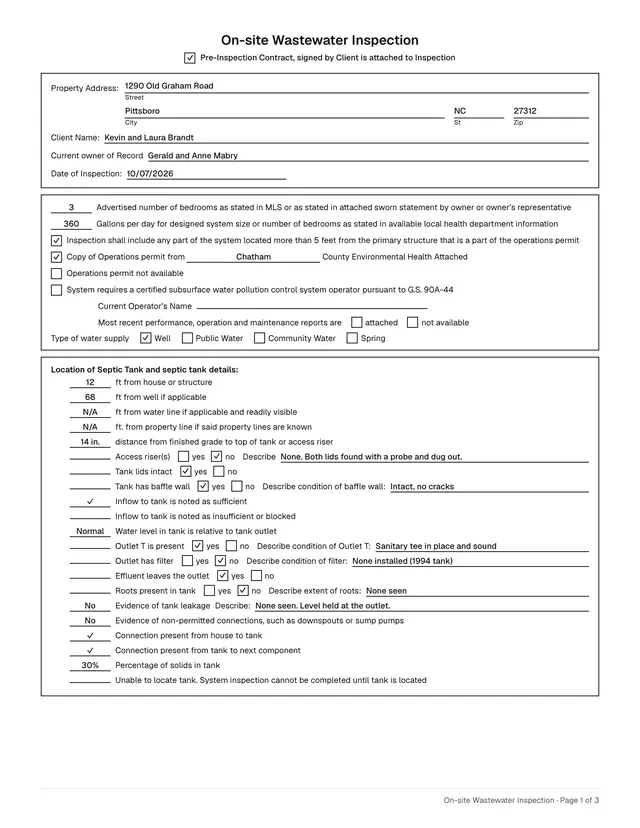
On-site Wastewater Inspection
Record the tank or cesspool and what was checked. - Ohio
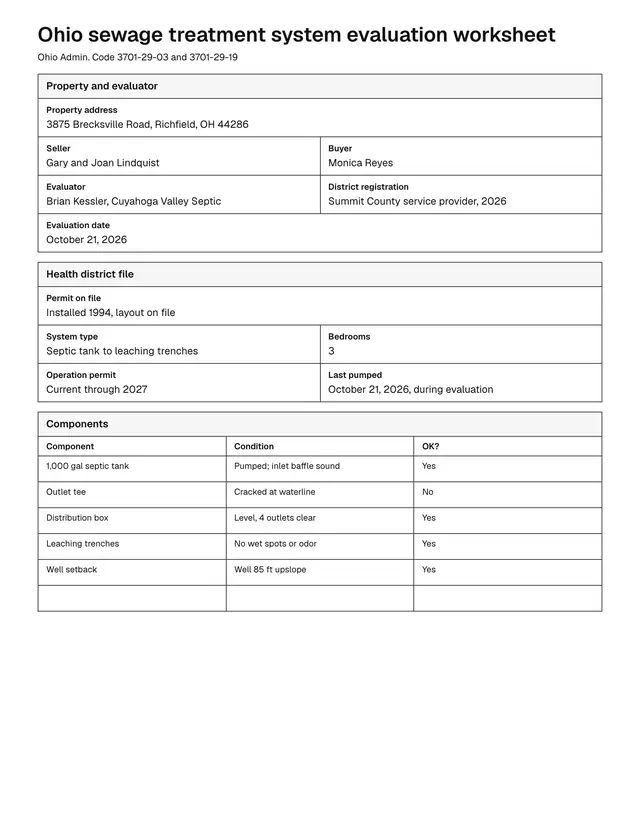
Ohio sewage treatment system evaluation for property transfer
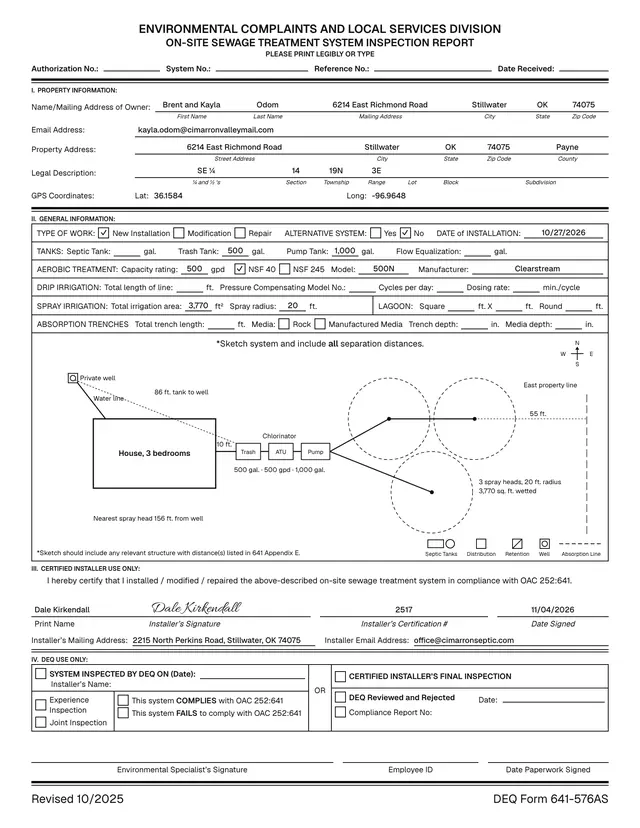
Record the tank or cesspool and what was checked. - OklahomaDEQ Form 641-576AS
On-Site Sewage Treatment System Inspection Report
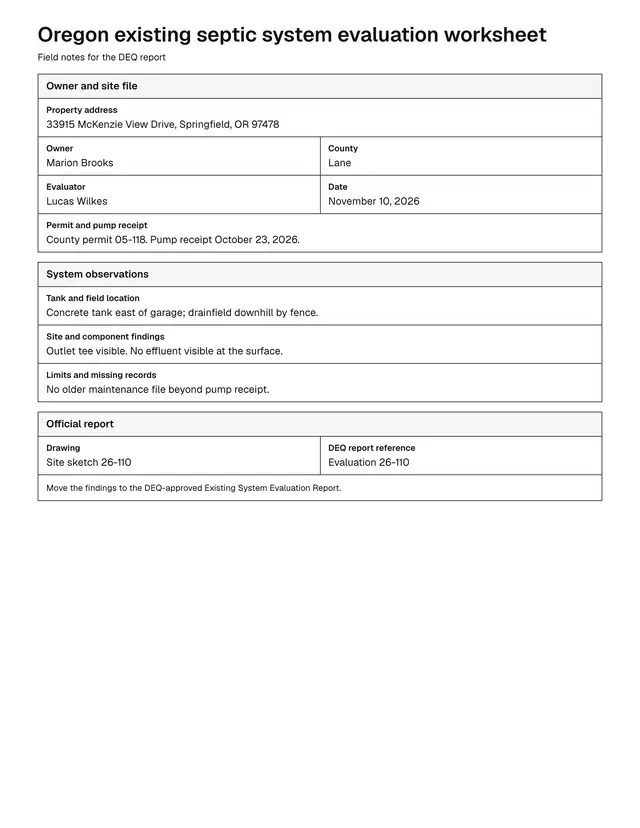
Record the tank or cesspool and what was checked. - Oregon
Oregon existing septic system evaluation worksheet
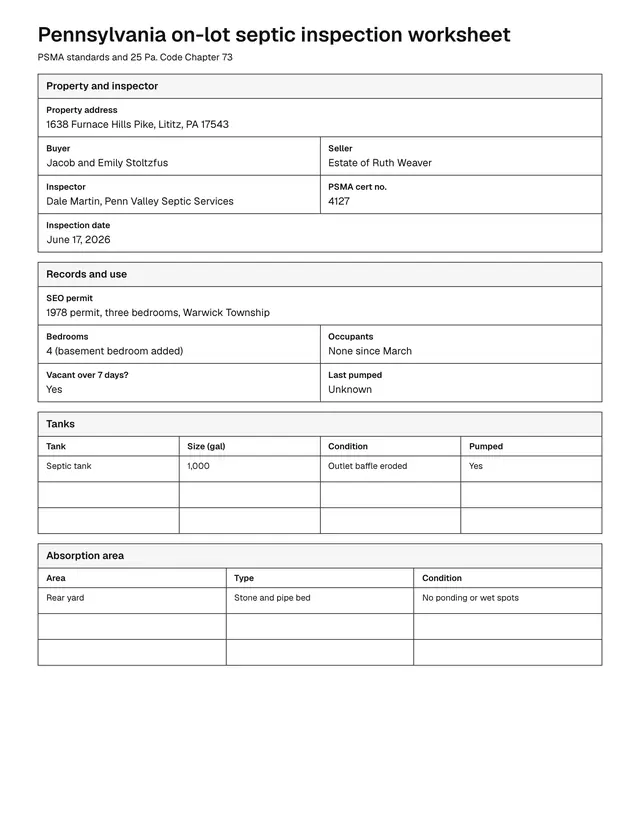
Record the tank or cesspool and what was checked. - Pennsylvania
Pennsylvania on-lot septic system inspection (PSMA)
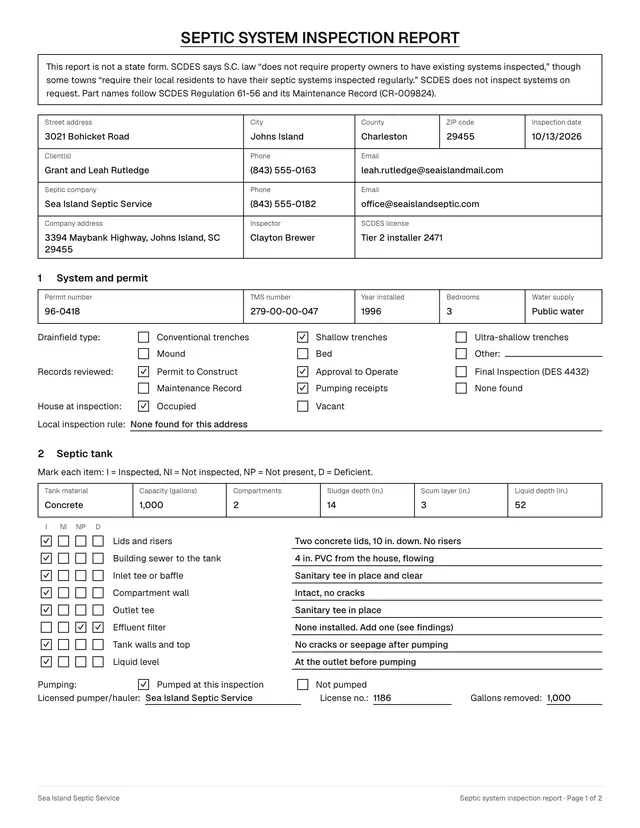
Record the tank or cesspool and what was checked. - South Carolina
Septic System Inspection Report
Record the tank or cesspool and what was checked. - Tennessee
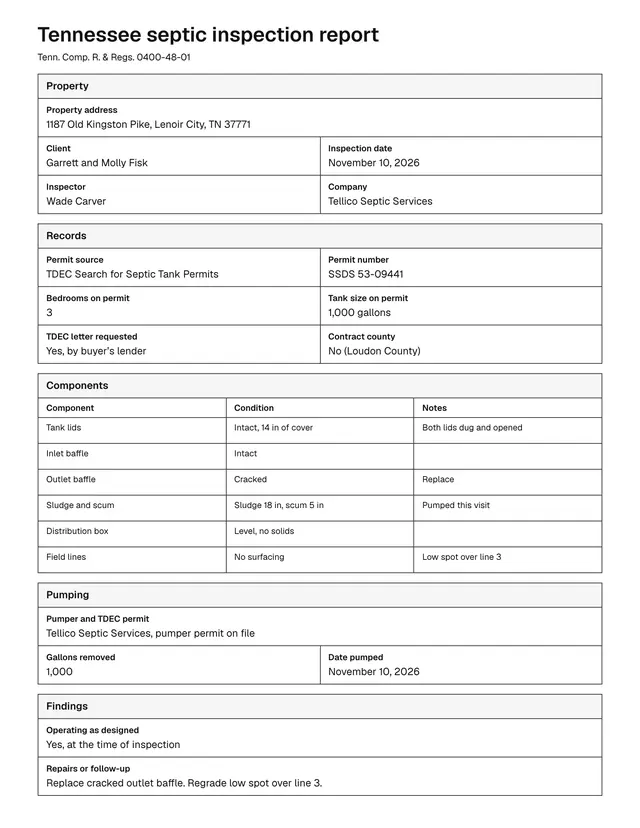
Tennessee septic inspection report
Record the tank or cesspool and what was checked. - Texas
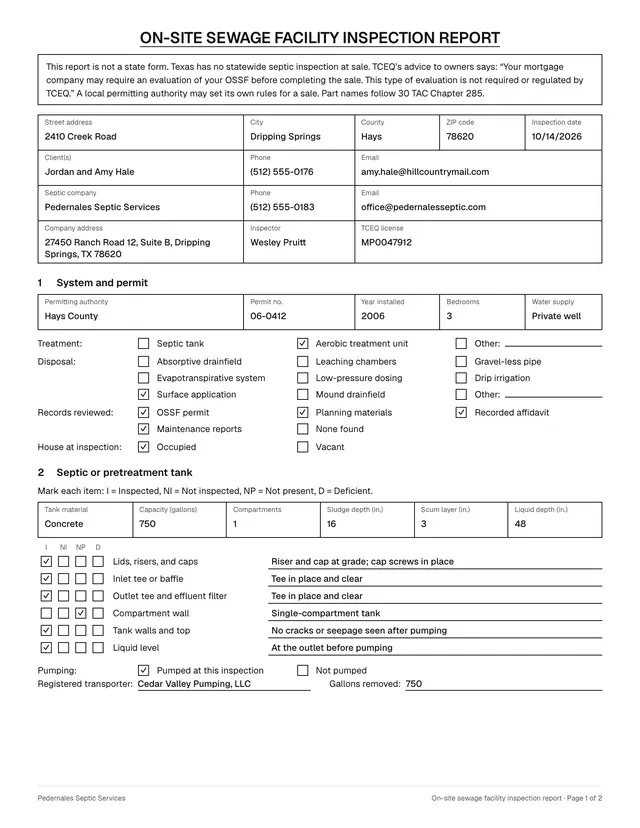
On-Site Sewage Facility Inspection Report
Record the tank or cesspool and what was checked. - Virginia
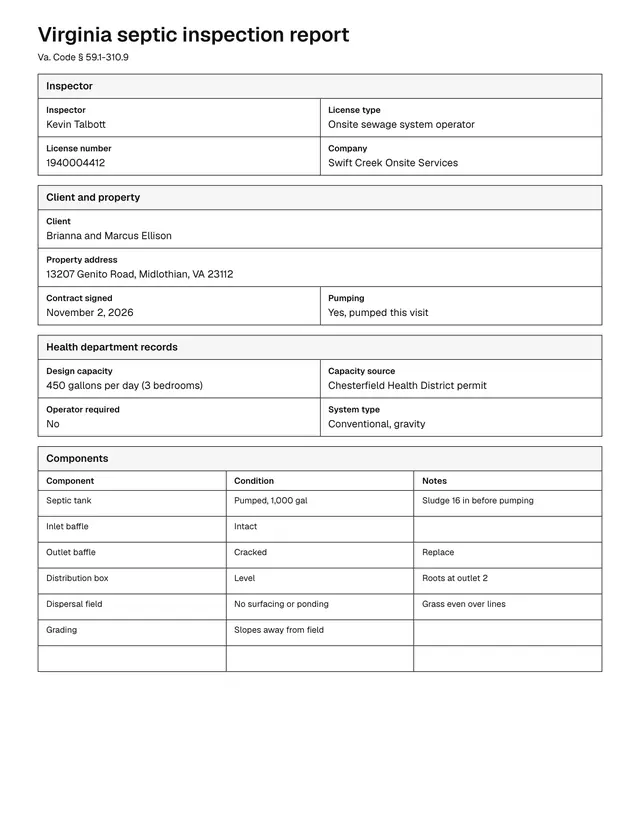
Virginia septic inspection report
Record the tank or cesspool and what was checked. - Washington
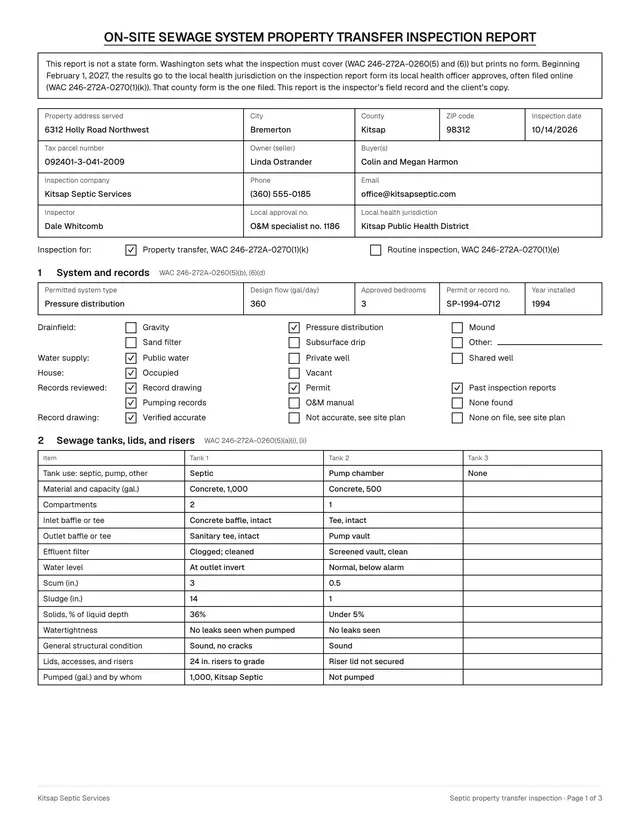
On-Site Sewage System Property Transfer Inspection Report
Record the tank or cesspool and what was checked. - Wisconsin
Wisconsin POWTS maintenance worksheet
Record the tank or cesspool and what was checked.