Septic System Inspection and Pumping Report
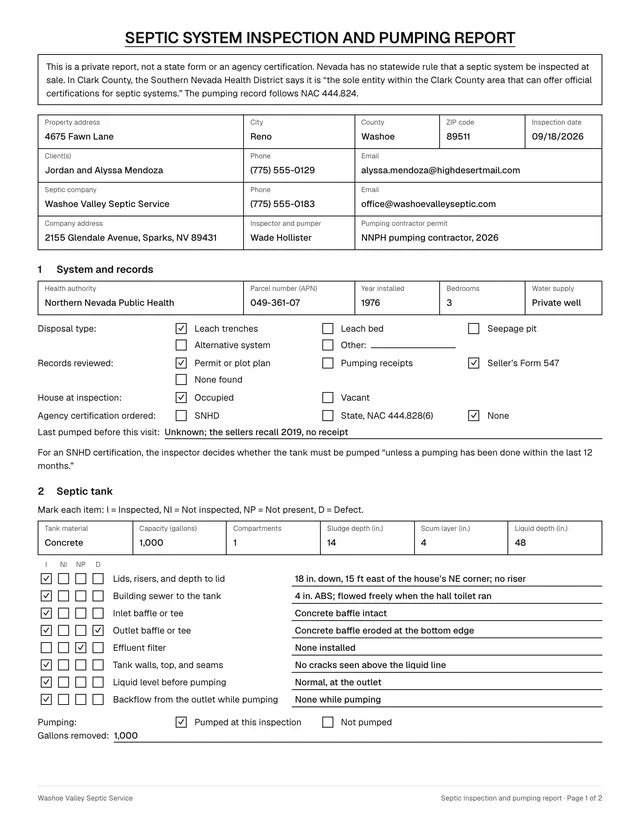
A private Nevada septic inspection and pumping report for a home sale, with the NAC 444.824 pumping record and a box for any SNHD or state certification the lender ordered.
At a glance
- Required by
- No state or county sale rule
- Filled out by
- Septic pumping contractor
- Given to
- Buyer, owner, or lender
- Records kept
- 3 years, NAC 444.824
Completed example
Download PDFWhat is a Nevada septic inspection report?
It’s the report a septic pumping contractor writes after uncovering, pumping, and looking over a tank and its drainfield. Buyers order one during due diligence, usually on the home inspector’s advice, and the report goes to the buyer, the owner, or the lender.
Nevada has no state form for it and no license for private septic inspectors. Three health authorities run septic systems: the Southern Nevada Health District in Clark County, Northern Nevada Public Health in Washoe, and the state’s Environmental Health Section, now part of the Nevada Health Authority, in most rural counties. Only an agency issues a septic certification, and this report never stands in for one.
When do you need one?
No rule makes you get one at sale. SNHD’s proposed residential septic rules, which by February asked only for a notice within 30 days of a sale, drew about 1,000 residents to a public meeting. The Board of Health voted not to move forward on March 11, 2026. The old rules stand. Washoe’s rules adopted Jan. 22, 2026 have no sale or loan inspection either.
Lenders are the ones who ask. In Clark County that means an SNHD certification: the lid comes off, the tank gets pumped unless it was pumped in the last 12 months, and only compliant systems get a certificate. In the state’s counties, a loan inspection costs $133 under NAC 444.828(6).
How to fill it out
Start with the authority and the records. The county decides who regulates the system, so write it in with the parcel number. Pull the permit or plot plan, and read the seller’s RED Form 547 (Revised 6/1/2023), which asks about the septic tank and leach field.
Mark the certification box. SNHD, state, or none. If an SNHD certification is coming, write the date of the last pump-out, since SNHD’s inspector skips a pumping only when one was done in the past 12 months.
Fill the pumping record as you go. Section 3 holds the six facts NAC 444.824(1) lists: the waste, the truck’s plate, the employee, when and where it was removed, when and where it was dumped, and the dump site’s receipt. Keep it at least 3 years. In Washoe, NNPH’s Section 140.035 also asks for volume, customers, and locations.
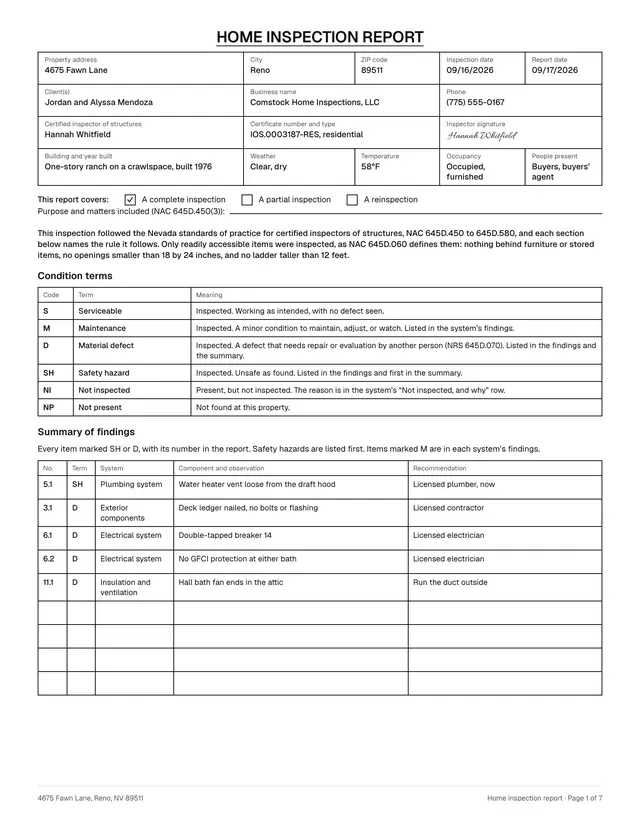
Write findings an agent can act on. “Replace the eroded outlet baffle” beats “outlet fair.” Tie them back to the home inspection report, which notes the tank lid’s spot and a downspout draining toward it, and leaves the tank itself to you.
Can the agent see the problems first?
A septic report is two pages of checkboxes and pumping numbers. The buyers’ agent only wants to know what needs fixing before the due diligence window closes.
Noma specializes in the Septic System Inspection and Pumping Report. Set up a property inspection report with your own sections, like Septic tank and Drainfield, and its summary always lists the most serious defects you marked, so the buyers’ agent sees them first. See how Noma builds inspection reports.
Frequentlyaskedquestions
Send this document in minutes, not an afternoon.
Other states
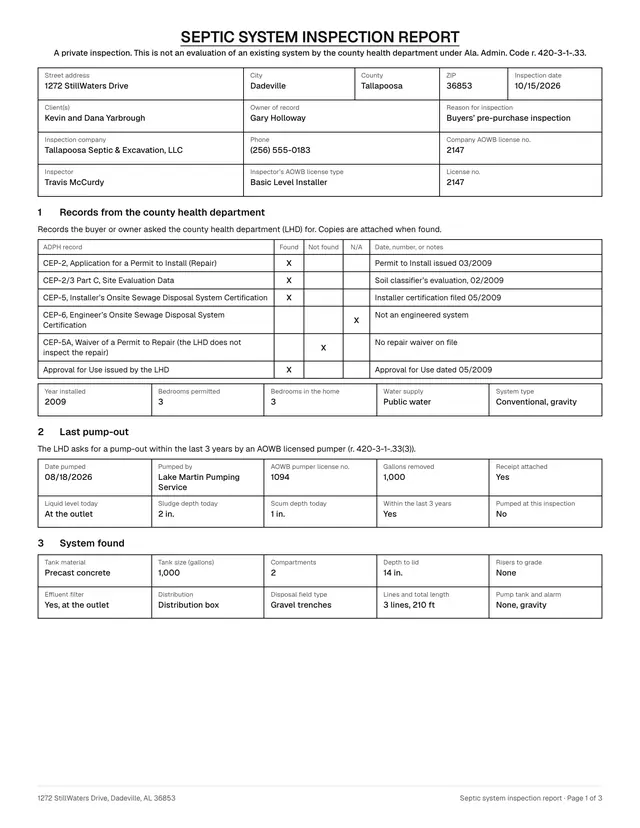
Septic inspection report templates- Alabama
Septic System Inspection Report
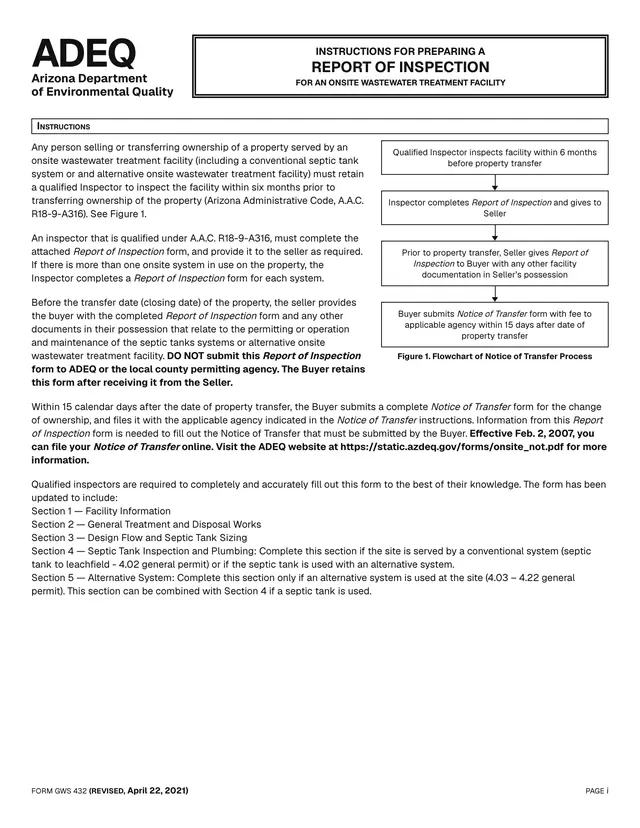
Record the tank or cesspool and what was checked. - ArizonaGWS 432
Report of Inspection for an Onsite Wastewater Treatment Facility
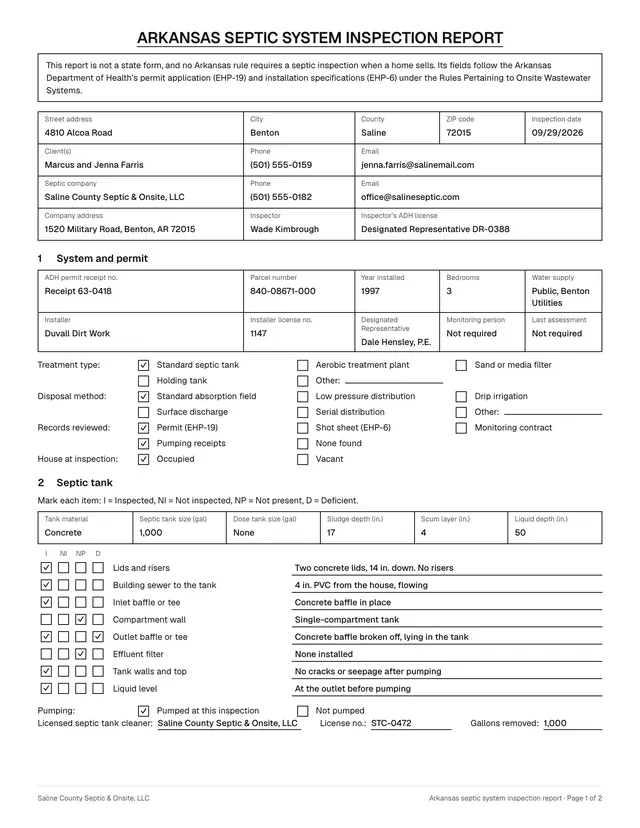
Record the tank or cesspool and what was checked. - Arkansas
Arkansas Septic System Inspection Report
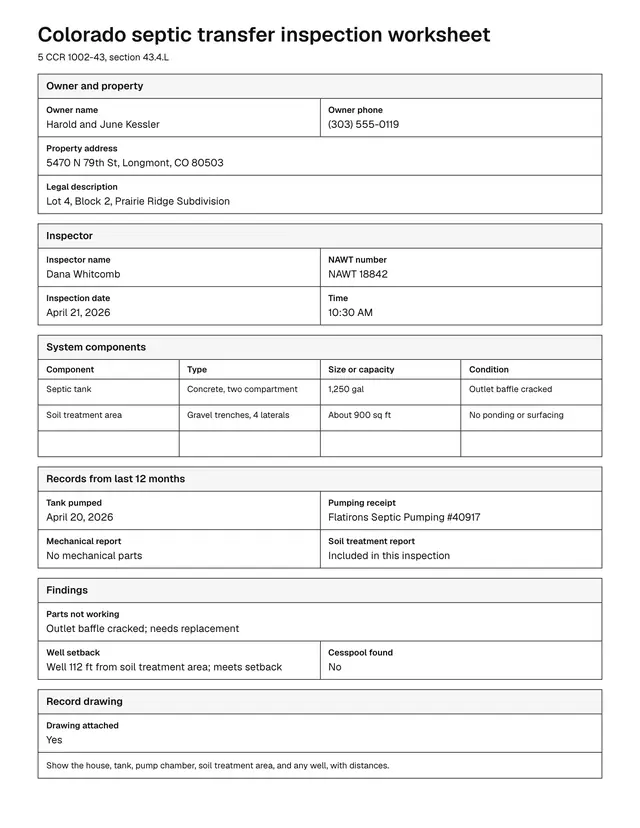
Record the tank or cesspool and what was checked. - Colorado
Colorado septic transfer of title inspection report (Regulation 43)
Record the tank or cesspool and what was checked. - Delaware
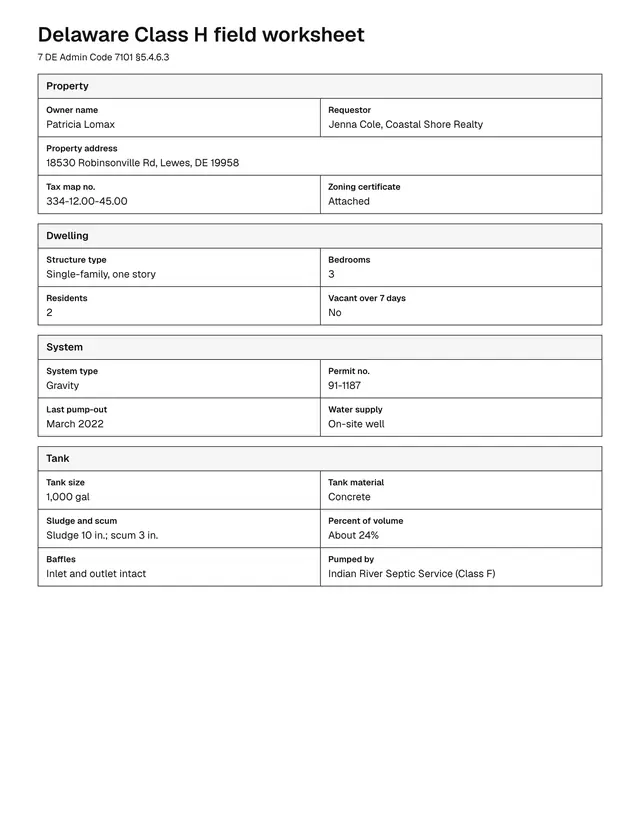
Delaware Class H septic inspection report
Record the tank or cesspool and what was checked. - Florida
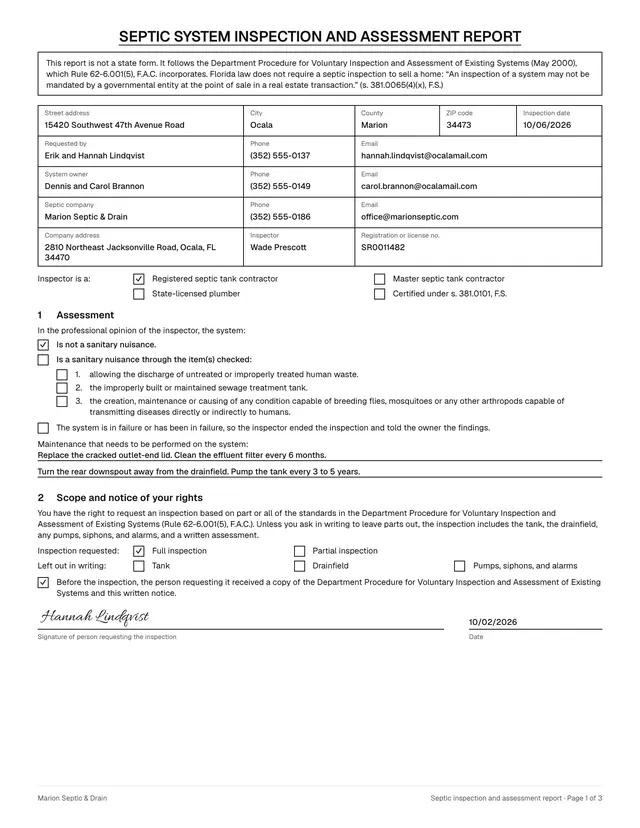
Septic System Inspection and Assessment Report
Record the tank or cesspool and what was checked. - Georgia
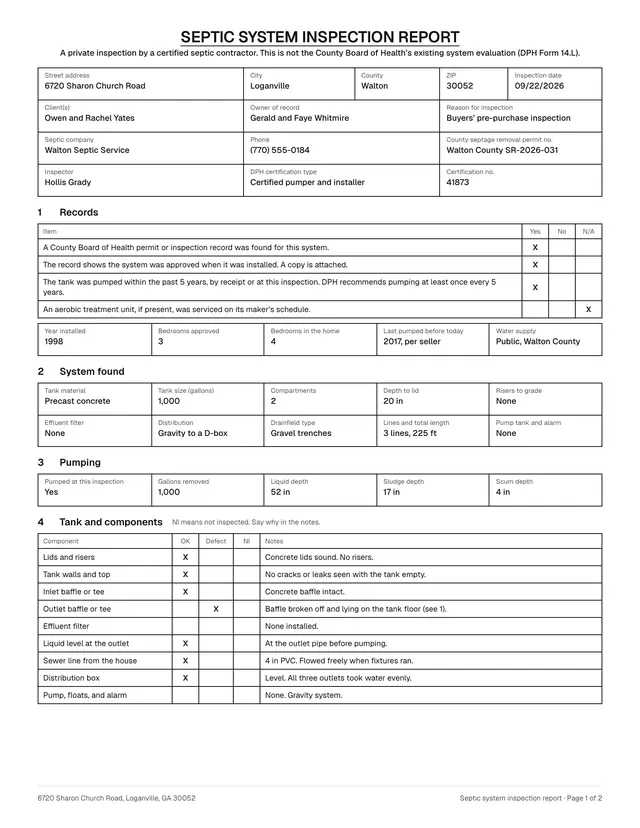
Septic System Inspection Report
Record the tank or cesspool and what was checked. - Hawaii
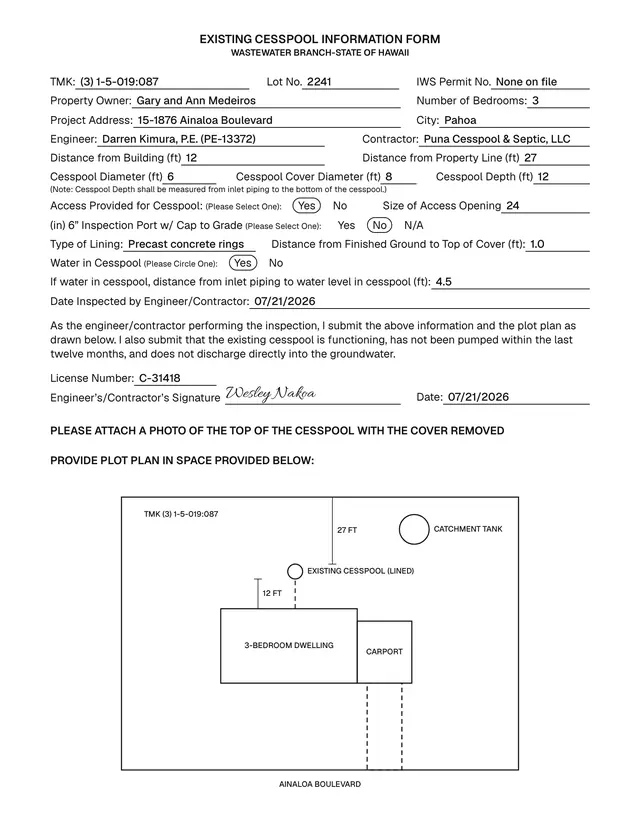
Existing Cesspool Information Form
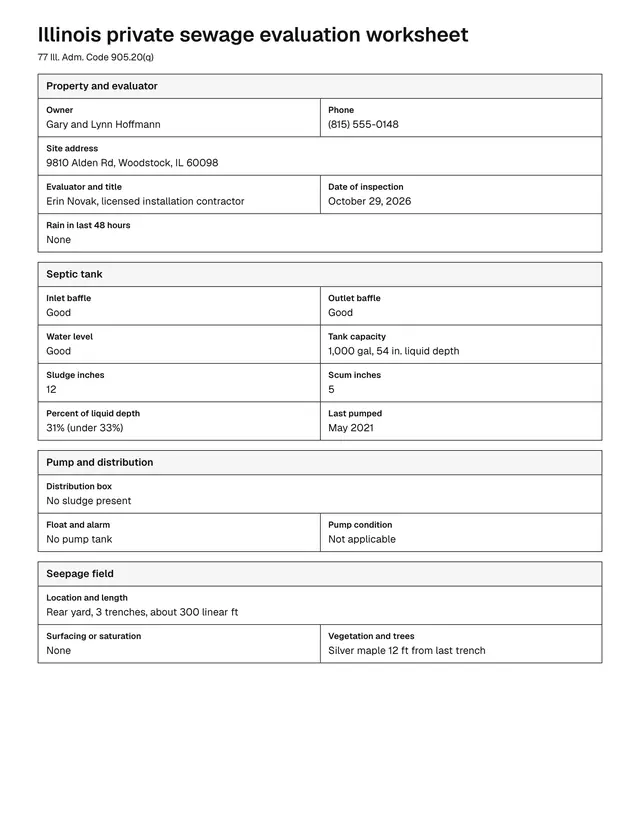
Record the tank or cesspool and what was checked. - Illinois
Illinois private sewage disposal system evaluation
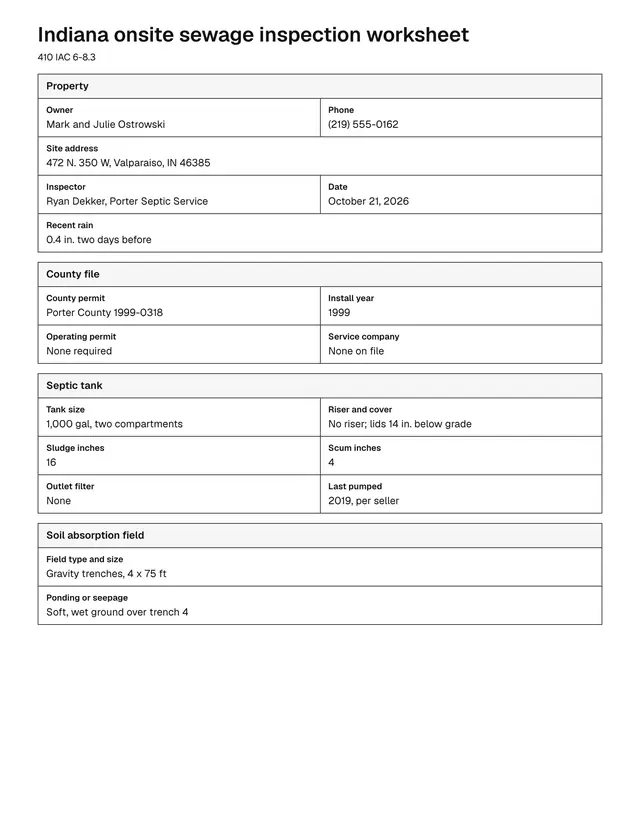
Record the tank or cesspool and what was checked. - Indiana
Indiana onsite sewage system inspection report
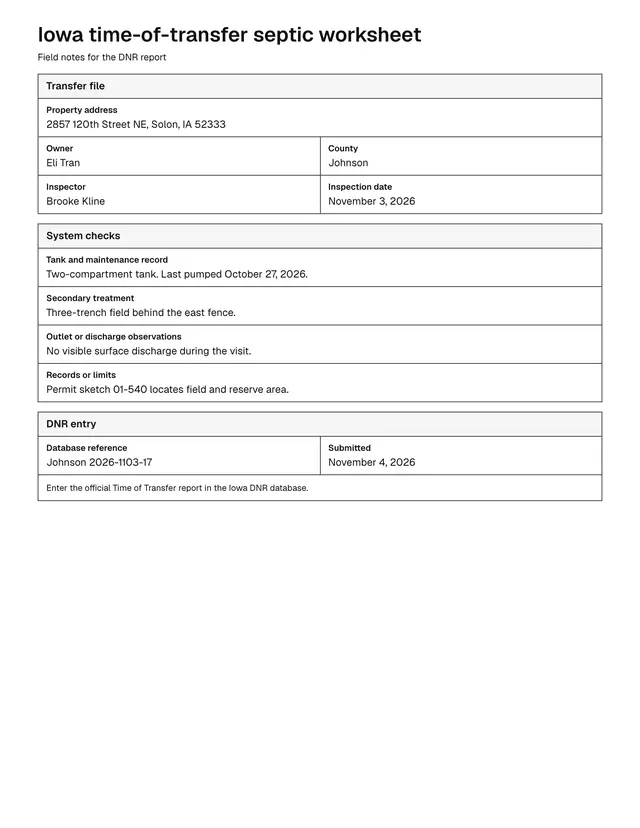
Record the tank or cesspool and what was checked. - Iowa
Iowa time-of-transfer septic worksheet
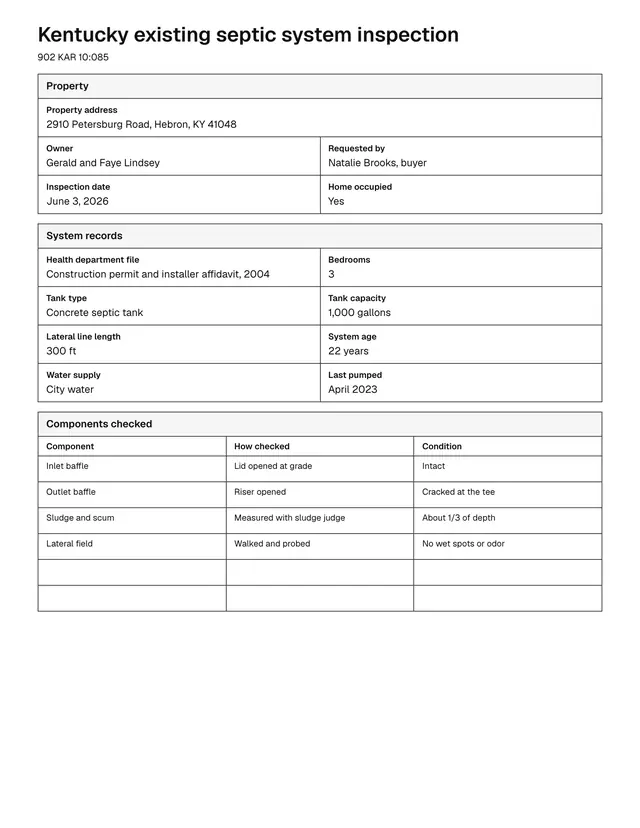
Record the tank or cesspool and what was checked. - Kentucky
Kentucky existing septic system inspection
Record the tank or cesspool and what was checked. - Louisiana
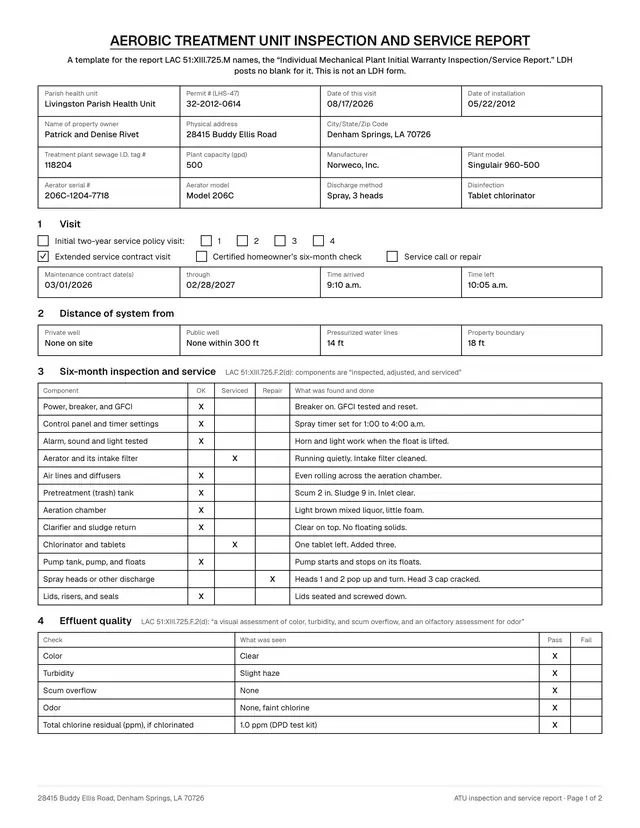
Aerobic Treatment Unit Inspection and Service Report
Record the tank or cesspool and what was checked. - Maryland
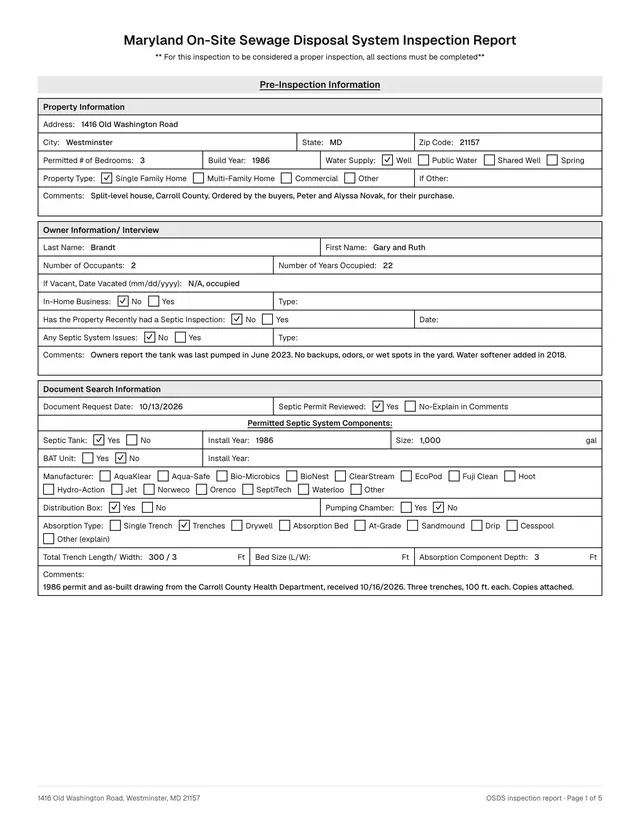
Maryland On-Site Sewage Disposal System Inspection Report
Record the tank or cesspool and what was checked. - Massachusetts
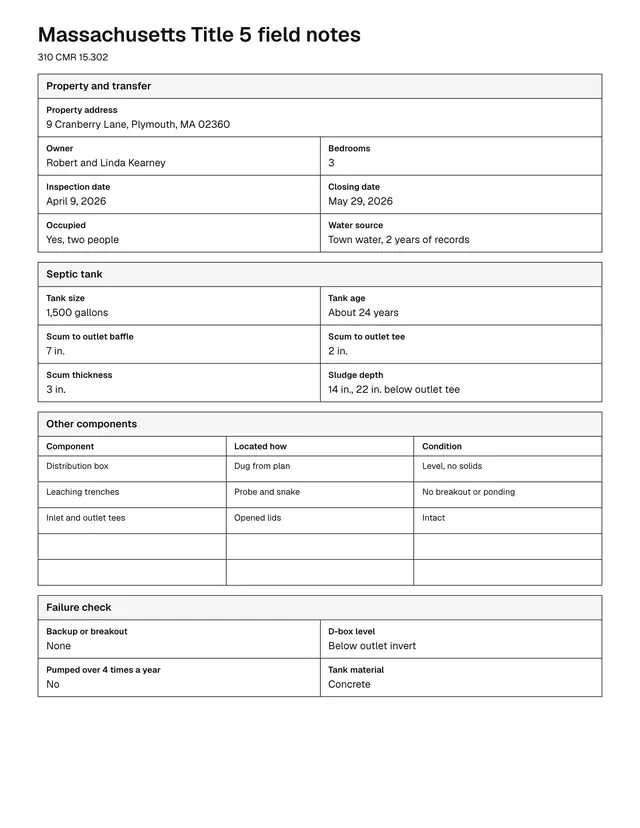
Massachusetts Title 5 inspection report (310 CMR 15.301)
Record the tank or cesspool and what was checked. - Michigan
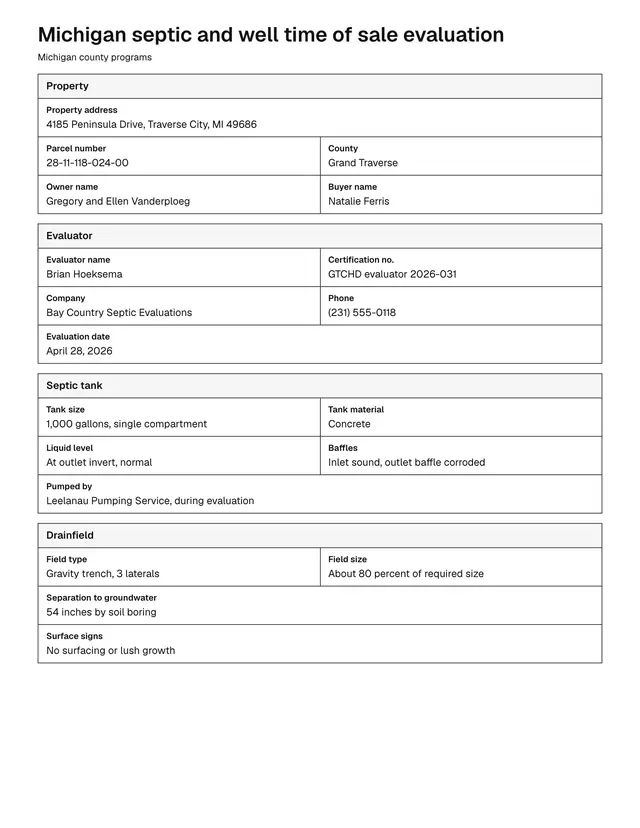
Michigan septic time of sale evaluation
Record the tank or cesspool and what was checked. - Minnesota
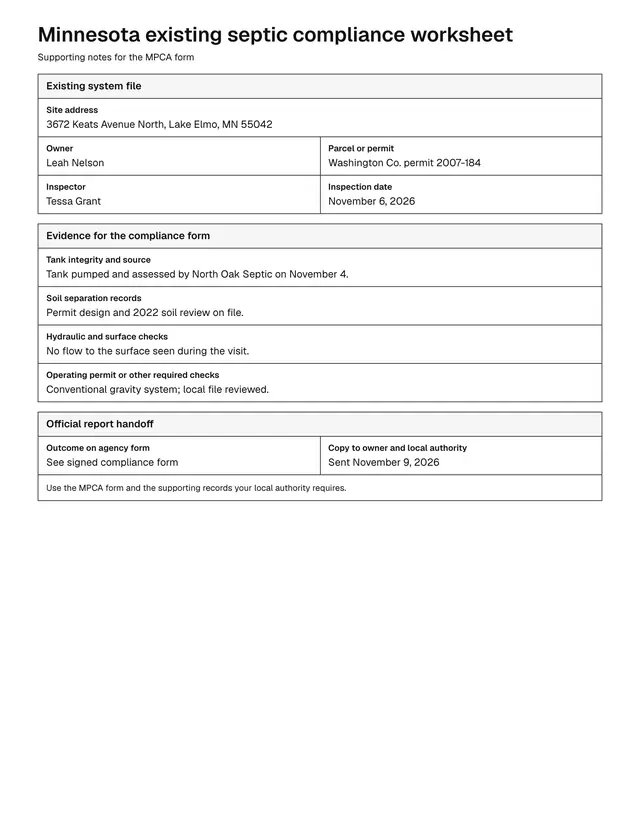
Minnesota existing septic compliance worksheet
Record the tank or cesspool and what was checked. - Mississippi
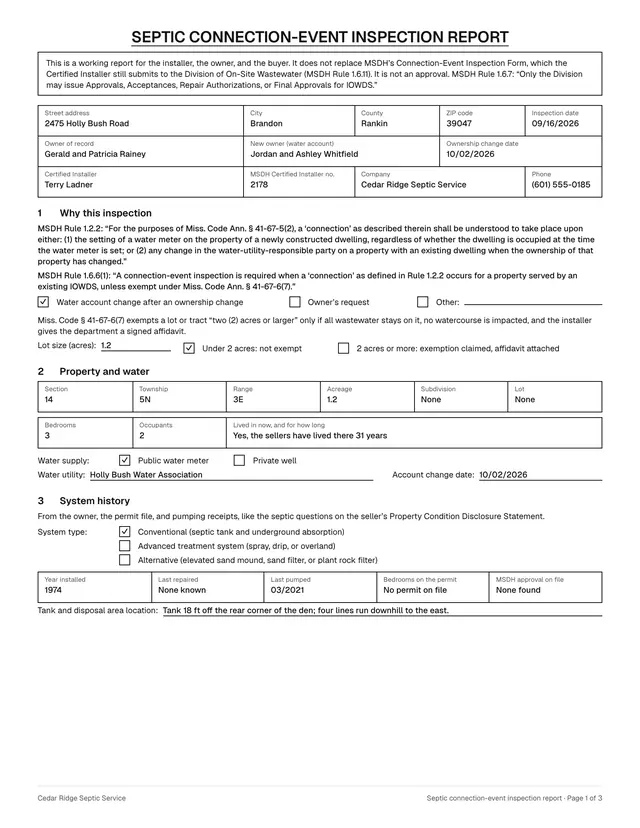
Septic Connection-Event Inspection Report
Record the tank or cesspool and what was checked. - Missouri
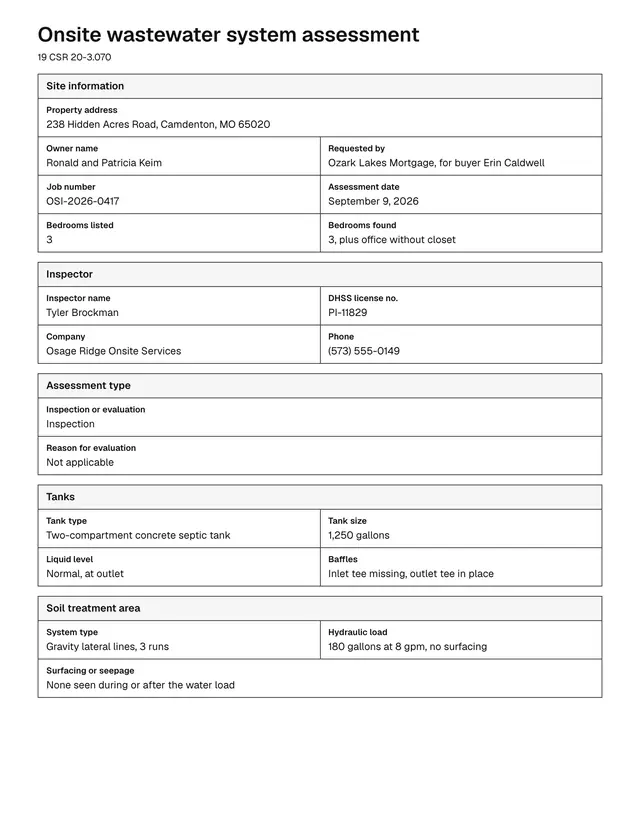
Missouri onsite wastewater inspection and evaluation report
Record the tank or cesspool and what was checked. - New JerseyN.J.A.C. 7:9A Appendix F
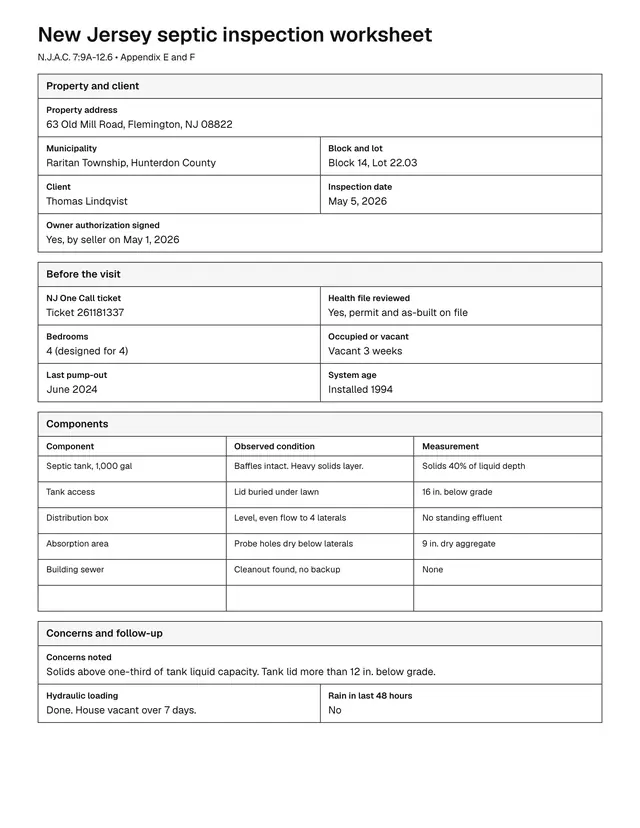
New Jersey septic inspection report (Appendix F Onsite System Inspection Form)
Record the tank or cesspool and what was checked. - New Mexico
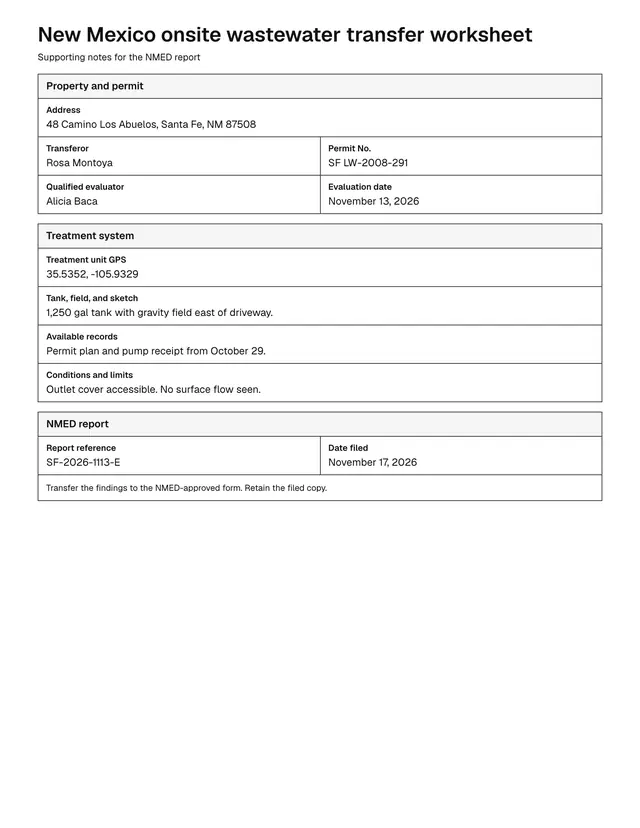
New Mexico onsite wastewater transfer worksheet
Record the tank or cesspool and what was checked. - New York
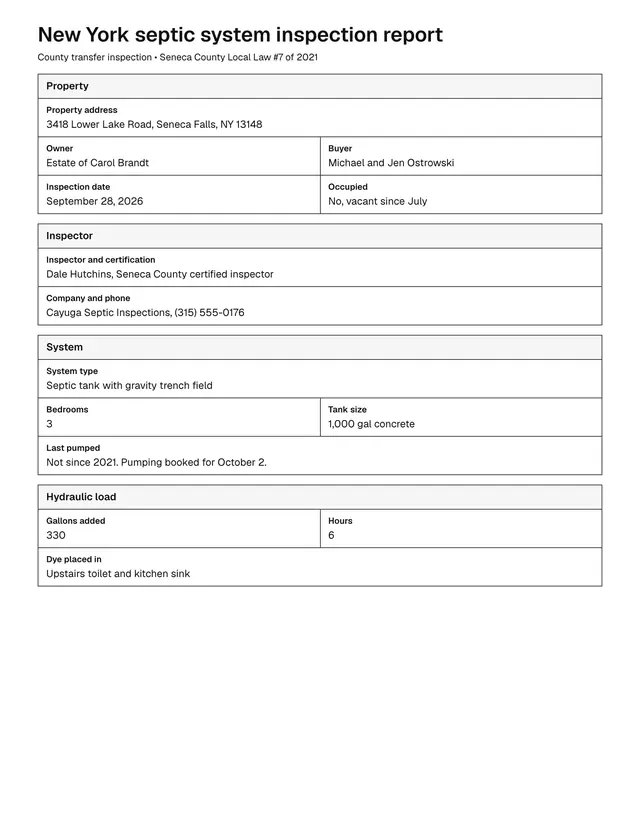
New York septic system inspection report (county transfer inspections)
Record the tank or cesspool and what was checked. - North Carolina
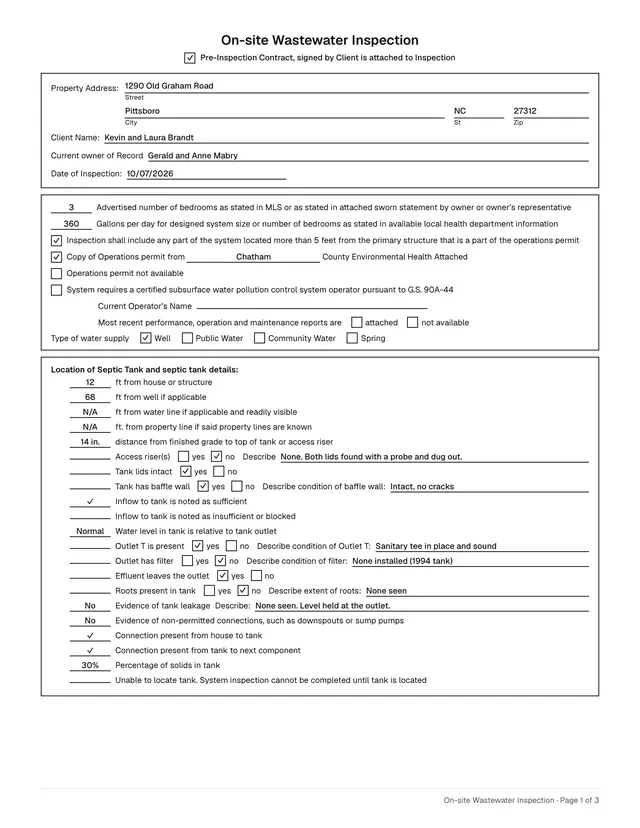
On-site Wastewater Inspection
Record the tank or cesspool and what was checked. - Ohio
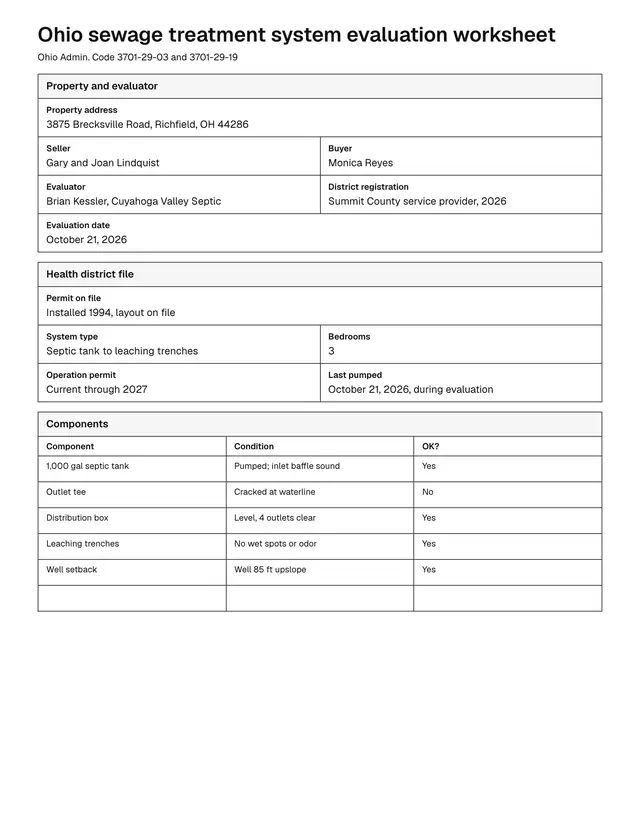
Ohio sewage treatment system evaluation for property transfer
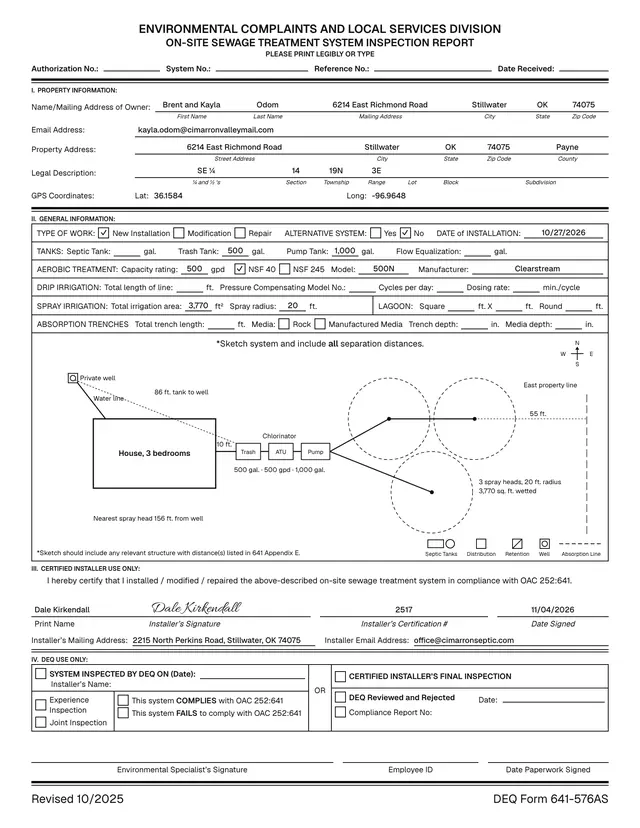
Record the tank or cesspool and what was checked. - OklahomaDEQ Form 641-576AS
On-Site Sewage Treatment System Inspection Report
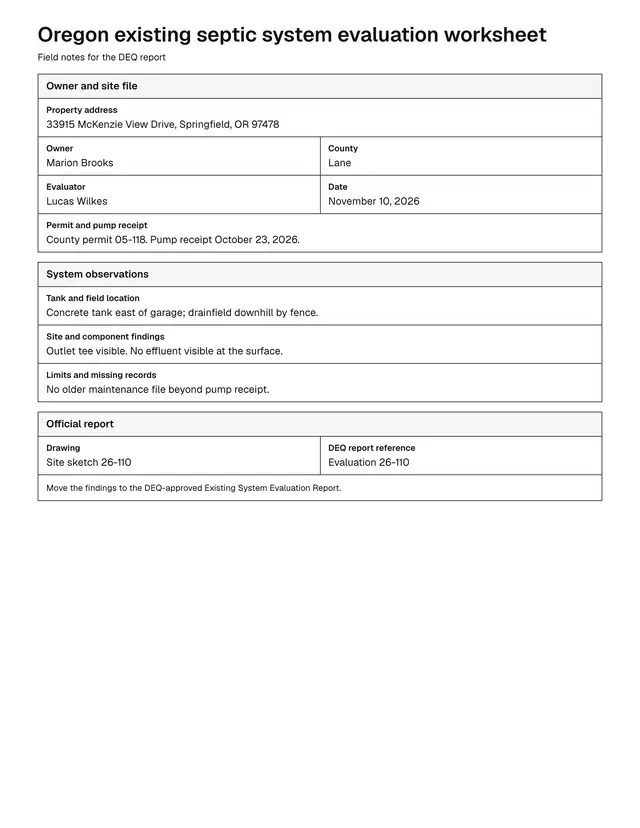
Record the tank or cesspool and what was checked. - Oregon
Oregon existing septic system evaluation worksheet
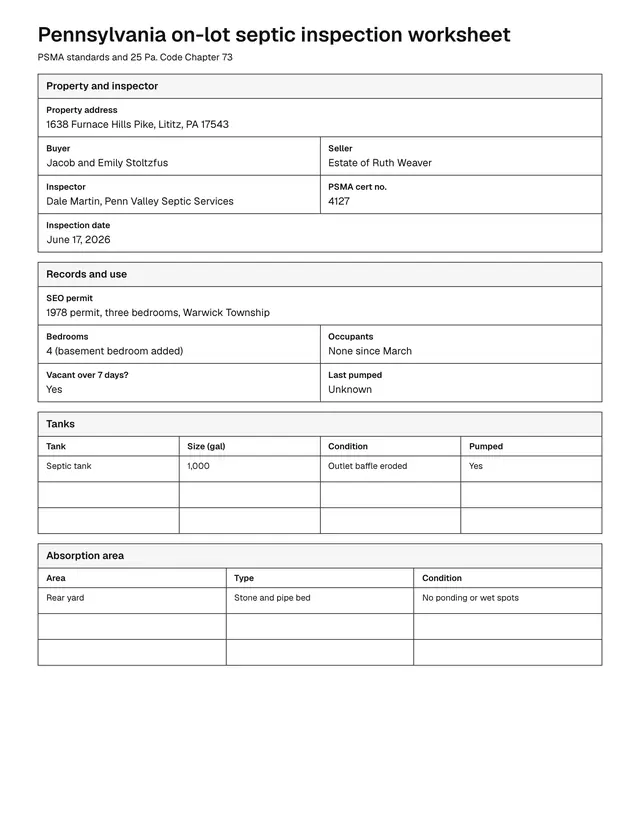
Record the tank or cesspool and what was checked. - Pennsylvania
Pennsylvania on-lot septic system inspection (PSMA)
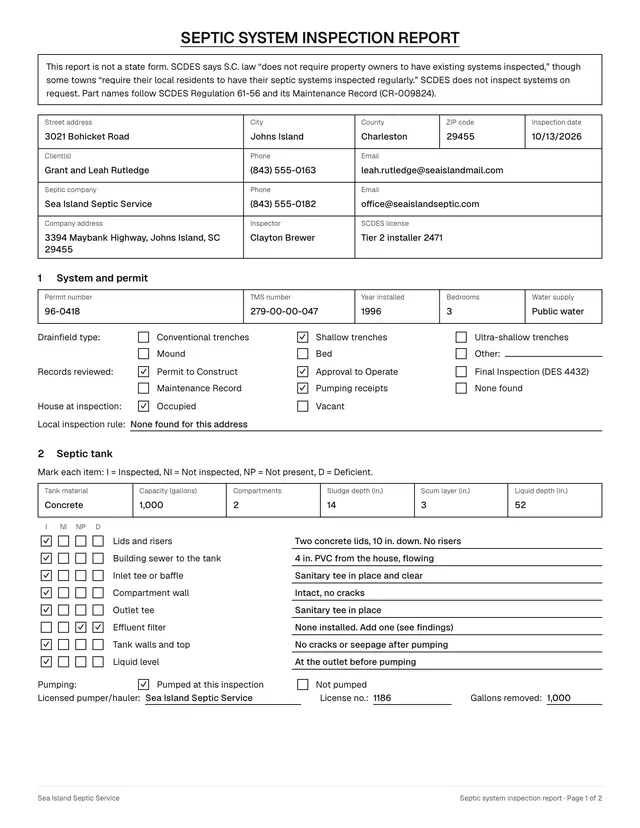
Record the tank or cesspool and what was checked. - South Carolina
Septic System Inspection Report
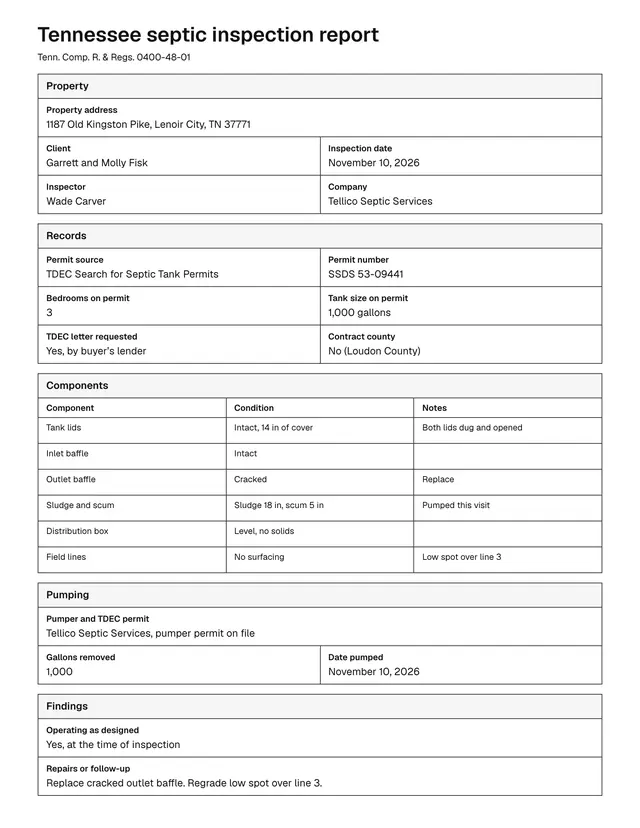
Record the tank or cesspool and what was checked. - Tennessee
Tennessee septic inspection report
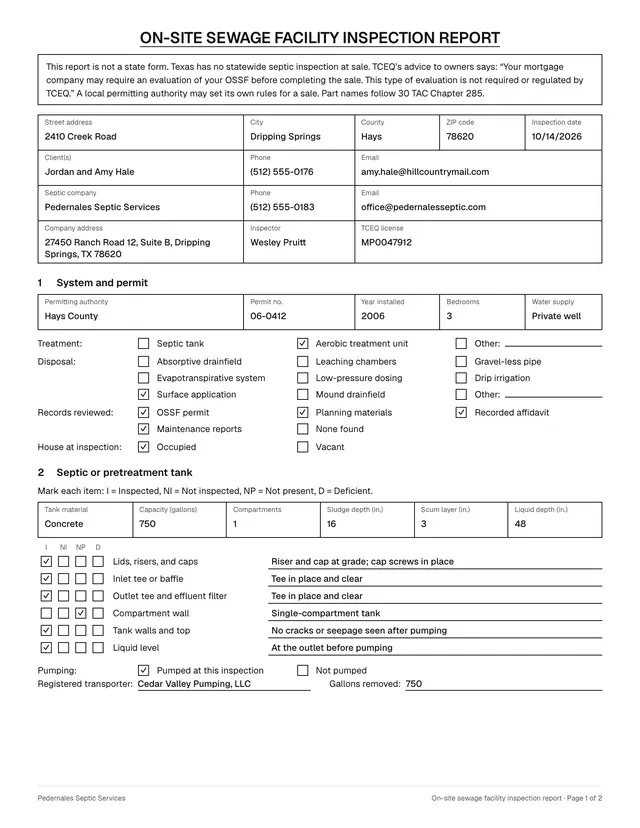
Record the tank or cesspool and what was checked. - Texas
On-Site Sewage Facility Inspection Report
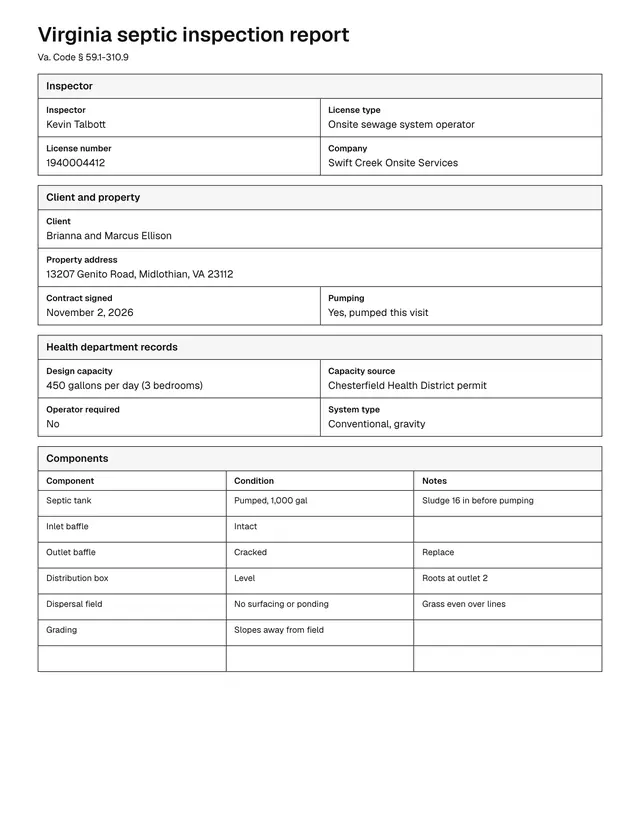
Record the tank or cesspool and what was checked. - Virginia
Virginia septic inspection report
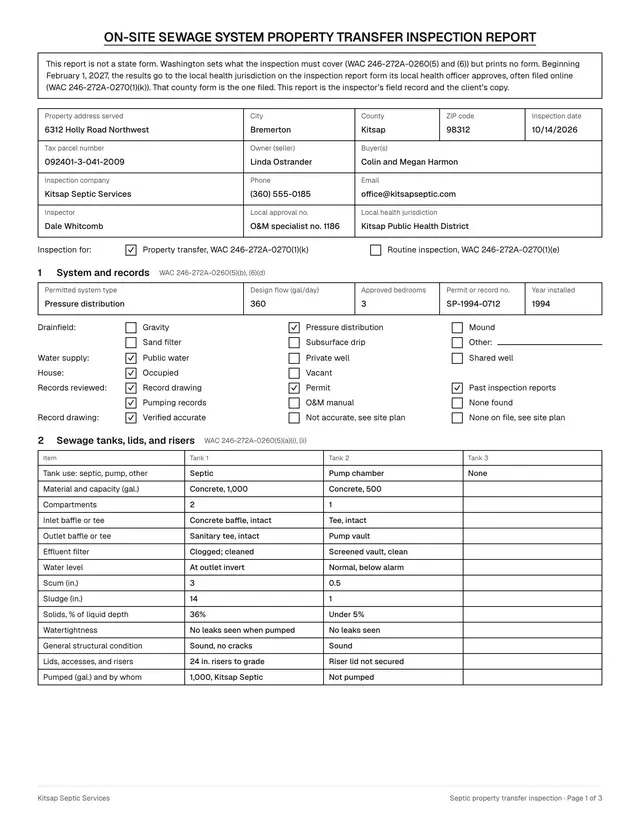
Record the tank or cesspool and what was checked. - Washington
On-Site Sewage System Property Transfer Inspection Report
Record the tank or cesspool and what was checked. - Wisconsin
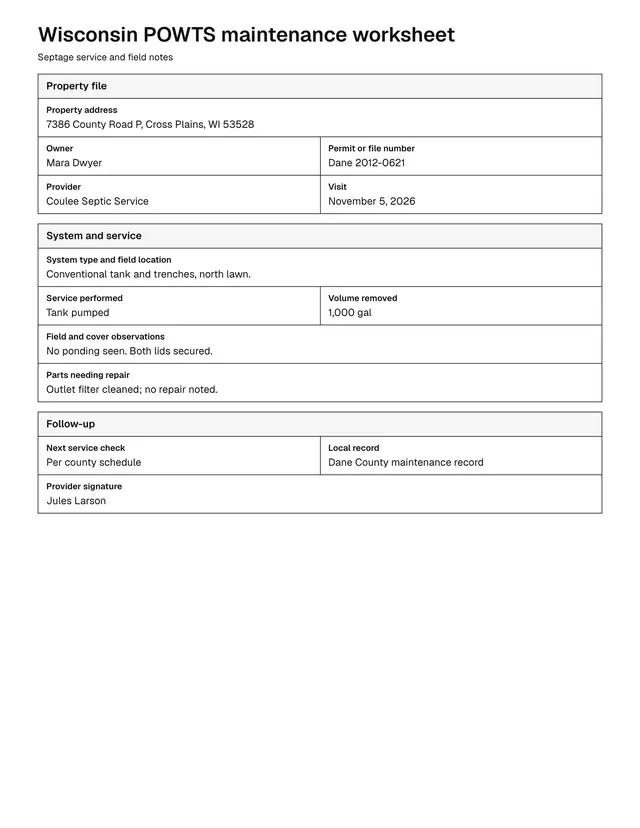
Wisconsin POWTS maintenance worksheet
Record the tank or cesspool and what was checked.