Tennessee septic inspection report
Tennessee doesn’t require a septic inspection at sale, but TDEC sells an inspection letter for $200 and buyers have to be told it exists. This report covers the private inspection most deals still ask for.
At a glance
- State rules
- Tenn. Comp. R. & Regs. 0400-48-01
- TDEC letter fee
- $200 per inspection
- Buyer notice
- Rule 1260-02-.37
- Contract counties
- County runs septic
Completed example
Download PDFTennessee’s two septic paths
Tennessee has no point-of-sale septic law. Instead it has two separate things that get mixed up at closing. One is the state’s own inspection letter from TDEC. The other is the private inspection a buyer or lender hires a pumper or inspector to do. This report is for the second one, and it should say which one the deal asked for.
Agents bring it up because of rule 1260-02-.37. A licensee preparing an offer “shall provide in the offer and make the buyer aware that, for a fee, a septic system inspection letter is available through the Tennessee Department of Environment and Conservation.” So the buyer has already seen the phrase before you get the call.
Don’t expect the home inspector to cover it. Tennessee’s home inspection standards exclude subterranean systems, sewage disposal included, so the buyer’s home inspection report will say septic wasn’t looked at.
What the TDEC inspection letter is
TDEC describes inspection letters as letters that “document the status of an existing septic system.” They’re “routinely requested by the property owner, realtor, lending institution or property buyer” for a sale, a refinance, or a plat approval. You apply through TDEC’s online septic service request.
The fee is set in rule 0400-48-01-.21: “Inspections of existing subsurface sewage disposal systems. Two hundred dollars ($200) per inspection.” Nine contract counties (Blount, Davidson, Hamilton, Jefferson, Knox, Madison, Sevier, Shelby, and Williamson) run septic through the county, so their process and price can differ. A house in Maryville goes through Blount County, not the state office.
TDEC’s letter is a status check by the state. It isn’t a pump-out and a look inside the tank. That’s where a private inspection earns its fee.
If the lender wants the TDEC letter, ask for it on day one. Your private inspection can happen while the state request is pending, and the two reports can sit side by side in the closing file.
Running the private inspection
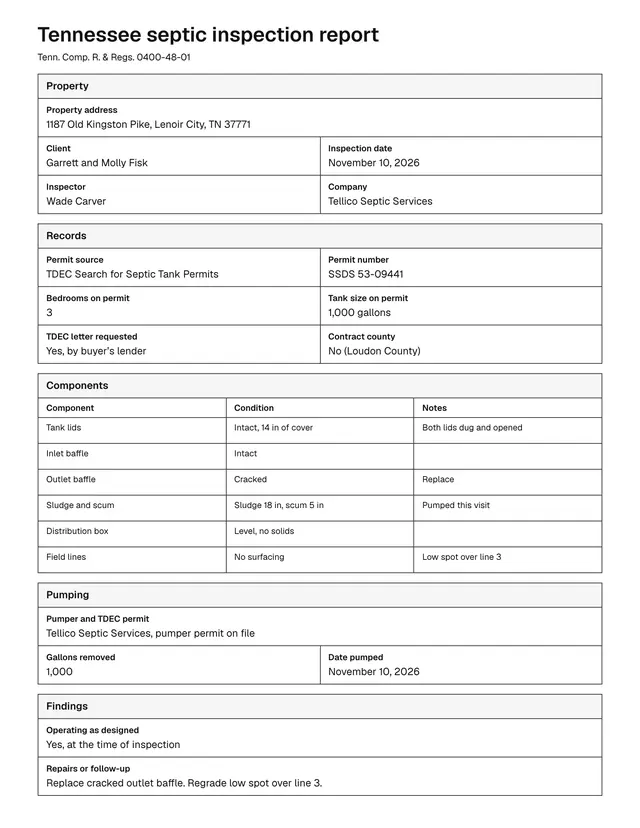
Pull the permit first. TDEC’s SSDS FAQ points to its Search for Septic Tank Permits for existing systems. The permit tells you the bedroom count, tank size, and where the field lines should be.
Check the tank against the house. Rule 0400-48-01-.08 sets home tank sizes: 750 gallons for two bedrooms or less, 900 for three, 1,000 for four, and 250 more per extra bedroom. A five-bedroom remodel on a 900-gallon tank is a finding worth a line on the report.
Inspect what you can open. Lids, baffles, sludge and scum depth, the distribution box, and the drain field surface. Note wet spots, odor, lush grass over the lines, and any parts you couldn’t reach.
Say who pumped it. Septic tank pumpers need a TDEC permit, and the annual permit is $200 under the same fee rule. Write the pumper’s name and the gallons removed.
Photograph each open lid before and after pumping. The photos answer most questions a buyer’s agent asks later.
Writing it up so it holds up
No Tennessee rule we found sets what a private septic report must say. That puts the burden on the report to explain itself: where the permit data came from, what you opened, and what you couldn’t reach.
Skip “pass.” We didn’t find a state pass or fail standard for a private sale inspection. Describe what you saw on the day you were there, and say the report reflects that day only.
Match the house to the permit. If the listing says four bedrooms and the permit says three, that’s a finding. TDEC sizes systems by bedrooms, so an added bedroom can mean the system is small for the house.
Ask about pumping history. A tank pumped two weeks before the sale hides how fast solids build up. Note the last pump date if the seller has a receipt.
What happens if the system is failing?
The owner is on the hook. TDEC can give the owner a written notice of up to 30 days to repair, replace, or improve a malfunctioning system,. That timeline can push a closing, so flag a failing system on page one.
Write a failing finding plainly: what you saw, where, and what you recommend next. Leave the repair design to a licensed installer.
Noma specializes in the Tennessee Septic Inspection Report (Tenn. Comp. R. & Regs. 0400-48-01). Clients book online, you upload your inspection agreement once and send it for e-signature on every job, and the report is built with your own sections with the worst defects in the summary. See how Noma runs septic inspections.
Frequentlyaskedquestions
Send this document in minutes, not an afternoon.
Other states
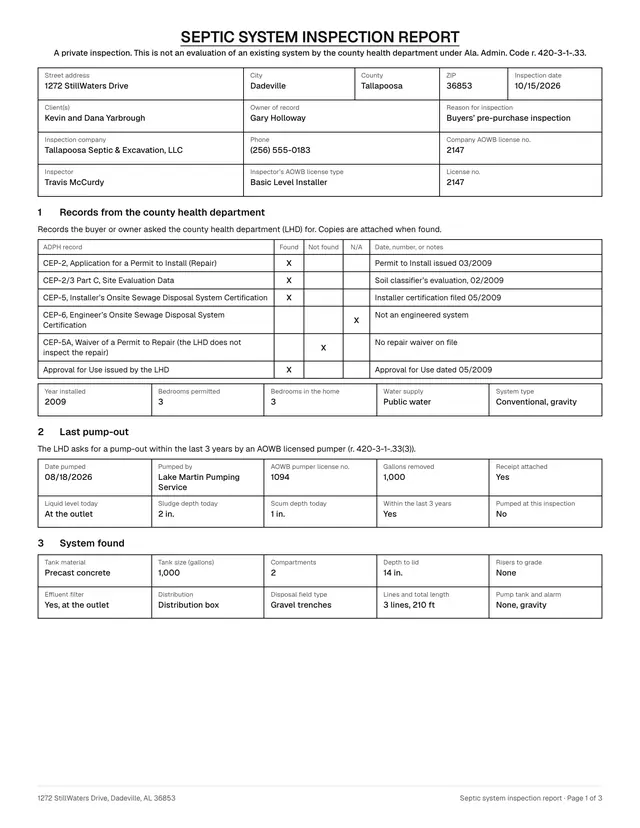
Septic inspection report templates- Alabama
Septic System Inspection Report
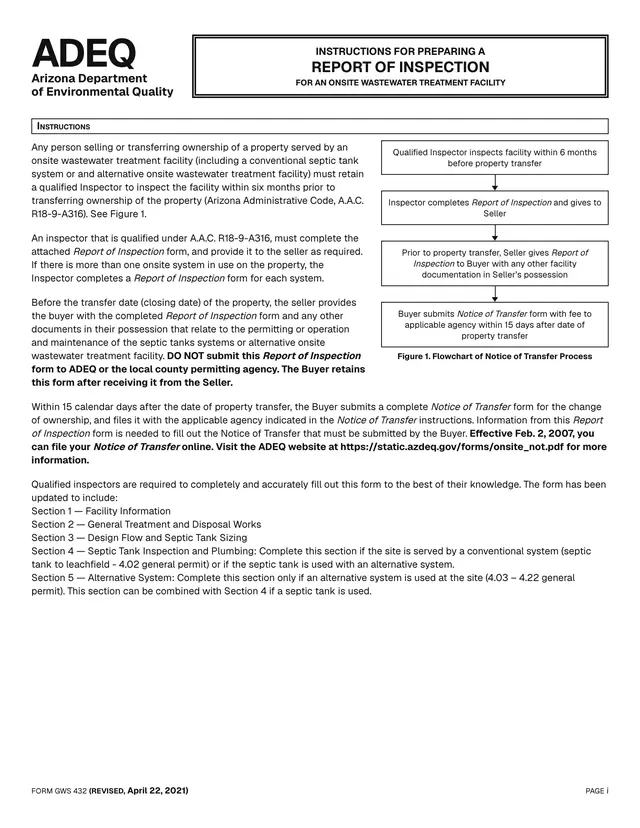
Record the tank or cesspool and what was checked. - ArizonaGWS 432
Report of Inspection for an Onsite Wastewater Treatment Facility
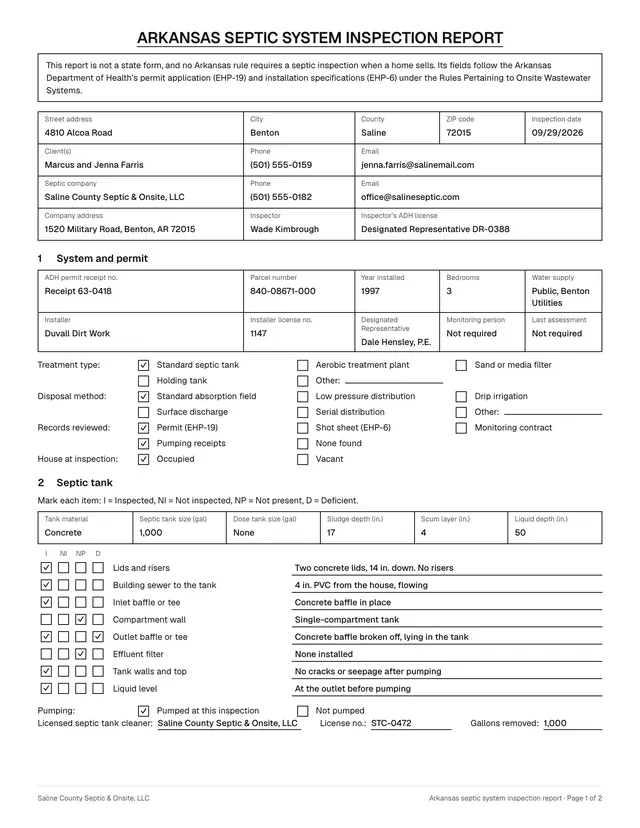
Record the tank or cesspool and what was checked. - Arkansas
Arkansas Septic System Inspection Report
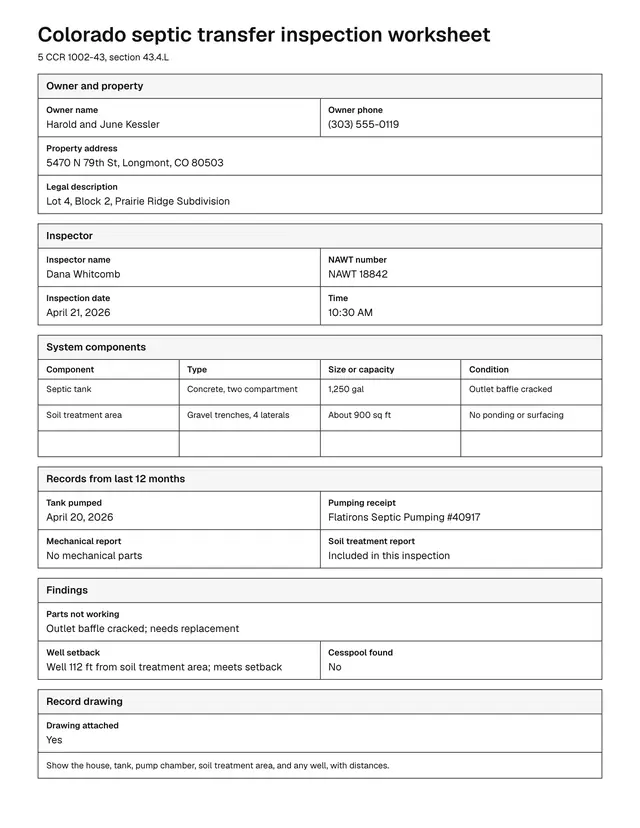
Record the tank or cesspool and what was checked. - Colorado
Colorado septic transfer of title inspection report (Regulation 43)
Record the tank or cesspool and what was checked. - Delaware
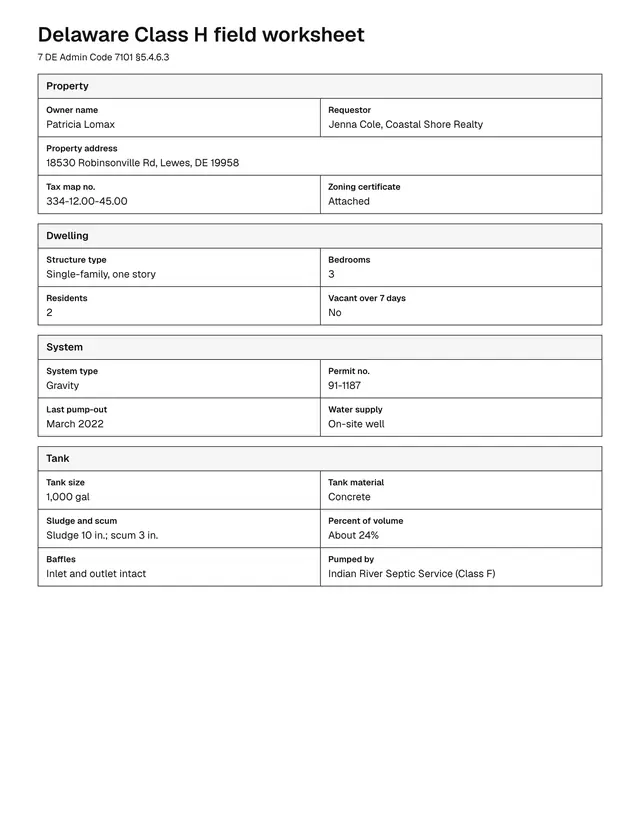
Delaware Class H septic inspection report
Record the tank or cesspool and what was checked. - Florida
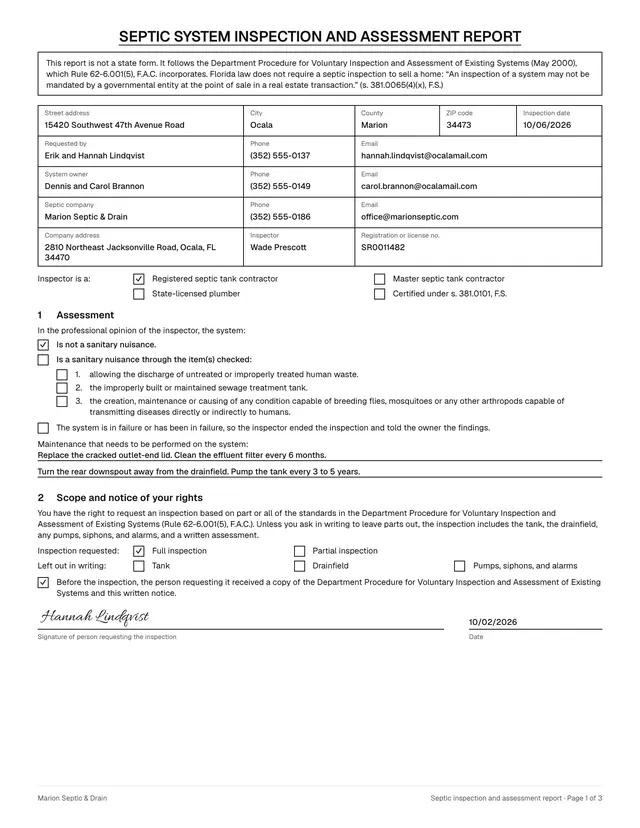
Septic System Inspection and Assessment Report
Record the tank or cesspool and what was checked. - Georgia
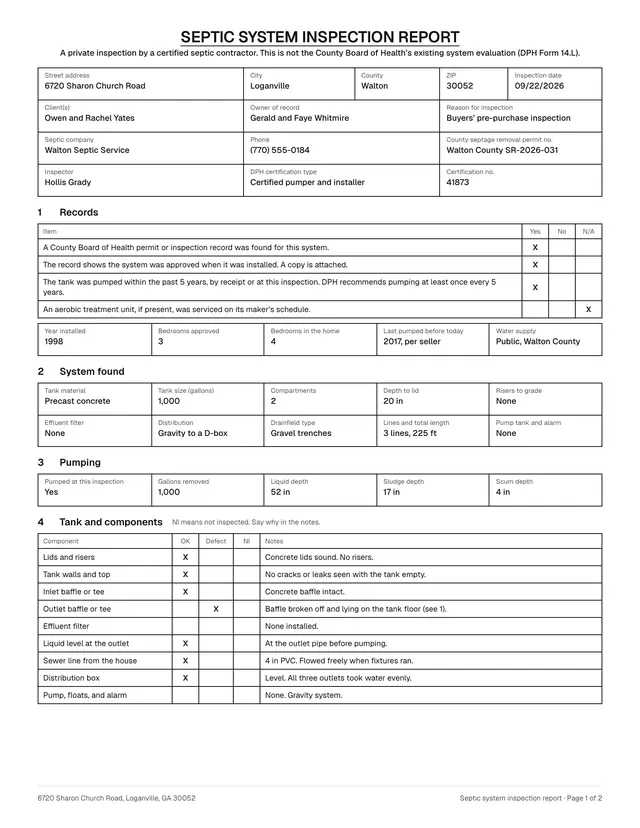
Septic System Inspection Report
Record the tank or cesspool and what was checked. - Hawaii
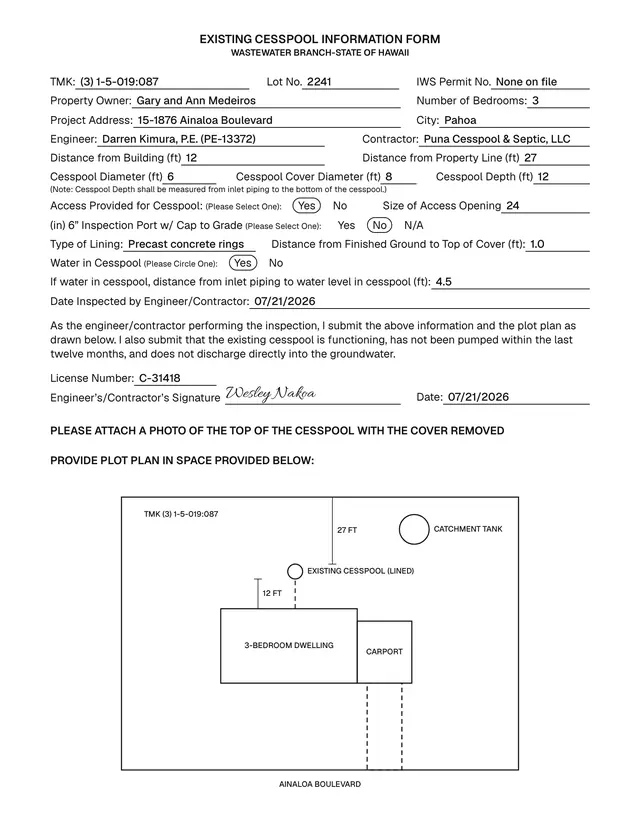
Existing Cesspool Information Form
Record the tank or cesspool and what was checked. - Illinois
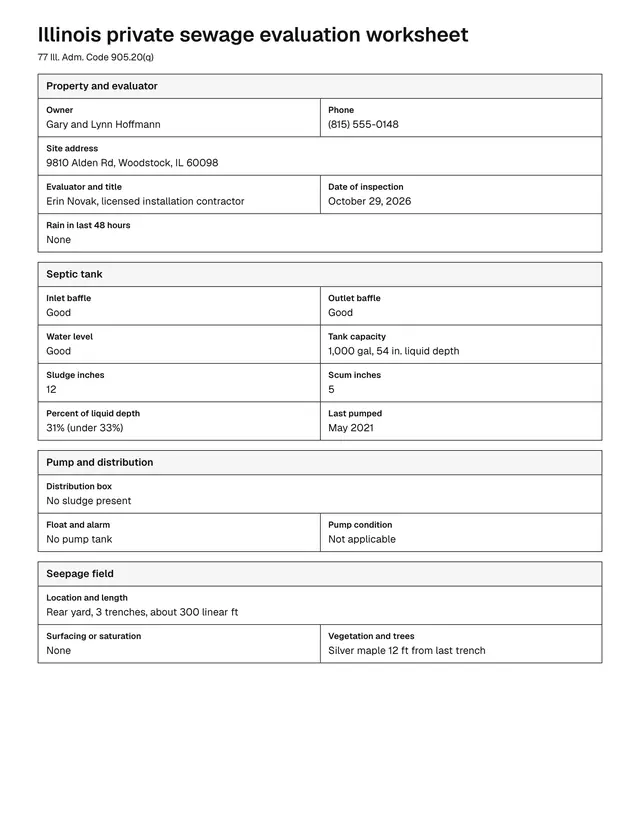
Illinois private sewage disposal system evaluation
Record the tank or cesspool and what was checked. - Indiana
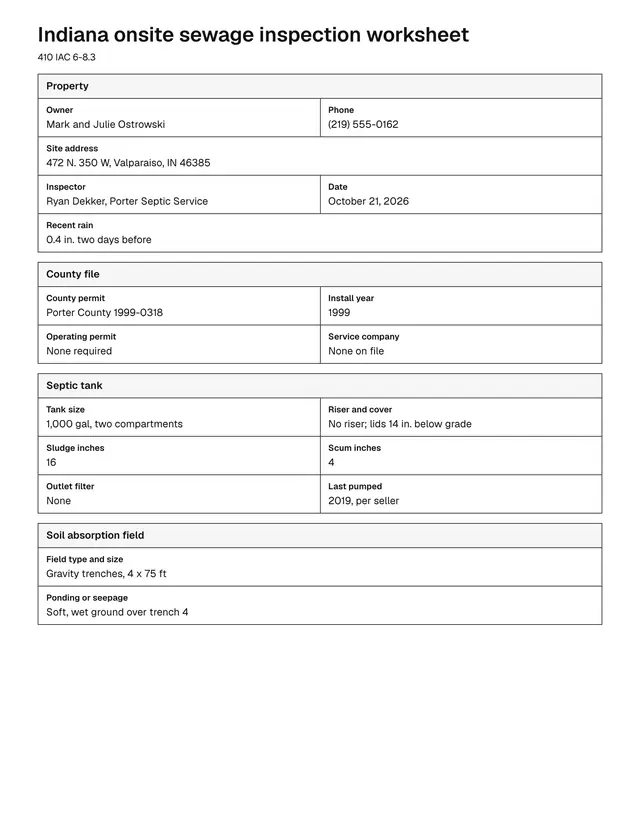
Indiana onsite sewage system inspection report
Record the tank or cesspool and what was checked. - Iowa
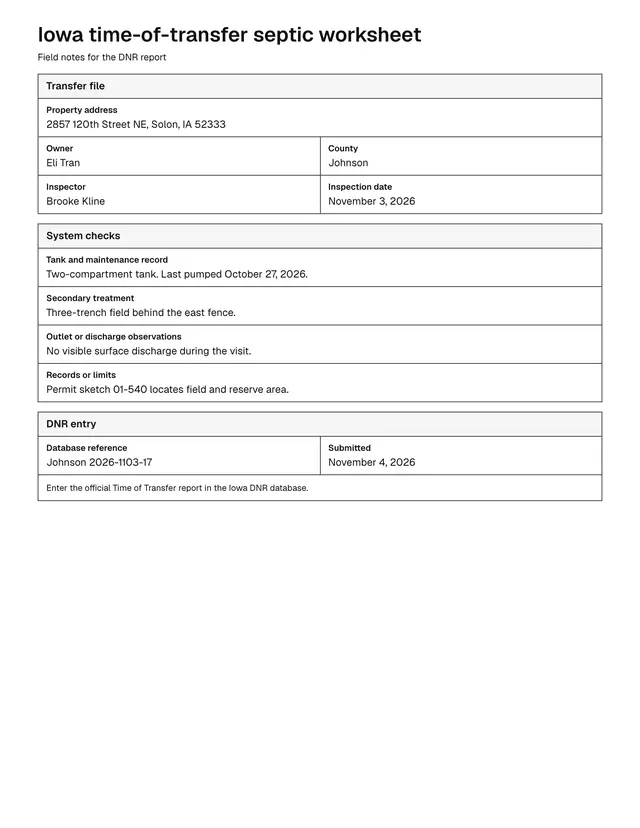
Iowa time-of-transfer septic worksheet
Record the tank or cesspool and what was checked. - Kentucky
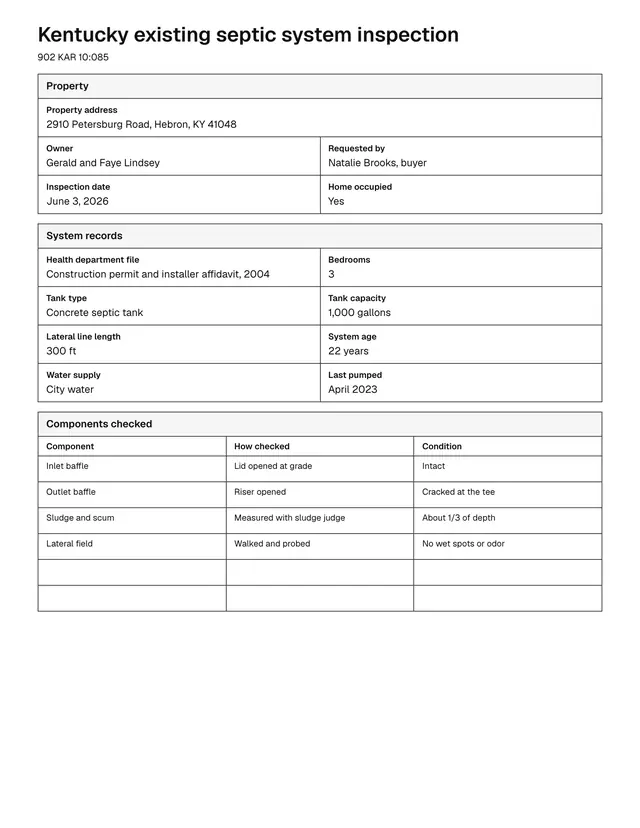
Kentucky existing septic system inspection
Record the tank or cesspool and what was checked. - Louisiana
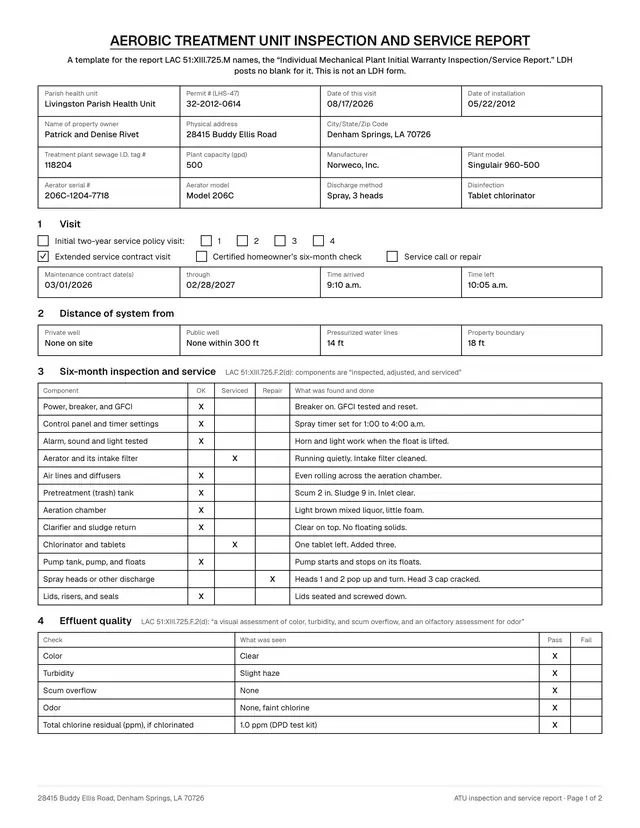
Aerobic Treatment Unit Inspection and Service Report
Record the tank or cesspool and what was checked. - Maryland
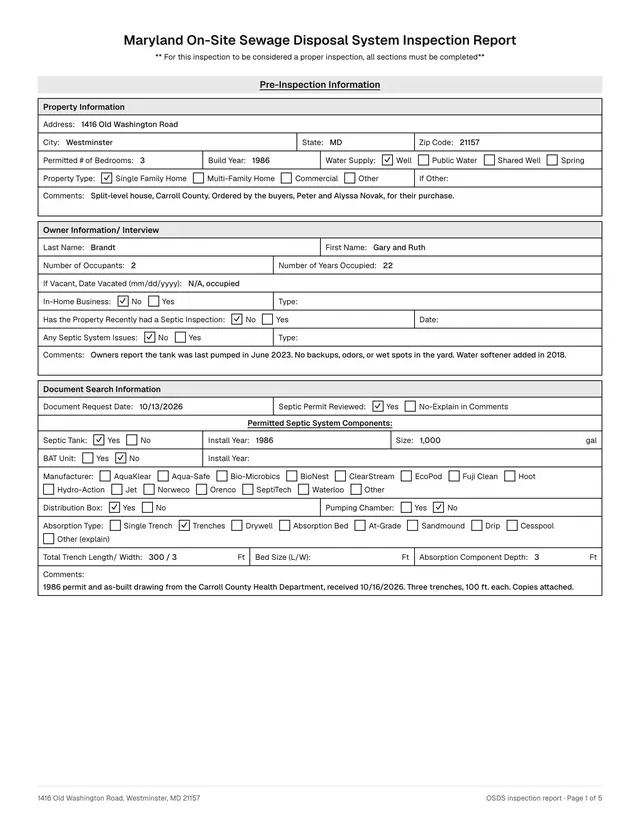
Maryland On-Site Sewage Disposal System Inspection Report
Record the tank or cesspool and what was checked. - Massachusetts
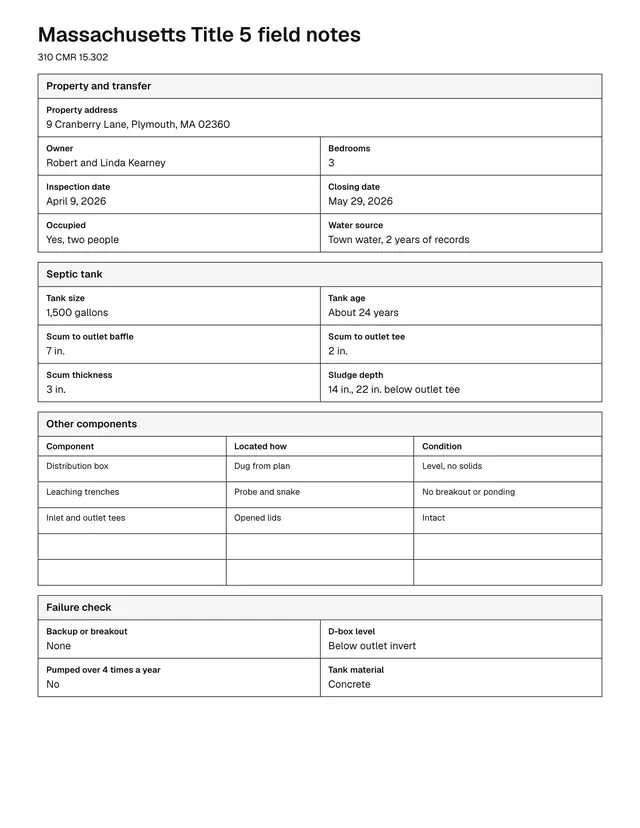
Massachusetts Title 5 inspection report (310 CMR 15.301)
Record the tank or cesspool and what was checked. - Michigan
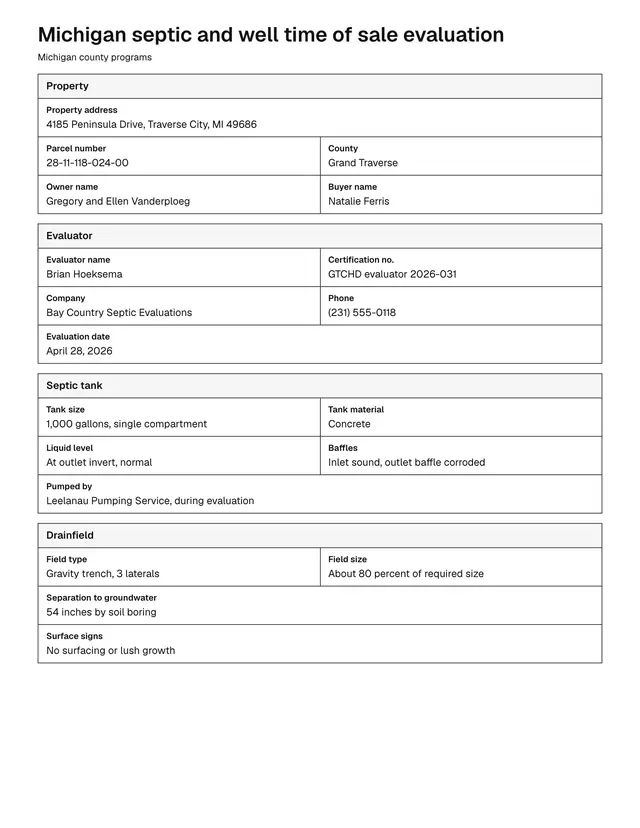
Michigan septic time of sale evaluation
Record the tank or cesspool and what was checked. - Minnesota
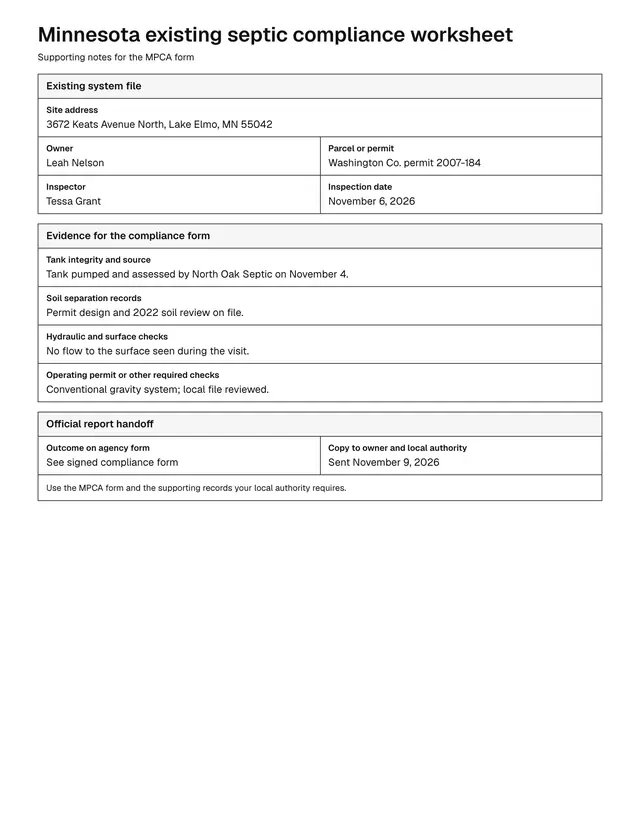
Minnesota existing septic compliance worksheet
Record the tank or cesspool and what was checked. - Mississippi
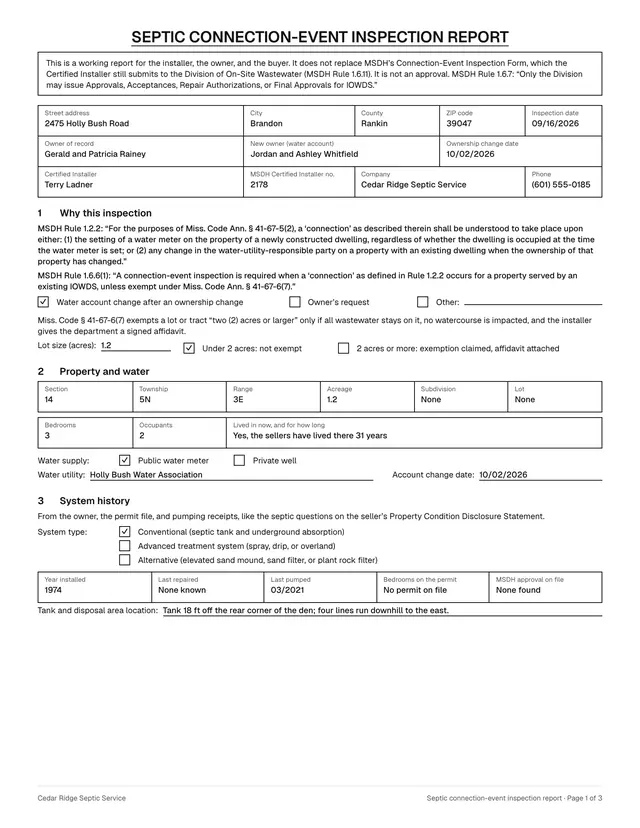
Septic Connection-Event Inspection Report
Record the tank or cesspool and what was checked. - Missouri
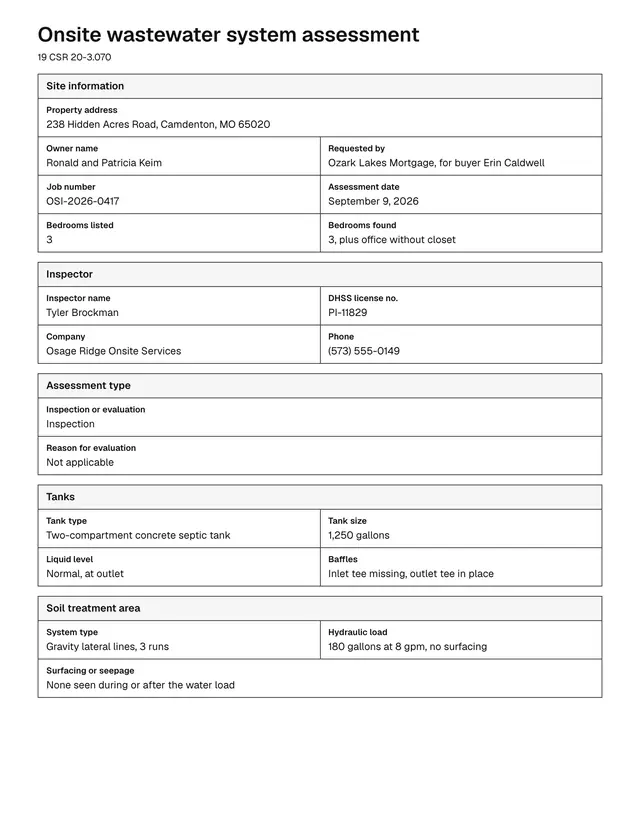
Missouri onsite wastewater inspection and evaluation report
Record the tank or cesspool and what was checked. - Nevada
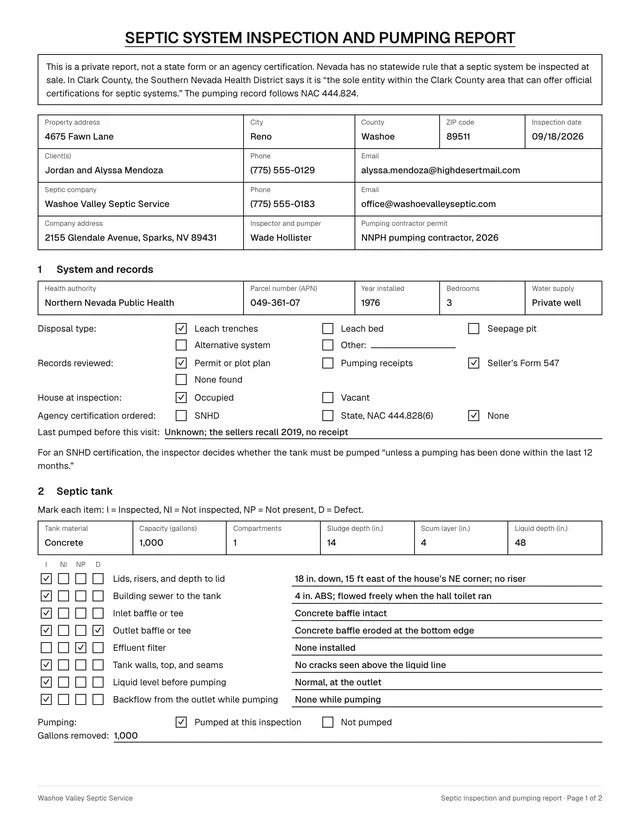
Septic System Inspection and Pumping Report
Record the tank or cesspool and what was checked. - New JerseyN.J.A.C. 7:9A Appendix F
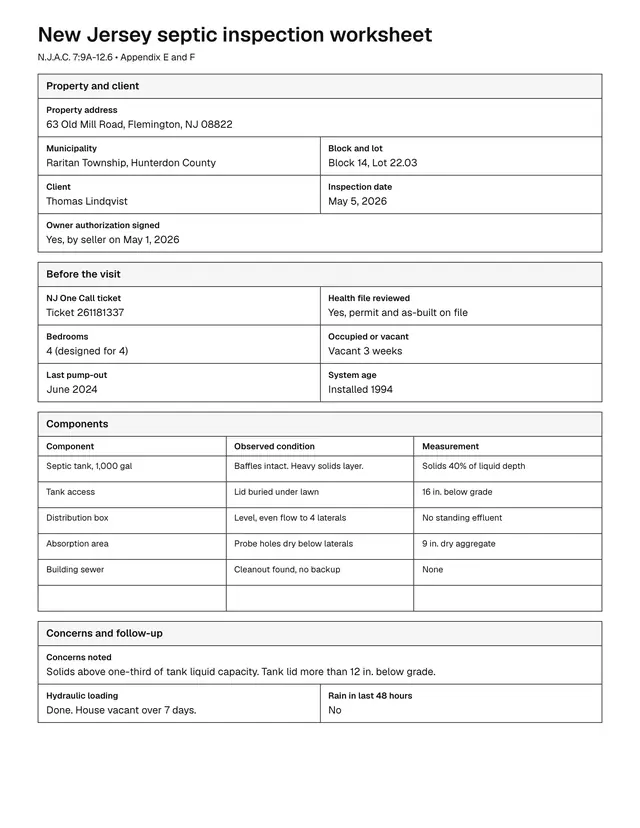
New Jersey septic inspection report (Appendix F Onsite System Inspection Form)
Record the tank or cesspool and what was checked. - New Mexico
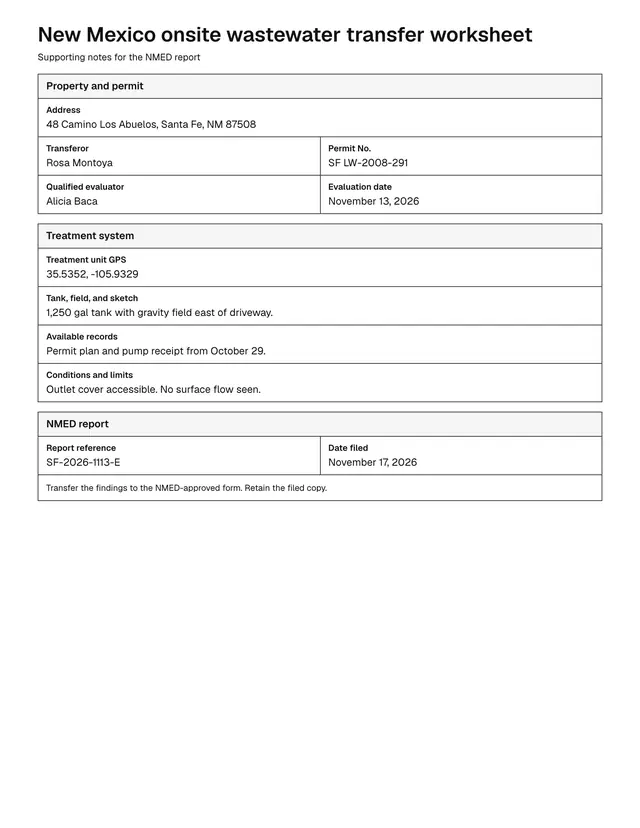
New Mexico onsite wastewater transfer worksheet
Record the tank or cesspool and what was checked. - New York
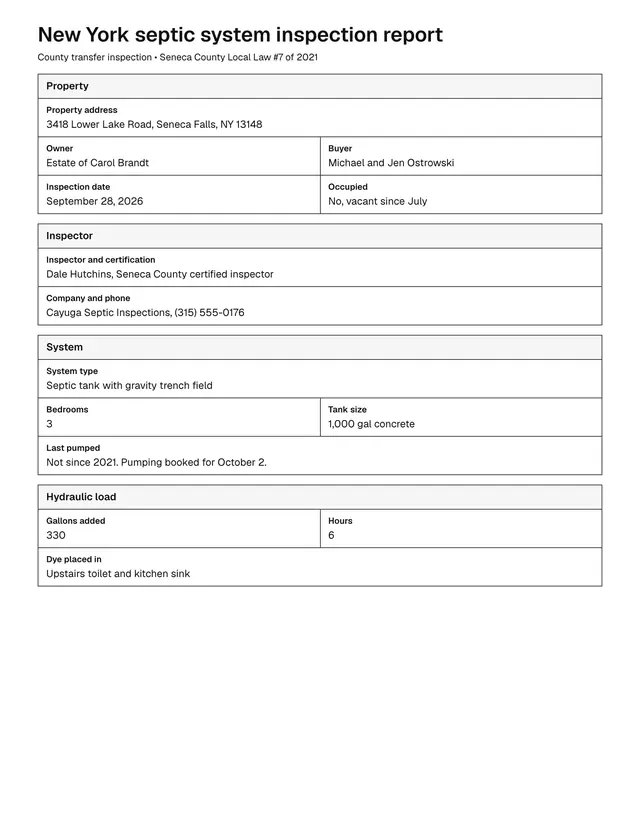
New York septic system inspection report (county transfer inspections)
Record the tank or cesspool and what was checked. - North Carolina
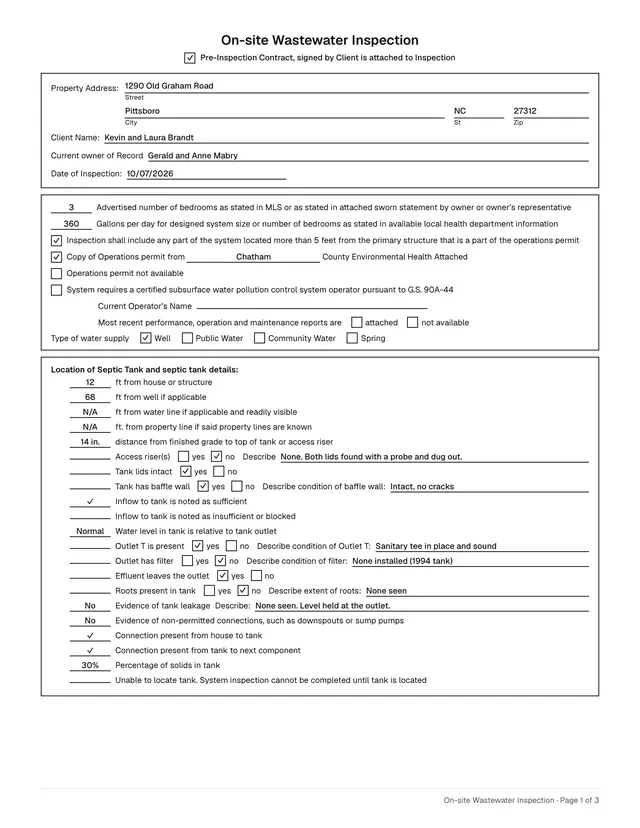
On-site Wastewater Inspection
Record the tank or cesspool and what was checked. - Ohio
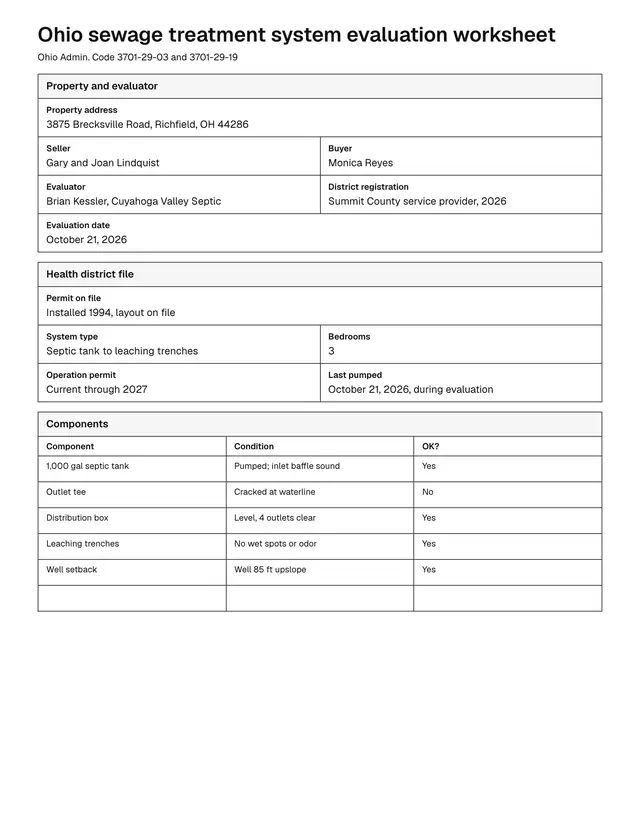
Ohio sewage treatment system evaluation for property transfer
Record the tank or cesspool and what was checked. - OklahomaDEQ Form 641-576AS
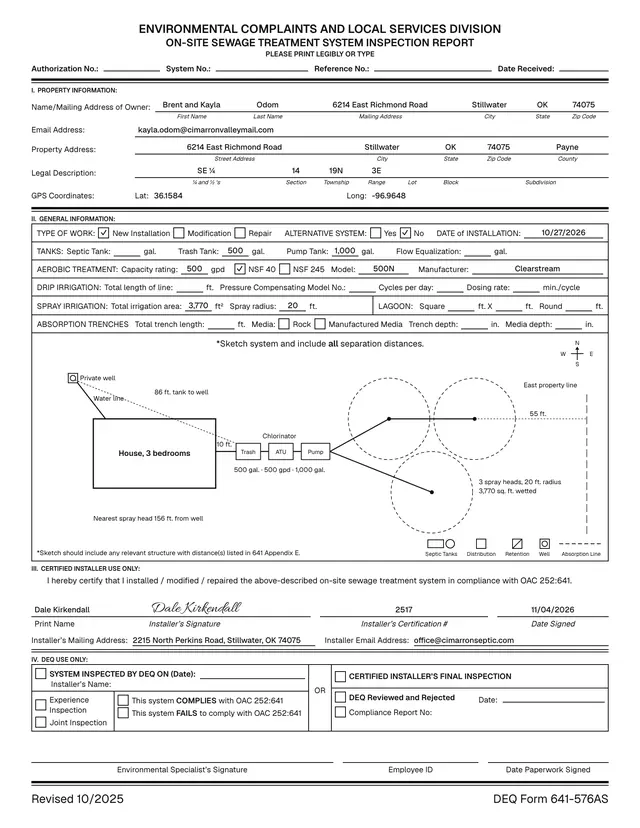
On-Site Sewage Treatment System Inspection Report
Record the tank or cesspool and what was checked. - Oregon
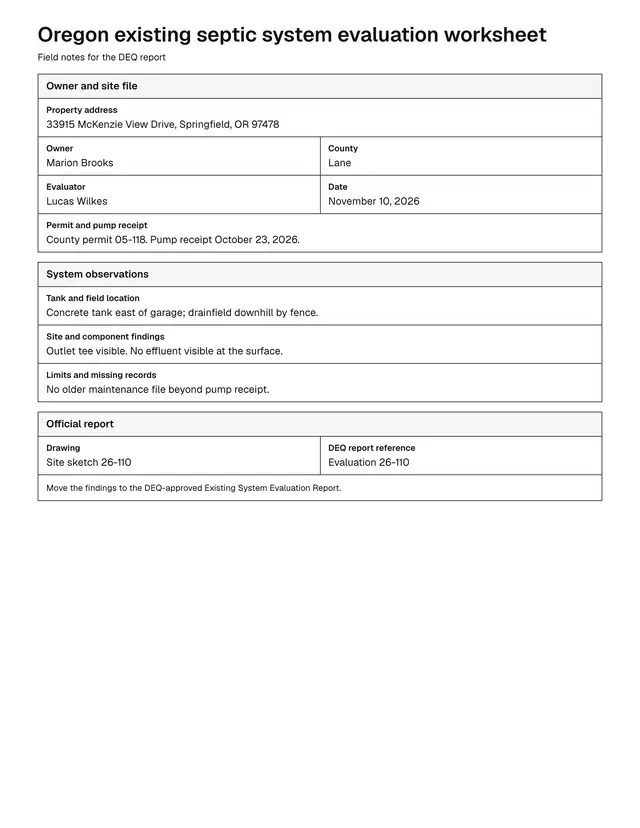
Oregon existing septic system evaluation worksheet
Record the tank or cesspool and what was checked. - Pennsylvania
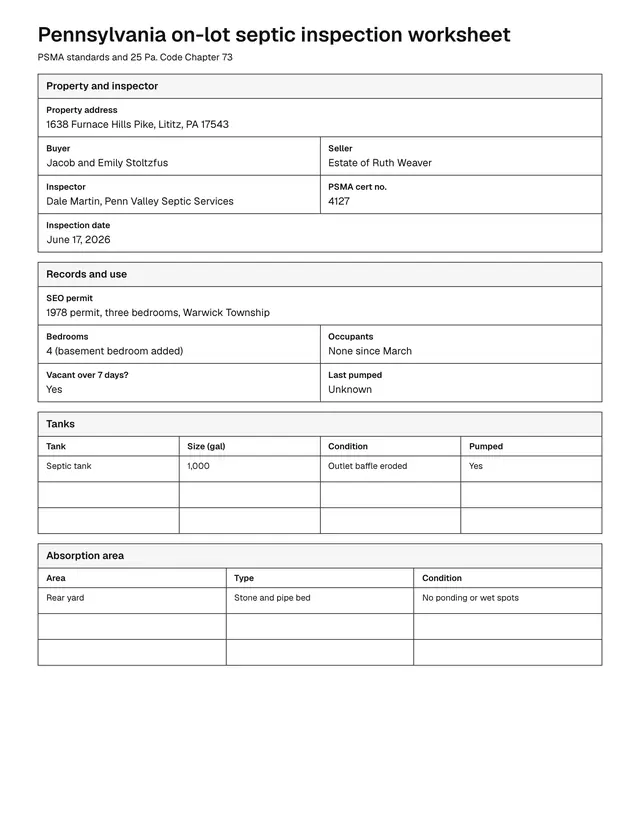
Pennsylvania on-lot septic system inspection (PSMA)
Record the tank or cesspool and what was checked. - South Carolina
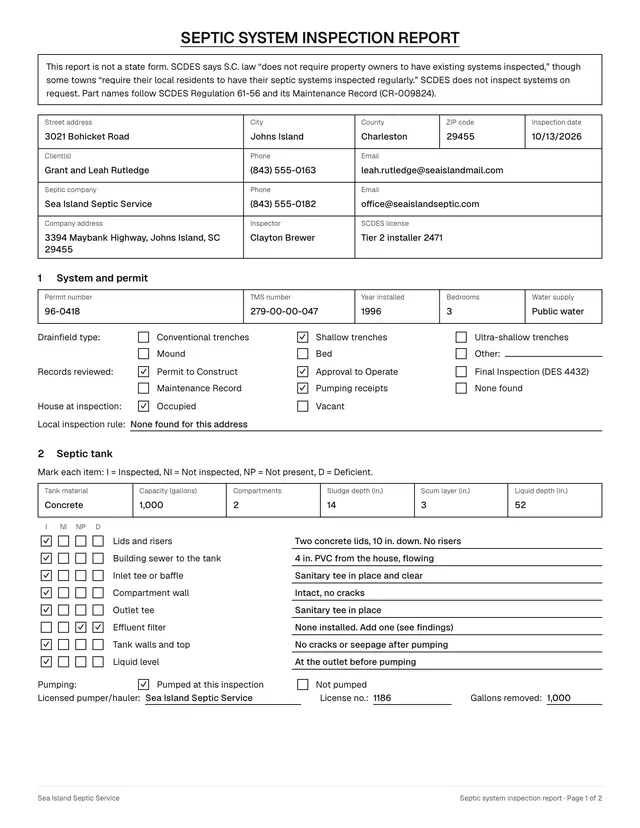
Septic System Inspection Report
Record the tank or cesspool and what was checked. - Texas
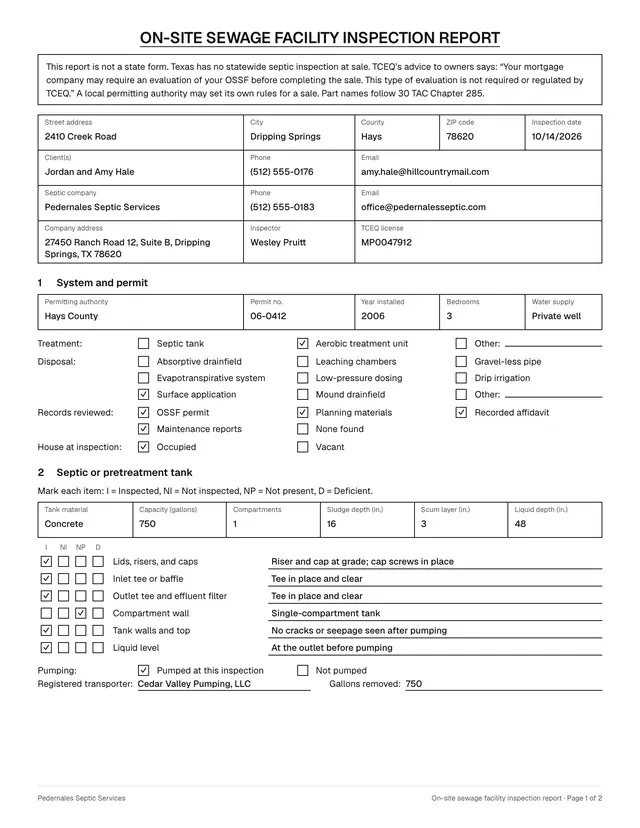
On-Site Sewage Facility Inspection Report
Record the tank or cesspool and what was checked. - Virginia
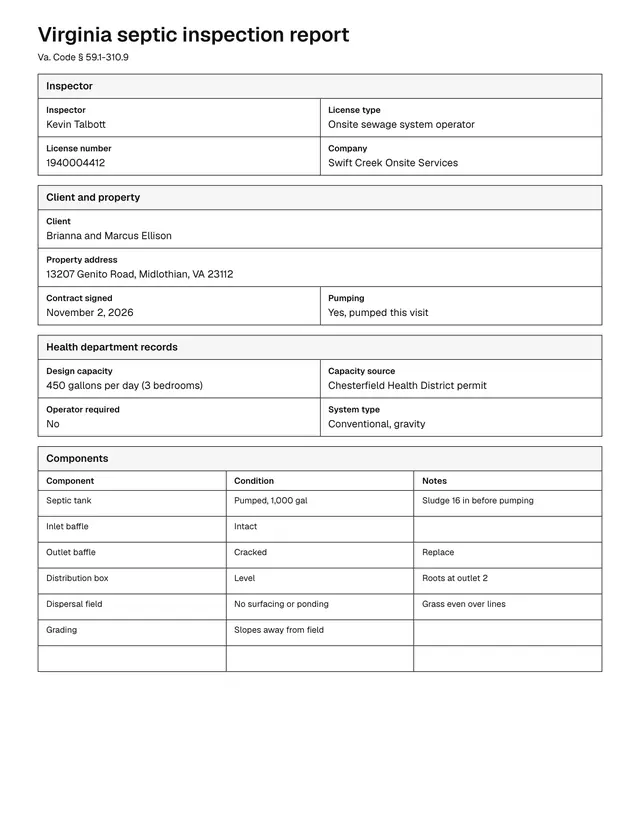
Virginia septic inspection report
Record the tank or cesspool and what was checked. - Washington
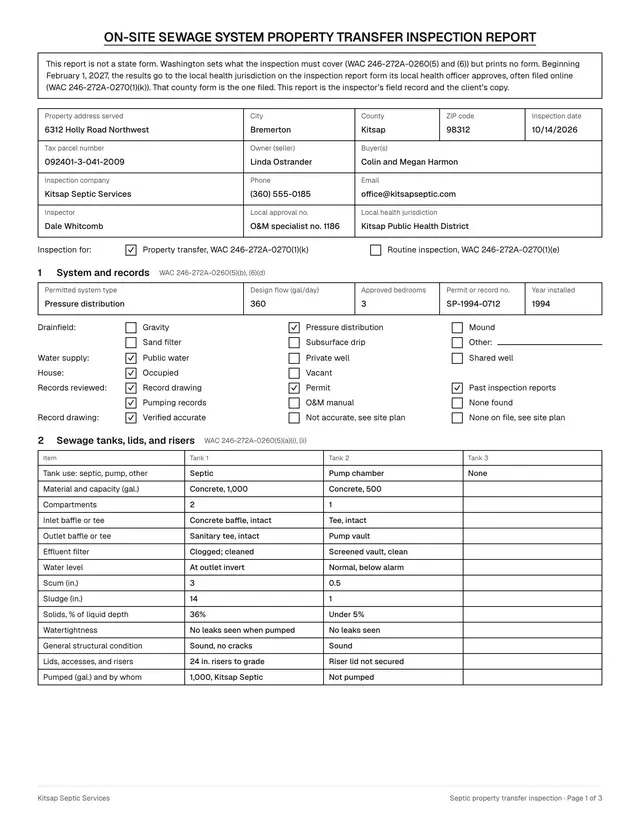
On-Site Sewage System Property Transfer Inspection Report
Record the tank or cesspool and what was checked. - Wisconsin
Wisconsin POWTS maintenance worksheet
Record the tank or cesspool and what was checked.