Colorado septic transfer of title inspection report (Regulation 43)
Some Colorado counties make a seller get the septic system inspected before closing. Regulation 43 says what the report must show, and each county decides if it applies.
At a glance
- Rule
- 5 CCR 1002-43, section 43.4.L
- Who inspects
- NAWT-certified or approved equal
- Form
- Supplied or approved by the local agency
- Example fee
- Boulder County certificate, $500
Completed example
Download PDFFirst, does your county even require one?
Colorado’s septic rule is Regulation 43, the On-site Wastewater Treatment System Regulation at 5 CCR 1002-43. Section 43.4.L covers transfer of title inspections. The catch is that it’s optional. Each local board of health decides whether to adopt it.
Counties run the septic program day to day. The state health department’s OWTS page says local agencies permit systems that handle 2,000 gallons per day or less, and their rules must be at least as strict as Regulation 43. So call the county health department before you quote. Some counties require a transfer inspection, many don’t, and a lender may still ask for one either way.
What the report has to include
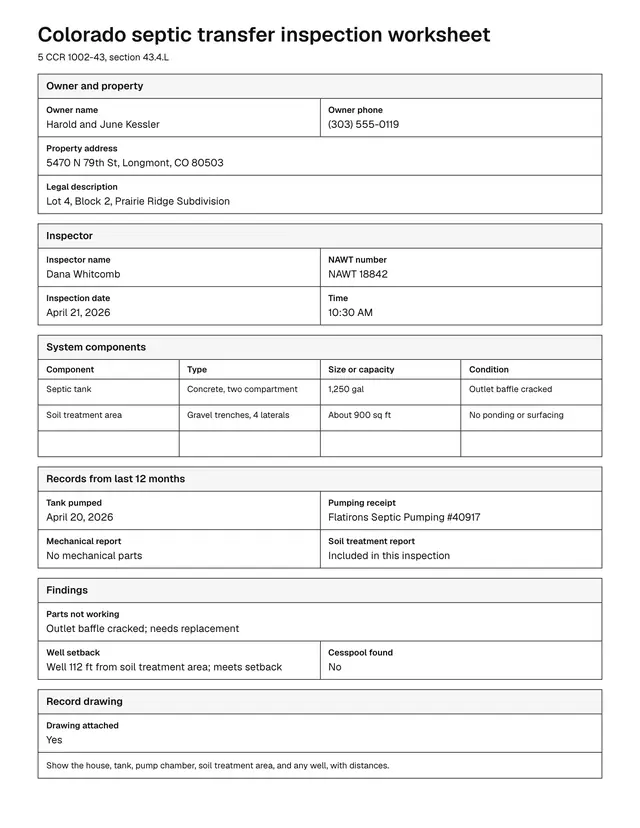
When a county does use 43.4.L, the inspector must be certified by NAWT, the National Association of Wastewater Technicians, or hold an equal certification the local agency approves. The report goes on a form the local agency supplies or approves. Here’s what Regulation 43 wants in it:
Owner and property. The owner’s name and contact info, the physical address, and the legal description.
Inspector and visit. Your name, your NAWT number, and the date and time of the inspection.
A record drawing. A drawing of the system as it sits on the lot.
Each component. The size, type, and capacity of the tank, the pump chamber, and the soil treatment area.
Recent work. A tank inspection from the last 12 months with the pumping receipt. Reports on mechanical parts and the soil treatment area from the last 12 months too.
Problems. Every part that isn’t working. Also whether the system crowds the setback from a well. If a buried well or snow keeps you from checking, the report has to say so.
One more rule with teeth: a cesspool can’t stay in service once a transfer inspection finds it.
A typical walk through the system
Regulation 43 says what the report must hold. How you gather it is up to you and your county. A typical visit goes like this.
Start with the paperwork. Pull the county permit file before you go. It often has the original design drawing, the tank size, and the soil treatment area layout. That saves you from guessing where the field is.
Find and open the tank. Dig to the lids if they aren’t at grade. Check the inlet and outlet baffles, look for cracks, and watch for water running back from the field into the tank, which can mean a saturated field.
Check anything with a motor. If there’s a pump chamber, test the pump and the high-water alarm. Note the alarm’s location so the next owner can find it.
Walk the soil treatment area. Look for wet spots, sewage on the surface, unusually green strips of grass, and anything parked or built on top of it. Measure to any well and to the house.
Draw it before you leave. The record drawing is part of the report, so sketch it on site with distances while the lids are still open.
How it plays out in Boulder County
Boulder County adopted its transfer rule in 2008, and its property transfer page spells out the steps. After a passing inspection, the seller gets a certificate from Boulder County Public Health. The fee is $500, paid to BCPH at 3450 Broadway in Boulder. It can take up to 10 business days, and the county won’t rush it.
If the system fails, the seller has three paths. Fix it under a permit before closing. Or get a conditional certificate by signing a notarized Agreement to Repair, which gives 365 days to finish repairs, or 2 years if the fix is hooking up to sewer.
Some sales are exempt. Examples are systems installed and finaled less than 5 years ago, transfers between spouses, transfers into a trust in the same name, and foreclosures.
What if the pumping receipt is too old?
This is the snag that blows up closing dates. The rule wants a tank inspection and pumping receipt from the last 12 months. If the seller last pumped 14 months ago, the tank gets pumped again before your report can finish. Ask for the receipt when the job is booked, not on site.
Noma specializes in the Colorado transfer of title inspection report (5 CCR 1002-43, section 43.4.L). Sellers or agents book online, you draw the record drawing on the job in the app, and the invoice goes out so it’s paid before closing. See how Noma books septic inspections.
Frequentlyaskedquestions
Send this document in minutes, not an afternoon.
Other states
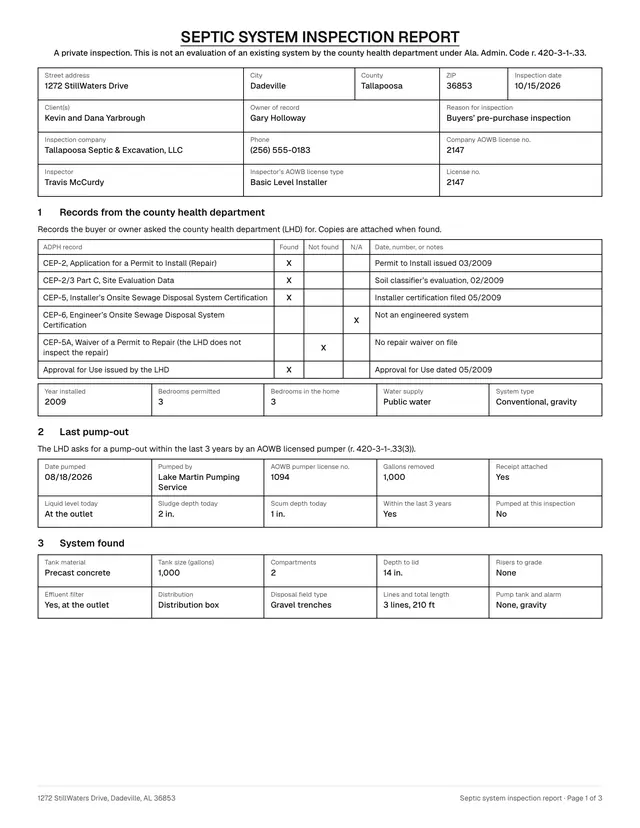
Septic inspection report templates- Alabama
Septic System Inspection Report
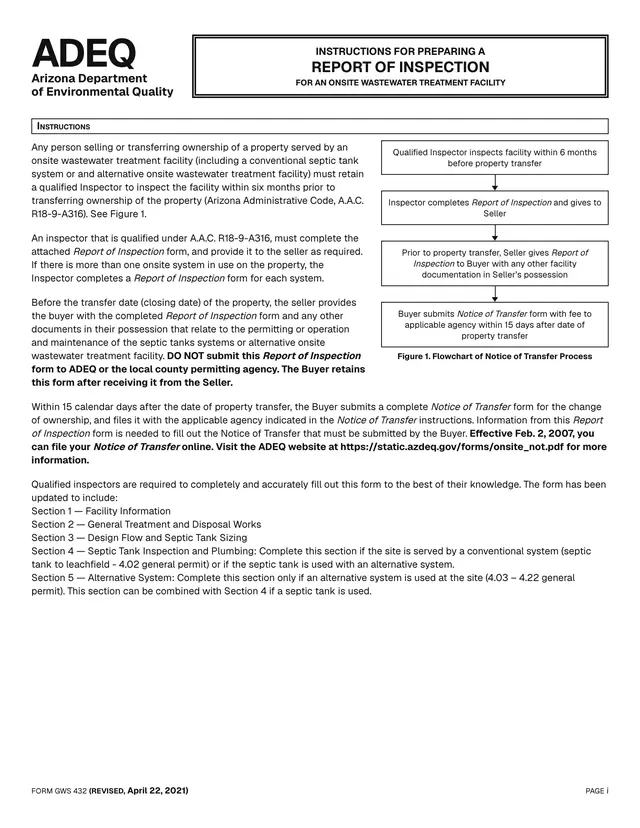
Record the tank or cesspool and what was checked. - ArizonaGWS 432
Report of Inspection for an Onsite Wastewater Treatment Facility
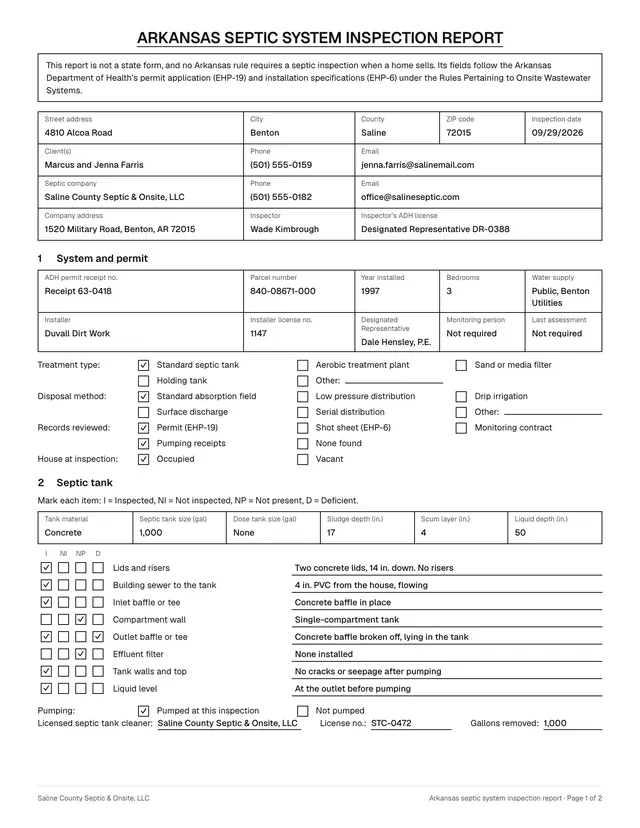
Record the tank or cesspool and what was checked. - Arkansas
Arkansas Septic System Inspection Report
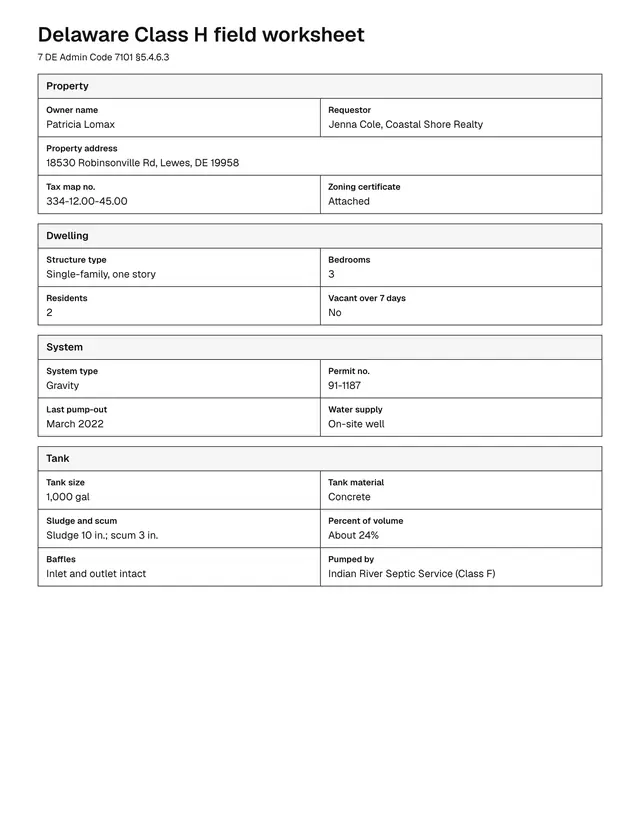
Record the tank or cesspool and what was checked. - Delaware
Delaware Class H septic inspection report
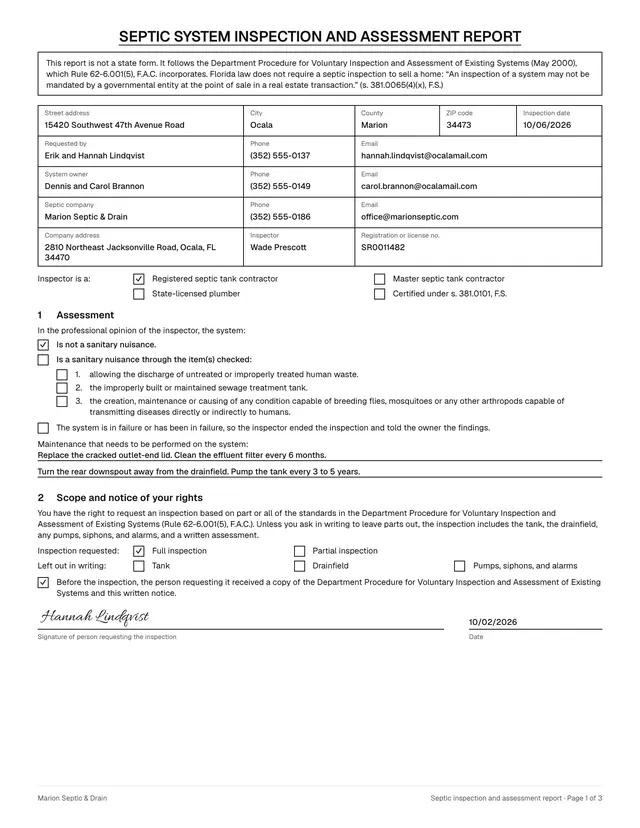
Record the tank or cesspool and what was checked. - Florida
Septic System Inspection and Assessment Report
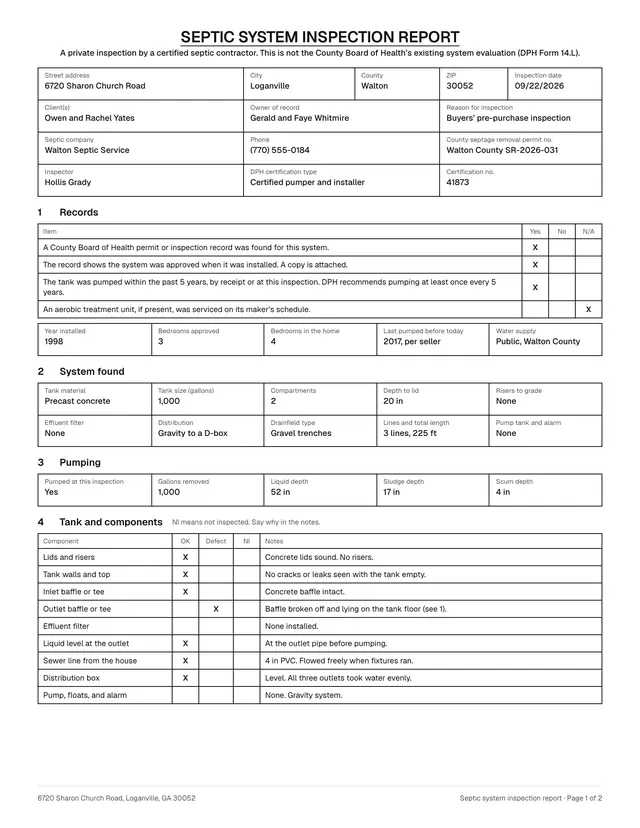
Record the tank or cesspool and what was checked. - Georgia
Septic System Inspection Report
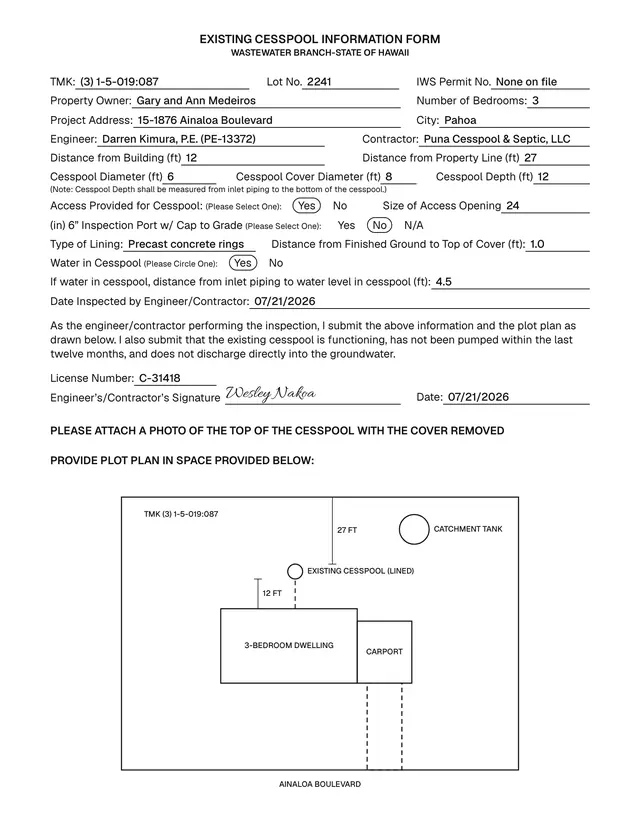
Record the tank or cesspool and what was checked. - Hawaii
Existing Cesspool Information Form
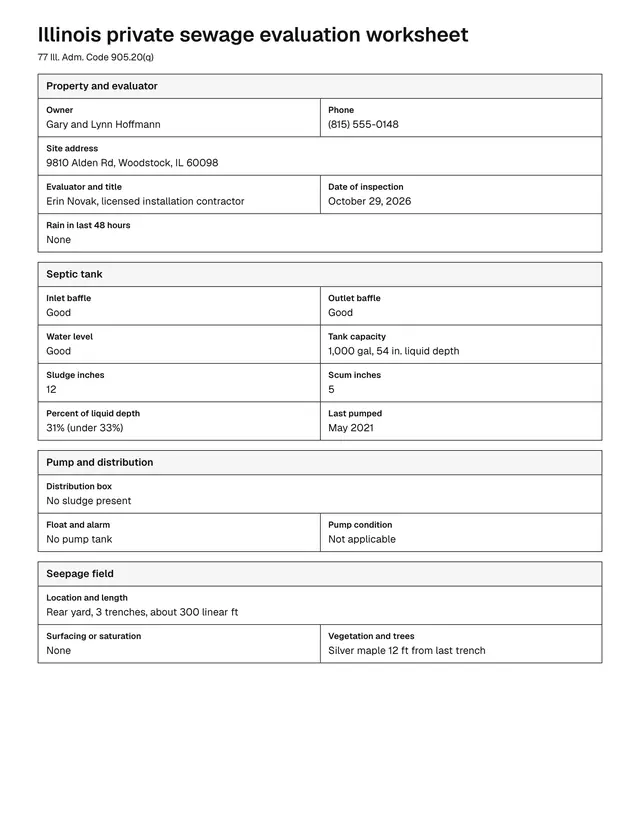
Record the tank or cesspool and what was checked. - Illinois
Illinois private sewage disposal system evaluation
Record the tank or cesspool and what was checked. - Indiana
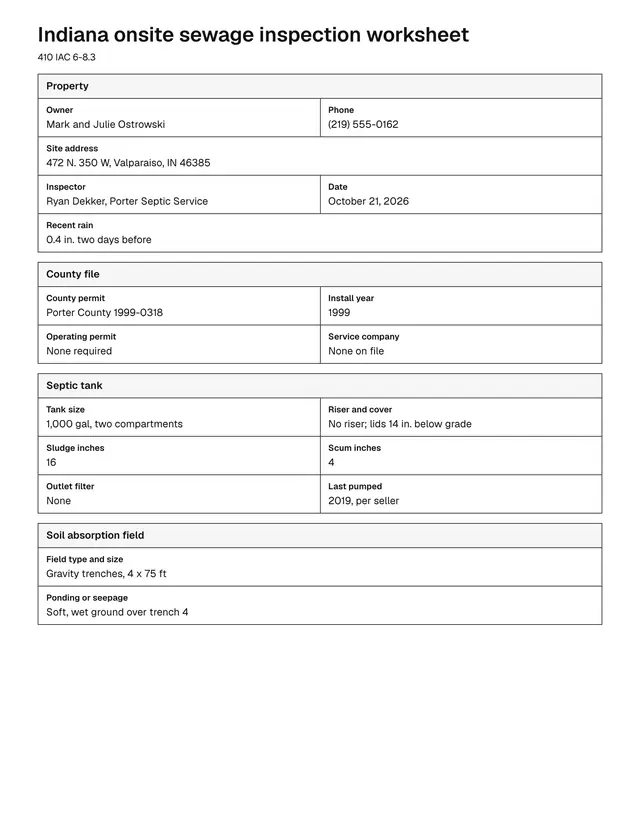
Indiana onsite sewage system inspection report
Record the tank or cesspool and what was checked. - Iowa
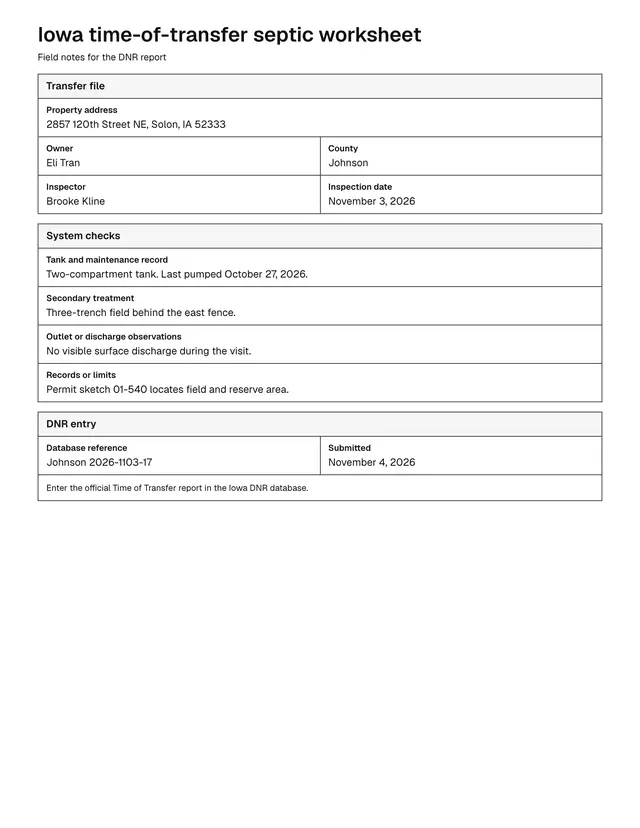
Iowa time-of-transfer septic worksheet
Record the tank or cesspool and what was checked. - Kentucky
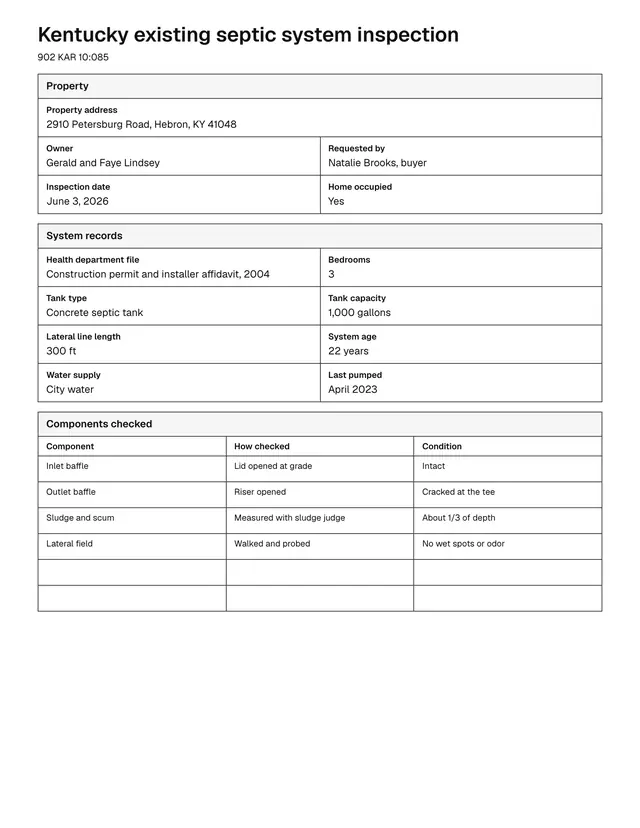
Kentucky existing septic system inspection
Record the tank or cesspool and what was checked. - Louisiana
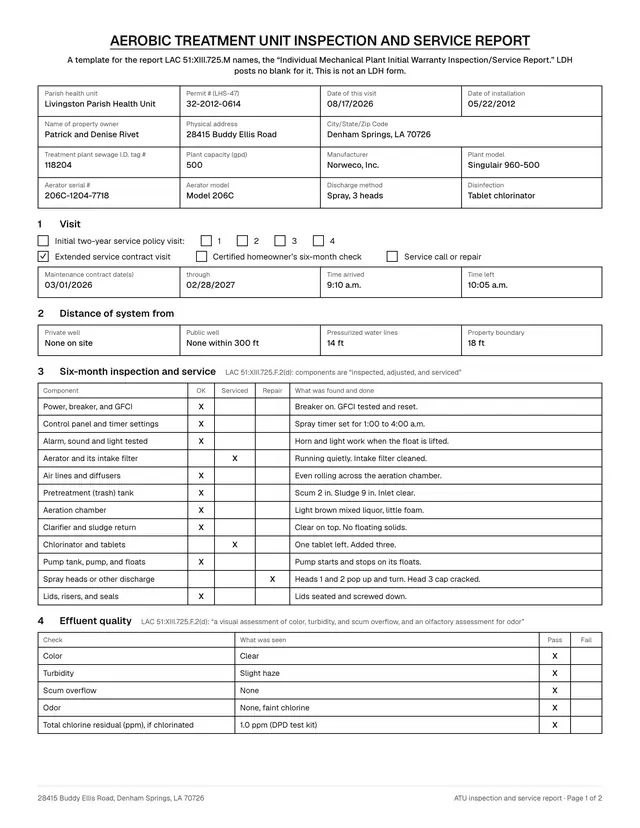
Aerobic Treatment Unit Inspection and Service Report
Record the tank or cesspool and what was checked. - Maryland
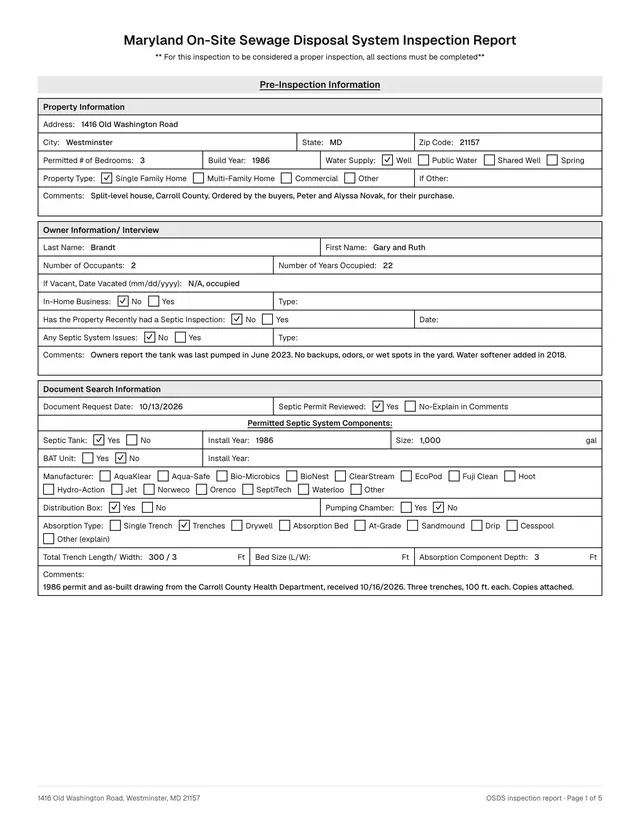
Maryland On-Site Sewage Disposal System Inspection Report
Record the tank or cesspool and what was checked. - Massachusetts
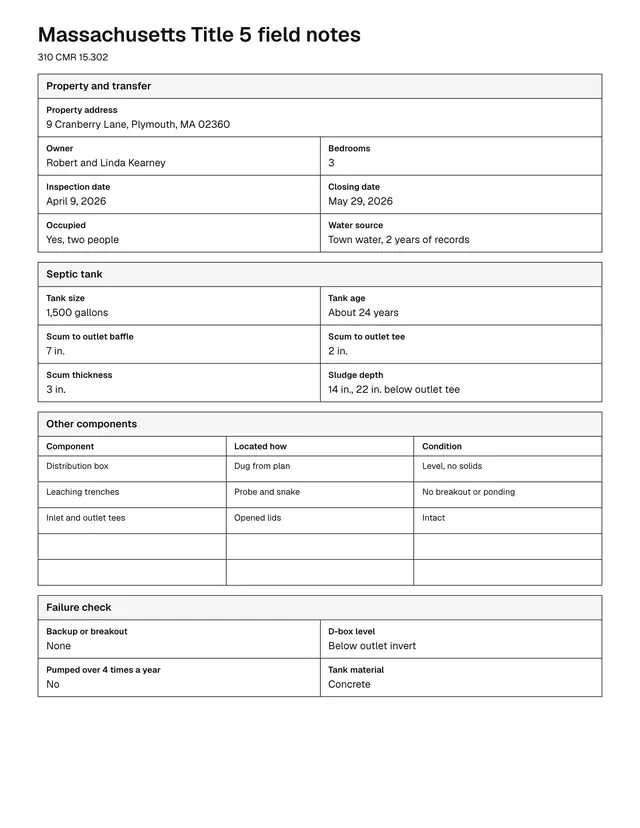
Massachusetts Title 5 inspection report (310 CMR 15.301)
Record the tank or cesspool and what was checked. - Michigan
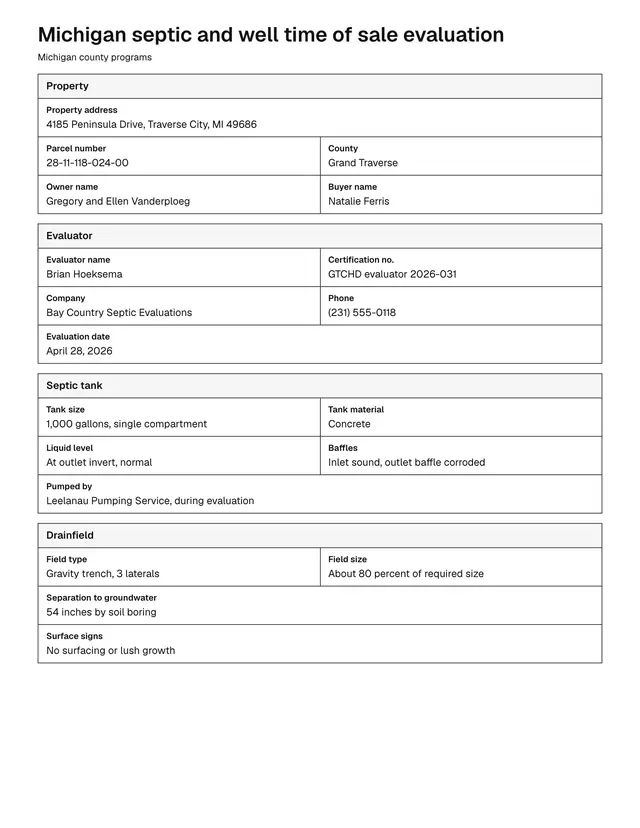
Michigan septic time of sale evaluation
Record the tank or cesspool and what was checked. - Minnesota
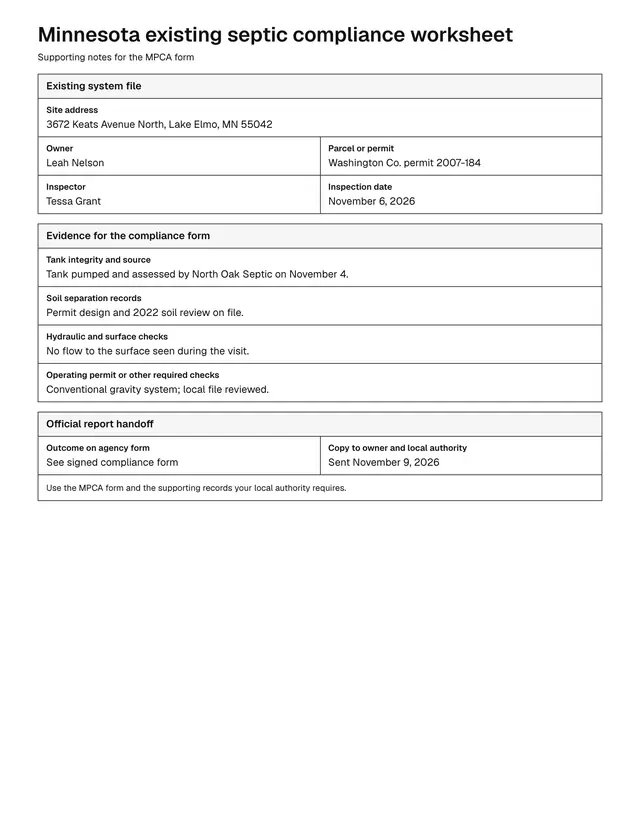
Minnesota existing septic compliance worksheet
Record the tank or cesspool and what was checked. - Mississippi
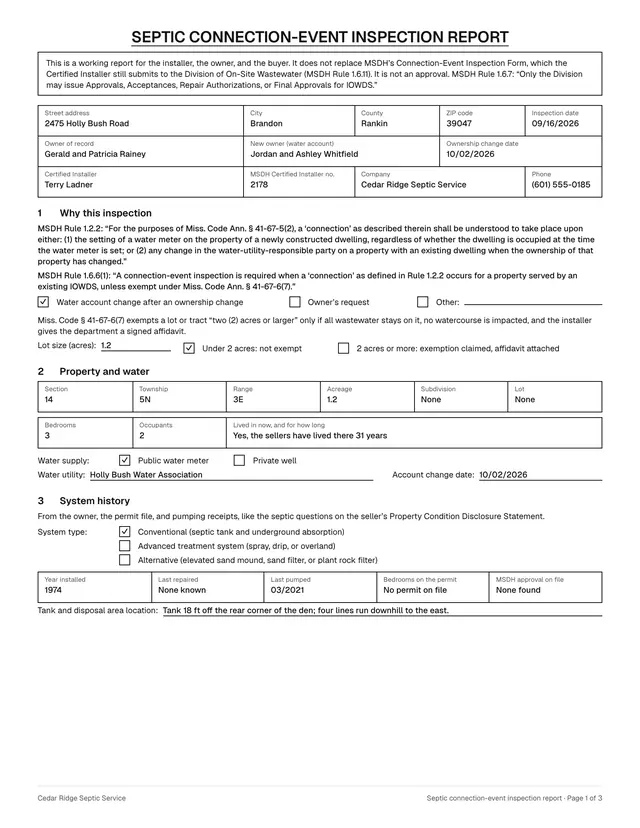
Septic Connection-Event Inspection Report
Record the tank or cesspool and what was checked. - Missouri
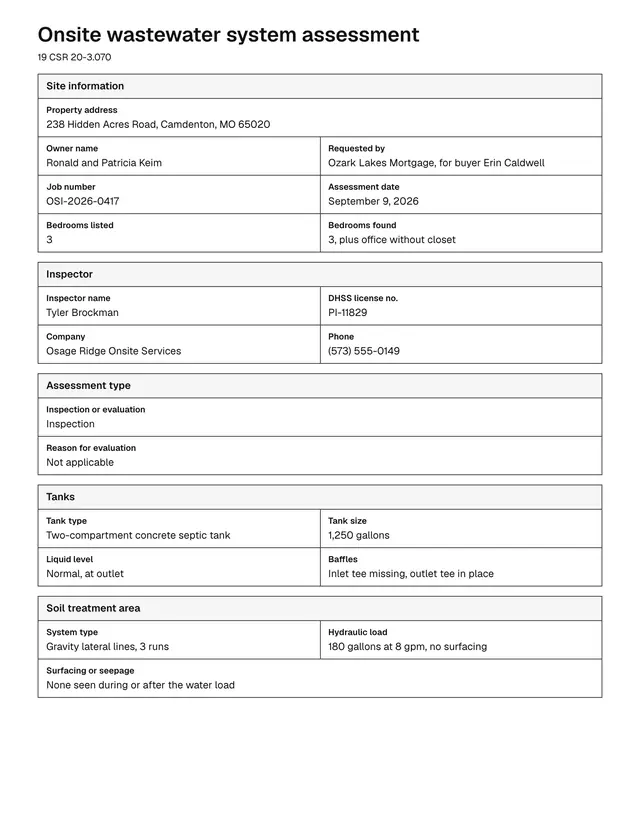
Missouri onsite wastewater inspection and evaluation report
Record the tank or cesspool and what was checked. - Nevada
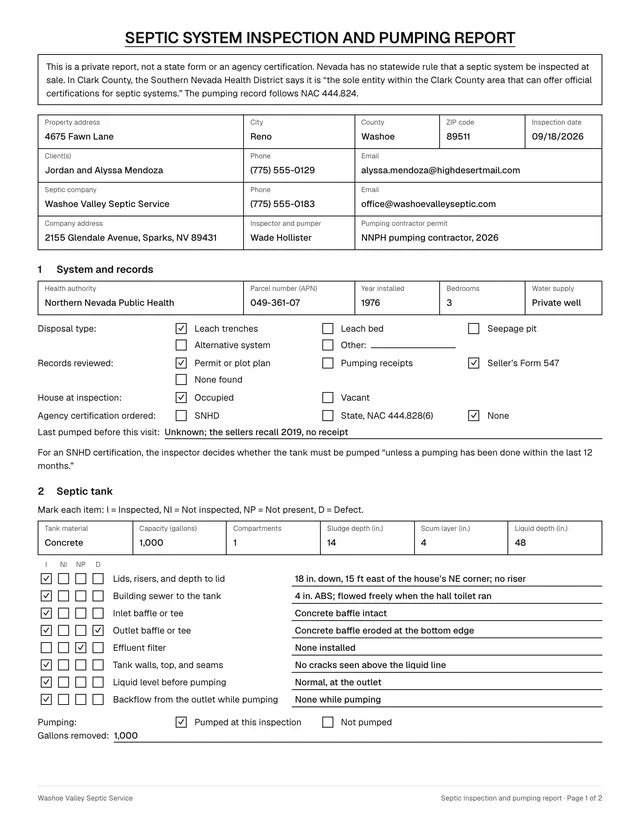
Septic System Inspection and Pumping Report
Record the tank or cesspool and what was checked. - New JerseyN.J.A.C. 7:9A Appendix F
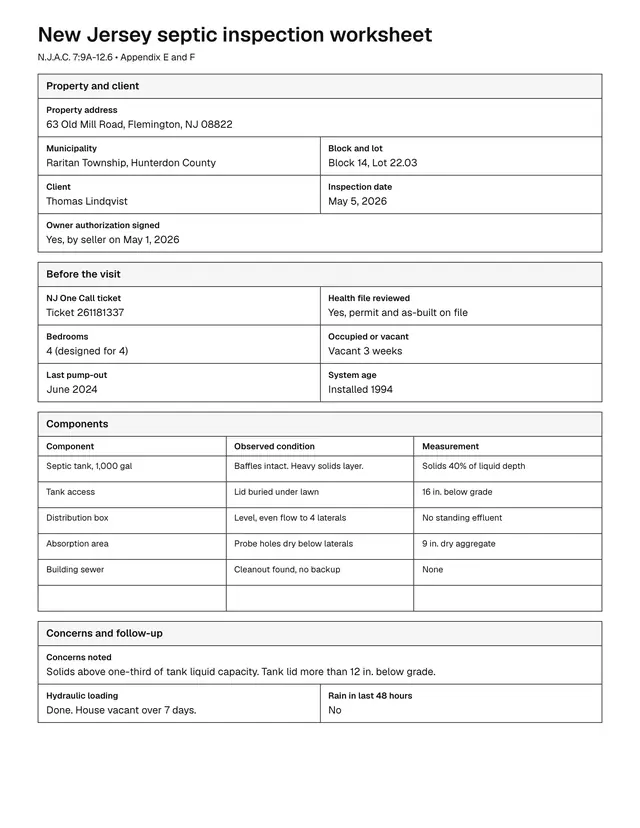
New Jersey septic inspection report (Appendix F Onsite System Inspection Form)
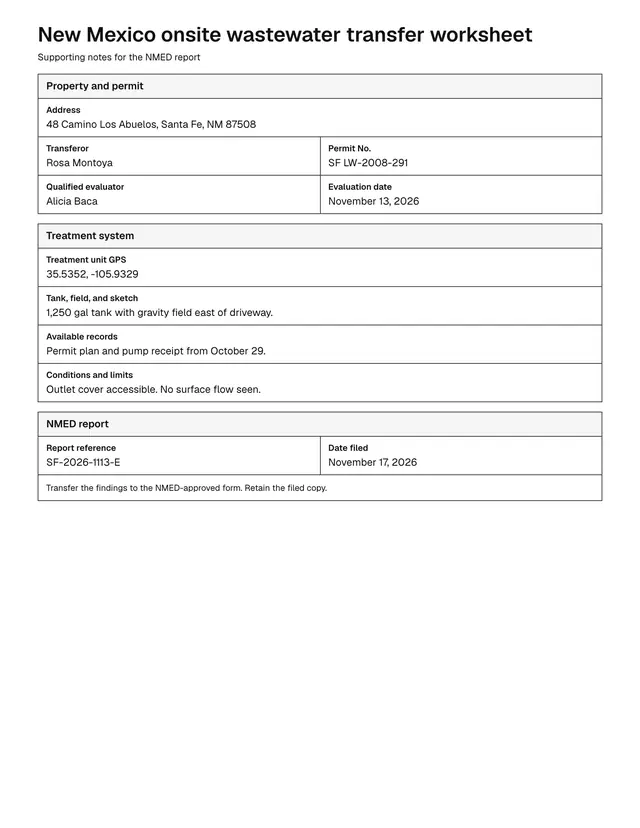
Record the tank or cesspool and what was checked. - New Mexico
New Mexico onsite wastewater transfer worksheet
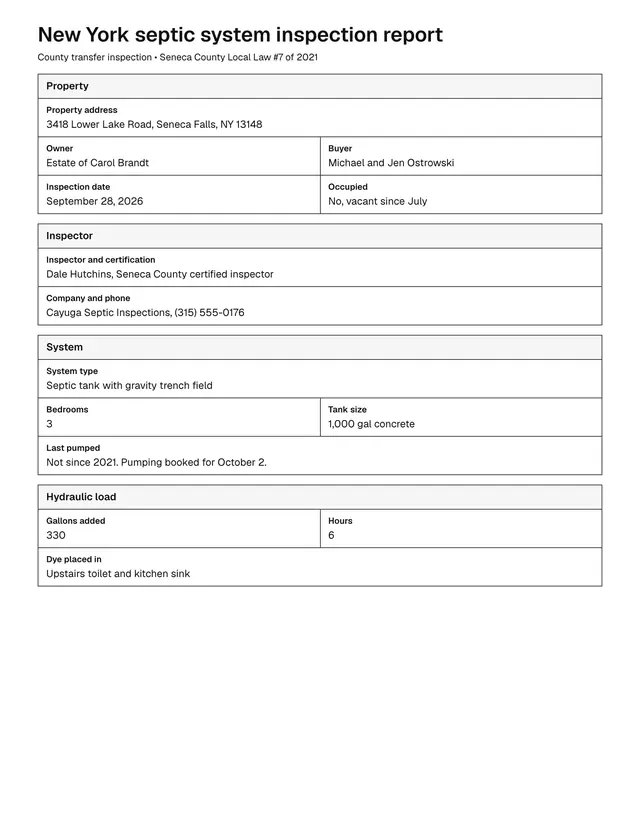
Record the tank or cesspool and what was checked. - New York
New York septic system inspection report (county transfer inspections)
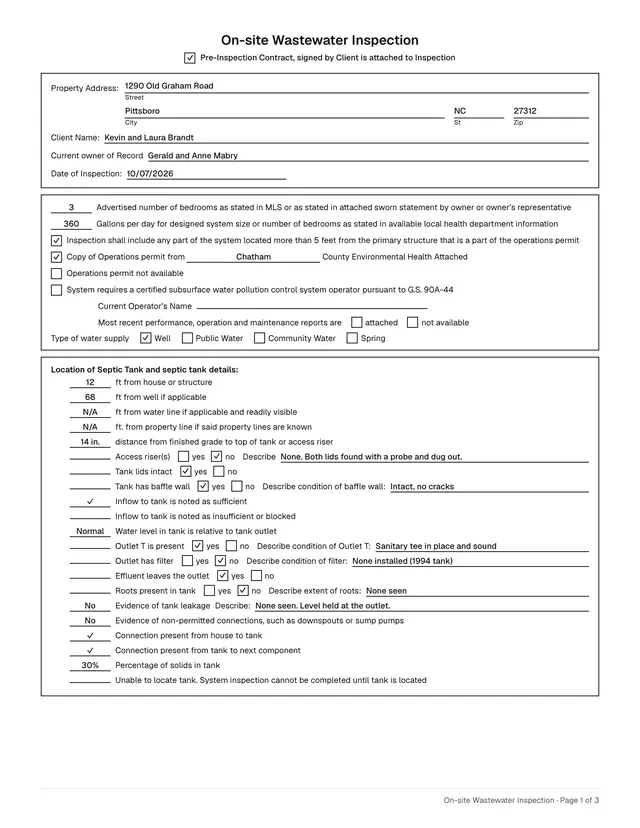
Record the tank or cesspool and what was checked. - North Carolina
On-site Wastewater Inspection
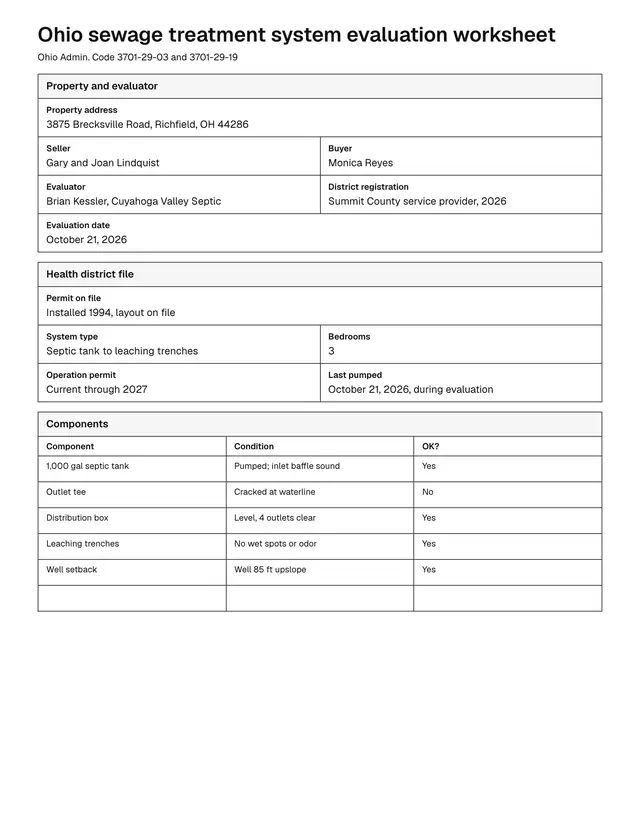
Record the tank or cesspool and what was checked. - Ohio
Ohio sewage treatment system evaluation for property transfer
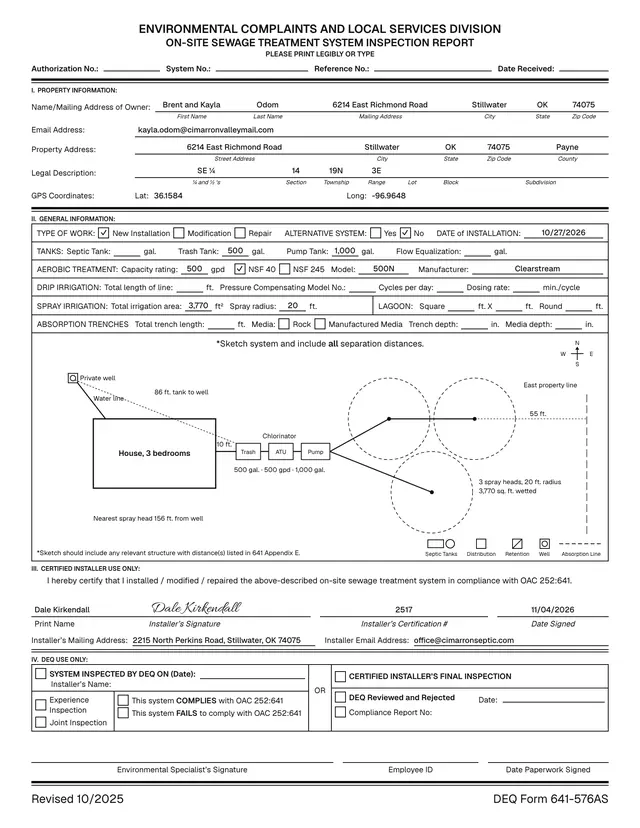
Record the tank or cesspool and what was checked. - OklahomaDEQ Form 641-576AS
On-Site Sewage Treatment System Inspection Report
Record the tank or cesspool and what was checked. - Oregon
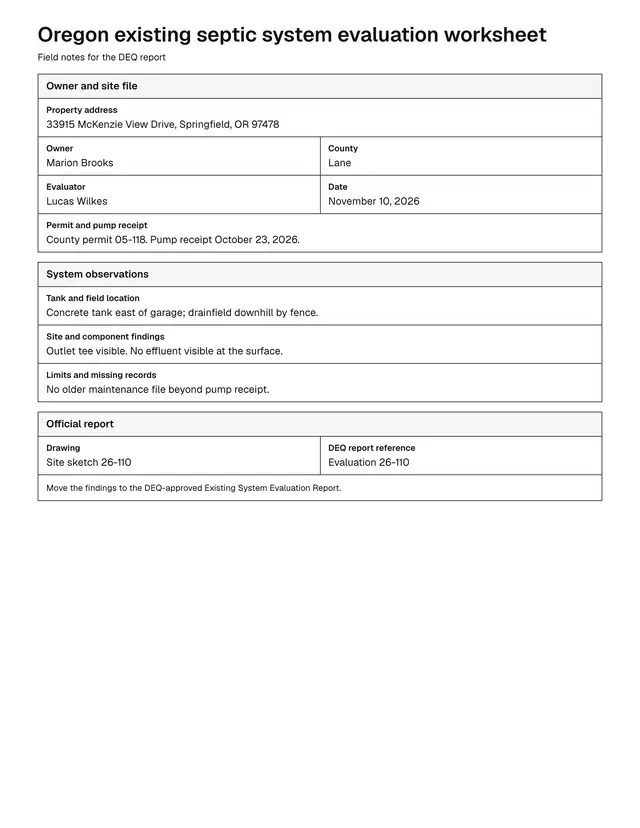
Oregon existing septic system evaluation worksheet
Record the tank or cesspool and what was checked. - Pennsylvania
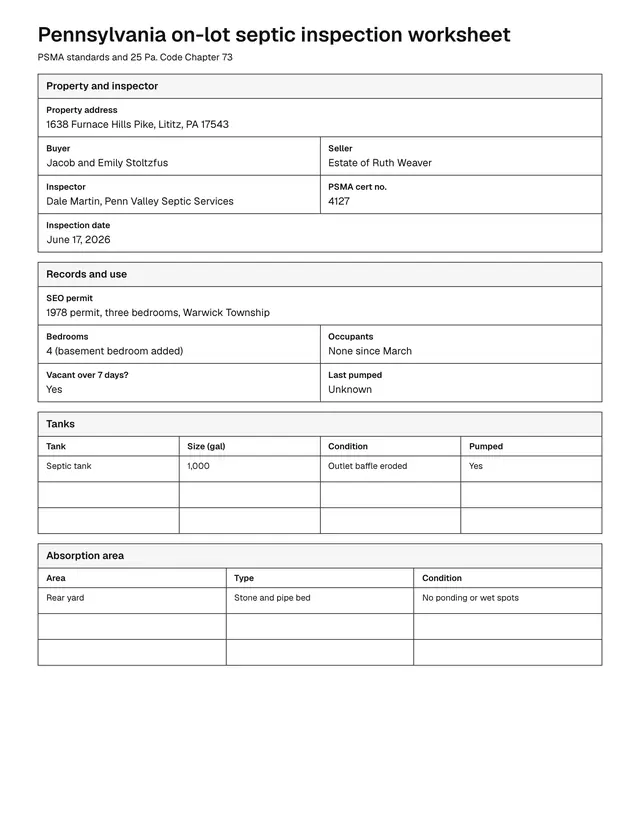
Pennsylvania on-lot septic system inspection (PSMA)
Record the tank or cesspool and what was checked. - South Carolina
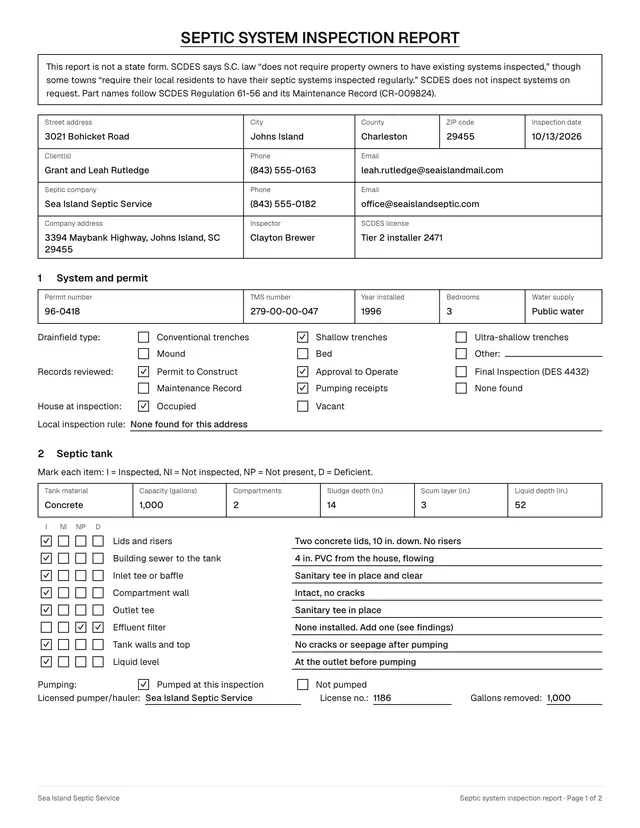
Septic System Inspection Report
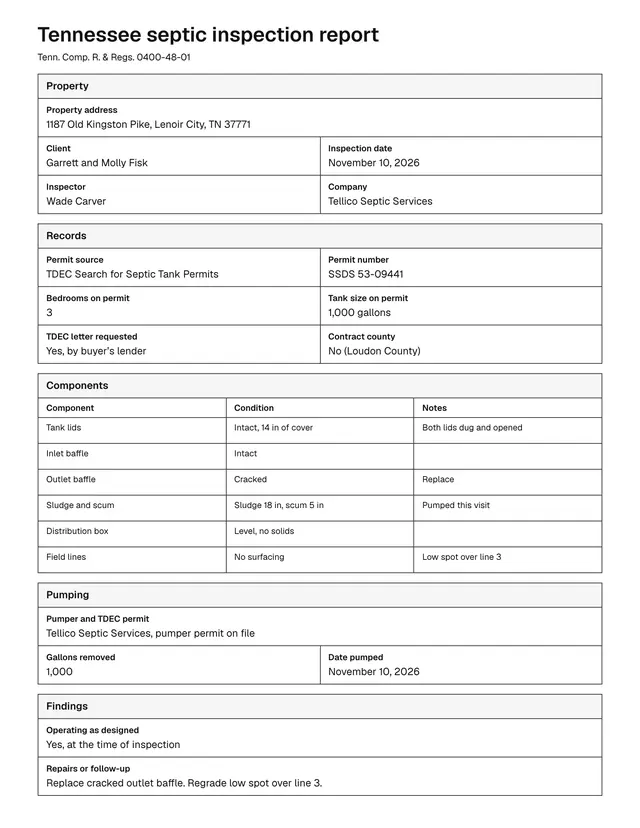
Record the tank or cesspool and what was checked. - Tennessee
Tennessee septic inspection report
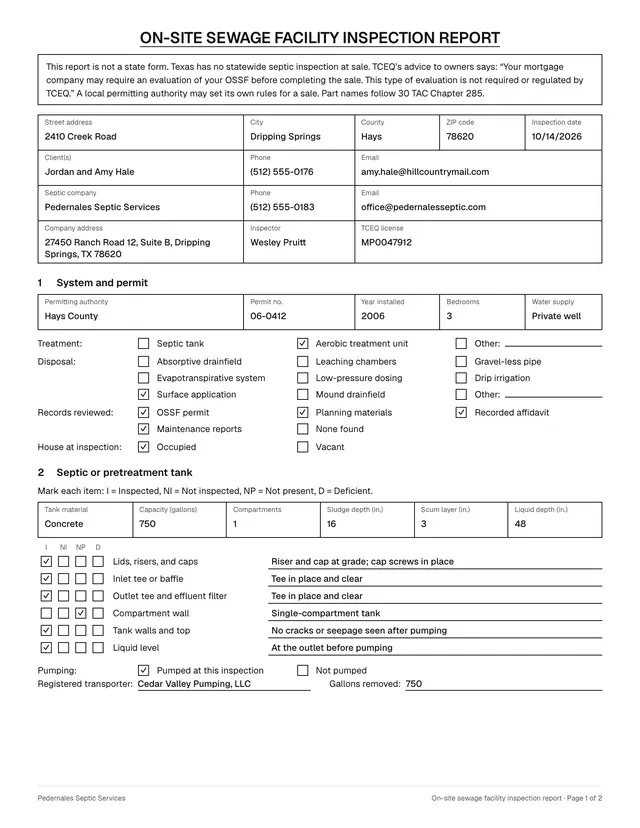
Record the tank or cesspool and what was checked. - Texas
On-Site Sewage Facility Inspection Report
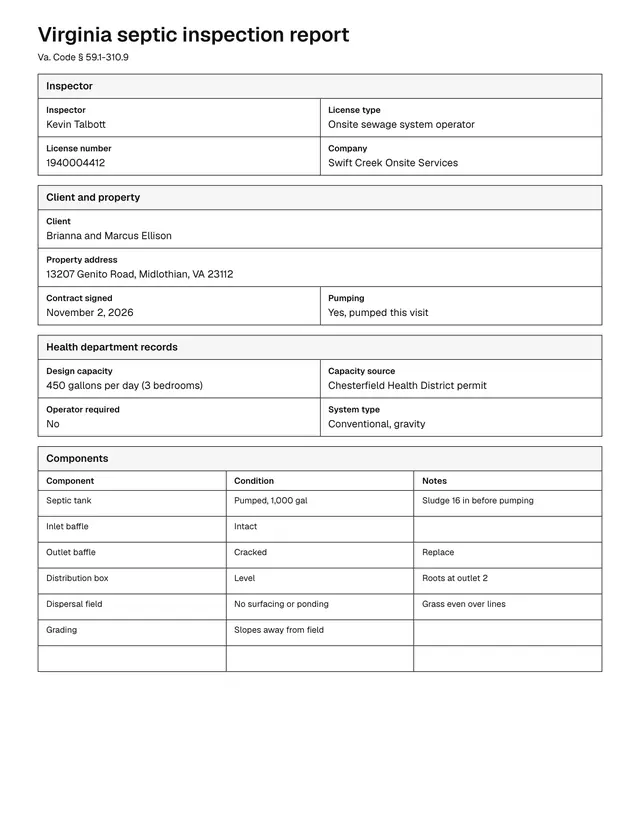
Record the tank or cesspool and what was checked. - Virginia
Virginia septic inspection report
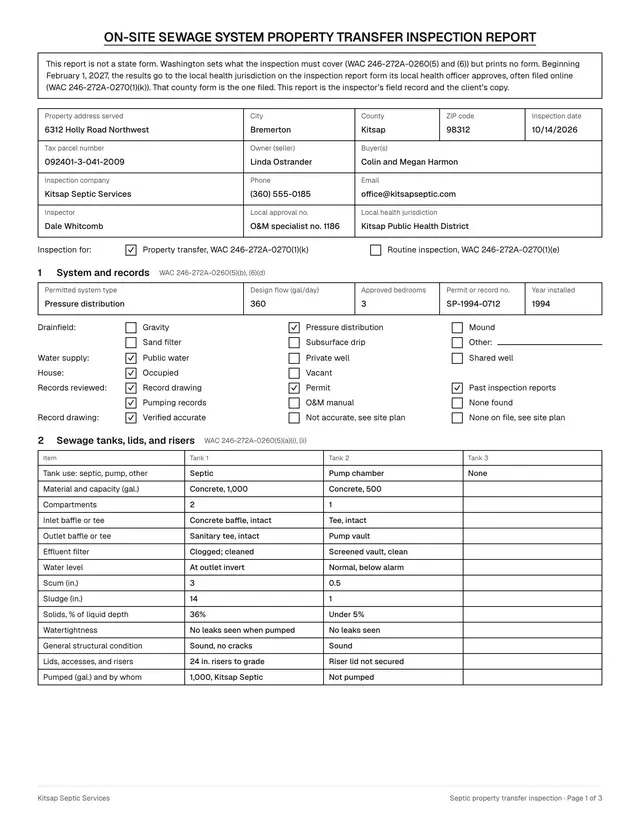
Record the tank or cesspool and what was checked. - Washington
On-Site Sewage System Property Transfer Inspection Report
Record the tank or cesspool and what was checked. - Wisconsin
Wisconsin POWTS maintenance worksheet
Record the tank or cesspool and what was checked.