Existing Cesspool Information Form
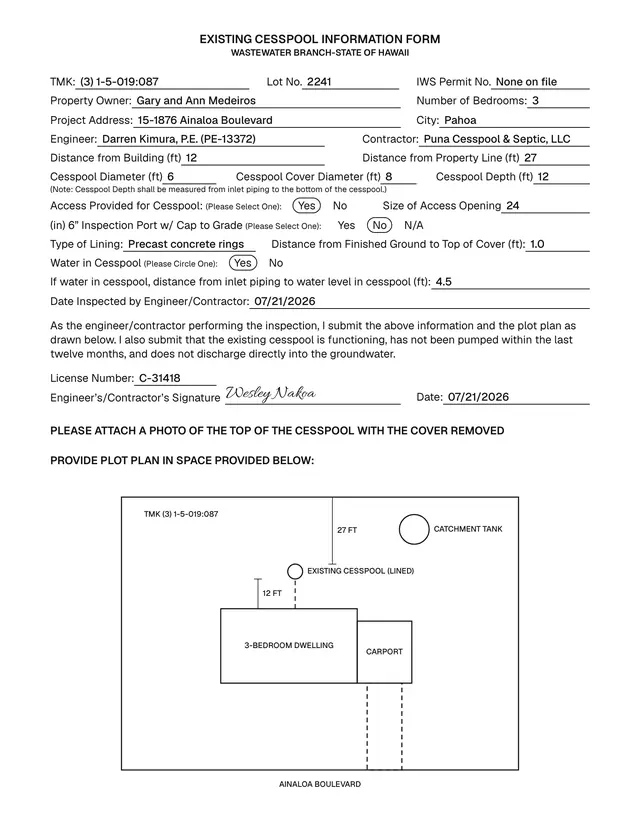
The Hawaii Department of Health’s cesspool card, copied word for word, that a licensed engineer, contractor, plumber, or architect fills out and signs after opening the cesspool.
At a glance
- Required by
- HAR § 11-62-36(b)
- Filled out by
- Licensed engineer, contractor, plumber, or architect
- Sent to
- DOH Wastewater Branch
- Due
- When DOH asks for one
Completed example
Download PDFWhat is the cesspool card?
It’s the Department of Health’s one-page Existing Cesspool Information Form. It records where the cesspool sits, how wide and deep it is, how it’s lined, and how to reach it, with a plot plan and a photo of the top with the cover off. In Hawaii, this is the inspection report for a cesspool, not a septic tank and drainfield.
Under HAR § 11-62-36(b), the card “shall be completed and signed by a licensed engineer, contractor, plumber, or architect.” DOH’s card has no form number or revision date. The DOH PDF is the copy of record; ours copies it word for word so you can type into it.
When do you need one?
When DOH asks. The rule says “The director may require a cesspool card from an owner whose cesspool has no cesspool card on file with the department.” The DOH Wastewater Branch FAQ says that when a property has a cesspool and the branch has no records, it will require one.
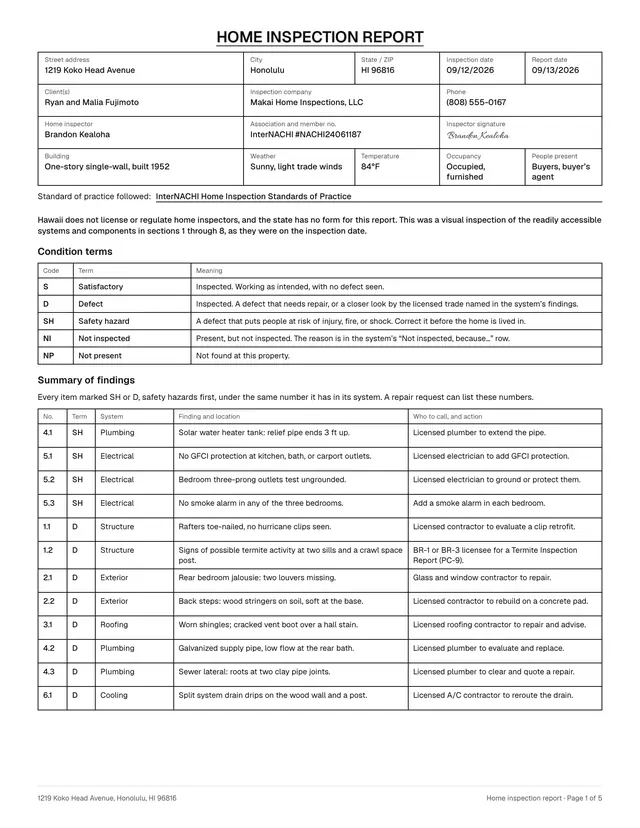
No Hawaii rule requires a cesspool inspection when a house sells. But HRS § 342D-72 says every cesspool not granted an exemption must be upgraded, converted, or connected to a sewer before January 1, 2050. DOH warns that a new owner is “held accountable for bringing the system into compliance,” with fines up to $60,000 per offense. That’s why buyers ask for a card when a home inspection report turns up a cesspool.
How to fill it out
Start with the TMK. Fill in the tax map key, lot number, owner, address, and bedrooms, then the engineer and contractor. Most old cesspools have no IWS permit number, so say so instead of leaving the line empty.
Open it and measure. Record the distances to the building and the property line, the cesspool and cover diameters, and the depth, which DOH says “shall be measured from inlet piping to the bottom of the cesspool.” Then circle the access, port, and water answers, and fill in the lining and cover depth.
Check the pumping record before you sign. The certification says the cesspool is functioning, “has not been pumped within the last twelve months,” and doesn’t discharge directly into the groundwater. If it was pumped last month, you can’t sign that truthfully.
Attach the photo and draw the plot plan. Take the photo with the cover off, as the card asks. Sketch the house, the cesspool, the property lines, and the two distances in the space at the bottom, then send it all to the Wastewater Branch.
Do you have to fill it in by hand?
DOH’s file is a flat PDF with nothing to type into, so most cards get filled in with a pen on a tailgate. Then someone retypes the measurements into an invoice and an email to the buyer’s agent.
Noma specializes in the Existing Cesspool Information Form (HAR § 11-62-36). Noma runs the jobs, scheduling, invoices, and online payments for inspection companies, so the cesspool visit is booked, done, and paid for in one place. See how Noma runs inspection jobs.
Frequentlyaskedquestions
Send this document in minutes, not an afternoon.
Other states
Septic inspection report templates- Alabama
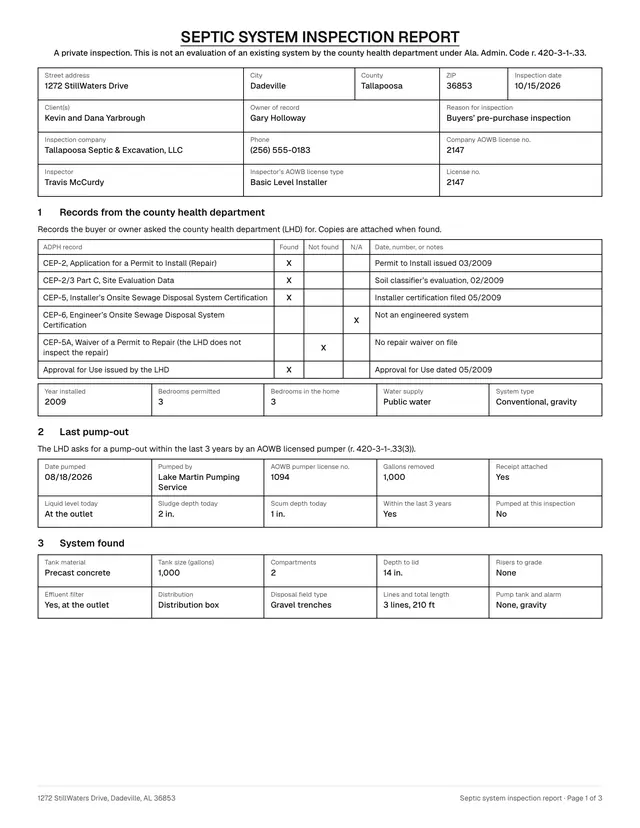
Septic System Inspection Report
Record the tank or cesspool and what was checked. - ArizonaGWS 432
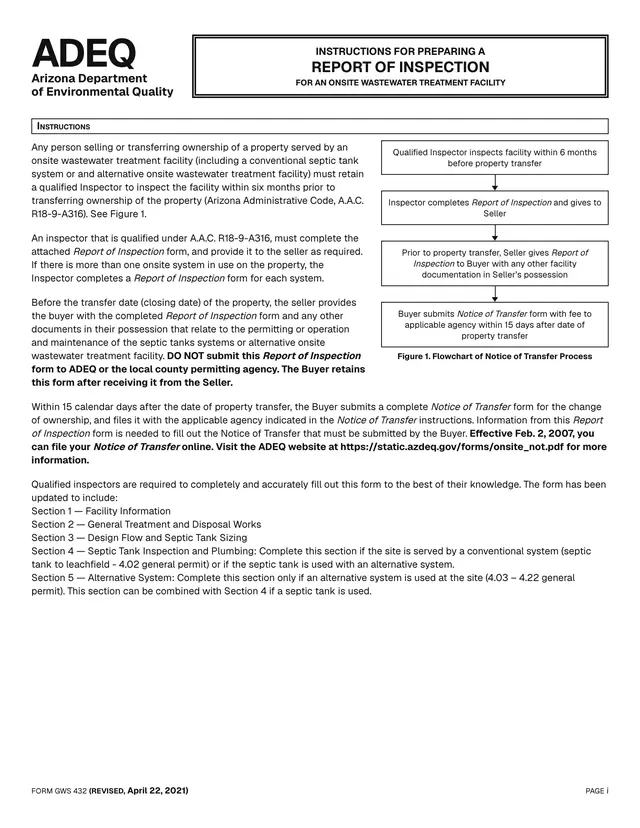
Report of Inspection for an Onsite Wastewater Treatment Facility
Record the tank or cesspool and what was checked. - Arkansas
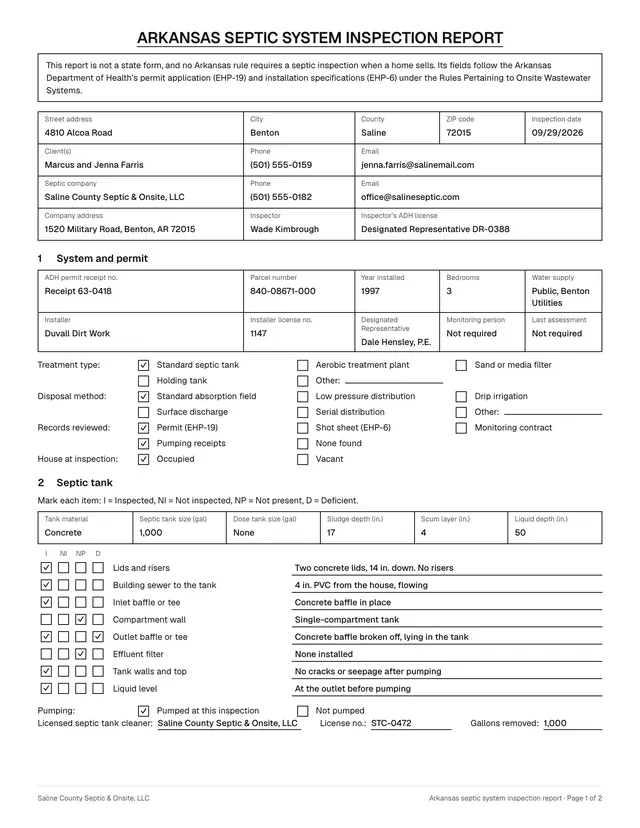
Arkansas Septic System Inspection Report
Record the tank or cesspool and what was checked. - Colorado
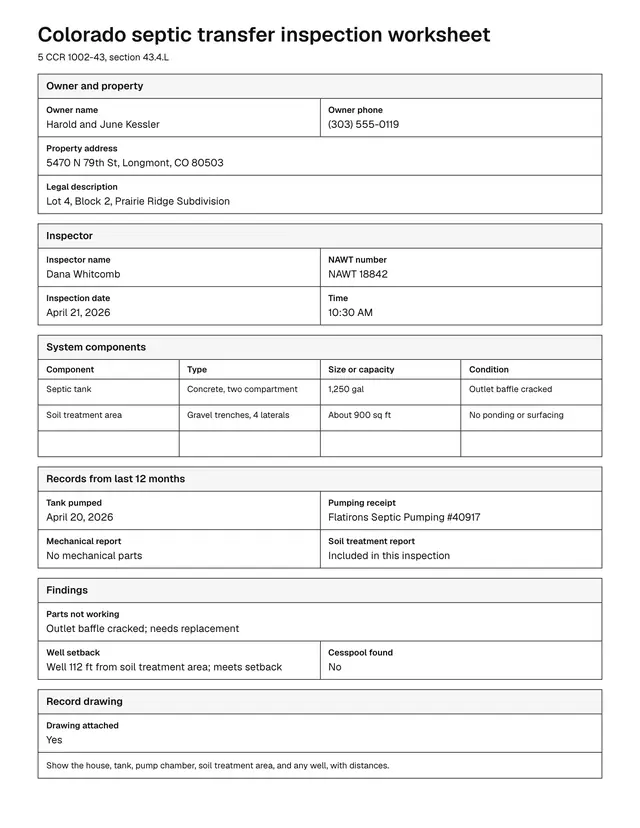
Colorado septic transfer of title inspection report (Regulation 43)
Record the tank or cesspool and what was checked. - Delaware
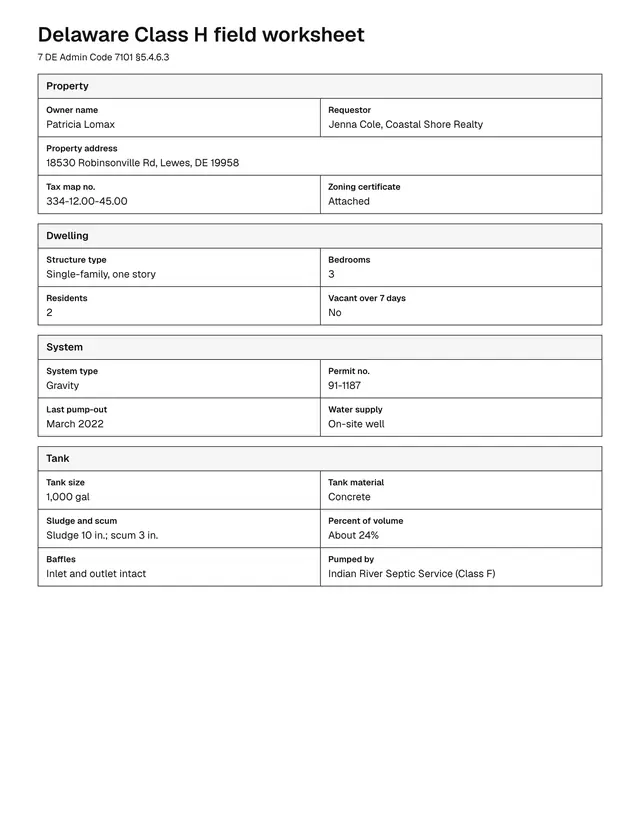
Delaware Class H septic inspection report
Record the tank or cesspool and what was checked. - Florida
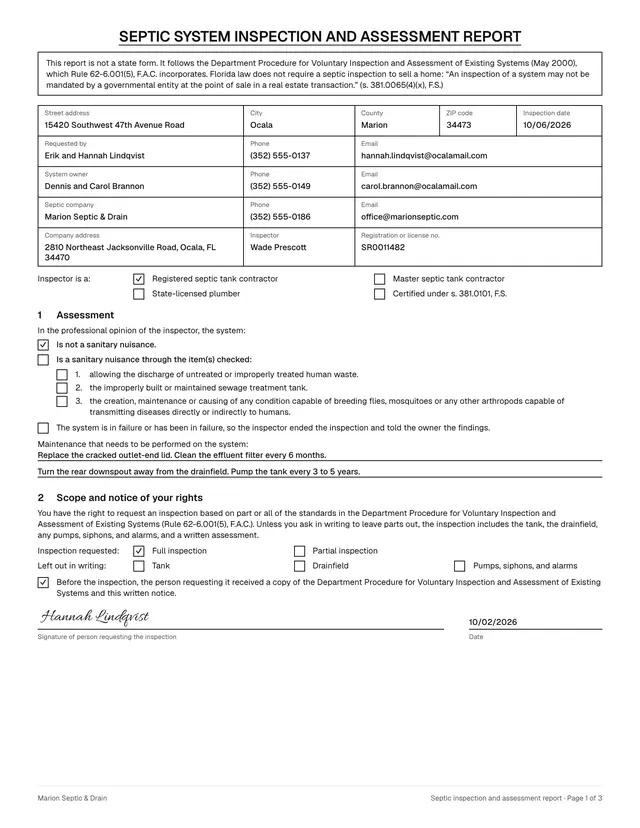
Septic System Inspection and Assessment Report
Record the tank or cesspool and what was checked. - Georgia
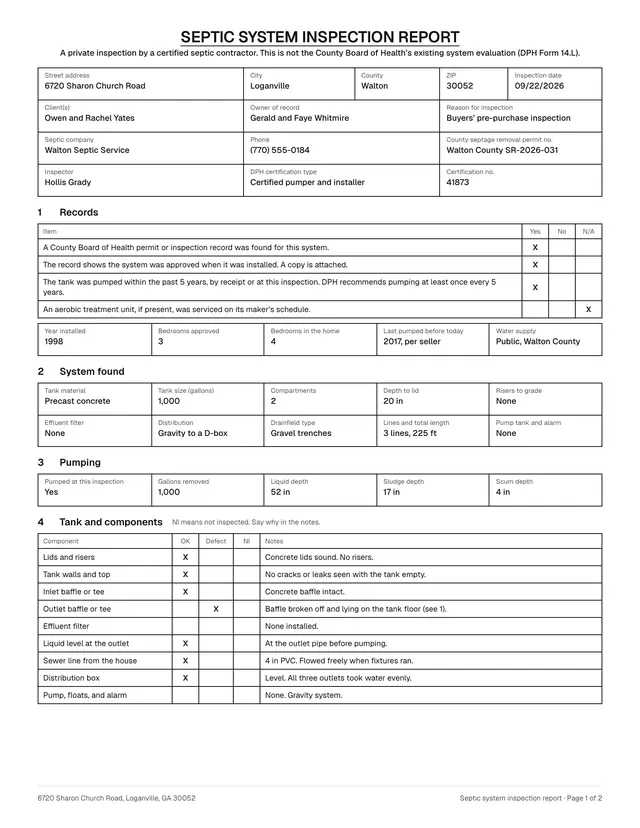
Septic System Inspection Report
Record the tank or cesspool and what was checked. - Illinois
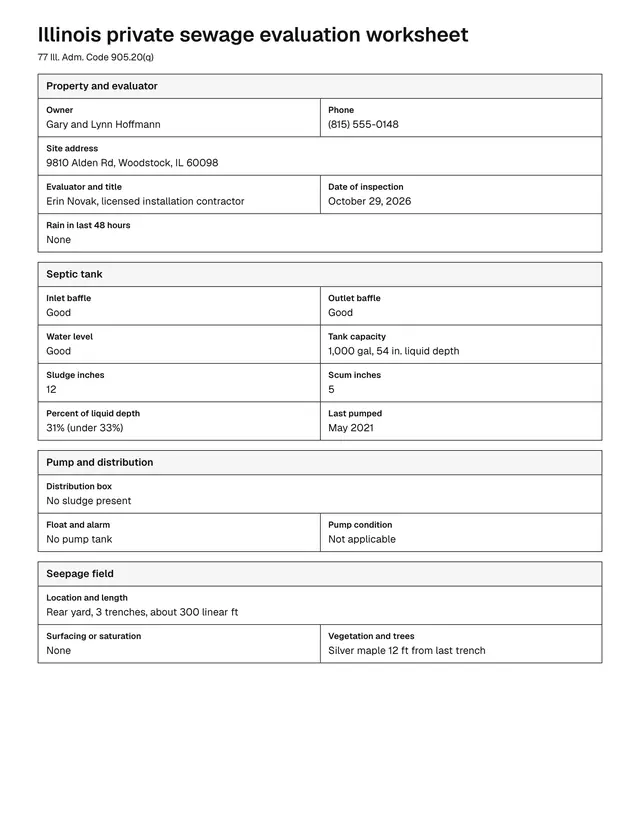
Illinois private sewage disposal system evaluation
Record the tank or cesspool and what was checked. - Indiana
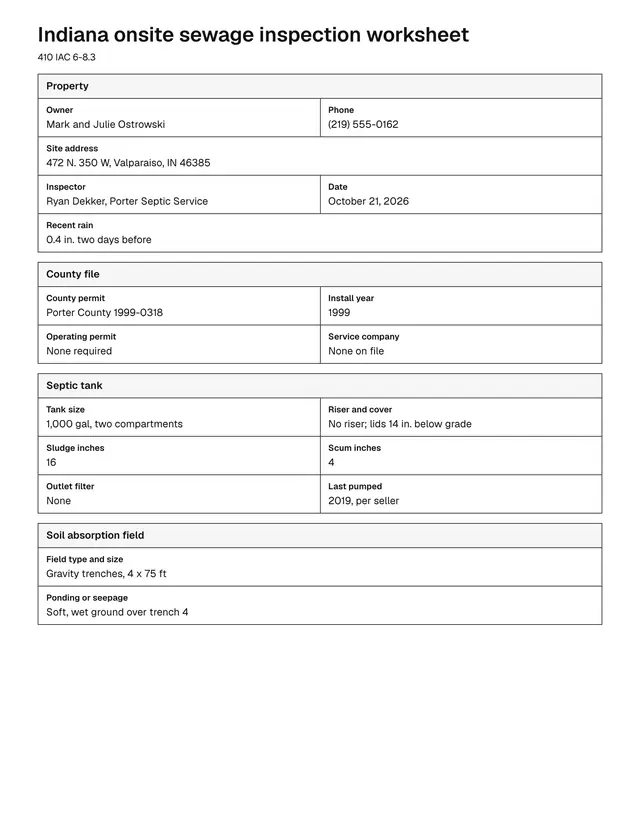
Indiana onsite sewage system inspection report
Record the tank or cesspool and what was checked. - Iowa
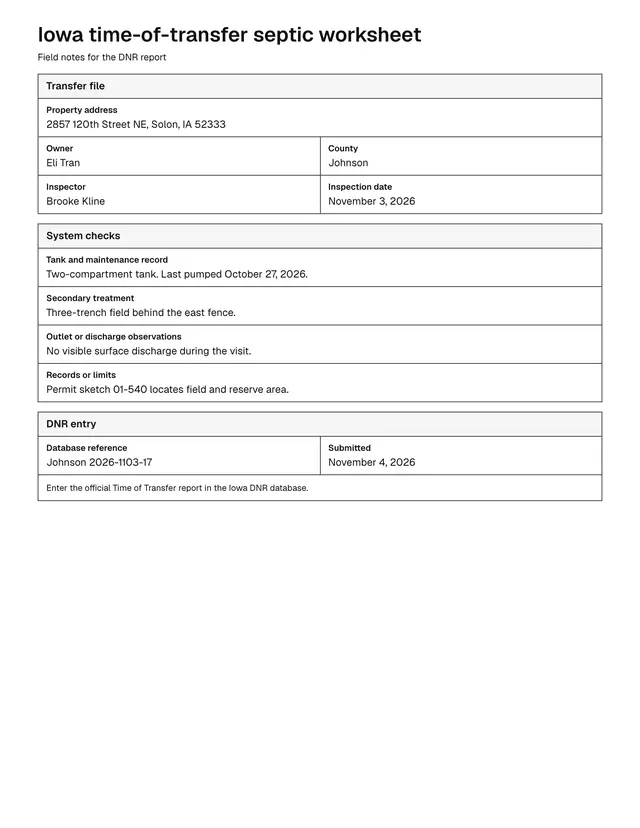
Iowa time-of-transfer septic worksheet
Record the tank or cesspool and what was checked. - Kentucky
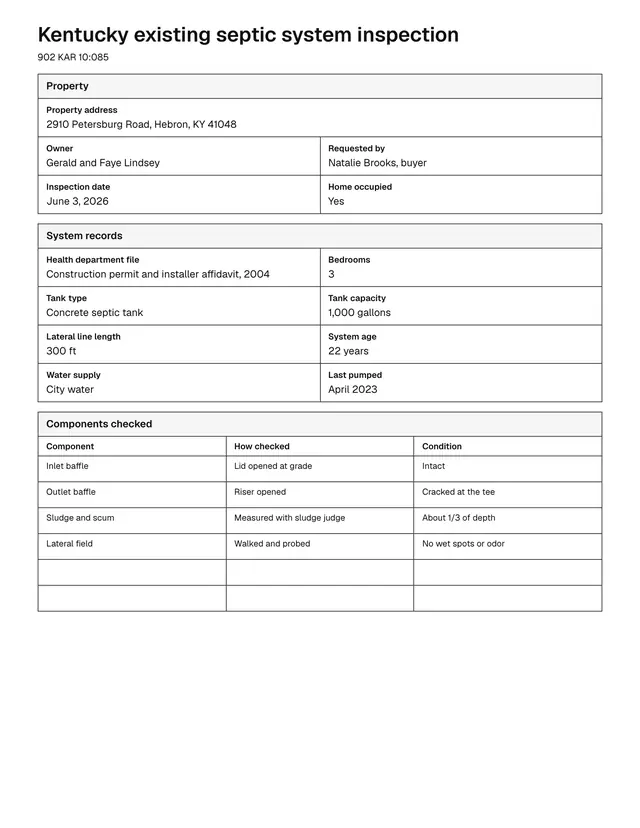
Kentucky existing septic system inspection
Record the tank or cesspool and what was checked. - Louisiana
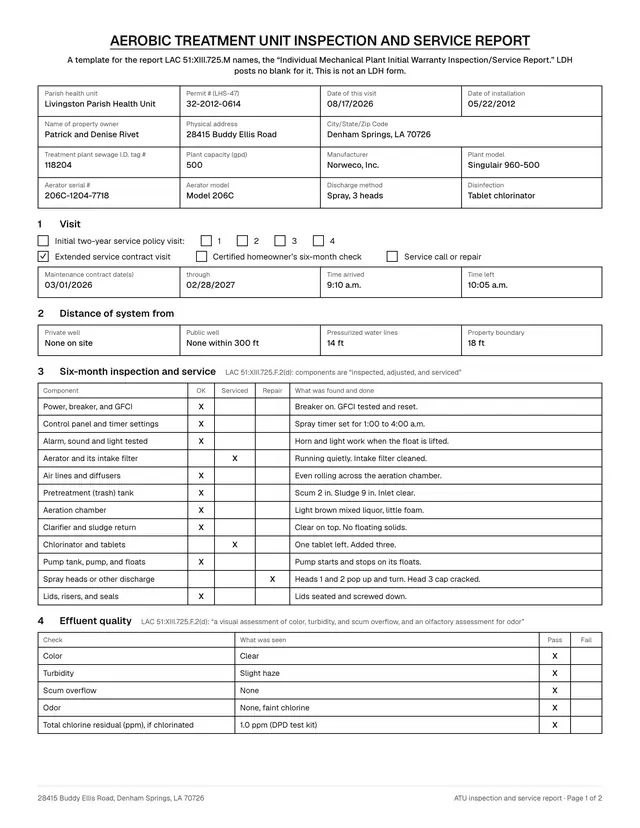
Aerobic Treatment Unit Inspection and Service Report
Record the tank or cesspool and what was checked. - Maryland
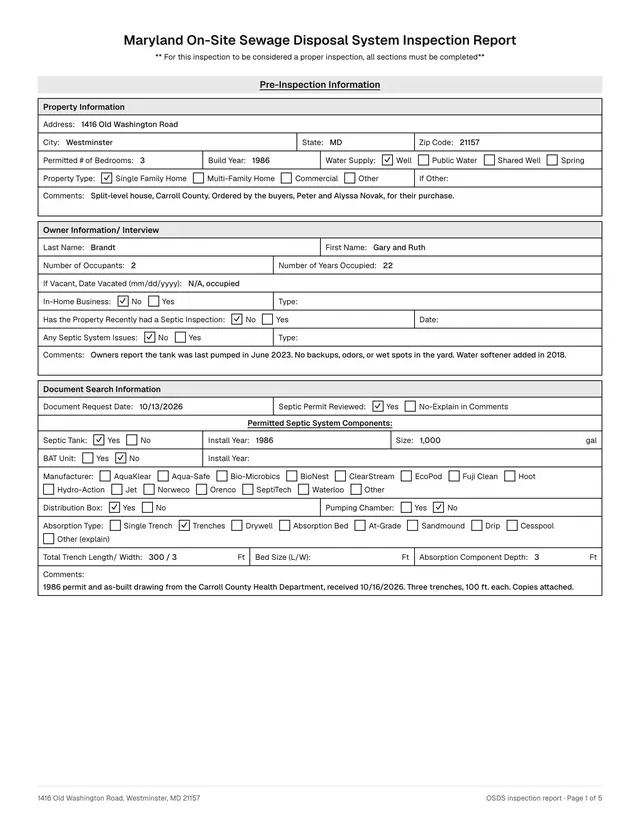
Maryland On-Site Sewage Disposal System Inspection Report
Record the tank or cesspool and what was checked. - Massachusetts
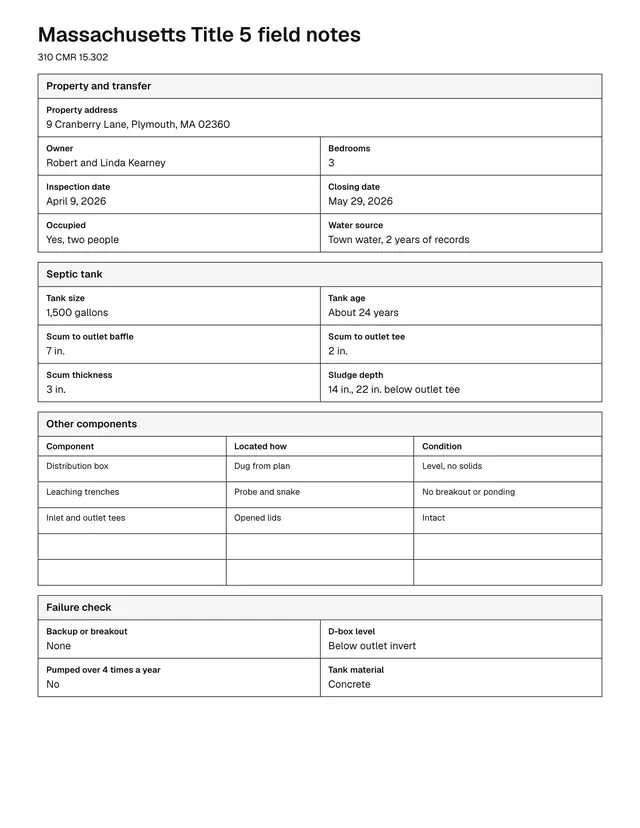
Massachusetts Title 5 inspection report (310 CMR 15.301)
Record the tank or cesspool and what was checked. - Michigan
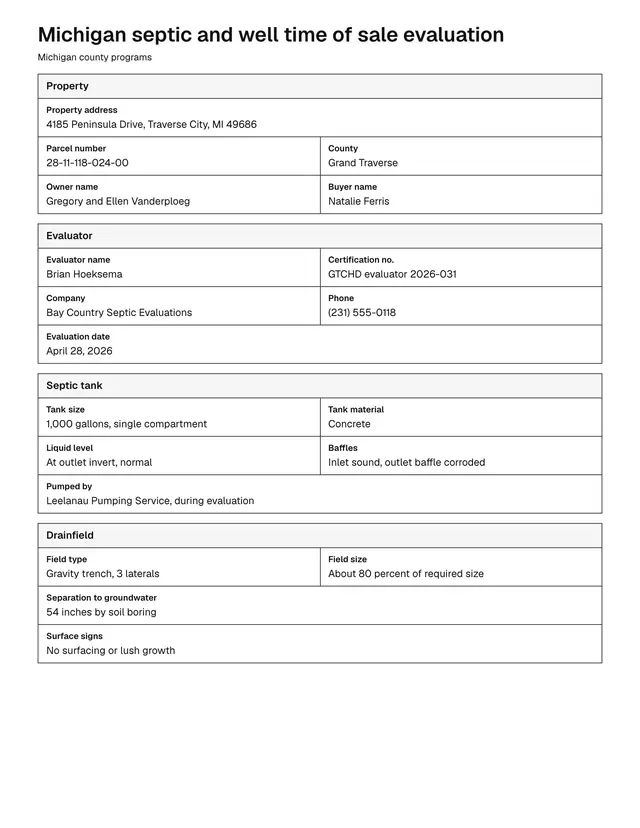
Michigan septic time of sale evaluation
Record the tank or cesspool and what was checked. - Minnesota
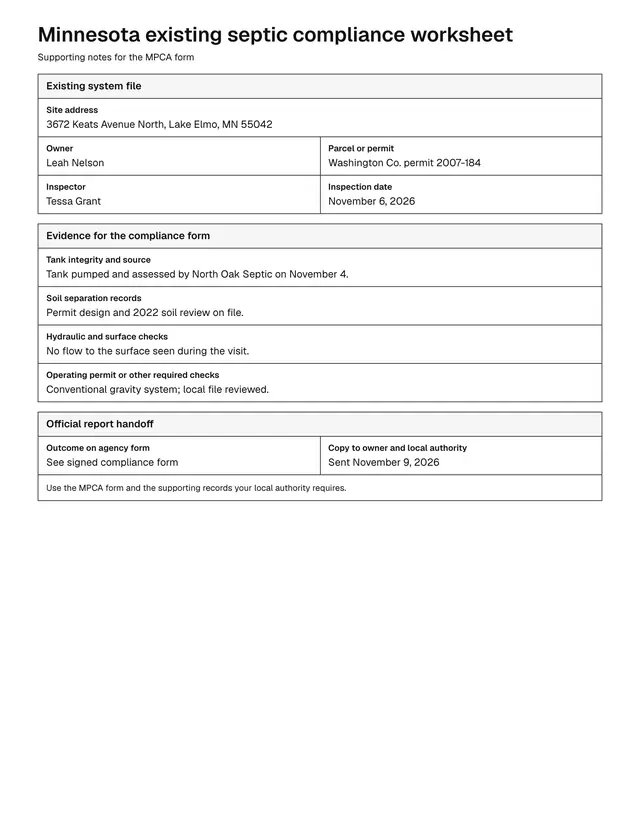
Minnesota existing septic compliance worksheet
Record the tank or cesspool and what was checked. - Mississippi
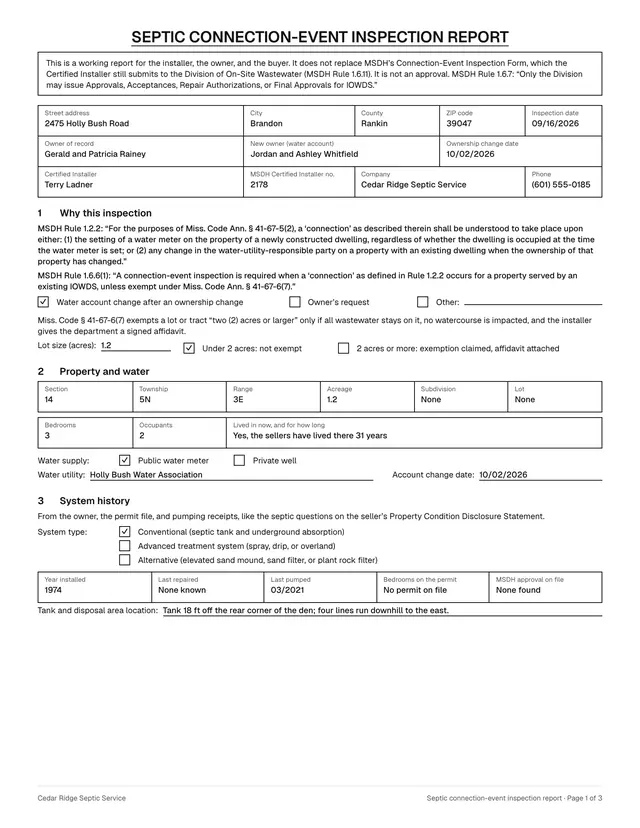
Septic Connection-Event Inspection Report
Record the tank or cesspool and what was checked. - Missouri
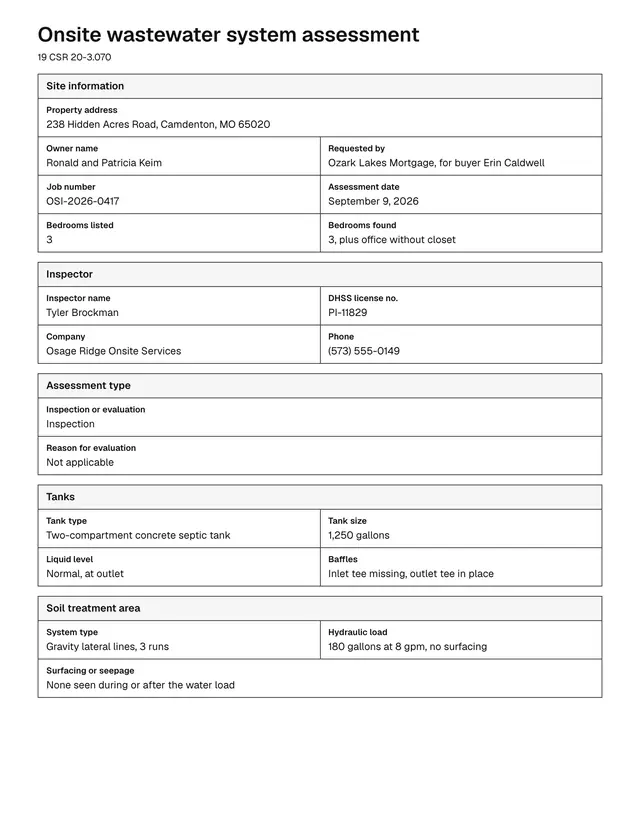
Missouri onsite wastewater inspection and evaluation report
Record the tank or cesspool and what was checked. - Nevada
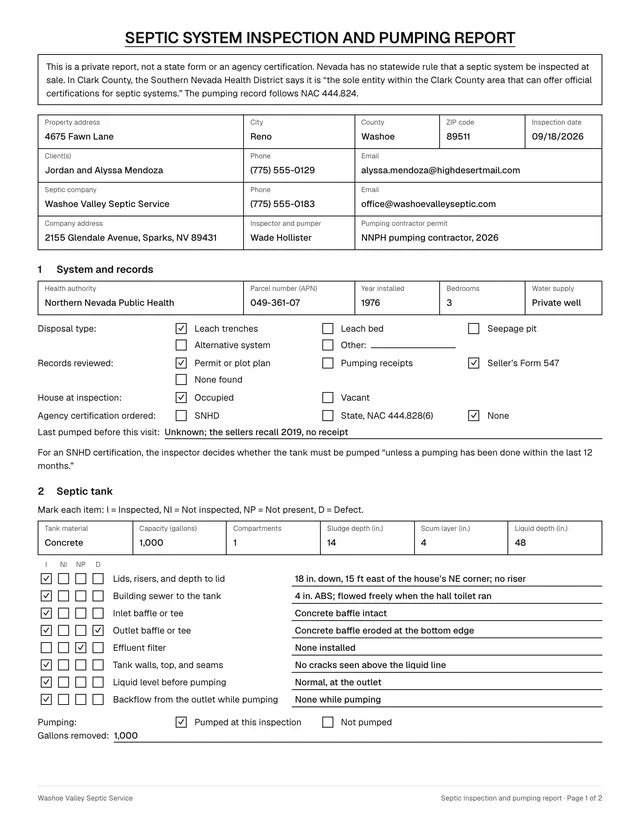
Septic System Inspection and Pumping Report
Record the tank or cesspool and what was checked. - New JerseyN.J.A.C. 7:9A Appendix F
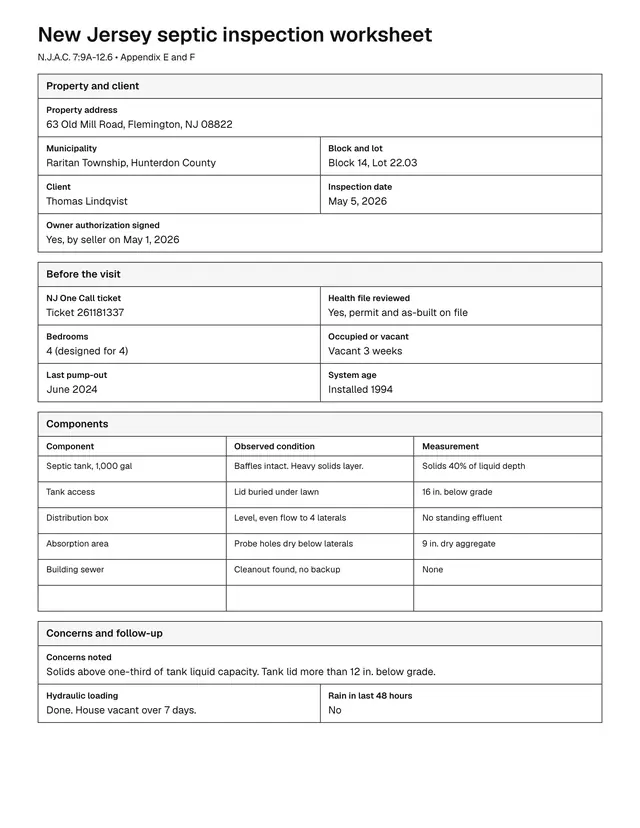
New Jersey septic inspection report (Appendix F Onsite System Inspection Form)
Record the tank or cesspool and what was checked. - New Mexico
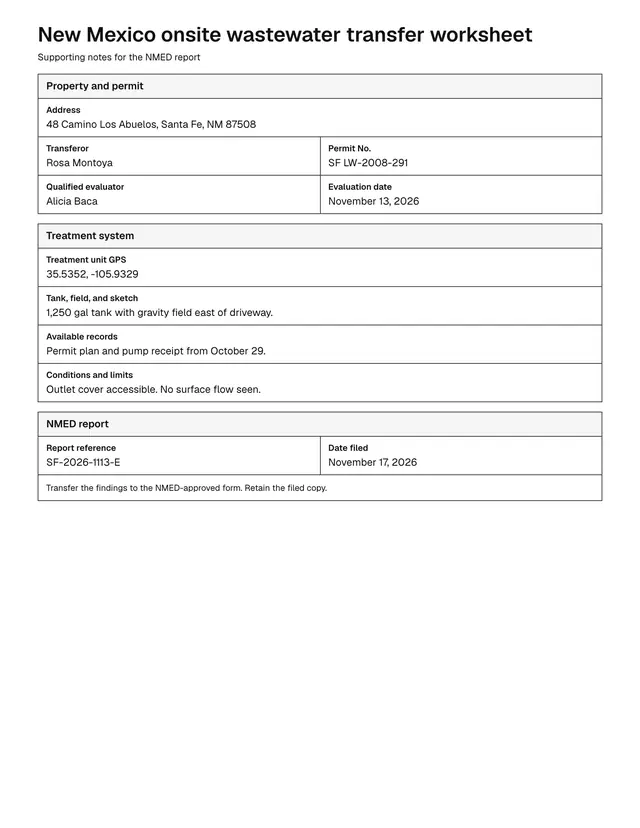
New Mexico onsite wastewater transfer worksheet
Record the tank or cesspool and what was checked. - New York
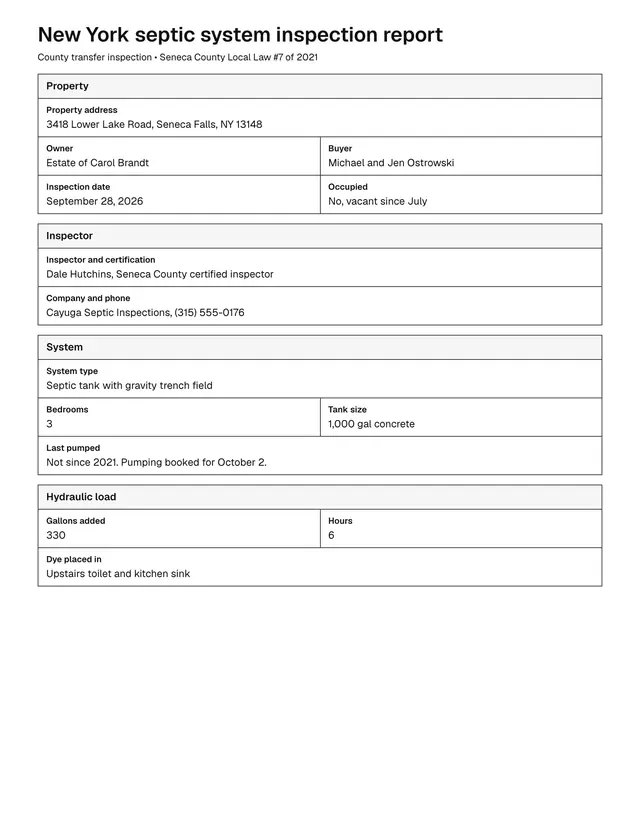
New York septic system inspection report (county transfer inspections)
Record the tank or cesspool and what was checked. - North Carolina
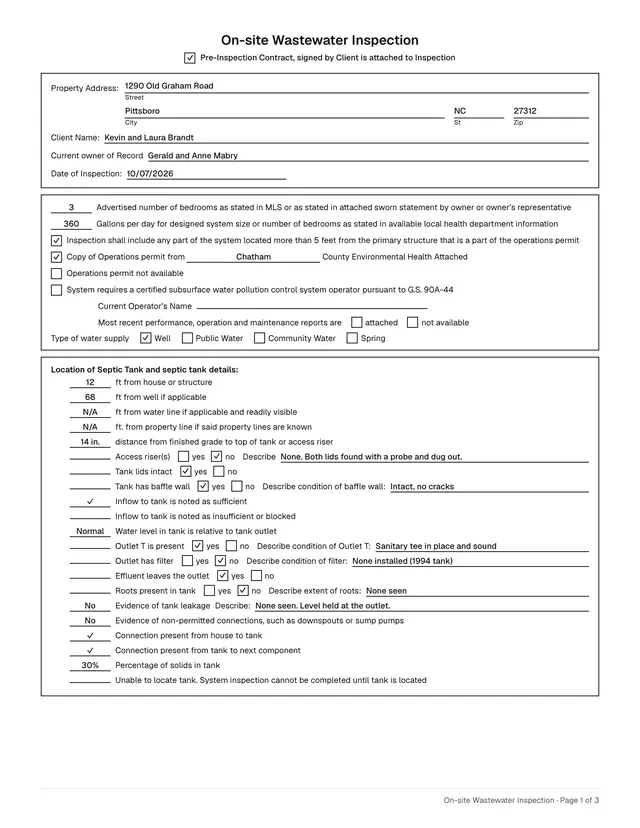
On-site Wastewater Inspection
Record the tank or cesspool and what was checked. - Ohio
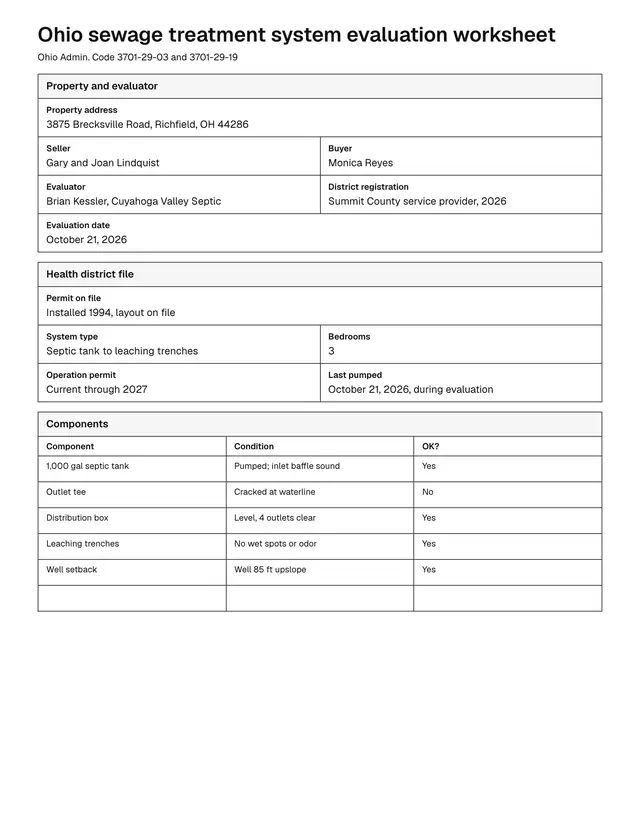
Ohio sewage treatment system evaluation for property transfer
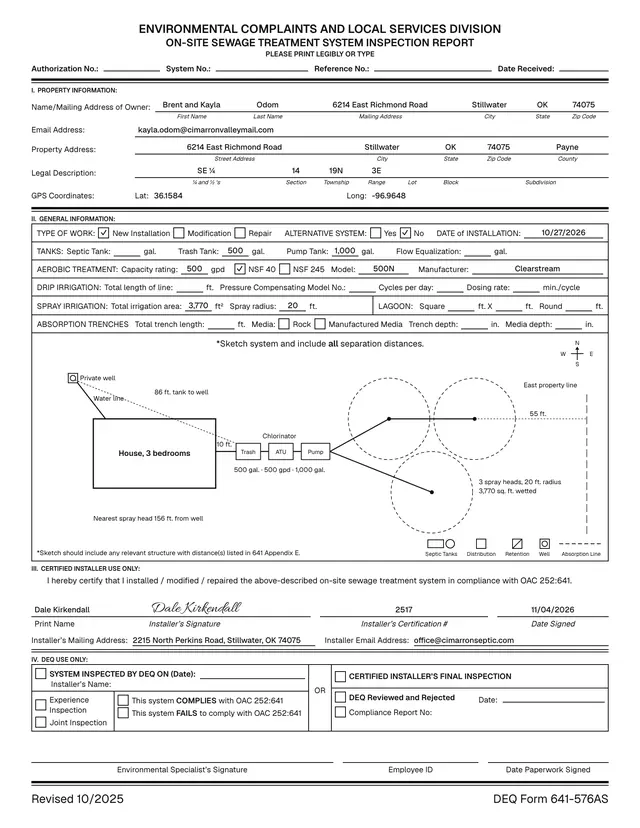
Record the tank or cesspool and what was checked. - OklahomaDEQ Form 641-576AS
On-Site Sewage Treatment System Inspection Report
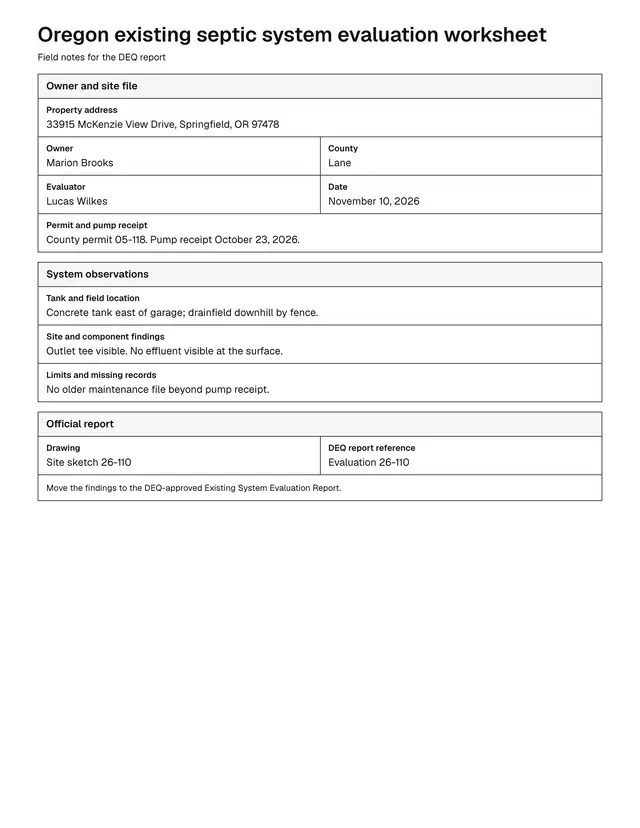
Record the tank or cesspool and what was checked. - Oregon
Oregon existing septic system evaluation worksheet
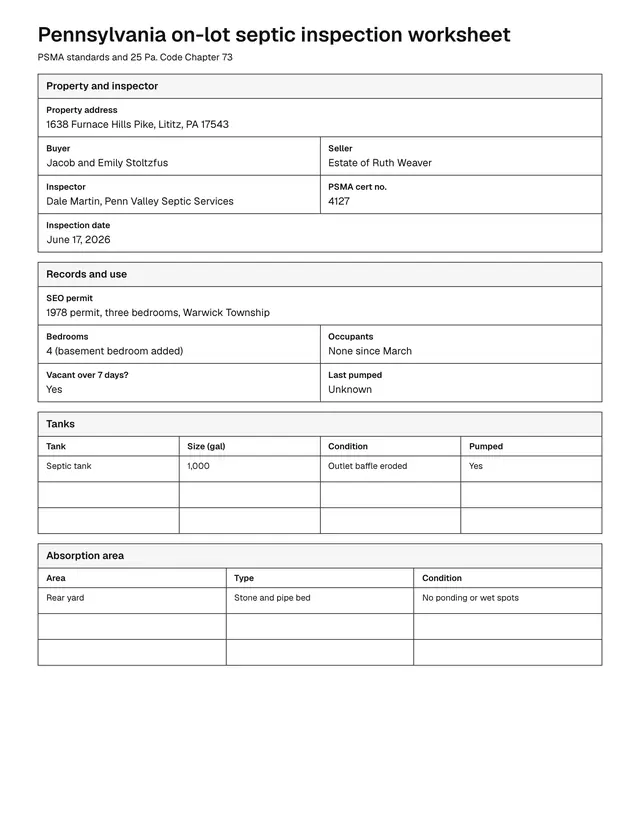
Record the tank or cesspool and what was checked. - Pennsylvania
Pennsylvania on-lot septic system inspection (PSMA)
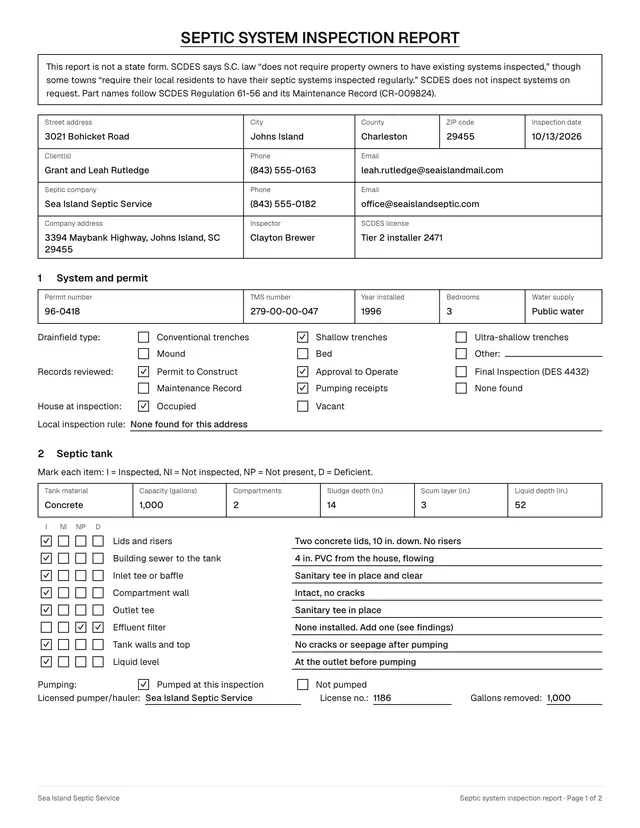
Record the tank or cesspool and what was checked. - South Carolina
Septic System Inspection Report
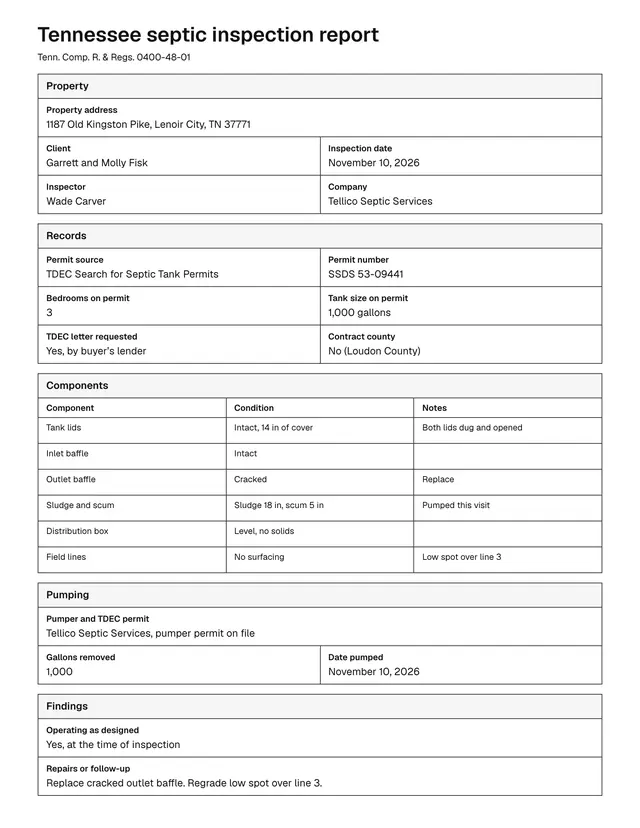
Record the tank or cesspool and what was checked. - Tennessee
Tennessee septic inspection report
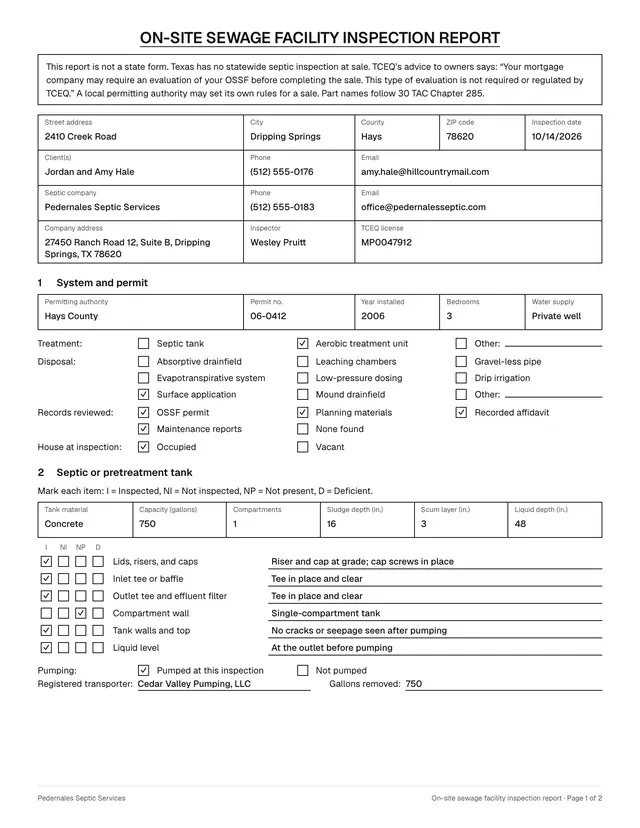
Record the tank or cesspool and what was checked. - Texas
On-Site Sewage Facility Inspection Report
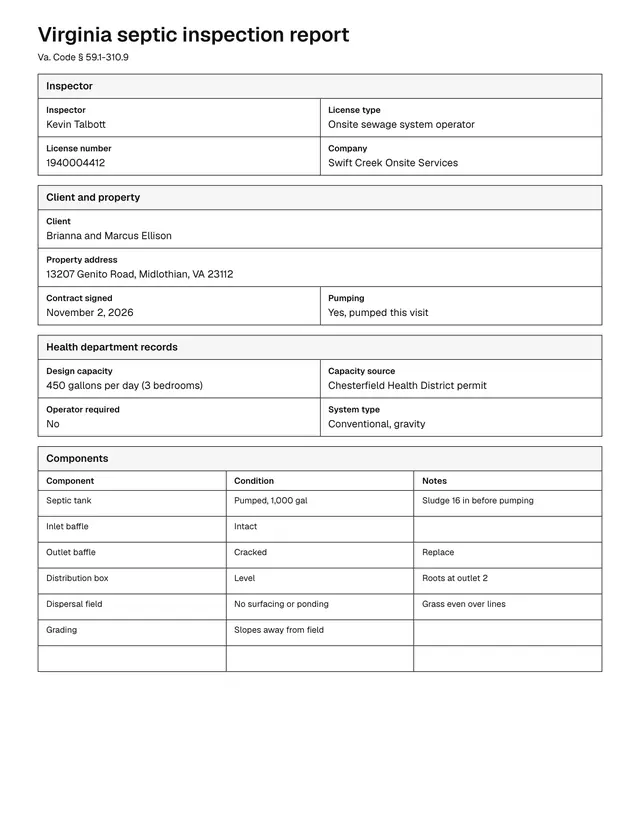
Record the tank or cesspool and what was checked. - Virginia
Virginia septic inspection report
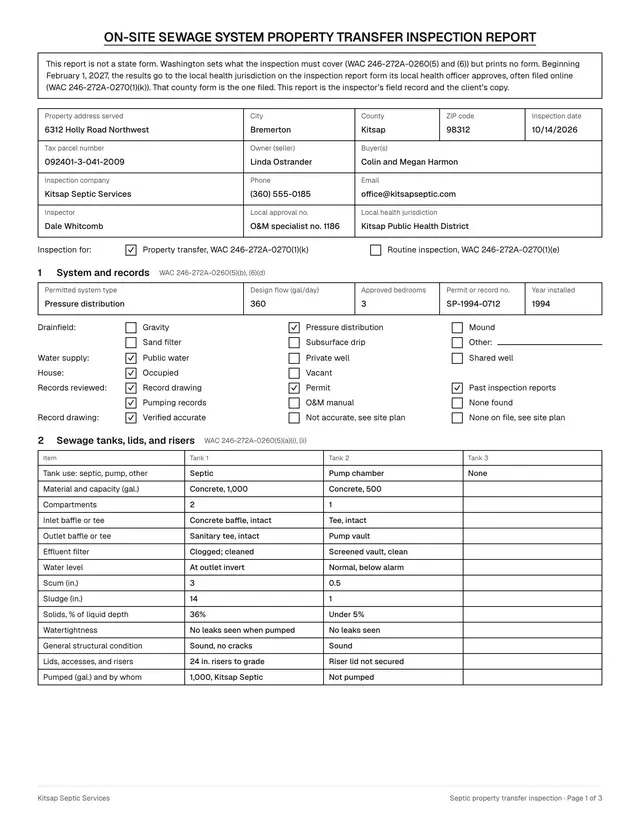
Record the tank or cesspool and what was checked. - Washington
On-Site Sewage System Property Transfer Inspection Report
Record the tank or cesspool and what was checked. - Wisconsin
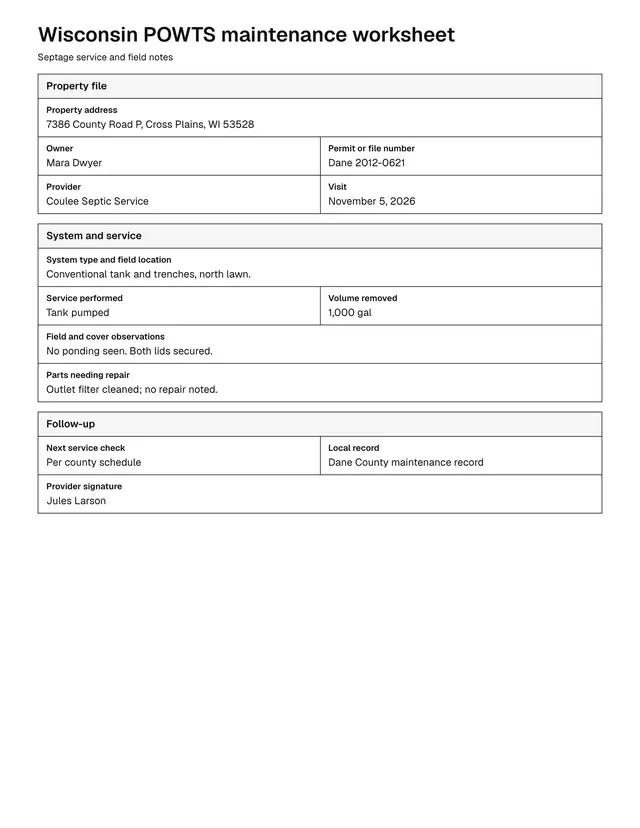
Wisconsin POWTS maintenance worksheet
Record the tank or cesspool and what was checked.