Illinois private sewage disposal system evaluation
Illinois wants newer septic tanks checked within 3 years of install and at least every 5 years after. IDPH’s own evaluation form shows what that check covers, and this sheet follows it.
At a glance
- Rule
- 77 Ill. Adm. Code 905.20(q)
- State form
- IDPH Private Sewage Disposal System Evaluation Form
- Pump when
- Scum plus sludge is over 33% of the tank
- Records
- Kept for the life of the system
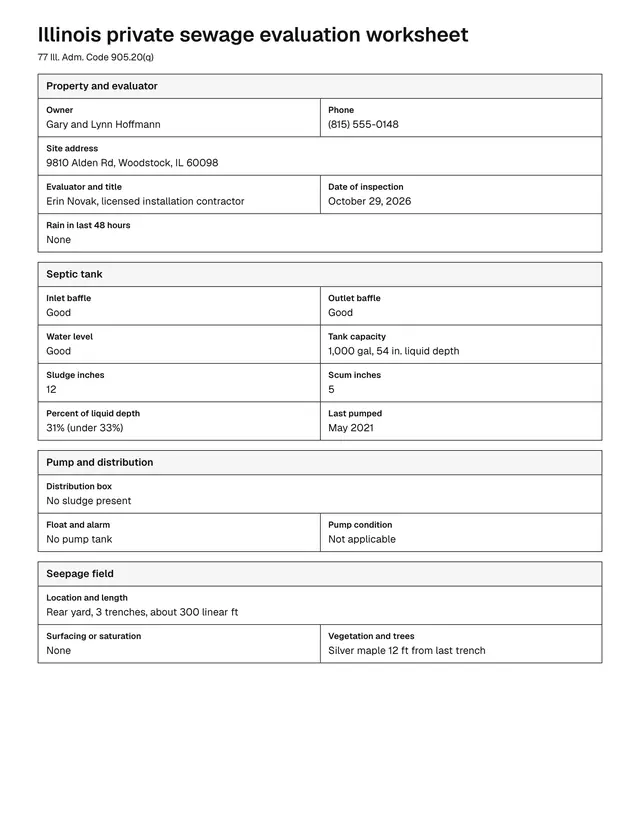
Completed example
Download PDFIs there a real estate septic rule in Illinois?
Not at the state level. The Private Sewage Disposal Code covers design, installation, pumping, and maintenance, but it doesn’t require an inspection when a house sells. When a buyer in McHenry or Kankakee County orders one, it’s because the lender wants it, the purchase contract calls for it, or the county has its own rule.
Ask the county for the permit too. It often shows the tank size and the field layout, which saves digging.
That’s why the first call is to the county health department. Ask for the permit file and whether they have a transfer requirement or a form they want used. Some counties are strict. Others just want a copy if something’s wrong.
What the state does have is a maintenance rule, and it gives you a solid yardstick for any septic report.
What the maintenance rule says
Section 905.20(q) applies to systems permitted after January 1, 2014. For a home with a septic tank feeding a seepage field (or a sand filter that feeds one), the tank has to be evaluated within 3 years of installation and at least every 5 years after that. Commercial properties go every 3 years. Aerobic units need evaluation and maintenance at least every 6 months, and sand filters or lagoons with a surface discharge need it every year.
The pump-out trigger is the same everywhere: if scum and settled solids together are more than 33% of the tank’s liquid capacity, pump it. The owner keeps “all maintenance records on forms provided or approved by the Department.” Those records pass from owner to owner and are kept for the life of the system, so ask the seller for them.
The rule also says who can do the evaluation on a home: the homeowner, a licensed Private Sewage Disposal System Installation Contractor, a licensed Environmental Health Practitioner, an Illinois professional engineer, or an agent of IDPH or the local health department.
Walking the IDPH evaluation form
IDPH publishes a two-page Private Sewage Disposal System Evaluation Form. Even if the county doesn’t require it, it’s a good checklist. It starts with one rule that matters: look for discharge or saturation only when there’s been no rain in the 48 hours before.
Tank. Pull the inlet and outlet covers and rate each baffle good or damaged. Rate the water level good, high, or low. Look at the walls and ceiling for signs of past high water. Measure the sludge and scum in inches, and write the date it was last pumped.
Do the math. Say a 1,000 gallon tank in Woodstock has a 54 inch liquid depth. You measure 12 inches of sludge and 5 of scum. That’s 17 inches, or about 31%. It’s under the 33% line, but close enough that pumping soon is a fair call.
Rest of the system. Check the distribution box for sludge, run the pump float and the alarm, and look at the pump. For the seepage field, note its location and length in feet, any surfacing or soggy ground, dead grass, and tree roots moving in.
When the yellow boxes get checked
The IDPH form shades certain answers yellow. If any are marked, it says the system “may be in a state of failure” and recommends a licensed installation contractor take a look. Write that recommendation in plain words on your report.
Be careful about who fixes it. The form says maintenance and repair can only be done by a licensed contractor, or by the homeowner if it’s their main single-family home. Section 905.20(r) also says a licensed installation contractor has to be on site during any repair or maintenance work. Pumping is its own license under section 905.170.
The form also has sections for buried and recirculating sand filters, waste stabilization ponds, and Illinois raised filter beds. Fill the ones that match the system and mark the others as not present.
How do you keep the buyer, agent, and pumper on the same page?
Septic reports bounce between a lot of people: the buyer, both agents, the county, and the pumper who has to come out before closing. The ones that cause trouble are vague. “Field appears functional” helps nobody. Measurements, the rain check, and a clear next step do.
Noma specializes in the Illinois private sewage disposal system evaluation (77 Ill. Adm. Code 905.20(q)). Write the report with your own sections on your phone, draw the tank and field on site, and schedule the next 5-year evaluation before you leave the driveway. See how Noma runs septic inspections.
Frequentlyaskedquestions
Send this document in minutes, not an afternoon.
Other states
Septic inspection report templates- Alabama
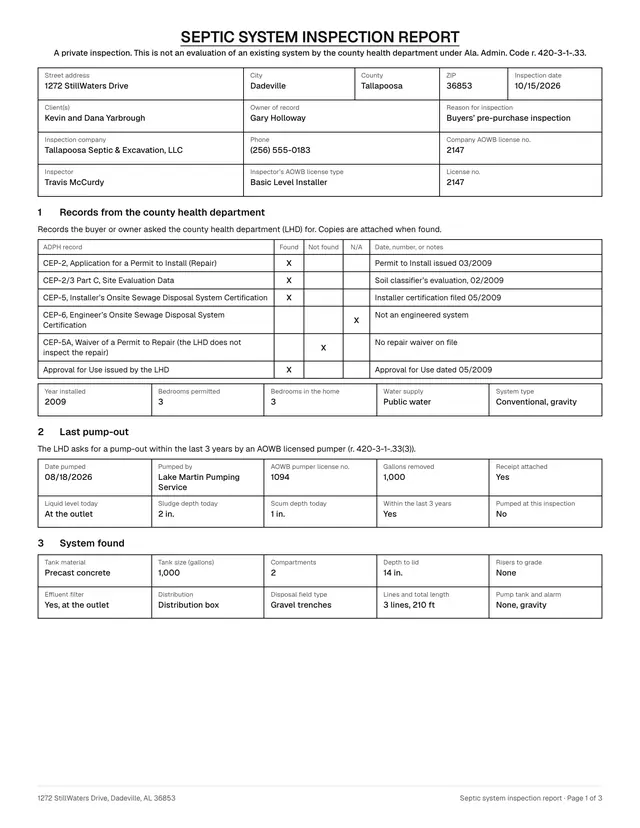
Septic System Inspection Report
Record the tank or cesspool and what was checked. - ArizonaGWS 432
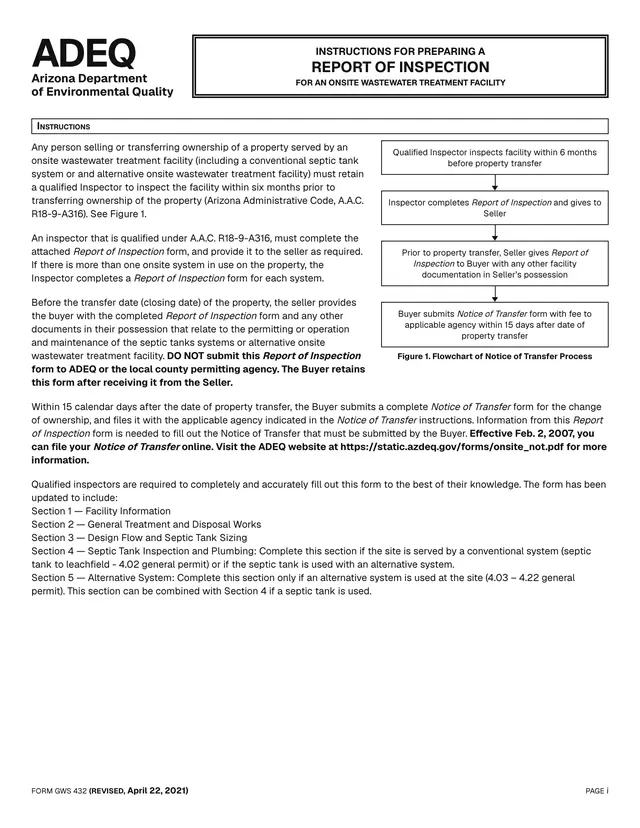
Report of Inspection for an Onsite Wastewater Treatment Facility
Record the tank or cesspool and what was checked. - Arkansas
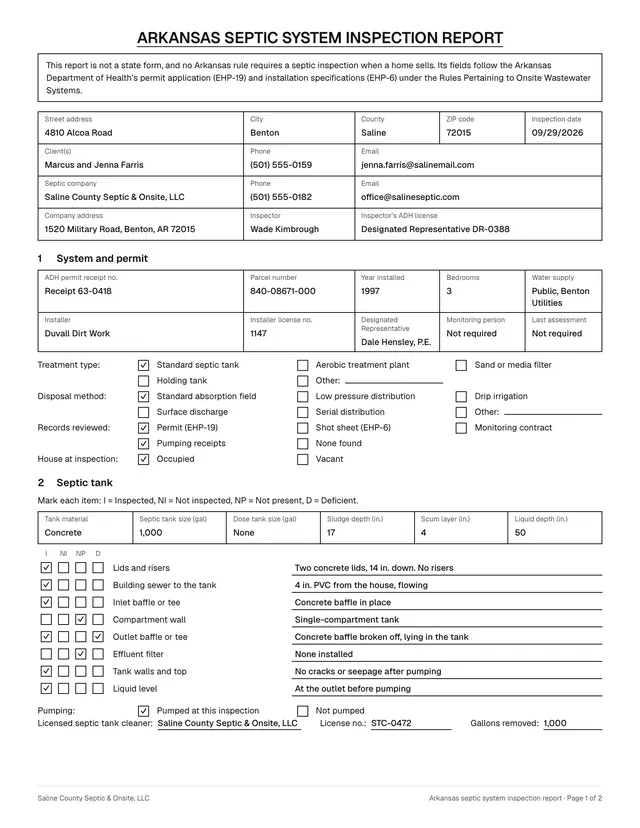
Arkansas Septic System Inspection Report
Record the tank or cesspool and what was checked. - Colorado
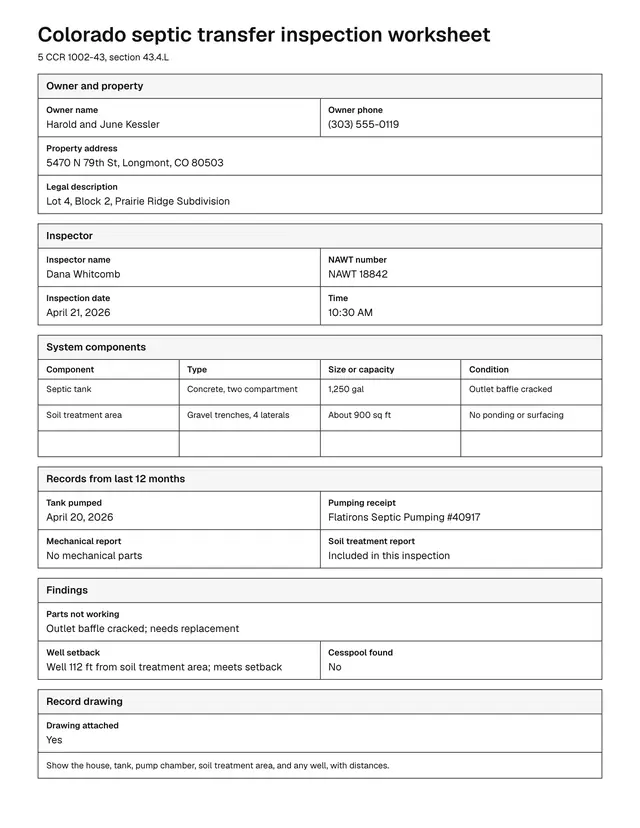
Colorado septic transfer of title inspection report (Regulation 43)
Record the tank or cesspool and what was checked. - Delaware
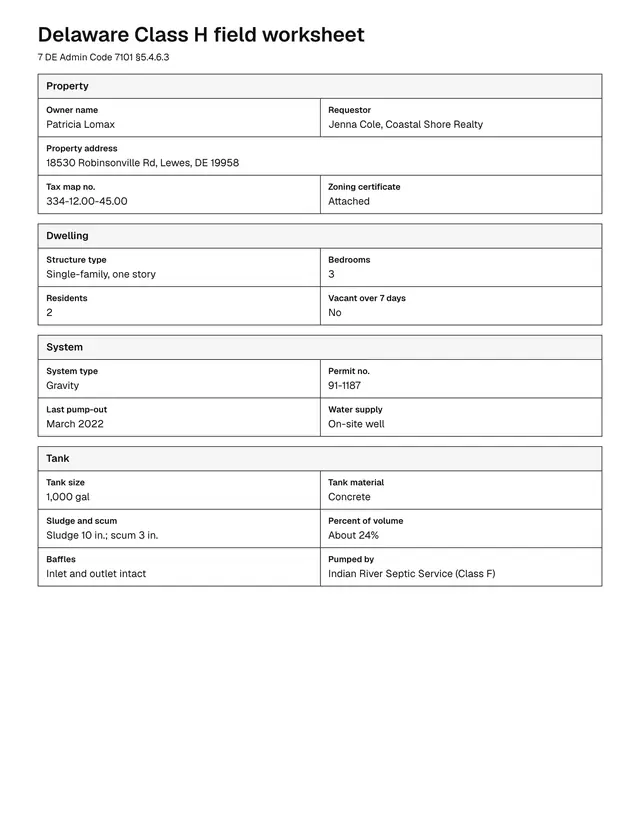
Delaware Class H septic inspection report
Record the tank or cesspool and what was checked. - Florida
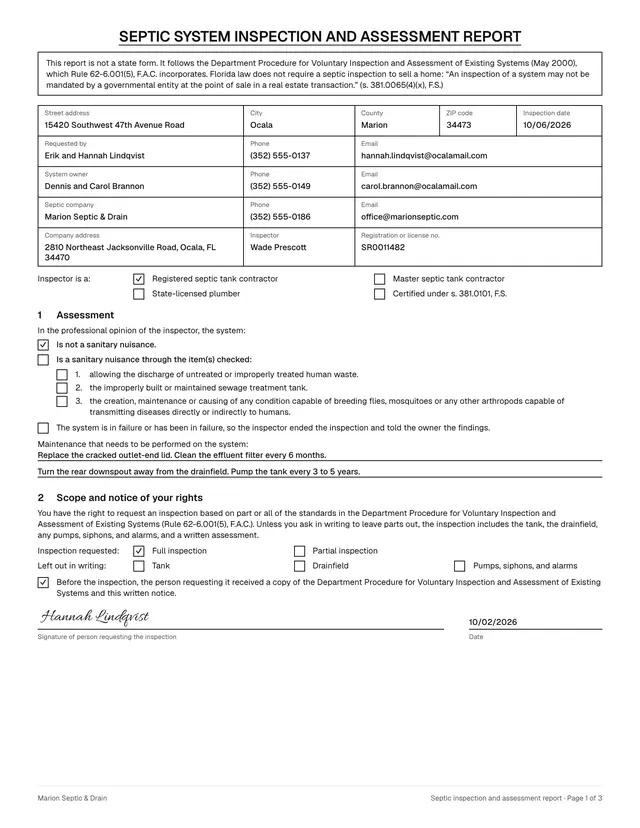
Septic System Inspection and Assessment Report
Record the tank or cesspool and what was checked. - Georgia
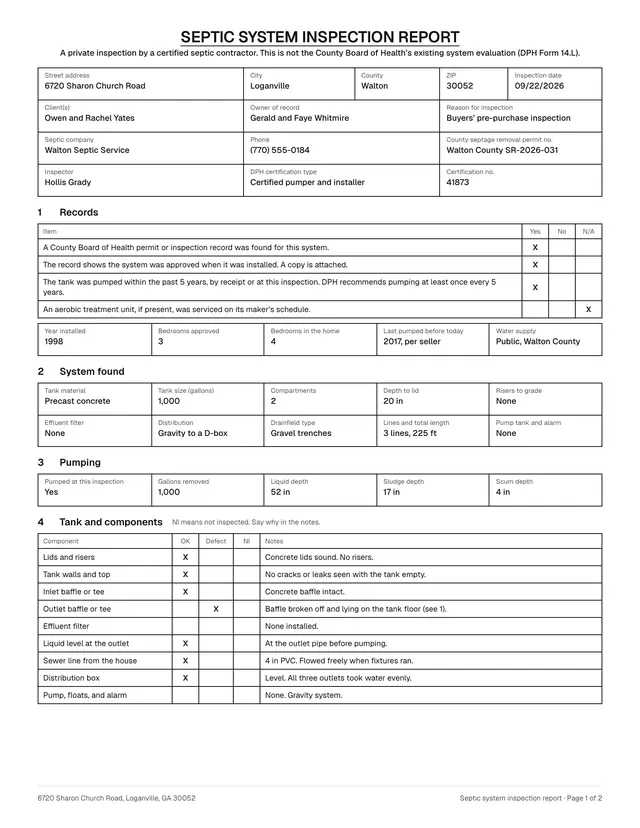
Septic System Inspection Report
Record the tank or cesspool and what was checked. - Hawaii
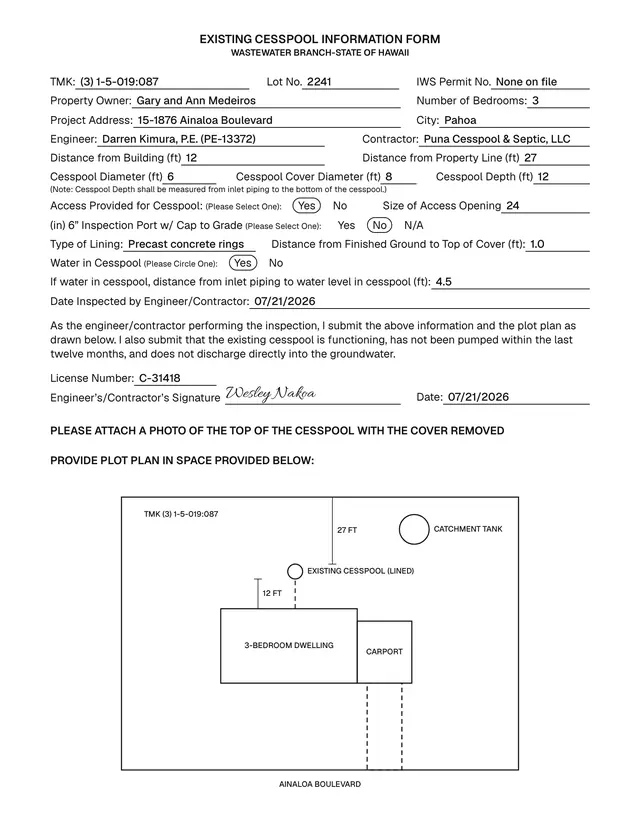
Existing Cesspool Information Form
Record the tank or cesspool and what was checked. - Indiana
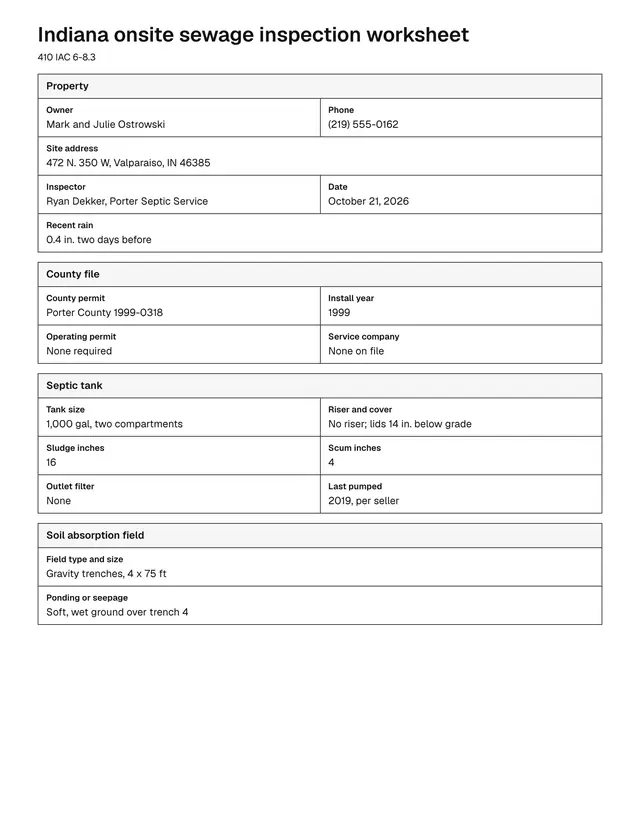
Indiana onsite sewage system inspection report
Record the tank or cesspool and what was checked. - Iowa
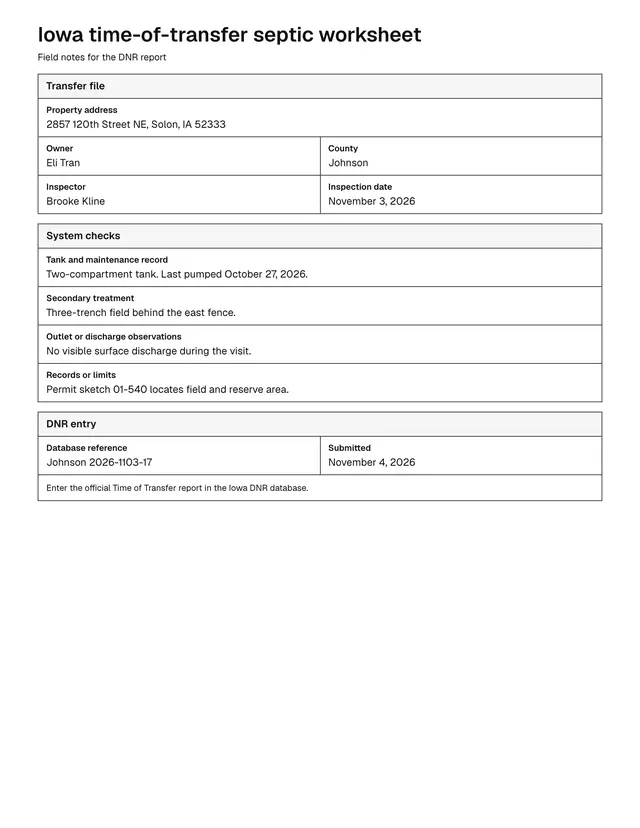
Iowa time-of-transfer septic worksheet
Record the tank or cesspool and what was checked. - Kentucky
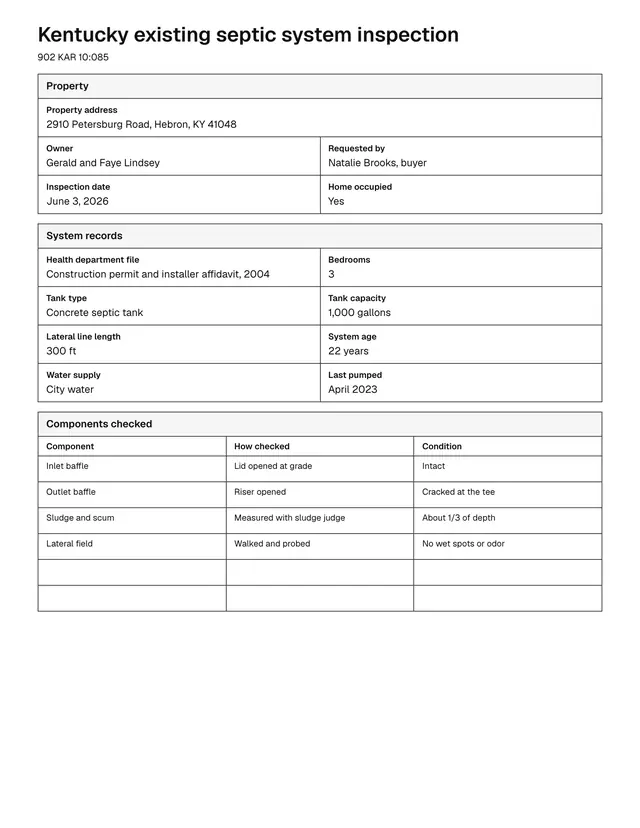
Kentucky existing septic system inspection
Record the tank or cesspool and what was checked. - Louisiana
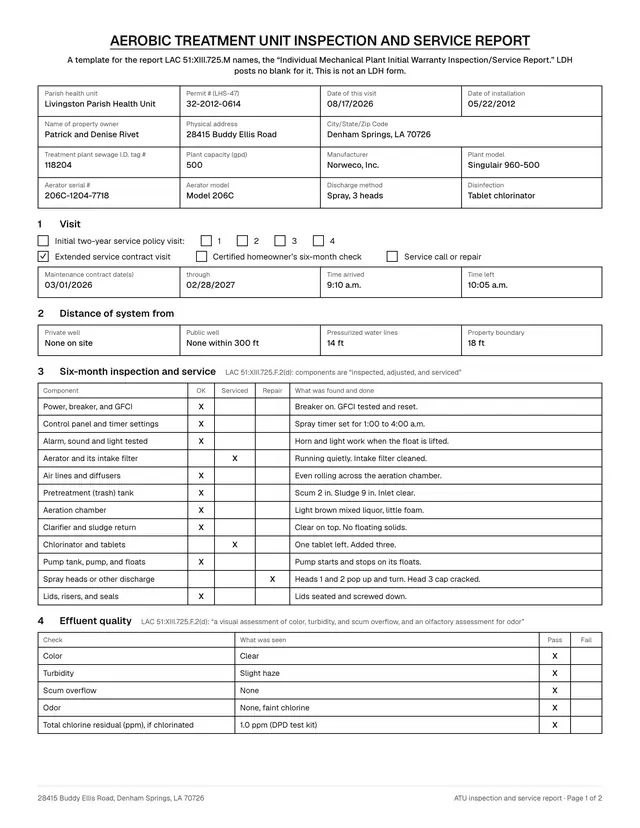
Aerobic Treatment Unit Inspection and Service Report
Record the tank or cesspool and what was checked. - Maryland
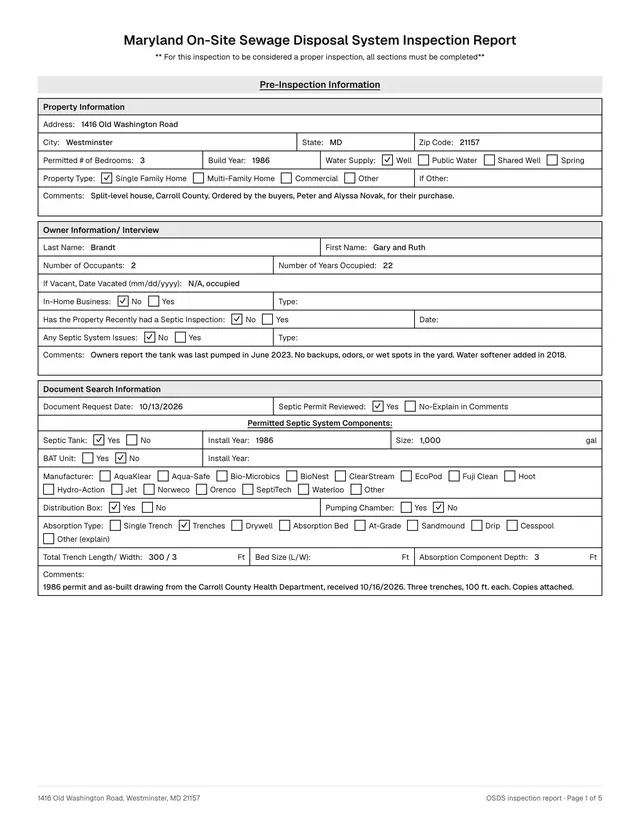
Maryland On-Site Sewage Disposal System Inspection Report
Record the tank or cesspool and what was checked. - Massachusetts
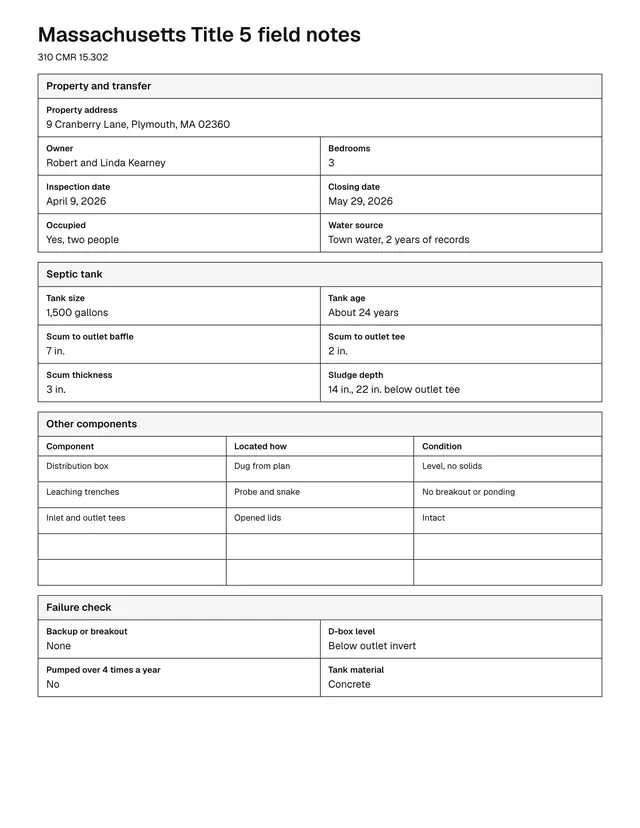
Massachusetts Title 5 inspection report (310 CMR 15.301)
Record the tank or cesspool and what was checked. - Michigan
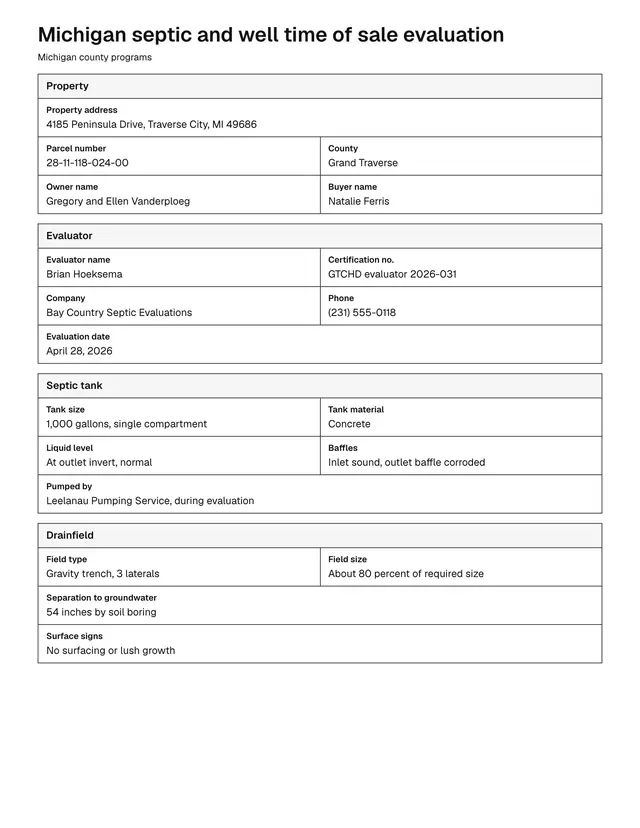
Michigan septic time of sale evaluation
Record the tank or cesspool and what was checked. - Minnesota
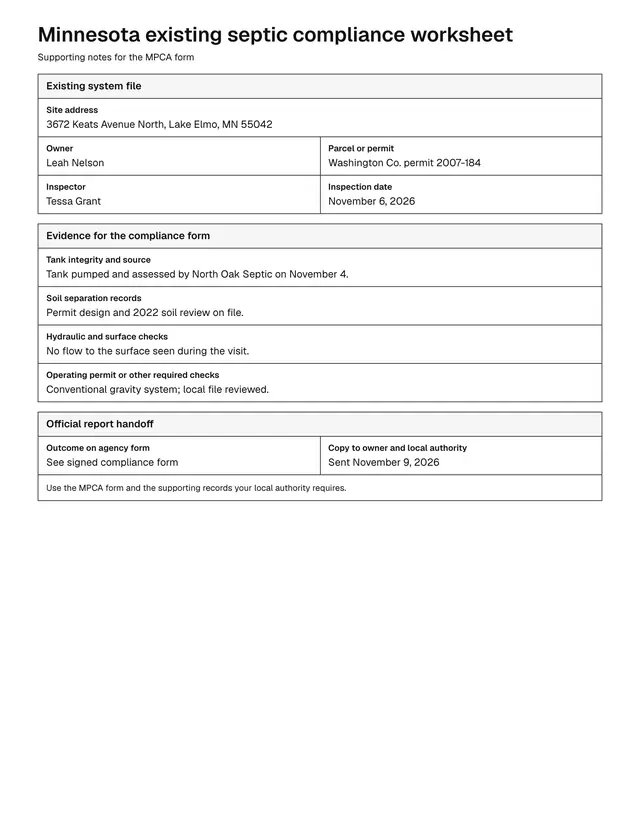
Minnesota existing septic compliance worksheet
Record the tank or cesspool and what was checked. - Mississippi
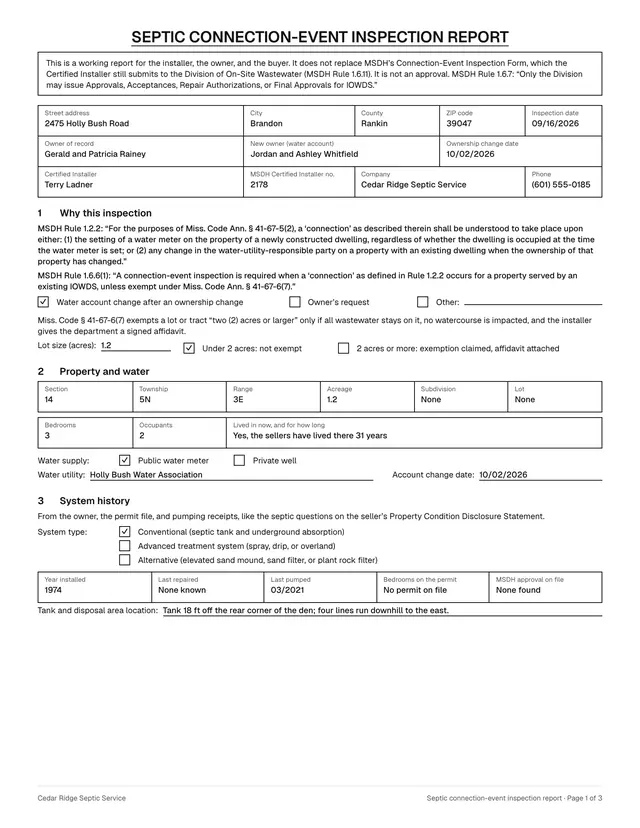
Septic Connection-Event Inspection Report
Record the tank or cesspool and what was checked. - Missouri
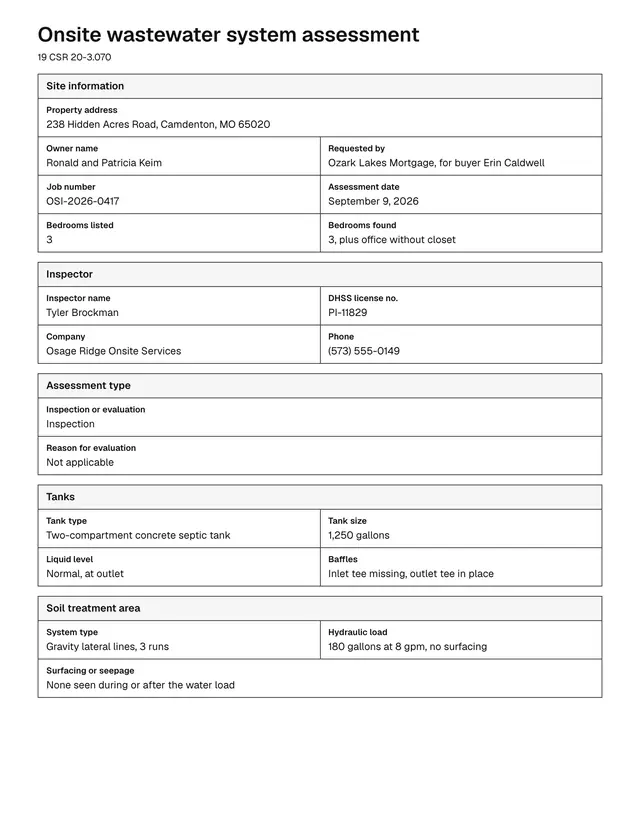
Missouri onsite wastewater inspection and evaluation report
Record the tank or cesspool and what was checked. - Nevada
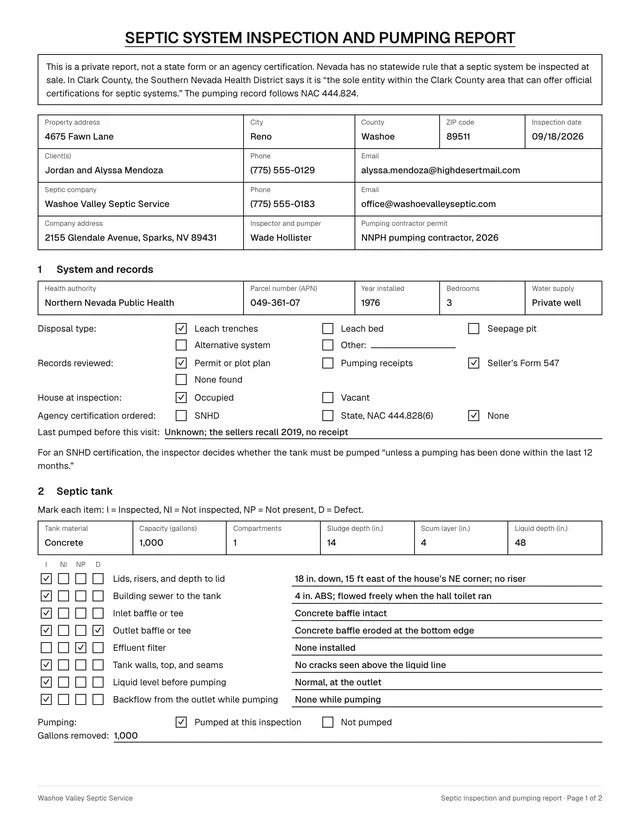
Septic System Inspection and Pumping Report
Record the tank or cesspool and what was checked. - New JerseyN.J.A.C. 7:9A Appendix F
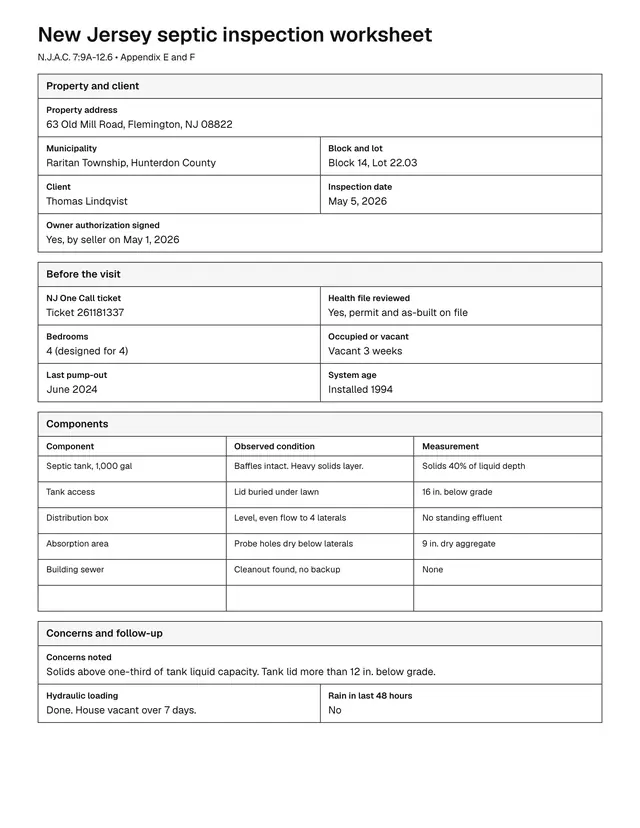
New Jersey septic inspection report (Appendix F Onsite System Inspection Form)
Record the tank or cesspool and what was checked. - New Mexico
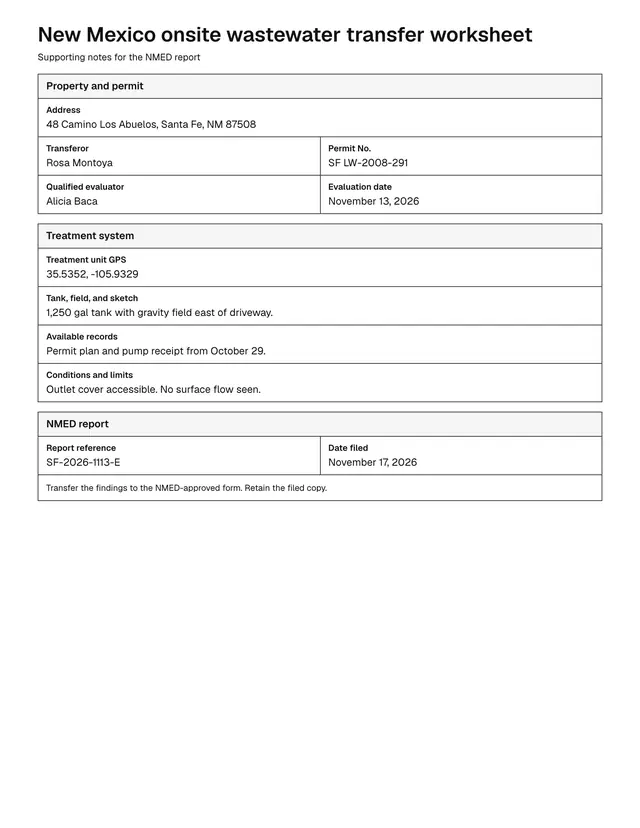
New Mexico onsite wastewater transfer worksheet
Record the tank or cesspool and what was checked. - New York
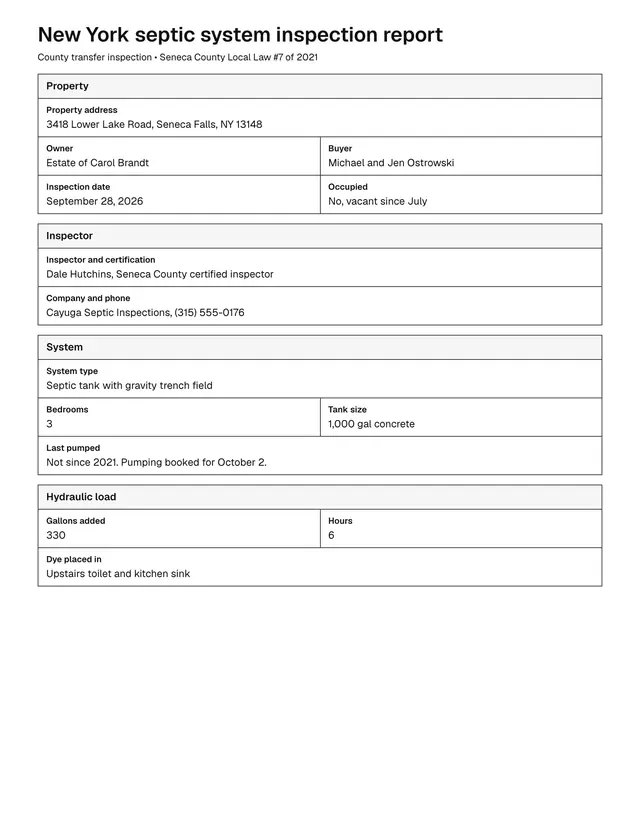
New York septic system inspection report (county transfer inspections)
Record the tank or cesspool and what was checked. - North Carolina
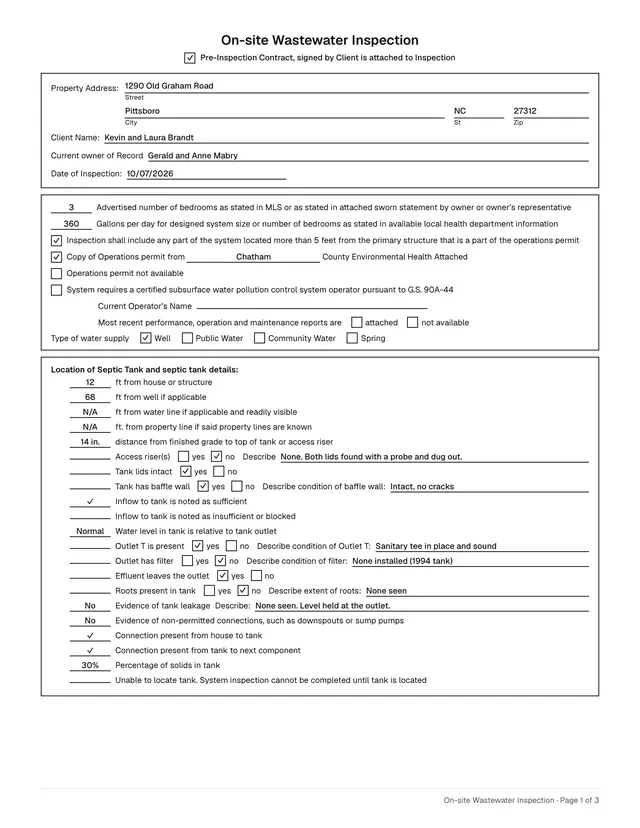
On-site Wastewater Inspection
Record the tank or cesspool and what was checked. - Ohio
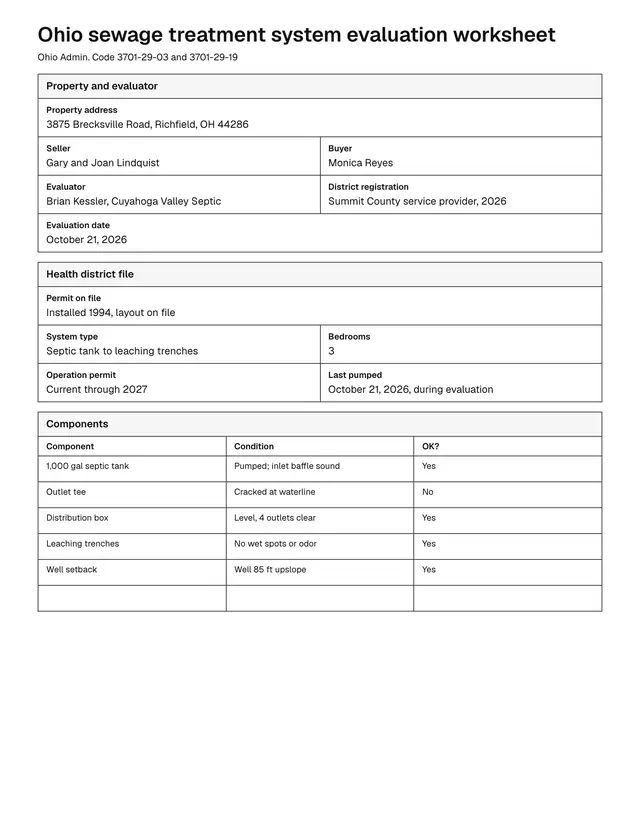
Ohio sewage treatment system evaluation for property transfer
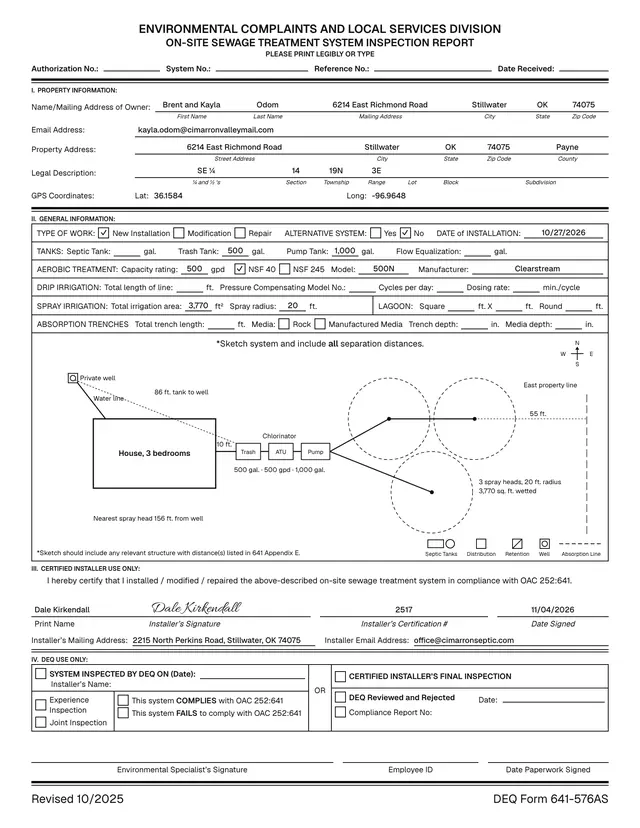
Record the tank or cesspool and what was checked. - OklahomaDEQ Form 641-576AS
On-Site Sewage Treatment System Inspection Report
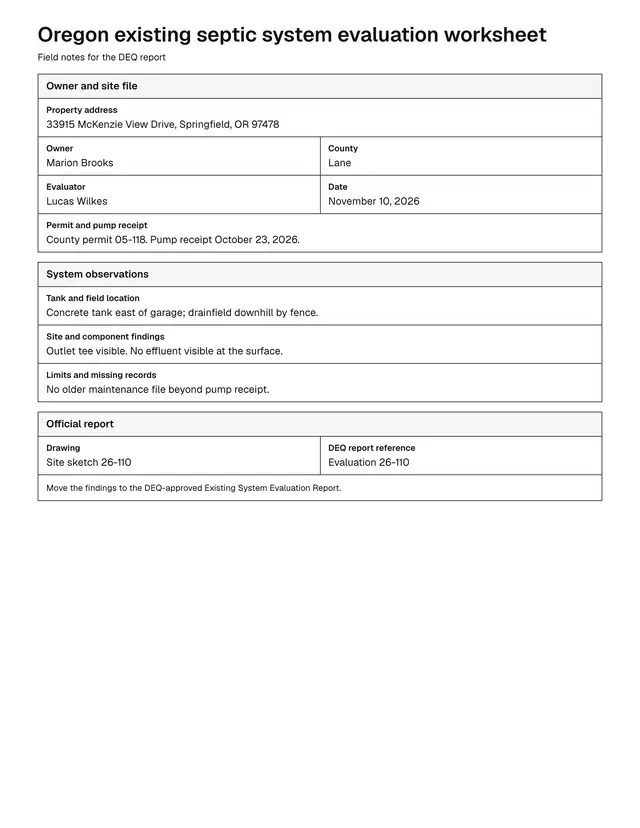
Record the tank or cesspool and what was checked. - Oregon
Oregon existing septic system evaluation worksheet
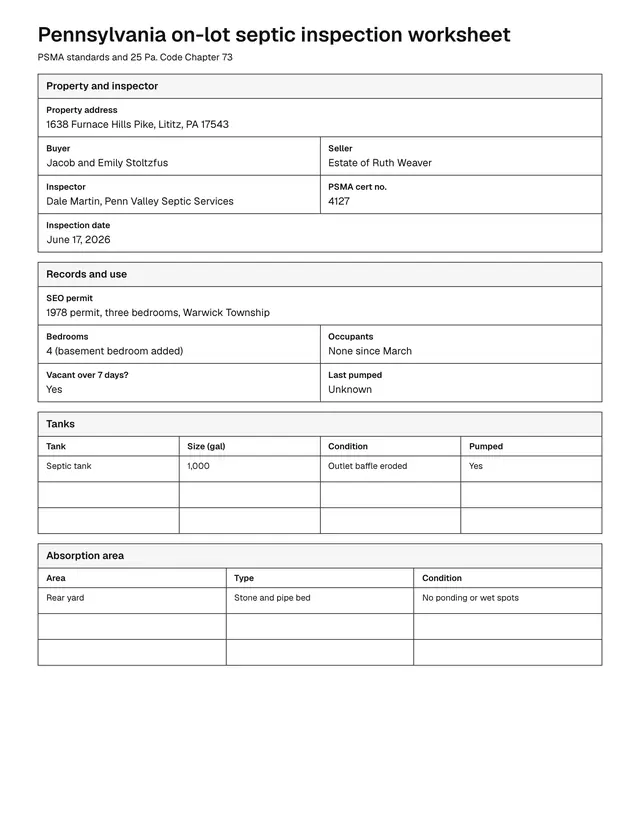
Record the tank or cesspool and what was checked. - Pennsylvania
Pennsylvania on-lot septic system inspection (PSMA)
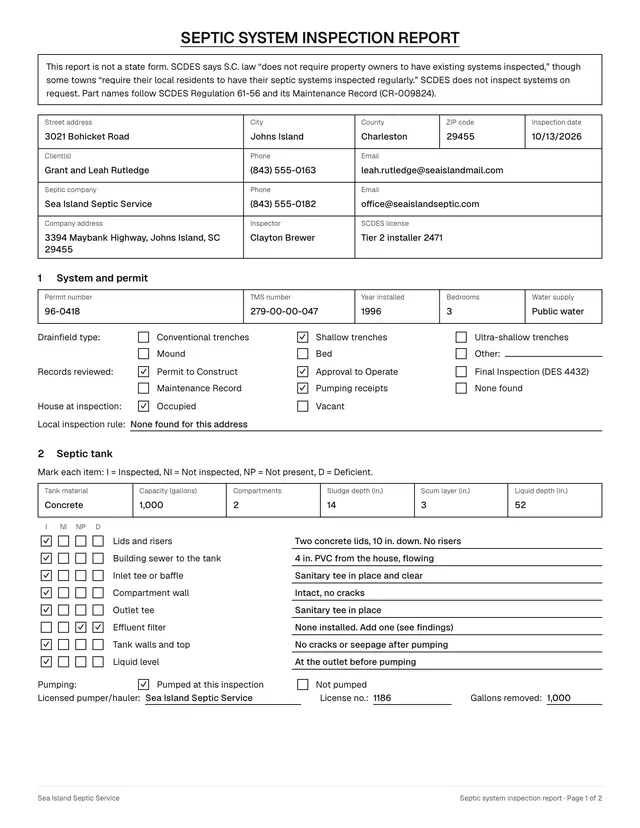
Record the tank or cesspool and what was checked. - South Carolina
Septic System Inspection Report
Record the tank or cesspool and what was checked. - Tennessee
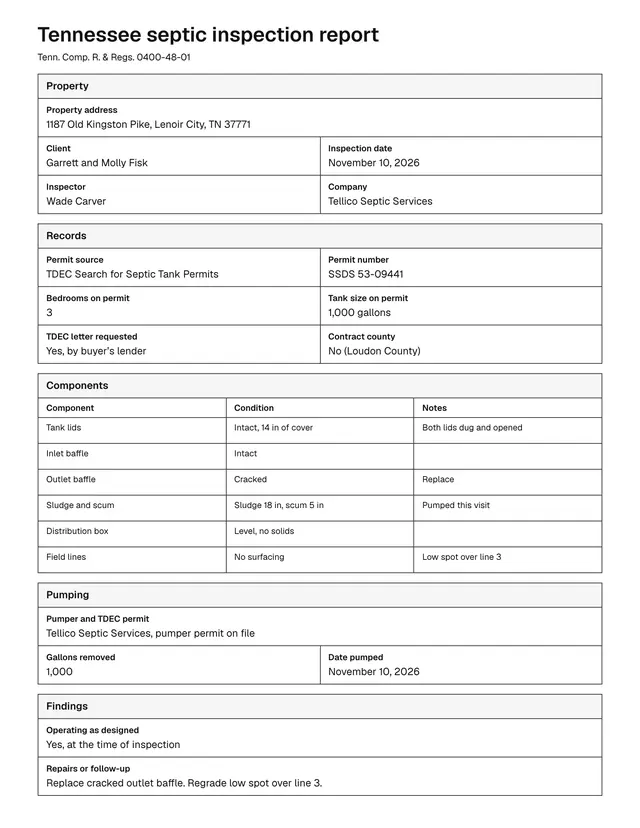
Tennessee septic inspection report
Record the tank or cesspool and what was checked. - Texas
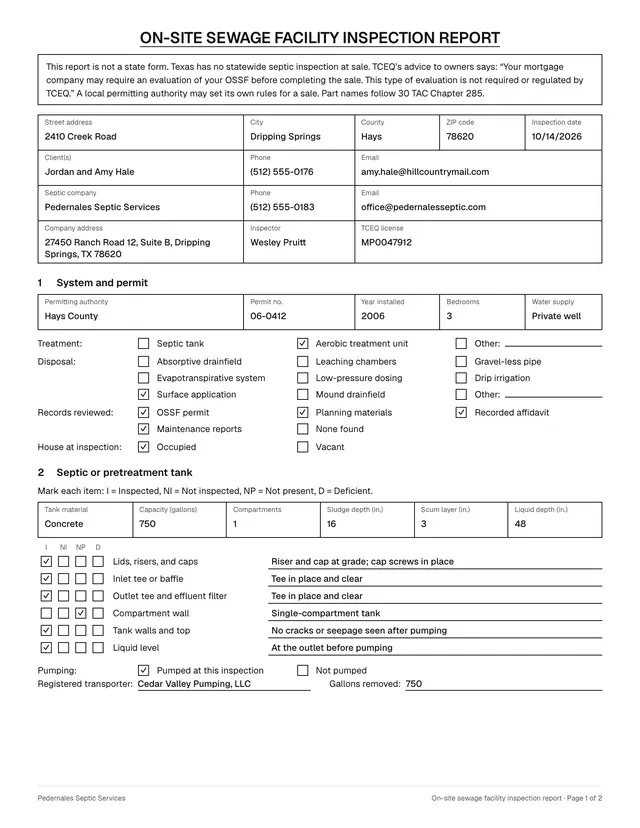
On-Site Sewage Facility Inspection Report
Record the tank or cesspool and what was checked. - Virginia
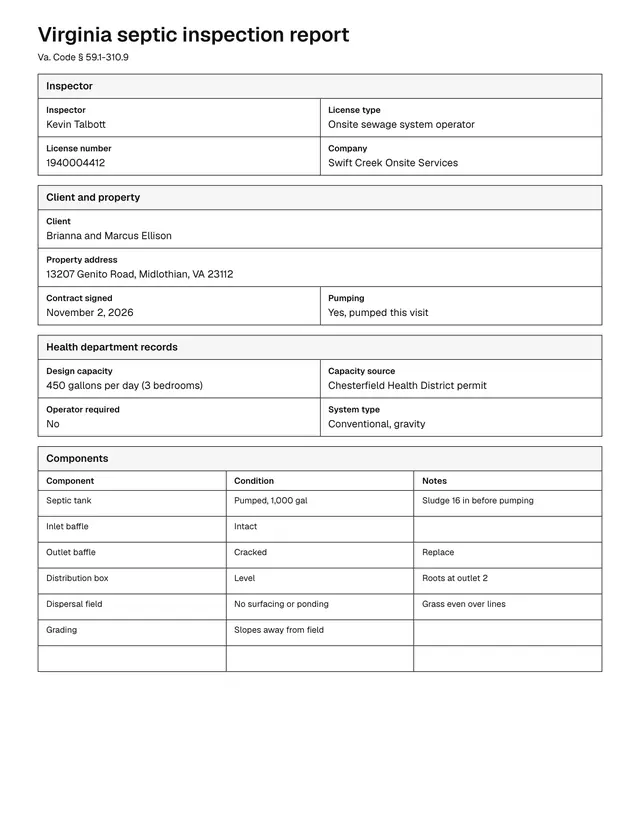
Virginia septic inspection report
Record the tank or cesspool and what was checked. - Washington
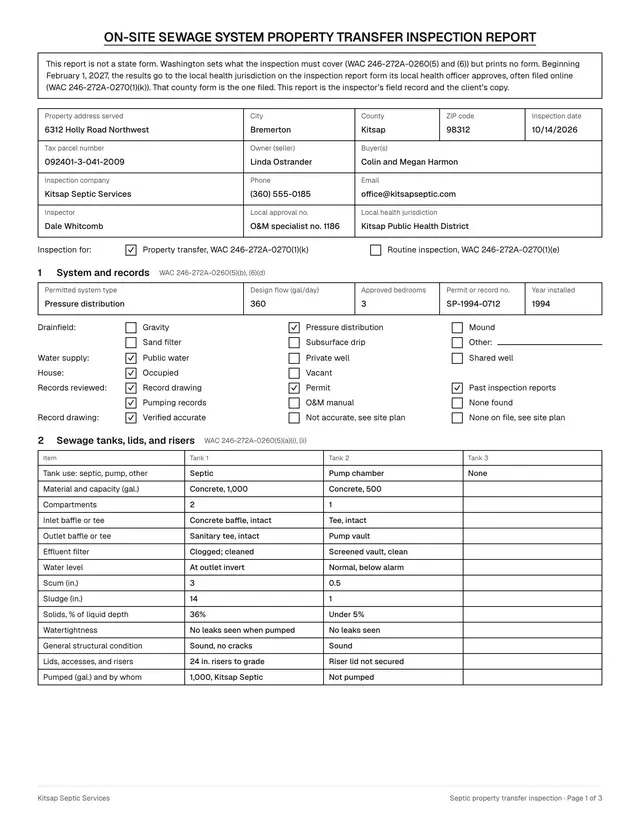
On-Site Sewage System Property Transfer Inspection Report
Record the tank or cesspool and what was checked. - Wisconsin
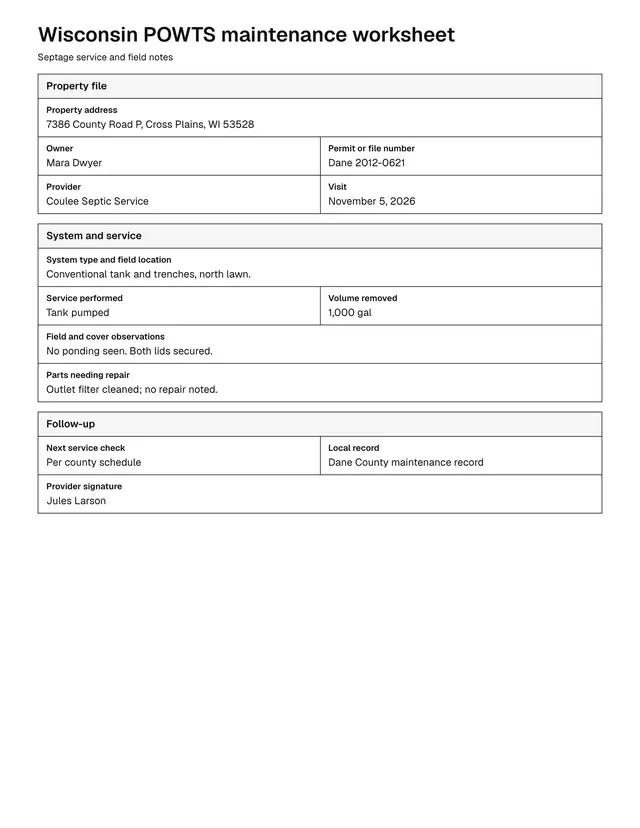
Wisconsin POWTS maintenance worksheet
Record the tank or cesspool and what was checked.