Illinois home inspection agreement
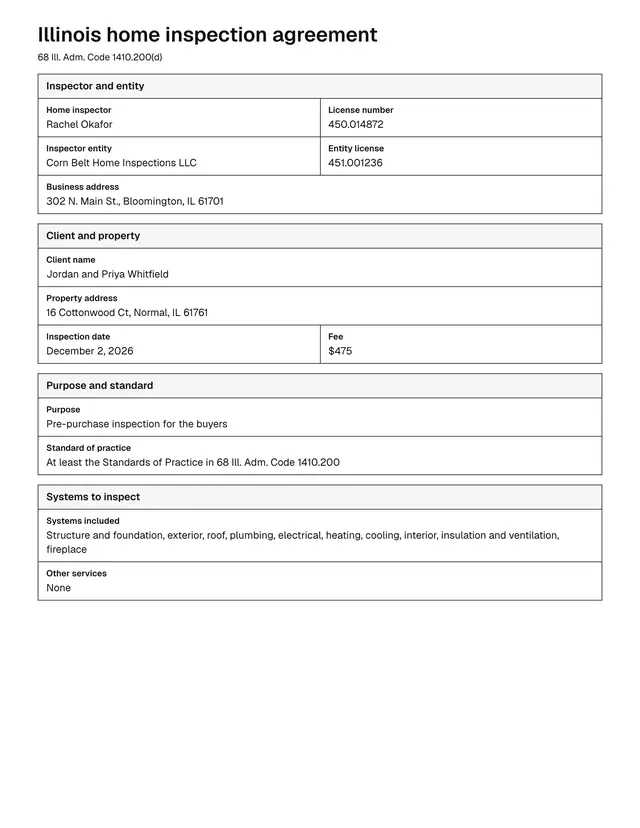
Illinois calls it the “executed written contract,” and 68 Ill. Adm. Code 1410.200(d) lists eight things it has to hold before you start the inspection.
At a glance
- Rule
- 68 Ill. Adm. Code 1410.200(d)
- Signed
- Before the inspection
- Keep
- 5 years (1410.240)
- Regulator
- IDFPR
Completed example
Download PDFThe eight items Illinois requires
Illinois is one of the states that tells you what goes in the contract. Section 1410.200(d) in the home inspector rules says you and the client sign an “executed written contract” before the inspection, and it has to include at least these eight things:
1. The purpose of the inspection. Usually a pre-purchase inspection, but say so. 2. The date. 3. The name, address, and license numbers of the home inspectors and the home inspector entity. 4. The fee. 5. A statement that you’ll inspect at least to the Illinois Standards of Practice in Part 1410. 6. A list of the systems and components you’ll inspect. 7. Signatures from the client (or their authorized representative) and from you or the entity’s representative. 8. Limits and exclusions of the inspection.
Number 6 trips people up. “Standard home inspection” isn’t a list. Write the systems out: structure and foundation, exterior, roof, plumbing, electrical, heating, cooling, interior, insulation and ventilation, and fireplaces. The rules tie every report duty to the phrase “pursuant to the executed written contract,” so anything not on the list isn’t in scope.
Put the limits in writing first
The rule gives you sample limits you can use. You aren’t required to judge parts that aren’t readily accessible, predict service life, or say why something needs to be replaced. You don’t have to run a system that’s shut down. You don’t have to enter unsafe areas, do engineering or environmental work, predict future conditions, or give any warranty.
Timing matters as much as wording. Section 1410.300(i) calls it unprofessional conduct to fail “to disclose in writing to the client prior to the home inspection any limitations or exclusions.” So if the buyer of a Bloomington farmhouse doesn’t want the detached barn or the pool, it goes on the agreement before inspection day, not in a note at the bottom of the report.
Common extras around Illinois, like radon testing, well water, or a sewer scope, come up a lot. If you don’t offer them, list them as exclusions. If you do, they’re additional services, and 1410.300(f) wants written notice of them to the client.
Illinois is strict about sharing. Under 1410.250(g), you can’t send client information or results to a third party, “such as an attorney or other party associated with a real estate transaction,” without written consent from the client. That consent becomes part of your records.
The easy fix is a line in the agreement where the client names who can get a copy: their agent, their attorney, their lender. Add a separate yes or no if you want to use the job in advertising. Section 1410.250(h) needs written consent for that too.
Two more consent rules belong here. If anyone other than your client pays you for the same job, you need written consent from all parties (1410.300(d)). And if you’ll do other work at the property, like radon testing or repairs, give written notice and get the client’s written consent about any conflict (1410.300(f)).
There’s one exception to the consent rule. If a condition threatens health or safety and needs emergency action, 1410.300(c) says you must report it to the homeowner or their agent.
How long the file lives
Section 1410.240 says you keep the original or a true copy of the signed contract, the report, any supplemental reports, and your supporting data. Keep them five years after the inspection, or two years after any court case about it ends, whichever is longer.
The log is easy to forget because it isn’t on any form. A spreadsheet with one row per job, in date order, covers it.
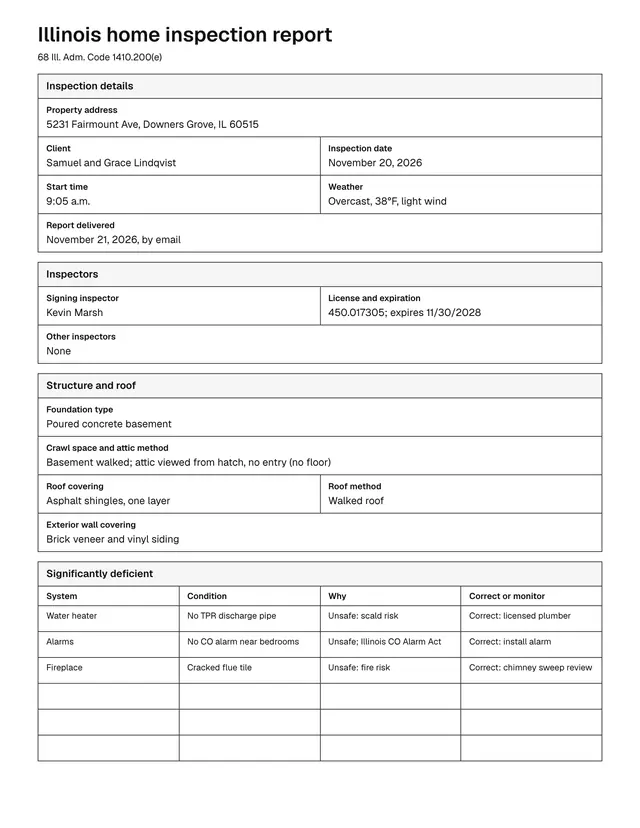
You also keep a sequential log with the inspection date, the report date, the client’s name, and the address. IDFPR can ask for any of it, and you have 30 days to produce it. Your $100,000 general liability policy has to stay in force for at least a year after your latest report, under 1410.235. The Illinois home inspection report page covers what goes in the report itself.
What if the buyer only signs the night before?
This is the common miss. The agent books the job, the buyer is busy, and the agreement sits unsigned until you’re in the driveway. In Illinois that’s not a paperwork detail. The rule says the contract comes first.
Noma specializes in the Illinois home inspection agreement (68 Ill. Adm. Code 1410.200(d)). Upload your agreement once as a reusable document, and each booked job sends it out for e-signature right away, so it’s signed long before you arrive. See how Noma sends inspection agreements.
Frequentlyaskedquestions
Send this document in minutes, not an afternoon.
Other states
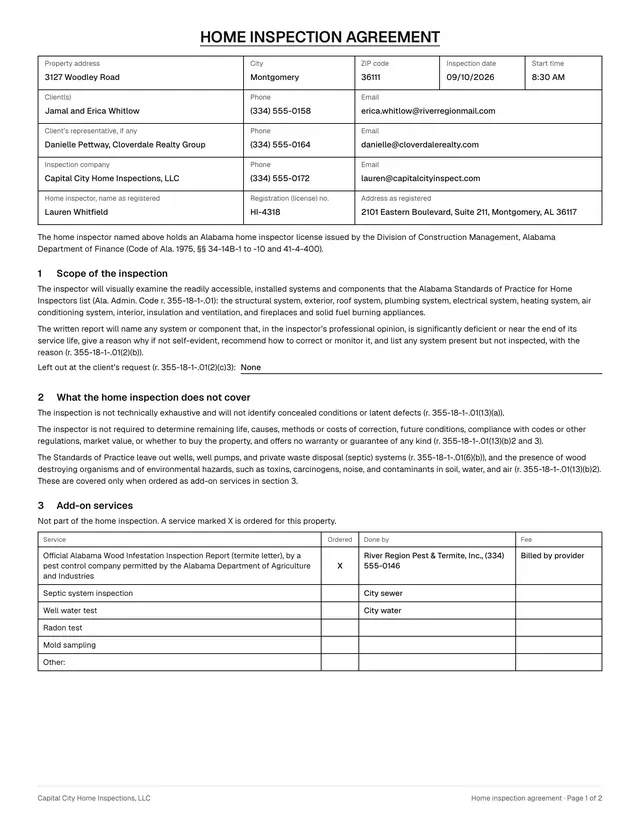
Home inspection agreement templates- Alabama
Home Inspection Agreement
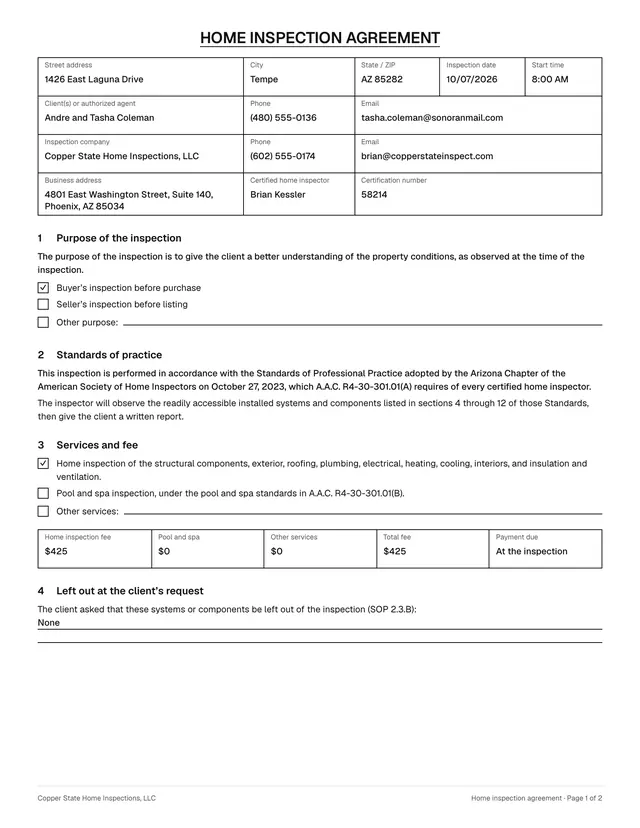
The contract a client signs for a home inspection. - Arizona
Home Inspection Agreement
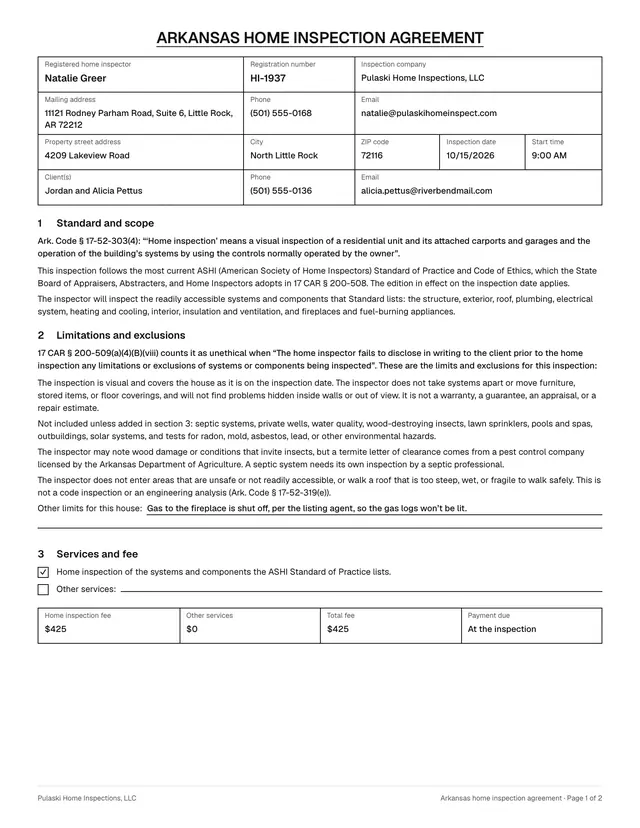
The contract a client signs for a home inspection. - Arkansas
Arkansas Home Inspection Agreement
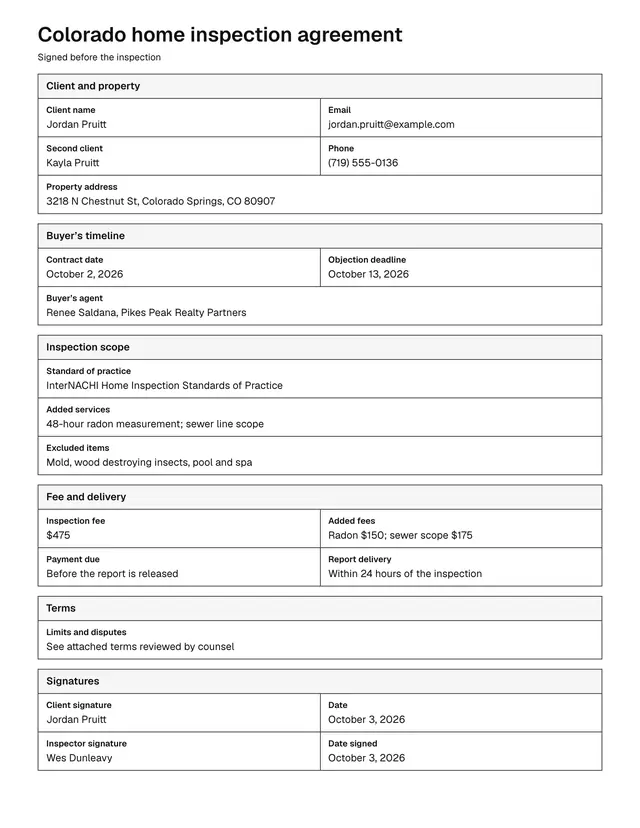
The contract a client signs for a home inspection. - Colorado
Colorado home inspection agreement
The contract a client signs for a home inspection. - Connecticut
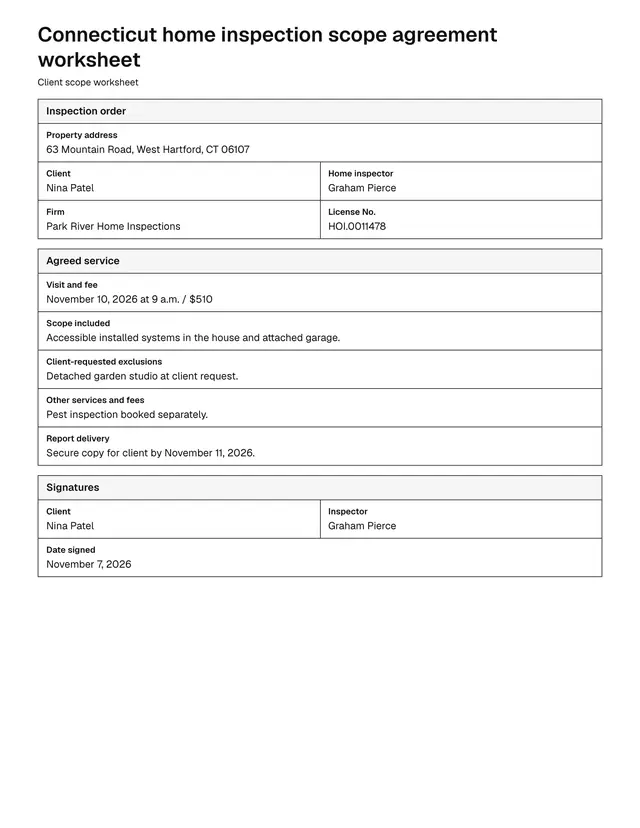
Connecticut home inspection scope agreement worksheet
The contract a client signs for a home inspection. - Delaware
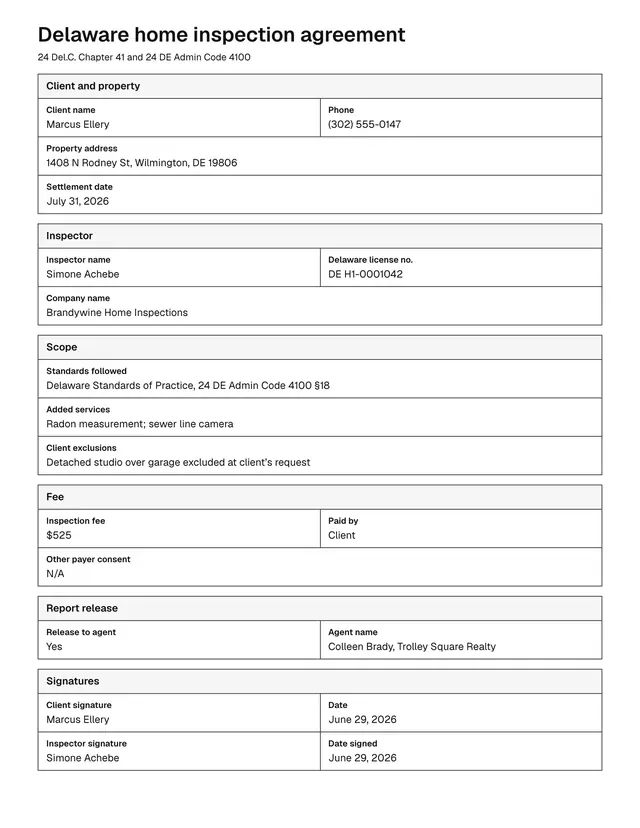
Delaware home inspection agreement
The contract a client signs for a home inspection. - Florida
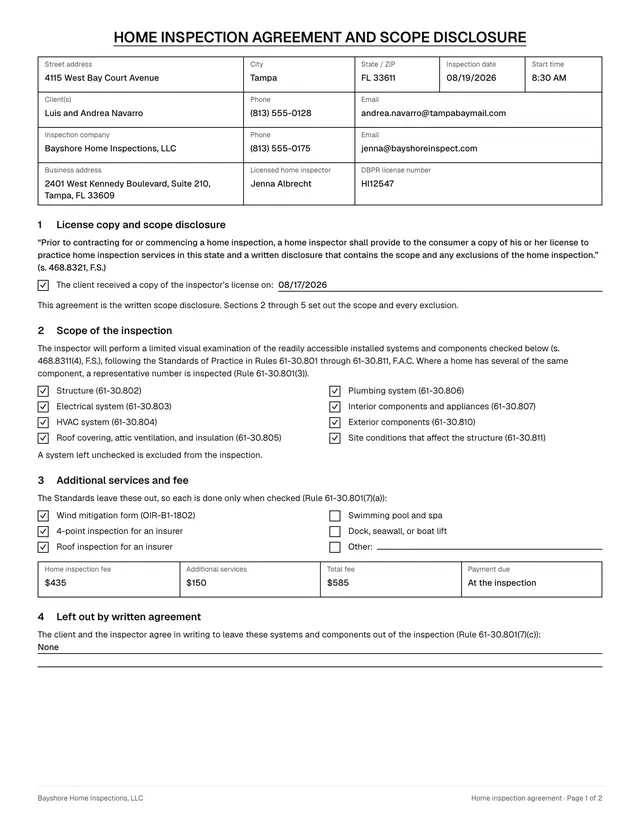
Home Inspection Agreement and Scope Disclosure
The contract a client signs for a home inspection. - Georgia
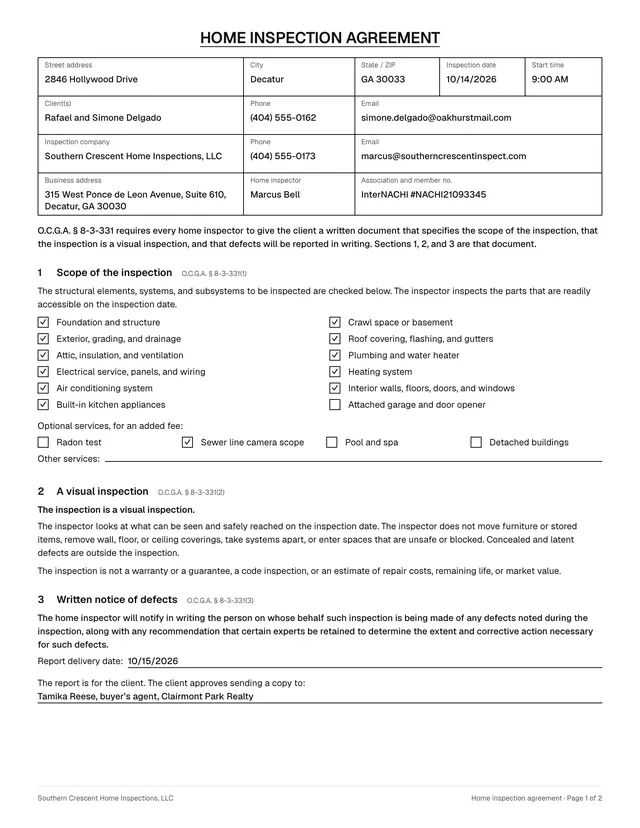
Home Inspection Agreement
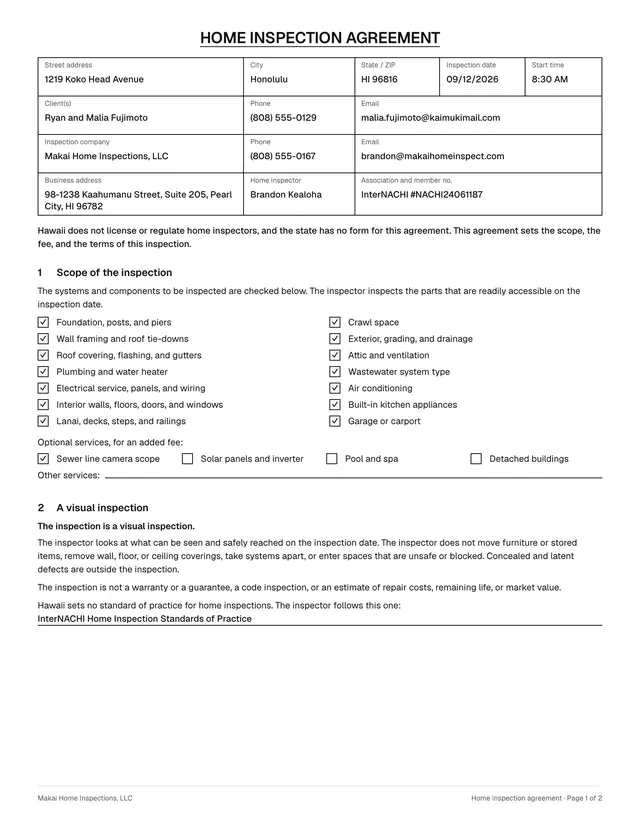
The contract a client signs for a home inspection. - Hawaii
Home Inspection Agreement
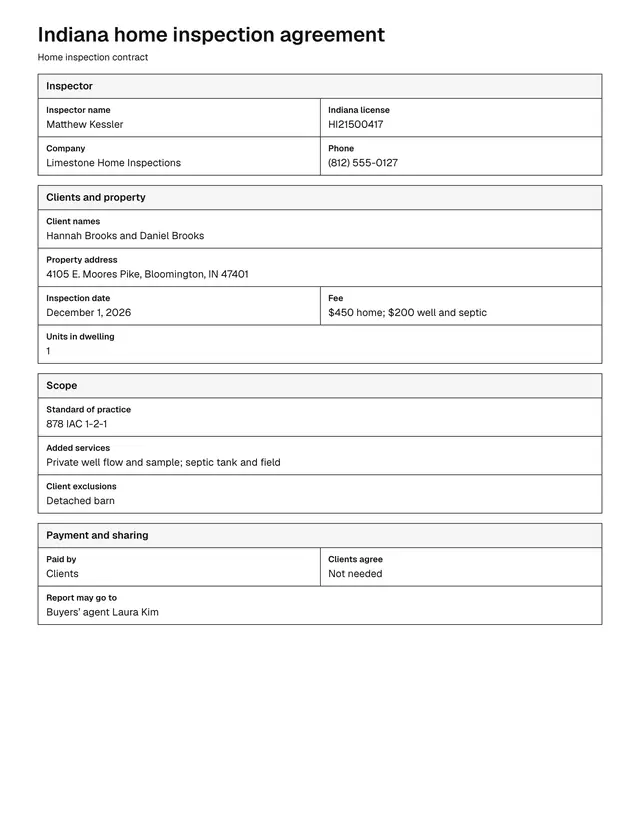
The contract a client signs for a home inspection. - Indiana
Indiana home inspection agreement
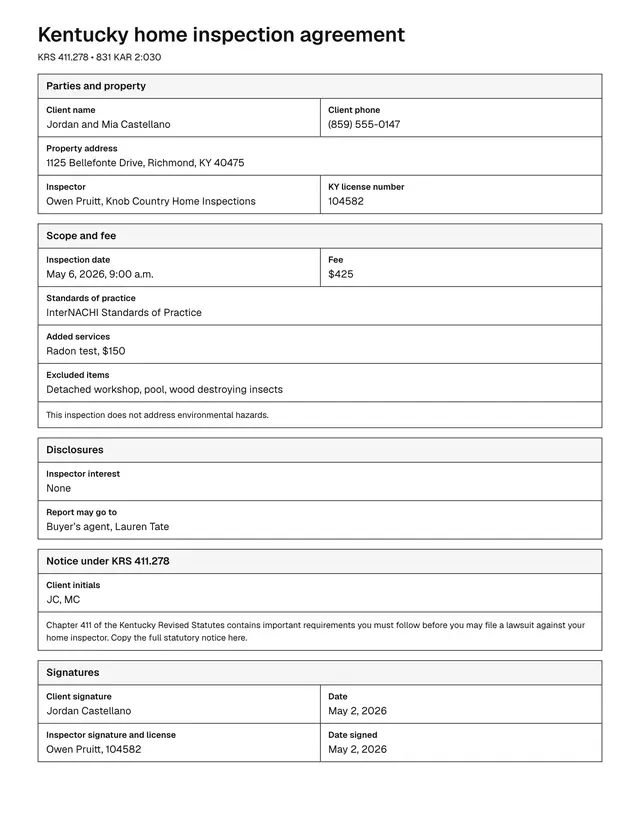
The contract a client signs for a home inspection. - Kentucky
Kentucky home inspection agreement
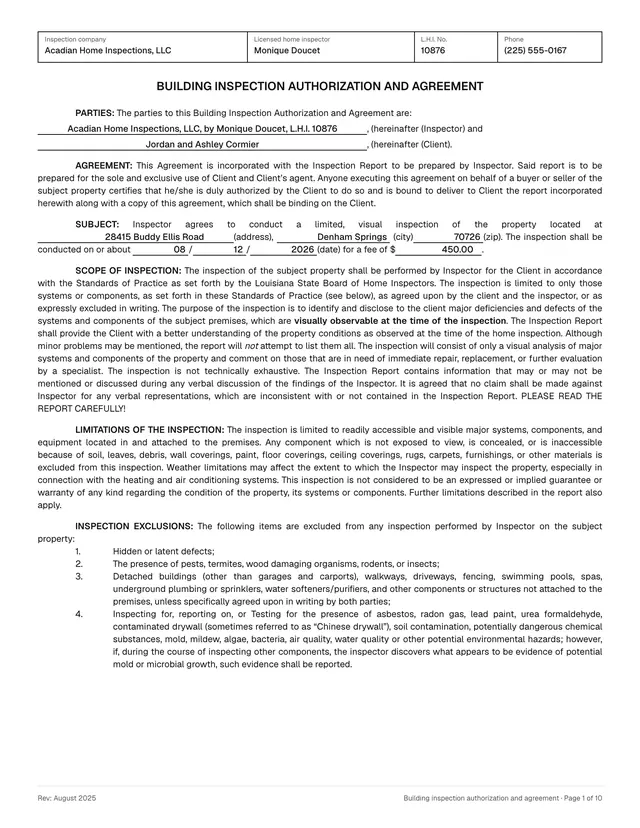
The contract a client signs for a home inspection. - Louisiana
Building Inspection Authorization and Agreement
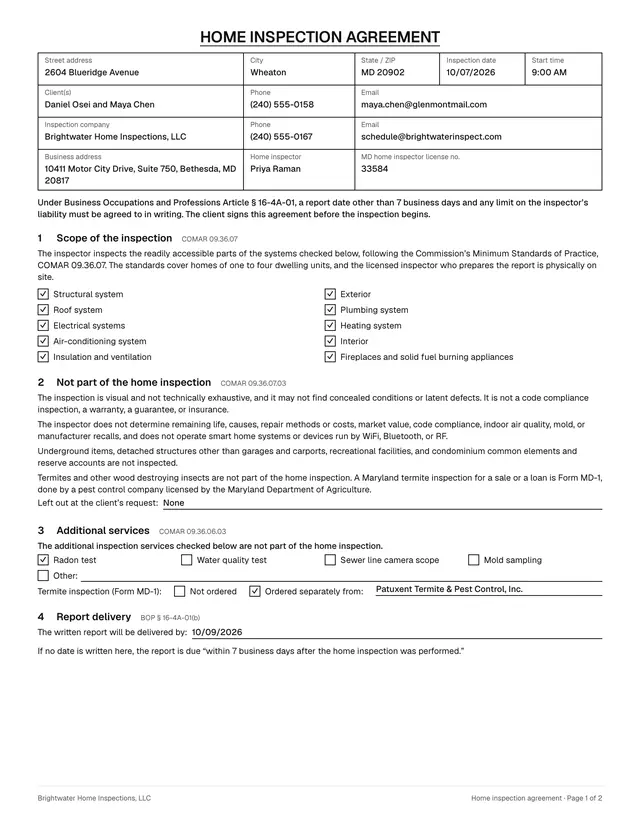
The contract a client signs for a home inspection. - Maryland
Home Inspection Agreement
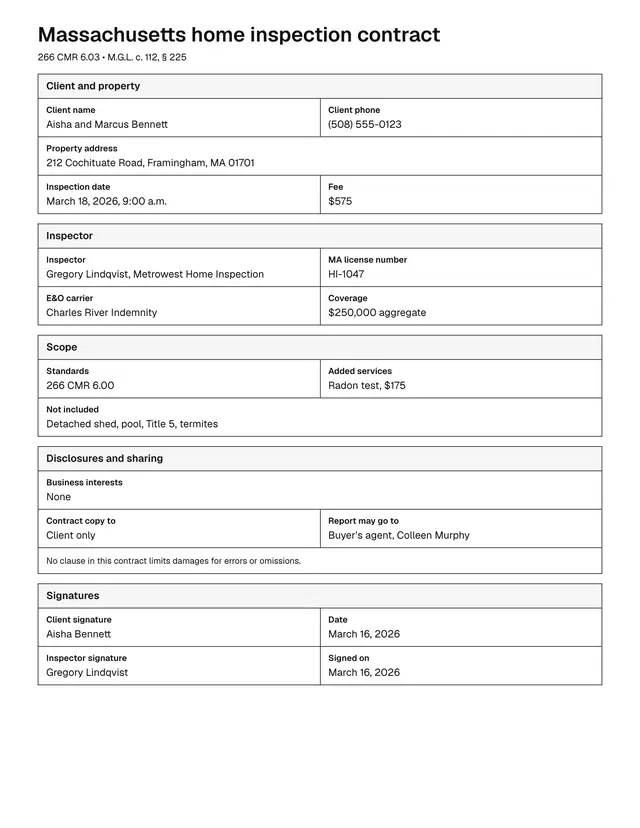
The contract a client signs for a home inspection. - Massachusetts
Massachusetts home inspection contract (266 CMR 6.03)
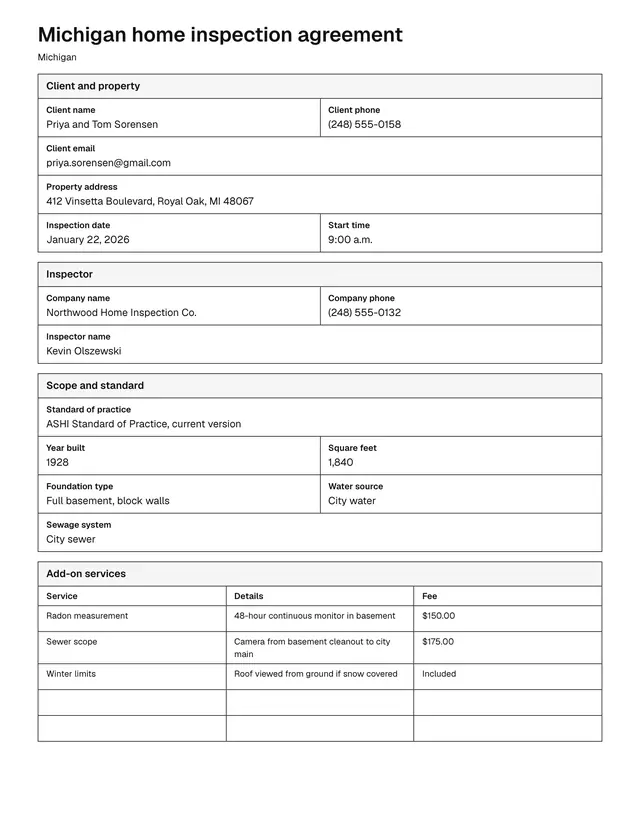
The contract a client signs for a home inspection. - Michigan
Michigan home inspection agreement
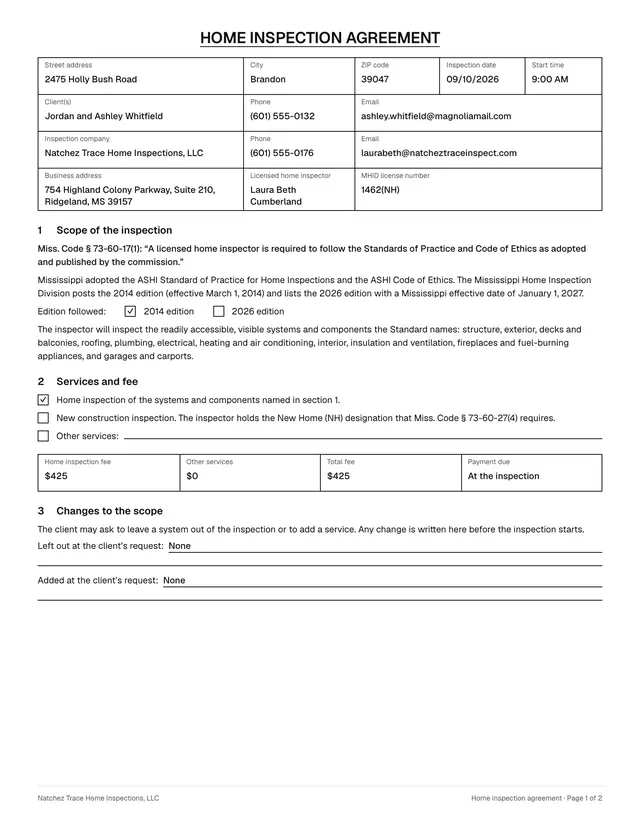
The contract a client signs for a home inspection. - Mississippi
Home Inspection Agreement
The contract a client signs for a home inspection. - Missouri
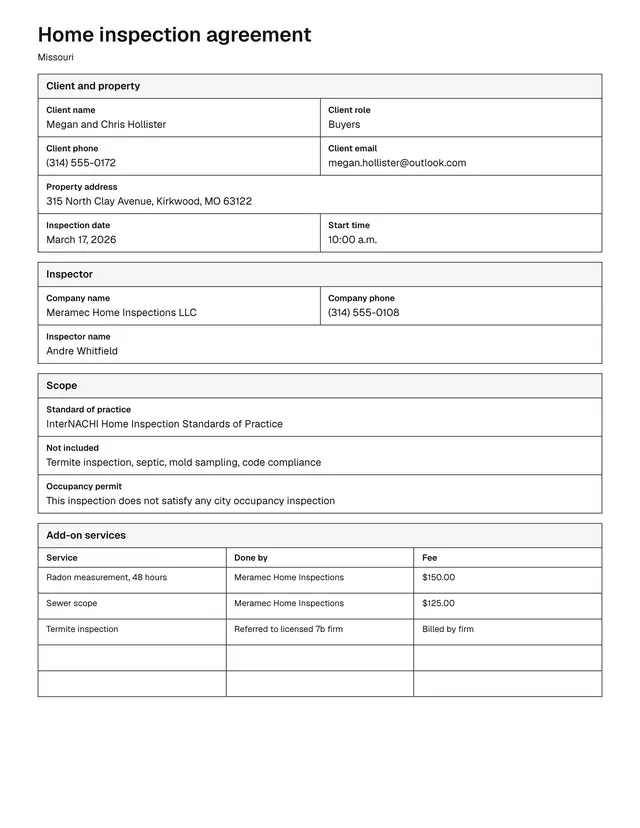
Missouri home inspection agreement
The contract a client signs for a home inspection. - Nevada
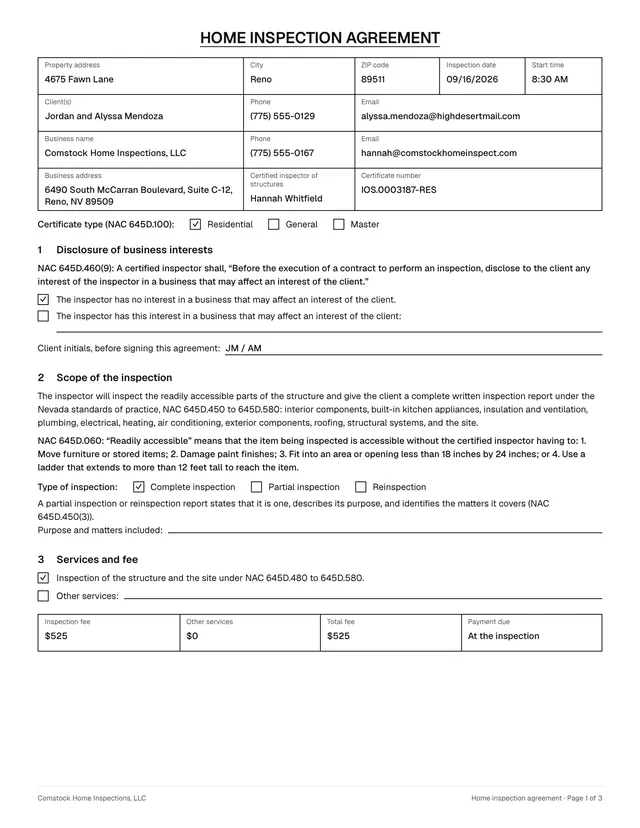
Home Inspection Agreement
The contract a client signs for a home inspection. - New Jersey
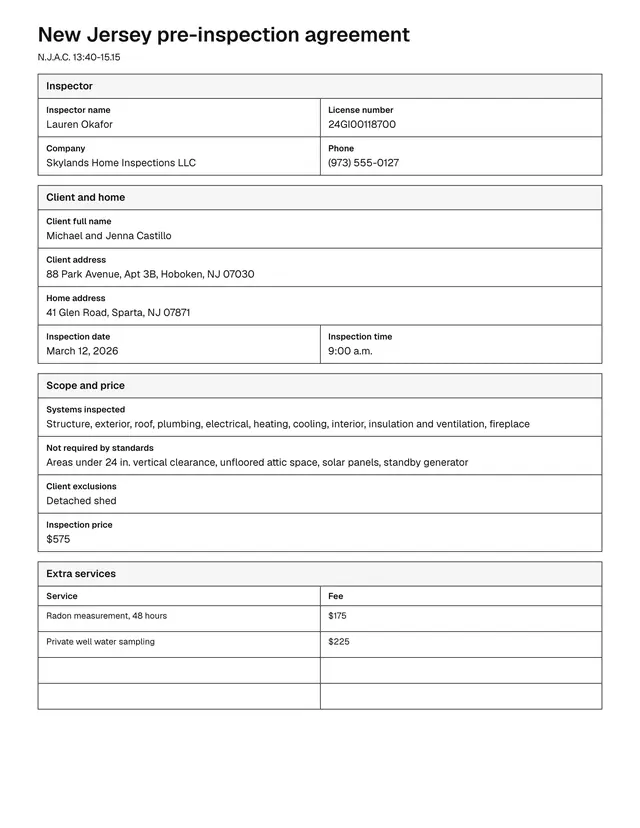
New Jersey pre-inspection agreement (N.J.A.C. 13:40-15.15)
The contract a client signs for a home inspection. - New Mexico
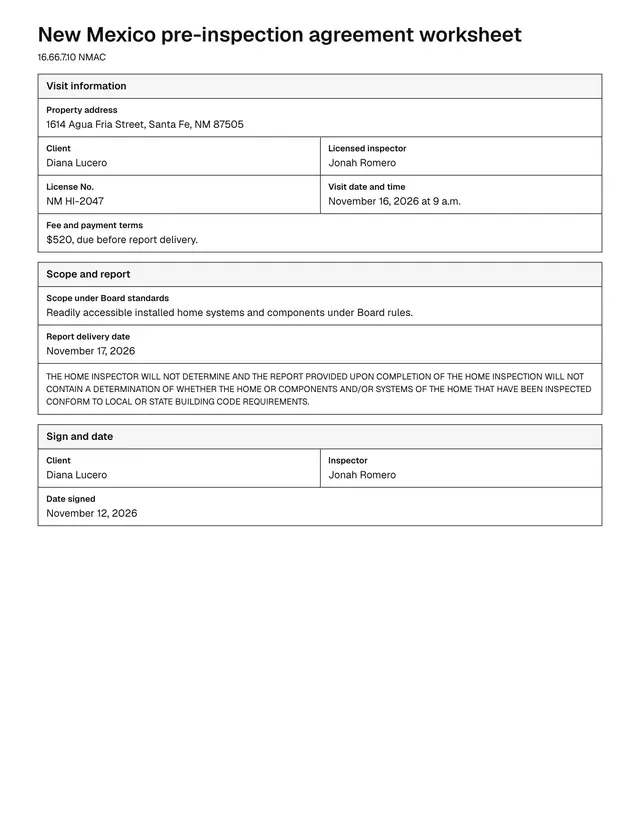
New Mexico pre-inspection agreement worksheet
The contract a client signs for a home inspection. - New York
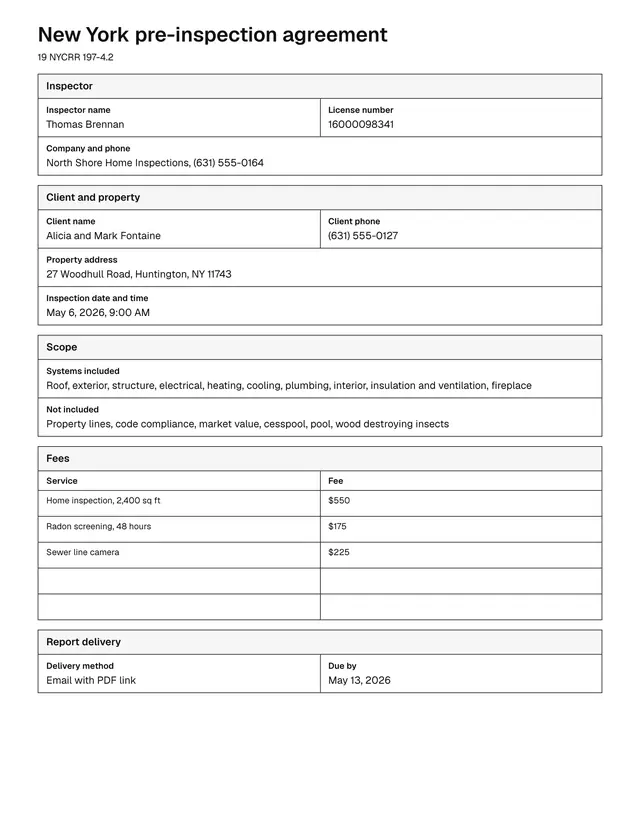
New York pre-inspection agreement (19 NYCRR 197-4.2)
The contract a client signs for a home inspection. - North Carolina
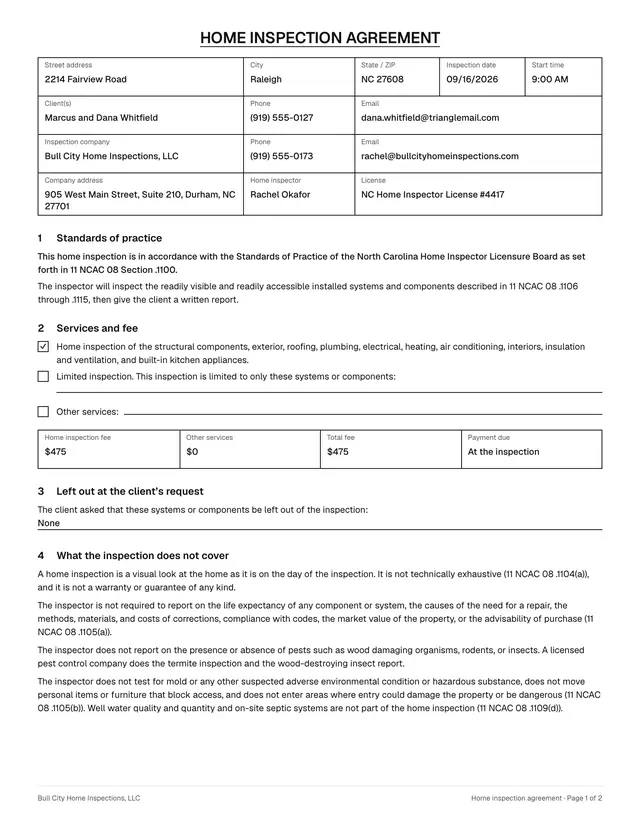
Home Inspection Agreement
The contract a client signs for a home inspection. - Ohio
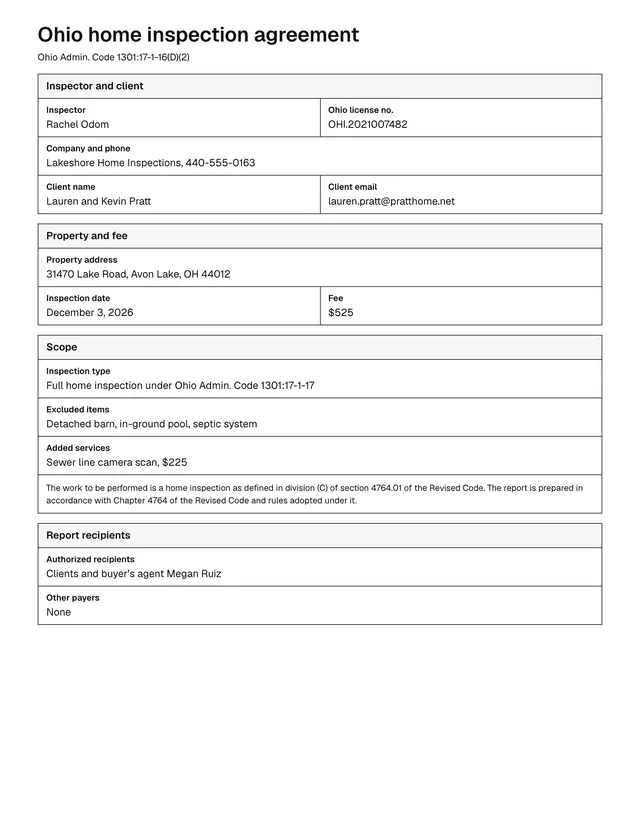
Ohio home inspection agreement
The contract a client signs for a home inspection. - Oklahoma
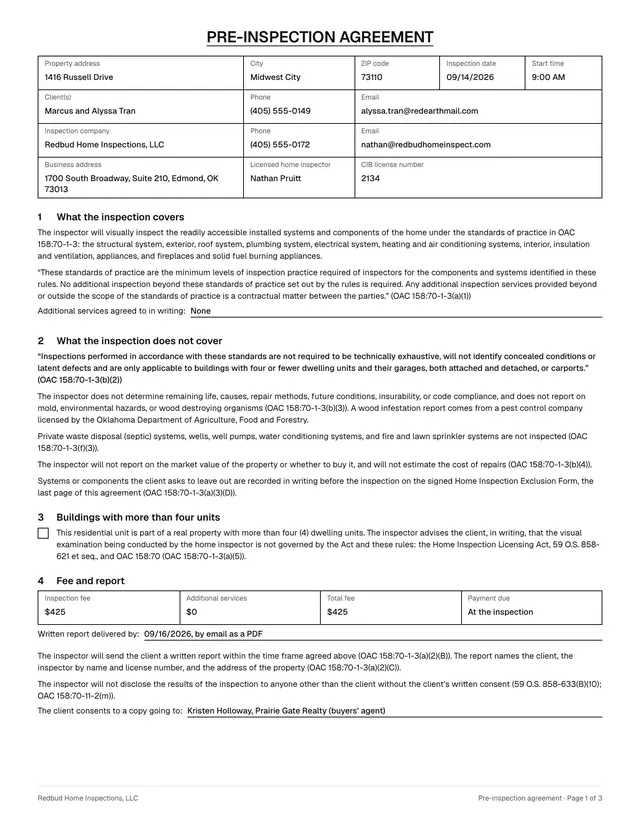
Pre-Inspection Agreement
The contract a client signs for a home inspection. - Oregon
Oregon home inspection contract worksheet
The contract a client signs for a home inspection. - Pennsylvania
Pennsylvania home inspection agreement
The contract a client signs for a home inspection. - South Carolina
Home Inspection Agreement
The contract a client signs for a home inspection. - Tennessee
Tennessee home inspection agreement
The contract a client signs for a home inspection. - Texas
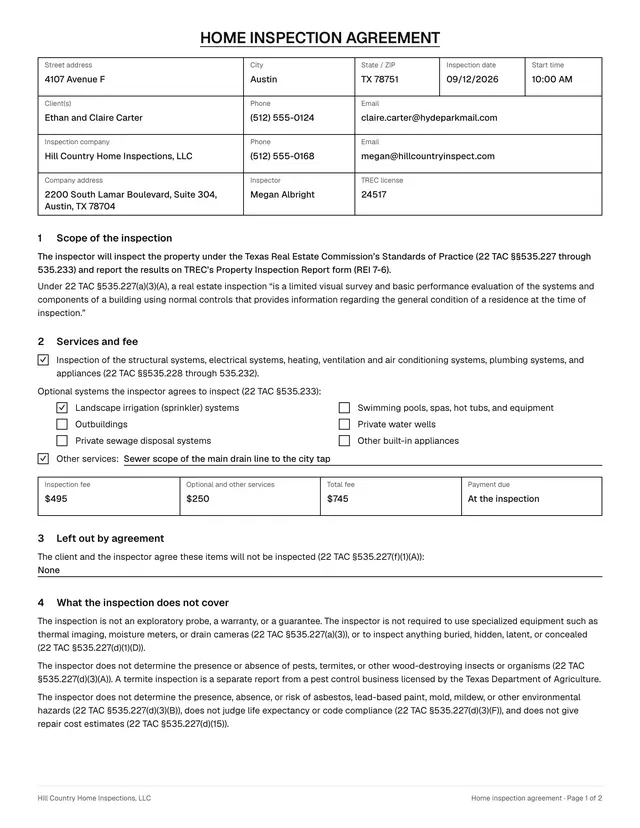
Home Inspection Agreement
The contract a client signs for a home inspection. - Virginia
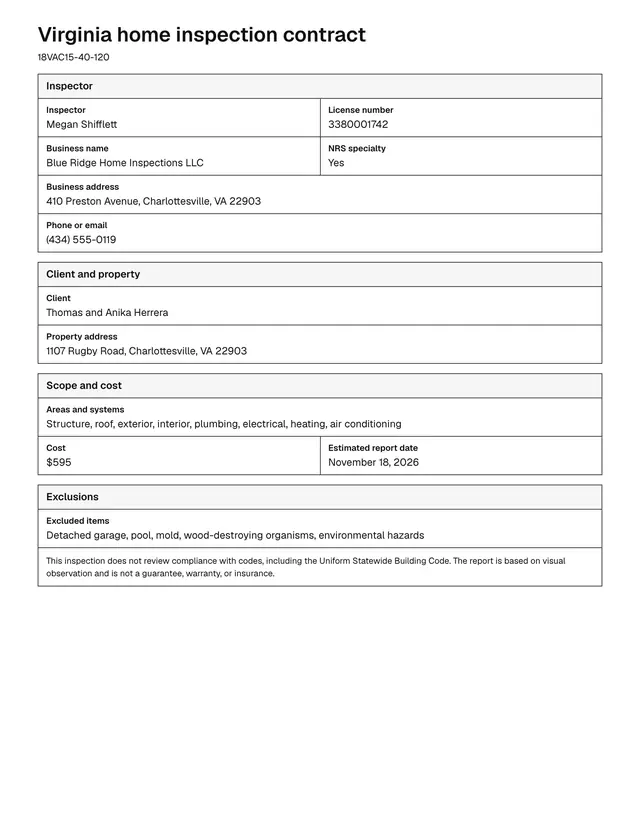
Virginia home inspection contract
The contract a client signs for a home inspection. - Washington
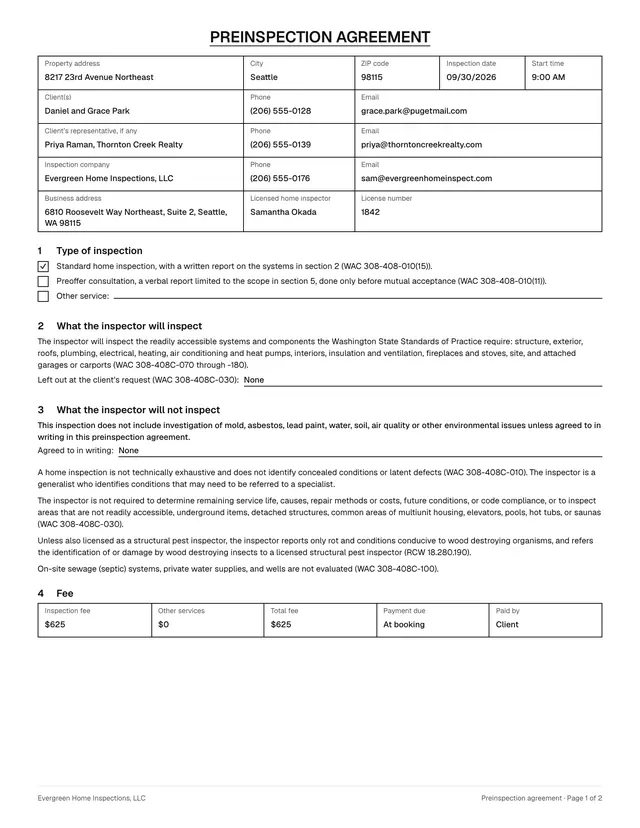
Preinspection Agreement
The contract a client signs for a home inspection. - Wisconsin
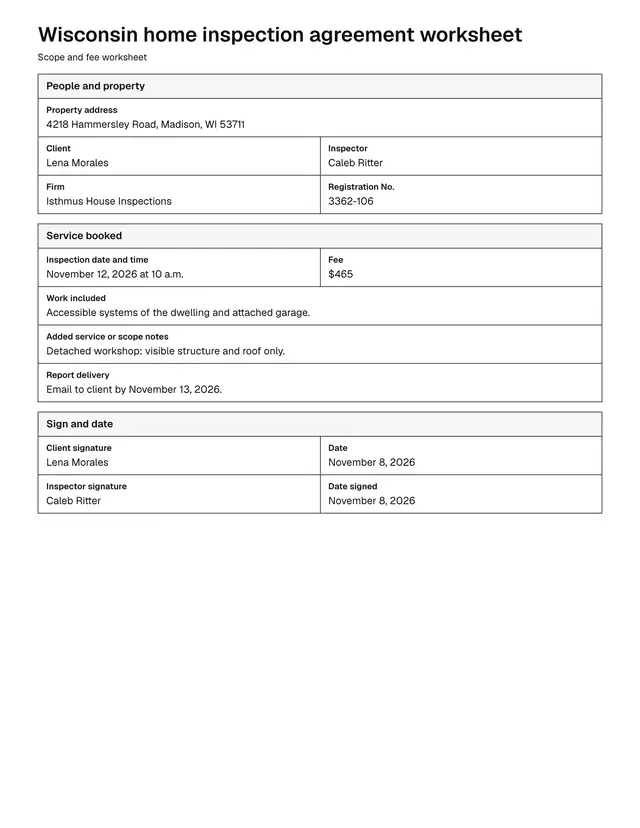
Wisconsin home inspection agreement worksheet
The contract a client signs for a home inspection.