Kentucky home inspection agreement
Kentucky doesn’t print a home inspection contract, but KRS 411.278 makes you give each client the right-to-cure notice when they sign, and the Board’s rules add disclosures and a three-year keep.
At a glance
- Required notice
- KRS 411.278 right to cure
- Board rule
- 831 KAR 2:030
- Kept for
- 3 years from the inspection
- Signed by
- Inspector, with license number
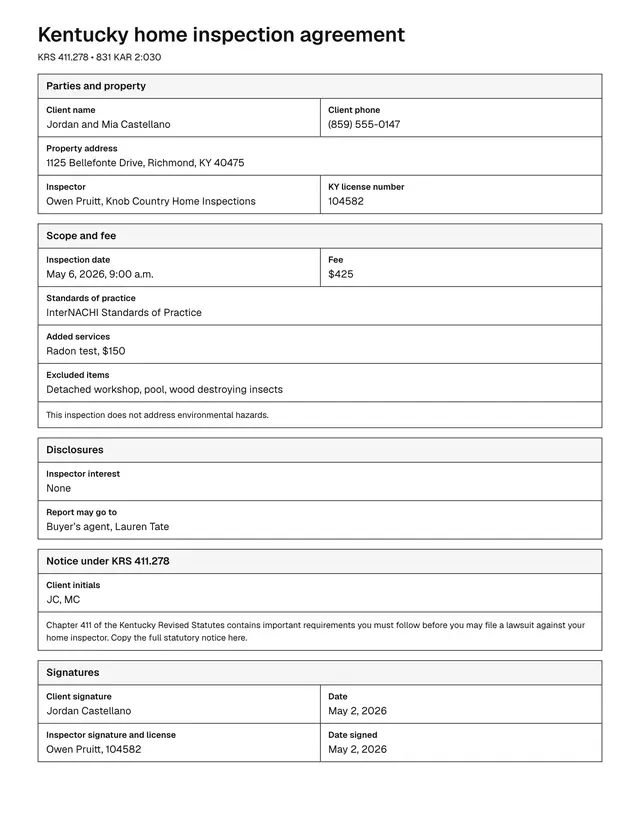
Completed example
Download PDFWhat does Kentucky law put in the contract?
Less than most states, but one line you can’t skip. The Kentucky Board of Home Inspectors doesn’t publish a contract. Instead, the rules spread a few musts across two laws and one regulation, and this agreement pulls them onto two pages.
The big one is KRS 411.278. When a client signs up for an inspection, you must give them notice of your right to offer a fix before they sue. The notice “shall be conspicuous” and “may be included as part of the underlying contract.” The statute gives the wording, in all caps, starting with “CHAPTER 411 OF THE KENTUCKY REVISED STATUTES CONTAINS IMPORTANT REQUIREMENTS.” Copy it word for word into a box near the signature.
Why the right-to-cure notice matters to you
It sets the order things happen in if a buyer finds a leak you missed. Under KRS 411.276, the client first sends you a written notice of the claim. You then have 21 days to answer by registered mail or personal service. You can offer to come back and look, offer a payment, or dispute it.
That 21-day clock is short, so make sure the agreement has a mailing address that someone checks. If you skip the notice in the contract, the statute says the client’s lawsuit isn’t barred. You just lose the head start.
Once you answer, the client has 30 days to accept or reject your offer in writing. If they accept a repair or payment and you follow through, that’s the end of it. If they reject it, they can file suit. Either way, the paper trail starts with the notice you put in this agreement.
The Board’s rules, line by line
Name your standards. KRS 198B.706 has every paid inspection follow the ASHI standards, the InterNACHI standards, or an equal set the Board approves. 831 KAR 2:030 says you follow the one you chose on your license application. Write which one in the scope section.
Disclose your interests. If you, your staff, or a business you own could sell the client a repair, radon mitigation, or anything else, the rule wants a written disclosure and advice to “obtain competitive bids.” A one-line checkbox handles it.
Put your license number after your signature. The rule asks for it on “any document signed by the home inspector” about the inspection. That includes this one.
Get written OK before you share. You can’t disclose the results without “the prior, written approval of the client.” Add a line where the client names who gets the report, like their agent or lender.
Fees, limits, and insurance
The fee can’t depend on what you find. 831 KAR 2:030 bans inspections where the fee “is contingent upon the conclusions” of the report. It also bars you from doing paid repairs on the house for 12 months if they’re based on your own findings, so leave any repair offer out of this contract.
List what’s out of scope in plain words. The report will need a statement that it doesn’t cover environmental hazards, plus a specific list of other exclusions, so the agreement should say the same things first. Termites are on that excluded list, which is why buyers often order a separate Kentucky termite inspection report. Keep the signed agreement for three years.
Two more money rules belong in your terms. You can’t take pay from more than one party for the same inspection without everyone’s consent, and you can’t pay or accept fees for referrals. If an agent’s office books the job, the agreement should still show the client as the one paying.
Not in the contract itself, but clients and agents ask. KRS 198B.712 makes Kentucky inspectors carry general liability insurance of at least $250,000, with the Board listed as a certificate holder. Some inspectors put the carrier’s name in a footer so the question never comes up.
Errors and omissions coverage isn’t required by that statute. If you carry it, you can say so. If you don’t, don’t imply it.
Can clients sign before you get to the house?
They should. When the agreement gets signed in the driveway, the KRS 411.278 notice is the part nobody reads, and that’s the part a lawyer will ask about later.
Noma specializes in the Kentucky Home Inspection Agreement (KRS 411.278 and 831 KAR 2:030). Upload your agreement once as a reusable document, and each booked job can send it for e-signature right away, so the client signs before you arrive. See how Noma gets agreements signed.
Frequentlyaskedquestions
Send this document in minutes, not an afternoon.
Other states
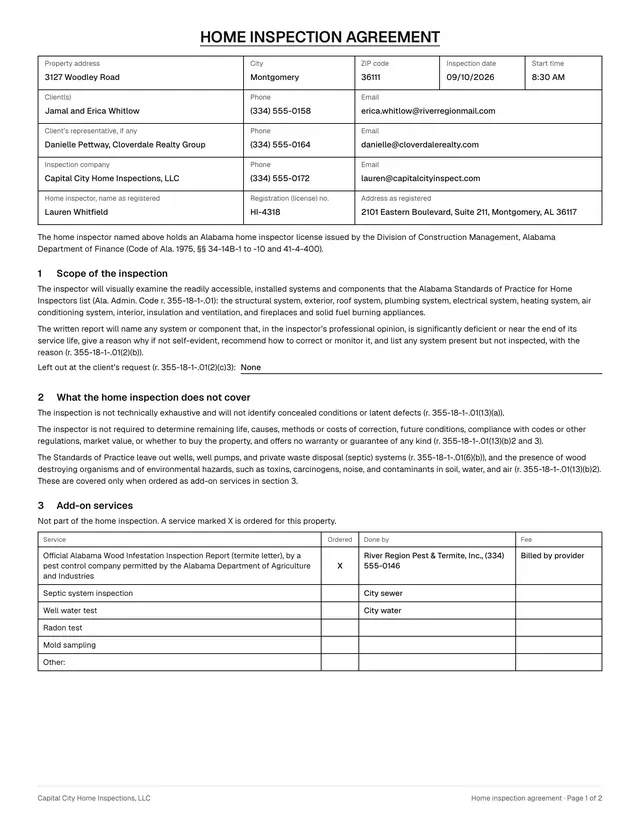
Home inspection agreement templates- Alabama
Home Inspection Agreement
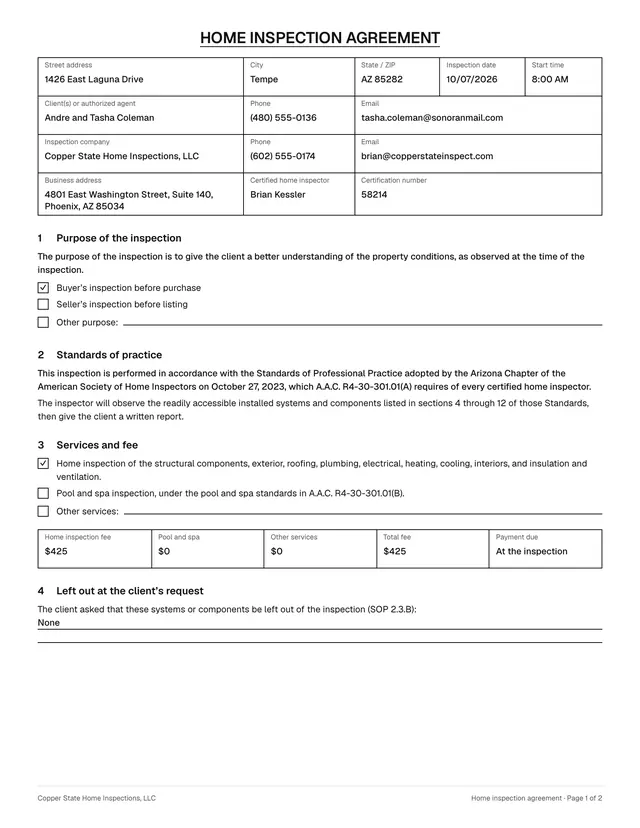
The contract a client signs for a home inspection. - Arizona
Home Inspection Agreement
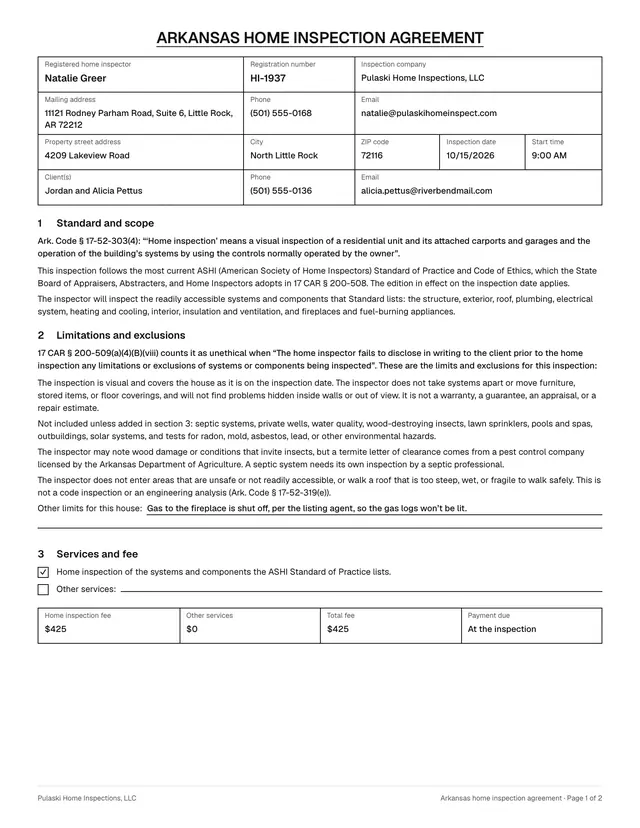
The contract a client signs for a home inspection. - Arkansas
Arkansas Home Inspection Agreement
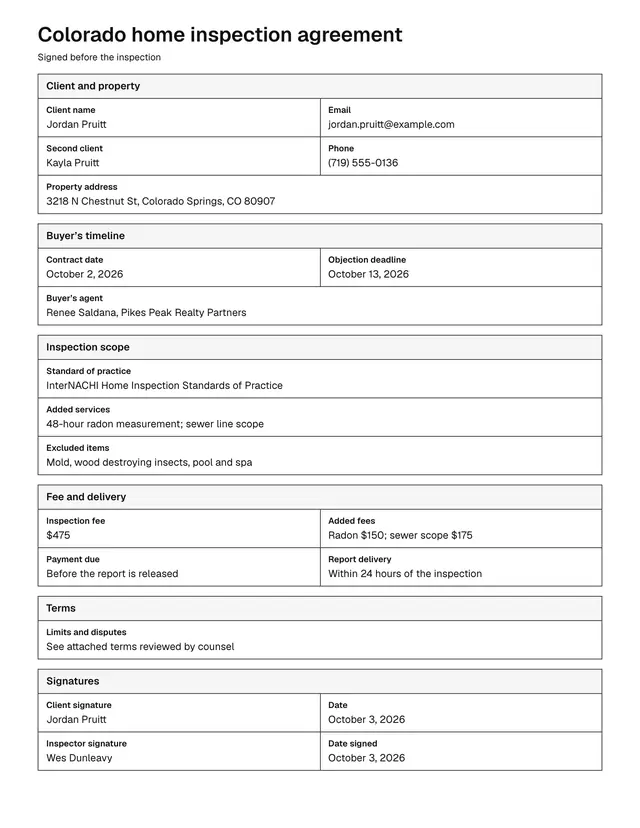
The contract a client signs for a home inspection. - Colorado
Colorado home inspection agreement
The contract a client signs for a home inspection. - Connecticut
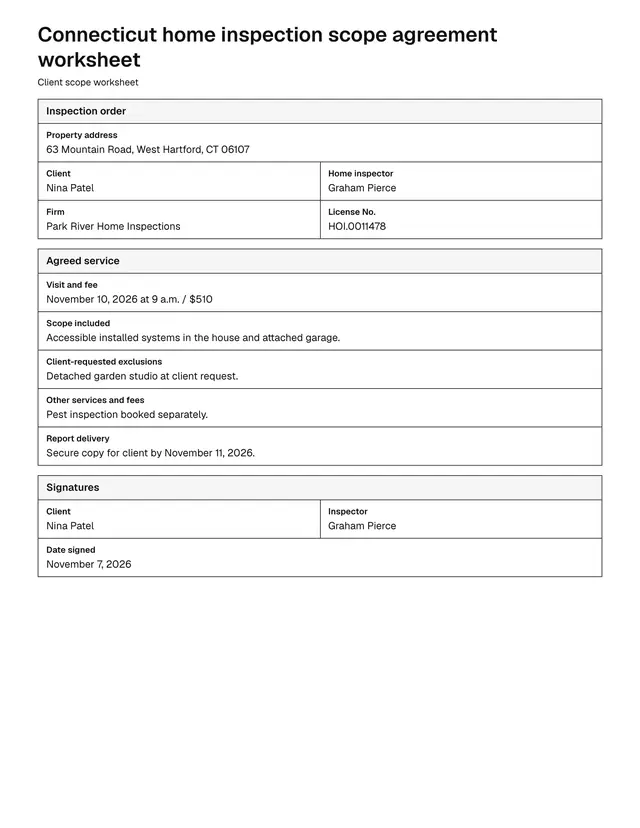
Connecticut home inspection scope agreement worksheet
The contract a client signs for a home inspection. - Delaware
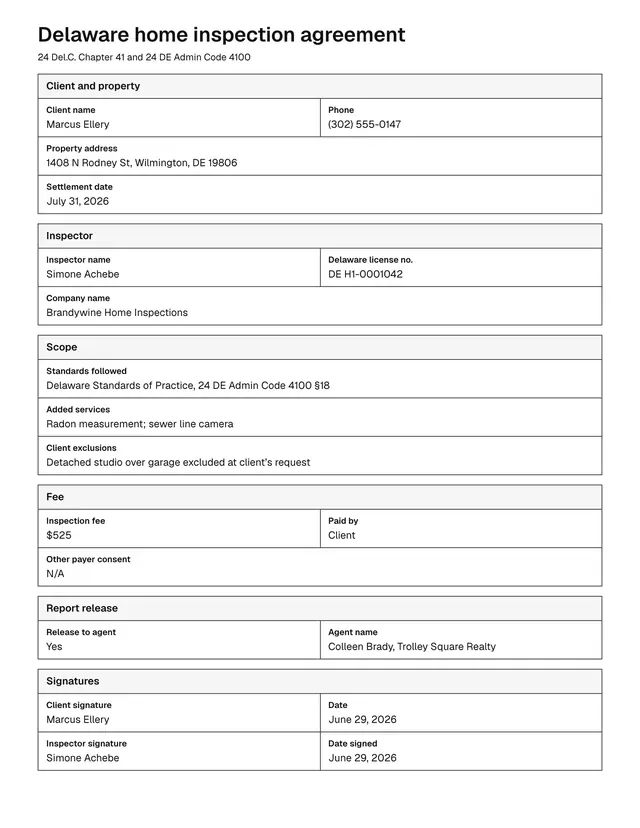
Delaware home inspection agreement
The contract a client signs for a home inspection. - Florida
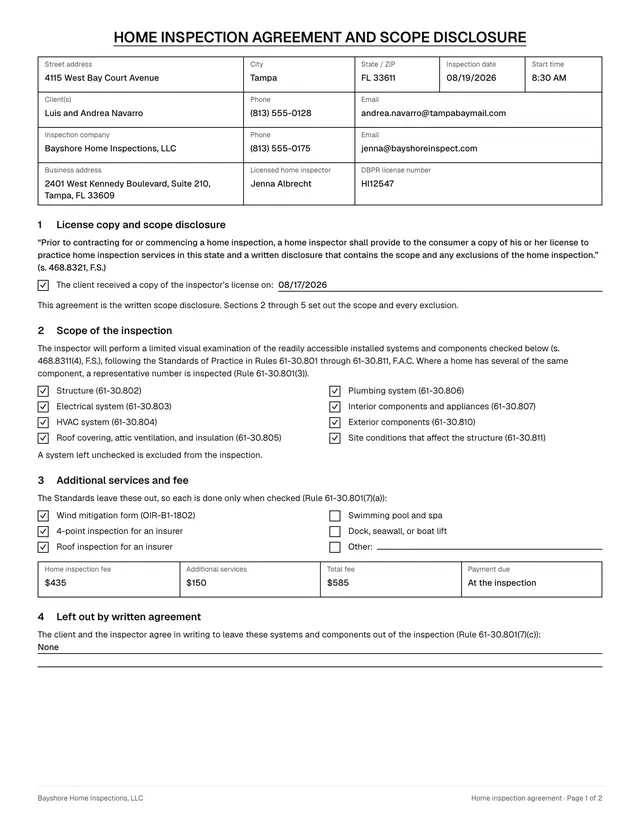
Home Inspection Agreement and Scope Disclosure
The contract a client signs for a home inspection. - Georgia
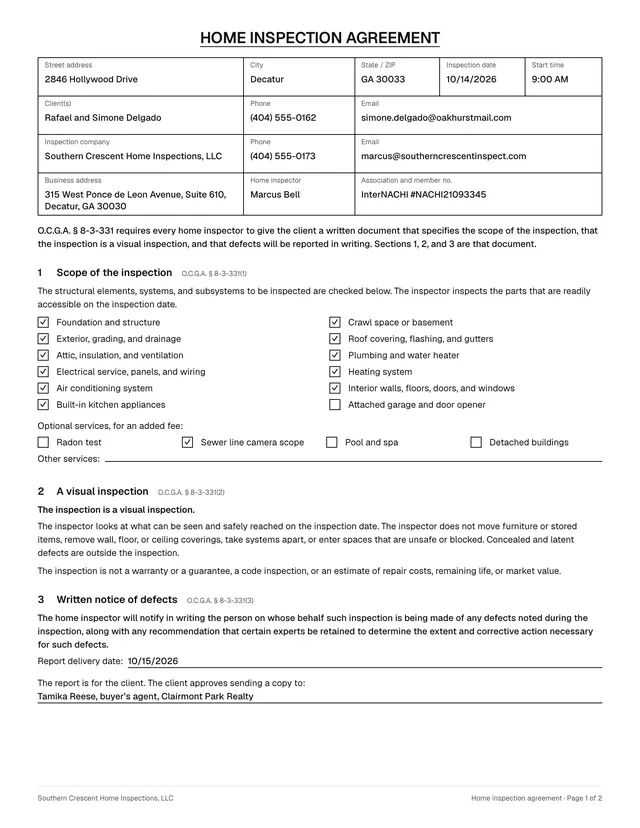
Home Inspection Agreement
The contract a client signs for a home inspection. - Hawaii
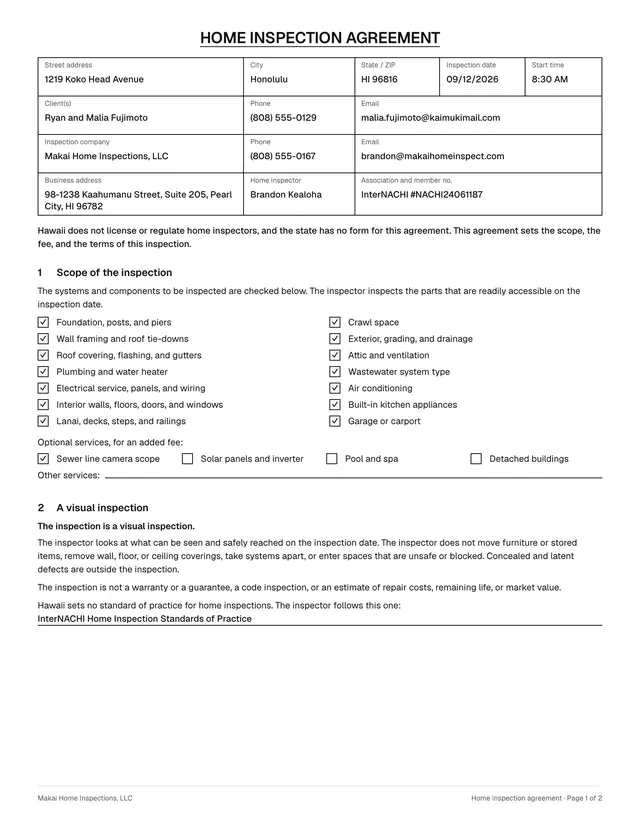
Home Inspection Agreement
The contract a client signs for a home inspection. - Illinois
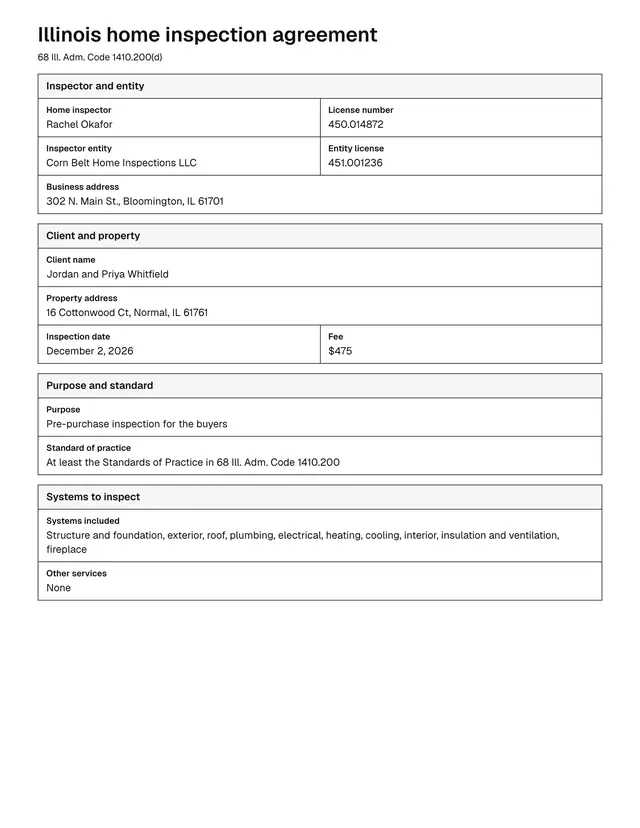
Illinois home inspection agreement
The contract a client signs for a home inspection. - Indiana
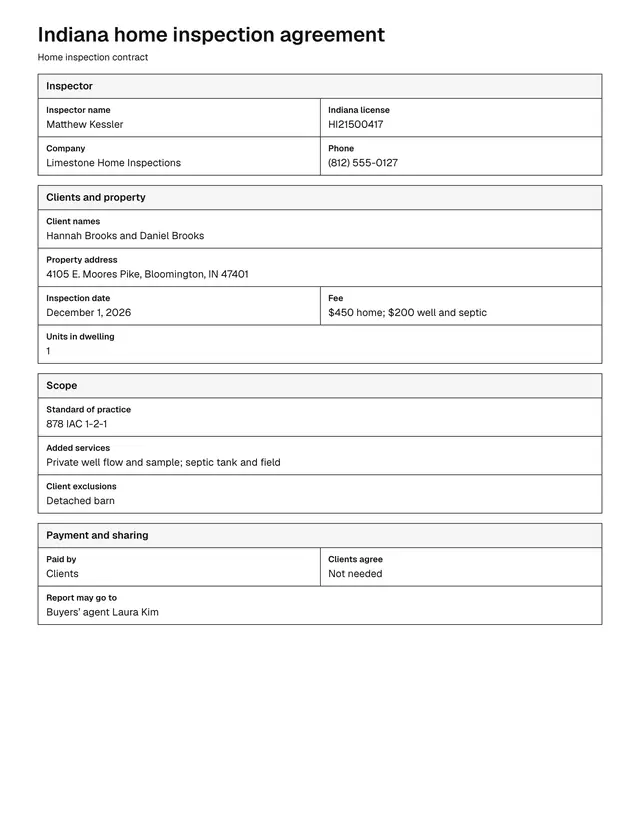
Indiana home inspection agreement
The contract a client signs for a home inspection. - Louisiana
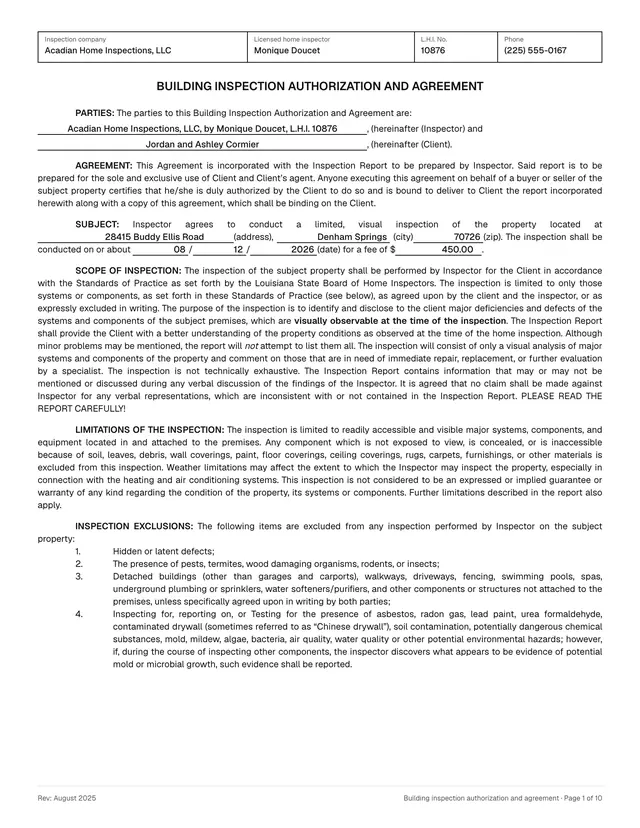
Building Inspection Authorization and Agreement
The contract a client signs for a home inspection. - Maryland
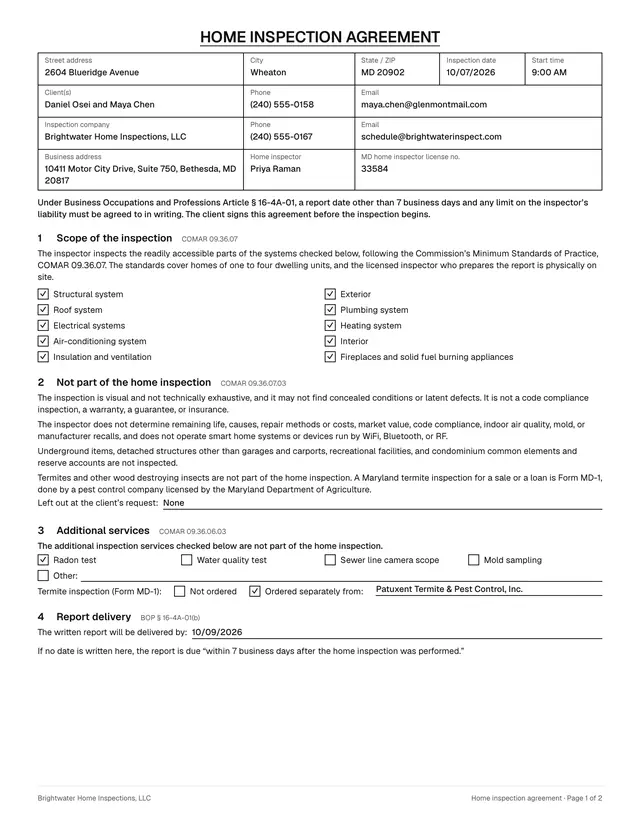
Home Inspection Agreement
The contract a client signs for a home inspection. - Massachusetts
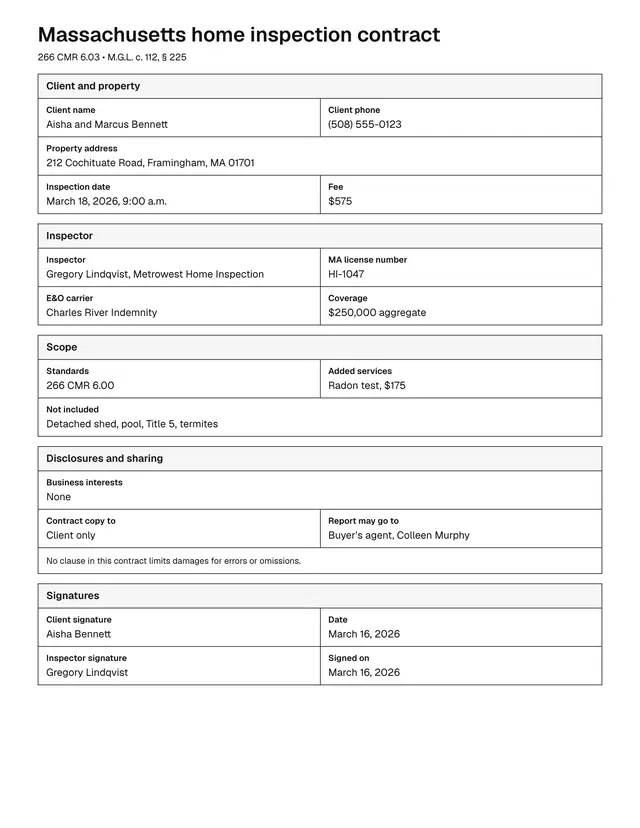
Massachusetts home inspection contract (266 CMR 6.03)
The contract a client signs for a home inspection. - Michigan
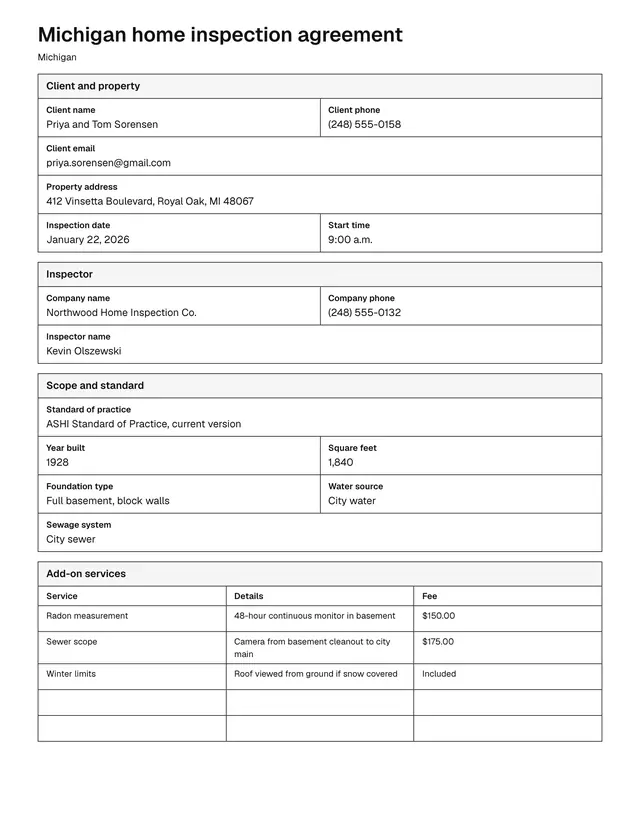
Michigan home inspection agreement
The contract a client signs for a home inspection. - Mississippi
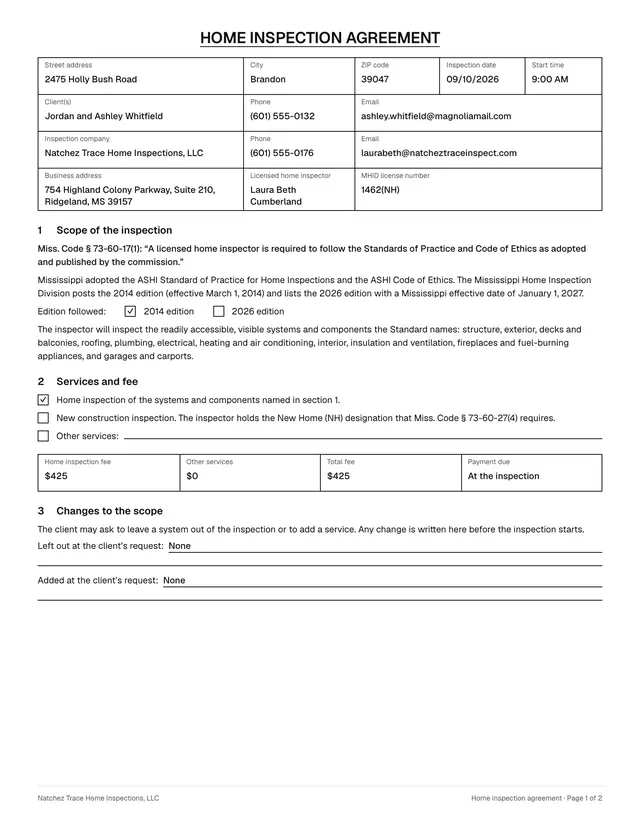
Home Inspection Agreement
The contract a client signs for a home inspection. - Missouri
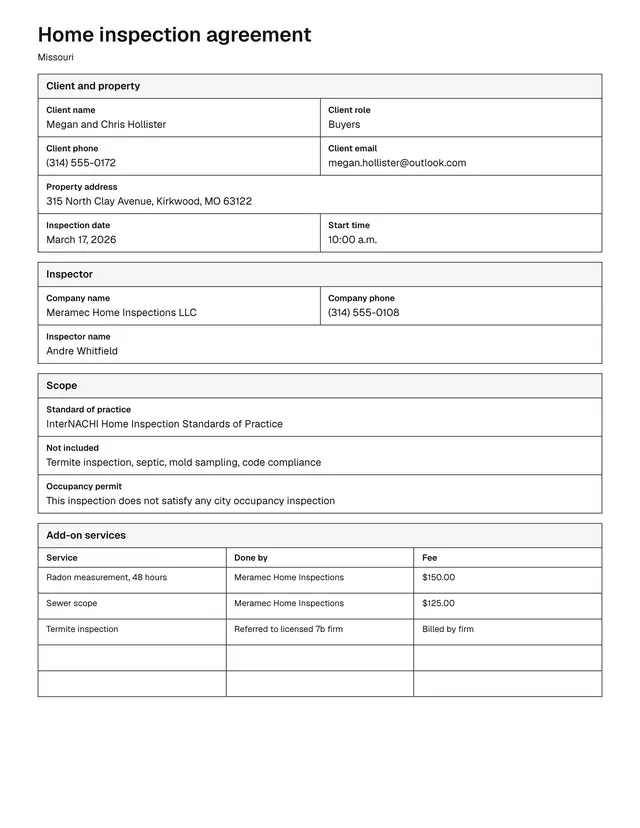
Missouri home inspection agreement
The contract a client signs for a home inspection. - Nevada
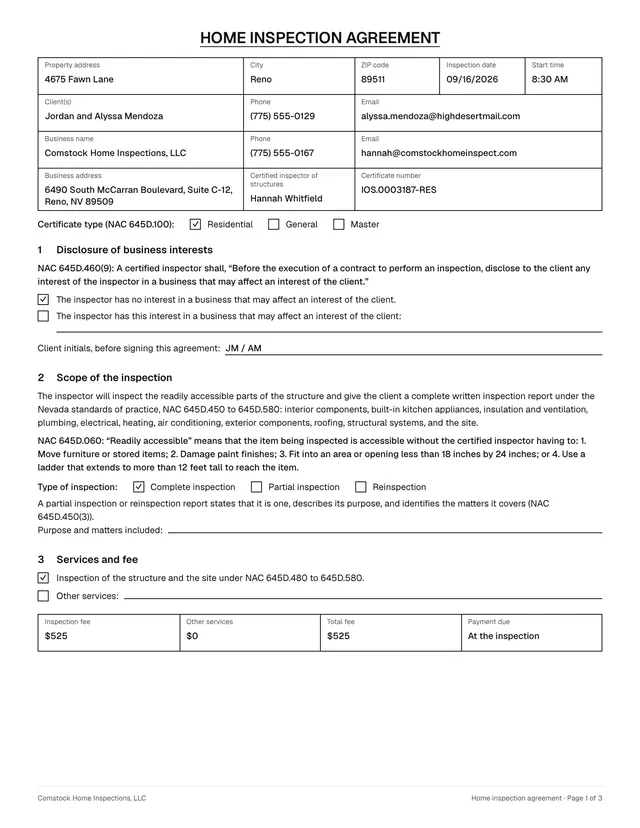
Home Inspection Agreement
The contract a client signs for a home inspection. - New Jersey
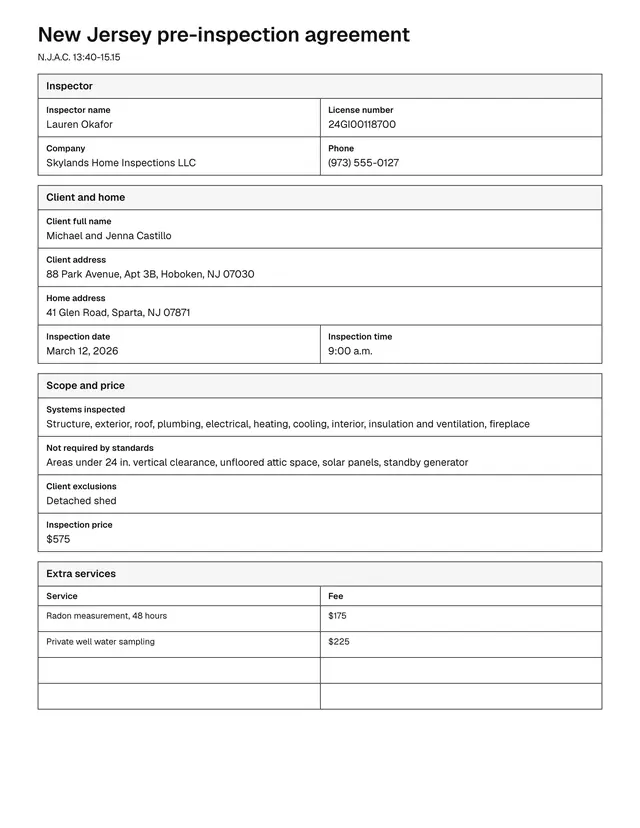
New Jersey pre-inspection agreement (N.J.A.C. 13:40-15.15)
The contract a client signs for a home inspection. - New Mexico
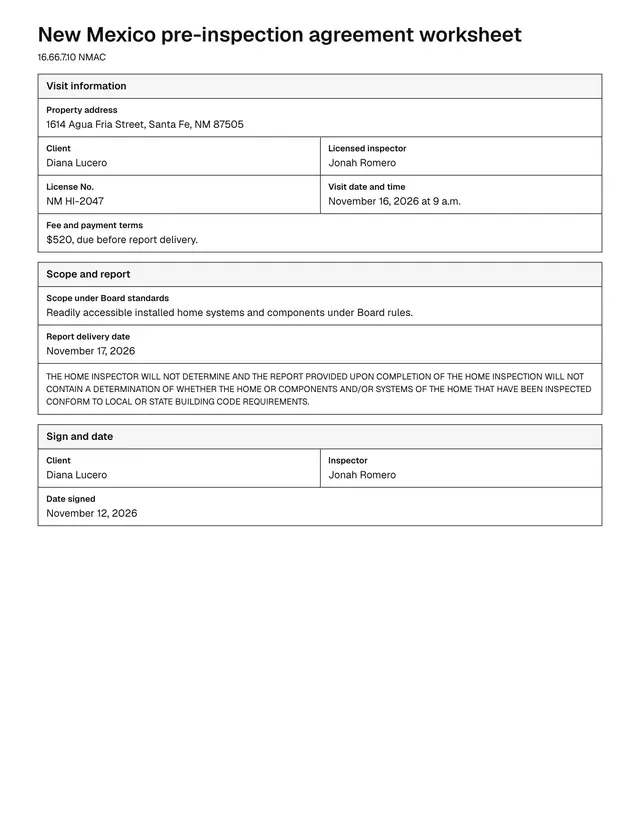
New Mexico pre-inspection agreement worksheet
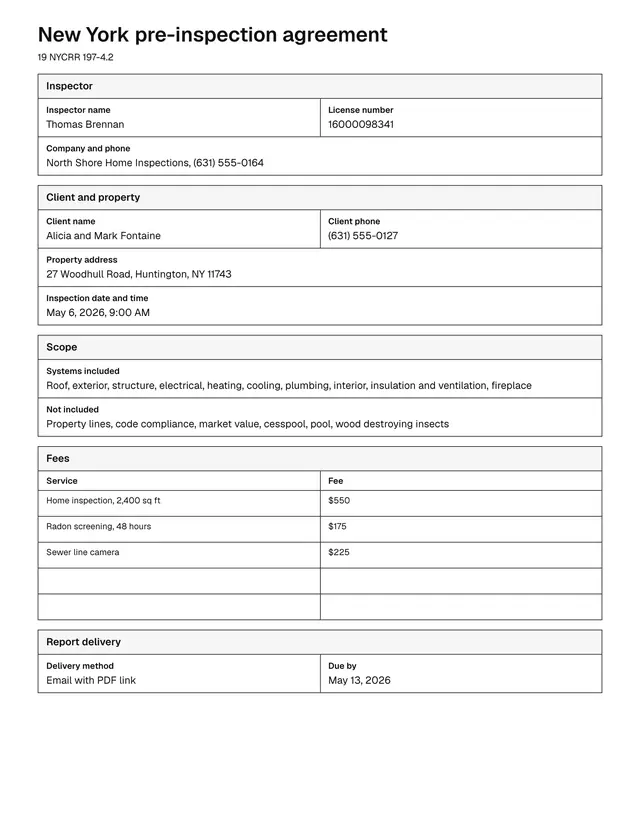
The contract a client signs for a home inspection. - New York
New York pre-inspection agreement (19 NYCRR 197-4.2)
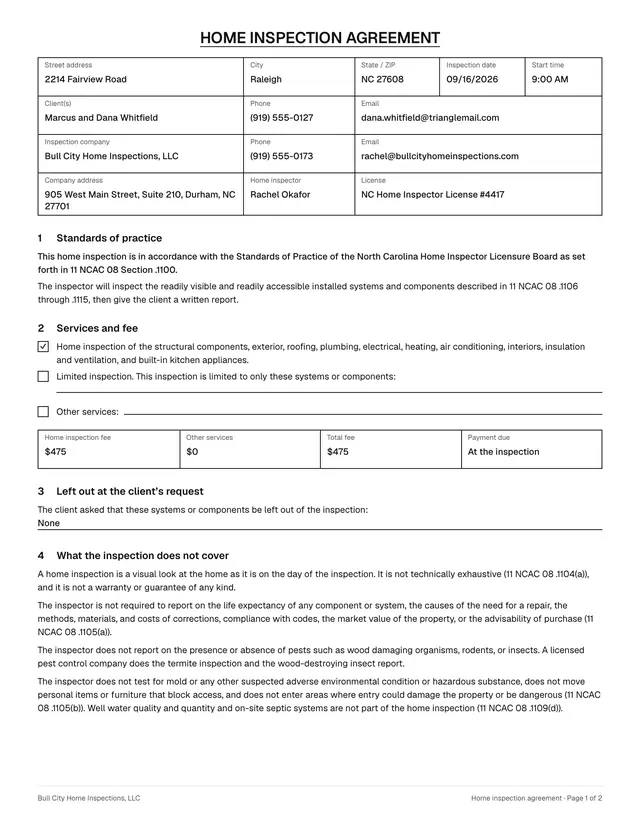
The contract a client signs for a home inspection. - North Carolina
Home Inspection Agreement
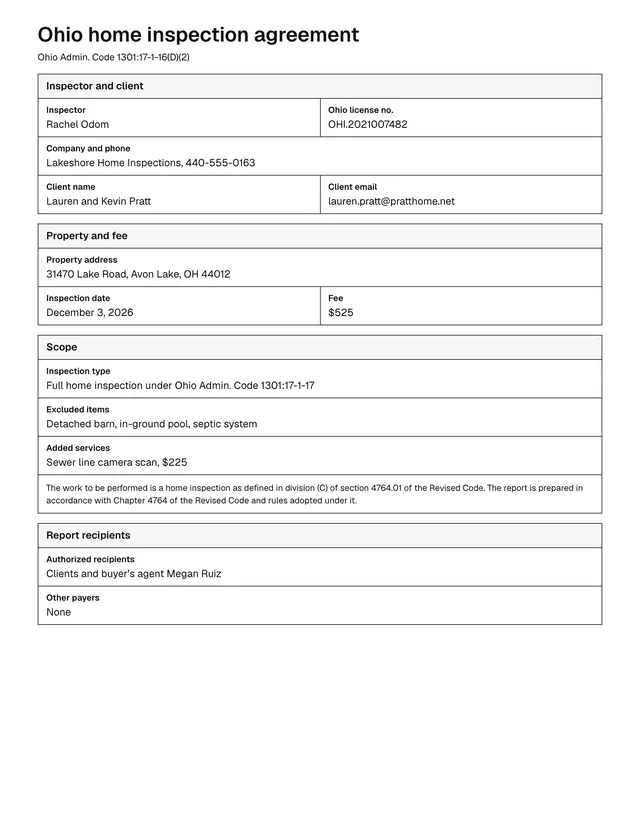
The contract a client signs for a home inspection. - Ohio
Ohio home inspection agreement
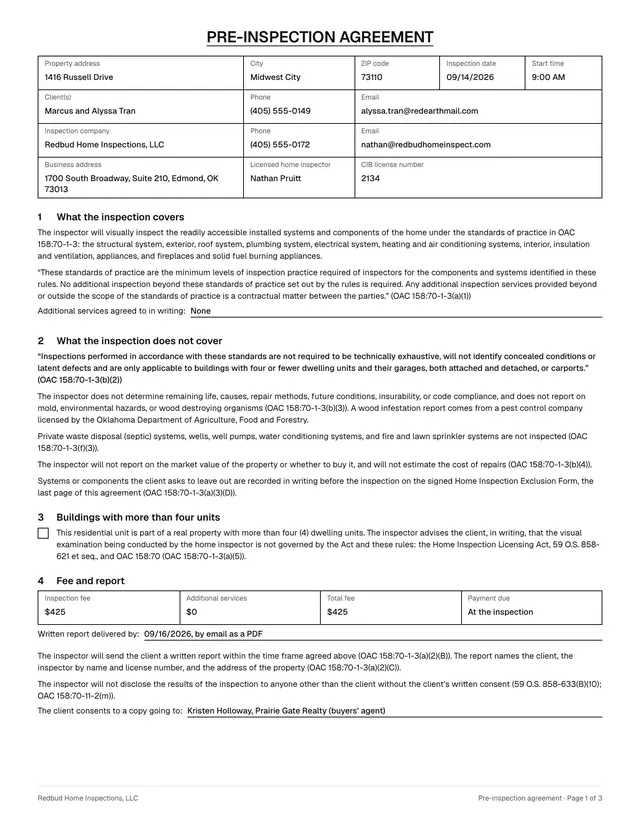
The contract a client signs for a home inspection. - Oklahoma
Pre-Inspection Agreement
The contract a client signs for a home inspection. - Oregon
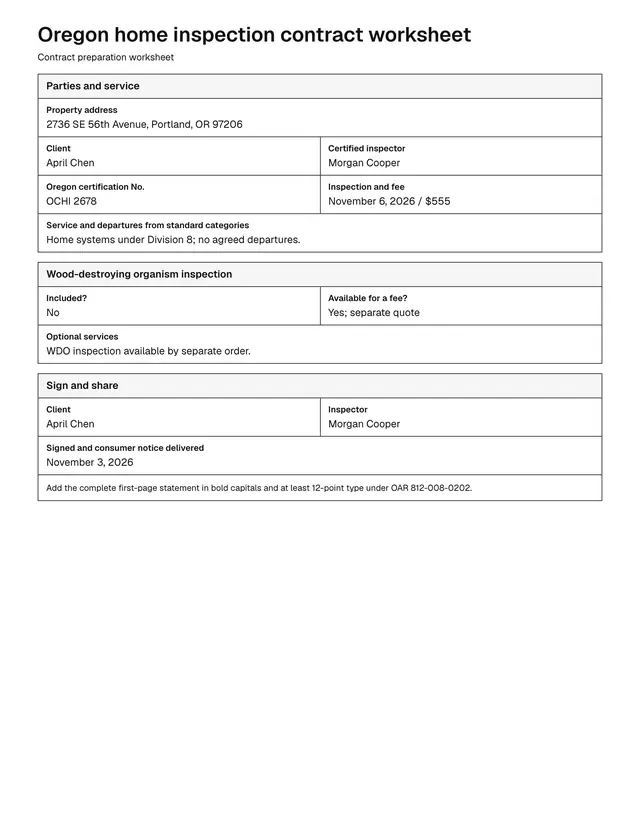
Oregon home inspection contract worksheet
The contract a client signs for a home inspection. - Pennsylvania
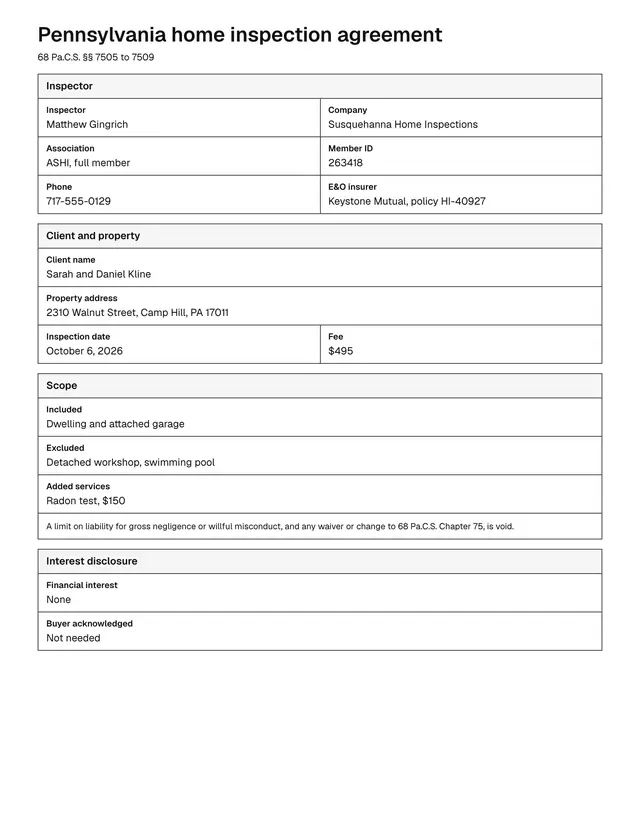
Pennsylvania home inspection agreement
The contract a client signs for a home inspection. - South Carolina
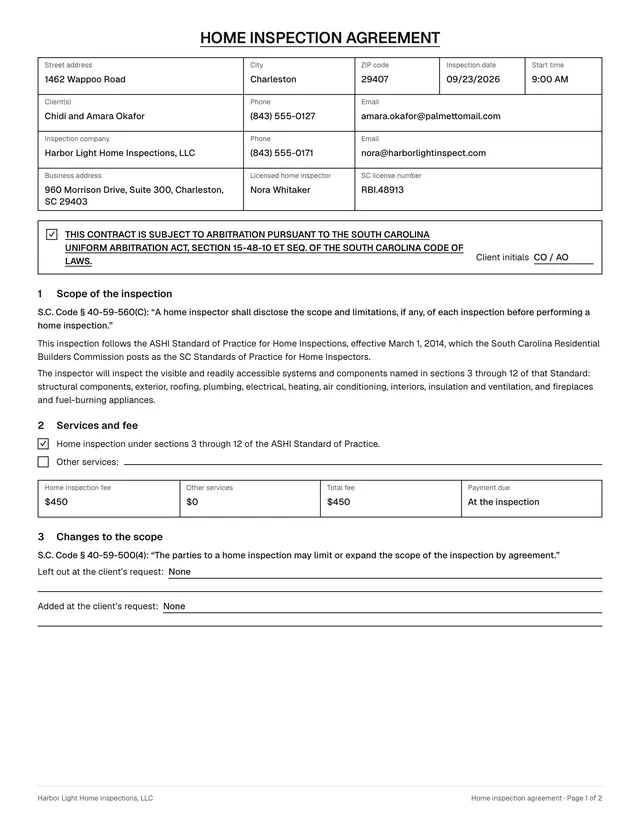
Home Inspection Agreement
The contract a client signs for a home inspection. - Tennessee
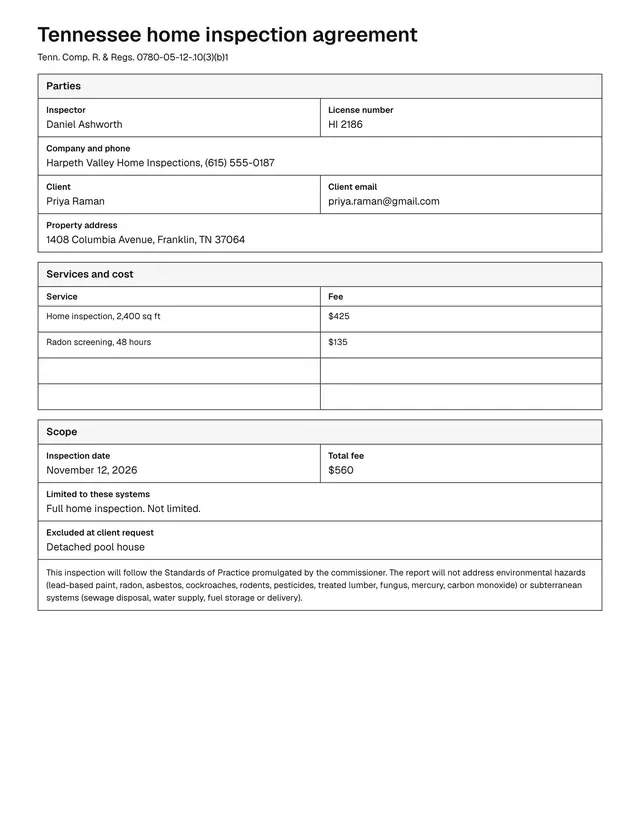
Tennessee home inspection agreement
The contract a client signs for a home inspection. - Texas
Home Inspection Agreement
The contract a client signs for a home inspection. - Virginia
Virginia home inspection contract
The contract a client signs for a home inspection. - Washington
Preinspection Agreement
The contract a client signs for a home inspection. - Wisconsin
Wisconsin home inspection agreement worksheet
The contract a client signs for a home inspection.