Michigan septic time of sale evaluation
Michigan has no statewide septic code, so whether a home sale needs a septic and well evaluation depends on the county. Here’s how the county programs work, what gets a system marked not approved, and how to get a site ready.
At a glance
- Statewide septic code
- None yet (SB 771 of 2026 pending)
- Who sets the rule
- County or district health department
- Grand Traverse review fee
- $300 well and septic, $200 one system
- Macomb evaluations good for
- 1 year
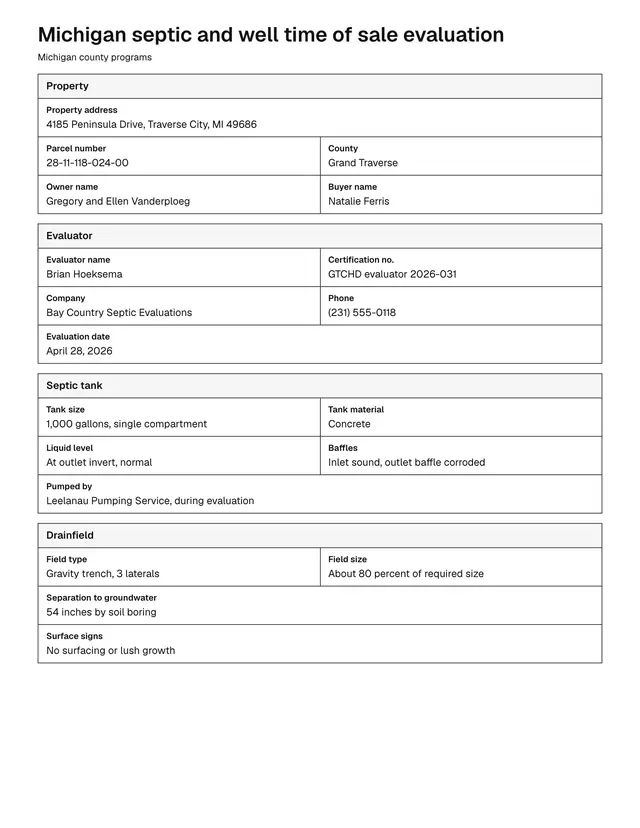
Completed example
Download PDFWhy the county decides
Michigan is the only state without a statewide sanitary code for septic systems. Each local health department writes its own rules for new systems, and a handful also require an evaluation when a home changes hands. If you work in more than one county, you’re following more than one rulebook.
That could change. Senate Bill 771 of 2026, sponsored by Sen. Sam Singh, would regulate onsite wastewater systems and provide for assessments and evaluations. It was introduced on January 28, 2026, reported out of committee with a substitute on June 3, and placed on third reading on June 17. It isn’t law yet. Until it is, the county rule is the rule.
Three county programs, three different setups
Washtenaw County. One of the oldest time of sale programs in the state, it has required well and septic evaluations at sale for homes on private systems for more than 25 years.
Macomb County. Required since August 1, 2002. The Macomb County Health Department puts the duty on the owner. The evaluation is done by an evaluator registered with the health department, or by department staff. The septic side covers code compliance, how the system is working, and its records. The well side covers code, records, and a water sample for bacteria and a partial chemical test. Evaluations are good for one year.
Grand Traverse County. The newest of the three. Starting January 1, 2026, Grand Traverse County requires an evaluation before sale for homes with a well or septic system within 300 feet of surface water. The evaluator must be certified by the Grand Traverse County Health Department, and the report goes to the department for review before the transfer. The review fee is $300 for well and septic, $200 for one or the other, and $150 if the evaluation is filed after the sale.
What gets a system marked not approved
Grand Traverse publishes its rating system, and it’s a useful guide even outside that county. Each system gets one of two results: approved or not approved.
On the septic side, these make it not approved: sewage backing up into the house, sewage reaching the ground surface or surface water, a liquid level above the tank’s outlet, a tank under half the required size, or less than 48 inches between the bottom of the drainfield and groundwater. On the well side, a positive bacteria sample, nitrates over 10 ppm, arsenic over 10 ppb, a dug well, or a buried well head.
Some flaws still pass but go in the report. Corrosion on the outlet baffle, more than 30 inches of soil over the tank, a drainfield that’s 50 to 99 percent of the size it should be, or no riser on the pump chamber. Write these up clearly. A buyer may want them fixed even though the county doesn’t.
Getting the site ready
Macomb’s checklist is a good habit anywhere. Stake the tank and the four corners of the drainfield before the evaluator arrives. Uncover the well head so it can be seen. Have the tank pumped while the evaluator is on site, so they can see the baffles, walls, and any backflow from the field. And don’t let the seller pump it in the 30 days before, because a freshly pumped tank hides the liquid level you came to check.
Ask the seller for permits, the original layout drawing, and pumping receipts ahead of time. County record searches can take a while. In Grand Traverse, a records search is $20 per parcel.
If you want to evaluate in Grand Traverse yourself, the health department runs an evaluator class. The fee schedule lists it at $600, plus $150 a year to stay certified.
What if the county says not approved?
The problems get fixed. In Grand Traverse County, a system that isn’t approved needs corrections, and the health department reviews the corrective action for $100. Who pays is up to the buyer and seller. Buyers and sellers sometimes settle it with money held in escrow until the work is done. Keep your report plain about which items caused the failing rating and which are just notes, so the contractor bids the right work.
Noma specializes in the Michigan septic time of sale evaluation (county time of sale rules). Book jobs online, work the tank and field in the Noma mobile app, draw an inspection diagram of the system on site, and send the invoice before you leave the driveway. See how Noma runs septic evaluations.
Frequentlyaskedquestions
Send this document in minutes, not an afternoon.
Other states
Septic inspection report templates- Alabama
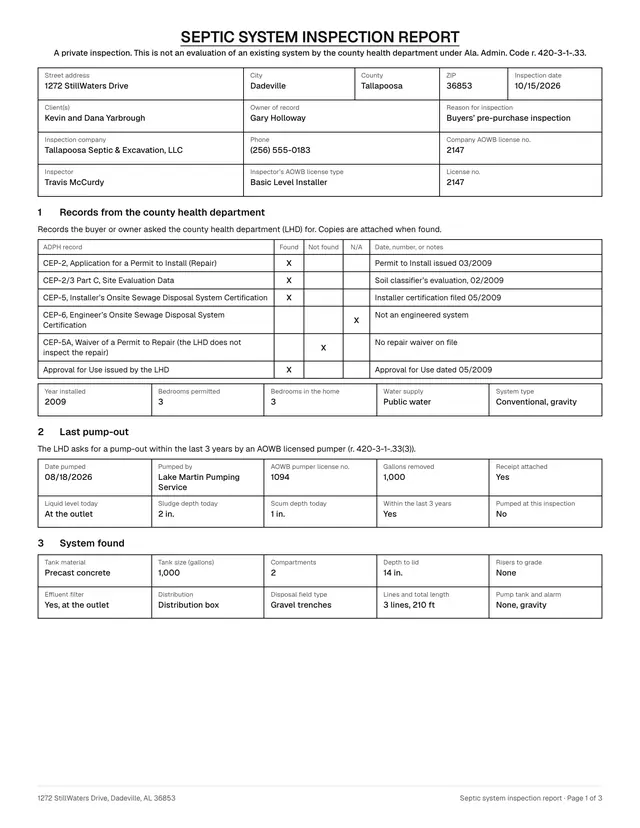
Septic System Inspection Report
Record the tank or cesspool and what was checked. - ArizonaGWS 432
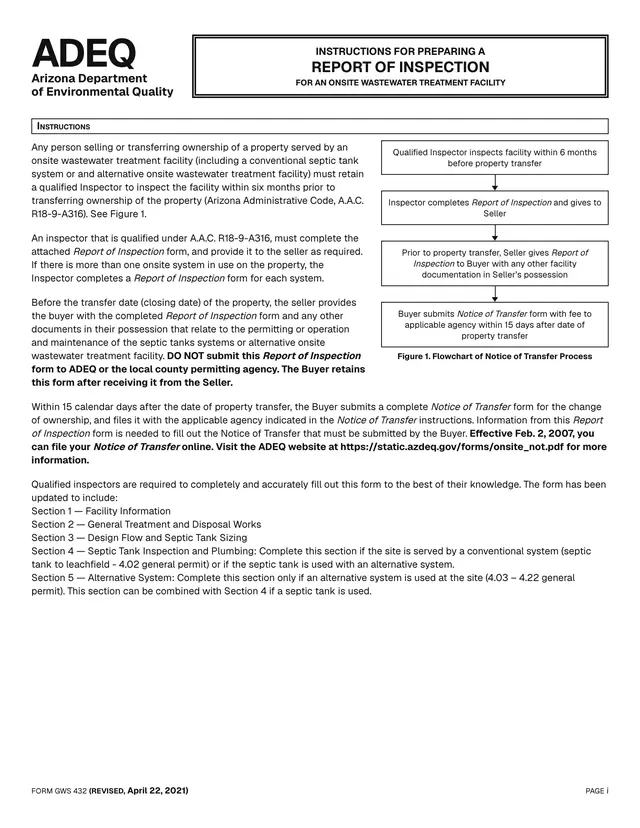
Report of Inspection for an Onsite Wastewater Treatment Facility
Record the tank or cesspool and what was checked. - Arkansas
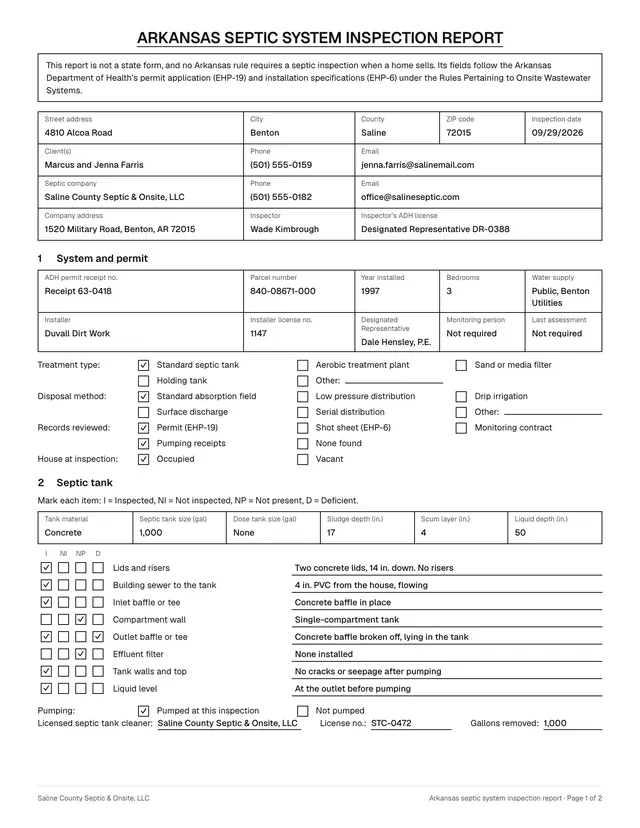
Arkansas Septic System Inspection Report
Record the tank or cesspool and what was checked. - Colorado
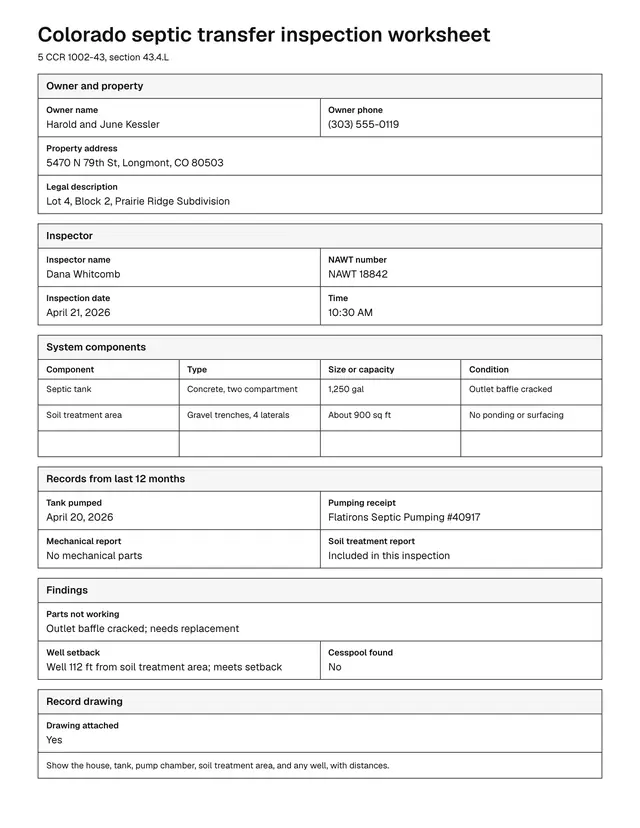
Colorado septic transfer of title inspection report (Regulation 43)
Record the tank or cesspool and what was checked. - Delaware
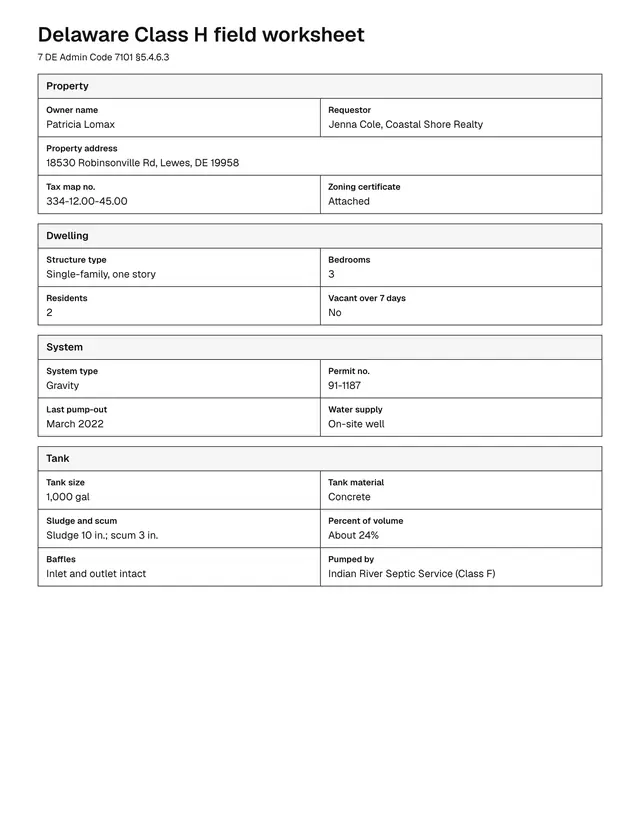
Delaware Class H septic inspection report
Record the tank or cesspool and what was checked. - Florida
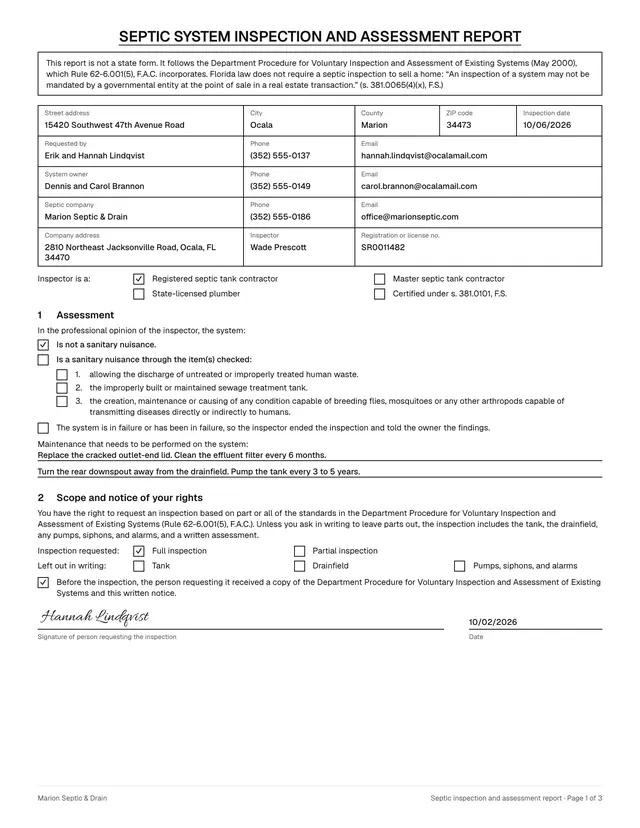
Septic System Inspection and Assessment Report
Record the tank or cesspool and what was checked. - Georgia
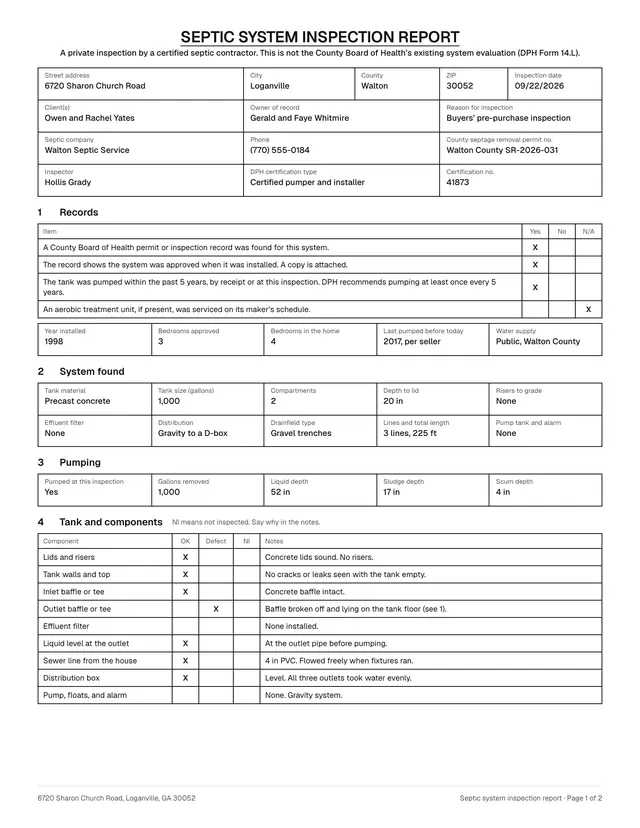
Septic System Inspection Report
Record the tank or cesspool and what was checked. - Hawaii
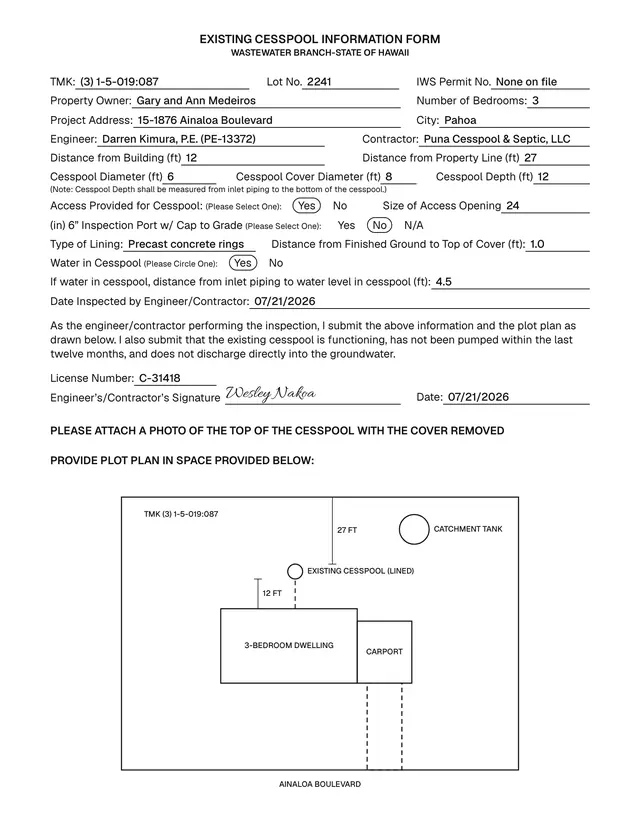
Existing Cesspool Information Form
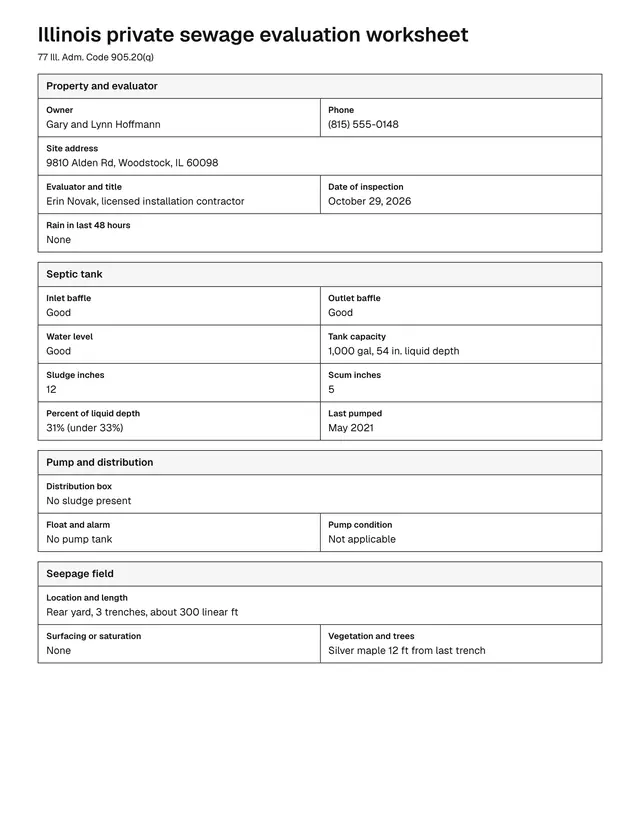
Record the tank or cesspool and what was checked. - Illinois
Illinois private sewage disposal system evaluation
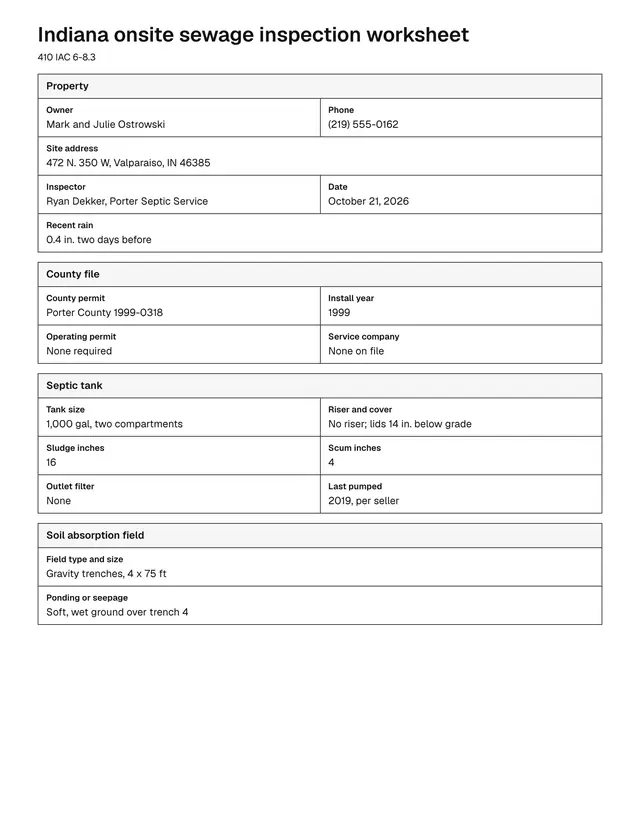
Record the tank or cesspool and what was checked. - Indiana
Indiana onsite sewage system inspection report
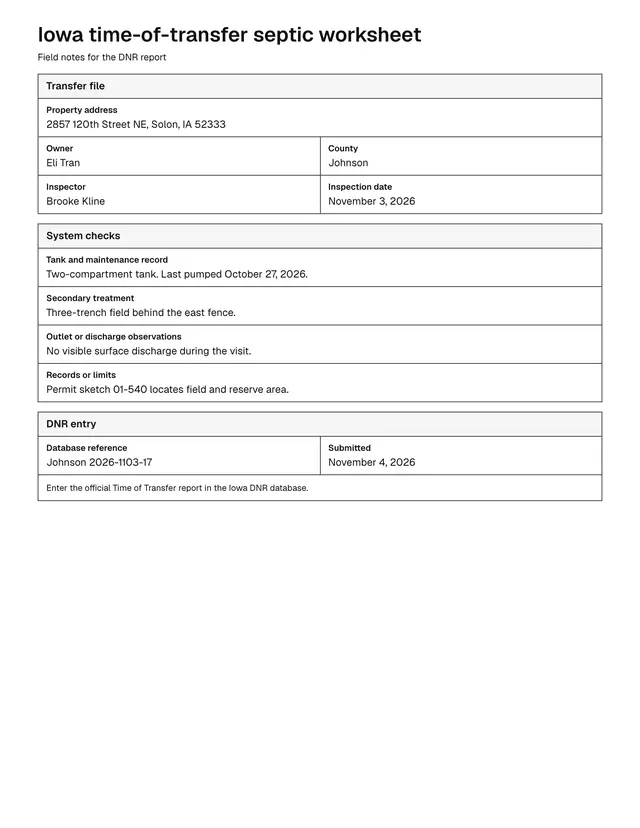
Record the tank or cesspool and what was checked. - Iowa
Iowa time-of-transfer septic worksheet
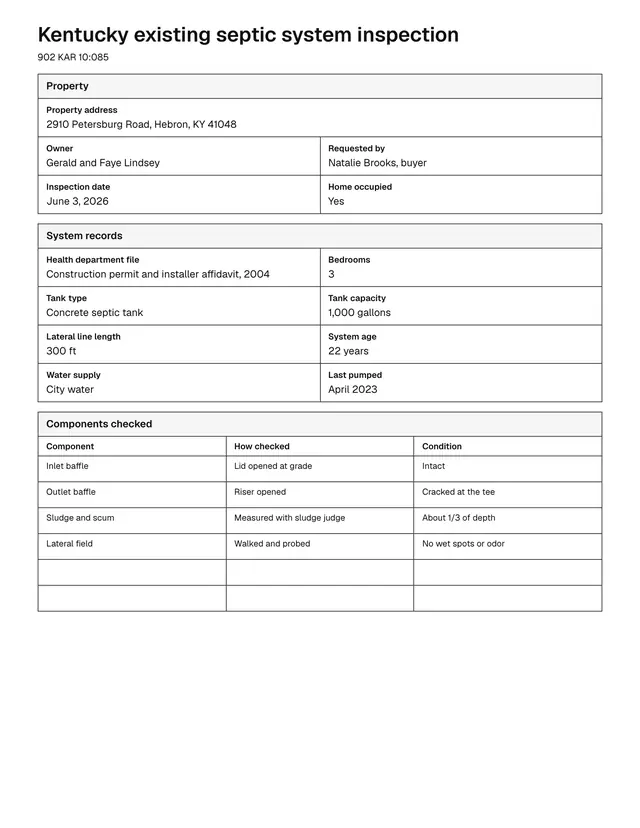
Record the tank or cesspool and what was checked. - Kentucky
Kentucky existing septic system inspection
Record the tank or cesspool and what was checked. - Louisiana
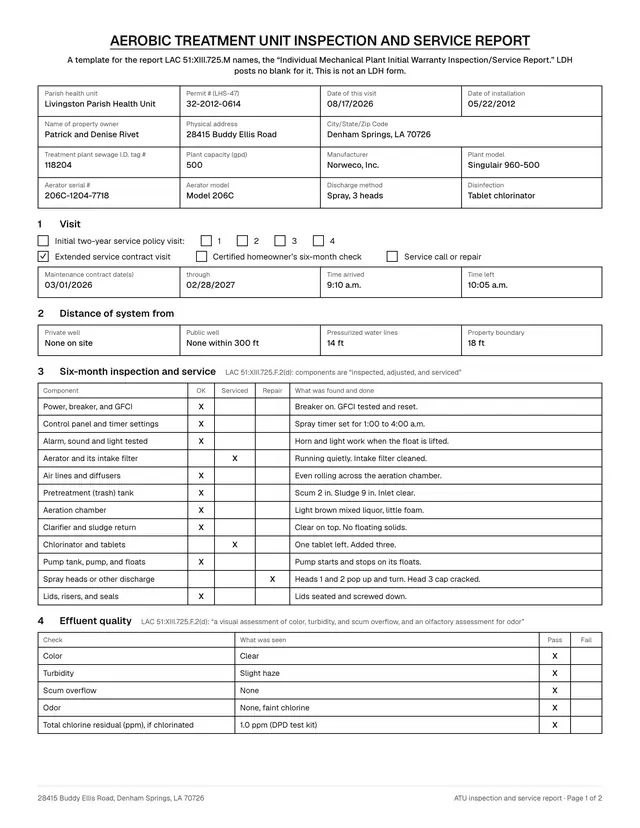
Aerobic Treatment Unit Inspection and Service Report
Record the tank or cesspool and what was checked. - Maryland
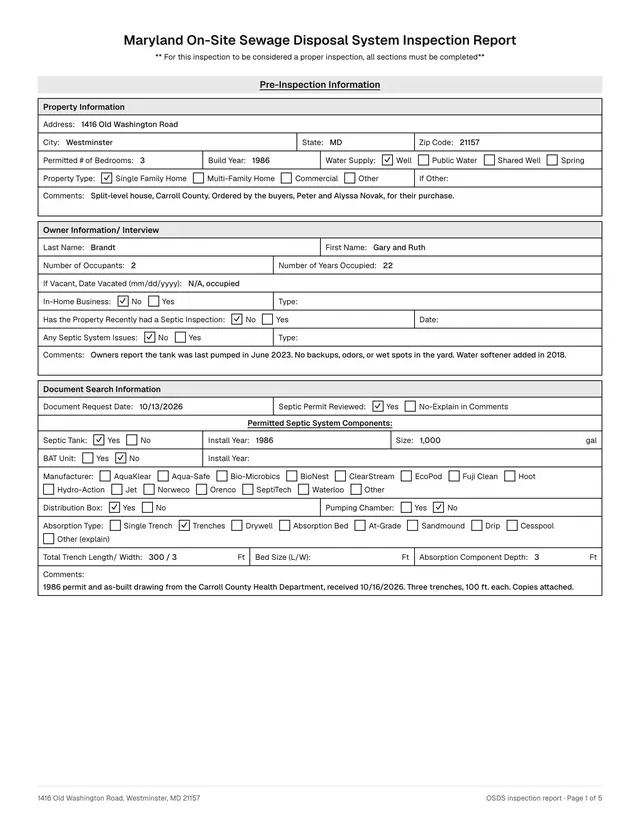
Maryland On-Site Sewage Disposal System Inspection Report
Record the tank or cesspool and what was checked. - Massachusetts
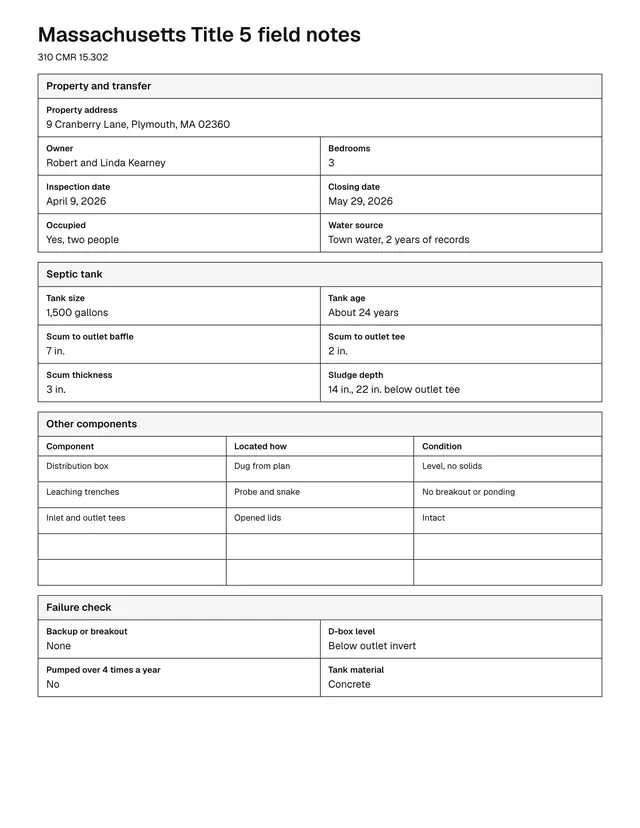
Massachusetts Title 5 inspection report (310 CMR 15.301)
Record the tank or cesspool and what was checked. - Minnesota
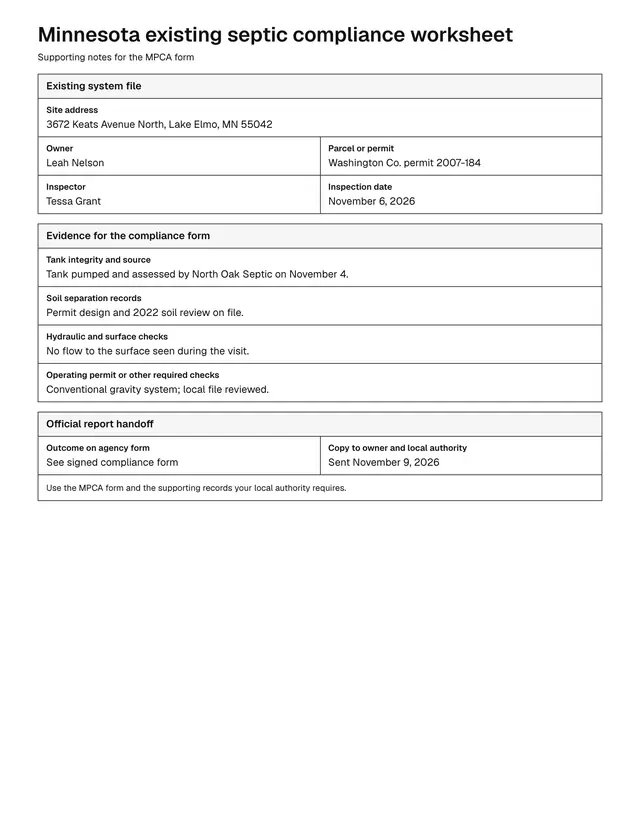
Minnesota existing septic compliance worksheet
Record the tank or cesspool and what was checked. - Mississippi
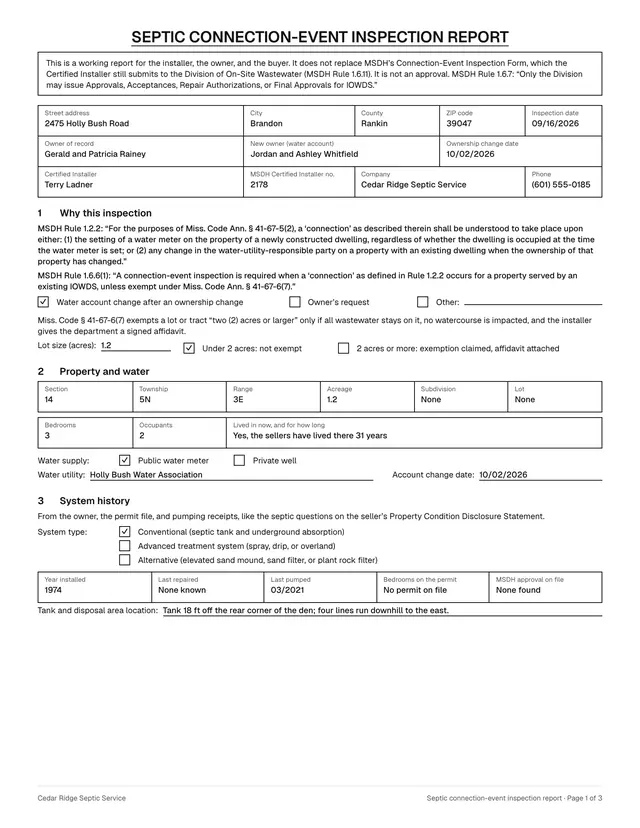
Septic Connection-Event Inspection Report
Record the tank or cesspool and what was checked. - Missouri
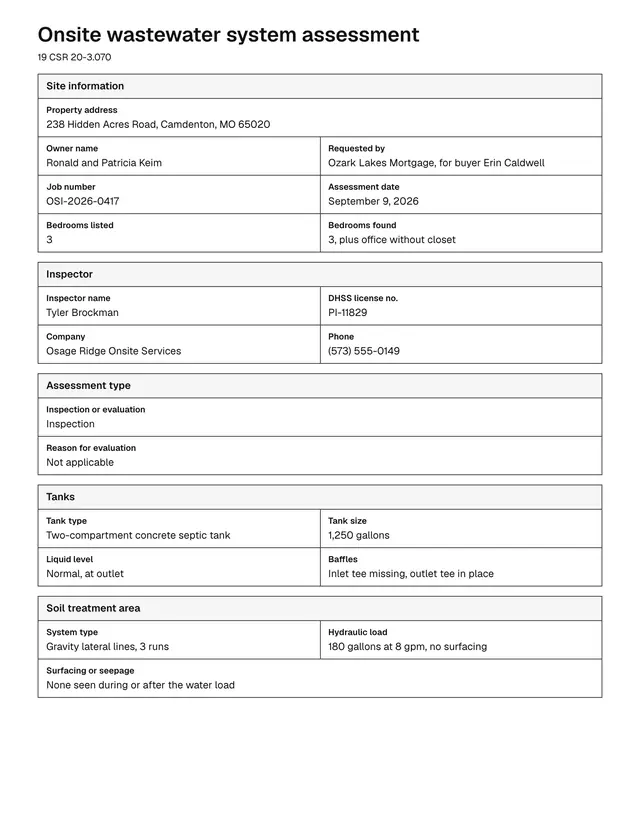
Missouri onsite wastewater inspection and evaluation report
Record the tank or cesspool and what was checked. - Nevada
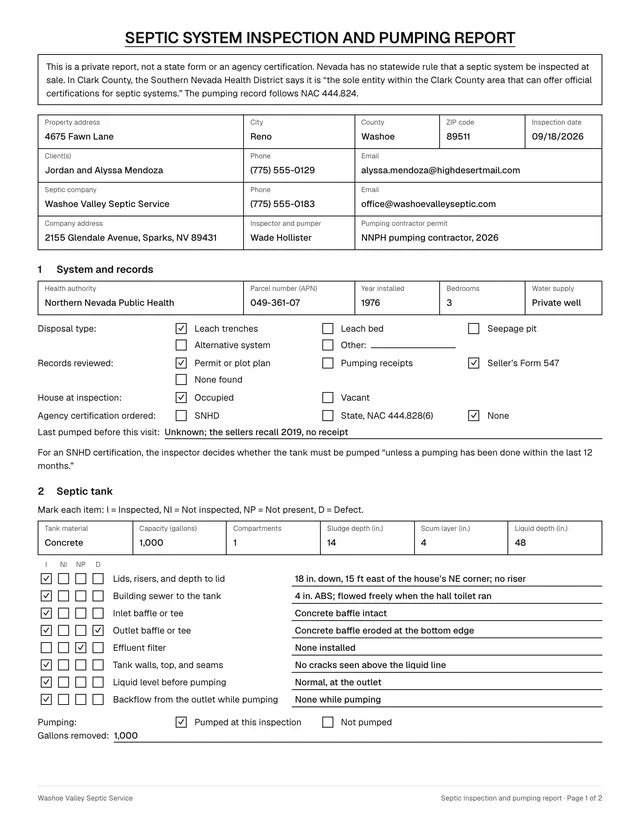
Septic System Inspection and Pumping Report
Record the tank or cesspool and what was checked. - New JerseyN.J.A.C. 7:9A Appendix F
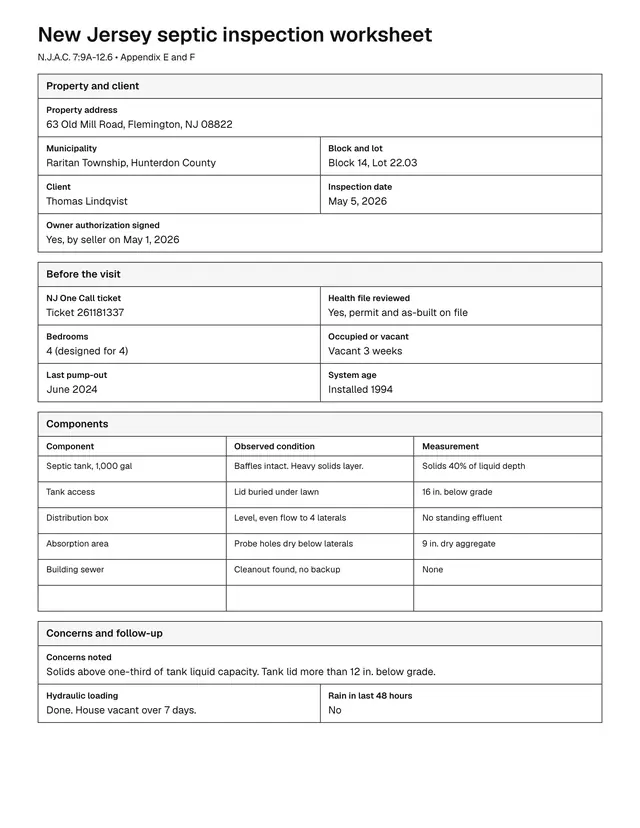
New Jersey septic inspection report (Appendix F Onsite System Inspection Form)
Record the tank or cesspool and what was checked. - New Mexico
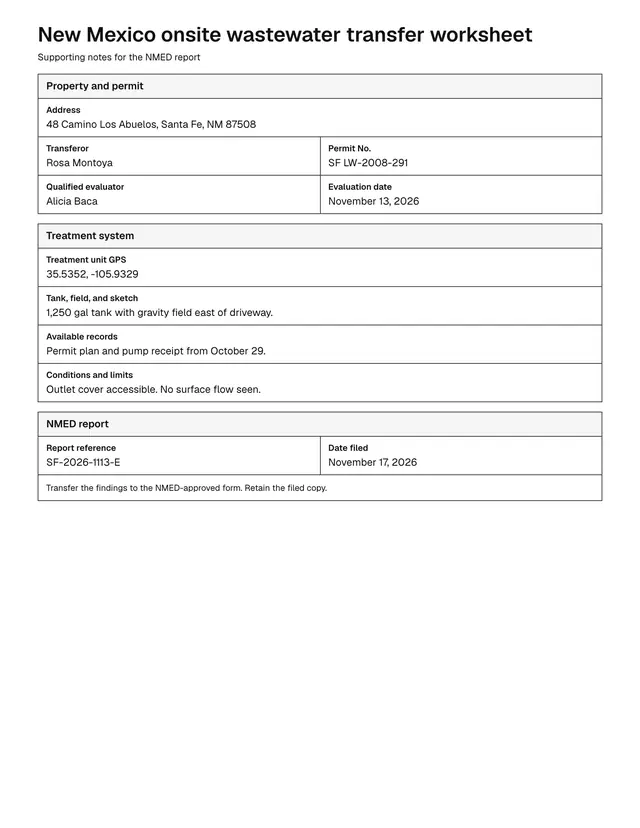
New Mexico onsite wastewater transfer worksheet
Record the tank or cesspool and what was checked. - New York
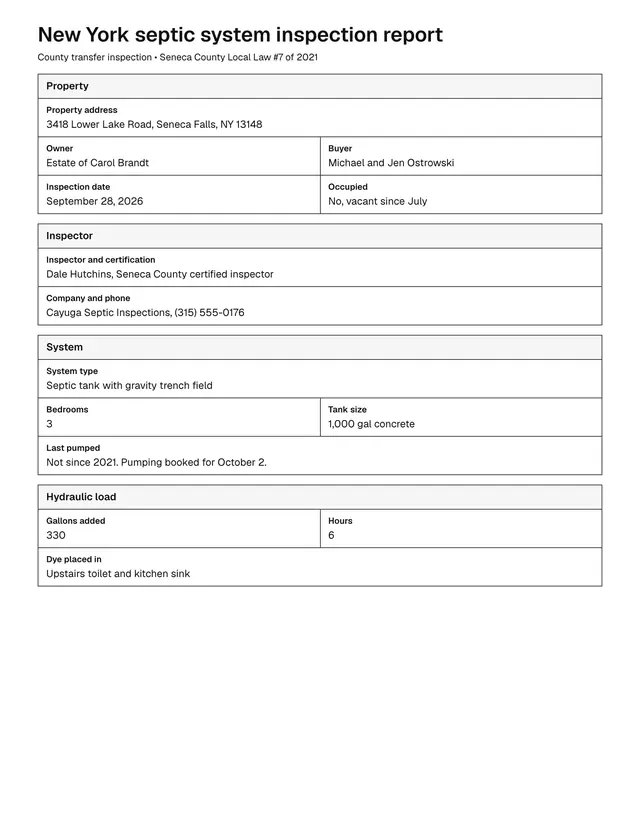
New York septic system inspection report (county transfer inspections)
Record the tank or cesspool and what was checked. - North Carolina
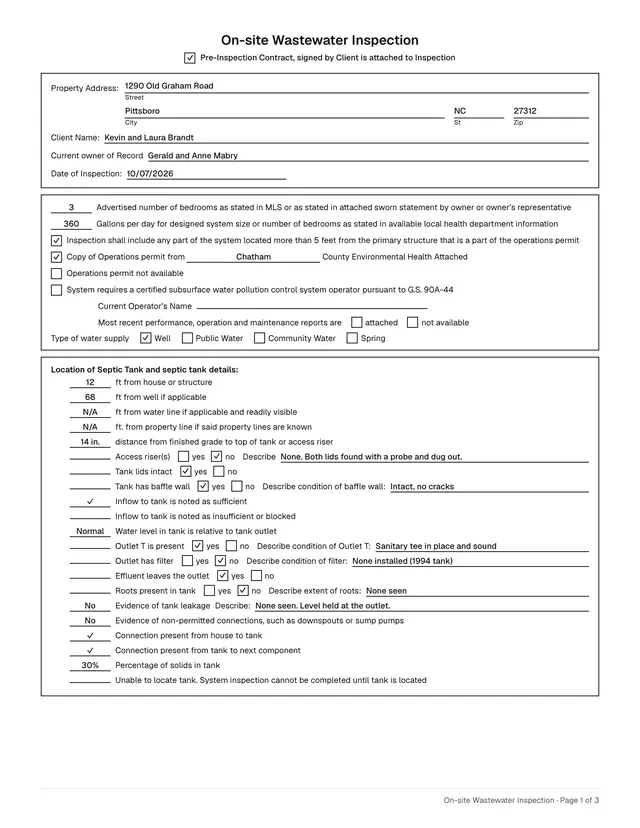
On-site Wastewater Inspection
Record the tank or cesspool and what was checked. - Ohio
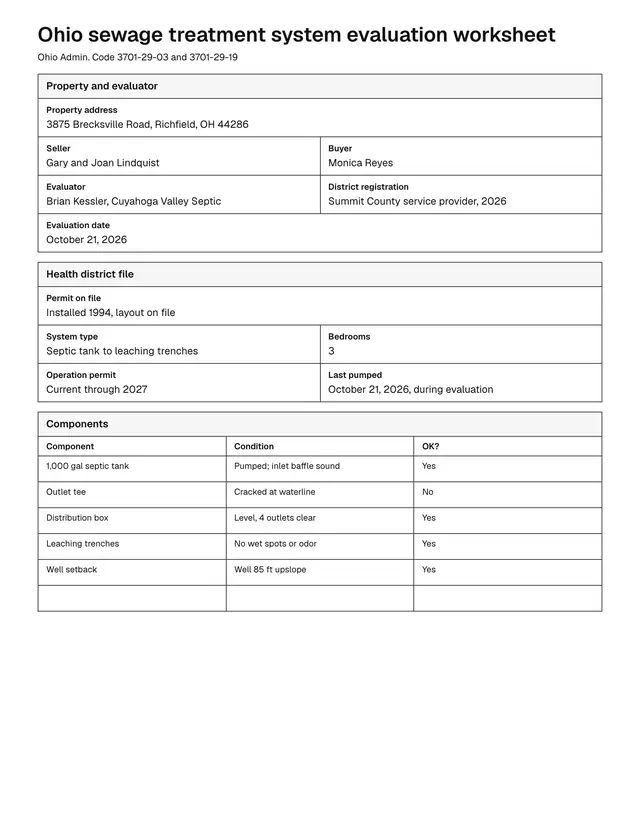
Ohio sewage treatment system evaluation for property transfer
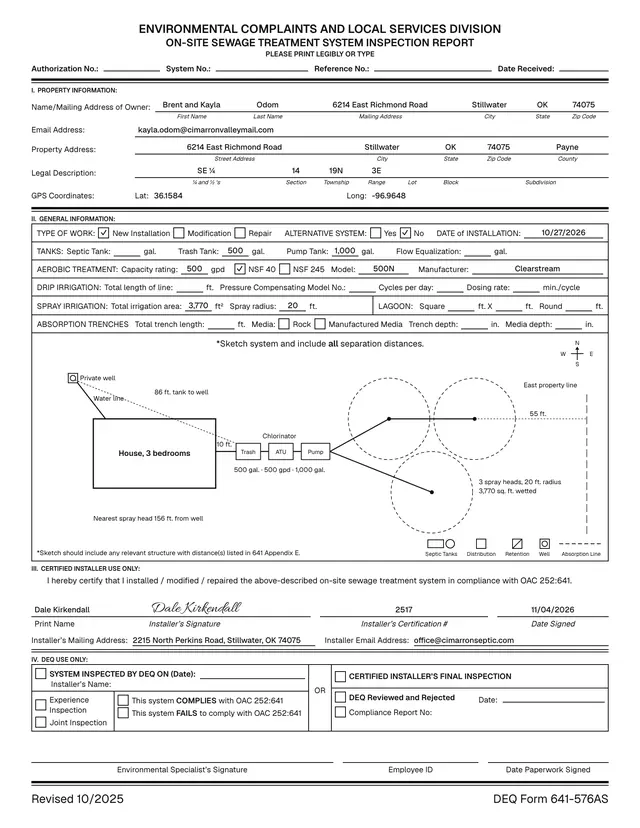
Record the tank or cesspool and what was checked. - OklahomaDEQ Form 641-576AS
On-Site Sewage Treatment System Inspection Report
Record the tank or cesspool and what was checked. - Oregon
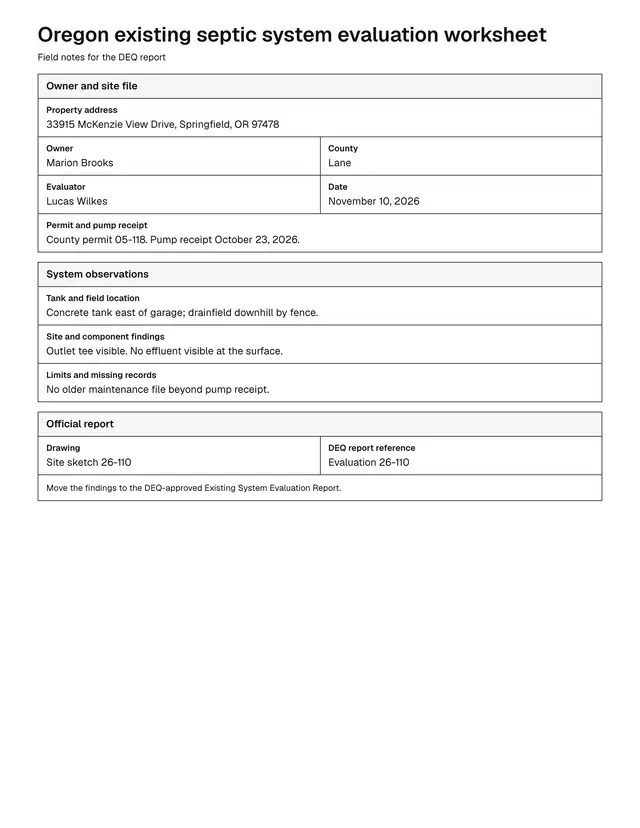
Oregon existing septic system evaluation worksheet
Record the tank or cesspool and what was checked. - Pennsylvania
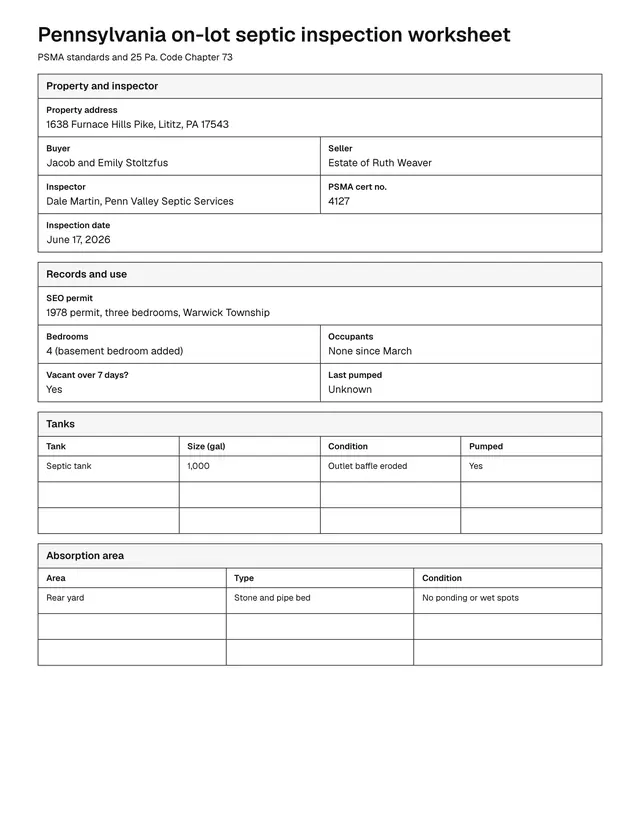
Pennsylvania on-lot septic system inspection (PSMA)
Record the tank or cesspool and what was checked. - South Carolina
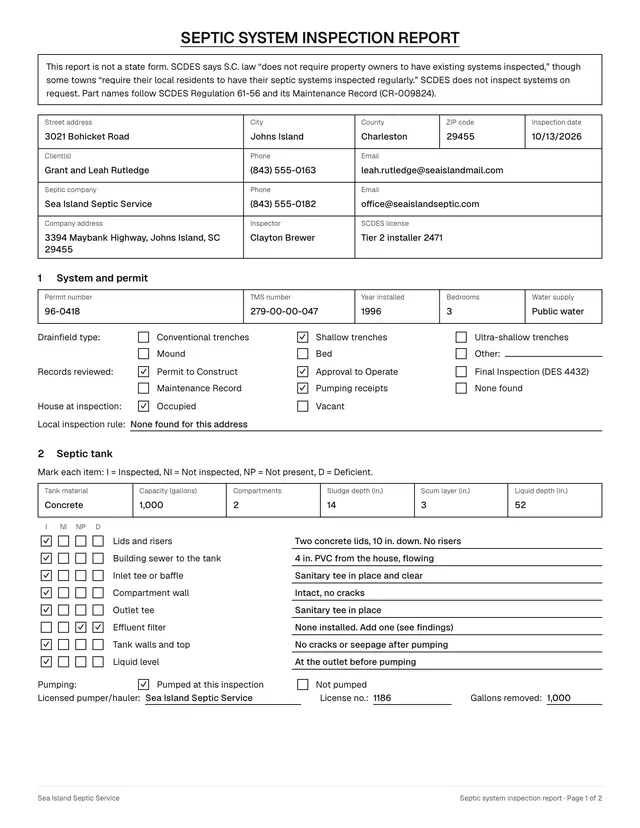
Septic System Inspection Report
Record the tank or cesspool and what was checked. - Tennessee
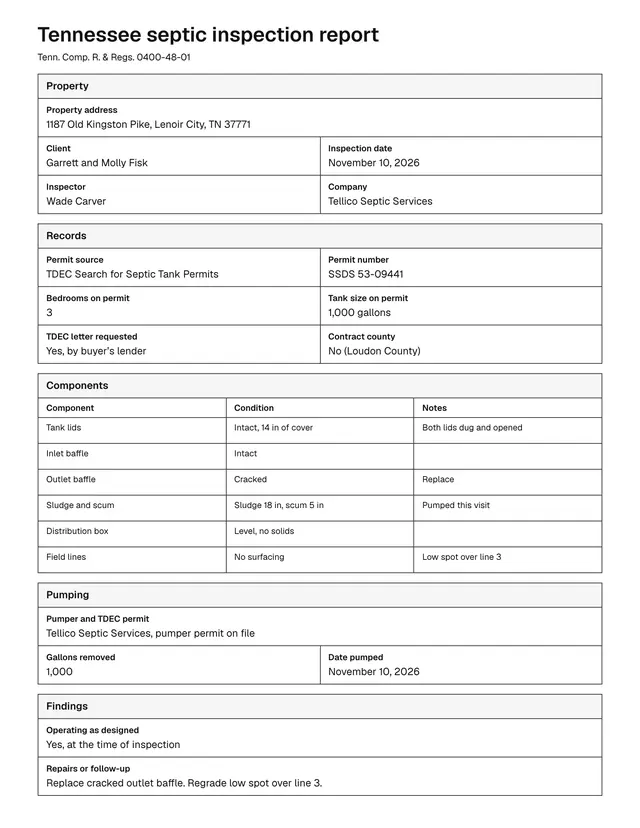
Tennessee septic inspection report
Record the tank or cesspool and what was checked. - Texas
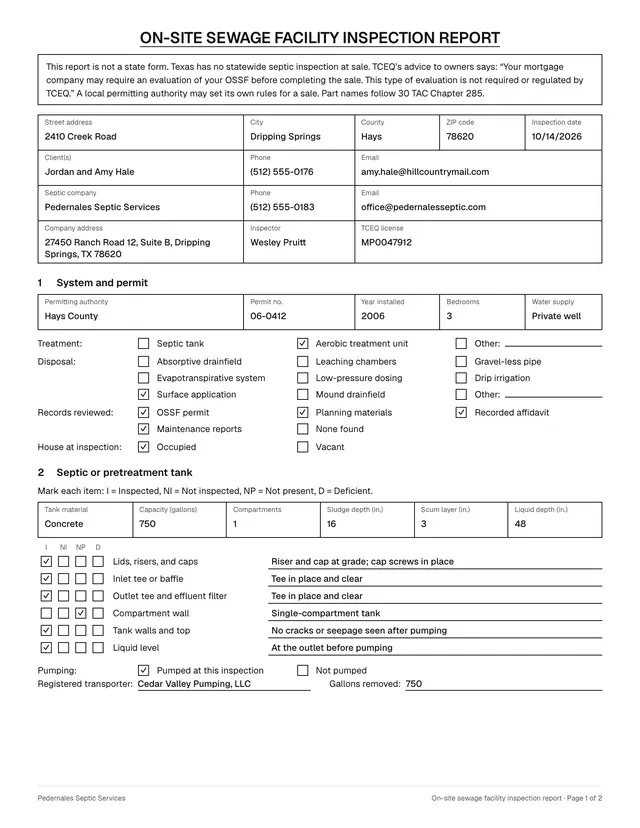
On-Site Sewage Facility Inspection Report
Record the tank or cesspool and what was checked. - Virginia
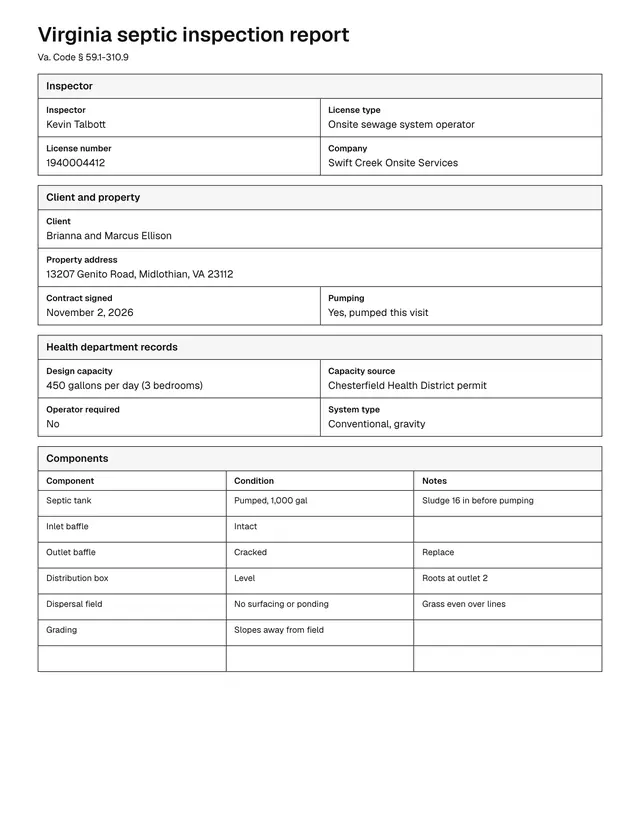
Virginia septic inspection report
Record the tank or cesspool and what was checked. - Washington
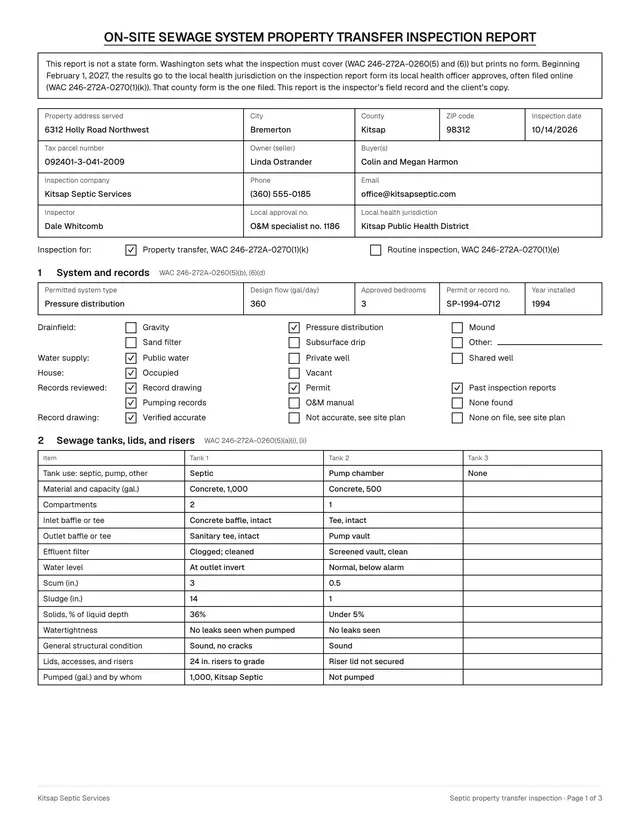
On-Site Sewage System Property Transfer Inspection Report
Record the tank or cesspool and what was checked. - Wisconsin
Wisconsin POWTS maintenance worksheet
Record the tank or cesspool and what was checked.