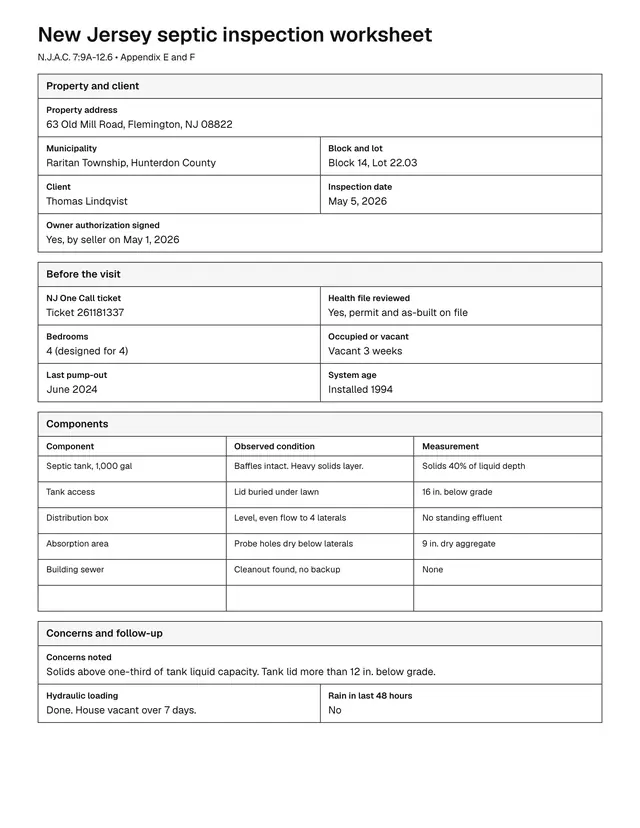
New Jersey septic inspection report (Appendix F Onsite System Inspection Form)
When a septic system is inspected for a home sale, New Jersey sets the method, bans three words from your report, and sends your results to the local health department. Here’s how it fits together.
At a glance
- Rule
- N.J.A.C. 7:9A-12.6
- Method
- Appendix E protocol
- To health department
- Appendix F form within 10 business days
- Urgent conditions
- Initial report within 24 hours
Completed example
Download PDFThree words you can’t use
New Jersey’s septic rule for home sales has a quirk that trips up new inspectors. Under N.J.A.C. 7:9A-12.6, you describe what you saw “without the use of the terms ‘malfunctioning,’ ‘failure’ or ‘non-compliant.’” Only the local health department (the rule calls it the administrative authority) or DEP can put those labels on a system.
So you don’t write “the field failed.” You write what you found, like “effluent standing 2 inches above the lateral inlets in the distribution box,” and let the health department decide what it means. DEP’s inspection guidance backs this up. It adds that every report should say the inspection is not a warranty and not “certified or endorsed by the State of New Jersey.”
Before you dig
The method comes from Appendix E of the rule, and DEP’s January 2022 guidance fills in the details. It recommends a signed authorization from the owner or their agent before you gather any information. It also says to call NJ One Call at 1-800-272-1000 at least 72 hours ahead. One Call won’t mark the septic system itself or owner-installed lines, like the wire to a pump.
Check the health department’s file first. The guidance says to contact them at least 48 hours ahead, on working days, so they can pull the permit and any site plan. If there’s no file, write down who you talked to and when. Then ask the owner about bedrooms, occupants, the last pump-out, a garbage disposal, and any sump pump tied into the system.
If the house has sat empty more than a week, or it’s a summer place down the shore, the guidance says to add a hydraulic load test. An empty house can make a tired system look fine for a day.
What counts as a concern
The guidance lists conditions that aren’t failures but belong in the report so the client can judge them. A few of the common ones:
Tank solids. Solids above one-third of the tank’s liquid capacity. Also no solids at all with no record of a recent pump-out, which can mean someone pumped it right before you came.
High water. Liquid within six inches below the lateral inlets in the disposal area. The guidance says this is not a failure but a sign the system “may be nearing the end of its serviceable life.”
Deep lids. Access ports more than 12 inches below finished grade.
Pump tank sludge. Sludge within three inches of the pump inlet.
Recent weather. If you inspect within 48 hours after rain or snow melt, 12.6(e) wants a written analysis of how that could change the results, sent with the form.
Who gets the report, and when
This is the part most states don’t have. Your results go to the health department, not only to your client. If you see any condition listed under “Health Department Reporting” in Appendix F, make an initial report within 24 hours by phone, fax, email, or another way you can prove it arrived. Then send the completed Appendix F Onsite System Inspection Form within 10 business days after the inspection.
Ask about filing fees when you call for the file. The guidance notes that some towns charge one by local ordinance to submit the form.
Cesspools are their own case. Appendix F doesn’t apply to “cesspools, privies, outhouses, pit toilets or latrines.” If you find one, tell the health department in writing within 48 hours and tell your client about N.J.A.C. 7:9A-3.16(b). Since June 2, 2012, a cesspool that’s part of a property sale has to be abandoned and replaced, with a few exceptions such as some transfers between family members.
How do you get every copy out on time?
Three people want something from you at once. The buyer wants results before the contingency runs out. The health department wants Appendix F within 10 business days. The seller’s agent wants to know why you called the health department at all. The digging takes a morning. The paperwork is what slips.
Get the owner’s authorization signed before the visit, send the client’s report and the Appendix F form the same week, and note the date each one went out. If a home inspector booked you as an add-on, their home inspection report can point to yours.
Noma specializes in the New Jersey Onsite System Inspection Form (N.J.A.C. 7:9A-12.6 and Appendix F). Upload your owner authorization once and send it for e-signature from each booked job, draw the tank and field layout on the job in the app, then upload the finished report PDF and send it to sign online. See how Noma handles septic inspection jobs.
Frequentlyaskedquestions
Send this document in minutes, not an afternoon.
Other states
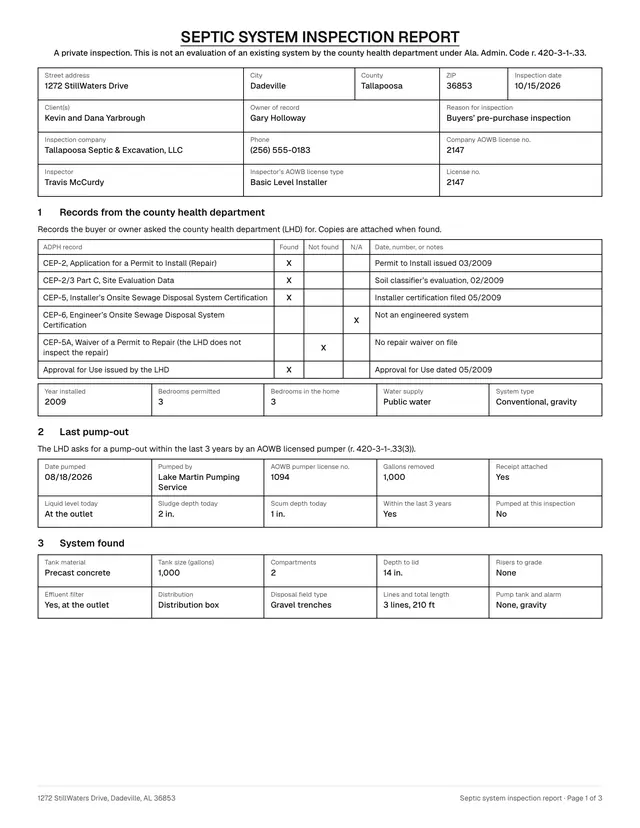
Septic inspection report templates- Alabama
Septic System Inspection Report
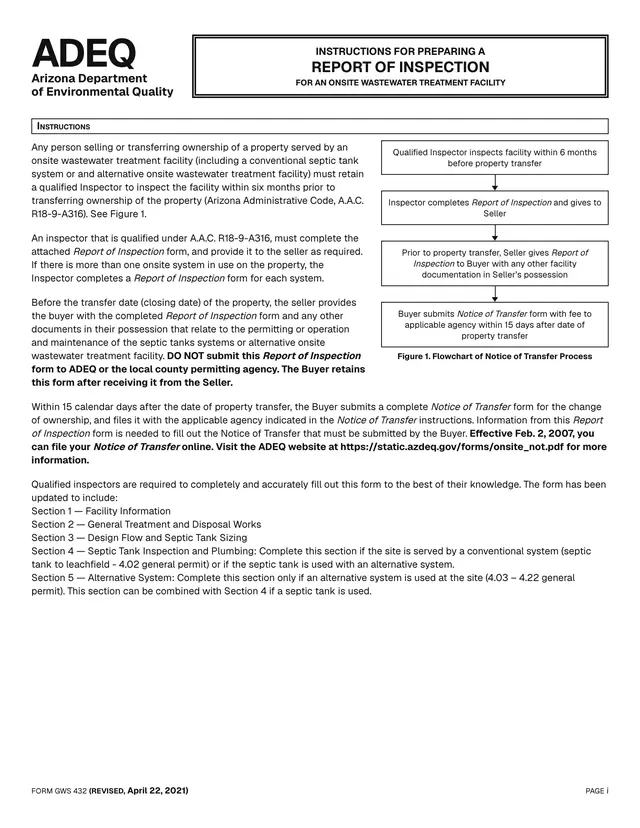
Record the tank or cesspool and what was checked. - ArizonaGWS 432
Report of Inspection for an Onsite Wastewater Treatment Facility
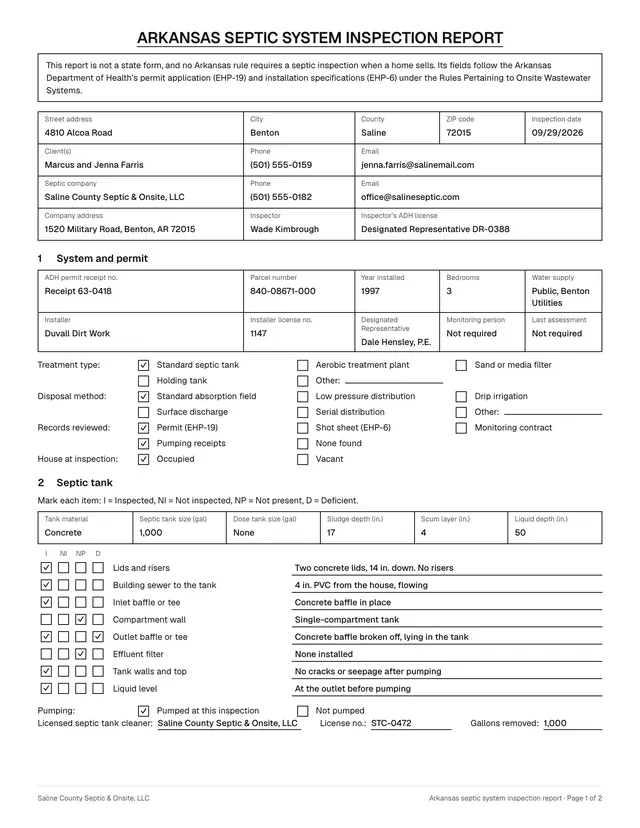
Record the tank or cesspool and what was checked. - Arkansas
Arkansas Septic System Inspection Report
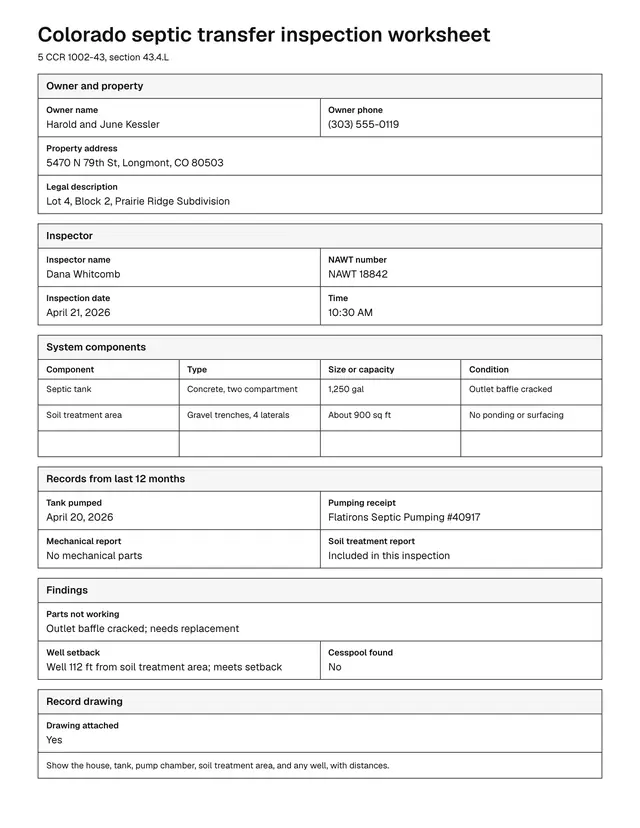
Record the tank or cesspool and what was checked. - Colorado
Colorado septic transfer of title inspection report (Regulation 43)
Record the tank or cesspool and what was checked. - Delaware
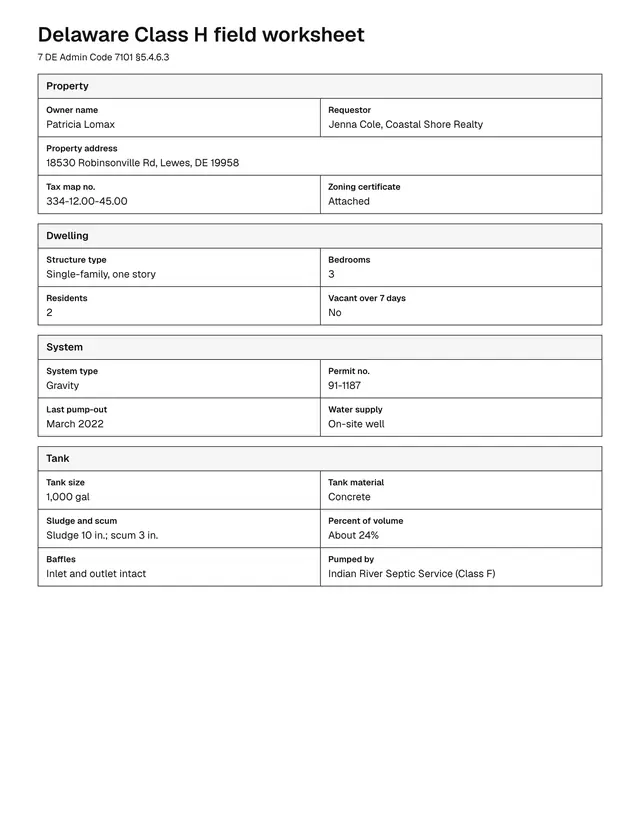
Delaware Class H septic inspection report
Record the tank or cesspool and what was checked. - Florida
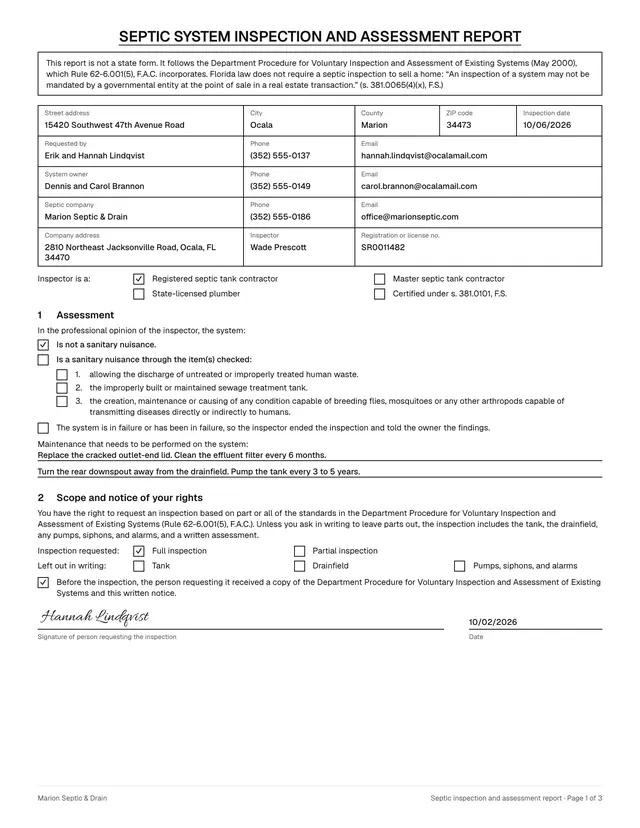
Septic System Inspection and Assessment Report
Record the tank or cesspool and what was checked. - Georgia
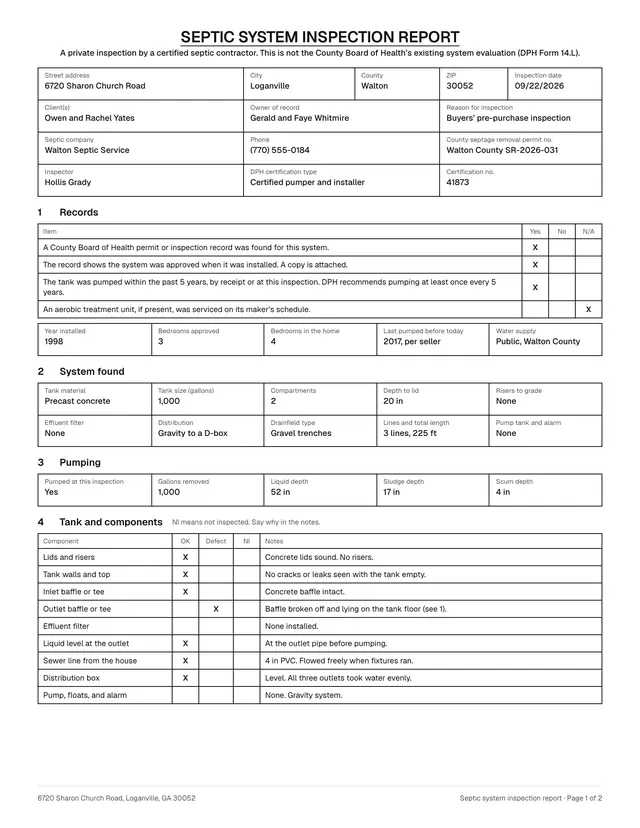
Septic System Inspection Report
Record the tank or cesspool and what was checked. - Hawaii
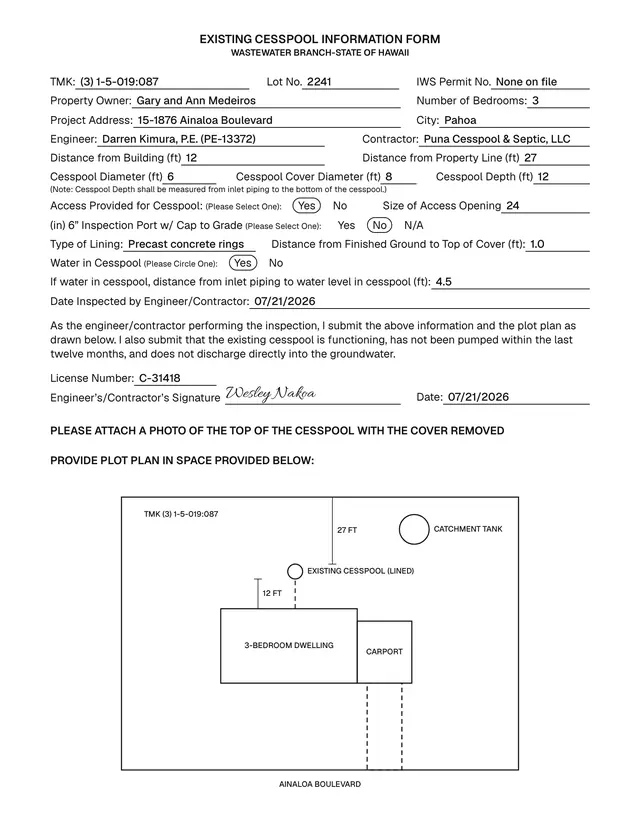
Existing Cesspool Information Form
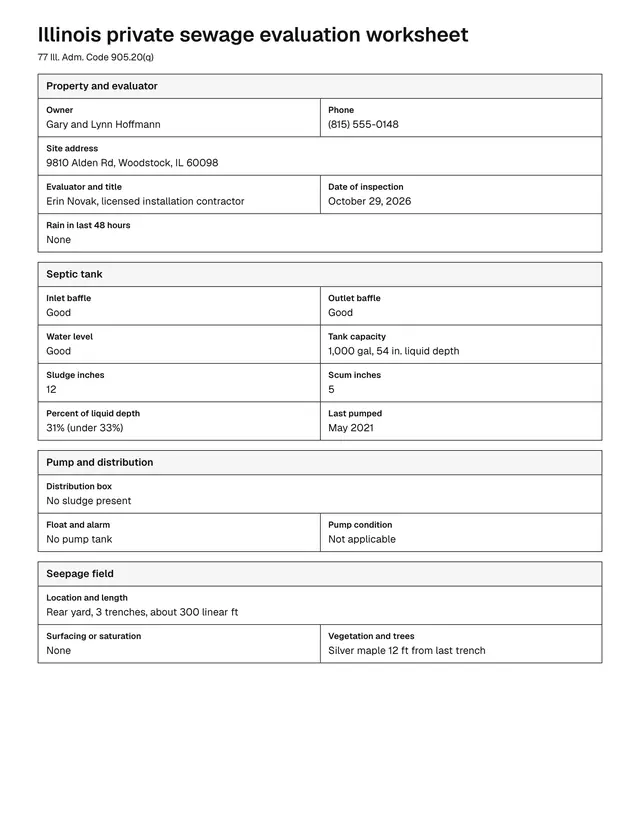
Record the tank or cesspool and what was checked. - Illinois
Illinois private sewage disposal system evaluation
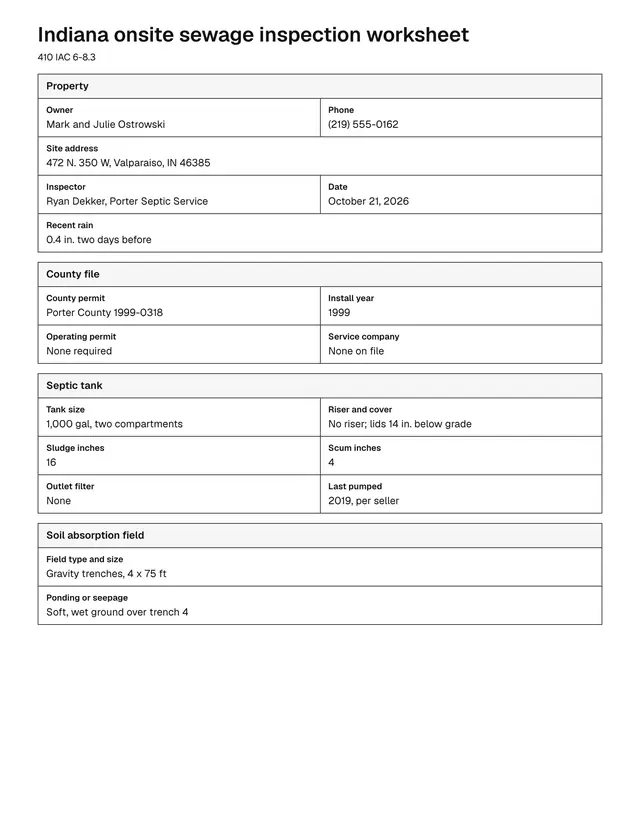
Record the tank or cesspool and what was checked. - Indiana
Indiana onsite sewage system inspection report
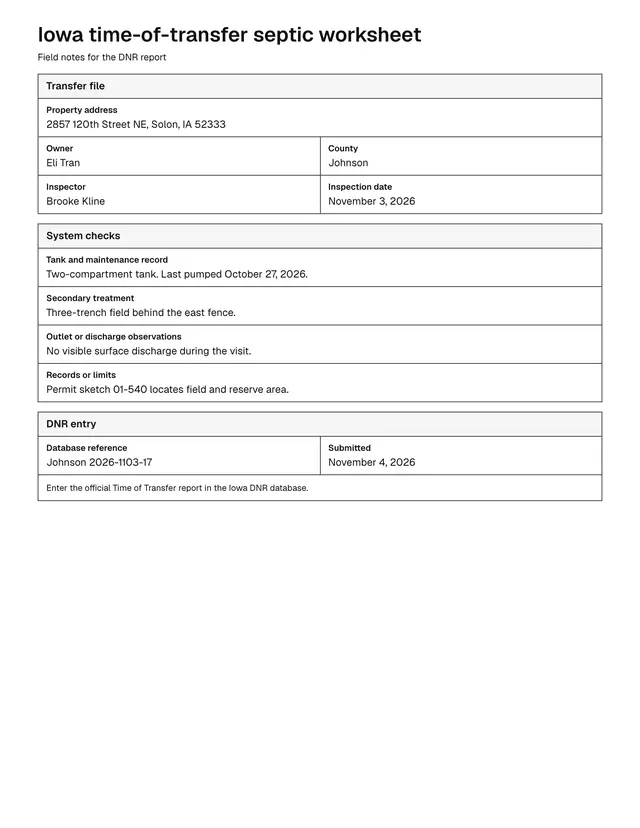
Record the tank or cesspool and what was checked. - Iowa
Iowa time-of-transfer septic worksheet
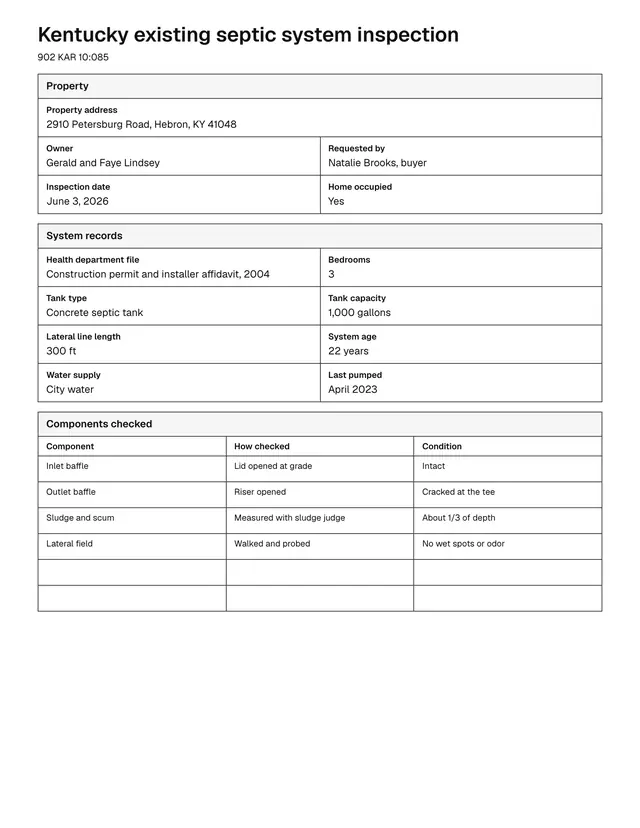
Record the tank or cesspool and what was checked. - Kentucky
Kentucky existing septic system inspection
Record the tank or cesspool and what was checked. - Louisiana
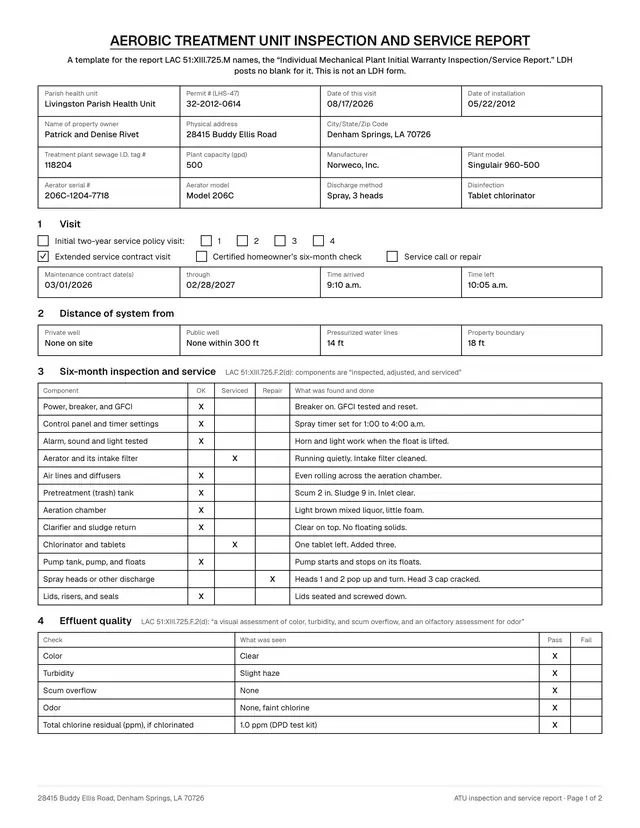
Aerobic Treatment Unit Inspection and Service Report
Record the tank or cesspool and what was checked. - Maryland
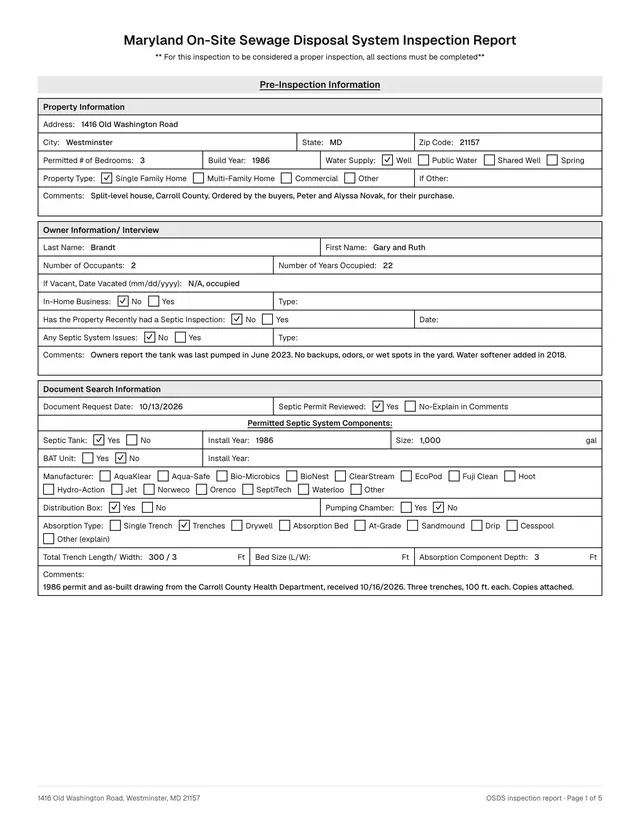
Maryland On-Site Sewage Disposal System Inspection Report
Record the tank or cesspool and what was checked. - Massachusetts
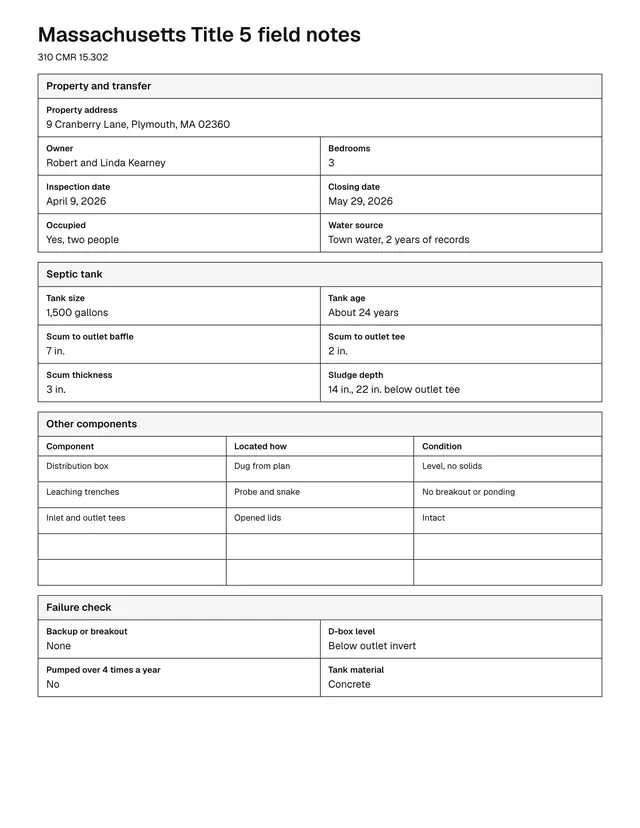
Massachusetts Title 5 inspection report (310 CMR 15.301)
Record the tank or cesspool and what was checked. - Michigan
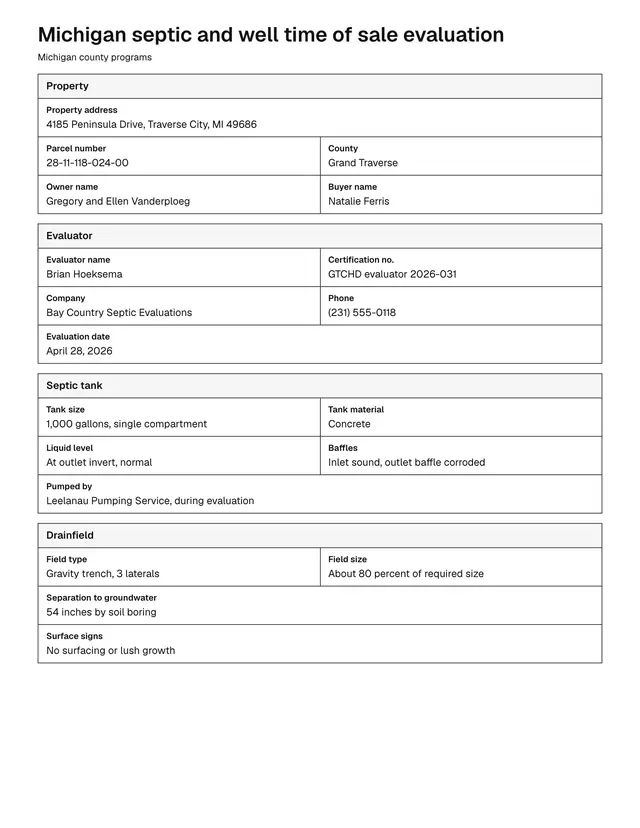
Michigan septic time of sale evaluation
Record the tank or cesspool and what was checked. - Minnesota
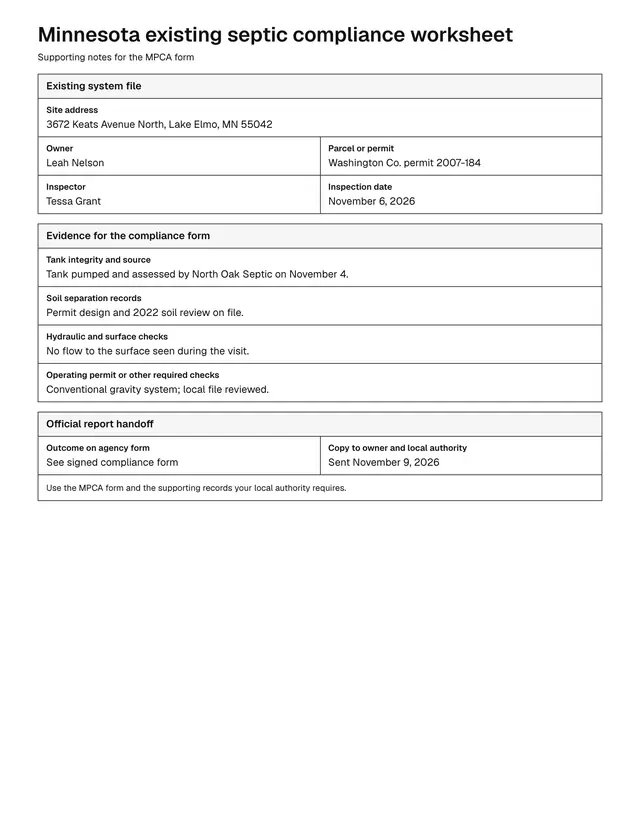
Minnesota existing septic compliance worksheet
Record the tank or cesspool and what was checked. - Mississippi
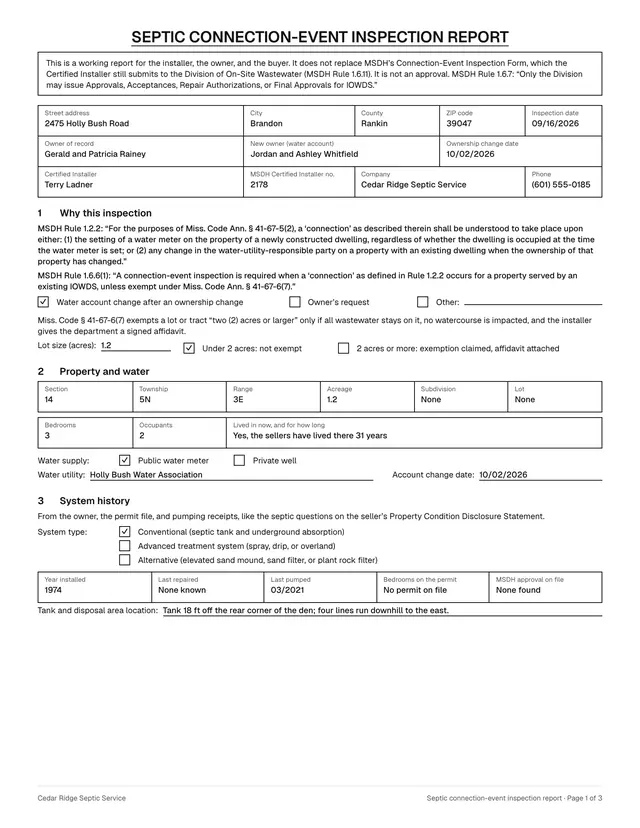
Septic Connection-Event Inspection Report
Record the tank or cesspool and what was checked. - Missouri
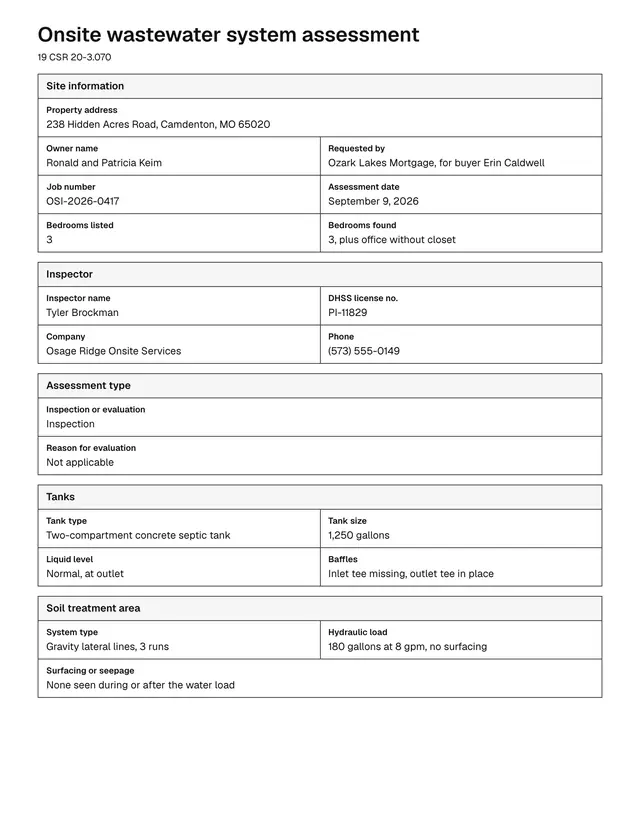
Missouri onsite wastewater inspection and evaluation report
Record the tank or cesspool and what was checked. - Nevada
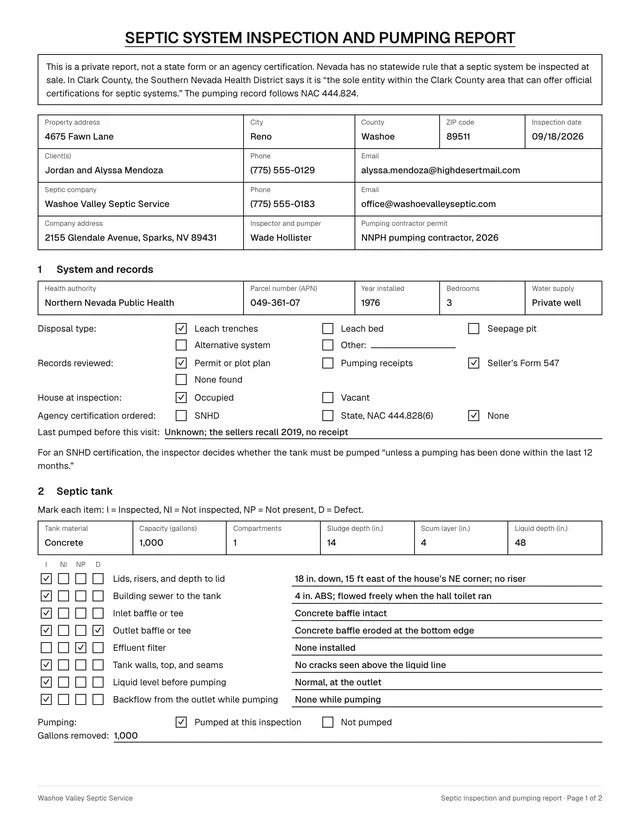
Septic System Inspection and Pumping Report
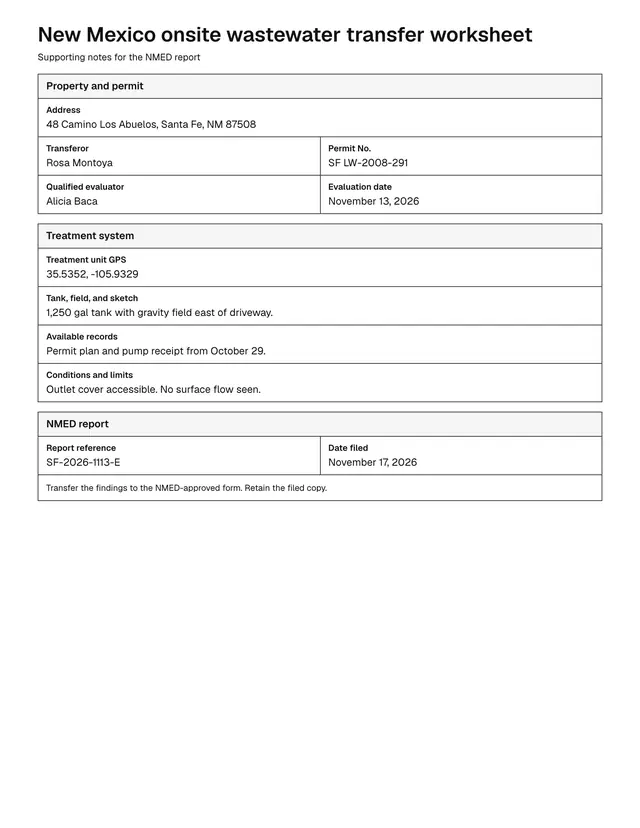
Record the tank or cesspool and what was checked. - New Mexico
New Mexico onsite wastewater transfer worksheet
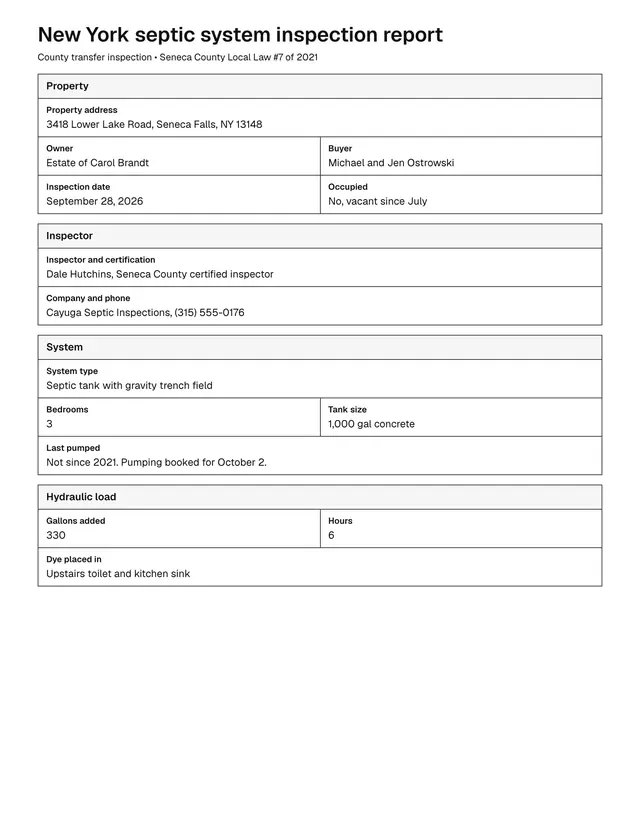
Record the tank or cesspool and what was checked. - New York
New York septic system inspection report (county transfer inspections)
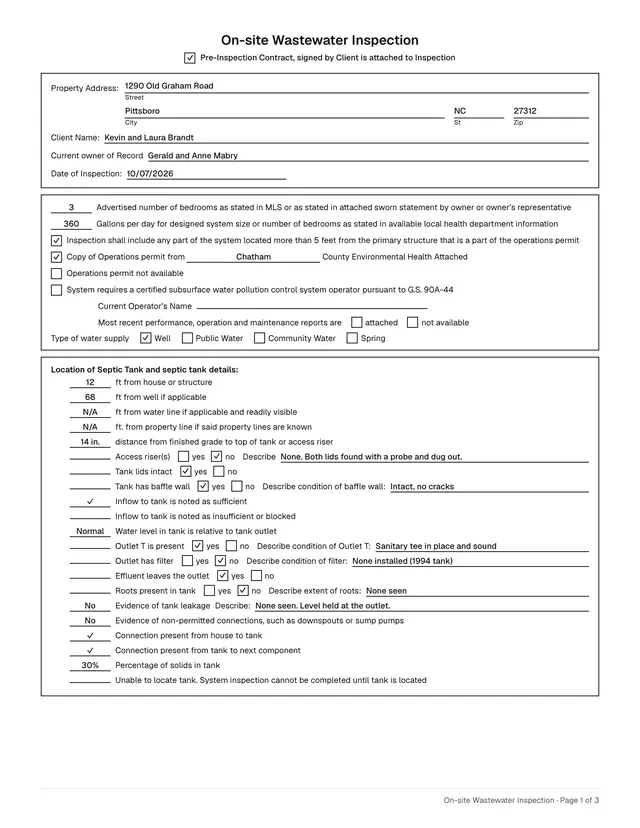
Record the tank or cesspool and what was checked. - North Carolina
On-site Wastewater Inspection
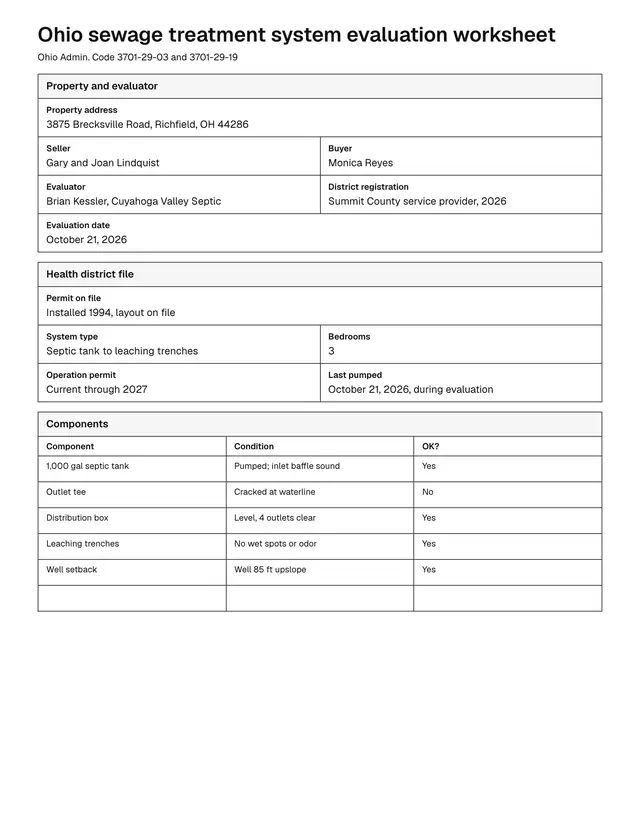
Record the tank or cesspool and what was checked. - Ohio
Ohio sewage treatment system evaluation for property transfer
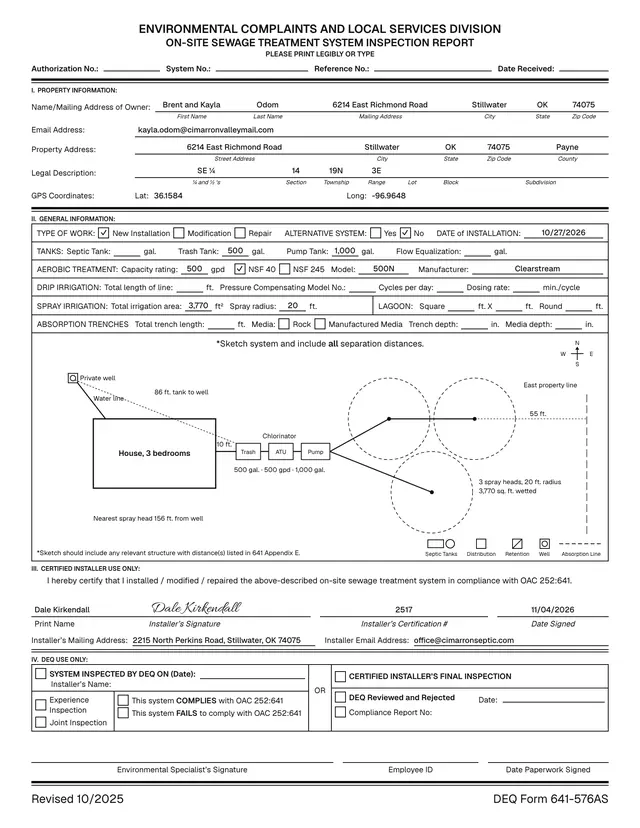
Record the tank or cesspool and what was checked. - OklahomaDEQ Form 641-576AS
On-Site Sewage Treatment System Inspection Report
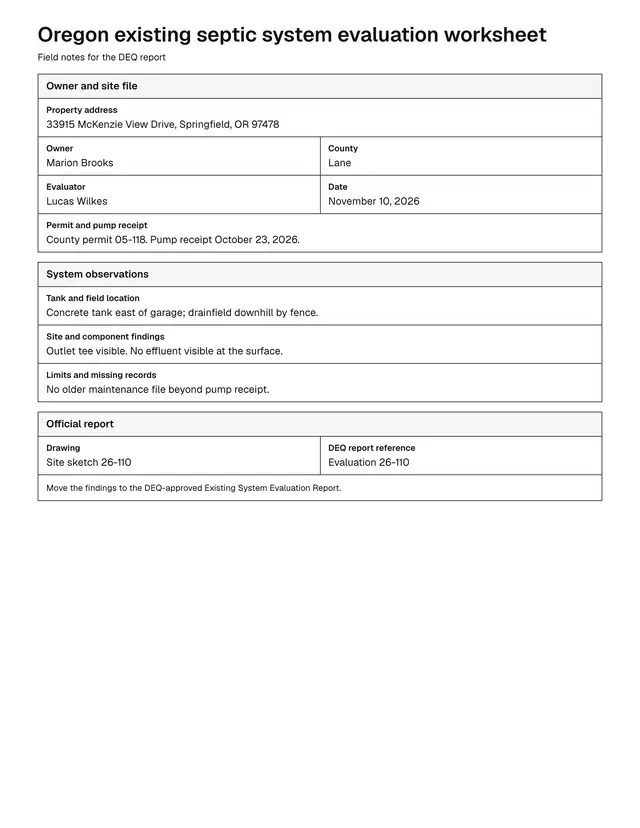
Record the tank or cesspool and what was checked. - Oregon
Oregon existing septic system evaluation worksheet
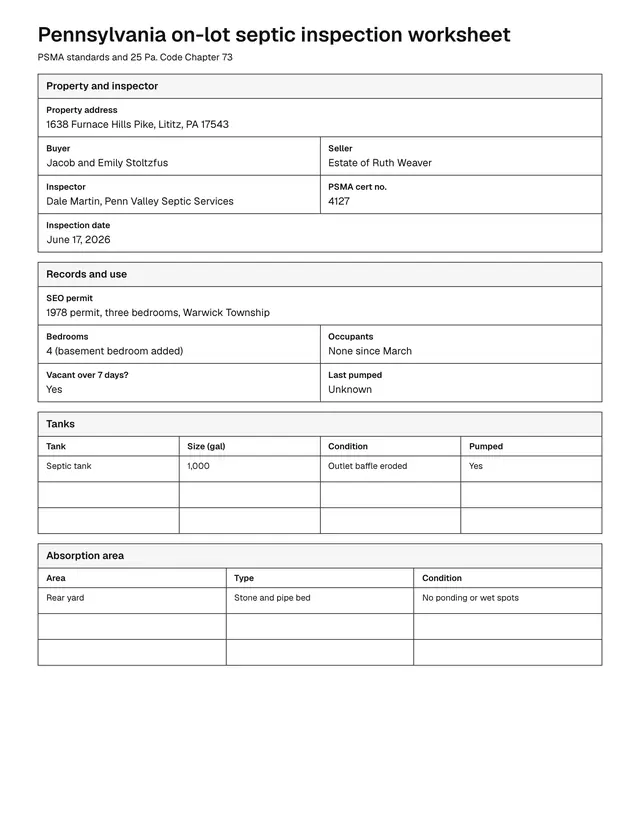
Record the tank or cesspool and what was checked. - Pennsylvania
Pennsylvania on-lot septic system inspection (PSMA)
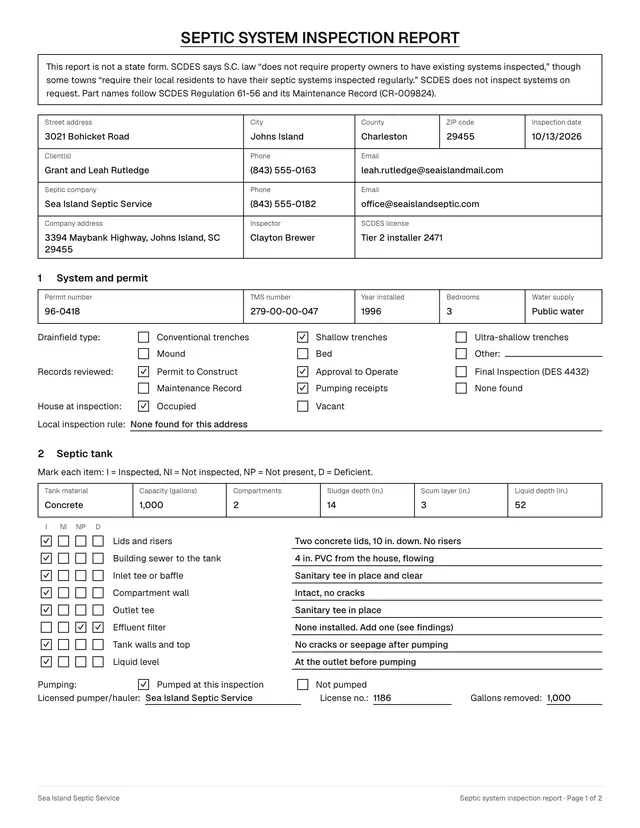
Record the tank or cesspool and what was checked. - South Carolina
Septic System Inspection Report
Record the tank or cesspool and what was checked. - Tennessee
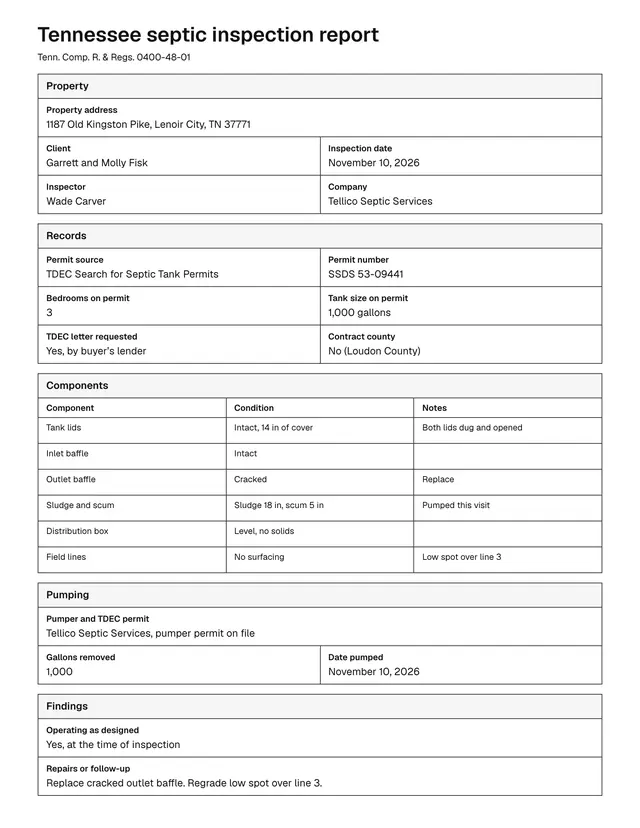
Tennessee septic inspection report
Record the tank or cesspool and what was checked. - Texas
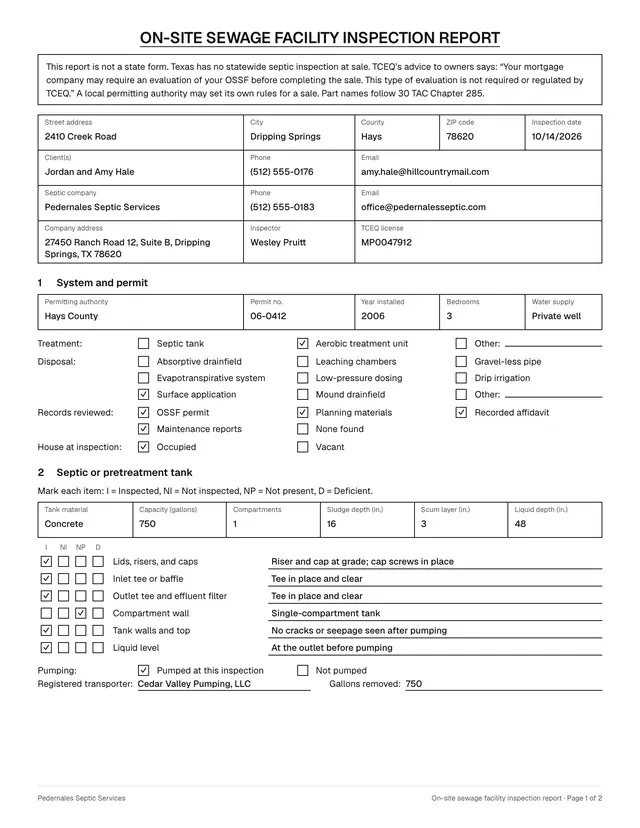
On-Site Sewage Facility Inspection Report
Record the tank or cesspool and what was checked. - Virginia
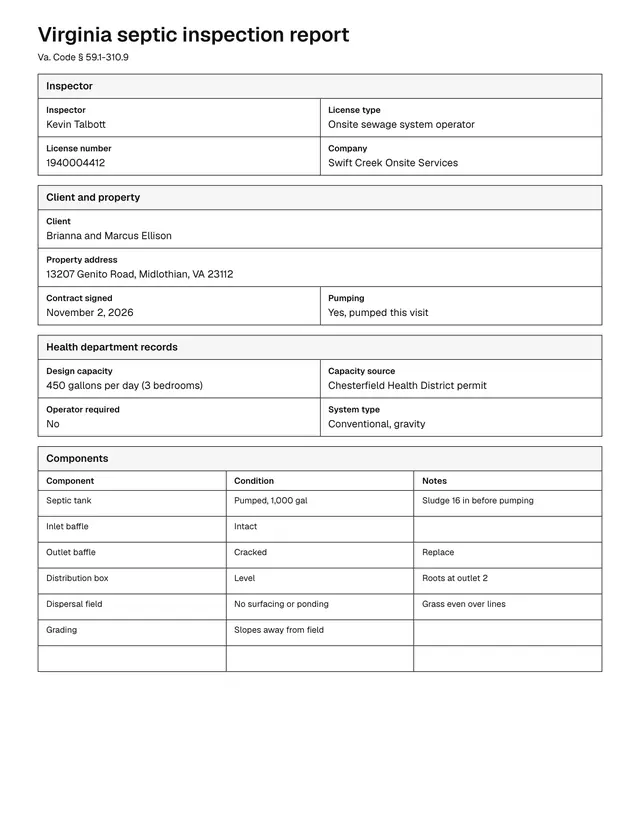
Virginia septic inspection report
Record the tank or cesspool and what was checked. - Washington
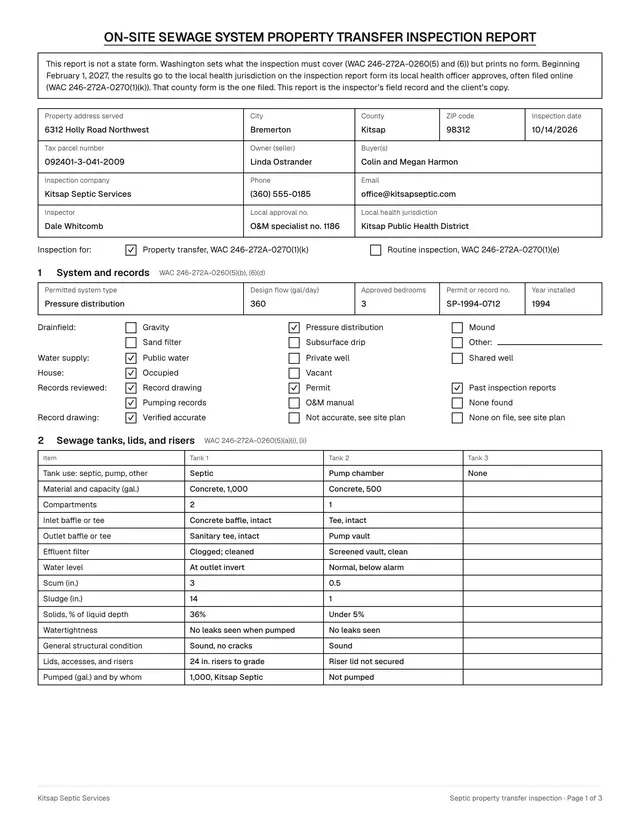
On-Site Sewage System Property Transfer Inspection Report
Record the tank or cesspool and what was checked. - Wisconsin
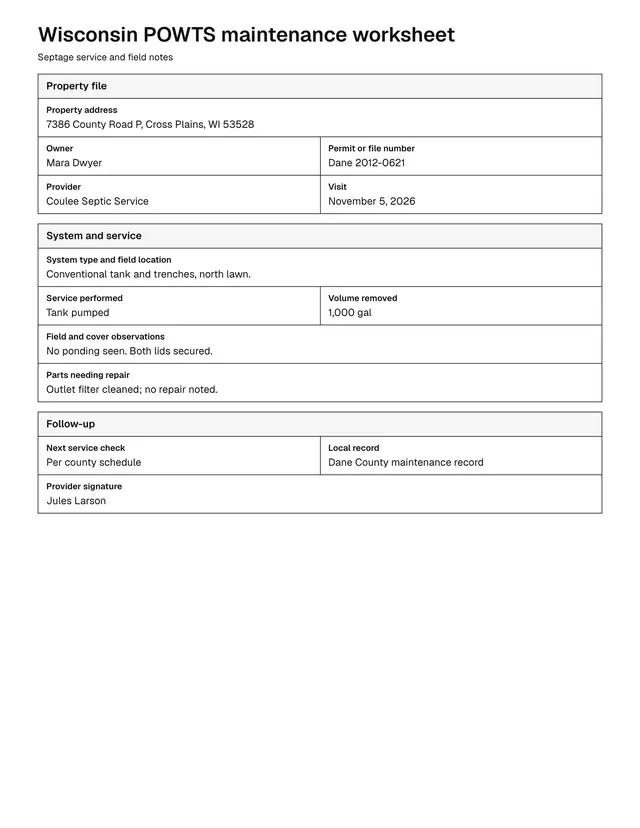
Wisconsin POWTS maintenance worksheet
Record the tank or cesspool and what was checked.