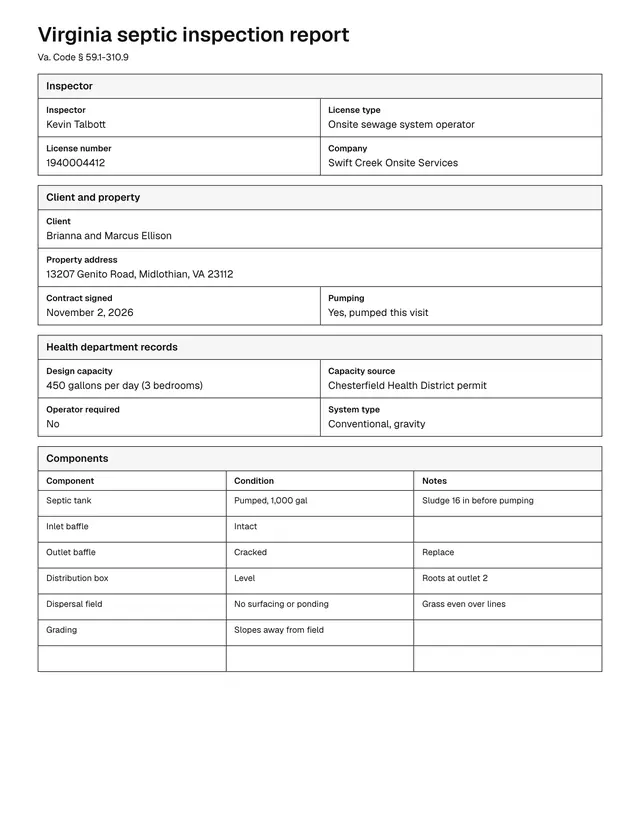
Virginia septic inspection report
Va. Code § 59.1-310.9 says who may inspect a septic system for a Virginia sale, what the contract and report must cover, and that the report can’t say pass or fail.
At a glance
- Law
- Va. Code § 59.1-310.9
- Who can inspect
- Licensed operator, installer, or soil evaluator
- Report due
- 10 business days
- Pass or fail
- Not allowed
Completed example
Download PDFOnly three licenses qualify
Virginia narrowed the field. Under § 59.1-310.9, only a person holding an onsite sewage system operator, installer, or onsite soil evaluator license may inspect a septic system in connection with a real estate deal, refinancing included. A general home inspection doesn’t count.
Those licenses come from Chapter 23 of Title 54.1, the onsite sewage professionals chapter.
This section was amended in 2025 and again in 2026, so older templates may be out of date. Breaking it is a Class 3 misdemeanor under § 59.1-310.10.
Check the license before you send a sub. A pump truck driver without one of those three licenses can pump the tank, but can’t sign the real estate inspection.
The contract and the pumping question
Before you inspect, get a written contract signed by the client. It sets the scope and cost, gives you permission to inspect, and states that a complete inspection requires pumping the tank.
Some sellers don’t want to pay for a pump-out. That’s allowed, but write it down. The law asks you to document the client’s decision to decline pumping. On a house in Midlothian closing in two weeks, that note protects you when the tank turns out to be full.
If pumping is extra, price it as its own line. The client sees exactly what declining saves, and you have a record they chose.
What you look at
Inspect every component that’s readily accessible or can be opened: septic tanks, pump tanks, distribution boxes, treatment units, control panels, and dispersal fields. Check any parts the operation permit calls for. Look at vegetation, grading, and signs of water getting in where it shouldn’t.
“Readily accessible” has a limit. Under § 59.1-310.7, it doesn’t include removing more than 30 inches of soil or other surface material. A tank buried 40 inches down is something you report as not inspected, with the reason.
What you don’t have to do. You aren’t required to find property lines, give warranties, figure out whether the system is big enough, run a system that won’t respond, clear heavy brush or debris, or look for environmental hazards.
What it isn’t. It’s not a soil suitability evaluation. Soil notes are limited to what you can see: saturation, surfacing, and ponding.
Photograph each open component and the field surface. The photos back up your “operating as intended” line.
What the report says, and what it can’t
The written report goes out within 10 business days from the start of the inspection unless the client agrees in writing to a different time. It names what you inspected, what you didn’t and why, any adverse conditions, and whether the system was operating as intended.
Ten business days is two calendar weeks. Count from the day you started on site, not the day the pumper’s notes reached you.
For each problem, describe what could happen and recommend further evaluation. Report the system’s size or design capacity, in gallons per day or bedrooms, from local health department records. If you can’t find it, recommend how to find out. Note whether a licensed operator is required, and refer the client to the health department for operation and maintenance reports.
Write adverse conditions as facts, like “effluent at the surface over line 2,” not as grades.
No pass or fail. The law bars pass or fail and graded ratings, and it bars hydraulic load tests. The VDH buyer page still mentions loading tests, but for a real estate inspection, the statute now rules them out.
Where do you find the design capacity?
Start at the local health department. VDH says it holds permits with the design capacity, inspection reports, operation permits, as-built drawings, and maintenance records. Homes are designed at 150 gallons per day per bedroom, so a three bedroom permit shows 450 gallons per day. Alternative systems need a yearly visit from a licensed operator, so ask for those reports too.
VDH also suggests a deed search. Conditional permits, waivers that become void when the property sells, easements, and recorded notices for alternative systems can all turn up there. It recommends inspecting several weeks before closing and pumping every 3 to 5 years, which the Chesapeake Bay Preservation Area requires for conventional systems.
Noma specializes in the Virginia Septic Inspection Report (Va. Code § 59.1-310.9). Clients book online, your contract goes out once as a reusable document for e-signature on every job, and reports use your own sections with the worst defects in the summary. See how Noma runs septic inspections.
Frequentlyaskedquestions
Send this document in minutes, not an afternoon.
Other states
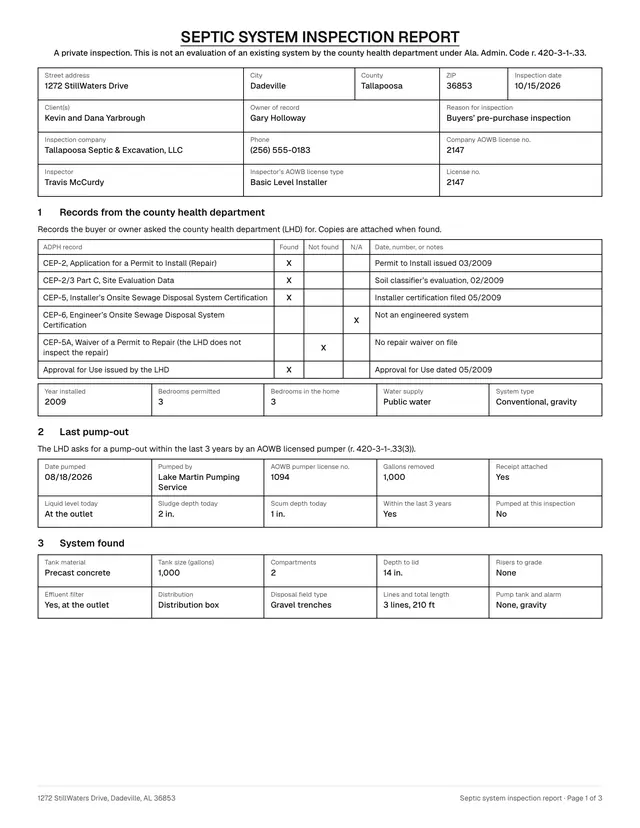
Septic inspection report templates- Alabama
Septic System Inspection Report
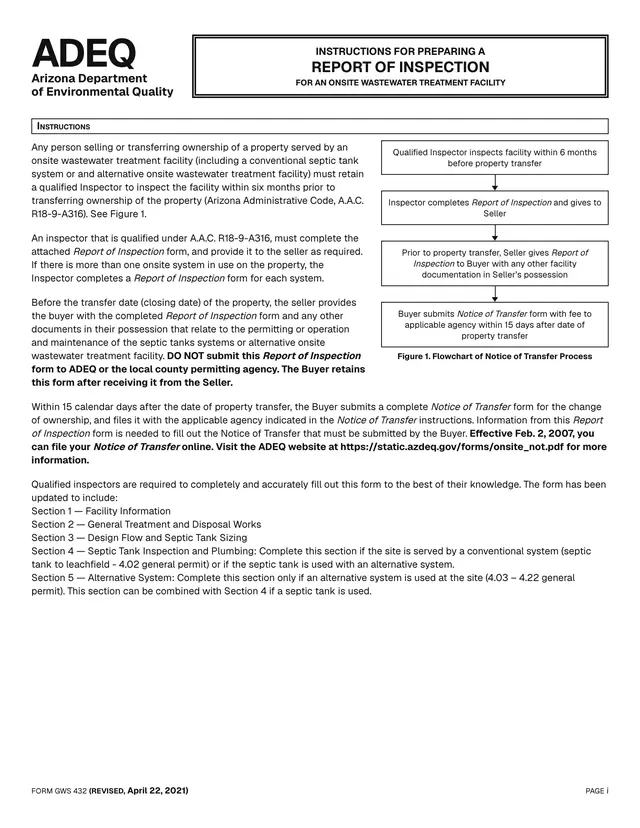
Record the tank or cesspool and what was checked. - ArizonaGWS 432
Report of Inspection for an Onsite Wastewater Treatment Facility
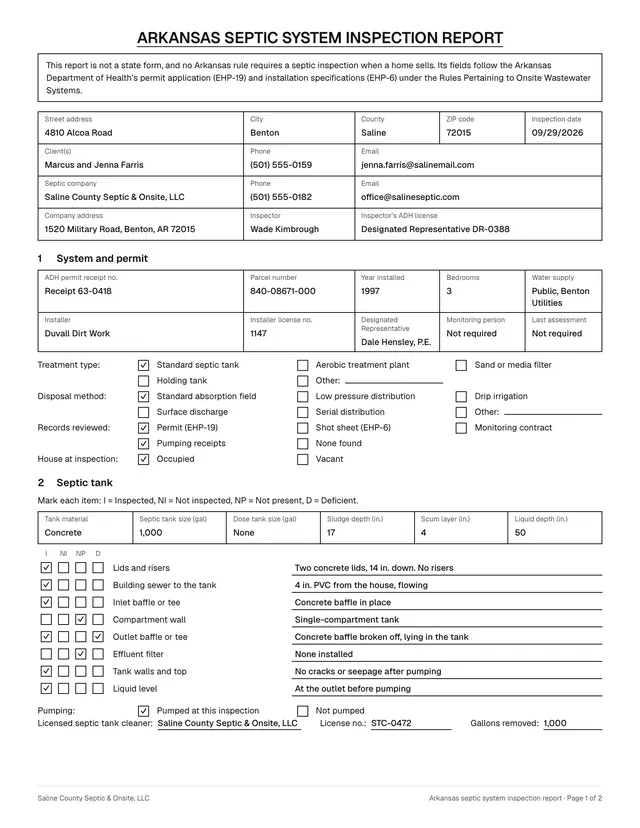
Record the tank or cesspool and what was checked. - Arkansas
Arkansas Septic System Inspection Report
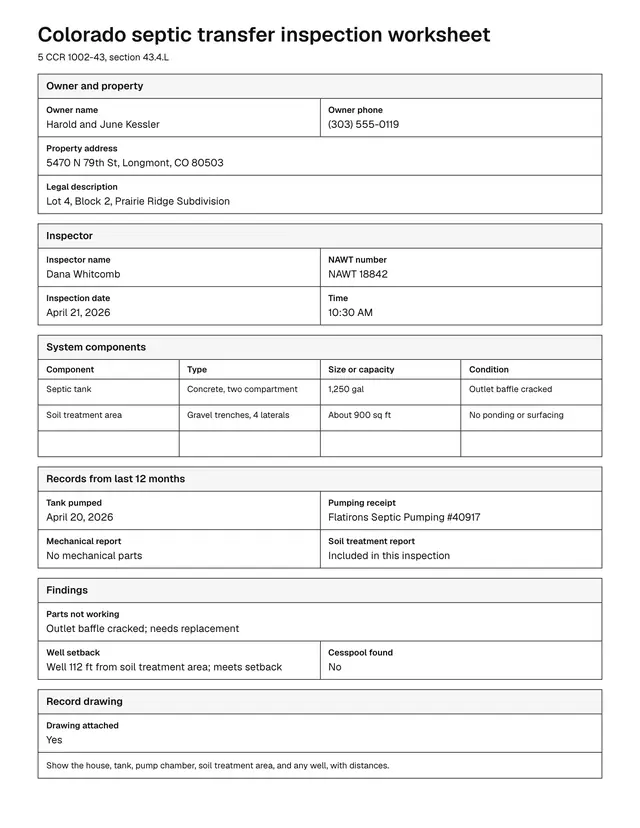
Record the tank or cesspool and what was checked. - Colorado
Colorado septic transfer of title inspection report (Regulation 43)
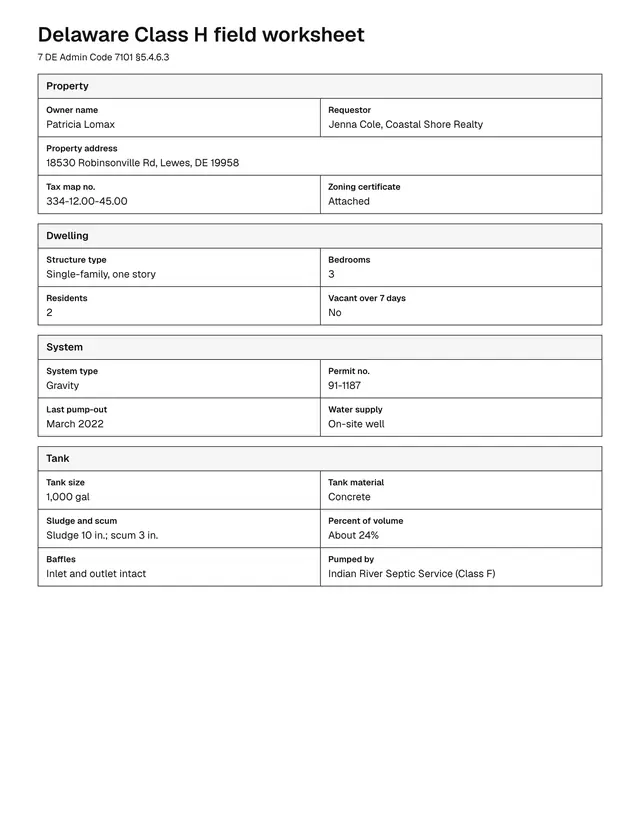
Record the tank or cesspool and what was checked. - Delaware
Delaware Class H septic inspection report
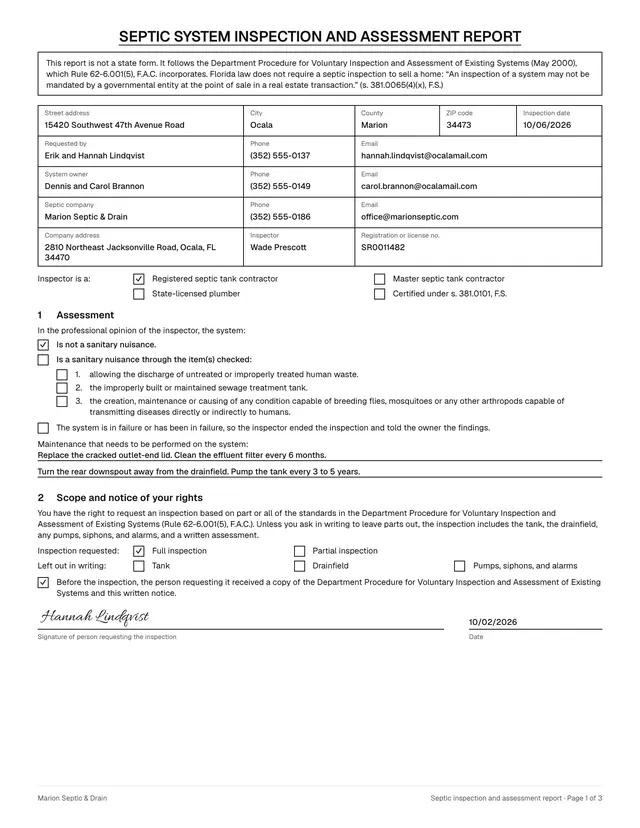
Record the tank or cesspool and what was checked. - Florida
Septic System Inspection and Assessment Report
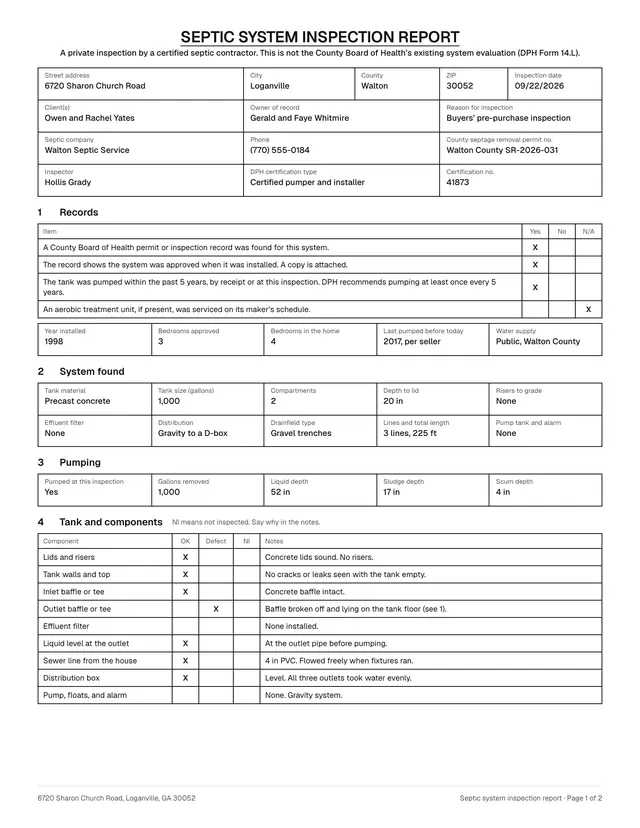
Record the tank or cesspool and what was checked. - Georgia
Septic System Inspection Report
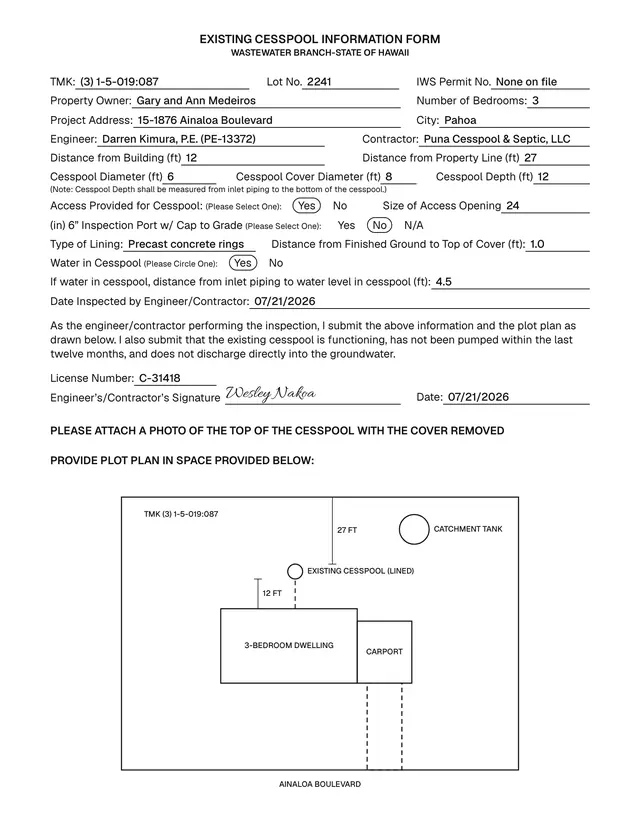
Record the tank or cesspool and what was checked. - Hawaii
Existing Cesspool Information Form
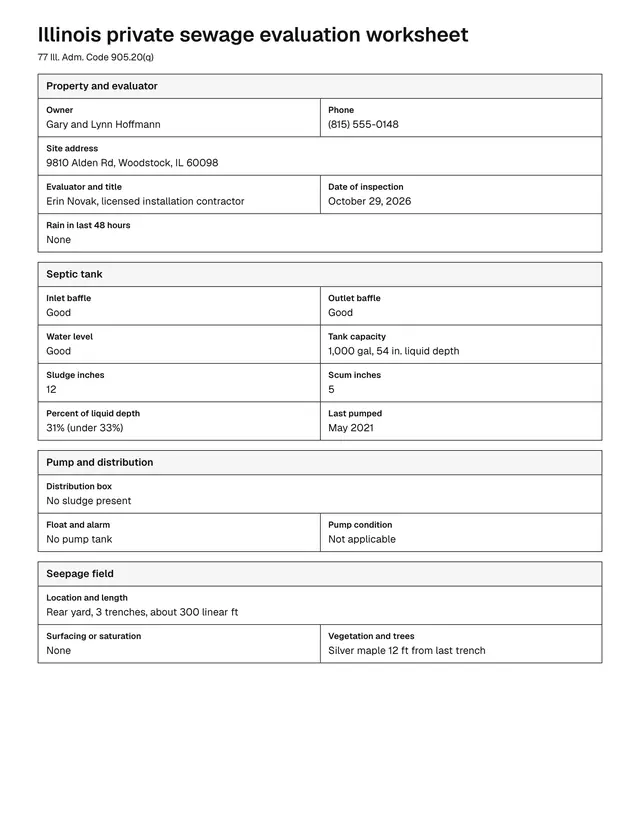
Record the tank or cesspool and what was checked. - Illinois
Illinois private sewage disposal system evaluation
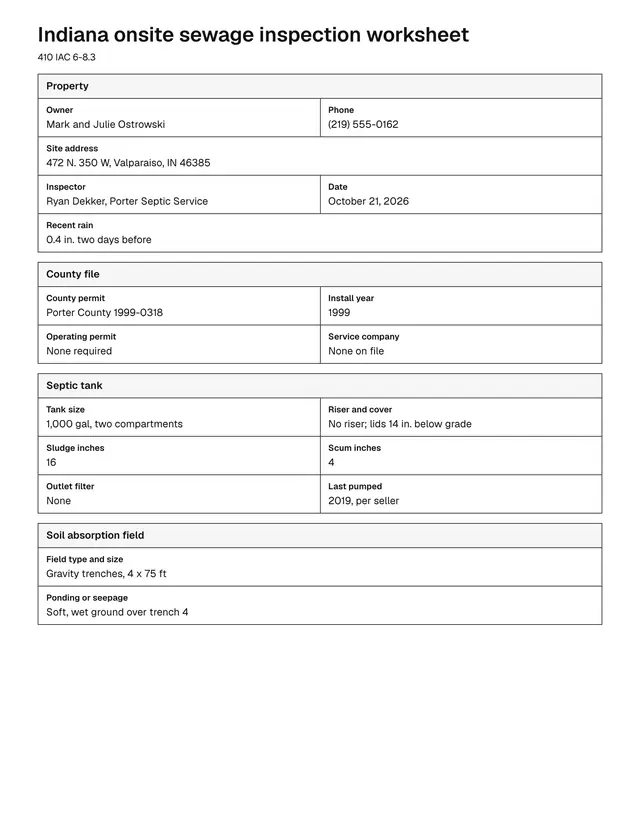
Record the tank or cesspool and what was checked. - Indiana
Indiana onsite sewage system inspection report
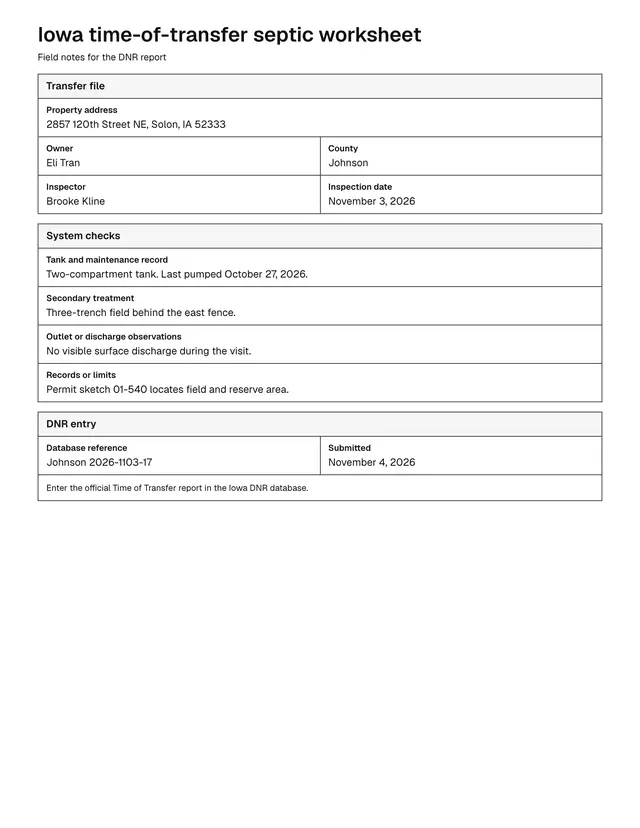
Record the tank or cesspool and what was checked. - Iowa
Iowa time-of-transfer septic worksheet
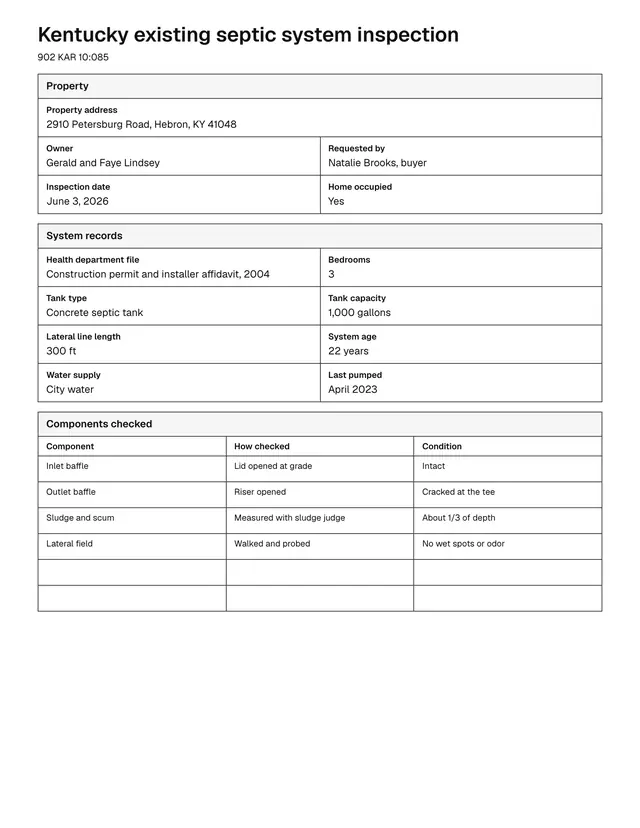
Record the tank or cesspool and what was checked. - Kentucky
Kentucky existing septic system inspection
Record the tank or cesspool and what was checked. - Louisiana
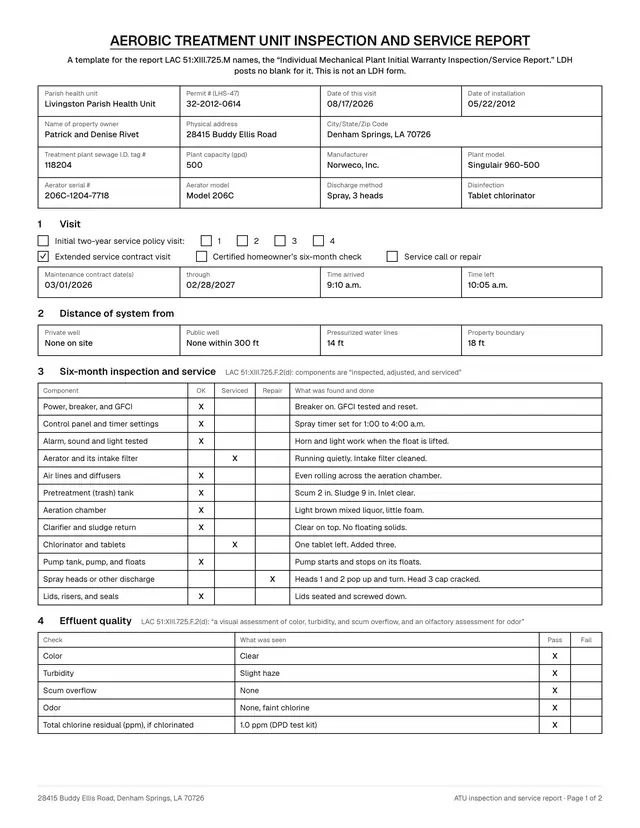
Aerobic Treatment Unit Inspection and Service Report
Record the tank or cesspool and what was checked. - Maryland
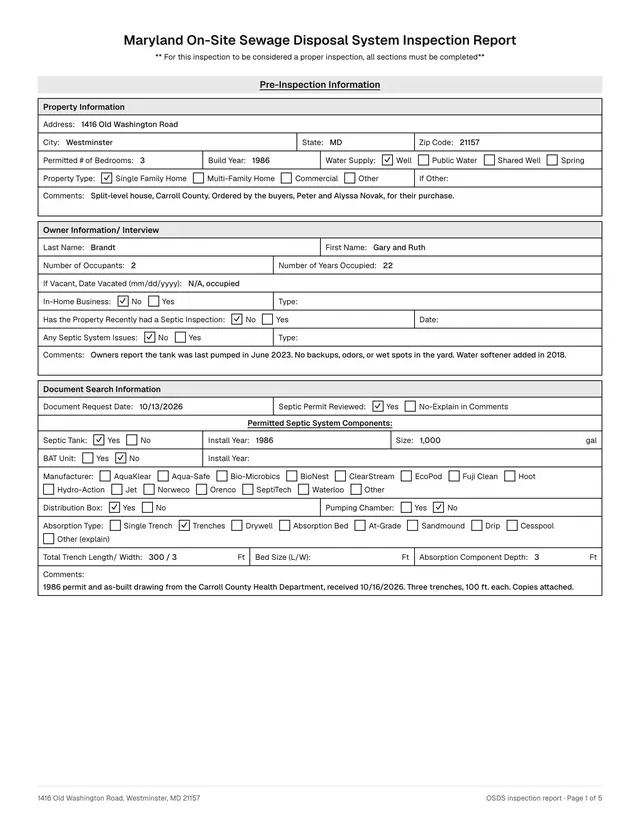
Maryland On-Site Sewage Disposal System Inspection Report
Record the tank or cesspool and what was checked. - Massachusetts
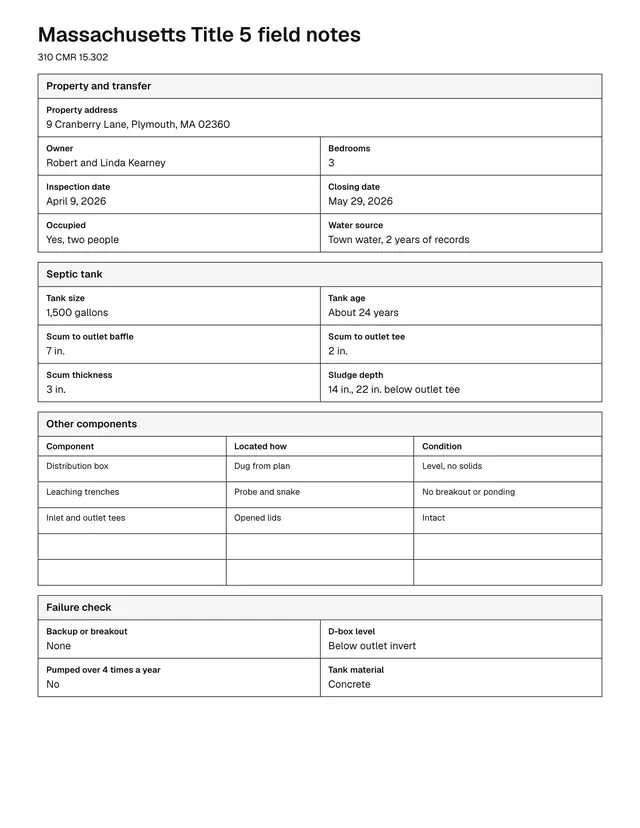
Massachusetts Title 5 inspection report (310 CMR 15.301)
Record the tank or cesspool and what was checked. - Michigan
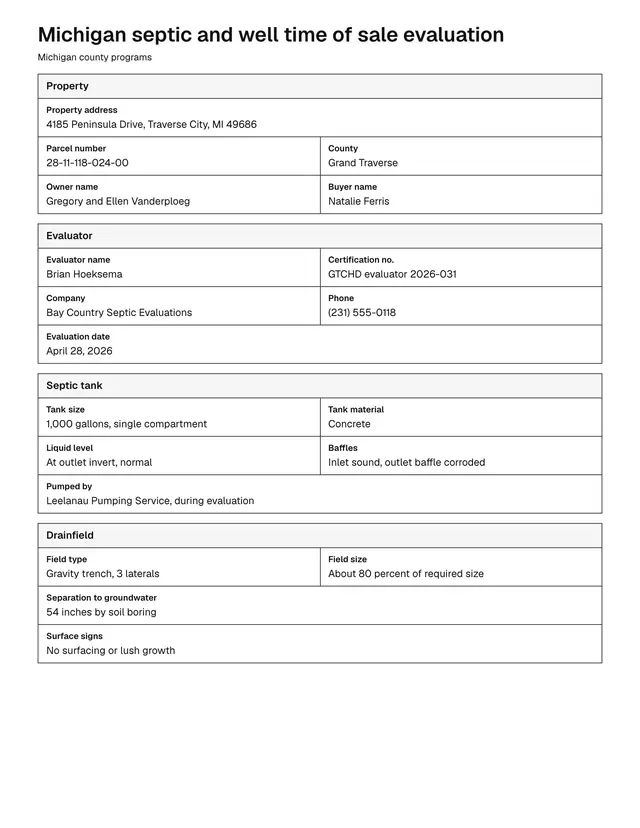
Michigan septic time of sale evaluation
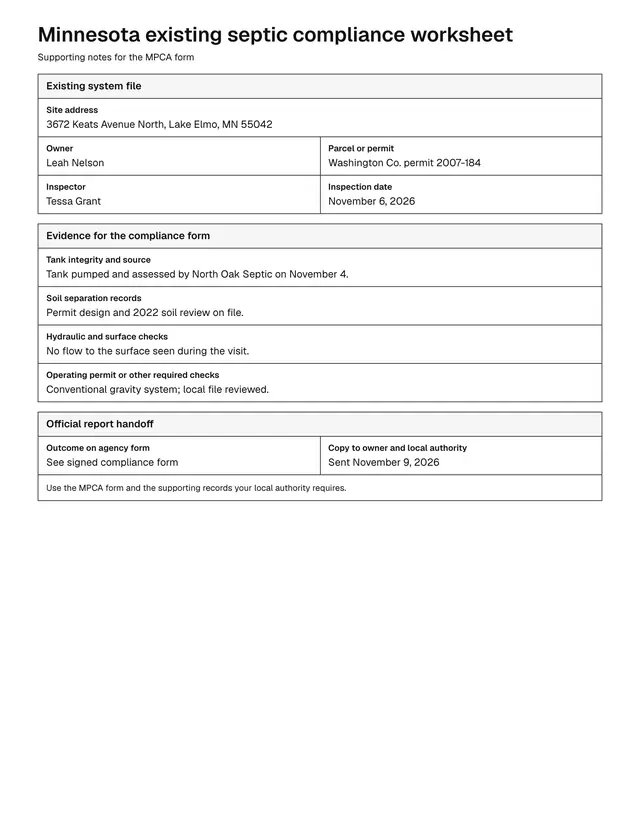
Record the tank or cesspool and what was checked. - Minnesota
Minnesota existing septic compliance worksheet
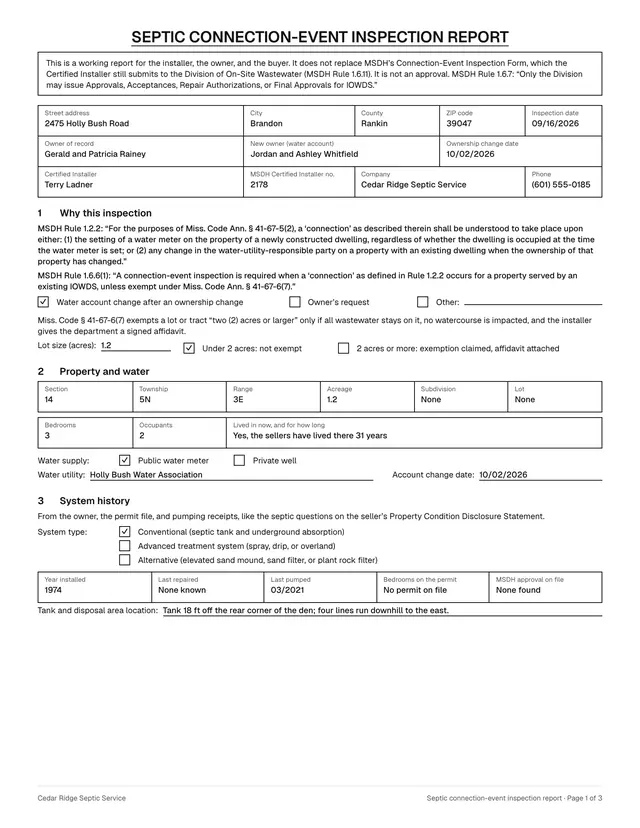
Record the tank or cesspool and what was checked. - Mississippi
Septic Connection-Event Inspection Report
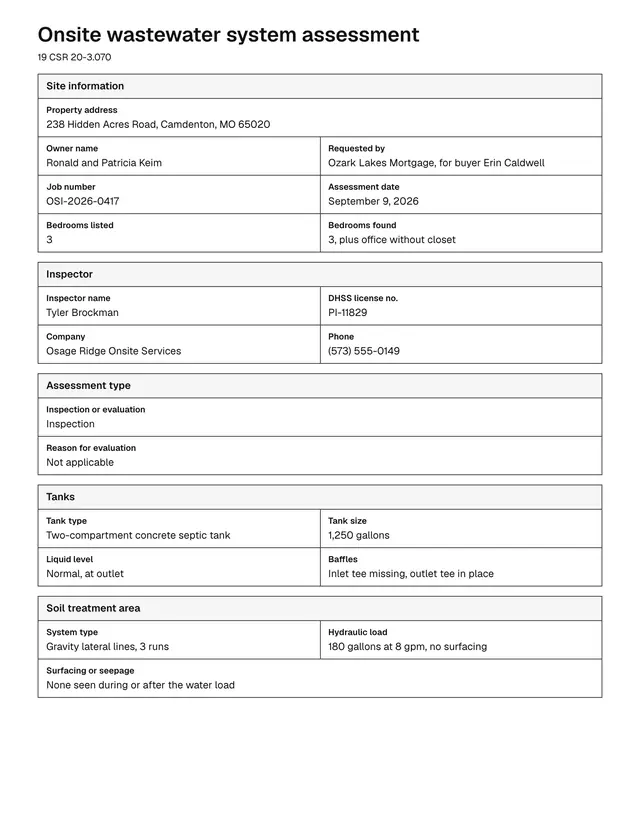
Record the tank or cesspool and what was checked. - Missouri
Missouri onsite wastewater inspection and evaluation report
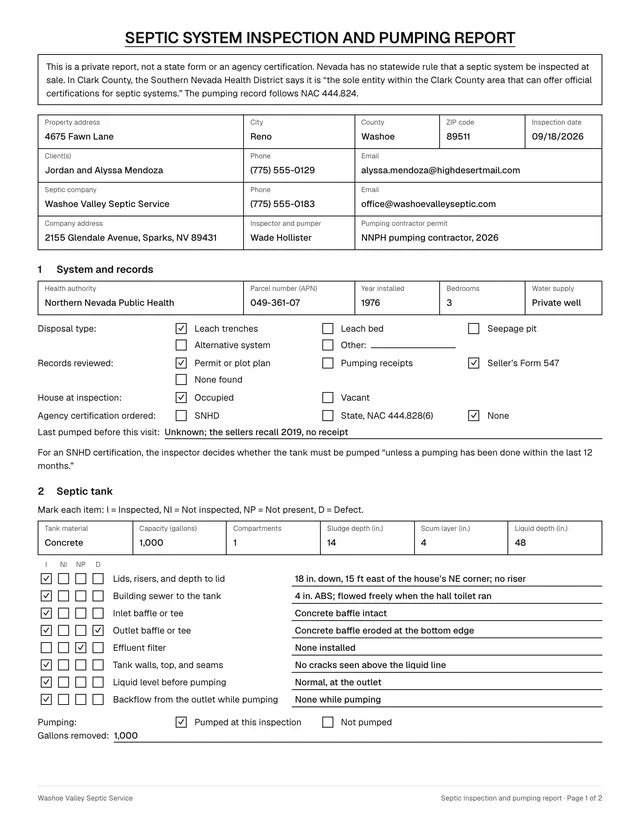
Record the tank or cesspool and what was checked. - Nevada
Septic System Inspection and Pumping Report
Record the tank or cesspool and what was checked. - New JerseyN.J.A.C. 7:9A Appendix F
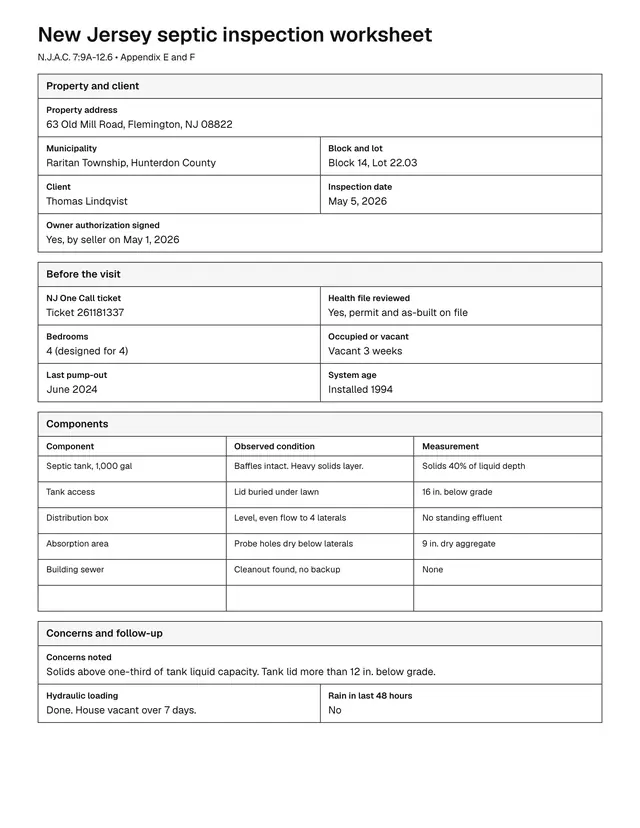
New Jersey septic inspection report (Appendix F Onsite System Inspection Form)
Record the tank or cesspool and what was checked. - New Mexico
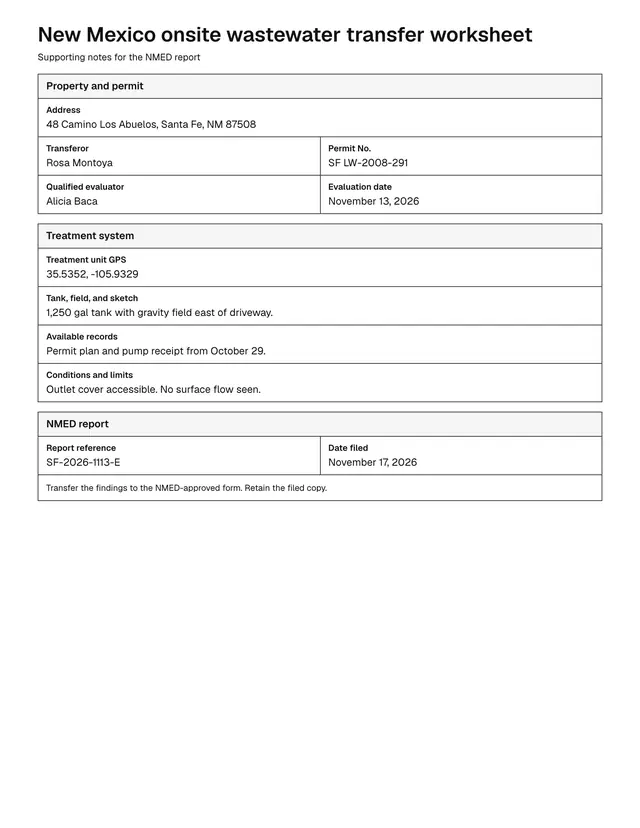
New Mexico onsite wastewater transfer worksheet
Record the tank or cesspool and what was checked. - New York
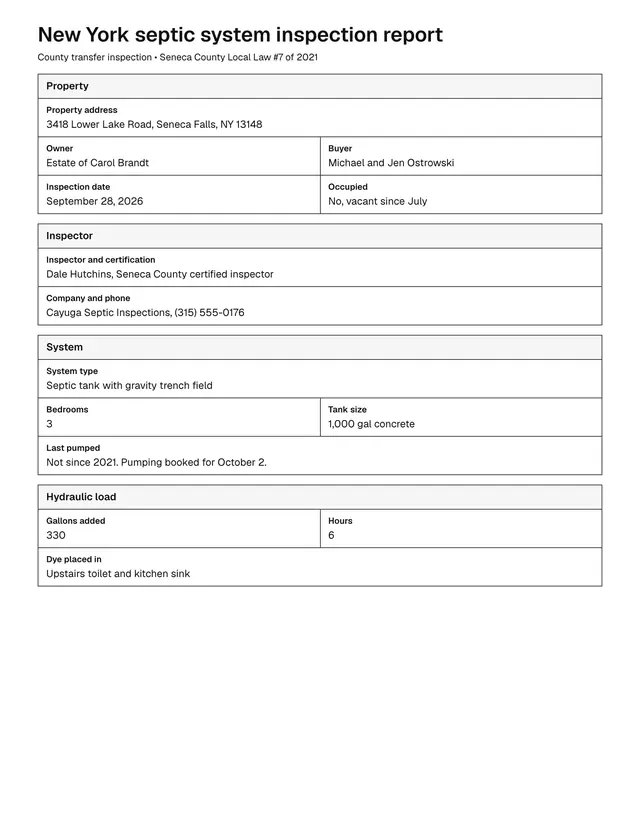
New York septic system inspection report (county transfer inspections)
Record the tank or cesspool and what was checked. - North Carolina
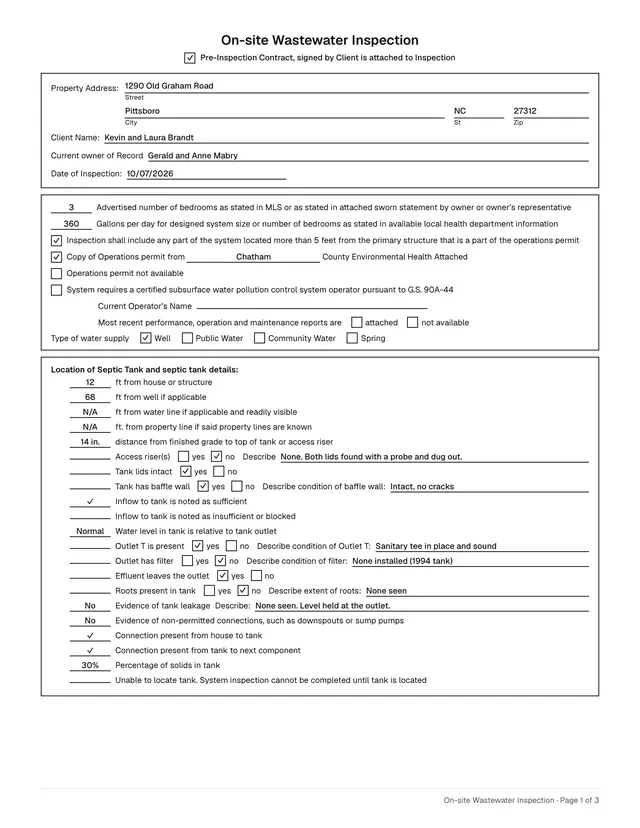
On-site Wastewater Inspection
Record the tank or cesspool and what was checked. - Ohio
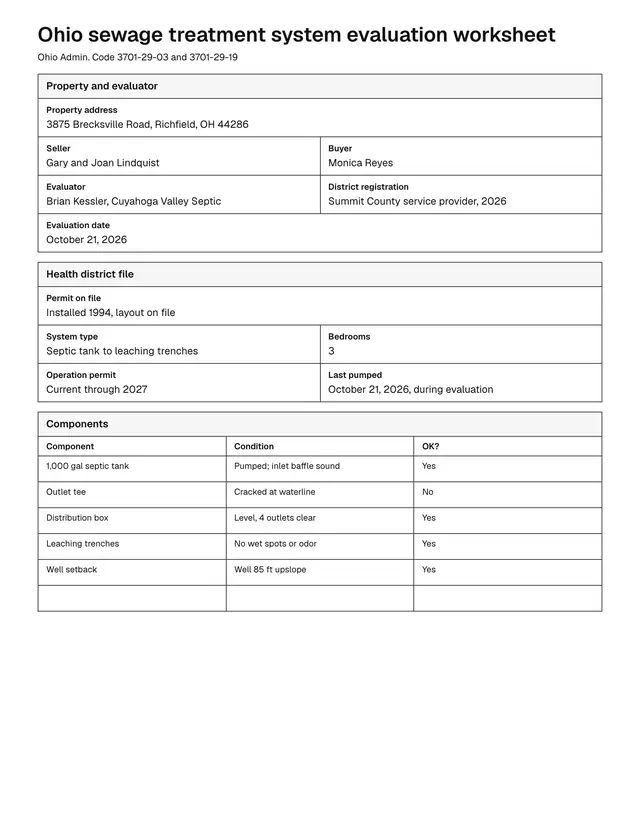
Ohio sewage treatment system evaluation for property transfer
Record the tank or cesspool and what was checked. - OklahomaDEQ Form 641-576AS
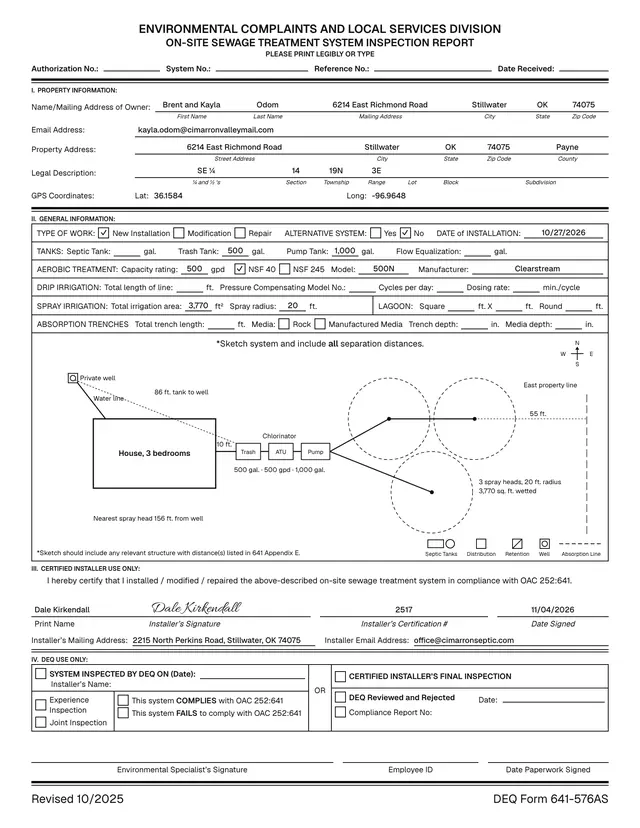
On-Site Sewage Treatment System Inspection Report
Record the tank or cesspool and what was checked. - Oregon
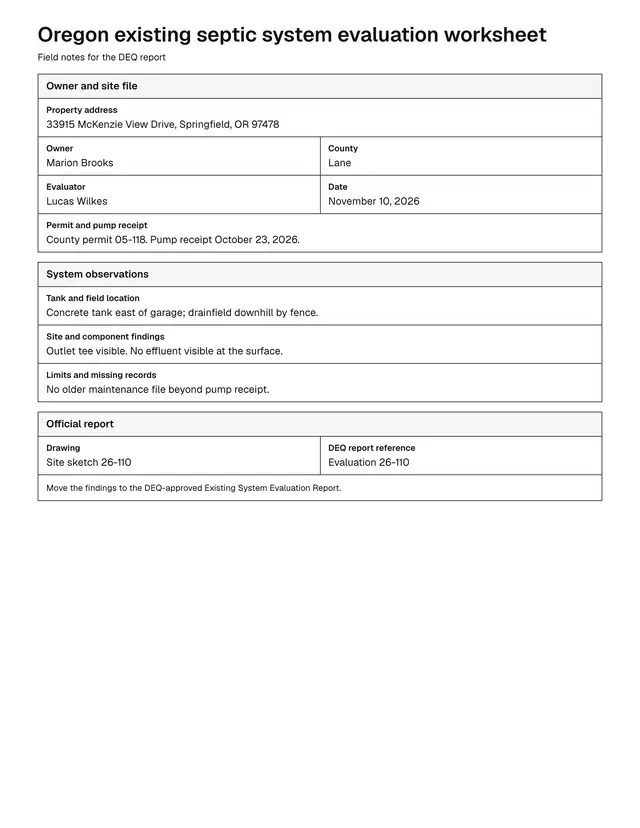
Oregon existing septic system evaluation worksheet
Record the tank or cesspool and what was checked. - Pennsylvania
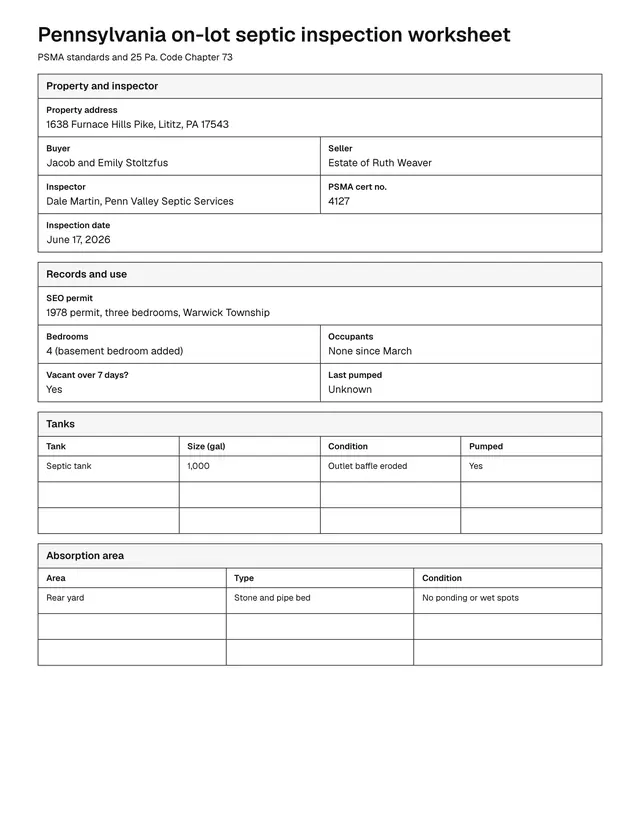
Pennsylvania on-lot septic system inspection (PSMA)
Record the tank or cesspool and what was checked. - South Carolina
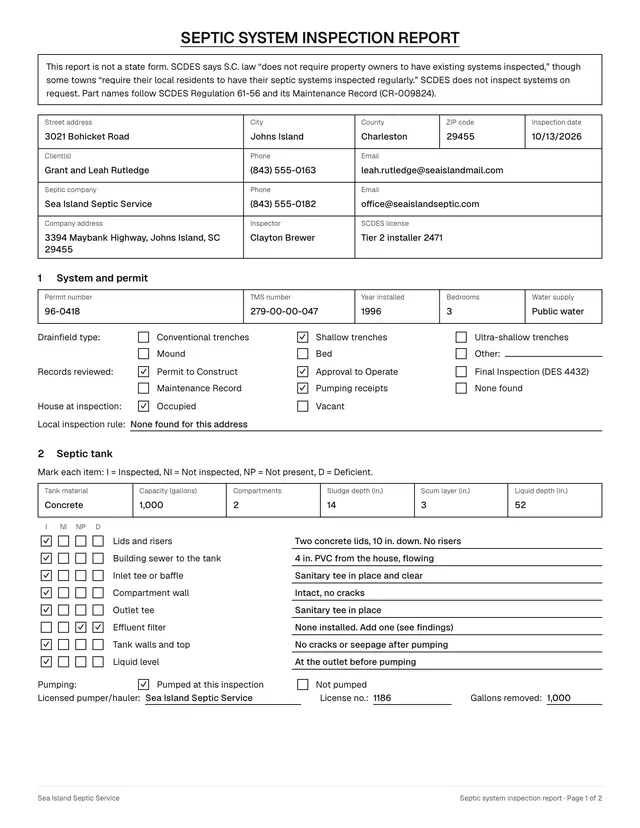
Septic System Inspection Report
Record the tank or cesspool and what was checked. - Tennessee
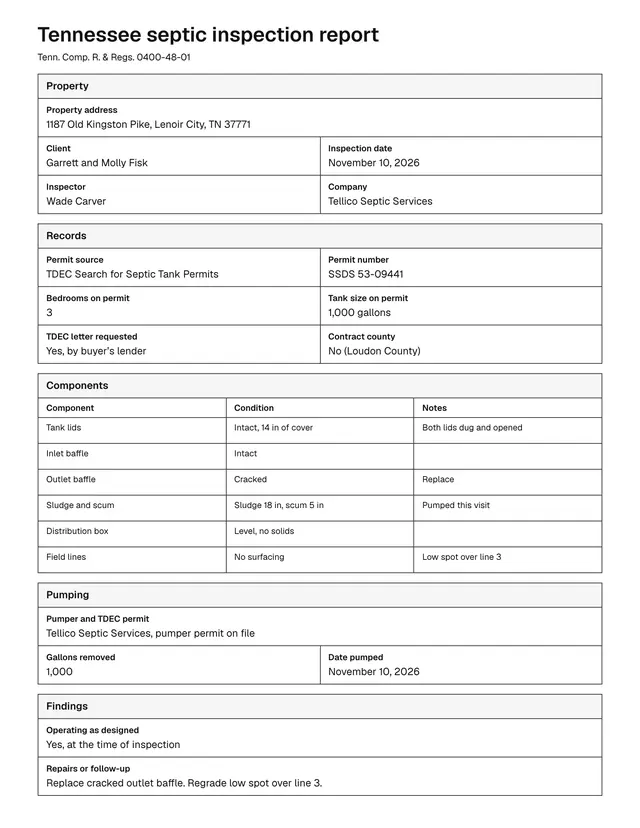
Tennessee septic inspection report
Record the tank or cesspool and what was checked. - Texas
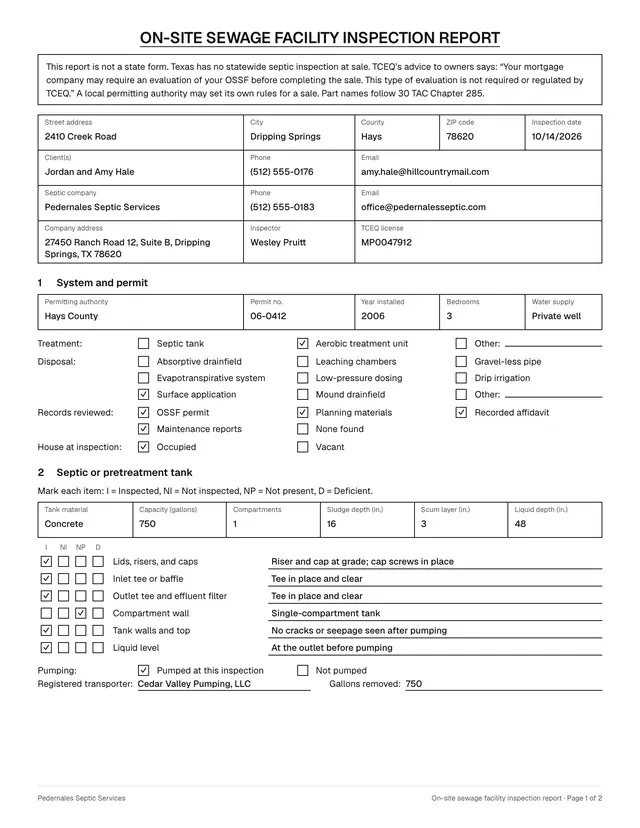
On-Site Sewage Facility Inspection Report
Record the tank or cesspool and what was checked. - Washington
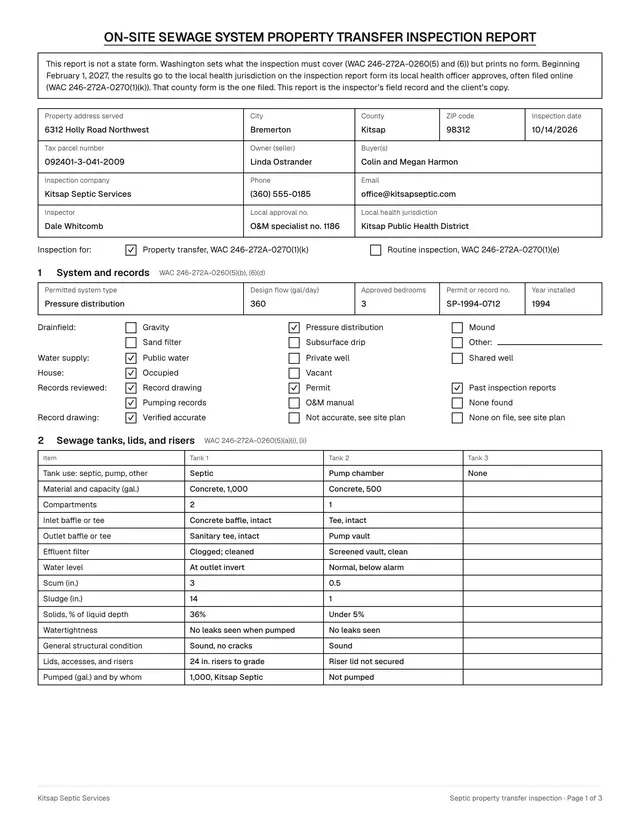
On-Site Sewage System Property Transfer Inspection Report
Record the tank or cesspool and what was checked. - Wisconsin
Wisconsin POWTS maintenance worksheet
Record the tank or cesspool and what was checked.